Advertisement

Oppo Pad 4 Pro Geekbench listing spotted, first Snapdragon 8 Elite tablet incoming

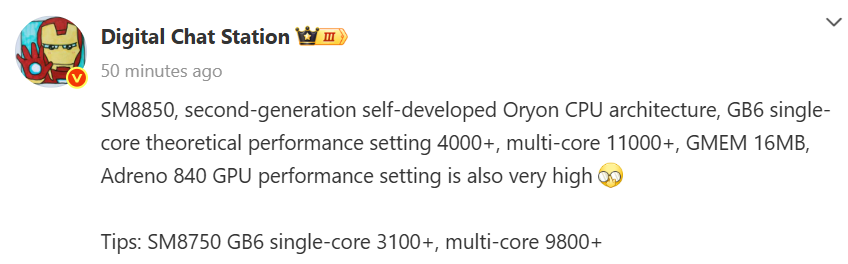
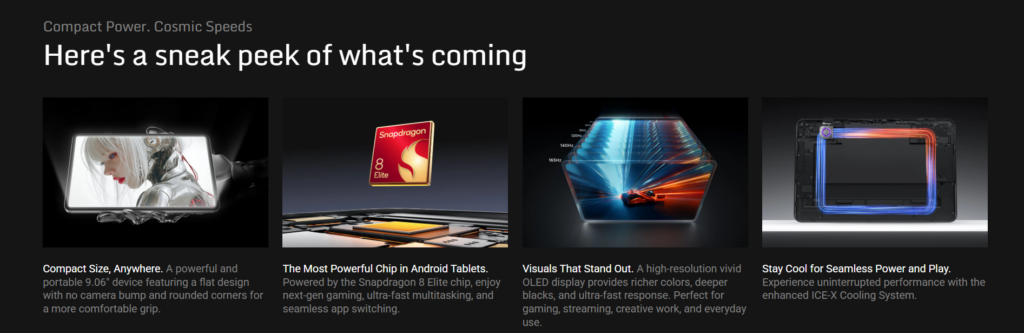
A recent leak revealed that China will receive two Snapdragon 8 Elite-powered tablets in the first half of 2025. These include the Oppo Pad 4 Pro and the OnePlus Pad 2 Pro. The former has surfaced on Geekbench, confirming that it will indeed feature the said chipset.

Oppo Pad 4 Pro Geekbench appearance

As seen above, a new Oppo tablet with the model number OPD2409 has emerged in Geekbench’s database. This same device was spotted with an 80W fast charger at China’s 3C certification platform earlier this month. Reports suggest that the Oppo OPD2409 will be marketed as the Oppo Pad 4 Pro when it launches in China.

The Geekbench listing reveals that the Oppo Pad 4 Pro is equipped with the Snapdragon 8 Elite. Although the chipset’s name is not explicitly mentioned in the listing, the CPU details and GPU information confirm that it is the SD8E.

Rumors suggest that the Oppo Pad 4 Pro will debut alongside the new Find X8 series devices, which are expected to launch in April in China. Hence, it appears that the Pad 4 Pro may launch as the world’s first Snapdragon 8 Elite-powered tablet.

Coming back to the Geekbench listing, it reveals that the tablet is equipped with 16GB of RAM and runs Android 15. In the single-core test, it achieved 2,628 points, and in the multi-core test, it scored 7,892 points.

According to reports, the Oppo Pad 4 Pro will feature a 13.2-inch LCD panel that supports a 3.4K resolution. The SoC is likely to be accompanied by a 12,000mAh battery with support for 80W charging. The other details of the tablet remain under wraps.

For more daily updates, please visit our News Section.

Stay ahead in tech! Join our Telegram community and sign up for our daily newsletter of top stories!

(via)

OnePlus 13 Review: Should It Be Your Next Flagship?

The Indian smartphone market is currently undergoing premiumization. According to Counterpoint Research, the market’s value is projected to exceed $50 billion by 2025.

As a result, we are witnessing more premium offerings from brands than ever before. Almost all phone companies with a presence in India now sell expensive handsets. 

OnePlus is no exception. The brand has been a key player in this category for quite some time. With increasing competition, OnePlus has been improving its flagship smartphones methodically.

Having used the OnePlus 12 for over a year and the latest OnePlus 13 for more than a month, here are my thoughts on the brand’s latest flagship smartphone.

1. Where OnePlus Stands in the Flagship Landscape

OnePlus 13

OnePlus transitioned to offering a single flagship model a few generations ago. The brand dropped the ‘Pro’ variant, effectively replacing it with the standard model in all but name.

Although the price has gradually increased with newer generations, it remains lower than what Apple and Samsung charge for their baseline flagship models, let alone their Pro and Ultra versions. For a lower price, the OnePlus 13 offers a superior feature set compared to the iPhone 16 and Galaxy S25.

However, the OnePlus 13’s notable competitors come from fellow Chinese brands, namely the Vivo X200, Xiaomi 15, and Oppo Find X8. While these three smartphones excel in their ways, I believe the OnePlus 13 is a compelling option for most consumers (more on this later).

2. Design that’s Functional and Durable

OnePlus 13

When I first picked up the OnePlus 13, I was skeptical about its in-hand feel due to the flat frame. But, to my surprise, I got used to it after a few days of use. 

Though it isn’t as cozy as the OnePlus 12 (thanks to its curved display), the flat frame makes the phone feel more grippy. The best part of this change is the reduction in accidental touches—hallelujah!


Additionally, the 6.82-inch QHD+ 120Hz screen is a visual treat. Although it’s not the brightest display in this price range, it performs well in both HDR and non-HDR scenarios and is complemented by loud dual stereo speakers.

I received the Arctic Dawn version of the handset. While I like this hue, I prefer the Midnight Ocean variant, as it features a vegan leather back, which is less slippery than the frosted glass found on Arctic Dawn and Black Eclipse.

Interestingly, the OnePlus 13 comes with an improved alert slider compared to the OnePlus 12. It feels sturdier and more tactile. The phone also boasts better ingress protection ratings (IP68 and IP69), making me feel more at ease using it during rain or even shower sessions.

3. Power that Goes the Distance

OnePlus 13

The unique selling proposition (USP) of OnePlus flagships has always been smoothness. The OnePlus 13 takes this even further. I was amazed to find that the phone feels snappier than the already fast OnePlus 12, even though they run the same software (OxygenOS 15 based on Android 15).

The Snapdragon 8 Elite powering the OnePlus 13 is a significant upgrade compared to previous Snapdragon 8 series chips. It not only delivers better raw performance than the Snapdragon 8 Gen 3 in the OnePlus 12, but it does so with improved power efficiency.

During my weeks of usage, I consistently experienced better battery life, thanks to the new chipset and a larger 6,000mAh battery (compared to 5,400mAh on the OnePlus 12). The 100W SuperVOOC charger fully recharges the phone in around 40 minutes, and a quick refill suffices in case of low battery. 

Wireless charging support (up to 50W) adds convenience, although you’ll need to invest in the proprietary magnetic charger to achieve maximum speed.

4. Subtle Camera Upgrades with Some Trade-offs

OnePlus 13 Camera Sample

The cameras on the OnePlus 13 are not significantly improved compared to the OnePlus 12. While image processing differs slightly, the difference is not substantial.

The camera hardware has been upgraded, featuring a new 50MP Sony LYT-600 3x periscope telephoto lens and a 50MP Samsung JN5 ultrawide unit with autofocus. The main sensor, however, remains the 50MP Sony LYT-808.

All three rear cameras deliver detailed images with excellent dynamic range in good lighting conditions. Color reproduction is consistent across all cameras. Even under low-light scenarios, performance is relatively stable.

Video recording sees minor improvements over the OnePlus 12. However, the selfie camera remains virtually unchanged and could benefit from autofocus.

Although the new zoom camera hardware is technically better, I personally prefer the older one. The newer module struggles with a high minimum focus distance, making macro photography difficult. It also faces challenges focusing on very distant objects, and extreme zoom shots are overly processed, resulting in artificial-looking images.

5. Why the OnePlus 13 is an Easy Recommendation

OnePlus 13

The OnePlus 13 is a smartphone that can be recommended to a vast majority of people, especially in India. It positions itself as a worthy alternative to the iPhone 16 and Galaxy S25.

Unlike Apple and Samsung’s handsets, the OnePlus 13 isn’t compact. It’s a large phone that competes with the Pro and Ultra models of the aforementioned brands at a more affordable price.

Spec and price-wise, the Vivo X200, Xiaomi 15, and Oppo Find X8 are more direct competitors to the OnePlus 13. These three smartphones excel in camera performance, an area where OnePlus has improved but still doesn’t lead.

If camera performance is your sole focus, you may want to explore these alternatives. However, a good flagship should be an all-rounder—and the OnePlus 13 fits that definition perfectly. 

Please Note: When you buy something using the links in our articles, we may earn a small commission at no cost to you.

The OnePlus 13 offers top-notch performance, a smooth UI, long battery life, fast charging, excellent build quality, and good cameras. Its software caters to a global audience better than other Chinese brands. OnePlus also promises 4 Android updates and 6 years of security updates.

Moreover, consumers can opt for OnePlus ecosystem products like smartwatches, tablets, and earbuds to enhance their overall experience—a feature that other Chinese brands often lack in global markets.

Finally, OnePlus is the only smartphone brand that provides a lifetime warranty for green-line display issues, a problem currently affecting the industry at large.

For more daily updates, please visit our News Section.

Stay ahead in tech! Join our Telegram community and sign up for our daily newsletter of top stories! 

AYANEO Pocket S2: Flagship Android Gaming Handheld Launched at GDC 2025

AYANEO introduced its new flagship Android handheld, the Pocket S2, at the Game Developers Conference. This device marks the global premiere of Qualcomm’s Snapdragon G3 Gen 3 gaming platform, alongside the AYANEO Gaming Pad tablet.

AYANEO Pocket S2

AYANEO Pocket S2 Features

The handheld is the first to feature the Snapdragon G3 Gen 3, promising a 30% increase in CPU and 28% in GPU performance. This chip supports hardware-accelerated ray tracing and Snapdragon Game Super Resolution. The device sports a 6.3-inch 1440P IPS display for detailed and vibrant visuals. Wi-Fi 7 is included for low-latency cloud gaming.

AYANEO Pocket S2

AYANEO states the Pocket S2 has the largest battery in its category, along with fast charging. A redesigned cooling system, incorporating a large heatsink and active fan, ensures consistent performance during demanding gameplay.

AYANEO Pocket S2

The Pocket S2 features AYANEO’s signature CNC-machined aluminum frame and an ergonomic curved design. It includes upgraded Hall-effect joysticks and Hall linear triggers for improved precision. Dual X-axis motors provide detailed haptic feedback.

The device comes with AYANEO’s AYASpace and AYAHome software, enabling customizable performance profiles, button mapping, and game library management. Pricing and availability have not yet been announced.

For more daily updates, please visit our News Section.

Stay ahead in tech! Join our Telegram community and sign up for our daily newsletter of top stories!

(Source)

Infinix Note 50x color options revealed, MIL-STD-810-rated military-grade durable build confirmed

Infinix is all set to unveil the Infinix Note 50x 5G on March 27 in India. With around 10 days to go, the brand is gradually revealing details about the device. A couple of days ago, it confirmed the chipset that will power the Note 50x. Now, it has released the official renders of the device to confirm its color options.

Infinix Note 50x 5G design and color options confirmed

According to Infinix, the Note 50x will arrive in two finishes: metallic and textured vegan leather. It will be available in three shades—green, purple, and grey.

The left edge of the Infinix Note 50x 5G has a SIM slot, while its right side features a volume rocker and a power button, which seems to be integrated with a fingerprint sensor. The back panel of the device features a gem-cut camera module, which houses a 50-megapixel triple camera unit and an LED flash.

The camera module also includes an IR blaster and the Active Halo Light notification LED. There is no clarity about the IP rating of the device. However, the brand has confirmed that it has a military-grade MIL-STD-810H rating for drop resistance.

Under the hood, the Note 50x 5G is powered by the Dimensity 7300 Ultimate chipset. The inclusion of this chip promises 90fps lag-free gaming and a smooth multitasking experience. The device will run on XOS 15, which comes with AI-driven features such as an AI writing assistant, AI Note, AIGC portrait mode, and the Folax voice assistant.

The Infinix Note 50x will succeed the Note 40x 5G, which debuted in August 2024. Like its predecessor, the Note 50x is likely to be priced at around Rs 15,000 (~$175).

For more daily updates, please visit our News Section.

Stay ahead in tech! Join our Telegram community and sign up for our daily newsletter of top stories!

iPhone 16e vs. Galaxy S24 FE: Who wins the battle of the mid-range flagship?

iPhone 16e and Samsung Galaxy S24 FE are two of the most anticipated mid-range flagships, each offering a mix of premium features at a more affordable price. With Apple’s seamless ecosystem and Samsung’s feature-packed Android experience, choosing between them isn’t easy. Both phones bring upgrades in design, performance, and cameras, but they cater to different types of users. This comparison highlights their key differences in design, battery life, camera capabilities, and pricing to help you decide which one offers the best value for your needs.

1. Design and Display

iPhone 16e
iPhone 16e

The iPhone 16e and the Galaxy S24 FE both feature premium designs, but they cater to different aesthetics. The iPhone 16e has a more compact build, making it easier to use one-handed, while the S24 FE is noticeably larger and heavier. Apple continues with its Ceramic Shield glass for durability, whereas Samsung opts for Gorilla Glass Victus+, which is also highly resistant to scratches and drops.

When it comes to display, the S24 FE takes the lead with its 6.7-inch Dynamic AMOLED 2X panel, offering a smoother 120Hz refresh rate and an impressive peak brightness of 1900 nits. The iPhone 16e also has a beautiful Super Retina XDR OLED screen but falls slightly short in brightness. However, Apple’s color calibration and True Tone make it one of the best for accurate colors. If you prefer a larger, more immersive screen, the S24 FE wins, but for those who want a compact, premium feel, the iPhone 16e holds its own.

Please Note: When you buy something using the links in our articles, we may earn a small commission at no cost to you.

2. Specifications

Samsung Galaxy S24 FE
Galaxy S24 FE

The iPhone 16e is powered by Apple’s latest A18 chip, which, despite having only six cores, delivers outstanding efficiency and performance. The S24 FE runs on the Exynos 2400e, a 10-core processor that offers strong multitasking but may not match Apple’s optimization. The iPhone benefits from NVMe storage for faster read speeds, while the S24 FE provides similar configurations but lacks Apple’s level of software-hardware integration.

Battery life is where the S24 FE shines, with its 4700mAh battery compared to the iPhone’s 4005mAh. Additionally, Samsung supports faster wired (25W vs. Apple’s 50% in 30 min) and wireless charging (15W vs. 7.5W). It even includes reverse wireless charging, which the iPhone lacks. While Apple’s efficiency ensures great battery life despite a smaller cell, Samsung’s larger battery and faster charging make it the better option for power users.

3. Camera

Samsung Galaxy S24 FE
Galaxy S24 FE

Samsung packs a versatile triple-camera setup in the S24 FE, including a 50MP main sensor, an 8MP telephoto lens with 3x optical zoom, and a 12MP ultrawide. Meanwhile, Apple sticks to a single 48MP primary camera. While Apple’s image processing delivers stunning photos with accurate colors and Smart HDR, the lack of a dedicated zoom lens limits its versatility. The S24 FE allows for optical zoom, which makes it more useful for long-range shots.

For video, the iPhone 16e is a powerhouse, offering better stabilization, Dolby Vision HDR, and top-tier 4K recording. Samsung, however, edges ahead with 8K recording and AI enhancements. Selfies are better on the iPhone due to Apple’s superior face processing, but overall, if you want more flexibility in photography, the S24 FE is the better pick.

4. Pricing

The iPhone 16e starts at $599, whereas the Galaxy S24 FE is more affordable at $397.50, making it significantly cheaper for similar performance. Samsung also offers better value by including a larger display, more versatile cameras, and a bigger battery. However, Apple justifies its price with long-term software updates, premium build quality, and seamless ecosystem integration. If budget is a concern, the S24 FE is the clear winner, but the extra cost might be worth it if you’re already invested in Apple’s ecosystem.

5. Conclusion

iPhone 16e
iPhone 16e

One of the standout features of the iPhone 16e is its Face ID system, which is more secure than Samsung’s in-display fingerprint scanner. Additionally, Apple offers satellite connectivity for emergency messaging, which is absent in the S24 FE. Meanwhile, Samsung’s key advantage is Samsung DeX, which allows for a desktop-like experience when connected to a monitor. The S24 FE also includes Circle to Search, making Google’s AI-powered search highly accessible.

Both phones have unique strengths, with the iPhone 16e excelling in video recording, security, and software longevity, while the S24 FE offers better versatility, battery life, and pricing. If you value ecosystem and longevity, the iPhone is better; for features and affordability, the S24 FE wins.

Read More:

Vivo V50 Lite (4G) launched with 120Hz AMOLED display, 6,500mAh battery, 50MP dual cameras

Vivo has silently unveiled the Vivo V50 Lite (4G) in Turkey. The handset has arrived as a successor to last year’s V40 Lite (4G). Some of its key features include a 120Hz AMOLED panel, a 50-megapixel dual-camera setup, a massive 6,500mAh battery, and a durable build. Continue reading ahead to know everything about the V50 Lite (4G).

Vivo V50 Lite (4G) specifications and features

Vivo V50 Lite (4G)
Vivo V50 Lite (4G)

The Vivo V50 Lite (4G) has a 6.77-inch AMOLED screen that offers an FHD+ resolution, a 120Hz refresh rate, and up to 1,800 nits of peak brightness. It is equipped with a 32-megapixel front-facing camera.

The Vivo V40 Lite (4G) featured the Snapdragon 685 chipset, and its successor also features the same chipset. The device ships with 8GB of RAM, 8GB of virtual RAM, 256GB of built-in storage, and a 6,500mAh battery with 90W charging. It comes with other features, such as dual speakers and an in-screen fingerprint sensor.

The vertical dual-camera setup on the back has a 50-megapixel Sony IMX882 primary camera, an 8-megapixel ultra-wide lens, and an Aura Light ring LED flash. The device runs on Android 15 with a layer of Funtouch OS 15 on top.

Vivo V50 Lite (4G)
Vivo V50 Lite (4G)

Despite housing a massive battery, it flaunts a slim profile of 7.79mm and weighs 196 grams. Speaking of the build, it comes with an IP65-rated dust and water-resistant chassis. Additionally, it has a military-grade MIL-STD-810H rating for drop resistance.

Vivo V50 Lite (4G) price and availability

In Turkey, the Vivo V50 Lite (4G) has arrived with a price tag of TRY 19,999 (~$520) for the single 8GB+256GB variant. It can be bought in shades like Black and Gold.

For more daily updates, please visit our News Section.

Stay ahead in tech! Join our Telegram community and sign up for our daily newsletter of top stories!

AYANEO Gaming Pad Packs Snapdragon G3 Gen 3, 1440P 120Hz Display, and Transparent Design

At the Game Developers Conference (GDC), AYANEO announced its first Android gaming pad, the AYANEO Gaming Pad, featuring the recently launched Qualcomm Snapdragon G3 Gen 3 Platform. It is the first device to use Qualcomm’s latest gaming chipset, expanding AYANEO’s presence in the Android gaming hardware market.

AYANEO Gaming Pad

First Android Gaming Pad with Snapdragon G3 Gen 3

The AYANEO Gaming Pad runs on the Snapdragon G3 Gen 3 Platform, delivering a 30% improvement in CPU performance and a 28% increase in GPU capability compared to its predecessor. The chipset supports hardware-accelerated ray tracing and Snapdragon Game Super Resolution, improving visual detail and energy efficiency. Wi-Fi 7 support ensures fast and stable connections for cloud gaming and remote streaming.

The device has an 8.3-inch 1440P LCD display with a 120Hz refresh rate for smooth visuals across different gaming styles. The Explorer Edition features a transparent glass back cover, while the CNC all-metal frame enhances durability and grip.

The Gaming Pad includes a 5MP front-facing camera for video calls and streaming. On the back, it has a 50MP autofocus main camera and a 13MP ultra-wide-angle camera, providing clear photos and video recording. A built-in six-axis gyroscope allows for precise motion control in racing and shooter games. Quad-chamber speakers deliver strong audio for gaming, movies, and music.

The Gaming Pad uses a turbo cooling system with high-efficiency thermal materials to keep the device running smoothly during long gaming sessions. It supports various peripherals, including controllers, keyboards, and mice, giving users more options for gaming and productivity.

The Gaming Pad uses a turbo cooling system with high-efficiency thermal materials to keep the device running smoothly during long gaming sessions. It supports various peripherals, including controllers, keyboards, and mice, giving users more options for gaming and productivity. Availability and pricing remain undisclosed, but AYANEO confirmed devices will ship in late 2025.

(Source)

Qualcomm Introduces Snapdragon G3, G2, and G1 Gen 2 for Next-Gen Handheld Gaming

Qualcomm has introduced its 2025 Snapdragon G Series Gaming Platforms, designed to improve portable gaming across three categories: the high-end Snapdragon G3 Gen 3, the performance-focused G2 Gen 2, and the budget-friendly G1 Gen 2. These platforms are built for Android-based handheld gaming devices, focusing on better performance, efficiency, and connectivity.

The top-tier G3 Gen 3 is the first in the Snapdragon G Series to support Unreal Engine 5’s Lumen technology, enabling advanced lighting and reflections for more immersive visuals. It features a 30% faster CPU and a 28% graphics boost over its predecessor, along with power optimizations and Wi-Fi 7 support for better connectivity and lower latency.

The G2 Gen 2, aimed at high-quality gaming and cloud streaming, delivers gameplay at up to 144FPS and significantly increases performance, with a 2.3x CPU and 3.8x GPU boost over the previous generation. Wi-Fi 7 ensures stable wireless connections, which is particularly important for competitive gaming.

The entry-level G1 Gen 2 is designed for 1080p cloud gaming at 120FPS, offering an 80% increase in CPU performance and a 25% GPU improvement. It focuses on delivering a smooth and accessible gaming experience over Wi-Fi.

“These platforms bring powerful gaming capabilities to portable devices,” said Micah Knapp, Qualcomm’s Senior Director of Product Management. “They give OEMs and developers the flexibility to innovate across different device types and gaming preferences.”

Devices featuring the new G Series chips are expected to launch this quarter, offering a range of options for gamers looking for handheld performance. The G3 Gen 3 is built for users seeking high-end graphics, while the G2 and G1 models provide a balance of performance and affordability. All three prioritize efficiency, which is key for prolonged gaming sessions.

For more daily updates, please visit our News Section.

Stay ahead in tech! Join our Telegram community and sign up for our daily newsletter of top stories!

(Source)

ViewSonic VX2758-4K-PRO-2 Debuts with 4K 160Hz and 1080P 320Hz Modes at 1,599 Yuan ($221)

ViewSonic has introduced the VX2758-4K-PRO-2, a 27-inch gaming monitor capable of switching between 4K at 160Hz and 1080p at 320Hz. Priced at 1,599 yuan in China, the monitor uses a Fast IPS panel designed for flexibility in resolution and refresh rate preferences.

ViewSonic VX2758-4K-PRO-2

Display Specifications

The monitor features a 27-inch Fast IPS panel with a 1ms GtG response time, 300 nits brightness, and 10-bit color depth (8-bit + FRC). It covers 100% sRGB, 95% DCI-P3, 87% AdobeRGB, and 85% NTSC color gamuts, factory-tuned for accuracy. HDR10 support enhances contrast, while a static contrast ratio of 1000:1 ensures deep blacks.

The monitor has a fixed-angle metal stand but supports VESA 100×100mm wall mounting. Connectivity includes two HDMI 2.1 ports, two DP 1.4 ports, and a 3.5mm audio output. A built-in power supply simplifies cable management.

The monitor supports Adaptive-Sync (FreeSync and G-Sync Compatible) to reduce screen tearing. Users can switch between 4K and 1080p resolutions via a one-touch mode toggle. Additional features include a gaming crosshair overlay, PIP/PBP multitasking, and a 3A Gaming Mode for optimized settings. Hardware-based low blue light and flicker-free dimming aim to reduce eye strain during prolonged use.

The VX2758-4K-PRO-2 is positioned for gamers who prioritize visual clarity and high refresh rates. Its dual-mode functionality allows flexibility for 4K immersive gameplay or 1080p competitive play. It is currently unknown when the brand plans to launch this monitor in the global market.

In other news, ViewSonic has also launched the VP2788-5K, a high-resolution alternative to Apple’s Studio Display, and a new 27-inch gaming monitor featuring a dual-mode option for 4K 160Hz or Full HD 320Hz.

(Source, via)

Dreame’s latest purifier cleans, heats, and tracks your air quality in real-time

Dreame has just introduced its latest high-end air purifier, the PM20, in China. While the official launch is set for March 19, the device is already listed on JD.com, priced at 7,999 yuan (around $1,105). And this isn’t just another air purifier, it’s an all-in-one system that blends purification, heating, and smart environmental tracking into a single sleek package.

Dreame PM20 Air Purifier

Dreame PM20 Air Purifier Specifications

The Dreame PM20 air purifier features a powerful purification system that removes formaldehyde, bacteria, and airborne pollutants while optimizing air circulation in large spaces. It utilizes Dualflow Modulation Technology, offering two modes: Jet Stream Mode, which provides a 10-meter airflow for uniform purification in areas up to 100m², and High Airflow Mode, which delivers a clean air output of 400m³/h for rapid purification.

The PM20 sports Enviro Detect Technology with a planetary ring sensing system powered by millimeter-wave radar, tracking user movement and adjusting airflow direction to optimize purification and heating. It covers a 120° range within 5 meters, enhancing efficiency in targeted areas.

For filtration, it equips a six-layer progressive purification system, including a multi-porous outer shell, a high-efficiency composite filter for microscopic particles as small as 0.3 microns, and a high-absorption activated carbon layer to trap harmful gases like formaldehyde and VOCs. It also features a catalytic formaldehyde decomposition filter utilizing manganese dioxide (MnO₂) and integrates high-energy UVC ultraviolet light with PlasmaNova Technology to neutralize bacteria and viruses.

The purifier sports an Eagle Eye 7-in-1 sensor system, detecting PM10, PM2.5, PM1, humidity, temperature, formaldehyde, and TVOC in real-time, with data displayed on an LCD screen. It functions as a circulating fan and heater, featuring a PTC heating module that rapidly warms the air within three seconds.

The purifier includes a pet care mode for reducing dander and odors, operates at ultra-low noise levels of 32dB, and supports smart controls via an LCD touchscreen, app, remote control, and offline voice commands. Safety features include an anti-tip design, hidden universal wheels, and a magnetic remote control storage system.

Earlier this year, the company also introduced the Mova G30 Ultra robot vacuum, featuring 13,000Pa suction, AI obstacle avoidance, and more.

For more daily updates, please visit our News Section.

Don’t miss a thing! Join our Telegram community for instant updates and grab our free daily newsletter for the best tech stories! 🚀

(Via)

VIP Treatment Worldwide: OPPO Bundles Find N5 with Tailored Service Plans and 24/7 Hotlines

On February 20, Oppo Unveiled the Find N5, which is also known as the world’s thinnest foldable smartphone. The foldable has upgrades in design, battery life, and performance. Alongside hardware advancements, OPPO Service introduced a suite of premium support options to elevate user experience.

OPPO's Exclusive Premium Service

Owners of the Find N5 now have access to dedicated support hotlines and priority service channels for faster assistance with inquiries or repairs. Customizable OPPO Care plans, available in certain regions, include free screen protectors, loaner phones during repairs, and free send-in repair services (currently offered in Malaysia). These services aim to reduce downtime for users facing technical issues.

OPPO’s global service network spans over 75 countries, with service centers located in easily accessible areas. All technicians undergo standardized training to ensure consistent repair quality worldwide. In regions where OPPO officially sells the Find N5, users can access an international warranty service through OPPO Service. This warranty covers repairs, cleaning, and software upgrades in any supported country, regardless of the original purchase location. It is worth noticing that the Oppo Find N5 is currently only sold in Singapore, Malaysia, Hong Kong, Mainland China, and Mexico.

Oppo Find N5 Specifications

The Oppo Find N5 has a 6.62-inch outer AMOLED display (1140×2616 resolution, 1-120Hz LTPO refresh rate, 2,450 nits peak brightness) and an 8.12-inch inner foldable AMOLED screen (2248×2480 resolution, 1-120Hz LTPO refresh rate, 2,100 nits peak brightness). Both displays support 2160Hz PWM dimming for better brightness control and reduced eye strain, along with Ultra-Thin Glass (UTG), Nano-Crystal Glass, and compatibility with the Oppo Pen stylus.

The device measures 4.21mm when unfolded and 8.93mm when folded, with a weight of 229g (glass) or 239g (leather). It runs on the Snapdragon 8 Elite processor, with up to 16GB LPDDR5X RAM and 1TB UFS 4.0 storage, and comes with Android 15 and ColorOS 15, which includes enhanced multitasking, AI-powered search, and improved cross-device features through O+ Connect.

The camera system consists of a 50MP main sensor (OIS), a 50MP periscope telephoto lens (6x optical zoom), and an 8MP ultra-wide lens (116° field of view), developed in collaboration with Hasselblad for improved color accuracy and detail. The front cameras include 8MP sensors on both the cover and foldable displays, supporting 4K video recording.

The 5600mAh battery supports 80W wired charging (full charge in 42 minutes), 50W wireless charging, and 10W reverse wireless charging. The device uses a Titanium Flexion Hinge, which is 26% slimmer than the previous version, with a 10% narrower crease and 30% less depth for a smoother display.

Additional features include TÜV Rheinland durability certification (tested for 100,000 folds), IPX6/IPX8/IPX9 water resistance, Dolby Atmos stereo speakers, a side-mounted fingerprint scanner, USB-C audio support, and an alert slider for sound profile adjustments.

(via)

iPhone 17 series dummies confirm design and exact dimensions

Leaked metal molds of Apple’s upcoming iPhone 17 series have surfaced online, offering a glimpse into the design. The front of the metal molds also includes the exact dimensions of the devices. Shared by Apple leakster Sonny Dickson on X (formerly Twitter), the molds showcase the iPhone 17 Pro Max (or Ultra), iPhone 17 Pro, iPhone 17 Air, and the base iPhone 17. These molds are typically created to help third-party case manufacturers prepare accessories for the phones, so the design should be accurate.

iPhone 17 Air is larger than both the iPhone 17 and 17 Pro

The molds reveal that the iPhone 17 and iPhone 17 Pro will share the same height of 149.6mm, likely featuring a 6.3-inch display. For comparison, the iPhone 17 Air stands taller at 156mm. It’s rumored to be the thinnest iPhone ever, which is also evident from the protrusion of the camera module. The thickness could also be one of the reasons why it lacks a telephoto.

All four models feature MagSafe on the back and Dynamic Island on the front, along with a consistent button layout. On the left side, there are two volume buttons and a Mute Switch, while the right side houses an Action Button and a new Camera Control key. Interestingly, the base iPhone 17 still packs a vertical camera layout as the iPhone 16, which separates it from the rest of the lineup. Also, it’s the only iPhone in the series that does not include the flash module inside the raised camera island.

The Plus model attracted the least attention throughout the last couple of generations. Now, with the new and slim Air model replacing that, will the base model be treated as the Plus of the previous generation, especially with this nearly identical design? We’ll need to see.

Don’t miss a thing! Join our Telegram community for instant updates and grab our free daily newsletter for the best tech stories!

For more daily updates, please visit our News Section.

(Source)

Infinix Note 50 Pro+ to launch on March 20; live images revealed

Infinix launched the Note 50 and Note 50 Pro earlier this month and is now gearing up to add another device to the series—the Infinix Note 50 Pro+—at the Infinix AI∞ Beta event on March 20. Alongside the company’s first smart ring and a pair of TWS earphones, the Note 50 Pro+ will debut as a premium 5G-enabled device.

Exclusive images and details shared by a reliable source (via GSMArena) provide a closer look at what to expect from this upcoming smartphone.

Infinix Note 50 Pro+ real-life images reveal key design elements

The Infinix Note 50 Pro+ boasts a full-metal unibody design with flat frames, reportedly inspired by the manufacturing processes of new energy vehicles (NEVs). This is expected to offer a lighter, durable, and eco-friendly build.

The device features a centered punch-hole display for the selfie camera, with the power button on the right frame and volume keys on the left. At the bottom, it packs the SIM card slot alongside the USB-C port, primary microphone, and speaker grille. The top houses a secondary mic, IR Blaster, and another speaker grille. The inclusion of the “Sound By JBL” logo confirms JBL’s audio tuning for this device, which is a welcome feature.

The back of the Note 50 Pro+ showcases an octagonal camera module, which is reportedly designed with inspiration from high-end car intakes, diamond cutting, and Harry Winston jewelry. The camera setup includes a 50MP OIS-enabled periscope lens capable of 100x zoom (likely hybrid), though full details about the sensors remain under wraps.

A standout feature of the Note 50 Pro+ is the One-Tap Infinix AI∞, which promises to deliver a seamless and intelligent user experience. Priced “under $500” (~Rs. 43,475), the device is expected to offer premium features at an affordable price point.

Stay ahead in tech! Join our Telegram community and sign up for our daily newsletter of top stories!

For more daily updates, please visit our News Section.

Galaxy S25 Edge color, storage, and European pricing leaked

Samsung has remained tight-lipped about the Galaxy S25 Edge since showcasing it at CES and MWC earlier this year, but new leaks have surfaced to fill in the gaps. According to a report from Android Headlines, the Edge model will be available in Europe in a total of three color options: Titanium Icyblue, Titanium Silver, and Titanium Jetblack.

Galaxy S25 Edge

Notably, only the Ultra model in the S25 lineup (which has a titanium middle frame) includes “Titanium” in the names. It hints at a titanium middle frame for the S25 Edge, which also makes sense as the phone is quite slim and titanium will add strictiral rigidity to the phone. While earlier reports hinted at a ceramic back, this detail was not confirmed in the latest leak.

Galaxy S25 Edge storage options and pricing

The Galaxy S25 Edge is expected to come with two storage variants: 256 GB and 512 GB. The 256GB model is rumored to cost between €1,200 and €1,300, while the 512GB variant could range from €1,300 to €1,400. These prices are notably high for a device that lacks a telephoto.

While this is difficult to accomplish within a 5-6mm thin chassis, it’s also something common in almost all the devices in its price range. That said, the prices will likely vary between different markets, and judging from the track record, it’s expected to be much lower in the US.

A recent rumor also suggested that the Galaxy S25 Edge will be priced closer to the Galaxy S25+ in the US, which starts at $999. It’ll hit the shelves in the Indian market as well. And for those looking for a Galaxy flagship now, check out what’s special in the Galaxy S25 Ultra here.

Don’t miss a thing! Join our Telegram community for instant updates and grab our free daily newsletter for the best tech stories!

For more daily updates, please visit our News Section.

Apple initially planned the iPhone 17 Air as a portless iPhone

Apple’s upcoming iPhone 17 Air, set to be one of the thinnest smartphones ever made and the thinnest smartphone in the company’s history, was initially envisioned as a port-free device, according to Apple analyst Mark Gurman.

Apple iPhone 17 Air
Apple iPhone 17 Air

A portless iPhone was closer than ever

In his “Power On” newsletter for Bloomberg, Gurman revealed that Apple executives had considered dropping the USB-C port entirely. However, they had to drop the plan in order to comply with the EU regulations. For those unaware, it was EU regulators who pushed Apple to adopt the USB-C port.

In other aspects, the iPhone 17 Air will feature a 6.6-inch display with Dynamic Island, a Camera Control button, and battery life which is reportedly comparable to current iPhones. But Gurman suggests that the device will “foreshadow a move to slimmer models without charging ports,” signaling a potential shift toward a fully wireless future for Apple’s smartphones. It will be interesting to see whether the Android OEMs show interest in this change.

The iPhone 17 Air is expected to measure 5.5mm in thickness, which is still enough for the USB-C port to fit in. For context, the recently launched Oppo Find N5 measures 4.2 mm, and yes, it does pack a USB-C port. It’s also very unlikely to pose any structural integrity issues, as it’s positioned on the bottom of the device instead of the sides, where it would serve as a weak point for the phone to bend.

I also assume the decision to retain the USB-C port may have disappointed some enthusiasts hoping for an iPhone with a bold design. But one thing is for sure, Apple has already initiated the trend of slimmer phones. With high-density Si/C batteries and the use of titanium in the middle frame, a practical yet slim smartphone seems more promising than ever.

Don’t miss a thing! Join our Telegram community for instant updates and grab our free daily newsletter for the best tech stories!

For more daily updates, please visit our News Section.

(Source | Via)

Nubia launched Red Magic Cooler 6 and 6 Air with up to 44°C cooling & RGB lighting

Nubia has introduced the Red Magic Cooler 6 and Red Magic Cooler 6 Air, expanding its lineup of gaming accessories. Available in the Chinese market, these cooling solutions are priced at 199 yuan ($27) and 119 yuan ($16), respectively, offering gamers an efficient way to manage overheating during intense gaming sessions. The company also launched its flagship Red Magic Cooler 6 Pro earlier today.

Red Magic Cooler 6

Red Magic Cooler 6

The Red Magic Cooler 6 is a powerful cooling solution designed for gamers who demand top-tier thermal performance. It features a robust TEC (Thermoelectric Cooler) module paired with a 40x40mm high-density cooling plate, significantly enhancing heat dissipation. It sports a 3D airflow design that directs cool air both upwards and downwards, preventing heat buildup while maintaining hand comfort.

This cooler equips a high-speed small-axis fan that boosts airflow by 20% for better cooling efficiency with minimal noise. It operates at a peak power of 30W with a stable 25W rating, allowing it to reduce temperatures by up to 44°C for sustained performance during high-load gaming. It also features an intelligent temperature control system with step-less speed adjustment and fine-tuning cooling levels based on real-time thermal readings.

Aesthetically, the Red Magic Cooler 6 comes with customizable RGB lighting, adding a dynamic gaming flair. Its die-cast aluminum alloy body and graphene-coated heat sink boost thermal conductivity by 34%. It features a 1/4-inch threaded mount, making it compatible with tripods, ideal for streamers who need cooling during live sessions. It supports smartphone widths from 70mm to 85mm and uses a Type-C interface for seamless power delivery.

Red Magic Cooler 6 Air

Red Magic Cooler 6 Air

For a slimmer alternative, the Red Magic Cooler 6 Air offers a lightweight design at just 45g with a thickness of 19mm. It comes with a 7000 RPM seven-blade fan, delivering efficient heat dissipation while maintaining a low 32dB noise level. Despite its compact form, it sports a 15W power output, reducing device temperatures by up to 3°C.

The cooler equips a dual-mode attachment system, offering a 12N magnetic mount and a clip-on mechanism for versatility. It features a mechanical anti-mistouch button for easy mode switching between Strong Cooling Mode and Silent Mode. It also comes with an RGB lighting system for added aesthetics and operates via a Type-C interface for stable power delivery.

For more daily updates, please visit our News Section.

Stay ahead in tech! Join our Telegram community and sign up for our daily newsletter of top stories! 💡

(Source, Via)

Huawei teases FreeBuds 6 ahead of March 20 Pura event

Huawei has released a teaser video for its upcoming FreeBuds 6, the latest addition to its popular line of wireless earbuds. The FreeBuds 6 is set to debut at the Pura event on March 20, which will succeed the FreeBuds 5 (review) from 2023. As you’ll see in the video below, it retains the same open-ear design as its predecessor, which has become a hallmark of the FreeBuds series.

Huawei FreeBuds 6
Huawei FreeBuds 6 teaser

Similar design to its predecessor, now with Huawei Sound branding

The charging case also maintains a familiar pebble-shaped design. One difference is that it now features Huawei Sound branding, which is also highlighted in the teaser video. For those unaware, this is a sign of the company’s in-house sound division and its specialized audio tuning.

Not to mention, the inclusion of Huawei Sound branding hints at an improved audio quality and overall listening experience. While specific details remain under wraps, improvements in active noise cancellation (ANC), battery life, and new AI-powered features are also expected.

This teaser sparks anticipation for those who appreciated the unique design and performance of the FreeBuds 5. The open-ear design, which offers a comfortable fit and a more natural listening experience, has been well-received, and its continuation in the FreeBuds 6 is likely to appeal to existing fans.

To recall, the predecessor, the FreeBuds 5 packs an impressive 30-hour battery life for the 11mm drivers. The ANC is supported by three microphones on each earbud, which also supports LDAC codec and Bluetooth 5.3 connectivity. It also has a proximity pairing feature (that works with recent Huawei phones), which will likely be present on the FreeBuds 6 as well.

As we inch closer to the March 20 launch date, more details more details at the features and specifications will likely emerge. For now, the teaser promises an upgraded listening experience paired with a unique design.

Tech enthusiast? Get the latest news first! Follow our Telegram channel and subscribe to our free newsletter for your daily tech fix!

For more daily updates, please visit our News Section.

(Source)

AOC just launched a 2K 300Hz monitor that won’t break the bank

AOC has introduced the Q25G4S gaming monitor in the Chinese market. Originally announced in December last year, the monitor is now available on JD.com for 1,599 yuan ($220). Let’s check out its key specs.

AOC Q25G4S Monitor

AOC Q25G4S Monitor Specifications

The AOC Q25G4S features a 24.5-inch Fast IPS panel with a 2K resolution, a 300Hz refresh rate, and a 1ms GTG response time for smooth and responsive gameplay. It supports Adaptive-Sync technology, ensuring compatibility with both Nvidia G-Sync and AMD FreeSync to minimize screen tearing and stuttering.

The monitor features DisplayHDR 400 certification, offering 400 nits peak HDR brightness and 350 nits SDR brightness for enhanced contrast and color accuracy. It comes with 100% sRGB and 91% DCI-P3 color gamut coverage, delivering rich and accurate colors suitable for creative work such as photography, video editing, and content creation. Each unit undergoes strict factory color calibration, ensuring Delta E<2 color accuracy, providing professional-grade color precision right out of the box.

For enhanced gameplay, the monitor sports MBR Sync technology, a proprietary motion blur reduction system that works alongside G-Sync and FreeSync to eliminate ghosting and blur in fast-paced gaming. It also includes Dark Boost technology, which enhances visibility in dark scenes, making it easier to spot enemies in low-light environments. The built-in AI Smart Control Engine optimizes brightness and contrast dynamically, adapting to different gaming scenarios.

The monitor comes equipped with HDMI 2.1 and DisplayPort 1.4 ports, supporting full 4K 120Hz output for gaming consoles like PlayStation 5 and Xbox Series X, along with VRR (Variable Refresh Rate) support for a stutter-free experience. It also includes an audio output port, allowing users to connect external speakers or headphones.

For gaming precision, it features an intelligent crosshair assistant, which dynamically adjusts based on the game environment, ensuring better targeting. Additionally, the Sniper Mode offers three levels of zoom, mimicking a scope effect for more accurate shots in FPS games. The Game Color and Game Mode settings allow users to fine-tune saturation, brightness, and contrast based on different game genres.

The display is designed with hardware-level low blue light technology and DC dimming, reducing eye strain during extended gaming or work sessions. It also supports PIP and PBP modes for multitasking or using two devices simultaneously.

For ergonomics, the monitor supports a fully adjustable stand with height (130mm), tilt (-5° to 23°), swivel (±30°), and pivot (±90°) adjustments, ensuring a comfortable viewing experience. It is also VESA mount compatible (100mm x 100mm) for those who prefer a monitor arm or wall mounting.

In related news, ViewSonic has introduced the VP2788-5K as a high-resolution alternative to Apple’s Studio Display and launched a new 27-inch gaming monitor with a dual-mode option, supporting 4K at 160Hz and Full HD at 320Hz.

For more daily updates, please visit our News Section.

Stay ahead in tech! Join our Telegram community and sign up for our daily newsletter of top stories! 💡

(JD)

Which Samsung Galaxy Watch Should You Choose?

Samsung’s Galaxy Watch lineup offers a smartwatch for every type of user, whether you’re looking for advanced health tracking, premium design and durability, or long battery life. The company also has plenty of options to choose from, so picking the right option will depend on your budget and needs. So here’s a short breakdown of which Samsung Galaxy Watch is best for you.

1. Samsung Galaxy Watch FE: Best Value on a Budget

Samsung Galaxy Watch FE LTE
Samsung Galaxy Watch FE

Back in 2024, Samsung finally introduced the Galaxy Watch FE model that carried a more affordable price tag than its usual offering. But while it is cheaper than its higher end siblings, it still offers high end features like WearOS, a Super AMOLED display, and ECG tracking. It is equipped with the Samsung Exybos W920 SoC along with 1.5GB of RAM and 16GB of internal storage.


For just $249.99, you also get Always On from the 1.02-inch Super AMOLED display. There are also plenty of health and fitness trackers like body composition analysis, heart rate monitoring, ECG readings, SpO2 measurements, and sleep analysis. While the 247mAh battery isn’t the largest, the smartwatch still offers decent battery life. The Galaxy Watch FE features an IP68 rating along with 5ATM rating as well.

2. Samsung Galaxy Watch 7: Premium Health Tracking Features

Samsung Galaxy Watch 7

For those who want advanced health and fitness tracking, the Samsung Galaxy Watch 7 is the best all-around option. This is a premium flagship smartwatch that offers cutting edge hardware along with advanced AI for improved health tracking. It arrives with an overhauled fitness tracking feature that allows users to plan complete exercise activities, which include warm up and rest sessions.

The Galaxy Watch 7 uses AI as well for its sleep analysis system. There are also other health tracking sensors for heart rate warning, ECG, body composition measurement, menstrual cycle tracking, and fall detection. It is equipped with the latest 3nm processor that ensures smooth performance and improved energy efficiency. The flagship smartwatch offers Samsung BioActive biosensor along with Galaxy AI and has a starting price tag of $299 for the Bluetooth only variant.

3. Samsung Galaxy Watch Ultra: Best Battery Life and Advanced Durability

Samsung Galaxy Watch Ultra

If money is no object, the South Korean tech giant’s best offering is undoubtedly the Galaxy Watch Ultra. For the $649 price tag, buyers get a 1.5-inch Super AMOLED display along with a titanium grade 4 body. This model passed the MIL-STD 810H testing and offers 10ATM rating for water resistance, which means you can use it for swimming in the ocean as well. It also has enhanced durability and can withstand temperatures of -2055°C.

The Galaxy Watch Ultra is equipped with the 3nm Exynos W1000 processor and packs a large 590mAh battery that promises up to 80 hours of battery life. There are advanced health tracking features as well, which includes the entire Samsung BioActive Sensor suite. So you get a Optical Bio-signal sensor+ Electrical Heart Signal + Bioelectrical Impedance Analysis system along with a Temperature Sensor, Accelerometer, Barometer, Gyro Sensor, Geomagnetic Sensor, and Light Sensor.

For more daily updates, please visit our News Section.

Don’t miss a thing! Join our Telegram community for instant updates and grab our free daily newsletter for the best tech stories!

Samsung fixes Galaxy Tab A9+’s annoying refresh rate and lag issues with new update

Samsung has rolled out a new software update for the Galaxy Tab A9+, and it addresses the annoying refresh rate issues alongside other lag and stuttering issues users have been experiencing. The update (firmware version X216BXXS6CYB5) also includes the February 2025 security patch.

Samsung Galaxy Tab A9 Plus

Prior to the update, several users reported that the Galaxy Tab A9+ failed to deliver the expected smoothness even when the 90Hz refresh rate (Adaptive) option was selected. Instead, the tablet exhibited screen fluidity closer to 60Hz, which led to a subpar user experience.

After installing the latest update, users on platforms like Reddit have noted significant improvements in performance and screen responsiveness. According to some users, the 90Hz refresh rate now functioning as intended.

Few people also reported increased battery drain

While the update has largely been well-received, some users have reported increased battery drain after installing the update. But this is a very common issue after an update and often it just takes some time for the device to optimize itself based on the usage pattern.

Galaxy Tab A9+ owners can check for the update by navigating to Settings » Software update » Download and install. For those who prefer manual installation, the firmware file is available for download via Samsung’s firmware database and can be flashed using the Odin tool on a Windows PC.

And for those looking for one from Samsung, the next generation FE lineup of tablets, the Tab S10 FE and Tab S10 FE+ seems to be on the horizon. Both models have already appeared on Geekbench and certification platforms including India’s BIS. You can learn more about the Tab S10 FE series here.

Tech enthusiast? Get the latest news first! Follow our Telegram channel and subscribe to our free newsletter for your daily tech fix!

For more daily updates, please visit our News Section.

(Source)