Samsung’s Galaxy S25 Edge has hit the market, and it’s not just about looking sleek—it’s a showcase of cutting-edge engineering. At just 5.8mm thick and 163g, this phone packs flagship power into a “razor-thin” frame, tackling long-standing smartphone design challenges. The brand has now detailed how it achieved this thickness without compromising durability and performance.
The S25 Edge, Samsung’s slimmest S-series phone yet, blends an titanium frame with Corning Gorilla Glass Ceramic 2 on the front (a first for the S25 lineup) and Gorilla Glass Victus 2 on the back. Its 6.7-inch LTPO AMOLED display matches the S25+ in size but keeps things light.
To fit a 200MP camera and Snapdragon 8 Elite chip into this slim profile, Samsung engineered a new mounting system for internal components, achieving 0.1mm precision after multiple prototypes. The 200MP camera — a standout feature shared with the S25 Ultra — is now over 10% thinner, thanks to redesigned autofocus and optical image stabilization systems, along with a new two-layer camera housing.
Cooling was reportedly a challenge in such a thin device, but Samsung managed to include a vapor chamber that’s 10% larger than the one in the S25+. It also features a ‘hole structure’ design—a cutout in the metal frame that allows direct heat transfer from the chipset to the vapor chamber. This is paired with a tailored thermal interface to manage heat from other components.
Not every spec of this phone is impressive, and Samsung’s aware of it
Let’s be honest — a 3,900mAh battery just isn’t enough to deliver a true flagship experience throughout the day. And unlike modern Chinese flagships, a quick 5–10-minute charge doesn’t make much difference either. The battery is paired with 25W charging, which feels underwhelming by today’s standards. Performance tests suggest the S25 Edge performs inferior to the S25+ under prolonged stress, possibly due to optimizations aimed at preventing rapid discharge.
Priced at $1,099, the S25 Edge comes in Titanium Silver, Jetblack, and Icyblue, with IP68 water and dust resistance. Lessons from its camera design may shape the S26 series, and rumors suggest the Galaxy Z Fold 7 could borrow its slim-down approach.
Google Photos just turned 10 years old, and the numbers are huge. The app now has 1.5 billion users storing over 9 trillion photos and videos.
Every month, people do 370 million searches, share 440 million memories, and edit 210 million photos on the platform. Google marked the anniversary by adding new features and sharing 10 tips to help users.
New AI Editor: Google redesigned the photo editor to put AI suggestions and manual tools in one place. The Reimagine and Auto frame features from Pixel 9 phones are coming to more Android devices next month. iPhone users will get them later this year.
QR Code Album Sharing: You can now create a QR code to share photo albums instantly. People just scan the code to see photos or add their own – perfect for events and gatherings.
Places Tab for Travel Photos: There’s a new Places section under Collections that shows your photos on a map. This makes it easy to look back at trips and see where you took photos.
Better Search: Search got smarter. You can now find photos using natural phrases like “me in a sparkly blue dress” or “Alice at the beach.” This works as long as you’ve labeled faces in the People & Pets section.
Auto-Created Memories: Google Photos automatically makes monthly and yearly photo collections. These are easy to share and help you relive old memories without doing any work.
Highlight Videos: You can make short video montages by tapping the “+” button and selecting “Highlight video.” Pick people, pets, or places, and Google Photos creates the video for you.
Auto-Updated Shared Albums: Shared albums can now update themselves when you add new photos of specific people or pets.
Grid Controls: New grid options let you clean up your photo feed by hiding memes, GIFs, and grouping similar photos together.
Memory Settings: You can hide certain people, pets, or dates from your memories. You can also switch between time-based and themed memory formats.
Free Up Phone Storage: Tap your profile picture and select “Free up space” to delete photos already backed up to the cloud, giving you more room on your phone.
Availability
Instant album sharing via QR codes is now rolling out, with the redesigned photo editor launching on Android in June 2025. The iOS update is scheduled for later this year.
For more daily updates, please visit our News Section.
Casio has just launched a pair of new surfing watches in the US. It is bringing the new G-Lide GLXS5610-2 and GLXS5610-4, which are a part of the brand’s popular G-Shock lineup. These bring colorful designs and impressive water resistance. So here’s what you need to know.
Casio G-Shock G-Lide GLXS5610: What does it offer?
The known watchmaker just released the G-Shock G-Lide GLXS5610 series, that were designed with professional surfer and Team G-Shock athlete Bettylou Sakura Johnson. It is inspired by the two main character colors of Disney’s Hawaii-based Lilo & Stitch movie, so they arrive in a light pink and light blue. These are dedicated surfing watches, so they bring various surfing related features.
Casio G-Shock GLXS5610 Surfing Watches
This includes tide graphs, moon data, and water resistance to 200 meters. Apart from this, you have three alarms, 1/100 second stopwatch, and more. The GLXS5600 series supports world time with 48 cities built in. It is made using resin and bio-resin components and even houses a white LED backlight. As per official notes, the duo promises to offer around three years of battery life from the replaceable cells.
Pricing and Availability
Casio has announced the G-Shock G-Lide GLXS5610-2 and GLXS5610-4 watches in the US Market for 99 US Dollars. The smartwatch is already listed on the brand’s official website. As of right now, it is unclear whether the company plans on releasing these surfing G-Shock watches in other regions like Europe and Asia. This launch also comes just after Casio announced the G-Shock MTG-B4000 watches with carbon frame, sapphire glass, and Triple G Resist.
For more daily updates, please visit our News Section.
The Xiaomi 15S Pro definitely has an important spot in the history of Chinese smartphones. Not that its camera is exceptionally powerful or the screen is incredibly good, but simply because the SoC inside is Xiaomi’s best and self-developed processor. Compared to other flagship processors, what can the XRING O1 bring us, and what might be less competent?
Compared to the sibling, the 15 Pro, a phone with Qualcomm Snapdragon 8 Elite, we can clearly see where the XRING O1’s CPU, GPU, NPU, and ISP stand on the global stage.
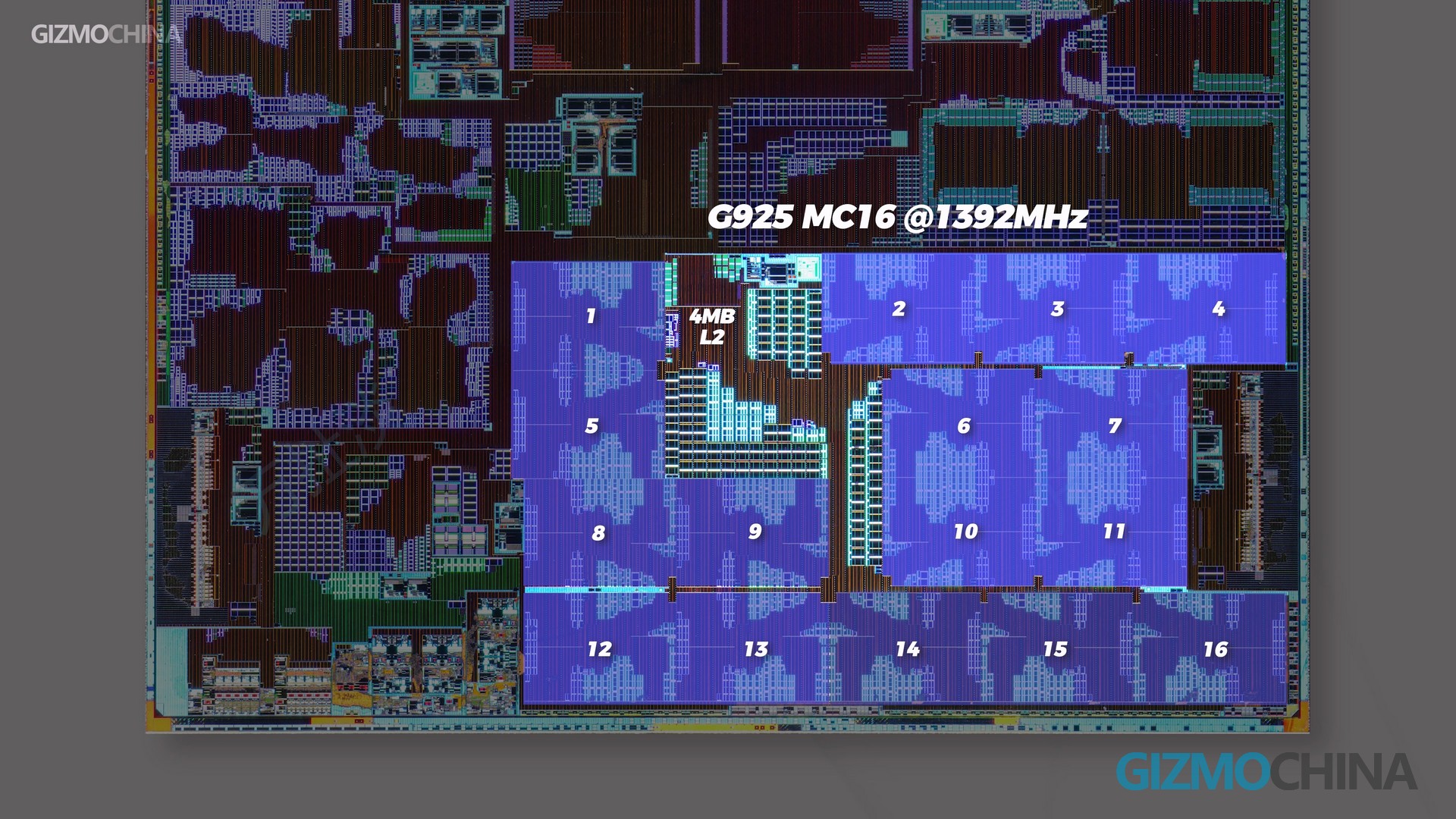
To understand the performance of the XRING O1, we must check the inside first. This is the dieshot of the XRING O1. Thanks to TSMC’s N3E process, this chip achieves a remarkably high level of integration. Compared to other flagship SoCs, its die area is even smaller.
However, the trade-off is that the modem is not integrated into the chipset. The XRING O1 uses a standalone MediaTek T800 modem chipset instead of Xiaomi’s in-house Surge T-series modem. After all, it even took six years for a giant like Apple to have its first 5G modem. So Xiaomi still has a long way to go in the 5G modem race.
The CPU unit sits on the upper half of the dieshot. It features 10 cores across four different ARM architectures and clock speeds. Apart from the two A520 cores, all others use ARM’s latest and most advanced architectures. The CPU’s peak frequency can reach an impressive 3.9 GHz.
The GPU unit is also unusually large, packing a 16-core ARM G925 GPU—even more ridiculous than the Dimensity 9400’s 12-core GPU. Benchmark tests reveal that the XRING O1’s CPU performance slightly outperforms the Snapdragon 8 Elite, while its GPU falls just a tad behind the 8 Elite.
On paper alone, the XRING O1 already has what it takes to compete with Apple, Qualcomm, and MediaTek. But whether it can truly win depends on real-world gaming performance. For the 15S Pro, we prepared three games to test the overall experience and power efficiency under different workloads.
Performance & Gaming Tests
Let’s start with the highest load game—Honkai: Star Rail. Although the processor begins throttling after 4 minutes, the frame rate gradually drops to 40 FPS and stabilizes, resulting in a relatively smooth gaming experience. Both temperature and power consumption are well-controlled, placing it firmly in the “excellent” category.
In contrast, the 15 Pro’s performance falls short. Whether in average power consumption, temperature, or frame rate, it fails to outperform the XRING-powered 15S Pro. Additionally, the 15 Pro shows significant frame rate fluctuations, making stutters noticeably perceptible during gameplay.
I believe Xiaomi has optimized this game specifically for the 15S Pro, with the XRING O1 playing a key role in delivering such a substantial improvement in gaming performance.
For flagship phones, Genshin Impact is no longer a particularly demanding game—both devices handle it effortlessly at a stable 60 FPS over extended sessions. Our focus here is on power efficiency and thermal performance. Once again, the 15S Pro wins; it can maintain similar frame rates while running cooler and more efficiently. The same trend continues in PUBG Mobile, with almost the same result.
With Wi-Fi, the XRING O1’s power and thermal management are truly world-class, offering slightly better gaming performance than the Snapdragon 8 Elite. So why do I say ” With Wi-Fi”? Because the XRING O1 lacks an integrated 5G modem.
5G Modem & Battery Life
Since the 15S Pro’s modem is a chipset separate from the SoC, its power consumption on 5G networks is inevitably higher than devices with integrated modems. But exactly how much higher? I ran some tests, under the same conditions, when switching from Wi-Fi to 5G gaming, the 15S Pro’s average power consumption was higher than the 15 Pro’s.
I also tested daily Apps like video calls and TikTok on 5G networks. The 15S Pro’s power consumption was consistently higher, too.
So when some people ask me about the Xiaomi 15S Pro’s battery life, I can only say it depends on your usage environment. If you’re mostly in Wi-Fi environments, then the 15S Pro’s battery life will outperform the 15 Pro’s. On the contrary, when going from 100% to empty on 5G networks, the 15S Pro’s battery life lasts about half an hour shorter than the 15 Pro’s.
ISP
The XRING O1’s ISP significantly impacts camera performance, both positively and negatively. Let’s start with the positives.
The most improved camera on the 15S Pro is this 5x telephoto camera, with very accurate white balance. And the weaker the light, the greater the advantage. The main camera’s dynamic range is also better, there are more details in highlights. Videos are sharper with less cropping. So the image stabilization becomes weaker.
In low light, the 15S Pro’s exposure will be higher. At 30fps, it may not be very noticeable, but when switching to 4K 60fps, you can clearly see the XRING’s advantage.
Unfortunately, the 15S Pro’s Leica tone has been weakened again, with not as high contrast. And the green problem in the night scene has also appeared on the 15S Pro’s ultra-wide camera, while the 15 Pro’s white balance is done very well. The viewfinder also underexposes in low light, and the clarity drops significantly.
I would say the O1’s ISP isn’t as powerful as imagined – it still needs some time to defeat Qualcomm.
Bluetooth & NPU
Music enthusiasts may worry about aptX-related Bluetooth protocols not being available on the 15S Pro. Xiaomi certainly wouldn’t disappoint earbuds users – they’ve licensed nearly all mainstream Bluetooth protocols. Whatever works on the Xiaomi 15 Pro will be the same on the 15S Pro too.
The XRING O1 features a 6-core NPU with 10MB cache, delivering computing power up to 44 TOPS. Although this NPU is powerful, Xiaomi hasn’t utilized it for many features. Xiaomi HyperAI still can’t work offline – all AI-related functions become unavailable without an internet connection.
Even when trying to benchmark this NPU’s AI performance improvements, scores are low due to Apps not being optimized for this new chipset. Hopefully, the HyperAI will be significantly better on the XRING O2 and truly unleash this NPU’s full potential across more Apps.
Others
While carefully testing whether the Xiaomi 15S Pro has other special features compared to the 15 Pro, I did find some differences. For example, the 15S Pro cannot keep AOD (Always-On Display) constantly active.
The ray tracing performance of XRING O1 also falls short of the Snapdragon 8 Elite. Using Geekerwan’s ray tracing demo for testing, the frame rate difference is significant.
However, XRING excels in other areas, such as HDR video decoding, WiFi-7 support, and GMS compatibility – these show very little difference compared to phones using Qualcomm chips.
Conclusion
So, the XRING O1 has undoubtedly become one of the world’s most powerful mobile processors. It is excellent in nearly all aspects, with only one notable weakness: subpar battery life on 5G networks. The good news is that Xiaomi has already developed a 4G modem, currently used in their smartwatches. Integrating a 5G modem into XRING is just a matter of time. The birth of the Xiaomi 15S Pro is to show the world that Xiaomi can develop its own chips – and do it just as well as anyone else.
XRING O2 is already on the way, with a clear goal this time: to become the world’s number one mobile platform. The Xiaomi 15S Pro will likely not have a global release, so if you’re a Xiaomi fan wanting to support the XRING team, you can check it out at GeekWills.
The Xiaomi Pad 7 Ultra just debuted as the first ever Ultra branded flagship tablet from the brand. But it seems like another premium tablet is also in the works. This new model could be the Xiaomi Pad 7S Pro, which just surfaced in a fresh leak that revealed some high end specs. So let’s check it out.
Xiaomi Pad 7S Pro: What does it offer?
This isn’t the first time we’ve heard of the Chinese tech giant’s upcoming Xiaomi Pad 7S Pro. Earlier this month, the Xiaomi Pad 7S Pro was spotted on the 3C certification. It revealed its 25053RP5CC model number and support for 120W wired fast charging. As the name suggests, it is the direct successor to the Xiaomi Pad 6S Pro (Review).
Xiaomi Pad 6S Pro
Known tipster Digital Chat Station previously revealed that this high end tablet will sport a 12.5-inch display. But in one of his newer Weibo posts, he claimed that it will be an LCD panel and not an OLED screen like the one found on the Xiaomi Pad 7 Ultra. While details regarding its specs and features are still under wraps, the Xiaomi Pad 7S Pro is expected to launch with a flagship grade processor.
This might be Qualcomm’s Snapdragon 8 Elite or the MediaTek Dimensity 9400 SoC. There’s also a chance that the company might debut this tablet with its brand new proprietary chip, the XRing O1. To recall, this is the same processor that powers the brand’s newest flagship phone, the Xiaomi 15S Pro. Unfortunately, that was all the information that was revealed in the latest leak, so stick around for more.
For more daily updates, please visit our News Section.
At an event in Shenzhen this week, Chinese smartphone brand Honor announced its entry into the category of humanoid robots.
The announcement came during the China launch of the Honor 400 series, where the company described it as a part of its broader push to become an “AI device ecosystem company,” rather than just another phone brand.
Honor starts its humanoid robot journey
Honor says it has already broken a humanoid robot running record with a speed of 4 meters per second. The hardware used for this achievement wasn’t actually built by Honor, though.
Instead, it came from Unitree, a Chinese robotics company known for its affordable and agile bipedal bots. Honor integrated its AI algorithm using Unitree’s open software interface as part of its contribution.
Xiaomi’s humanoid robot: CyberOne
The company framed this as a milestone toward developing its own robots, not just partnering with others. Honor also says it has a new “Industry Incubation Department” to explore “intelligent form factors,” including embodied AI and AI agents.
While Honor hasn’t unveiled its own hardware yet, it claims to be actively developing in-house robotics projects. It also says it’s working with partners in what it calls the “embodied intelligence ecosystem.”
The robot announcement was somewhat buried beneath the launch of the Honor 400 Series phones, which are apparently off to a strong commercial start. The company reports a 183% sales increase in the UK over the previous generation, crediting AI features like image-to-video generation powered by Google.
For more daily updates, please visit our News Section.
Over the last couple of weeks, the Nothing Phone (3) has been various leaks and teasers. We’ve already gotten a glimpse of its design and availability details, but the latest teaser might disappoint fans of Nothing’s iconic LED design. It seems like the Nothing Phone (3) could be skipping the Glyph design, so here’s what you need to know.
Lights out for the Nothing Phone (3)?
Nothing has been building up the hype for the Nothing Phone (3) with its recent teasers, but the latest video trailer shared some bad news. In an official tweet, the brand shared a short video showcasing what appears to be an older Nothing flagship. However, the tweet says that “We killed the Glyph Interface.” To recall, the Glyph interface was basically a series of LEDs at the back of Nothing smartphones that served as Nothing’s lighting system.
Nothing Phone (1)
This made Nothing phones easily recognizable as they stood out from the crowd. These didn’t serve just looks, but also offered various useful functions. It could light up whenever you get calls, messages, or some other kind of notifications. You could even customize the entire Glyph LED. While Nothing did state that its next gen flagship will feature “premium materials” for an improved design language, the trade off might be the Glyph.
Nothing was known for its transparent designs with LED lighting, so the “premium materials” might even suggest a titanium build. The Glyph being removed might make the Phone (3) lose its unique Nothing identity, but it is refreshing to see what the brand is cooking up with its new flagship phone that was two years in the making.
For more daily updates, please visit our News Section.
Samsung announced the One UI 8 beta program two on May 28, and as per the latest leak, the second beta is already on its way. Based on Android 16, this next release promises to iron out several kinks from the first beta and bring fresh features to the table, all while potentially expanding to more countries. With internal testing already underway, here’s what’s brewing for Samsung’s flagship series.
Beta 2 is currently being tested internally in two regions
According to the leak, a new One UI 8 Beta build, labeled ZYES, has been spotted for the Galaxy S25 Ultra, following the initial ZYER build that kicked off the beta program just two days ago. This second beta is currently being tested internally in the United States and Canada.
The second beta update is expected to squash bugs reported in the first beta, which launched in the US, UK, South Korea, and Germany for the Galaxy S25, S25+, and S25 Ultra. Users in these regions have been testing features like enhanced Quick Share, smarter My Files, and a 12GB RAM Plus option, but some hiccups, like app crashes and Now Bar notification issues, have popped up.
Beyond bug fixes, One UI 8 Beta 2 might include new tweaks to make the Galaxy experience smoother. While specifics remain under wraps, Samsung’s focus on multimodal AI and streamlined interfaces suggests improvements to AI tools like Now Brief.
Samsung hasn’t officially confirmed the details of Beta 2 yet, so we’re awaiting an announcement outlining the fixes and new features. For now, S25 owners in supported regions — including the US, Argentina, Austria, Brazil, Chile, Colombia, Czech Republic, Ecuador, France, Greece, Guatemala, Hungary, India, Indonesia, Kenya, Korea, Malaysia, Mexico, Netherlands, New Zealand, Nigeria, Pakistan, Panama, Peru, Philippines, Poland, Portugal, Singapore, South Africa, Spain, Taiwan, Thailand, Türkiye, Ukraine, Uzbekistan, and Vietnam — can keep an eye out for the update, which promises a more polished experience.
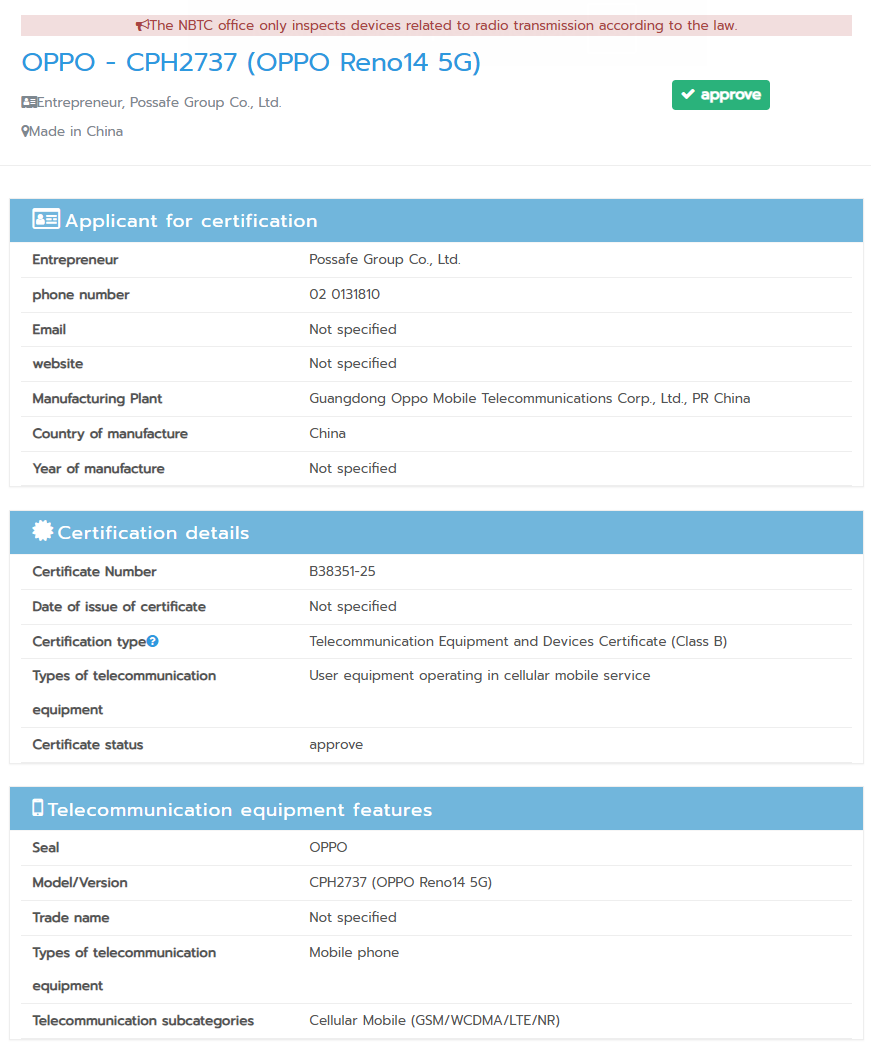
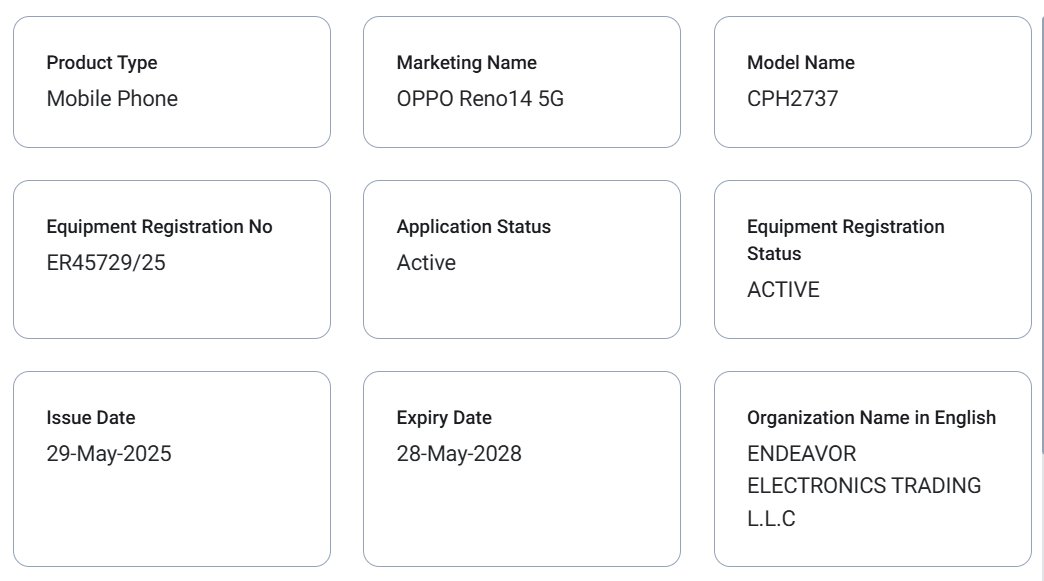
Earlier this month, Oppo unveiled the Reno 14 series of smartphones in China. The standard model features the Dimensity 8350, whereas the Pro edition gets the newer Dimensity 8450. Both devices are equipped with a 50-megapixel triple camera unit, which includes a periscope telephoto camera. The brand is reportedly gearing up for the global launch of the Reno 14 series. Ahead of the expected launch, the standard model has received multiple certifications across different countries.
The above screenshots confirm that the Oppo Reno 14 5G, which bears the model number CPH2737, has been approved by NBTC and TDRA certification platforms in Thailand and the UAE, respectively.
The Oppo CPH2737 has been previously spotted at other certification platforms, such as BIS (India), IMDA (Singapore), and SDPPI (Indonesia). It has also appeared in the databases of import/export data, GCF, and TUV Rheinland. While none of these listings have revealed any information about the Reno 14’s specifications, the TUV listing revealed that it may support 80W charging.
Oppo Reno 14 5G specifications
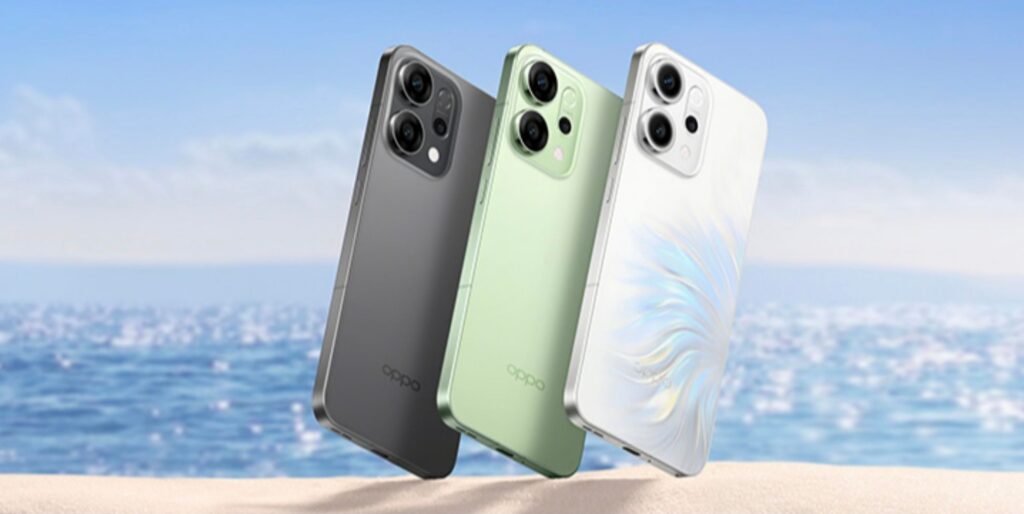
Oppo Reno 14 color options
In China, the Oppo Reno 14 features a 6.59-inch 1.5K 120Hz OLED panel equipped with an in-screen fingerprint sensor. Under the hood, it has the Dimensity 8350 chip, up to 16GB of LPDDR4x RAM, up to 512GB of UFS 3.1 storage, and a 6,000mAh battery with 80W charging.
The Reno 14 has a 50-megapixel camera with autofocus support for selfies and video calls. Its rear camera setup comprises a 50-megapixel main camera with OIS support, a 50-megapixel ultra-wide lens, and an OIS-assisted 50-megapixel periscope telephoto camera with 3x optical zoom.
A recent report claimed that the Oppo Reno 14 series is scheduled to launch in the first week of July in India. The device is expected to arrive in two shades, including the Pearl White edition.
For more daily updates, please visit our News Section.
There have been reports that Vivo is gearing up to expand the T4 lineup in India. It is expected to launch as the T4 Ultra, the most powerful T4-series smartphone. Today, the brand dropped the first teaser of the phone, hinting that it will debut soon in the country.
The above teaser released by the brand gives the first look at the Vivo T4 Ultra’s design. It seems to be equipped with an oval camera module similar to the T3 Ultra from last year.
While the T3 Ultra featured a dual-camera system, the T4 Ultra appears to be fitted with a triple-camera unit and a round Aura LED flash. A closer look at the third camera module suggests that it could be a periscope telephoto camera.
The company claims that the T4 Ultra will offer “flagship-level zoom,” and the text imprinted on the camera module confirms support for 100x digital zoom. The teaser also confirms that the T4 Ultra will be sold via Flipkart in India.
The Vivo T4 Ultra is expected to feature the Dimensity 9300 Plus chipset and could be based on the Vivo S20 Pro, which debuted in December last year in China. Therefore, it could be equipped with a 6.67-inch OLED panel that offers a 1.5K resolution and a 120Hz refresh rate. It may arrive with a 5,500mAh battery with 90W charging support.
The device could be equipped with a 50-megapixel primary camera with OIS support, a 50-megapixel ultra-wide lens, and a 50-megapixel periscope telephoto camera with 3x optical zoom. For selfies, it may feature a 50-megapixel front camera.
For more daily updates, please visit our News Section.
Infinix has officially unveiled the XPAD 20 tablet in global markets. The tablet has made an appearance on the brand’s global website, although region-specific launch details have yet to be confirmed.
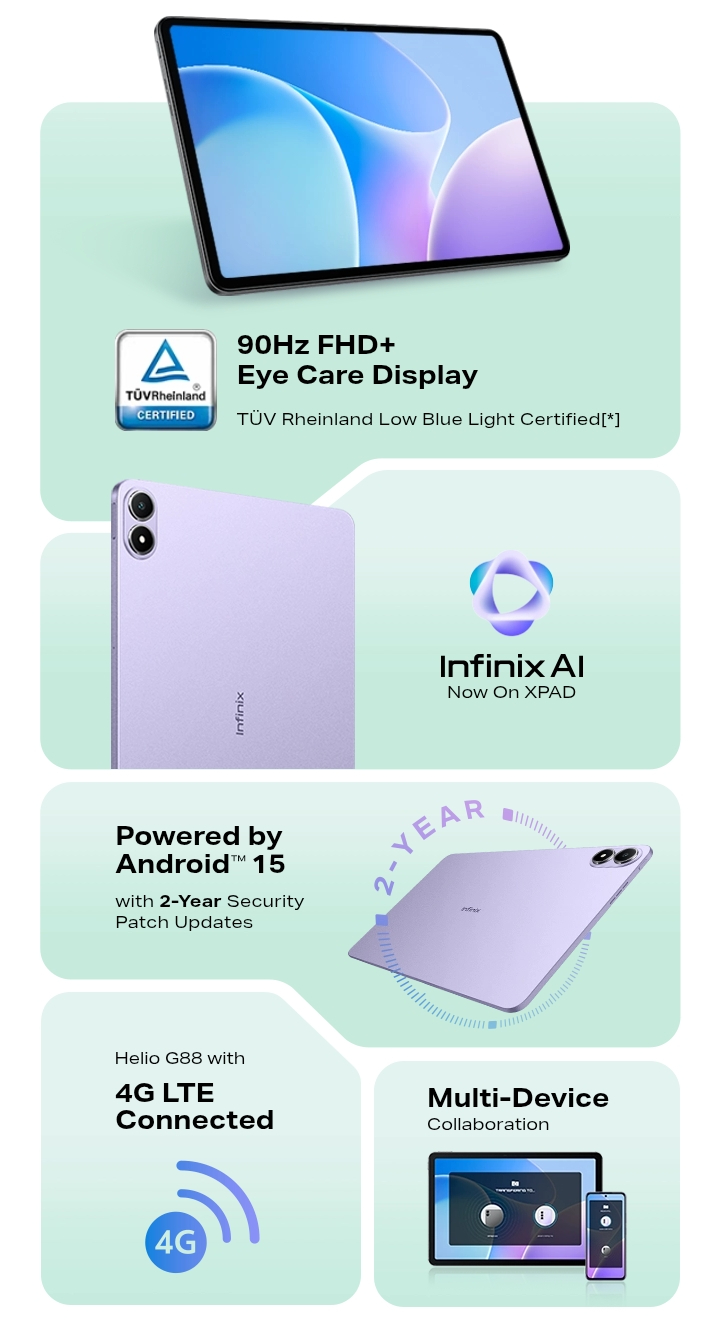
As per the listing, the XPAD 20 is powered by the MediaTek Helio G88 processor (2.0 GHz) and uses the ARM Mali-G52 2EEMC2 GPU. The tablet runs on Android 15 and comes with a promise of two years of security patch updates.
The XPAD 20 is available in four storage variants: 4GB + 128GB, 6GB + 128GB, 8GB + 128GB, and 8GB + 256GB. It uses LPDDR4X RAM and eMMC storage. Storage can be expanded up to 1TB using a microSD card.
It features an 11-inch IPS LCD screen with Full HD+ resolution (1200×1920), an 83.70% screen-to-body ratio, and a 72% NTSC color gamut. The display supports 60Hz and 90Hz refresh rates, a 180Hz touch sampling rate, 25kHz PWM dimming, a 1500:1 contrast ratio, and up to 440 nits brightness. The screen is TÜV Rheinland certified for low blue light.
Camera specs include an 8MP rear camera with flash and 1080p video at 30fps, and a 5MP front camera with flash that records 720p video at 30fps. The XPAD 20 packs a 7000mAh battery and supports 10W wired charging via USB Type-C. Connectivity options include 2G, 3G, 4G, WiFi 5, Bluetooth 5.2, GPS, and OTG support. The device also has a 3.5mm headphone jack and a G-sensor. It supports nano SIM and microSD cards with a combined tray. Infinix has added AI features and multi-device collaboration support. The tablet measures 257.67 x 169.22 x 7.9 mm and weighs 498 grams.
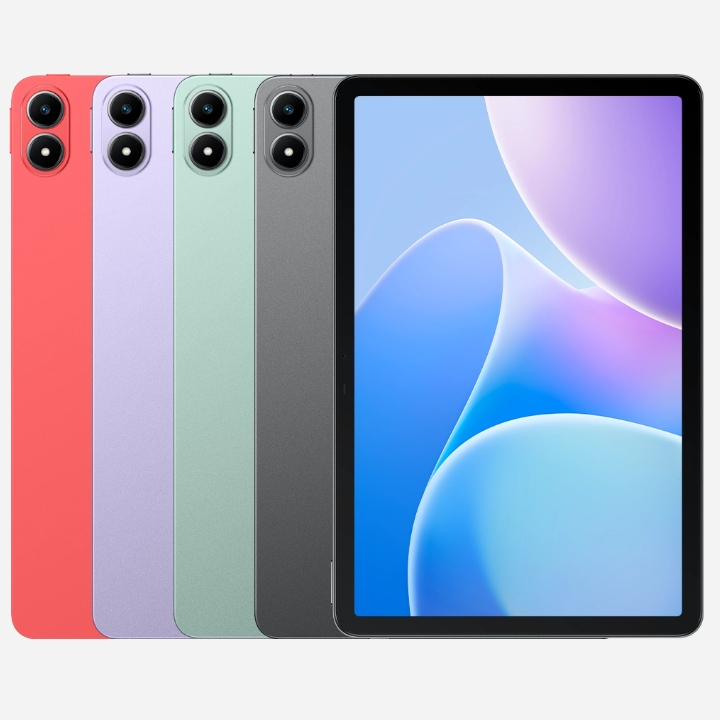
Color options include Rising Red, Dreamy Purple, Forest Green, and Stellar Grey. Infinix is also offering a protective case, keyboard, and stylus as separate accessories.
In addition to the XPAD 20, Infinix has also announced the upcoming launch of the XPad GT tablet and GT 30 Pro smartphone on May 21 in Malaysia. The XPad GT features a 12.1-inch 2.8K LCD display with a 144Hz refresh rate, Snapdragon 888 chipset, 8 speakers for 3D audio, and Folax AI assistant.
For more daily updates, please visit our News Section.
Vivo X200s and OnePlus 13 are two of the most compelling Android flagships in 2025, each offering cutting-edge hardware and premium features. With similar pricing tiers but different philosophies, MediaTek vs Qualcomm, and Zeiss vs Hasselblad, this comparison highlights the crucial differences that can influence power users, photography enthusiasts, and performance-driven buyers. Understanding how these devices differ in display tech, performance, cameras, and charging helps determine which flagship delivers more value in real-world use.
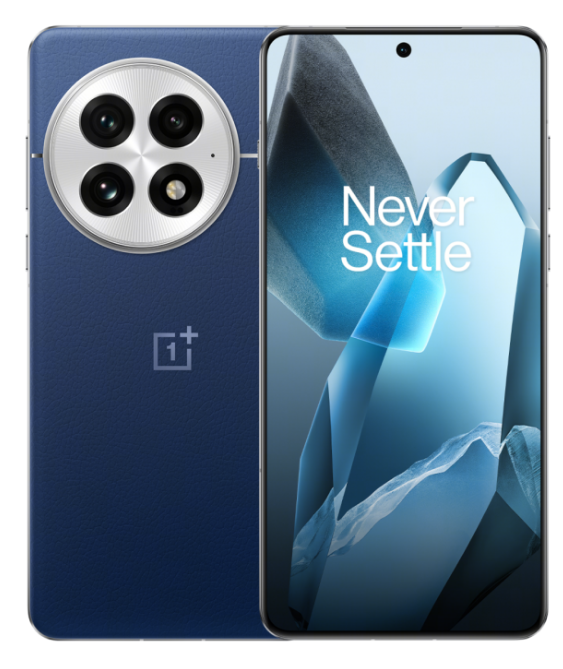
Build and Feel: Both phones offer premium designs with IP68/IP69 certification for durability. The Vivo X200s uses a sleek glass build with a minimalistic look, while the OnePlus 13 steps it up with a ceramic guard front, glass or eco-leather back, and aluminum frame. OnePlus feels more luxurious and offers a slightly better in-hand grip, especially with the eco-leather option. The inclusion of a barometer in the OnePlus 13 also hints at a more premium orientation for fitness and outdoor usage.
Display Quality: OnePlus 13 features a larger 6.82-inch LTPO 4.1 AMOLED with a peak brightness of 4500 nits and a sharper 1440p resolution, offering exceptional clarity and outdoor visibility. Vivo X200s uses a 6.67-inch AMOLED panel with an impressive 5000 nits peak brightness but slightly lower resolution. Both support HDR10+ and HDR Vivid, though OnePlus adds Dolby Vision and an always-on display. The OnePlus panel edges ahead with better pixel density and dynamic refresh rate control thanks to LTPO.
Verdict: While the Vivo X200s impresses with brightness and color richness, the OnePlus 13 offers superior display sharpness, dynamic refresh control, and a more premium feel—making it the better choice for users who prioritize screen quality and build finesse.
2. Specifications
OnePlus 13
Performance: OnePlus 13 is powered by the Snapdragon 8 Elite with custom Oryon V2 Phoenix cores, delivering top-tier CPU and GPU performance. Vivo X200s uses the Dimensity 9400+, which is extremely capable but slightly trails in GPU output. The OnePlus also includes UFS 4.0, compared to UFS 4.1 in the Vivo, though in real-world usage, this is negligible. However, OnePlus can be configured with up to 24GB RAM, providing more flexibility for heavy multitasking.
Battery and Charging: Vivo X200s houses a larger 6200 mAh battery with 90W wired and 40W wireless charging. OnePlus 13 has a slightly smaller 6000 mAh cell but supports 100W wired and 50W wireless charging. It also supports 10W reverse wireless, making it more versatile for accessory charging. The OnePlus charges faster and has more features, but Vivo delivers marginally better endurance due to the larger cell.
Verdict: OnePlus 13 is the performance leader with a faster processor and better RAM options, while Vivo X200s offers slightly better battery life. For users needing faster charging and maximum performance, OnePlus is the better option.
3. Camera
Vivo X200s
Main and Secondary Lenses: Both phones feature triple 50MP cameras, including wide, telephoto, and ultrawide lenses. The OnePlus 13 benefits from Hasselblad Color Calibration and a color spectrum sensor, enhancing natural tones and color balance. Vivo counters with Zeiss optics, T* coating, and laser autofocus, which offer detailed textures and lower glare. Both offer 3x optical zoom via periscope lenses. OnePlus supports 8K video, while Vivo maxes out at 4K.
Selfie Camera: Both phones use a 32MP front camera with 4K video support. The Vivo X200s has an ultrawide 20mm lens, ideal for group selfies and landscapes, whereas OnePlus provides a slightly tighter 21mm wide lens with better pixel size and stabilization. OnePlus adds panorama support and more aggressive HDR processing.
Verdict: While Vivo X200s delivers more versatile wide-angle selfies and slightly better optics in daylight, the OnePlus 13 has a more comprehensive camera setup with superior software features and video capability, making it the better all-round camera phone.
4. Pricing
OnePlus 13
Vivo X200s is priced around $650, while the OnePlus 13 commands a premium at $950. This $300 gap is justified by the OnePlus 13’s superior display, faster performance, better-charging features, and enhanced camera versatility. However, the Vivo X200s remains an excellent value with a flagship-level experience at a significantly lower cost.
For budget-conscious users seeking balanced performance, Vivo is the smarter pick. For users wanting the absolute best and are willing to pay extra, OnePlus offers more polish and power.
5. Conclusion
Vivo X200s
OnePlus 13 offers several standout features like 8K recording, Circle to Search, Dolby Vision support, barometer sensor, and faster 100W/50W charging, which are absent on the Vivo X200s. It also supports reverse wireless charging, giving it more utility. On the other hand, the Vivo X200s stands out with its brighter 5000-nit screen, longer battery life, and strong camera performance with Zeiss optics at a more affordable price point.
Verdict: Choose the OnePlus 13 if you want a top-tier flagship with cutting-edge performance, superior display, and better video features. Pick the Vivo X200s if you want excellent value, long battery life, and a premium experience without stretching your budget. Both are excellent but cater to different priorities.
iQOO is reportedly working on the iQOO 15 series of flagship phones for the Chinese market. The iQOO 10 to 12 series included both standard and Pro models, but last year, the brand only launched the iQOO 13, skipping the Pro variant. According to reports, the upcoming iQOO 15 series will consist of two models. A new leak by tipster Digital Chat Station suggests that the standard model will be joined by an Ultra edition.
iQOO 15 Ultra
iQOO 15 Ultra’s existence tipped by DCS
The iQOO 15 series phone with higher configuration could be called the iQOO 15 Ultra when it hits the market, claims tipster Digital Chat Station. The leak reveals that the device will be equipped with a large 2K screen with a flat design. This could be the same 6.85-inch flat Samsung display with LIPO technology that is expected to be available on the standard model. This device will also feature a periscope camera and wireless charging support.
iQOO 15 Ultra’s periscope camera details
The iQOO 15 Ultra is also being tested with shoulder buttons for gaming and an active cooling fan, which may not be available on the standard version. Another Weibo post by the same source reveals that this high-end device is also being tested with a new mid-range periscope lens featuring a 50-megapixel sensor, 0.8μm pixel size, and approximately 1/1.95-inch sensor size.
iQOO 15
iQOO 15 leak by DCS
A newer leak by DCS reveals that the standard model will feature a 6.85-inch flat Samsung display with LIPO technology. This is a new display packaging tech that will allow the screen to sport slimmer, symmetrical bezels. The device will also feature a periscope telephoto camera.
Both devices are expected to be powered by the forthcoming Snapdragon 8 Elite 2 and feature the company’s independent display chip. The entire series could be equipped with a metal middle frame, an ultrasonic in-screen fingerprint sensor, and an IP68/69-rated chassis. Previous leaks have suggested that the Ultra edition may house a 7,000mAh+ battery with 100W charging.
For more daily updates, please visit our News Section.
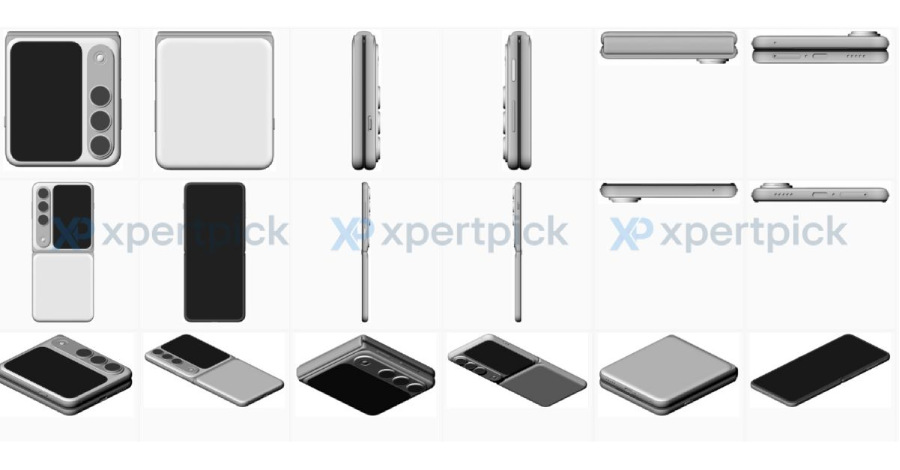
It looks like Oppo might return to clamshell foldables in 2025, more than a year after the Find N3 Flip. The next-gen foldable might be called the Find N5 Flip, as the number 4 is considered unlucky in China.
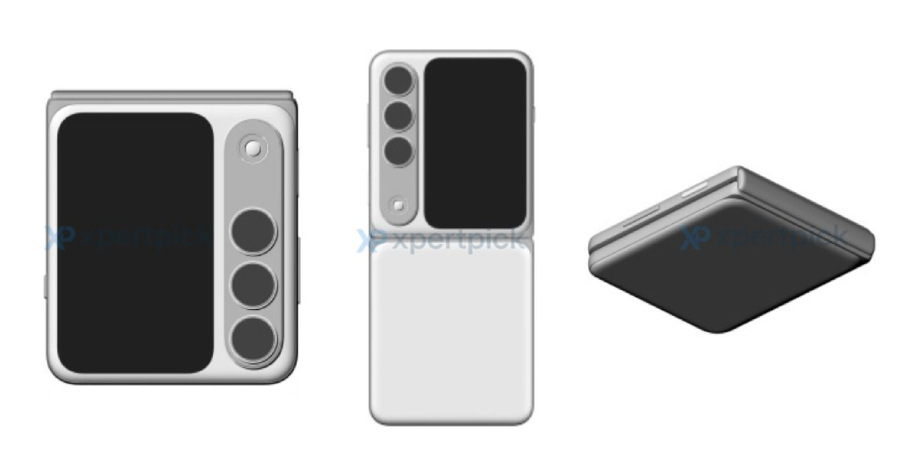
Recently, a new flip phone from Oppo has appeared on the World Intellectual Property Organization (WIPO) patent filing with a set of renders. While the docs don’t explicitly call it the Find N5 Flip, the timing and design make a pretty strong case.
This could be the upcoming Oppo Find N5 Flip
Seeing these renders, it’s clear that Oppo is refining its design rather than making any big changes. The cover screen still has that rectangular shape, but now the camera system has been reworked into a pill-shaped module stacked on the right.
The new layout frees up more space for the cover screen, which is pretty evident from renders. It now looks just a bit wider.
The clamshell has three cameras on the pill module and has no visible gap between the hinges when closed. The internal display also seems largely unchanged, and yes, there’s still an alert slider.
However, keep in mind that this is a patent filing and not all patent applications materialize. So this could either be something that Oppo is working on or just a concept in itself.
So far, Oppo hasn’t said a word about a new flip phone. The book-style Find N5 launched back in February 2025 and has made its way to global markets, at least in some regions. And just like last time, when the Find N3 Flip launched separately from its foldable sibling, we’re expecting the same rollout strategy for the Find N5 Flip.
For more daily updates, please visit our News Section.
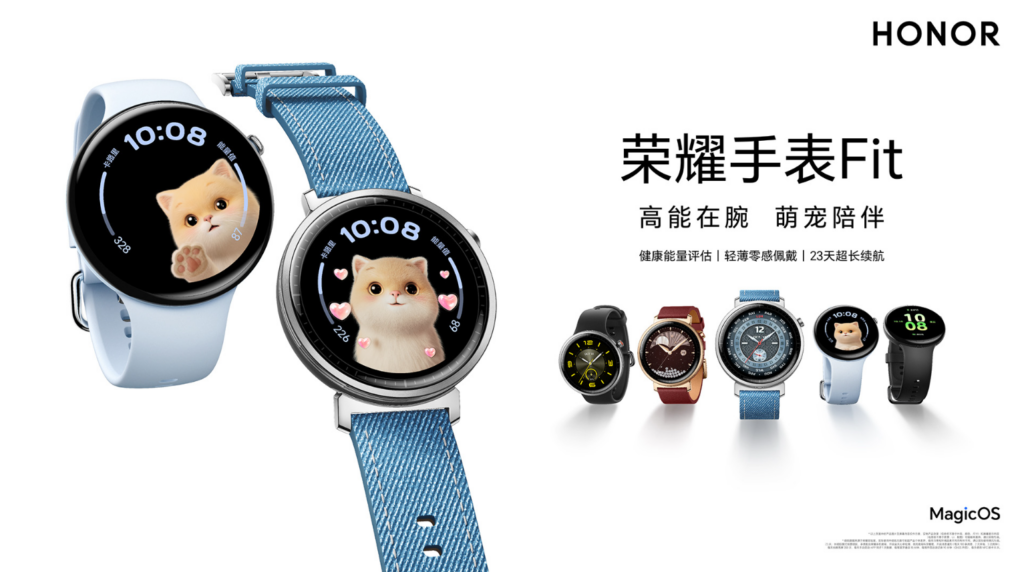
Honor has launched the Watch Fit Vitality Edition in China. It comes with a 1.32-inch AMOLED screen with a resolution of 466 x 466. The touchscreen is capacitive and supports gestures like raise to wake, tap, and button press.
The watch runs on MagicOS 9.0 and works with phones using Android 9.0 and above or iOS 13.0 and above. It has a single button on the side that supports short press, long press, and double press actions. The body is 9.9mm thick at its slimmest part and weighs about 26g without the strap, and 44g with it. The strap is made of silicone and fits wrist sizes from 140mm to 200mm.
The battery has a rated capacity of 480mAh and a typical capacity of 495mAh. Charging is done through a magnetic port, and it takes about 1 hour to fully charge with a 5V/2A charger. The watch offers up to 23 days of battery life in regular use and 9 days with Always-On Display enabled.
It supports Bluetooth 5.4 and has a maximum range of up to 160 meters. The watch includes NFC for payments and supports Bluetooth calling. Music control and software updates via OTA are also available.
The Watch Fit Vitality Edition supports 100 sports modes, including 12 professional ones like running, cycling, swimming, hiking, and more. It tracks heart rate, sleep, blood oxygen levels, and stress. It also offers HRV monitoring, women’s health tracking, and health reports. Honor’s YOYO AI assistant gives fitness suggestions and daily updates.
Sensors include an accelerometer, gyroscope, geomagnetic sensor, PPG heart rate sensor, and ambient light sensor. For positioning, it supports Beidou, GPS, GLONASS, Galileo, and QZSS. The watch is water and dust resistant with a 5ATM and IP68 rating.
Pricing & availability
Pricing starts at ¥424 ($59) for the Active version and ¥594 ($82) for the Elegant version. The watch is available via JD.com and Honor’s Chinese website. The brand has not revealed any details regarding a global launch.
For more daily updates, please visit our News Section.
There have been reports that Redmi is working on a gaming tablet for China. It may launch alongside the upcoming Redmi K80 Ultra smartphone, which is expected to break cover next month (June) in the home market. In a new development, Redmi’s product manager, Xinxin Mia recently sparked excitement on social media by hinting at the arrival of the said device.
Redmi’s compact gaming tablet teased
Redmi’s compact gaming tablet teased
In a recent Weibo post, Xinxin Mia asked Redmi fans why they are looking for a performance-focused compact tablet. This aligns with recent leaks that have claimed Redmi plans to launch a compact tablet equipped with an 8.8-inch screen alongside the Redmi K80 Ultra in June.
This new Redmi gaming tablet is expected to compete head-to-head with devices such as Lenovo’s Legion Y700 (fourth generation) and Red Magic’s gaming tablet. The Lenovo Legion Y700 debuted this month with an 8.8-inch LCD panel and the Snapdragon 8 Elite chipset, while the upcoming Red Magic’s offering will include a 9-inch OLED screen, the Snapdragon 8 Elite Leding Version SoC, and a built-in fan.
As per recent leaks, Redmi’s compact tablet will sport an 8.8-inch 3K LCD display with a 165Hz refresh rate. The tablet’s ergonomic design will ensure a comfortable grip for extended gaming sessions.
Under the hood, it will be powered by the robust Dimensity 9400+, the same chip that fuels the Redmi K80 Ultra. To enhance gameplay, the tablet will come with dual X-axis linear motors, dual USB-C ports, and stereo speakers. A substantial 7,500mAh battery with bypass charging support will keep the device powered during marathon gaming sessions.
For more daily updates, please visit our News Section.
Recent reports have claimed that Xiaomi is working on the Redmi Pad 2 (4G) and its Wi-Fi version for multiple markets. In a new development, a Brazilian YouTube channel TukEmperial, has posted an unboxing video of the Redmi Pad 2, giving viewers a first look at its design. Although Xiaomi hasn’t launched the tablet yet, the video covers everything from unboxing to specifications and price, revealing a host of details about the device ahead of its official debut.
Redmi Pad 2 unboxed
Redimi Pad 2 | Image source: YouTube / TukEmperial
The video starts with the unboxing process, showing off the tablet’s box and what’s inside. It includes the tablet itself, a USB-C cable, an 18W charger, manuals, and a tool for the memory card or SIM card tray.
Redmi Pad 2 specifications
As per the video, the Redmi Pad 2 comes with an 11-inch IPS display that offers a 2.5K resolution and a 90Hz refresh rate. In terms of audio, the device houses four speakers with Dolby Atmos support.
Powering the Redmi Pad 2 is the Helio G100 Ultra processor, accompanied by 8GB of RAM and 256GB of storage in the unit showcased in the video. There’s also a 4GB RAM version, offering more affordable options.
Redimi Pad 2 | Image source: YouTube / TukEmperial
The Redmi Pad 2 achieved a benchmark score of 400,000 points on AnTuTu benchmarks. Games like Asphalt 9 and Call of Duty run well, claims the YouTuber. Its massive 9,000mAh battery is expected to comfortably last a full day, with the presenter mentioning up to 10 hours of video playback.
On the photography front, the Redmi Pad 2 has an 8-megapixel rear camera and a 5-megapixel front camera with seemingly better quality for video calls. Other handy features include a microSD slot, a headphone jack, and HyperOS-based Android 15 with Circle to Search support.
As of now, Xiaomi hasn’t officially launched the Redmi Pad 2, but with such a comprehensive video already available, it’s likely that the company will reveal the tablet in the coming days. The video also claims that the device is priced at BRL 1300 (~$240).
For more daily updates, please visit our News Section.
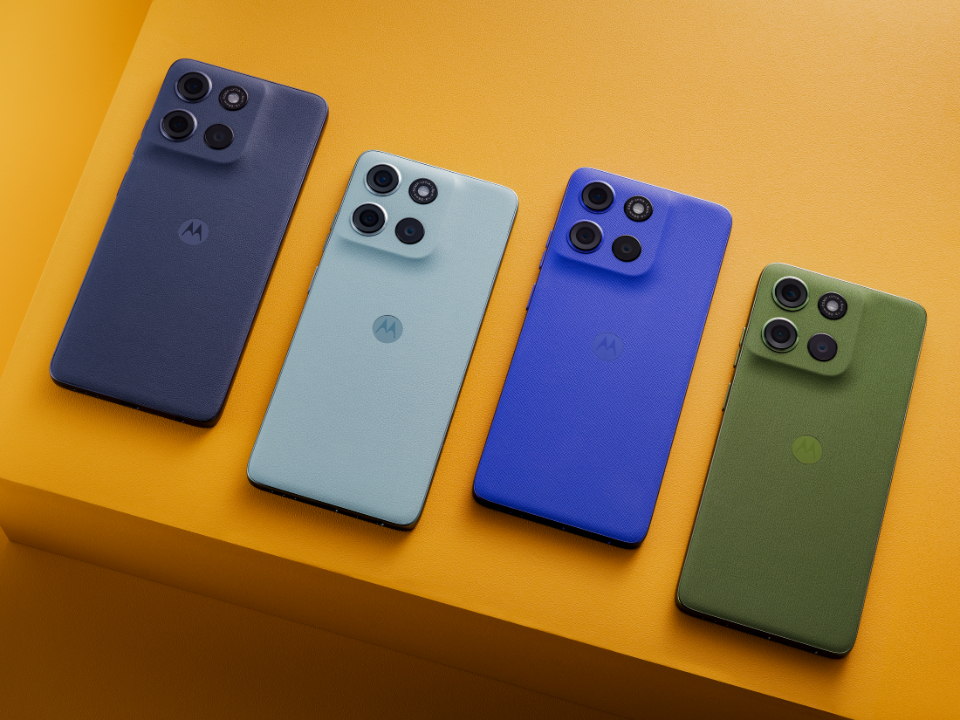
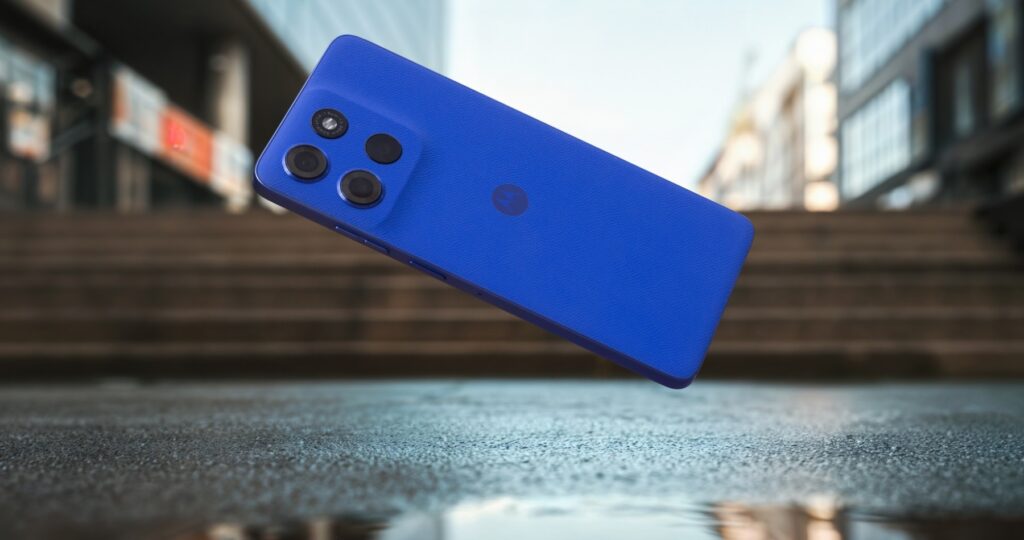
Motorola has launched the Moto G56 5G, a budget phone that packs solid specs for everyday users who want good performance and cameras without spending too much.
The phone runs on MediaTek’s Dimensity 7060 chip with Android 15. You get 8GB of RAM and 256GB of storage, plus you can add up to 2TB more with a microSD card. It supports dual SIM with one physical slot and eSIM, and there’s a separate slot for the microSD card.
The screen is a 6.72-inch Full HD+ LCD with 120Hz refresh rate. It’s not AMOLED, but Motorola protected it with Corning Gorilla Glass 7i. The screen takes up 87% of the front.
Battery life comes from a big 5200mAh cell that charges at 30W. The phone weighs 200g and has IP68 and IP69 ratings, so it can handle water and dust.
For cameras, there’s a 50MP main sensor using Sony’s LYTIA 600 with PDAF and Quad Pixel tech. You also get an 8MP ultra-wide camera and a 32MP front camera. Software features include Auto Night Vision, Portrait Mode, Pro Mode, and 8x digital zoom. Motorola’s AI tools help improve photos.
Audio comes through Dolby Atmos stereo speakers, and there’s still a 3.5mm headphone jack. Other features include Google Assistant, ThinkShield security, Wi-Fi 6, Bluetooth, and NFC support in some regions.
Pricing & availability
The Moto G56 5G costs £199.99 in the UK and €250 in Europe. There’s only one version with 8GB RAM and 256GB storage. Motorola hasn’t said when it will launch in other countries.
For more daily updates, please visit our News Section.
OnePlus has been steadily expanding its Ace lineup in China, catering to a performance-driven audience with a balance of high-end specs and aggressive pricing. The OnePlus Ace 5 series now consists of four distinct models: the Ace 5, Ace 5 Pro, the newly introduced Ace 5 Ultra, and the Ace 5 Racing Edition. While they all share a common design philosophy, each model is tuned for a different kind of user, from hardcore gamers to premium smartphone enthusiasts.
Launched earlier, the OnePlus Ace 5 and Ace 5 Pro are the Snapdragon-based models in the lineup. The Ace 5 is powered by the Snapdragon 8 Gen 3 SoC, while the Ace 5 Pro takes things further with the Snapdragon 8 Elite chip, Qualcomm’s most powerful platform to date.
Both phones feature a 6.78-inch 1.5K 8T LTPO AMOLED display with up to 4500 nits of peak brightness, 120Hz refresh rate, and Crystal Shield Glass. The display supports wet-finger touch response and is tailored for high-end mobile gaming and media consumption.
The Ace 5 Pro features enhanced thermal management with its “double ice core” vapor chamber system and a dedicated G1 gaming Wi-Fi chip, giving it a solid edge in connectivity and sustained gaming performance. Both phones support native 120 fps gaming, 100W SuperVOOC fast charging (80W on Ace 5), and bypass charging for gaming while plugged in.
Camera-wise, both phones come with a 50MP Sony IMX906 main sensor, 8MP ultra-wide, and a 2MP macro shooter. The front houses a 16MP selfie camera inside a punch-hole cutout.
Battery capacities differ slightly: the Ace 5 has a 6415mAh carbon-silicon battery, while the Ace 5 Pro includes a 6100mAh cell. Both support fast charging, but the Ace 5 Pro’s superior silicon battery and chipset make it the more capable device overall.
2. OnePlus Ace 5 Ultra
The Ace 5 Ultra is the most powerful MediaTek-based phone OnePlus has ever released. It comes with the flagship Dimensity 9400+ chipset and a large 6.83-inch AMOLED display with 1.5K resolution and 144Hz refresh rate. This model is built for users who want top-tier performance without splurging on a Snapdragon Ultra-tier device.
The Ultra supports up to 16GB LPDDR5X RAM and 1TB UFS 4.0 storage, paired with a unique dedicated shortcut key that allows quick access to custom actions like voice recording, mute, or translation. The phone is kept cool by a new “Glacier Cooling System” with a 7300mm² vapor chamber and a 4000mm² backplate cooling area.
The camera system is modest, with a 50MP main IMX906 sensor, an 8MP ultra-wide, and a 16MP selfie camera. However, its 6700mAh battery with 100W fast charging and bypass charging stands out, especially for gamers and heavy users.
3. OnePlus Ace 5 Racing Edition
Targeting the value-conscious gamer, the Ace 5 Racing Edition brings the MediaTek Dimensity 9400e chip, an efficiency-optimized version of the 9400+, paired with the same custom Fengchi gaming core found in the Ultra. It has a slightly smaller 6.77-inch AMOLED screen at 120Hz, and while the display resolution is lower at FHD+, it still delivers a fluid gaming experience.
The camera setup is simplified to a 50MP main sensor and a 2MP monochrome lens. Still, the biggest highlight is its enormous 7100mAh battery, the largest in any OnePlus phone, coupled with 80W charging. It also includes a custom cooling solution with a 7000+mm² vapor chamber and a total heat dissipation area of 29772mm².
4. Final Thoughts
Each phone in the OnePlus Ace 5 lineup serves a specific purpose. The Ace 5 Pro is the ultimate gaming flagship with Snapdragon power, advanced cooling, and Wi-Fi optimization. The Ace 5 Ultra offers a balanced flagship experience with top-tier MediaTek hardware and a refined design. The Ace 5 is a slightly toned-down but still powerful variant with better affordability, and the Racing Edition is designed for budget-conscious gamers needing massive battery life and gaming chops at a lower cost.
While the Ace 5 Pro, Ultra, and Racing Edition remain exclusive to China for now, the standard OnePlus Ace 5 has already been rebranded and launched globally as the OnePlus 13R, featuring slightly altered camera and battery specifications.
For more daily updates, please visit ourNews Section.
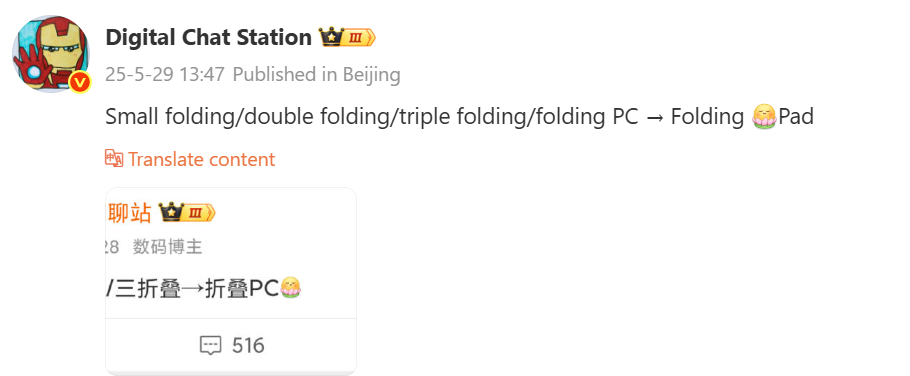
Earlier this month, Huawei introduced the MateBook Fold Ultimate Design, its first notebook with a foldable display. This addition strengthens Huawei’s already impressive lineup of foldable devices, which includes flip phones, the wide foldable Pura X, horizontal foldable phones with both inward and outward folding designs, and a foldable PC. Now, tipster Digital Chat Station has revealed that Huawei is preparing to launch a foldable tablet.
Huawei foldable tablet: What to expect?
Huawei is working on a foldable tablet
While the tipster confirmed the existence of Huawei’s upcoming foldable tablet, he didn’t share any details about its specifications. However, it’s expected that the device could feature a 12 to 14-inch display when unfolded, shrinking to a more portable size when folded—making it easier to carry on the go.
Similar to foldable phones, the device may also include a cover screen for quick interactions in its folded state. As there’s no concrete information yet about the technical specifications, we’ll have to wait for further updates.
In related news, Huawei is also developing a new foldable phone called the Mate X7, expected to launch in the second half of this year. The Mate X7 will use Huawei’s in-house Kirin chip, though the device’s key specs remain unknown at this time.
For more daily updates, please visit our News Section.
We use cookies on our website to give you the most relevant experience by remembering your preferences and repeat visits. By clicking “Accept”, you consent to the use of ALL the cookies.
This website uses cookies to improve your experience while you navigate through the website. Out of these, the cookies that are categorized as necessary are stored on your browser as they are essential for the working of basic functionalities of the website. We also use third-party cookies that help us analyze and understand how you use this website. These cookies will be stored in your browser only with your consent. You also have the option to opt-out of these cookies. But opting out of some of these cookies may affect your browsing experience.
Necessary cookies are absolutely essential for the website to function properly. This category only includes cookies that ensures basic functionalities and security features of the website. These cookies do not store any personal information.
Any cookies that may not be particularly necessary for the website to function and is used specifically to collect user personal data via analytics, ads, other embedded contents are termed as non-necessary cookies. It is mandatory to procure user consent prior to running these cookies on your website.