Anker just launched the Soundcore Sleep A30, earbuds made for sleeping. They’re targeting the 40% of adults who have trouble sleeping due to noise.
The earbuds pack dual noise sensors in each bud with active noise cancellation that works three ways: adaptive, active, or off. The charging case can actually detect snoring and changes the audio to mask it automatically.
Each earbud runs for 9 hours on one charge. With the charging case, you get 45 hours total. They use small but powerful drivers and come with foam tips that block noise even when the ANC is off.
The design focuses on comfort for side sleepers. Anker shaped them with what they call a 3D ergonomic fit using soft materials so they won’t hurt when you’re lying on your side all night.
The Sleep A30 includes Anker’s AI Brainwave Audio system that’s supposed to help you fall asleep faster. It adapts to your room’s sounds and adjusts accordingly.
Anker says most sleep earbuds fail because they can’t balance comfort with good noise blocking. The A30 tries to fix this problem with its compact size and specialized shape.
Pricing & availability
The earbuds launch on Kickstarter on June 16 at midnight EST. Early backers pay $139 instead of the regular $229 price. You can also get a two-pack starting at $278, which saves up to $180.
Shipping starts in July for Kickstarter backers. Buyers get free Soundcore Care service and 20% off future purchases on Soundcore.com. However, Soundcore Care isn’t available in some European countries.
For more daily updates, please visit our News Section.
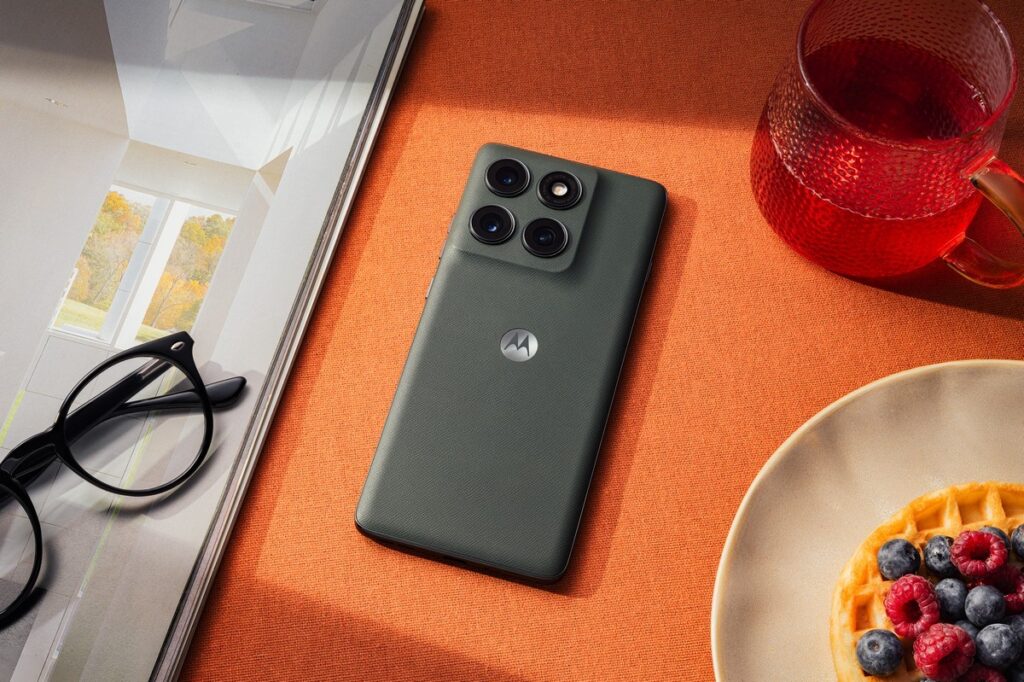
Motorola has unveiled its latest addition to the Edge series, the Motorola Edge 2025, introducing a range of enhancements over its predecessor. Aimed at markets like the US and Canada, the Edge 2025 is a rebadged version of the Motorola Edge 60 available in other markets. Here’s a look at the specifications, features, and price of the device.
Motorola Edge 2025 specifications and features
Motorola Edge 2025
The Motorola Edge 2025 sports a 6.67-inch curved pOLED display with a resolution of 2712 x 1220 pixels, supporting a 120Hz refresh rate and HDR10+ certification. The screen is protected by Corning Gorilla Glass 7i and offers up to 4,500nits of peak brightness.
The device is powered by the MediaTek Dimensity 7400 chipset, paired with 8GB of LPDDR4X RAM and 256GB of UFS 2.2 internal storage. It runs on Android 15 and is equipped with a 5,200mAh battery that supports 68W wired TurboPower charging and 15W wireless charging.
In terms of photography, the Edge 2025 features a triple rear camera setup: a 50-megapixel main sensor with OIS, a 50-megapixel ultra-wide lens with a 122-degree field of view, and a 10-megapixel telephoto lens offering 3x optical zoom and up to 30x digital zoom. The front camera has been upgraded to a 50-megapixel sensor, capable of 4K video recording at 30fps.
Motorola Edge 2025
The Edge 2025 includes several AI-driven features such as “Next Move,” which suggests actions based on on-screen content; “Playlist Studio,” creating playlists from screen content; “Image Studio,” generating images and avatars; “Catch Me Up,” summarizing missed notifications; “Pay Attention,” recording and summarizing conversations; and “Remember This,” recalling information from photos or notes. A dedicated AI key on the side of the phone provides quick access to these functionalities. Lastly, the Edge 2025 also meets MIL-STD-810H military-grade durability standards and carries IP68 and IP69 ratings for dust and water resistance.
Motorola Edge 2025 price and availability
The Motorola Edge 2025 is priced at $549 in the US. It will be available unlocked in the US starting June 5 through retailers like Best Buy, Amazon.com, and Motorola’s official website. Carrier availability is expected in the coming months, including T-Mobile, Metro by T-Mobile, Total Wireless, Visible, Spectrum, and Xfinity Mobile.
In Canada, the device will be available from June 5 at motorola.ca, with broader availability at select carriers and national retailers to follow. The Edge 2025 comes in a Pantone-curated Deep Forest color.
For more daily updates, please visit our News Section.
Alcatel has unveiled its V3 series of smartphones, marking its re-entry into the Indian market. The lineup includes three models: the Alcatel V3 Classic, V3 Pro, and V3 Ultra. One of the major highlights of the lineup is that the V3 Pro and V3 Ultra come equipped with the company’s proprietary NXTPAPER display technology, which offers four distinct modes: Regular Mode for everyday use, Max Ink Mode that can extend display time up to 168 hours, Ink Paper Mode specially designed for e-reading, and a standard viewing mode. Users can easily switch between these modes using a dedicated NXTPAPER Key, enhancing versatility and user experience. Here’s a look at the specifications, features, and price of the V3 series.
Alcatel V3 Classic, V3 Pro specifications and features
Alcatel V3 ClassicAlcatel V3 Pro
Both the Alcatel V3 Classic and V3 Pro share a 6.67-inch HD+ display that supports a 120Hz refresh rate. Among the two phones, the Pro model’s display is equipped with the NXTPAPER tech. The Classic phone comes with 4GB / 6GB of LPDDR4x RAM and a 5,200mAh battery with 10W charging, whereas the Pro edition comes in 8GB LPDDR4x RAM variant and houses a 5,010mAh battery with 18W charging. Both devices offer 10GB of virtual RAM.
The Classic edition has a 50-megapixel + 0.08-megapixel camera setup on the back, whereas the Pro model features a 50-megapixel + 5-megapixel (ultra-wide) unit on its rear. Both phones have an 8-megapixel front-facing camera.
Alcatel V3 Ultra specifications and features
Alcatel V3 Ultra
The Alcatel V3 Ultra 5G offers a similar feature set to its siblings, including a 6.67-inch FHD+ display with NXTPAPER technology. The major highlight of this device is that it comes with a support stylus, which can be attached to the back using a case.
The V3 Ultra also comes with either 6GB or 8GB of RAM (with 8GB virtual RAM support) and packs a 5,200mAh battery with 33W charging. The rear camera system features a 108-megapixel main camera, an 8-megapixel ultra-wide lens, and a 2-megapixel macro camera, complemented by a 32-megapixel selfie camera.
All the new Alcatel V3 series smartphones are powered by the Dimensity 6300 chipset, and they offer 128GB of internal storage. Across the board, these devices include a side-facing fingerprint scanner, dual speakers, a microSD card slot, a 3.5mm audio jack, and run on Android 15 with Alcatel’s custom UI. The Ultra variant ships with Android 14. All three devices are promised to receive three Android OS upgrades and four years of security updates.
Alcatel V3 series price in India, availability
The pricing of the Alcatel V3 series in India is as follows:
Alcatel V3 Classic
4GB+128GB: Rs 12,999 ($150)
6GB+128GB: Rs 14,999 (~$175)
Color options: Cosmic Grey and Halo White
Alcatel V3 Pro
6GB+128GB: Rs 17,999 (~$210)
Color options: Metallic Grey and Matcha Green
Alcatel V3 Ultra
6GB+128GB: Rs 19,999 (~$235)
8GB+128GB: Rs 21,999 (~$260)
Color options: Ocean Grey, Hyper Blue, and Champagne Gold
To sweeten the deal, V3 Pro and V3 Ultra buyers can get a Rs 2,000 bank discount or a Rs 2,000 exchange bonus, along with a 3-month no-cost EMI offer. On the other hand, the Classic edition comes with Rs 2,000 bank discount or up to Rs 1,000 exchange bonus, along with a 3 month no-cost EMI. Sales for these models kick off on June 2 exclusively through Flipkart.
For more daily updates, please visit our News Section.
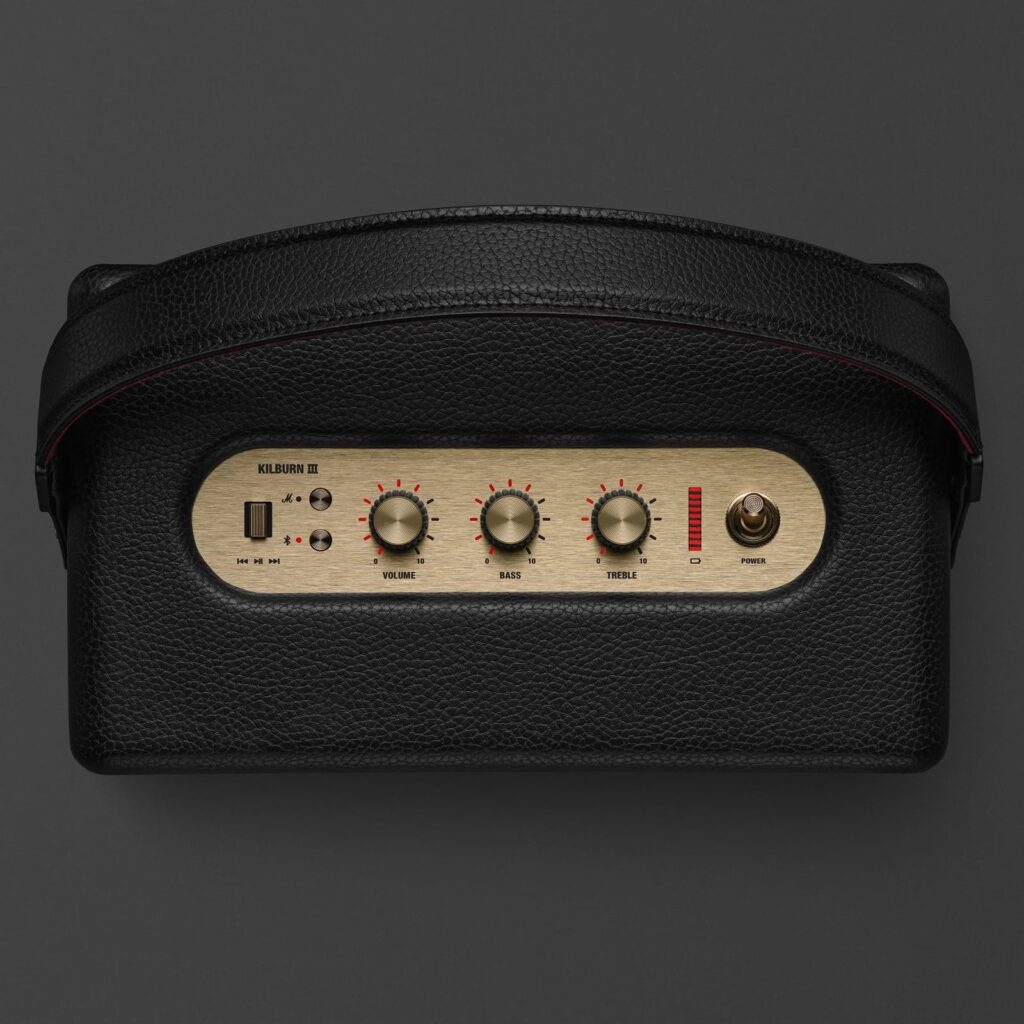
Marshall has launched the Kilburn III, the latest version of its portable Bluetooth speaker. It offers over 50 hours of battery life, which is more than double the playtime of the previous model. The speaker is built for durability, sound performance, and everyday use.
The Kilburn III features 360° True Stereophonic sound powered by one 4-inch woofer and two 2-inch full-range speakers. It uses one 30W Class D amplifier for the woofer and two 10W Class D amplifiers for the full-range drivers. It reaches a maximum sound pressure level of 91 dB SPL at 1 meter. The cabinet has a bass reflex system for improved low-end output.
The speaker supports Bluetooth 5.3 with multipoint connectivity and has a wireless range of up to 10 meters. It also includes a 3.5 mm AUX input for wired use. Supported audio codecs include SBC, LC3, and MPEG-2 AAC. There are no built-in microphones.
Top panel controls include volume, bass, treble, power, media jog, Bluetooth pairing, and a mode (M) button. The speaker also functions as a charging bank and can charge other devices via USB-C.
It is IP54-rated for dust and water resistance. The battery is rechargeable and replaceable. With a 30W USB-C PD charger, 20 minutes of charging gives 8 hours of playtime. A full charge takes about 3 hours. Power input options are USB-C 9V/3A and 5V/3A.
Dimensions are 273 x 150 x 169 mm, and the weight is 2.8 kg. The speaker is available in Black and Brass or Cream finishes. It is made using 38 percent recycled materials. It also supports the Marshall Bluetooth app.
Price and Availability
The Kilburn III is priced at €349. It is now available on Marshall’s website and will be available at retailers starting June 10.
For more daily updates, please visit our News Section.
ASUS has expanded its desktop portfolio in India with the launch of the ROG G700 and TUF Gaming T500 desktops, along with the ASUS V440VA and V470VA All-in-One PCs, targeting gamers, creators, and everyday users.
TUF Gaming T500
The TUF Gaming T500 features an Intel Core i5-13420H processor, NVIDIA GeForce RTX 3050 6GB GPU, 16GB DDR5 RAM, and a 1TB PCIe 4.0 SSD. It supports up to 64GB of memory and 4TB of storage. The device includes Wi-Fi 6, Bluetooth 5.4, RGB lighting, and a durable chassis. I/O options include USB 3.2 Gen 1 Type-C and Type-A ports, HDMI 1.4, DisplayPort 1.4, RJ45 Ethernet, and 7.1 channel audio support.
ROG G700
The ROG G700 is geared towards high-end gamers and creators. It runs on an Intel Core Ultra 9 285K CPU and NVIDIA GeForce RTX 5080 GPU, paired with 32GB DDR5 RAM and a 2TB Gen4 SSD. The machine features a glass chassis with RGB lighting, an 850W Gold PSU, and a B860 motherboard for enhanced performance and upgradability.
ASUS V440VA AiO
The ASUS V440VA is designed for home and productivity users. It has a 24-inch Full HD IPS display with a 93% screen-to-body ratio and full sRGB coverage. It runs on up to an Intel Core i5-13420H CPU with 16GB DDR5 RAM and a 512GB PCIe 4.0 SSD. Connectivity includes USB Type-A and Type-C ports, HDMI, and Gigabit Ethernet.
ASUS V470VA AiO
The V470VA targets creators, featuring a 27-inch Full HD IPS screen with a 93% screen-to-body ratio and full sRGB. Powered by up to Intel Core i7-13620H, it includes 16GB DDR5 RAM and a 1TB PCIe 4.0 SSD. Like the V440VA, it offers comprehensive port options and Wi-Fi 6E with Bluetooth 5.3.
Availability and Pricing
All models come bundled with a keyboard and mouse.
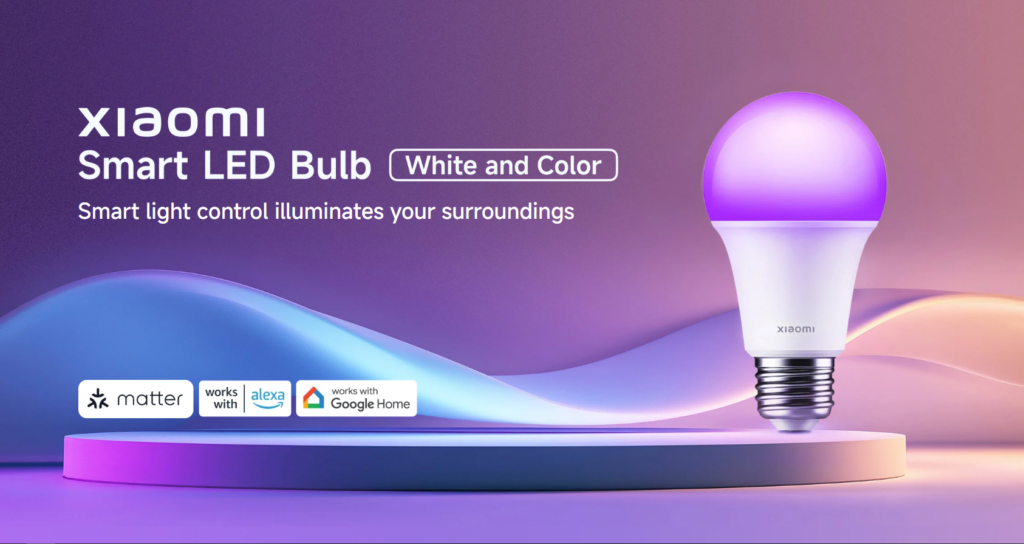
Xiaomi has introduced its new Smart LED Bulb (White and Color) in Germany, priced at €12.99 (approx. $15). The bulb offers customizable lighting, smart controls, and energy efficiency in a compact, affordable package.
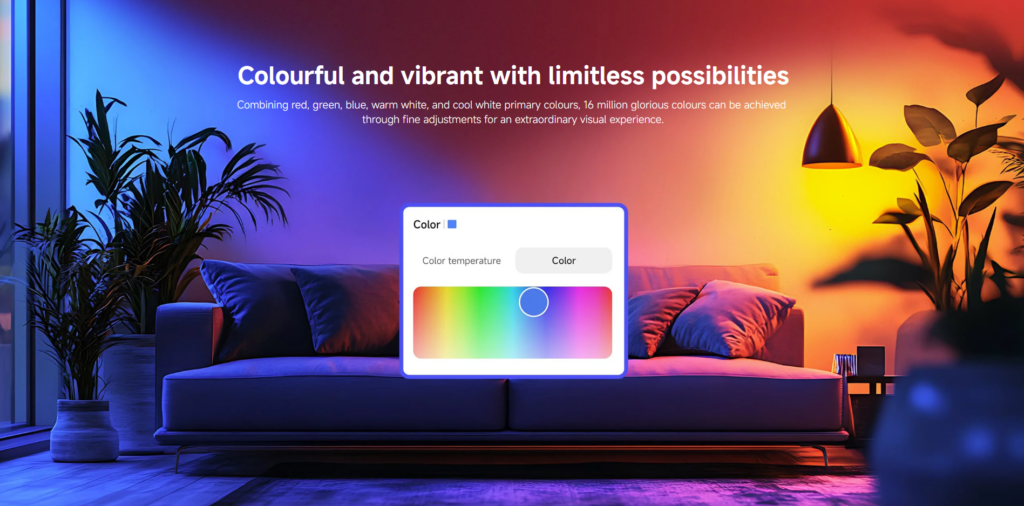
The bulb supports 16 million colors by combining RGB, warm white, and cool white LEDs. Users can switch between 10 preset lighting scenarios, such as Christmas, Fireplace, Jungle, and Ocean, or create their own using the Xiaomi Home app. Color temperature is adjustable from 2700K to 6500K, enabling lighting that ranges from a warm yellow glow to bright white light.
The Smart LED Bulb features an E27 fitting and delivers 806 lumens of brightness using only 8.5W of power (7.8W in Taiwan), comparable to a 60W incandescent bulb. It is ErP certified for energy efficiency and has a rated lifespan of approximately 15,000 hours.
Connectivity is enabled via a built-in Wi-Fi module, and the bulb is Matter-certified, allowing it to work across various smart home platforms and devices from different brands. This ensures smooth integration for users already invested in multiple ecosystems.
Lighting presets can be controlled using the Xiaomi Home app, with support for multi-platform linking. The app allows users to manage lighting scenes, set schedules, and remotely control the bulb from anywhere.
The bulb measures 60 x 114 mm, weighs around 54 grams, and operates in temperatures ranging from -20°C to +35°C. The package includes the bulb, a user manual, and a warranty notice.
Availability and Pricing
The Xiaomi Smart LED Bulb (White and Color) is available now on Xiaomi Germany’s website for €12.99. Broader retail availability is expected to follow in other markets.
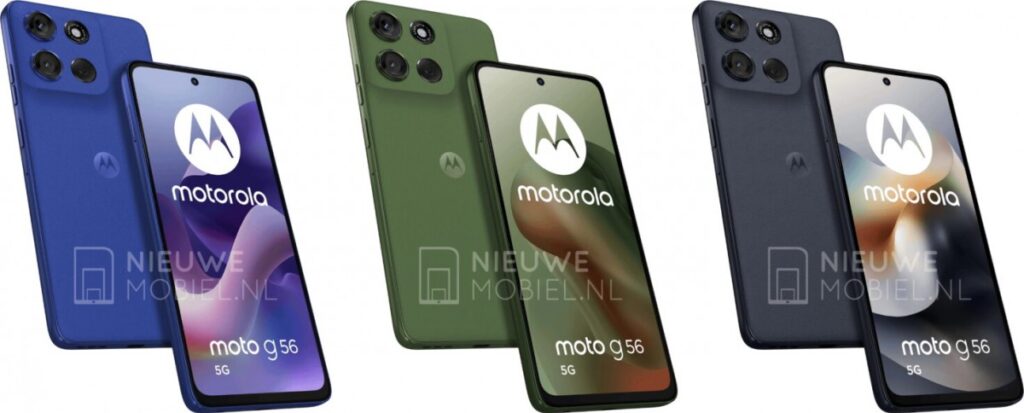
Motorola has got a new mid-range contender, the Moto G56 5G, and it seems they couldn’t wait to show it off. The phone popped up on their official website in the Czech Republic and Slovakia, spilling key details ahead of its planned reveal on May 29, 2025. This accidental leak has given us a juicy look at what’s coming, and it’s shaping up to be a solid upgrade over last year’s Moto G55. Let’s dig into what Motorola let slip.
Key details revealed by the listing
The listing on the Slovak websites confirmed a bunch of specs before the company pulled the pages. The phone sports a 87% screen-to-body ratio, protected by Gorilla Glass 7i for scratch and drop resistance. It’s built tough, boasting IP68 and IP69 ratings for dust and water resistance—good for surviving 1.5 meters underwater for 30 minutes—and MIL-STD-810H certification for drops up to 1.2 meters.
Under the hood, the MediaTek Dimensity 7060 chip powers things, paired with 8GB of RAM (with virtual RAM expansion) and 256GB of storage, expandable up to 2TB via microSD.
Camera-wise, the Moto G56 features a 50MP main sensor — the Sony Lytia LYT-600 (1/1.95″) — which is also used as the primary sensor in the iQOO Neo 10. In the front, the G56 packs a 32MP sensor for the selfie camera, which is reportedly four times more light-sensitive than its predecessor.
The phone has a 5,200mAh battery with 30W fast charging, which should keep you going all day with quick top-ups. It runs Android 15 out of the box, and while full specs weren’t posted, the leak confirms four Pantone-inspired colors—Dazzling Blue, Dill, Black Oyster, and Gray Mist—each with unique back panel textures for some extra flair.
Though Motorola removed the listing, the internet doesn’t forget. This slip-up has us hyped for the official launch, especially with whispers of a €250 price tag for the 8GB/256GB model.
The world’s biggest chipmaker, TSMC, is raising red flags about new US tariffs that could throw a wrench into its massive $165 billion investment in Arizona. In a bold move, the company is urging the US Department of Commerce to keep chip imports duty-free.
In a letter sent on May 5 by TSMC’s Arizona subsidiary, the company laid out its case against new Section 232 tariffs on semiconductor imports. TSMC is already pouring $65 billion into three wafer fabs in Phoenix—one is up and running, another is almost done, and the third just broke ground. On top of that, they’ve committed another $100 billion for three more fabs, two advanced-packaging plants, and an R&D center, totaling a whopping $165 billion.
With all six fabs are fully operational, Arizona will reportedly churn out 100,000 wafers a month—about 30% of TSMC’s projected capacity for cutting-edge 2-nanometer chips and beyond. The company says this could spark $200 billion in economic activity and create tens of thousands of jobs.
But here’s the catch:
TSMC warns that tariffs could jack up prices for end products like phones and computers, which would likely crush chip demand. That would make it harder to justify the Arizona expansion, especially since the US doesn’t produce a lot of the specialized equipment and materials TSMC needs. The company is asking for duty-free access for firms with major US chip production to keep supply chains smooth.
This comes as the US Department of Commerce wraps up a Section 232 report, due soon after May 26, amid talk from former President Donald Trump about slapping up to 100% tariffs on Taiwanese chips, claiming Taiwan “stole” US business.
TSMC is pushing back hard, saying its Arizona plans—and America’s chipmaking ambitions—hinge on avoiding those tariffs. With so much at stake, all eyes are on how the US balances trade policy with its semiconductor goals.
Ultra-thin smartphones are stealing the spotlight, and Infinix is stepping up to challenge Samsung’s Galaxy S25 Edge with its upcoming Hot 60 Pro+. A recent hands-on comparison by tipster Ice Universe has revealed just how close these two devices are in the race for the thinnest phone, sparking excitement about what Infinix has in store. With both phones pushing the boundaries of design, let’s dive into the details of this unexpected rivalry.
Infinix Hot 60 Pro+ looks slimmer due to its curved design, and is even lighter
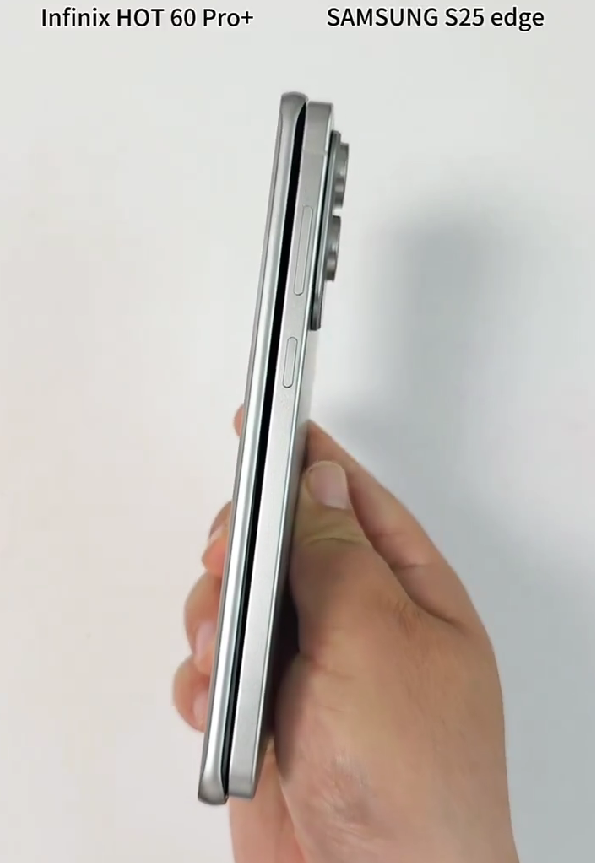
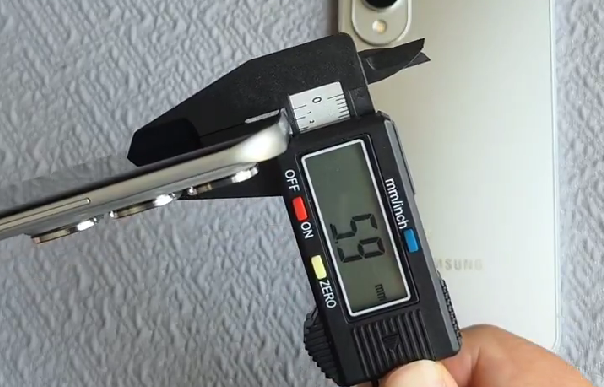
According to Ice Universe’s comparison video, the Infinix Hot 60 Pro+ measures a razor-thin 5.95mm (the calipers used in the video only show one decimal point), only slightly thicker than the Samsung Galaxy S25 Edge’s 5.8mm frame.
While the Hot 60 Pro+ is technically thicker than the S25 Edge, it appears even thinner thanks to its curved sides, as the tipster noted and the image confirms. It’s good to see Infinix is experimenting with the slim form factor rather than blindly copying what the market has already accepted.
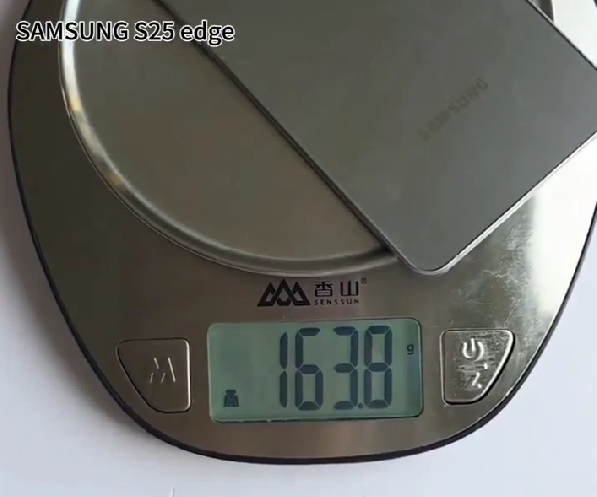
But here’s more. The Hot 60 Pro+ is even lighter – tipping the scales at 154.6g compared to the S25 Edge’s 163.8g. This makes the Infinix a featherweight contender, but the big question is: how does it manage such a slim profile without skimping on power? The Galaxy S25 Edge includes a disappointing 3,900mAh capacity, and the battery life isn’t acceptable in 2025.
For comparison, last year’s Infinix Hot 50 Pro+ was 6.8mm thick, weighed 162g, and packed a 5,000mAh battery. With newer silicon-carbon battery tech becoming a common feature for Chinese smartphones, there’s hope the Hot 60 Pro+ could fit a larger battery.
While the S25 Edge, priced at $1,099.99, boasts premium features like a 200MP camera and Snapdragon 8 Elite chip, the Hot 60 Pro+ is expected to target the mid-range market, likely costing under $500. The hands on video also hints at a triple camera setup, however, specifications are under wraps at this point. Keep an eye out, as more information is likely to surface as we inch closer to the launch.
Bosgame has announced the launch of its M5 AI Mini PC, a compact PC built around AMD’s new Ryzen AI Max+ 395 processor. The system targets developers, creators, and AI professionals who need strong computing power in a small footprint. Pre-orders are now open at $1,699, with global shipping expected to begin on June 10.
Bosgame M5 AI Mini PC Specifications
The Ryzen AI Max+ 395 processor is based on AMD’s latest Zen 5 architecture. It features 16 cores and 32 threads, and integrates AMD’s XDNA 2 NPU. The NPU delivers up to 50 TOPS of AI performance, enabling efficient on-device inference for large language models. Bosgame claims the M5 can run models like Llama 3 in LM Studio with up to 2.2 times the AI performance of Nvidia’s RTX 4090.
The M5 does not include a discrete GPU. Instead, it uses integrated Radeon 8060S graphics based on AMD’s RDNA 3.5 architecture. The GPU features 40 compute units and a 20WGP layout. Bosgame says the integrated graphics can deliver performance close to Nvidia’s RTX 4070.
The system comes equipped with 128GB of LPDDR5X memory clocked at 8533MHz. For storage, it includes a pre-installed 2TB PCIe Gen4 SSD in one of the two available M.2 slots. It can be further expanded by adding a second PCIe Gen4 SSD.
The M5 features a compact chassis with an aluminum frame and a side-mounted performance mode switch. In terms of connectivity, the rear I/O panel includes one HDMI 2.1 port and one DisplayPort 1.4, both supporting up to 8K at 60Hz.
There is also an SDXC card slot, two USB 2.0 Type-A ports, three USB 3.2 Gen2 Type-A ports (10Gbps), two USB4 Type-C ports, and two 3.5mm audio jacks for headset and microphone connectivity. For wireless connectivity, the mini PC features Bluetooth 5.2 and WiFi 6e.
In related news, Minisforum has unveiled a new mini PC featuring the Ryzen 5 7545U processor, support for up to 4TB of SSD storage, and triple 8K display output, all packed into a compact 0.8-liter chassis. Meanwhile, Aoostar has launched the GEM12+ Pro Mini PC, powered by the Ryzen 7 Pro 8845HS and supporting up to 96GB of RAM. It also includes a built-in display for added versatility.
For more daily updates, please visit ourNews Section.
Samsung is diving headfirst into the world of extended reality (XR) with its Project Moohan headset, and it’s just shown up on Geekbench, giving us a sneak peek at what’s coming. Teased as a collaboration with Google, this headset—possibly launching as the Galaxy XR—promises to shake up the VR and AR scene and compete with Apple’s Vision Pro. Alongside it, Samsung’s cooking up two more XR devices, Project Haean and Project Jinju, which might bring sleek smart glasses to the table. Let’s break down what we know so far.
Project Moohan headset (Image: Samsung)
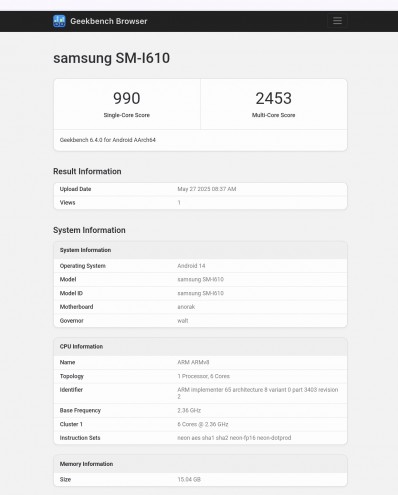
The Project Moohan headset, model SM-I610, is now almost confirmed to be powered by the Qualcomm’s Snapdragon XR2 Gen 2 chip thanks to the Geekbench listing. This chip rocks six Cortex-A78C cores—two clocked at 2.36GHz and four at 2.05GHz—paired with an Adreno 740 GPU, and is built specifically for XR applications.
Project Moohan (SM-I610) XR headset
It’s designed for smooth, immersive experiences, supporting low-latency full-color passthrough (12ms), Wi-Fi 7 for fast connections, and cool VR tricks like foveated rendering and Space Warp. That last one doubles frame rates by filling in missing frames, which could make VR feel snappier and help keep motion sickness at bay. With 16GB of RAM and Android 14 (likely the new Android XR OS), the headset has a revamped interface for virtual displays and hand-based controls, making it a powerhouse for mixed reality.
Project Haean / Project Jinju are speculated to be smart glasses
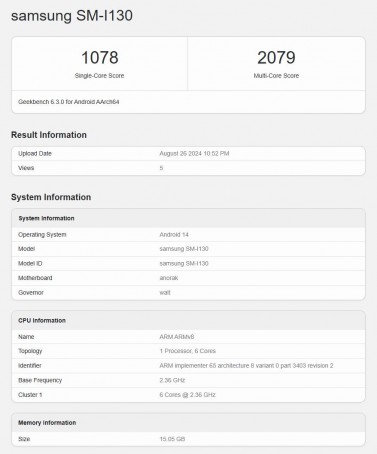
Interestingly, another Samsung device, SM-I130—likely Project Haean or Jinju—also appeared on Geekbench with the same Snapdragon XR2 Gen 2 chip, 16GB of RAM, and Android 14. What’s surprising is that these are expected to be slim, glasses-like devices, yet they’re packing the same muscle as the bulkier Moohan headset. This could mean Samsung’s aiming for high-performance XR in a compact form, which is pretty exciting.
Project Haean or Jinju (SM-I130)
No official launch date’s been set for Project Moohan, but rumors point towards Samsung’s next Unpacked event, where new Galaxy foldables might share the spotlight. With its beefy specs and Google’s Android XR platform, this headset could give competitors like the Apple Vision Pro a run for their money. Stay tuned for what’s next as more information is likely to surface as we inch closer to the June-July Unpacked event.
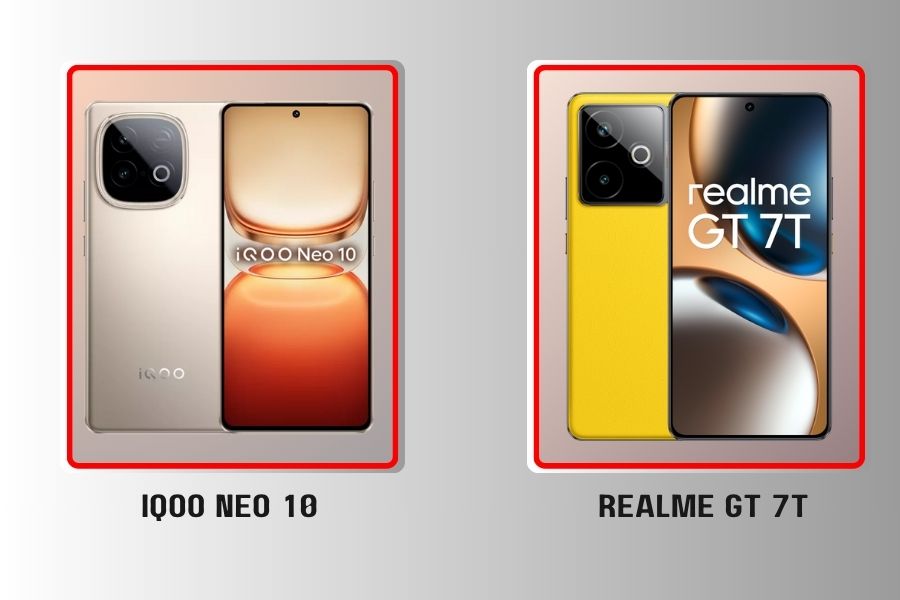
Realme and iQOO continue their predictable cycle of mid-year smartphone releases, this time with the GT 7T and the Neo 10. Both phones follow a familiar formula of offering big AMOLED displays, fast charging, and performance-centric internals.
But there are obvious differences between the two. The GT 7T leans heavily into display quality and longer software support. The Neo 10, on the other hand, tries to differentiate through a newer Snapdragon chipset and slightly better thermals and performance tuning, at least on paper. Let’s break it all down.
From a distance, both phones look like standard fare. Both feature glass fronts, large panels, and symmetrical bezels. But the two phones differ slightly in terms of build quality.
The GT 7T has an IP68/IP69 rating, which means the device can be submerged and hit with even high-pressure water. iQOO also offers an IP rating for Neo 10, but it’s just resistant to low-pressure water jets with IP65.
For any positives, iQOO does add a MIL-STD-810H tag, but as usual, that means little unless you’re actively trying to stress-test the phone in extreme conditions.
The materials used tell a similar story. The Neo 10 has a plastic back and frame, while the GT 7T has a more polished finish, particularly with its “IceSense” color variants. Theyuse graphene material for thermal conductivity and have a glass fiber finish on the back.
Please Note: When you buy something using the links in our articles, we may earn a small commission at no cost to you.
2. Displays
Realme and iQOO both bring AMOLED panels with over a 6.7-inch footprint. The iQOO Neo 10 touts a 144Hz refresh rate, slightly edging out the GT 7T’s 120Hz, but there’s more to it.
Where Realme really sets itself apart is brightness. The GT 7T has a peak brightness of 6000 nits, which is a notable jump over the Neo 10’s already high 4400 nits. However, these numbers are hardly likely to make a difference in real life. Both should be plenty bright for use outdoors. Realme also includes Dolby Vision and HDR10+, while iQOO’s HDR support isn’t as well defined.
Color depth and resolution are mostly the same. Both displays push 1280 x 2800 resolution at around 453ppi, and both can render 1 billion colors. But the GT 7T also uses ArmorShell glass, which is likely more resistant to scratches and drops than the standard offering on the Neo 10.
3. Software and Updates
The phones come pre-installed with Android 15 out of the box. Realme is further promising 6 years of Android upgrades, meaning the device is good for up to the 2030s.
In contrast, the iQOO Neo 10 tops out at 3 years of major OS updates, which is in line with most midrange Android devices, but still looks dated when stacked next to Realme’s new update policy.
On the UI side, it’s Realme UI 6.0 vs Funtouch 15. Neither is stock Android, and both are packed with extra features and some bloat. The experience will mostly come down to personal preference, though Realme’s UI tends to feel more polished over time.
4. Performance
This is where things get more technical. The iQOO Neo 10 uses the newer Snapdragon 8s Gen 4, while the GT 7T goes with MediaTek’s Dimensity 8400 Max. Both are built on a 4nm process, both are powerful, and neither will struggle with day-to-day performance or gaming.
The Snapdragon 8s Gen 4 includes a Cortex-X4 performance core, which should give it the edge in raw benchmark scores and GPU-heavy workloads. The Adreno 825 GPU on the Neo 10 is expected to outperform the Mali-G720 MC7 inside the Realme device in most gaming scenarios.
That said, Realme has done a decent job optimizing the Dimensity series in the past, so real-world differences may not be dramatic unless you push the phone with long gaming sessions or resource-intensive tasks.
Both phones also include Circle to Search, an AI feature that’s slowly making its way across Android devices. It’s not exclusive anymore, but it’s still notable.
5. Cameras
You’ll find near-identical dual-camera setups on both devices:
50MP main sensor with OIS
8MP ultrawide sensor
Realme adds a color spectrum sensor, which may help with white balance accuracy. It also seems to use a larger main sensor (1/1.56”) compared to iQOO’s 1/1.95”, which might give it a slight edge in low-light conditions. The GT 7T also supports 4K selfie video, while the Neo 10 caps out at 1080p on the front-facing camera, despite both using a 32MP sensor.
Video capabilities are nearly identical: 4K at 60fps, OIS, and gyro-EIS on the main camera. Don’t expect flagship-level imaging, but both phones should do fine in daylight and controlled lighting.
6. Battery and Charging
Both phones carry a 7000mAh battery, which is more than most devices in this segment and should provide solid two-day battery life for average users.
Charging is also fast on both. They each support 120W wired charging. iQOO also supports Power Delivery and PPS at 100W, plus reverse wired charging. That might matter if you want to charge another device from your phone. Both support bypass charging, which is helpful when gaming while plugged in
7. Connectivity and Extras
Both phones feature stereo speakers, under-display fingerprint scanners, and support for dual SIM, NFC, IR blasters, and high-accuracy GNSS positioning. Neither includes a 3.5mm headphone jack, but both support high-res audio through USB-C.
Where iQOO edges ahead is in Wi-Fi 7 support, offering slightly better future-proofing compared to Realme’s Wi-Fi 6.
8. Final Thoughts
The GT 7T is the more well-rounded device, particularly for users who value display brightness, software updates, and durability. The Neo 10, meanwhile, delivers better value for performance and could appeal more to gamers and those on tighter budgets.
Neither phone changes the midrange game, but they do reflect how far that segment has come. If you’re picking one, the decision likely comes down to priorities: better software and build with Realme, or stronger internals and affordability with iQOO.
For more daily updates, please visit our News Section.
Lenovo has officially launched the ThinkPlus Mini Color Box Smart Touchscreen Bluetooth Earbuds, also known as the LP70 Pro, in China. The earbuds are available in Beige, Black, and Pink, and are priced at 159 yuan ($22).
Lenovo LP70 Pro Earbuds Specifications
The Lenovo LP70 Pro earbuds stand out with a built-in full-color smart touchscreen on the charging case. The display allows users to control music playback, manage calls, set alarms, adjust volume, and locate misplaced earbuds. It also supports customizable wallpapers, adding a level of personalization uncommon in wireless earbuds. Lenovo claims the touchscreen enables access to ten key features with a single touch.
The earbuds feature large 13mm composite diaphragm drivers designed to deliver high-fidelity audio across all frequency ranges. Lenovo includes five sound modes: jazz, vocal, balanced, bass, and stereo, which can be customized through the interface. The earbuds also support 360-degree spatial audio.
Connectivity is handled by Bluetooth 5.4, which improves transmission speed and stability while reducing latency and power usage. The LP70 Pro includes a dedicated low-latency gaming mode and supports a wide range of devices running Android, iOS, Windows, and HarmonyOS.
Each earbud houses a 30mAh battery, offering up to 4 hours of playback on a single charge. The charging case contains a 500mAh battery that extends the total usage time to up to 30 hours. The case charges via USB Type-C and takes about 1.5 hours for a full charge.
The earbuds use a semi-in-ear ergonomic design for improved comfort during extended use. Lenovo has used a lightweight build and a matte finish on the case to match the earbuds’ compact and colorful aesthetic.
For voice calls, the LP70 Pro features single-mic ENC (Environmental Noise Cancellation), working to suppress ambient sound during conversations. The buds can be used individually or together thanks to a dual-chip architecture that supports seamless mono or stereo playback, depending on how you prefer to wear them.
In related news, Baseus has introduced the MC1 Pro AI clip-on earbuds featuring LDAC support, built-in AI assistant, up to 40 hours of battery life, and an IP67 rating. Meanwhile, Anker has launched the Soundcore Liberty 5 earbuds with ANC 3.0, LDAC support, and a 12-hour standalone battery life.
For more daily updates, please visit our News Section.
Realme’s latest GT 7 series has just been expanded with two new entries, namely the Realme GT 7 and Realme GT 7T. At first glance, the duo might look quite similar, but there are a few critical differences that set them apart. If you’re deciding which one offers better value, here are the top 3 things that differentiate between the two.
Realme GT 7 vs Realme GT 7T: Design & Display
The Chinese brand’s new Realme GT 7 and Realme GT 7T are nearly identical in terms of design, but the former has a slimmer 8.3mm body compared to the latter’s 8.88mm body. There are also a few differences when we look at their displays. Realme offers a 6.78-inch AMOLED display with a 1.5K resolution (2780×1264 pixels), 120Hz refresh rate, 360Hz touch sampling rate, and up to 6000 nits peak brightness. This screen also offers 2,600Hz PWM dimming, DC dimming, and 100 percent DCI-P3 color gamut.
Realme GT 7
On the other hand, the Realme GT 7T sports a 6.78-inch AMOLED panel with a 1.5K resolution, 120Hz refresh rate, 6000 nits of peak brightness, and 100 percent DCI P3 color gamut as well. So you only miss out on the high frequency PWM dimming. While this isn’t a big difference, PWM dimming allows is a more efficient way of controlling the OLED display while also reducing strain on the user’s eyes.
Please Note: When you buy something using the links in our articles, we may earn a small commission at no cost to you.
Performance
Realme GT 7T
One of the biggest differences between them is in performance. Realme equips the GT 7 with a MediaTek Dimensity 9400e SoC, which is an underclocked version of the Dimensity 9400. Meanwhile, the Realme GT 7T features the Dimensity 8400 MAX chipset. The Dimensity 9400e is faster than the Dimensity 9300+ chip and offers near flagship level performance, while the Dimensity 8400 MAX is basically a processor for upper mid range devices.
Camera
Photography is another area with key differences, as the Realme GT 7 features a triple camera setup compared to the GT 7T’s dual rear cameras. The GT 7 has a 50MP Sony IMX 906 main sensor along with an 8MP ultra wide angle lens, and 50MP telephoto shooter with 2x optical zoom. You also get Dolby Vision and 4K60fps recording on the primary rear camera. For selfies and video calls, the Realme GT 7 has a 32MP shooter.
On the Realme GT 7T, you get a 50MP Sony IMX896 main camera and an 8MP ultra wide angle lens. The front houses the same 32MP camera. This means that the Realme GT 7 should offer a better and more versatile photography experience, at least on paper.
Pricing
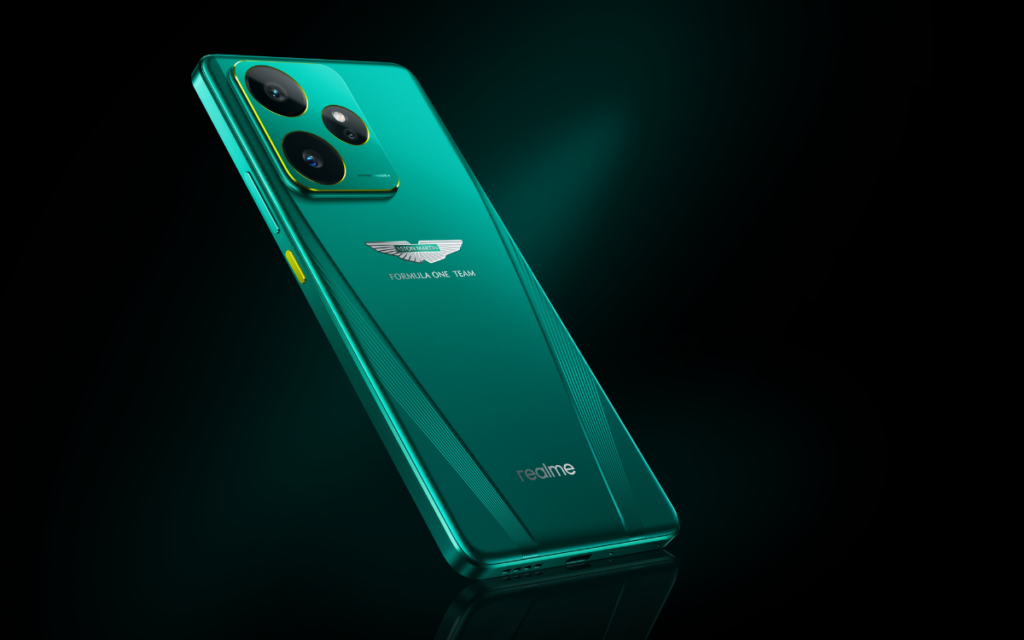
Realme GT 7 Dream Edition
Keeping these 3 key differences in mind, it makes sense that the Realme GT starts from a higher 37,999 INR price tag for the 8GB + 256GB base variant. The same 8GB + 256GB option on the Realme GT 7T has a more affordable 34,999 INR price tag.
For more daily updates, please visit our News Section.
Realme is about to launch its latest mid-range, the Neo7 Turbo, in China on May 29. This phone is packing a bright and super smooth display, and specs that could make it a real player in the mid-range smartphone scene. It packs many makings of a device that’ll turn heads, so let’s dive into what’s coming.
According to Realme’s official listing, the Neo7 Turbo sports a BOE Q10 AMOLED display. The panel offers a 1.5K resolution, a buttery-smooth 144Hz refresh rate, and a wild 6,500 nits of peak brightness—meaning the display will not only remain visible but you’ll enjoy it even under direct sunlight.
Plus, it supports 4,608Hz ultra-high-frequency PWM dimming, which basically means no annoying flicker, so your eyes stay happy during long gaming or binge-watching sessions. This display is straight-up built for gamers and media junkies. But what about durability? The Neo7 Turbo comes with IP66, IP68, and IP69 ratings.
Under the hood, it’s running the MediaTek Dimensity 9400e chipset. If you’re wondering, that chip sits nicely between the Dimensity 9400 (Oppo Find X8 Pro) and the 9400+ (OnePlus Ace 5 Ultra). The battery? A massive 7,200 mAh with 100W fast charging. You’re getting all-day power and quick top-ups when you’re running low.
The brand also confirms handy features like NFC and an IR blaster up top for controlling your TV or AC. And the X-axis linear motor is going to enhance gaming experience with better vibration feedback.
It comes in two slick colors and three memory options: 12GB/256GB, 12GB/512GB, and 16GB/512GB. A 16GB+256GB option is also expected, per GSMArena. The transparent-inspired back panel gives it a cool, modern vibe. With the launch just hours away, the Neo7 Turbo looks like it’s ready to shake up Realme’s mid-range lineup with premium features at a price that won’t break the bank.
OnePlus Ace 5 Ultra is a top-tier smartphone that blends high-end performance with a beautiful design and long-lasting battery. Built for users who demand speed, power, and great visuals, it is equipped with the new Dimensity 9400+ processor, a smooth 144Hz OLED display, and a large 6700mAh battery. Whether you’re into gaming or photography, or simply want a fast phone for everyday use, this device has something for everyone.
Price and Availability
OnePlus Ace 5 Ultra is now available starting at just $439 through Giztop, offering excellent value for its flagship-grade features. Customers can choose from three elegant color options Black, Blue, and Titanium, catering to both classic and modern style preferences. With multiple storage and RAM configurations available, it’s easy to find a model that suits your needs and budget.
Display and Design
The phone features a 6.83-inch curved OLED screen with a sharp 1.5K resolution (2800×1272). It supports a 144Hz refresh rate and 300Hz touch sampling rate, making every scroll and tap feel instant. With HDR10+ support, 100% DCI-P3 color gamut, and up to 4500 nits of peak brightness, the display is bright, colorful, and sharp even in direct sunlight. The curved edges and sleek finish give it a premium feel in the hand.
Performance and Storage
Powered by the MediaTek Dimensity 9400+ chip, this device delivers strong performance in every task, from gaming to multitasking. Paired with up to 16GB of LPDDR5X RAM and UFS 4.0 storage options ranging from 256GB to 1TB, the phone opens apps quickly and handles heavy games with ease. It even includes a dedicated graphics chip to boost frame rates during gaming sessions, backed by the HyperBoost Game Frame Stabilization Engine 2.0.
Camera Setup
The OnePlus Ace 5 Ultra includes a 50MP Sony IMX906 main sensor with OIS, offering sharp details, 4K video, and solid night shots. There’s also an 8MP ultra-wide lens with a 120° field of view, perfect for landscapes or group shots. The 16MP front camera, using Samsung’s ISOCELL sensor, is great for selfies and video calls.
Battery and Charging
With a massive 6700mAh battery (dual-cell), the phone easily lasts through a full day of use, even with heavy activity. When you need a top-up, the 100W SuperVOOC fast charging can refill the battery quickly. The TÜV Rheinland certification ensures it charges safely and efficiently.
Software and Connectivity
Running on Color OS 15, the phone offers a smooth and clean user experience with support for Dark Mode 2.0. It includes 20+ language options and wide network band support. Connectivity is cutting-edge, with dual 5G, Wi-Fi 7, Bluetooth 5.4, NFC, and dual stereo speakers. Features like an alert slider, in-display fingerprint scanner, and dual SIM support round off the user-friendly experience.
Huawei‘s next gen flagship smartphone has just surfaced online once again. This time around, more details regarding the Pura 80 Pro’s camera specs have been revealed, which hints at a flagship photography experience. So here’s what we know.
Huawei Pura 80 Pro is bringing a huge primary camera sensor
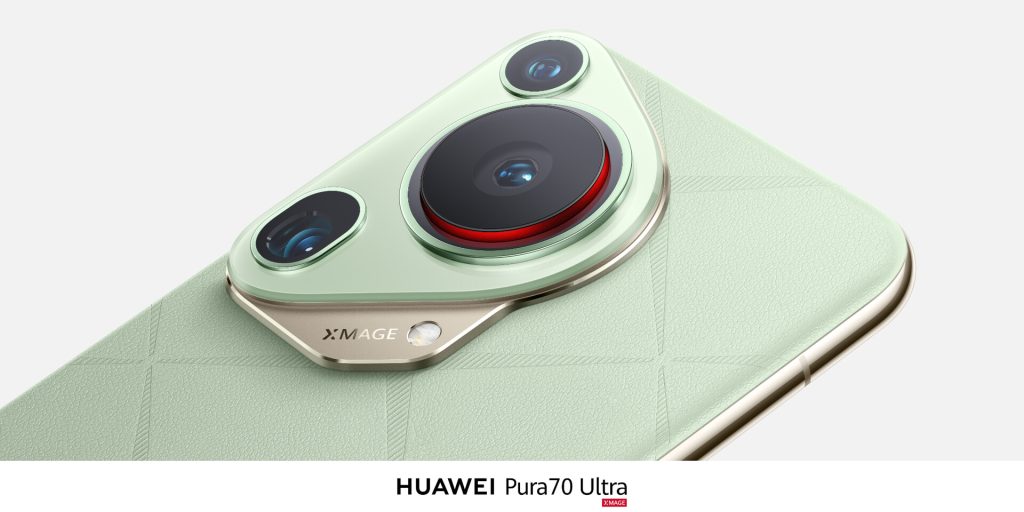
The latest leak arrives from known tipster Digital Chat Station, who shared the information on Weibo (a Chinese microblogging website). In the online post, he claims that the upcoming Huawei Pura 80 Pro will feature a brand new 1-inch main camera, which might be part of a new line called SmartSens. This camera will have a 50MP resolution and will reportedly offer top-of-the-line photography experience.
Huawei Pura 70 Ultra
DCS adds that the sensor could carry the SC5A0CS moniker and might be developed by Huawei. In other words, it won’t be using third party image sensor makers like Sony or OmniVision. The company has experience in imaging technology, so SmartSens could be a direct competitor that it might offer to other Chinese brands. Notably, this is in stark contrast to Digital Chat Station’s previous leak, where he claimed that the Pura 80 Pro would employ a 1-inch Sony IMX989 50MP main camera.
Keep in mind that this is still just an unconfirmed report at the moment, so take this news with a pinch of salt. Based on what we know so far, the Pura 80 Pro may sport a tall 6.78-inch LTPO OLED display with a 1.5K resolution and high refresh rate. This model will likely run on the latest HarmonyOS iteration. The 50MP main 1-inch camera could also be paired with a 50MP periscope telephoto shooter and a 50MP ultra wide angle lens. All three sensors will reportedly use a custom RYYB color filter for improved low light photography.
For more daily updates, please visit our News Section.
OnePlus has introduced OnePlus AI, a new initiative to deliver personalized AI experiences across its devices. The upcoming OnePlus 13s, which is set to launch on June 5 in India, will feature these AI-powered additions, promising enhanced productivity, creativity, and security.
OnePlus AI: Plus Mind and Mind Space
OnePlus AI
According to OnePlus, the new Plus Key is an evolution of the Alert Slider, now designed to provide quick access to AI-powered functions. The key can be customized for various tasks, including activating AI Plus Mind, which can instantly save, categories, and find important on-screen information.
With a simple press or a three-finger swipe (upward direction), it gathers essential content into a dedicated Mind Space, such as event details, schedules or notes. Unlike a regular screenshot, AI Plus Mind uses contextual analysis to extract relevant data, like automatically adding an event to your calendar.
The feature also comes with natural language search support, so users can easily retrieve their saved content. By the end of the year, AI Plus Mind will have the capability to categorize saved content automatically.
Initially available on the OnePlus 13s, the company plans to roll out this feature to other OnePlus 13 series phones through software updates.
OnePlus AI suite revealed
OnePlus is also introducing a range of AI tools designed to improve the user experience:
AI VoiceScribe: Records, summarises, and translates calls and meetings within popular apps.
AI Call Assistant: Offers automatic call summaries and real-time translation during calls (coming to India).
AI Translation: Combines text, live voice, camera-based, and screen translation into one app for easier communication.
AI Search: Supports conversational natural language queries across files, settings, notes, and calendars.
AI Reframe: Analyses photos to identify subjects and generate multiple creative framing options.
AI Best Face 2.0: Automatically improves group photos by fixing closed eyes and expressions for up to 20 people.
With Gemini integration, Google apps will work seamlessly with OnePlus’s AI tools, and the Private Computing Cloud ensures all sensitive data remains secure with on-device and encrypted cloud processing.
For more daily updates, please visit our News Section.
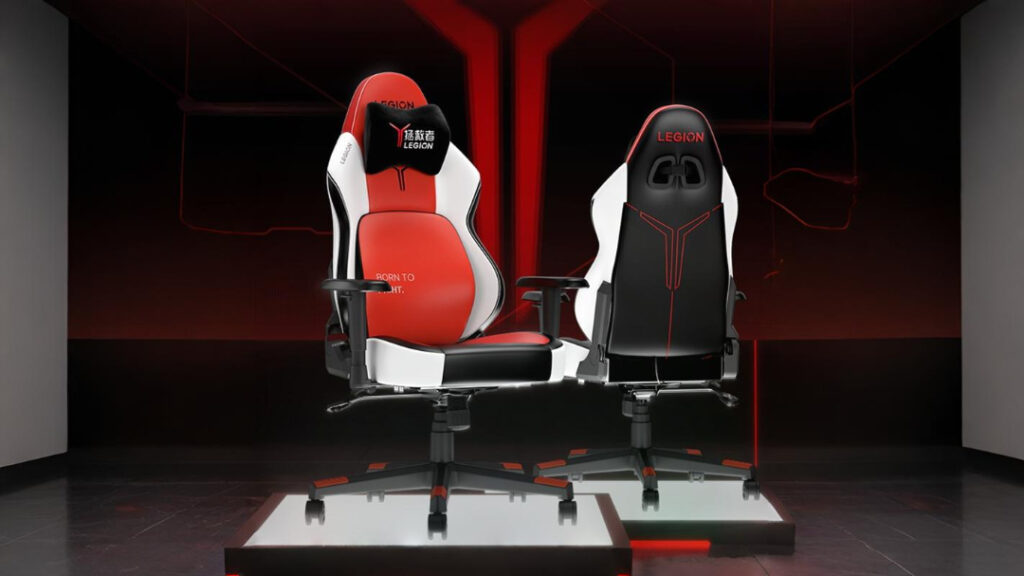
Lenovo has officially launched the Legion C7 Pro gaming chair in China. The chair is listed on JD.com with a retail price of 1,399 yuan (approximately $195). It is designed to deliver comfort and durability for gamers and professionals who spend long hours at a desk.
Lenovo Legion C7 Pro Specifications
The Legion C7 Pro features a pneumatic lumbar support system that extends automatically from the backrest. Users can adjust the support level using a press mechanism, allowing them to personalize the lower back support based on their posture. Lenovo has focused on ergonomic support by designing the chair around a five-zone structure that targets the neck, shoulders, back, waist, and hips.
The seat cushion uses a high-density cold-foam memory sponge. Lenovo has molded the cushion as a one-piece unit to improve support and weight distribution. The chair also includes a large memory foam headrest to enhance neck comfort during recline sessions.
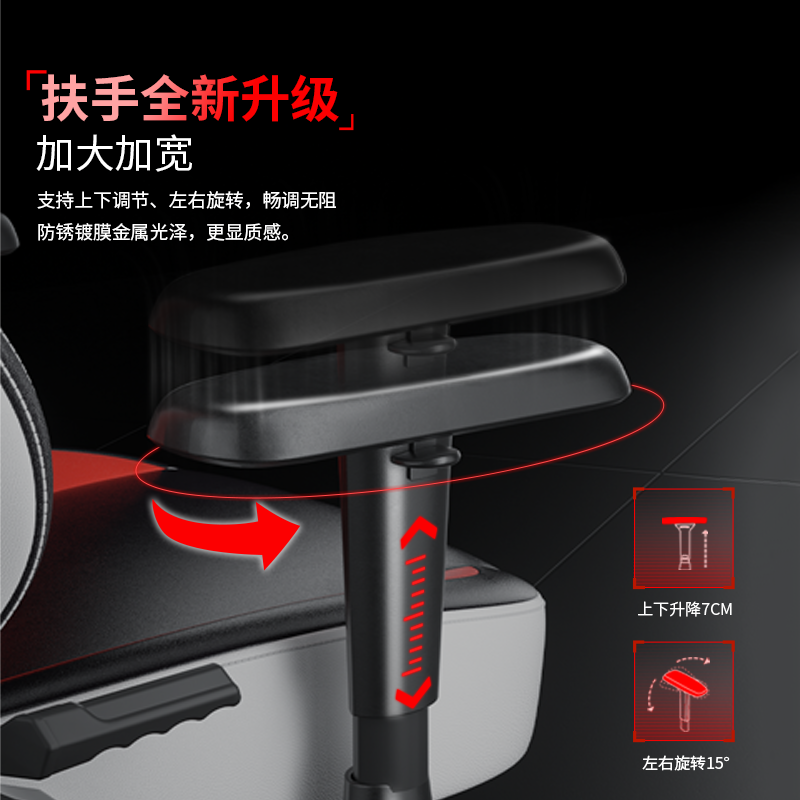
Lenovo equips the chair with armrests that support 7cm of vertical adjustment and 15 degrees of inward or outward rotation. These armrests have a wider surface area compared to standard designs. The backrest supports recline angles from 90 to 135 degrees and includes a 15-degree rocking function.
The base of the Legion C7 Pro uses reinforced steel and features an SGS-certified Class-4 gas lift. According to Lenovo, the gas lift has passed 120,000 durability tests. The five-star base can handle up to 1300kg of static pressure. The chair includes silent PU-coated caster wheels that move smoothly on various floor types without causing damage.
The frame is covered in synthetic leather that resists scratches and is easy to clean. Lenovo has designed the chair with precise measurements. The adjustable height ranges from 123cm to 130cm, while the seat is 55cm wide and 48cm deep. The backrest measures 85cm in height and 52cm in width. The armrest height adjusts between 30cm and 38cm, and the seat height from the ground ranges from 43cm to 51cm. The base has a diameter of 69cm.
The Legion C7 Pro is available in three color options: Ice White, Carbon Black, and Flame Red. All variants feature the Legion brand identity and design language.
In related news, Lenovo recently announced the Legion Y700 gaming tablet powered by the Snapdragon 8s Gen 3, and has also introduced the Legion M5000 mountain bike featuring a 24-speed Shimano gear system.
For more daily updates, please visit our News Section.
Apple is reportedly experimenting with a groundbreaking 200-megapixel camera sensor, potentially revolutionizing iPhone photography in the coming years. According to a recent leak, this high-resolution sensor could redefine the capabilities of future iPhone models, with whispers of significant design changes on the horizon. As anticipation builds for Apple’s next big release, these developments hint at a transformative era for iPhone enthusiasts.
Weibo tipster Digital Chat Station revealed that Apple is actively testing a 200-megapixel sensor, most likely intended for the main camera of an upcoming iPhone. While the iPhone 17 series, set for release in 2025, has its design largely finalized, this cutting-edge sensor is expected to debut in the iPhone 19 (2027), Apple’s 20th anniversary iPhone.
The blogger also hinted at major design shifts over the next three years, including a hole-punch screen with under-screen Face ID for the iPhone 18 and a true full-screen display with both Face ID and front camera embedded under the screen for the iPhone 19. These advancements suggest Apple is pushing toward sleeker, more immersive designs.
Meanwhile, details about the iPhone 17 series have surfaced, showcasing incremental yet notable updates. The iPhone 17 Air, rumored to be just 5.5mm to 5.6mm thick, will feature a “horizontal runway” camera design, emphasizing a slim and stylish profile. The iPhone 17 Pro and Pro Max will retain a familiar look to the iPhone 16 Pro but introduce a distinctive “camera bar” on the rear.
The fact that Apple is testing a 200MP sensor and exploring futuristic display solutions points to a future where photography and design converge in exciting new ways.
We use cookies on our website to give you the most relevant experience by remembering your preferences and repeat visits. By clicking “Accept”, you consent to the use of ALL the cookies.
This website uses cookies to improve your experience while you navigate through the website. Out of these, the cookies that are categorized as necessary are stored on your browser as they are essential for the working of basic functionalities of the website. We also use third-party cookies that help us analyze and understand how you use this website. These cookies will be stored in your browser only with your consent. You also have the option to opt-out of these cookies. But opting out of some of these cookies may affect your browsing experience.
Necessary cookies are absolutely essential for the website to function properly. This category only includes cookies that ensures basic functionalities and security features of the website. These cookies do not store any personal information.
Any cookies that may not be particularly necessary for the website to function and is used specifically to collect user personal data via analytics, ads, other embedded contents are termed as non-necessary cookies. It is mandatory to procure user consent prior to running these cookies on your website.