Xiaomi has launched a new smart surveillance product in China. The Outdoor Camera 4 Dual-Cam Edition is now listed on JD.com for 299 yuan ($42). The product will officially go on sale on June 3.
Xiaomi Outdoor Camera 4 Dual-Cam Edition Specs
The Outdoor Camera 4 Dual-Cam Edition features two 5-megapixel professional-grade sensors that deliver 3K resolution video at 2880×1620 pixels. Xiaomi has equipped the device with an f/1.6 large aperture lens for both cameras to enhance image clarity and brightness in various lighting conditions.
The camera setup includes a fixed lens with a 2.8mm short focal length for wide-angle coverage, paired with a 6mm telephoto lens on a pan-tilt-zoom (PTZ) module. The two lenses work together using AI motion detection. When the fixed camera identifies a person or vehicle, the PTZ lens automatically tracks the subject to maintain focus.
The camera supports full-color night vision using dual white LEDs and infrared lights on each lens. The lighting system activates automatically when the system detects human motion in low-light conditions. Xiaomi has rated the device IP66 for dust and water resistance, allowing it to function outdoors in rain or snow.
The device supports dual-band Wi-Fi 6 and includes an Ethernet port for more stable wired connectivity. It also features Bluetooth 5.0 for quick pairing with the Mi Home app. Xiaomi has built in a local AI algorithm that can detect both human and vehicle presence. When unusual movement is identified, the app sends real-time alerts along with video clips. Motion detection zones can be precisely defined using customizable polygonal geofencing.
The camera includes a high-sensitivity microphone and a built-in speaker for two-way audio communication. It also supports sound and light alarms for deterrence, time-lapse video recording, and simultaneous viewing across phones, tablets, Xiaomi smart TVs, and smart displays.
Xiaomi also built in flexibility for storage: the camera supports up to 256GB microSD cards, NAS devices, and Xiaomi Cloud (subscription-based). It operates in extreme temperatures ranging from -30°C to 60°C, making it suitable for all-season outdoor deployment.
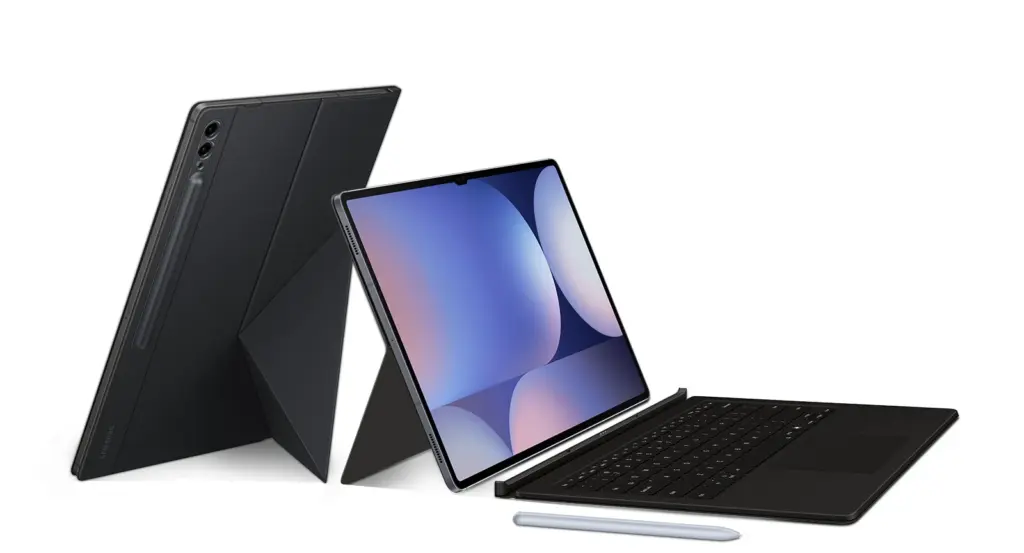
Samsung is working on the Galaxy Tab S11 Ultra, and if a new leak is anything to go by, it might finally bring a bigger battery to the table.
According to a recent filing, the S11 Ultra is expected to pack a battery with a rated capacity of 11,374 mAh. That’s not the number Samsung will advertise, though. The official figure (what’s called the “typical” capacity) should land somewhere between 11,700 and 11,900 mAh.
It’s a notable jump over its predecessor
To put that in perspective, the Galaxy Tab S10 Ultra had a rated capacity of 10,880 mAh and a typical capacity of 11,200 mAh. So while the jump isn’t massive, it’s still the first time Samsung has increased battery size across its Ultra tablet lineup. The S8 Ultra and S10 Ultra both stuck with the same 11,200 mAh figure, so even a small boost is something.
Galaxy Tab S10 Ultra
Aside from the battery info, there’s not much else confirmed about the S11 Ultra just yet. One earlier rumor pointed to the tablet being powered by MediaTek’s upcoming Dimensity 9400 chip.
Samsung hasn’t shared anything officially, but if it follows the same timeline as the S10 Ultra, we could see the S11 Ultra get announced around September and hit shelves in October. Until then, expect more leaks to fill in the blanks.
If you need a quick refresher on the Tab S10 Ultra, here’s what that model came with:
A 14.6-inch Dynamic AMOLED 2X display with 120Hz refresh rate and HDR10+ support
A thin 5.4mm aluminum body, IP68 water and dust resistance, and an S Pen with 2.8ms latency
MediaTek Dimensity 9300+ chip with up to 16GB RAM and 1TB of storage (expandable via microSD)
Dual rear cameras (13MP main + 8MP ultrawide) and dual front cameras (12MP wide + 12MP ultrawide)
Four AKG-tuned speakers, USB-C 3.2 port, under-display fingerprint reader, and DeX support
Huawei is doubling down on its chipmaking ambitions, reportedly developing two cutting-edge 3nm chips despite US sanctions limiting access to advanced tech.
According to leaks, the Chinese tech giant is exploring both a Gate-All-Around (GAA) FET-based design and a futuristic carbon nanotube-based semiconductor, with a tape-out planned for 2026. This move, if successful, will shake up the global chip industry—here’s how Huawei is pulling it off.
A report from Taiwanese outlet UDN reveals Huawei’s dual-track approach to 3nm chips, building on its recent success with the 5nm Kirin X90, manufactured by SMIC without ASML’s EUV machines. Instead, SMIC used older DUV lithography with multi-patterning, a complex and costly method that achieved a 20% yield—low compared to industry leaders like TSMC.
The 3nm GAA FET chip, which promises better power efficiency and performance compared to the previous Kirin chips, is reportedly on track for a 2026 tape-out, with mass production eyed for 2027 if development stays smooth. Meanwhile, Huawei is experimenting with carbon nanotube-based 3nm chips, a bold leap that could outperform traditional silicon, though progress remains unclear.
The catch? Yields at 3nm could dip even lower due to DUV’s limitations, making mass production pricey and challenging. Huawei is betting big on its $37 billion investment in domestic EUV tech, with some insiders claiming it could be ready by 2026. Posts on X from @zephyr_z9 echo this optimism, but skeptics like ex-ASML engineer @lithos_graphein argue ASML’s EUV dominance is nearly untouchable. Huawei is keeping any EUV breakthroughs under wraps, much like its closely guarded Kirin 9010 rollout.
The 3nm push, using GAA and potentially carbon nanotubes, could close the gap with TSMC and Samsung, who already use EUV for 3nm. If Huawei nails this, it could redefine China’s role in the chip race, but low yields and DUV reliance remain hurdles. Expect more whispers as 2026 nears.
vivo’s affordable T-series phones have been a hit for the Indian market, and the latest T4 and T4x are no different. They are quite popular budget smartphones in India right now, offering excellent value without breaking the bank. However, picking one of them can be difficult for many. So, how do these two vivo phones stack up against each other? Let’s look at the key differences to find the better option.
No stereo speakers Under-display fingerprint scanner
Stereo speakers Side-mounted fingerprint scanner
Pricing and availability
The vivo T4 and T4x are available in multiple RAM and storage options. Here are the pricing details:
vivo T4 (8GB/128GB)
INR 21,999
vivo T4 (8GB/256GB)
INR 23,999
vivo T4 (12GB/256GB)
INR 25,999
vivo T4x (6GB/128GB)
INR 13,999
vivo T4x (8GB/128GB)
INR 14,999
vivo T4x (8GB/256GB)
INR 16,999
The vivo T4 is priced higher than the T4x. So, the real question is: does the T4 justify a higher price tag, or is the T4x a better value-for-money deal here? Let’s break things down to find the answer.
Both vivo phones have flat screens with hole-punch selfie cameras. Only the bezels make a difference, which is noticeably thicker on the T4x, although that’s not a big of a distraction.
The other side features giant camera modules that resemble premium models. The one on the vivo T4 looks similar to the X100 series, while the T4x’s camera module is similar to the v29 series. Moreover, the T4 has better protection against water splashes as it’s IP65 certified (vs. IP64 certified T4x).
Both vivo phones are MIL-STD-810H certified, which means they can survive challenging environmental conditions. Additionally, they have Shield Glass and drop-resistant protective firm that further adds to durability.
As for the display, both vivo phones have almost the same screen size and resolution. However, the T4 features an AMOLED screen that offers better contrast, color, and energy efficiency compared to the IPS LCD panel on the T4x. The former device also offers higher peak brightness and significantly higher local peak brightness for enhanced visibility outdoors.
Performance and software
The vivo T4 is powered by a Snapdragon 7s Gen 3 chipset, while the T4x gets a Dimensity 7300. Both chipsets offer smooth performance and high efficiency, but the Snapdragon 7s Gen 3 is slightly ahead in terms of CPU and GPU performance (see the chip comparison here). So, if you’re in for high performance, the vivo T4 is a no-brainer pick over T4x.
Both T4 models come with Android 15 out of the box and promise two generations of Android updates and three years of security patches. vivo claims that the phones provide consistent speeds and smooth performance for up to 50 months.
The vivo T4 rocks a 50MP primary sensor, which captures excellent daylight shots with vibrant colors and plenty of details. The HDR does a good job with dynamic range and ensuring balanced highlights and shadows. The low-light performance isn’t like flagships, but above average for its price range. There’s also a supermoon mode with up to 20x zoom, compared to 10x in the normal mode.
There’s also a 2MP macro camera for close-up shots, which does a good job, except in some cases where the shots may have visible smoothening and brightening of faces. The T4 can record up to 4K/30fps videos with impressive video quality in daylight. The OIS ensures stable footage, and the Ultra Stabilization mode further improves the smoothness at the cost of resolution (drops to 1080p).
The T4x’s 50MP primary camera also takes good shots in daylight but doesn’t match the T4’s. The low-light images are great for its price. There’s also the Night Mode, which further enhances detail and reduces noise. The T4x, too, can record 4K/30fps videos, but obviously, the quality is better on the T4, but still, the T4x does a good job for its price.
In short, the vivo T4 has better cameras, but the T4x also takes good shots for its price.
Battery and charging
Coming to the battery, the vivo T4 packs a 7,300mAh silicon-carbon battery — the biggest in India till date. It can easily last for more than a day with heavy use, while easily stretching to two days on normal usage.
The T4 supports 90W wired charging that takes about half an hour to reach 50% and an hour to reach 100%. It also supports 7.5W reverse wired charging to charge other devices.
On the other hand, the vivo T4x houses a 6,500mAh battery that easily lasts for a day on normal usage. It supports 44W wired charging, which takes about 40 minutes to refill half of the battery capacity.
Misc
Both phones have the same set of connectivity features, except for one difference: a higher Bluetooth standard on the T4x. This vivo phone also benefits from stereo speakers, not sure why vivo hasn’t added it to T4. The fingerprint scanner location is another key difference on these phones: the T4 gets an under-display scanner, whereas the T4x has it attached to the power button.
vivo T4 vs vivo T4x: which one should you buy?
If you’re looking for a powerful all-rounder with a better display, faster charging, stronger performance, and improved camera capabilities, the vivo T4 is clearly the more premium choice — and it justifies its higher price. It’s ideal for users who want more than just the basics, especially when it comes to display quality, battery life, and reliable everyday performance.
On the flip side, the vivo T4x delivers incredible value for its price. With a solid processor, capable cameras, and a large battery, it’s perfect for budget-conscious buyers who want great performance without spending too much.
Samsung‘s One UI 8, based on Android 16, has started rolling out in beta to select Galaxy devices starting this week. Since One UI 7 is a big overhaul for Samsung, the new OS doesn’t radically rethink the Android skin; rather, it’s a quiet shuffle of software updates, tweaks to design, and some behind-the-scenes adjustments.
Even in the restrained evolution, Samsung has pushed a few new updates that are worth noting. So here is a look at the top five features in One UI 8.
As usual, some features might not be available on all devices, and Samsung will likely add or remove things based on feedback during the beta phase.
Samsung is improving AI on One UI 8 with multimodal capabilities. Samsung says its improved multimodal AI can now understand on-screen context better. The goal, according to the company, is to make communication more natural and better.
Samsung is also giving users more say in how this AI works. There’s now a dedicated setting to limit AI functions to on-device data processing. So if you’re concerned about where your information is going, this might offer some peace of mind.
2. Device-Specific UI Tweaks Across the Galaxy Line
Samsung has quietly been making its software more adaptable to different hardware, and One UI 8 continues that trend. The interface now tailors itself more precisely depending on the type of device you’re using, whether that’s a foldable like the Galaxy Z Fold 6, a tablet like the Galaxy Tab S10, or a standard phone.
3. Now Bar and Developer Access
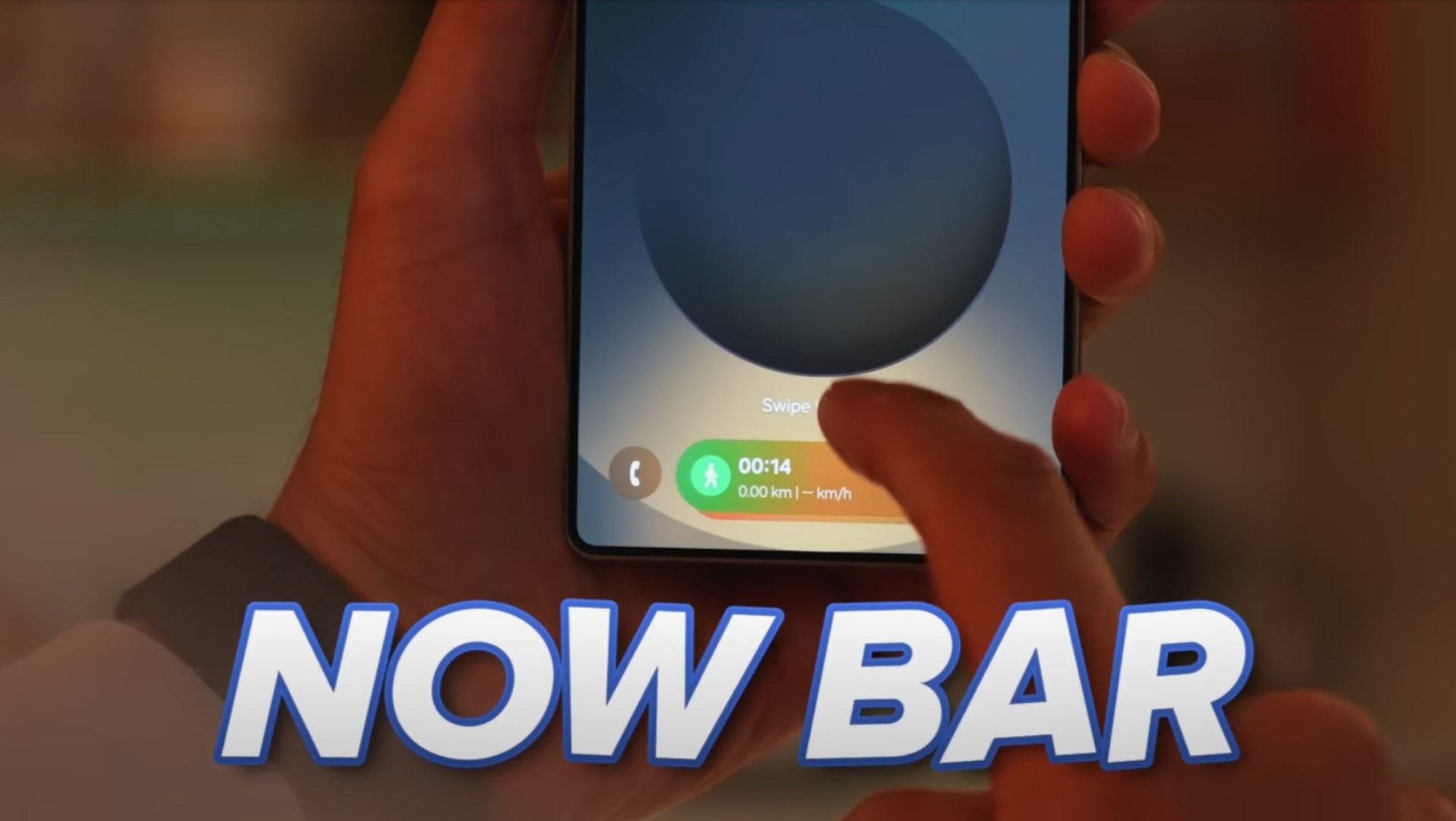
Samsung added the Now Bar on One UI 7 to display context-relevant information on the lock screen and always-on display. But it was only limited to Samsung’s internal use.
That’s changing with One UI 8, as Now Bar is now open for developers to access via public API. That means third-party developers can tap into it for their apps.
It’s essentially a contextual mini-hub that changes based on what you’re doing—watching a video, browsing the web, or using a productivity app.
The API support could make it more useful if developers actually adopt it. In its current state, the Now Bar feels like a good idea still waiting for a reason to exist. Samsung’s gamble is that letting outside developers in will give the feature more legs.
4. Smarter Reminders and Routine Automations
I am pretty fond of Samsung’s Reminder app to keep track of my daily tasks. It’s minimal and does what it needs to do with no extra flair. Samsung, however, thinks the app needs a bit more refinement, and it’s making those changes in One UI 8.
In the new Reminder app, you can see all categories on the main screen in rounded boxes. Each box has its own icons, name, and count of reminders within it. You can also hide custom categories with a tap and share to-do lists with friends or family. More interestingly, you can now use voice control to add new reminders.
Tied to this is an update to Routines, Samsung’s automation tool. With One UI 8, there’s now integration with Calendar and Samsung Notes, so automations can trigger based on events or note-taking activity.
There’s also support for new alarm-based routines. It might not be as flexible as something like Tasker or iOS Shortcuts, but it covers enough of the basics for casual users to find value.
5. Quick Share, Alarm Widgets, and Bluetooth Audio Improvements
A handful of smaller updates round out One UI 8. Quick Share is getting more frictionless with a new shortcut button that lets you accept incoming files without launching the app.
Alarm management also sees a few minor gains. Android Police discovered that grouped alarms now come with interactive widgets, allowing for quicker toggles and edits.
Samsung is also adopting Auracast, the Bluetooth LE Audio feature that simplifies audio sharing. Multiple Galaxy Buds (and compatible devices) can now join a single audio stream by scanning a QR code. It’s a cleaner alternative to pairing everything manually.
6. A Nod to Security and DeX Expansion
Samsung is also uplifting privacy and security with changes to Knox Vault. The company says it’s making better use of its dedicated security processor to isolate sensitive data like passwords and biometrics.
As usual, these are incremental security improvements that most users won’t see, but that nonetheless form part of Samsung’s long-term pitch to enterprise and privacy-conscious customers.
Also worth mentioning is an update to DeX, Samsung’s desktop-style interface. With Android 16 as its foundation, DeX is evolving into a more consistent desktop mode.
Vivo has officially launched its new 33W self-wired power bank, designed for fast charging and portability. The device features a 10,000mAh lithium-polymer battery, a slim 1.5cm build, and a lightweight 177g body.
The power bank supports 33W FlashCharge, 22.5W PD fast charging, 18W QC fast charging, and 33W PPS charging protocols. It is compatible with a wide range of devices, including smartphones, tablets, smartwatches, and game consoles across both Apple and Android ecosystems. It is capable of charging an iPhone 16 to 58% and a vivo S30 to 36% in just 30 minutes.
It includes a built-in USB-C cable with an ergonomic L-shaped connector, designed to prevent obstruction during use. The cable is made from a flexible woven material, offering durability and resilience to wear.
The power bank is equipped with multiple layers of safety protection, including overvoltage, overcurrent, overcharge, over-discharge, short circuit, and electrostatic protection. It is certified safe for air travel and compliant with China’s “New National Standard” for mobile power supplies.
Pricing & availability
The power bank has been launched in China at a price of CNY 129, roughly $18. Vivo hasn’t confirmed global availability yet, but the 33W power bank may be released internationally soon.
Infinix is reportedly preparing to launch the Smart 10, and the first round of specs has now surfaced online, thanks to a tip by Paras Gugalni.
Based on the leaked details, it looks like the budget-focused Smart series is getting a routine refresh, with some small spec bumps and a slightly redesigned rear panel.
Infinix Smart 10 Specs (Rumored)
The Infinix Smart 10 is said to be powered by the Unisoc T7250 chipset. The SoC has a similar two Cortex-A75 and six Cortex-A55 CPU setup as the MediaTek Helio G81 that powers last year’s Smart 9. So there seems to be no real upgrade in performance here. This will be paired with 6GB of RAM and an option to expand it virtually by 3GB.
Up front, the Smart 10 is expected to retain a 6.67-inch HD+ display with a 120Hz refresh rate. That’s the same refresh rate as its predecessor, though the screen resolution hasn’t improved, which means this will likely remain a 720p-class panel with slightly stretched visuals.
Infinix Smart 10 Renders
Design-wise, not much has changed on the front. It still has a punch-hole camera cutout in the screen. However, Infinix is making minor changes to the camera module’s design at the back.
The camera itself is now listed as 8MP, down from the Smart 9’s 13MP main sensor. There is likely a second lens as well.
The smartphone will have the same 5000mAh battery capacity as its predecessor. The upgrade might come in the charging department from 10W to 15W.
There’s no word yet on a release date or pricing, but the Smart 10 is likely to remain in the sub-$150 range. Given the minimal changes, the device is suitable for first-time buyers or users looking for a very basic Android experience.
Xiaomi has quietly updated its End-of-Life (EoL) list to add several well-known models across its Xiaomi, Redmi, and Poco brands to the no-longer-supported category. The updated list includes flagship-level devices like the Xiaomi Mi 11 Ultra and Redmi K50 Pro, alongside more mainstream phones such as the Redmi Note 11 Pro and Poco M4 Pro 5G.
XIaomi Mi 11 Ultra
The EoL list, according to Xiaomi, includes all devices that will no longer receive any form of software support. That includes HyperOS or Android version upgrades and security patches. In other words, these phones are now officially off Xiaomi’s radar.
Xiaomi adds 12 smartphones to EOL list
Among the newly added models:
Xiaomi Mi 11 Ultra
Xiaomi Mi 11X Pro
Xiaomi Mi 11i
Xiaomi Civi 1S
Redmi K50 Pro
Redmi K50
Redmi K40 Pro+
Redmi K40 Pro
Redmi Note 11 Pro
Redmi 10 2022
Poco F4 GT
Poco M4 Pro 5G
In plain terms, these phones won’t get any more Android version upgrades, security patches, or bug fixes. Xiaomi is also making it clear that it won’t respond to reports of vulnerabilities affecting these models.
So, for anyone using one of these models, the only real path forward is to consider an upgrade. Without ongoing support, even flagship-grade hardware becomes harder to recommend, especially as security concerns continue to rise across the Android ecosystem.
For tech-savvy users, custom ROM communities might offer alternative firmware options. However, this route carries its own risks and requires a certain level of technical expertise.
We’ve been consistently tracking Xiaomi’s end-of-life device list and will keep you updated as new additions roll in. Stay tuned for the latest updates.
Honor has officially launched the Honor Tablet 10 in China, following its recent debut in Malaysia and parts of Europe as the Honor Pad 10. Positioned as a mid-range Android tablet, it is designed with a focus on education, productivity, and eye comfort. The device features a 12.1-inch 2.5K anti-glare display with a 120Hz refresh rate and DCI-P3 wide color gamut. Its paper-like screen minimizes ambient glare by up to 98%, offering smoother handwriting input and enhanced visual clarity.
Under the hood, the Honor Tablet 10 is powered by the Snapdragon 7 Gen 3 chipset built on a 4nm process, offering improved CPU and GPU performance. It is available in multiple memory configurations, including up to 12GB RAM and 512GB storage. The device runs on MagicOS 9.0 and houses a 10,100mAh battery with support for 66W fast charging, promising all-day productivity and learning.
A key highlight of the tablet is its suite of AI-powered tools aimed at learners and students. Features include AI-powered transcription, real-time voice-to-text conversion, multilingual translation, note summarization, and handwriting recognition. Users can also scan and solve math problems, check essays, and receive structured feedback through smart tools designed to support schoolwork and self-study.
The tablet supports viewing documents in multiple formats like CAD, EPUB, PDF, and CAJ, and offers AI-based academic comparison reports. Families benefit from a parental control mode that allows real-time monitoring and app management via smartphone, while children access a personalized learning space with curated dashboards and role-based avatars.
Honor has also launched a Soft Matte Edition of the Tablet 10, which includes the same core features with a refined UV-coated finish. Both versions are TÜV Rheinland-certified for eye comfort, including certifications for flicker-free screens, low blue light, and visual fatigue comfort assessment.
Pricing & availability
The Honor Tablet 10 comes in three color options: Sunrise Impression, Sky Blue, and Rock Gray. Pricing for the standard version starts at ¥1274.15 for the 8GB + 128GB model, going up to ¥1954.15 for the 12GB + 512GB model. The Soft Matte Edition starts at ¥1699.15 for 8GB + 256GB, and ¥1869.15 for 12GB + 256GB.
Pre-orders are now live, and open sales will begin on May 31, 2025, at 10:00 AM across Honor’s official store, major authorized retailers, and select e-commerce platforms.
XPENG has launched the MONA M03 Max, a new electric hatchback priced at $20,000 (RMB 150,000) in China. It’s the only EV in this price range that offers city-level AI smart driving without any added subscriptions.
The M03 Max is powered by XPENG’s in-house AI Turing Smart Driving System. It uses two NVIDIA Orin-X chips with 508 TOPS of computing power, four times higher than other cars in its class. The system combines perception, decision-making, and control in one platform. It relies on 27 sensors and a Surround Reality Display to detect over 50 road elements like signs and obstacles. The car supports shared control between the driver and the system, with no interruptions during manual steering. It also includes advanced parking features and point-to-point assisted driving.
The smart cockpit runs on the new AI Tianji System 5.7.0. It adds over 300 new features and uses XPENG’s XGPT language model. Voice control now covers more than 90% of the car’s functions, with most commands completing in under one second. The voice assistant also supports free-flow conversations and a deep thinking mode for context-aware responses.
Inside, the M03 Max has a 15.6-inch center display and an 18-speaker 7.1.4 surround sound setup. The driver’s seat includes tri-zone lumbar support with a massage function. Side mirrors are frameless and include heating, auto-folding, memory, and reverse tilt. A blue light indicator signals when assisted driving is active.
The M03 Max comes in two range options: 600 km and 502 km. The Plus version offers 620 km and 515 km options. These versions aim to meet a range of user needs. Since the MONA M03 Pro launched in August 2024, XPENG has delivered 120,000 units, setting a delivery record among Chinese EV startups. The M03 Max currently has no global release plans, but XPENG confirms that future MONA models will target international markets.
For more daily updates, please visit our News Section.
HMD Global, the company behind Nokia-branded phones, is stepping into the smartwatch game with a twist. Leaks reveal they’re launching not one but two Wear OS-powered smartwatches, dubbed the HMD Rubber 1 and Rubber 1S, and one might even pack a camera—a first for Wear OS-powered devices.
According to HMD_MEME (@smashx_60) on X, the HMD Rubber 1 boasts a 1.85-inch OLED display, a 400mAh battery, and support for USB-C and Qi wireless charging. It has got a 5 ATM waterproof rating, Bluetooth 5.3, Wi-Fi, and NFC, plus health tracking for heart rate, blood oxygen, and steps. The standout feature? A 2MP camera, a rarity for smartwatches. As Notebookcheck speculates, the new hardware will possibly be positioned above the display like the JrTrack 4 Kids Smartwatch.
The Rubber 1S, meanwhile, sports a smaller 1.05-inch OLED display and a 290mAh battery. It keeps the health tracking and 5 ATM rating but swaps NFC for Bluetooth 5.0 and Wi-Fi. Both watches are set to run Google’s Wear OS, potentially leveraging its kid-friendly interface, as seen in the Galaxy Watch for Kids launched earlier this year.
The camera and basic health features suggest these watches might target kids, especially since HMD partnered with Xplora Technologies, a children’s smartwatch maker, back in October 2024. The Galaxy Watch for Kids uses Family Link for parental controls and teacher-approved apps, and HMD could be tapping into this ecosystem for the Rubber 1 and 1S.
No official launch date or pricing has surfaced yet. Still, with Google and Samsung pushing kid-friendly Wear OS, HMD’s timing is spot-on. If the Rubber 1 and 1S are indeed for kids, they could carve out a niche with that unique camera. Stay tuned for more details.
The Motorola Razr 60 blends modern functionality with an innovative flip design. With its sleek foldable form, decent performance, and focus on style over raw power, the Razr 60 appeals to a specific kind of user. Whether you’re after compact convenience, unique aesthetics, or just want to try the flip-phone life, here’s a breakdown of who should actually consider buying the Razr 60.
Motorola brought back the iconic flip phone design into modern foldables with its Razr series, and the latest Razr 60 is a part of its latest flagship foldables. If you’re tired of your regular smartphone, the Razr 60 brings a refreshing change with its clamshell folding design. This flexible design also makes it a lot more compact than conventional smartphones.
Motorola is known for offering its products in gorgeous colors, and the Razr 60 is no exception. It was announced in multiple colors, namely Gibraltar Sea, Spring Bud, Lightest Sky and Parfait Pink. These even comes with distinct textures like leather, nylon, and acetate.
This unique form factor also allows the Razr 60 to offer dual displays. Be it notifications, quick replies, or other fast actions, the cover display is perfect for quick inputs. That’s not all, it even doubles as a viewfinder that lets you get a preview from the camera. Essentially, the form factor is reminiscent of the classic camcorder.
AI is a key feature
AI (Artificial Intelligence) has seen explosive growth, and smartphone manufacturers have begun incorporating these tools in their smartphones. Samsung has its Galaxy AI, and Motorola has the Moto AI. This gets you access to nifty features like Catch Me Up, Pay Attention, Remember This, and Smart Connect. With the Dimensity 7400X, the Motorola Razr 60 isn’t a powerful flagship phone, but it offers decent performance that is capable of handling these useful AI tools. These AI even helps organize user’s tasks, create playlists & wallpapers, transcribe conversations, and more.
A Flip Phone that doesn’t break the bank
When one thinks of a foldable smartphone, one thinks of premium offerings from brands like Samsung with the Galaxy Z Fold and Galaxy Z Flip series that cost more than 1000 US Dollars. While Motorola has an expensive Razr 60 Ultra variant, the base Razr 60 is a lot more affordable. The flip phone is listed for 700 US Dollars for the base 8GB + 256GB configuration, so you get ample storage as well. So the entire package makes it quite attractive for those looking to experiment on their next smartphone purchase.
For more daily updates, please visit our News Section.
Lenovo has announced two new tablets for global markets: the Idea Tab and the Tab K11 Gen 2. Both models share most specifications, with the main difference being the camera setup.
Both tablets are powered by the MediaTek Dimensity 6300 processor (2.4GHz) and come with the ARM Mali-G57 MC2 GPU. They run on Android 15 and offer two memory configurations: 4GB or 8GB LPDDR4X RAM, and 128GB or 256GB UFS 2.2 internal storage. Storage can be expanded up to 2TB via microSD card. The SIM tray includes nano SIM and microSD slots, with the K11 Gen 2 also supporting eSIM.
The display is an 11-inch IPS LCD panel with a 2.5K resolution (2560×1600), a 90Hz refresh rate, 500 nits brightness, 1500:1 contrast ratio, and 72% NTSC color gamut. It supports 10-point multi-touch input and works with Tab Pen and Tab Pen Plus.
Both tablets include a quad-speaker setup with Dolby Atmos and a single microphone. Sensors include an accelerometer, an ambient light sensor, and a hall sensor. The battery is a 7040mAh unit with 20W fast charging over USB Type-C, offering up to 14 hours of use.
The Idea Tab has an 8MP rear and 5MP front camera, while the Tab K11 Gen 2 upgrades to a 13MP rear and 8MP front camera.
Connectivity options include 2G, 3G, 4G, 5G, WiFi 5, WiFi Direct, Bluetooth 5.2, GPS, GLONASS, Galileo, and A-GPS. Both tablets come with a 3.5mm headphone and microphone combo jack, a metal body, and IP52 dust and water resistance. Dimensions are 254.59 x 166.15 x 16.99 mm, and the weight is around 480g.
Color options are Luna Grey and Polar Blue. Accessories include a folio case, keyboard, and stylus. The Idea Tab also includes Lenovo’s E310 TWS earbuds. Pricing and availability details will likely be revealed soon.
For more daily updates, please visit our News Section.
Vivo X200s and Samsung Galaxy S25+ are top-tier flagships built for users who want the best in performance, camera technology, and long-lasting software support. This comparison is worth exploring because it pits Vivo’s bold, hardware-focused innovation against Samsung’s polished and feature-rich ecosystem. With both phones leading the Android space in 2025, knowing where each one excels helps buyers choose between cutting-edge power and a well-rounded, premium experience.
Build and Feel: Vivo X200s uses a premium body with IP68/IP69 certification, making it highly resistant to dust and even high-pressure water. Its flat glass finish and symmetrical build feel durable and elegant. Meanwhile, the Galaxy S25+ pairs Gorilla Glass Victus 2 on both sides with an Armor Aluminum 2 frame, offering a stronger resistance to drops and scratches. It also includes an IP68 rating and UWB support, enhancing device connectivity in high-end ecosystems. The S25+ feels more refined in terms of grip and durability, especially with its reinforced build.
Verdict: Galaxy S25+ edges ahead in durability due to its use of stronger glass, enhanced frame, and inclusion of UWB support.
Display Quality: Vivo X200s delivers a 6.67-inch AMOLED panel with 1B colors, HDR10+, HDR Vivid, and a peak brightness of 5000 nits, exceptional for extreme sunlight visibility. The S25+ counters with a slightly larger 6.7-inch LTPO AMOLED 2X display, QHD+ resolution, HDR10+, and 2600 nits peak brightness. Although Vivo wins in brightness, Samsung offers better resolution (QHD+ vs. 1.5K), an always-on display, and smoother adaptive refresh handling thanks to LTPO.
Verdict: Samsung Galaxy S25+ wins with sharper resolution and advanced LTPO tech, despite Vivo’s superior brightness.
2. Specifications
Galaxy S25+
Performance: Vivo X200s runs on the Dimensity 9400+ (3nm), using a cutting-edge Cortex-X925 prime core and Immortalis-G925 GPU. The Galaxy S25+ features the Snapdragon 8 Elite, also 3nm, with dual Oryon V2 cores reaching 4.47 GHz and an Adreno 830 GPU. While both chipsets are high-end, the Snapdragon 8 Elite outpaces in raw performance and sustained efficiency, especially in gaming and multitasking. Samsung also benefits from 7 years of software updates, versus 4 years for Vivo.
Verdict: Galaxy S25+ leads in performance due to better-sustained speeds, GPU capability, and longer software support.
Battery and Charging: Vivo X200s houses a massive 6200 mAh silicon-carbon battery with 90W wired and 40W wireless charging. In contrast, the Galaxy S25+ carries a smaller 4900 mAh battery with 45W wired and 15W wireless. Vivo offers longer endurance and faster charging in both modes, ideal for power users. Samsung counters with reverse wireless at 4.5W and PD3.0 support, but it still lags in capacity and speed.
Verdict: Vivo X200s takes the battery crown with a much larger cell and quicker charging across the board.
3. Camera
Vivo X200s
Main and Secondary Lenses: Vivo X200s offers a triple 50 MP setup including a periscope 3x telephoto and ultrawide, all tuned with Zeiss optics and T* lens coating. Samsung S25+ features a 50 MP main lens with Dual Pixel PDAF and OIS, a 10 MP 3x telephoto, and a 12 MP ultrawide with Super Steady video. Vivo’s camera hardware is superior in sensor quality and Zeiss processing, though Samsung adds 8K video and better color science for most users.
Verdict: Vivo X200s is more hardware-rich and suited for enthusiasts, while Samsung delivers better video tools and ease of use, but Vivo wins overall for photography depth.
Selfie Camera: Vivo includes a 32 MP ultrawide selfie camera with 4K video support, ideal for wide group shots and vlogging. Samsung settles for a 12 MP wide lens with dual pixel PDAF and HDR10+ video. Despite Samsung’s better color grading and video recording quality, Vivo offers higher resolution and a more versatile field of view.
Verdict: Vivo X200s wins in selfie hardware with a higher resolution and wider lens, though Samsung’s video output is slightly more polished.
4. Pricing
Vivo X200s starts at approximately $650, while the Galaxy S25+ is priced at around $1000. Vivo offers more RAM/storage options (up to 1TB and 16GB RAM), higher battery capacity, and Zeiss camera integration at a significantly lower cost. Samsung’s price premium covers longer software support, QHD+ display, and flagship ecosystem perks like Samsung DeX and UWB.
Verdict: Vivo X200s delivers greater hardware value for the money. Galaxy S25+ justifies its premium with ecosystem benefits and extended support but remains less cost-efficient.
5. Conclusion
Galaxy S25+
Vivo X200s brings innovation through its silicon-carbon 6200 mAh battery, Zeiss-powered triple 50 MP cameras, 5000-nit display brightness, and strong telephoto performance at a midrange flagship price. Samsung Galaxy S25+ offers the unique benefit of 7 years of updates, Samsung DeX, UWB, 8K video, and flagship build quality. Both phones have ultrasonic fingerprint sensors, stereo audio, and high-end connectivity features, but Samsung integrates them into a more polished software environment.
Verdict: Choose the Vivo X200s for better hardware, battery life, and photography value under $700. Go for the Galaxy S25+ if long-term support, QHD+ display, and a rich ecosystem matter more than battery or camera specs.
Samsung’s Galaxy S25 Edge has hit the market, and it’s not just about looking sleek—it’s a showcase of cutting-edge engineering. At just 5.8mm thick and 163g, this phone packs flagship power into a “razor-thin” frame, tackling long-standing smartphone design challenges. The brand has now detailed how it achieved this thickness without compromising durability and performance.
The S25 Edge, Samsung’s slimmest S-series phone yet, blends an titanium frame with Corning Gorilla Glass Ceramic 2 on the front (a first for the S25 lineup) and Gorilla Glass Victus 2 on the back. Its 6.7-inch LTPO AMOLED display matches the S25+ in size but keeps things light.
To fit a 200MP camera and Snapdragon 8 Elite chip into this slim profile, Samsung engineered a new mounting system for internal components, achieving 0.1mm precision after multiple prototypes. The 200MP camera — a standout feature shared with the S25 Ultra — is now over 10% thinner, thanks to redesigned autofocus and optical image stabilization systems, along with a new two-layer camera housing.
Cooling was reportedly a challenge in such a thin device, but Samsung managed to include a vapor chamber that’s 10% larger than the one in the S25+. It also features a ‘hole structure’ design—a cutout in the metal frame that allows direct heat transfer from the chipset to the vapor chamber. This is paired with a tailored thermal interface to manage heat from other components.
Not every spec of this phone is impressive, and Samsung’s aware of it
Let’s be honest — a 3,900mAh battery just isn’t enough to deliver a true flagship experience throughout the day. And unlike modern Chinese flagships, a quick 5–10-minute charge doesn’t make much difference either. The battery is paired with 25W charging, which feels underwhelming by today’s standards. Performance tests suggest the S25 Edge performs inferior to the S25+ under prolonged stress, possibly due to optimizations aimed at preventing rapid discharge.
Priced at $1,099, the S25 Edge comes in Titanium Silver, Jetblack, and Icyblue, with IP68 water and dust resistance. Lessons from its camera design may shape the S26 series, and rumors suggest the Galaxy Z Fold 7 could borrow its slim-down approach.
Google Photos just turned 10 years old, and the numbers are huge. The app now has 1.5 billion users storing over 9 trillion photos and videos.
Every month, people do 370 million searches, share 440 million memories, and edit 210 million photos on the platform. Google marked the anniversary by adding new features and sharing 10 tips to help users.
New AI Editor: Google redesigned the photo editor to put AI suggestions and manual tools in one place. The Reimagine and Auto frame features from Pixel 9 phones are coming to more Android devices next month. iPhone users will get them later this year.
QR Code Album Sharing: You can now create a QR code to share photo albums instantly. People just scan the code to see photos or add their own – perfect for events and gatherings.
Places Tab for Travel Photos: There’s a new Places section under Collections that shows your photos on a map. This makes it easy to look back at trips and see where you took photos.
Better Search: Search got smarter. You can now find photos using natural phrases like “me in a sparkly blue dress” or “Alice at the beach.” This works as long as you’ve labeled faces in the People & Pets section.
Auto-Created Memories: Google Photos automatically makes monthly and yearly photo collections. These are easy to share and help you relive old memories without doing any work.
Highlight Videos: You can make short video montages by tapping the “+” button and selecting “Highlight video.” Pick people, pets, or places, and Google Photos creates the video for you.
Auto-Updated Shared Albums: Shared albums can now update themselves when you add new photos of specific people or pets.
Grid Controls: New grid options let you clean up your photo feed by hiding memes, GIFs, and grouping similar photos together.
Memory Settings: You can hide certain people, pets, or dates from your memories. You can also switch between time-based and themed memory formats.
Free Up Phone Storage: Tap your profile picture and select “Free up space” to delete photos already backed up to the cloud, giving you more room on your phone.
Availability
Instant album sharing via QR codes is now rolling out, with the redesigned photo editor launching on Android in June 2025. The iOS update is scheduled for later this year.
For more daily updates, please visit our News Section.
Casio has just launched a pair of new surfing watches in the US. It is bringing the new G-Lide GLXS5610-2 and GLXS5610-4, which are a part of the brand’s popular G-Shock lineup. These bring colorful designs and impressive water resistance. So here’s what you need to know.
Casio G-Shock G-Lide GLXS5610: What does it offer?
The known watchmaker just released the G-Shock G-Lide GLXS5610 series, that were designed with professional surfer and Team G-Shock athlete Bettylou Sakura Johnson. It is inspired by the two main character colors of Disney’s Hawaii-based Lilo & Stitch movie, so they arrive in a light pink and light blue. These are dedicated surfing watches, so they bring various surfing related features.
Casio G-Shock GLXS5610 Surfing Watches
This includes tide graphs, moon data, and water resistance to 200 meters. Apart from this, you have three alarms, 1/100 second stopwatch, and more. The GLXS5600 series supports world time with 48 cities built in. It is made using resin and bio-resin components and even houses a white LED backlight. As per official notes, the duo promises to offer around three years of battery life from the replaceable cells.
Pricing and Availability
Casio has announced the G-Shock G-Lide GLXS5610-2 and GLXS5610-4 watches in the US Market for 99 US Dollars. The smartwatch is already listed on the brand’s official website. As of right now, it is unclear whether the company plans on releasing these surfing G-Shock watches in other regions like Europe and Asia. This launch also comes just after Casio announced the G-Shock MTG-B4000 watches with carbon frame, sapphire glass, and Triple G Resist.
For more daily updates, please visit our News Section.
The Xiaomi 15S Pro definitely has an important spot in the history of Chinese smartphones. Not that its camera is exceptionally powerful or the screen is incredibly good, but simply because the SoC inside is Xiaomi’s best and self-developed processor. Compared to other flagship processors, what can the XRING O1 bring us, and what might be less competent?
Compared to the sibling, the 15 Pro, a phone with Qualcomm Snapdragon 8 Elite, we can clearly see where the XRING O1’s CPU, GPU, NPU, and ISP stand on the global stage.
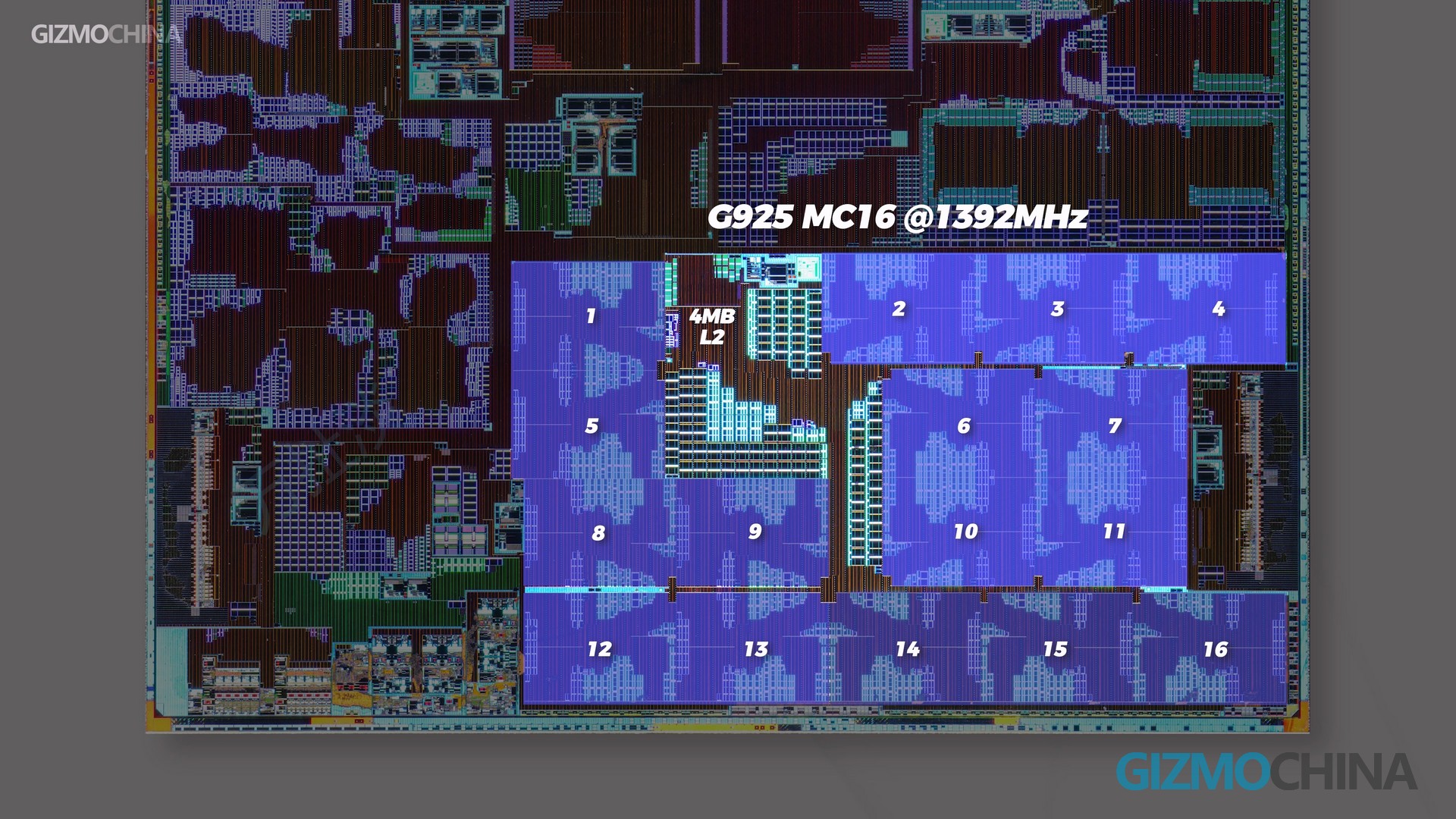
To understand the performance of the XRING O1, we must check the inside first. This is the dieshot of the XRING O1. Thanks to TSMC’s N3E process, this chip achieves a remarkably high level of integration. Compared to other flagship SoCs, its die area is even smaller.
However, the trade-off is that the modem is not integrated into the chipset. The XRING O1 uses a standalone MediaTek T800 modem chipset instead of Xiaomi’s in-house Surge T-series modem. After all, it even took six years for a giant like Apple to have its first 5G modem. So Xiaomi still has a long way to go in the 5G modem race.
The CPU unit sits on the upper half of the dieshot. It features 10 cores across four different ARM architectures and clock speeds. Apart from the two A520 cores, all others use ARM’s latest and most advanced architectures. The CPU’s peak frequency can reach an impressive 3.9 GHz.
The GPU unit is also unusually large, packing a 16-core ARM G925 GPU—even more ridiculous than the Dimensity 9400’s 12-core GPU. Benchmark tests reveal that the XRING O1’s CPU performance slightly outperforms the Snapdragon 8 Elite, while its GPU falls just a tad behind the 8 Elite.
On paper alone, the XRING O1 already has what it takes to compete with Apple, Qualcomm, and MediaTek. But whether it can truly win depends on real-world gaming performance. For the 15S Pro, we prepared three games to test the overall experience and power efficiency under different workloads.
Performance & Gaming Tests
Let’s start with the highest load game—Honkai: Star Rail. Although the processor begins throttling after 4 minutes, the frame rate gradually drops to 40 FPS and stabilizes, resulting in a relatively smooth gaming experience. Both temperature and power consumption are well-controlled, placing it firmly in the “excellent” category.
In contrast, the 15 Pro’s performance falls short. Whether in average power consumption, temperature, or frame rate, it fails to outperform the XRING-powered 15S Pro. Additionally, the 15 Pro shows significant frame rate fluctuations, making stutters noticeably perceptible during gameplay.
I believe Xiaomi has optimized this game specifically for the 15S Pro, with the XRING O1 playing a key role in delivering such a substantial improvement in gaming performance.
For flagship phones, Genshin Impact is no longer a particularly demanding game—both devices handle it effortlessly at a stable 60 FPS over extended sessions. Our focus here is on power efficiency and thermal performance. Once again, the 15S Pro wins; it can maintain similar frame rates while running cooler and more efficiently. The same trend continues in PUBG Mobile, with almost the same result.
With Wi-Fi, the XRING O1’s power and thermal management are truly world-class, offering slightly better gaming performance than the Snapdragon 8 Elite. So why do I say ” With Wi-Fi”? Because the XRING O1 lacks an integrated 5G modem.
5G Modem & Battery Life
Since the 15S Pro’s modem is a chipset separate from the SoC, its power consumption on 5G networks is inevitably higher than devices with integrated modems. But exactly how much higher? I ran some tests, under the same conditions, when switching from Wi-Fi to 5G gaming, the 15S Pro’s average power consumption was higher than the 15 Pro’s.
I also tested daily Apps like video calls and TikTok on 5G networks. The 15S Pro’s power consumption was consistently higher, too.
So when some people ask me about the Xiaomi 15S Pro’s battery life, I can only say it depends on your usage environment. If you’re mostly in Wi-Fi environments, then the 15S Pro’s battery life will outperform the 15 Pro’s. On the contrary, when going from 100% to empty on 5G networks, the 15S Pro’s battery life lasts about half an hour shorter than the 15 Pro’s.
ISP
The XRING O1’s ISP significantly impacts camera performance, both positively and negatively. Let’s start with the positives.
The most improved camera on the 15S Pro is this 5x telephoto camera, with very accurate white balance. And the weaker the light, the greater the advantage. The main camera’s dynamic range is also better, there are more details in highlights. Videos are sharper with less cropping. So the image stabilization becomes weaker.
In low light, the 15S Pro’s exposure will be higher. At 30fps, it may not be very noticeable, but when switching to 4K 60fps, you can clearly see the XRING’s advantage.
Unfortunately, the 15S Pro’s Leica tone has been weakened again, with not as high contrast. And the green problem in the night scene has also appeared on the 15S Pro’s ultra-wide camera, while the 15 Pro’s white balance is done very well. The viewfinder also underexposes in low light, and the clarity drops significantly.
I would say the O1’s ISP isn’t as powerful as imagined – it still needs some time to defeat Qualcomm.
Bluetooth & NPU
Music enthusiasts may worry about aptX-related Bluetooth protocols not being available on the 15S Pro. Xiaomi certainly wouldn’t disappoint earbuds users – they’ve licensed nearly all mainstream Bluetooth protocols. Whatever works on the Xiaomi 15 Pro will be the same on the 15S Pro too.
The XRING O1 features a 6-core NPU with 10MB cache, delivering computing power up to 44 TOPS. Although this NPU is powerful, Xiaomi hasn’t utilized it for many features. Xiaomi HyperAI still can’t work offline – all AI-related functions become unavailable without an internet connection.
Even when trying to benchmark this NPU’s AI performance improvements, scores are low due to Apps not being optimized for this new chipset. Hopefully, the HyperAI will be significantly better on the XRING O2 and truly unleash this NPU’s full potential across more Apps.
Others
While carefully testing whether the Xiaomi 15S Pro has other special features compared to the 15 Pro, I did find some differences. For example, the 15S Pro cannot keep AOD (Always-On Display) constantly active.
The ray tracing performance of XRING O1 also falls short of the Snapdragon 8 Elite. Using Geekerwan’s ray tracing demo for testing, the frame rate difference is significant.
However, XRING excels in other areas, such as HDR video decoding, WiFi-7 support, and GMS compatibility – these show very little difference compared to phones using Qualcomm chips.
Conclusion
So, the XRING O1 has undoubtedly become one of the world’s most powerful mobile processors. It is excellent in nearly all aspects, with only one notable weakness: subpar battery life on 5G networks. The good news is that Xiaomi has already developed a 4G modem, currently used in their smartwatches. Integrating a 5G modem into XRING is just a matter of time. The birth of the Xiaomi 15S Pro is to show the world that Xiaomi can develop its own chips – and do it just as well as anyone else.
XRING O2 is already on the way, with a clear goal this time: to become the world’s number one mobile platform. The Xiaomi 15S Pro will likely not have a global release, so if you’re a Xiaomi fan wanting to support the XRING team, you can check it out at GeekWills.
The Xiaomi Pad 7 Ultra just debuted as the first ever Ultra branded flagship tablet from the brand. But it seems like another premium tablet is also in the works. This new model could be the Xiaomi Pad 7S Pro, which just surfaced in a fresh leak that revealed some high end specs. So let’s check it out.
Xiaomi Pad 7S Pro: What does it offer?
This isn’t the first time we’ve heard of the Chinese tech giant’s upcoming Xiaomi Pad 7S Pro. Earlier this month, the Xiaomi Pad 7S Pro was spotted on the 3C certification. It revealed its 25053RP5CC model number and support for 120W wired fast charging. As the name suggests, it is the direct successor to the Xiaomi Pad 6S Pro (Review).
Xiaomi Pad 6S Pro
Known tipster Digital Chat Station previously revealed that this high end tablet will sport a 12.5-inch display. But in one of his newer Weibo posts, he claimed that it will be an LCD panel and not an OLED screen like the one found on the Xiaomi Pad 7 Ultra. While details regarding its specs and features are still under wraps, the Xiaomi Pad 7S Pro is expected to launch with a flagship grade processor.
This might be Qualcomm’s Snapdragon 8 Elite or the MediaTek Dimensity 9400 SoC. There’s also a chance that the company might debut this tablet with its brand new proprietary chip, the XRing O1. To recall, this is the same processor that powers the brand’s newest flagship phone, the Xiaomi 15S Pro. Unfortunately, that was all the information that was revealed in the latest leak, so stick around for more.
For more daily updates, please visit our News Section.
At an event in Shenzhen this week, Chinese smartphone brand Honor announced its entry into the category of humanoid robots.
The announcement came during the China launch of the Honor 400 series, where the company described it as a part of its broader push to become an “AI device ecosystem company,” rather than just another phone brand.
Honor starts its humanoid robot journey
Honor says it has already broken a humanoid robot running record with a speed of 4 meters per second. The hardware used for this achievement wasn’t actually built by Honor, though.
Instead, it came from Unitree, a Chinese robotics company known for its affordable and agile bipedal bots. Honor integrated its AI algorithm using Unitree’s open software interface as part of its contribution.
Xiaomi’s humanoid robot: CyberOne
The company framed this as a milestone toward developing its own robots, not just partnering with others. Honor also says it has a new “Industry Incubation Department” to explore “intelligent form factors,” including embodied AI and AI agents.
While Honor hasn’t unveiled its own hardware yet, it claims to be actively developing in-house robotics projects. It also says it’s working with partners in what it calls the “embodied intelligence ecosystem.”
The robot announcement was somewhat buried beneath the launch of the Honor 400 Series phones, which are apparently off to a strong commercial start. The company reports a 183% sales increase in the UK over the previous generation, crediting AI features like image-to-video generation powered by Google.
For more daily updates, please visit our News Section.
We use cookies on our website to give you the most relevant experience by remembering your preferences and repeat visits. By clicking “Accept”, you consent to the use of ALL the cookies.
This website uses cookies to improve your experience while you navigate through the website. Out of these, the cookies that are categorized as necessary are stored on your browser as they are essential for the working of basic functionalities of the website. We also use third-party cookies that help us analyze and understand how you use this website. These cookies will be stored in your browser only with your consent. You also have the option to opt-out of these cookies. But opting out of some of these cookies may affect your browsing experience.
Necessary cookies are absolutely essential for the website to function properly. This category only includes cookies that ensures basic functionalities and security features of the website. These cookies do not store any personal information.
Any cookies that may not be particularly necessary for the website to function and is used specifically to collect user personal data via analytics, ads, other embedded contents are termed as non-necessary cookies. It is mandatory to procure user consent prior to running these cookies on your website.