Xgimi is expanding its portable projection ecosystem with the launch of a new Portable Outdoor Screen, a lightweight 70-inch screen built for spontaneous movie nights under the stars. Priced at $99, the new screen is available now on Xgimi.com and Amazon, positioning itself as the ideal companion for the company’s latest portable projector, the MoGo 3 Pro.
Big Screen Entertainment, Anywhere You Go
At just 3.3 pounds and folding down to a backpack-friendly 18 inches, this screen is clearly designed with mobility in mind. It comes with a custom storage bag and an integrated elastic cord setup system that promises to get you from packed to projected in under a minute. It’s a refreshingly low-effort setup—something anyone who’s ever wrestled with a saggy sheet or a tripod screen will appreciate.
Xgimi’s design isn’t just about portability—it’s also built to last. The aluminum alloy frame is both waterproof and rust-resistant, which means it won’t buckle under a sudden drizzle or an overly enthusiastic campsite setup. The screen itself is made of wrinkle-free, washable fabric, and four included ground stakes add stability on uneven surfaces like grass or sand.
This launch isn’t happening in isolation. Xgimi is also rolling out the MoGo 3 Pro Portable Collection, a $549 bundle that includes the projector, carrying case, power base stand, optical filter, power adapter, and USB-C cable—essentially everything you need for a full outdoor theater setup.
The MoGo 3 Pro (our full review) stands out with licensed Netflix on Google TV, 450 ISO Lumens, and Full HD projection up to 200 inches. It’s coffee cup-sized, has a built-in stand, and features ISA 2.0 for effortless auto-focus and keystone correction. Despite its compact size, it delivers impressive sound and brightness, making it ideal for movie nights in the wild—or just your backyard.
In related news, Xgimi’s Chinese arm has launched two new portable projectors—the Play 6 and Play 6e. Both feature a compact design, a 360-degree gimbal, and native 1080p resolution. The Play 6 includes a built-in 20,000mAh battery, Harman Kardon speakers and is priced at 2,099 yuan ($290), while the Play 6e lacks a battery but is more affordable at 1,799 yuan ($250). Both models support smart features like auto keystone, autofocus, wireless casting, and run on GMUI 6.0. They’re expected to launch globally under the MoGo brand later this year.
For more daily updates, please visit our News Section.
OnePlus has started rolling out the OxygenOS 15.0.0.700 update for the OnePlus Open in India (IN). The update, version CPH2551_15.0.0.700, brings improvements to home screen customization, security, and connectivity. The rollout is incremental, beginning with a limited number of users before becoming more widely available.
OnePlus Open
OnePlus Open OxygenOS 15.0.0.700 update features
Users can now resize home screen folders to 1×2 or 2×1 layouts using drag gestures. App groups can be renamed by long-pressing shortcuts. The update also allows adjustments to third-party 2×2 widget sizes for a more uniform look, available under Settings > Home screen & Lock screen > Optimize widget appearance. Shelf widgets for Zomato and Blinkit now show app statuses more clearly. Animations for notifications and Quick Settings are smoother, and music controls for Spotify in Live Alerts have been refined. The March 2025 Android security patch is also included.
If a user forgets their privacy password, resetting it now requires linking to a user account. This enables account verification for data recovery. The update improves reliability when switching between Wi-Fi networks and using mobile data roaming, helping ensure more stable connections.
Indian users can submit bug reports via the OnePlus Community App’s “Bug Report” section or by dialing *#800#. Users are advised to manually check for updates under Settings > System > System Update.
For more daily updates, please visit our News Section.
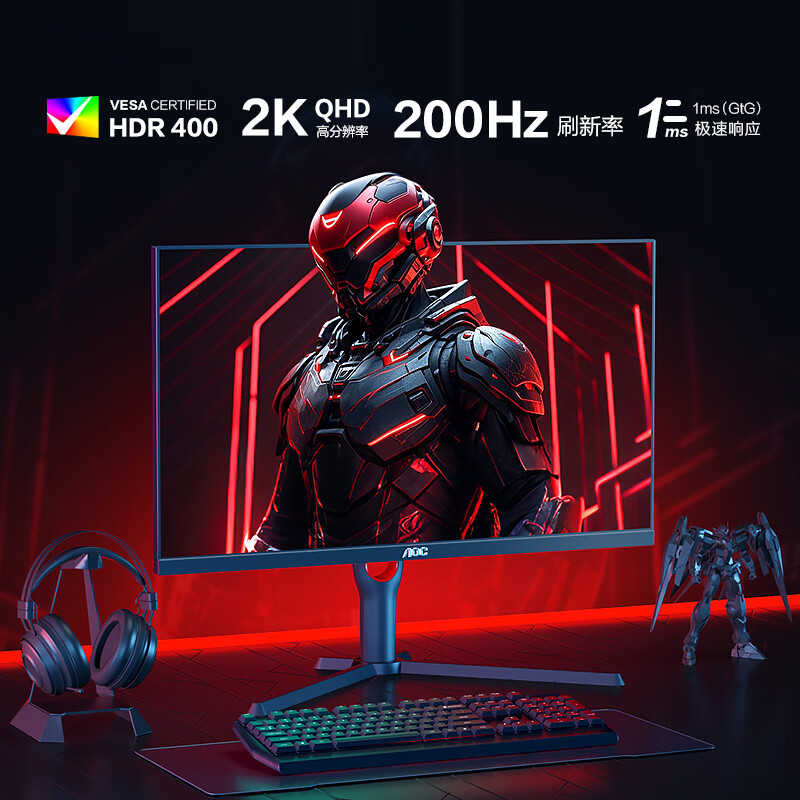
AOC has introduced its new 27-inch Q27G3H gaming monitor in the Chinese market, offering a strong balance of performance and value. The monitor is priced at 1,149 yuan ($158) and is now available on JD.com. Let’s check out its key specs.
AOC Q27G3H Monitor Specifications
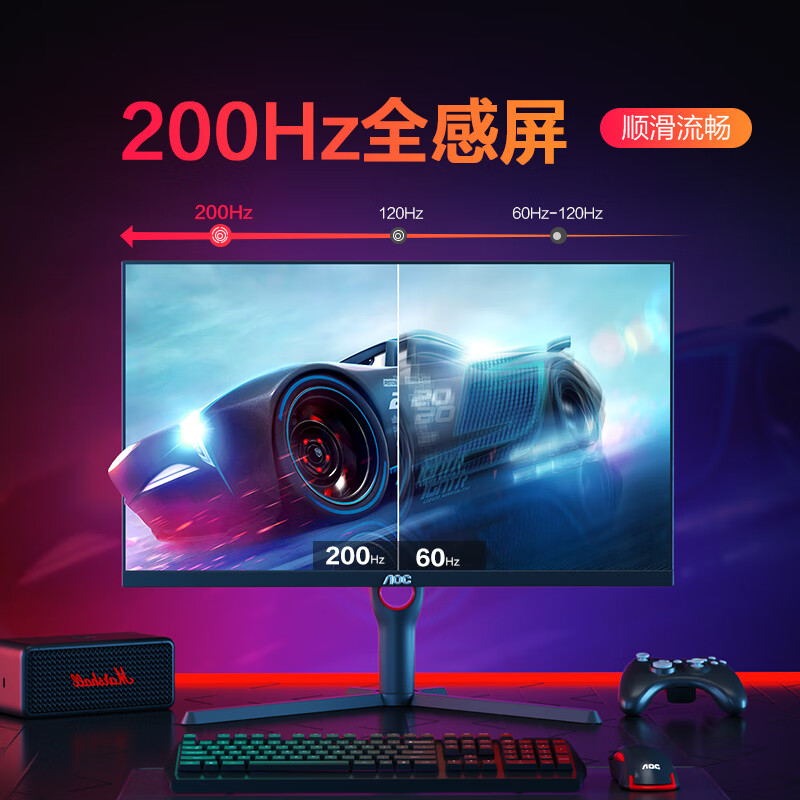
The monitor features a 2K QHD resolution (2560 x 1440) and comes with an overclocked 200Hz refresh rate, delivering smooth, responsive visuals ideal for gaming and content creation.
The Q27G3H is built on a Fast IPS panel that equips it with wide viewing angles and accurate color reproduction. It supports a 1ms GtG response time and a remarkably low 0.3ms MPRT, helping reduce motion blur during fast-paced scenes. It also supports Adaptive Sync and is compatible with AMD FreeSync, ensuring tear-free gameplay.
The panel comes with HDR400 certification and supports 10-bit color (8-bit + FRC), allowing it to display 10.7 billion colors. It covers 99% of the sRGB and 95% of the DCI-P3 color gamuts and arrives with factory-calibrated color accuracy (ΔE<2), making it suitable for color-sensitive tasks like photo editing and video production.
For added eye comfort, the Q27G3H features DC dimming and a TÜV-certified low blue light panel. It comes with several blue light modes tailored for different tasks, such as multimedia consumption, reading, and office work.
In terms of ergonomics, the monitor sports a fully adjustable stand that supports tilt (-5° to 23°), swivel (-30° to 30°), height adjustment (up to 130mm), and pivot rotation (-90° to 90°). It also supports 100 x 100 mm VESA wall mounting.
Connectivity options include HDMI 2.1, DisplayPort 1.4, and a 3.5mm audio jack, making it a flexible choice for both PC and console users. For gamers, it packs extra features like Game Color tuning, low input lag mode, dark field control, and an on-screen crosshair for enhanced precision in FPS titles.
The Oppo K13 series is set to launch in China soon. But ahead of any official announcement, the key specs of the Oppo K13x and chipsets of the Oppo K13 and Oppo K13 Pro have just been leaked via a Chinese tipster. So here’s everything we know so far.
Oppo K13 Pro, K13, & K13x launching in China soon
The latest information arrives from a leak on Weibo from Experience more, confirming details regarding the K13x, K13, and K13 Pro. Oppo’s upcoming K13x is expected to feature a Snapdragon 6 Gen 4 SoC. This model could also sport a 6.67-inch AMOLED display with an FHD+ resolution and a high refresh rate. A massive 7,000mAh battery pack powers this smartphone, which supports 80W wired fast charging.
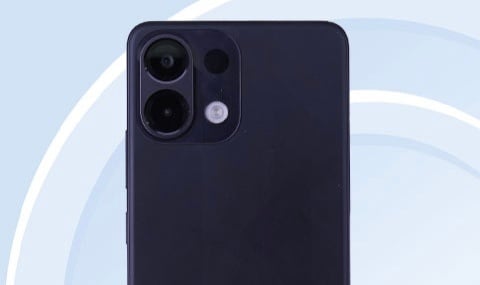
Oppo K13 series TENAA image
For optics, the rear packs a 50MP (Main) + 2MP (Secondary) dual camera setup, while the front houses a 16MP shooter for selfies and video calls. Other notable features include an IR blaster, an in-display fingerprint sensor, and an 8.45mm body that weighs 208 grams. On the other hand, the Oppo K13 is rumored to be equipped with the Dimensity 8400, while the Oppo K13 Pro packs the brand new Snapdragon 8s Gen 4.
According to the tipster, the Oppo K13 13 and K13 Pro are smartphones that will take on the Redmi Turbo 4 and iQOO Z10 Turbo in the Chinese market. While the Chinese launch might be right around the corner, global availability in markets like India is still unclear. This is all the information we have at the moment, so stick around for more. We previously covered a “What to expect” for the Oppo K13 series a couple of months ago, which you can click here to check out.
For more daily updates, please visit our News Section.
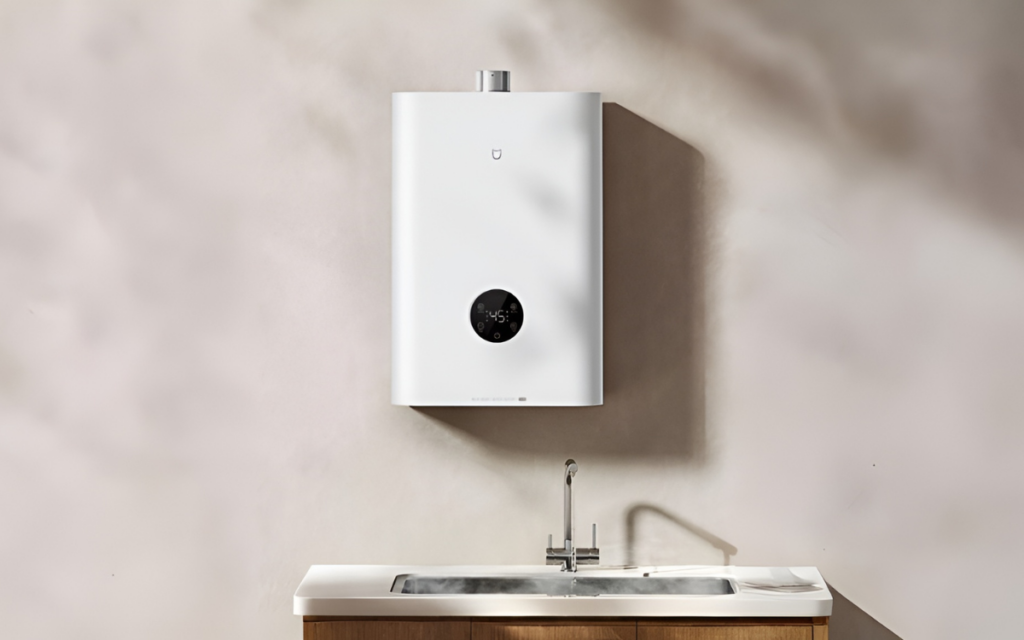
Xiaomi has expanded its smart home lineup with the new Mijia Smart Constant Temperature Gas Water Heater 16L S10, launching tonight for 1299 yuan (roughly $180). Let’s check out its key specs.
Xiaomi Mijia Gas Water Heater S10 Specs
The S10 features a dual-drive servo system that dynamically adjusts water flow based on inlet and outlet temperatures, ensuring stable hot water output. It delivers water within a tight ±0.3°C of your set temperature, even when multiple taps are in use.
It comes equipped with a custom temperature control algorithm powered by a high-performance chip, which continuously balances gas and water flow in real time. Users can also switch between 13L and 16L modes, making it well-suited for households with varying hot water needs.
Under the hood, the S10 sports a stainless steel heat exchanger that’s typically found in industrial-grade systems. It offers triple the corrosion resistance of traditional copper models and achieves up to 90% thermal efficiency, thanks to an upgraded fin and tube layout.
On the noise front, the S10 meets China’s top-tier quiet operation standards. It includes a low-noise DC fan, a dual-sealed combustion chamber, sound-dampening insulation, and optimized airflow—all working together to keep noise levels around 45dB.
As a smart device, it integrates seamlessly with Xiaomi’s HyperOS ecosystem and supports control via the Mi Home app. Users can access various heating modes, including presets for child baths, kitchen use, and even pet washing. It features built-in Wi-Fi (2.4GHz) and Bluetooth 4.2 for flexible connectivity.
The S10 also packs essential safety measures such as flame-out protection, overheat shutdown, anti-freeze detection, surge protection, and an automatic cut-off if temperatures exceed 85°C. It supports a wide range of water pressures (0.02MPa to 0.85MPa) and uses a forced exhaust system to safely expel gases.
Despite all the hardware enhancements, the unit retains a minimalist form factor. It weighs just 10kg and measures 530×360×180mm, making it around 15% more compact than its predecessor, ideal for space-conscious homes without sacrificing performance.
In related news, Xiaomi recently introduced a water purifier that delivers clean, mineral-rich water in just three seconds, alongside a high-speed hair dryer designed to dry hair in under a minute.
For more daily updates, please visit our News Section.
The highly anticipated Google Pixel 9a finally made its global debut last week after months of rumors and leaks. But while the budget Pixel was set to go on sale next month, the official release date was still unclear. Now, the company has confirmed the first sale date for several markets, so here’s when it goes on sale in India.
Google Pixel 9a Global Sale Dates
The search engine giant is planning on kicking off the Pixel 9a first sale in the US, Canada, and UK on 10th April 2025. Meanwhile, Germany, Spain, Italy, Ireland, France, Norway, Denmark, Sweden, Netherlands, Belgium, Austria, Portugal, Switzerland, Poland, Czechia, Romania, Hungary, Slovenia, Slovakia, Lithuania, Estonia, Latvia, and Finland are getting this device on April 14. On April 16, India along with Australia, Singapore, Taiwan, and Malaysia are starting the sale for the Pixel 9a.
Google Pixel 9a
To recall, the smartphone carries a 499 US Dollar starting price tag for the 128GB model. The higher end 256GB option costs 599 US Dollars. In the Indian market, the Pixel 9a arrives in a single 256GB variants, which costs 49,999 INR. This makes it slightly more affordable than its US pricing. Those interested can get their hands on this device from Flipkart. Google is also offering a limited period cashback offer of 3,000 INR and even 24 months of no cost EMI options from select banks.
The Pixel 9a features a 6.3-inch OLED display with a 120Hz refresh rate and FHD+ resolution. Under the hood, it is equipped with the Google Tensor G4 chipset with the Titan M2 security chip. Out of the box, the smartphone runs on the Android 15 OS with 7 years of OS guaranteed OS updates. The rear has a 48MP (Main) + 48MP (Ultra Wide) dual camera setup, while the front houses a 13MP selfie shooter. A large 5,100mAH battery pack powers this model, which supports 23W wired fast charging and 7.5W wireless charging.
For more daily updates, please visit our News Section.
Vivo is gearing up to launch a new V50 series smartphone in the Indian market soon. The brand previously announced the Vivo V50 in India and it appears that the Vivo V50e might be the next entry in the series. Now, a major leak has revealed a bunch of key details of this model like its chipset, battery, and more. So let’s check it out.
Vivo V50e Key Specs Revealed
The Chinese brand’s upcoming Vivo V50e recently had its main camera and an India exclusive camera mode revealed. But a MySmartPrice report from earlier today (29th March 2025) has confirmed key specifications and features of the new mid range phone. The Vivo V50e will apparently launch with a durable build quality and an IP68 + IP69 rating for water and dust resistance. On the front, the device may get a Diamond Shield Glass for enhanced protection for the display.
Vivo V50e
Under the hood, the Vivo V50e is expected to be equipped with the MediaTek Dimensity 7300 SoC. A massive 5,600mAh battery pack may power this device, which supports 90W wired fast charging. Out of the box, this model will likely run on the Android 15 OS based Funtouch OS 15 custom skin. The rear features a 50MP Sony IMX882 main camera with OIS support (Optical Image Stabilization) and Sony Multifocal Portraits with 1x, 1.5x, and 2x focal lengths.
This camera system even supports a Wedding Portrait Studio mode that is exclusive to the Indian model. The V50e could sport a tall 6.77-inch AMOLED display with an FHD+ resolution and a 120Hz refresh rate. Vivo is expected to announce this camera smartphone sometime in April in India. So stick around for more as we will be covering any new leaks or official announcements.
For more daily updates, please visit our News Section.
Keychron is back with a fresh addition to its growing lineup of mechanical keyboards—the K4 Max, now officially available in China. This new model features a 98% layout, striking a balance between full-size functionality and space-saving practicality. It packs in almost everything you’d expect from a high-performance keyboard without dominating your desk.
Keychron K4 Max Specifications
The K4 Max comes with tri-mode connectivity, offering users the flexibility to switch between USB-C wired, Bluetooth 5.1, and 2.4GHz wireless options. The 2.4GHz connection supports a 1000Hz polling rate, making it a solid choice for fast-paced gaming or latency-sensitive tasks. It also equips a sizeable 4000mAh battery, which is rated to last up to 190 hours on a single charge with the backlight turned off.
It sports a six-layer acoustic structure featuring IXPE, PET, and EPDM foam layers, designed to dampen typing noise while enhancing key feel. Keychron’s new Super switches lie at the heart of the typing experience. These hot-swappable switches are available in Red, Brown, and Banana variants and are rated for 50 million keystrokes. Each switch features a transparent housing and light-condensing lens to maximize the keyboard’s backlighting effects.
The K4 Max is available in three variants: a white backlight model, an RGB backlight version, and a fully hot-swappable RGB option. These are priced at 558 yuan ($77), 618 yuan ($85), and 678 yuan (~$93), respectively.
It also supports open-source QMK firmware and comes with Keychron’s web-based Launcher app, allowing for deep customization without requiring any downloads. Users can remap keys, set up macros, and tweak layouts directly from their browser, whether on Windows, macOS, or Linux. It features a physical toggle switch and includes extra keycaps to streamline OS switching.
Design-wise, the K4 Max equips double-shot PBT keycaps in a grey OSA profile and highlights its signature orange ESC key. It supports south-facing RGB lighting with over 22 dynamic modes and compatibility with Cherry-profile keycaps. It also includes adjustable feet, a steel mounting plate, and reinforced stabilizers.
In related news, Asus updated its Marshmallow Keyboard KW100 earlier this year, introducing new colors and added features.
For more daily updates, please visit our News Section.
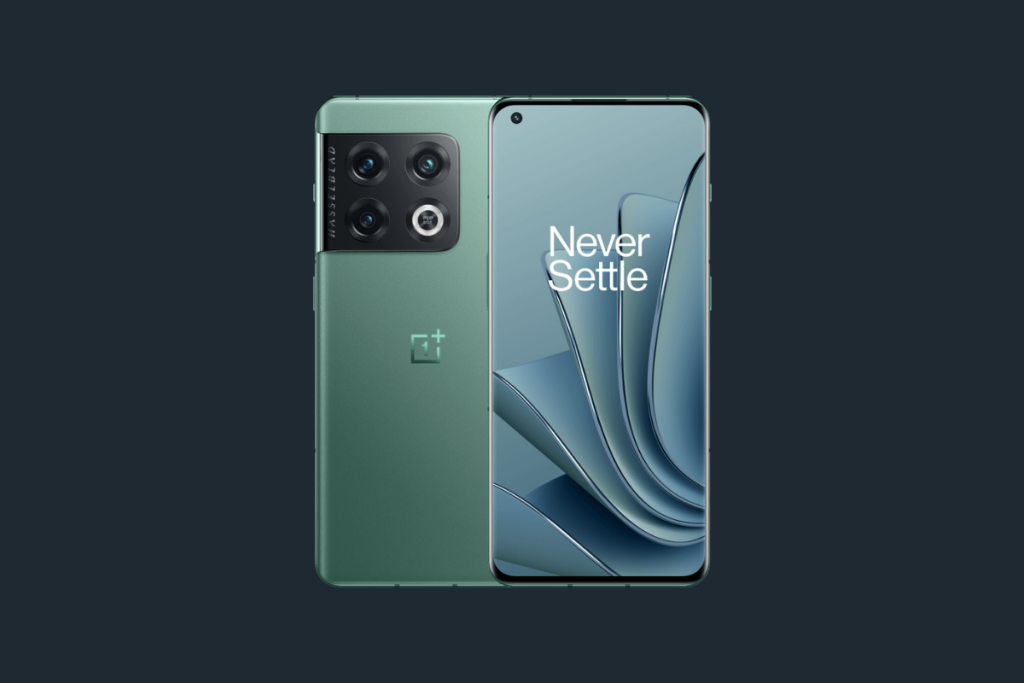
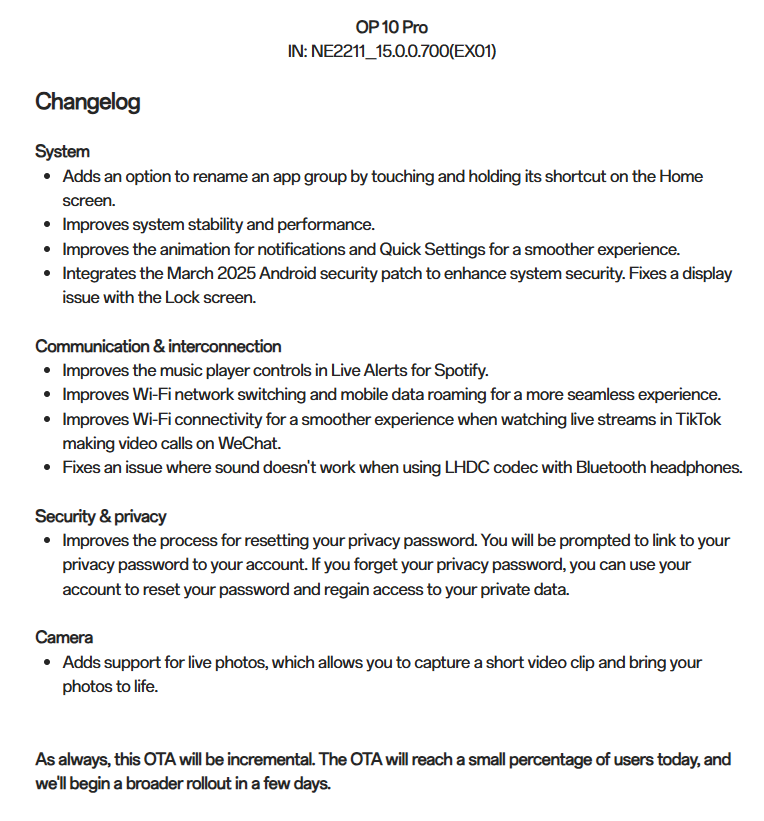
OnePlus has started a gradual rollout of OxygenOS 15.0.0.700 for the OnePlus 10 Pro in India (IN). The update, version NE2211_15.0.0.700, includes functional upgrades, support for live photos, and important security updates. Initially, it will be available to a limited number of users, with a broader rollout planned in the coming days.
System Improvements Users can now rename app groups by long-pressing shortcuts on the Home screen. The update brings better system stability, smoother animations for notifications and Quick Settings, and fixes a lock screen display issue. It also includes the March 2025 Android security patch to improve device security.
Connectivity & Audio Fixes Spotify music controls in Live Alerts have been optimized. The update improves Wi-Fi network switching and mobile data roaming reliability. It also stabilizes connectivity during TikTok live streams and WeChat video calls. A bug causing silent playback when using Bluetooth audio with LHDC codecs has been resolved.
Security & Privacy If a user forgets their privacy password, resetting it now requires linking the password to their user account. This allows recovery through account verification to regain access to private data.
Camera Feature The update introduces live photo support, enabling users to capture short video clips along with still images for more dynamic photos.
Users can check for updates by going to Settings > System > System Update. Users in India can report issues through the “Bug Report” section in the OnePlus Community App or by dialing *#800# to access the feedback tool.
For more daily updates, please visit our News Section.
Both Qualcomm and MediaTek are preparing their new sub-flagship chips — and both seem to be getting name changes before launch.
Just a few days ago, a leak revealed that Qualcomm’s upcoming chip will be called Snapdragon 8s Gen 4 instead of the previously rumored Snapdragon 8s Elite. And now, it looks like MediaTek is making a similar move for its next chip.
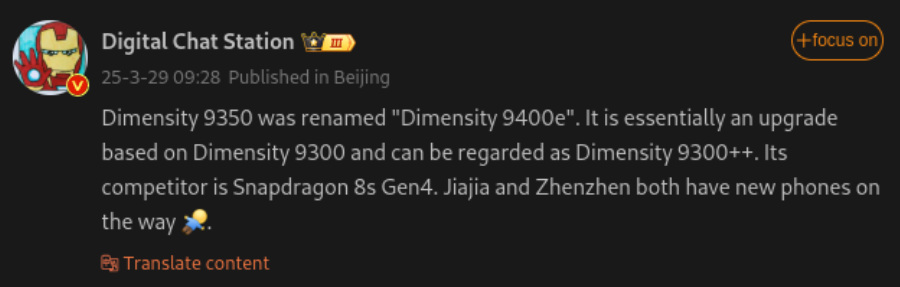
A new leak from reliable tipster Digital Chat Station claims that MediaTek’s new sub-flagship chip, initially referred to as the Dimensity 9350, will instead launch as Dimensity 9400e.
The name change could be a strategic move to align 9400e with MediaTek’s current flagship rather than sticking with the 9300-series moniker. Though under the hood, it might still be deeply rooted in the Dimensity 9300 series.
Dimensity 9400e Specs
According to DCS, the 9400e is based on the Dimensity 9300 but with enough upgrades that we can consider it “Dimensity 9300++.” Not to be confused, there’s a separate chip called Dimensity 9300+ which is an enhanced version of the 9300. So from what we understand, the 9400e will offer even better performance than the 9300+.
That also likely means the 9400e will stick with the same core layout as the 9300 series: a single Cortex-X4 prime core, three additional Cortex-X4 cores, and four Cortex-A720 performance cores. The key difference could be clock speeds which will give it a noticeable edge in performance.
The same leaker also previously mentioned that OnePlus has been working on a phone powered by this chip. Reportedly called the Ace 5V, it is expected to feature a 7000mAh-class battery and a flat 1.5K display alongside the Dimensity 9350 (presumably Dimensity 9400e now).
No official launch date has been confirmed, but with Qualcomm’s 8s Gen 4 likely on the way, MediaTek seems ready to make this sub-flagship chip battle interesting.
For more daily updates, please visit our News Section.
There’s something oddly comforting about not having to worry about running out of battery on the go — especially when you’re juggling multiple devices like I often am. Whether it’s my phone, laptop, tablet, or wireless earbuds, I’ve always wished for a power bank that could handle them all without compromise.
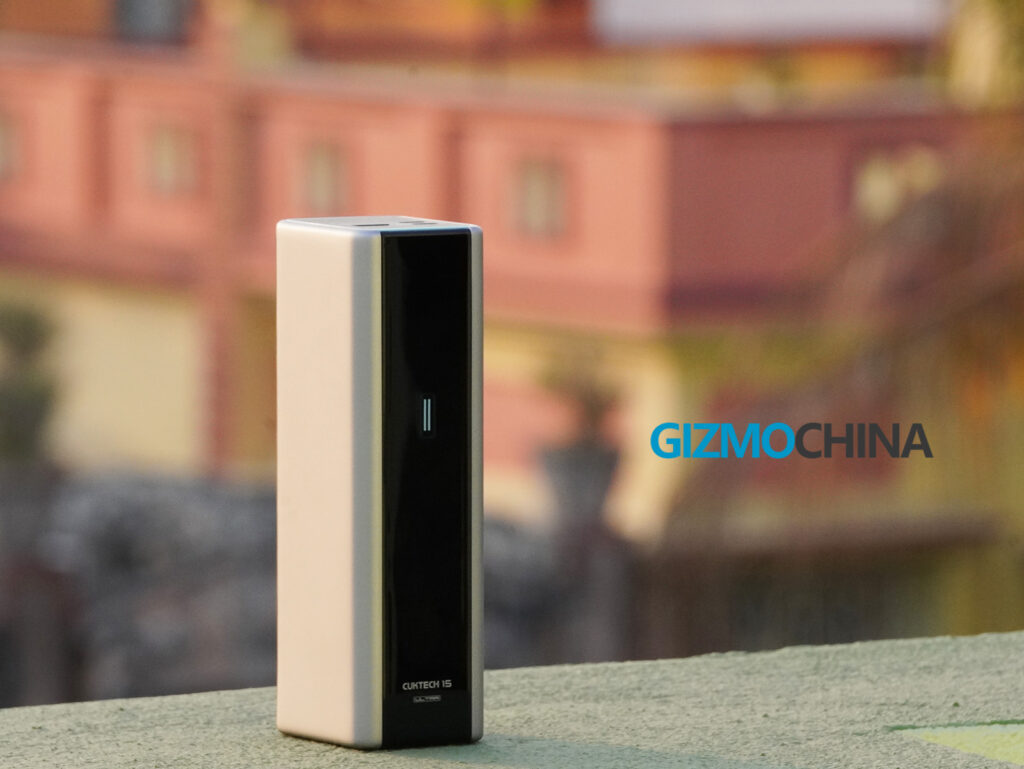
That’s where the Cuktech 15 Ultra Power Bank comes in. I’ve been using it for a few weeks now, and honestly, it’s one of those rare products that lives up to its promise. This isn’t just another chunky battery pack — it’s a well-thought-out piece of tech that feels designed for power users who refuse to settle.
Design and Build
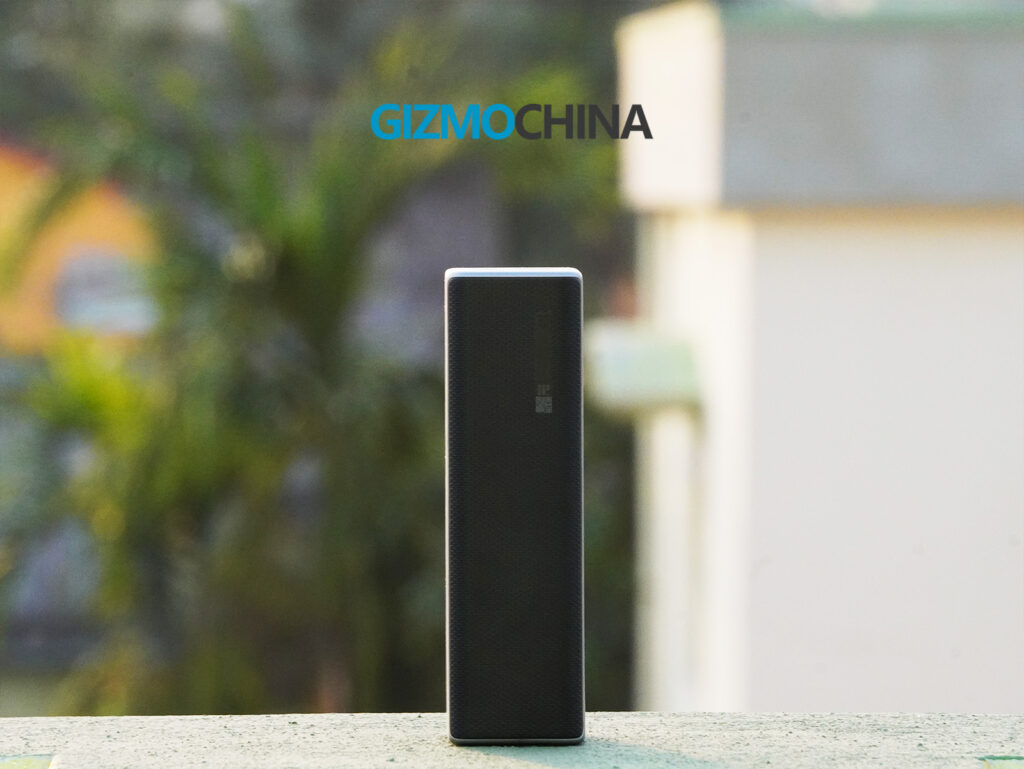
Right out of the box, the Cuktech 15 Ultra feels premium. It has this solid heft — not too heavy, but just enough to give you confidence that it’s packed with serious power. Weighing about 590 grams (just over 1.3 pounds), it’s comparable to holding a large water bottle. The design language is clean and understated.
The black and grey finish, along with subtle branding, makes it look professional rather than flashy. On the front, there’s a 1.3-inch TFT color display — essentially a small screen similar to what you’d find on a smartwatch — that gives you all the info you didn’t know you needed: wattage being delivered, temperature alerts, charging protocols being used, and more.
What I love most is the grip-friendly texture. It’s got this soft-touch material that doesn’t slip, and the build quality screams durability. The power bank even comes with a soft carrying pouch, which is a nice touch for keeping it scratch-free when tossed into a backpack. It measures about 152 x 44 x 57 mm — roughly the size of a large chocolate bar but a bit thicker. This makes it portable enough to carry around without feeling like you’re lugging bricks.
Capacity and Charging Performance
Let’s talk numbers, because this is where things get interesting. It comes with 20,000mAh capacity, which is more than enough for a weekend trip without ever hunting for a wall outlet. To put that in perspective, a typical flagship smartphone battery is around 4,500mAh. So, you can easily charge your phone from zero to full about four times on one full charge of the power bank.
But capacity is only half the story. Charging speed is the real differentiator. The Cuktech 15 Ultra supports something called PD 3.1 (Power Delivery 3.1), a fast-charging standard that allows devices to draw more power safely. This power bank’s first USB-C port can push out a maximum of 140W — that’s enough to charge power-hungry devices like a 16-inch MacBook Pro at full speed.
Cuktech also advertises ‘beast mode,’ and it’s not just a marketing gimmick. In beast mode, you can recharge the power bank itself using two power adapters simultaneously via both USB-C ports. This supports up to 165W input, meaning the power bank can go from nearly empty to around 70% in just 20 minutes. That’s incredibly useful if you’re about to leave for the airport or a meeting and forgot to charge it.
Here’s how it performed in my actual usage tests:
The iPhone 14 Pro went from 20% to 70% in 30 minutes. The iPhone 13 charged from 11% to 70% in around 41 minutes. What really impressed me was how it handled my Asus TUF Gaming F15 laptop — it charged from 5% to 80% in just 55 minutes. The power bank was fully depleted after that, but the output stayed stable and consistent throughout. Even with power-hungry devices, the Cuktech 15 Ultra delivered efficient performance without any dips in voltage, thanks to its intelligent power distribution system.
Ports and Features
Cuktech didn’t skimp on ports. The 15 Ultra features two USB-C ports and one USB-A port. Here’s why that matters: both USB-C ports support bidirectional charging, meaning they can act as both input (to charge the power bank) and output (to charge your devices). The first USB-C port delivers up to 140W, perfect for laptops, while the second maxes out at 90W, ideal for tablets and phones. The USB-A port, while slightly less advanced, supports fast charging protocols including Xiaomi’s HyperCharge at up to 120W — making it useful for devices that still use USB-A cables.
Now, let’s talk about that display. The 1.3-inch TFT screen isn’t just for show. It displays real-time power flow, the battery percentage, and even the brand of the connected device thanks to its ADC 2.0 protocol recognition. That means it can identify whether you’ve plugged in an iPhone, Samsung, or Xiaomi device and adjust the power delivery accordingly.
You also get temperature alerts, input/output direction control, and a customizable always-on mode. This last feature allows you to keep the screen on while monitoring power flow — extremely handy when you’re charging multiple devices.
Cuktech also includes nine layers of safety protection. We’re talking temperature control, short-circuit prevention, overvoltage protection, and fire-retardant materials. That gives me the confidence to throw it into a backpack with other gadgets without worrying.
Real-World Usage
I recently visited my village hometown where electricity is a bit of a hit or miss. Power cuts are common and sometimes you don’t get consistent electricity for hours. Knowing this, I took the Cuktech 15 Ultra Power Bank along, and it genuinely made a difference. I was able to charge two iPhones, my wireless earbuds, and even my laptop during the day I spent there. Of course, I did have to recharge the power bank once, but the fact that it got me through most of the day without needing to plug into unreliable wall power was pretty impressive.
And in my home and my office, it’s become part of my daily tech setup. Whether I’m working from a cafe, shooting product pictures outdoors, or just lounging in bed with multiple devices charging, the 15 Ultra has been rock solid.
Final Thoughts
If you’re someone like me who depends on multiple devices throughout the day, this is a game-changer. Yes, it’s heavy, but that weight translates to confidence and capacity. Beast mode charging, intelligent power distribution, and detailed display information make it feel like a futuristic gadget rather than a boring battery pack.
Of course, there are other compelling options out there too — Anker’s 25K Power Bank with 165W output and retractable USB-C cables comes to mind. It’s another strong contender if you’re looking for something with even more battery and built-in convenience. But for me, the Cuktech 15 Ultra strikes the best balance between power, portability, and sheer utility.
Pricing
At around $109.99, the Cuktech 15 Ultra Power Bank is positioned as a premium product, and in my experience, it earns that label. Cheaper alternatives exist, but they often lack the power output, build quality, and advanced features that this offers. If you’re constantly on the move or work in tech-heavy environments, this is one investment you won’t regret.
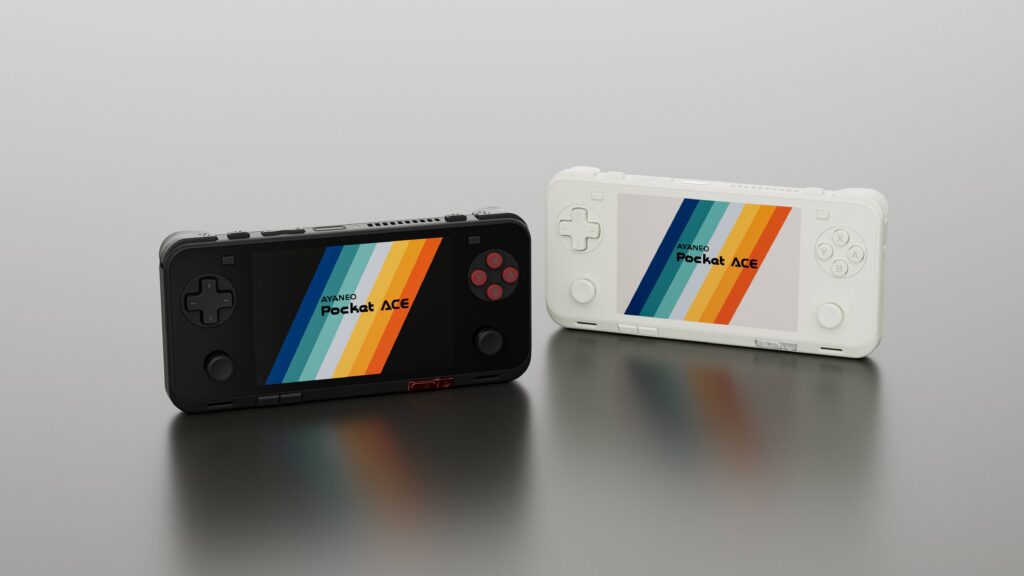
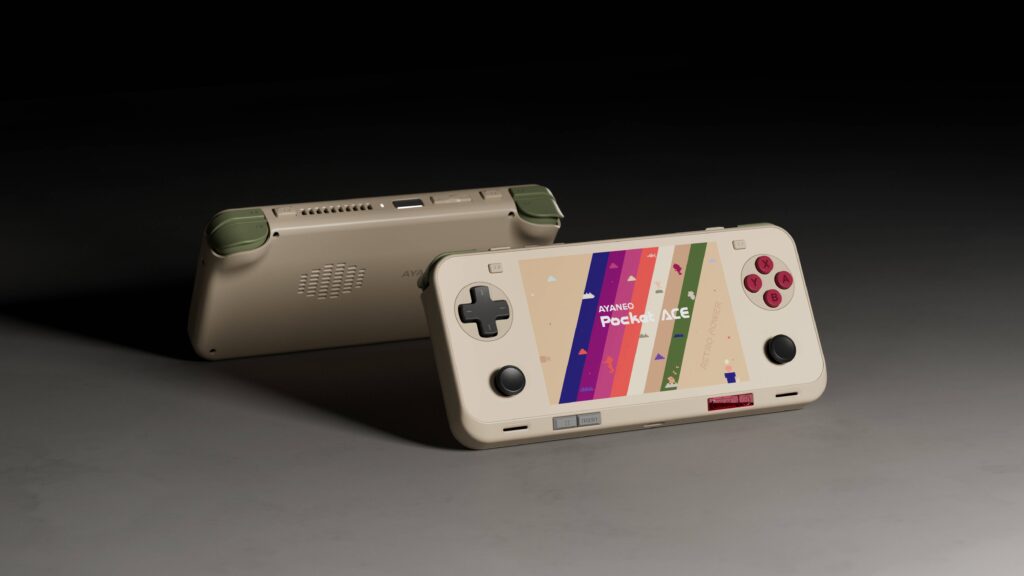
AYANEO has officially released the Pocket ACE, its latest Android handheld that brings together a retro-inspired design and modern hardware. The device sticks to a classic horizontal layout, powered by Qualcomm’s Snapdragon G3x Gen 2 platform, making it capable of running both older games and newer mobile titles smoothly.
The Pocket ACE comes with a 4.5-inch IPS display, using a 3:2 aspect ratio and 1620 × 1080 resolution. The screen is designed to match the feel of vintage handheld consoles while delivering sharp visuals whether you’re playing pixel-art games or more graphic-heavy ones.
Under the hood, the Snapdragon G3x Gen 2 gives the device strong CPU and GPU performance. According to AYANEO, it runs games at high frame rates and performs better than most other Android handhelds, even competing with gaming smartphones.
Battery life is backed by a 6000mAh battery and 40W fast charging. With power management built in, it’s built for longer play sessions—useful if you’re gaming on the go. Controls are a mix of old and new. There’s a top-mounted D-pad and classic-style Select/Start buttons, and the ABXY buttons can be swapped between Japanese and Western layouts. The upgraded Hall Effect joysticks and triggers are designed to improve precision and avoid drift over time.
The Pocket ACE also includes a high-quality 0916B linear motor for haptic feedback. This adds vibration effects during gameplay—like during racing or action games—to give a more tactile feel. Ayaneo plans to launch the Pocket Ace on Indiegogo in the future.
For more daily updates, please visit our News Section.
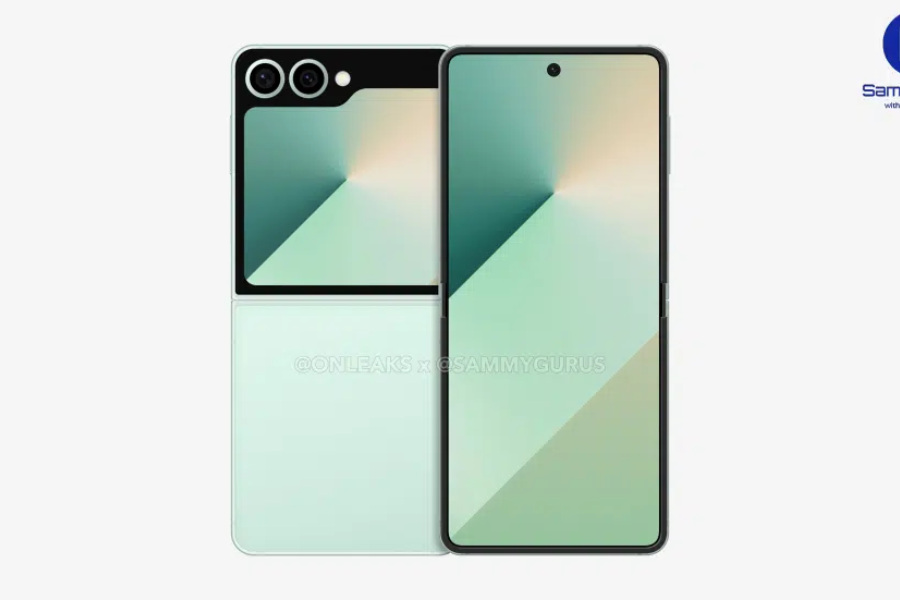
Samsung’s budget-friendly foldable might not look so different after all. Reliable tipster OnLeaks, in collaboration with SammyGuru, has shared high-quality renders of what’s expected to be the Galaxy Z Flip 7 FE, Samsung’s first attempt at an FE (Fan Edition) model in its flip phone lineup.
And at first glance, the Flip 7 FE appears almost identical to the current Galaxy Z Flip 6, both inside and out. The familiar clamshell design is intact, and the rumored specs suggest little has changed. The device is said to feature a 3.4-inch cover display alongside a 6.7-inch inner foldable screen—the same as the Flip 6.
However, the FE model could be slightly bulkier. It’s reportedly 7.4mm thick when unfolded, compared to 6.9mm on the Flip 6. That said, the overall footprint seems largely unchanged.
Interestingly, while the FE model sticks to the older design, the regular Galaxy Z Flip 7 is expected to bring a more noticeable upgrade. According to reports, it will feature a larger 4-inch cover screen and drop the folder-shaped outer display design that’s become a staple of Samsung’s clamshell foldables.
What to expect
The leaked renders offer a good look at the design, but the hardware inside might be just as familiar. The Z Flip 7 FE is tipped to run on an Exynos 2400e processor, a toned-down version of Samsung’s flagship Exynos 2400 chip. On the software side, it will ship with One UI 7 based on Android 15.
For cameras, the phone is rumored to carry a 50MP primary sensor and a 12MP ultrawide lens. It will also likely feature an Armor Aluminum frame, Corning Gorilla Glass Victus protection, and some sort of water resistance rating.
Samsung is also expected to offer a long-term update policy for the Flip 7 FE. The company could commit to six years of Android and security updates, or even seven, in line with its regular foldables. Other expected features include Wi-Fi 6E support and 25W wired charging.
For more daily updates, please visit our News Section.
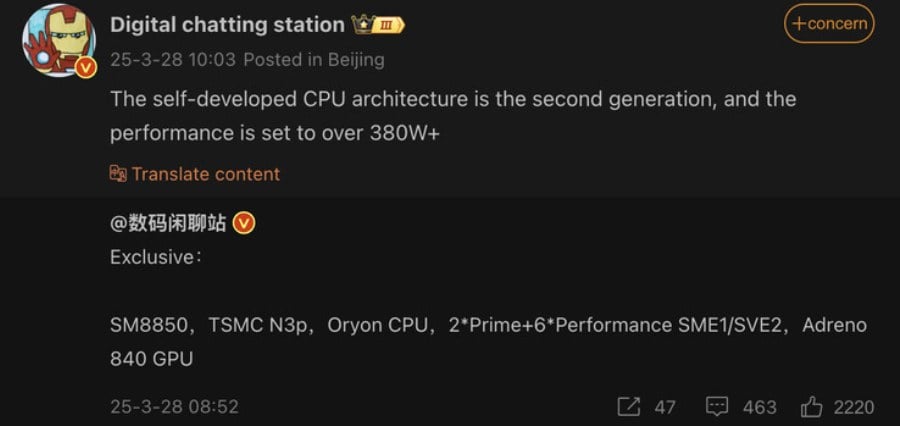
A new leak may have given us the clearest look yet at Qualcomm’s next flagship chip, the Snapdragon 8 Elite 2. And it points to a significant boost in performance over its predecessor.
According to known leaker Digital Chat Station, the Snapdragon 8 Elite 2 (model number SM88550) will be built on TSMC’s 3nm N3P process and feature a 2+6 core setup: two prime cores and six performance cores.
It’s a similar configuration to the current 8 Elite, but it will be based on Arm’s newer v9 architecture this time. This seems likely as the tipster notes that the chip will have support for SME1 and SVE2.
These are Arm’s v9 advanced instruction set extensions that are typically reserved for improving tasks like on-device AI processing and computational photography. And yes, that means the 8 Elite is based on Arm’s v8 architecture.
The GPU is also getting an update. The chip will reportedly use an Adreno 840, though details on clock speeds or capabilities haven’t surfaced yet.
Snapdragon 8 Elite 2 AnTuTu
Performance-wise, the leaked numbers are hard to ignore. According to the source, the Snapdragon 8 Elite 2 has already hit an AnTuTu score of 3.8 million points. This is over 30 percent improvement compared to the best-performing Snapdragon 8 Elite phone in March. It’s a big jump, even if benchmark numbers rarely tell the full story of real-world performance.
These early leaks suggest the Snapdragon 8 Elite 2 is more than a routine refresh. With a shift to Arm v9 and improved computing capabilities, Qualcomm may be laying the groundwork for phones that lean more heavily on AI and real-time processing.
The Snapdragon 8 Elite 2 is expected to power next year’s premium Android flagships. Qualcomm hasn’t confirmed a release date yet, but an official announcement could arrive sometime in October.
For more daily updates, please visit our News Section.
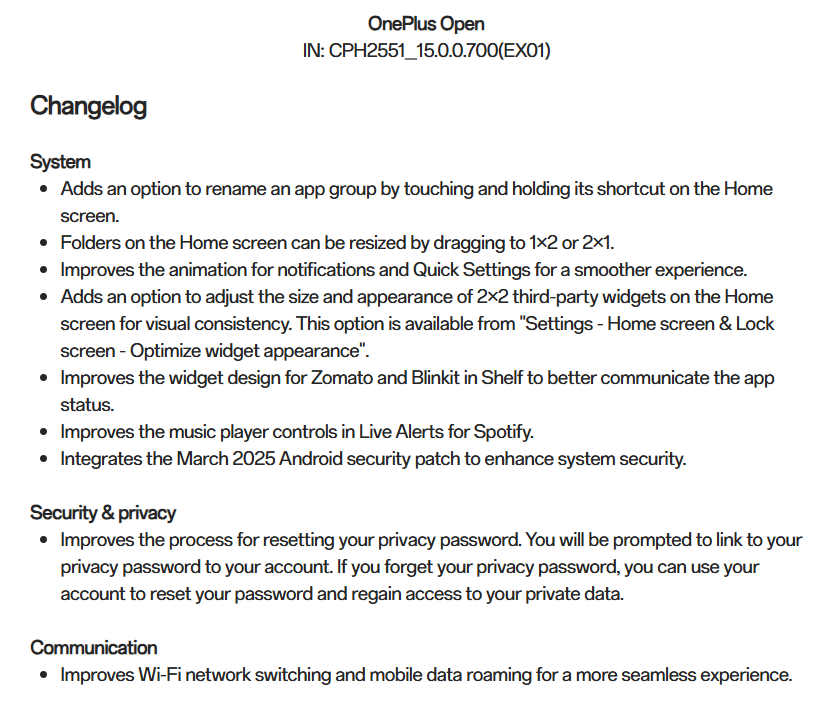
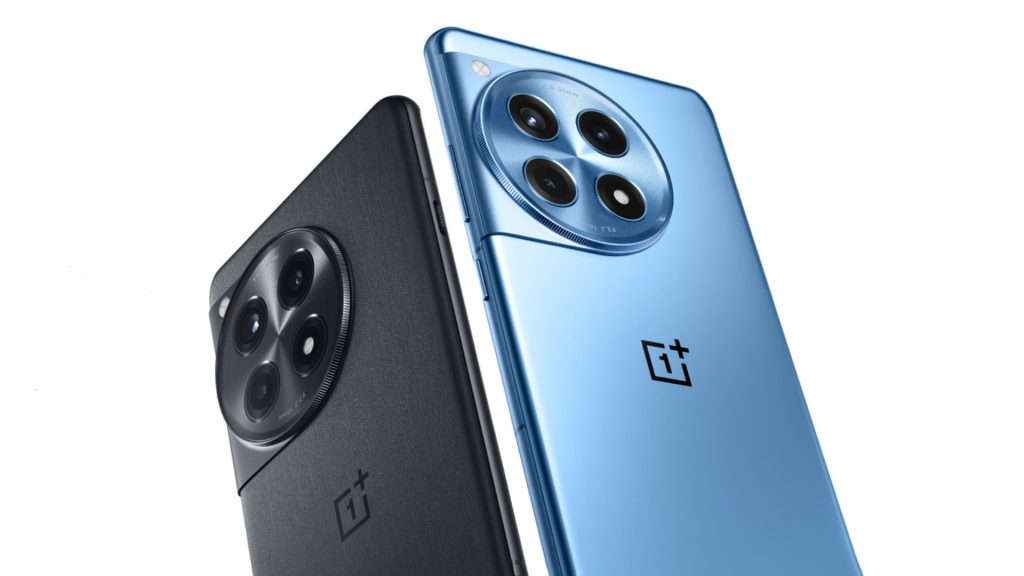
OnePlus has started rolling out OxygenOS 15.0.0.701 for the OnePlus 12R in phases, beginning with users in India (CPH2585_15.0.0.701(EX01)). The update includes system improvements, March 2025 security patches, and new privacy features. A wider global release is expected soon.
Update details
The update introduces the ability to resize Home screen folders (1×2 or 2×1) and adjusts third-party widget layouts for a more consistent appearance. These can be accessed via Settings > Home screen & Lock screen. Notification and Quick Settings animations have been redesigned for smoother interaction.
Privacy updates include a centralized Privacy Center in Phone Manager for reviewing app permissions, alerts for apps accessing background location data for three consecutive days, and a one-tap option to turn off ad tracking. Users can now reset forgotten privacy passwords using their linked accounts.
Wi-Fi has been improved for more stable Douyin live streams and WeChat calls. Network switching has been optimized to minimize disruptions while roaming. The Smart Cars feature now supports screen mirroring to ICCOA-compliant car displays and includes Android Auto support outside China. You can find the complete changelog below.
OnePlus 12R OxygenOS 15.0.0.701 Changelog
System
Folders on the Home screen can be resized by dragging to 1×2 or 2×1.
The dock can now display 5 apps even when the Home screen is set to display 4 apps per row.
Improves the animation for notifications and Quick Settings for a smoother experience.
Adds an option to adjust the size and appearance of 2×2 third-party widgets on the Home screen for visual consistency. This option is available from “Settings – Home screen & Lock screen – Optimize widget appearance”.
Integrates the March 2025 Android security patch to enhance system security.
Security & privacy
Adds Privacy Center to Phone Manager, which reviews your app permissions and offers an option to revoke those permissions.
Notifies you when an app accesses your location while running in the background for 3 consecutive days, so you can review and change its location permission setting as needed.
Adds an option to disable ad tracking for all apps with a single tap.
Improves the process for resetting your privacy password. You will be prompted to link to your privacy password to your account. If you forget your privacy password, you can use your account to reset your password and regain access to your private data.
Communication
Improves Wi-Fi connectivity for a smoother experience when watching live streams in Douyin or making video calls on WeChat.
Improves Wi-Fi network switching and mobile data roaming for a more seamless experience.
Interconnection
Smart Cars now supports Screen mirroring. It also supports casting while in Simple mode. All apps can be cast to your car display. This feature is currently only supported by some ICCOA-compliant cars.
Smart Cars now supports Android Auto, which offers alternative services outside the Chinese mainland.
The update remains incremental, with limited availability expanding gradually. Users can check for updates by going to Settings > System > System Update. Indian users can report bugs via the OnePlus Community App’s Bug Report section or by dialing *#800# for direct feedback.
For more daily updates, please visit our News Section.
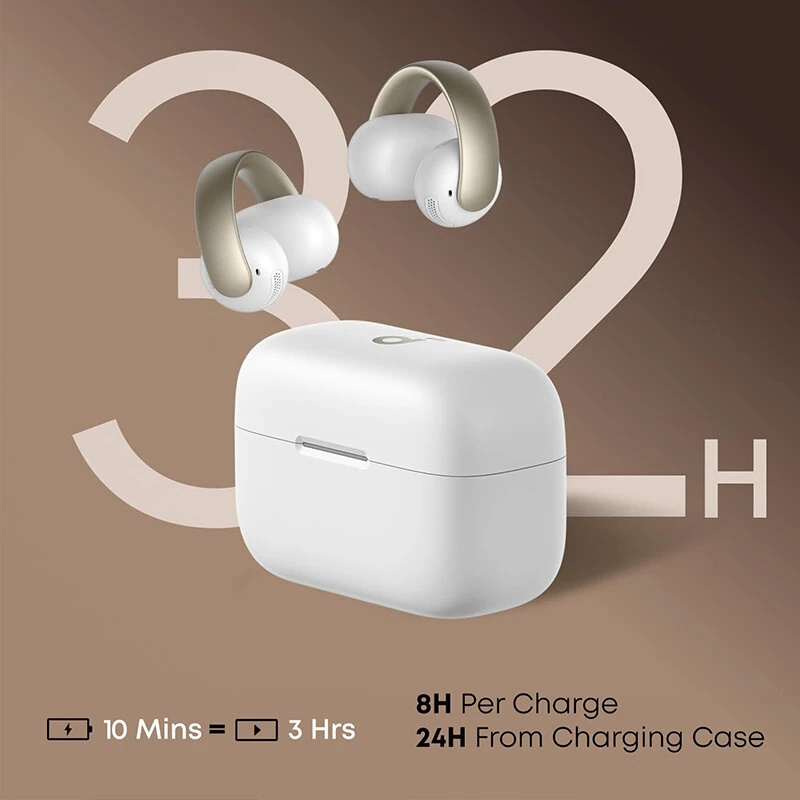
Soundcore, the audio brand of Anker Innovations, has released the AeroClip — a new open-ear, clip-on earbud designed for long-term comfort and increased situational awareness. Unlike traditional noise-canceling earbuds, AeroClip allows users to stay alert to their surroundings.
The earbuds use a flexible open-ring connector that clips onto the ear’s cartilage. A titanium wire inside the connector ensures a secure fit. For smaller ears, additional ear grips are included for a tighter fit. Compared to the C30i model, AeroClip’s acoustic chamber is 37% smaller, reducing in-ear pressure and discomfort. The ergonomic design is aimed at a stable and comfortable fit, ideal for walking, running, or cycling.
The earbuds feature 12mm titanium-coated drivers for clear sound, strong bass, and balanced audio. AI algorithms enhance low frequencies in real time for better bass performance. Users can adjust sound settings through the Soundcore app, available on Android and iOS.
Full-Surface Tap Control lets users manage music, calls, podcasts, and Google Maps directions. Voice commands are supported via Google Assistant and Siri. Battery life is 8 hours per earbud at 50% volume, with the charging case extending total playtime to 32 hours. A 10-minute charge provides an extra 3 hours. Other features include IPX4 water resistance, multi-point connection for pairing with two devices at once, and four beamforming microphones for improved call clarity.
Pricing & availability
The Soundcore AeroClip is available now in the U.S. in Midnight, Champagne Mist, and Rosy Brown colors. It is priced at $129.99 on Amazon.com and Soundcore.com.
For more daily updates, please visit our News Section.
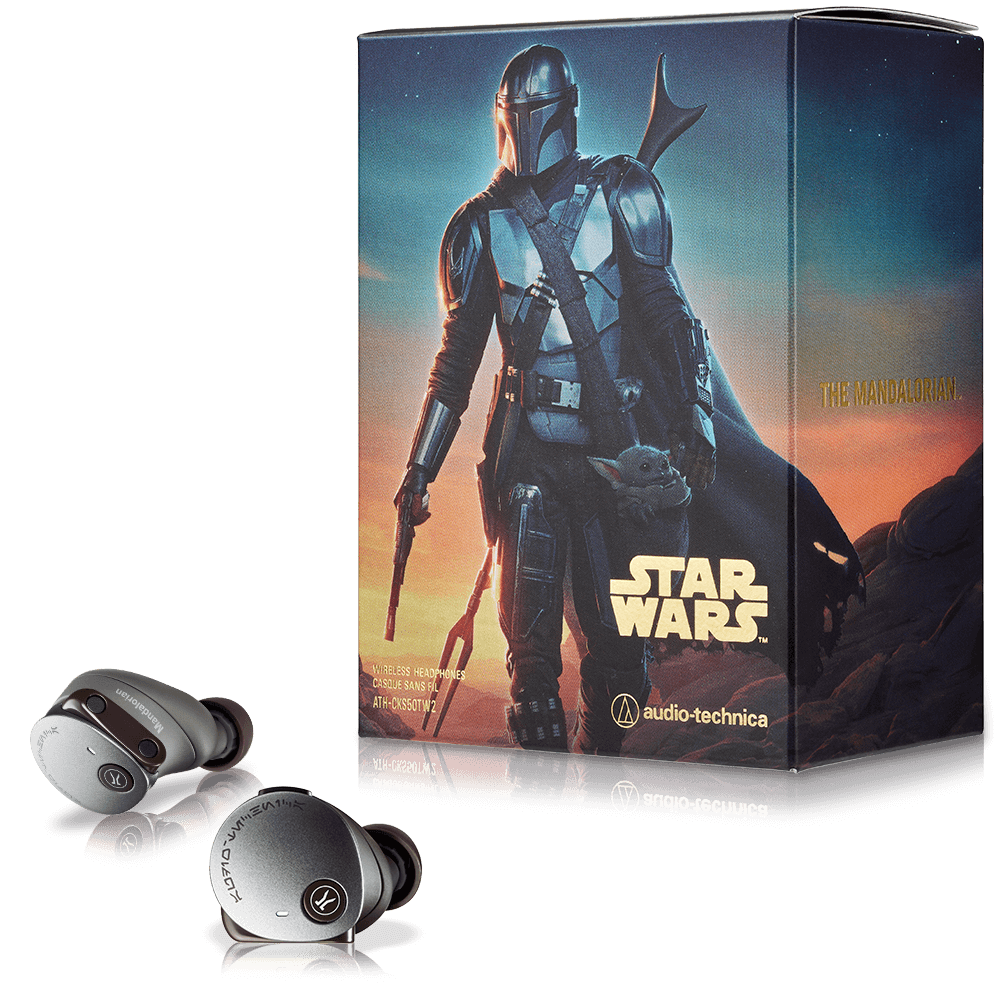
Audio-Technica‘s ATH-CKS50TW2 earbuds initially launched at CES 2025 in Black and Beige, now feature four new Star Wars-themed editions. These include R2-D2, Grogu, The Mandalorian, and Darth Vader designs, extending beyond aesthetics to integrated character-specific sound effects.
The Darth Vader edition, for example, features breathing sounds for connection, lightsaber sounds for high battery, and distinct alerts for low battery, disconnection, and noise-canceling/transparency mode activation. The R2-D2 edition uses the character’s beeps and whistles for similar alerts.
All Star Wars editions offer hybrid noise-canceling, ambiance control, and up to 25 hours of playback (plus 40 from the case). A 5-minute charge provides 90 minutes of use. Charging times are 2.5 hours for earbuds, 4 hours (USB), and 7.5 hours (wireless).
Features include Magnetic Switch for power saving when earbuds are joined, 9 mm drivers for enhanced bass, dual MEMS mics with beamforming, Bluetooth LE Audio with LC3 codec, multipoint pairing, and Qi wireless charging compatibility. The earbuds have Hybrid ear tips to ensure a secure fit.
The A-T Connect app provides features like low latency mode, EQ presets, and a headphone locator. Low latency mode improves audio-video sync. A customizable button controls playback, calls, and voice assistants. Soundscape offers nature sounds, masking noise, and meditation sounds. Siri and Google Assistant are supported, and the earbuds are IP55 rated for water and dust resistance.
Pricing & availability
These Star Wars edition ATH-CKS50TW2 earbuds are priced at $179, carrying a $30 premium over the standard versions. Pre-orders begin on April 21, with the official release set for May 4, in celebration of Star Wars Day. They will also be available in advance at Star Wars Celebration Japan, running from April 18–20, 2025.
For more daily updates, please visit our News Section.
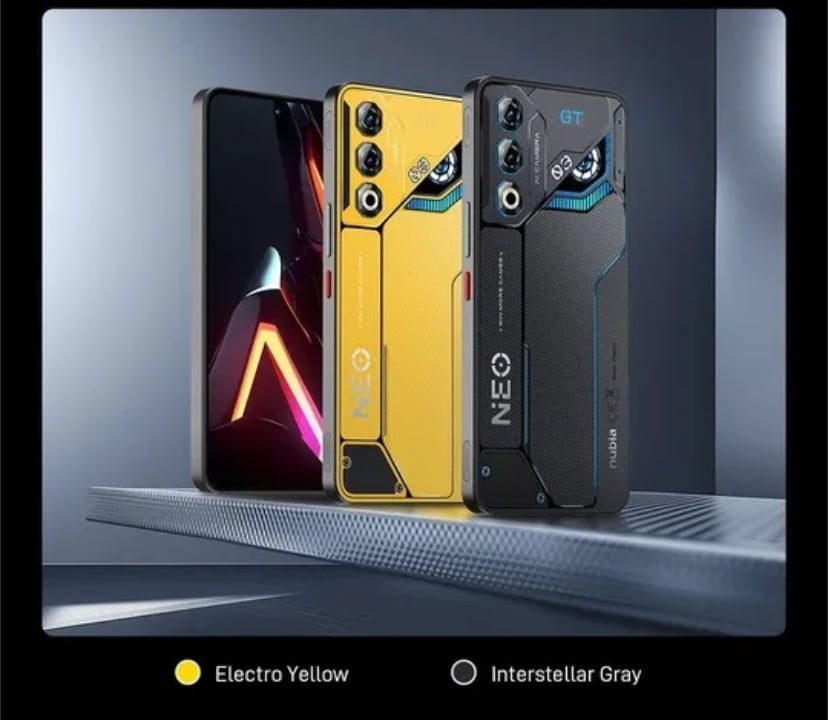
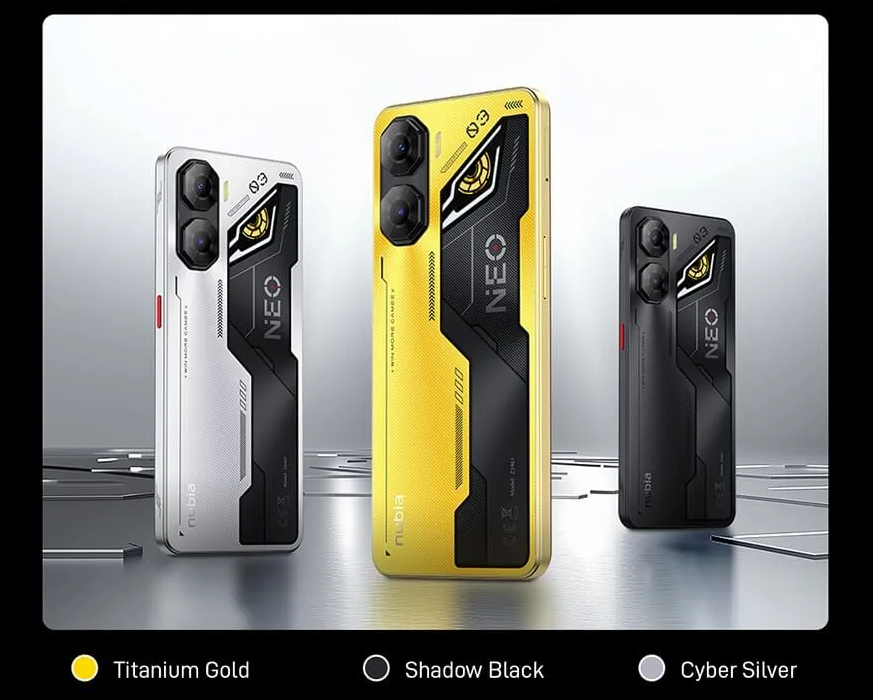
ZTE‘s Nubia Neo 3 series, introduced at MWC 2025, is set to launch by late March, with pre-orders now open on Lazada in the Philippines for both the Nubia Neo 3 5G and the Neo 3 GT.
Nubia Neo 3 GT features
The Nubia Neo 3 GT runs on the Unisoc T9100 chipset, built on a 6 nm process. It includes a 2.7 GHz ARM Cortex-A76 core, three 2.3 GHz cores, and four 2.1 GHz Cortex-A55 cores for power efficiency. The graphics are handled by a Mali-G57 MP4 GPU. The phone features a 6.8-inch AMOLED display with a 120 Hz refresh rate and a peak brightness of 1,300 nits in high brightness mode (HBM). The camera setup includes a 50 MP main sensor, a 16 MP front camera, and a 2 MP depth sensor. For gaming, the device includes a 4,083 mm² vapor chamber cooling system to help manage heat during long sessions. It also has shoulder triggers, pass-through charging, and supports 80 W wired charging for its 6,000 mAh battery.
Nubia Neo 3 5G features
The standard Nubia Neo 3 5G is powered by the Unisoc T8300 processor and offers up to 20 GB of RAM (8 GB physical and 12 GB virtual). It also includes features aimed at gaming, such as shoulder triggers, a Z-Axis linear motor for haptic feedback, and the NeoTurbo performance engine. This version also comes with a 6,000 mAh battery but supports 33 W fast charging. Its display is a 6.8-inch LCD panel with a 120 Hz refresh rate and a peak brightness of 1,000 nits.
Pricing & availability
In terms of pricing, the Nubia Neo 3 GT with 12 GB RAM and 256 GB storage is listed at PHP 12,999 ($227), down from its original PHP 14,999 ($261) price. It comes in Electro Yellow and Interstellar Grey.
The Nubia Neo 3 5G is available in two variants: the 8 GB RAM/128 GB storage model is priced at PHP 7,999 ($139), reduced from PHP 9,999 ($174), and the 8 GB RAM/256 GB storage model is available for PHP 9,999 ($174), down from PHP 11,999 ($209). Available colors for this model will include Cyber Silver, Shadow Black, and Titanium Gold.
Mobile gaming has come a long way in recent years thanks to advancing hardware and technology in smartphones. Playing console level AAA games on your devices is no longer a fantasy. So in this article, let’s explore the three primary ways you can play these PC or console games on your smartphones.
Cloud gaming services have revolutionized the way we access and play AAA titles on mobile devices. This is by far one of the best ways to experience AAA titles on your smartphone. By leveraging powerful remote servers or even your home gaming PC/console, one can stream the game directly to your device. So you don’t need the best hardware on your device.
There are plenty of platforms that offer these services like Xbox Cloud Gaming, Nvidia GeForce Now, and even Steam Link. With Xbox Game Pass Ultimate, you get access to a vast library of games that can be streamed on both iOS and Android phones. Nvidia GeForce Now connects your existing game libraries like Steam and Epic Games to play titles through both free and subscription tiers. Lastly, you have Steam Link for gaming PCs, which lets gamers steam their Steam library to mobile devices over a shared network.
2. Emulation
Emulation allows smartphone to play older AAA games. This can be achieved by mimicking older gaming consoles like the Sony PSP (PlayStation Portable). Improved hardware has meant that these modern phones can easily outperform older consoles like the PlayStation 2. On Android, users can run third party software or certain emulators from Google Play Store to run such games. Emulation used to be more restricted on iOS due to Apple’s app policies. However, there are certain emulation apps like Delta and PPSSPP that are finally available on the App Store that support emulation.
3. Native Support
While the first two methods are roundabout ways to either play modern or older AAA games, recent smartphones have also gotten native support for such big budget titles. Especially on iOS, the latest iPhones like the iPhone 15 and iPhone 16 series can natively run big games like Resident Evil Village, Resident Evil 4 Remake, and Assassin’s Creed Mirage. These games are optimized to run on the iOS platform and use the iPhone’s hardware.
While these take up quite a bit of storage, this signifies a great shift of high end gaming on mobile devices. Unfortunately, Android users don’t get access to these massive franchises. But there are certain popular games like Minecraft, Terraria, Stardew Valley, and even older AAA games like Grand Theft Auto: San Andreas. Back in August 2024, I also published an article titled “Why AAA Games Still Feel Out of Place on Smartphones“, which you should check out.
For more daily updates, please visit our News Section.
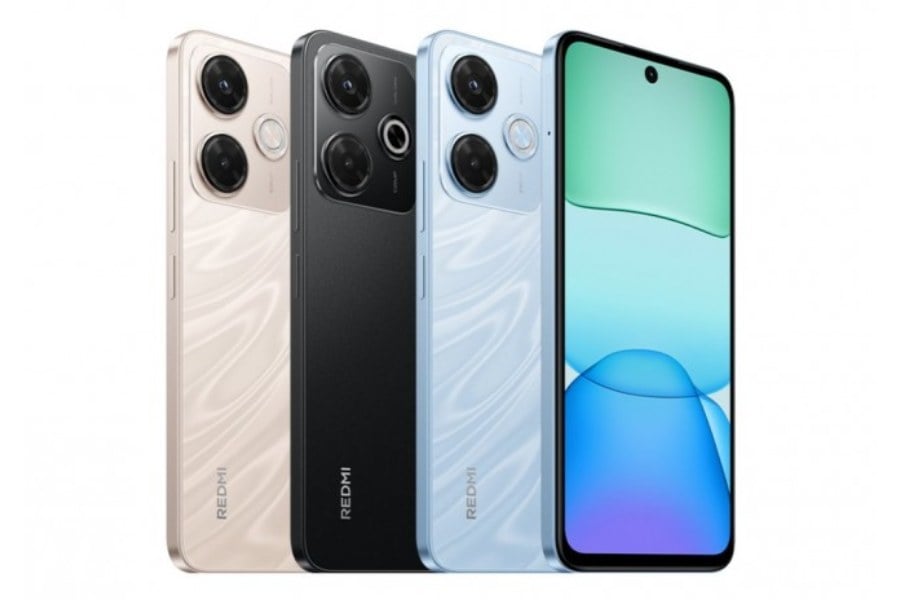
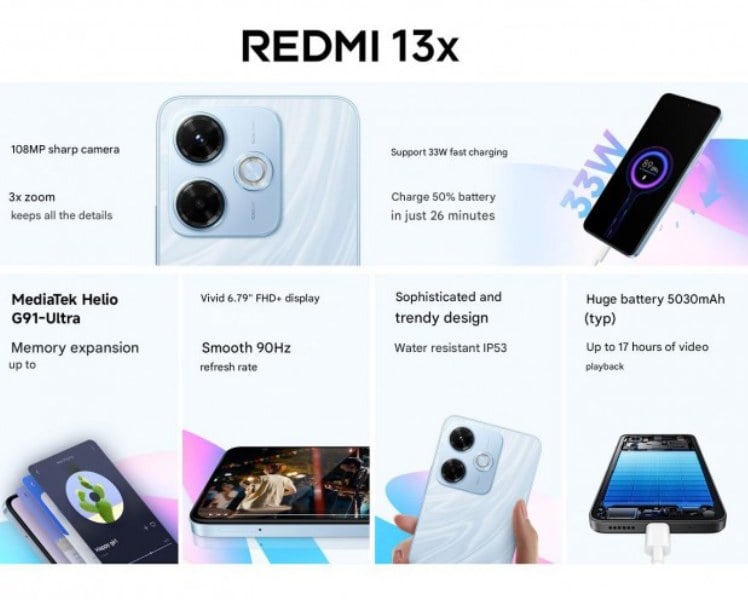
Redmi has once again dropped a budget smartphone with almost no fanfare. After the low-key launch of the A5, the company has now introduced the Redmi 13X in Vietnam. But before you get too excited, this isn’t an entirely new device. It’s essentially the Redmi 13 4G with a fresh coat of paint.
Redmi 13x: Specs and Features
The Redmi 13X sports a 6.79-inch FHD+ display with a 90Hz refresh rate. The phone also gets an IP53 rating for dust and splash resistance, which is a nice bonus in this price range. Whereas, biometrics are handled by a side-mounted fingerprint scanner integrated into the power button.
In the camera department, Redmi is packing some serious megapixels. The phone features a 108MP main camera, paired with a 2MP depth sensor on the back. Up front, there’s a 13MP selfie shooter.
Under the hood, the Redmi 13X is powered by the MediaTek Helio G91 Ultra chipset which is coupled with up to 8GB of RAM and 256GB of storage. It runs on Xiaomi’s HyperOS, based on Android 14.
Powering everything is a 5,030mAh battery with 33W fast charging support. There’s also a headphone jack support for those who want to use wired earphones.
Pricing and availability
The Redmi 13x starts at VND 4,290,000 ($168) for the 6GB + 128GB variant, while the 8GB + 128GB version is priced at VND 4,690,000 ($183). The phone is already available in Vietnam, and while Redmi hasn’t officially announced its global expansion, expect it to quietly show up in more markets soon.
For more daily updates, please visit our News Section.
We use cookies on our website to give you the most relevant experience by remembering your preferences and repeat visits. By clicking “Accept”, you consent to the use of ALL the cookies.
This website uses cookies to improve your experience while you navigate through the website. Out of these, the cookies that are categorized as necessary are stored on your browser as they are essential for the working of basic functionalities of the website. We also use third-party cookies that help us analyze and understand how you use this website. These cookies will be stored in your browser only with your consent. You also have the option to opt-out of these cookies. But opting out of some of these cookies may affect your browsing experience.
Necessary cookies are absolutely essential for the website to function properly. This category only includes cookies that ensures basic functionalities and security features of the website. These cookies do not store any personal information.
Any cookies that may not be particularly necessary for the website to function and is used specifically to collect user personal data via analytics, ads, other embedded contents are termed as non-necessary cookies. It is mandatory to procure user consent prior to running these cookies on your website.