Advertisement

OnePlus Ace 5 first look reveals amazing display with slim bezels

Last month, OnePlus confirmed that the Chinese market will receive the OnePlus Ace 5 series of smartphones in December. The brand is now gradually teasing the arrival of the Ace 5 and Ace 5 Pro. Today, Li Jie, President of OnePlus China, unveiled real-life images of the Ace 5, highlighting its sleek design.

OnePlus Ace 5’s front design revealed

OnePlus Ace 5
OnePlus Ace 5

The new images show that the Ace 5 features a flat display flanked by ultra-narrow bezels. Unfortunately, the OnePlus executive did not divulge any technical information about the Ace 5’s display. The images further suggest that the Ace 5 could be equipped with a metal frame. The rear design of the phone remains a mystery and is likely to be revealed later this week. However, it is speculated that the device will be available in a ceramic back version.

OnePlus Ace 5 specifications (rumored)

OnePlus Ace 5 real image 1
OnePlus Ace 5

According to reports, the OnePlus Ace 5 will have a 6.78-inch BOE X2 8T LTPO panel that offers a 1.5K resolution and a 120Hz refresh rate. Under the hood, the Ace 5 will be powered by the Snapdragon 8 Gen 3 SoC. OnePlus has fine-tuned this chip to deliver performance levels comparable to the Snapdragon 8 Gen 3.5, promising exceptional gaming performance with power consumption and thermal management akin to the Snapdragon 8 Elite chipset.

The device is expected to come equipped with 16 GB of LPDDR5X RAM and 512 GB of UFS 4.0 storage. It is likely to pack a battery of around 6,000mAh capacity and support 100W fast charging. For photography, the Ace 5 may feature a triple rear camera setup with an OIS-enabled 50-megapixel main sensor, an 8-megapixel ultra-wide sensor, and a 2-megapixel macro sensor. The front-facing camera is a 16-megapixel unit, suitable for selfies and video calls. It will also have other features, such as ColorOS 15-based Android, an IR blaster, and an alert slider.

The OnePlus Ace 5 Pro, which is expected to launch alongside the Ace 5, will have the more powerful Snapdragon 8 Elite. It is also expected to include a better camera setup featuring a 2x telephoto snapper.

In related news, OnePlus is working on the OnePlus 13 series for the global market. Apart from the OnePlus 13, the company is expected to announce the OnePlus 13R in January 2025. The 13R is anticipated to be a modified version of the Ace 5, equipped with better cameras.

Don’t miss a thing! Join our Telegram community for instant updates and grab our free daily newsletter for the best tech stories! 🚀

Honor GT launch date confirmed, official images released to reveal design

Honor has officially announced the launch of its new GT series smartphone, scheduled for Dec.16 at 19:30pm (local time) in China. Yesterday, the brand released the first teaser of the phone to give a hint about its rear design. Today, it has released a couple of promotional images to showcase its white variant.

Honor GT design revealed

Honor GT
Honor GT

As can be seen in the new images, the Honor GT’s white variant has a dual-tone design equipped with flat edges. The rectangular rear camera setup includes dual cameras and a dual-tone flash, with a prominent red “GT” logo at the bottom-right corner. The bottom edge of the phone has a speaker, a USB-C port, a microphone, and a SIM slot.

The design is sleek and robust, hinting at a device focused on high performance and gaming, offering excellent value for money. While specific configurations have not been revealed, leaks suggest the phone will be powered by the Snapdragon 8 Gen 3 mobile platform. It is expected to feature a 1.5K OLED flat screen and support 100W wired fast charging.

Honor GT official image
Honor GT

Industry insiders have praised Honor’s consistent performance and reliability, suggesting that the GT series will be competitive against similar models from other brands. It is expected to rival existing models, such as the Redmi K80 and the iQOO Neo 10. It will also compete with upcoming phones, such as the Realme Neo 7 and OnePlus Ace 5. Except for the Neo 7, which has the Dimensity 9300 Plus chip, all the other phones are equipped with the Snapdragon 8 Gen 3 SoC.

According to Honor’s CEO, Zhao Ming, the GT series will showcase unique and penetrating design concepts tailored for the AI era. The series is positioned as aimed at young users eager to experience the latest advancements.

Don’t miss a thing! Join our Telegram community for instant updates and grab our free daily newsletter for the best tech stories! 🚀

Everything You Need to Know About the Kirin 9020 Chip

The Mate 70 series and the Mate X6 foldable phone are powered by the all-new Kirin 9020 chipset. Huawei’s new 3nm SoC is generating significant buzz in the tech world. As a successor to the Kirin 9000 series, the Kirin 9020 promises substantial improvements in processing power, energy efficiency, and AI capabilities. While official details remain scarce, the tech community has pieced together a compelling picture of this advanced processor through teardowns, benchmarks, and leaks.

Kirin chip

CPU and GPU details

The Kirin 9020 boasts a 12-core CPU configuration, a departure from the traditional 8-core design. This configuration is believed to comprise:

  • 2 high-performance cores clocked at 2.5 GHz, likely based on Huawei’s in-house Taishan architecture.
  • 6 mid-cores running at 2.15 GHz, also potentially Taishan-based.
  • 4 energy-efficient cores clocked at 1.6 GHz, possibly ARM Cortex-A510s.

This unique arrangement, combined with hyperthreading capabilities, allows for exceptional multitasking and performance.

The graphical muscle of the Kirin 9020 comes from the Maleoon 920 GPU. This in-house design operates up to 840MHz, a significant upgrade from the Maleoon 910 found in the Kirin 9010. While specifics about the architecture and core count remain elusive, early indications suggest a substantial leap in graphics performance.

1. Performance Gains and Efficiency

Though concrete benchmarks are limited, reports from Huawei’s internal testing indicate a remarkable 40 percent overall performance boost compared to the Kirin 9010. This improvement is attributed to the enhanced CPU and GPU, as well as optimizations in power management.

Interestingly, the Kirin 9020 appears to be more power-efficient than its predecessor, the Kirin 9000s. Tests suggest a 20% reduction in power consumption, achieved through architectural refinements and a more efficient manufacturing process.

2. Connectivity and Features

Early reports suggest that the Kirin 9020 might be the industry’s first 3GPP R18 5G-A SoC. This advanced technology integrates satellite access into 5G systems, promising seamless communication even in remote areas. The chipset also likely includes a dedicated satellite module for enhanced connectivity.

3. A Unique Design

Teardowns of devices powered by the Kirin 9020 reveal a larger and thicker carrier board compared to previous Kirin chips. This suggests a more complex design and potentially the integration of additional components, such as the rumored satellite module.

Despite the limited official information, the Kirin 9020 has undeniably made a strong impression. Its unique CPU configuration, powerful GPU, and focus on power efficiency point towards a top-tier chipset capable of delivering exceptional performance. The potential inclusion of advanced 5G-A technology and satellite connectivity further solidifies its position as a cutting-edge processor.

Don’t miss a thing! Join our Telegram community for instant updates and grab our free daily newsletter for the best tech stories! 🚀

Redmi K80 series breaks sales records with over 1 million units sold in just 10 days

The Redmi K80 series has made an impressive debut, surpassing 1 million units sold within just 10 days, setting a new record for the fastest time to reach this milestone in the K series history. The series, which launched on November 27th, saw immediate success with over 660,000 units sold on the first day alone, breaking the previous first-day sales records for the K series.

Redmi K80 series sales report

Redmi’s General Manager, Wang Teng Thomas, expressed his confidence in the K80 series, predicting it to become the flagship smartphone of 2025. The series represents Redmi’s most powerful flagship to date, featuring significant upgrades in performance, battery life, and camera capabilities.

Redmi K80 series at a glance

Starting at a competitive price of 2,499 Yuan (~$345), the Redmi K80 series includes the standard K80 model and the K80 Pro. The K80 is powered by the Snapdragon 8 Gen 3 chipset, while the K80 Pro has the more powerful Snapdragon 8 Elite SoC.

Both models feature a flat OLED LTPS display that offers a 2K resolution and an ultrasonic in-screen fingerprint scanner. The Redmi K80 comes equipped with a 50-megapixel dual rear camera setup, a 6,550mAh battery, and supports 90W wired fast charging. The Redmi K80 Pro, on the other hand, offers a triple camera system with two 50-megapixel sensors and a 32-megapixel sensor, a 6,000mAh battery, 120W wired fast charging, and 50W wireless charging.

During the launch event, Xiaomi also celebrated a significant milestone for the Redmi brand, announcing that total shipments over the past 11 years have exceeded 1.11 billion units, covering 105 countries and regions globally.

 In related news, the brand is now gearing up to launch the Redmi Turbo 4 this month. Speculations suggest that it will arrive with a 1.5K OLED panel, the Dimensity 8400 chipset, and support 90W fast charging.

Don’t miss a thing! Join our Telegram community for instant updates and grab our free daily newsletter for the best tech stories! 🚀

Lenovo ThinkPad X1 Carbon Aura AI laptop launched with Intel Core Ultra, 14″ OLED & Thunderbolt 4

Lenovo has unveiled the ThinkPad X1 Carbon Aura AI Edition laptop in China. This high-performance laptop is designed to cater to the needs of demanding users, offering power, portability, and cutting-edge technology.

Lenovo ThinkPad X1 Carbon Aura AI Edition features

The ThinkPad X1 Carbon Aura has an Intel Core Ultra 7 258V processor and comes with 32GB of fast LPDDR5x memory, making it great for multitasking, quick app launches, and handling demanding workloads. The PCIe 5.0 SSD (Hynix PCB01) adds even more speed for smooth performance and fast file transfers.

Lenovo ThinkPad X1 Carbon Aura Edition

The 14-inch OLED display stands out with a sharp 2880×1800 resolution, a 120Hz refresh rate, and 100% DCI-P3 color accuracy. It also reaches up to 500 nits of brightness, so whether you’re working, streaming, or creating content, everything looks vibrant and crisp.

Lenovo ThinkPad X1 Carbon Aura Edition

Weighing just 986g and only 14.37mm thin, this laptop is incredibly portable. The magnesium alloy design keeps it light and durable, while the 57Whr battery with PSR 2.0 technology delivers up to 18 hours of use, so you can stay productive on the go.

For connectivity, it has dual Thunderbolt 4 ports, two USB-A ports, an HDMI 2.1 port, and audio jacks. Security is also covered with a physical camera shutter, fingerprint reader, and facial recognition.

Pricing & availability

The Lenovo ThinkPad X1 Carbon Aura Ai Edition is available in two storage configurations: a 1TB SSD model priced at 15,999 yuan ($2,200) and a 2TB SSD model priced at 17,999 yuan ($2,475).

In other news, Lenovo has introduced the ThinkPad T14s 2024 Ryzen Edition in China. This laptop features the AMD Ryzen 7 Pro 360 processor with integrated Radeon graphics and a Ryzen NPU AI processor. It comes with a 14-inch WUXGA D IPS anti-glare matte display, offering a resolution of 1920×1200 pixels.

Don’t miss a thing! Join our Telegram community for instant updates and grab our free daily newsletter for the best tech stories!

(via)

AOC Q27G4ZMN 27″ 240Hz QD-MiniLED gaming monitor launched with 1200 nits brightness & 1ms GTG

AOC has launched a new QD-MiniLED gaming monitor with model number Q27G4ZMN in the Chinese market. The monitor is priced at 2,199 yuan ($302) and is now available on JD.com. Let’s check out its key specs.

AOC Q27G4ZMN Monitor

AOC Q27G4ZMN Monitor Specifications

It features a 27-inch Fast VA display with a QHD resolution (2560×1440), delivering sharp and vibrant images. The monitor is equipped with a Mini LED backlight consisting of 4608 mini LEDs distributed across 1152 local dimming zones, allowing for precise brightness control and deeper contrasts.

The monitor offers a refresh rate of up to 240Hz and includes Adaptive-Sync (AMD FreeSync) support, ensuring reduced screen tearing and lag for a seamless gaming experience.

The display sports an 8-bit color depth, offering 100% sRGB and 97% DCI-P3 color space coverage, ensuring vivid and accurate color reproduction. It boasts a high static contrast ratio of 5000:1 and a fast 1ms GTG response time, making it ideal for both competitive gaming and cinematic visuals.

AOC Q27G4ZMN Monitor

It delivers 450 nits of SDR brightness and an impressive 1200 nits of peak HDR brightness, supported by VESA DisplayHDR 1000 certification for a stunning HDR experience. Each unit comes factory-calibrated to ensure Delta E<2 color precision, meeting the standards required for professional work. It also features TÜV Rheinland-certified low blue light and flicker-free technology, reducing eye strain during extended usage.

It comes with versatile connectivity options, including two HDMI 2.0 ports, a DisplayPort 1.4 input, and a headphone jack. The monitor equips a fully ergonomic stand that supports 130 mm height adjustment, a bi-directional pivot, +/-20 degrees swivel, and -5 to 25 degrees tilt for optimal comfort during extended usage. It also supports VESA 100x100mm wall mounting compatibility.

The AOC Q27G4ZMN also sports advanced gaming features such as G-Menu, AOC Shadow Control, Crosshair, MBR and MBR Sync, Overdrive, Low Input Lag, Game Mode, Frame Counter, and Game Tone Adjustment, enhancing gameplay precision and customization.

In related news, ViewSonic has unveiled a new 27-inch FHD gaming monitor featuring a 240Hz refresh rate, HDR10 support, and an ultra-thin bezel design. Meanwhile, LG has launched a 27-inch 4K IPS monitor with a 60Hz refresh rate, Super Resolution+ technology, and 90% DCI-P3 color gamut coverage.

Tech enthusiast? Get the latest news first! Follow our Telegram channel and subscribe to our free newsletter for your daily tech fix! ⚡

(Via)

ViewSonic launches new 27-inch 240Hz FHD gaming monitor with HDR10, ultra-thin bezel & more

ViewSonic has launched its latest budget-oriented gaming monitor with model number VX27G10 in the Chinese market. The monitor is priced at 899 yuan ($123) and is now available on JD.com. Let’s check out its key specs.

ViewSonic VX27G10 Monitor

ViewSonic VX27G10 Monitor Specifications

The monitor features a 27-inch Fast IPS display panel, offering a resolution of 1920×1080 and a 178° wide viewing angle. It equips a high static contrast ratio of 1000:1, enhancing the depth and clarity of images by delivering sharp details in both dark and bright scenes.

The monitor sports a 240Hz refresh rate and a 0.2ms (MPRT) rapid response time, making it ideal for fast-paced games where quick reactions are crucial. It supports both AMD FreeSync and NVIDIA G-SYNC technologies, ensuring smooth frame synchronization and eliminating screen tearing, stuttering, and input lag. This compatibility provides gamers with a seamless and uninterrupted gaming experience.

It comes with HDR10 high dynamic range technology, delivering vibrant colors and better contrast. This feature makes dark areas more detailed and highlights brighter, reducing visual blind spots during gameplay. The monitor also features a black stabilization function that optimizes dark scenes, allowing players to detect hidden enemies even in low-light settings.

The design includes a three-sided ultra-thin bezel, providing a sleek look and allowing for multi-monitor setups for an expansive field of view. It comes with ergonomic tilt adjustments ranging from -5° to 20°, ensuring a comfortable viewing angle. It also supports a 100x100mm VESA mount for versatile installation options.

The monitor equips low blue light and flicker-free technologies, protecting users’ eyes during extended gaming or work sessions. It sports multiple connectivity options, including one DisplayPort 1.2 and two HDMI 2.0 ports, ensuring compatibility with various devices. Additionally, it features an audio-out port for connecting external sound systems.

This ViewSonic monitor comes with multiple preset display modes, catering to different scenarios like gaming, movies, or office work, making it a versatile choice for both entertainment and productivity.

In related news, LG introduced a new 27-inch 4K IPS monitor recently featuring a 60Hz refresh rate, Super Resolution+ technology, and 90% DCI-P3 color gamut coverage. Meanwhile, AOC has unveiled a 27-inch 2K gaming monitor boasting a 180Hz refresh rate, a Fast IPS panel, and a 1ms response time.

Don’t miss a thing! Join our Telegram community for instant updates and grab our free daily newsletter for the best tech stories! 🚀

CMF Phone 1 blast kills one, and injures another person in India

A man in Maharashtra, India, died tragically on Sunday after a Nothing sub-brand CMF Phone 1 exploded in his pocket while he was riding a motorcycle. Another person on the bike sustained serious injuries, according to reports from Marathi news channel ABP Majha.

The details surrounding the incident remain limited at this time. ABP Majha reports that the phone, which was purchased just over a month ago, exploded in the victim’s pocket while he was riding, causing him to lose control of the motorcycle. This led to the fatal accident, while the other person suffered injuries.

The cause of the explosion is still under investigation. However, according to reports from different sources, the phone’s battery might have been the culprit. 

It’s concerning, to say the least, especially considering the CMF Phone 1 was only launched in July 2024. Nothing has yet to comment publicly on the incident.

This is the first reported incident of a CMF Phone 1 explosion, but smartphone blasts are not uncommon. In the past, similar cases have involved brands like OnePlus, and even an iPhone 14 Pro Max exploded while charging just last November.

This incident is a reminder for all smartphone users to prioritize safety. Keep these essential tips in mind:

  • Be aware of overheating: If your phone feels unusually warm, especially when charging or during intensive tasks, turn it off and let it cool down in a well-ventilated area. Avoid using damaged or non-certified chargers.
  • Look for signs of battery swelling: A bulging back panel can indicate a swollen battery, a significant safety hazard. If you notice this, stop using the phone immediately and contact the manufacturer or customer support.

Keep software updated: Manufacturers often release updates that address battery management issues. Keeping your phone’s software up-to-date can help mitigate potential risks.

Don’t miss a thing! Join our Telegram community for instant updates and grab our free daily newsletter for the best tech stories! 🚀

(VIa)

Redmi Turbo 4 will launch this month, hints Redmi GM

Last month, Redmi unveiled the Redmi K80 and K80 Pro smartphones in China. There have been reports that the brand is also working on a Turbo-branded phone for the home market. In a new development, Redmi General Manager Wang Teng Thomas hinted on a short video platform that Redmi will launch a new device this month, with the keyword “Little Tornado.” He seems to be hinting at the arrival of the Redmi Turbo 4.

Redmi Turbo 4 coming soon

Redmi GM hints arrival of Redmi Turbo 4

Reportedly, “Little Tornado” is the codename for the Redmi Turbo series, suggesting that the Redmi Turbo 4 is set to be officially unveiled this month. The device will debut as the world’s first phone powered by the Dimensity 8400 chipset. 

The D8400, which is reportedly made on TSMC’s 4nm process, has a Cortex-A725 large-core architecture and a CPU clock speed of more than 3GHz. It also has the same GPU IP as the Dimensity 9400, which is the Immortalis-G925 MC12. In terms of performance, the Dimensity 8400 has achieved an AnTuTu benchmark score of over 1.7 million, surpassing the Snapdragon 8 Gen 2 mobile chipset.

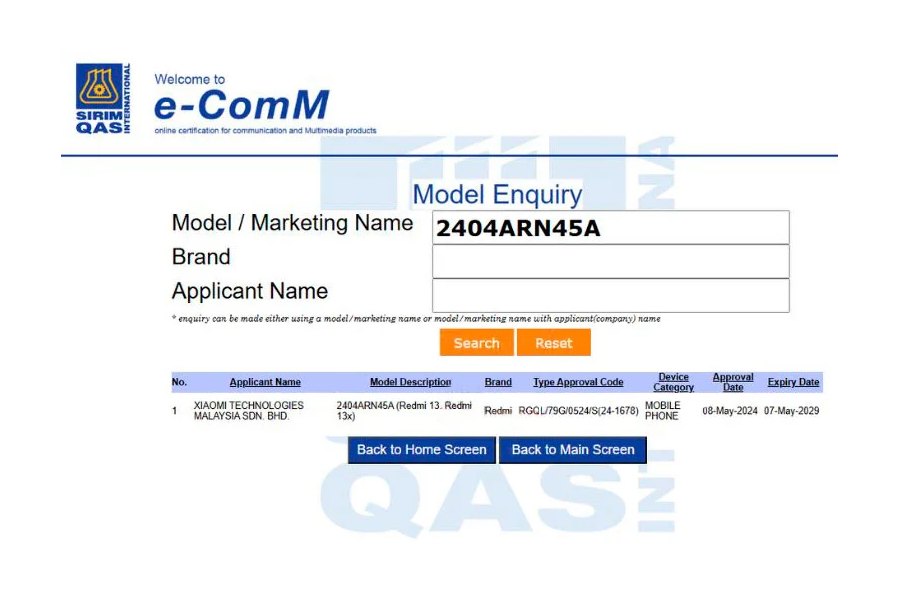
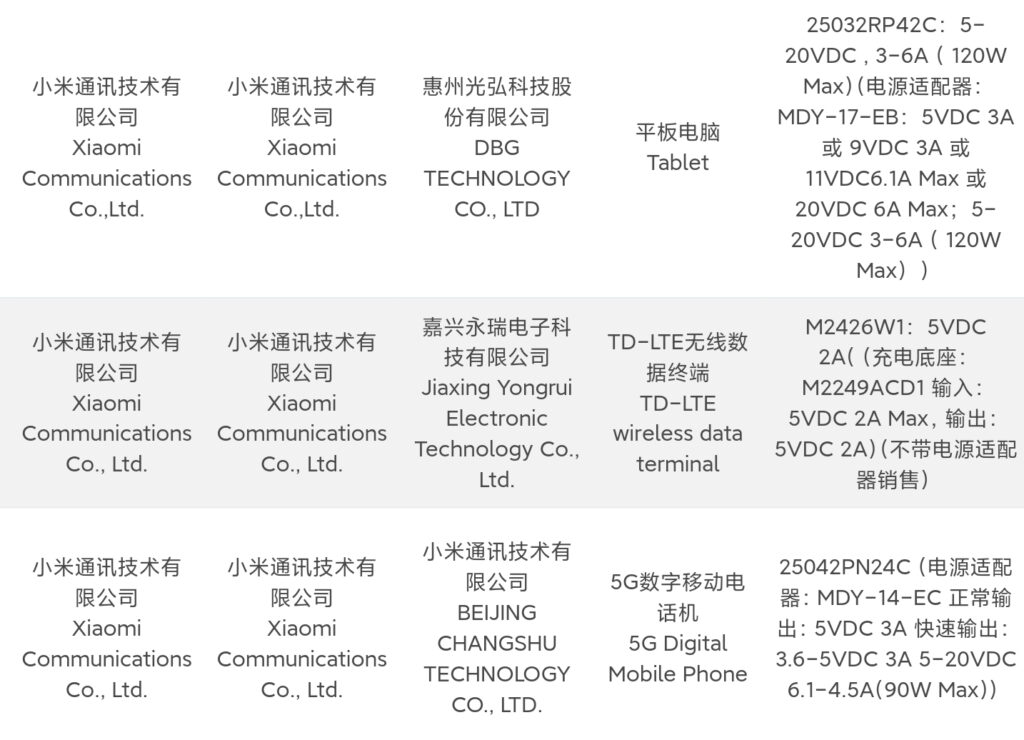
According to reports, the Redmi Turbo 4 will have a flat OLED panel that offers a 1.5K resolution. The 3C certification of the device has revealed that it may support 90W fast charging. In terms of pricing, the device is likely to be priced between 1,500 Yuan (~$205) and 2,000 Yuan (~$275).

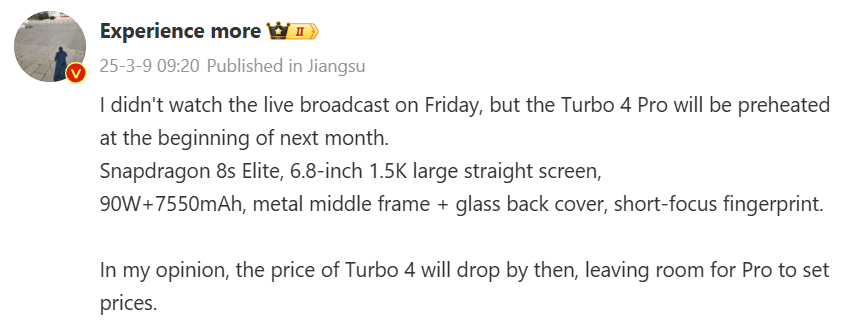
Reports have also revealed that Redmi may also announce the Redmi Turbo 4 Pro in the coming year. This phone is likely to feature the Snapdragon 8s Elite chipset. In the global market, the Turbo 4 and Turbo 4 Pro may get rebranded as the Poco X7 and Poco F7, respectively.

Don’t miss a thing! Join our Telegram community for instant updates and grab our free daily newsletter for the best tech stories! 🚀

(via)

Honor GT phone teased in China, here’s what to expect?

Last month, Honor unveiled the Honor 300 series of smartphones in China. Reports have claimed that the brand is gearing up to unveil a new Honor GT series phone this month in the home market. Today, the brand released the first teaser of the phone, revealing its design. Here’s a look at what’s known about the upcoming GT-series phone.

Honor GT’s first teaser released

Honor GT series teaser

Today, Honor released the above teaser to hint at the design of the forthcoming Honor GT phone. The image reveals that the device features a rectangle-shaped camera module with the “GT” logo imprinted at the bottom-right corner.

The “GT” branding suggests that it will be a performance-focused smartphone. According to rumors, it will have the Snapdragon 8 Gen 3 chipset and support 100W fast charging. It is also expected to feature a flat OLED panel.

The inclusion of the Snapdragon 8 Gen 3 chipset suggests that it will compete with the likes of the Redmi K80 and the iQOO Neo 10, which are also powered by the same chip. The recently unveiled Honor 300 Pro and 300 Ultra are also equipped with the Snapdragon 8 Gen 3. While the Pro model has a 50-megapixel (main) + 50-megapixel (telephoto) + 12-megapixel (ultra-wide) triple camera setup, the Ultra edition features a 50-megapixel (main) + 50-megapixel (periscope telephoto) + 12-megapixel (ultra-wide) triple camera unit.

Considering that the Honor GT will be a performance-oriented offering, photography is unlikely to be its major strength. However, to ensure a comprehensive user experience and to stay competitive in the market, the brand might consider offering an impressive primary camera. Honor is expected to unveil more details about the new GT later this week.

Don’t miss a thing! Join our Telegram community for instant updates and grab our free daily newsletter for the best tech stories! 🚀

Baseus S1 Pro Security Camera Review: Dual-Lens Cameras, Solar Panels & Reliable Performance

Baseus S1 Pro Outdoor Security Camera System offers an intriguing blend of solar-powered innovation and solid camera performance. Over the past few weeks, I tested the S1 Pro system to see how it stands up to real-world use. Here’s a detailed review covering everything from unboxing to performance, durability, and my final impressions.

Baseus S1 Pro Review

1. What’s in the Box?

Baseus-S1-Pro-Outdoor-Security-Camera

The Baseus S1 Pro package includes:

  • Two S1 Pro cameras
  • An H1 HomeStation hub
  • A power adapter
  • An Ethernet cable
  • USB-A to USB-C charging cable
  • Two screw mounts and a screw pack
  • Quick start guide/user manual
Baseus S1 Pro Review

The contents are well-organized, and everything you need for setup is included.

2. Build Quality and Design

Baseus-S1-Pro-Outdoor-Security-Camera

The S1 Pro cameras are built with industrial-grade plastic, providing a sturdy and durable feel. Each camera features an integrated solar panel that sits on top, dominating the design. While the large solar panels might appear bulky at first glance, they are practical, ensuring maximum sunlight absorption.

The cameras are rated IP67, making them resistant to dust and water. This durability reassured me about their outdoor placement. The HomeStation hub, on the other hand, has a minimalistic design meant to sit discreetly near your router. It’s compact and doesn’t take up much space.

The dual-camera system features a wide-angle lens and a telephoto lens. Both are housed within a cylindrical body that feels well-built and capable of withstanding outdoor conditions.

3. Setup Experience

Baseus-S1-Pro-Outdoor-Security-Camera

Setting up the Baseus S1 Pro was straightforward. The H1 HomeStation requires a power connection and an Ethernet cable to link with your router. After plugging in the hub, downloading the Baseus app, and completing a firmware update, I was ready to connect the cameras.

Mounting the cameras was simple thanks to the included hardware. I positioned them on my home balcony, where they could cover the parking area and also the nearby road. The app provided clear instructions, making the process smooth even for someone without technical expertise.

The pairing process between the cameras and the hub was seamless. Within minutes, both cameras were live and accessible through the app. The app itself is intuitive, with an organized interface for accessing live feeds, recorded footage, and motion alerts.

4. Performance

Baseus-S1-Pro-Outdoor-Security-Camera

The Baseus S1 Pro offers commendable performance across various metrics, making it a strong contender in the home surveillance market. However, there are specific areas where it excels and others where improvements could enhance the overall experience.

The dual-camera setup includes a wide-angle lens and a telephoto lens, both of which deliver up to 3K resolution with 120-degree FOV and f/1.6 aperture. During my testing, the footage captured by both lenses was crisp, clear, and vibrant. The colors appeared natural and well-balanced, particularly during the day. Motion capture was smooth, with no noticeable ghosting or artifacting, even when capturing fast-moving subjects like vehicles. This level of detail makes the system highly effective for identifying people, license plates, or other crucial elements in surveillance footage.

Switching between the wide-angle and telephoto views was seamless. The app allows you to view both feeds simultaneously, with one lens displayed in a picture-in-picture mode. This feature is particularly useful for monitoring a single area with both a close-up and a broader perspective. The 8x optical zoom of the telephoto lens provided detailed views of distant objects, maintaining clarity even at maximum zoom.

The S1 Pro offers two distinct night vision modes: standard infrared (IR) and spotlight night vision. The IR mode produced sharp, black-and-white footage, with clear visibility up. I found this sufficient for monitoring darker areas like parking lots or backyards.

The spotlight night vision mode, while more power-intensive, added a new layer of detail in low-light conditions. It provided a more natural representation of the surroundings, making it easier to identify colors and finer details. This feature is particularly useful in scenarios where black-and-white footage might miss critical visual cues, such as distinguishing clothing colors or car models.

The S1 Pro cameras are equipped with motion detection that uses adjustable sensitivity levels, ranging from 1 to 5. The default setting of 3 struck a good balance during my testing, accurately identifying motion without too many false positives. The system leverages AI to distinguish between humans and environmental triggers like swaying trees or passing shadows. This AI-driven approach significantly reduced unnecessary notifications.

Alerts were delivered via rich notifications on my smartphone. This made it easy to quickly assess whether the alert warranted further attention. The timeline in the Baseus app allowed me to review and playback events effortlessly, with options to download or share clips directly.

The two-way audio feature on the S1 Pro cameras worked as expected. The built-in microphones captured clear audio with minimal background noise, while the speakers produced loud and understandable output. I tested the feature by speaking through the app while standing near the cameras, and the audio quality was adequate for conversations or instructions. However, there was a slight delay, which is typical for devices of this kind.

However, I noticed a delay when accessing live feeds through notifications. Occasionally, the app froze, requiring a restart to function properly. At times, even when the app seemed fine, the camera failed to display the live feed, although the motion sensor worked and continued sending notifications. This lag was frustrating and highlights an area where Baseus could improve.

The local storage system is a strong point. The H1 HomeStation comes with 16GB of built-in storage, expandable up to 16TB using a user-installed SSD. I didn’t face any storage issues during my test, but users with high recording demands might benefit from upgrading the storage capacity.

5. Durability and Battery Life

The S1 Pro boasts impressive durability, thanks to its IP67 rating, which guarantees protection against rain and dust. Although I tested it during winter and didn’t experience any rain, the build quality felt very premium just like any other Baseus product, and seemed well-suited to withstand tough outdoor conditions.

Battery life is where the S1 Pro truly shines. Thanks to the solar panels, I didn’t have to charge the cameras manually during the entire testing period. The cameras maintained sufficient power levels. This set-and-forget design is a major advantage for those seeking hassle-free operation.

Another notable feature is the rotating solar panels, which automatically adjust throughout the day to optimize sunlight exposure. This smart move ensures the batteries remain efficiently charged, reducing the need for frequent recharging.

6. Final Thoughts

The Baseus S1 Pro is a well-rounded package with some standout features, particularly the rotating solar panels and high-resolution dual-lens cameras. Its performance in daylight and nighttime scenarios was commendable, and the build quality inspires confidence in its longevity.

However, the system is not without its flaws. The lack of pan-and-tilt functionality for the cameras and occasional app delays detract from the overall experience. Additionally, the $430 price tag may deter budget-conscious buyers, especially since it currently lacks options for standalone camera purchases.

Despite these drawbacks, the S1 Pro offers reliable surveillance with no ongoing subscription fees. It’s a worthwhile investment for those seeking a durable, eco-friendly security solution.

7. Pricing and Availability

The Baseus S1 Pro Outdoor Security Camera, priced at $430, is available on the Baseus website and features dual cameras along with a local storage hub. Currently, it is offered on Amazon for a discounted price of $199.99 during a limited-time deal running from December 2 to December 31.

Earlier this year, we also reviewed the Baseus N1 Outdoor Security Camera, a more affordable option compared to these models, but it lacks solar panels.

Poco M7 Pro and C75 5G launch date confirmed for India, key specs revealed

Poco is launching two new phones in India on December 17th — the Poco M7 Pro and Poco C75 5G. This is not to be confused with the C75, which Poco launched in October as a 4G model with a Helio G81 SoC.

Both the M7 Pro and C75 5G will be available in India through Flipkart. As with most releases, the company has started teasing the phones’ specs ahead of the launch. Here’s what has been revealed so far.

Poco M7 Pro

The Poco M7 Pro will feature a 6.67-inch Full HD+ AMOLED display with a 120Hz refresh rate. This panel offers a peak brightness of 2,100 nits for improved outdoor visibility and supports HDR10+. Corning Gorilla Glass 5 provides protection.  

Poco M7 Pro cameras

Poco remains tight-lipped about the exact processor on the machine. The camera setup includes a 50MP Sony LYT-600 sensor as its primary lens, accompanied by optical image stabilization (OIS).  A 20MP sensor handles selfie duties. The Flipkart listings also confirm a 3.5mm headphone jack and a USB-C port.

Poco C75 5G

The Poco C75 is a more budget-friendly option with 5G support. It borrows the same design as its 4G counterpart and will be powered by the Snapdragon 4s Gen 2 processor, paired with up to 8GB of RAM. While the storage option is under wrap, but its confirmed to have microSD card support. 

Moreover, Poco claims the C75 5G will be the only phone in its segment to feature a Sony camera. It will also include a side-mounted fingerprint scanner and run Android 14 with Poco’s custom HyperOS skin.

Additionally, Poco promises “2+4 Years Updates” for the C75 5G, which means two years of major OS upgrades and four years of security patches. According to a GSMArena report, the phone will be priced under Rs 9,000 in India.

Don’t miss a thing! Join our Telegram community for instant updates and grab our free daily newsletter for the best tech stories! 🚀

How the Tecno Phantom V Fold 2 undercuts other book-style foldables

Book-style foldable smartphones have come a long way. What was once a niche product is now a growing segment within the smartphone market. Hence, more brands seem interested in this space now.

One such player is Tecno, which recently launched its second-generation foldable, the Phantom V Fold 2. Tecno may not be a household name globally, but it has built a strong reputation in emerging markets, particularly in Africa.

Tecno’s latest foldable is the company’s yet another bet on the foldable market, building on the success of its first Phantom V Fold. Unlike its competitors, Tecno approaches this segment differently, offering a unique value proposition. And it clearly seems to be working in the brand’s favor. 

So let’s explore how the Phantom V Fold 2 undercuts other book-style foldables and stands out in a competitive market.

1. Price that Doesn’t Fold You in Half

The biggest draw of the Phantom V Fold 2 is undoubtedly its price. Launched at just Rs 79,999 (~$945) in India, it sits comfortably below established players like Samsung’s Galaxy Z Fold 6, which can reach upwards of Rs 188,500 (~$2,225). 

That’s a significant difference, especially for early adopters who want to experience a foldable phone without breaking the bank. Now, a lower price tag might lead us to assume the company may have cut back on features, but the Phantom V Fold 2 doesn’t disappoint. 

Sure, it doesn’t have top-of-the-line specs, but you get a flagship processor (though not the latest), a decent camera system, and a large, beautiful foldable display. Let’s dive deeper into the details.

2. Design That Doesn’t Feel Budget

The Phantom V Fold 2 takes a familiar approach to foldable design, with a large, flexible inner display and a secondary outer screen. And let me be clear, the device doesn’t look or feel cheap. It uses a sleek aluminum frame and faux leather back designed by luxury brand Loewe that gives it a tactile and premium feel similar to higher-end competitors like the Samsung Galaxy Z Fold 6 or Huawei Mate X5.

Tecno has also addressed concerns about durability, with a hinge mechanism rated for over 400,000 folds—on par with or even better than pricier alternatives. It also has an IP54 dust and splash resistance rating. 

3. Competitive Displays

Foldable displays are a hallmark of this category, and Tecno hasn’t cut corners here. The Phantom V Fold 2 features a 7.85-inch LTPO AMOLED inner display with a 120Hz refresh rate, putting it in line with flagship foldable. 

The outer screen measures 6.42 inches and is equally impressive with FHD+ resolution and Corning Gorilla Glass Victus protection. You even get stylus support here, which comes packed in the box itself. It’s a pressure-sensitive pen that can be used to take a screenshot, jot down notes, or draw if you’re into such stuff.

4. Performance

Tecno equips the Phantom V Fold 2 with the Dimensity 9000+ chipset. It’s  MediaTek’s flagship processor of 2021, so multi-tasking or using a demanding app won’t be much of a hassle here. 

But if you compare it with the latest foldables from other brands, there is a significant performance difference here. Devices like the Galaxy Z Fold 6, powered by Qualcomm’s Snapdragon 8 Gen 3, and Xiaomi Mix Fold 4, featuring the same Snapdragon chip, deliver better performance in benchmarks and sustained workloads. 

That said, unless you’re a power user pushing your device to its limits, the differences should be negligible in day-to-day tasks.

5. Software Experience

Software optimization remains a critical factor for foldable, and Tecno has tailored its HiOS Fold UI to take advantage of the large-screen real estate. It has features like split-screen multitasking, app continuity, and floating windows that mimic the software experience you get on Samsung’s One UI or Xiaomi’s MIUI Fold.

Where it cuts costs is in terms of software updates. While Samsung and Google now offer up to seven years of major OS upgrades and security patches, Tecno’s update policy is far less. You get only two years of Android and three years of security updates. 

Phantom V Fold 2 launched with Android 14, meaning the platform updates will go up to Android 16, and security patches will last a year longer. That’s even less than what other brands offer for their regular smartphones. 

6. Camera

Foldable phones often prioritize form factor over camera performance, and the Phantom V Fold 2 follows the same route. It features a triple-camera setup with a 50MP primary sensor, a 13MP ultrawide lens, and a 12MP telephoto lens. The camera system performs well in good lighting and delivers detailed and vibrant shots, but don’t expect anything extra-ordinary here

Here are some of the camera samples from our review for you to glance at. 

7. Battery and Charging

One area where Tecno excels is battery life. The Phantom V Fold 2 packs a 5750mAh battery, larger than what most foldables offer. Paired with efficient hardware, it should comfortably last a day of typical use, even with heavy multitasking.

Tecno also offers 45W fast charging, which can fully recharge the phone in just 40 mins. By comparison, Samsung’s $1800, Galaxy Z Fold 6 supports only 25W charging and has a 4400mAh battery. 

8. Where the Phantom V Fold 2 Stands

The Phantom V Fold 2 isn’t trying to outdo Samsung, Huawei, or Xiaomi in every category—it’s about offering an accessible alternative. It delivers a well-rounded experience with a premium design, competitive displays, and solid performance at a fraction of the cost of its competitors.

For users who want a foldable phone but can’t justify the steep prices of flagship models, the Phantom V Fold 2 is a viable option for them. While it may not dethrone market leaders in terms of innovation or features, it’s redefining what’s possible for mid-range foldables.

By undercutting its rivals on price without compromising too much on the essentials, Tecno has made foldable phones accessible beyond the ultra-premium segment. And that’s something I truly appreciate.

Are Smart Rings Worth Buying?

Smart rings are a recent addition to the growing wearable technology market. Unlike smartwatches or fitness trackers, these tiny, finger-worn devices aim to provide functionality in a compact form factor. From tracking health metrics to enabling contactless payments, smart rings are becoming increasingly popular, especially after the launch of the Samsung Galaxy Ring. However, the question remains: are they worth buying? This article explores their features, benefits, and drawbacks to help you decide.

Oura Ring 4

1. What Do Smart Rings Offer?

Smart rings are designed to be discreet yet powerful. They offer a range of features, including fitness and health tracking, sleep monitoring, and even smart home integration. Some models also support payment systems, allowing you to make purchases with a simple tap of your finger. Advanced versions come equipped with sensors for heart rate monitoring, SpO2 measurement, and even ECG readings.

Unlike bulky smartwatches, smart rings are lightweight and comfortable, making them suitable for continuous wear. They can seamlessly blend with your everyday accessories, often looking like regular rings rather than gadgets. For people who prioritize style alongside functionality, this is a key selling point.

2. Benefits of Owning a Smart Ring

Discreet and Stylish: Unlike bulky smartwatches or fitness trackers, smart rings seamlessly blend into your everyday style. You can wear them 24/7 without drawing attention, making them perfect for those who prefer a more understated tech experience.

Comfortable and Non-Intrusive: Smart rings are designed to be worn comfortably on your finger, unlike larger wearables that can sometimes feel cumbersome or irritating. This makes them ideal for sleeping, exercising, and other activities where comfort is crucial.

Long Battery Life: Smart rings typically boast impressive battery life, often lasting several days on a single charge. This means you won’t have to worry about constantly recharging your device, making it a hassle-free wearable.

Valuable Health Insights: Smart rings provide valuable insights into your health and fitness. By tracking your sleep patterns, heart rate, and activity levels, you can identify areas for improvement and make informed decisions about your lifestyle.

Water Resistance: Most smart rings are water-resistant, allowing you to wear them during showers, swimming, or other water activities.

Additional Features: Some smart rings offer additional features like contactless payments and notifications. While these features may not be essential for everyone, they can add convenience to your daily life.

3. Drawbacks to Consider

Limited Functionality: Compared to smartwatches, smart rings have a more limited range of features. They typically lack a display, making it difficult to view detailed information directly on the device. You’ll often need to rely on a companion app to access and analyze your data.

Higher Price Point: Smart rings can be more expensive than traditional fitness trackers or even some basic smartwatches. If you’re looking for a budget-friendly wearable, a smart ring might not be the best choice.

Smaller Sensors: The smaller sensors in smart rings may not be as accurate as those in larger wearables, especially for tracking intense workouts or specific sports activities.

Potential Comfort Issues: While smart rings are generally comfortable, some users may experience discomfort or irritation, especially during prolonged wear or intense physical activity.

Limited Customization: Smart rings often have a more limited range of customization options compared to smartwatches. You may have fewer choices in terms of band materials, colors, and additional features.

4. Are Smart Rings Worth It?

Whether a smart ring is worth buying depends on your needs and lifestyle. If you value discreet health tracking, minimalist design, and long battery life, smart rings like the Oura Ring 4 and Galaxy Ring are excellent options. However, if you’re looking for a multifunctional device with expansive features, a smartwatch might offer better value.

Smart rings are particularly beneficial for individuals focused on health and wellness. Their ability to track sleep, activity, and vital signs with precision makes them invaluable tools for those who want actionable insights into their daily habits. However, the high cost and limited features may deter casual users. Ultimately, smart rings are here to stay, and as technology improves, they might become even more compelling.

If you have made it this far, you can also read about 4 dumbphones that keep it simple but still support WhatsApp, perfect for those who value minimalism while staying connected.

Stay ahead in tech! Join our Telegram community and sign up for our daily newsletter of top stories! 💡
Comparing Oppo Reno 13 Pro and Reno 12 Pro: Which is Better?

Oppo Reno 13 Pro and Reno 12 Pro are two premium smartphones that showcase Oppo’s focus on design, performance, and innovation. While the Reno 12 Pro offers excellent features with a solid balance of performance and durability, the Reno 13 Pro brings significant upgrades in design, display, camera, and battery capabilities. This comparison highlights the OPPO Reno 13 Pro and OPPO Reno 12 Pros and their differences, helping you decide which model better suits your needs, whether it’s the affordability and reliability of the Reno 12 Pro or the cutting-edge enhancements of the Reno 13 Pro.

1. Design and Display

Oppo Reno 13 Pro
OPPO Reno 13 Pro

The Oppo Reno 13 Pro boasts a more premium design with an aluminum alloy frame and IP68/IP69 certification, offering better water and dust resistance than the Reno 12 Pro’s IP65 rating and plastic frame. The Reno 13 Pro also features a slightly larger 6.83-inch AMOLED display with a sharper 1272 x 2800 resolution and higher pixel density (450 ppi) than the Reno 12 Pro’s 6.7-inch display with 1080 x 2412 resolution (394 ppi). Both support 120Hz refresh rates and HDR10+, ensuring smooth visuals and vibrant colors.

The Reno 13 Pro edges ahead with its more immersive screen-to-body ratio (~90.9%) compared to the Reno 12 Pro’s (~89.4%). However, the Reno 12 Pro provides Corning Gorilla Glass Victus 2 protection, which adds to its durability.

The Reno 13 Pro’s superior build materials and higher resolution make it more appealing for users seeking a premium device, while the Reno 12 Pro still holds its ground with excellent durability and vibrant visuals.

2. Specifications

OPPO reno 12 Pro
OPPO Reno 12 Pro

The Reno 13 Pro is powered by the Mediatek Dimensity 8350 chipset, offering enhanced performance with a faster CPU and GPU compared to the Reno 12 Pro’s Dimensity 7300 Energy chip. Both phones come with multiple RAM and storage configurations, but the Reno 13 Pro offers up to 1TB storage and 16GB RAM, which is ideal for heavy multitasking and extensive file storage.

The battery capacity is another highlight, with the Reno 13 Pro packing a 5800 mAh cell versus the Reno 12 Pro’s 5000 mAh. Both support 80W wired charging, but the Reno 13 Pro also offers 50W wireless and additional reverse wired capabilities.

The Reno 13 Pro’s larger battery and enhanced performance are better suited for power users, while the Reno 12 Pro delivers excellent efficiency and respectable charging speeds.

3. Camera

Oppo Reno 13 Pro
OPPO Reno 13 Pro

The Reno 13 Pro upgrades its telephoto lens to a 3.5x optical zoom compared to the Reno 12 Pro’s 2x zoom, making it more versatile for long-range photography. Both feature triple-camera setups with 50 MP wide and telephoto sensors and an 8 MP ultrawide lens. The Reno 13 Pro’s main camera sensor also offers improved performance in low light with larger pixel sizes. For selfies, both phones house 50 MP front cameras, but the Reno 13 Pro adds 4K video recording capabilities.

The Reno 13 Pro’s advanced telephoto lens and 4K front-facing video make it an excellent choice for camera enthusiasts, while the Reno 12 Pro still offers commendable imaging features.

4. Pricing

The Oppo Reno 13 Pro (China) is priced at approximately €440, while the Reno 12 Pro starts at around £390. This pricing discrepancy highlights regional variations, but the Reno 13 Pro generally offers better value with its enhanced specifications and features.

Considering the Reno 13 Pro’s superior performance and features at a lower global price, it represents a more cost-effective option.


5. Conclusion

OPPO reno 12 Pro
OPPO Reno 12 Pro

Unique features of the Reno 13 Pro include IP68/IP69 water resistance, a larger battery with wireless and reverse charging, and advanced optical zoom capabilities. Meanwhile, the Reno 12 Pro shines with its Gorilla Glass Victus 2 protection and lower price in some markets.

Reno 13 Pro’s upgrades clearly target power users and photography enthusiasts, while the Reno 12 Pro caters to those seeking durability and slightly more budget-friendly options.

Pixel 9a live image confirms a different design for Google’s affordable phone

Following earlier leaks of rendered images, live photos purporting to be the Google Pixel 9a have now surfaced online on the social media platform X (formerly Twitter). 

Shared by user @feni_book, the images show both the front and back of the alleged Pixel 9a. The front reveals a familiar design with a centered punch-hole cutout for the selfie camera, flat edges, and minimal bezels.

The rear design, however, seems to be a big departure from both its predecessor and the Pixel 9 series. The phone has a boxy chassis with rounded corners, a departure from the curved design of the Pixel 8a

Most notably, the rear camera module ditches the horizontal bar seen on the Pixel 9 series in favor of a smaller, left-aligned pill or oval-shaped layout housing dual camera sensors and an LED flash. 

The back panel sports a unique textured design and a logo that differs from the typical Google logo. That’s because it’s not the final product — it’s an Engineering Validation Test unit often used for internal testing before mass production. 

The sticker on the phone’s back reveals its IMEI number, which when checked against databases confirms it as a Google device with the model number GTF7P.

What Else Do We Know

The phone is rumored to boast a 6.3-inch display with a 60Hz-120Hz adaptive refresh rate, an upgrade from the Pixel 8a’s 6.1-inch screen. Under the hood, the Pixel 9a might be powered by the same Tensor G4 chipset found in the Pixel 9 lineup that will replace the Pixel 8a’s Tensor G3.  

The phone is expected to pack a 5000mAh battery compared to the Pixel 8a’s 4492mAh cell. However, charging speeds might remain unchanged as the rumors point towards the same 18W wired and 7.5W wireless charging. Memory options are expected to mirror the Pixel 8a, with 8GB RAM and either 128GB or 256GB of storage.

The camera department might see a downgrade compared to the Pixel 8a’s 64MP main sensor. Leaks suggest the rear will have a 48MP main sensor similar to the one found in the Pixel 9 Pro Fold. Finally, the Pixel 9a could boast an IP68 water and dust resistance rating, surpassing the Pixel 8a’s IP67 rating.

It’s important to note that these are just leaks, and Google has not officially confirmed any details about the Pixel 9a. With the design seemingly undergoing a shift and potential spec upgrades, it will be interesting to see if these leaks hold true when Google eventually unveils the phone.

Tech enthusiast? Get the latest news first! Follow our Telegram channel and subscribe to our free newsletter for your daily tech fix! ⚡

(Source)

Comparing Xiaomi 15 Pro and Vivo X200 Pro: Which is Better?

Xiaomi 15 Pro and Vivo X200 Pro are flagship smartphones that push the boundaries of innovation. Both feature cutting-edge designs, top-tier displays, powerful performance, and advanced cameras but cater to different user preferences. Xiaomi focuses on raw power, durability, and value, while Vivo emphasizes camera versatility, extreme brightness, and premium features. This comparison explores their key differences and standout features to help you decide which device suits your needs best.

1. Design and Display

Xiaomi 15 Pro
Xiaomi 15 Pro

The Xiaomi 15 Pro and Vivo X200 Pro feature premium designs with durable materials. Xiaomi boasts shatterproof glass and an IP68 rating for water resistance, while Vivo goes further with IP68/IP69 certification, offering better protection against extreme conditions. Both have LTPO AMOLED displays with 120Hz refresh rates, but Vivo edges out with a larger 6.78-inch screen and a stunning 4500-nit peak brightness compared to Xiaomi’s 3200 nits.

While Xiaomi’s higher resolution (1440 x 3200) offers crisper visuals, Vivo’s 1B colors, combined with Zeiss optics and display tuning, ensure a vibrant and immersive viewing experience. Xiaomi leans toward durability, but Vivo’s display innovations make it a better choice for media enthusiasts.

2. Specifications 

Vivo X200 Pro
Vivo X200 Pro

Xiaomi 15 Pro is powered by the cutting-edge Snapdragon 8 Elite (3nm), while Vivo relies on the Dimensity 9400 (3nm). With its advanced Oryon cores, Xiaomi’s chipset provides better gaming and multitasking performance. Battery-wise, Xiaomi’s 6100mAh unit slightly outlasts Vivo’s 6000mAh, and its 50W wireless charging is faster than Vivo’s 30W.

However, Vivo offers reverse wired charging and region-specific satellite communication, making it versatile for travelers. Xiaomi is more powerful overall, but Vivo’s balanced specs cater to everyday users better.

3. Camera

Vivo X200 Pro
Vivo X200 Pro

The Vivo X200 Pro takes a bold step with a 200MP periscope telephoto lens for exceptional zoom and macro capabilities, while Xiaomi sticks to a reliable 50MP triple-camera setup with Leica lenses. Vivo offers better versatility for professionals, thanks to Zeiss T* lens coating and 3D LUTs for color grading.

Xiaomi’s camera setup excels in video recording, offering Dolby Vision HDR and 8K at multiple frame rates. If photography is your focus, Vivo stands out; for video, Xiaomi delivers.

4. Pricing

Xiaomi 15 Pro is priced around €690, while the Vivo X200 Pro costs approximately $796. Vivo’s higher price reflects its camera innovations and rugged build. Xiaomi is a better value for performance, while Vivo caters to premium buyers seeking camera prowess.

5. Conclusion

Xiaomi 15 Pro
Xiaomi 15 Pro

Unique to Xiaomi is its two-way satellite communication and Snapdragon Sound. Vivo distinguishes itself with Zeiss optics, 200MP telephoto, and broader satellite support. With its raw power, Xiaomi appeals to tech enthusiasts, while Vivo targets creative professionals.

Thinnest iPhone yet? iPhone 17 Air rumored to be 2mm thinner than iPhone 16 Pro

Apple’s 2025 iPhone lineup is shaping up to be one of the most exciting yet, with a particular focus on innovation and design. The most intriguing addition is the iPhone 17 Air, a remarkably thin device that pushes the boundaries of smartphone design.

Earlier reports regarding the iPhone 17 Air’s slim profile were conflicting. While some suggested it would be remarkably thin, others speculated it might not meet initial expectations due to battery constraints.

iPhone 17 Slim leak

iPhone 17 Air to Set New Standards in Design

However, Mark Gurman from Bloomberg has clarified that the device will indeed be significantly thinner at around 2mm slimmer than the current iPhone 16 Pro. With the iPhone 16 Pro measuring 8.25mm thick, the iPhone 17 Air could come in at an astonishing 6.25mm, potentially dethroning the iPhone 6, which currently holds the title for Apple’s thinnest iPhone at 6.9mm.

As per reports, this dramatic reduction in thickness is made possible by Apple’s custom-designed 5G modem chip, which is smaller and more integrated than previous iterations. By refining the chip’s architecture and optimizing internal components, Apple has managed to free up valuable space inside the device.

In addition to its slim form factor, the iPhone 17 Air will feature a 6.6-inch display, perfectly bridging the gap between the iPhone 17 Pro’s 6.3-inch and the iPhone 17 Pro Max’s 6.9-inch screens. This new size offers a middle ground for users seeking more screen real estate without the bulk of a Pro Max.

iPhone 17 Air is expected to deliver significant upgrades in display tech, performance, and camera. It’s likely to feature ProMotion technology with a 120Hz refresh rate, an upgraded 48MP camera sensor, and improvements in front camera resolution from 12MP to 24MP.

Meanwhile, Samsung is also expected to launch its first slim flagship smartphone featuring a sleeker design and advanced camera capabilities. The Slim model is rumored to include a 200MP Isocell HP5 primary sensor, two 50MP Isocell JN5 sensors for ultrawide and 3.5x telephoto, and Samsung’s new ALoP lens technology for a thinner camera assembly and enhanced optical performance. The Galaxy S25 series is set to launch in January 2025, with the Slim model potentially arriving later.

As more details emerge, we’ll keep you updated on both Apple’s iPhone 17 lineup and Samsung’s competitive offerings. Be sure to check out our comprehensive iPhone 17 Air roundup to know more about this radical slim iPhone.

Tech enthusiast? Get the latest news first! Follow our Telegram channel and subscribe to our free newsletter for your daily tech fix! ⚡

(Via)

TECNO PHANTOM V Fold 2 & Flip 2 Launched in India with Durable Displays, Powerful Processors & Long Battery Life

TECNO has introduced the PHANTOM V2 series, addressing user feedback from the first generation. The PHANTOM V Fold 2 and PHANTOM V Flip 2 come with improved durability, displays, battery life, and user experience.

Focus on Refinement

The PHANTOM V2 series incorporates user feedback to enhance the overall experience. Key upgrades include Aircell Battery Technology for longer usage, a slim and lightweight design, and advanced AI-powered tools.

Durable Displays

Both models feature high-quality displays. The Fold 2 includes a 7.85-inch main screen and a 6.42-inch cover display, both with 120Hz refresh rates and protected by Corning Gorilla Glass Victus 2. The Flip 2 features a 6.9-inch main display, a 3.64-inch cover display, and Gorilla Glass 8. Both devices use aerospace-grade hinges tested for over 400,000 cycles.

PHANTOM V Fold 2: High-Performance

The Fold 2 is powered by a MediaTek Dimensity 9000+ processor, 12GB of RAM (expandable), and 512GB of storage. The rear camera setup includes a 50MP main sensor, a 50MP portrait lens with zoom, and a 50MP ultra-wide lens. It also features dual front-facing cameras.
The Fold 2 supports Dolby Atmos and Hi-Res Audio, with a 5750mAh battery offering 70W wired and 15W wireless fast charging. It comes in Karst Green and Rippling Blue.

PHANTOM V Flip 2: Compact and Capable

The Flip 2 offers a compact design with a 6.9-inch main display and a 3.64-inch cover display. It runs on a MediaTek Dimensity 8020 processor, 8GB of RAM (expandable), and 256GB of storage. Its camera setup includes a 50MP main sensor, a 50MP ultra-wide lens, and a 32MP front-facing camera with a built-in flash.
The Flip 2 also supports Dolby Atmos and Hi-Res Audio and is powered by a 4720mAh battery with 70W wired fast charging. Available colors are Travertine Green and Moondust Grey.

Pricing and Availability

The PHANTOM V Flip 2 is priced at Rs. 34,999, while the PHANTOM V Fold 2 starts at Rs. 79,999. Both devices will be available on Amazon.in starting December 13th.

Tech enthusiast? Get the latest news first! Follow our Telegram channel and subscribe to our free newsletter for your daily tech fix! ⚡

(Source)

Honor X50 unexpectedly outships iPhone 16 Pro Max in China

Canalys’ latest smartphone shipment tracker for Q3 2024 shows that the Honor X50 outsold Apple’s flagship iPhone 16 Pro Max in mainland China.

The Honor X50 secured the third spot with a 2.8% market share, edging out the iPhone 16 Pro Max which landed at number five with a 2.1% share. 

The wide price gap between the two devices likely plays a key role in this outcome. As of now, the iPhone 16 Pro Max is priced roughly seven times higher than the Honor X50 in China. The Honor X50’s affordability likely plays a major role in its success.

Priced around $200 in mainland China, the X50 features a Snapdragon 6 Gen 1 processor, up to 16GB of RAM, and 512GB of storage. The front of the device features a 6.6-inch 120Hz 1.5K AMOLED display with an in-display fingerprint scanner.

Affordable Honor Triumphs

The X50’s success wasn’t just at the expense of the iPhone 16 Pro Max. It also outsold other premium competitors like the Redmi K70 Ultra (also known as the Xiaomi 14T Pro globally), which landed in seventh place with a 2.3% market share.

While Huawei has been aggressively regaining market share in China, only one of its devices made the top 10 – the Pura 70, a recent flagship, managed a sixth-place finish.

Interestingly, the top spot belonged to Apple’s iPhone 15 Pro Max, capturing 3% of the market. The remaining spots in the top 10 were a mix of affordability and brand loyalty. 

Vivo took tenth place with the Y37, while Oppo secured fourth with the A3x, both budget-friendly options. Notably, the iPhone 15 Pro and vanilla 15 found homes in eighth and ninth place respectively, with the iPhone 16 Pro rounding out the list at fifth.

Don’t miss a thing! Join our Telegram community for instant updates and grab our free daily newsletter for the best tech stories! 🚀