Advertisement

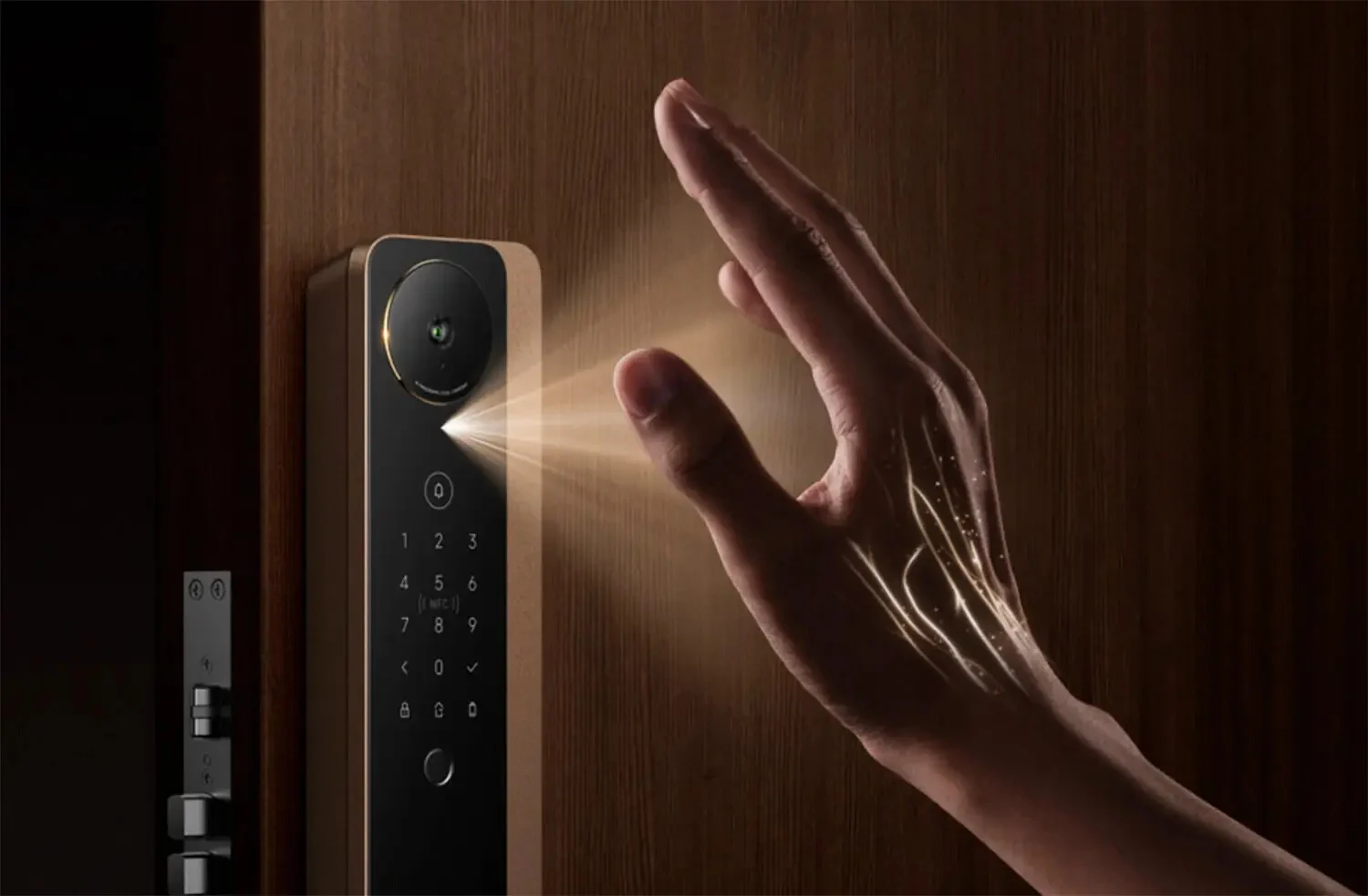
Xiaomi Smart Door Lock E30 launched with a six-layer security system & nine methods of unlocking

Xiaomi has launched the Smart Door Lock E30 with free on-site installation for the first time and 3 years of free warranty. It enables you to say goodbye to the keys and make your life a bit easier.

It offers multiple unlocking methods to meet the needs of all users

The Smart Door Lock E30 comes with a total of 9 unlocking methods. It includes AI-powered fingerprint recognition, long-term password, period/one-time password, mobile phone Bluetooth unlocking, emergency mechanical key, Xiaomi Smart Door Lock NFC Door Card (needs to be purchased separately), a Xiaomi smartphone, Xiaomi smartwatch, and Xiaomi smart band.

Notably, the fingerprint recognition takes less than 0.5 seconds and has a recognition rate of 99.29%. It equips safer and more intelligent anti-tampering, anti-prying, and anti-door opening technologies and packs a built-in false opening detection sensor. The connectivity with the Xiaomi Home app makes it more convenient to use with the ability to control the door anytime from anywhere.

Xiaomi says that the different unlocking methods provided offer a convenient choice and a more versatile user experience. With all the unlocking methods combined, the product can meet various scenarios and can be suitable for all kinds of people,

This smart door lock also uses a C-level lock cylinder and offers an ultra-long battery life of 1 year. But when the battery eventually runs out, users can connect Type-C external power banks for emergency power supply.

According to the company, this door lock uses a triple-proof smart lock body, where the clutch is built into it. With the C-level lock cylinder that runs through the lock body structure, it can more effectively prevent the door from being opened directly even if the outer panel is dismantled by external force.

The smart door lock also comes with a built-in half-open detection sensor to prevent the door from being half-opened and an alarm feature to notify the user about possible threats in time. Users will get the alarm notification through the Xiaomi Home app when away from home. Not to mention this smart door lock from Xiaomi also supports HyperOS connectivity alongside the Xiaomi Home app.

Pricing and availability:

The initial price of the Xiaomi Smart Door Lock E30 is 699 yuan, which is equivalent to US$99. The product is currently available for sale in Xiaomi Youpin.

(Source)

Redmi Note 14 Pro+ tops chart in reviewer’s extreme battery life tests

While the official launch of the Redmi Note 14 Pro series is just a couple of days away, details about the phone continue to surface online. We just don’t have the pricing, except that, leaks have already spilled the beans on its specs and we’ve also seen it in some real-life images

Adding to the hype, a Weibo reviewer has now shared battery life test results for the Note 14 Pro+, and they’re looking quite impressive.

Packing a hefty 6200mAh battery, the Note 14 Pro+ seems to excel in endurance, based on these early tests. The reviewer appears to have put the phone through three scenarios: normal usage, gaming, and a mixed-use stress test.

Normal Usage

The first test mimicked regular usage with a mix of activities spread over 3 hours. This included video playback for 30 minutes, a 30-minute WeChat video call, a similar amount of time on TikTok, and other everyday tasks.

Activities involved in the three-hour test (machine translated).

The Redmi Note 14 Pro+ emerged from this with a respectable 69% battery remaining, putting it in the same ballpark as competitors like the OnePlus Ace 3 Pro and the Redmi K70 Ultra. The only phone to edge it out slightly was the Realme GT 6, which managed to hold onto 70% battery after this round.

Gaming

The second round got more intense, with the reviewer subjecting the phone to 6 hours of intensive work, including gaming in popular titles like Genshin Impact and Honor of Kings for an hour each.

Activities involved in the six-hour test (machine translated).

Here, the Redmi Note 14 Pro+ actually took the lead. It ended the test with 15% battery remaining, which surprisingly matched the performance of the RedMagic 9s Pro despite its larger 6500mAh battery.

Overall Extreme battery test

Finally, the reviewer put the phone through an overall battery drain test without a set time limit. This involved a mix of WiFi usage, gaming, and other tasks.

Activities involved in the extreme test (machine translated).

The Redmi Note 14 Pro+ managed a commendable 7 hours and 24 minutes of screen-on time before shutting down. 

This figure puts the Note 14 Pro+ at the top of the reviewer’s battery life test chart, even surpassing the RedMagic 9s Pro, which managed 6 hours and 58 minutes of screen-on time despite having a larger battery.

(Source)

What Makes Honor 200 Lite Stand Out in India?

The Honor 200 Lite was first announced in late April. However, the device has only made its way to India now.

It is priced at ₹17,999 for the sole 8GB + 256GB variant. Thus, it competes with several other sub ₹20,000 smartphones in the country.

In terms of pure hardware specs, the handset does not stand out. But there are some features which make it special.

Some of these aspects of Honor 200 Lite could become reasons for people to choose it over its competitors. Let’s go through these points.

Honor 200 Lite

How is Honor 200 Lite Different?

1. Fusion Design

The Honor 200 Lite is unlike any other phone in its segment in terms of looks. Its design is a fusion of old and new.

The device resembles a chocolate bar due to its boxy shape. It has a flat frame and measures 6.8mm in thickness. Also, it is light at just 166g.

Despite being this thin and light, the smartphone houses a 4,500mAh battery. It comes in three colors, namely Midnight Black, Cyan Lake, and Starry Blue.

Further, the handset has a rectangular camera island, which is no longer used by newer phones. Also, the sensors themselves are placed in a rectangular manner.

Whereas, on the front, the display has a modern iPhone-inspired pill cutout with software features built around it. The Honor 200 Lite is the only budget smartphone to offer this type of display design.

2. Eye-friendly Display

Almost all Honor products are now known for their eye-friendly displays. The Honor 200 Lite is no different.

The device flaunts a 6.7-inch flat AMOLED display with almost equivalent bezels all around (93.7% screen-to-body ratio). This 20.1:9 screen with a pill cutout offers a resolution of 2412 x 1080 pixels and a 90Hz refresh rate.

The panel can reach a peak brightness level of 2000 nits and can cover 100% of the DCI-P3 color gamut. Most importantly, it supports 3240Hz high-frequency PWM dimming, which makes the handset certified for TÜV Rheinland Flicker-Free.

The device comes with a hardware-level low blue light mode, DC dimming, and 4096 levels of brightness adjustment. All of these features ensure an eye-friendly experience.

3. Something New

Honor was absent in India for over 3 years before its re-entry in 2023. So general consumers have been out of touch with the brand for a long time.

Honor’s hardware and software designs evolved over the years. So the experience is now different from what you got from the company when it was owned by Huawei.

Thus, Honor’s Magic OS could offer a different experience to consumers who are accustomed to other brands and want to try something new.

Samsung Galaxy S22 series One UI 6.1.1 update finally arrives in India

Samsung‘s One UI 6.1.1 update is now rolling out to Galaxy S22 series devices in India. The 2.8GB update introduces a significant number of new features and enhancements to the Galaxy S22, Galaxy S22+, and Galaxy S22 Ultra, particularly in the areas of artificial intelligence and language translation.

Samsung Galaxy S22 Plus Green Galaxy S22 Pink Gold

What’s New in One UI 6.1.1?

  1. Sketch to Image: AI and machine learning transform simple sketches into impressive artwork. This feature integrates with Samsung Notes, Photo Editor, Air command, Smart Select, and Edge panels.
  2. Portrait Studio: Generate AI-enhanced portraits from photos with various styles like sketch, 3D cartoon, watercolor, and comic.
  3. Composer: A new Samsung Keyboard feature that drafts texts, emails, or social media posts based on a few keywords, allowing users to select the tone of the message.
  4. Interpreter’s New Listening Mode: The real-time translation tool now includes a dual-screen mode for foldable phones and a new Listening Mode for one-way translations.
  5. Suggested Replies: Galaxy AI offers quick response suggestions on the cover screen of Galaxy Z Flip phones, tailored by analyzing previous chat conversations.
  6. Samsung Notes: The app now supports transcribing, translating, and summarizing voice notes.
  7. PDF Translation and Summarization: Note Assist can now translate and summarize PDF files directly without needing to convert them to notes.
  8. Instant Slow-Mo Clips: Users can save the slow-motion portion of a video as a separate clip instantly.
  9. Expanded Live Translation: Live Translate now works in more apps, including Google Meet and WhatsApp, in addition to the Samsung Phone app.
  10. Samsung Health Update: The app now provides an energy score, reflecting physical and mental conditions based on sleep and activity. Users can also share their health data with others.

In addition to these features, the update also introduces the September 2024 security patch, getting rid of 67 security vulnerabilities. The update is being pushed in batches, however, you can manually check for its availability on your device by heading to Settings > Software update > Download and install 

(Source)

Huawei Sound Joy 2 smart speaker with 26hrs battery life, IP67 rating, NFC launched in China

Huawei has introduced its latest audio product, the Sound Joy 2, to the Chinese market following its global launch last month. Building upon the success of its predecessor, this new speaker aims to deliver a powerful audio experience with a focus on both sound quality and convenience.

Huawei Sound Joy 2

Huawei Sound Joy 2 Specifications:

The Sound Joy 2 comes in two variants: a Bluetooth version and a smart version. The smart version offers additional features such as smart home control, voice control, WLAN connectivity, and online music streaming. Both versions feature Huawei Sound acoustic architecture and boast an impressive 26-hour battery life.

Coming to the specs, Huawei Sound Joy 2 comes in a sleek cylindrical design wrapped in durable fabric, featuring an LED light ring that syncs with music and displays battery and volume levels. It is powered by an 8800mAh battery, providing up to 26 hours of playback on a single charge, and supports 40W fast charging via a Type-C port.

Huawei Sound Joy 2

The speaker sports a quad-unit Huawei Sound system that includes a 20W full-range speaker, a 10W tweeter, and two passive radiators, delivering deep bass and clear mid-tones for a balanced audio experience. The silk diaphragm tweeter offers high frequencies up to 20kHz, while the maximum volume reaches 85 dBA at a one-meter distance.

In addition to its robust audio performance, the Sound Joy 2 comes with smart features, such as the ability to pair two speakers for stereo sound or connect up to 100 speakers for a surround sound experience. It also supports tap-to-transfer for easy music transfer from your phone and can be controlled via a Huawei smartwatch.

The smart speaker is IP67-rated, making it dustproof and waterproof, ideal for outdoor use. It supports Bluetooth 5.2 (AAC/SBC) and includes 3 microphones for voice pickup, NFC for Huawei Share, and shake-to-pair for stereo mode by simply shaking two speakers together.

The Sound Joy 2 features 6 control buttons, Bluetooth calling, and gravity sensors for a versatile audio experience. It weighs 700 grams and supports fast charging, offering an hour of playback with just 10 minutes of charging.

Pricing and Availability

The speaker comes in three colors Fresh Green, Island Blue, and Obsidian Black. The Bluetooth model is priced at 999 Yuan ($142), while the Smart version comes in at 1199 Yuan ($170).

Does your Smartphone Really Need a Dedicated Camera Button?

Apple recently unveiled its new iPhone 16 series with various improvements and the upcoming AI features. But that’s not all, the 2024 iPhones were showcased with changes in their design, with one of the biggest new inclusions being a dedicated camera button. We’ve seen this in the past on Android phones, but it is not as common anymore. So why is Apple bringing this back? It begs the question, do we really need a dedicated camera button on smartphones?

1. History of Camera Buttons on Smartphones.

A physical camera button has been featured on various smartphones in the past. Back in the late 2000s, Samsung had also dabbled with the dedicated camera button in models like the Galaxy K Zoom. Other brands also launched devices with these buttons but in 2024, Sony is the last remaining Android smartphone maker with a hardware camera button. You can find these on Sony’s flagship Xperia series smartphones.

Now, it seems Apple wants to iterate on this feature, bringing it to its own premium offering. The camera button can be found on all four iPhone models, namely the iPhone 16, iPhone 16 Plus, iPhone 16 Pro, and iPhone 16 Pro Max. It made sense that dedicated buttons lost popularity over time as smartphone cameras weren’t as advanced as their modern counterparts. But does that really justify its return?

2. What are the advantages of a physical camera button?

From photography enthusiasts to regular users taking a photo, a physical button with tactile feedback is definitely a better experience than the on-screen control. Image stabilization has become a lot more prominent now, but a camera button still helps in lowering the risk of a shaky shot. Taking a picture usually involves relying on the autofocus, or manually inputting it by tapping on the screen.

This is where Apple’s implementation of the camera button shines. The iPhone 16’s buttons are touch sensitive, basically allowing users to trigger multiple functions at ease. Apart from just clicking pictures, it can even help in video recording and adjusting various camera settings like zoom with simple swipes. This sounds pretty great for the most part, but people don’t always take pictures like holding a camera (landscape). Using the button when it is vertical (portrait), the awkward position of the button would have you return to the on-display controls.

3. So is it really worth it?

Adding another way of inputting some controls does not always make it convenient. Yes, the feature is helpful and makes it more tactile. Video artists, photographers, and vloggers will likely find great use of it. But I can’t help but feel that this feature is redundant. Apple has removed hardware like the 3.5mm audio jack for more space internally, but I’d rather have that over a camera button. The new button lets you access many things if you can learn it. But it’s almost like the Dynamic Island gimmick. Don’t get me wrong, the buttons are better than the Dynamic Island but not by a large margin.

4. Industry Response

Apple’s decisions usually lead to a larger trend that follows suit. It shouldn’t be too long till we see Android smartphone manufacturers bringing physical camera buttons into their upcoming devices. Chinese brands like Oppo are reportedly working on it already. Although it remains to be seen how each company improves on it.

HarmonyOS NEXT (free of Android) starts public beta testing next month

Huawei’s homegrown operating system, HarmonyOS NEXT (known as Hongmeng in China), is taking a major step towards its official launch. The company announced today that HarmonyOS NEXT will be available for public beta testing starting October 8th.

The news comes just three months after Huawei started rolling out the beta to developers in June, and now, they are opening it for the public. Public beta testing allows a wider user base to experience the OS and provide feedback before a full and stable rollout. 

This is a significant step forward in Huawei’s goal to establish HarmonyOS as a major player in the mobile operating system market.

As you might be aware, Huawei’s new OS completely ditches Android’s underlying libraries, meaning you won’t be able to run any Android app on it. Huawei, however, claims they already have over 10,000 native apps on the platform across 18 verticals that serve 99.9% of users’ needs in China. 

To build a more robust app ecosystem for users, the company has teamed up with major players like Ant Group, China UnionPay, and iFlytek. Plus, their developer base has also increased – the Huawei Developer Alliance now has 6.75 million registered developers which is a tenfold increase in just five years, says Huawei. 

The company is also demonstrably committed to developer support. They are investing over 6 billion yuan specifically to fuel developer innovation within the ecosystem.

Huawei seems confident in its progress. Their President of Mobile Cloud, Zhu Yonggang, even claims HarmonyOS NEXT has accomplished in a year what took Android and iOS “17 years.” That’s a bold statement, but only time will tell.

The public beta will initially be available on select Huawei devices, including the Mate 60 series, Mate X5 series, and MatePad Pro 13.2 series. Can HarmonyOS NEXT dethrone Android and iOS dominance? We’ll have to wait and see. 

(Source 1, 2)

Upgrade Your Audio with iBasso Jr Macaron DAC: Dual CS43131 Chips and Apple-Friendly Design

Are you tired of mediocre audio from your mobile devices? Get ready to transform your listening experience with the iBasso Jr Macaron Dongle DAC, now available for just $69.99 at GeekWills.

Superior Audio in the Palm of Your Hand

The iBasso Jr Macaron isn’t just another audio accessory. It is a portable powerhouse that brings studio-quality sound to your fingertips. Here’s why music lovers are raving about this tiny marvel:

  • Dual CS43131 DAC Chips: Experience ultra-low distortion (0.00013%) and crystal-clear audio with 132dB SNR and DNR.
  • Versatile Outputs: Choose between 3.5mm single-ended or 4.4mm balanced connections for optimal compatibility.
  • Apple-Friendly Design: With just 80mA power consumption, it’s perfect for iPhone users.
  • Universal Compatibility: Works seamlessly with Windows, Mac, Android, and iOS devices.
  • Stylish Color Options: Available in beautiful black, silver, blue, and pink to match your style.

Why You Need the iBasso Jr Macaron

  1. Unparalleled Sound Quality: Enjoy 32-bit/384kHz PCM and Native DSD256x audio signals for a truly immersive experience.
  2. Stylish Portability: The sleek aluminum alloy CNC shell is stylish, durable, and lightweight.
  3. Powerful Performance: Delivers 210mW+210mW @32Ω, driving even demanding headphones with ease.
  4. Flexible Gain Settings: Two-level gain modes accommodate both sensitive IEMs and power-hungry headphones.
  5. Perfect Gift: An ideal present for the audiophile in your life, combining style and superior sound quality.

What’s in the Box?

  • iBasso Jr Macaron Dongle DAC
  • High-quality Type-C to Type-C cable

Ready to Transform Your Listening Experience?

Click now to grab your iBasso Jr Macaron Dongle DAC and step into a world of audiophile-grade sound on the go. Choose your favorite color and treat yourself or surprise an audio enthusiast. 


Tecno Phantom V Flip 2 vs Phantom V Flip: Here’s What’s Changed and Upgraded

Tecno unveiled the Phantom V Flip 2 earlier this month as its latest foldable smartphone. It is the direct successor to the original Phantom V Flip. So what are all the changes in the V Flip 2? What upgrades has the brand made to its new flip phone? Read on to find out.

Tecno PHANTOM V Flip 2
Tecno Phantom V Flip 2

1. Tecno Phantom V Flip 2 vs Phantom V Flip: Design & Display

The company’s Phantom V Flip 2 was announced with the same clamshell folding design as the first Phantom V Flip. Although, the brand has made improvements on its body with a refined aerospace-grade steel hinge. This makes the flip action smoother and improves its durability as well. Another major change is at the back, where the cover display is taller.

The original V Flip launched with a 1.32-inch circular AMOLED external display, while the Phantom V Flip 2 features a bigger 3.64-inch cover screen that supports over 2,000 apps. The main display retains the 6.9-inch LTPO AMOLED panel with a 120Hz refresh rate, 2160Hz PWM dimming for eye comfort, and FHD+ resolution.

2. Processor

Tecno made an odd choice with the processor. It didn’t release the Phantom V Flip 2 with an improved processor, but didn’t ship it with the same chip either. The Phantom V Flip 1 arrived with the MediaTek Dimensity 8050 SoC and the Phantom V Flip 2 is equipped with the Dimensity 8020. While this may sound like a downgrade, both chips are fairly similar in overall performance. While the original released running on Android 13, the newer version is based on the Android 14 OS based HiOS custom skin.

3. Battery

The Phantom V Flip is powered by a 4,000mAh battery pack that supports 45W wired fast charging. On the other hand, Tecno made improvements on both the capacity and charging rates with the successor. The Phantom V Flip 2 houses a 4,720mAh battery pack, which supports 70W wired fast charging.

4. Camera

On the original Phantom V Flip, there is a dual camera setup on the back that consists of a 64-megapixel primary and a 13-megapixel ultra wide angle lens. For selfies and video calls, you get a 32-megapixel shooter. Tecno brings back dual camera setup on the Phantom V Flip 2, but with a 50-megapixel primary camera and a 50-megapixel ultra wide angle lens. The front still houses a 32-megapixel selfie camera. While it might seem like a downgrade in terms of resolution, megapixels don’t equate quality and these are different sensors altogether.

5. Pricing

Tecno launched its first ever flip phone for 700 Euros in Europe and around 600 US Dollars in other regions. So it seems like the next gen Phantom V Flip 2 is getting a slight price hike as it costs 699 US Dollars. But this seems reasonable considering the number of upgrades you get.

Tecno POP 9 5G Brings 120Hz Display, 5G Connectivity, And More To The Budget Segment


Tecno has launched a budget smartphone in India. The Tecno POP 9 5G arrives as the successor to the last year’s POP 8. It packs significant upgrades over its predecessor. The key USP of the device is high-refresh rate display and 5G connectivity at an affordable price tag. Read on to learn what the smartphone offers out of the box. 

Tecno POP 9 5G specifications

The Tecno POP 9 5G features a 6.6-inch display with a centre-aligned punch-hole cutout. It bears an HD+ resolution and a 120Hz refresh rate for smooth viewing experience. Design-wise, the device has a squarish shaped camera island on the back panel and a side-mounted fingerprint scanner embedded in the power button. It is also IP54-rated dust and water-resistant. 

The Tecno POP 9 5G has a 48MP Sony IMX582 main sensor and a secondary AI lens. There is an 8MP front-facing selfie snapper. 

Internally, the Tecno POP 9 5G is equipped with a MediaTek Dimensity 6300 processor. It packs 4GB RAM along with virtual memory and up to 128GB storage option. The smartphone draws its power from a 5,000mAh battery unit with support for 18W fast charging. Software-wise, the device runs on HiOS 14-based Android 14. 

Connectivity options on the Tecno POP 9 5G include 5G, dual 4G VoLTE, WiFi, USB-C port, and NFC. 

The Tecno POP 9 5G comes in Midnight Shadow, Azure Sky, and Aurora Cloud colors. It costs Rs 9,499 and Rs 9,999 for the 4GB + 64GB and 4GB + 128GB variants respectively. The brand is also bundling two additional back panel skins. The smartphone will be available for purchase Amazon from October 7 with Rs 1,000 bank offer.

Please Note: When you buy something using the links in our articles, we may earn a small commission at no cost to you.

ASUS Launches A-Bean 14 Air Fragrance Edition Laptop with Ryzen AI 9 & Customizable Aroma

ASUS has launched the A-Bean 14 Air Fragrance Edition laptop, powered by the AMD Ryzen AI 9 365 processor. One of the unique aspects of this laptop is its built-in “fragrance box.” Users can insert scent tablets into the computer for a personalized aroma while they work. The laptop is also aesthetically unique with a “Golden Pink” color scheme.

ASUS A-Bean 14 Air Fragrance Edition

ASUS A-Bean 14 Air Fragrance Edition laptop features:

The laptop features a 14-inch OLED screen with a resolution of 2880×1800 and a refresh rate of up to 120Hz. The support for Variable Refresh Rate (VRR) makes sure the display is smooth whether you’re watching videos or gaming. The keyboard and touchpad are designed to be silent.

ASUS A-Bean 14 Air Fragrance Edition

Along with its distinctive design, the A-Bean 14 Air Fragrance Edition is built to handle demanding tasks. The AMD Ryzen AI 9 365 processor and AMD Radeon 880M graphics card ensure the laptop can handle both work and entertainment with ease. It also features an NPU unit with up to 50 TOPS of computing power, adding advanced AI capabilities to the device. It comes with 32GB of LPDDR5X memory and a 1TB solid-state drive, giving users plenty of power and storage.

ASUS has included a dual-fan dual-heat pipe cooling system to keep things running smoothly, which supports up to 50W of performance. The A-Bean 14 Air Fragrance Edition is equipped with a 75Wh battery, offering a solid amount of usage time. It also includes ASUS Flash Charge, allowing for quick recharging when needed.

Pricing & availability

The A-Bean 14 Air Fragrance Edition is priced at 8,999 yuan and will be available for purchase starting October 1 in China. It is unclear if ASUS has any plant to launch this laptop outside of China.

In other news, ASUS has also launched the ZenBook 14 Air in China, featuring a CNC-milled metal body available in Snow White or Mountain Gray. The laptop boasts a 14-inch 2.8K 120Hz Lumina OLED display, an Intel Core Ultra 7-258V processor, and a 72Wh battery offering up to 22 hours of use.

(Source)

Honor MagicBook X 16 2025 Combat Edition Launched, Starts at $500

Honor has quietly released MagicBook X 16 2025 Combat Edition in China. The new model arrives less than a year after the launch of the 2024 series. For the unaware, the last gen debuted in December 2023.

However, it is worth noting that the latest laptop is labeled ‘Combat Edition’ and not the regular X 16 2025, which may arrive later. This so-called edition is actually a downgrade from the X 16 2024.

Therefore, it is priced lower and comes in Starry Gray color instead of Glacier Silver. It not only has a less powerful chip but also a lower-capacity battery as well. Apart from these differences, the new notebook is the same as the old one.

Honor MagicBook X 16 2025 Combat Edition

1. Honor MagicBook X 16 2025 Combat Edition Specifications

The laptop is powered by a 13th Gen Intel Core i5-13420H processor and ships with Microsoft Windows 11 operating system. This chip is paired with 16GB LPDDR4x 4266MHz RAM and up to 1TB SSD.

The device has a metal unibody design weighing 1.68kg and measuring 17.9mm in thickness. It sports a 16-inch IPS LCD screen with a 16:10 aspect ratio. This display offers a resolution of 1920 x 1200 pixels, a 60Hz refresh rate, and 300 nits peak brightness level.

On the connectivity front, the notebook comes with WiFi 6, Bluetooth 5.1, and NFC, It has 2 x USB 3.2 Gen 2 Type-A ports, 1 x full-functioned USB Type-C port, an HDMI port, and a 3.5mm headphone jack.

Further, the laptop features a 720 webcam, dual speakers, and dual microphones. It is fitted with a full-size keyboard (featuring a dedicated numpad) and a 5-point touchpad.

Lastly, the device is backed by a 42Wh battery with support for 65W charging.

2. Honor MagicBook X 16 2025 Combat Edition Price

The Honor MagicBook X 16 2025 Combat Edition carries the following price tags in China.

  • 16GB + 512GB – ¥3,499 (~$500)
  • 16GB + 1TB – ¥3,799 (~$540)

The product is currently up for pre-order and will go on sale from September 30.

Should You Buy Xiaomi 14 Civi Under Rs 40,000?

The Xiaomi 14 Civi launched as an affordable model from the brand’s premium Xiaomi 14 series. For a relatively cheaper price tag, the company offered some top notch specs and features, making it a budget flagship device. Now, the cost of the Xiaomi 14 Civi has been reduced, bringing it under 40,000 INR. But is it worth your hard earned money? Let’s find out.

Xiaomi 14 Civi Deal

The Chinese tech giant first announced the Xiaomi 14 Civi for a starting price tag of 42,999 INR for the 8GB + 256GB option. Meanwhile, the 12GB + 512GB configuration costs 47,999 INR. In its latest deal, the company is offering the base model for just 40,999 INR and the high-end option for 45,999 INR. But that’s not all, there is also an instant discount of 3,000 INR for ICICI and HDFC card holders, which brings the price down to just 37,999 INR and 42,999 INR respectively. Buyers can also avail a no cost EMI option and a 3,000 INR exchange bonus as well.

Please Note: When you buy something using the links in our articles, we may earn a small commission at no cost to you.

Xiaomi 14 Civi
Xiaomi 14 Civi

Is it Worth Buying?

The short answer is yes! Xiaomi’s 14 Civi is a great smartphone for this price tag. It is one of those steal deals in this segment. It sports a 6.55-inch AMOLED display with a 120Hz refresh rate, Dolby Vision, HDR10+, and 3,000 nits of peak brightness. Under the hood, the smartphone is equipped with the Snapdragon 8s Gen 3. On the rear, buyers also get a Leica lenses on a 50-megapixel triple camera setup. The front houses two 32-megapixel sensors for selfies and video calls.

The Xiaomi 14 Civi is powered by a 4,700mAh battery pack that supports 67W wired fast charging. Other notable features include Android 14 OS based HyperOS, Corning Gorilla Glass Victus 2, vegan leather or glass back options, and in-display fingerprint scanner. All in all, it’s a great package with capable hardware that punches above its weight.

Redmi K80 to pack a massive 6500mAh battery and telephoto lens

Redmi is set to launch its new Note 14 Pro series smartphones in China this week. Following that, the company is likely to introduce new devices from the K80 series, in November or December. 

The K80 line is initially expected to include a vanilla Redmi K80 and a Pro model. Now in a new leak, a few key details of the standard Redmi K80 have surfaced which also includes mention of a big battery.

The leak comes from Weibo tipster Smart Pikachu, who suggests that the Redmi K80 will feature “flagship waterproof” capabilities. Last year’s Redmi K70 and the Pro model lacked any sort of waterproofing, so it’s a welcome upgrade for the K80. 

We expect an IP68 rating at the very least, and possibly even an IP69 rating, especially since even the more affordable Redmi Note 14 Pro has already been confirmed to have an IP69 rating.

Moving on, the tipster claims the smartphone will have a telephoto lens capable of also shooting macro shots. If true, this is another noteworthy upgrade from the Redmi K70, which has a triple rear camera but without a telephoto lens. The back of the phone is said to be made of glass, and white could be one of the color options for it. 

Last but not least, the leak mentions that a 6500mAh battery will power the phone. Big battery, especially in the range of 6000mAh, seems to be a trend for smartphones in 2024. Several flagship devices are rumored to include batteries in this range, and even Redmi’s own Note 14 Pro+ is confirmed to have a 6200mAh cell.

Besides this, a previous report suggests that the Redmi K80 may house a 2K OLED panel with a 120Hz refresh rate and a Snapdragon 8 Gen 3 chipset. 

The K80 will launch alongside its Pro sibling, which is also expected to have the same chipset and display but may differ in charging and battery capacity.

There is a possibility that the K80 and K80 Pro could be rebranded as the Poco F7 and F7 Pro in markets outside of China.

Xiaomi Unveils Mouse X1: A Gaming Mouse with 26,000 DPI optical sensor & 8,000 Hz polling rate

Xiaomi has introduced its latest gaming accessory, the Mouse X1, aimed at providing a solid option for competitive gamers with its practical features and ergonomic design.

Xiaomi Mouse X1

The Mouse X1 comes with a 26,000 DPI optical sensor, offering precise tracking and accurate aiming. It also features an 8,000 Hz polling rate for fast response times, while the TTC optical switches deliver a satisfying, tactile click. Weighing in at 65g, the mouse is designed for comfort, with a grip that suits various play styles.

Xiaomi Mouse X1

With a 530mAh battery, the Mouse X1 can run for up to 110 hours on a single charge in 2.4GHz wireless mode with a 1,000 Hz polling rate. Users can also save customized settings directly on the mouse, making it easy to switch between configurations.

Additional features include a smart USB wireless receiver, a USB adapter with a data cable, large Teflon foot pads, and Windows driver support.

Pricing & availability

The Mouse X1 will be available through crowdfunding starting today at 10 AM, with a retail price of 299 yuan ($42) and a special crowdfunding price of 279 yuan ($40).

In other news, Xiaomi has recently launched its first Mini LED gaming monitor for the international market, the Mini LED Gaming Monitor G Pro 27i. Originally introduced in China as the Redmi Display G Pro 27, it features a 27-inch QHD IPS panel with a 180Hz refresh rate, 1ms response time, and AMD FreeSync support for smooth gaming.

The standout feature is its Mini LED backlight with 1,152 local dimming zones, achieving 1,000 nits peak brightness and VESA DisplayHDR 1000 certification, offering deeper blacks and brighter highlights. The monitor also delivers high color accuracy, with factory calibration to ΔE<2 and wide color gamut coverage (97% Adobe RGB, 99% DCI-P3, and 100% sRGB).

(Source)

Redmi Note 14 Pro+ debuts the Snapdragon 7s Gen3 chip

The Redmi Note 14 Pro series is set to be launched on September 26. However, ahead of the official launch, Xiaomi China’s deputy general manager of marketing and Redmi brand general manager Wang Teng reveals the chipset of the Redmi Note 14 Pro+.

While the Redmi Note 14 Pro+ was previously expected to come with the Dimensity 7350 chipset, the official confirmed that the phone is going to be the first to pack the Snapdragon 7s Gen 3. According to the general manager of the Redmi brand, the goal was to ensure a smooth daily experience, which has prompted the company to use the Snapdragon 7s Gen 3 to meet the processing requirements.

The chipset is also built with AI-related processing in mind and offers a 30% improvement in this category. Speaking of raw performance, the company claims that the phone will be able to maintain stable performance in “Honor of Kings”.

This new chipset reportedly scores around 1170 and 3150 in Geekbench single and multi-core tests respectively. For context, the Redmi Note 13 Pro+ is based on the Mediatek Dimensity 7200 Ultra chipset, which scored 1128 and 2710 on the same tests. So the successor should offer an improved performance in applications that require a lot of processing power such as multitasking, and gaming.

Based on previous rumors, the phone may also adopt a large 6200 mAh battery, which should offer a significant improvement in battery life as compared to its predecessor.

Notably, Redmi is also rumored to be using silicon-carbon battery technology, which offers high energy density and enables the phone to remain significantly slimmer and lighter despite packing a large capacity. According to a report from ITHome, the battery has an energy density of 814Wh/L, which is known as the “strongest Xiaomi Jinshajiang battery”. Surprisingly, the number is higher than what Oppo revealed to be the energy density of the battery for the upcoming Find X8 series. All things concerned, the Redmi Note 14 Pro series indeed looks like a worthy successor to the Redmi Note 13 series.

The Redmi Note 14 Pro+ has already been unboxed and the images have surfaced on the web ahead of its launch, which shows the refreshed camera design in detail. It also confirms that the phone supports 90W fast charging.

(Source)

Galaxy S25 Ultra’s Snapdragon 8 Gen 4 “For Galaxy” variant appears on Geekbench, scores lower than expected

Samsung’s upcoming Galaxy S25 series has been in the headlines quite often this month. It’s another day of it, and today the upcoming Samsung Galaxy S25 Ultra has made an appearance on Geekbench, revealing what it could have in store in terms of performance. 

Since Samsung uses custom “Snapdragon for Galaxy” chips in its flagship S-series phones, the chip that appeared with S25 Ultra is also likely the Snapdragon 8 Gen 4 “for Galaxy” variant. 

On Geekbench, the Galaxy S25 Ultra scored 3,096 and 9,080 points in single-core and multi-core tests, respectively. These numbers aren’t as high for Snapdragon 8 Gen 4 since we’ve seen it perform better in OnePlus 13 where it managed to churn out scores of 3,296 and 10,049 in single and multi-core tests, respectively.

However, it’s important to remember that these are likely early benchmarks and there are still optimizations need to be done to improve performance.

With Android 15 on board and plenty of time before the phone’s expected launch in early 2025, Samsung and Qualcomm have room to refine the chip’s performance for the Galaxy S25 Ultra.

The Geekbench listing also reveals some differences between the chips in Samsung and OnePlus models. Surprisingly, the Samsung version has slightly downclocked cores. 

The performance cores, which handle demanding tasks, run at 4.19 GHz, compared to 4.32 GHz on the OnePlus 13. Similarly, the efficiency cores, designed for lighter tasks, are clocked at 2.90 GHz, lower than the 3.53 GHz seen in the OnePlus version. 

This could be one of the reasons the S25 Ultra scored less in Geekbench than the OnePlus 13. On the bright side, the benchmark’s back-end code reveals that the chip was able to maintain its boost clock without any throttling. So that’s nice. 

As we mentioned earlier, the Galaxy S25 Ultra is still months away from its expected January launch. Samsung has plenty of time to make improvements and boost its overall performance. 

For now, the company is preparing for the upcoming launch of its new tablets and the S24 FE smartphone on September 26 — this Thursday. 

Why Motorola phones are great, but these fixes could make them unstoppable

As a tech reviewer, I’ve seen Motorola make significant strides in recent years, positioning themselves as a major player in the smartphone industry. Their hardware is excellent, offering sleek designs, robust performance, and features that rival their competitors.

However, there are still a few key areas where Motorola could improve, particularly in their software and user experience, which could ultimately boost their overall sales and customer retention. Here are a few things I believe Motorola should address.

Moto Edge 50 Ultra

1. Native Gallery App Is a Necessity

One of the most notable drawbacks of Motorola phones is the absence of a dedicated gallery app. Motorola users have to rely on Google Photos, which while functional, doesn’t cater to every user’s needs, especially in the current AI-driven era where every major OEM is focusing on offering more personalized and feature-rich gallery experiences. For example, Google Photos’ heavy reliance on cloud storage isn’t always ideal, especially for users who prefer keeping their media offline.

Introducing a native gallery app would align Motorola with competitors and provide users with a more integrated, offline-friendly option. It would also give Motorola an opportunity to showcase unique features, such as AI-driven photo organization or editing tools, enhancing the overall user experience.

2. Refining the Camera App Experience

While Motorola’s cameras have improved in terms of hardware, the same can’t be said about the camera app. The app’s UI is not as smooth or intuitive as it could be. Moving between different modes can feel sluggish, and the overall user interface feels a bit dated compared to other OEMs. By optimizing the app’s performance and modernizing its design, Motorola could make the camera experience more fluid and enjoyable. After all, in today’s market, a smooth, user-friendly camera experience is just as important as the hardware itself.

3. Shifting to Flat Displays

The Motorola Edge series previously leaned heavily into curved displays, which, while aesthetically appealing, have practical drawbacks. Curved screens are more prone to accidental touches and cracks, making them less durable in the long term. The move towards flat displays, as seen in the Edge 50 Neo, is a step in the right direction. Most users prefer the practicality and durability of flat displays, and if Motorola continues in this direction, they’ll likely appeal to a broader audience.

4. Commitment to Software Updates

One of Motorola’s best recent moves is its commitment to software updates, with the Edge 50 Neo being promised 5 OS upgrades and 5 years of security updates. This is a huge leap forward, as users increasingly prioritize long-term software support when purchasing a phone. By expanding this policy across more of its lineup, Motorola can build stronger customer loyalty, encouraging users to stick with the brand for their future upgrades.

5. Catering to the Gaming Community

Motorola primarily targets balanced users who engage in casual gaming, but the growing demand for gaming-focused smartphones presents an opportunity for the brand. Instead of prioritizing durability at lower price points, Motorola could consider offering devices with more powerful chipsets that enhance overall daily performance and cater to gamers.

Additionally, developing a budget-friendly gaming phone could attract a large user base, especially with titles like Call of Duty Mobile and PUBG Mobile driving the mobile gaming market. A phone tailored for gaming, with features like high refresh rate displays, improved cooling systems, and gaming-optimized software, could help Motorola tap into this rapidly growing segment, boosting sales and brand appeal among younger audiences.

6. Conclusion

So addressing these issues like the lack of a native gallery app, refining the camera app, continuing with flat or maybe slightly less curved displays, maintaining long-term software support, and adding thoughtful software tweaks could elevate the Motorola user experience. These changes would not only improve customer satisfaction but also boost long-term sales as users come to trust Motorola as a brand that listens to their needs and adapts accordingly.

Redmi Note 14 Pro+ vs Redmi Note 13 Pro+: 5 major upgrades revealed

Redmi Note 14 Pro+ is all set to make its debut on Sept. 26 in China. As the moniker goes, it will succeed the Redmi Note 13 Pro+, which debuted around the same time last year in the home market. In addition to a report that spilled a lot of announcements about the Redmi Note 14 Pro+, Redmi has also confirmed a couple of details about the smartphone. The details that have emerged so far suggest that the Note 14 Pro+ will be a comprehensive upgrade over the Redmi Note 13 Pro+. Here’s a look at the 5 major upgrades that will be available on the Note 14 Pro+.

1. improved performance, thanks to Snapdragon 7s Gen 3

Redmi Note 14 Pro+ Snapdragon 7s Gen 3
Redmi Note 14 Pro+ features Snapdragon 7s Gen 3 chip

Redmi has confirmed that the Redmi Note 14 Pro+ will be the world’s first smartphone to feature the Snapdragon 7s Gen 3. The inclusion of the new chip will offer smoother performance, a new generation of AI experience, and less power consumption. It will support 120fs mode in the “Honor of Kings” game, offering a stable high frame rates experience.

To recall, the Redmi Note 13 Pro+ came equipped with the Dimensity 7200 Ultra, which is also a 4nm chip featuring six Cortex-A510 cores working at 2.0GHz and two Cortex-A715 cores operating at 2.8GHz. Since the SD7sG3 is a brand-new chip, with no benchmark performance available, it is difficult to make a fair comparison between the Snapdragon 7s Gen 3 and the older Dimensity 7200 Ultra.

However, the Snapdragon chip in the Redmi Note 14 Pro+ may offer better performance due to its advanced architecture featuring a combination of high-efficiency and high-performance cores. Apart from the performance boost, the SD 7s Gen 3 may be more efficient for gaming and multitasking than the Dimensity chip.

Like the Note 13 Pro+, its successor is expected to come in multiple variants, such as 12GB+256GB, 12GB+512GB, and 16GB+512GB.

2. Huge 6,200mAh battery

Redmi Note 14 Pro+ battery
Redmi Note 14 Pro+ packs 6,200mAh battery

The Redmi Note 13 Pro+ featured a 5,000mAh battery with 120W rapid charging, whereas the upcoming Note 14 Pro+ will have a single-cell 6,200mAh silicon battery. It will also support 90W fast charging.

The larger battery capacity of the Redmi Note 14 Pro+ ensures prolonged usage on a single charge, which is advantageous for heavy users. Additionally, using silicon technology in the battery can improve overall efficiency and longevity compared to the standard battery in the Note 13 Pro+. The 90W rapid charging does not suggest a significant downgrade considering the substantial increase in battery capacity.

The larger battery will increase the weight of the Note 14 Pro+ to around 212 grams and the thickness to 9.36mm. In comparison, the Note 13 Pro+ with a smaller battery weighs around 200 to 204 grams and has a thinner body, measuring

3. New telephoto camera

Redmi Note 14 Pro+
Redmi Note 14 Pro+ image by ITHome

The Redmi Note 14 Pro+ is poised to elevate the camera experience significantly compared to its predecessor. While the Note 13 Pro+ boasted an impressive 200-megapixel (main, OIS) + 8-megapixel (ultra-wide) + 2-megapixel (macro) triple camera setup, the Note 14 Pro+ shifts focus on overall versatility and quality.

The new 50-megapixel main camera, coupled with a wider f/1.6 aperture, promises superior low-light photography and potentially improved dynamic range. But the real game-changer is the addition of a dedicated telephoto lens with 2.5x optical zoom, which reliable tipster Digital Chat Station has revealed.  This will enable users to capture crisp, detailed shots of distant subjects without relying solely on digital zoom, a feature notably absent in the Note 13 Pro+.

While the ultra-wide lens’ specifications remain unconfirmed, there’s a possibility that the camera setup of the Note 14 Pro+ will have a dedicated camera for ultra-wide shots. Overall, these enhancements indicate a camera system geared towards delivering a more well-rounded and flexible photography experience.

4. Improved durability

Redmi Note 14 Pro+images by ITHome

The Redmi Note 13 Pro+ features a layer of Gorilla Glass Victus protecting its display, a curved glass back, a plastic frame, and an IP68-rated chassis. In comparison, the Note 14 Pro+ will continue to feature a curved-edge display like the Note 13 Pro+, but it will have the newer Gorilla Glass Victus 2 on top. It seems that the black and white editions of the Note 14 Pro+ will have Gorilla Glass Victus protection. Additionally, the Note 14 Pro+ is expected to arrive with an IP69 level of dust and water resistance.

With the upgrade to Gorilla Glass Victus 2 and a higher IP rating, the Redmi Note 14 Pro+ promises even better durability than its predecessor, ensuring greater peace of mind for users.

5. Refreshing design

Redmi Note 13 Pro+ (left) | Redmi Note 12 Pro+ (right)

The rear design of the Redmi Note 13 Pro+ appeared to be a refinement of what was seen in the Redmi Note 12 series. However, official images of the Note 14 Pro+ reveal a new squircle camera module that enhances its overall look. There does not seem to be a significant change in the front design, as both phones feature a curved-edge AMOLED screen with slim bezels. The Note 14 Pro+ is confirmed to arrive in three shades: Moon Porcelain White, Midnight Black, and Star Sand Green.

Galaxy S24 FE official unboxing video confirms its most important details

The Galaxy S25 hype train is already building steam, but before we get there, Samsung has one more phone to launch in 2024: the Galaxy S24 FE. We’ve seen rumors and leaks, but now a seemingly official unboxing video has surfaced, courtesy of Evan Blass on platform X (formerly Twitter).

The unboxing video is one of Samsung’s own work to market the Galaxy S24 FE. And the unboxing itself is light on surprises. We can see the box has a SIM tool, a quick start guide, and a USB-C cable – no charger included, unsurprisingly. But the video does confirm some key specs and color options for the S24 FE.

The smartphone will be available in a total of five colors — blue, graphite, gray, mint, and yellow, just as previous leaks suggested. Its frame will be made of aluminium and you’ll get Gorilla Glass Victus+ protection on the front. Inside, it packs a decent-sized 4,700mAh battery which will likely support 25W wired charging.  

Camera specs get a quick rundown too, confirming a 50MP wide-angle lens, 12MP ultra-wide, 8MP 3x telephoto zoom, and a 10MP selfie camera – all details we’ve already heard through the rumor mill.  

The video also confirms that the phone will be powered by Exynos 2400e processor. We’ve also been hearing rumors about a Snapdragon variant in some markets, details of which are unclear at the moment.  

The display also gets an upgrade, with Samsung highlighting a larger and brighter panel compared to the S23 FE. However, details on the exact size and refresh rate remain unclear.

Now the big question is will the S24 FE still be the value champion for those who want a flagship experience at an affordable price? The leaked video doesn’t reveal pricing, but rumors suggest the smartphone could see a $50 price hike this year. That is, the base 128GB model might retail for $649, while the 256GB variant will cost $709.

Pricing details are still not confirmed. But if Samsung does increase it, what do you think? Is the S24 FE could be a worthy successor?