Advertisement

Motorola Edge 50 Neo color options, RAM and storage option tipped in new leak

Motorola is reportedly gearing up to launch a new mid-range phone, the Motorola Edge 50 Neo, as per a leak by tipster Sudhanshu on 91mobiles. The phone will succeed the Motorola Edge 40 Neo and join the company’s Edge 50 series lineup that already includes the Edge 50 Pro, Edge 50 Ultra, and Edge 50 Fusion.

According to the leak, the Moto Edge 50 Neo will be available in two storage configurations: 8GB RAM with 256GB storage and 12GB RAM with 512GB storage.

Motorola Edge 50 Neo Leak
Motorola Edge 40 Neo

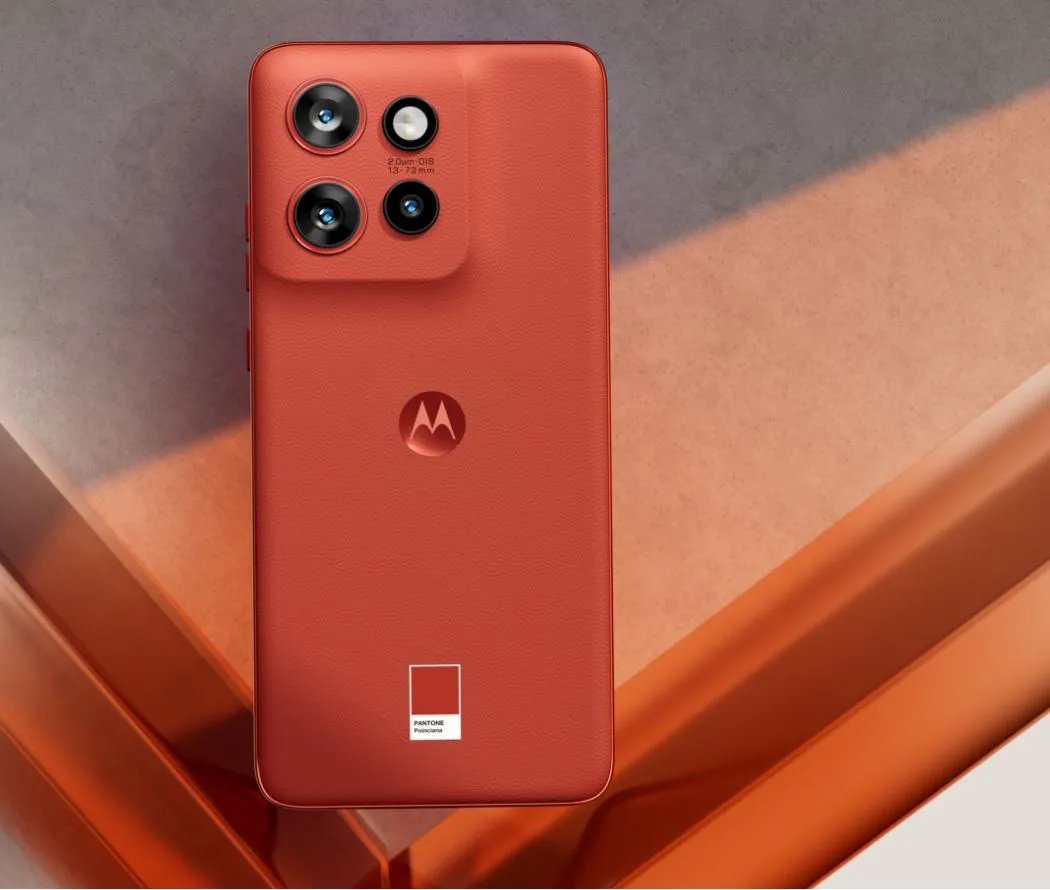
The leak also reveals the colour options for the Moto Edge 50 Neo. The phone will reportedly come in Gray, Blue, Poinciana, and Milk colors. Interestingly, Sudhanshu suggests that some of these colors will be Pantone-certified — usual from Motorola these days. 

While details beyond storage and color are scarce at the moment, it’s reasonable to expect the Moto Edge 50 Neo to share some similarities with its predecessor, the Edge 40 Neo.

Motorola Edge 40 Neo Specifications

As a reference, the Edge 40 Neo features a 6.55-inch pOLED display with a smooth 144Hz refresh rate. It’s powered by the MediaTek Dimensity 7030 processor, which offers mid-range performance. The phone boasts up to 12GB of RAM and 256GB of storage, aligning with the leaked options for the Edge 50 Neo.

On the software side, the Edge 40 Neo runs Android 13 and is guaranteed to receive two more Android version updates, keeping the phone’s software up-to-date for a while.

Motorola Edge 40 Neo

Camera specifications for the Moto Edge 50 Neo remain unknown, but the Edge 40 Neo sported a 50MP primary sensor with optical image stabilization (OIS) for sharper photos, accompanied by a 13MP ultra-wide sensor for capturing wider scenes. The front camera for selfies and video calls resolved at 32MP on the Edge 40 Neo.

Battery life shouldn’t be a concern with the Edge 40 Neo packing a 5,000mAh battery with support for 68W fast charging. Additionally, the Edge 40 Neo boasts an IP68 rating for dust and water resistance, dual stereo speakers for immersive audio, Dolby Atmos support for enhanced sound quality, NFC for contactless payments, and an in-display fingerprint sensor for secure unlocking.

numBer Super Buds GT M9 gaming TWS earphones launched for Rs. 1,349 in India

numBer has introduced a new line of wireless earbuds in India, the Super Buds GT M9. These earbuds feature a gaming-inspired design with RGB lights and come in Black, White, and Yellow.

numBer Super Buds GT M9

The GT M9 offers good audio quality with 13mm drivers for strong bass and clear sound. It uses Bluetooth 5.4 with SBC and AAC codecs for a stable connection. A Hall switch makes pairing easy, and Active Noise Cancellation (ANC) reduces noise by up to 32dB.

numBer Super Buds GT M9

The low latency gaming mode (35ms) is ideal for smooth gameplay and it has quad microphones with ENC to ensure clear voice calls, even in noisy environments.

The battery life is up to 60 hours in total. With Type-C fast charging, a 15-minute charge provides 3 hours of playback. It has touch controls to manage music, calls, and game modes, and voice assistant support offers hands-free control. Dual pairing connects to two devices at once, and IPX5 water resistance makes them sweatproof.

Pricing & availability

The numBer Super Buds GT M9 is priced at Rs. 1,349 and available exclusively on Flipkart. As mentioned above, these earbuds are available in Black, White, and Yellow color options.

In related news, another Indian brand called Grooves has also launched gaming-centric earbuds called the Grooves Delta. These earbuds feature a sci-fi-inspired design, with colored LED strips, 13mm drivers and 120 hours of playtime.

Redmi G Pro gaming laptop with i7+RTX 4060 is finally on sale

Redmi originally launched the G Pro 2024 gaming laptop back in March this year with with i9-14900HX + RTX 4060 with a price tag of 8,999 Yuan (~$1250). Earlier this month, the company launched a Core i7-14650HX version of the laptop, that equips the same RTX 4060 GPU. The new device is positioned as a bit more affordable version of the original version, which still meets the needs of most consumers.

This i7-powered version offers the same TDP as the original one

As scheduled, the i7 edition is now on sale in China with a price tag of 7299 Yuan (~$1,006) for the 16GB+1TB configuration.

To give you an idea of the performance difference, the i9-14900HX has 24 cores, 32 threads, and a maximum main frequency of 5.8GHz; whereas the i7-14650HX uses 16 cores, 24 threads, and a maximum main frequency of 5.2GHz. Both versions are equipped with NVIDIA RTX 4060 graphics cards, that offers ray tracing.

Users can switch between three modes that utilize dedicated graphics, integrated graphics, and both of them (hybrid mode) to use the resource in the most efficient way.

Other than the processor, the other configurations are mostly the same as the original i9 version. It comes with a total TDP of 210W, which is the same as the i9-powered version. Notably, the i7-powered version also gets the same 130W max performance release as the i9-powered original version.

The machine still packs a 2.5K display with a 240Hz refresh rate and a response time of 3ms. A lower latency means less tearing and stuttering of the screen while gaming, which improves the experience. This laptop also packs the same RGB lights on the keyboard and the back. You can also customize the RGB effect by choosing from a variety of options available.

Refreshed Nubia Z60 Ultra with Snapdragon 8 Gen 3 “Leading Version” launching on July 23

Nubia is preparing to refresh its Z60 Ultra smartphone in both China and the global market. The brand has announced that it will be replacing the Snapdragon 8 Gen 3 chip with a “Leading Version” Snapdragon 8 Gen 3 processor. For those unaware, this “Leading Version” is nothing more than an overclocked SD 8 Gen 3 chip.

The Chinese and global unveilings are scheduled for July 23, 2024. While the brand has not officially announced the name of the new version, rumors suggest it might be called the Nubia Z60s Ultra.

Other than the new processor, the device isn’t expected to come with any other changes. With that in mind, we can expect the device to come with a 6.8-inch 1.5K resolution OLED display with 1500 nits of peak brightness and 120Hz refresh rate. The device could launch with up to 24GB LPDDR5x RAM and 1TB UFS 4.0 storage.

Nubia Z60 Ultra Starry Night
Nubia Z60 Ultra Starry Night Edition

It will likely have a 6,000mAh battery with 80W wired fast charging and IP68 level dust and water resistance. For optics, the device will likely feature a 50MP primary sensor, a 50MP ultrawide sensor, and a 64MP 3.2x periscope telephoto camera, with all three of them featuring optical image stabilization. On the front, there will likely be a 12MP under-display front camera.

(Source 1, 2)

Honor CEO speculates the reason we’re not seeing a foldable from Apple yet

Android users now have the option to choose from a wide range of smartphone manufacturers when it comes to a foldable phone purchase. However, there’s no foldable device from Apple yet. In the latest revelation, Honor CEO Zhao Ming has shared his opinion about this.

At the launch conference for the Honor Magic V3 and Magic Vs3 yesterday, Zhao Ming said in an interview that from the consumer’s perspective, Honor is trying to fulfill the demand by making foldable phones. Generally, the thickness, weight, and durability of the folding mechanism and the foldable screen are the main concerns of consumers. The Honor official revealed that the company is working to overcome these challenges.

When asked why Apple has not yet launched a foldable phone, he suggested that the company might be struggling to overcome the challenges associated with the form factor. “If (Apple) launched it in 26 years, it means that they are optimistic about this track, so why not launch it now? It should be that they are not capable of making a good foldable screen. This is an obvious logic,” (translated).

Speaking of the company’s own product development, the official stated that if the thickness and weight of their foldable phones are comparable to those of other manufacturers, customers are likely to opt for them as well. He emphasized that they would address reliability issues through advancements in material science.

He added that the goal isn’t just to make the foldable phones thin and light but also to provide additional value to users. He also noted that a foldable phone with a good flow and consistency between the inner and outer screen can offer an experience that can never be offered through candy-bar phones. The addition of AI can also offer additional value to the multitasking experience of foldable phones.

(Via)

POCO M6 Plus 5G renders, price & specs leak out ahead of launch

POCO is preparing to release its latest smartphone, the POCO M6 Plus 5G. Although there has been no official announcement, leaks have revealed the phone’s design, specifications, and pricing.

As per a report by 91mobiles, the POCO M6 Plus 5G will be available in two versions: the 6GB RAM with 128GB storage model priced at Rs 13,999, and the 8GB RAM with 128GB storage model priced at Rs 14,999. Buyers can also receive a Rs 1,000 instant bank discount. The phone will come in Purple, Black, and Silver colors.

It is said to feature a flat frame with volume keys and a power button on the right side. The front has a punch-hole display with slim bezels and a noticeable chin, while the back includes a prominent LED flash ring.

Earlier leaks suggest that the device will be a rebranded version of the Redmi Note 13R, which means that we can expect it to feature a 6.79-inch LCD panel with a 120Hz refresh and be powered by a Qualcomm Snapdragon 4 Gen 2 processor.

Xiaomi-Redmi-Note-13R
Redmi Note 13R

For optics, it will likely include a 108MP primary sensor, a 2MP secondary sensor, and a 13MP front camera. It will have a 5,030mAh battery with 33W fast charging, a side-mounted fingerprint sensor, dual SIM support, a USB Type-C port, UFS 2.2 storage, a 3.5mm headphone jack, and an IP53 rating for dust and water resistance. The device was recently spotted on Geekbench with 6GB RAM and the Snapdragon 4 Gen 2 AE chipset.

The launch date currently remains a mystery, however, we expect to hear from the brand in the coming weeks, so stay tuned.

(Source)

Here’s what Honor CEO thinks about Xiaomi’s allegedly slimmest upcoming foldable, the Mix Fold 4

Last year we saw the Honor Magic V2 that is measured at 9.9mm. The just released Honor Magic V3 is even thinner at 9.2mm. However, the Xiaomi Mix Fold 4 is rumored to come with a 9.x thickness, which is claimed to become the narrowest foldable phone in the market.

Honor CEO believes that Magic V3 will accelerate the product development from other brands in the industry

Zhao Ming, CEO of Honor said in an interview that they are looking forward to their competitors catching up quickly. The company also believes that the newly released Magic V3 will accelerate the product development from other brands in the industry. When asked whether the Xiaomi Mix Fold 4 will break the record of the Honor Magic V3, Zhao Ming replied, he does not care about this. He is more concerned about the development and definition of foldable screens and how to make them the same as candy-bar phones.

Honor-Magic-V3-Live-images-5
Honor Magic V3

He also said that with the integration of the latest technologies and new materials, it’s possible for foldable devices to offer a better user experience than the standard candy-bar phones. He didn’t confirm if the company is planning to make the Honor Magic 4 even thinner. However, he emphasized that Honor will make significant investments in flagship phones, and use its results to drive the progress of Honor’s entire product lineup.

The official explained that after becoming independent, the company has been striving to find its unique position. They aim to take on challenging and meaningful tasks, remain grounded for the long term, and achieve extraordinary results. The focus has been on breaking conventional thinking boundaries. For instance, they emphasized that many people wouldn’t typically associate using a mobile phone with myopia relief and eye protection.

(Via)

CMF Phone (1) first update is here with Bug fixes, Camera improvements & new features

On July 8, Nothing‘s sub-brand CMF launched its first smartphone in the global market called the CMF Phone 1. The device was recently made available for purchase and sold more than 100,000 units in just 3 hours. Users have reported that the brand has pushed out the first OTA update for the device.

CMF Phone 1

This update is 120MB in size and includes multiple camera improvements, bug fixes, and some new features. We have included the detailed changelog below.

CMF Phone (1) update changelog:

New Features

  • Introduced Tips & Feedback for Nothing OS. Accessed via Settings > Tips & Feedback.
  • Added a new Date Widget, with a swipeable view of the next day.
  • New swipe-down function for incoming notifications. Opens a pop-up view for instant access. Turn it on via Settings > System > Pop-up view.
  • Updated Android July Security Patch.

Camera improvements:

  • Improved zoom clarity in certain scenarios.
  • Enhanced night scene photography.
  • Optimised HDR video recording.
  • Optimised the interface during Vivid Mode.
  • Improved Portrait Mode images effects.
  • Enhanced the front camera’s colour and skin tone performance.
  • Corrected colour inaccuracies in some scenes.
  • Resolved issues with low brightness in certain scenes.
  • Resolved issues with the filter not loading when taking motion photos on the rear camera.

Other general improvements:

  • Improved launcher stability by resolving crash issues.
  • Reduced scrolling lag when using X.
  • Improved the smoothness of fingerprint unlocking.
  • Resolved an issue causing fingerprint registration to fail when using a screen protector.
  • Fixed a stuttering issue during unlocking.

(via)

Honor Launches LCHSE X7i Entry-level TWS Earbuds in Two Color options, Priced at 109 Yuan

Honor has introduced its latest TWS headset, the LCHSE X7i. This entry-level audio product offers a combination of active noise cancellation and extended battery life at an affordable price point. The LCHSE X7i features 45dB hybrid active noise reduction, adjustable noise reduction levels, and a transparency mode for environmental awareness. Equipped with a 12.4mm dynamic driver and dual microphones, the headset claims to deliver balanced audio performance.

Each earphone weighs merely 4.9 grams and has interchangeable ear tips

Each earphone weighs a mere 4.9 grams and comes with interchangeable ear tips in three sizes. The IP54 rating provides protection against water and dust. Battery life is highlighted as a key feature, with the headset offering up to 8 hours of continuous playback on a single charge and an additional 40 hours with the charging case. The charging case itself supports USB-C charging.

The Honor LCHSE X7i is available in two color options: Icelandic White and Light Sand Blue. It is currently priced at 109 yuan in China. The company also launched the Magic V3, Magic Vs 3, MagicBook Art 14 and the MagicPad 2 alongside.

(Via)

Chinese Lens Manufacturer 7artisans Announces an Affordable 35mm APS-C Autofocus Lens

Chinese lens manufacturer 7artisans has some exciting news for photographers with the announcement of an upcoming APS-C autofocus lens. The lens, which is positioned as a “first large aperture lens for young people,” promises a 35mm focal length and a wide f/1.4 aperture.

The lens is expected to be priced under 899 Yuan ($124)

While specific details remain scarce, the company has hinted at a compact and lightweight design, weighing approximately 180 grams. The use of a stepping motor for autofocus suggests potentially quiet and precise focusing performance.

7artisans lens

Priced competitively for enthusiasts, the lens is expected to retail for under 899 yuan, with an additional 100 yuan launch discount. This aggressive pricing strategy aligns with the company’s focus on providing accessible optics for younger photographers. 7artisans has previously released the 85mm F1.8 full-frame E-mount autofocus lens, demonstrating its commitment to the autofocus market. The upcoming APS-C lens is anticipated to expand the company’s catalog, reaching a wider audience of photographers.

(Via)

CMF Phone 1 crosses 100,000 units sold in just 3 hours!

Nothing‘s new CMF Phone 1 went on sale for the first time and achieved impressive sales figures. The company claims it sold over 100,000 units (1 lakh) across various channels in just three hours. This surpasses the Nothing Phone (2a)’s record of reaching the same milestone in 24 hours.

CMF Phone 1

The CMF Phone 1 starts at Rs. 15,999 for the 6GB + 128GB variant and Rs. 17,999 for the 8GB + 256GB version. Launch day promotions offered discounts with select banks and a reduced price on the CMF Power 33W charger for Flipkart buyers. The phone is available on Flipkart, Croma, Vijay Sales, and other partner stores.

CMF Phone 1 specs:

The CMF Phone 1 has a 6.67-inch display with a fingerprint reader. It offers FHD+ resolution, a 120Hz refresh rate, and good brightness for outdoor use.

The phone features a customizable design with a camera module and four screws on the back panel, allowing users to change back covers (Light Green, Blue, or Orange) and attach accessories like a stand or lanyard using a special dial and the included screwdriver.

It is powered by a MediaTek Dimensity 7300 processor with 6GB or 8GB of RAM, expandable with virtual RAM, and 128GB of storage. It has a 5,000mAh battery that supports 33W fast charging and runs on Android 14 with Nothing OS 2.6.

The camera setup includes a 50MP main sensor and a secondary lens for portraits. The 16MP front camera handles selfies, and it can record videos in 4K at 30 fps. It also features Ultra XDR technology, co-developed with Google, for better low-light photography.

(Source)
Asus Vivobook S 14 (M5406): Hands-on Experience in India

Asus’ Vivobook S series of laptops is targeted at working professionals. These notebooks are known to offer lightweight designs and powerful chips.

The company has been regularly updating this lineup ever since it was introduced. The 2024 models were first showcased at CES 2024.

Months later, almost all of these newer laptops are now available in India. However, as always, Asus has only brought select variants to the country spread across different price segments.

The brand sent me an AMD version of the product to try out. The notebook is also offered in Intel and Qualcomm flavors.

The said AMD model is sold in a single trim in India as Asus Vivobook S 14 OLED (M5406). It is the most affordable offering in the region priced at ₹89,990.

Having used it over the past few days, I have shared my thoughts on it in this article. 

Before I begin, I want to let the readers know that Asus had no early look or editorial input. The opinions stated in this post are mine alone.

Asus Vivobook S 14 (M5406)

What can you expect from Asus Vivobook S 14 (M5406)?

1. Durable and Classy

Asus Vivobook S 14 (M5406)

The Asus Vivobook S 14 (M5406) flaunts a design that’s ideal for office goers and likes. Its thin and light body weighing around 1.3 kg makes it suitable for daily commutes.

The metal chassis is sturdy and gives an assurance that it can easily take a beat or two. In fact, the laptop is MIL-STD-810H compliant for durability.

The product is offered in a lone Neutral Black color option. The paint job has a matte finish, which unfortunately makes it a smudge magnet.

As much as the notebook looks classy and durable in stealth black, it is difficult to keep it free of smudges. So you may want to have a fiber cloth with you always.

Interestingly, Asus has equipped the computer with an RGB backlight for the keyboard. I can understand the company is providing an option to have some fun. 

But personally, I think it is out of place on a laptop targeted at professionals. On the other hand, the large 129 x 84 mm touchpad is quite useful. 

2. Average Display

Asus Vivobook S 14 (M5406)

As the name suggests, the Asus Vivobook S 14 (M5406) sports a 14-inch display. This OLED panel offers a resolution of 1920 x 1200 pixels (WUXGA) and a 16:10 aspect ratio.

An FHD-equivalent display on a laptop priced at nearly a lakh does not make sense to me. Having used notebooks with higher resolution at around the same price and more, I could easily notice the lack of details as pixels are visible.

Not everyone can notice this if they are accustomed to only FHD and HD displays on their computers. But if they are coming from a laptop featuring a higher resolution display, they will be disappointed.

Additionally, the panel is limited to a 60Hz refresh rate. It would have been nice to have at least a 90Hz refresh rate. As for brightness, it is fine for indoor usage which is what the notebook is designed for.

The panel is actually good but it does not belong on this product. Asus provides a similar spec’d display on laptops almost half the price of this one.

As for speakers, they are loud enough but lack bass due to the notebook’s thin form factor. While the microphone is fine for video calls and so is the physical shutter-enabled web camera, which is accompanied by an infrared sensor for Windows Hello authentication.

3. Adequate Performance

Asus Vivobook S 14 (M5406)

The Asus Vivobook S 14 (M5406) arrives in a single configuration in India. It houses an AMD Ryzen 5 7535HS processor.

This chip consists of 6 cores clocked at 3.3 GHz. It supports up to 12 threads, 12 MB cache, and 4.55 GHz max boost.

The silicon is paired with 6400 MHz 16 GB LPDDDR5x RAM and 1 TB PCIe Gen 4 SSD. There’s an additional M.2 slot to increase the storage size by 1 TB.

The thermals are kept under control by dual heat pipes and cooling fans. With this hardware config, the computer is capable of delivering adequate performance for day-to-day tasks and some more as you can notice from the attached benchmark scores.

The notebook is not as powerful as many in the price segment, especially those gaming models. But none of them offer a sleek body as this one. And more importantly, this computer is not meant for gaming.

Anyways, Asus still provides several useful ports, such as 2 x USB 3.2 Gen 1 Type-C, 2 x USB 3.2 Gen 1 Type-A, an HDMI 2.1, a MicroSD card reader, and an audio jack.

As for software, the laptop boots Microsoft Windows 11 Home. It comes with a dedicated Copilot key, which could be useful for those who use the app often. 

4. Lasts a Work Day

Asus Vivobook S 14 (M5406)

The Asus Vivobook S 14 (M5406) is backed by a 75 Wh battery. In my daily usage, I had to charge it only once a day.

My usage mostly includes web apps on Google Chrome and productivity apps like Microsoft Office. That’s what the targeted customers of this product would use.

So I believe the computer would survive the day for intended users with light to medium usage. If you are a heavy user, you may want to charge in between.

Talking about charging, the notebook takes about an hour and a half to charge fully from 20% with the included charger. Since it uses USB Type-C, it can be charged using any compatible USB PD power adapter and power bank ranging from 5-20V.

5. Should You Buy Asus Vivobook S 14 (M5406)?

Asus Vivobook S 14 (M5406)

At ₹89,990, the Asus Vivobook S 14 (M5406) is a compelling option in India if you could forego the lower resolution display.

But when you compare it with Asus Vivobook S 15 (S5506), that one makes more sense. It is ₹7,000 costlier with a price tag of ₹96,990.

For around a 7% price hike, you get a larger 15.6-inch OLED display offering a 3K (2880 x 1620 pixels) resolution and a 120Hz refresh rate. However, the Intel Core Ultra 5 125H processor underneath is slightly less powerful.

Anyways, if you strictly want a 14-inch notebook, the alternative from Asus is not ideal. So you have no option but to either buy Vivobook S 14 (M5406) if needed urgently or wait for a price drop.

As for competitors from other brands priced below ₹95,000, there are only two models as of writing this article. They are Lenovo Yoga Slim 7 Gen 9 and HP Pavilion Plus 14-ew1082TU.

Both these computers are powered by Intel Core Ultra 5 125H processor.

The HP model has a 14-inch WQXGA (2560 x 1600 pixels ) display with a 48-120 Hz refresh rate, however, the panel is IPS LCD. Also, it comes with only 512GB SSD. On the other hand, the Lenovo laptop is almost the same as Asus’ offering.

Grooves Delta Gaming TWS earbuds with Spaceship-inspired design launched in India

Grooves has launched the Delta Gaming TWS earbuds in India featuring a design inspired by spaceships in sci-fi movies.

Grooves Delta TWS specs & features

The Grooves Delta TWS targets gamers with its design, featuring colored LED accents on both the charging case and earbuds. As for the earbuds, they come with an open ear design, lacking silicone tips, making them comfortable to wear for people with sensitive ear canals.

The Delta TWS prioritizes performance with Bluetooth v5.3, Beast Mode for low latency (51ms), and powerful 13mm drivers for immersive audio. Dual mics with ENC guarantee clear communication during gameplay, while touch controls provide easy volume management.

Grooves Delta Gaming TWS earbuds

It has a 400mAh battery in the charging case, which supports fast charging technology. Users can enjoy up to 120 hours of playtime and an impressive 21 days of standby time. For convenient fast charging, it has a Type-C port.

Pricing & availability

The Grooves Delta Gaming TWS is priced at Rs. 1,699 and is available in Black and White. It can be purchased from major online retailers including Amazon.in, Flipkart, Tata Cliq, JioMart, and Moglix.

In related news, Boult has recently launched three new earbuds in India in collaboration with Ford Mustang. All three earbuds feature Mustang-themed aesthetics and come with 45ms in Combat Gaming Mode along with a battery life of up to 100 hours. Despite their premium aesthetics, these earbuds are quite affordable.

Vodafone, Qualcomm, and Xiaomi acheives impressive download speed with new 5G technology

European telecommunications giant Vodafone, chipmaker Qualcomm, and smartphone manufacturer Xiaomi have announced a successful test of new 5G technology that achieved download speeds of nearly 1.8 gigabits-per-second (Gbps). 

Conducted in Germany and Spain, the tests utilized a more efficient data transmission method called 1024 quadrature amplitude modulation (QAM), an upgrade from the current 256 QAM system. 1024 QAM reportedly allows for more data to be packed into each transmission, translating to faster download speeds for users.

The test device used was Xiaomi’s latest flagship, the 14 Ultra, equipped with Qualcomm’s Snapdragon X75 5G Modem-RF System. The results varied slightly across locations: in Germany, the test showcased a roughly 20% throughput improvement on a commercial network over a distance of 600 meters. However, it was Vodafone’s 5G test center in Ciudad Real, Spain, that witnessed the impressive peak download speed of 1.8 Gbps.

The impact of 1024 QAM may extend beyond raw speed. Vodafone says the increase in speed and data throughput will increase network capacity, allowing it to support more users in congested areas like shopping centers. Theoretically, 1.8 Gbps could provide a capacity gain of up to 25% in ideal conditions, claims Vodafone. 

“The successful trials conducted in Germany and Spain with Vodafone and Xiaomi are proof that we are continuing to push the boundaries of what is possible with 5G technology,” said Qualcomm’s Dino Flore in a statement. 

Vodafone expects that this new technology will be widely available by 2025. However, it’s important to note that not all current 5G devices may be compatible with it. 

(Via)

Dreame L10s Pro Ultra Heat robot vacuum launched in India with Hot Mop, Auto-Empty & Smart Navigation features

Dreame Technology has introduced the L10s Pro Ultra Heat, a robot vacuum designed for effortless home cleaning in India.

Dreame L10s Pro Ultra Heat robot vacuum

Dreame L10s Pro Ultra Heat robot vacuum specs & features

The L10s Pro Ultra Heat comes with MopExtend technology, a first for the Indian market, promising improved cleaning across various floor types. The L10s Pro Ultra Heat boasts a powerful 7,000 Pa suction with a quiet operation, tackling dirt effectively.

Dreame L10s Pro Ultra Heat robot vacuum

The L10s Pro Ultra Heat combines functionality with a sleek design featuring gold accents. Packed with features like auto-empty, mop self-cleaning, and water refilling, it boasts TÜV Rheinland certification for cleaning efficacy. It also has Hot water mopping and smart rewashing capabilities to remove odors and leave floors spotless.

Dreame L10s Pro Ultra Heat robot vacuum

The L10s Pro Ultra Heat learns your home layout with CleanGenius technology, adjusting cleaning strategies for different floor types and furniture placement. It has Pathfinder technology with smart scanning that creates accurate maps and navigates around obstacles, avoiding over 55 object types.

Dreame L10s Pro Ultra Heat robot vacuum

The vacuum also has a DuoScrub mopping system that utilizes dual rotary mops and pressurized scrubbing for a deep clean, while a smart water tank automatically refills for uninterrupted cleaning. Smart carpet cleaning technology adjusts suction for carpets and offers quiet operation on a single charge that lasts up to 220 minutes.

Pricing & availability

The Dreame L10s Pro Ultra Heat has launched in India for Rs. 79,999, available through Amazon. Customers can avail of discounts and No-cost EMI options during the Dreame Prime Day sale from July 16 to June 22.

In related news, Xiaomi has also launched a robot vacuum cleaner in India called the Xiaomi X10. Priced at Rs. 34,999, the X10 has a suction power of 4000Pa and uses smart navigation to clean efficiently. The automatic emptying station has a strong suction of 17000Pa, making dustbin maintenance easier. It can vacuum and mop, with an adjustable water flow system and a 200ml water tank. The battery lasts up to 180 minutes, allowing it to clean areas up to 2500 square feet.

Xiaomi says it has not received any lawsuits related to patent infringement

Xiaomi has released a statement in the wake of the Gree Electric patent infringement lawsuit against the company. Xiaomi responded via its official Weibo page, saying it has not received any environmental appliance-related lawsuits. The company didn’t provide any further statement.

Xiaomi

It was previously reported that Gree Electric Appliances Co. Ltd instituted a lawsuit and had gotten judgment in its favor against Xiaomi for infringement on the Xiaomi MIJIA electric fan (reportedly the MIJIA DC Inverter Tower Fan). The judgment sum against Xiaomi was specified as 1.85 million yuan ($254,000). However, the court documents indicated that the defendants were Dongguan Jingdong Lisheng Trading Co. Ltd and Zhejiang Xingyue Electric Co. Ltd.

Gree Electric in its earlier statement, noted that it had received the Supreme People’s Court Intellectual Property Civil Final No. 1123 legal document (2023) issued by the Supreme People’s Court on June 18, 2024. The fallout of the judgment, according to Gree Electric, was that The Xiaomi MIJIA electric fan mentioned in the infringement shall no longer be manufactured and sold. The company, based on the reported judgment, warned all infringing entities to immediately stop producing and selling the infringing products. It concluded that it would take legal measures to safeguard its legitimate rights and interests.

It is therefore unclear under what basis is Xiaomi rebutting the Gree Electric claims. The full optics of the verdict will become clear in the coming days. It could be that Xiaomi bought the infringed component from a third party and so, may not be directly liable to the stated judgment.

(via)

Huawei opens second phase of HarmonyOS NEXT Developer Beta program

Huawei has kicked off the second phase of its HarmonyOS NEXT developer beta program, offering another chance for developers and early adopters to test the upcoming operating system on select Huawei devices.

This latest testing phase is open for applications until July 26th, 2024, at 3:00 PM PST. Applications submitted during this window will be reviewed between July 13th and August 5th, with a processing time of 3-7 business days.

The program includes the same devices as the first phase: the Mate 60 series smartphones, Mate X5 foldable phones, and MatePad Pro 13.2 tablets. Those interested in participating, whether developers or regular users, must meet certain requirements.

HarmonyOS NEXT launched

First, users need to have a compatible device with the latest baseline build installed. Developers must be registered with the Huawei Developer Alliance and complete the real-name verification process. Additionally, everyone needs to sign a confidentiality agreement and pass a registration questionnaire before submitting their details.

This phase offers 5,000 slots for testers, so users are encouraged to register early to increase their chances. Selection will be based on a combination of factors, including the information provided in the application.

Those interested can find the registration links below, but it’s important to remember that this is a beta program. Beta builds can be unstable, may cause data loss, and might not work well with all existing apps. It’s crucial to back up all essential data before installing the beta update, either on a PC, cloud storage, or another external device.

For more information and registration details, please refer to the official Huawei developer resources:

With the second phase of the beta program underway, Huawei is gathering further feedback and testing the stability of HarmonyOS NEXT before its wider release.

Elon Musk: Neuralink Chip will be Implanted in over 1,000 Patients by 2026

Elon Musk‘s Neuralink, a company developing brain-computer interfaces, has set an ambitious target: implanting chips in over 1,000 patients by 2026. This announcement came via Musk’s X (Twitter) platform on July 11th.

Patients who’ve been paralyzed from the neck down can now use devices

The technology appears to be life-changing for some. Noland Arbaugh, the first person to receive a Neuralink implant, publicly shared how it improved his life. Previously paralyzed from the neck down, Arbaugh struggled to interact with technology. After surgery, he can now use devices and even play video games with ease.

Neuralink

However, there have been setbacks. A small wire in Arbaugh’s brain shifted in May. Despite this, a Neuralink executive recently assured that the brain-computer interface chip’s condition is now “more or less very stable.”

During a live broadcast earlier on July 11th (Beijing time), Musk elaborated on Neuralink’s future goals. He aims to implant the chip in thousands of patients within a few years.

Neuralink’s technology allows patients to control robotic limbs with their minds, exceeding the speed of natural brain-limb connections. Musk envisions an even grander purpose: establishing a symbiotic relationship between humans and artificial intelligence to ultimately mitigate the risks AI poses to civilization.

(Via)

Samsung’s New ViewFinity S8 Display (S80D) has 4K Resolution, HDR10, 1.07 Billion Colors, Starts at 1799 Yuan ($248)

Samsung launched a new display, the ViewFinity S8 (S80D), available in 27-inch and 32-inch models starting at 1799 yuan (approximately US$269) and 1849 yuan (approximately US$275) respectively.

The S80D is available in two sizes, 27-inch and 32-inch

The display boasts a high-resolution 3840 x 2160 picture with 1.07 billion colors, 350 cd/m2 brightness, and 99% sRGB color gamut. It also supports HDR10 for enhanced visuals. Connectivity options include HDMI, DP, USB-A, and USB-B ports.

Samsung ViewFinity S8

For user comfort, the ViewFinity S8 (S80D) features TÜV certified intelligent eye protection technology and an ergonomic design. Installation is easy and requires no tools. The adjustable stand allows for tilting, lifting, swivelling left and right, and even rotating the display to a 90-degree vertical position for portrait mode viewing.

(Via)

Galaxy Tab S10 could launch before the end of 2024, but with only two models

Samsung is expected to make some changes to its high-end tablet lineup starting with the Tab S10 series by dropping the base 11″ model and focusing on the Tab S10 Plus (12.4″) and Tab S10 Ultra (14.6″). But when the lineup is going to launch? The company just launched a bunch of new products in the second Galaxy Unpacked event of the year including the sixth generation Galaxy foldable, the Galaxy Watch 7 series, and the redesigned Galaxy Buds 3 series. But we didn’t see the Galaxy Tab S10 series in the event.

Tab S10 series will launch before the end of this year

Well, a Samsung South Africa representative has revealed that “there will be a Tab S10 series,” which will reportedly launch before the end of this year. For reference, the Tab S9 series was launched in July last year. However, he couldn’t share any more information about the upcoming tablets.

The decision to drop the smallest variant could be aimed at offering better specifications and competing with Apple’s offerings.

What to expect?

Samsung generally offers good quality AMOLED panels, and good design and powers it with a flagship snapdragon chipset. The upcoming tablets are also expected to come with some Galaxy AI features. While rumors and a Geekbench listing have hinted that Samsung will use the MediaTek Dimensity 9300+ chipset to power the Tab S10 series, we can still refer to the other aspects of the predecessor to get an idea of what to expect.

Both the Tab S9+ and Tab S9 Ultra come with an aluminum frame and back, which supports nano SIM, and eSIM. Both of them pack Dynamic AMOLED 2X panels measured at 12.4″ and 14.6″ respectively and Corning Gorilla Glass protection on top. The Tab S9+ offers 256GB 12GB RAM, and 512GB 12GB RAM configurations while the Ultra model comes with additional 1TB 12GB RAM and 1TB 16GB RAM variants.

Speaking of cameras, both of them pack a 13MP main and an 8MP ultrawide on the back alongside a 12MP one on the front for video calling. The tablets support Wireless Samsung DeX through the USB C 3.2 port. The Plus and Ultra models come with 10090mAh and 11200mAh batteries and supports 45W wired charging. Here are the pricing of all the storage variants of the Tab S9 series models at launch.

(Via)