Circle to Search, a feature that allows users to quickly search for on-screen content with a tap or a circle gesture, is expanding to a few new Samsung phones.
After debuting on the Galaxy S24 in January and finding its way to the latest foldable, the Z Fold 6 and Z Flip 6, Circle to Search is now coming to the mid-range Galaxy A series and the budget-friendly Galaxy Tab S9 FE line.
The rollout begins this month for the Galaxy A55, A54, A35, and A34 smartphones alongside the Galaxy Tab S9 FE and Tab S9 FE+. This expansion makes Circle to Search accessible to a broader audience, beyond just premium smartphones.
However, it’s worth noting that the feature remains exclusive to Samsung and Google devices for now. Here’s a breakdown of currently supported devices:
Samsung Galaxy: S24, S23, S22, S21 series; Z Fold 5, 4, 3; Z Flip 5, 4, 3; Tab S9 series.
The functionality itself remains unchanged. Users can activate Circle to Search by either pressing and holding the home button (or the navigation bar gesture equivalent) or directly tapping and selecting the content they want to search for. Once selected, a web search is initiated with results displayed at the bottom of the screen. Users can further refine their search by adding text in the search bar.
Circle to Search is certainly a convenient way to explore on-screen content without switching apps or manually typing. Those without this feature can still enjoy a similar experience through Google Assistant’s voice-based search or search screen feature. However, we hope Circle to Search will be available on smartphones from all brands moving forward.
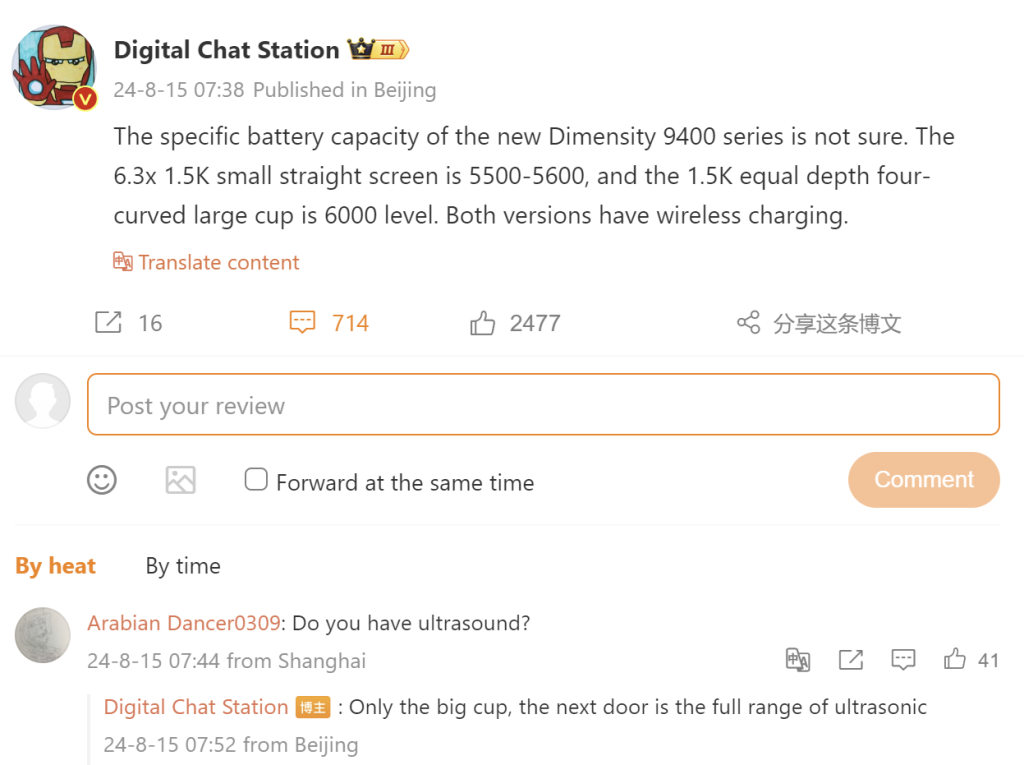
In October 2023, Vivo unveiled the Vivo X100 and X100 Pro. Speculation suggests that the Vivo X200 and X200 Pro will succeed these devices in October of this year. Some reports have claimed that there will be a third model featuring a 6.3x-inch screen, which will be smaller than the standard X200. Although the official name of the device remains unknown, the rumor mill tentatively refers to it as the Vivo X200 Mini. Today, tipster Digital Chat Station rolled out a Weibo post to share the battery details of the Vivo X200 Mini and X200 Pro.
Vivo X200 series battery sizes tipped
DCS claimed that he is unsure about the exact battery sizes of the Vivo X200. However, the Weibo post suggests that the X200 Mini, which will have a flat display of around 6.3x inches, will feature a 5,500mAh or 5,600mAh battery.
On the other hand, the Vivo X200 Pro, which is expected to feature a display with micro-curvature on all four sides, may pack a battery of around 6,000mAh battery. Both smartphones will come with support for wireless charging.
In the comments section, he mentioned that the Vivo X200 also packs a large silicon battery with a capacity of around 5,800mAh. However, this model will lack support for wireless charging.
Previous reports revealed that the so-called mini variant’s display will support a 1.5K resolution and feature a 70mm periscope telephoto camera with support for 3x optical zoom. It will also include Vivo’s imaging processing chip for enhanced photography.
The X200 is expected to feature a 6.4-inch or 6.5-inch OLED panel, whereas the Pro variant may house a 6.7-inch OLED screen. Both phones are expected to support a 1.5K resolution and a 120Hz refresh rate. All three phones are expected to feature the Dimensity 9400 chipset.
The X200’s triple camera unit will have a 50-megapixel main camera with OIS, a 50-megapixel ultrawide lens, and a 50-megapixel periscope telephoto camera with 3x optical zoom. On the other hand, the X200 Pro will have Sony’s new 22nm 50-megapixel main camera with OIS, a 50-megapixel ultrawide lens, and a 200-megapixel periscope telephoto camera. It appears that only the Pro model in the series will have an ultrasonic in-screen fingerprint sensor.
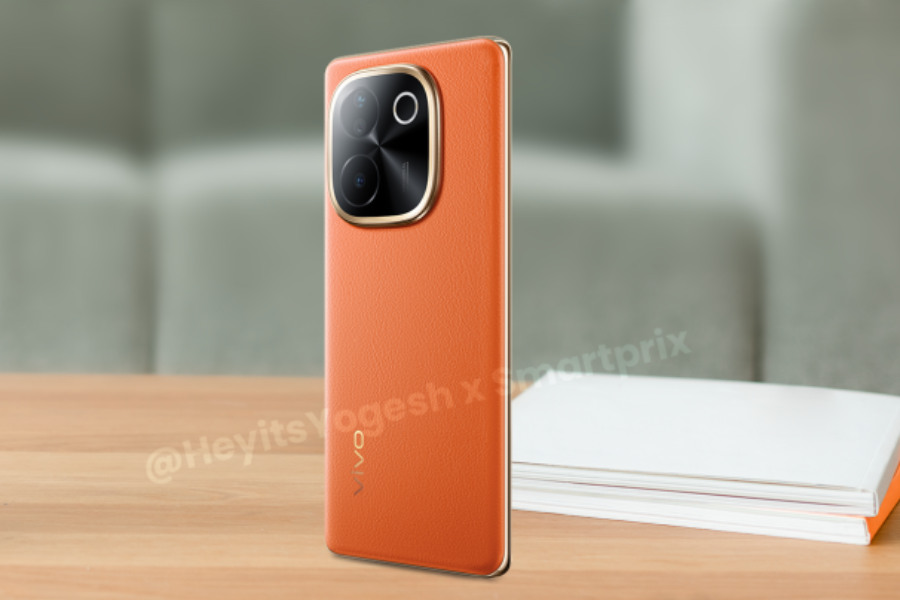
Vivo seems set to expand its T3 series with a new “Pro” model soon. We shared a few shots of the Vivo T3 Pro earlier this week and now the upcoming phone has been spotted on the Geekbench benchmark database.
The Geekbench listing for the V2404 model confirmed to be the T3 Pro 5G, reveals scores of 1,147 in the single-core test and 3,117 in the multi-core test.
The Geekbench entry also suggests the T3 Pro 5G will be powered by the Qualcomm Snapdragon 7 Gen 3 SoC. It’s a mid-range chipset that boasts a maximum clock speed of 2.63 GHz, 8 cores, and the Adreno 720 GPU. The listing further indicates 8GB of RAM and an Android 14-based user interface.
The model number V2404 previously appeared in an IMEI database leak, confirming the existence of the T3 Pro but offering no further details.
However, additional specifications have surfaced online through unofficial channels. These leaks suggest the T3 Pro could be a slim device at just 7.49mm thick, packing a sizable 5,500mAh battery with fast charging support.
The display is rumored to be a curved AMOLED panel with a smooth 120Hz refresh rate. Camera-wise, whispers point towards a primary sensor using a 50MP Sony component.
The phone’s design leaked earlier this week reveals a triple camera setup, but while the main lens is expected to be the 50MP sensor, details about the other two cameras remain unclear.
It’s important to note that Vivo has not officially acknowledged the T3 Pro 5G yet. While the leaks and benchmark listing give us some insights, we need official confirmation from Vivo before we can confirm these details. We’ll be sure to keep you in the loop if any new information surfaces about the device.
Xiaomi and Redmi are reportedly working on multiple phones powered by the next-generation Snapdragon 8 Gen 4 chipset. It is speculated that the Xiaomi 15 and 15 Pro featuring the new chip will debut in October. The Redmi K80 Pro is also expected to come equipped with the said chipset. Earlier this week, tipster Digital Chat Station leaked key specifications about the Redmi K80 Pro. In a new Weibo post, DCS shared some more information about the device.
Redmi K80 Pro’s key details tipped
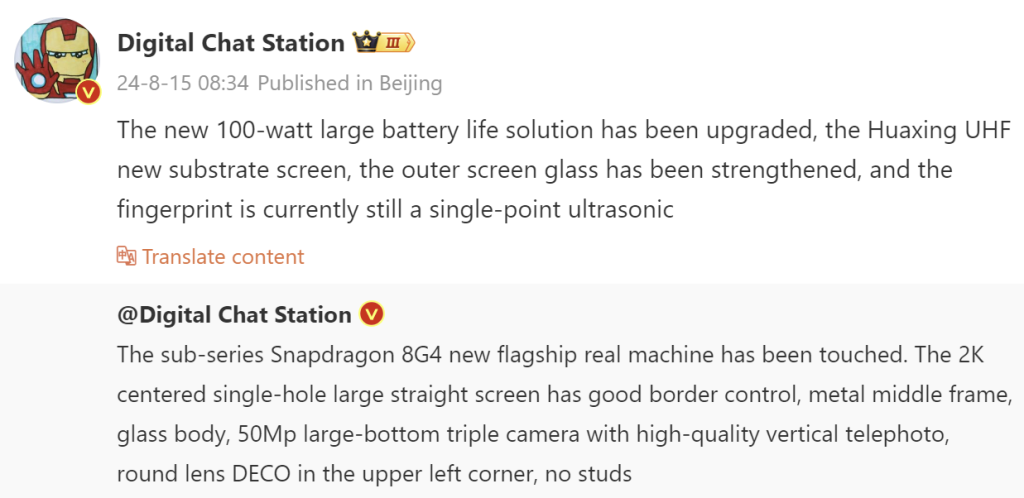
The above leak suggests that the Redmi K80 Pro will house a new high-capacity battery solution that supports 100W charging. However, while some previous reports have claimed that it will have a 6,000mAh battery, it is also being said that it will pack a 5,500mAh battery. To recall, the Redmi K70 Pro that debuted last year came equipped with a 5,000mAh battery.
DCS said that the K80 Pro will feature Huaxing’s ultra-high frequency display. For those who don’t know, Huaxing is a subsidiary of China Star Optoelectronics Technology (CSOT), which is a division of China-based TCL Corporation. The outer screen glass has been reinforced for added durability. Additionally, the phone will feature a single-point ultrasonic under-display fingerprint sensor.
Previous leaks have claimed that the Redmi K80 Pro will have a flat OLED panel that offers a 2K resolution. The Snapdragon 8 Gen 4-powered phone will have a round camera module featuring a 50-megapixel primary camera, an ultrawide lens, and a 50-megapixel telephoto camera with 3x optical zoom. The phone is expected to feature a metal middle frame and a glass back. It appears that the Redmi K80 series will debut in China by the end of October, and its sale will take place in November.
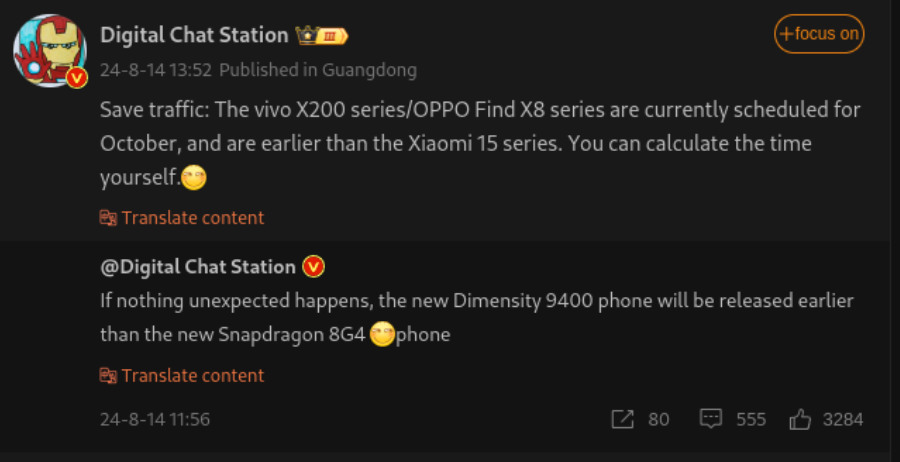
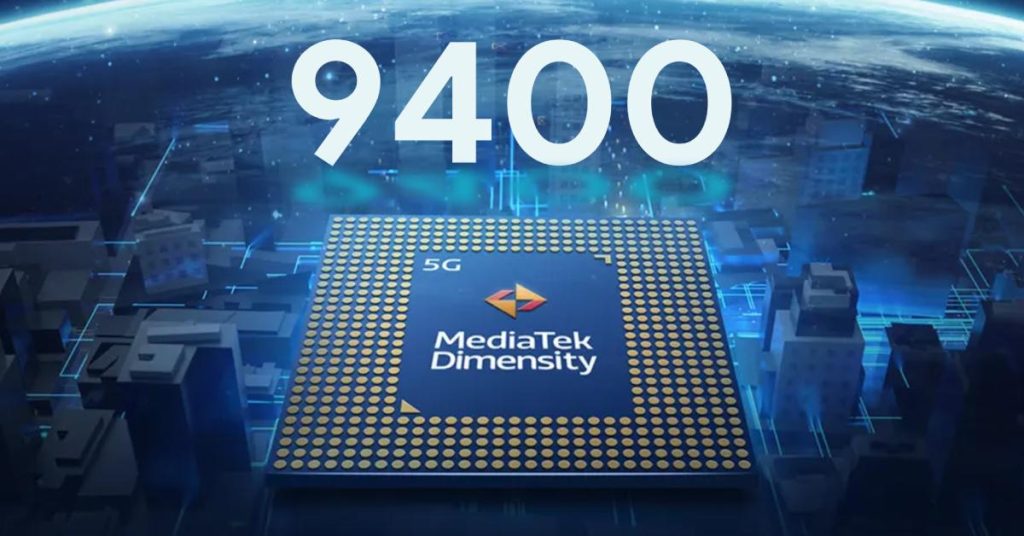
Reliable tech tipster Digital Chat Station in a Weibo post revealed that the upcoming Vivo X200 and Oppo Find X8 series, powered by MediaTek’s next-generation Dimensity 9400 chip, will launch ahead of the previously expected Xiaomi 15 series featuring Qualcomm’s Snapdragon 8 Gen 4 processor.
Qualcomm typically releases its flagship SoC first, with MediaTek following about a month later. If this leak holds true, MediaTek may be the first to launch its next-gen flagship SoC this year, along with the phones powered by the chip.
That said, MediaTek has yet to confirm the launch of the Dimensity 9400. Qualcomm, on the other hand, has officially announced the Snapdragon 8 Gen 4 launch at the Snapdragon Summit 2024, starting on October 21.
The Dimensity 9400 looks to be an impressive SoC so far. It’s likely to be the only SoC featuring ARM’s latest Cortex cores, including the new X925 performance core. Meanwhile, Qualcomm is shifting away from its long-favored ARM cores this year, opting for its in-house Oryon CPU cores instead.
Considering the Dimensity 9300 scores around 2207 points, we could see the Dimensity 9400 reach 2870 points in Geekbench single-core tests. Interestingly, leaked benchmarks for the Snapdragon 8 Gen 4 show a similar single-core performance of 2884, suggesting a close competition in raw processing power.
The Dimensity 9400 is also rumored to be highly efficient, delivering this performance while consuming 30% less power than the Snapdragon 8 Gen 3 for similar tasks. Additionally, it will be the first chip to use Samsung’s lightning-fast 10.7 Gbps LPDDR5x memory, the fastest in the industry.
The launch of the Vivo X200 and Oppo Find X8 series with Dimensity 9400 earlier could give MediaTek a crucial first-mover advantage, especially if the processor lives up to its efficiency and performance claims.
Here’s a list of news that was trending in the past 24 hours!
Today’s Highlights:
Xiaomi’s Tablet Triumph: Dive into the factors behind Xiaomi’s remarkable 138% year-on-year growth in the global tablet market. We’ll explore how this Chinese giant has broken into the top four global tablet vendors and what it means for the industry.
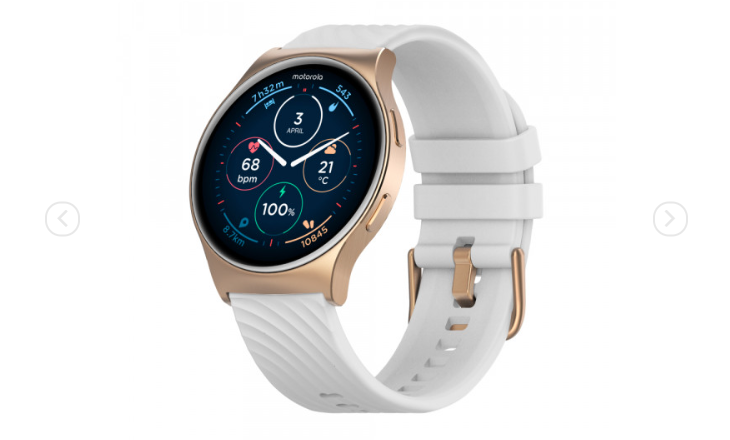
Motorola’s Affordable Smartwatch: Get the details on Motorola’s latest offering in the wearable tech space – the Moto Watch 120. We’ll examine how this pocket-friendly smartwatch stacks up in the competitive market.
Realme’s Revolutionary Charging: Uncover the future of smartphone charging with Realme’s 320W SuperSonic Charge technology. We’ll discuss the implications of being able to fully charge a phone in under 5 minutes.
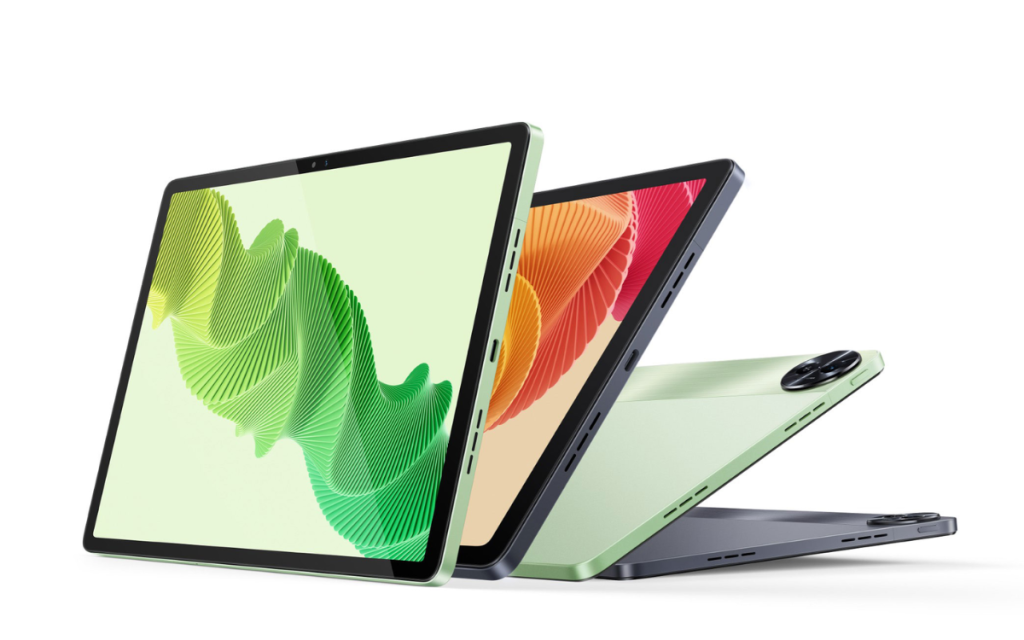
Infinix vs Realme Tablet Showdown: Explore an in-depth comparison between the newly launched Infinix Xpad and the established Realme Pad 2. We’ll break down the specs, features, and value propositions of these budget-friendly tablets.
Plus, don’t miss our roundup of other headline-grabbing stories, including a foldable face-off featuring the Pixel 9 Pro Fold, Samsung’s upcoming launches, Pixel 9 Pro XL insights, and display leaks for future OnePlus and Oppo flagships!
The global tablet market experienced significant growth in Q2 2024 as per Techinsights report, with overall shipments rising by 14% year-on-year. Xiaomi tablets made a remarkable leap, achieving a 138% year-on-year increase in shipments, reaching 2.1 million units and securing fourth place in the global market with a 6% share. This is the first time Xiaomi has entered the top four globally.
So why are Xiaomi tablets gaining popularity both globally and in the Chinese market? Several key factors have driven this remarkable success.
Motorola has launched a new pocket-friendly smartwatch called the Moto Watch 120. This new watch refreshes the company’s smartwatch lineup after the Moto Watch 40 was launched around six months ago.
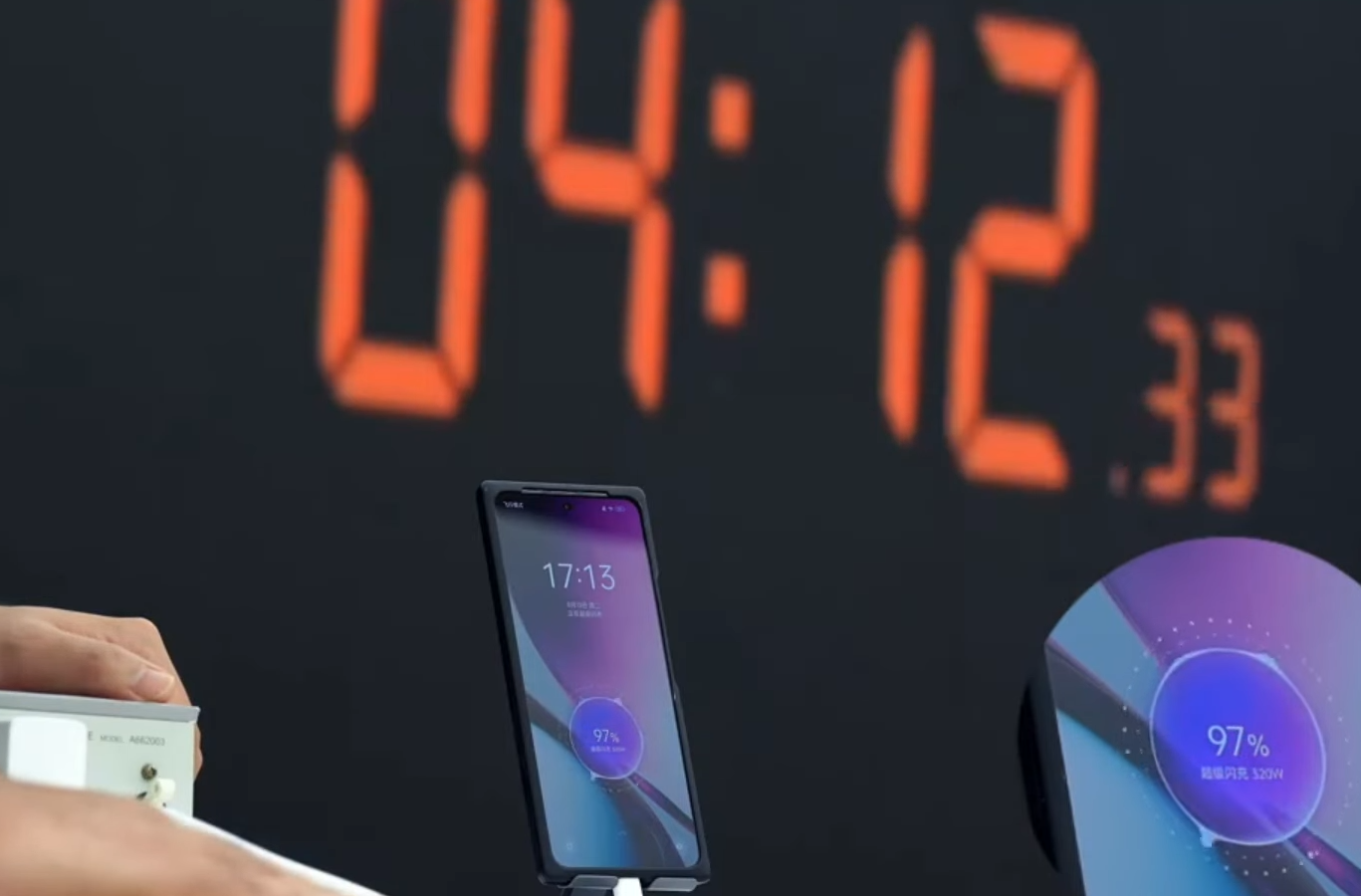
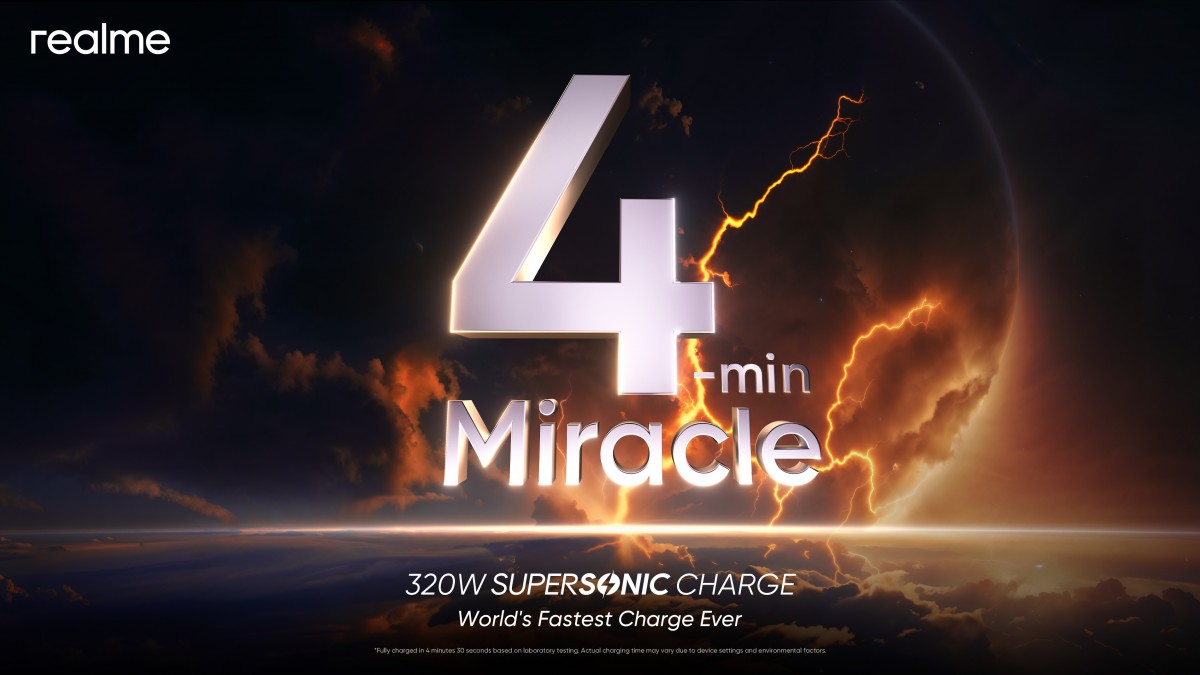
Chinese smartphone brands have been known to push the boundaries in fast charging technology. The standard of charging rates has risen, and Realme’s latest announcement offers us a glimpse of the future where charging your phone doesn’t even take 5 minutes. In a recent demo, the brand’s 320W SuperSonic Charge can be seen powering a phone up in nearly four and a half minutes.
Infinix has recently entered the tablet arena with their debut offering, the Infinix Xpad. This budget-friendly device goes head-to-head with the established Realme Pad 2, another budget tablet offering. While they share some similarities, there are key differences to consider when choosing between the two. Let’s delve deeper into their specifications, features, and potential strengths and weaknesses to help you make an informed decision.
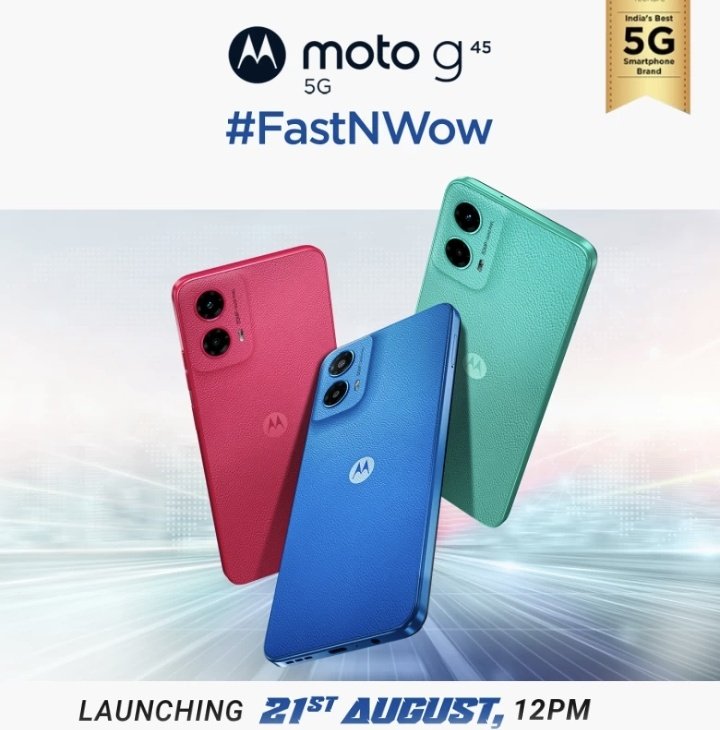
Update: Motorola has officially confirmed that the Moto G45 5G will debut on Aug. 21 in India. Its landing page is now live on Flipkart.
Moto G45 launch date
Original story continues:
Motorola has already launched a couple of G-series phones, such as the Moto G64 5G and the Moto G85 5G, in India. The Lenovo-owned brand is now teasing the arrival of what appears to be a new G-series phone. While the rumor mill is speculating about the arrival of the Moto G35 5G, a new report by SmartPrix reveals that the brand is also working on another mid-ranger named the Moto G45. Here is a look at the design and specifications of the device.
Moto G45 5G design
Moto G45 5GMoto G45 5GMoto G45 5G
The Moto G45 5G has a punch-hole screen with chunky bezels on the front. The back panel of the phone has a raised camera module, which houses a dual-camera setup and a pill-shaped LED flash. It will be available in three shades, such as Brilliant Blue, Brilliant Green, and Viva Magenta.
Moto G45 5G specifications (rumored)
According to the report, the Moto G45 5G will have a 6.5-inch LCD panel that offers an HD+ resolution and a 120Hz refresh rate. The Snapdragon 6s Gen 3 chipset and 4 GB of RAM will power the handset. Unfortunately, the report has no information about the storage capacity of the device.
The G45 will be backed by a 5,000mAh battery, which can be charged using the USB-C port. For selfies, it will have a 16-megapixel front camera, and its back panel will include a 50-megapixel primary camera and a 2-megapixel depth sensor.
Moto G45 5G price in India (rumored)
According to the report, the Moto G45 5G will retail for approximately Rs 15,000 (~$178). As far as the launch is concerned, it is expected to launch later this month in India.
Finding a high-performing smartphone without breaking the bank is easier than ever. The latest devices under 30K offer exceptional value, boasting impressive displays, powerful processors, and advanced camera systems. Whether you’re a photography enthusiast, a multitasking professional, or a gaming aficionado, there’s a phone in this range that fits your needs perfectly. Let’s dive into the top choices that deliver premium features at an affordable price.
Our Top Picks:
Category
Phone
Key Features
Buy Link
Best Overall Phone
Realme GT 6T
Superior display with unmatched brightness, High-performance chipset, and UFS 4.0 storage, Exceptional battery life with rapid 120W charging
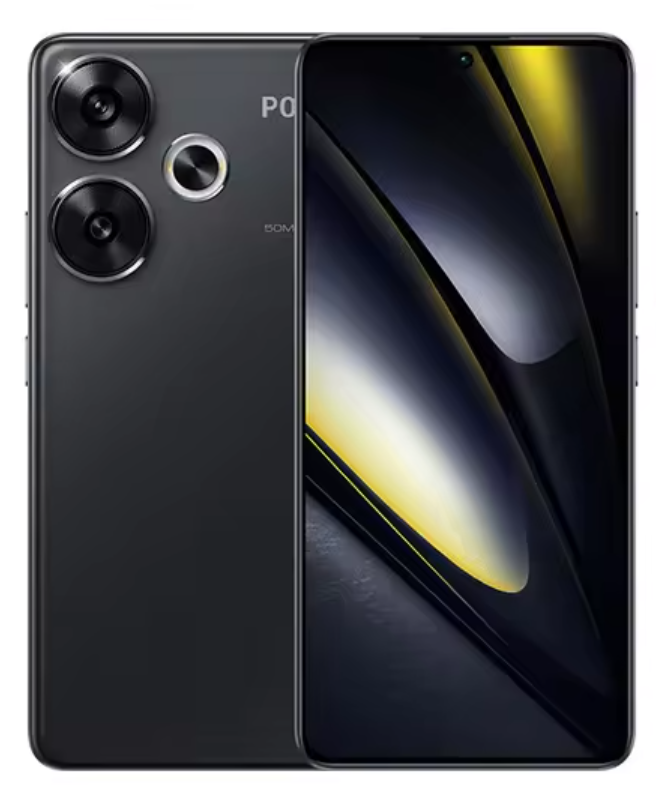
The POCO F6 is, designed to deliver exceptional performance and an immersive user experience. Featuring an IP64 rating for dust and water resistance, the device boasts a 6.67-inch AMOLED display with 68B colors, a 120Hz refresh rate, HDR10+, and Dolby Vision. It runs on Android 14 with HyperOS, powered by the Qualcomm Snapdragon 8s Gen 3 chipset and an Octa-core CPU. The POCO F6 offers robust memory options with 256GB/8GB RAM and 512GB/12GB RAM, utilizing UFS 4.0 storage.
Photography enthusiasts will appreciate the dual main camera setup, including a 50 MP wide lens with OIS and an 8 MP ultrawide lens, capable of shooting 4K videos. The 20 MP front camera ensures high-quality selfies and 1080p video recording. With stereo speakers and Hi-Res audio, connectivity options like Wi-Fi 6, Bluetooth 5.4, NFC, and USB Type-C 2.0, and a powerful 5000 mAh battery supporting 90W fast charging, the POCO F6 is a versatile companion for everyday use.
Pros
High-Performance Display: The 120Hz AMOLED display with Dolby Vision and HDR10+ provides vibrant and smooth visuals.
Powerful Battery and Fast Charging: A 5000 mAh battery with 90W wired charging ensures quick recharges and extended usage.
Advanced Camera Capabilities: Dual main cameras with 50 MP wide and 8 MP ultrawide lenses deliver high-quality photos and videos.
Cons
No Expandable Storage: Lacks a memory card slot, limiting storage expansion.
No 3.5mm Audio Jack: The absence of a headphone jack may inconvenience some users.
USB Type-C 2.0: Slower data transfer speeds compared to newer USB standards.
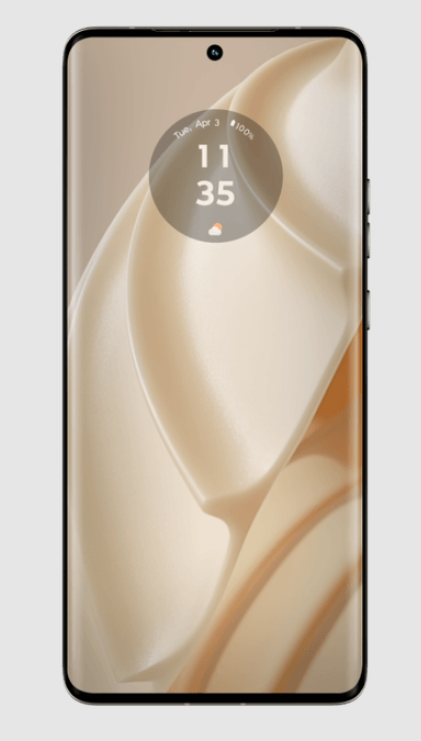
The Motorola Edge 50 Pro is an advanced smartphone designed to meet the needs of modern users with its IP68 dust and water resistance, ensuring durability up to 1.5 meters for 30 minutes. The 6.7-inch P-OLED display offers a 144Hz refresh rate, HDR10+, and a peak brightness of 2000 nits, providing vibrant and fluid visuals. Running on Android 14, it is powered by the Qualcomm Snapdragon 7 Gen 3 chipset with an Octa-core CPU, ensuring seamless performance. Memory options range from 128GB/8GB RAM to 512GB/12GB RAM with UFS 2.2 storage.
Photography enthusiasts will enjoy the triple camera setup, including a 50 MP wide lens, a 10 MP telephoto lens with 3x optical zoom, and a 13 MP ultrawide lens. The 50 MP front camera offers stunning selfies and 4K video recording. Additional features include stereo speakers, Wi-Fi 6e, Bluetooth 5.4, NFC, and a USB Type-C 3.1 port. The 4500 mAh battery supports 125W wired charging, 50W wireless charging, and 10W reverse wireless charging, ensuring you stay powered throughout the day.
Pros
Superior Display: The 144Hz P-OLED display with HDR10+ delivers exceptional color accuracy and smooth visuals.
Fast Charging: The 125W wired charging capability ensures the battery reaches 100% in just 18 minutes.
Advanced Camera System: The triple camera setup with a 50 MP wide lens and 10 MP telephoto lens provides versatile and high-quality photography options.
Cons
No Expandable Storage: The absence of a memory card slot limits storage expansion.
No 3.5mm Audio Jack: The lack of a headphone jack may be inconvenient for some users.
Older Storage Technology: Utilizes UFS 2.2, which is slower compared to newer UFS versions.
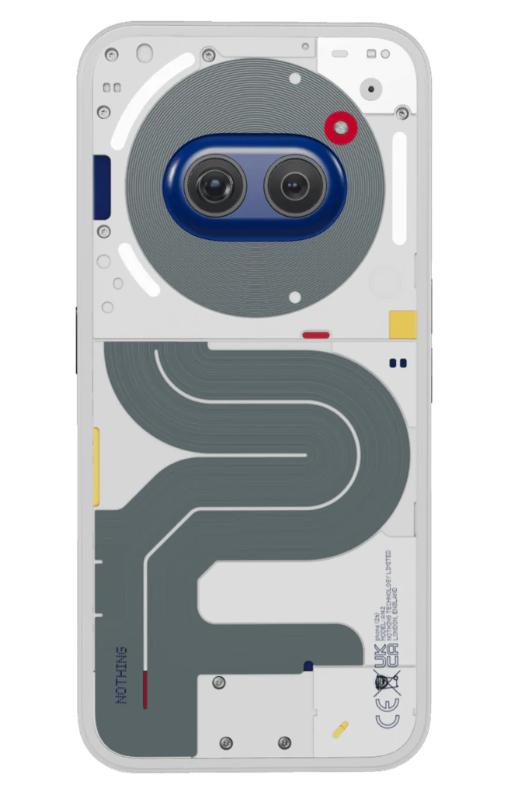
The Nothing Phone 2a is a blend of modern design and cutting-edge technology, offering an IP54 rating for splash, water, and dust resistance. Its 6.7-inch AMOLED display with 1B colors, a 120Hz refresh rate, HDR10+, and a peak brightness of 1300 nits provides stunning visuals and smooth performance. Running on Android 14 with Nothing OS 2.6, it is powered by the Mediatek Dimensity 7200 Pro chipset and an Octa-core CPU, ensuring efficient multitasking and gaming. Memory options include 128GB/8GB RAM, 256GB/8GB RAM, and 256GB/12GB RAM.
The dual main camera setup features a 50 MP wide lens and a 50 MP ultrawide lens, both equipped with advanced features like PDAF and OIS, allowing for high-quality photos and 4K videos. The 32 MP front camera ensures crisp selfies and 1080p video recording. Additional features include stereo speakers, Bluetooth 5.3, NFC, and a USB Type-C 2.0 port. The 5000 mAh battery supports 45W wired charging, reaching 50% in 23 minutes and 100% in 1 hour, ensuring you stay connected throughout the day.
Pros
Exceptional Display: The 120Hz AMOLED display with HDR10+ offers vibrant colors and fluid visuals.
Advanced Camera System: Dual 50 MP cameras provide versatile and high-quality photography and videography.
Efficient Fast Charging: The 45W wired charging ensures quick recharges, with 50% battery in just 23 minutes.
Cons
No Expandable Storage: Lacks a memory card slot for additional storage.
No 3.5mm Audio Jack: The absence of a headphone jack may be inconvenient for some users.
USB Type-C 2.0: This is an older USB standard, which offers slower data transfer speeds than newer versions.
The Poco X6 Pro is an impressive smartphone with robust performance and modern design. It features an IP54 rating for dust and splash resistance, making it durable for everyday use. The 6.67-inch AMOLED display with 68B colors, 120Hz refresh rate, HDR10+, and Dolby Vision delivers stunning visuals with a peak brightness of 1800 nits. Protected by Corning Gorilla Glass 5, the screen ensures durability against scratches and impacts. The device runs on Android 14 with HyperOS and is powered by the Mediatek Dimensity 8300 Ultra chipset, featuring an Octa-core CPU for seamless multitasking and performance.
The triple camera setup includes a 64 MP wide lens with OIS, an 8 MP ultrawide lens, and a 2 MP macro lens, allowing for versatile photography options. The 16 MP front camera offers high-quality selfies and video recording. Additional features include dual speakers, Wi-Fi 6, Bluetooth 5.4, NFC, and a USB Type-C 2.0 port. The 5000 mAh battery supports 67W wired charging, reaching 100% in just 45 minutes, ensuring you stay powered throughout the day.
Pros
Exceptional Display: The 120Hz AMOLED display with HDR10+ and Dolby Vision provides vibrant and fluid visuals.
Powerful Performance: The Mediatek Dimensity 8300 Ultra chipset ensures efficient multitasking and gaming capabilities.
Fast Charging: The 67W wired charging capability ensures the battery reaches 100% in just 45 minutes.
Cons
No Expandable Storage: The absence of a memory card slot limits storage expansion.
No 3.5mm Audio Jack: The lack of a headphone jack may be inconvenient for some users.
USB Type-C 2.0: This is an older USB standard, offering slower data transfer speeds than newer versions.
The OnePlus Nord 4 is designed to offer a premium user experience with its IP65 rating, ensuring waterproof and dustproof protection. Its 6.74-inch Fluid AMOLED display boasts 1B colors, a 120Hz refresh rate, HDR10+, and a peak brightness of 2150 nits, delivering stunning visuals and fluid performance. Running on Android 14 with OxygenOS 14.1, the Nord 4 is powered by the Qualcomm Snapdragon 7+ Gen 3 chipset, featuring an Octa-core CPU for efficient multitasking and smooth operation.
Available in various memory configurations, including up to 512GB storage with 16GB RAM, the device offers ample space and speed with UFS 4.0 technology. The dual-camera setup includes a 50 MP wide lens with OIS and an 8 MP ultrawide lens, allowing for high-quality photos and 4K videos. The 16 MP front camera ensures clear selfies and video calls. Additional features include stereo speakers, Bluetooth 5.4, NFC, and a USB Type-C 2.0 port. The 5500 mAh battery supports 100W wired charging, reaching 100% in just 28 minutes, ensuring you stay connected throughout the day.
Pros
Impressive Display: The Fluid AMOLED display with 120Hz refresh rate and HDR10+ provides vibrant colors and smooth visuals.
Fast Charging: The 100W wired charging capability ensures the battery reaches 100% in just 28 minutes.
Advanced Camera System: The dual-camera setup with a 50 MP wide and 8 MP ultrawide lens offers versatile and high-quality photography and videography.
Cons
No Expandable Storage: The absence of a memory card slot limits storage expansion.
No 3.5mm Audio Jack: The lack of a headphone jack may be inconvenient for some users.
USB Type-C 2.0: This is an older USB standard, offering slower data transfer speeds than newer versions.
Realme GT 6T: Ultimate Performance and Display Brilliance
₹30000
The Realme GT 6T is a powerhouse of performance and design, boasting IP65 dust and water resistance. It features a stunning 6.78-inch LTPO AMOLED display with 1B colors, a 120Hz refresh rate, HDR support, and an astonishing peak brightness of 6000 nits. The screen is protected by Corning Gorilla Glass Victus 2, ensuring durability. Running on Android 14 with Realme UI 5.0, the device is equipped with the Qualcomm Snapdragon 7+ Gen 3 chipset and an Octa-core CPU, offering top-notch performance for multitasking and gaming.
The GT 6T offers up to 512GB of UFS 4.0 storage and 12GB RAM in several configurations. The dual-camera system includes a 50 MP wide lens with OIS and an 8 MP ultrawide lens, delivering high-quality photos and 4K videos. The 32 MP front camera ensures excellent selfies and video calls. With a 5500 mAh battery supporting 120W wired charging, the device can reach 50% charge in just 10 minutes, keeping you powered all day. Additional features include stereo speakers, NFC, and a USB Type-C 2.0 port.
Pros
Exceptional Display: The LTPO AMOLED display with HDR and 6000 nits peak brightness offers unmatched visual clarity and fluidity.
Rapid Charging: The 120W wired charging ensures the battery reaches 50% in just 10 minutes.
High-Performance Chipset: The Snapdragon 7+ Gen 3 chipset provides excellent performance for gaming and multitasking.
Cons
No Expandable Storage: The absence of a memory card slot limits storage expansion.
No 3.5mm Audio Jack: The lack of a headphone jack may be inconvenient for some users.
USB Type-C 2.0: This is an older USB standard, offering slower data transfer speeds than newer versions
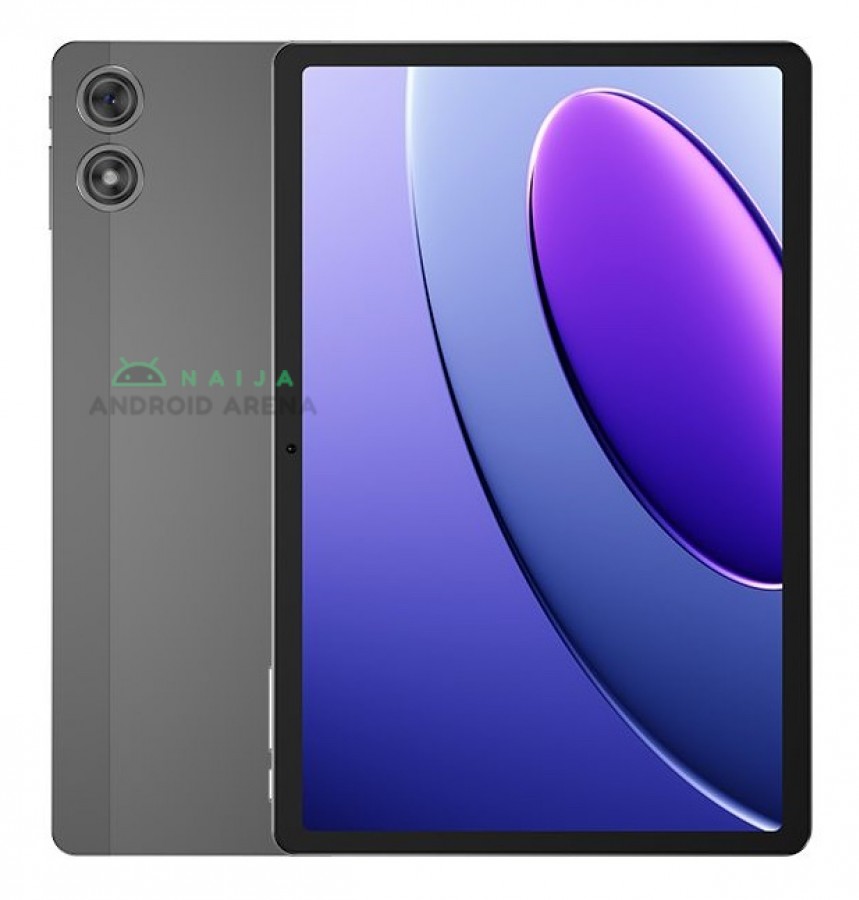
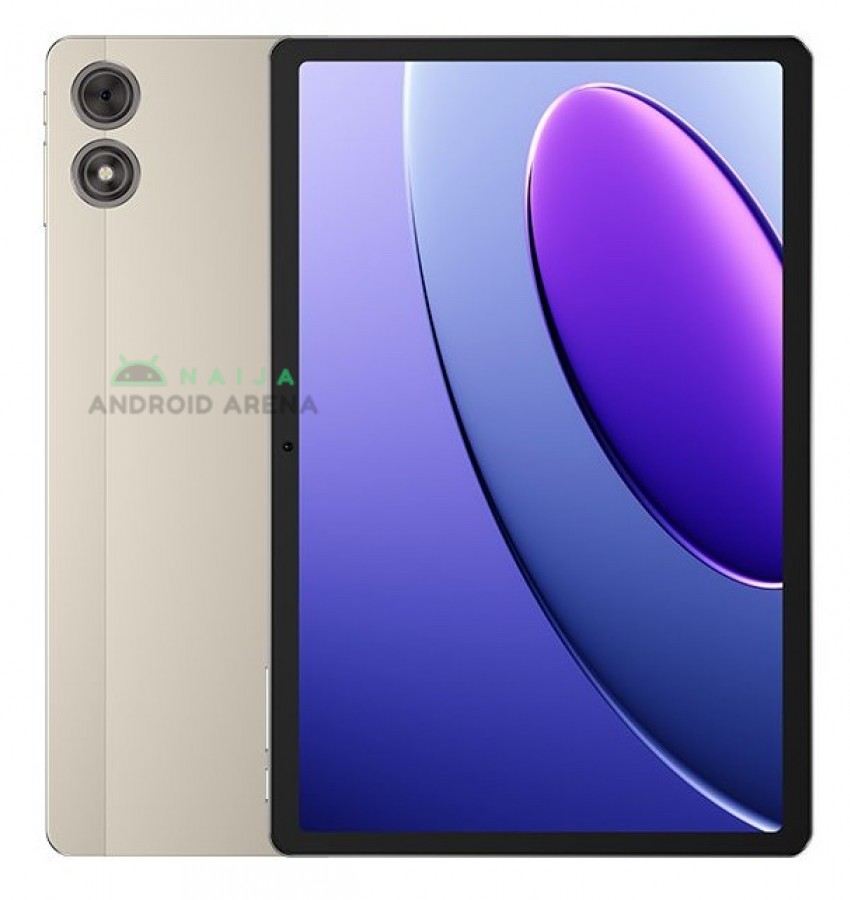
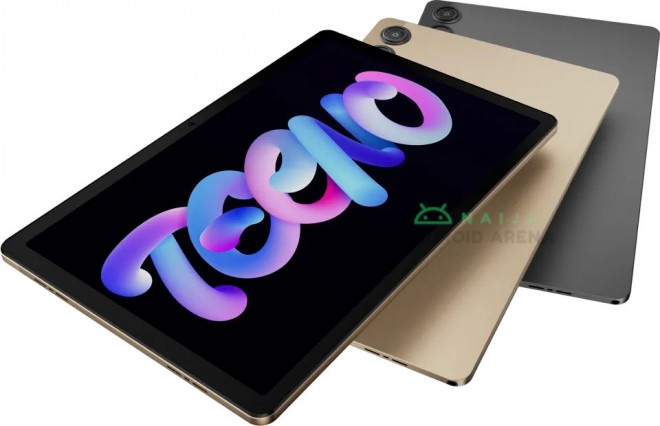
Infinix has recently launched the Infinix Pad, its first tablet. Tecno, Infinix’s sibling brand, is reportedly developing its own tablet. A new report, courtesy of Naija Android Arena, has shared the images and key specifications of the Tecno Pad, hinting that it will be launching soon.
Tecno Pad design
Tecno PadTecno Pad
In the leaked images, the Tecno Pad can be seen in Grey and Gold shades. On the front, it seems to have equal-sized bezels, and its back panel has a single camera and an LED flash.
Tecno Pad specifications (rumored)
The Tecno Pad has a 10.1-inch LCD panel that offers an HD+ resolution of 800 x 1280 pixels. Under the hood, the device is equipped with the Helio G80 chipset and 4 GB of RAM.
The tablet will come in 128 GB and 256 GB storage options. It is backed by a 7,000mAh battery that supports 18W fast charging. It may come preinstalled with Android 14 and HiOS UI.
Tecno Pad
On the front, the Tecno Pad will feature a 5-megapixel camera. It will feature a 13-megapixel camera and an LED flash on its rear shell. When it comes to connectivity, the Tecno Pad will provide options, such as LTE, Wi-Fi, Bluetooth 5.1, a USB-C port, and a 3.5mm jack. The tablet will measure 240.7 x 159.5 x 7.35mm, but there is no information about its weight.
The Tecno Pad, which is expected to launch in the coming weeks, will be made available in Wi-Fi and LTE variants. Unfortunately, there is no information about the price of the device.
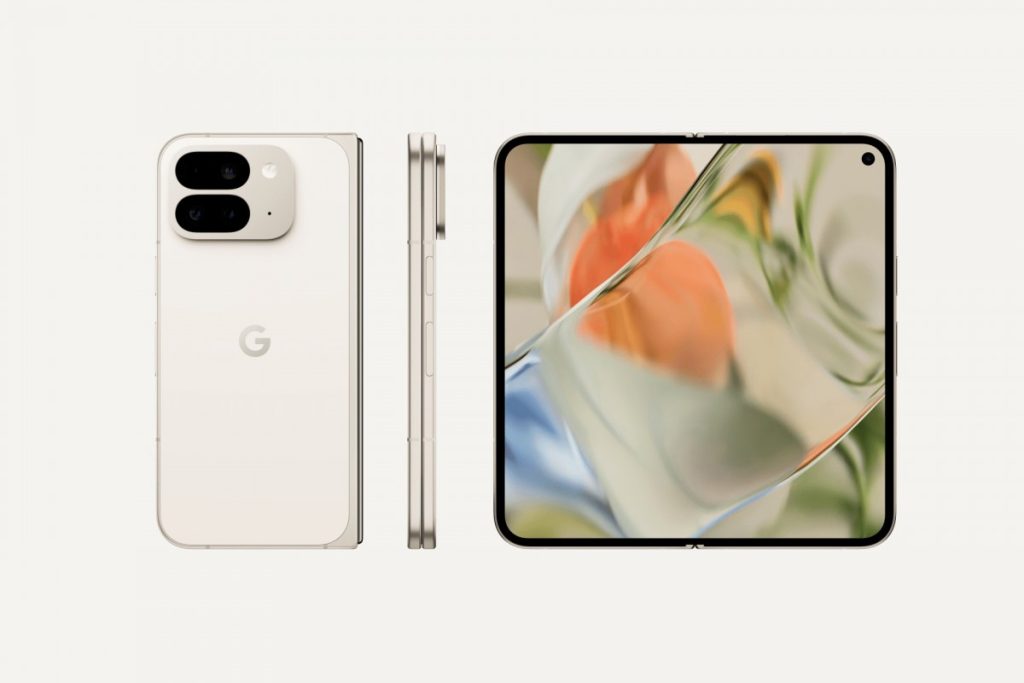
Google finally unveiled the Pixel 9 series of flagship smartphones. But this time around, the premium lineup included a new foldable smartphone, the Pixel 9 Pro Fold. With the foldable phone market getting another entry, it seems like competition in the segment is rising. So how does it fare against the rest of the competition? Here’s a comparison some of the other popular rivals.
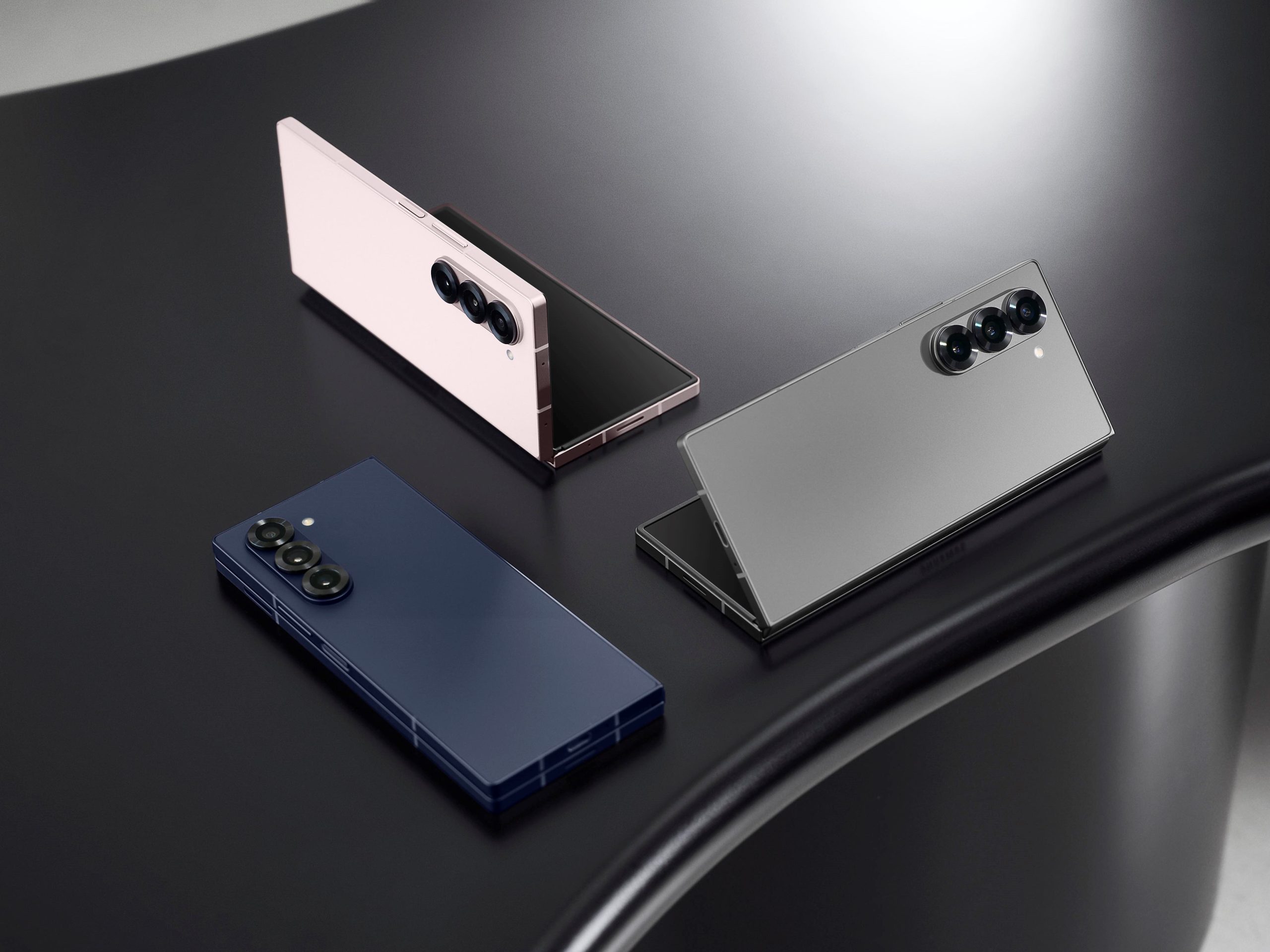
1. Google Pixel 9 Pro Fold vs Samsung Galaxy Z Fold 6
Galaxy Z Fold 6
Samsung’s Galaxy Z Fold 6 is one of the most popular foldable phones. So Google will be directly competing with the foldable phone veteran in the global market. Starting with the cover display, both models feature an equally tall 6.3-inch 120Hz OLED screen. However, the Pixel edges ahead with a higher FHD+ resolution compared to the Z Fold 6’s HD+ resolution. In terms of brightness and other aspects, these are quite comparable.
Where things get a little more interesting is the primary folding screen. Google sports a taller 8-inch LTPO OLED screen on the Pixel 9 Pro Fold that offers a 120Hz refresh rate, 2700 nits of peak brightness, and HDR10+. In comparison, the Galaxy Z Fold 6 has a 7.6-inch LTPO AMOLED panel that also offers HDR10+, FHD+ resolution, a 120Hz refresh rate, and 2600 nits of peak brightness.
Another area where there is a clear difference is with the processor. The Google Pixel 9 Pro Fold is equipped with the Google Tensor G4 chipset, while the Galaxy Z Fold 6 features the Snapdragon 8 Gen 3 SoC. A 4,650mAh and a 4,400mAh battery pack power the Pixel and Galaxy models respectively. But the Z Fold 6 has a faster 25W wired fast charging support compared to the 21W on the Pixel 9 Pro Fold. Both devices support wireless charging, but Samsung has a faster charging rate once again (15W vs 7.5W).
The Pixel comes with a 48MP (Main) + 10.8MP (Telephoto) + 10.5MP (Ultra Wide Angle) for photography. For selfies and video calls, the two displays house a 10MP shooter. Samsung also brings the image sensors on the back, which are 50MP (Main) + 10MP (Telephoto) + 12MP (Ultra Wide Angle). The primary display houses an under-display 4MP for a more immersive viewing experience, while the cover screen has a 10MP selfie camera.
Samsung Galaxy Z Fold 6 has a starting price tag of 164,999 INR, while its higher end variant costs 200,999 INR. On the other hand, the Pixel 9 Pro Fold costs 172,999 INR for its lone 12GB + 256GB option in India.
2. OnePlus Open
OnePlus Open
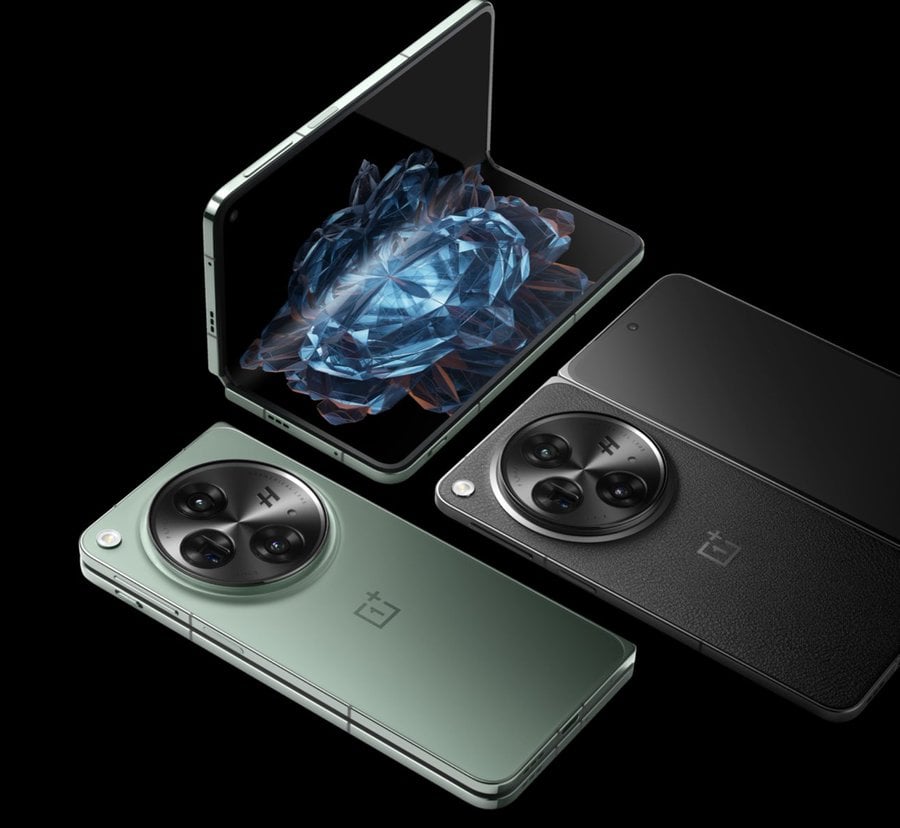
Similar to the Galaxy Z Fold 6, the OnePlus Open is the only other foldable smartphone that is available globally and not just in select regions. OnePlus’ first ever foldable phone offering received wide acclaim and was even considered as one of the best in its category. It was released back in 2023 with a 6.31-inch LTPO OLED cover display and a 7.82-inch LTPO AMOLED screen. Both panels offer a 120Hz refresh rate and 2800 nits of peak brightness. So once again the Pixel Fold 9 Pro would seem comparable to offerings from other brands.
Under the hood, the OnePlus Open is equipped with the Snapdragon 8 Gen 2, which is a near two year old chip now. For optics, the rear packs a Hasselblad branded triple camera setup. This consists of a 48MP main Sony LYTIA-T808 pixel stacked primary sensor, a 48MP ultra wide angle lens, and a third 64MP periscope telephoto unit with 6x optical zoom. You get a 20MP and 32MP selfie camera on the two displays. A sizeable 4,800mAh battery pack powers this device, which supports 67W wired fast charging. This model is also currently available for 139,999 INR, making it more affordable than the other two models mentioned above.
Please Note: When you buy something using the links in our articles, we may earn a small commission at no cost to you.
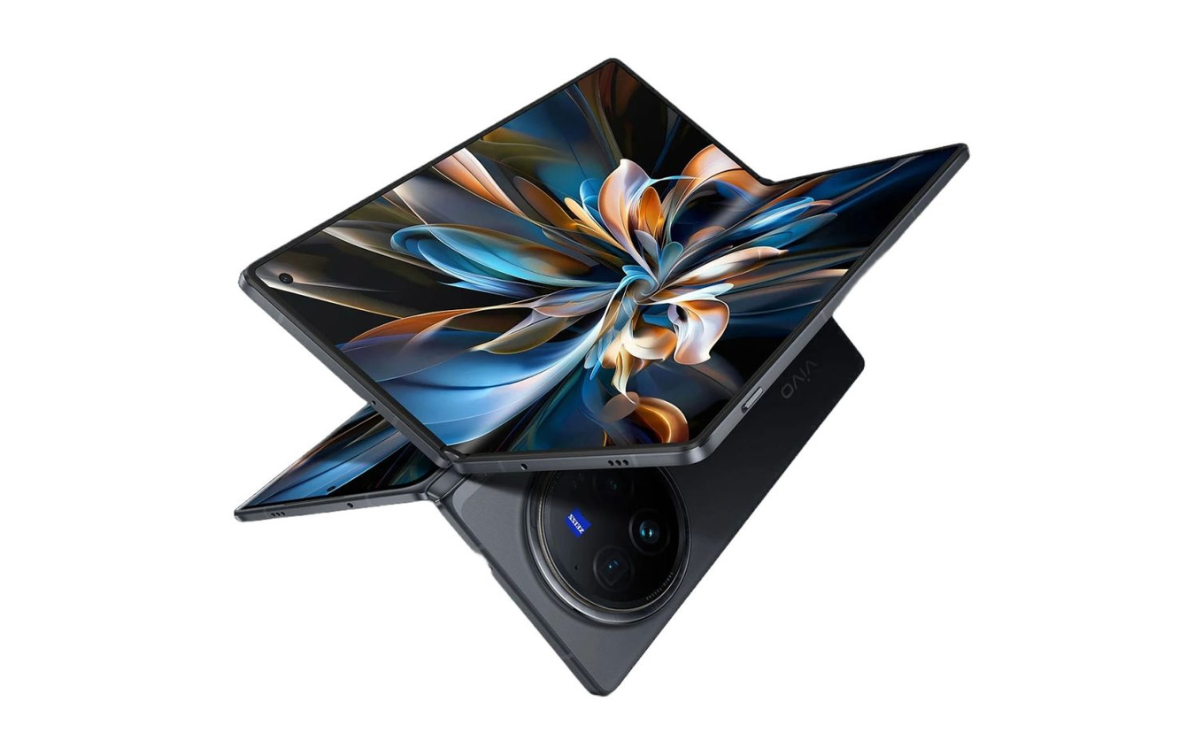
3. Vivo X Fold 3 Pro
Vivo X Fold 3 Pro
Joining the three is the Vivo X Fold 3 Pro. While it is not as widely available as the other phones, the Vivo X Fold 3 Pro for 159,999 INR sits in the middle of the pack in terms of pricing. It sports a tall 8.03-inch E7 AMOLED primary display that supports LTPO technology, 2K+ resolution, 1-120Hz variable refresh rate, HDR10+, Dolby Vision, Dolby Vision, UTG glass, and up to 4,500nits of peak brightness. Meanwhile, the cover display has a 6.53-inch LTPO AMOLED display with an FHD+ resolution, 1-120Hz variable refresh rate, Armor Glass, Dolby Vision, and up to 4,500nits of peak brightness.
Under the hood, the device features the Snapdragon 8 Gen 3 SoC. But breaking the pack, the Vivo X Fold 3 Pro leads with a large 5,700mAh battery pack that supports 100W wired fast charging and 50W wireless fast charging. On the rear, this model features a 50MP primary camera, along with a 50MP ultra wide angle lens (Samsung JN1) and a 64MP (OV64B) telephoto shooter. There is a 32MP sensor for selfies on both the main and cover display.
In a move that could reshape the tech landscape, the US Department of Justice (DoJ) is reportedly considering a drastic breakup of Google. According to a report by Bloomberg, the tech giant has been found to have illegally monopolized the online search market, and the government is exploring options to restore competition.
Image Credits: nurphoto / Getty Images
Google Faces Potential Breakup and Forced Sale of Key Assets
Following a landmark court ruling against Google, the DoJ is examining several potential remedies, including the most aggressive option: splitting the company into smaller entities. This would mark one of the most significant antitrust actions since the attempt to dismantle Microsoft over two decades ago.
While a breakup is on the table, less drastic measures are also being considered. These include forcing Google to share more data with competitors, imposing restrictions on its AI development, and banning exclusive contracts that fueled its dominance.
The case centers on Google’s practices with Android, Chrome, and AdWords, where the company’s exclusive contracts with device manufacturers have raised concerns among regulators. The DoJ is particularly worried about how Google’s search dominance could impact competition in the rapidly evolving AI sector.
If the breakup proceeds, the sale of Android, Chrome, or AdWords could be on the cards. Such a move would have far-reaching implications for the tech industry and consumers alike.
While Google plans to appeal the court ruling, the company faces a challenging road ahead. The potential breakup of the tech giant is a stark reminder of the growing scrutiny faced by big tech companies and the government’s determination to promote fair competition.
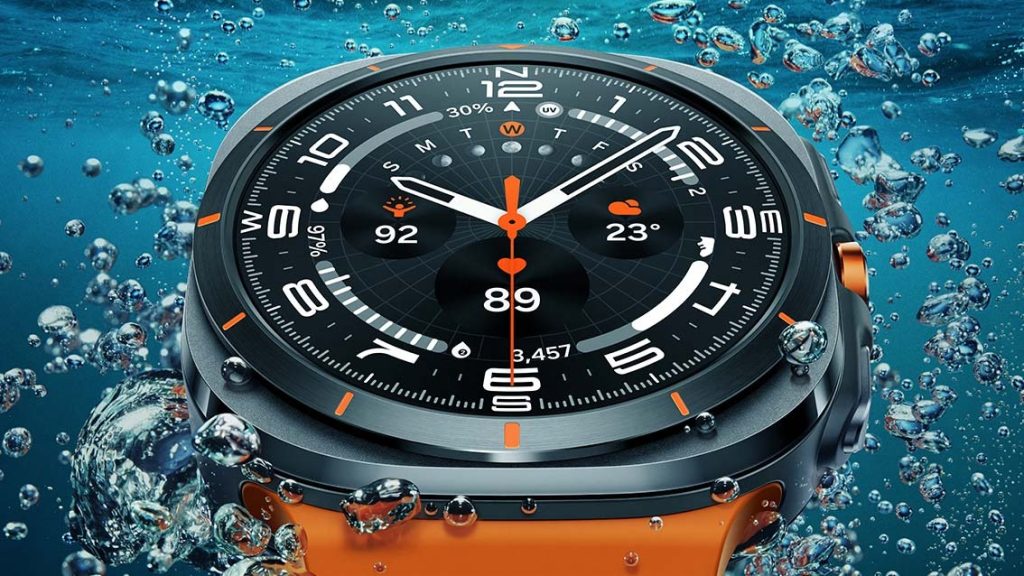
Samsung is rolling out the first ever global update for the Galaxy Watch Ultra. An exclusive US update was released earlier this month, and now, the latest software upgrade is arriving in multiple markets. But this isn’t just a stability update, Samsung is improving the battery performance on the Galaxy Watch Ultra.
How to improve your Samsung Galaxy Watch Ultra’s battery life
The South Korean tech giant has released this new update across the globe for users in Europe and Asia. To check if you’ve received this update, head to the Galaxy Wearable app on your and open the “Watch Settings” menu. After this, scroll till you see the “Watch software update” section and hit “Download and install”. Make sure that your Galaxy Watch Ultra has at least a 30 percent charge, otherwise, you won’t be able to go ahead with the update.
Samsung Galaxy Watch Ultra
Samsung released the 175MB software update, which carries the L705FXXU1AXG2 build number. The changelog shows that the brand has made improvements to the battery charging and battery stability. In other words, the battery performance is getting an overall upgrade. But apart from this, your Galaxy Watch Ultra will now be more stable in general as well. Unfortunately, the company hasn’t shared what exactly the improvements mean when they say battery stability.
This update brings positive news regarding the Galaxy Watch Ultra following some issues that plagued the new Samsung smartwatch. Users have complained about the display seeming misaligned while others complained of the paint on the Watch Ultra’s body peeling off after just a few days of use. For 649 US Dollars, it seemed like Samsung was facing quality assurance issues, which caused some to even opt for refunds.
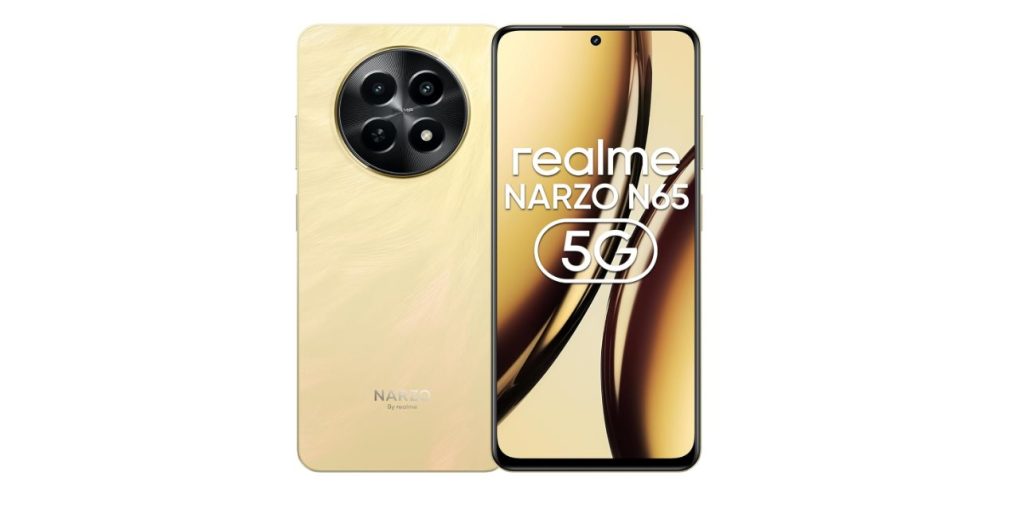
Amazon Freedom Sale discounts are soon going to fade away. At the last minute, Amazon has added a hefty discount on the Realme Narzo N65 5G smartphone, now available with a Rs 1500 direct discount by applying a coupon. Further, there’s an additional discount on the Amazon Pay ICICI Bank Credit Card.
Realme Narzo N65 5G Deals and Discounts
Realme Narzo N65 5G retails for Rs 10,998 for the 6GB RAM and 128GB storage option. There’s a Rs 1500 coupon discount, and you can get ~Rs 700 as cashback if you have an Amazon ICICI Bank Credit card.
It is now available in two color options: Amber Gold and Deep Green.
Realme Narzo N65 5G Specifications
Realme Narzo N65 5G comes powered by the MediaTek Dimensity 6300 5G chipset. This octa-core CPU, built on a 6 nm process, delivers speeds of up to 2.4GHz, ensuring that the phone runs smoothly even when multitasking or playing demanding games. It is available in 4/6/8GB RAM and 128GB storage. There’s an option to expand storage up to 2 TB via external memory storage.
It bundles a 6.5-inch display that supports a refresh rate of up to 120 Hz and a touch sampling rate of 240 Hz. With a resolution of 1604×720 and a brightness of 500 nits (typical) and up to 625 nits in High Brightness Mode (HBM), users can enjoy clear, vibrant visuals in various lighting conditions. The smartphone runs Android 14-based Realme UI 5.0. It ships with Bluetooth 5.3, WiFi 2.4/5GHz, GPS, and a USB Type-C port.
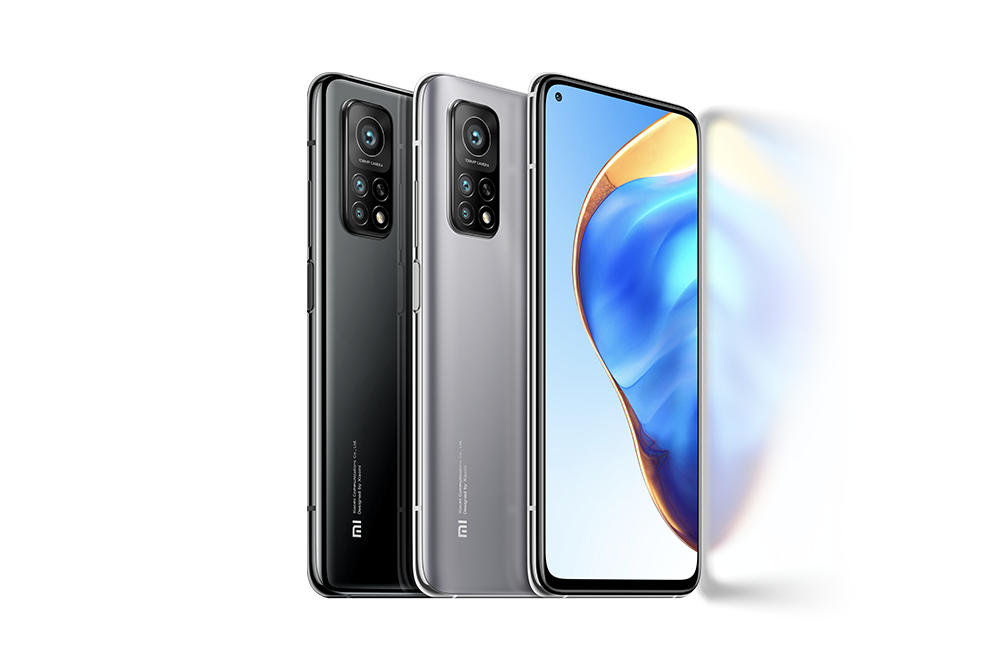
Xiaomi launched the Mi 10T Pro in late 2020 as the top-of-the-line smartphone of its series. The T-series is Xiaomi’s sub-flagship line that offers flagship-level features from the premium number series at a more affordable price. The Mi 10T Pro was no exception.
The smartphone featured a Full HD+ display with a 144Hz refresh rate, a Snapdragon 865 processor, a 108MP triple camera setup, LPDDR5 RAM, and UFS 3.1 storage.
Xiaomi Mi 10T 5G series
However, Xiaomi has ended software support for the device last October. So if you own this phone, you might be wondering if it’s time to upgrade. Let’s explore whether it’s worth investing in a new smartphone or continuing to use your Mi 10T Pro.
The Mi 10T Pro delivered flagship specs, including a top-tier chipset and a high-refresh-rate display, all at a very competitive price. Here’s what made it stand out at the time of its launch:
Snapdragon 865 Processor: It’s the most specced-out processor in 2020 that ensured smooth performance for demanding apps and games.
144Hz Refresh Rate Display: At a time when high refresh rates were a premium feature, the Mi 10T Pro offered a buttery-smooth 144Hz display. In fact, it was the first Xiaomi phone with 144Hz refresh rate support.
Versatile Camera System: Its triple-rear camera setup might look basic for the 2024 standard, but it was considered a capable camera phone at the time. There was a 108MP primary lens accompanied by a 13MP ultrawide and a 5MP macro lens. The selfie camera has a 20MP sensor.
Long Battery Life: The Mi 10T Pro also offers a great battery life thanks to a 5000mAh cell fitted inside it. The charging capped out at 33W, but it was better than what the flagships of the time like Galaxy S20 had to offer.
These features, combined with a competitive price, made the Mi 10T Pro a compelling option for power users.
2. How Does It Stack Up in 2024?
It’s now four years since the arrival of the Mi 10T Pro, which is a long time, especially in the fast-paced smartphone world. Here’s how the Mi 10T Pro stacks up against today’s standards:
Processor: While the Snapdragon 865 remains capable, newer processors from Snapdragon and MediaTek offer much better performance and efficiency. Even the SoCs targeted for mid-range or premium mid-range segments like Snapdragon 7s Gen 3 or Dimenity 8300 do better than 865 in every aspect.
Display: High refresh rates are now common, even in budget phones. The Mi 10T Pro’s 144Hz panel still impresses in terms of numbers, but its IPS LCD screen lags behind the AMOLED panels that are now standard in mid-range and budget devices, offering better contrast and colors. Flagship phones also use advanced tech like LTPO to maximize battery life.
Camera: Camera technology has advanced significantly in the last four years. We now have phones with bigger and better sensors (as big as 1”), improved image processing, and more versatile features like telephoto lenses and advanced video capabilities. The Mi 10T Pro’s camera, while decent for its time, certainly doesn’t measure up to current standards.
Software: Perhaps most importantly, software support for the Mi 10T Pro has ended. This means no more security patches or Android updates, which could leave the phone vulnerable to security risks and a lack of new features.
Overall, the Mi 10T Pro is still a capable phone for day-to-day. But its performance and features feels certainly outdated compared to today’s mid-range devices.
3. Can You Continue Using It in 2024 and Beyond?
Whether you should continue using the Mi 10T Pro depends on your usage:
Light Users: If you mainly use your phone for basic tasks like browsing, social media, and calls, the Mi 10T Pro might still meet your needs. However, you may miss out on newer features and improved app compatibility with outdated software.
Gamers: The Snapdragon 865 can still handle most games, but you might experience occasional frame drops in graphically demanding titles. Newer phones offer better-sustained performance and improved thermal management for extended gaming sessions.
Camera Enthusiasts: If photography is important to you, the Mi 10T Pro’s camera will likely feel underwhelming compared to the more advanced cameras on smartphones in 2024 or even those from a generation ago.
Again, the biggest concern is the lack of ongoing software support. Without updates, your phone is at risk for security vulnerabilities and may struggle with app compatibility. While tech-savvy users might flash custom ROMs as a workaround, this isn’t a practical solution for most users.
4. Why Should You Upgrade?
If you’re a power user-facing performance limitations, wanting the latest camera technology, or prioritizing security, upgrading is a wiser choice. Here are some reasons to consider a new phone:
Improved Performance: Newer processors deliver significant gains, enhancing overall responsiveness and providing smoother app and gaming experiences.
Better Displays: Displays these days have all sorts of performance and health-related features like LTPO tech and various eye-protection technologies. Also, if you upgrade, you will likely want to get a phone with an OLED display that will offer richer colors and deeper blacks.
Advanced Cameras: As mentioned earlier, smartphone cameras have excelled in almost every aspect compared to what we had in 2020. You get a better image sensor with an improved image processing algorithm. So you can expect better photos at night and in challenging lighting conditions.
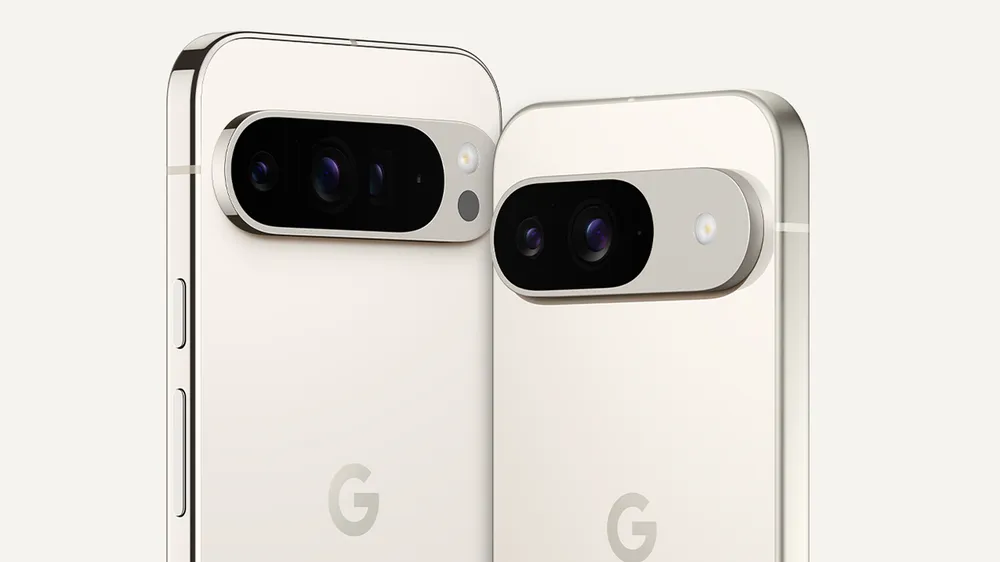
Google‘s decision to introduce two Pro variants is a strategic move to cater to different user preferences. While both phones share a plethora of features, the primary differentiator is screen size and battery capacity. So, should you opt for the compact Pixel 9 Pro or the larger Pixel 9 Pro XL? Let’s break down the key factors to help you decide.
The most obvious difference between the two phones is their display size. The Pixel 9 Pro boasts a 6.3-inch screen (1280 x 2856 pixels), offering a more manageable form factor for those who prefer one-handed operation or smaller pockets. On the other hand, the Pixel 9 Pro XL’s 6.8-inch display (1344 x 2992 pixels) provides a more immersive viewing experience, ideal for media consumption, gaming, and multitasking.
If you primarily use your phone to consume content, such as watching videos or playing games, the larger Pixel 9 Pro XL screen is undoubtedly more appealing. However, if portability and ease of use are your top priorities, the Pixel 9 Pro might be the better choice.
2. Battery Life
A larger screen typically demands more power, and the Pixel 9 Pro XL addresses this with a significantly larger 5060mAh battery compared to the 4700mAh unit in the Pixel 9 Pro. This extra capacity translates to potentially longer battery life, especially for heavy users. The Pro XL also offers a faster charging capability of 37W, compared to the 27W available on the 9 Pro.
If you’re someone who frequently finds themselves reaching for the charger, the Pixel 9 Pro XL’s extended battery life could be a compelling reason to choose it. However, the Pixel 9 Pro is still expected to deliver solid battery performance, and it’s worth considering if battery life isn’t a major concern for you.
3. Performance and Camera
Both the Pixel 9 Pro and Pixel 9 Pro XL are powered by the same Tensor G4 chip and share the same impressive camera system. You can expect top-tier performance and exceptional image quality from either device. You will also get all the AI features along with 7 years of OS updates with these phones.
4. Price
The Pixel 9 Pro XL comes with a higher price tag compared to the Pixel 9 Pro. The Pixel 9 Pro starts at $999 while the Pixel 9 Pro XL starts at $1,099. If budget is a constraint, the smaller model might be the more practical option. However, if you’re willing to spend a bit extra for a larger screen and potentially longer battery life, the Pixel 9 Pro XL is worth considering.
5. Which One Should You Choose?
Ultimately, the decision between the Pixel 9 Pro and Pixel 9 Pro XL boils down to personal preference. If you prioritize portability, one-handed use, and a slightly lower price, the Pixel 9 Pro is an excellent choice. On the other hand, if you crave a larger, more immersive display and longer battery life, the Pixel 9 Pro XL is the way to go.
It’s also worth considering your usage habits. If you spend a significant amount of time watching videos, playing games, or multitasking, the Pixel 9 Pro XL might be the better fit. However, if you primarily use your phone for calls, messaging, and basic tasks, the Pixel 9 Pro could be sufficient.
Whichever model you choose, you can expect a premium smartphone experience with cutting-edge features and exceptional performance.
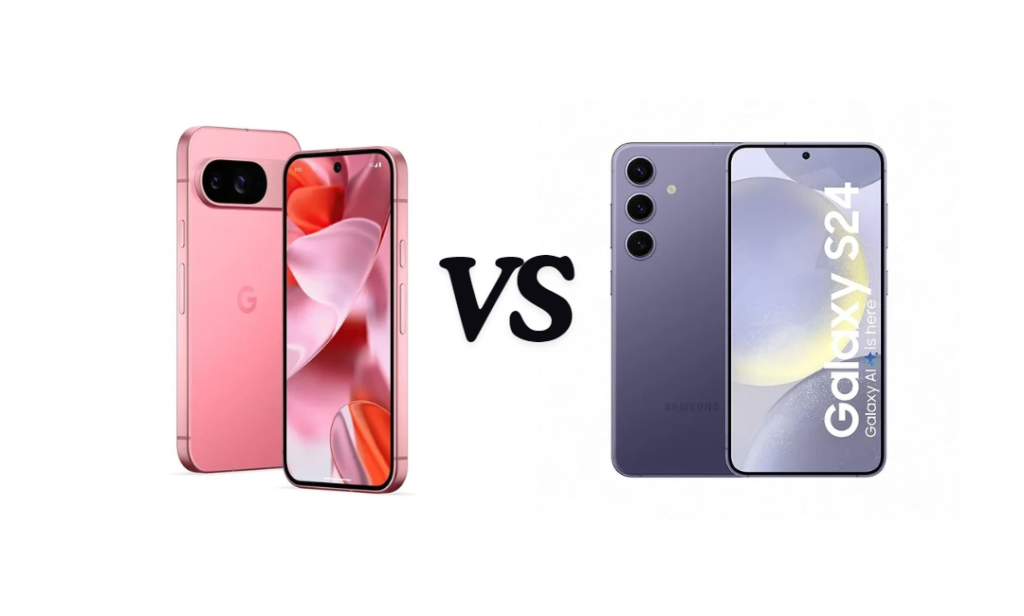
Google has recently unveiled its Pixel 9 series smartphones in the global market, a couple of months ahead of its usual fall schedule. The standard Pixel 9 is priced at Rs. 79,999 in India, marking a slight price increase compared to its predecessor and positioning it directly against the Samsung Galaxy S24. Let’s compare how the Pixel 9 stacks up against the Galaxy S24.
Starting with the design, the Galaxy S24 is 7.6 mm thick and weighs 167 grams. The Pixel 9 on the other hand thicker and heavier, measuring 8.5 mm and weighing 198 grams. Both phones use an aluminum frame and come with IP68 water and dust resistance.
As for the display, both smartphones use FHD+ OLED panels with 120Hz refresh rate and Gorilla Glass Victus 2 protection. The Pixel 9 sports a 6.3-inch screen, while the S24 is slightly smaller at 6.2 inches. Both displays support HDR10+ and offer peak brightness levels of 2700 nits for the Pixel 9 and 2600 nits for the Galaxy S24, accessible only when playing HDR content. In high brightness mode, they can reach up to 1800 nits and 1500 nits, respectively, under direct sunlight.
Please Note: When you buy something using the links in our articles, we may earn a small commission at no cost to you.
2. Performance, battery & software support
It’s well-known that Pixel’s Tensor cores lag behind in raw performance, and this is evident with the Tensor G4 chip in the Pixel 9. In benchmarks like Geekbench, the Pixel 9 scores 1590 points in the single-core test and 3821 in the multi-core test. In contrast, the Galaxy S24, powered by the Exynos 2400, significantly outperforms it, scoring over 2100 points in the single-core test and 6600 points in the multi-core test on Geekbench 6.
The story is the same with other benchmarks like AnTuTu, so it’s safe to say that the Pixel 9 isn’t that great when it comes to tasks like gaming. That being said, thanks to its optimization, you won’t notice any hiccups while multi-tasking and day-to-day operations.
Moving over to the battery department, the Pixel 9 boasts a bigger 4,700mAh battery paired with 27W wired and 15W wireless charging. In contrast, the Galaxy S24 has a 4,000mAh battery supported by 25W wired and 15W wireless charging.
Both devices are promised to receive 7 years of major OS updates and protection from vulnerabilities through security patches.
3. Camera
In terms of optics, the Pixel 9 features a dual-camera setup on the back, consisting of a 50MP Samsung GKN primary sensor with OIS, the same as in the Pixel 8, paired with a 48MP Sony IMX858 ultra-wide sensor. Meanwhile, the Galaxy S24 boasts a triple-camera configuration, including a 50MP Samsung ISOCELL GN3 primary sensor with OIS, a 10MP Samsung ISOCELL 3K1 telephoto lens, and a 12MP ultra-wide sensor. The Pixel 9 offers a 10.5MP front camera for selfies, while the Galaxy S24 has a 12MP front camera. Both devices support 4K video recording at 30 and 60fps with both their front and rear cameras, but the Galaxy S24 also supports 8K recording from its primary camera at 24 or 30fps.
4. AI features
The Pixel 9 and Galaxy S24 leverage AI features to improve the camera performance and experience. The Pixel 9 has a Magic Eraser for removing unwanted objects, Photo Unblur for sharpening blurry images, and Real Tone for accurate skin tone representation. Night Sight and Video Boost optimize low-light photography and video quality, respectively.
The Galaxy S24 on the other hand has Nightography for enhanced low-light photography and Scene Optimizer for automatic image enhancement. Users can also remove unwanted objects from photos using the Object Eraser feature, while Super Resolution Zoom improves digital zoom capabilities. AI is also employed in video stabilization and high-resolution 8K video recording.
The Pixel 9 also includes AI features like Live Translate for real-time language translation, improved dictation accuracy, and Call Screen for better call management. Google Assistant has been upgraded with AI for improved responsiveness and understanding. Additionally, Pixel Studio, an AI-driven image generation and editing tool, offers creative options for users.
The Galaxy S24 includes Bixby, Samsung’s voice assistant, which uses AI to enhance its performance. The device also offers a variety of other AI-powered features under the Galaxy AI umbrella.
5. Pricing & verdict
The Pixel 9 has launched in India at Rs 79,999 for the 12GB RAM and 256GB storage variant. Meanwhile, the Galaxy S24, with the same 256GB storage, shares the same MRP but is currently available at a much lower price, starting from Rs 67,999. The 128GB storage model of the Galaxy S24 is even more affordable, priced as low as Rs 55,500.
When considering value for money, the Pixel 9 may be harder to recommend, given its higher price compared to the Galaxy S24, which offers a sleeker, more lightweight design, a flagship camera system, and a powerful processor.
However, if budget is not a primary concern and you don’t intend to game much on your smartphone, the Pixel 9 could still be a good choice due to its extensive AI features, larger battery, and capable camera system.
Chinese smartphone brands have been known to push the boundaries in fast charging technology. The standard of charging rates has risen, and Realme’s latest announcement offers us a glimpse of the future where charging your phone doesn’t even take 5 minutes. In a recent demo, the brand’s 320W SuperSonic Charge can be seen powering a phone up in nearly four and a half minutes.
1. Realme 320W SuperSonic Charge: What’s the hype?
During the 828 Fan Festival at its HQ in China, Realme unveiled the 320W SuperSonic Charge and showcased the technology in action. The demo showed a smartphone with a 4,420mAh battery pack, which fully charged in just under 4 minutes and 30 seconds. This prompted the brand to refer to it as the 4 minute “miracle”. During the presentation, the device was seen taking 1 minute to hit 26 percent capacity, with 50 percent charge reaching in under 2 minutes.
It isn’t simply a newer charger as it is backed by the world’s first folded battery and advanced safety solution. Following years of research, the Chinese brand found a way on making the batteries more compact and offer guaranteed safety for fast charging. Employing a quad cell battery, Realme was able to charge four individual cells at the same time. These batteries measure just 3mm in thickness but carry a 10 percent higher capacity.
2. What does it mean for the consumer?
This is the direct successor to the 240W fast charging benchmark which was set by the Realme GT 5. So we can also expect the 320W SuperSonic Charge to be equipped on an upcoming Realme phone as well. The announcement clearly highlights the innovations in battery and charging technologies and the standards may rise once again.
Unfortunately, it doesn’t mean that every phone could soon power up blazingly fast. But such improvements in technology do trickle down. An example is that batteries could get slimmer without comprising on capacity, so phones get slimmer. As 300W charging sets a new standard, charging speeds of newer devices could also rise.
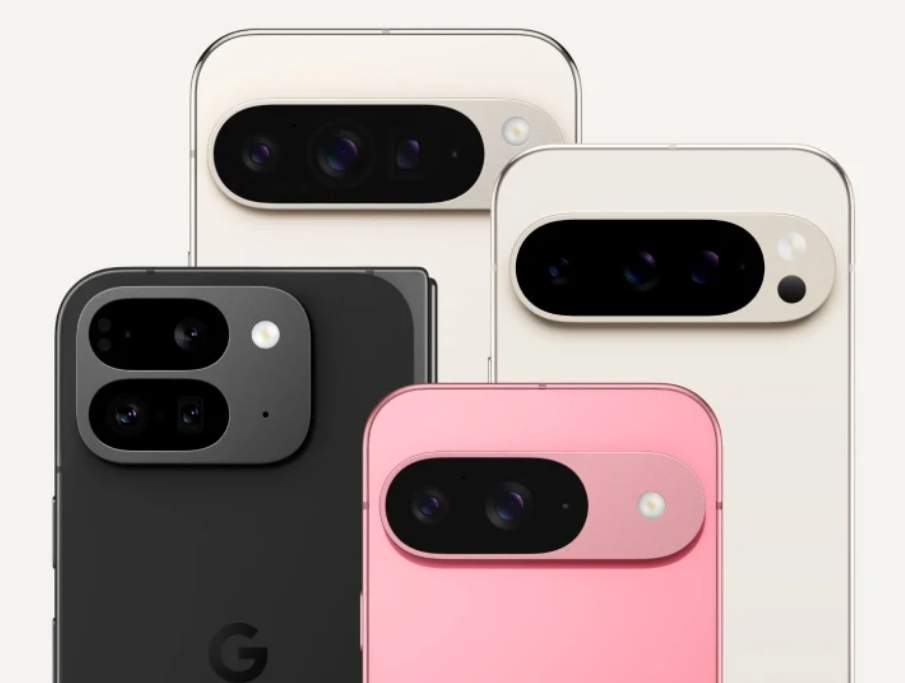
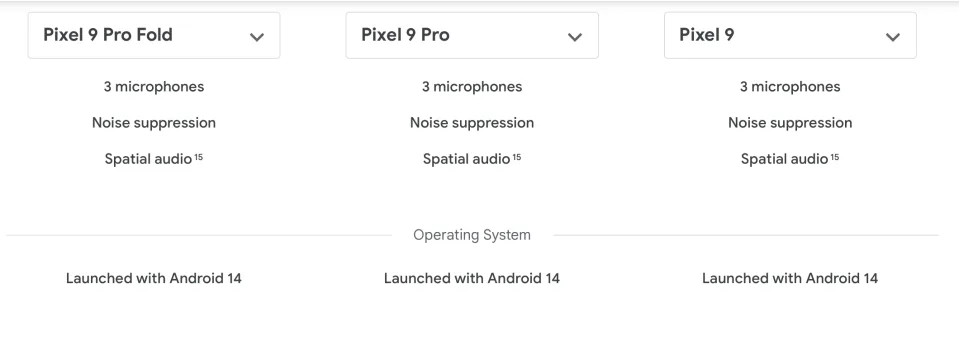
Google has launched the much anticipated Pixel 9 series with new AI features, a refreshed design and new colors. The phone is expected to be released on August 22. However, unlike the predecessors, the Pixel 9 series does not come with the latest Android out of the box.
Pixel phones have always been the best platform to showcase the features of the new Android system. This time, however, users won’t immediately be able to experience the latest features of Android.
Google offers a number of AI features which are developed based on Android 14
Fortunately, Google ported some of the new features of Android 15 to Android 14. For example, the screenshot interface on the Pixel 9 adopts the new design of Android 15, with the preview window placed above the new pill-shaped tray with rounded buttons. There is also a dedicated app for screenshots that is supposed to help the user in finding out information from all the screenshots in the device. It can also function as a reminder.
Nonetheless, the new Pixel lineup currently doesn’t have support for the “Private Space”, which requires the system to be based on Android 15.
Some of the AI additions to the Pixel 9 series include Gemini Live and the Pixel Studio image generator, which lets you generate images completely on the device within a couple of seconds based on text prompts. There is also a camera feature called “Add me”, which makes capturing group photos a lot easier my merging two different images together that contain different people in the frames. Google has developed all these features based on Android 14.
From a hardware perspective, the Pixel 9 series is powered by the Tensor G4 chip, which according to the company, is more capable, and power efficient, and helps the phone run the AI features better. You can learn more about the Pixel 9, Pixel 9 Pro, 9 Pro XL, and Pixel 9 Pro Fold here.
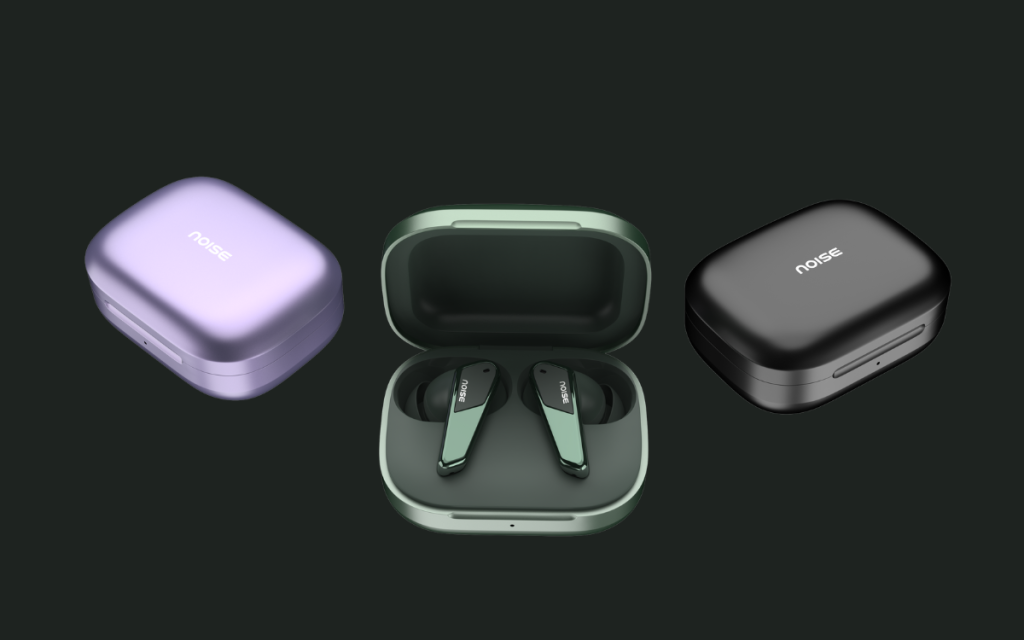
Noise, a popular Indian audio brand, has recently launched the Noise Buds N1 Pro in India, further expanding its True Wireless Stereo (TWS) lineup. This comes after the recent launch of Noise Buds N1.
These new TWS earbuds are positioned as an affordable option for those seeking features like Active Noise Cancellation (ANC) and long battery life.
The standout feature of the N1 Pro is its Active Noise Cancellation (ANC) technology. This feature effectively minimizes background noise, allowing you to enjoy your music, podcasts, or audiobooks without distractions. Whether you’re on a noisy commute or in a busy office, ANC helps create a quieter, more focused listening experience. In this price range, ANC is a rare offering, making the N1 Pro an appealing choice for budget-conscious audiophiles looking for peace and quiet.
2. Noise Buds N1 ProSpecs
The Noise Buds N1 Pro has an in-ear design and a shiny finish. They feature 11mm drivers for balanced sound quality with good clarity and bass. They also offer an ultra-low latency mode of up to 40ms, making them ideal for gaming or video playback with smoother, more synchronized audio.
The earbuds feature Quad Mic Environmental Noise Cancellation (ENC) technology, enhancing call clarity by blocking out external noise. They also have an IPX5 rating, providing resistance to sweat and water, making them ideal for workouts and outdoor activities.
The earbuds offer an impressive 60 hours of total playback time and feature Instacharge technology, delivering 200 minutes of playback with just a 10-minute charge.
In terms of connectivity, the Noise Buds N1 Pro supports Bluetooth 5.3, which ensures stable connections and efficient power usage. The earbuds also feature HyperSync technology, which allows for quick pairing with devices and a seamless wake-and-pair functionality.
3. Pricing and Availability
The Noise Buds N1 Pro TWS earbuds are priced at Rs. 1,499 in India.
These earbuds come in four color options: Chrome Black, Chrome Green, Chrome Purple, and Chrome Beige. They will be available for purchase on Amazon.in and gonoise.com by the end of the month.
4. Comparison with Noise Buds N1
The base model Noise Buds N1 lacks several key features found in the Pro version. It does not have Active Noise Cancellation (ANC) and offers a shorter battery life of up to 40 hours compared to the Pro’s 60 hours. The fast-charging capability is also less advanced, providing 120 minutes of playback with a 10-minute charge, while the Pro offers 200 minutes.
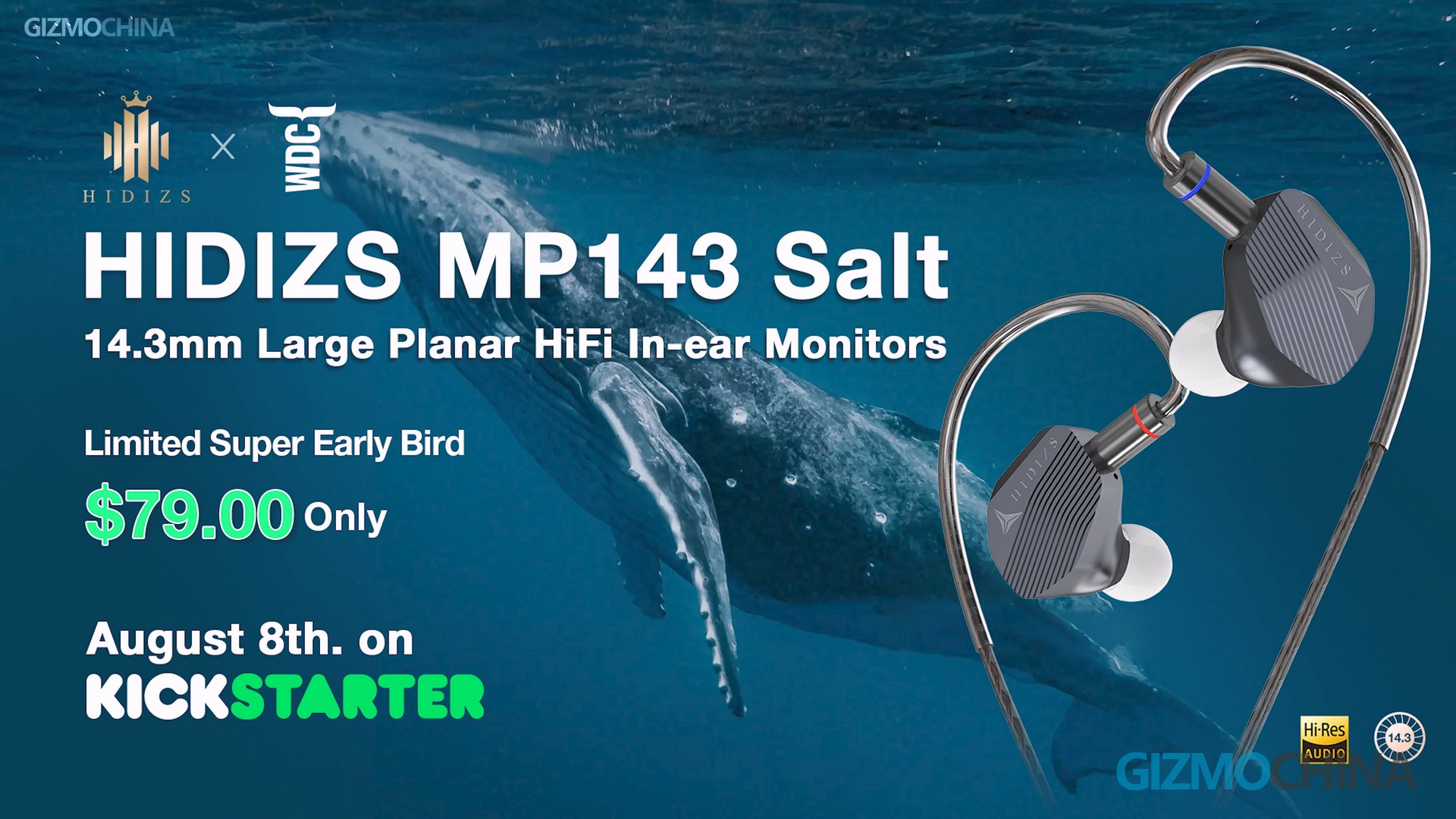
Previously, I introduced you to one of Hidizs’ ultra-large planar HiFi IEMs: the Hidizs MP145, which is a great IEM. Now Hidizs has come up with the more affordable MP143 Salt for you guys! It’s basically the little brother of the MP145, and the advantages have basically been inherited. If you’re interested in planar IEMs, please keep watching the video till the end.
Unboxing
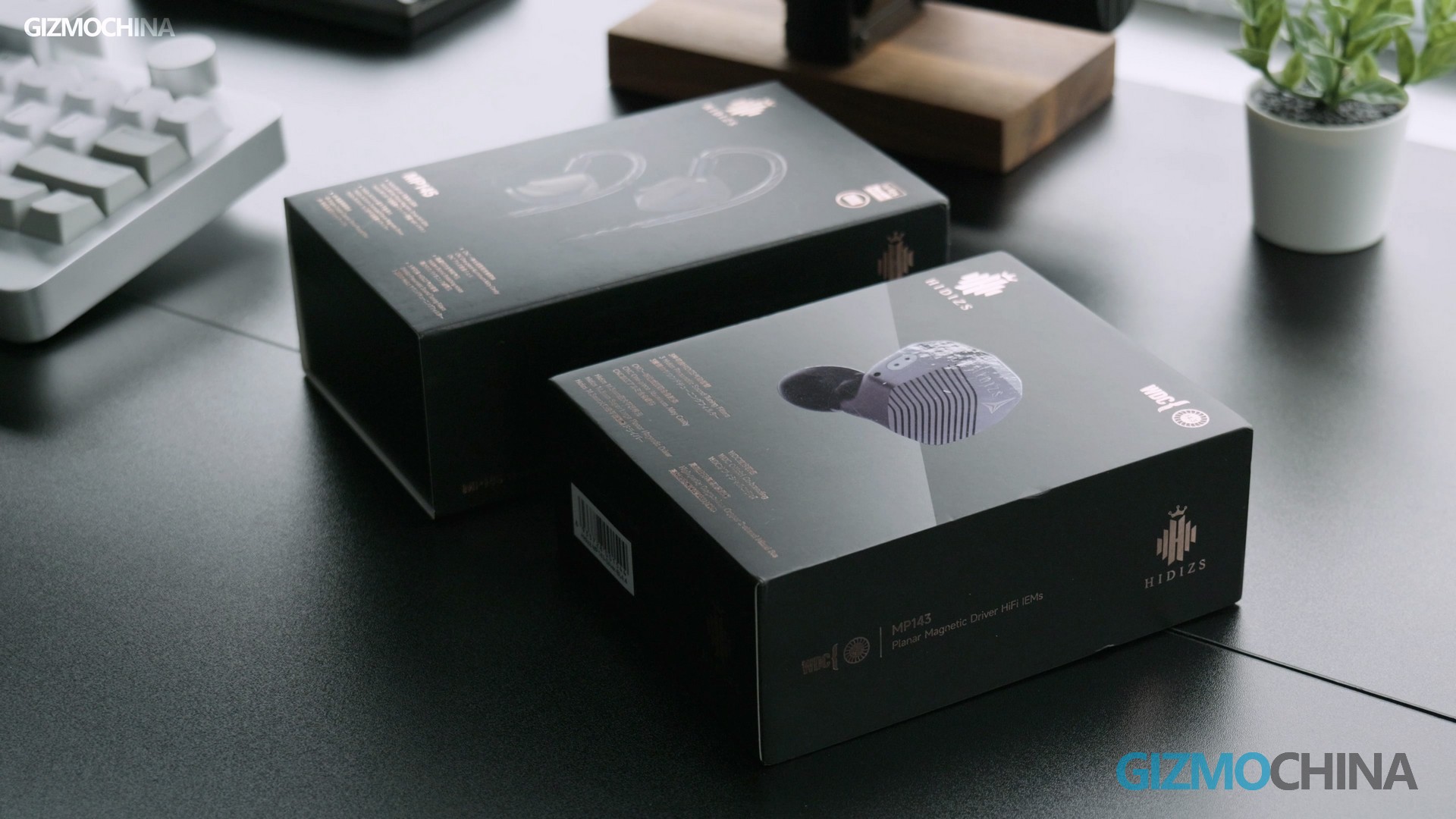
The general design of the box remains the same as the MP145. I noticed that the box is completely Plastic-Free and smaller in size, obviously in response to the call to protect the environment.
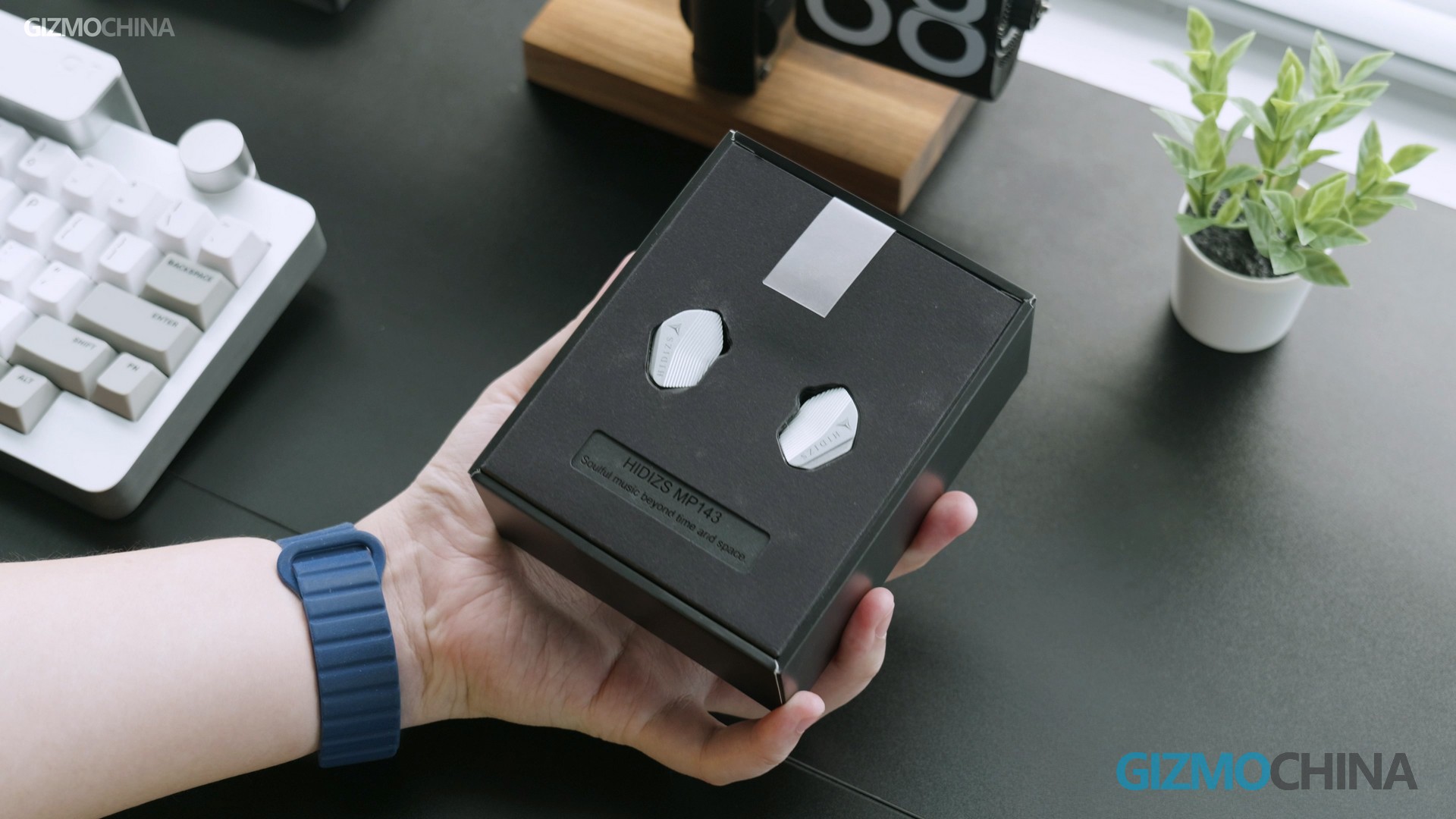
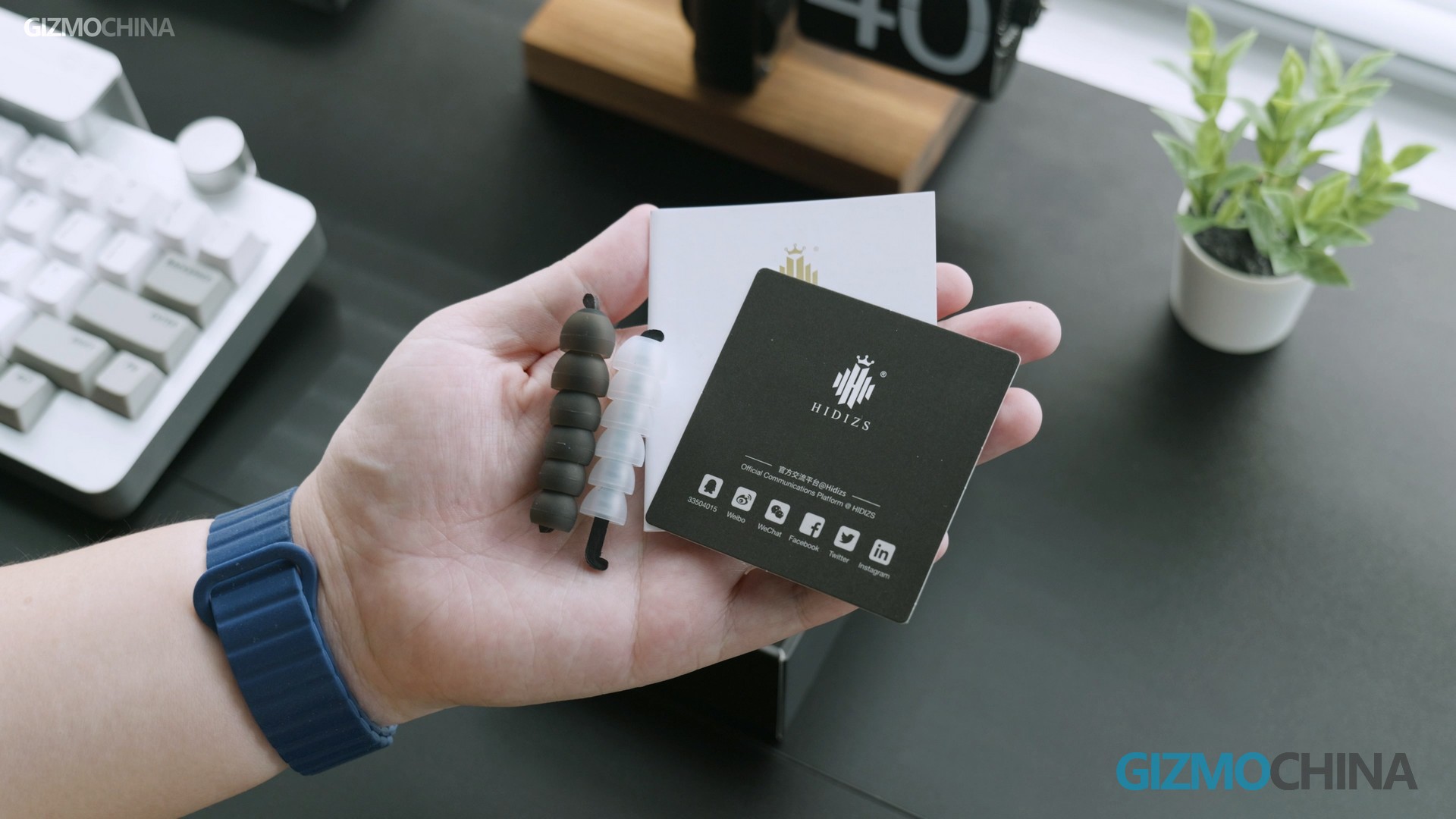
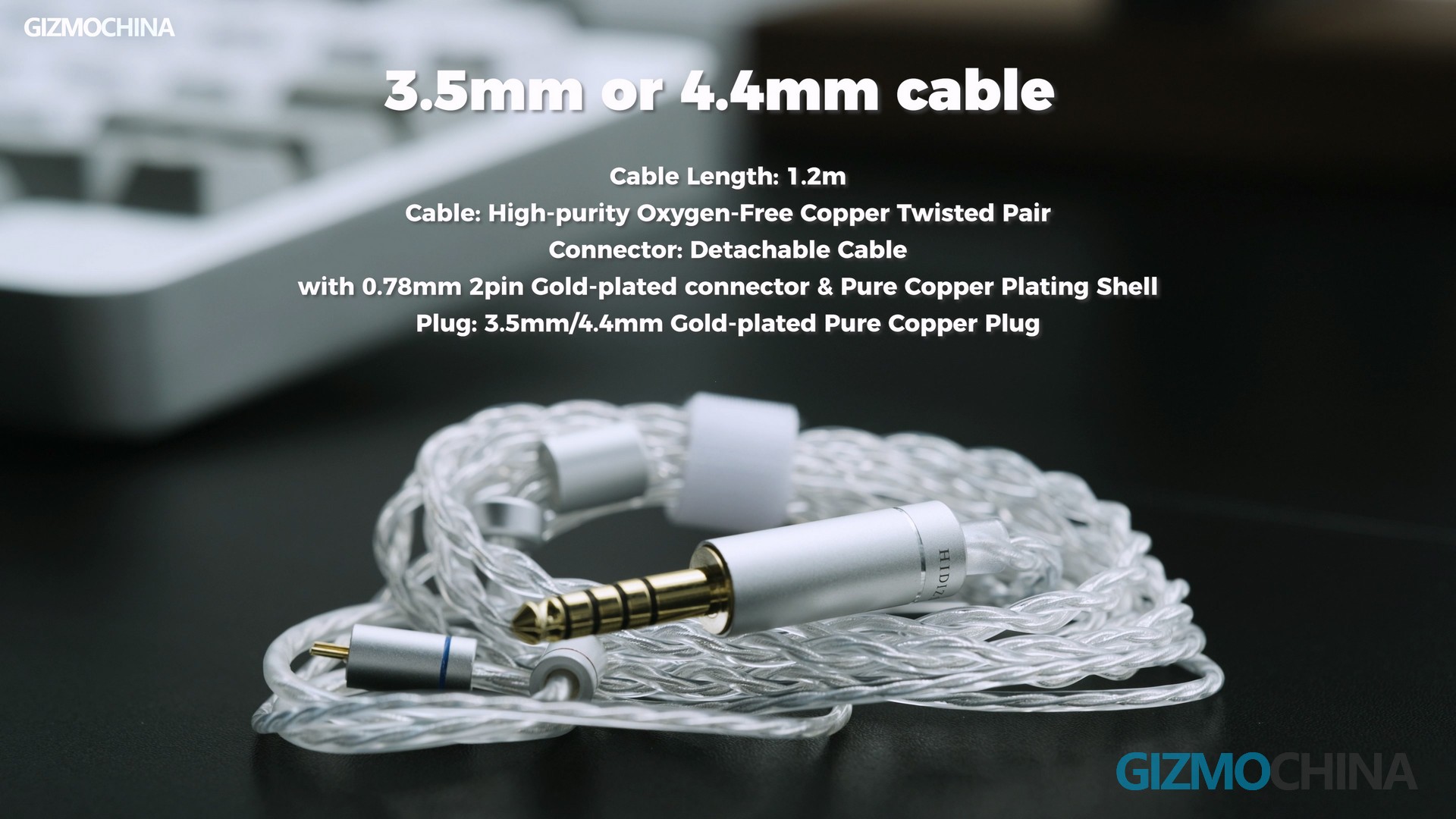
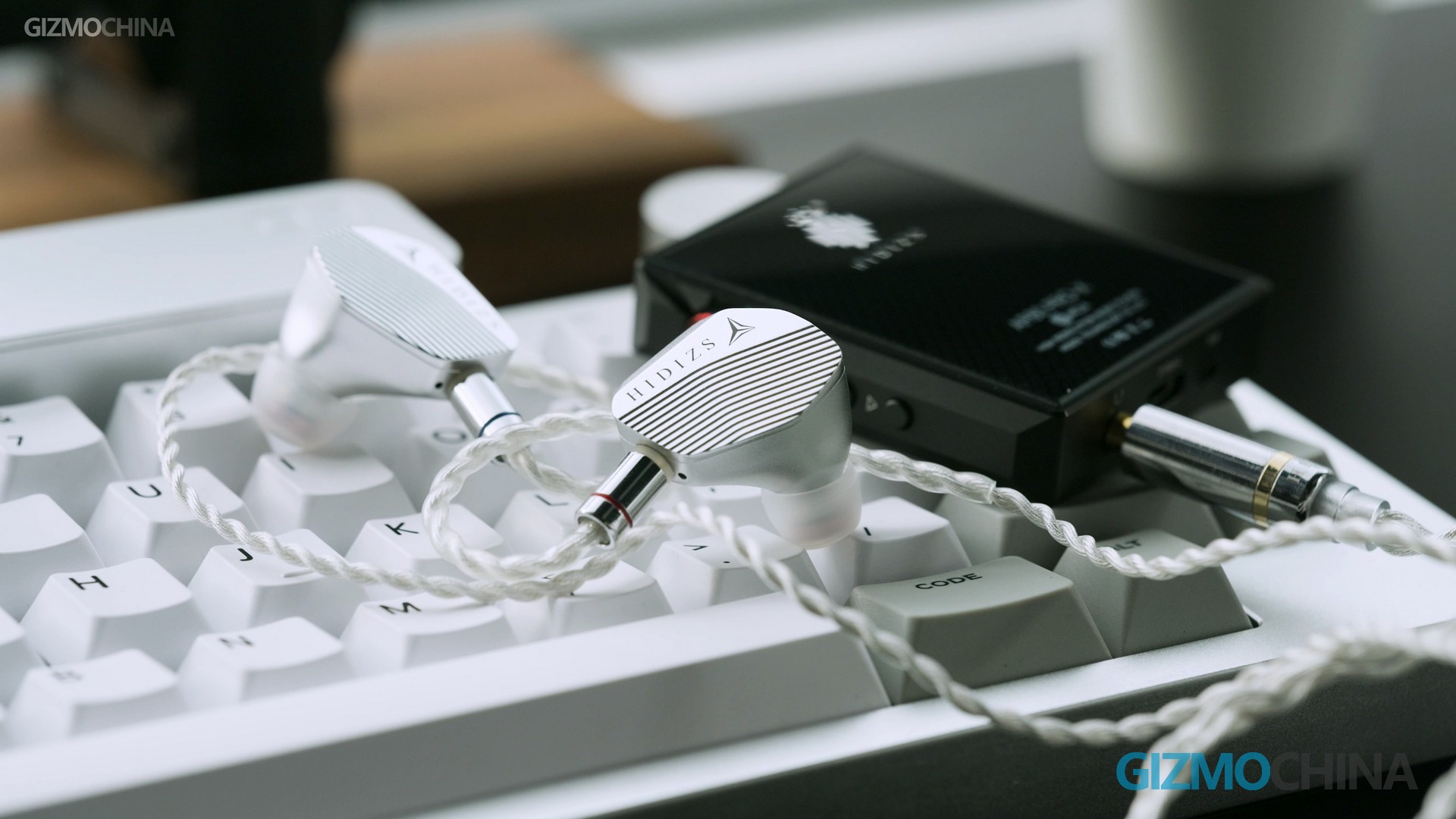
Open the lid and inside is the MP143 itself, with all the other accessories underneath. Aside from the manual and a bunch of ear tips, what’s inside this black leather pouch is what we really need. Inside is a detachable cable like the MP145, with 2-pin gold-plated connectors and a pure copper plating shell.
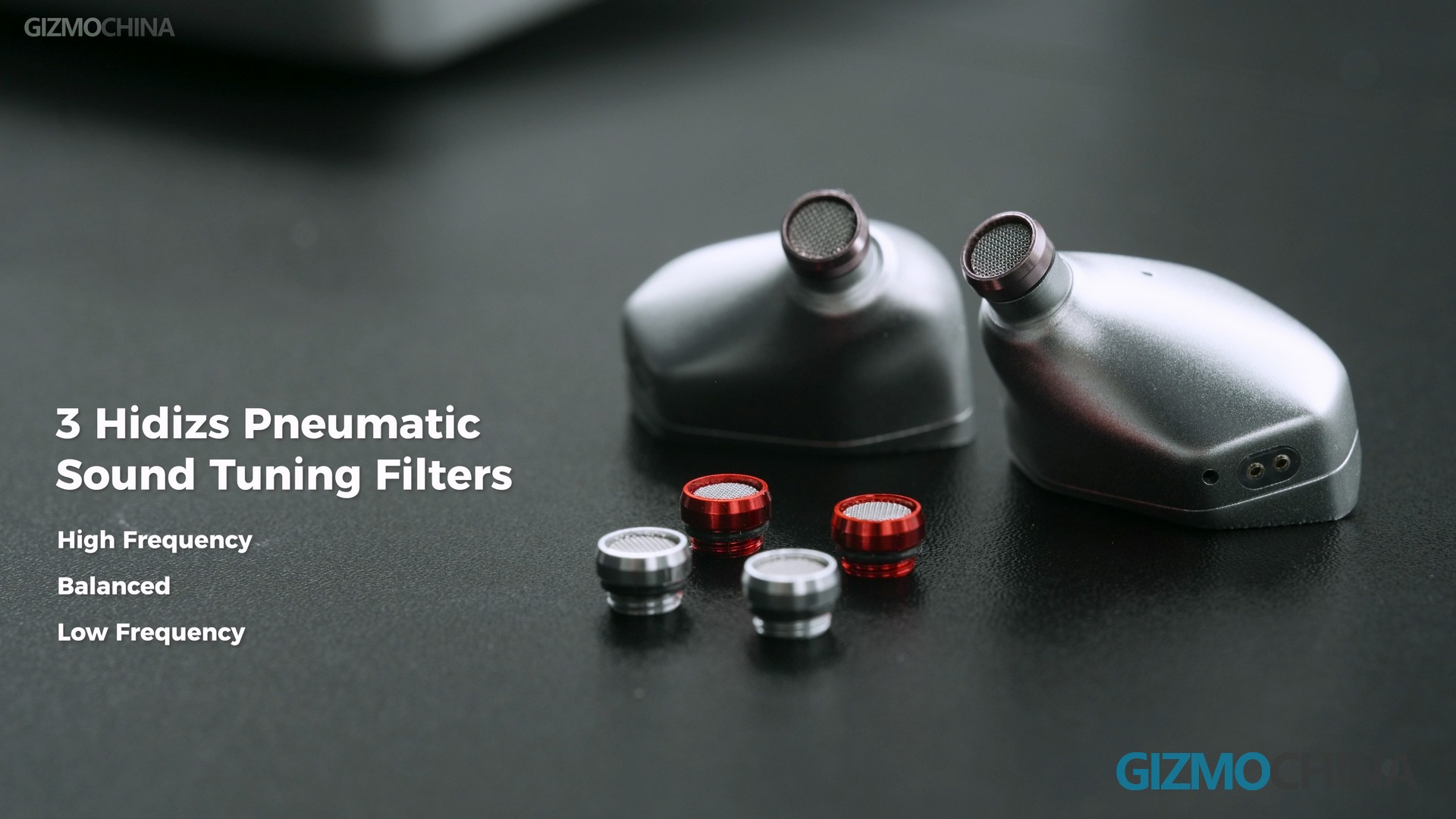
There is also a small box containing three different sound-tuning filters. This is also the same giveaway as the MP145’s, they can change the tendency of the sound by filtering the cotton.
As you can see, the MP143 doesn’t lack certain accessories due to its lower price tag, which is still quite generous for Hidizs.
Design
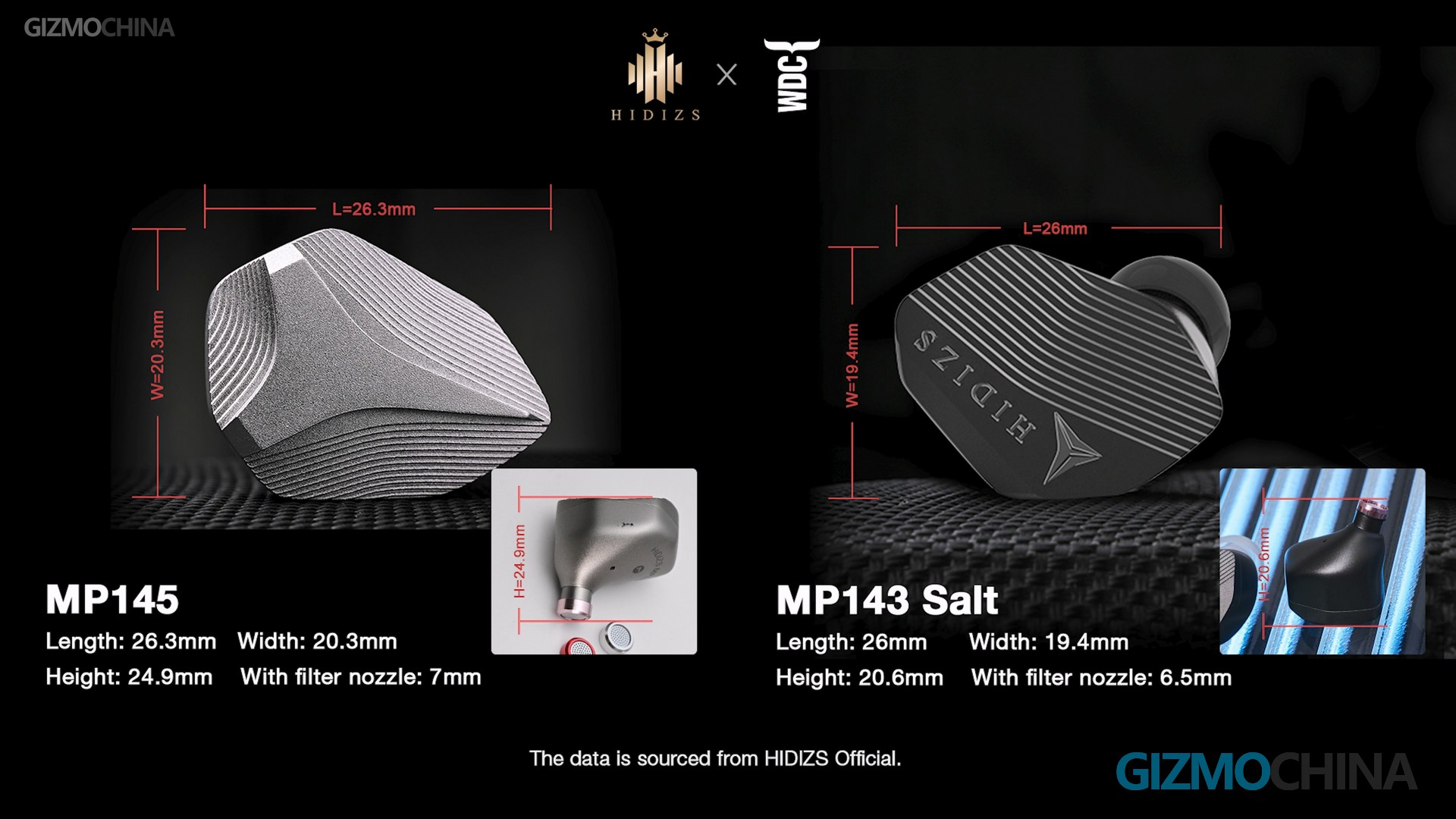
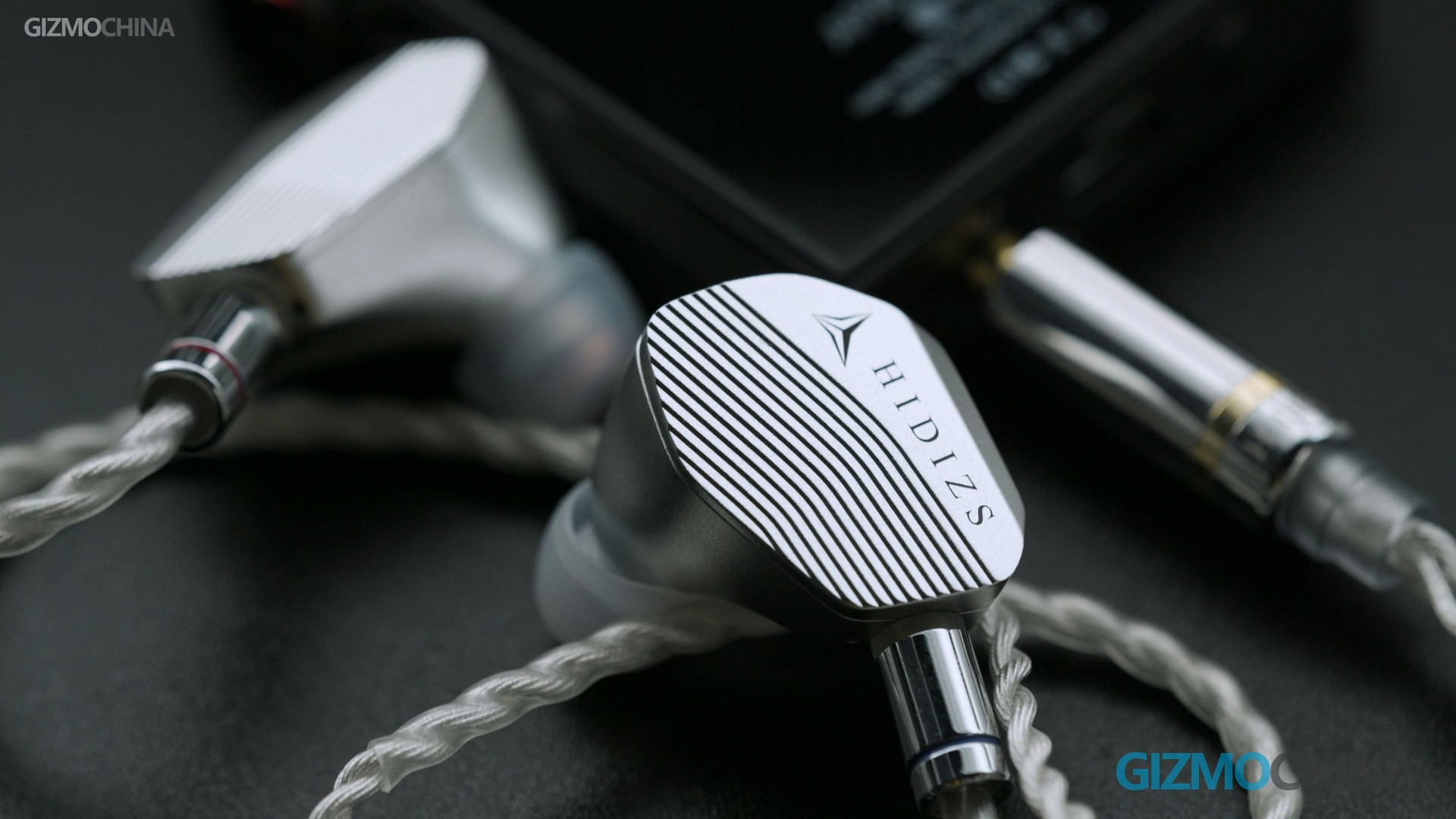
Compared to the MP145, the MP143 will have a more minimalist design. Instead of opting to CNC carve the whale’s tail into the headphone’s casing this time around, they’ve just step-carved the whale’s folds, and the step heights aren’t as exaggerated as before.
There are air holes in the shell. It can balance the air pressure inside the earphone cavity. Ensure that the sound quality will not be muffled. While I still think the MP145’s large whale tail design would have looked better, it doesn’t mean the 143’s design is ugly. The silver version we got I think is the best-looking of the three colorways. the shine of the Aluminum alloy brings a hint of industrial beauty.
The reason the MP143 is less difficult to make this time around is simple: to bring the price down and make it more affordable for more people. So if its price is within your budget, then thank Hidizs for their efforts in case design.
What does “Salt” stand for?
Have you ever wondered why Hidizs MP143 has a “Salt” at the end of its name? We all know that Hidizs has been working with WDC since last year. So “Salt” must have something to do with whales or dolphins, right?
“Salt is actually the name of a female humpback whale. She was first spotted in the 1970s and is known for her speckled white dorsal fin, making her stand out in a crowd. She has 15 children, 17 grandchildren and three great-grandchildren. It’s no wonder this legendary matriarch received the attention of the WDC. In honor of “Salt,” the Hidizs used her name on MP143.
This is a way to raise attention to the health of the oceans so that whales and dolphins can have a safe environment. Secondly, it suggests that the MP143 has fantastic audio quality – after all, humpback whales are renowned for their melodic songs.
Specs
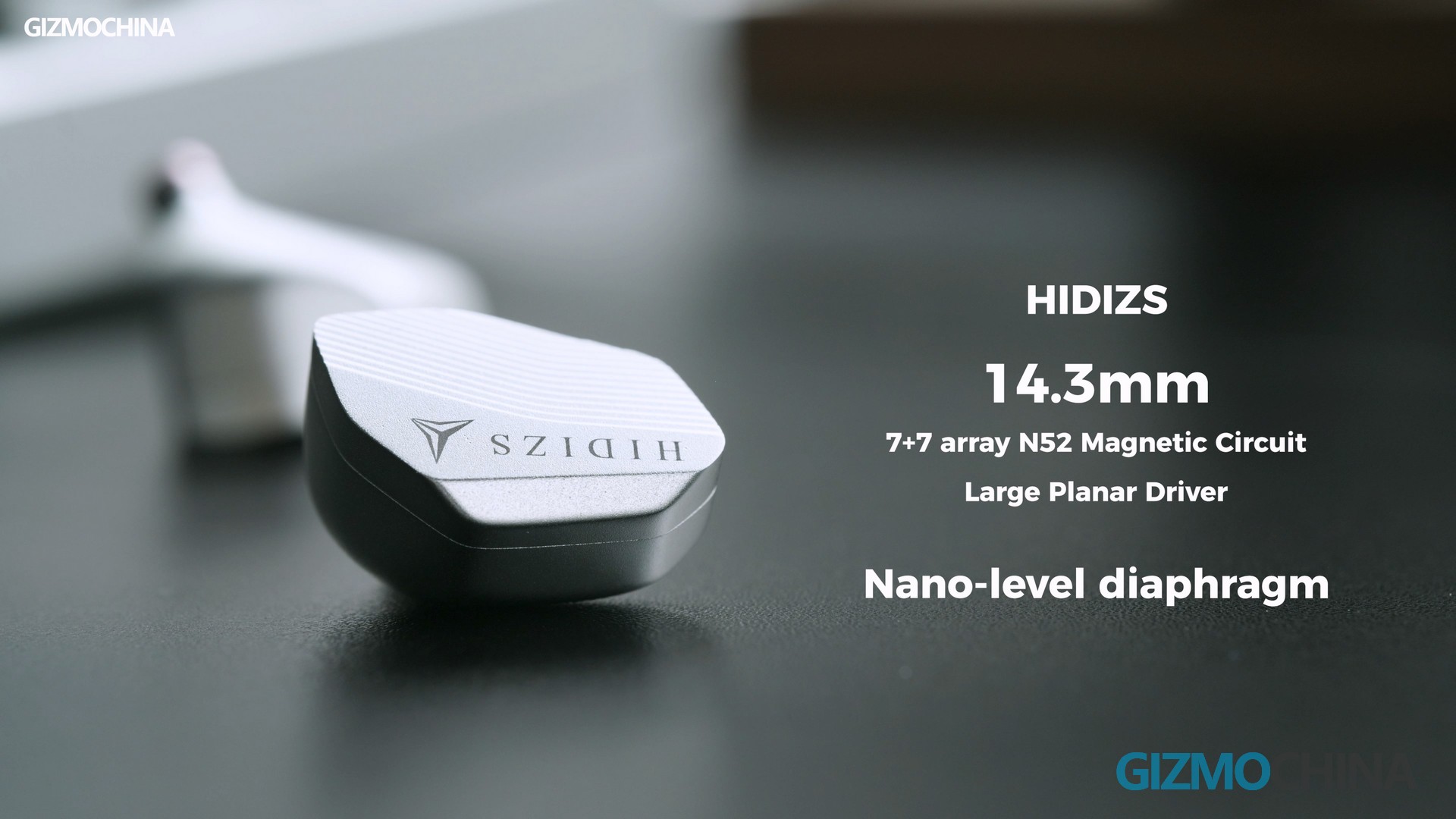
As a planar IEM, the MP143 has decent specifications. 14.3mm Planar Magnetic Driver with a Nano-level diaphragm should be considered as a better configuration. The driver isn’t as big as the 145’s, but in other words, it’s more wearable.
Both in terms of size and weight, the MP143 has once again evolved to become more sensible. Weighing in at 20% lighter than the MP145, I can clearly feel that the earbuds are firmer in my ears.
Everyone should know the benefits of the Planar magnetic driver. Much lower distortion at higher volumes. More powerful bass response and so on. I said in my review of the MP145 that the biggest drawback of the planar HiFi IEMs is that they are expensive. The MP143 is even cheaper than the MP145 this time around though, with the Super Early Bird coming in at under $80. That shouldn’t make it expensive for most Hi-Fi fans.
Check out the affordable HIDIZS MP143 campaign on KICKSTARTER! The great deal just started running last week.
Experience
To be honest, I’m no audio expert. But as a melomaniac, I think I can share my experience. Overall, it is an omnivorous earphone. I didn’t find any aspect that it doesn’t perform well, songs by male or female singers, folk music, pop, rock, symphony, and even anime songs can be handled well. In all types of music, it does a great job of reproducing studio live sound.
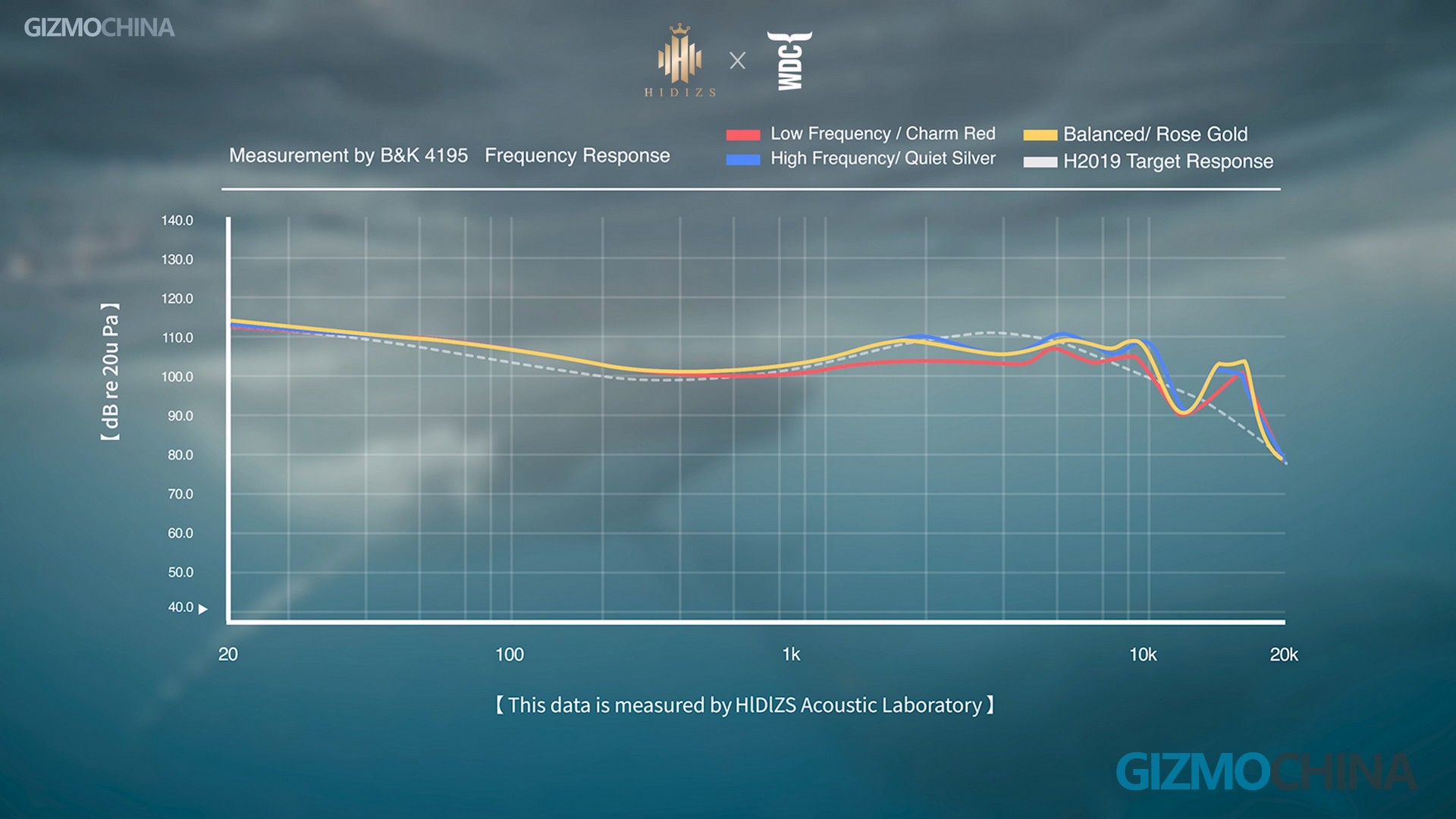
Hidizs also put out an FR graph of this IEM, which basically matches my personal feelings as well. They were tuned to the H-2019 target curve with no particular tendencies, just like the MP145. So you like the MP145, you’ll definitely like the MP143 as well.
Summarize
Simply put, the MP143 is the budget version of the 145. The MP143 will be smaller and lighter, more wearable. The design is much simpler. The biggest difference is that the driver is a bit smaller, the rest isn’t that much worse than the MP145.
Obviously, the super cheap price is the most important reason why the MP143 stands out from the rest. It’s still crowdfunding on Kickstarter, and there aren’t many chances to get a planar IEM for less than $80. So better to hurry up and pre-order it.
We use cookies on our website to give you the most relevant experience by remembering your preferences and repeat visits. By clicking “Accept”, you consent to the use of ALL the cookies.
This website uses cookies to improve your experience while you navigate through the website. Out of these, the cookies that are categorized as necessary are stored on your browser as they are essential for the working of basic functionalities of the website. We also use third-party cookies that help us analyze and understand how you use this website. These cookies will be stored in your browser only with your consent. You also have the option to opt-out of these cookies. But opting out of some of these cookies may affect your browsing experience.
Necessary cookies are absolutely essential for the website to function properly. This category only includes cookies that ensures basic functionalities and security features of the website. These cookies do not store any personal information.
Any cookies that may not be particularly necessary for the website to function and is used specifically to collect user personal data via analytics, ads, other embedded contents are termed as non-necessary cookies. It is mandatory to procure user consent prior to running these cookies on your website.