We are nearing the launch of Samsung’s next-gen Galaxy S25 series. The brand typically releases its flagship phones in two variants, which are the Exynos and Snapdragon variants. But it seems that there are some bittersweet updates regarding the upcoming Galaxy S25 lineup.
According to a fresh report from Hankyung (Via SamMobiles), the Galaxy S25, Galaxy S25+, and Galaxy S25 Ultra will feature the new Snapdragon 8 Gen 4 SoC, which is Qualcomm’s upcoming high-end mobile processor. This is surprising considering Samsung was expected to announce the Exynos 2500 that would power the Galaxy S25. To recall, the Galaxy S24 lineup launched with Exynos 2400 in most markets with the Galaxy S24 and Galaxy S24+. Meanwhile, the Galaxy S24 Ultra shipped with the Snapdragon 8 Gen 3.
But now, the Snapdragon chips might be powering these devices exclusively. Apparently, Samsung is planning on using the highest performance components to ensure performance and address the doubts customers have regarding the Exynos variants. The Snapdragon 8 Gen 4 is rumored to offer a notable performance improvement, around 30 percent in AI and GPU.
2. But it’s not all good news
Switching exclusively to Snapdragon would arrive as welcomed news to Galaxy S series fans since these have always been ahead of their Exynos counterparts. If Samsung does move to Snapdragon only, then the series as a whole might be getting a price hike. Known analyst Ming-Chi Kuo (Via PhoneArena) stated that there is a 25 percent to 30 percent rise in the price of Qualcomm’s Snapdragon 8 Gen 4.
This means that the Galaxy S25 lineup is getting costlier as well. For those unaware, the Snapdragon 8 Gen 3 chipset is priced somewhere between 190 to 200 US Dollars, and Kuo believes that the Snapdragon 8 Gen 4 may be priced between 237 to 260 US Dollars.
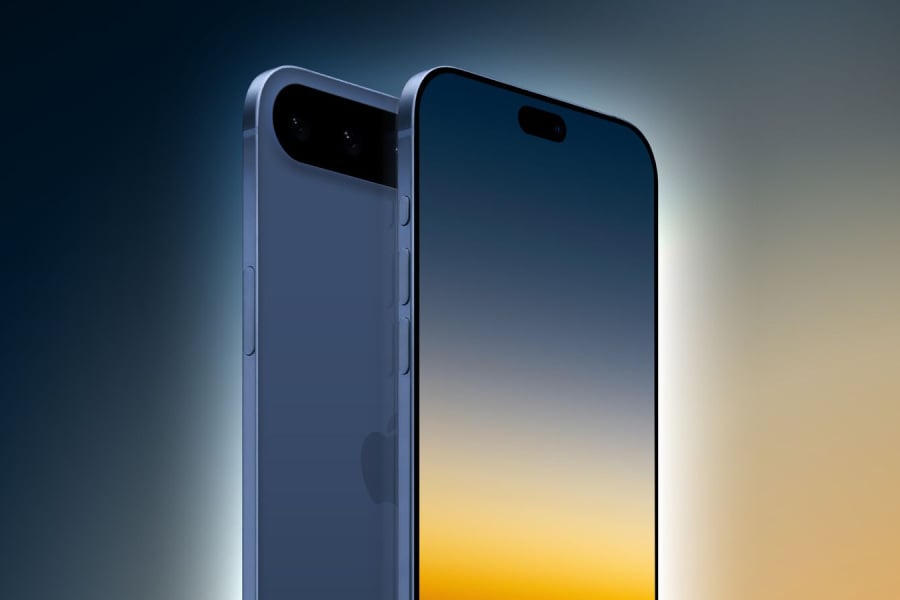
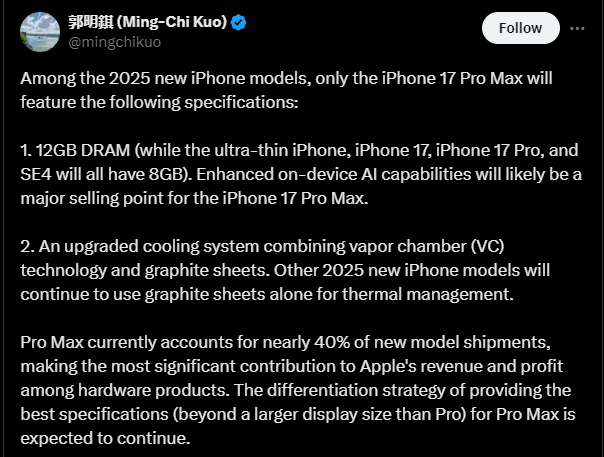
According to TF International Securities analyst Ming-chi Kuo, Apple will add a graphite sheet to the entire iPhone 17 lineup and an additional VC cooling system to the iPhone 17 Pro Max to improve heat dissipation. With the cooling system, the iPhone 17 lineup is expected to offer significant improvement in performance as compared to its predecessors.
For those unfamiliar with graphite sheets and VC (vapor chamber) cooling, both help spread the heat to a larger area and dissipate it to the environment through the outer surface. The cooling system keeps the key components of the phone (such as the SoC) at a controlled temperature and prevents thermal throttling.
The improved cooling system on the iPhone 17 Pro Max could be necessary to sustain enhanced on-device AI features
In turn, it enables the device to offer a better or more stable performance. This marks the first time Apple has added these cooling solutions to its iPhones.
Apple has always been indifferent to the cooling systems, however, the company could have finally decided to improve the cooling solution after seeing the performance capabilities of the A17 Pro and its successors.
The iPhone 17 Pro Max is also rumored to offer 12GB RAM while all other models will have 8GB RAM. 12GB RAM on the Pro Max model is expected to be due to more on-device AI features.
The iPhone 17 series may include a total of four iPhone models – the iPhone 17, iPhone 17 Slim, iPhone 17 Pro, and the iPhone 17 Pro Max. As you can see, the iPhone 17 Plus can be replaced by the iPhone 17 Slim, which will not only be slimmer but will also be smaller in size.
According to previous reports, the iPhone 17 Slim could measure 6.55″ to 6.6″, which is smaller than the 6.7″ screen of the iPhone 15 Plus. Other than that, Apple is unlikely to offer any major changes in design with the iPhone 17 lineup as compared to its predecessor.
Android 15 release is around the corner – it’s scheduled to be out for the public in October. However, brands have already started working on their version of custom skin, like One UI for Samsung and XOS for Infinix.
For Infinix, the upcoming XOS 15 skin will be based on Android 15. While timely software updates have been a challenge for Infinix in the past, the brand is making efforts to improve its software update process and has promised upgrades for several devices in its Note 40 series.
Infinix Android 15 Eligible Devices
Infinix Zero 40
Infinix Zero 40 4G
Infinix Note 40
Infinix Note 40 5G
Infinix Note 40X 5G
Infinix Note 40 Pro 5G
Infinix Note 40 Pro 4G
Infinix Note 40 Pro+ 5G
Infinix GT 20 Pro
Infinix Xpad
Infinix is yet to officially announce a list of Android 15-supported devices. So, we had to review the software update policy for every smartphone and the past rollout history to prepare this list. Naturally, all upcoming high-end devices should be eligible for the upgrade.
While Samsung and Google offer seven years of Android updates, Infinix promises only two upgrades. Among the above-mentioned devices, the Note 40 Pro 5G and Note 40 Pro+ 5G, are confirmed to receive two years of Android OS upgrades and three years of security updates. The sad part is that the company doesn’t even guarantee just one Android update for budget phones.
When Will Infinix Start Rolling Out the Android 15 Update?
Infinix is yet to announce the release date of XOS 15 (based on Android 15), and based on past releases, we are not expecting the release to happen anytime soon.
Let’s take the case of Android 14, which arrived in October last year. While other brands quickly started rolling it out to their devices, Infinix began the rollout in January. So, it appears that the brand will likely start sending the updates in December or early next year.
What’s New in Android 15?
We don’t have many details about the upcoming changes, additions, and improvements to XOS 15, but it’ll likely include new customizations, wallpapers, and security/privacy improvements.
Besides XOS 15, the next big upgrade for Infinix phones will include new features and enhancements from Android 15. Here are the best of them known so far:
1. Theft Detection Lock
This Android 15 feature will stop thieves from stealing your data.
The Theft Detection Lock feature uses Google’s AI to determine when your device has been snatched from your hands. If it detects this, the device will lock itself automatically, preventing thieves from stealing your data. The best part is that thieves won’t be able to activate the device until they have your Google account details.
Snatching/stealing Android phones and selling them off for some money is a common practice among thieves, but Android 15 reduces the incentive by making the device unusable without the correct Google account details.
2. Satellite Connectivity Support
Android 15 “extends platform support for satellite connectivity.” It provides support for SMS, MMS, and native RCS apps to use satellite connectivity for sending and receiving messages.
The new OS adds some UI elements to ensure a consistent user experience. All Android 15 phones may not support satellite connectivity, as they will likely require special chip and carrier support.
3. Split Screen App Pairs
Android 15 lets you create shortcuts for your favourite split-screen app pairs. For example, you can create a shortcut for YouTube and Notes, which will open in the split screen mode when you tap the icon.
This might seem a minor addition, but it’s actually a big thing if you use multiple apps in the split-screen mode. This small addition might save you a lot of time.
4. Satellite Connectivity Support
No cellular network, no worries! Android 15 “extends platform support for satellite connectivity.” It provides support for SMS, MMS, and native RCS apps to use satellite connectivity for sending and receiving messages as long as you are under the sky.
Android 15 also adds some UI elements to ensure a consistent user experience. In addition to the software, the device requires specific hardware to communicate via satellite. This feature may also require carrier support.
5. App Archiving
If you have a lot of apps on your device, the app archiving feature might save you from running out of storage. This feature lets you uninstall/archive the app while keeping the user data around. So, the next time you install the app, you can continue where you left off.
Android smartphones already have the app archiving feature, but it’s restricted to Play Store apps only. However, Android 15 has this feature baked in to also support apps installed outside of the Play Store.
6. Notification Cooldown
Android 15 might also introduce the notification cooldown feature to prevent people from getting overwhelmed by too many notifications. This feature lowers the volume of successive notifications coming from the same app.
Which Infinix device do you have? Will it get the Android 15 upgrade? Also, let me know your thoughts on the upcoming OS in the comment section below.
Following a string of leaks, GoPro has officially confirmed the launch date for its next generation of action cameras. A teaser video posted on the company’s X/Twitter account reveals September 4th as the big day for the unveiling of two new Hero models.
The confirmation comes alongside a leaked hands-on video from tipster Igor Bogdanov, giving us a good peek at the GoPro Hero 13 Black design.
The clip shows a front-mounted display with “13 BLACK” branding while the action cam has a familiar Power/Mode button next to the camera sensor and heatsink.
In terms of specs, leaks suggest the Hero 13 Black will retain the same 27MP sensor as its predecessor. The video recording capabilities will likely remain the same as well, with 5.3K at 60 FPS and 4K at 120 FPS. It’s also expected to carry over HyperSmooth 6.0 image stabilization and HDR features from the Hero 12 Black.
The biggest upgrade this year seems to be a larger 1,900 mAh battery that will replace the 1,720 mAh unit on the Hero 12 Black. Additionally, GoPro will likely expand its action cam accessory range with a macro and an ultra-wide lens attachment alongside a Floaty accessory and a protective sleeve.
GoPro Hero 13 Black Accessory
The second GoPro camera remains shrouded in more mystery. It could likely be a successor to the GoPro 11 Mini, and rumors suggest it will offer HyperSmooth stabilization and slow-motion video recording.
With the official launch date just two days away, we’ll soon have detailed information about both Hero action cams. But whether September 4th is the actual release or just an unveiling remains to be seen.
In today’s roundup, we mention Samsung’s Quantum smartphones, Huawei Mate 70 Pro leaks, Xiaomi’s OLED tablet, and more.
Snapdragon 6 Gen 3 launched
Today’s Tech Highlights:
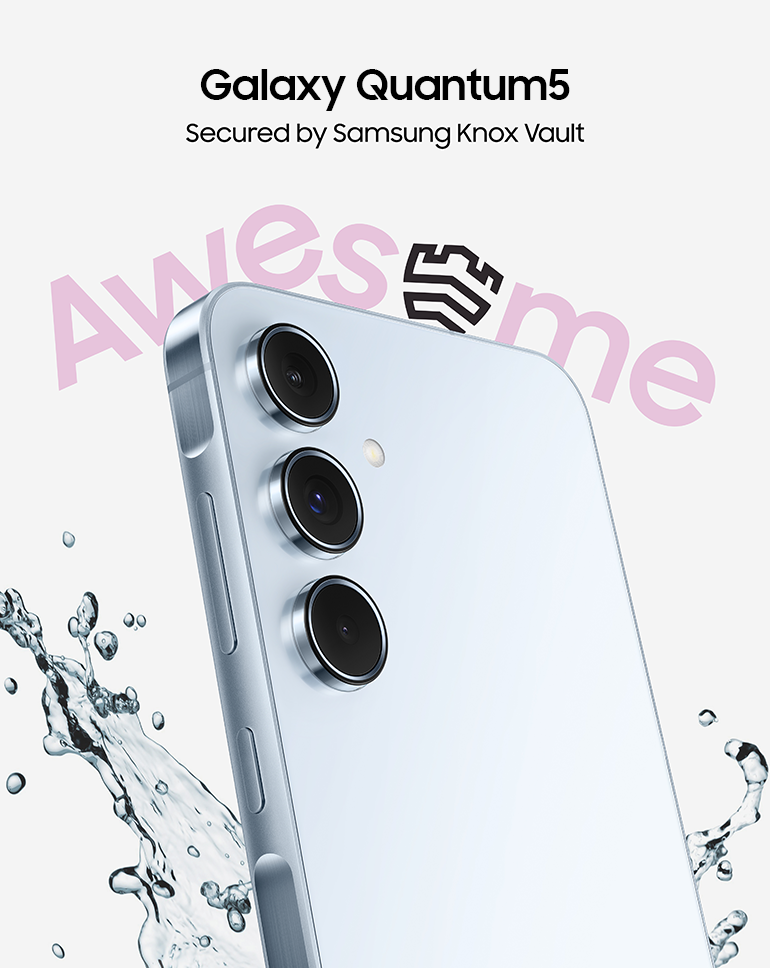
Samsung’s Quantum Leap in Smartphone Security: Check out the Galaxy Quantum 5, Samsung’s latest secure smartphone featuring quantum cryptography technology.
Xiaomi’s Consumer-Friendly Battery Replacement Offer: Dive into Xiaomi’s limited-time promotion offering significant discounts on battery replacements for a wide range of models in China.
Apple’s Upcoming Product Lineup: Get a sneak peek at what to expect from Apple’s next event, including the highly anticipated iPhone 16 and Apple Watch Series 10.
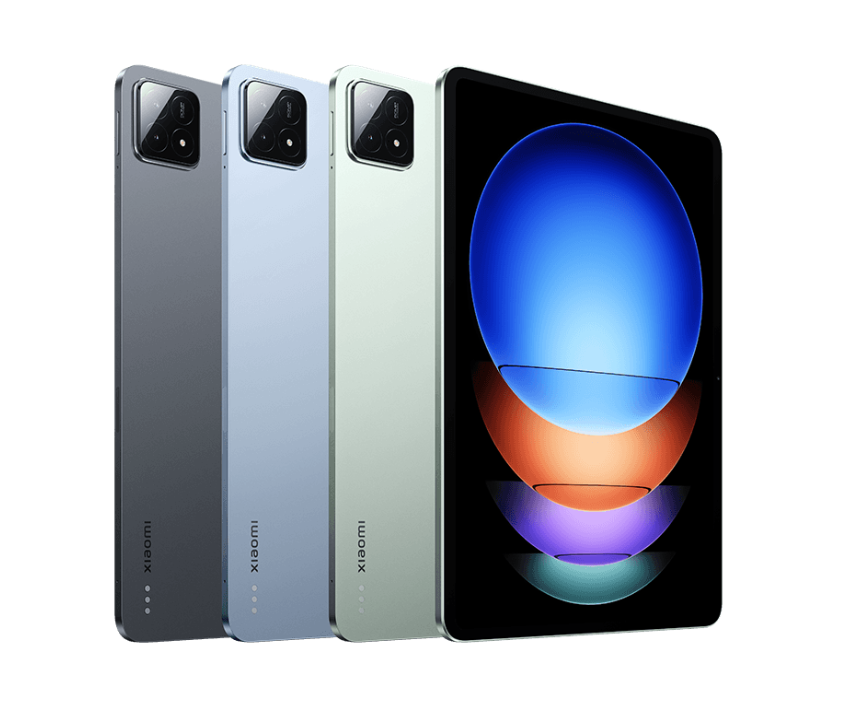
Xiaomi’s High-End OLED Tablet: Know about the latest leaks on Xiaomi’s upcoming OLED tablet, rumored to feature impressive specs like 24GB RAM and 120W fast charging.
Plus, don’t miss our roundup of other exciting stories, including Huawei Mate 70 Pro leaks, the global Redmi Note 14 5G certification, Snapdragon’s latest chipset unveiling, and Anker’s compact Google TV projector!
Samsung has launched the Galaxy Quantum 5, a highly secure version of its Galaxy A55 smartphone, specifically designed for the South Korean market. In collaboration with SK Telecom and ID Quantique, Samsung has equipped the Quantum 5 with a quantum cryptography security chip to enhance its online security capabilities.
Xiaomi has announced a limited-time promotion offering significant discounts on battery replacements for a wide range of its smartphones in China. The offer, which runs from September 1st to 7th, includes 32 models spanning the Xiaomi and Redmi series.
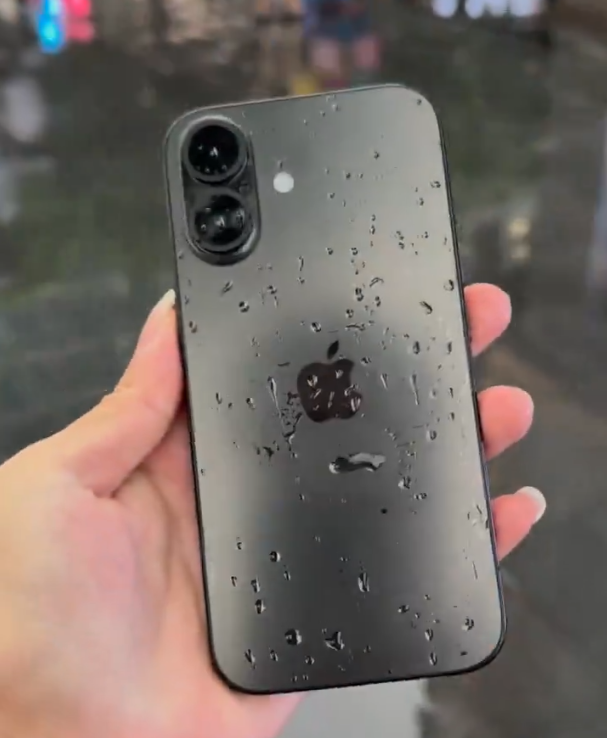
The iPhone 16 finally has a release date. Apple has confirmed that it will hold a launch event on September 9, where it is almost certain that we will see the company’s rumored new smartphones. The new iPhones are expected to come with important changes in and out, including better cameras and a new design.
Xiaomi is rumored to be working on its next generation of tablets called the Xiaomi Pad 7 series. The launch is rumored to take place sometime in October, however, many details about these tablets have already leaked. A fresh leak from tipster DCS (Digital Chat Station) has disclosed Xiaomi’s plans for an OLED tablet.
Xiaomi has announced a limited-time promotion offering significant discounts on battery replacements for a wide range of its smartphones in China. The offer, which runs from September 1st to 7th, includes 32 models spanning the Xiaomi and Redmi series.
Customers can enjoy a 20% discount on battery replacements for devices such as the Xiaomi Mix 4, Xiaomi 12S Ultra, Redmi Note 11 Pro, and Redmi K30 Pro. The promotion aims to make it more affordable for users to maintain the performance and longevity of their devices.
Xiaomi has emphasized that battery degradation is a natural process and doesn’t necessarily indicate a problem. While it’s not always necessary to replace a battery immediately, the company encourages users to consider doing so if they notice a significant drop in performance or battery life.
To ensure optimal battery health, Xiaomi recommends following scientific charging practices, avoiding extreme temperatures, and keeping the device away from moisture. By taking these precautions, users can prolong the lifespan of their smartphone’s battery and enjoy a seamless user experience.
Here’s the list of all the eligible Xiaomi and Redmi phones:
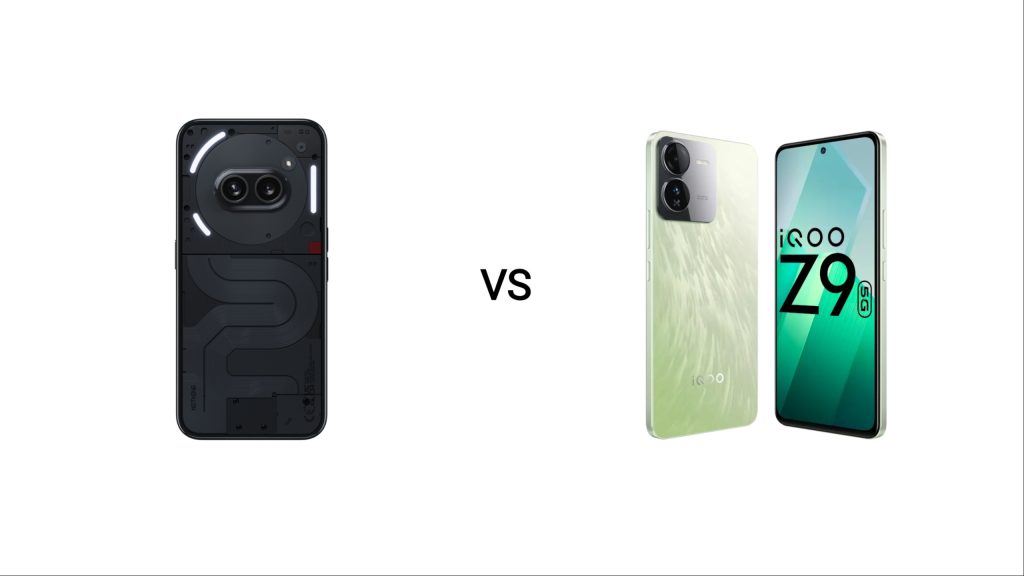
Despite being new in the smartphone industry, Nothing has made a name for themselves. From their unique hardware design to their software, Nothing devices stand out from the crowd. Well, not everyone falls in line when it comes to the design of Nothing devices, so in this article we’ll put it up against another device from its segment in the smartphone market.
The iQOO Z9 is a new but reputable device in some regions, and it packs similar specifications to the Nothing Phone 2a. Unlike the Nothing 2a, the iQOO Z9 doesn’t try anything out of this world with its design, as it keeps it simple and clean. So which of these devices is the best choice for you when shopping for an affordable Android device?
Please Note: When you buy something using the links in our articles, we may earn a small commission at no cost to you.
Nothing Phone 2a vs iQOO Z9: Design and colours
Nothing Phone 2a:
Ever since the brand’s inception, Nothing has taken a different turn with the designs of their smartphone. This device, the Nothing Phone 2a, follows this design path featuring the Glyph interface, a glass see-through design revealing some screws and patterns in the device. On its rear sits a horizontal rear camera setup with a flash that suits towards the top right-hand side of this cutout. The volume rocker keys on this device sit on the left-hand side, while the power button sits on the right-hand side of the device. At the base of the device sits the USB-C port, microphone, speaker, and the SIM tray.
iQOO Z9:
This is a very sleek device with brushed metal frames and a glass rear panel finish to help it stand out. With this device, iQOO shows off their new diamond pattern and premium brush pattern rear design. The volume rocker and power buttons of this device sit on the right-hand side, leaving the left side bare. Just like on the Nothing Phone 2a, this device houses its USB-C port, speakers, microphone, and SIM tray at its base. It also features a very nice rear camera cutout, with two large circular cutouts housed within a rectangular cutout that sits on the top left-hand side of the device. The colour options here are Brushed Green and Graphene Blue.
Major differences:
Rear lighting Glyph interface on the iQOO Z9.
Impressive finish on the iQOO Z9.
Nothing Phone 2a vs iQOO Z9: Display
Nothing Phone 2a:
This device uses a 6.7-inch AMOLED panel that supports 120Hz refresh rate to ensure snappy response. This display supports HDR10+ technology, helping it attain a peak brightness of 1300 nits peak brightness. All round this display are sleek bezels, making this device give off a flagship feel. For protection, this display comes with Corning Gorilla Glass 5 technology.
iQOO Z9:
Measuring at 6.67 inches, the AMOLED display of the iQOO Z9 supports 120Hz refresh rate, which is great for all round activities. The display comes with HDR display technology helping to reach a peak brightness of 1800 nits for a brighter display. There are also slim bezels on three sides of this device, with the base bezel being slightly thicker than all other three bezels.
Major differences:
Brighter display on the iQOO Z9.
Slimmer bezels on the Nothing Phone 2a.
Nothing Phone 2a vs iQOO Z9: Cameras
Nothing Phone 2a:
For midrange devices, photography isn’t a strong point, but that’s not the case with the Nothing Phone 2a. This device comes with a dual rear camera setup housing two 50MP sensors. Up front sits a 32MP selfie camera which is up to the task of taking crisp clear photos in different lighting conditions.
iQOO Z9:
In the area of photography, the iQOO Z9 falls behind the Nothing Phone 2a. It comes with a 50MP main camera sensor and a supporting 2MP depth sensor. Up front sits a 16MP selfie camera, for videos, this device supports 4K recording on the rear camera and 1080p on the front – facing camera.
Major differences:
Dual 50MP cameras on the Nothing Phone 2a.
32MP selfie camera on the Nothing Phone 2a.
Nothing Phone 2a vs iQOO Z9: Performance
Nothing Phone 2a:
Nothing powers this device with the MediaTek Dimensity 7200 Pro processor. Joining this is up to 12GB RAM and 256GB worth of storage capacity. This makes this device an impressive mid-range Android device that retails at an affordable price tag.
iQOO Z9:
For this device, users will enjoy performance from the MediaTek Dimensity 7200 processor. Storage capacity maxes out at 256GB, and memory is 8GB as standard across the two storage variants. Users can also enjoy virtual RAM extension as well as a physical microSD card slot for storage expansion.
Major upgrades & differences:
MediaTek Dimensity 7200 Pro on the Nothing Phone 2a.
Up to 12GB RAM on the Nothing Phone 2a.
Nothing Phone 2a vs iQOO Z9: Software
Nothing Phone 2a:
This device runs on Android 14 and Nothing OS 2.5.4 out of the box. Users are getting 3 years of Android OS upgrades.
iQOO Z9:
iQOO presents this device with Android 14 and Funtouch 14 software. Buyers will get 2 years of OS upgrades on this device.
Major differences:
3 years OS upgrades on the Nothing Phone 2a.
Nothing OS on the Nothing Phone 2a.
Funtouch 14 software on the iQOO Z9.
Nothing Phone 2a vs iQOO Z9: Battery life and charging
Nothing Phone 2a:
For its battery capacity, this device comes with 5000mAh which is more than enough for a day usage. Charging speed on this device is 45W as standard.
iQOO Z9:
iQOO also packs a 5000mAh battery capacity into this device. For its charging speed, the iQOO Z9 comes with 44W fast charging as standard.
Major differences:
Slightly faster charging on the Nothing Phone 2a.
Nothing Phone 2a vs iQOO Z9: Final Verdict
The Nothing Phone 2a is an impressive device, but it’s clearly not for most people. Its design is a bit too conspicuous and might not sit well with most buyers. However, the iQOO features a more simple design, which will appeal to more people that don’t want a shouty design.
But if you’re a techie and don’t mind having a conspicuous device in hand, the Nothing Phone 2a is the better pick. It comes with more memory, a slightly better performance, and a larger RAM capacity. For simplicity, the iQOO Z9 is the better option, while when it comes to performance, the Nothing Phone 2a wins this battle.
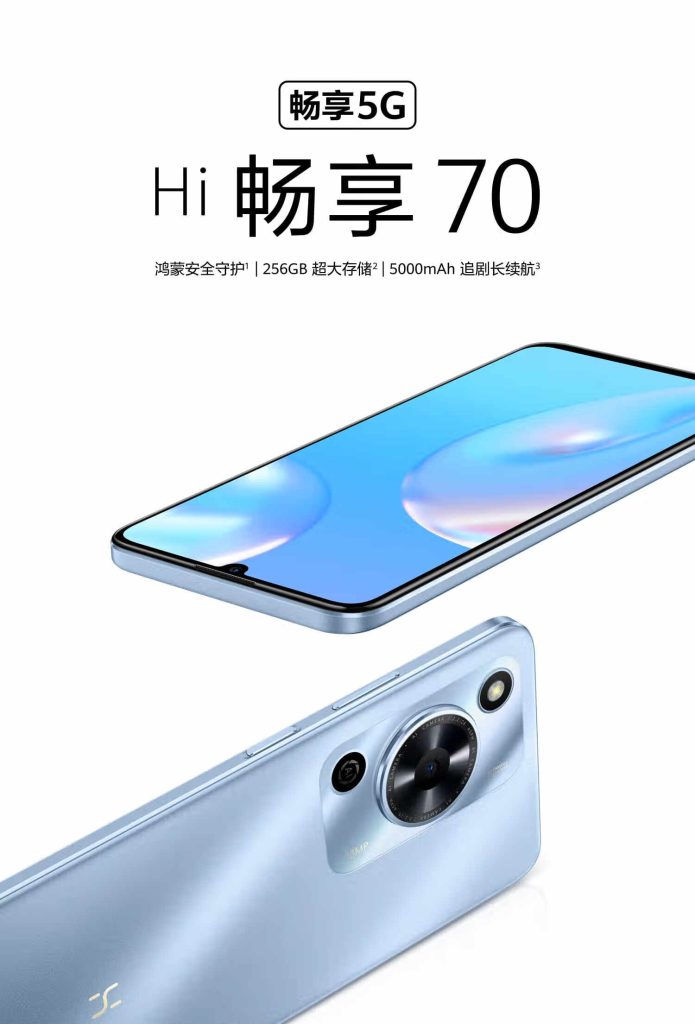
Huawei‘s ecosystem brand Wiko has introduced the affordable Hi Enjoy 70 5G phone in the Chinese market, following the launch of the Hi Enjoy 70 Pro 5G earlier in March this year. Let’s check out its key specs.
The Hi Enjoy 70 features a 6.75-inch LCD display with a 90Hz refresh rate, offering a resolution of 720×1600. The display also supports the Always-On Display (AOD) feature that allows users to check the time, battery life, and notifications without fully waking the device.
Under the hood, the Wiko Hi Enjoy 70 is powered by the Dimensity 700 processor, a chipset built on 7nm technology. This octa-core processor includes two A76 cores running at 2.2GHz and siz A55 cores at 2.0GHz, designed to balance performance and efficiency.
The phone comes with multiple storage and RAM options, including 6GB+128GB, 8GB+128GB, and 8GB+256GB configurations, providing ample space for apps, media, and other files.
The device runs on HarmonyOS and also comes with HarmonyOS Connect certification, allowing it to integrate with other HarmonyOS devices for a more connected experience.
The camera setup includes a 13MP AI-powered rear camera, equipped with features like Super Night Mode, AI Beauty, and AI Snapshot for enhanced photography, especially in low-light conditions.
The phone is backed by a 5000mAh battery, which the company claims can support up to 13 hours of online movie watching and 11 hours of short video browsing. The battery also benefits from smart charging protection to enhance its longevity.
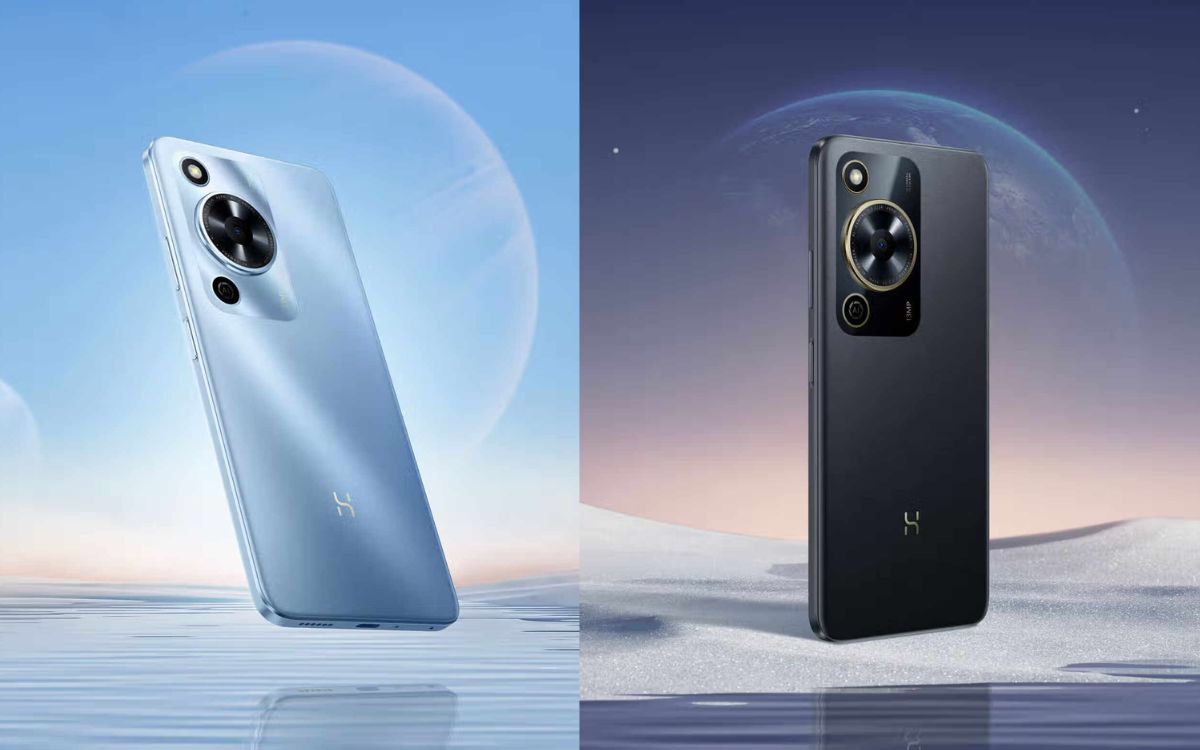
In terms of design, the Wiko Hi Enjoy 70 measures 168.3mm in length, 77.7mm in width, and 8.98mm in thickness, weighing around 202 grams. The device is available in three color options: Ice Crystal Blue, Snow White, and Midnight Black.
2. Pricing and Availability
Wiko Hi Enjoy 70 is priced at 999 Yuan ($140) for the 6GB+128GB variant, 1199 Yuan ($169) for the 8GB+128GB variant, and 1399 Yuan ($197) for the 8GB+256GB variant. The phone is now available for pre-order and set to be available for purchase starting September 6th at 10:08 AM.
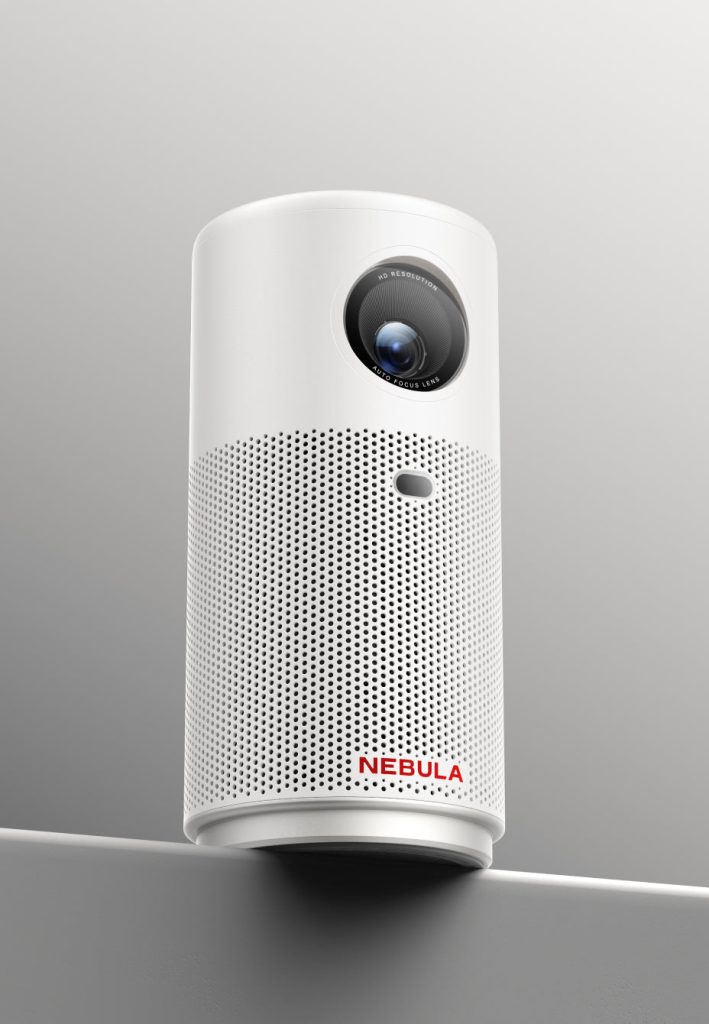
Anker has unveiled the Nebula Capsule Air, a new portable projector that the company claims is the smallest on the market with Google TV. Measuring 68 x 68 x 140mm and weighing just 650 grams, the Capsule Air is built for easy portability without compromising on entertainment. Despite its compact form, it comes equipped with Google TV, offering direct access to a wide array of apps, including Netflix.
Anker Nebula Capsule Air Projector Specifications:
The Nebula Capsule Air utilizes DLP 0.16 DMD display technology to deliver a 720p resolution with 150 ANSI lumens of brightness, projecting images up to 100 inches wide.
It’s ideal for casual viewing in dimly lit environments, offering accurate and vibrant visuals with a +70% Rec. 709 color gamut and +27% brightness uniformity. The projector includes a 10,000mAh battery for up to two hours of playback, rechargeable via USB-C.
The Capsule Air operates on Android 11.0, and its hardware includes a Quad-Core ARM Cortex-A53 CPU, G52MC1 GPU, 2 GB of RAM, and 16 GB of internal storage.
The device supports Wi-Fi 5, Bluetooth 5.1, and operates at a noise level under 28dB for a quiet viewing experience. It includes HDMI 2.1 and USB-C interfaces, a built-in 5W speaker, and offers multiple projection modes, including front, rear, and ceiling.
For image quality, the Capsule Air features real-time autofocus and automatic keystone correction for sharp, well-aligned images. Anker has also introduced accessories like the Snap-On Base for wall or shelf mounting, the Gimbal Stand for 360° adjustable angles, and the Power Bank Tripod, which offers a 90° tilt and extends the projector’s runtime by two hours with its 9,600mAh battery.
Pricing and Availability
The Nebula Capsule Air is priced at $399.99 and is currently available in the US. Accessories such as the Gimbal Stand and Power Bank Tripod are sold separately for $49.99 and $129.99, respectively. Availability in other regions has not yet been confirmed.
The iPhone 16 finally has a release date. Apple has confirmed that it will hold a launch event on September 9, where it is almost certain that we will see the company’s rumored new smartphones. The new iPhones are expected to come with important changes in and out, including better cameras and a new design.
For this event, Apple has chosen the slogan “It’s Glowtime”, which seems to refer to the AI functions that these devices will incorporate through Apple Intelligence. In fact, the design of the invitation is the company’s logo surrounded by the colors of Siri, which will also be powered by artificial intelligence.
The iPhone 16, however, is not the only product that we could see presented on September 9. The Cupertino company could also announce a new generation of other products. This is all we expect from Apple’s event.
Without a doubt, the star of Apple’s event will be the iPhone. Or rather, the iPhones. Apple is expected to launch four new iPhone 16 models. Starting with the base, the iPhone 16 and 16 Plus.
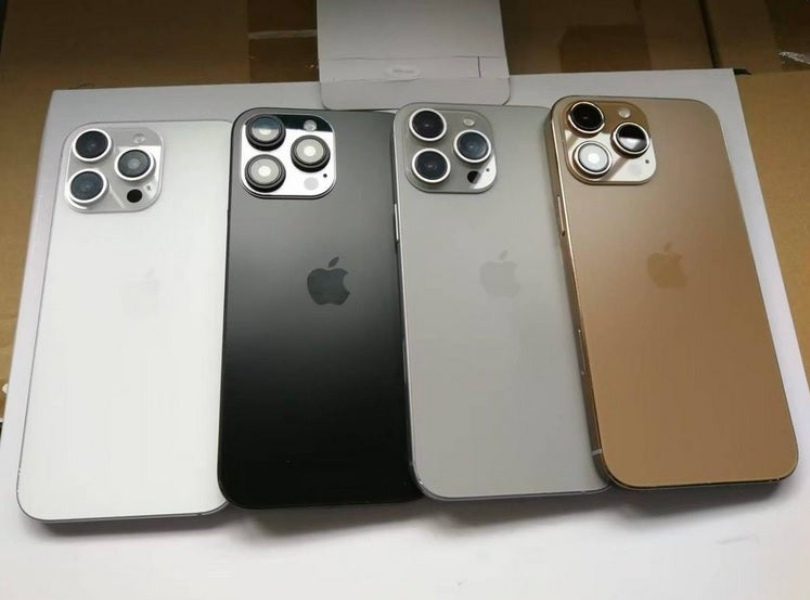
They will come with a slightly renewed design compared to their predecessors, the iPhone 15 and 15 Plus. They will still maintain the shape of the current models, with matte-finished rear glass and flat frames, but the camera module design will be similar to that of the iPhone X, in a vertical layout.
iPhone 16 Dummy Unit
On the other hand, Apple could opt for an A18 chip for these models, a processor that would be capable of running all the AI functions that will arrive with iOS 18.1.
Moving on, we will see the launch of the new iPhone 16 Pro and 16 Pro Max. The Pro model will not have major changes in terms of design compared to the current models, beyond thinner front bezels. This would allow Apple to fit in a bigger 6.3 and 6.9-inch screen, respectively. In the case of the processor, Apple would choose a more powerful A18 Pro chip for these models.
iPhone 16 Pro Dummy Unit
All iPhone 16s will have Action Button support this year. It’s a customizable shortcut button on the side of the phone which Apple introduced last year with iPhone 15 Pro and Pro Max. Moreover, a camera-focused Capture Button is also expected to be included in the iPhone 16 series.
2. New Apple Watch Series 10
Apple is also expected to launch its new smartwatch, the Apple Watch Series 10., at this event. It’s usual for a new Series smartwatch to tag along with new iPhones.
Rumors suggest the new wearable could arrive with a slimmer body and thin front bezels. Apple could also introduce a new 49mm size similar to the Apple Watch Ultra.
Given that the Apple Watch is turning 10, there have also been rumors of a special edition — something like an Apple Watch X — with a new design. However, it’s unclear whether we’ll see something like that, or if we’ll have to wait until 2025.
And speaking of the Ultra model, Apple doesn’t seem to be updating its most robust smartwatch with a new generation. Instead, the company could present an Apple Watch SE that is much cheaper than the current model thanks to a big change in its build. It will reportedly be housed in a plastic case, instead of aluminum, to make it cheaper.
3. AirPods 4
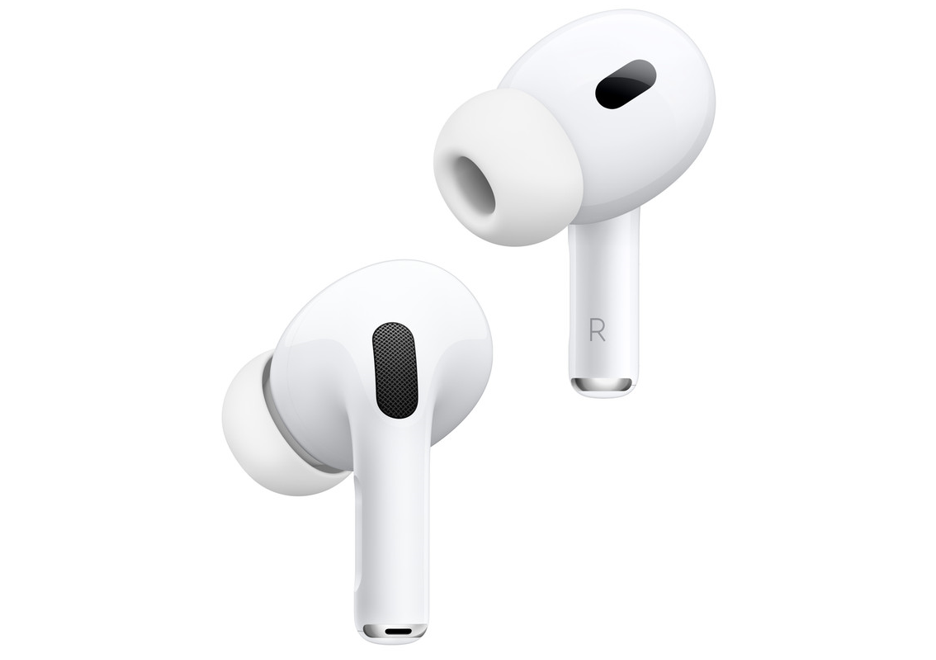
As expected, AirPods will also be one of the stars of Apple’s event on September 9. Apple is expected to announce new mid-range and entry-level AirPods 4 options (not pro) to continue competing in the true wireless headphone market.
One of them would come with similar features to the current third-generation AirPods, while the other variant would have active noise cancellation, but with slightly lower features than the AirPods Pro to put them on sale at a lower price.
Finally, it wouldn’t be strange to see a refresh of the AirPods Max, which could come with updated features compared to the current models. This includes a USB-C port instead of the Lightning connector, Bluetooth 5.3, an H2 chip for more features, and new colors.
4. Apple Intelligence
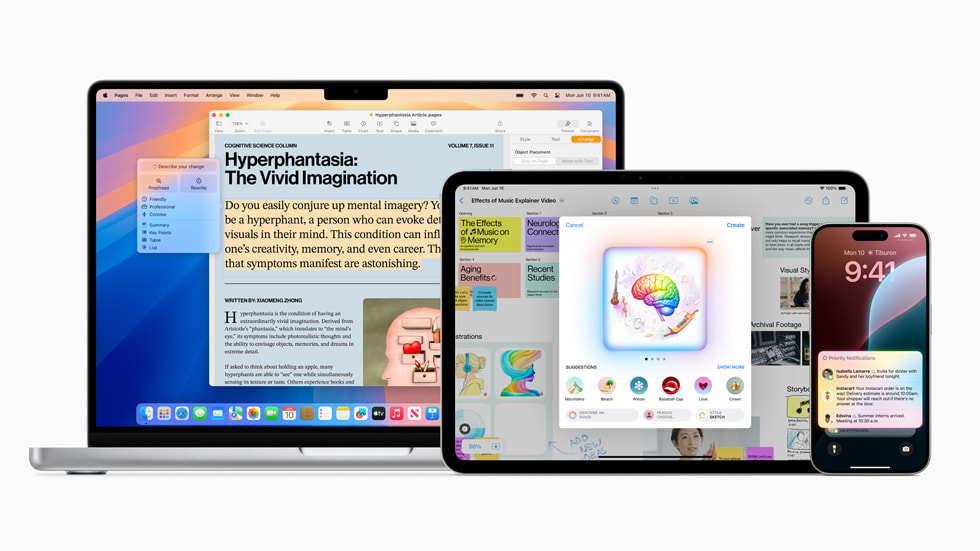
Apple’s focus on AI could extend from WWDC through its September event with dedicated Apple Intelligence features for the iPhone 16 and iPhone 16 Pro models.
It was previously reported that Apple Intelligence will play a key role in the announcement of the new devices, and we’re waiting to see what different features the company has planned for the new devices, which didn’t see the light of day in June at the company’s WWDC event.
5. iOS 18 and other software updates
Shortly after the event, Apple will release iOS 18, iPadOS 18, macOS 15, watchOS 11, tvOS 18, and visionOS 2 build candidates to developers as part of its final wave of beta testing. Updates will be released shortly afterward, when devices hit shelves ahead of September 20.
The new software updates will feature all the features the company announced earlier this year, including several AI features that Apple announced at its WWDC event.
6. How to Watch
As usual, Apple will stream its latest event on the Apple Events website, on YouTube, and in the Apple TV app. There’s already an event scheduled on Apple’s YouTube channel. You can click or tap on the “Notify me” button to receive an alert before the stream begins.
Lenovo‘s gaming brand, Lenovo Legion Savior, is collaborating with the action RPG “Black Myth: Wukong” to release a limited-edition gallium nitride (GaN) charger.
This co-branded adapter, the C170, is now available for reservation on JD.com in China, with sales starting on September 30th at 10:00 AM CST for 299 yuan (roughly USD 43). Let’s go through its details here.
Lenovo x Black Myth: Wukong GaN charger Specifications
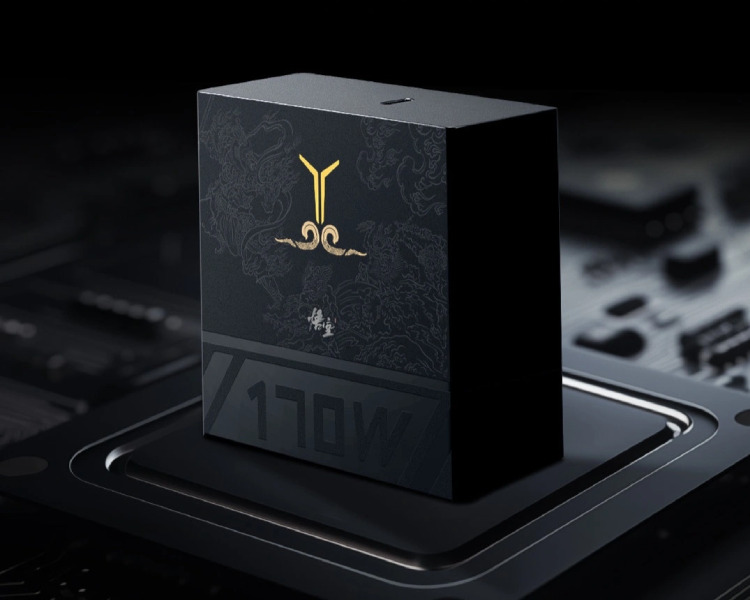
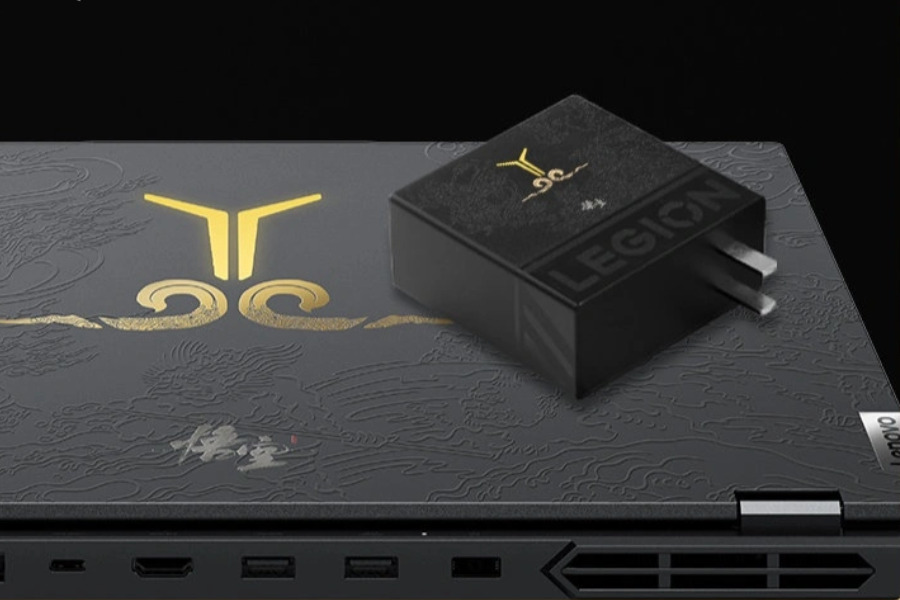
Visually, the C170 departs from the typical understated aesthetic of GaN chargers. It features a unique design with a large, laser-etched golden “Y” logo, a signature element of the Lenovo Legion brand. The surface is further adorned with a “mural texture,” presumably to reference the mythical world of Black Myth: Wukong.
Measuring in at 71 x 71 x 31 mm and weighing approximately 245 grams, the C170 is a compact and portable charger. It features a single USB-C port and comes bundled with a USB-C to Lenovo C-Slim square port “superpower cable.” This cable allows for maximum power delivery of around 170W to compatible Lenovo Savior devices.
In terms of compatibility, the C170 can charge devices beyond Lenovo’s. It supports various fast-charging protocols such as PD 3.0, QC 3.0, and PPS, for broader usability with devices from other manufacturers that support these standards.
All in all, the Lenovo Savior x Black Myth: Wukong co-branded charger is a unique offering for game fans and those seeking a powerful, portable GaN charger for their compatible devices. But note that the charger is currently only available for reservations in China. There are no words on the global availability yet.
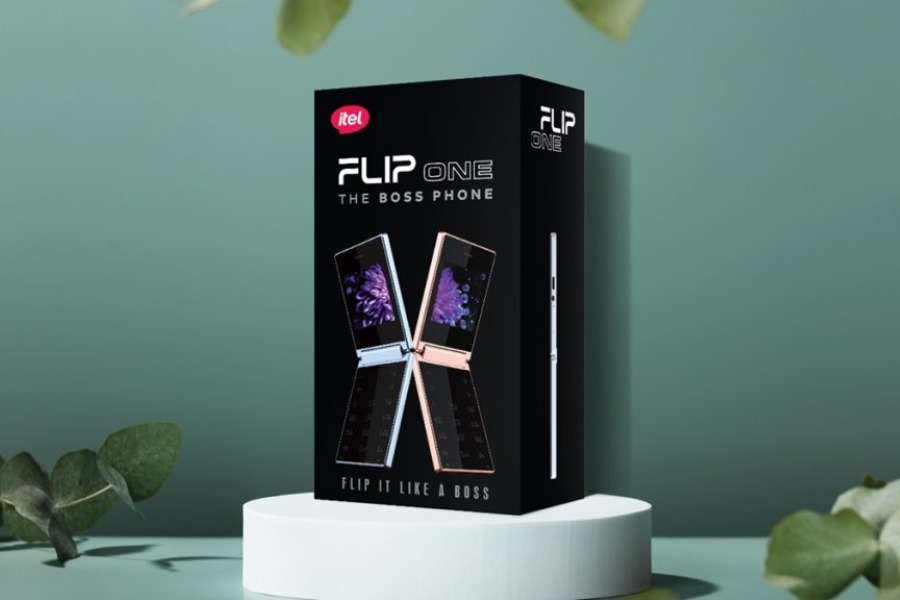
Budget phone brand itel is entering the flip phone market with the launch of the itel Flip One. It’s the brand flip phone. But unlike the popular clamshell smartphones making headlines today, this is a more traditional flip phone with a keypad. Let’s go through all the details revealed so far.
itel Flip One Specifications
The Flip One boasts a sleek, flip-open design with a premium leather back, aiming for a more sophisticated look compared to traditional feature phones. The focus, however, is on practicality. It has a lightweight and portable build and is designed for single-handed use.
itel positions Flip One as a digital detox option for Gen Z and millennials overwhelmed by the constant connectivity of smartphones. However, don’t expect a complete disconnect. The Flip One offers essential features like internet access (likely through a basic browser), texting, calling, and even a camera.
The phone will also have Bluetooth support, a modern Type-C charging port, and a Bluetooth caller function. This allows users to sync contacts from their smartphones and manage calls directly from the Flip One.
Additionally, the Flip One will be powered by a non-removable battery, a glass-designed keypad, and support for 13 Indian languages round out the feature set. The phone will be available in three colors, though specific shades haven’t been revealed.
itel positions the Flip One as a versatile option, appealing to both those who favor the classic keypad experience and smartphone users seeking a secondary device for basic communication.
itel is yet to reveal the official launch date or price of the phone. We can expect its release soon as the brand is teasing the phone, while for the price, expect it to be quite affordable. After all, it’s a keypad phone in a nutshell.
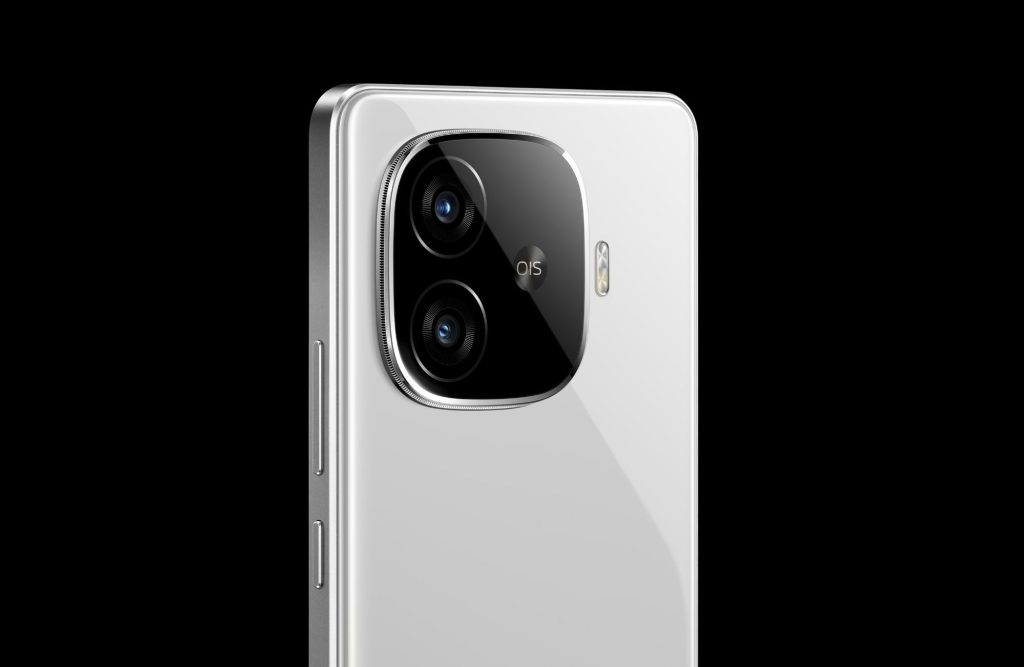
Earlier this year, iQOO unveiled the iQOO Z9 Turbo in China, which was equipped with the Snapdragon 8s Gen 3 chip. Reports suggest that the brand is working on a more powerful phone dubbed the iQOO Z9 Turbo+ for the Chinese market. A new report reveals the launch timeframe of the device.
iQOO Z9 Turbo+ launch timeframe (rumored)
iQOO Z9 Turbo
According to a report by MyDrivers, which cites tipster Digital Chat Station as the source, the iQOO Z9 Turbo+ will debut by mid-to-late September in China. Currently, the release of the device in markets outside of China remains unclear.
iQOO Z9 Turbo+ specifications (rumored)
According to reports, the iQOO Z9 Turbo+ will have a 6.78-inch flat OLED screen with a 1.5K resolution, a 144Hz refresh rate, and an optical-type in-screen fingerprint sensor. It is expected to run on OriginOS-based Android 14.
It will be a performance-driven offering featuring the Dimensity 9300 Plus chipset. There’s no clarity on the device’s RAM and storage configurations. It is expected to pack a massive 6,000mAh battery with 80W fast charging support.
On the front, the iQOO Z9 Turbo+ will have a 16-megapixel selfie camera. The back panel of the device will have an OIS-assisted 50-megapixel primary camera and an 8-megapixel ultra-wide lens.
The Z9 series also includes other models, such as the iQOO Z9 and Z9x, which are powered by the Snapdragon 7 Gen 3 and Snapdragon 6 Gen 1 chipsets, respectively. These models were launched alongside the Z9 Turbo in April of this year in China.
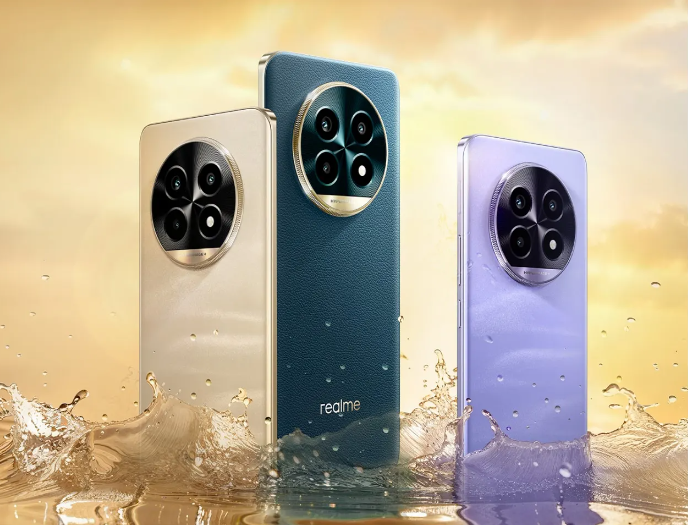
Earlier this year, Realme introduced its P-series of smartphones by launching the Realme P1 5G and the Realme P1 Pro 5G. A recent report revealed that the Realme P2 Pro phone has received approval from India’s BIS authority, indicating that it will be launching soon. Now, a new report, courtesy of 91mobiles Hindi has revealed key details about the phone.
Realme P2 Pro 5G RAM, storage, color options (rumored)
Realme 13 Pro series 5G
As per the report, the Realme P2 Pro 5G will arrive in multiple variants, such as 8 GB RAM + 128 GB storage, 8 GB RAM + 256 GB storage, 12 GB RAM + 256 GB storage, and 12 GB RAM + 512 GB storage. It is expected to arrive in multiple color options, such as Eagle Grey and Chameleon Green.
Furthermore, the report mentions the P2 Pro’s model number as RMX3987. Unfortunately, the report has no information about the other specs of the phone.
To recall, the Realme P1 Pro was quite similar to the Realme 12 Pro. Both phones packed identical specifications with slight changes in design and charging capabilities. This suggests that the P2 Pro could be identical to the recently released Realme 13 Pro.
The Realme 13 Pro has a 6.7-inch AMOLED FHD+ 120Hz curved-edge screen. The Snapdragon 7s Gen 2 chipset powers it, along with up to 12 GB of RAM, up to 512 GB of storage, and a 5,200mAh battery with 45W fast charging. It has a 32-megapixel front camera and an OIS-enabled 50-megapixel (main) + 8-megapixel (ultra-wide) dual-camera system. The device will run on Realme UI 5-based Android 14. Its base model, which offers 8GB+128GB configuration, is priced at Rs 26,999 (~$320).
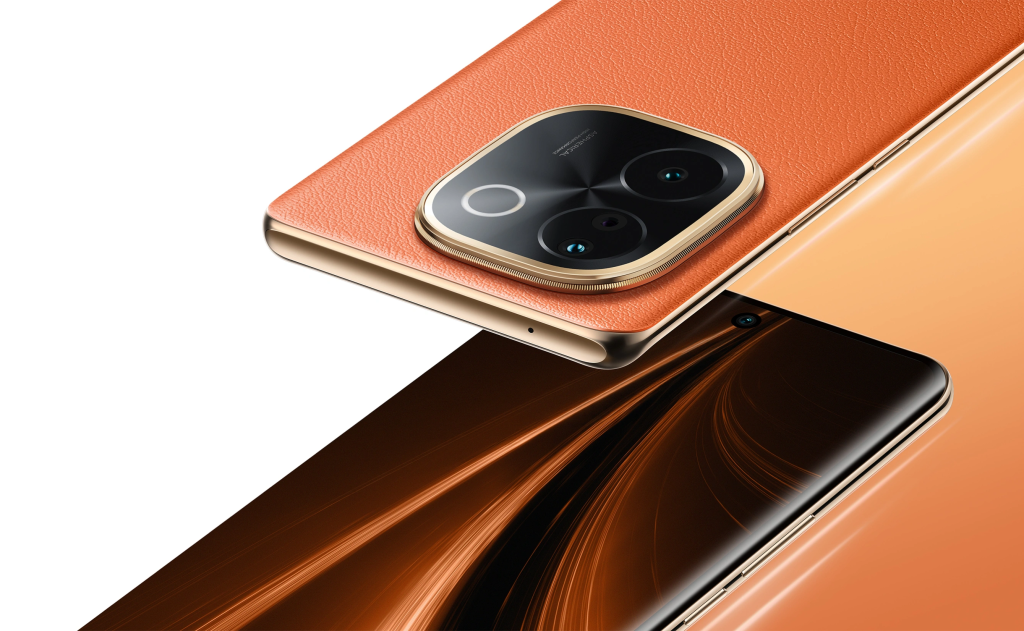
Vivo is reportedly planning to expand its T3 lineup, which already includes models, such as the Vivo T3 Lite 5G, Vivo T3x 5G, the Vivo T3 5G, and the Vivo T3 Pro 5G. Rumor has it that the brand is preparing to introduce the Vivo T3 Ultra in India. A report by 91mobiles has revealed a plethora of details about the Ultra variant.
Vivo T3 Ultra specifications (rumored)
Vivo T3 Pro 5G
According to the report, the Vivo T3 Ultra will come equipped with the Dimensity 9200 Plus chipset. With an AnTuTu score of around 160K+, the Ultra is expected to be more powerful than the Vivo T3 Pro, which features the Snapdragon 7 Gen 3. Given that the Pro model starts at Rs 24,999 (~$300), it is likely that the Ultra variant will cost approximately Rs 30,000 (~$360).
The report further states that the T3 Ultra will have an IP68-rated body and a curved-edge AMOLED panel with a 1.5K resolution and 4500nits of peak brightness. On the back, there will be an OIS-enabled Sony IMX921 primary camera.
Furthermore, the device with model number V2426 has appeared on Geekbench. Apart from revealing the inclusion of the D9200+ chip, it also mentions that the device has 12 GB of RAM and Android 14.
Interestingly, these specifications are also available on the Vivo V40 Pro. What seems likely is that the T3 Ultra may not have Zeiss optics, which are available on the photography-focused V40 Pro.
The report claims that the Vivo T3 Ultra will debut in early September. However, since the month has already started, this seems unlikely. It is more probable that the device will be teased for about a week before its official debut.
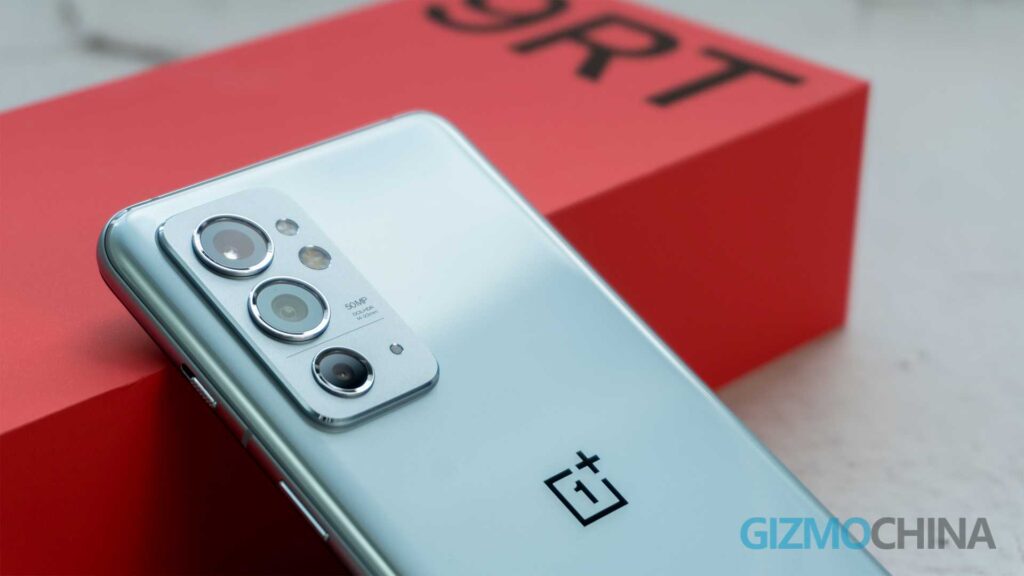
OnePlus has finally released the August 2024 update for the OnePlus 9RT. The update brings a host of improvements and bug fixes to the device.
The OnePlus 9RT update, OxygenOS 14.0.0.710, includes enhanced battery life, improved screenshot functionality, and fixes for various issues. You can find the complete changelog below.
OnePlus 9RT OxygenOS 14.0.0.710 changelog:
System
Improves the experience of swiping down on the screen with three fingers to take a screenshot.
Integrates the August 2024 Android security patch to enhance system security.
Optimises power consumption to extend battery life.
Fixes an issue that might cause delayed swipe response in Simple mode.
Fixes an issue where Camera might not be launched by double pressing either volume button.
Fixes an issue where Auto brightness might turn on automatically.
Fixes an issue where the “Uninstall updates” button may be unavailable after an app update.
While the update is currently available in India, OnePlus has confirmed that it will be rolled out to users in other regions soon.
To check for and install the August update on your OnePlus 9RT, follow these steps:
Open the Settings app.
Scroll down and select “About Device.”
Tap on the blue ribbon at the top.
If the update is available, you can download and install it.
Indian audio wearables brand Boat has partnered with multinational payment card services corporation Mastercard to enable contactless payments on its smartwatch devices. This collaboration aims to provide users with a more convenient and secure way to make transactions.
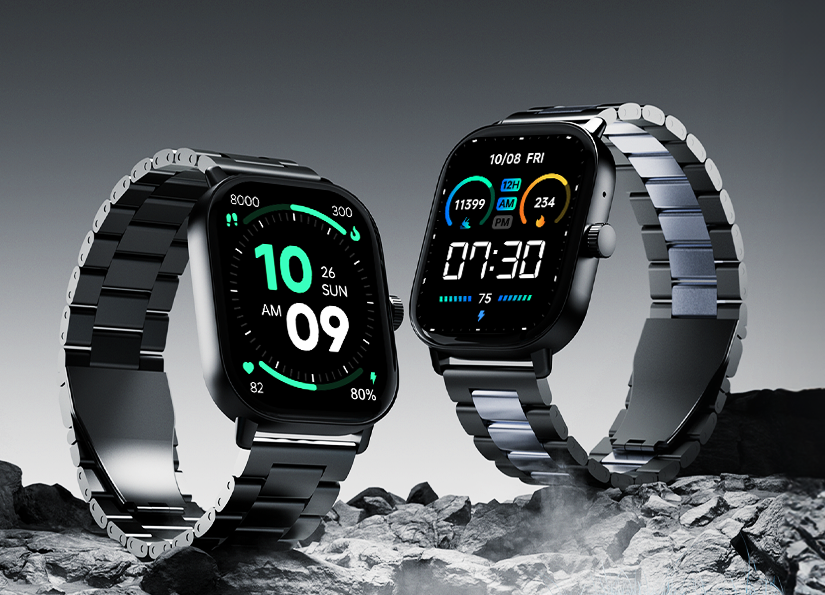
Integration with contactless payments on boAt smartwatches will allow Mastercard cardholders to proceed with seamless transactions through their wearable device. Through Crest Pay, the official app of boAt, users can now tokenize their existing debit and credit cards from associated Mastercard banks in an effortless manner. Thus, they can simply tap and pay at all merchants where this facility is available, without requiring physical cards.
It has contactless payment technology for Rs. 5,000 without a PIN, and the feature is great for everyday purchases. This reduces the hassle of keying in a PIN, thus making the transaction smoother and faster. For security, Mastercard’s device tokenization keeps transactions safe through cryptogram-based technologies that are unique, one-of-a-kind digital codes in place of sensitive card data.
Initially, the contactless payment feature will be available to Mastercard cardholders from select leading banks in India. However, Mastercard and boAt have plans to expand the availability of this feature to additional banks over time.
boAt has launched the Nirvana Ivy, India’s first true wireless earbuds (TWS) to feature spatial head tracking. This technology provides a more immersive 3D audio experience by adjusting the sound based on the user’s head movements, creating a more realistic and personalized listening experience.
The Nirvana Ivy earbuds are equipped with 360-degree spatial audio, delivering a surround sound effect that envelops the listener. The earbuds also offer active noise cancellation up to 50dB, allowing users to block out unwanted background noise. For clear calls, the Nirvana Ivy supports AI ENx, which enhances voice quality and reduces background noise during phone calls.
Other notable features of the Nirvana Ivy include 60ms Beast Mode for low latency. The earbuds also support in-ear detection, automatically pausing playback when the earbuds are removed from the ears and resuming playback when they are reinserted. Additionally, multi-point connectivity allows users to connect the earbuds to multiple devices simultaneously.
The Nirvana Ivy earbuds offer up to 50 hours of battery life on a full charge. The earbuds also support quick charging, which provides 240 minutes of playback with just 10 minutes of charging.
Pricing & availability
The boAt Nirvana Ivy earbuds are available for purchase on September 4th at a special launch price of Rs 2,999. They can be purchased on Amazon, the boAt Official Website, and Flipkart.
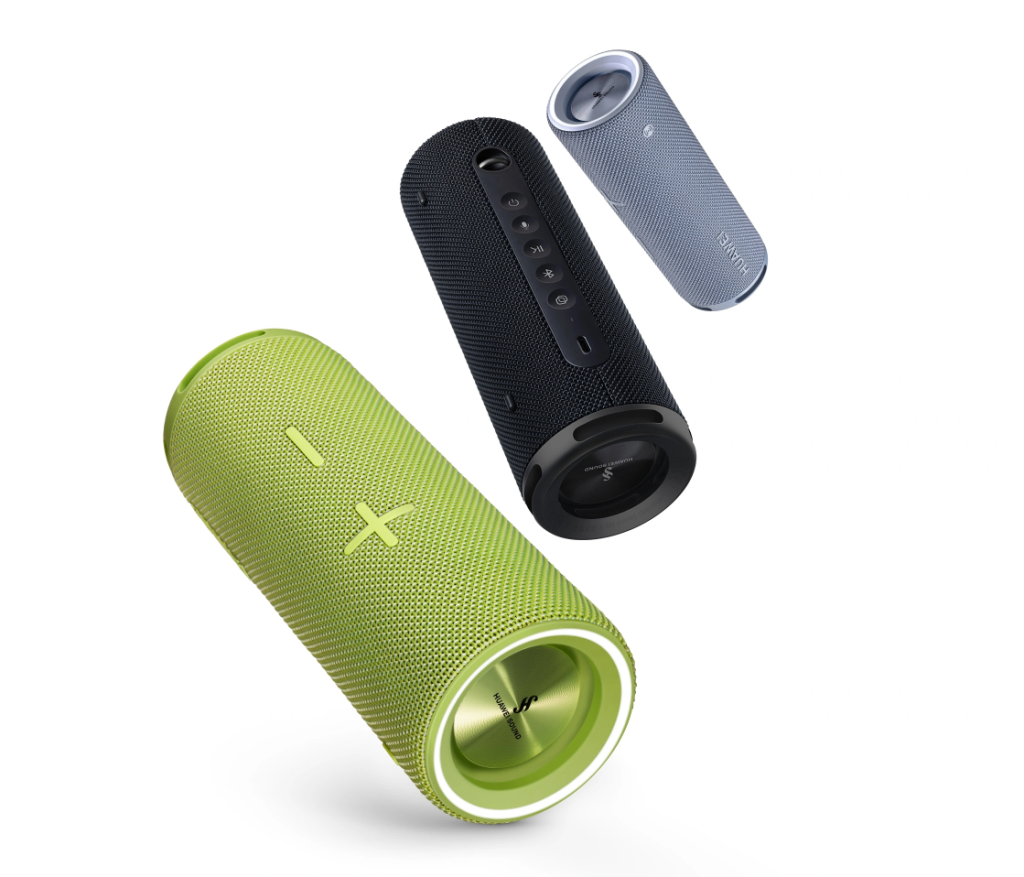
Huawei has introduced the Sound Joy 2, a portable speaker designed to be compact, powerful, and long-lasting, with impressive audio quality and a variety of smart features.
The Sound Joy 2 has a sleek cylindrical design that is both easy to grip and stylish, wrapped in durable fabric. An LED light ring at the top displays colors that sync with the music, while also indicating battery level and volume.
The Sound Joy 2 is powered by an 8800mAh battery, good for 26 hours of music playback on a single charge. It also supports fast charging through a 40W Type-C port, allowing for quick recharges.
The speaker’s quad-unit Huawei Sound System delivers rich audio with deep bass and clear mid tones. The setup includes a 20W full-range speaker, a 10W tweeter, and two passive radiators, creating a balanced and dynamic sound.
In addition to its audio capabilities, the Sound Joy 2 comes with several smart features. You can pair two speakers for stereo sound or connect up to 100 speakers for a surround-like experience. The speaker can be controlled using a Huawei smartwatch, allowing for easy control of basic functions such as play, pause, volume, and track selection. The tap-to-transfer feature also makes it easy to transfer music from your phone to the speaker.
The Sound Joy 2 is IP67-rated, making it dustproof and waterproof, ideal for outdoor use, and resistant to spills. It also includes six control buttons, NFC support, Bluetooth calling, and gravity sensors.
The global price and availability of the Sound Joy 2 is yet to be announced by Huawei.
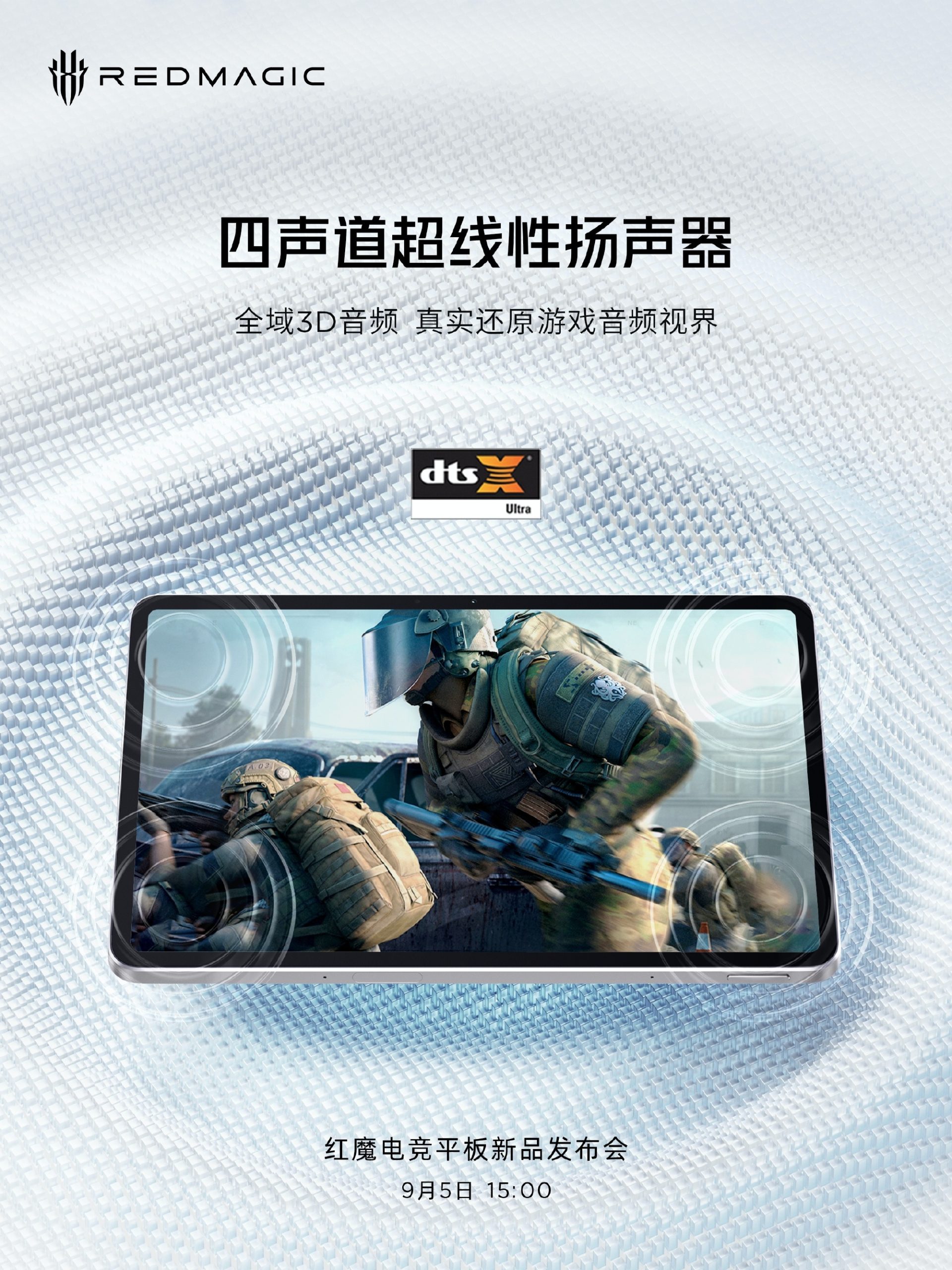
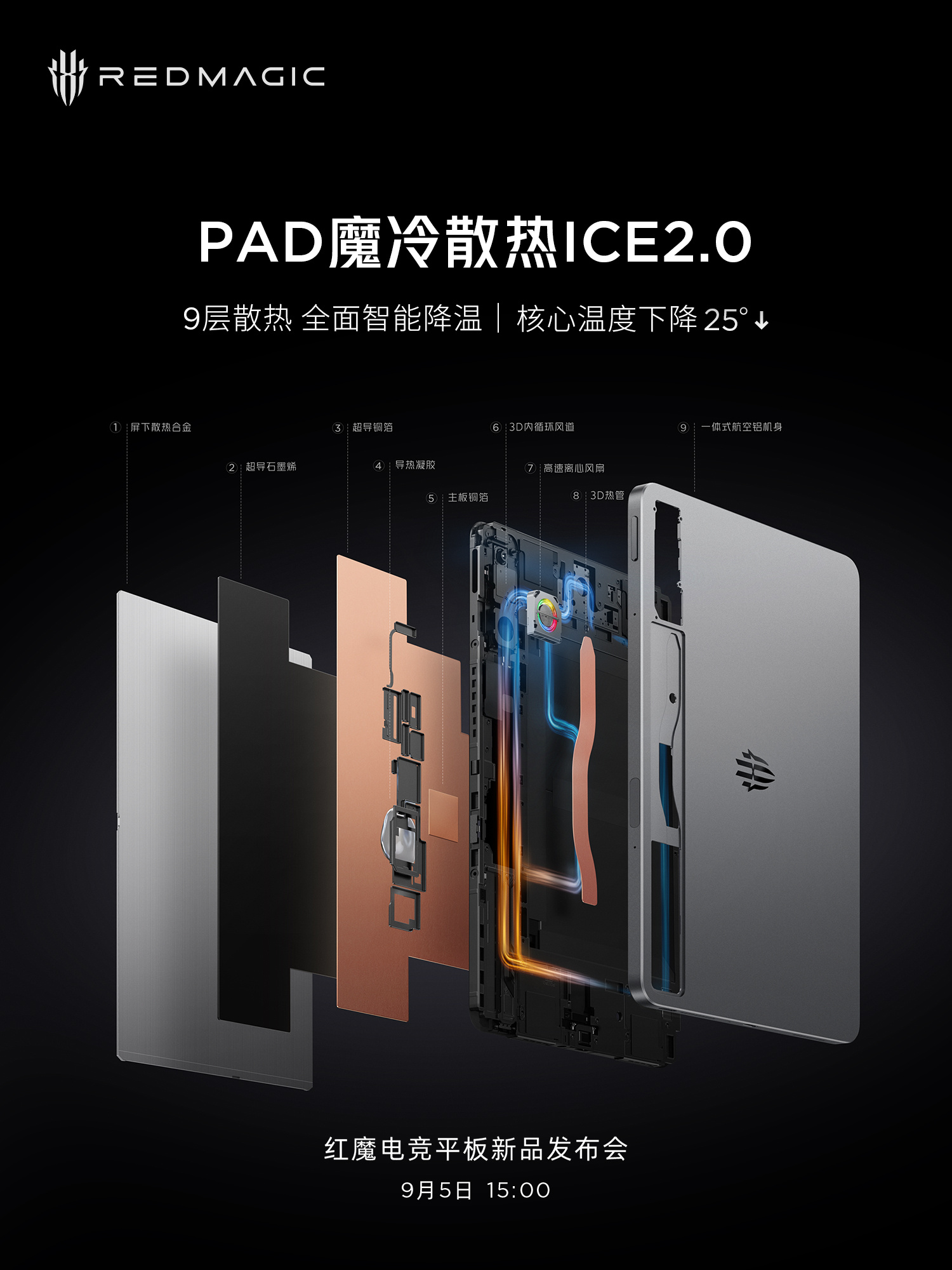
Red Magic‘s upcoming gaming tablet, set to be fully unveiled on September 5 has just had many of its details confirmed. Through multiple posts on Weibo, Red Magic has confirmed that the device is powered by the Snapdragon 8 Gen 3 Leading Version, ensuring top-tier performance that rivals the company’s flagship smartphone, the 9S Pro.
The tablet is equipped with a 2.8K resolution, 144 Hz refresh rate, and 840 Hz touch sampling rate. Another teaser confirms that the tablet features a four-channel linear speaker setup and supports DTS:X Ultra, providing an immersive audio experience.
To sustain the high performance of the powerful Snapdragon 8 Gen 3 Leading Version processor and prevent any thermal throttling, Red Magic has also added the PAD Magic Cooling ICE 2.0 Nine-layer cooling system to the tablet, which uses a high-speed centrifugal fan, 3D internal circulation air duct, PC-level heat pipe, and various heat-dissipating materials.
For capturing photos and videos, the RedMagic gaming tablet features a 50 MP rear-facing camera and a 20 MP front-facing camera. Other details are still under wraps, however, these specs paint a pretty good picture of what we can expect from this upcoming gaming tablet.
We use cookies on our website to give you the most relevant experience by remembering your preferences and repeat visits. By clicking “Accept”, you consent to the use of ALL the cookies.
This website uses cookies to improve your experience while you navigate through the website. Out of these, the cookies that are categorized as necessary are stored on your browser as they are essential for the working of basic functionalities of the website. We also use third-party cookies that help us analyze and understand how you use this website. These cookies will be stored in your browser only with your consent. You also have the option to opt-out of these cookies. But opting out of some of these cookies may affect your browsing experience.
Necessary cookies are absolutely essential for the website to function properly. This category only includes cookies that ensures basic functionalities and security features of the website. These cookies do not store any personal information.
Any cookies that may not be particularly necessary for the website to function and is used specifically to collect user personal data via analytics, ads, other embedded contents are termed as non-necessary cookies. It is mandatory to procure user consent prior to running these cookies on your website.