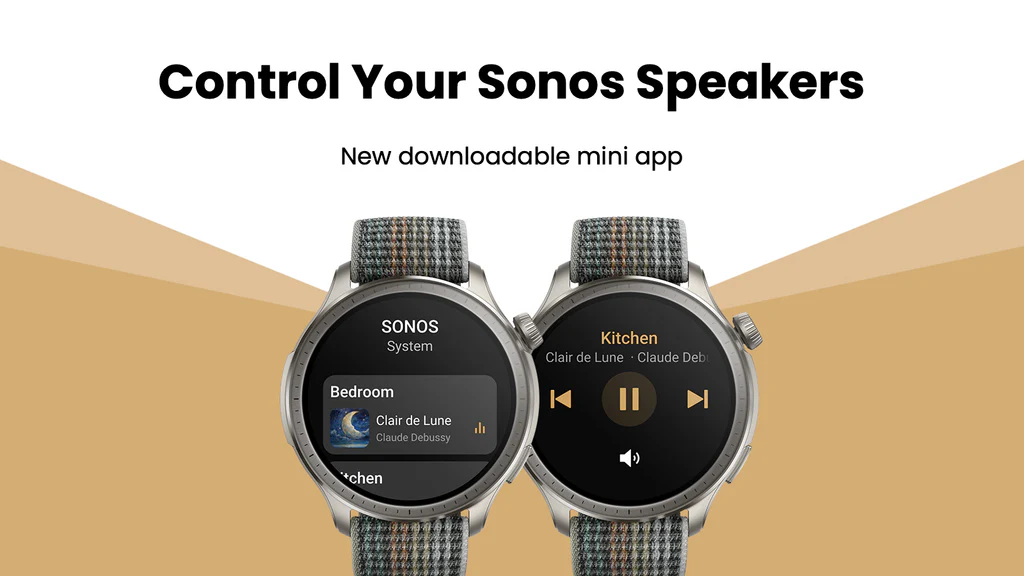
Amazfit has just introduced a new smartwatch in the global market called the Amazfit Bip 5 Unity. The smartwatch is an alternative to the Amazfit Bip 5, retaining several key features.
Amazfit Bip 5 Unity specs:
The device includes a 1.91-inch LCD display with a resolution of 320 x 280 pixels. The watch comes with a stainless steel frame improving its durability, as well as an IP68 rating, which means that the watch can withstand being submerged in up to 1.5 meters of fresh water for 30 minutes.
The smartwatch is equipped with Amazfit’s BioTracker PPG biometric sensor, which monitors heart rate and blood oxygen levels. The sensor also provides alerts for abnormal heart rate readings and high stress or low oxygen levels. Amazfit has loaded the Bip 5 Unity with over 120 sports modes. Additionally, it includes Amazon Alexa for voice commands and supports around 70 apps via its smartphone app.
The watch has a 300 mAh battery that supports up to 5 days of heavy usage, 11 days of typical usage, or 26 days in battery-saver mode.
Pricing & availability
The Amazfit Bip 5 Unity is presently accessible in both the UK and the US, retailing at $59.99 and £69.99, respectively. Amazfit plans to release the Bip 5 Unity globally, however, it has yet to reveal pricing and availability details for other regions.
Japanese electronics giant Toshiba has launched the REGZA 2700NF miniLED TV. The smart TV is equipped with a 1,300 nits Mini LED display and is available in four sizes namely 65”, 75”, 85” and 100 inches. The company announced the Regza Z750 mini LED TV around this time last year.
The 2700NF TV uses Mini LED technology with the number of partition backlights of the biggest model given as 1,024. The number of partition backlights for the other models has not been specified. The Toshiba 2700NF TV achieves a stable peak brightness of 1,300 nits, which is quite impressive. The TV is equipped with the REGZA Picture Engine Pro, in addition to the TV’s original color calibration technology. The system helps to accurately adjust image details, color, and contrast optimally.
The Toshiba 2700NF TV has a factory color calibration (Delta E) of 0.99 and a DCI-P3 color gamut coverage of 95%. Its color screen is crystal clear and this reduces the light interference during the day. The reflectivity of the TV’s screen is less than 5% and the model is equipped with a 7-unit rocket launcher audio system for higher models than the standard variant. The standard model of the device has a 5-unit rocket launcher audio system. The TV supports quick access to the rocket launcher audio system and also features a BR auditory perception chip for adjusting the sound quality.
The 2700NF can maintain the original frame rate, contrast, aspect ratio, and other parameters when in the filmmaker mode. It also supports Frame Picture MAX, NFS, and direct viewing through TV.
Pricing & Availability
The Toshiba 2700NF TV is available at a starting price of 8,499 yuan ($1,174) for the 65-inch model. The 75-inch variant is priced at 10,969 yuan ($1,515) while the 85-inch model retails at 14,999 yuan ($2,071). The 100-inch model of the Toshiba 2700NF TV is priced at 34,999 yuan ($4,833). A 30 yuan coupon is available for customers for a discounted price of the new Toshiba 2700NF TV.
Just a couple of days back, Lenovo went official with the Lecoo N2721U gaming monitor. The Lenovo Lecoo N2721U Gaming Monitor has now gone on sale in China. The monitor, as its name implies, has a 27-inch 4K (3840 x 2160 pixels) display with a 160 Hz refresh rate. The monitor comes with some impressive features and a decent price tag.
Features
The Lenovo Lecoo N2721U has an IPS panel with 1ms GtG grayscale response time. The low GtG response time minimizes motion blur and ghosting for an overall enhanced viewing experience. The Lenovo Laiku N2721U also features 10-bit color depth, 98% DCI-P3 color gamut coverage, and 400 nits of peak brightness. The monitor has a contrast ratio of 1000:1 and provides exceptional clarity and fluid visual dynamics whether watching your favourite TV program or playing games. The monitor can also be used for professional graphic design applications.
The monitor supports AdaptiveSync anti-tearing technology and PIP/ PBP intelligent split-screen functionality. The AdaptiveSync technology synchronizes the monitor’s refresh rate with the frame rate of the output device to deliver smooth and uninterrupted images. The Picture-in-Picture (PIP) and Picture-by-Picture (PBP) intelligent split-screen functions allow the monitor to receive dual-channel signals and display the same on the split screen.
The new Lenovo Laiku monitor comes with a sturdy stand that supports tilting. The stand caters to different viewing angles and offers ergonomic comfort. The N2721U monitor has two interfaces namely DisplayPort 1.4 (x1) and HDMI 2.1 (x2). The two interfaces facilitate high-speed transmission and versatile connection to various input devices.
Pricing & Availability
The Lenovo Lecoo N2721U Gaming Monitoriku N2721U monitor is available for purchase from JD.com at a starting price of 1,599 yuan ($221). There are no global availability details for the monitor at this time, but it could subsequently ship to other markets.
Ever worried about whether that government-affiliated app you downloaded is the real deal or just a data-stealing scam? Google is aiming to alleviate those concerns with the rollout of a new “Government” badge system on the Play Store.
The badge, essentially a tiny building icon, is now prominently displayed on government app listings, search results, and even the main Play Store feed.
When you tap on the badge, you’ll see a message confirming that the app is indeed affiliated with a government entity. It reads “Official government — Play verified this app is affiliated with a government entity.” It’s a pretty simple and effective way to know you’re dealing with a genuine government agency.
And this isn’t just for the US – Google will roll out the badge system globally. But it is currently active in Australia, Brazil, Canada, France, Germany, India, Indonesia, Japan, Mexico, South Korea, the United Kingdom, and the United States.
According to a report from news outlet 9to5Google, the feature has been in the works for some time now. But getting that coveted government badge isn’t a walk in the park.
Government agencies must follow some rules like they must use official email addresses when creating developer accounts. And apps handling even more sensitive matters, like voting, will undergo additional verification before the app goes live on the Play Store. So far, over 3000 apps have earned the badge, but it’s just the beginning.
While Google is doing its part, it’s still wise to exercise caution when downloading apps – even if they don’t have the badge. For instance, you can check reviews and developer information to reduce the risk of downloading anything malicious or spammy.
Qualcomm has kept a tight lid on the specifics of their next flagship mobile processor, the Snapdragon 8 Gen 4. However, leaks and rumors have been surfacing continually, gradually revealing more details about it.
Just today, a leak revealed that the first phones equipped with this SoC may launch in October. Now in the second leak of the day, we have a video that surfaced on Bilibili (via @negativeonehero on Twitter) showing an engineering sample of the Snapdragon 8 Gen 4 undergoing benchmark testing.
During the benchmark test on AnTuTu, the SoC managed to score 1,769,083 points. It is even lower than the current-generation Snapdragon 8 Gen 4.
However, it’s likely because its an engineering sample of the SOC, and it’s also facing heavy CPU throttling which is another reason for lower-than-expected performance.
The biggest takeaway is that the video shows the core architecture of the CPU. The Snapdragon 8 Gen 4 is expected to feature a 2+6 core configuration, consisting of two high-performance cores and six efficiency cores.
The leaked video corroborates this, showing that the chip has two “Phoenix M” cores with a maximum clock speed of 2.4 GHz and “Phoenix L” cores capped at 1.939 GHz. Additionally, we can see the chip’s codename as “Sun for Arm x64.”
These clock speeds fall short of the previously rumored 4.2 GHz for the performance cores. However, it’s likely that these figures are specific to the engineering sample. It’s probable that Qualcomm will adjust these clock speeds in the final version of the chip.
We’ll have to wait for Qualcomm to reveal the final product and for independent reviews to get a clearer picture of the Snapdragon 8 Gen 4’s true capabilities.
SK Hynix has definitely caused a stir with the announcement of a groundbreaking solid-state drive (SSD) boasting a colossal 300TB capacity. Revealed during a press conference in Seoul, South Korea, this prototype represents a significant leap forward in data storage solutions.
Global data generation will jump to a crazy 660ZB by the year 2030
The 300TB SSD is just one piece of a broader strategy by SK Hynix to fuel the evolution of artificial intelligence (AI) in both data centers and personal devices. Market researchers anticipate a massive surge in global data generation, with figures expected to jump from 15ZB (Zettabytes) in 2014 to a staggering 660ZB by 2030. This exponential growth underscores the critical need for high-capacity storage solutions like 100TB hard disk drives (HDDs) and the revolutionary 300TB SSDs.
While specifics regarding the 300TB SSD remain under wraps, the announcement itself speaks volumes about the future of data storage. The coming years will likely see a significant rise in demand for both high-capacity drives and high-performance all-flash arrays, catering to a variety of applications.
SK Hynix isn’t stopping at the 300TB behemoth. They’re also developing a comprehensive range of products designed to support various aspects of AI, from training and inference in data centers (HBM4, HBM4E, CXL pooled memory solutions, memory processing solutions) to edge AI devices (LPDDR6, GDDR7, PIM) and even on-device AI inference (LPDDR6, GDDR7, high-capacity DDR5).
Keychron has launched the M7 wireless mouse overseas, targeting right-handed gamers and productivity users with its ultralight design and feature-rich performance. Sculpted for right-handed comfort and control, the M7 weighs in at a mere 63g, ideal for extended use. It comes in classic black and white color options.
The mouse also has a 1000Hz polling rate for low latency while gaming
The M7 offers connection flexibility with 2.4GHz wireless, Bluetooth, and even wired connections using the included Type-A and Type-C receivers. Powering the M7 is the top-of-the-line PixArt PAW3395 sensor for accuracy and responsiveness. With a 1000Hz polling rate, expect ultra-low latency for lightning-fast in-game actions and precise cursor control.
Keychron’s Engine software (available for Windows and macOS) allows customization of buttons, macros, lift-off distance, polling rate, and DPI settings to perfectly match your playstyle or workflow. Built for durability, the M7 utilizes Huano blue shell pink dot micro-switches rated for 80 million clicks. The 600mAh battery delivers an impressive 70 hours of usage on a single charge. Buttons on the bottom of the mouse allow for on-the-fly DPI and polling rate adjustments.
Currently out of stock on Keychron’s overseas websites, the M7 shows promise for the wireless mouse market. Keep an eye out for announcements regarding the release of the Chinese version and global availability.
OnePlus 12, is a cutting-edge smartphone designed to redefine your mobile experience. You can now get the smartphone for a discounted price of $599 only at GeekWills.
Boasting a massive 6.82-inch 3D AMOLED QHD+ display with a resolution of 3168×1440 pixels, the phone offers stunning visuals and vibrant colors. The HDR10+ and 120Hz refresh rate ensure a smooth and immersive viewing experience, complemented by a peak brightness of 4500 nits.
At the heart of the OnePlus 12 is the Qualcomm Snapdragon 8 Gen 3 chipset paired with the Adreno 750 GPU, delivering maximum frame rates and low latency. Under the hood, the OnePlus 12 is equipped with up to 24GB of LPDDR5X RAM and up to 1TB of UFS 4.0 internal storage, ensuring seamless multitasking and providing ample space for your apps, photos, and videos.
The camera setup is a photography enthusiast’s dream, featuring a triple rear camera system. The 50MP primary sensor with OIS ensures crisp and clear images, while the 64MP telephoto lens supports 3x optical zoom, 6x optical quality zoom, and an impressive 120x digital zoom. The 48MP ultra-wide-angle lens with 114° FOV and 3.5cm macro shooting support adds versatility to your photography. On the front, the 32MP selfie camera with f/2.0 aperture captures stunning self-portraits and supports 1080p video recording at 30fps.
The device runs on ColorOS 14, based on Android, offering a fresh and fast platform. Dark Mode 2.0 enhances visibility and reduces eye strain, making it ideal for prolonged usage.
Powering the OnePlus 12 is a robust 5400mAh battery, supporting 100W SuperVOOC wired charging and 50W AirVOOC wireless charging. The Ultra Power Saving mode conserves battery life by turning the screen to black and white while shutting down unnecessary features.
Security is paramount with the in-display fingerprint reader, ensuring quick and secure access to your device. The OnePlus 12 caters to a global audience with support for 20+ languages, making it a versatile and user-friendly smartphone for individuals around the world.
OnePlus 12 combines cutting-edge technology, powerful performance, and advanced camera capabilities to deliver a comprehensive smartphone experience for users who demand the best in mobile technology.
Nokia was on a golden run during the feature phone days but lost its edge during the smartphone era. To this day, dumb phones from the brand have been announced by HMD Global. Now, the company is rumored to be working on a new handset that brings back a 25-year-old Nokia 3210 model. So here’s what you need to know.
Nokia recently introduced new phones like the 215 4G, 225 4G, and 235 4G. But ahead of any official announcement, a fresh leak surfaced online that revealed that a Nokia 3210 (2024) model is also in the works. For those unaware, the original Nokia 3210 was first announced back in the latest 1990s. This isn’t the first time the Finnish brand brought back an old classic.
So the 2024 edition of the 3210 would arrive with modern upgrades, which makes it more viable in the current market. While smartphones are still more popular than feature phones, the tried and true functionality and affordability make them a lot more accessible. So these still serve a purpose.
2. It almost looks like the original
The recent HMD leak revealed that the iconic Nokia 3210 is arriving with refreshed specs and features but in a recognizable design. The 2024 edition was spotted with a body shape that resembles the Nokia 6310, but the front retains the familiar design and button layout as the original Nokia 3210. The classic design gets a breath of fresh air. On the front, the display might be taller than the old model’s 1.5-inch screen and likely support colors.
3. What do we know so far?
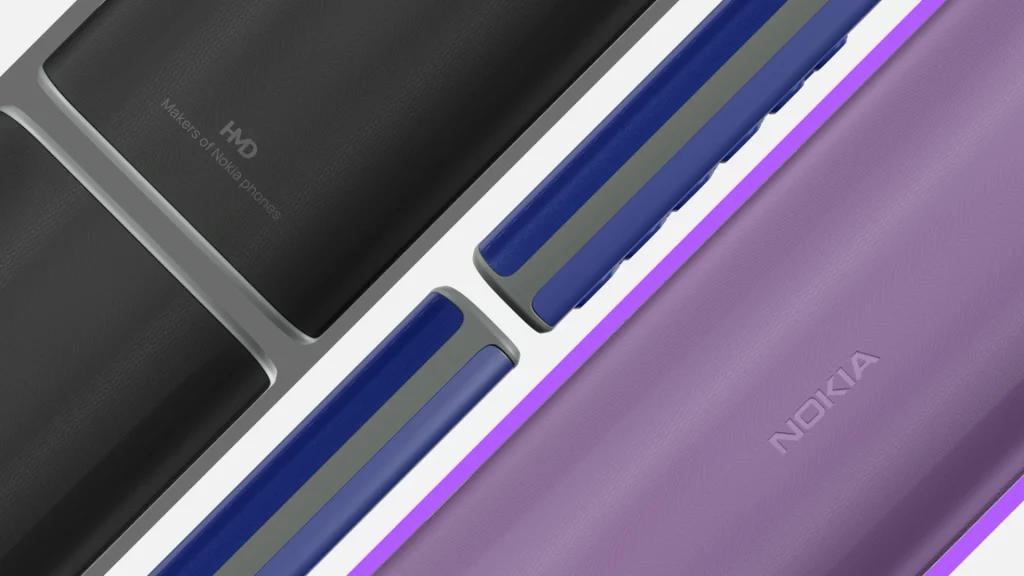
Based on the recent leak, we know that the upcoming device features a single camera on the rear with an LED flash. It even features the “Nokia” branding and a curved body. The bottom of the rear panel even includes the HMD branding as well. The leaked promotional image claimed that the Nokia 3210 (2024) will offer a long battery life, similar to its predecessor. However, one of the more notable upgrades includes support for 4G networking. Bluetooth connection was also confirmed in this image.
4. When will it launch?
Unfortunately, the company has yet to make any official announcement regarding this device. But we expect it to be released sometime later this month. It is worth noting that this is still just speculation so take this report with a pinch of salt and stick around for more updates regarding this matter.
Xiaomi is known for its innovation and top-notch quality products. Their latest flagship, the Xiaomi 14 Ultra, represents the peak of mobile technology, packed with features to take your smartphone experience to new levels.
You can now buy Xiaomi 14 Ultra for a discounted price at Giztop. The smartphone which generally retails for $1199 is now available at a discounted price of $899 only. This price applies to the base variant.
At the heart of the Xiaomi 14 Ultra lies its 6.73-inch LTPO AMOLED display, boasting a mesmerizing 2K resolution and a smooth 120Hz refresh rate. Whether you’re browsing the web, streaming your favorite content, or gaming with unrivaled fluidity, every interaction with the display is a feast for the eyes. With HDR10+ and Dolby Vision support, colors pop with stunning vibrancy, while the peak brightness of 1900nits ensures exceptional visibility even in bright outdoor environments.
Processor
Fueling the Xiaomi 14 Ultra’s lightning-fast operation is the Qualcomm Snapdragon 8 Gen 3 processor, built on a cutting-edge 4nm architecture. Clocking in at an impressive 3.3 GHz frequency, this octa-core powerhouse delivers unrivaled speed and responsiveness for seamless multitasking, gaming, and productivity. Paired with up to 16GB of LPDDR5X RAM, expect nothing short of blazing-fast performance in every aspect of your smartphone usage.
Storage
With storage options ranging up to 1TB of USF 4.0 storage, the Xiaomi 14 Ultra ensures that you never have to compromise on your digital lifestyle. Whether it’s your extensive media library, countless apps, or precious memories captured in high resolution, there’s ample space to store it all.
Camera
Equipped with a revolutionary Leica Summilux Lens quad-camera system, the Xiaomi 14 Ultra redefines smartphone photography. From breathtaking landscapes to intimate portraits, unleash your creativity with unparalleled clarity and detail. The innovative Variable Aperture Prime Camera, complemented by advanced optical stabilization and phase detection autofocus, ensures stunningly crisp shots even in challenging conditions. Plus, with features like telephoto macro and ultra-wide-angle capabilities, every shot is a masterpiece waiting to happen.
Battery
Powering through your busiest days is a breeze with the Xiaomi 14 Ultra’s massive 5300mAh battery. Say goodbye to constant charging anxiety as you enjoy extended usage without compromise. And when it’s time to recharge, the blazing-fast 90W wired charging and 80W wireless charging capabilities ensure that you’re back up and running in the blink of an eye.
Connectivity
Stay connected at the forefront of technological advancement with 5G support and the latest WiFi 7 standard. Whether you’re streaming high-definition content, engaging in lag-free gaming, or video conferencing with crystal-clear clarity, the Xiaomi 14 Ultra ensures that you’re always at the forefront of connectivity.
Audio
Immerse yourself in a world of rich, immersive audio with the Xiaomi 14 Ultra’s industry-leading linear speaker technology. From deep, resonant bass to crystal-clear highs, every note is reproduced with astonishing fidelity, elevating your audio experience to new heights.
Design
Crafted with meticulous attention to detail, the Xiaomi 14 Ultra exudes sophistication and style. Its sleek, ergonomic design not only looks stunning but also feels incredibly comfortable in the hand, ensuring a seamless user experience with every interaction.
With its unparalleled combination of cutting-edge features, the Xiaomi 14 Ultra stands as a testament to Xiaomi’s unwavering commitment to innovation and excellence.
Sony’s Xperia product event is happening on May 17. The Japanese brand is expected to unveil the Xperia 1 VI flagship smartphone. The Xperia 10 VI is also expected to tag along at the event. Both upcoming offerings will arrive as the successors to last year’s Xperia 1 V and 10 V respectively. Leaks have revealed plenty of details about the Xperia 1 VI but not about the 10 V. Now, tipster Evan Blass (aka evleaks) has shared multiple press renders of the upcoming Xperia 10 V.
Sony Xperia 10 VI emerges in press renders
As per the press renders the Sony Xperia 10 VI will be available in three colour options including Light Blue, Black, and White. The phone has a minimalistic look with a raised pill-shaped area at the top left of the back panel that has two camera sensors sandwiched by an LED flash unit. Notably, the Japanese brand is ditching the telephoto lens found on its predecessor. This means that the upcoming offering will have an ultra-wide-angle lens and a primary unit with 2x zoom.
The Sony Xperia 10 VI features a flat frame with a volume rocker and power button on the right side. The latter doubles up as a fingerprint scanner. On the front, the device has a tall aspect ratio display and Sony is continuing the tradition with top and bottom bezels. One of the images also suggests front-firing speakers at the top and bottom.
The IP rating of the Sony Xperia 10 VI is not know but it will be dust and water-resistant. The device features a 3.5mm headphone jack on the top. Sony is also expected to offer various covers and cases for the upcoming smartphone.
Oppo and Vivo were some of the first companies to launch foldable phones, including both flip-style and larger folding screens. But according to a new rumor, they might be taking a break from flip phones in 2024.
Word for it comes from insider Digital Chat Station (DCS) who revealed in his latest Weibo post that two major brands won’t “update” their clamshell foldables this year.
While he didn’t name the names, we can guess it’s Oppo and Vivo. Samsung is expected to launch the Galaxy Z Flip 6 in July, Motorola has a flip phone in the works, and Xiaomi hasn’t released a flip phone yet. That leaves Oppo and Vivo as the remaining big players.
The news also aligns with what analyst Ming-Chi Kuo reported in February: Oppo and Vivo might have stopped development on new flip phones for the Chinese market in 2024. It seems to be due to slower sales, although Huawei is reportedly still interested in clamshells despite them being less profitable.
DCS also suggests that instead of a flip phone, one of these two brands might launch a completely new type of foldable phone in 2025.
Huawei Tri-folding phone patent
The details are unclear, but it could be something different from the usual folding or flipping styles. The possibilities include phones that fold in a Z-shape (tri-folding) or have a rollable display.
So far, only Samsung and Huawei have been rumored to be working on Z-style foldable. Rollable phones are also an idea that’s been floating around.
POCO’s F6 series is expected to comprise standard and pro variants. Both phones have started bagging certifications hinting at their imminent arrival. After the POCO F6’s appearance on Geekbench recently, the more premium F6 Pro’s global variant has also been spotted on the benchmarking platform. The upcoming offering has already passed FCC and NBTC certifications in the past. Read on to know what the Geekbench database reveals.
POCO F6 Pro spotted on Geekbench
The POCO F6 Pro is listed on the Geekbench benchmarking platform with model number 23113RKC6G. It mentions a motherboard codenamed ‘kalama’ and the configuration comprises of three cores at 2.02GHz, four cores clocked at 2.80GHz, and a prime core ticking at 3.19GHz. This suggests that the device will be powered by a Snapdragon 8 Gen 2 chipset. As per the benchmark database, the POCO F6 Pro will pack a huge 16GB RAM and we can expect more options at launch. The smartphone will ship with pre-installed Android 14 OS out of the box.
In the Geekbench’s single-core and multi-core test results, the POCO F6 Pro scores 1,421 and 5,166 points respectively. The benchmark database does not reveal any additional details.
As per FCC, the POCO F6 Pro will be backed by a 4,880mAh battery unit. The Android 14 OS will be layered with HyperOS skin on the top. The model numbers of the F6 Pro suggest that it could be a rebranded Redmi K70 from China since they match except for the last initial which is ‘G’ and ‘C’ referring to global and China respectively. The Redmi K70 has a 120Hz 2K OLED display with 4,000 nits peak brightness, a 5,000mAh battery with 120W fast charging, and a 50MP triple rear camera setup.
Vivo just launched the Pad 3 Pro tablet in China, and it seems they’re planning to release even more tablets soon.
That is because three new tablets from Vivo (including some from their sub-brand iQOO) have been spotted on China’s 3C certification database. These tablets have the model numbers iPA2475, PA2455, and iPA2453.
Following their convention of using “i” prefixes for iQOO devices, speculation suggests the iPA2475, paired with a 66W fast charger listing, could be the iQOO Pad 2 Pro. Rumors suggest it might be a rebrand of the Vivo Pad 3 Pro.
Meanwhile, the iPA2453, listed with a 44W charger, could be the standard iQOO Pad 2. The PA2455 model, sporting a 44W charger listing, is said to be the vanilla Vivo Pad 3.
According to rumors, Vivo Pad 3 will be the first tablet to feature the new Snapdragon 8s Gen 3 chipset. Like the iQOO Pad 2 Pro, the iQOO Pad 2 is also rumored to be a rebranded version of the Vivo Pad 3.
Apart from the tablets, a likely Vivo smartwatch has also appeared on the 3C listings with model number iW2356. It supports 5W charging and is said to be the upcoming Vivo Watch 4.
As usual, the 3C certification doesn’t reveal extensive details about these devices. However, it’s clear that Vivo and its sub-brand have new devices on the horizon. We’ll keep you updated on any new details that emerge.
Sony‘s next-gen flagship smartphone, Xperia 1 VI, has just been spotted in another leak. But this time around, it is not just cameras and designs. We have a complete breakdown of its internal hardware and more. So here’s everything we know so far.
According to an MSPowerUser report, the Japanese brand’s upcoming flagship phone features a sleek and slim body. The rear has a frosted textured glass panel that is paired with fine slits on the sides for a better grip. The report claims that it will be available in black and platinum silver color options.
On the front, it sports an OLED display that features a 1.5x brighter panel compared to the Xperia 1 V. The screen will reportedly offer a 19.5:9 aspect ratio and variable refresh rates up to 120Hz, which is in line with our previous report. We can expect the higher brightness to kick in under direct sunlight and other display tech like BRAVIA HDR to make a return for improved contrast and colors.
2. Specs & Performance
Sony could be placing a greater focus on gaming performance with the Xperia 1 VI. Under the hood, it could feature the Snapdragon 8 Gen 3, which is a flagship grade processor. But for mobile gamers, this device will apparently offer an FPS optimizer and a 240Hz touch sampling rate. All of this could help give a smoother gaming experience. A large 5,000mAh battery pack powers this device, which likely offers fast charging and wireless charging.
The high end hardware would even get a dedicated vapor chamber to help maintain performance for extended periods of use. The leak adds that Sony could even offer Xperia 1 VI owners one year of free Sony Pictures movie streaming, giving them access of up to five Sony movie titles remastered with IMAX video and DTS sound.
3. Camera & Audio
Back in April, we covered a report regarding the camera system on the Sony Xperia 1 VI and Xpiera 10 VI. This showcased the triple camera module that offers a wide angle sensor with a 24mm to 48mm lens (2x optical zoom), ultra wide angle lens, and a telephoto shooter (up to 7x optical zoom). The primary camera is the “Exmor T for mobile” stacked CMOS image sensor, which could have a 48-megapixel resolution.
Sony typically offers an enhanced audio and the Xperia 1 VI is no different. A new high performance audio chip may be featured on the upcoming flagship for dynamic and clear audio. We can expect Hi Res audio, Hi Res wireless, 360 Reality audio, LDAC, DSEE Ultimate, and even a 3.5mm headphone jack. Sony Pictures and Music engineers also tuned the sound profile for improved bass and clarity for audiophiles.
Vivo has recently been very active in the smartphone market, introducing four new models: the Vivo Y18, Y18e, Y38, and V30e. Adding to this lineup, they have now unveiled the Vivo Y100 4G smartphone for consumers. This smartphone is essentially a rebrand of the Vivo V30 Lite.
Vivo Y100 4G specs:
The Vivo Y100 4G comes with a 6.67-inch E4 AMOLED display offering a resolution of 1080 x 2400 pixels, along with a 120Hz refresh rate and a peak brightness of 1,800 nits.
Under the hood, it features a Snapdragon 685 chip, coupled with 8 GB of LPDDR4X RAM and 256 GB of UFS 2.2 storage. For optics, the device comes with a 50MP primary camera and a 2MP bokeh sensor on the back, while it features an 8MP selfie snapper on the front.
The phone has a 5,000mAh battery with 80W fast charging support. It comes with Android 14 out of the box and features an in-display fingerprint scanner for security. It offers other features, such as dual 4G VoLTE, Wi-Fi, Bluetooth 5.0, GPS, a USB-C port, a microSD card slot, and a flicker sensor. As for audio, it has dual stereo speakers.
Pricing & availability
The vivo Y100 4G is now purchasable in select Asian markets, with a price tag of around $250.
Qualcomm‘s next-gen flagship mobile processor, the Snapdragon 8 Gen 4, is expected to arrive this fall. While leaks about its specs and performance have been circulating for months, a new one throws prior benchmarks into question.
A new leak by the tipster Digital Chat Station suggests the previously leaked benchmarks were based on low-frequency engineering samples of the 8 Gen 4. This isn’t uncommon though – early silicon often runs at lower speeds for stability testing purposes.
But it does suggest that the numbers we’ve seen so far might not be indicative of the final performance.
The new details shared by the tipster also reveal that the latest version of Snapdragon 8 Gen 4 has a “2+6” core architecture. The “2” likely refers to a pair of high-performance cores that may have clock speeds of 3.6 GHz to 4.0 GHz.
The other “6” cores are likely the efficiency cores, though the tipster didn’t share their clock speed details. Still, the chip is claimed to have scores of around 2,700 points in single-core and 10,000 points in multi-core tests in Geekbench 6.
The leak also suggests a mid-October launch for the first smartphone powered by the new chip. Xiaomi and OnePlus are typically among the first brands to use Qualcomm’s latest high-end processors.
Meanwhile, OnePlus will also equip the chip in its upcoming flagship, the OnePlus 13. Rumors so far suggest a design overhaul for the smartphone, with a possible departure from the brand’s signature rear camera layout in favor of a stacked camera system.
Vivo has just unveiled a new Y series smartphone model in India. The device in question is the brand’s latest budget grade handset, which packs some notable specs and features despite its affordable price tag. This announcement arrives mere days after the company unveiled the Vivo Y18e, so let’s check it out.
Vivo Y18 Specs
The Chinese brand’s new Y18 model sports a 6.56-inch LCD panel that offers HD+ resolution, TUV Rheinland certification, and 840 nits of peak brightness. While it comes with lower resolution, it makes up for detail with a smooth 90Hz refresh rate screen. Under the hood, it is equipped with the MediaTek Helio G85 SoC that is paired with up to 4GB of RAM and 128GB of internal storage.
Users can expand the storage via microSD card slot and even raise the RAM via 4GB virtual RAM expansion. The Vivo Y18 packs a 50-megapixel dual camera setup on the rear, while the front houses an 8-megapixel selfie shooter.
A large 5,000mAh battery pack powers this device, which supports 15 wired fast charging via USB Type-C. Although, it is worth noting that the retail box does not include the charging brick. Other notable features include Android 14 OS based FunTouch OS 14 custom skin, side mounted fingerprint scanner, and an IP54 rating for water and dust resistance.
Vivo Y18 Pricing & Availability
The Vivo Y18 has a starting price tag of 8,999 INR (roughly 108 US Dollars) for the 4GB + 64GB storage configuration. Meanwhile, the 4GB + 128GB option costs 9,999 INR (roughly 120 US Dollars). It is available for purchase through the Vivo eStore. You can get your hands on this smartphone in a Space Black and Gem Green color variant.
A lawsuit challenges Meta’s control over user feeds. It centers on a tool called “Unfollow Everything” which allows users to curate feeds intentionally. Facebook banned its creator after he took control of his feed and saw a big drop in usage.
Now, a researcher wants to study it but can’t access it, so they’re suing Meta. They argue users have the right to control their online experience, protected by a section of the Communications Decency Act. This could set a precedent, giving us the power to break free from algorithms and curate our own social media feeds.
The US is trying to stop Huawei and other foreign companies from certifying their wireless devices on certification websites in the US.
This month, the FCC will decide on a plan that would keep companies like Huawei from using the equipment authorization program.
Until Tuesday, Huawei was recognized as an accredited lab by the US, but that has since expired. The FCC has reportedly denied the request of the Huawei lab to extend the recognition.
After China, Huawei has silently launched the Pura 70 series in Malaysia. The lineup consists of three models: the Pura 70, the Pura 70 Pro, and the top-of-the-line Pura 70 Ultra.
Each variant comes in a single RAM and storage configuration. The Pura 70 (12GB RAM, 256GB storage) costs RM3,699 ($780), while the Pura 70 Pro (12GB RAM, 512GB storage) costs RM4,899 ($1034). The feature-packed Pura 70 Ultra (16GB RAM, 512GB storage) comes in at RM6,599 ($1394).
Bose‘s has launched its biggest Bluetooth speaker to date, the SoundLink Max.
The speaker measures 26cm wide and weighs in at under 2.27kg. Despite its size, the speaker is built tough with IP67 water resistance, dustproof, and shockproof capabilities. It also supports the latest Bluetooth 5.3 standard.
Celebrating a decade of dominance in the gaming mouse market, Logitech marks the 10th anniversary of the “world’s best-selling gaming mouse,” the G502. To commemorate this milestone, they’re offering a special edition G640 mousepad to those who purchase designated G502 models.
The Google Pixel 7 Pro and Pixel 8 Pro come with a glossy camera bar, whereas the non-pro models offer a matte finish. The camera bar is made of aluminum, which scratches very easily and the glossy finish makes it even more noticeable. One of the few aspects of the last two pro models from Google that people don’t like is this glossy finish on aluminum camera bar, which is meant to protect the camera assembly.
Surprisingly, a user has found a way to reduce the visibility of the scratches and fingerprints on it. However, we suggest you not to do the same with your Pixel.
AnTuTu has shared its list of high-performing smartphones in the flagship and flagship-killer categories for April. The ASUS ROG Phone 8 Pro stays at the top of the flagship category for a second month (covered separately), while the OnePlus Ace 3V maintains its number one spot in the flagship-killer list for the second consecutive month as well.
JBL has unveiled its latest lineup of speakers in India, called the JBL Authentics series. This series, which pays homage to the iconic 1970s JBL L100 speaker, comes with three models:the Authentics 200, 300, and 500 models. These speakers sport a premium aluminum frame, synthetic leather enclosures, and the classic Quadrex grille.
Luxury tech brand Caviar is making a grand entrance into the e-bike market with their latest offering, the Herzog, a customized Porsche eBike Cross 3rd Gen. This luxurious design takes the already stylish e-bike and elevates it to a whole new level with the inclusion of 18K gold and golden carbon fiber parts.
A recent leak on Chinese social media platform Weibo may have spilled the beans on Huawei‘s upcoming Kirin PC chip. If the information proves true, it looks like Huawei is gearing up to launch a processor that can go toe-to-toe with offerings from Apple and Intel in terms of performance.
The leak reveals the specs of the alleged Kirin PC chip suggesting that it will utilize Taishan v130 architecture and has an 8-core CPU setup with a clock (likely base) speed of 2.5 GHz. The graphics processing unit (GPU) is rumored to be a 10-core unit codenamed “Ma Liang 920.”
The leak also includes performance benchmarks of the chip. But it’s wise to take them with a grain of salt since their accuracy is up in the air.
Reportedly, the Kirin PC chip manages to score 11640 points on multi-core tests in Geekbench 6 while drawing 30W of power. The score puts it in a similar performance bracket as Apple’s M2 and the Intel’s i7-13700H processor, which has an average multi-core score of 10064 and 12203, respectively.
On Geekbench 5, it is said to achieve a single-core score of 1130 and a multi-core score of 8765. While on the 3D Mark Wild Life Extreme test it scored 6490 points while consuming 20W power.
Moreover, Cinebench R24, another benchmarking tool, focused on CPU rendering performance, is claimed to deliver a CPU score of 72 points, a single-core score of 680 points, and a multi-core score of 1695 points.
Additionally, the leak suggests that the upcoming Kirin PC chip could support up to 32GB of LPDDR5-6400 memory running in a 128-bit bus setup and offering a bandwidth of 100GB/s. It’s also rumored to support up to 2TB of solid-state storage (SSD) and include three USB-4 ports.
It’s worth noting that these details aren’t confirmed, and we’re not sure if the leak is genuine. So, it’s wise to be a bit skeptical about it.
We use cookies on our website to give you the most relevant experience by remembering your preferences and repeat visits. By clicking “Accept”, you consent to the use of ALL the cookies.
This website uses cookies to improve your experience while you navigate through the website. Out of these, the cookies that are categorized as necessary are stored on your browser as they are essential for the working of basic functionalities of the website. We also use third-party cookies that help us analyze and understand how you use this website. These cookies will be stored in your browser only with your consent. You also have the option to opt-out of these cookies. But opting out of some of these cookies may affect your browsing experience.
Necessary cookies are absolutely essential for the website to function properly. This category only includes cookies that ensures basic functionalities and security features of the website. These cookies do not store any personal information.
Any cookies that may not be particularly necessary for the website to function and is used specifically to collect user personal data via analytics, ads, other embedded contents are termed as non-necessary cookies. It is mandatory to procure user consent prior to running these cookies on your website.