
Add GIZMOCHINA as Preferred Source on Google
Today Samsung announced it has begun mass production of the “industry’s thinnest” 12 nanometer (nm)-class, 12-gigabyte (GB) and 16GB LPDDR5X DRAM packages. This development is expected to solidify the company’s leadership in the low-power DRAM market.
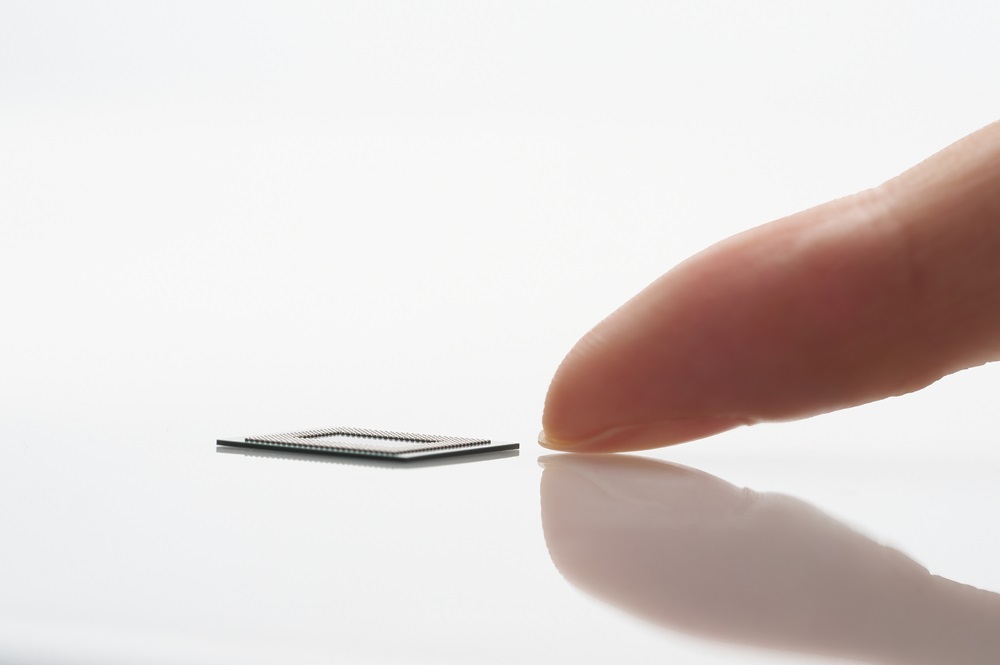
With this development, the company plans to expand its business in the low-power DRAM market by supplying its latest 0.65mm LPDDR5X DRAM to mobile processor makers and device manufacturers.
Samsung has been able to deliver ultra-slim LPDDR5X DRAM packages that can pack more capacity within a given volume. It reportedly also offers better thermal control, a factor that is becoming increasingly critical, especially for high-performance applications, an example on which will be on-device AI processing.
Speaking of the on-device AI processing, the company is currently rumored to be working on expanding its Galaxy AI beyond the S series flagships and rolling it out to select A series devices, starting this year.
“Samsung’s LPDDR5X DRAM sets a new standard for high-performance on-device AI solutions, offering not only superior LPDDR performance but also advanced thermal management in an ultra-compact package,” said YongCheol Bae, Executive Vice President of Memory Product Planning at Samsung Electronics. “We are committed to continuous innovation through close collaboration with our customers, delivering solutions that meet the future needs of the low-power DRAM market.”
With the new LPDDR5X DRAM packages, Samsung will offer the industry’s thinnest 12 nm-class LPDDR DRAM in a 4-stack structure. According to the company, it will reduce the thickness by approximately 9% and improve heat resistance by about 21.2%, as compared to its previous generation.
The company also noted that they have managed to make the new LPDDR5X DRAM package is “as thin as a fingernail” at 0.65 millimeters, which is reportedly the the thinnest among existing LPDDR DRAM of 12GB or above. They are using an ‘optimized’ back-lapping process (grinding the backside of a wafer) to reduce the thickness of the DRAM package.




Comments