
Add GIZMOCHINA as Preferred Source on Google
Samsung is reportedly exploring the option of partnering with TSMC (Taiwan Semiconductor Manufacturing Company) to mass-produce its Exynos processors, according to a post by the user Jukanlosreve on the X.
The move marks a potential shift in strategy for Samsung as it seeks to enhance the performance and efficiency of its in-house Exynos chips, which have consistently trailed behind industry leaders like Apple and Qualcomm in recent years.
Finally an efficient Exynos?
At present, Samsung’s Exynos even falls behind MediaTek’s recent advancements in the key aspects. The common factor that links Exynos’ competitors is their collaboration with TSMC, a top player in semiconductor manufacturing known for efficient, high-performance fabrication.
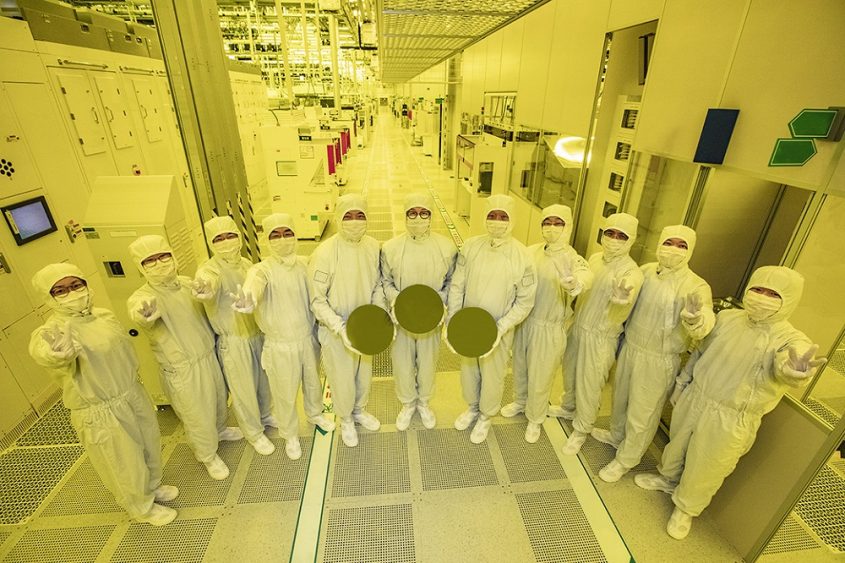
TSMC’s cutting-edge process nodes have become a key advantage for fabless manufacturers looking to maximize their chip efficiency and performance, something that Samsung Foundry has struggled to match. This inefficiency, along with Samsung Foundry’s lower yield rates, has contributed to Exynos’ comparative lag in the market.
Yield rate is a significant metric in semiconductor manufacturing, referring to the ratio of fully functional chips produced on a wafer compared to the total potential chip count. A higher yield rate minimizes defective chips, thus maximizing production efficiency. Samsung’s current yield rate has been a sticking point, especially for advanced 3nm nodes. Reports indicate that Samsung’s 3nm yield rate is still below 20%, while TSMC’s is comfortably over 80%, nearing 90%. With these figures, TSMC stands out as a more viable option to produce Exynos chips at scale and with greater reliability.
Samsung’s System LSI division, which designs Exynos chips, operates separately from Samsung Foundry, the department responsible for the actual manufacturing. This separation could facilitate a shift toward outsourcing Exynos fabrication to TSMC.
What does it mean for Galaxy users?
However, there are additional considerations in this potential transition. Samsung initially aimed to reduce manufacturing costs for its Galaxy devices by using Exynos processors, intending to both minimize production expenses and create a chip that could attract other phone makers.

Despite a performance gap, Samsung has continued to utilize Exynos processors in its flagship devices, primarily to maintain cost efficiency. Moving Exynos production to TSMC could improve chip performance and efficiency but may come with higher production costs, potentially affecting Samsung’s pricing strategy for Galaxy devices.
If Samsung ultimately opts to shift Exynos manufacturing to TSMC, it could mean a significant boost in the processor’s performance, though at a potentially higher cost. Whether Samsung will prioritize performance gains over cost savings remains to be seen, but this shift could reshape the future of Exynos processors and Samsung’s approach to competitive chip production.
(Source)




Comments