
Add GIZMOCHINA as Preferred Source on Google
As an Amazon Associate, Gizmochina earns from qualifying purchases. Links on this page may earn us a commission at no extra cost to you.
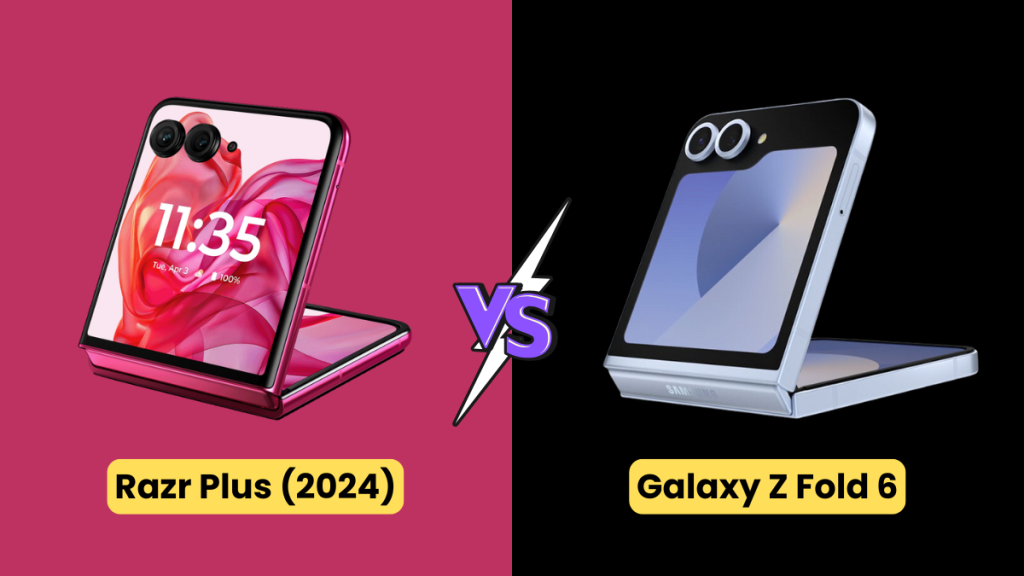
While Samsung still dominates the foldable smartphone market, it doesn’t hold the market as it used to a few years ago. And no, the foldable market isn’t dropping. Instead, it is increasing by 20% year-on-year. The reason is solid offerings from Motorola and other brands at a competitive price.
The Razr 2023 from last year got Motorola an impressive showing in the foldable smartphone space, and now we have the more improved Motorola Razr Plus (2024), here to eat the market share of Galaxy Z Flip 6. Both are attractive clamshell handsets with their own pros and cons. In this comparison, we’ll dive deep into key aspects to see which one has the edge.
Motorola Razr Plus (2024) vs Samsung Galaxy Z Flip 6: Pricing & availability
The Motorola’s Razr Plus (2024) landed on July 17 in the US and Australia, on July 20 in India, and on July 25 in the UK. Outside the US, it’s sold under a different name — Razr 50 Ultra. The Galaxy Z Flip 6 arrived a week later on July 24 in the US, UK, and India, and on July 31 in Australia.
The Razr Plus only comes in a single 12GB/256GB variant for $749, down from a launch price of $1219. The Galaxy Z Flip 6 is offered in multiple storage options, with the 256GB model currently priced at $800 and the 512GB model at $912.
- Razr Plus 2024 (256GB) – $749 (Amazon, BestBuy)
- Galaxy Z Flip 6 (256GB) – $799 (Amazon, BestBuy)
- Galaxy Z Flip 6 (512GB) – $912 (Amazon, BestBuy)
The Razr Plus (2024) has the edge in pricing, but is the $50 difference reason enough to pick it over the Galaxy Z Flip 6? Let’s dive into other key aspects of both clamshell handsets to pick the ultimate winner.
Motorola Razr Plus (2024) vs Samsung Galaxy Z Flip 6: Design and display
The Galaxy Z Flip 6 (full review) is a compact and thinner device than the Razr Plus (2024). Also, it’s 2g lighter at 187g. Both foldable have aluminium frames, though the Motorola phone is gently curved around the edges that flow into the cover screen and the back cover, whereas the Flip 6 has sharp edges.
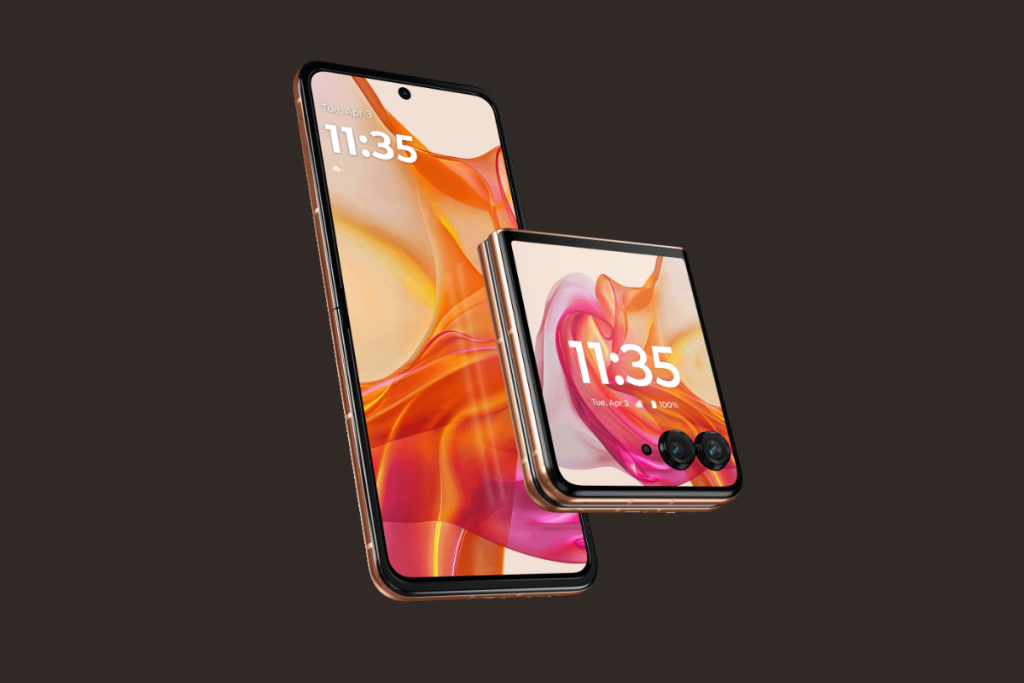
Samsung opted for a glass back for the Flip 6, whereas the Razr Plus (2024) features vegan leather, which feels softer and grippier in hand. Durability plays a crucial role as well, with the Galaxy Z Flip 6 offering a better IP48 rating for dust and water resistance vs. IPX8 on the Razr Plus (2024), which lacks any dust protection rating.

The Galaxy Z Flip 6 also has superior Gorilla Glass Victus 2 protection for its cover display, whereas the Razr Plus (2024) has first-gen Gorilla Glass Victus. That means a more durable cover display on the Flip 6.
One of the biggest reasons for picking a Razr Plus over the Flip 6 would be great displays. The primary (inner) one on the Razr Plus measures 6.9 inches (vs. 6.7 inches on the Flip 6). Both are LTPO AMOLED panels, but Razr offers a higher refresh rate (for better smoothness) and peak brightness (for enhanced visibility outdoors).
The cover display on the Razr Plus is another solid reason to pick this device. It’s 4 inches (vs. 3.6 inches on the Flip 6). The more interesting thing to note here is that the Razr Plus 2024’s cover screen takes up the entire space (almost), while the Flip 6’s cover screen looks a little awkward and outdated.
The Razr Plus’ cover display has a higher refresh rate of 165Hz, whereas the Flip 6 only supports a 60Hz refresh rate. Scrolling and swiping are certainly smoother on the Motorola device.
Motorola Razr Plus (2024) vs Samsung Galaxy Z Flip 6: Performance
This part of the comparison goes entirely to the Galaxy Z Flip 6, boasting a powerful Snapdragon 8 Gen 3. The Razr Plus 2024 has a Snapdragon 8s Gen 3, which is also a high-performance chip but not as good as the 8 Gen 3. (see the chip comparison here)
Both are excellent chips, though. You will have a lag-free experience on both devices with everyday tasks. The difference becomes visible only when playing high-end games or video editing.
Motorola Razr Plus (2024) vs Samsung Galaxy Z Flip 6: Camera
Both clamshell foldable phones have a dual camera setup on the back, boasting an OIS-enabled 50MP primary camera. Paired with it is a 50MP telephoto camera on the Razr Plus 2024, whereas the Flip 6 opts for a 12MP ultrawide camera.
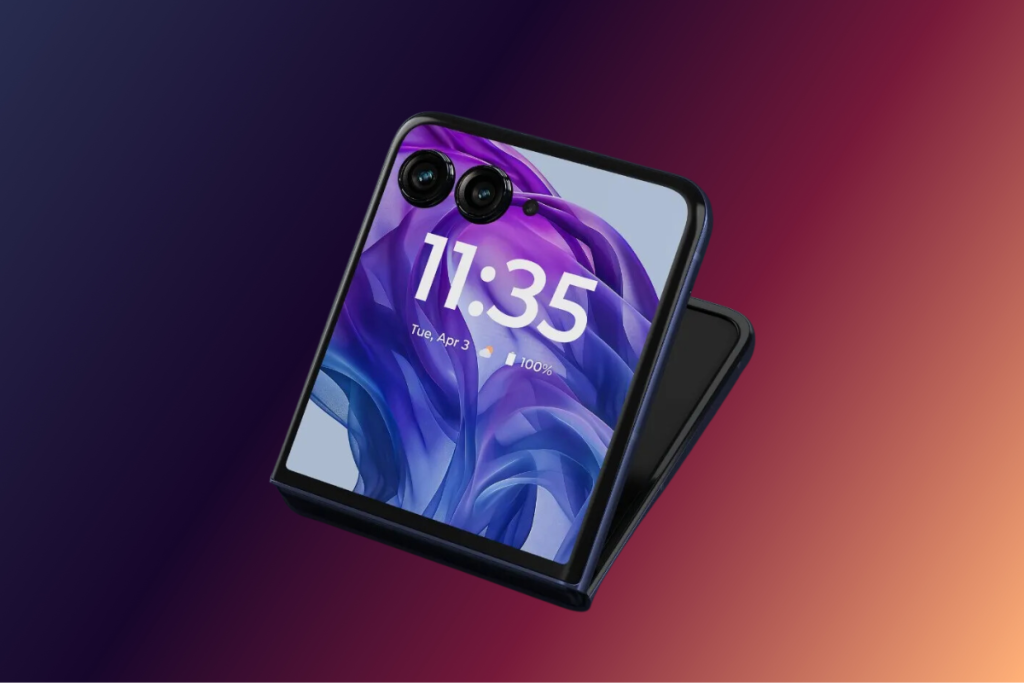
Both smartphones take excellent daylight shots using the primary camera. And even though the Galaxy Z Flip 6 lacks a periscope lens, the zoom shots are as good as Razr Plus’s. The ultrawide shots come out nicer on the Flip 6 to which the Razr Plus has no answer.
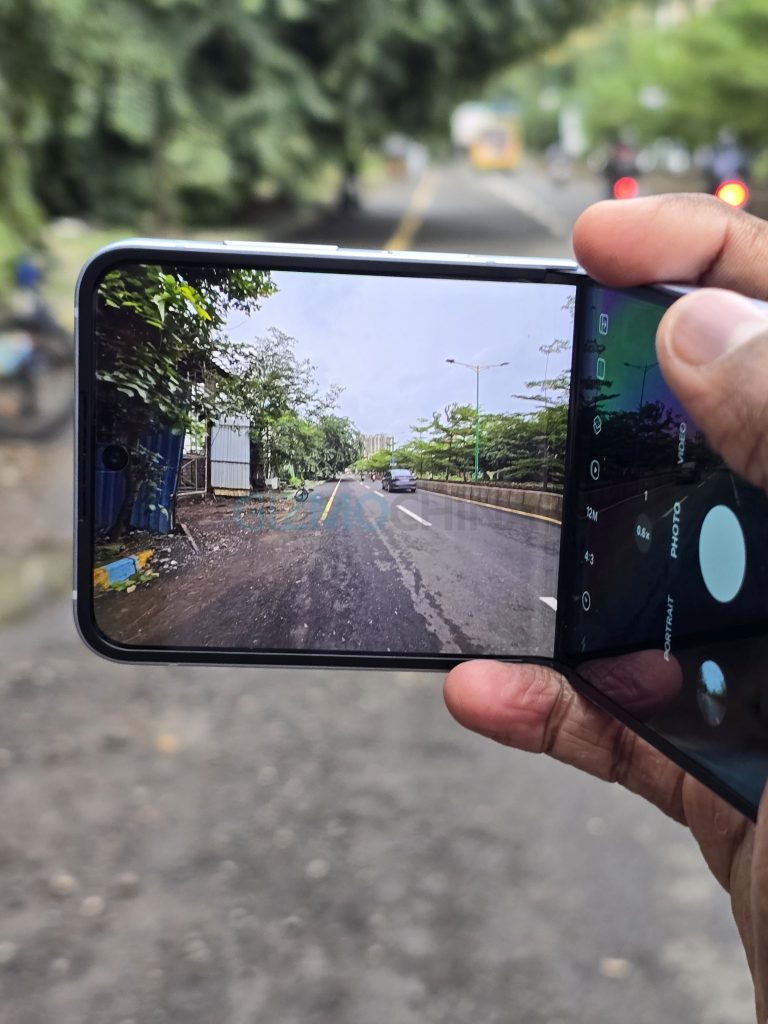
For selfies, the Razr Plus gets a 32MP snapper, while the Flip 6 has a 10MP shooter. Alternatively, you can use the rear cameras and the cover display in tandem to get much better selfies.
Motorola Razr Plus (2024) vs Samsung Galaxy Z Flip 6: Battery and charging
Both clamshell foldable smartphones have the same battery capacity of 4,000mAh, but the performance differs because of the chip’s efficiency and software optimizations. The Razr Plus lasts a few extra hours for web browsing and video streaming, while the Flip 6 offers a more extended gaming session on a single charge.
Overall, the Razr Plus 2024 has better battery efficiency, though the Flip 6 isn’t far behind.
Motorola Razr Plus (2024) vs Samsung Galaxy Z Flip 6: Connectivity
The Motorola Razr Plus (2024) has more robust connectivity, thanks to Wi-Fi 7 and Bluetooth 5.4 support. The Galaxy Z Flip 6, on the other hand, supports Wi-Fi 6e and Bluetooth 5.3. However, it offers superior transfer speed over a USB cable.
Motorola Razr Plus (2024) vs Samsung Galaxy Z Flip 6: Which one should you choose?
It’s a tough decision to pick between the Razr Plus (2024) and Galaxy Z Flip 6. On one hand, you have the Flip 6 with a compact form factor, a more powerful chipset, and longer software support. It also brings Galaxy AI smartness.
The Razr Plus (2024) is also a solid option, featuring larger displays with higher brightness and refresh rate. You also get faster charging, better connectivity, and a much less visible crease. On top of everything, it is $50 cheaper than the Flip 6.
If you’re looking for the best performance, durability, and longer software support, the Galaxy Z Flip 6 is a better choice. For everything else, the Razr Plus (2024) is a solid pick.

Comments