
Add GIZMOCHINA as Preferred Source on Google
The iPhone 17 lineup might not bring the charging speed upgrades some users are hoping for. According to a recent rumor, all the iPhone 17 models—iPhone 17, iPhone 17 Air, iPhone 17 Pro, and iPhone 17 Pro Max—will all support up to 35W wired charging.
Check out the latest concept render of the iPhone 17 Air.

No major charging speed improvements
The news comes from Apple supply chain analyst Jeff Pu (via MacRumors). Last year, ChargerLAB reported that the iPhone 16 Pro Max reached a peak speed of 37W (with Apple’s 140W USB-C power adapter) in their test. The standard iPhone 16 was also reported to hit a max charging speed of 38W and a sustained rate of around 20W.
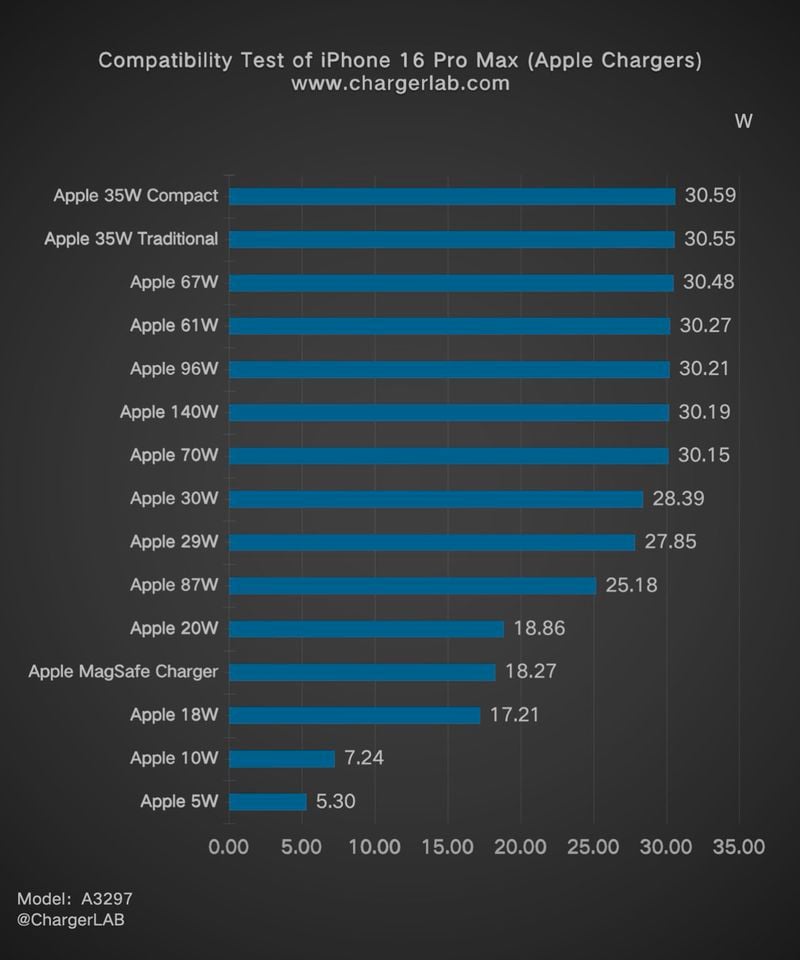
So, it seems that the charging speed (or the efficiency of the charging system) will remain largely similar to last year’s models. While 35W is decent, it’s far behind the charging capabilities of most of its Android counterparts, some of which exceed 100W of input. For Apple fans, it seems the company is sticking to its gradual approach to charging technology.

Of course, it’s easy to assume that faster charging generates more heat and thereby degrades the battery much faster, and hence it’s bad for the battery’s longevity. However, several smartphone makers have been doing it for over four years, and we haven’t seen any report that actually backs the theory. Ultimately, it depends on the temperature (and hence the power efficiency of the charging system), which has drastically improved over the years. With the current technology, it’s definitely safe to adopt faster charging, and we hope it materializes in the near future.
What about the wireless charging?
Jeff Pu didn’t mention any changes to MagSafe wireless charging speeds for the iPhone 17 models. Currently, the iPhone 16 series supports up to 25W wireless charging with MagSafe, and it’s likely the iPhone 17 will stick to the same standard.
Tech enthusiast? Get the latest news first! Follow our Telegram channel and subscribe to our free newsletter for your daily tech fix!
For more daily updates, please visit our News Section.
(Source)




Comments