Add GIZMOCHINA as Preferred Source on Google
The clash between Vivo X300 Pro and Xiaomi 17 Pro Max is more than just another flagship face-off; it highlights two distinct approaches to premium smartphone design and innovation. While Vivo focuses on sleek performance and value, Xiaomi pushes the envelope with bold features and power. This comparison matters because both devices redefine what users can expect from top-tier phones, making the choice between them less about specs and more about personal priorities.
1. Design and Display
Build and Feel:
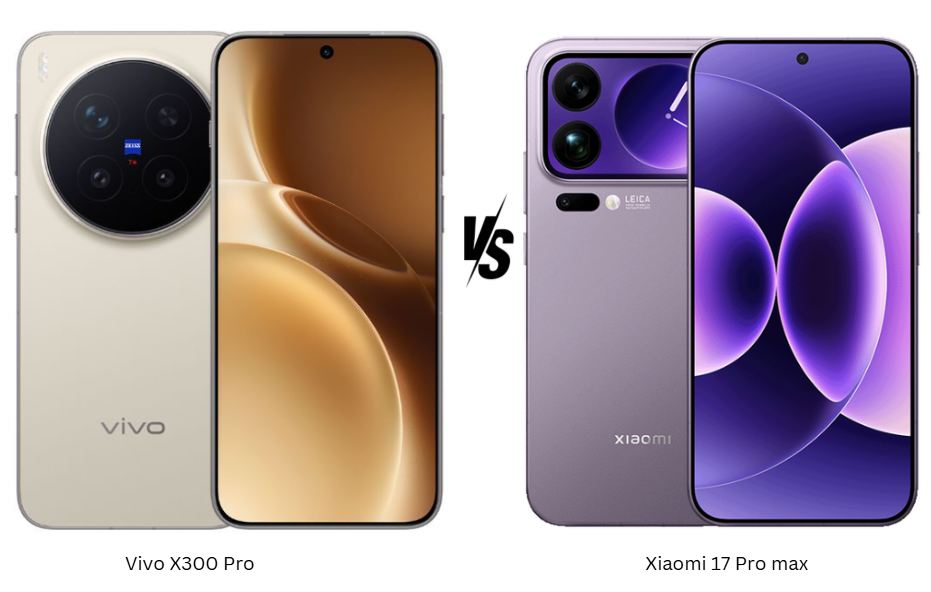
Both smartphones bring premium craftsmanship to the table, but they reflect different philosophies. The Vivo X300 Pro uses an aluminum alloy frame and a dual-glass design, offering a solid and elegant hand feel with a slightly more compact build. Meanwhile, the Xiaomi 17 Pro Max leans on its larger form factor with a sturdy aluminum frame and its signature Dragon Crystal Glass, enhancing durability and grip. Vivo focuses more on sleekness, while Xiaomi emphasizes a bold, flagship presence. For those who prefer a balanced and lightweight premium device, Vivo stands out, whereas Xiaomi appeals to users who value rugged strength and a big-screen experience.
Display Quality:
Vivo offers a stunning LTPO AMOLED panel with ultra-high peak brightness and Dolby Vision support, ensuring vibrant visuals and smooth scrolling at 120Hz. Xiaomi counters with a slightly larger AMOLED display and a unique secondary rear display, an innovative touch that adds functional versatility. While both deliver flagship-level viewing quality, Xiaomi’s dual-display design gives it a creative edge for notifications, selfies, and content previews. Vivo’s higher peak brightness benefits outdoor visibility, whereas Xiaomi delivers a more immersive experience through its sheer size and smart implementation.
Verdict:
Both excel in build and display, but Xiaomi edges ahead with its secondary screen and bold design. Vivo appeals to minimalists, while Xiaomi caters to those who love innovation and larger displays.
2. Specifications
Performance:
Vivo is powered by the Mediatek Dimensity 9500, a powerhouse that offers excellent thermal efficiency and stable peak performance. Xiaomi packs the latest Snapdragon 8 Elite Gen 5, which pushes raw performance to another level, especially in gaming, AI tasks, and multitasking. Both phones offer UFS 4.1 storage and similar RAM options, ensuring blazing-fast app launches and smooth user experiences. The Snapdragon chip, however, delivers better sustained performance and enhanced GPU output, making Xiaomi slightly more capable for demanding users. Vivo still provides a refined, efficient flagship experience but plays it safer on performance innovation.
Battery and Charging:
Battery capacity is another area where Xiaomi shines. It features a larger 7500 mAh cell with faster 100W wired and 50W wireless charging, ensuring longer use between charges. Vivo’s 6510 mAh battery with 90W wired and 40W wireless support is strong but slightly behind in capacity and speed. Both phones include reverse charging, but Xiaomi’s higher power output makes it more practical for charging accessories. For heavy users, Xiaomi offers more endurance, while Vivo maintains a good balance of size and efficiency.
Verdict:
Xiaomi takes the lead in raw power and endurance, making it a better choice for gamers and power users. Vivo still holds its ground for those who prefer stability and slightly more compact ergonomics.
3. Camera
Main and Secondary Lenses:
Both phones bring serious camera hardware to the table. Vivo impresses with a 200 MP periscope telephoto lens paired with ZEISS optics, delivering excellent zoom detail, color accuracy, and a cinematic tone. Xiaomi responds with its Leica-tuned triple setup, including a 5x periscope zoom lens and outstanding 8K video recording with Dolby Vision HDR. Vivo’s camera is tuned for clarity and high-resolution stills, while Xiaomi leans into versatility and color science for creative shooters. In real-world use, Xiaomi may appeal more to content creators due to its Leica tuning and professional video capabilities, while Vivo will satisfy users who prioritize zoom sharpness and vibrant shots.
Selfie Camera:
Vivo uses a 50 MP sensor with autofocus and excellent HDR, offering clear, detailed selfies in various lighting conditions. Xiaomi’s 50 MP selfie lens comes with HDR10+ support and advanced stabilization, making it ideal for vloggers and those who shoot front-facing videos. While both are excellent, Xiaomi’s added video enhancements make it a more flexible tool for creators.
Verdict:
Vivo delivers exceptional telephoto capabilities, while Xiaomi balances strong zoom, color tuning, and pro-level video recording. Xiaomi edges ahead in overall versatility, though Vivo remains a strong contender for zoom enthusiasts and portrait lovers.
4. Pricing
The Vivo X300 Pro is priced around $800, making it a slightly more affordable flagship, while the Xiaomi 17 Pro Max comes in at about $950. For the additional price, Xiaomi offers a larger battery, a more powerful processor, Leica camera tuning, and a secondary display, features that justify the premium for users seeking extra capabilities.
Vivo, on the other hand, delivers flagship performance and photography at a lower cost, making it a great value pick for those who don’t need the extras. Budget-conscious users will find Vivo appealing, whereas Xiaomi positions itself as a no-compromise flagship.
Disclaimer:
Prices are approximate and may vary based on country, region, and applicable taxes.
5. Conclusion
Both devices stand tall in the flagship category but cater to slightly different audiences. Vivo’s strengths lie in its ZEISS optics, ultra-bright display, efficient performance, and slightly lower pricing, ideal for users who want premium quality without overspending. Xiaomi, however, takes innovation further with its dual-display design, ultra-large battery, Leica partnership, UWB support, and unmatched performance, making it more future-ready.
In short, Vivo X300 Pro wins on value and practicality, while Xiaomi 17 Pro Max delivers the ultimate flagship experience for power users and content creators. The choice ultimately depends on whether innovation or price-to-performance balance matters more.
Read More:
- Xiaomi 17 vs 17 Pro vs 17 Pro Max – See What You Get for Every Upgrade
- iPhone 17 vs Galaxy S25 FE: Which 2025 Smartphone Should You Buy?
- Vivo X300 vs X300 Pro: Why the X300 Pro Might Be the Smart Buy