Advertisement

Oppo Find X7, Find X7 Ultra launch date, configurations, color options officially confirmed

Oppo has officially confirmed that it will unveil the Find X7 series of smartphones at 2:30 pm (local time) on Jan. 8, 2024, in China. In addition, the Find X7 and Find X7 Ultra smartphones are now listed on Oppo China’s online store for reservations. The official listings have confirmed the configurations and color options of both smartphones well ahead of the official announcement.
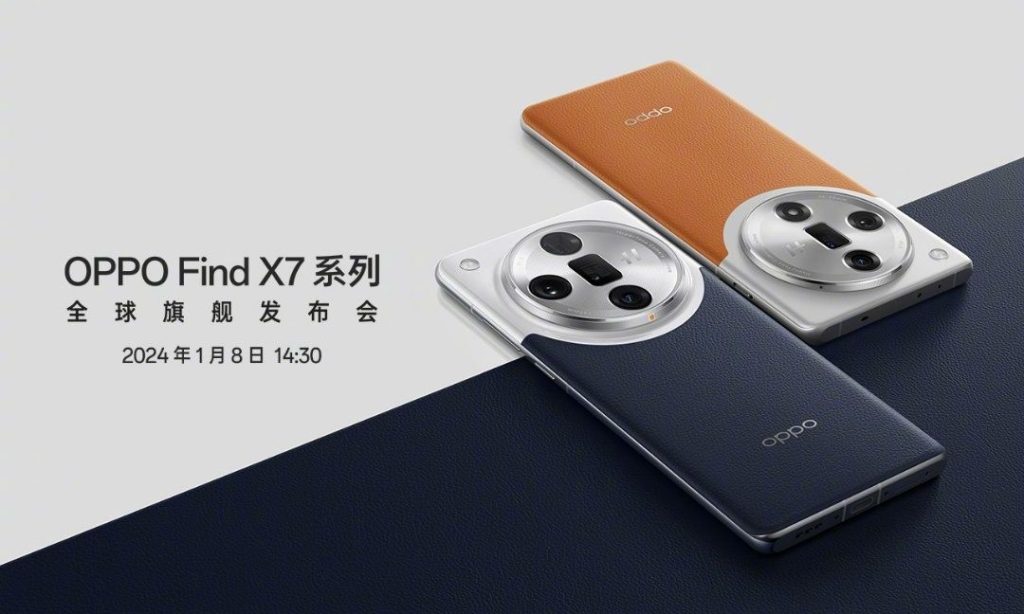
Oppo Find X7 series launch date-
Oppo Find X7 series launch date

Oppo Find X7

Reports have revealed that the Find X7 will come equipped with the Dimensity 9300 chipset. The official listing reveals that it will come in four configurations, such as 12 GB RAM + 256 GB storage, 16 GB RAM + 256 GB storage, 16 GB RAM + 512 GB storage, and 16 GB RAM + 1 TB storage.


The Find X7 will be available in four shades, such as Starry Sky Black, Sea and Sky, Desert Moon Silver, and Smokey Purple.

Oppo Find X7 Ultra

The Find X7 Ultra is expected to come equipped with the Snapdragon 8 Gen 3 SoC. It will be available in three variants, such as 12 GB RAM + 256 GB storage, 16 GB RAM + 256 GB storage, and 16 GB RAM + 512 GB storage.


When it comes to color options, the Find X7 Ultra will come in choices such as Pine Shadow Ink, Sea and Sky, and Desert Moon Silver.

The Find X7 and Find X7 Ultra have a similar design, with the front featuring a punch-hole display with curved edges and a dual-tone back panel with a massive camera module. The Find X7 has a triple-camera unit, whereas the Find X7 Ultra has a quad-camera system. The Ultra variant will be the world’s first smartphone to feature dual periscope telephoto cameras. In addition, it will also be the first-ever phone to feature the one-inch Sony LYT-900 50-megapixel camera sensor as the primary snapper.

It is said that there will be a third device called the Oppo Find X7 Ultra Satellite Communication Version, which will come with support for two-way satellite communication. The rest of its specs will be identical to the Find X7 Ultra.

RELATED:

NVIDIA RTX Spark Mini PCs Arrive at Computex 2026 — Could They Replace Traditional Desktops?

NVIDIA’s new RTX Spark platform was one of the biggest highlights at Computex Taipei 2026, with major PC brands including ASUS, Dell, Lenovo, and MSI unveiling compact desktop systems powered by the new AI-focused architecture. The launch marks NVIDIA’s first major step into the PC processor market and could reshape the future of AI PCs, creator workstations, and compact desktops.

NVIDIA RTX Spark Platform Takes Center Stage

The RTX Spark platform is an Arm-based system-on-chip (SoC) built around NVIDIA’s Grace and Blackwell technologies. It combines a 20-core CPU with a Blackwell GPU featuring 48 SM units and 6,144 CUDA cores. The platform also supports up to 128GB of LPDDR5X unified memory.

NVIDIA says the chip is designed for local AI development, content creation, gaming, and AI inference workloads. The company also claims graphics performance comparable to an RTX 5070-class GPU in certain scenarios.

ASUS, Dell, Lenovo, and MSI Showcase New Mini PCs

Several manufacturers introduced RTX Spark-powered mini PCs during the event. While each system features a unique chassis design, they share the same core platform and connectivity options.

ASUS ProArt GA10

The ASUS ProArt GA10 features a compact 150 × 150 × 51 mm design and supports up to 140W of cooling capacity. It includes four USB-C ports, HDMI output, and 10 Gigabit Ethernet connectivity.

Dell XPS RTX Spark Desktop

Dell’s new compact desktop also adopts the RTX Spark platform. The system includes four USB-C ports, HDMI output, and 10GbE networking while maintaining a small footprint.

Lenovo RTX Spark Mini PC

Lenovo introduced a newly designed mini PC chassis built around RTX Spark. It offers the same set of connectivity options, including four USB-C ports, HDMI, and 10GbE Ethernet.

MSI EdgeMesa N AI+

MSI’s EdgeMesa N AI+ stands out with its white chassis design. The system targets content creators and AI developers while offering the same RTX Spark hardware foundation.

Shared Features Across All Models

Every RTX Spark mini PC showcased at Computex includes 10GbE networking, 20Gbps USB-C connectivity, PCIe Gen 5 M.2 SSD support, and up to 128GB unified memory.

Why RTX Spark Could Be a Game-Changer for PC Buyers

For consumers, RTX Spark could bring desktop-class AI performance, powerful graphics, and massive memory capacities into much smaller and more efficient PCs. Because the CPU, GPU, and up to 128GB of unified memory work together on a single platform, users may be able to run advanced AI models, edit high-resolution videos, and handle demanding creative workloads locally without relying heavily on cloud services.

If NVIDIA’s performance claims hold up, RTX Spark systems could also offer a compelling alternative to traditional Intel and AMD-powered PCs, increasing competition and giving buyers more choice. 

The trade-off is that some older Windows applications and specialized software may face compatibility or optimization challenges, although Windows on Arm support has improved significantly in recent years.

Read More:

(via)

Xiaomi 17T Pro Global vs Chinese model: Where are the two phones different?

After the global debut last month, Xiaomi has now announced its Xiaomi 17T series in China. The lineup includes both the standard 17T and the more powerful 17T Pro, marking the first time in years that Xiaomi’s T-series phones are launching in China. Xiaomi is also giving the mainland market some special treatment.

While the two versions look almost identical on the outside, a closer look at the specs reveals some notable differences, especially if battery life and storage matter to you.

Xiaomi 17T Pro Global vs Chinese Model

1. The main difference is the battery

The most notable difference between the global and Chinese versions is the battery. The global Xiaomi 17T Pro comes with a 7,000mAh battery, while the regular model gets a 6,500mAh cell. However, both the 17T and 17T Pro in China come with a 7,000mAh capacity.

Xiaomi says its new battery uses the highest silicon content in the company’s history, which helps pack more energy into a lighter, more compact cell. The company also claims the battery can maintain 80% of its original capacity even after 1,600 charge cycles.

However, the charging speeds are the same across both regions. Both the global and Chinese versions of the 17T Pro support 100W wired charging, 50W wireless charging, and 50W PPS fast charging. The standard 17T in both markets supports 67W wired charging.

2. Storage and RAM

Here is where things get a little more interesting, and perhaps counterintuitive. In China, the top configuration of the Xiaomi 17T Pro comes with 16GB of RAM and 512GB of storage. That is the highest memory option available for the Chinese market.

But for buyers outside China, Xiaomi is focusing on storage. The top global configuration comes with 12GB of RAM and 1 TB of storage, twice the capacity of the Chinese top model, but with 4GB less RAM.

So which is better? It depends on what you need. If you store a lot of photos, videos, and files locally and rarely max out memory-heavy apps, the 1TB global model may suit you better. But if you are a heavy multitasker who keeps many apps open at once, the extra RAM in the Chinese version could give you a smoother experience. Neither is strictly superior, though. 

3. Same Powerful Processor on Both Sides

Where both versions fully agree is in the core performance department. The Xiaomi 17T Pro is powered by the MediaTek Dimensity 9500 chip on both the global and Chinese versions. This is a top-tier processor built on a 3nm process, and it is the same chip used in several competing flagship phones this year.

The standard 17T, meanwhile, uses the Dimensity 8500 Ultra in both markets

4. Display, Camera, and Design

Beyond battery and storage, the two versions share the same display, camera system, and overall design.

The 17T Pro features a large 6.83-inch AMOLED display with a smooth 144Hz refresh rate, offering bright visuals whether you are scrolling social media or watching a video. The standard 17T uses a slightly smaller 6.59-inch screen running at 120Hz.

For cameras, both versions of the 17T Pro carry a triple rear setup including a 50MP main sensor (the Light Fusion 950), a 50MP telephoto camera with 5x optical zoom, and a 12MP ultrawide lens. All cameras are Leica-branded, bringing the company’s well-known colour science and optics tuning to the T series for the first time at this price point.

Both versions also run Android 16 with Xiaomi’s HyperOS 3 software on top. However, it is worth noting that the Chinese version runs a China-specific build of HyperOS that does not include Google services by default. International buyers who purchase a Chinese unit would need to manually install Google apps, and some features may not work correctly. The global version, by contrast, comes with full Google support right out of the box.

5. Affordable in China, Premium Globally

Xiaomi is positioning the 17T Pro as a flagship device globally, and the price reflects that. In Europe, the 17T Pro starts at €999 (roughly $1,170) for the 12GB/512GB model. The standard 17T starts at €749 (roughly $878) in the 12GB/256GB configuration.

In China, the 17T series launched at a special summer price starting from just 2,999 yuan (approximately $415). It’s significantly more affordable for local buyers. 

That said, this is a common pattern with Xiaomi phones. Prices in China are almost always lower than what international buyers pay, partly due to different market strategies and import taxes.

6. Should You Import the Chinese Version?

It might be tempting to import the Chinese version for the extra RAM or the larger battery on the standard model. But there are real downsides.

The Chinese version of HyperOS does not include Google services, which are essential for most users outside China. While it is technically possible to sideload the Play Store, it does not always work smoothly. 

Additionally, the Chinese version could also have network compatibility issues. Chinese Xiaomi phones are not always optimised for the mobile frequency bands used in Europe, South Asia, or South America. In some rural or regional areas, this could mean weaker signal reception.

And more importantly, from 2025 onwards, unlocking the bootloader on a Chinese Xiaomi phone requires a Chinese Mi account, which is another hurdle for international users. 

For more daily updates, please visit our News Section.

Stay ahead in tech! Join our Telegram community and sign up for our daily newsletter of top stories! 💡

Xiaomi shows its humanoid robot clicking photos from the Xiaomi 17T Pro

After the global announcement, Xiaomi held a launch event today to introduce the Xiaomi 17T and Xiaomi 17T Pro in China. They start at 2,999 yuan (~ $445) and 3,999 yuan (~ $590), respectively, and don’t differ much in specs from the global counterpart.

But the event wasn’t just about phones. Xiaomi also gave its next-generation humanoid robot a brief moment on stage to show some tricks. 

Xiaomi robot clicking pictures

During the demonstration, the robot picked up the new Xiaomi 17T Pro using its bionic hand, adjusted the zoom using the volume buttons, and took a photo. Below is the shot he took. 

It was a short appearance, but it gave the audience a direct look at where Xiaomi’s robotics work currently stands in terms of physical dexterity and device control.

Xiaomi has continuously been working on humanoid robots

The company has been showing off its humanoid robot progress in stages every once in a while. We have covered earlier milestones here, including Xiaomi’s plans to deploy CyberOne in its own manufacturing lines and Lei Jun’s stated goal of getting humanoid robots into Xiaomi factories at scale within five years.

The industrial progress behind the scenes has been steady. Earlier this year, Xiaomi confirmed that its robots had been running three-hour continuous shifts at a self-tapping nut installation station in a car factory, hitting a 90.2% success rate for simultaneous bilateral installation while keeping up with the line’s 76-second cycle time requirement.

Xiaomi Humanoid robot with Xiaomi 17T Pro

On the hardware side, Xiaomi announced that it had reworked the bionic hand used on its robots. The new version is 60% smaller in volume, now matching the size of a human worker’s hand. It also has 64% more degrees of freedom, a full-palm tactile sensor with 8,200 square millimetres of coverage, a gripping cycle life of over 150,000 operations, and a bionic sweat gland system for heat management during extended use.

Lei Jun also recently posted on Weibo that Xiaomi’s robotics team took first place in two separate international competitions, outpacing the runner-up teams by a wide margin. He reiterated that the focus of Xiaomi’s robotics work is on getting robots to carry out practical tasks in real-world environments, not just controlled settings.

For more daily updates, please visit our News Section.

Stay ahead in tech! Join our Telegram community and sign up for our daily newsletter of top stories! 💡

Xiaomi finally rolls out HyperOS 3 (Android 16) update to Xiaomi 13T

Xiaomi 13T HyperOS 3 update

The wait for the HyperOS 3 update for Xiaomi 13T users has been painfully long. The official rollout went live in October 2025, starting with premium models, and by March 2026, it had already been released for most of the eligible devices, but the Xiaomi 13T wasn’t lucky. The wait has finally come to an end, as the device has just started to pick up the stable HyperOS 3 update, which brings Xiaomi HyperIsland, major system refinements, upgraded visuals, and a new security patch, alongside plenty of other changes.

It should be noted that the HyperOS 3 update rolling out to Xiaomi 13T is based on the latest Android 16 OS. It’s currently rolling out in Indonesia with the firmware version OS3.0.1.0.WMFIDXM, as reported by XimiTime. Users in other regions should expect to receive the update in the coming days.

HyperOS 3 is a major upgrade for Xiaomi devices, and so is the update package size. For the Xiaomi 13T, the update package weighs about 6.5 GB. It’s better to download such substantial packages over a stable Wi-Fi connection. Also, ensure that your Xiaomi device is charged to at least 40% before installing the update. To check for available updates, go to Settings > About phone, then tap the HyperOS logo at the top.

After upgrading to HyperOS 3, you’ll have access to the Xiaomi HyperIsland feature, a dedicated pill-style hub at the top of the screen that lets you see and interact with multiple live activities. It offers smooth integration with system features and extends support to third-party apps, including WhatsApp, YouTube, and Spotify.

The latest update introduces an AI Cinematic Lock Screen and AI Dynamic Wallpapers for deeper lock screen customizations, while also bringing smoother lock-screen transitions, like AOD to lock screen to home screen. Furthermore, HyperOS 3 tightens integration with Apple devices to support the “Touch to share” feature and allow users to run Xiaomi phone apps on an iPad. The update also introduces a suite of AI features, such as AI Writing, AI Speech Recognition, AI Search, and AI Translate.

While it’s good to see the HyperOS 3 update finally rolling out to Xiaomi 13T, it’s important to know why Xiaomi delayed it in the first place.

Related: 5 HyperOS 3 features that make it better than stock Android

Why did Xiaomi delay the HyperOS 3 release for Xiaomi 13T?

Xiaomi took longer than expected to release the HyperOS 3 update for Xiaomi 13T because it was reportedly testing a new Android 16 kernel for the device. The update rolling out to Xiaomi 13T has the kernel version 6.12.38-android16.

A kernel upgrade directly impacts performance scheduling, memory handling, graphics rendering, battery consumption, hardware compatibility, and app compatibility, and so it requires deeper testing before it’s released to the public. This likely explains why Xiaomi took so long to release the update for Xiaomi 13T.

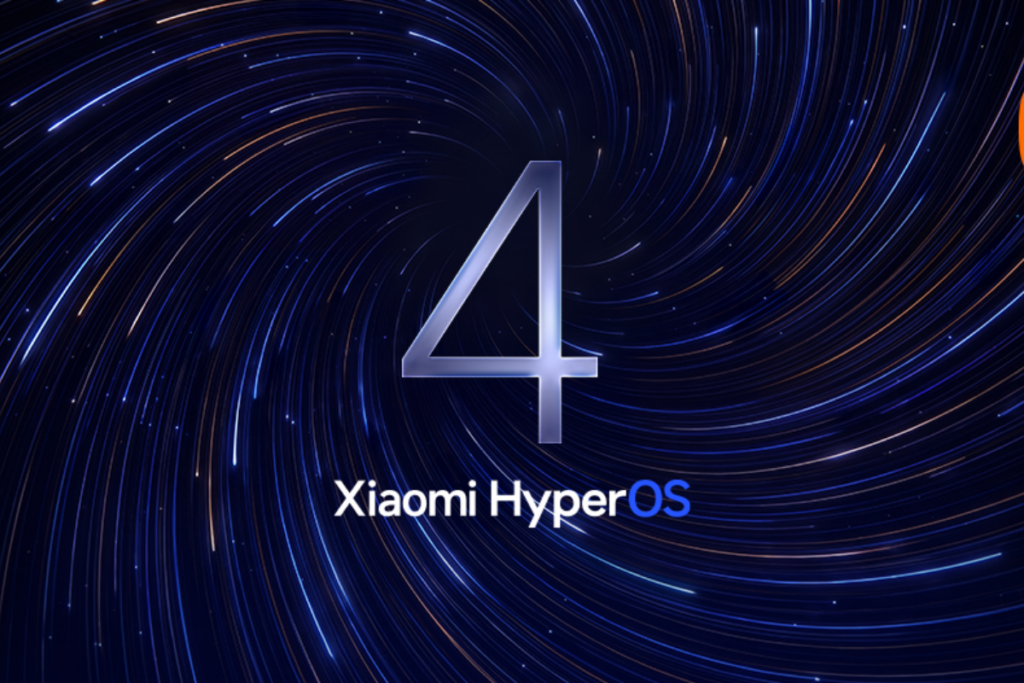
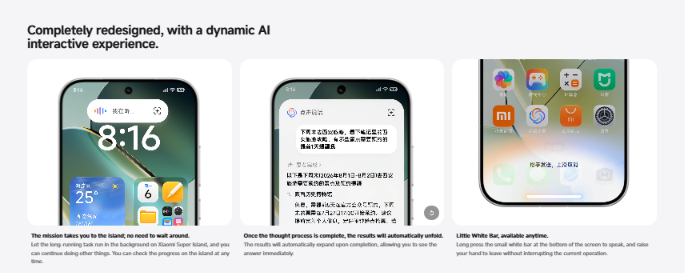
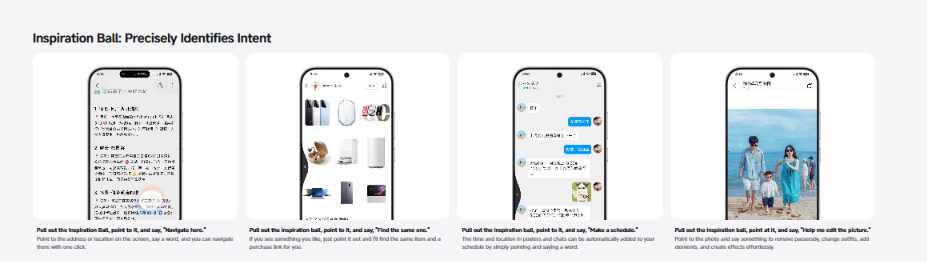
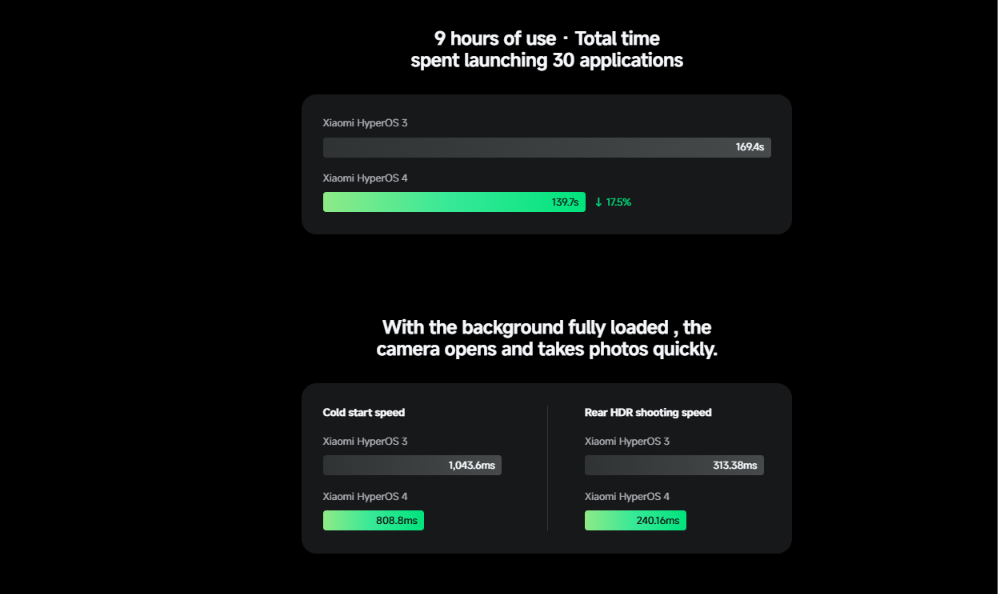
While HyperOS 3 continues to roll out to more devices, Xiaomi has already started working on HyperOS 4. The next major upgrade, based on Android 17, is expected to bring major visual upgrades and several exciting new features. We’ve prepared a list of devices eligible for the next major upgrade. Review it on this page to find out if yours is included.

Also read:
1. Is your Xiaomi device eligible for HyperOS 4 upgrade? Find out
2. 8 Android 17 features in development I can’t wait to use

Infinix Hot 70 Pro 5G leaks with dot matrix display, Dimensity 7100 before launch

Infinix announced the Hot 70 smartphone with a temperature-sensitive back design a couple of weeks ago. While that is a 4G model, Infinix seems to be quietly working on a 5G counterpart. 

According to PassionateGeekz, the Infinix Hot 70 Pro 5G is heading to India soon. And here are the features you can expect from it. 

What to Expect

The Hot 70 Pro 5G is said to sport a 6.76-inch HD+ display with a punch-hole cutout, housing an 8MP selfie camera. On the back, there’s a 50MP main camera alongside a rear-mounted Dot Matrix display, a secondary screen Infinix has used before for notifications and quick info, along with dual flash.

Unfortunately, the leak doesn’t tell whether the 5G model also has a temperature-sensitive model like its 4G sibling. 

Infinix Hot 70 Pro 5G Specs Design Leak

Under the hood, the phone is reportedly powered by the MediaTek Dimensity 7100 5G chip, paired with up to 8GB of RAM and 256GB of internal storage. It’s set to ship with Android 16-based XOS 16 out of the box. 

Battery-wise, there’s a 6,000mAh cell on board with 45W fast charging support, solid numbers for day-to-day use without worrying too much about top-ups.

Launch Timeline

No official confirmation has come from Infinix yet, but sources point to a July–August 2026 India debut.

The Hot 70 4G launched at BDT 18,999 (approx. $155) for the base 4GB/128GB model, while the 6GB/128GB and 8GB/128GB variants cost about BDT 21,999 ($180) and BDT 25,999 ($210), respectively. We can expect the 5G model to target a slightly higher segment. 

We’ll be watching for any official teasers as that window approaches.

For more daily updates, please visit our News Section.

Stay ahead in tech! Join our Telegram community and sign up for our daily newsletter of top stories! 💡

(Via: PassionateGeekz)

Anker launches air-cooled 3-in-1 wireless charger with built-in touchscreen

Anker has launched its new Prime 3-in-1 Magnetic Wireless Charger with TEC air-cooling technology in China. The charger is set to go on sale today at 10 AM for an introductory price of 1,199 yuan (~ $177)

The station comes in Anker’s signature Space Gray finish and measures 169 x 125 x 138 mm. It weighs 620 grams and can charge three Apple devices at the same time, including an iPhone, Apple Watch, and AirPods.

Anker Prime 3-in-1 aircool wireless charger

Anker Prime 3-in-1 Wireless Charger Specifications

The standout feature here is a 1.62-inch touchscreen panel built into the base of the charger. The display can show charging power and temperature information in real time. You can also switch between different charging modes and adjust charging settings directly from the screen.

Anker Prime 3-in-1 wireless charger screen

The charger supports touch-based controls through AnkerSense intelligent interaction technology. And you can also use the touchscreen for a few handy shortcuts like double-tap to enter sleep mode, press and hold for two seconds to turn off the display, and hold for seven seconds to reconnect Bluetooth. A 15-second hold resets the device.

To improve charging performance, Anker has equipped the charger with built-in TEC air-cooling technology. The cooling system helps lower the phone’s temperature during wireless charging, allowing for more stable and efficient charging speeds. The display can also monitor device temperatures in real time.

Anker Prime Charging Station 35W 3-in-1 charger cooling

In addition, you can view the charging details through a companion mobile app. The charger also uses Anker’s ActiveShield 5.0 safety system to help ensure safe operation.

According to the company, it supports up to 25W charging for compatible phones, 5W charging for Apple Watch models, and 5W charging for true wireless earbuds. Power is supplied through a USB-C input port.

For more daily updates, please visit our News Section.

Stay ahead in tech! Join our Telegram community and sign up for our daily newsletter of top stories!

Vivo X Fold 6: Here’s the first look!

Vivo’s next foldable flagship may have just appeared in public ahead of its expected June launch. New images circulating on Chinese social media show actress Zhu Zhu attending the French Open women’s singles final while holding what is believed to be the upcoming Vivo X Fold 6. While Vivo has yet to officially reveal the device’s design, the images offer what could be our first real-world look at the foldable.

Vivo X Fold 6 spotted in the wild

The images show a foldable phone in a striking blue-green finish with a large circular camera module on the rear. The device appears to retain Vivo’s familiar design language while featuring a slim profile. One image also shows the phone in a partially folded state, giving a glimpse of its book-style form factor. Although Vivo has not confirmed that the handset in the photos is the X Fold 6, Chinese social media users and tipsters widely believe it to be the company’s next foldable flagship.

While Vivo has not officially disclosed the hardware specifications, reports suggest that the X Fold 6 could arrive with MediaTek’s upcoming Dimensity 9500 chipset. The foldable is also tipped to pack a sizeable 6,900mAh battery and a triple-camera system comprising a 200-megapixel primary sensor, a 50-megapixel ultra-wide camera, and a 50-megapixel periscope telephoto lens. It is likely to feature a side-facing fingerprint scanner like the previous generation.

The Vivo X Fold 6 will be positioned as an AI-focused foldable designed to offer more than just a larger screen. Vivo believes the next phase of foldable smartphones is centred on productivity, multitasking and AI-assisted workflows rather than hardware improvements alone.

Vivo has already confirmed that the X Fold 6 will debut with OriginOS 6 Fold and an upgraded version of Atomic Workbench. The feature is designed to let users run multiple apps within a task-focused workspace, reducing the need to constantly switch between applications. The company has also teased a new Atomic Workbench mode, improved AI assistants, enhanced on-device AI capabilities and deeper multitasking optimisations.

According to Vivo, the X Fold 6 aims to become the company’s most advanced AI productivity device yet. With the launch expected later this month, the French Open appearance has added to the anticipation surrounding the foldable. As far as launch is concerned, it is expected to debut by the end of this month

For more daily updates, please visit our News Section.

Stay ahead in tech! Join our Telegram community and sign up for our daily newsletter of top stories!

Ugreen launches adorable cat-shaped 45W GaN charger that’s also a decor piece

Accessory maker Ugreen has launched a new 45W GaN fast charger that can also double as a decor piece. Instead of looking like a traditional brick, the charger resembles a small cat figurine with expressive facial features, cat ears, and a rounded body. It also features a unique split-body design. 

The charger is finished in white with red accents on the base and top, while the cat face gives it a playful and collectible appearance.

Ugreen cat-shaped 45W USB-C GaN charger launch specs price

Here are its technical specifications

According to Ugreen, the charger is made from skin-friendly liquid silicone, allowing it to double as a desk ornament when not in use. To charge a device, users need to separate the cat’s head from its body. The USB-C port is located on the top of the detached cat head, where a charging cable can be connected.

The charger is powered by GaN technology and supports up to 45W output through a single USB-C port. It offers multiple charging profiles, including 5V/3A, 9V/3A, 15V/3A, and 20V/2.25A, making it suitable for smartphones, tablets, handheld gaming devices, and some lightweight laptops.

Ugreen cat-shaped 45W GaN charger design

In terms of specifications, the charger supports an input range of 100-240V at 50/60Hz and weighs approximately 115g. The package weight is listed at around 150g, and UGREEN includes an 18-month warranty. The charger measures approximately 63.25mm in height, 52.5mm in width, and 48mm in depth.

Key Specifications
ModelX640Power45W Max
PortUSB-C ×1Input100-240V
Weight115g ±5gWarranty18 Months

For everything it’s offering, from compact size, unique design, to GaN technology, the price is justifiable. Ugreen is asking 89 yuan (some $13 in conversion) for the brick. It’s available for purchase through JD.com in China, while there’s no word yet on global availability. 

For more daily updates, please visit our News Section.

Stay ahead in tech! Join our Telegram community and sign up for our daily newsletter of top stories!

OnePlus Turbo 6X Pro launch date, key specifications officially revealed

After teasing the OnePlus Turbo 6X series for the past few days, OnePlus has finally confirmed its launch date. The series, which includes two models, namely the Turbo 6X and Turbo 6X Pro, will be unveiled on June 10 in China. Apart from revealing the launch date, the brand has also confirmed a few key specifications of the Pro variant.

OnePlus Turbo 6X Pro key specifications confirmed

OnePlus Turbo 6X series launch date

The posters below confirm that the OnePlus Turbo 6X Pro will feature a Samsung AMOLED display with support for 1.5K resolution. The screen is optimized for outdoor visibility and supports full-brightness DC dimming. In terms of durability, the device will offer IP66, IP68, and IP69-rated dust and water resistance. Additionally, it has passed seven military-grade durability tests.

Under the hood, the Turbo 6X Pro will feature the Dimensity 7400 Super chipset along with an 8,000mAh battery that supports 80W fast charging. It will come preloaded with ColorOS 16. The pre-order listing of the device has already confirmed that it will be available in three variants: 8GB+128GB, 8GB+256GB, and 12GB+256GB. It will be offered in two color options: Orange and Black.

Recent reports have revealed that the OnePlus Turbo 6X will feature a 6.72-inch LCD FHD+ display, a Dimensity 7360 chipset, the same memory configurations as the Pro variant, and a 7,000mAh battery. It will be available in Black, White, and Green color options.

In terms of photography, the Turbo 6X will feature an 8-megapixel front-facing camera and a 50-megapixel + 2-megapixel dual-camera setup on the back. Meanwhile, the Pro edition will offer a 16-megapixel front camera and a 50-megapixel + 8-megapixel dual-camera system.

For more daily updates, please visit our News Section.

Stay ahead in tech! Join our Telegram community and sign up for our daily newsletter of top stories!

New Redmi K100 leak reveals full specs months ahead of launch

The Redmi K100 has been making headlines in the rumor mill for months. While the phone is tipped to launch in September, a new leak may have revealed much of its hardware well before the official announcement.

Redmi K100 Pro has previously been tipped to feature a Qualcomm Snapdragon 8 Elite Gen 5 chip and a massive battery in the 8,000mAh class. Tipster Digital Chat Station (DCS) had also claimed the phone would feature a 200-megapixel primary camera with a large sensor, paired with a 50-megapixel telephoto camera.

Now, the same tipster is back with what appears to be a more complete breakdown of the phone’s specifications, and it’s quite an extensive list.

Here’s the Redmi K100 Pro in full (almost)

According to the latest information from DCS, the Redmi K100 will feature a flat display with an ultra-high 185Hz refresh rate. As previously reported, the device is expected to run on Qualcomm’s Snapdragon 8 Elite Gen 5 platform.

As for the battery, DCS claims its capacity starts with an “8,” suggesting at least 8,000mAh. A previous report mentions 8500mAh capacity, to be very specific. The phone is also said to support 50W wireless charging, which will be the first for a vanilla model in the Redmi K-series. The wired charging will remain at 100W.

Redmi K100 Pro Specs leak

On the camera front, the Redmi K100 Pro is rumored to feature a 200-megapixel large-sensor main camera alongside a telephoto lens with macro photography capabilities.

The device is also expected to feature a glass back panel and a metal frame, with DCS confirming the metal-frame design in the post’s comments. Other rumored features include symmetrical dual speakers and a 3D ultrasonic fingerprint sensor, and IP68 and IP69 ratings for dust and water resistance.

While the latest leak doesn’t talk about the price, a previous report suggests the device will cost a lot more than the Redmi K90. The bid could start at around 4,000 yuan, or some $585. For comparison, the Redmi K90 was launched at CNY 2,599, which roughly translates to $380.

The Redmi K100 series is expected to debut in China as early as September or October 2026, with a global variant likely arriving later under a different name.

For more daily updates, please visit our News Section.

Stay ahead in tech! Join our Telegram community and sign up for our daily newsletter of top stories! 💡

(Source)

Vivo X Fold 6’s first teaser released, to run on AI-optimized OriginOS 6 Fold

Vivo has started sharing details about the upcoming X Fold 6 ahead of its China launch. The company is positioning the device as more than just another foldable smartphone, with a strong focus on AI-powered productivity and large-screen experiences. Recent teasers and comments from company executives offer a clearer picture of what users can expect.

Vivo X Fold 6 to run on the foldable-optimized OriginOS 6

Vivo X Fold 6 teaser

According to Vivo, the X Fold 6 will arrive with OriginOS 6 Fold and a significantly upgraded version of Atomic Workbench, a feature first introduced with the X Fold 5. Rather than treating the foldable display as a larger smartphone screen, Vivo wants the software to help users manage complete tasks involving multiple apps at the same time.

The updated Atomic Workbench is said to support an enhanced “one screen, five uses” experience. Vivo claims the interface now provides more usable screen space, improved split-screen layouts and smoother handling of multiple applications running simultaneously. The company has also hinted at an entirely new Workbench mode, although details remain under wraps for now.

Vivo X Fold 6 teaser

Users will be able to create dedicated workspaces for activities such as meetings, travel planning, shopping or investments. These workspaces can combine several apps in a single environment and be reopened later with one tap. Vivo says this approach reduces the need to repeatedly switch between applications when handling more complex tasks.

The company has also confirmed upgrades to its AI assistant, on-device AI capabilities and interaction methods. The software has been optimized at the system level, including improvements to task scheduling, chip resource management and multitasking performance, allowing several apps and AI tools to work together more smoothly.

The Vivo X Fold 6 is expected to be debut by the end of this month in China and possibly by next month globally. As per rumors, the device will have the Dimensity 9500 chip, a 6,900mAh battery, and a 200-megapixel (main) + 50-megapixel (ultra-wide) + 50-megapixel (periscope telephoto) triple camera setup, and a side-mounted fingerprint sensor. The rest of its specs are under wraps.

For more daily updates, please visit our News Section.

Stay ahead in tech! Join our Telegram community and sign up for our daily newsletter of top stories! 💡

(source)

Lenovo brings its Legion 5i Gen 11 with an Intel Core Ultra 7 251HX and RTX 5060 to the US

Lenovo is releasing the 15-inch version of its Legion 5i Gen 11 (15IAX11) gaming laptop in the US. The system, which previously launched in China as the Legion Y7000X before rolling out to Europe and Asia, is now available to North American buyers.

Lenovo Legion 5i Gen 11

Lenovo Legion 5i Gen 11 Specifications

Lenovo is using a 15.3-inch OLED panel with a 2560 x 1600 resolution and a 16:10 aspect ratio. It has a 165Hz refresh rate and a stated sub-1ms response time. For brightness, the panel outputs 500 nits for standard use but is VESA DisplayHDR True Black 1000 certified, meaning it can reach up to 1,000 nits of peak brightness when displaying HDR content. It also covers 100% of the DCI-P3 color space and supports Nvidia G-Sync.

Inside, the laptop is powered by an Intel Core Ultra 7 251HX processor, which features 18 cores and 18 threads. Graphics are handled by an Nvidia RTX 5060 laptop GPU with 8GB of GDDR7 memory, running at a 115W maximum power limit. The base US model comes with 16GB of DDR5-5600 memory and a 1TB PCIe Gen4 SSD. The RAM is slotted rather than soldered, allowing users to upgrade it later via the two internal SODIMM slots.

Lenovo Legion 5i Gen 11

The chassis is relatively compact for a gaming laptop, measuring just under 0.8 inches thick and weighing 4.25 pounds. To cool the internals, Lenovo is using a thermal system it calls Coldfront: Hyper, which relies on dual fans and copper heat pipes to route air through a dedicated internal chamber. Power is supplied by an 80Wh battery.

Talking about ports, the left side includes a Thunderbolt 4 port and a standard 10Gbps USB-C port, both of which support up to 100W power delivery and DisplayPort 2.1. The right and rear edges house three USB-A ports, an HDMI 2.1 output, and an Ethernet jack. It also includes Wi-Fi 7 support and a 5MP webcam with a physical privacy shutter switch.

The Legion 5i Gen 11 is available now in Eclipse Black for $2,959.99.

In related news, HP recently unveiled a Ferrari-themed limited-edition AI PC developed in collaboration with Ferrari.

For more daily updates, please visit our News Section.

Stay ahead in tech! Join our Telegram community and sign up for our daily newsletter of top stories! 💡

(Lenovo, Via)

Asus Dawn 7 Pro laptop launches with Ryzen AI processors and a 144Hz display

Asus has launched its new Dawn 7 Pro laptop series in China, with the devices now available for purchase on JD.com. The new lineup comes with 14-inch and 16-inch screens, AMD’s latest Ryzen AI processors, high-refresh-rate displays, and a slim metal design.

The Asus Dawn 7 Pro is available in four configurations. The 14-inch model with the Ryzen AI 5 430 processor, 32GB RAM, and 1TB storage retails for 9,499 yuan ($1,404). Whereas the Ryzen AI 7 445 version with the same memory and storage costs 9,999 yuan ($1,478).

Asus Dawn 7 Pro Laptop Launch Specs Price

Meanwhile, the 16-inch model starts at 7,999 yuan ($1,182) with the Ryzen AI 5 430 processor, 16GB RAM, and 1TB SSD. The higher-end Ryzen AI 7 445 variant is priced at 8,499 yuan ($1,256).

Asus Dawn 7 Pro Specifications

Under the hood, the Dawn 7 Pro can be configured with AMD’s Ryzen AI 7 445 processor. The chip is built on a 4nm manufacturing process and features six cores and 12 threads. It can reach clock speeds of up to 3.4GHz and is paired with Radeon 840M integrated graphics. Asus says the system can deliver up to 54W of performance.

The laptop supports up to 32GB of DDR5-6400MHz memory and 2TB of PCIe 4.0 SSD via dual M.2 slots.

On the display side, both the 14-inch and 16-inch versions feature IPS panels with a resolution of 2560 x 1600. The screens offer a 144Hz refresh rate, a peak brightness of 400 nits, and 100% sRGB coverage.

Asus Dawn 7 Pro Display

Asus has also focused on portability. The Dawn 7 Pro features a slim and lightweight metal chassis along with an 180-degree hinge that allows the screen to lie flat.

For connectivity, the laptop includes Thunderbolt 4, HDMI 2.1, USB-A, USB-C, and RJ45 ports. The 16-inch version additionally features a full-size keyboard with half-height arrow keys and a fingerprint reader integrated into the power button.

The larger model is equipped with a 70Wh battery and supports 65W USB PD fast charging. Both versions come pre-installed with Windows 11 and Microsoft Office software out of the box.

For more daily updates, please visit our News Section.

Stay ahead in tech! Join our Telegram community and sign up for our daily newsletter of top stories! 💡

(Via)

Belkin launches 25,000mAh 140W laptop power bank with built-in USB-C cable & airline-safe design

Belkin has expanded its charging lineup with the UltraCharge Pro Laptop Power Bank 25K, a high-capacity portable battery that integrates a built-in USB-C cable and supports high-wattage output. The device has officially launched in China, where it is currently listed on JD.com for an introductory price of 529 yuan ($78).

Belkin UltraCharge Pro Laptop Power Bank 25K

Belkin UltraCharge Pro Laptop Power Bank 25K Specs

The power bank is built around a 25,000mAh battery, a capacity large enough to provide substantial extra runtime for modern laptops while remaining strictly within standard airline carry-on limits. For a battery of this size, the physical footprint is standard: it measures 89 x 26 x 164mm and weighs 581 grams. The chassis features rounded edges to easily slide into a laptop bag, a built-in LED display for real-time battery percentage and charging status, and is available in Black, White, and Sand colorways.

The primary hardware draw is the integrated braided USB-C cable, which allows users to charge their primary device without packing a separate cord. To address durability concerns common with built-in cables, Belkin says the cord has been tested to survive over 3,500 bends and 10,000 plug-and-unplug cycles. In addition to the built-in cable, the power bank includes one standard USB-C port and one USB-A port, bringing the total number of simultaneous charging outputs to three.

Belkin UltraCharge Pro Laptop Power Bank 25K

In terms of power delivery, the UltraCharge Pro supports up to 140W of output from either the built-in USB-C cable or the secondary USB-C port when used individually. The USB-A port caps out at 18W. When charging multiple devices, the power bank utilizes AVS (Adjustable Voltage Supply) and PPS protocols to dynamically manage voltage, reduce heat, and distribute power efficiently.

This allows for a peak combined output of 158W. In a dual-port scenario, the power bank can deliver 140W via USB-C and 18W via USB-A. If all three outputs are active, the two USB-C connections split the load to output 70W each, while the USB-A port maintains its 18W output.

Belkin UltraCharge Pro Laptop Power Bank 25K

Recharging the battery itself is handled via a 90W USB-C input, which significantly cuts down the time required to refill the large 25,000mAh cell. As a practical benchmark, Belkin claims the 140W output can charge a 14-inch MacBook Pro (M5 Pro) to 50% in roughly 28 minutes.

On the safety front, the UltraCharge Pro includes dual smart protection chips, real-time temperature monitoring, over-voltage and over-current protections, and a flame-retardant enclosure. It carries China’s 3C certification alongside international standards like CE, KC, and PSE.

In related news, Cuktech has recently launched a new 20,000mAh power bank featuring 55W fast charging, dual built-in USB-C cables, and an LED display.

For more daily updates, please visit our News Section.

Stay ahead in tech! Join our Telegram community and sign up for our daily newsletter of top stories! 💡

(JD)

Here’s your first real-life look at the Galaxy S26 FE

Samsung‘s next Fan Edition phone is slowly coming into focus. The Galaxy S26 FE with model number SM-S741 has passed WPC (Wireless Power Consortium) certification, which also gives us our first look at the device. 

In terms of design, the phone looks a lot like the standard Galaxy S26 that launched earlier this year. It follows Samsung’s 2026 design language, featuring a flat body frame and a protruding rear camera module. 

Samsung Galaxy S26 FE Design leak

This isn’t the first time we’ve heard about this device. The Galaxy S26 FE had previously appeared on Geekbench, where it posted a single-core score of 2,426 and a multi-core score of 8,004 in version 6.2.2, running on an Exynos 2500 chip with 8GB of RAM. 

We covered that Geekbench listing back in April, and the WPC certification now adds more weight to those earlier findings. We also got a first look at the phone’s renders a couple of weeks ago, which showed a design closely mirroring the standard S26.

Galaxy S26 FE could be more expensive than its predecessor

On the cost side, Samsung is reportedly making some strategic decisions. As memory prices are sky-high, Samsung is reportedly planning to use CSOT panels for the Galaxy S26 FE to keep costs in check and maintain competitive pricing for the series.

Galaxy S26 FE in transparent case

For context, the previous-generation Galaxy S25 FE launched in September 2025, powered by the Exynos 2400 chip, with 8 GB of RAM and up to 512 GB of storage. You can read our full Galaxy S25 FE coverage here. The S26 FE steps up to the newer Exynos 2500, the same chip Samsung used in the Galaxy Z Flip7.

Samsung hasn’t officially confirmed any further details yet, but with certifications and benchmark listings already out in the open, a launch later this year seems very likely. Current rumors point to an October 2026 release window. We’ll keep you updated as more details surface.

For more daily updates, please visit our News Section.

Stay ahead in tech! Join our Telegram community and sign up for our daily newsletter of top stories! 💡

Facial recognition tech discovered in Meta smart glasses app years after 2021 shutdown

Meta is facing fresh privacy questions after a report revealed that its smart glasses companion app contains dormant facial recognition technology.

The feature, reportedly called “NameTag,” isn’t active right now. But according to the investigation, code related to facial recognition has been included in multiple updates to Meta’s AI app since January 2026. That’s notable because the app isn’t some niche download. It’s required for several of Meta’s smart glasses products, including the Ray-Ban Meta lineup, and has reportedly been installed more than 50 million times.

Researchers who examined the code say it could use the glasses’ camera to detect faces, create biometric identifiers, and compare them against a database stored locally on a user’s phone. If there’s a match, the wearer could receive a notification identifying that person.

Even though the feature remains switched off, the idea is enough to make privacy advocates uneasy. Facial recognition has been one of the most controversial technologies in consumer tech for years, and Meta has a complicated history with it.

Back in 2021, Meta announced that it was shutting down Facebook’s facial recognition system and deleting more than a billion stored faceprints after years of criticism, regulatory scrutiny, and legal battles. Those included a $650 million settlement in Illinois and a later $1.4 billion settlement in Texas over biometric privacy claims.

The newly discovered code suggests Meta may still be exploring similar technology, at least internally. Researchers reportedly found references to three AI models used for face detection and processing, along with traces of a user-facing feature that would help people remember individuals they’ve met. One test even generated a sample recognition notification using a face template based on philosopher Michel Foucault.

Meta, however, says people shouldn’t read too much into the discovery just yet.

Company spokesperson Ryan Daniels stated that the code reflects internal experimentation rather than a planned product launch. According to Meta, no final decision has been made, and the company isn’t building a centralized facial recognition database. The company has also said it would move carefully and be transparent if it ever decided to bring such a feature to consumers.

Still, the report is likely to reignite a debate that never really went away. Supporters of wearable AI often point to the convenience these systems can offer, while critics worry about how easily they could blur the line between useful assistance and constant surveillance.

(Source | Via)

Red Magic launches new wired gaming earbuds with 14.2mm drivers & USB-C/3.5mm options

Nubia just released a new pair of wired earbuds under its Red Magic gaming brand in China. They are called the Gaming Headset, and they are currently selling on JD.com for 89 yuan ($13).

Red Magic wired gaming earbuds

Red Magic Gaming Headset Specifications

The most practical aspect of this release is that Nubia is offering two separate versions: one with a standard 3.5mm headphone jack and another with a USB-C connector. This is a logical split, giving users an option whether they are plugging into an older laptop or a modern smartphone that lacks a dedicated headphone port.

Inside the casing, the earbuds use 14.2mm dynamic drivers. According to the spec sheet, the earphones (model number WH4008) have a frequency response range of 20Hz to 20kHz and a rated power output of 5mW. Because these are branded specifically for gaming, Nubia says that the audio profile is tuned to help players hear specific in-game audio cues. The composite diaphragm is set up to make things like footsteps and gunfire stand out, which is a standard approach for gaming audio gear meant to help with spatial awareness during multiplayer matches.

Red Magic wired gaming earbuds

As for the physical design, Nubia went with a semi-in-ear shape rather than using silicone tips that seal off the ear canal. This style usually works well for people who find standard in-ear monitors uncomfortable during long gaming or listening sessions. The earpieces have a space gray metallic finish with basic laser-engraved RedMagic branding. The cable itself is made from a flexible material that is meant to resist tangling when stored in a pocket or backpack.

Attached to the cable is a standard three-button inline remote. It includes a built-in microphone for voice chats and phone calls. The buttons cover the usual everyday functions: you can adjust the volume, play or pause music, skip tracks, answer or reject calls, and trigger your device’s voice assistant without having to touch your screen.

In related news, Baseus has unveiled the Bowie MC2 clip-on earbuds featuring 11mm dynamic drivers, LDAC support, IP67 dust and water resistance, and up to 55 hours of battery life, while Xiaomi has launched the Buds 6 globally with aptX Lossless audio, active noise cancellation, and up to 35 hours of total playback.

For more daily updates, please visit our News Section.

Stay ahead in tech! Join our Telegram community and sign up for our daily newsletter of top stories! 💡

(JD)

Galaxy A27 spotted in new Awesome Mint color

Samsung‘s Galaxy A27 has popped up in another leak, and while it’s not revealing anything major, it does add a new color to the mix. Up until now, the phone had been shown in Black, Blue, and Light Pink. A fresh set of images shared by tipster Mohammed Khatr suggests Samsung is also working on an Awesome Mint version. It’s a pale green shade.

The leak doesn’t really change what we think we know about the phone itself. The Galaxy A27 still appears to follow Samsung’s recent design approach, with flat sides, a punch-hole display, and a triple-camera setup on the back. If you’ve seen a recent Galaxy A-series phone, this will probably look pretty familiar.

As for the specs, they seem pretty much in line with what you’d expect from Samsung in this price range. The device is rumored to feature a 6.7-inch FHD+ display, possibly with a 120Hz refresh rate, along with a 50MP main camera that includes optical image stabilization. There’s also talk of a 5,000mAh battery and 25W charging support.

Inside, the Galaxy A27 is expected to use Qualcomm’s Snapdragon 6 Gen 3 processor. Paired with up to 8GB of RAM and 256GB of storage, it should have no trouble handling everyday stuff. Nobody is buying a Galaxy phone like this for performance anyway. What matters more is that it feels smooth day to day, and on paper at least, it looks capable enough.

The A27 is expected to launch with Android 16 and One UI 8.5, and Samsung will continue offering several years of updates, which is becoming a bigger selling point for entry-level and mid-range Galaxy devices.

The Galaxy A27 doesn’t seem like it’s trying to reinvent anything. It’s shaping up to be another solid A-series phone with decent cameras and a few eye-catching color options.

Don’t miss a thing! Join our Telegram community for instant updates and grab our free daily newsletter for the best tech stories!

For more daily updates, please visit our News Section.

(Source)

Apple’s touchscreen MacBook Ultra could arrive in September with 14.3″/16.3″ OLED displays

Apple‘s next big MacBook refresh may be arriving sooner than many expected, and the latest supply-chain chatter suggests it could be much more than a routine spec bump.

According to research firm Omdia, Samsung Display is preparing to start shipments of new hybrid OLED panels for a rumored MacBook Ultra in July 2026. On paper, the display sizes don’t sound dramatically different: 14.3 inches and 16.3 inches versus today’s 14.2-inch and 16.2-inch MacBook Pro models. However, the slight increase points to thinner bezels and a more modern overall design.

The display technology itself is arguably the bigger story. Omdia says Apple is expected to use oxide TFT and RGB tandem OLED panels, which should offer better efficiency than conventional OLED implementations.

If the current timeline holds, the MacBook Ultra could make its debut sometime in the third quarter of 2026. September feels like the obvious window.

Under the hood, the machine is expected to run on Apple’s upcoming M6 Pro and M6 Max chips. Those upgrades are expected. The more intriguing part is the redesign that’s reportedly coming with them.

Apple hasn’t made major changes to the MacBook Pro’s overall look since the M1 Pro and M1 Max generation arrived in 2021. By then, the design was a deliberate move back toward practicality. Now it appears the company may be ready to push things forward again with a thinner and lighter chassis while trying to preserve the performance and thermal headroom professional users expect.

Then there’s the touchscreen rumor.

For years, Apple executives have publicly argued that touchscreens don’t belong on Macs. That’s why reports suggesting touch support is finally on the way continue to attract so much attention. If it happens, it would represent one of the biggest shifts in the Mac’s history, not just another hardware upgrade.

There’s also talk of Apple replacing the current notch with a Dynamic Island-style cutout. Whether users actually prefer that approach remains to be seen, but it would create a more consistent experience across Apple’s product lineup and open the door to additional controls, alerts, and background activities directly within the display area.

Taken together, the rumors paint a picture of a laptop that sits above the current MacBook Pro range rather than simply replacing it. OLED technology, a thinner design, new silicon, and touchscreen functionality would all help justify a more premium position.

(Source)

Xiaomi Pad 8 Price Hike in India: All Variants Now Cost Rs. 2,000 More
If you’re thinking of buying the Xiaomi Pad 8 in India, you’ll have to spend a bit more going forward. Launched in March 2026, the tablet has received a price hike of Rs. 2,000 across all variants.

Xiaomi Pad 8 Revised Price in India

The entry-level 8GB RAM + 128GB storage variant now costs Rs. 35,999, up from its launch price of Rs. 33,999. The 12GB RAM + 256GB storage model has increased from Rs. 36,999 to Rs. 38,999. Buyers opting for this variant bundled with the Xiaomi Focus Pen Pro will now have to pay Rs. 43,999, compared to the earlier price of Rs. 41,999.

The premium Nano Texture Display variant, which offers anti-glare and anti-reflective properties, with 12GB RAM and 256GB storage, is now priced at Rs. 40,999, up from Rs. 38,999. The same model bundled with the Focus Pen Pro now costs Rs. 45,999.

What’s Driving the Hike?

No prize for guessing, it’s the continued surge in memory and storage chip prices. DRAM production capacity is increasingly being redirected toward data centers to meet the demands of the AI industry, creating a supply-demand imbalance for chips used in consumer electronics.

Xiaomi has not issued an official statement on the matter. Other brands, including OnePlus, Poco, and Lava, have also raised prices on several mid-range devices in recent months.

Quick Specs Recap

The Xiaomi Pad 8 features an 11.2-inch 3.2K display with a 144Hz refresh rate and up to 800 nits of peak brightness. It is powered by the Snapdragon 8s Gen 4 chipset and comes with up to 12GB of LPDDR5T RAM and 256GB of UFS 4.1 storage.

A 9,200mAh battery with 45W fast charging keeps the device running, while a quad-speaker setup with Dolby Atmos handles audio duties.

The tablet runs HyperOS 3 and supports the Focus Pen Pro stylus, which offers over 16,000 levels of pressure sensitivity.

For more daily updates, please visit our News Section.

Stay ahead in tech! Join our Telegram community and sign up for our daily newsletter of top stories! 💡

(Source | Via)