Add GIZMOCHINA on Google:
As an Amazon Associate, Gizmochina earns from qualifying purchases. Links on this page may earn us a commission at no extra cost to you.
You’re shopping for a projector, and one of the most important things you’re looking at might also be the most confusing: brightness. One model claims 5,000 lumens while another promises 3,000. Naturally, you’d expect the first one to give you a brighter picture. But projector brightness isn’t quite that simple.
The problem is that manufacturers don’t always measure brightness in the same way. Xiaomi uses CVIA lumens for its latest projector, Dangbei and XGIMI switch between ISO and CVIA depending on the model and market, and Wanbo lists ANSI lumens. Put their numbers side by side, and it’s easy to assume you’re comparing like for like when you’re not.
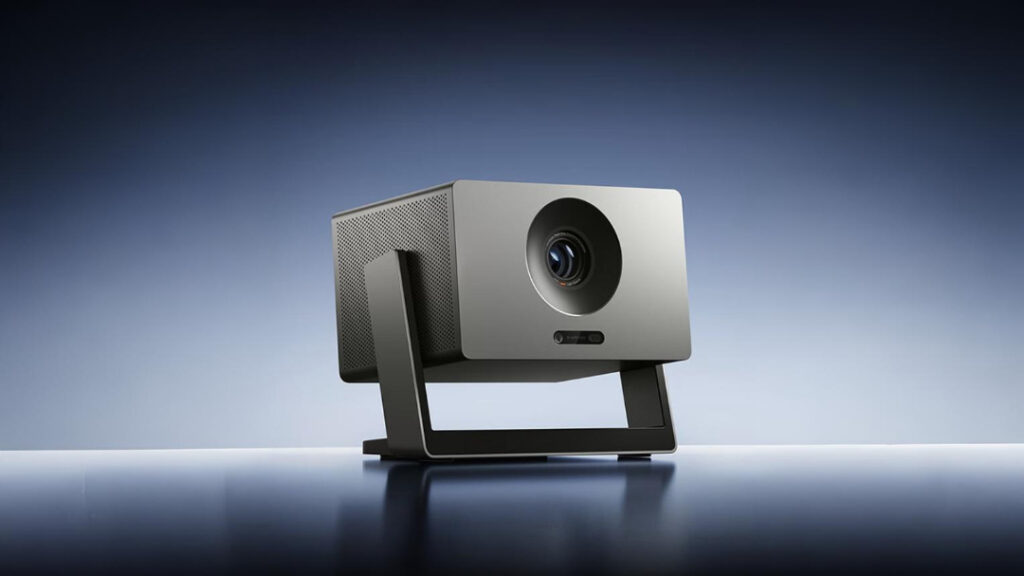
This can make choosing a projector harder than it needs to be, especially when brightness is a main reason you’re considering a particular model. Before trusting the numbers on the box, it helps to understand what they actually mean, how the different measurements compare, and why some ratings deserve a closer look.
1. Not all lumens mean the same thing
Let’s start with the three main labels you’ll come across: ANSI, ISO and CVIA. ANSI lumens measure brightness by displaying a full white image and averaging readings from nine points arranged in a 3×3 grid. ISO lumens follow the ISO 21118 standard, which XGIMI describes as using the same nine-point grid on a white image. CVIA lumens come from a standard established by the China Video Industry Association and are mostly used on projectors sold in China.
Knowing the names is one thing, but the real question is whether you can compare the numbers directly. With ANSI and ISO, the answer is generally yes, as long as you allow for some differences.
XGIMI’s lumens guide says the two measurements fall within about 5% of each other on the same projector. A separate XGIMI buying guide gives a ratio of 1 ANSI lumen to 0.8 ISO lumens. Dangbei, meanwhile, says ISO figures are always lower than ANSI and advises against comparing the two directly across projectors.
These explanations aren’t identical, but they point to the same practical advice: a projector rated at 1,500 ISO lumens and another rated at 1,500 ANSI lumens should be in a similar brightness range. Just don’t expect the two to produce the same result.
CVIA is where comparisons become more difficult. Formovie, another Chinese projector brand, says CVIA ratings tend to be higher than ANSI ratings for the same projector. Its explainer also notes that more than ten Chinese manufacturers, including Dangbei, have adopted the standard. Brands using CVIA argue that it better reflects everyday viewing conditions.
Epson takes a different position. In its 2024 settlement announcement involving Dangbei, the company listed CVIA among the brightness metrics shoppers should be wary of because they don’t follow a standardized measurement method. Epson sells projectors itself, so it has a commercial interest in the debate. Still, there’s a problem buyers can’t ignore regardless of which side they take: there is no fixed formula for converting CVIA lumens into ISO lumens.
And the confusion doesn’t end with those three labels. Some product listings use terms such as “lumens,” “LED lumens,” or “color brightness” without making it clear how the figure was measured. Those numbers can look impressive, but they don’t necessarily tell you how bright the projected image will be.
Color brightness is a good example. XGIMI’s guide describes it as the peak output of individual color channels rather than white-light output. On single-laser projectors, this figure can be two to three times higher than the ISO or ANSI rating. On LED models, the difference can be around 1.5 to 2 times, while RGB triple-laser projectors tend to have a much smaller gap. If a manufacturer doesn’t specify the light source, XGIMI says there’s no reliable way to work out the actual brightness from the color-brightness figure alone.
So how does all this play out when you look at real products? The four brands below show why the label next to a brightness number matters just as much as the number itself.
2. Xiaomi: the unit depends on the year and market
If you’ve followed Xiaomi’s projectors over the years, you might have noticed a change in how the company reports brightness. Older models used ANSI lumens, making their advertised figures easier to compare with other projectors using the same standard.
The Xiaomi Mijia Projector from 2018 was rated at 800 ANSI lumens, while the Xiaomi Mi Smart Projector 2 Pro reached 1,300 ANSI lumens. More recent China launches have switched to CVIA, which makes comparisons with those older models less straightforward.
Take the Xiaomi Laser Projector 3. It’s rated at up to 1,000 CVIA lumens and uses a 0.47-inch DMD chip, which Xiaomi markets as native 4K. The Redmi Projector 5 Pro, which we covered at launch, carries the same 1,000 CVIA lumen rating but has a native 1080p panel with a 120Hz refresh rate.
At first glance, the matching brightness figures might make the two projectors look comparable. But the shared rating doesn’t tell you whether their pictures will look equally bright, and their different imaging hardware makes the number even less useful as a way to judge their overall picture quality.
There’s another problem if you’re considering either model alongside a projector from Dangbei or XGIMI: the available launch details list CVIA lumens without providing an equivalent ISO or ANSI rating. You can’t reliably fill that gap by applying a conversion ratio from another brand. Until independent measurements are available, the CVIA figure is best treated as a starting point rather than a definitive measure of brightness.
3. Dangbei: one brand, several different conversion ratios
Dangbei makes the comparison more complicated because it uses both ISO and CVIA ratings. If the company gave every projector the same type of measurement, at least you’d have a consistent starting point. Instead, you need to check the label on each model.
The Dangbei MP1 Max is rated at 3,100 ISO lumens, while the Dangbei X9 Max reaches 5,000 ISO lumens. Dangbei also lists 4,800 CVIA lumens for the X9 Max. Meanwhile, the Dangbei X7 Pro, Max, and Ultra lineup lists up to 3,600 CVIA lumens.
The dual rating on the X9 Max is useful because it lets us see how Dangbei relates the two measurements on the same product. Unfortunately, looking at its other projectors doesn’t reveal one consistent conversion formula.
The Dangbei X9 Ultra, for example, is rated at 5,600 CVIA lumens, which Dangbei says is equivalent to about 6,100 ISO lumens. Its CVIA figure is roughly 8% lower than the ISO rating. On the X9 Max, the difference is around 4%.
Then there’s the newer Dangbei RX10. It’s rated at 1,200 CVIA lumens, and Dangbei says the projector also delivers 1,200 ISO lumens. That’s a one-to-one conversion, unlike the figures listed for the X9 models.
These differences don’t automatically mean a particular rating is wrong. They do show why you shouldn’t assume a conversion that works for one projector will work for another. The RX10’s claimed equivalence, for instance, is worth checking against independent measurements before relying on it.
There’s also some history behind the scrutiny of Dangbei’s brightness figures. In a February 2024 settlement with Epson, the company reduced the stated white brightness of the Dangbei Mars Pro from 3,200 lumens to 1,800 lumens and agreed to use internationally recognized standards, including ISO 21118, across its product line.
Dangbei’s own explainer says ISO measurements use stricter conditions than ANSI. Even so, several of its newer China-market launches still lead with CVIA ratings. If you’re shopping for one of those models, check the actual measurement rather than assuming the company uses ISO across its entire lineup.
4. XGIMI: why the numbers deserve a closer look
XGIMI has faced similar questions about its brightness claims. In September 2023, Epson announced a settlement under which XGIMI would correct the stated brightness of the XGIMI Horizon Pro and XGIMI Horizon from 2,200 lumens to 1,500 lumens. The XGIMI Halo and XGIMI Elfin also had their ratings reduced from 800 lumens to 600 lumens.
Today, XGIMI’s US store lists ISO lumens for its projectors, giving buyers a clearer basis for comparison. The XGIMI Horizon 20 is rated at 3,200 ISO lumens, the Horizon 20 Pro at 4,100 ISO lumens and the Horizon 20 Max at 5,700 ISO lumens.
The newer XGIMI Horizon 30 series follows the same approach. Pre-orders run through October 31, with open sales starting November 1. The Horizon 30 Pro is rated at 4,800 ISO lumens, the Horizon 30 Max at 5,300, and the Horizon 30 Ultra Max at 6,000 ISO lumens.
That makes the global lineup relatively easy to compare, but things get less straightforward when you look at XGIMI’s China-market projectors. There, the company lists both ISO and CVIA, giving us a chance to compare the figures directly.
The XGIMI RS30 series is a particularly useful example. The RS30 Pro is rated at 3,600 ISO and 3,200 CVIA lumens. The RS30 Pro Max reaches 4,800 ISO and 4,100 CVIA lumens, while the RS30 Ultra is rated at 6,100 ISO and 5,200 CVIA lumens. At the top of the lineup, the RS30 Ultra Max lists 6,800 ISO lumens and 5,500 CVIA lumens.
Across those four models, CVIA ranges from roughly 81% to 89% of the corresponding ISO rating. That’s already a fairly wide range for products from the same brand, but other XGIMI models make the relationship even harder to pin down.
The XGIMI Z6X Pro 2026 is rated at 1,500 CVIA and 1,600 ISO lumens, putting CVIA at around 94% of the ISO figure. The fifth-generation XGIMI Z6X reverses the relationship, with 550 CVIA lumens against 510 ISO lumens.
In other words, even XGIMI’s own figures don’t support a single conversion rate. If you’re comparing two of its projectors, use the ratings listed for those specific models rather than assuming the same percentage difference applies across the lineup.
5. Wanbo uses ANSI, but there’s still a catch
After looking at Xiaomi, Dangbei, and XGIMI, Wanbo’s listings seem much easier to understand. The models we checked use ANSI lumens, so their ratings can be compared more directly with those of other projectors using the same standard.
The Wanbo X7 Pro Max is rated at 1,500 ANSI lumens, which the company describes as its brightest projector so far. The Wanbo Vali 1 Pro is listed at 900 ANSI lumens, while the 2025 Wanbo Mozart 1 Pro reaches 1,200 ANSI lumens. The original Wanbo Mozart 1 Pro was rated at 900 ANSI lumens.
At least the unit is consistent, so you don’t have to worry about converting CVIA figures or comparing ISO with ANSI. But there’s still a difference between using a recognized measurement standard and independently verifying the result.
A manufacturer can label its brightness rating as ANSI and still advertise a figure that doesn’t match what a reviewer measures on a retail unit. XGIMI’s guide notes that independent reviewers using light meters often find brightness levels that differ from manufacturers’ claims.
We couldn’t find an independent measurement for the Wanbo X7 Pro Max, so its 1,500 ANSI lumen rating remains the company’s claim until someone tests it. The label makes the number easier to interpret, but it doesn’t guarantee that the projector will deliver exactly that output in your home.
6. Why projector brightness claims keep getting challenged
The disputes involving Epson, XGIMI and Dangbei help explain why it’s worth checking those claims rather than taking them at face value. Epson has taken legal action against several projector makers over their brightness ratings, and the resulting settlements have followed a similar pattern: the advertised figure gets lowered, and the manufacturer agrees to use ISO 21118.
After the XGIMI settlement in 2023 and the Dangbei settlement in 2024, AAXA reached its own settlement with Epson in October 2025. It agreed to change the stated brightness of its P6U projector from 1,100 lumens to 500 lumens and use ISO 21118 across its product line going forward.
Epson’s announcement about the AAXA settlement also notes that ANSI has adopted ISO 21118, helping explain why the two labels are generally treated as closely related. The industry is gradually moving toward more consistent measurements, but that hasn’t stopped different ratings from appearing side by side on product listings.
China-market projectors from Xiaomi, Dangbei and XGIMI still frequently use CVIA. Epson has also pointed to online marketplaces such as Amazon, where products with different or non-standard brightness ratings can appear next to each other. For someone trying to choose between several models, that makes it difficult to tell whether the projector with the bigger number will actually produce the brighter picture.
The issue isn’t necessarily that every unfamiliar rating is misleading. It’s that buyers often have no easy way to tell which figures were measured using comparable methods and which ones need further checking.
7. How to check a brightness rating before buying
So, how do you avoid getting caught up in all these numbers when you’re shopping? Start with the label next to the brightness figure. ANSI and ISO give you a more useful basis for comparison, while a listing that only says “lumens,” “LED lumens,” or “color brightness” leaves more questions unanswered.
If you come across a CVIA rating, don’t rush to convert it. The Dangbei and XGIMI examples show how much the relationship with ISO can vary, even between models from the same manufacturer. Look for an equivalent ISO rating from the company or, better still, an independent measurement.
The light source is another detail worth checking. XGIMI says single-laser and LED projectors can show a substantial gap between color brightness and white brightness, while RGB triple-laser models tend to have a smaller difference. Without knowing the type of light source, a color-brightness figure doesn’t tell you enough to make a reliable comparison.
You can also check whether the advertised brightness makes sense alongside the manufacturer’s recommendations. XGIMI suggests looking at the recommended screen size and projection distance. If a projector claims 5,000 lumens but recommends a 60-inch screen at two meters, it’s worth taking a closer look at the rating instead of relying on the headline number.
Picture mode matters, too. A brightness measurement taken in the projector’s brightest mode won’t necessarily reflect the mode you’d choose for watching a movie. The image may look different during everyday use, even if the advertised figure is accurate for the mode used during testing.
Finally, look for independent reviews that measure brightness with a light meter. Owner reviews can also give you an idea of how a projector performs in a normally lit living room or during the day, although personal impressions can’t replace controlled measurements.
8. How much brightness do you actually need?
Once you’ve figured out which brightness ratings you can trust, there’s another question to consider: how much brightness do you really need? It’s tempting to assume the highest number is always better, but the right choice depends on where you’ll use the projector and how large an image you want.
XGIMI’s guide gives some rough ISO brightness ranges for a 100-inch image. In a dark bedroom or home theater, around 300 to 550 lumens should be enough. A living room with lamps on and some daylight calls for roughly 800 to 1,500 lumens, while daytime viewing starts at around 2,000 lumens. For rooms with indirect daylight, XGIMI recommends 4,000 lumens or more.
These figures are guidelines rather than guarantees, and they assume you’re looking at an ISO or ANSI rating. If a projector uses CVIA, you’ll need to check its brightness against a reliable measurement before using those ranges to judge whether it’s suitable for your room.
There’s also a point where more brightness stops being an advantage. XGIMI says going beyond 1,500 ISO lumens in a completely dark room can produce a harsh-looking image instead of the cinematic picture many people want. If you’re setting up a home theater in a dark room, paying extra for a much brighter projector may not make as much difference as you’d expect.
Room lighting can matter just as much as the projector itself. Blackout curtains help keep unwanted light out, while an ambient-light-rejecting screen can improve the picture in brighter spaces. Both are worth considering before spending more on a projector simply because its advertised lumen count is higher.
Ultimately, projector brightness isn’t as simple as picking the biggest number on the product page. ANSI and ISO give you a reasonable starting point, while CVIA needs a closer look and unqualified “lumens” claims deserve extra caution. If brightness is one of the main reasons you’re considering a projector, an independent measurement will tell you far more than an impressive number on the box.
For daily updates, please visit our News Section.
Stay ahead in tech! Join our Telegram community and sign up for our daily newsletter of top stories!