Advertisement

WhatsApp to sync chat locks across devices for enhanced security

WhatsApp, the widely-used messaging application owned by Meta, is working on a new security feature to further strengthen user privacy. The new feature will synchronize chat locks across all devices connected to your account.

In simpler terms, if you decide to lock a conversation on your smartphone, that lock will also be applied to the same conversation when accessed through WhatsApp on your computer, tablet, or any other linked device.
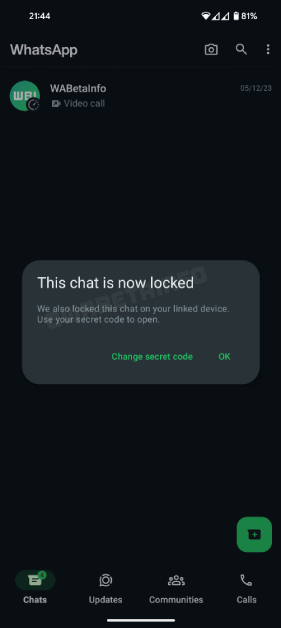
WhatsApp sync chat locks

This nifty upgrade was first noticed by WABetaInfo, a reliable source for WhatsApp updates. It was found in the latest WhatsApp beta for Android 2.24.4.14 update, available to download for all the enrolled beta testers via the Google Play Store.

WhatsApp introduced the ability to lock specific chats last year. They later introduced another feature called Secret Lock, allowing users to set a unique password different from their device password. This password hides the Locked chats folder, making it invisible to anyone who doesn’t know the code
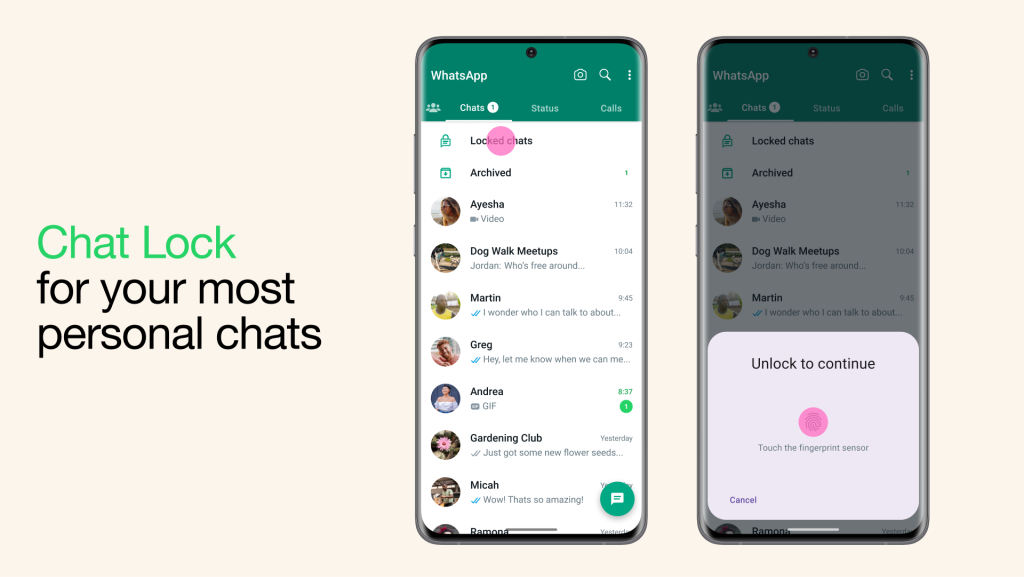
However, a downside to these features is that they are device-specific settings. This means that these locks must be set up separately on each device—your computer and phone—rather than being synchronized automatically.

The upcoming change will streamline this process, automatically extending your security choices across all platforms where you use WhatsApp.
This improved chat lock feature will likely be rolled out in the upcoming WhatsApp update.

In related WhatsApp news, the company recently confirmed it will allow cross-platform messaging via its platform. This means users will be able to send messages between WhatsApp, Telegram, or Signal, and vice versa. However, this feature will likely only be available in the European region.

Related:

Xiaomi Pad 6S Pro image, key specifications, launch timeframe leaked before launch

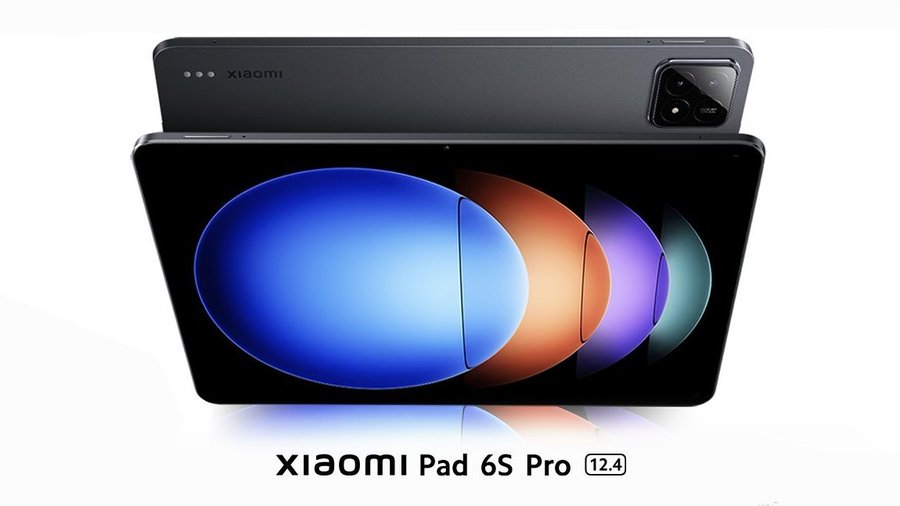
Several reports claim that Xiaomi will hold a launch event in China this month to announce the Xiaomi Ultra for the Chinese market. The same event is expected to see the arrival of a new tablet. While there has been uncertainty about whether this tablet would belong to the Xiaomi Pad 6 lineup or a potential Pad 7 series, an image reportedly found on Xiaomi’s global website suggests the upcoming tablet will be called the Xiaomi Pad 6s Pro.

Xiaomi Pad 6s Pro design, key specifications (rumored)

Xiaomi Pad 6S Pro
Xiaomi Pad 6S Pro

The Xiaomi Pad 6s Pro image reveals that it will have a design language like the existing Pad 6 products, which include the Pad 6, the Pad 6 Pro, and the Pad 6 Max. Reports have claimed that the Pad 6s Pro is designed to work with Xiaomi’s upcoming car, the SU7. With the HyperOS onboard, the device is expected to offer seamless connectivity with the SU7.

The image also reveals that the Xiaomi Pad 6s Pro will have a 12.4-inch display. As per leaks, it will be an LCD panel offering a 144Hz refresh rate. Under the hood, the tablet is expected to feature the Snapdragon 8 Gen 2 chipset. While there is no word on the battery size, it is likely to support 120W fast charging.

Since the Pad 6S belongs to the Pad 6 series, the tablet may likely inherit many of its specs from the existing Pad 6 Pro / Pad 6 Max. Hence, it is likely that the Pad 6S Pro may feature a 50-megapixel + 2-megapixel dual-camera system on the back, a 20-megapixel front camera, a 10,000mAh battery, and a quad-speaker setup.

At present, there is no word on the price or the markets that will receive the Xiaomi Pad 6s Pro. As far as the launch is concerned, it appears that the tablet may break cover on Feb. 22.

RELATED:

Vivo Y200e key specifications, price range tipped

Vivo is reportedly gearing up to launch the Vivo Y200e 5G in India. A recent report not only revealed the main features of the device but also claimed that it will break cover this month. Now, a new leak, courtesy of tipster Abhishek Yadav, has revealed the key specifications and price range of the device.

Vivo Y200e 5G specifications (rumored)

Vivo Y200e 5G
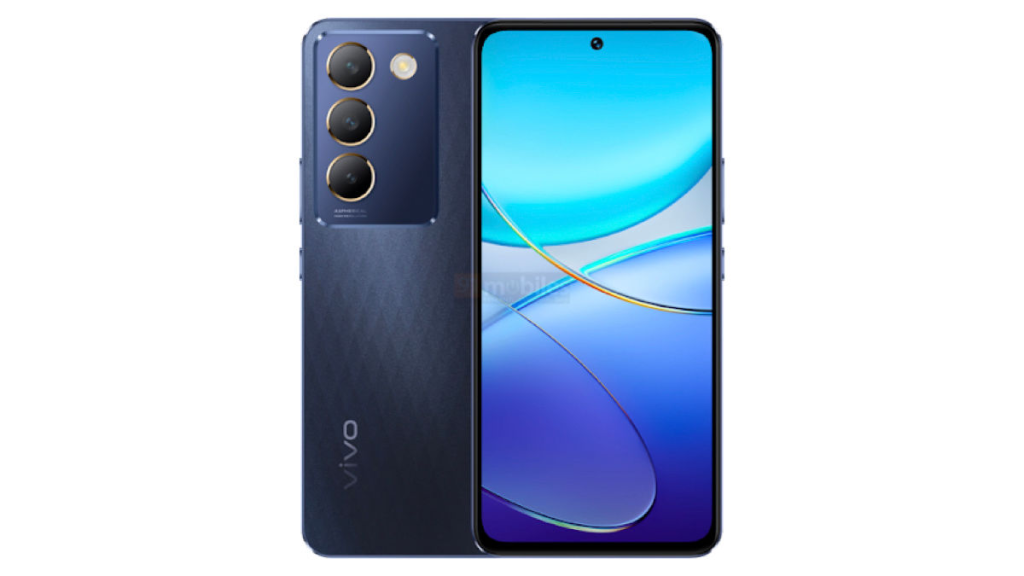
Vivo Y200e 5G image via Play Console listing

The specs revealed in the leak suggest that it will be a tweaked version of the Y100 5G, which recently debuted in Indonesia. In India, the device will rival the likes of the Oppo A79, the Samsung Galaxy A15, and the OnePlus Nord CE 3 Lite.

As per the leak, the Vivo Y200e will have a 6.67-inch FHD+ 120Hz AMOLED display with up to 1200 nits of brightness. Under the hood, the device will have the Snapdragon 4 Gen 2 chipset and 6 GB / 8 GB of RAM.

The device will offer up to 8 GB of extended RAM, 128 GB of storage, and possibly run on the latest FunTouch OS 14-based Android 14. It will house a 5,000mAh battery with 44W fast charging support. For audiophiles, the device will offer dual speakers with 300 percent audio booster support.

On the front, it will feature a 16-megapixel selfie camera. The back panel of the device will have a 50-megapixel main camera, a 2-megapixel depth sensor, and a flicker sensor. The device will have a leather back and a thickness of only 7.79mm. The Diamond Black variant of the Y200e will weigh 185 grams, whereas the Saffron Delight model will weigh 191 grams. The leak also states that the device will be priced at under Rs 20,000.

RELATED:

(source)

Dreame launches Mova G30 Pro hot water floor mopping robot with 8000Pa suction power in China

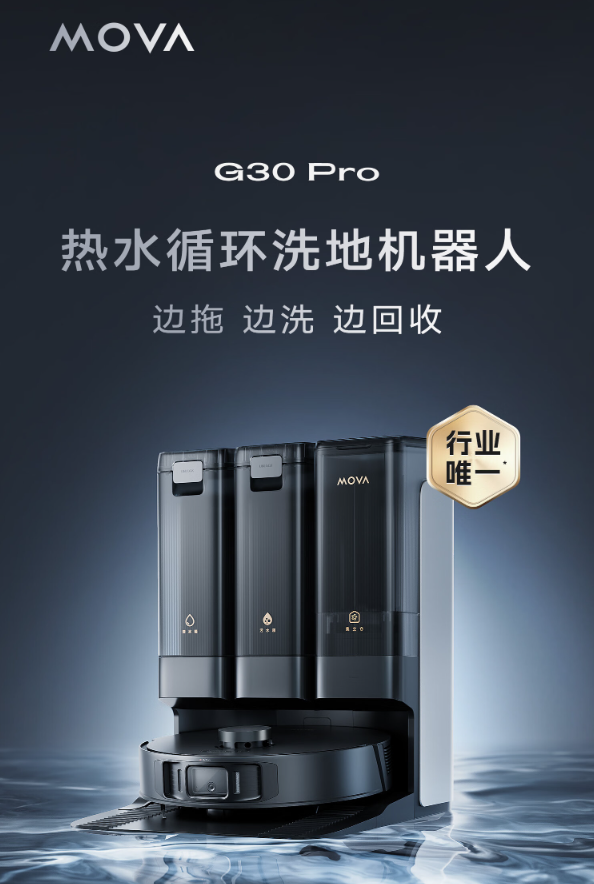
Dreame has launched the MOVA G30 Pro, a cutting-edge hot water circulating floor mopping robot, in China. This robot vacuum is now available at an introductory price of 5299 yuan ($744) on JD.com. Let’s check out the key specs.

Dreame Mova G30 Pro

Dreame Mova G30 Pro Specifications:

MOVA G30 Pro comes with multifunctionality, capable of mopping, washing, and collecting dust simultaneously. With an impressive 8000Pa suction power, it efficiently handles various cleaning tasks. Its active hair-cutting roller brushes prevent hair entanglement, ensuring smooth operation. The robot also features an automatic lifting mechanism for the mopping cloth, facilitating effortless cleaning across different surfaces.

In terms of navigation and obstacle avoidance, the G30 Pro leverages AI Action technology, allowing for precise millimeter-level maneuvering around obstacles. This is complemented by its 99.99% antibacterial effectiveness, making it a formidable tool against germs and bacteria on the floor.

The robot is equipped with a 360° driverless level navigation system, enabling it to map and navigate complex home environments efficiently. It can recognize up to 70 types of obstacles, thanks to its AI Action Vision camera and dual-line laser obstacle detection, ensuring comprehensive cleaning without unnecessary contact. The device also supports AI voice control, allowing users to initiate cleaning tasks through simple voice commands. For pet owners, the G30 Pro offers a pet care mode, which adjusts the cleaning strategy around pets for more effective cleaning.

The robot emphasizes continuous cleanliness with its real-time self-cleaning system that uses fresh water, ensuring that the mopping cloth is always clean for each use. It supports hot water circulation for mopping, which is effective in removing stubborn stains and dirt, thanks to its continuous temperature spraying and mopping capability. The MOVA G30 Pro also introduces a water stain cleaning mode designed for specialized cleaning tasks.

For convenience, the G30 Pro features an ultra-comprehensive ten-function base station, including automatic flushing of the main sewage tank and automatic water discharge, ensuring minimal manual intervention. With a 4.5L clean water tank and automatic dust collection, this robot is designed for ease of use and efficiency.

The product’s dimensions are 498mm x 390mm x 350mm, with a net weight of around 16kg. It operates at a power rating of 75W and has a rated voltage of 220V. The dust bag capacity is approximately 4L, and both the main unit’s water tank and dust box capacities handle significant amounts of dirt and debris.

Additionally, its design incorporates a starship design language, reflecting a blend of aesthetics and functionality, with a durable ABS material construction that withstands harsh environments.

RELATED:

Claim Doki Doki Literature Club Plus & Lost Castle on Epic Games for free!

Epic Games has just launched its second batch of free games this month after giving away Infinifactory last week. Interestingly enough, this week Epic has given away two games instead of just one, which are Doki Doki Literature Club Plus and Lost Castle.

Doki Doki Literature Club Plus

Doki Doki Literature Club Plus

Doki Doki Literature Club Plus is an expanded version of the original game that features 6 new Side Stories, 100+ unlockable images, and a bunch of other content. Launched back in 2017, Doki Doki Literature Club is a beloved psychological horror game that plays on the tropes of a dating SIM visual novel. You play as the main character, who reluctantly joins the Literature Club in search of a romantic interest. With every poem you write and every choice you make, you’ll charm your crush and begin to unfold the horrors of school romance. One thing to note is that the game comes with a Mature rating and deals with subjects like depression, self-harm, and suicide, among other things. So it is definitely not for everyone.

Lost Castle

Lost Castle

Lost Castle is an action RPG beat’em up with roguelike elements and randomized dungeons. One of the key attractions of the game is that you can play it with up to 4 players in online or local co-op, making it perfect for game nights or playing with your friends over at Discord. The game Brimming with a host of hand-drawn, humorous characters and environments. You will get to battle enemy hordes, collect loot, and develop your own combat style with diverse characters, weapons, and abilities while uncovering the overarching story of the game.

RELATED:

Another Lawsuit as Amazon is Accused of Artificially Inflating Prices

Amazon finds itself at the center of a legal storm as two of its customers have taken to the courts, accusing the retail giant of manipulating prices to its advantage. The core of the dispute lies in Amazon’s “Buy Box” feature, a staple on product pages that suggests a preferred seller and price for items. The lawsuit, filed in Washington, sheds light on the potential misleading nature of the Buy Box, suggesting it may not always present the best deal available.

The accusation suggests that expensive items overshadow cheaper alternatives

The controversy revolves around Amazon’s algorithmic selection of featured suppliers in the Buy Box. Often, this spot is reserved for Amazon itself or third-party vendors enrolled in Amazon’s Fulfillment By Amazon (FBA) program. The contention? That cheaper alternatives are overshadowed by more expensive options in the Buy Box, leading consumers to unwittingly pay more.

Amazon Q

Amazon’s Buy Box is accused of creating an illusion of the best deal, when, in reality, better prices from other sellers are tucked away beneath the primary recommendation. This system, critics argue, prioritizes Amazon’s profits over consumer savings, exploiting the trust shoppers place in the platform’s pricing mechanisms.

The implications of this lawsuit are far-reaching. Sellers not participating in the FBA program, despite offering lower prices, find their products less visible, potentially missing out on crucial sales. This has sparked a debate on fair competition and the transparency of online retail practices. The lawsuit, seeking class-action status, aims to rally Amazon customers who’ve used the Buy Box since 2016, arguing that Amazon’s practices violate Washington’s Consumer Protection Act. This act condemns deceptive acts or practices in trade or commerce.

RELATED:

(Via)

Samsung Galaxy Book 4 series to launch this month in India: Report

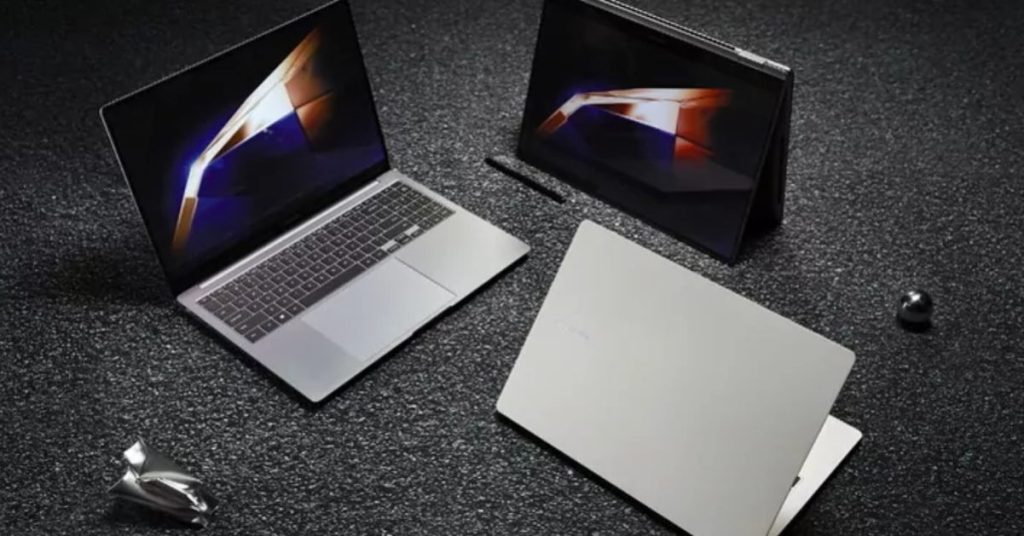
Last month, Samsung launched the Galaxy Book 4 series laptops at its Unpacked event headlined by the Galaxy S24 flagship smartphones. The laptops are now reported to arrive in India this month.

Samsung Galaxy Book 4 series specs leak

As per IANS sources, Samsung is likely to announce pre-bookings of the Galaxy Book 4 series laptops in mid-February, and the laptops will hit store shelves in the last week of the month. It is said that initially, Samsung will make the Galaxy Book 4 Pro, Book 4 Pro 360, and Book 4 360 sales will likely launch first, while the Galaxy Book 4 Ultra, which is the top model in the lineup will be launching later down the line in the country. You can check out the specs and features of the notebooks below.

Galaxy Book 4 Pro/Book 4 Pro 360 specs

The Galaxy Book 4 Pro features Intel Core Ultra 5 or Ultra 7 CPUs, and Intel Arc graphics, and runs on Windows 11 Home OS. It boasts a 14-inch or 16-inch AMOLED display, a backlit keyboard, a 2-megapixel webcam, and AKG quad speakers with Dolby Atmos. Connectivity options include WiFi 6E, Bluetooth 5.3, and multiple ports, with a battery pack supporting 65W USB-C charging.

The Galaxy Book 4 Pro 360, similar to the Pro version, includes a 360-degree hinge for tablet use, a 16-inch AMOLED touch display, and comes with S-Pen support. It shares the same processors and graphics as the Pro model and features Dolby Atmos, a backlit keyboard, and connectivity options including WiFi 6E and Bluetooth 5.3.

RELATED:

(via)

Apple opposes right-to-repair bill that threatens its dominance in device repairs

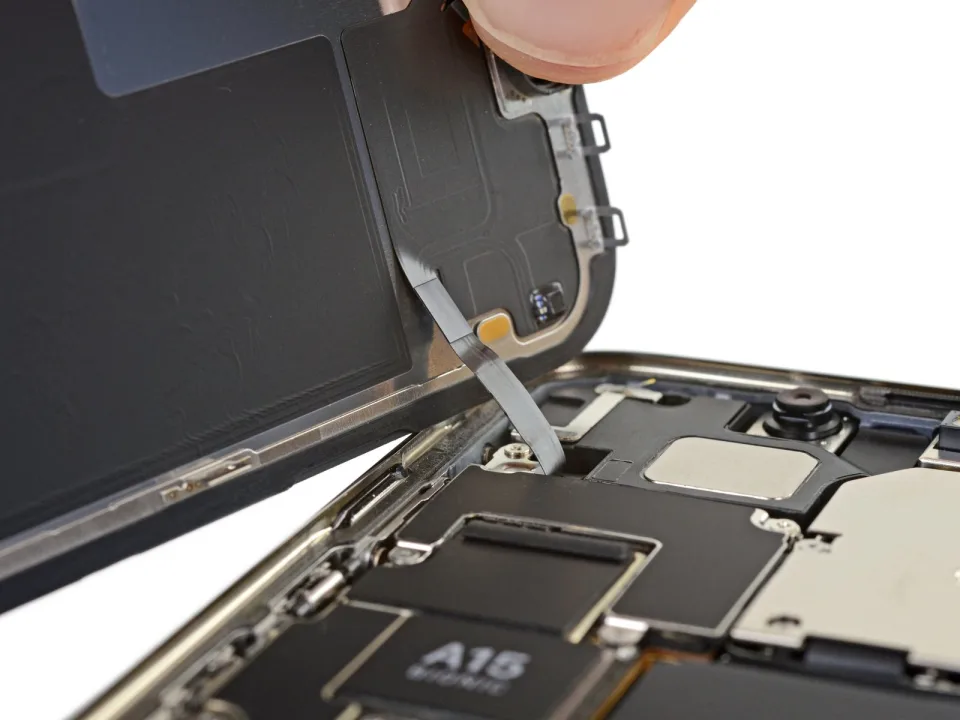
On February 8, 2024, the Oregon State Legislature introduced a bill, SB 1596, that challenges the common practice of component encryption by manufacturers like Apple. This bill stands out from others in states like California by requiring companies to provide the needed documentation, tools, and parts for repairs. It also bans the encryption of components that limit third-party repairs and the use of non-original parts.

Credit: iFixit

Apple Clashes With New Right-to-Repair Legislation

Apple, a major supporter of component encryption, strongly opposes this bill. The company argues that encrypting components helps make repairs more convenient and keeps devices and personal data secure. John Perry, a senior member of Apple’s security design team, says that the legislation would force manufacturers to allow parts from unknown sources, risking device security.

During the legislative hearings, a notable moment came from a video testimony by cybersecurity expert Tarah Wheeler, who highlighted Apple’s firm stance on maintaining control over device repairs. This perspective aligns with Apple’s broader argument that the bill could dilute the security and integrity of device ecosystems by opening the door to third-party components and repair services not vetted by the original manufacturers.

Apple has also pointed to recent updates in its repair processes as evidence of its efforts to accommodate consumer needs for more accessible repair options. These updates have streamlined the process for replacing components, eliminating the need for customers to directly engage with Apple support for such activities.

The debate centers around the balance between consumer rights to repair and the security and integrity of devices. Apple has historically utilized component encryption to prevent the use of unauthorized parts, citing security concerns. For instance, replacing a screen with a non-Apple part could lead to the disabling of features like Face ID. While replacing the battery can trigger a “Service” message and disable the battery health monitoring feature in the settings.

SB 1596 represents a pivotal moment in the ongoing discussion around right-to-repair legislation, highlighting the tension between consumer advocacy for more open repair ecosystems and manufacturers’ concerns over security and proprietary control. As the bill progresses through the legislative process, the tech industry and consumers alike will be watching closely to see how this balance is navigated.

RELATED:

(Via)

Amazfit Active smartwatch hit the shelves in India, starting at Rs 12,999

Amazfit has launched its Active smartwatch in the Indian market, with sales starting today. The smartwatch was globally unveiled in October last year.

Pricing and Availability:

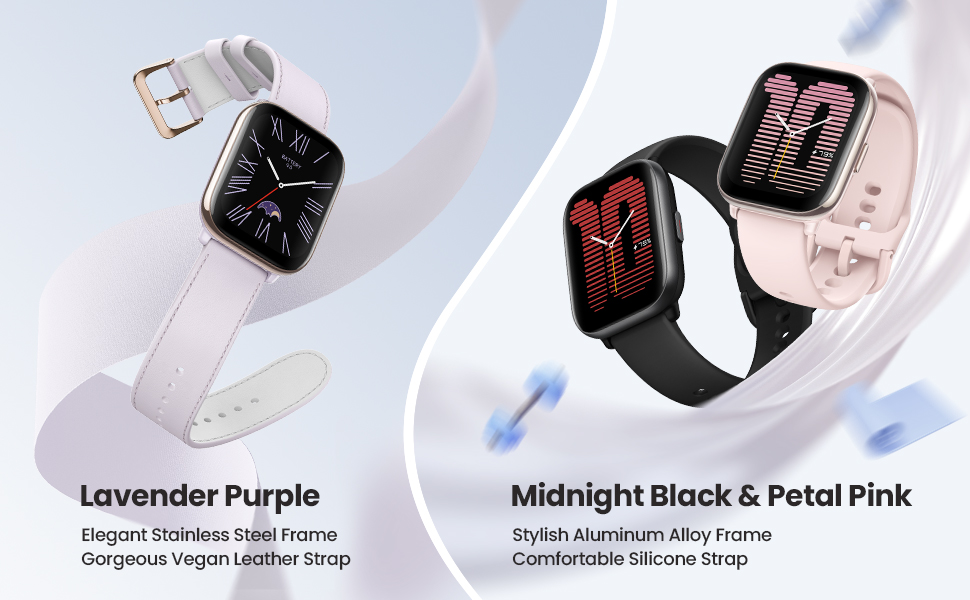
It offers a variety of colors such as Midnight Black, Petal Pink, and Lavender Purple to suit different tastes. The Midnight Black and Petal Pink models are priced at Rs 12,999, while the Lavender Purple variant costs Rs 13,999. Customers can buy it from Amazon India, the brand’s official website, and selected physical stores.

Amazfit Active smartwatch

Amazfit Active Specifications:

The smartwatch features a 1.75-inch HD AMOLED display with a resolution of 450 x 390 pixels and a screen density of 341ppi. It also has durable 2.5D tempered glass for a sleek look. Powered by ZeppOS 2.0 and supporting Bluetooth 5.2, it ensures a smooth connection with smartphones.

It allows Bluetooth calling through an in-built microphone and speaker, so users can make and receive calls on their wrist. The watch includes Amazon Alexa for voice commands and questions. It comes with health and fitness tracking capabilities, including a BioTracker 3 PPG biometric sensor for monitoring blood oxygen levels, heart rate, and stress. Other features include an accelerometer, motion sensors, and four satellite positioning systems for accurate tracking.

Amazfit Active smartwatch

The Amazfit Active offers many features like Zepp Coach for AI-driven training advice, 5ATM water resistance, control over music and camera, and a 300mAh battery that lasts up to 14 days. It also has up to 256MB of storage for apps and data.

The smartwatch offers versatile battery life options, lasting up to 30 days in battery saver mode or 6 days with continuous GPS use, catering to both everyday and fitness requirements of users.

For fitness lovers, it provides customizable workout plans via the Zepp app, analyses for mental and physical readiness, and works with various online communities and smartphone health apps.

Sale
Amazfit Active Smart Watch with AI Fitness Exercise Coach, GPS, Bluetooth Calling & Music, 14 Day Battery, 1.75″ AMOLED Display & Alexa-Enabled, Fitness Watch for Android & iPhone (Midnight Black)
  • Super-light and Stylish Design: The Amazfit Active smartwatch is like finery with a mind of a super-computer. Feel confident and ready for action, anytime and anywhere. Choose from over 100 colorful watch face options, and immerse yourself in a vivid 1.75″ HD AMOLED experience.

Please Note: When you buy something using the links in our articles, we may earn a small commission at no cost to you.

RELATED:

Philips 140W Two-Way Fast Charging Power Bank launched with a display and 27000mAh capacity

A new Philips-branded power bank has launched in China. We have no information on the manufacturer but the accessory is probably a licensed product like most Philips consumer electronics goods.

The battery pack resembles a chocolate bar. It is comparatively smaller for the capacity it offers. It also supports higher power output and sports a display.

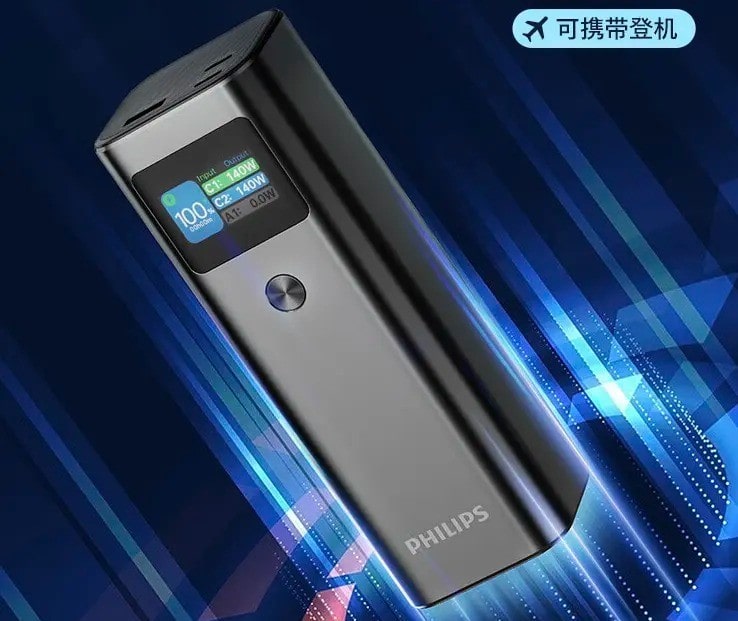
Philips 140W Two-Way Fast Charging Power Bank

The accessory is officially called Philips 140W Two-Way Fast Charging Power Bank. It bears model number DLP2303G/93.

As the name suggests, the product can output up to 140W from two of its USB Type-C ports. There’s also a USB Type-A port, which is limited to 22.5W.

Even while using two Type-C ports simultaneously, they can deliver 65W output each. When one of them is used alongside the Type-A port, they retain their top speed of 140W.

The accessory houses a 27000mAh battery and supports USB PD (Power Delivery) 3.1 protocol. Despite featuring a large battery, it measures only 154.6 x 52.8 x 49.5mm in dimensions due to its shape.

Additionally, the power bank has a TFT LCD screen. This display shows the battery remaining and the current power output from all three ports.

Unlike most power banks on the market, this one is not only suitable for smartphones but also laptops. Given its size, it can be also easily carried anywhere, including on flights. But unfortunately, it comes in a single black color option.

As far as price is concerned, the Philips 140W Two-Way Fast Charging Power Bank retails at ¥599 (~$85) in China. It ships with a 140W capable USB Type-C cable.

RELATED:

Play Protect gets a new update that works in real time to combat financial fraud

Since its launch, Google Play Protect has been scanning installed apps for malware, however this still does not guarantee that customers’ banking apps are 100% safe. Hackers merely need to gain access to the one-time password (OTP) that users received through SMS, enter the right verification code, and they can easily access the victim’s bank account.

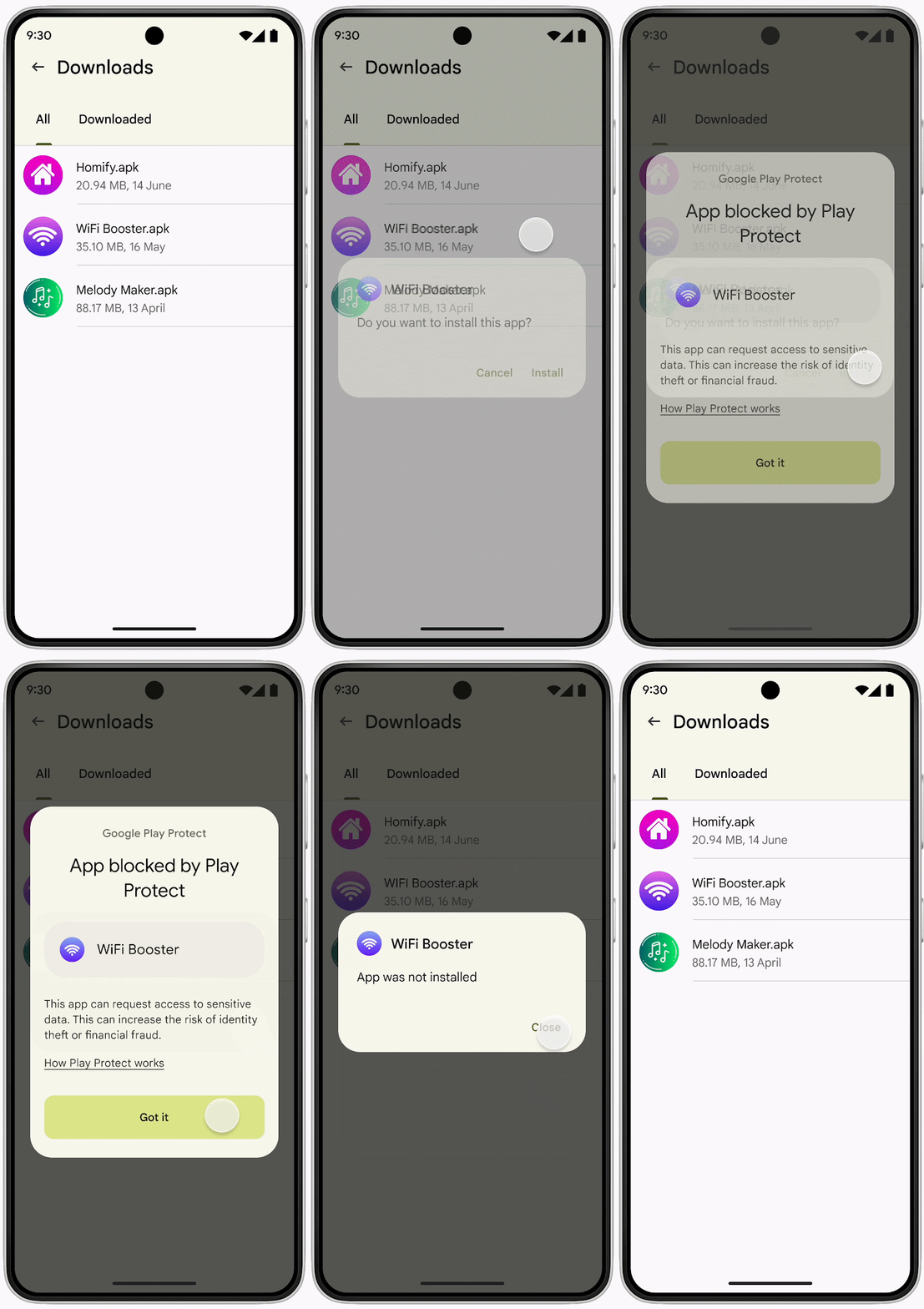
Fraud protection on Google Play Protect

Play Protect will now check on the permissions an app requires, the ones that hackers most frequently abuse: RECEIVE_SMS, READ_SMS, BIND_Notifications, and Accesibility. This is a brand-new functionality that Google revealed for the Play Protect. Hackers can view incoming SMS messages and notifications with these permissions, and they can even use the device without the user’s awareness with accesibility permission.

Since this functionality was developed in collaboration with Cyber Security of Singapore, Google only makes it available in Singapore for now. Users in Singapore will be the first to receive this fraud prevention tool from Google. This is a new feature from Google that always keeps an eye on what apps are doing in the background regarding permissions.

Google states that this allows users to use banking apps safely. Play Protect fraud protection kicks in when users install a third-party application, such as an APK file downloaded from the internet. If the app requests all 4 permissions, a report will be provided to the user.

It’s a really smart move to check these four permissions: RECEIVE_SMS, READ_SMS, BIND_Notifications, and Accesibility. This stops hackers from spying on SMS and notifications coming into the user’s phone, thereby limiting users’ data given to the app so hackers can’t access the user’s bank account.

Related:

OpenAI passes $2 Billion revenue milestone spurs ambitious Chip-making venture

OpenAI, backed by tech giant Microsoft, has achieved a monumental revenue milestone, surpassing $2 billion in December 2023. The achievement, first reported by Reuters and later corroborated by The Financial Times, signifies a remarkable trajectory for the San Francisco-based company, driven by burgeoning interest from corporate clients in its generative AI tools.

The surge in revenue is attributed to OpenAI’s innovative products, particularly its ChatGPT offering, which has witnessed substantial adoption in various industries. The company’s annualized revenue soared to over $1.6 billion by December, a significant leap from $1.3 billion reported just two months earlier, as noted by The Information.

Market enthusiasm for OpenAI is evident, with investors valuing the startup at a staggering $80 billion. Riding on this momentum, CEO Sam Altman has been actively engaged in discussions with potential investors, including prominent figures like Sheikh Tahnoon bin Zayed al-Nahyan from the UAE, to secure funding for a transformative initiative.

Altman’s ambitious vision involves establishing a chip-making company, aiming to bolster global chip-building capacity and advance AI capabilities. Reports from Bloomberg indicate that Altman’s plan entails constructing modern manufacturing facilities, necessitating funding in the tens of billions of dollars and spanning several years for completion.

Key players in these funding talks include TSMC from Taiwan and Softbank, underscoring the global significance of OpenAI’s endeavors. Sheikh Tahnoon’s involvement, given his strategic role in managing significant investment funds in the UAE, further underscores the international interest in OpenAI’s initiatives.

While the specifics regarding the structure of the new chip-making venture remain undisclosed, sources suggest that OpenAI will serve as its initial client. This move aligns with previous reports hinting at OpenAI’s exploration of manufacturing its chipsets to address the increasing demand for AI chips, catalyzed by the widespread adoption of AI applications like ChatGPT.

The shortage of AI chips, exacerbated by increased demand, has prompted OpenAI to diversify its chip suppliers beyond Nvidia and explore collaboration opportunities with other manufacturers. The strategic move underscores OpenAI’s commitment to fostering innovation and meeting the evolving needs of its clientele.

Related:

(via)

Nokia partners with HERE Maps to elevate industrial positioning and tracking with GNSS technology

Nokia has announced a strategic partnership with HERE Maps, aiming to strengthen the industrial sector by integrating HERE Maps’ GNSS (Global Navigation Satellite System) technology with Nokia’s advanced 5G network. This collaboration introduces the “HERE HD GNSS” application, designed to precisely track industrial assets in real-time, facilitating efficient indoor navigation. This move is part of Nokia’s wider strategy to enhance industrial processes with cutting-edge digital solutions.

Nokia company logo

Nokia also partners with Nordic ID and Svarmony-Aryv on emergency communication apps for industries

In addition to this, Nokia has expanded its offerings by collaborating with Nordic ID and Svarmony-Aryv to launch new applications that focus on emergency communication, a critical aspect of industrial safety. These applications are set to revolutionize asset tracking, positioning, and worker safety in various industrial environments.

This collaboration marks a significant reunion between Nokia and HERE Maps, following Nokia’s sale of the HERE Maps business in December 2015, a move that allowed HERE Maps to focus on the commercial market. The partnership highlights a shared commitment to leveraging technological innovations for industrial improvement.

The new suite of applications, which includes RFID-based tracking by Nordic ID and a visual positioning system by Svarmony-Aryv, is implemented on Nokia’s MX Industrial Edge (MXIE) platform. This signifies a move towards full digitalization in industrial operations, addressing common issues like asset mismanagement, inefficient use of resources, and inventory inaccuracies.

Additionally, the applications are supported by worker safety solutions such as Portalify’s SmartView and Secapp, which offer situational awareness and emergency communication services. This comprehensive approach not only streamlines operations but also significantly boosts worker safety through enhanced situational awareness and quick response capabilities.

While Nokia is fully focused on the industrial move, in a surprising move, HMD Global, the company behind Nokia-branded smartphones, is undergoing a rebranding. They have transitioned from “Nokia Mobile” to “HMD,” signifying a shift towards their own distinct brand identity. While Nokia phones will still exist, HMD will also introduce its own “HMD Originals” line, marking a step into uncharted territory. This move reflects HMD’s ambition to move beyond a licensing agreement and establish itself as a multi-brand company with its own design and innovation. Whether this rebranding will propel HMD to new heights or dilute its identity remains to be seen, but it adds an intriguing chapter to the company’s journey.

RELATED:

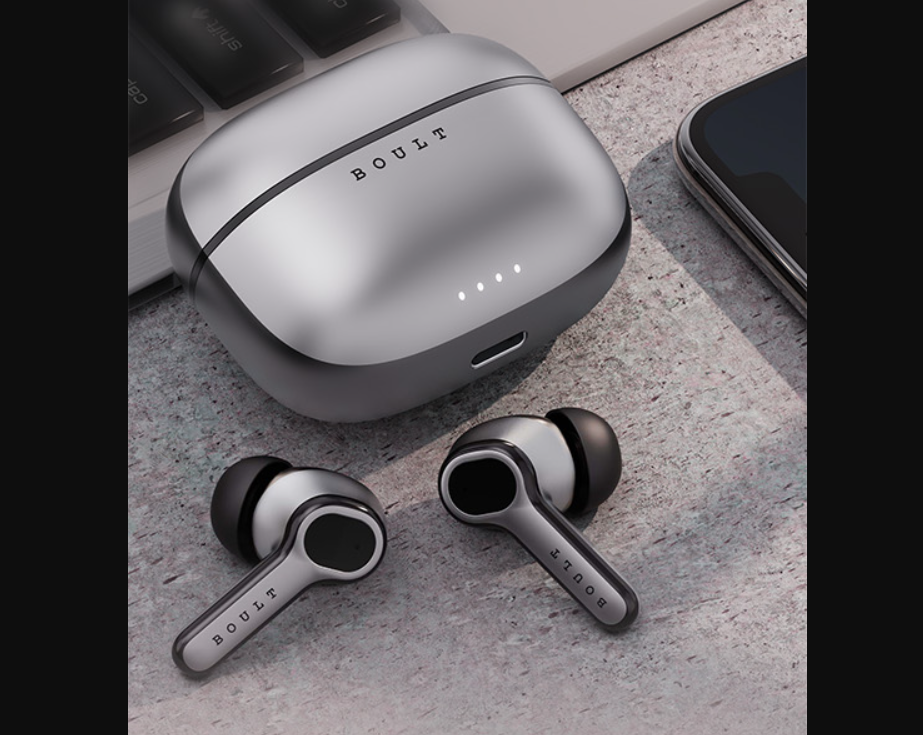
Boult Z40 Ultra earbuds with 35dB ANC, touch control & dual device connectivity launched in India

Boult, an Indian electronics brand best known for its audio products has just unveiled the Z40 Ultra earbuds in the Indian market. These truly wireless earbuds are packed with attractive features that make them a good option at their price point.

Boult Z40 Ultra

Boult Z40 Ultra earbuds specs:

The first noteworthy feature of the earbuds is the premium design with metallic rims and an IPX-5 rating that is not only stylish but also practical if you like working out. The earbuds also offer 32dB noise canceling, which is quite decent and should be enough to nullify out the surrounding noise while you listen to music.

Boult Z40 Ultra

It features 10mm drivers that promise high-quality bass thanks to the brand’s BoomX Technology. In addition to that, the brand also promises 3 equalizer modes namely Hifi, Bass, and Rock that you can pick and choose between to improve your listening experience. These earbuds also feature quad-mic ENC technology, which makes sure that your voice is clear and noise-free when you make calls.

The earbuds also feature a Sonic Core Dynamic chip that helps with accurate noise cancellation, clear and noise-free audio pickup, and a better music experience. These earbuds use Bluetooth 5.3 for connectivity, offering features like Blink & Pair tech, 45ms low latency mode for gaming, and dual device connectivity. The Z40 Ultra has touch controls on both earbuds that help with music playback, calls, volume control, virtual assistants, and toggling transparency mode as well as EQ modes. Lastly, the earbuds claim a massive 100 hours of playback time without ANC.

Pricing & availability

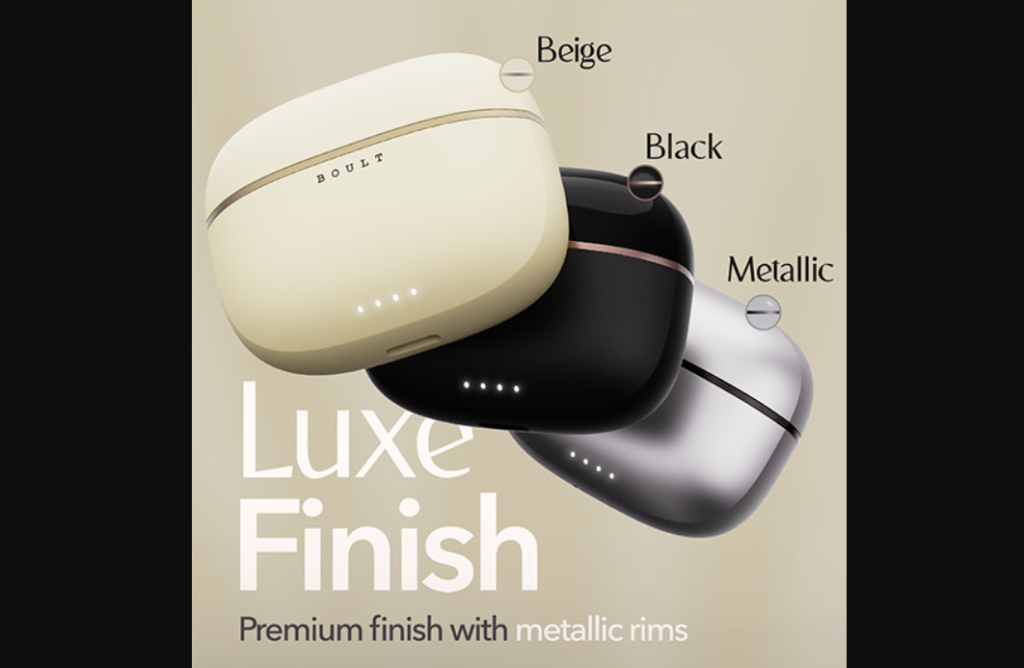
The Boult Z40 Ultra earbuds are set to hit the Indian market with a price tag of Rs. 1,999. Customers will get to choose between three color options: Beige, Black, and Metallic. The brand has not specified a sale date yet, however, interested customers can turn on the “notify me” button on Amazon to get the latest updates.

Get Boult Z40 Ultra on Amazon 

RELATED:

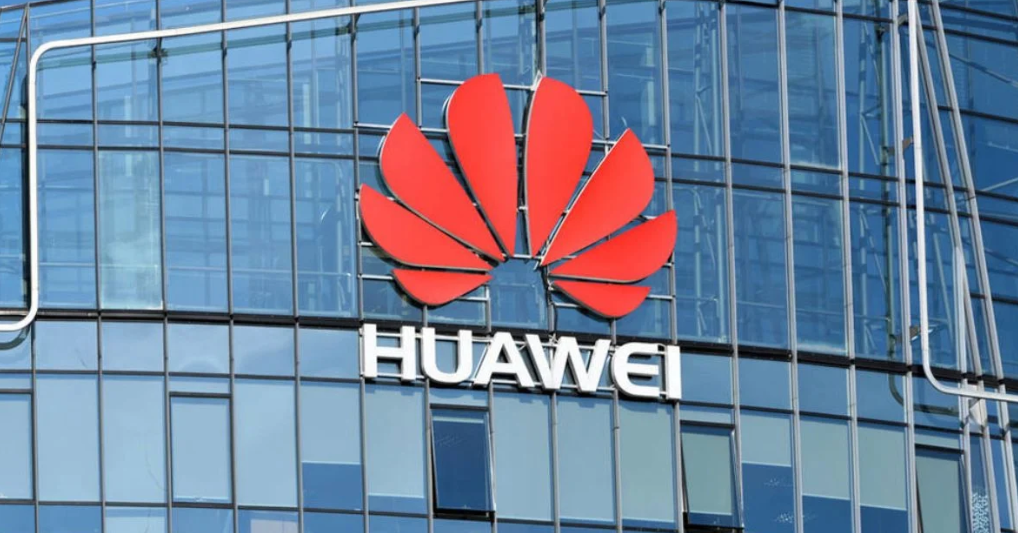
French authorities raid Huawei’s Paris office amid allegations of improper behavior

French authorities have launched a raid on Huawei’s Paris office as part of a preliminary investigation into allegations of improper behavior. The raid, conducted by prosecutors, follows suspicions of breaches of integrity, encompassing potential offenses like corruption and influence peddling. This development marks a significant escalation in the scrutiny faced by the Chinese tech giant in France.

Huawei has vehemently denied any wrongdoing, asserting its longstanding commitment to compliance with French laws and regulations. The company, which has maintained a presence in France since 2003, operates several research centers and a global design hub in the country. Additionally, Huawei is constructing its first production facility outside of China, located near Strasbourg, aimed at catering to the European telecommunications market.

Despite facing setbacks such as revenue declines in recent years, Huawei has continued its collaboration with French mobile carriers for the deployment of 5G networks. However, the company has encountered obstacles, including restrictions imposed by the French government on its participation in critical parts of the country’s wireless infrastructure.

The raid on Huawei’s French offices underscores the broader international scrutiny faced by the company. Amid tensions between China and the United States, Huawei has been at the center of allegations regarding potential state espionage, allegations that the company vehemently denies. The European Commission has also raised concerns about the security risks that Huawei and other Chinese tech firms pose, prompting calls to exclude their equipment from European mobile networks.

In response to the raid, Huawei emphasized cooperation with the investigation and expressed confidence in the probe’s conclusions. The nature of the alleged improper behavior remains unspecified, but it carries implications that could significantly impact Huawei’s operations in France and beyond.

Related:

(via)

Apple iPhone 15 sees a Rs 13,900 discount during Flipkart’s Valentine’s Day Sale

Apple launched its latest iPhone generation back in September 2023. Now, the base iPhone 15 model is officially going on discount just a couple of months after its release during Flipkart’s Valentine’s Day sale.

Apple iPhone 15 Valentine’s Day Sale

To recall, the Cupertino based giant unveiled the iPhone 15 for a starting price tag of 79,900 INR in the region for its 128GB model. On the other hand, the 256GB and 512GB variants cost 89,900 INR and 109,900 INR respectively. But during the Valentine’s Day sale on Flipkart, you can get your hands on an iPhone 15 for just 65,999 INR for the base version.

Apple iPhone 15, iPhone 15 Plus

This is thanks to a 13,900 INR discount. Buyers can get an additional discount of 1,500 INR with Citi, HSBC, DBS, and Bank of Baroda cards. HDFC Credit card holders can avail a flat 2,000 INR discount as well, which basically brings down the effective price tag to just 63,999 INR. Lastly, Flipkart Axis Bank Credit card holders can avail a 3,300 INR cashback. Interestingly, the Indian discount follows a week after Apple discounted the price of the iPhone 15 in China during the Chinese New Year.

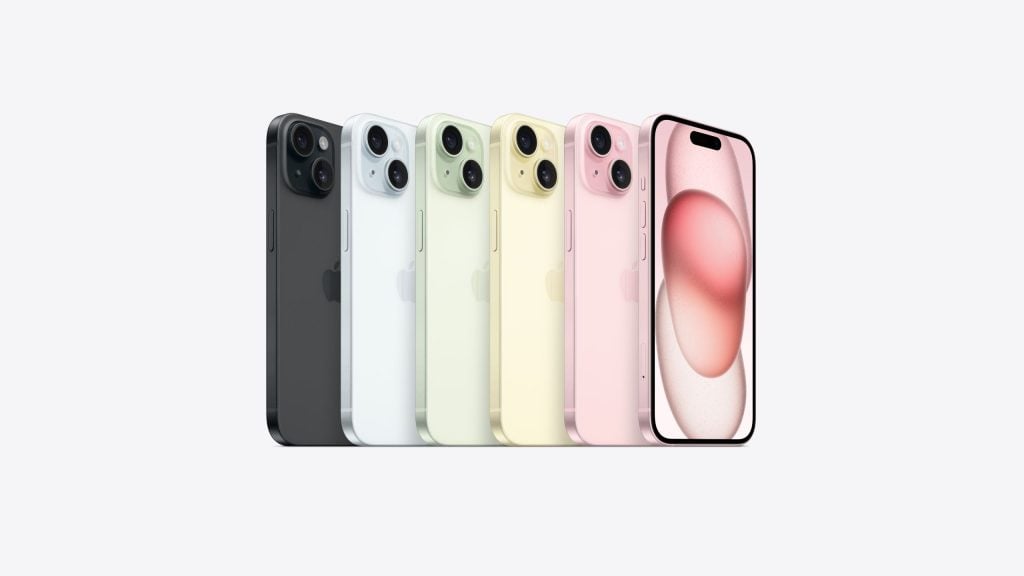
For those unaware, the iPhone 15 is available for purchase in multiple colors, namely Blue, Green, Yellow, Pink, and Black. It sports a 6.1-inch OLED display with a Dynamic Island and HDR support. Under the hood, the iPhone 15 is equipped with the A16 Bionic chipset. The rear packs a 48-megapixel primary camera with OIS support and a 12-megapixel ultra wide angle lens. Meanwhile, the front offers a 12-megapixel selfie shooter.

RELATED:

Lenovo partners with Baidu to integrate advanced AI into smartphones

Baidu, China’s leading tech giant, has struck a significant partnership with Lenovo, to embed its cutting-edge generative AI technology, particularly the Ernie large language model (LLM), into Lenovo smartphones. This collaboration follows similar agreements Baidu has forged with other smartphone manufacturers such as Samsung and Honor, marking a strategic move to expand its presence in the mobile market.

Lenovo, known for its diverse portfolio that includes personal computers and tablets, will now integrate Baidu’s Ernie model into its branded smartphones, a step aimed at capitalizing on the growing trend of AI-powered features in mobile devices. This trend gained traction following the success of ChatGPT, developed by OpenAI, in late 2022.

While Google’s Pixel phones currently lead the market in terms of AI capabilities, backed by robust cloud-based AI services, Apple is reportedly working on incorporating generative AI models into its iPhones. The collaboration between Baidu and Lenovo signals a concerted effort to compete in this space and offer consumers innovative AI-driven features such as chatbots and real-time translation directly on their smartphones.

According to projections by research firm Canalys, approximately 5% of smartphones shipped globally in 2024, translating to around 60 million devices, will boast AI capabilities. This underscores the growing demand for AI-integrated smartphones and the potential for such features to become essential for consumers in the long run.

In China, where AI services from U.S. firms are not readily available, the market is dominated by homegrown companies like Baidu, Alibaba, and Tencent, offering over 200 AI models. Baidu CEO Robin Li has emphasized the importance of practical AI applications and has leveraged collaborations with smartphone manufacturers to enhance Baidu’s LLM and compete effectively with U.S. rivals.

Apart from Lenovo, other top Chinese phone brands including Vivo, Xiaomi, and Huawei are also investing in developing their on-device AI models, although specific details have not been disclosed publicly.

Analysts view the integration of Baidu’s LLM into smartphones as a strategic move, positioning AI-powered features as potential “must-have” functionalities in the future, despite existing limitations. These collaborations not only benefit Baidu but also provide access to vast amounts of data, which could further enhance the capabilities of Baidu’s AI models and strengthen its competitive position in the global smartphone market.

The partnership between Baidu and Lenovo underscores the increasing importance of AI in smartphones and reflects a broader trend within the industry towards integrating advanced AI technologies to enhance user experiences and drive innovation.

Related:

(via)

Baseus AirGo AS01 TWS launched, seems to be a cheaper alternative to the Huawei FreeClip

Baseu has just unveiled the new AirGo AS01 truly wireless earbuds in China. The brand’s latest hearables feature a unique design and some notable features. So here’s everything you need to know regarding the specs, pricing, and more.

Baseus AirGO AS01 TWS

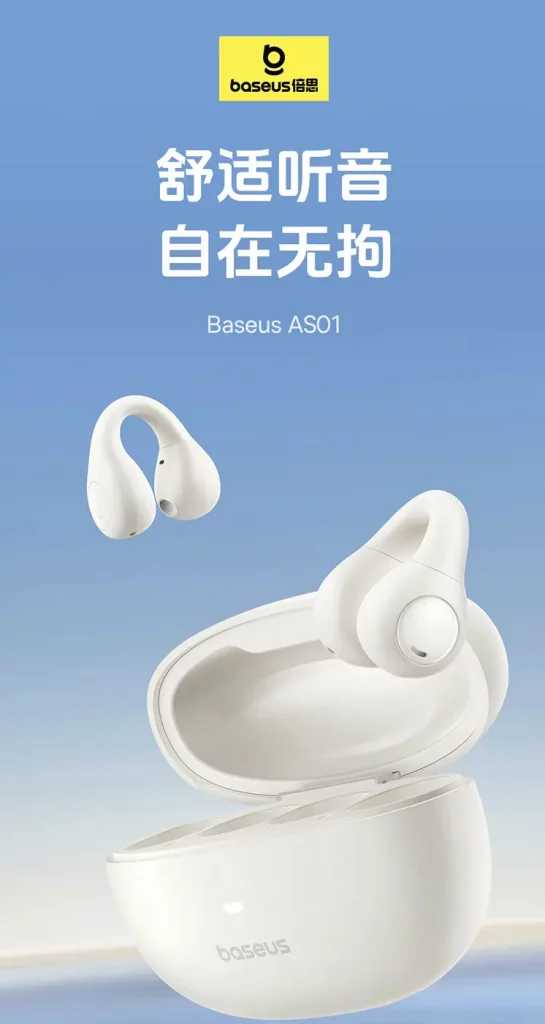
Talking about the design, the earbuds offer an open-ear design that is similar to the Huawei FreeClip. The open-back nature basically means that users can enjoy music while being aware of their surroundings. It houses a 10mm dynamic audio driver and brings support for noise reduction via a dual mic setup, and directional sound transmission technology.

Baseus AS01 TWS

The Baseus AirGo A201 TWS earbuds support Bluetooth 5.3 connectivity and each earbuds weigh just 4.6 grams. On a single full charge, the wireless earphones can last for 6 hours, with the charging case offering an additional 25 hours of audio playback. The case offers a USB Type-C port for charging. Notably, the earbuds and the case is made using TPU materials. It has an official price tag of 129 Yuan (roughly 18 US Dollars) but is available for an introductory price of just 107 Yuan (roughly 15 US Dollars).

Baseus AirGo AS01 a cheaper Huawei FreeClip alternative

The design and functionality of the AirGo AS01 TWS models is quite similar to the Huawei FreeClip. Rather, the design is the aspect that is shared between the two earbuds. Comparing them directly the new Baseus TWS seems to be a cheaper alternative to the Huawei FreeClip, which launched for over 200 US Dollars back in December 2023. You can even check out our review of the FreeClip by clicking here.

RELATED:

TSMC Expands 3nm Chip Production to Meet Growing Demand

TSMC, the world’s leading chipmaker, is reportedly ramping up production of its advanced 3nm chips. The expansion is said to be done due to the increased demand from tech giants seeking cutting-edge processors for their products.

In 2023, Apple was TSMC’s primary customer for 3nm chips, utilized in its iPhone 15 Pro smartphones.  However, major players like Qualcomm, MediaTek, NVIDIA, and Intel have since expressed interest and placed orders. 

To accommodate this influx, TSMC is reportedly eyeing to boost its monthly 3nm wafer production to 100,000 units by 2024. The company is also making efforts to improve its production yields for higher efficiency.

The initial version of TSMC’s 3nm process (N3B) reportedly faced yield challenges and carried a high cost.  These factors may have deterred some companies from adopting the technology in its early stages. 

However, TSMC’s improved second-generation 3nm process (N3E) will offer better performance while being affordable. This has likely led to an increase in client interest, which in turn means demand. 

This year will likely see heightened competition in the semiconductor market as major tech companies begin releasing their first 3nm-powered devices.  

Whether TSMC can successfully meet this surging demand, while addressing potential production challenges, will significantly impact the success of these upcoming devices and the companies behind them.

In related chip news, SMIC, China’s semiconductor giant is reportedly beginning the production of its 5nm chipsets for Huawei. SMIC has also set up a new semiconductor line in Shanghai specifically for making chips designed by Huawei.

The move comes as the Biden administration has imposed stricter export restrictions on advanced chipmaking equipment citing national security concerns. You can learn more about it here.

Related:

(Via)

Nothing Phone (2a) Fake Press Render Suggests That Initial Leaks Were Right After All

Recently, the Nothing Phone (2a) surfaced in a leaked render. It revealed a surprising omission of the Glyph Interface along with a few design changes. However, it now turns out that the rendering of the upcoming offering was inaccurate. This has been confirmed by the publication that leaked the info as well Steve Hemmerstoffer (aka onleaks). Read on to know all the details. 

Nothing Phone (2a) leaked render was inaccurate

The Nothing Phone (2a) is an upcoming mid-range offering expected to be positioned below the flagship number series. It was assumed that the brand would be cutting costs by ditching the Glyph Interface as seen on the Phone (2a) render. 

Another tipster Evan Blass was skeptical of the leaked render of the Nothing Phone (2a). He added that the CAD-based leaked render wasn’t Foxconn-sourced which is usually the case with Steve’s leaks. Hence the accuracy isn’t applicable. Secondly, Nothing is teasing the upcoming smartphone with the tagline ‘See the world through fresh eyes’. This hints at the possibility of a redesigned camera island. 

The publication cross-checked the Nothing Phone (2a)’s leak and found that the source had furnished Steve with manipulated renders. It belonged to an unreleased Nothing device that never made it to the market. Additionally, it can also be seen in one of the Phone (1) promo videos. 

Blass also shared a side-by-side comparison of the latest and previously leaked renders of the Phone (2a). It turns out that the initial leaks (hands-on live image) were indeed right. The Phone (2a) could get a circular camera module with two sensors placed horizontally. It will be surrounded by Glyph lights that should excite Nothing fans.

The Nothing Phone (2a) is expected to debut at MWC in Barcelona later this month. Although the exact date has not been revealed, the London-based company is conducting an event on February 27.  

Related: