Advertisement

Simple Dot One electric scooter with a range of up to 151km launched in India starting at Rs. 1.4 lakhs ($1,683)

Simple Energy has unveiled its latest electric scooter in India. The Simple Dot One e-scooter comes with a range of 151km. The Simple Dot One release is coming on the heels of the launch of the Simple ONE back in May 2023, with a range of 212km.

Simple Dot One electric scooter

Features

The Simple Dot One is equipped with the PMSM motor patented for the previous model. It has up to 8.5kW peak/ 4.5kW continuous power and a peak torque of 72Nm. It can go from 0 to 40km/h in 2.77 seconds and hit a top speed of 105km/h. The Simple Dot One has a smaller 3.7kWh battery than that of the Simple Dot. It has a fast charge architecture, achieving a 1.5km range per minute using the Simple Loop charging station.

Simple Dot One electric scooter

The Simple Dot One electric scooter has a 7-inch touchscreen with a customizable interface and support for 4G and Bluetooth 5.2 connectivity. You can receive calls, listen to music, and do a few other things while cruising on the scooter. It has a decent brake system consisting of CBS and efficient disc brakes. There is a 35-liter under storage for luggage and the entire scooter is rated IP67, including its battery pack and display.

Simple Dot One electric scooter

Pricing & Availability

The Simple Dot One electric scooter is priced starting at Rs. 139999 ($1,683) Ex-showroom Bangalore. It is available in Brazen Black, Grace White, Azure Blue, and Namma Red color options. Simple Energy says it will give priority to owners of the Simple One willing to switch their scooter for the Simple Dot One. New customers can pre-book the Simple Dot One directly from Simple Energy for Rs. 1947 ($24) beginning from January 27, 2024. There is no global availability and pricing information yet for the Simple Dot One e-scooter.

RELATED:

Huawei’s Aito M9 SUV with multiple displays, projector screens & up to 630km range debuts in China

Huawei-backed electric vehicle brand Aito has unveiled the M9 SUV for the Chinese market. The Aito M9 comes with a bountiful collection of displays and projector screens rather than seats for passengers. Aito is a joint venture between Huawei and Seres.

Aito M9 SUV

Features

The Aito M9 is a flagship offering from Aito and is a 6-seater SUV. The electric version of the Aito M9 comes with premium features including the latest Huawei tech, several screens, and two projectors that can deliver a cinema experience inside and outside the vehicle. The launch comes just a few months after the company unveiled the M7 SUV.

Aito M9 SUV

The M9 comes with modern styling and reflects a sleek design, although the body is seemingly generic. The SUV features high-tech headlights similar to the Huawei Luxeed S7 sedan. The lighting tech adopted is the adaptive matrix LED technology that helps to identify pedestrians and vehicles. The integrated projector is capable of projecting images up to 100 inches.

Apart from being capable of functioning as a drive-in movie theater or open-air karaoke system, the M9 features a laser projector and a retractable 32-inch panel in the cabin. This allows passengers to enjoy movies, games, and other content from the comfort of their seats.

The Aito M9 dashboard bears a close semblance to the hyperscreen of a Mercedes. It houses a 12.3-inch digital instrument cluster, a 15.6-inch central infotainment screen, and a 16-inch front passenger screen. There is also a 75-inch head-up display and four tablets for each of the rear passengers. The system runs on Huawei’s homegrown HarmonyOS 4, while a 25-speaker 2,080W audio system delivers premium sound output. Active noise reduction technology is also part of the mix to give a unique audio experience.

Aito M9 SUV

The layout of the Aito M9 SUV can be adjusted to meet the needs of the occupants. The official gallery of the SUV shows a double bed configuration, with all the seats electrically controlled. There are 27 sensors in the Aito M9 for enhanced safety in combination with the Huawei ADS 2.0 system. Aito announced two powertrains for the M9 namely a fully electric option (BEV) and a range-extender (EREV).

The BEV option features dual electric motors that produce a combined power of 390kW, while a 97.7kWh CATL battery pack delivers a CLTC range of 630km. The EREV has a turbo-charged 1.5-liter engine and dual electric motors with a combined power of 365kW. The EREV has a 42kWh/ 52kWh CATL battery and delivers a combined range of up to 1,402km on a full tank and fully charged battery.

Pricing & Availability

The Aito M9 is priced between 469,800 yuan ($65,725) and 569,800 yuan ($79,715) in China. The earliest deliveries of the M9 will be in early 2024 and Aito has not provided any global availability plans for the models yet.

RELATED:

E-bike and electric scooter injuries are reportedly increasing by at least 20% every year – US CSPC

A new report by the United States’ Consumer Product Safety Commission (CSPC) indicates that injuries from micromobility solutions like e-bikes and e-scooters are increasing by at least 20% every year. The report is titled Micromobility Products-Related Deaths, Injuries, and Hazard Patterns. The new report underscores the rising cases of injuries connected with the increasing use of electric bikes, electric scooters, and other micro-mobility solutions.

Taitans e-scooter

The rise in e-scooters/e-bikes adoption increases the chances of an e-scooter/e-bike accident happening

The electric revolution in micromobility has grown in leaps and bounds in the US, as well as other developed markets. The number of e-bikes, e-scooters, and other micromobility products is multiplying seemingly exponentially. This is a good measure to reduce carbon emissions in our cities and rural areas. The e-mobility revolution however has a flipside highlighted by a growing number of injuries and fatalities from accidents. The report specifically focused on the risks and injuries inherent in e-bike and e-scooter travel, especially for younger riders.

The CSPC report covers a period of five years, from 2017 to 2022 and the findings indicate that there is a significant increase in the percentage of injuries that could potentially be avoided. Safety measures like wearing a helmet, choosing safer places to ride, increasing visibility on the road, and avoiding distractions while riding will potentially help to prevent injuries. The most common injuries, according to the report, were fractures, contusions, and abrasions. The report also highlights that injuries from micromobility devices increased by about 21% in 2022 from the previous year.

Electric scooter injuries increased by 21% from 2021, with the bulk (about 50%) of injuries within the period (2017-2022) happening in 2022. The injuries associated with e-scooters and e-bikes occurred most frequently on streets and highways, according to the CSPC report. Hoverboard injuries decreased within the period and occurred mostly at home. Males accounted for the bulk of e-scooter (65%) and e-bike (75%) injuries while females (55%) had more hoverboard injuries.

The CSPC report aligns with previous studies which underscore the need for enhanced safety practices by riders to reduce injuries and damage from accidents. There is also an aspect of enforcement of safety rules (like making helmets compulsory) that could further eliminate potential injuries from the use of micromobility products.

RELATED:

(via)

Realme 11 Pro/Pro+ get Android 14 Early Access 2 update

After recently launching the Realme UI 5.0 early access program for the Realme 11 Pro and 11 Pro+ devices, the brand is now inviting users to participate in the second round of the early access program. This exclusive beta opportunity allows users to preview upcoming changes to their devices with the Android 14 update.

Key Features of UI 5.0 Early Access 2:

For users that have already participated in the first early access program, here are the changes coming with the new update:

The realme UI 5.0 Early Access brings several enhancements aimed at refining the user experience and device functionality.

Key updates include the introduction of the Pantanal Service featuring Fluid Cloud, offering dynamic information at your fingertips. The Smart Efficiency upgrade introduces File Dock for seamless content transfer between apps and devices.

Cross-device connectivity sees improvements with added widget recommendations on the Shelf. Security and privacy concerns are addressed through enhanced permission management for photos and videos, ensuring safer app access. Performance optimization takes center stage, promising improved system stability, faster app launches, and smoother animations.

Aesthetic updates include the Aquamorphic Design enhancement, offering a more comfortable and clear color experience. The update also introduces Aquamorphic-themed ringtones and revamped system notification sounds. For environmentally-conscious users, a carbon tracking Always-On Display (AOD) visualizes carbon emissions avoided by choosing to walk over driving.

Known Issues and Important Information:

However, users should be aware of a couple of known issues. When using floating windows, there might be difficulty sliding the desktop, which can be resolved by pulling down the status bar. Additionally, the Glance Lock-screen feature is not yet available in the Early Access release but is promised in future versions.

Realme emphasizes that the Early Access program is a beta initiative, cautioning users about potential bugs and app compatibility issues. The company recommends avoiding installation on primary devices due to the unpredictable impact it may have on daily use.

How to Join Early Access:

The application channel for Early Access opened on December 25, 2023, with limited seats available. Interested users need to ensure their device meets certain criteria, such as having 60% or more battery, the required UI version (RMX3741_13.1.0.545(EX01) for the 11 Pro+ and RMX3771_13.1.0.546(EX01) for the 11 Pro. Lastly, Developer Mode should be enabled before updating.

Applying is straightforward: users navigate to Settings, click on the “realme UI 4.0” banner, select Beta program, then Early Access, and finally, apply by submitting their details.

Disclaimer: Read Before Applying:

Before opting for the Early Access experience, realme urges users to read and understand the disclaimer. Key points include ensuring the device is not rooted, backing up personal data to prevent loss, updating all third-party apps to the latest versions, and having more than 15 GB of available phone storage.

RELATED:

(Source 1, 2)

Chinese CMOS sensors could enter Samsung’s supply chain, telephoto lens costs are expected to rise

OmniVision, a key player in CMOS image sensors, faced difficulties after losing Apple as a client in 2011. Following its acquisition by Visionox, it shifted its focus to serving Chinese smartphone brands. The OV50H sensor is now adopted by numerous top Chinese manufacturers, strengthening China’s domestic supply chain and positioning OmniVision as a potential rival to industry giants like Sony and Samsung.

Camera Sensor

Now according to a recent tip from a popular Weibo tipster, Fixed Focus, suggests that there are advanced discussions between Chinese-made CMOS solutions and Samsung. This hints at the possibility of integrating domestic CMOS technology into Samsung’s smartphone supply chain, which would be a significant milestone for Chinese technology.

Chinese CMOS sensors details Leak

Earlier, the tipster also disclosed details about OmniVision’s upcoming OV50K sensor, featuring the innovative LOFIC technology. This advancement allows for enhanced performance in high-brightness scenarios by increasing the Full-Well Charge capacity, thus offering a wider dynamic range and effectively tackling overexposure issues.

This development is not limited to Samsung. Honor is also reportedly planning to incorporate OmniVision sensors across its product line. The OV50H sensor will be featured in some Huawei and Honor models, while the more advanced OV50K sensor will be used in higher-end Honor series models.

The tipster also suggests that “super affordable telephoto smartphones” may become less common next year. This is because domestic CMOS manufacturers initially sold their products at cost to gain market share, but in 2024, they are expected to adjust prices to ensure profitability.

Currently, Sony’s IMX989 and LYT900 sensors lead the market. However, OmniVision’s new offerings, coupled with support from major players like Samsung, Huawei, and Honor, could reshape the competitive landscape in the sensor industry.

At the same time, various Chinese entities, including Huawei, are exploring the development of their own CMOS image sensors, fostering an environment conducive to domestic production.

RELATED:

Apple’s Smartwatches Return to the Shelves – Temporarily

Apple, known for its cutting-edge technology, recently faced a significant hurdle with its smartwatch line, the Apple Watch Series 9 and Ultra 2. The US International Trade Commission (ITC) had imposed a ban on the sale of these products, citing patent infringement. This decision, based on a lawsuit by medical device maker Masimo, threatened Apple’s $17 billion smartwatch business. However, an appellate court in Washington has now provided a temporary respite, lifting the ban and allowing Apple to resume sales.

Masimo is filing a lawsuit against Apple citing a patent infringement

The conflict began when Masimo accused Apple of infringing patents related to blood-oxygen saturation measurement technology. This led to the ITC’s decision to ban the import and sale of certain Apple Watch models. The move was significant, as it forced Apple to halt sales just before Christmas, a peak shopping season. Despite the White House’s 60-day review period, the ban was not vetoed, adding to Apple’s challenges.

Apple Watch

Apple’s response has been multifaceted. While challenging the ITC’s decision, the company also developed a software update, potentially mitigating the patent infringement issue. This update is under review, with a decision expected soon. Meanwhile, the appellate court’s temporary lift of the ban is a welcome development for Apple. The company’s statement highlights its commitment to developing industry-leading health and wellness technologies.

This situation underscores the complex interplay between innovation, patent rights, and market competition. Apple’s struggle to defend its product and intellectual property rights against Masimo’s claims highlights the challenges tech companies face in a highly competitive and legally intricate environment. The outcome of this legal battle will be closely watched, as it could have significant implications for how tech companies innovate and protect their inventions in the future.

For now, Apple fans can rejoice as the coveted smartwatches return to shelves, but the overarching story is far from over. The final decision on the appeal and the impact of the software update will determine the future course for Apple’s smartwatch line and perhaps set a precedent in the tech industry’s ongoing patent disputes.

RELATED:

(Via)

From Game to Film, Bendy and the Ink Machine is making a Big Screen Debut

The gaming community received thrilling news recently: the popular horror game “Bendy and the Ink Machine” is set to make its cinematic debut. Originally released in chapters in 2017, with a full version arriving on various platforms a year later, Bendy quickly became a hit with fans, winning hearts with its unique blend of classic cartoon aesthetics and engaging puzzles.

The news was shared by the official Bendy X (formerly Twitter) account

This transition from game to film was teased in a captivating image shared by the official Bendy X, or Twitter account. The picture shows Bendy’s iconic hand pointing towards a projector screen, boldly announcing the character’s upcoming film adventure. It’s a moment filled with anticipation for fans and a significant step for Joey Drew Studios, the brains behind the game.

Bendy and the Ink Machine

Radar Pictures, known for their work on high-profile projects like the Jumanji reboot and classics like The Last Samurai, is set to bring their expertise to Bendy’s cinematic journey. This collaboration promises to blend Radar’s film-making prowess with the distinctive charm of Bendy’s world, creating an experience that is both familiar and fresh.

While specific details about the movie are scarce, with no release date or plot details revealed, the commitment to maintaining the game’s essence is clear. Paul Crawford, aka theMeatly, Bendy’s creator, emphasizes the importance of staying true to the game’s spirit, ensuring that the film is not just a mere adaptation but a tribute to Bendy’s unique world.

Meanwhile, the Bendy saga continues to expand with the release of “Bendy and the Dark Revival” in November 2022. This sequel, or rather, a new chapter in the Bendy story, ensures that the inkwell of creativity at Joey Drew Studios is far from dry.

As fans eagerly await more details, they can revisit the spooky charm of “Bendy and the Ink Machine” or explore other indie horror games. For those fascinated with the classic cartoon style, the upcoming game “Mouse” is also worth a look. Bendy’s move to the big screen is not just a leap for the character but a testament to the evolving relationship between video games and cinema, where worlds born in digital realms find new life and audiences in the expansive universe of film.

RELATED:

(Via)

Baidu’s ERNIE AI Bot Crosses the 100-Million-User Milestone

Baidu, a Chinese leader in AI technology, has achieved a significant breakthrough with its ERNIE Bot, a state-of-the-art generative AI tool. This bot, which is a product of the ERNIE Foundation Model, has now reached over 100 million users. What’s more impressive is the ERNIE Foundation Model 4.0, which has seen a 32% boost in performance in just two months.

Baidu claims that the bot has produced 3.7 billion words in workplaces

Since its debut in late August 2023, ERNIE Bot has rapidly become a go-to solution for a wide range of tasks. Its versatility is evident in its usage statistics: it has produced 3.7 billion words in workplace settings, aided over 2 million professional users, penned 300 million lines of code, and processed 400 million words in contracts. It’s not just about work, though. ERNIE Bot has also created 5 million travel plans and helped write 10.83 million supportive messages, earning 20 million likes from users.

Baidu

These numbers are more than just statistics. They reflect a growing reliance on AI tools in everyday life and work. From drafting codes to planning trips, ERNIE Bot is reshaping how we approach tasks that were once time-consuming and complex. It’s a testament to the evolving relationship between humans and technology, where AI is no longer just an assistant but a collaborator.

Baidu’s commitment to advancing AI doesn’t stop with ERNIE Bot. The Wave Summit highlighted the company’s PaddlePaddle platform, which has become a critical resource for developers and enterprises. With over 10.7 million developers and 235,000 enterprises using it to create 860,000 models, PaddlePaddle is at the forefront of AI innovation.

The rise in ERNIE Bot’s popularity, combined with the continuous improvements in the ERNIE Foundation Model, signals a significant shift in AI’s role in our lives. As these tools become more integrated into various sectors, we can expect to see more groundbreaking changes, simplifying tasks and opening new possibilities for innovation and efficiency.

RELATED:

LG Unveils 2024 QNED & QNED Mini LED TVs ahead of CES 2024

LG Electronics recently introduced its latest lineup of QNED and QNED Mini LED TVs for 2024, featuring various screen sizes, including a 98-inch variant. These televisions focus on key aspects such as picture quality, advanced AI processing, personalized options, and a sleek design.

LG QNED TV

A notable feature of the 2024 QNED TVs is the upgraded α8 AI Processor, which offers improved AI and graphic performance, resulting in a more responsive viewing experience. The AI Picture Pro feature enhances picture quality by recognizing faces, objects, and backgrounds in each scene, while Dynamic Tone Mapping Pro optimizes HDR for improved three-dimensional image quality. The Personalized Picture Wizard allows users to customize image quality based on personal preferences.

In terms of sound performance, LG AI Sound Pro provides virtual surround sound with a 9.1.2 channel configuration, and WOW Orchestra seamlessly integrates TV speakers with the LG Sound Bar for an immersive three-dimensional sound experience.

Utilizing Quantum Dot and NanoCell color technologies, these TVs deliver vibrant picture quality for an engaging home entertainment experience. Precision Dimming and local dimming technologies work together to improve gradients, enhance contrast, and optimize brightness levels.

The 2024 QNED TVs feature a slim profile of just 29mm, offering a stylish design that blends seamlessly into any space. The TVs support wall mounting options for added flexibility.

LG introduces the webOS Re:New program, providing a five-year upgrade to the latest webOS smart TV platform. This initiative includes personalized profiles, fast access with Dynamic Q Card, and support for Apple AirPlay and Chromecast.

Addressing various needs, LG incorporates accessibility features, such as dedicated menu settings, sign language avatars, and remote control tutorials.

Pricing & availability

The pricing and release dates for the newest TV models will be disclosed during the launch. LG is set to exhibit the latest QNED and QNED Mini LED TVs at CES 2024, taking place from January 9 to 12.

RELATED:

Tecno Pop 8 India launch date revealed, Amazon availability confirmed

Tecno is gearing up to launch the new Pop 8 in the Indian market soon. The device was the company’s latest budget smartphone model, which is now making its way to the Southeast Asian country. The official Indian launch has been revealed. So let’s have a look.

Tecno Pop 8 to Launch in India on January 3

Earlier this month, the company teased the announcement of the upcoming Pop 8 in India. The latest teaser now shares the official launch date of the device. It will be unveiled in the region on 3rd January 2024. Apart from this, the brand recently confirmed a bunch of key specs regarding this device. This includes its design, display, color options, and more.

Tecno Pop 8 India

Just recently, the AnTuTu score of the Tecno Pop 8 was leaked. This new smartphone managed to score over 240,000 on the popular benchmarking platform. Now, the microsite for the Pop 8 has gone live on Amazon, confirming the availability in the region. On the e-commerce platform, Tecno claims that the handset will be the fastest 8GB model in this segment. Based on what we know so far, the 8GB memory includes 4GB of physical RAM and 4GB of virtual RAM expansion. It also comes with 64GB of internal storage.

For those unaware, the Tecno Pop 8 is equipped with the UNISOC T606 SoC and is powered by a massive 5,000mAh battery pack that supports standard 10W charging. On the front, the smartphone features a 6.6-inch 90Hz LCD panel that offers HD+ resolution and 8-megapixel selfie shooter. Meanwhile, the rear features a 13-megapixel dual camera with an LED flash. This is all the information we have at the moment, so stick around for more as we will be covering the launch event next week.

RELATED:

Nothing Phone (2a) Configurations, Color Options, Pricing Tipped

Nothing is working on a new smartphone if recent reports are anything to go by. The upcoming offering from the brand is rumored to be the Nothing Phone (2a). It is expected to be a toned-down version of the premium Phone (2). While Nothing is yet to confirm the existence of the Phone (2a), the pace of the leaks hint at its imminent arrival. Now, in a new development, the upcoming smartphone’s configurations, color options, and pricing have surfaced. 

Nothing Phone (2a) variants, pricing leaked

The latest information on the Nothing Phone (2a) has been shared by tipster Roland Quandt on X (formerly Twitter). The smartphone will arrive in 8GB + 128GB and 12GB + 256GB RAM and storage configurations. It will be offered in White or Black color options. The Nothing Phone (2a) is tipped to carry a sub-EUR 400 price tag for the base model. 

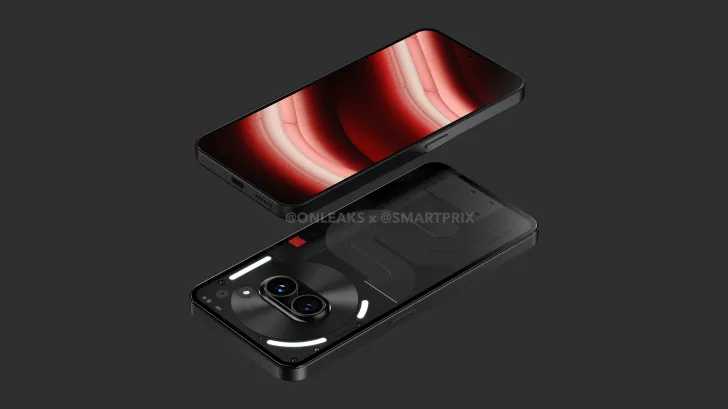
As per leaks and rumors, the Nothing Phone (2a) will feature a brand-new design. It will have a circular module housing horizontally positioned dual camera sensors. The camera island is surrounded by Glyph LED light strips. A leaked production validation unit of the device revealed that it will have 50MP dual rear cameras and a 6.7-inch AMOLED display bearing an FHD+ resolution. The OLED panel is expected to be supplied by China’s Visionox or BOE. The Nothing Phone (2a) will reportedly be powered by a MediaTek Dimensity 7200 processor. 

Nothing has already confirmed its presence at MWC 2024 with an event scheduled for February 27. We can expect the brand to announce the device at that time. 

Related:

OnePlus Buds 3 Key Details Teased Ahead Of Next Week’s Launch

The OnePlus Buds 3 are confirmed to arrive on January 4 alongside the OnePlus Ace 3 smartphone. Yesterday, we got an official look at the upcoming TWS earphones. Now, OnePlus has dropped more teasers of the Buds 3 revealing their features ahead of the launch event. The audio device is already up for pre-reservations in China. 

OnePlus Buds 3 features teased

The OnePlus Buds 3 is teased to offer flagship sound. It will be equipped with ultra-clear coaxial dual-unit drivers for delivering mellow bass and transparent treble. The TWS earphones will feature Golden Listening 2.0 technology. The upcoming offering is also said to deliver clear and emotional vocals. Another teaser shared by OnePlus touts the Buds 3 with comprehensive leadership in five dimensions. These include clarity, bass performance, and more. 

The teasers do not reveal any additional details of the OnePlus Buds 3. We can expect the brand to share more teasers leading up to the launch event. The upcoming TWS earphones feature a semi-in-ear design with a glossy stem and matte finish silicone ear tips. The charging and storage case retains the same squarish-shaped design as the previous OnePlus Buds. 

Rumors suggest that the OnePlus Buds 3 will come with 48dB active noise cancellation. The earphones will support Google Fast Pair as well as dual connectivity mode. The audio device will reportedly also feature 3D Spatial Sound, LHDC 5.0, and IP55 rating. The OnePlus Buds 3 are expected to offer a total 44 hours of battery life with the case. 

Related:

Reliance Jio is working on Bharat GPT to rival ChatGPT

India appears to have taken Sam Altman‘s remark about Indian startups’ ability to replicate ChatGPT seriously as Reliance Jio, under the leadership of Akash Ambani, is forging ahead in the tech industry with two major initiatives: Bharat GPT and a new TV operating system. The announcement was made during Techfest at the Indian Institute of Technology Bombay (IIT-B), showcasing Reliance Jio’s continuous innovation and collaboration with IIT-B since 2014.

Reliance Jio

Jio Will Also Launch a New OS for Televisions

Bharat GPT, developed as a potential competitor to ChatGPT, is a large-scale language model tailored to India’s diverse needs. Jio plans to implement artificial intelligence (AI) across its wide range of products and services. Ambani highlighted that AI would not be confined to a single area within Jio but would spread across the company’s entire spectrum of products and services. This approach indicates a significant shift towards AI-driven solutions, emphasizing Jio’s strategy to be a forerunner in AI application across multiple domains.

In addition to Bharat GPT, Jio is also developing its own television operating system. This move is seen as a strategic step to enter the competitive TV OS market, which is currently dominated by Android TV OS. The details about whether Jio’s TV OS will be entirely proprietary or based on AOSP (Android Open Source Project) remain unclear. However, this development signals Jio’s ambition to expand its technological footprint beyond telecommunications and into consumer electronics, particularly in the rapidly evolving smart TV segment.

Ambani’s confidence in India’s market potential and AI growth is evident. He envisions India as a primary hub for innovation over the next decade and anticipates the country’s economy reaching USD 6 trillion by 2030.

Furthermore, Jio is prioritizing the provision of customized 5G private networks and aims to offer a comprehensive 5G stack to enterprises of all sizes.

RELATED:

Vivo X100 series Market Operating Price leaks ahead of January 4 Indian launch

Vivo is set to introduce its latest X100 series smartphones in the Indian market on January 4, 2024, following their recent launch in China. Ahead of the official release, leaked information regarding the Market Operating Price (MOP) provides a glimpse into what consumers can expect in terms of pricing and storage options.

Vivo X100
Vivo X100

As per a report from TheTechOutlook, the Vivo X100 will have two storage variants: 12GB/256GB and 16GB/512GB. The MOP for these configurations is reported to be Rs. 63,999 and Rs. 69,999, respectively, offering users different choices based on their storage needs.

On the other hand, the Vivo X100 Pro is expected to be available in a single storage variant: 16GB/512GB. The leaked MOP for this model is Rs. 89,999, positioning it as a premium option.

It’s important to note that these MOP prices may not reflect the final Market Retail Price (MRP), which is likely to be slightly higher. In the meantime, check out the specs and features of these devices.

Vivo X100 and X100 Pro specs:

The Vivo X100 and X100 Pro both feature a stunning 6.78-inch curved-OLED LTPO display with a 1.5K resolution and a smooth 120Hz refresh rate. The display supports up to 3000 nits of brightness and utilizes 2160Hz PWM dimming for enhanced visuals. Under the hood, they are powered by the Dimensity 9300 chipset, complemented by LPDDR5x RAM and UFS 4.0 storage, ensuring efficient performance. Operating on Android 14 with OriginOS 4, these devices offer a seamless and customizable interface.

Vivo X100 Pro
Vivo X100 Pro

The front camera of both models is a 32-megapixel sensor, capturing clear and detailed selfies. The rear camera setups differentiate the X100 and X100 Pro. The X100 features a triple-camera arrangement, including a 50-megapixel Sony IMX920 VCS main camera with OIS, a 50-megapixel Samsung JN1 ultra-wide lens with a 150-degree FOV, and a 50-megapixel periscope telephoto with OIS. Meanwhile, the X100 Pro boasts a 50-megapixel 1-inch Sony IMX989 VCS main camera, a 50-megapixel Samsung JN1 ultra-wide lens with a 150-degree FOV, and a 64-megapixel customized OmniVision OV64B 100mm periscope telephoto with OIS. Both models are equipped with sizable batteries, with the X100 featuring a 5,000mAh battery and 120W charging, while the X100 Pro houses a 5,400mAh battery with 100W wired charging and 50W wireless charging capabilities.

RELATED:

(Source)

Xiaomi 14 Series, Watch S3 Announced In Limited Edition Color Variants To Match The SUV 7 EV

Today, Xiaomi unveiled its first electric car called the SUV 7. It comes in Aqua Blue and Verdant Green, and Mineral Grey color options. Alongside, the brand also announced limited edition customized color variants of the Xiaomi 14 flagship smartphones and the Xiaomi Watch S3. The new paintjobs of both devices match the Xiaomi SUV 7. 

Xiaomi 14, Watch S3 announced new limited edition colors

The Xiaomi 14 (review) and Xiaomi 14 Pro (review) were both announced in White, Black, and Green color options. To match the color variants of the Xiaomi SUV 7, both flagship smartphones now come in Gulf Blue and Olive Green shades. It’s worth noting that the Olive Green hue has a slightly different shade from the standard Green color option that was announced at the launch. The Xiaomi 14 duo features a Black colored high metal middle frame and a glass back panel. 

The limited edition color variants on the Xiaomi 14 and 14 Pro are only available with the top-end 16GB + 1TB RAM and storage configuration. These carry the same price tag as their standard edition i.e. CNY 4,999 and CNY 5,999 respectively. 

Meanwhile, the Xiaomi Watch S3 limited edition is only offered in the eSIM version. The Gulf Blue color option has a Cyan-colored bezel and a Black strap with a Cyan strip running through the middle. Meanwhile, the Olive Green variant has a strap of the same color and a Black bezel. The Xiaomi Watch S3 limited edition variant is costlier by CNY 100 compared to the standard eSIM version. It is priced at CNY 1,099. 

Related:

Xiaomi x Blinkit brings tech product deliveries in just a few minutes

Xiaomi is expanding its presence in the Indian market with a strategic partnership with Blinkit. The tech giant is collaborating Blinkit to bring gadget deliveries that just take a few minutes to reach the customers. So here’s everything you need to know.

Xiaomi x Blinkit: Tech Products mere minutes away

To recall, the Chinese tech giant announced that it has partnered with this service to deliver its Mi Air Purifier 3 model in minutes in select Indian cities. Now, it seems like it is expanding this partnership to include other products. For those unaware, Blinkit is a popular online platform in India that lets users buy everyday items like groceries and more with delivery times often times not taking longer than 10 minutes.

Xiaomi x Blinkit

In an official post on X, Xiaomi announced the partnership stating that the ultra-fast delivery experience will now include more gadgets. This includes 11 tech products from the company. These will range from power banks that range from 10,000mAh to 20,000mAh in capacity, data cables, Xiaomi Grooming Kit, 33W SonicCharge 2.0 fast charger with Cable, and a Xiaomi Smart Air Fryer.

The company already has listings for the Xiaomi Trimmer 2C, along with the Xiaomi 4 Lite Air Purifier and Mi Air Purifier 3 with True HEPA Filter. At the moment, it is unclear which cities will get the entire list of all Xiaomi products. But this announcement confirms that you can get your hands on these in just around 10 minutes (depending on where you live). You can head to the Blinkit app and check out if any of these products are already available in the your city.

RELATED:

China’s Xiaomi Unveils its First Electric Car – The Xiaomi SU7

In an event today, Xiaomi has finally taken the wraps off its highly anticipated first electric car, the SU7. Positioned as a “C-class high-performance ecological technology sedan,” the SU7 boasts a sleek design, impressive performance, and cutting-edge technology.

During the launch event, Xiaomi’s founder Lei Jun emphasized that the company aims to build a car that stands the test of time. They envision the SU7 looking good today and even ten and fifty years from now. 

So to achieve this, Xiaomi has assembled a top-notch design team consisting of industry experts from Mercedes-Benz and BMW. Additionally, Xiaomi also brought in Chris Bangle, a world-renowned car designer, as a consultant to add finesse to the SU7.

Xiaomi SU7 Design

No surprises then, Xiaomi’s first electric vehicle (EV) looks really good. The SU7 features a carefully crafted silhouette with a long wheelbase (3000mm) and short overhangs, reminiscent of a sporty coupe. Its water drop-shaped headlights and 2.48m halo-shaped taillights further add a touch of futuristic flair. 

There’s more to the car’s sleek exterior though. It features clever design choices like semi-hidden door handles and a stylish, pebble-shaped rearview mirror. And, according to Xiaomi, the SU7 is also incredibly aerodynamic, with a drag coefficient of only 0.195 Cd, the lowest among production vehicles.

Dimension-wise, the car stretches an impressive 4997mm long, 1440mm high, and 1963mm wide. Lei Jun compared its spaciousness to a BMW 5 Series, highlighting that it’s a full-size class car that sits above the popular Tesla Model 3. It has a sizeable 105-liter frunk and boot space with 517 liters.

The SU7 comes in two variants: the regular version and the Max version. The car is available in three colors: Aqua Blue, Verdant Green (which, ahem, I happen to be crushing on hard), and Mineral Gray, each representing a different facet of nature. 

What’s undeniable here is the effort Xiaomi has put into creating its first EV. I think the Xiaomi SU7 will leave a lasting impression.

Performance & Technology

The SU7 comes in two variants: the regular and the Max version. The Max boasts a dual-motor all-wheel-drive system that delivers a jaw-dropping 673 horsepower and a blistering 0-100 km/h acceleration time of just 2.78 seconds. The top speed is at an impressive 265km/h. The regular version, while still powerful, offers a single-motor rear-wheel drive setup with a 5.28-second 0-100 km/h time.

Xiaomi SU7 electric car speed

The Max version shines with its 800km CLTC range, thanks to its 101kWh CATL Kirin battery. Super fast charging is also on tap, with 220km of range gained in just 5 minutes and 510km in 15 minutes.

On stepping inside the SU7, you’ll be greeted with a spacious and luxurious cabin with a panoramic view thanks to the expansive 5.35㎡ glass area. A 16.1-inch touchscreen, a 56-inch HUD, and a 7.1-inch instrument cluster keep you informed and entertained. Likewise, the 25-speaker sound system with Dolby Atmos ensures immersive audio enjoyment.

Xiaomi SU7 electric car interior

Xiaomi hasn’t compromised on safety either. The SU7 boasts an armored cage-type steel-aluminum hybrid body, 7 airbags, and a quadruple braking safety mechanism. The car also comes with a comprehensive suite of active safety features, including automatic emergency braking, and has achieved 5-star safety ratings.

Xiaomi is also emphasizing SU7’s integration of technology and ecology. The car is equipped with the latest Xiaomi HyperOS system, powered by Qualcomm Snapdragon 8295 chip. As a result, you will be able to enjoy seamless software connectivity features like mirroring your phone or tablet. 

The SU7 is also great for those who use Xiaomi Home IoT devices. You can connect and control various smart home gadgets, such as cameras and robot vacuum cleaners, right from the car. While Xiaomi gadgets work best with it (unsurprisingly), Lei Jun says that even with Apple products, users will have a great experience with Xiaomi cars.

Another exciting feature is the car’s self-driving mode called Xiaomi Pilot which is powered by two Nvidia Orin-X chips with 508 TOPs computing power and 1 lidar, 3 radars, 11 HD cameras, and 12 ultrasonic sensors. You can use this mode for highway driving, self-parking, and car summoning features. 

Availability and Pricing

The Xiaomi SU7 is still undergoing testing and will officially launch in the first half of 2024. Price details haven’t been revealed yet as well. 

At the launch, Lei Jun also expressed ambitious goals for Xiaomi’s automotive venture, aiming to place the company among the top five car manufacturers within the next 15-20 years.

Related:

(Via)

Honor Magic 6 Pro Teased To Have Pill-Shaped Cutout And Quad-Curved Display

Honor is conducting a two-day event on January 10 and 11 where it is confirmed to launch the Magic 6 series smartphones and the Magic OS 8.0. The Magic 6 series is expected to comprise Standard, Pro, and Porsche Design edition variants. Plenty of information has leaked about the upcoming devices. Now, ahead of the launch, the Magic 6 Pro’s front look has been revealed by Honor on the microblogging platform Weibo. 

Honor Magic 6 Pro teased officially

The image of the Honor Magic 6 Pro shared by the brand on Weibo reveals a  pill-shaped punch-hole cutout display. The device has quad-curved edges and ultra-thin bezels. The power and volume rocker buttons are on the right side. It’s likely that the phone has a slimmer design. Apart from this, the teaser image does not reveal any additional details. The Honor Magic 6 series is already up for pre-reservations

An allegedly leaked live image of the Honor Magic 6 Pro revealed a circular protruding island on the back panel housing three camera sensors in a triangular formation. Rumors suggest that the device will come with a 1-inch 50MP OV50K sensor coupled with a persicope telephoto lens, and a ultra-wide-angle unit. The upcoming smartphone is expected to feature 3D face unlock and a 2K display resolution. It is also tipped to be IP68-certified. 

The Honor Magic 6 Pro will reportedly be powered by a Snapdragon 8 Gen 3 processor. It will also pack two-way satellite charging technology. A 3C certification revealed that the smartphone will support 100W wired charging. It may also feature 50W wireless charging support. 

Related:

Unnamed Vivo V2327 phone visits GeekBench with Snapdragon 4 Gen 2

Vivo is apparently working on a new smartphone model. An unnamed device was spotted on a popular benchmarking platform, which revealed some of its key specifications. So here are all the details.

Mysterious Vivo Phone surfaces on GeekBench

The upcoming Vivo smartphone in question was spotted on GeekBench carrying the model number V2327. Looking at the database, the device will be equipped with the Qualcomm Snapdragon 4 Gen 2 SoC. This processor is paired with 8GB of RAM and Android 14 OS out of the box. With this specs, the device managed to score 902 points in the single core test and 2168 points in the multi core test on GeekBench.

Vivo V2327

The mysterious Vivo smartphone is likely a mid range smartphone and the listing confirms support for 5G networking. While the official name of the device is still unclear, the upcoming Vivo smartphone may be a part of the Chinese brand’s Y series. For those unaware, the Y series is known to include a bunch of mid range models. As of right now, this is all the information we have regarding this handset.

The GeekBench listing hints that the launch of the Vivo V2327 phone isn’t too far off. So we can expect an official announcement to follow in the coming weeks. It is worth noting that this is still just speculation at the moment. So take this news with a pinch of salt and stick around for more as we will be providing updates when additional information is available regarding this matter.

RELATED:

US Court Of Appeals Issues Temporary Pause On Ban Of Apple Watch Series 9 And Ultra 2 Sales

If you have been keeping up with the news, you might be aware that Apple is banned from selling the Watch Series 9 and Watch Ultra 2 in the US. This is because of the patent infringement case slapped on the company by health tech brand Masimo. Now, the Cupertino-based tech giant has been granted a temporary pause on the ban of the sale of smartwatches by a US Court of Appeals. 

Apple Watch sales ban lifted for a temporary period

Apple Watch Series 9

The US Court of Appeals court has issued a pause on the temporary ban on the sale of Apple Watch Series 9 and the Watch Ultra 2. Apple had made an emergency filing to the US Court of Appeals for the Federal Circuit to halt the order issued by the US International Trade Commission. The ITC had declared that Apple violated patents related to pulse oximetery technology of medical tech company Masimo. This has been found on Apple Watch Series 6 models and later. However, only the latest-generation Watch Series 9 and Ultra 2 are affected due to the patent infringement dispute.

The interim stay of ITC’s decision will help Apple to navigate the legal process and find a solution. The company will start selling the Watch Series 9 and Watch Ultra 2 in the US starting today across both online and offline channels. The temporary lift on the ban on sales is expected to last until mid-January. This will also help Apple to get through the holiday season. 

Additionally, US Customs is also expected to take a decision on the sale and import ban of the Watch Series 9 and Ultra 2 models by January 12. Apple is working on overcoming the patent dispute with a software fix. 

Related: