Advertisement

Weibo user finds dead bug under brand new OnePlus 12 phone chassis

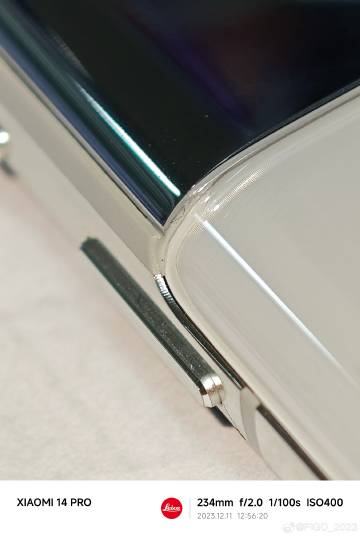
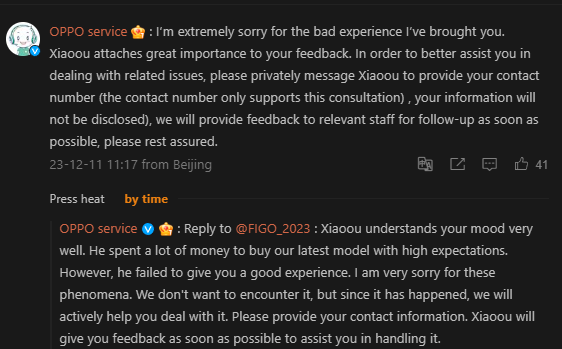
A Weibo user has reported finding a dead bug under the chassis of a new OnePlus 12 smartphone. OnePlus has acknowledged the issue and says it is working with the individual to resolve the issue. This is the first incident of such nature but the discovery of a foreign element inside the OnePlus 12 smartphone seems to be yet another dent in the much-hyped model.
OnePlus 12

The OnePlus 12 was passed as a premium offering with powerful hardware. It was also offered with an affordable price tag and many innovations from the previous OnePlus models. The inner parts of the OnePlus 12 indicate some shoddy construction and panel gaps.

Is the merger of OnePlus’ & OPPO’s R&D team responsible for the slump in quality of the flagship OnePlus 12?

The Weibo post included a photo of the unit with the dead insect sandwiched within the chassis. The panel gaps were also visible in the photo and even hair particles were present. Some of the glue holding the glass to the frame was seen in a poor state. It is unclear whether the issues highlighted in the post were one-off or widespread. It however puts in doubt the flagship credentials of the OnePlus 12.
OnePlus 12

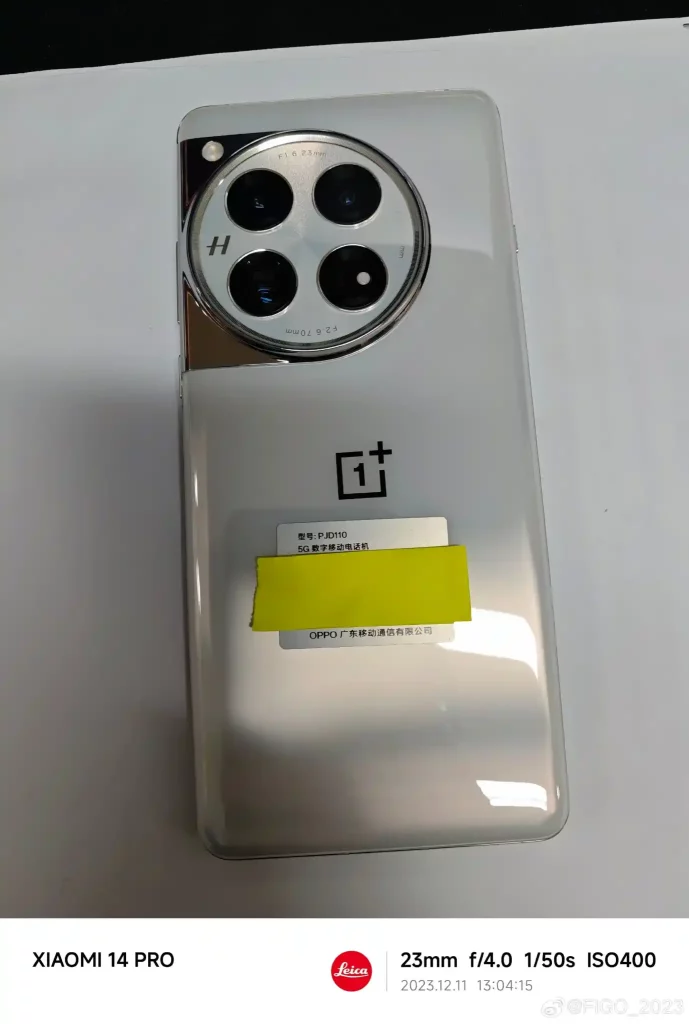
The Weibo issue has made several other OnePlus 12 users air their views on the smartphone. One of the major issues highlighted by users is the green line on the device. The management of the incident has the potential to affect the positive vibes expected from the launch in China. The global launch of the OnePlus 12 is slated for January 23, 2024.
OnePlus 12

To summarize, the OnePlus 12 smartphone was announced in China a week ago. It features a 6.8-inch 120Hz LTPO OLED panel and up to 24GB of RAM. There are three rear cameras in the smartphone including a 64MP module. It had been unveiled after weeks of speculations and was primed as a strong challenger of flagship offerings like Xiaomi 14 and the Galaxy S24 Ultra.

RELATED:
Oppo Find X7 Pro’s camera setup explained, Find X7 Ultra’s existence tipped

Oppo is rumored to announce the Find X7 series of flagship phones in January in China. Reports suggest that the X7 Pro will have the most powerful camera setup ever seen on a smartphone, as it is said to feature a new one-inch camera as well as a pair of periscope telephoto cameras. A new leak has explained the camera details of the Find X7 Pro.

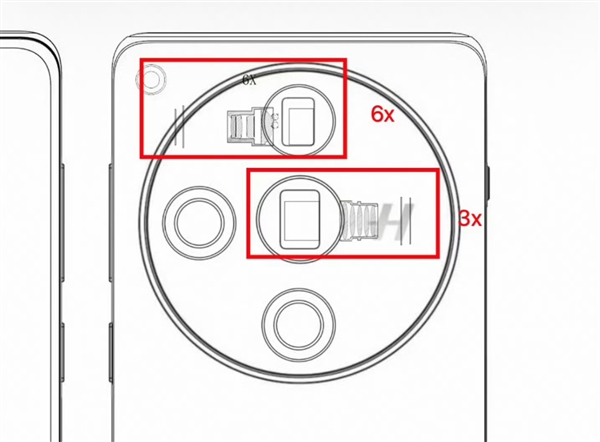
Oppo Find X7 Pro camera setup explained

Oppo Find X7 Pro camera setup explained

The above image showcases a schematic of the rear camera system of the Find X7 Pro. As can be seen, the device is equipped with four rear-facing cameras. The camera sensor placed on top is said to be the 50-megapixel Sony IMX858 periscope telephoto camera with a 1/2.51-inch sensor size and OIS support. It is expected to support up to 6x optical zoom.

The camera placed in the centre could be a 50-megapixel Sony IMX890 periscope telephoto camera with 3x optical zoom. It will be a 1/1.56-inch lens with OIS support.

The other two cameras of the Find X7 Pro are the primary lens and an ultra-wide camera. As per reports, it will be the world’s first smartphone to feature the 50-megapixel Sony LYT-900, a one-inch camera that is said to be a revised version of the existing Sony IMX989 one-inch camera. For ultra-wide shots, the device could be equipped with another 50-megapixel camera sensor, which could be the LYT-600. While leaks have not claimed anything about the front camera of the X7 Pro, it is likely to retain the 32-megapixel selfie snapper that was made available on the Find X6 Pro.

According to reports, the Find X7 will feature the Dimensity 9300 SoC, whereas the Pro model will have the Snapdragon 8 Gen 3 chipset onboard. In the above screenshot, Digital Chat Station can be seen claiming the existence of the Find X7 Ultra. It is unclear whether the Ultra variant is just a new name for the Pro model or an entirely different device.

RELATED:

(via)

iQOO Neo 9 Pro with Dimensity 9300 appears on Antutu before launch

Later this month (December), iQOO will announce the iQOO Neo 9 series in China. Ahead of the expected launch, the device’s AnTuTu listing has appeared to showcase its performance.

iQOO Neo 9 Pro Antutu listing

iQOO Neo 9 Pro Antutu
iQOO Neo 9 Pro Antutu listing

As seen in the above screenshot, the iQOO Neo 9 Pro has achieved a score of 2,334,911 points in Antutu benchmarks. This score is a total of CPU, GPU, memory, and UX tests, in which the device scored 524,383, 984,162, 483,234, and 343,132 points, respectively. For those who don’t know, the Neo 9 Pro is expected to feature the Dimensity 9300 chipset.

It appears that the iQOO Neo 9 Pro will seemingly offer better performance than the Dimensity 9300-powered Vivo X100 series, which debuted in November. The reason behind this is that the Vivo X100 has achieved a score of around 224K+ on AnTuTu benchmarks. Hence, it seems that the Dimensity 9300 may offer optimized performance on the Neo 9 Pro.

As per other reports, the Neo 9 Pro will have a 6.78-inch OLED panel that offers a 1.5K resolution of 2800 x 1260 pixels, a 144Hz refresh rate, 2160Hz PWM dimming, and an in-screen fingerprint sensor. On the front, it will have a 16-megapixel selfie camera, and its back panel is said to have a 50-megapixel IMX920 main camera and a 50-megapixel Samsung JN1 ultra-wide lens.

The device may ship with up to 24 GB of LPDDR5x RAM, up to 1 TB of storage, and a 5,160mAh battery with 120W fast charging support. It will run on Android 14 with a layer of OriginOS 4 on top.

RELATED:

Tesla Announces an Optional Extender for Cybertruck’s Range, Bumping it to 500 Miles

Remember when Tesla dropped the Cybertruck recently, people were criticizing the reduced 300-mile range amongst other things. Now, Tesla appears to try to make amends via its announcement of an optional range extender battery pack for the Cybertruck, aiming to push its range to the promised 500 miles. This development is a response to the evolving needs of electric vehicle (EV) users and the company’s commitment to innovation.

A lot of people experienced displeasure towards the Cybertruck’s range when it arrived

The range extender, an add-on to the already robust Cybertruck, is Tesla’s answer to a promise made back in 2019. Initially, many believed that the Cybertruck would hit the 500-mile mark with a single battery. However, Tesla is now introducing this range extender as a separate feature, potentially making up for earlier expectations.

Tesla Cybertruck

The rationale behind this move is twofold. Firstly, Tesla acknowledges that the average daily commute is well under the 340 miles offered by the Cybertruck’s main battery. Hence, the additional range is positioned as a luxury rather than a necessity. Secondly, and perhaps more crucially, Tesla is looking at the bigger picture regarding resource allocation. In a world where battery materials are scarce, Tesla aims to maximize the production of EVs rather than equipping individual vehicles with larger, often underutilized, batteries.

This strategy could reflect (emphasis on could) a deeper understanding of user habits and environmental responsibility. The optional range extender is not just about hitting a target range; it’s about offering flexibility to those who need it while conserving valuable resources for broader EV production. Tesla seems to be navigating the fine line between fulfilling specific customer desires and adhering to a sustainable manufacturing philosophy. Only time will tell if it works out for them.

RELATED:
(Via)

Pokémon GO’s Winter Holiday Event Unveils New Pokémon and Festive Fun

As December’s chill sets in, Pokémon GO gears up for its festive Winter Holiday Part 1 event. This year’s celebration is particularly thrilling, introducing the adorable Cetoddle and its evolution, Cetitan, to the Pokémon world. The event, running from December 18 to December 25, promises to sprinkle a little extra magic into the holiday season.

The Winter event is expected to bring old players back to the game

Pokémon GO isn’t just a game; it’s a global phenomenon that blends the virtual with the real, encouraging players to explore their surroundings in search of Pokémon. Launched back in the summer of 2016, it quickly became more than just a game—it’s a community, a way to connect, and a reason to get outside and explore.

Pokemon

This year’s event aligns with Pokémon GO’s current Season 13: Timeless Travels, focusing on Hisuian Pokémon. Trainers can eagerly anticipate more than just Cetoddle and Cetitan; Hisuian Samurott and Wrydeer also make appearances. And while the much-anticipated Pokémon GO Tour featuring Sinnoh Pokémon is on the horizon, the Winter Holiday Part 1 event provides the perfect interim excitement.

What sets this event apart is not just the new Pokémon but the festive spirit infused into the game. Pikachu and Raichu don holiday outfits, bringing cheer to every encounter. Ice-themed Pokémon like Alolan Sandshrew, Seel, and Galarian Darumaka will be more common in the wild, along with festive versions of Eevee, Stantler, and Spheal. This festive line-up extends to raids as well, with themed Pokémon appearing in one-star and three-star raids.

The event is more than just about catching Pokémon; it’s about choice and rewards. Timed Research allows trainers to choose their bonuses, be it double XP or Stardust. Field Research tasks offer encounters with winter-themed Pokémon and provide Mega Energy for Mega Abomasnow and Mega Glalie. Moreover, two paid tickets offer additional rewards, enhancing the holiday experience.

The increase in storage capacity for items and Pokémon, announced this December, talks volumes about the game’s continuous growth. The final Community Day of the year, featuring Pokémon from past events, is a nod to the game’s rich history and dedicated fan base. As trainers around the globe join in the festivities, Pokémon GO continues to prove why it remains a beloved part of many people’s lives.

RELATED:

(Via)

TikTok’s Remarkable Journey to a $10 Billion Milestone

Remember TikTok? An app that gained popularity during one of the most testing times in the world, an app that has now become a staple word, TikTok has made a stunning entry into the exclusive $10 billion club, standing out as the only non-game app to achieve this feat. This milestone marks a significant moment for TikTok, showcasing its unique position in the global app market.

TikTok has constantly faced backlash from the US as well

Unlike other popular apps in this revenue range, TikTok doesn’t rely on gaming. Instead, it’s known for its short, catchy videos that have gone viral worldwide. This achievement puts TikTok in a league with big names like Candy Crush and Clash of Clans, but it’s important to note how different TikTok’s path has been. Where most high-earning apps rely on game-related purchases, the app has carved out its success through a different model.

Tiktok

TikTok’s revenue comes mainly from its TikTok Coins, used to buy virtual gifts for content creators. This approach, combined with advertising and a budding e-commerce venture, shows TikTok’s innovative ways to engage and monetize its massive user base.

Interestingly, TikTok isn’t subscription-based, a common revenue model for other top apps like YouTube or Disney+. This makes TikTok’s achievement even more noteworthy, as it’s built its financial success on a unique model in the app world.

Despite its success, TikTok hasn’t had a smooth ride everywhere. For instance, its push into online shopping faced a setback in Indonesia, where the government banned social media-based e-commerce to protect local businesses. But TikTok isn’t backing down. It’s now eyeing a comeback in Indonesia’s e-commerce space, having invested heavily in a local company.

Looking from a distance, TikTok’s journey to this revenue milestone is a testament to the app’s immense popularity and its ability to innovate in monetization strategies. Its success story is especially significant given the challenges it’s faced, like regulatory scrutiny in the US and a shift in global digital trends. As TikTok navigates these challenges and continues to grow, it’s clear that its impact on the digital landscape is far from over.

RELATED:

(Via)

OnePlus Ace 3’s 32MP telephoto camera reportedly axed, claims leaker

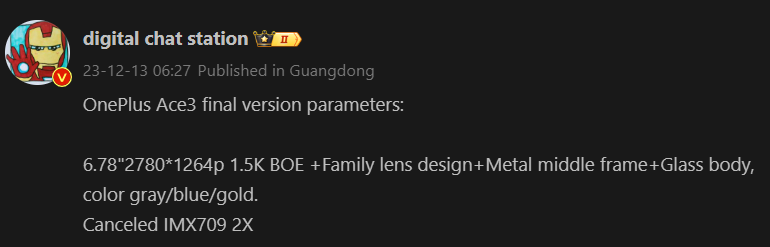
OnePlus is expected to announce the OnePlus Ace 3, a sub-flagship phone, later this month in China. Rumors surrounding it have claimed that the device will feature a telephoto camera. However, a new leak, courtesy of tipster Digital Chat Station, reveals that OnePlus has removed the telephoto camera from the device.

OnePlus Ace 3 camera setup and other specs (rumored)

According to the leaker, the OnePlus Ace 3’s revised camera setup comprises a 50-megapixel main camera and an 8-megapixel camera, probably for ultra-wide shots. The new leak asserts that a 2-megapixel camera, which appears to be a macro camera, has taken the place of the previous reports’ claims that it has a 32-megapixel telephoto camera with 2x optical zoom. For selfies, it will have a 16-megapixel front camera.

In addition, the tipster reiterated details about the design and other specs of the OnePlus Ace 3 as well. In terms of appearance, the device will sport a curved-edge OLED screen with a centrally positioned punch-hole, a metal middle frame, and a glass back. It will be available in three shades, such as gray, gold, and blue.

The Ace 3 is expected to feature a 6.78-inch BOE X1 8T LTPO display that offers a 1.5K resolution (2780 x 1264 pixels), 2160Hz PWM dimming, and probably a 120Hz refresh rate. It appears to be the same display panel that is available on the Realme GT 5 Pro.

The Ace 3 will feature the Snapdragon 8 Gen 2 chipset and a 5,500mAh battery that supports 100W charging. Other reports have claimed that it will have up to 16 GB of RAM and up to 1 TB of storage. As reports have claimed, the Ace 3 is likely to get rebranded as the OnePlus 12R in the global market in January.

RELATED:

Xiaomi Accuses Huawei Executive of Lying and Misrepresenting Facts

When it comes to intellectual property rights, theft is a much more complex issue than the physical theft of an object. Therefore, courts have often become a battlefield where seemingly simple cases can turn into years-long struggles. Nevertheless, many companies find themselves frequently in the position of either defendant or plaintiff in court.

Currently, a similar development is unfolding between Xiaomi and Huawei. The two companies are engaged in a legal battle, appearing before a judge in a copyright infringement case, with Xiaomi accusing a Huawei executive of misrepresenting facts in their smartphone patent dispute. Here are the details….

Huawei Takes Legal Action Against Xiaomi Over Foldable Smartphone Patents

Huawei recently filed a lawsuit against Xiaomi, claiming that the patents related to foldable smartphone hinges had been violated. However, Xiaomi denied the allegations, instead accusing the plaintiff’s representative of misrepresenting facts and politely making false accusations. The patent in question, known as the “dragon bone” technology in foldable phones, is claimed by the defendant to have been independently developed and patented.

Xiaomi vs Huawei

In its defense, Xiaomi emphasized significant differences between the two patents, stating that there are substantial distinctions. They even went on to say, “We urge Yu to follow ‘basic scientific and rigorous standards’ and stop unfairly criticizing competitors or misleading the public in the future.” This technology made its debut in the Xiaomi Mix Fold 3 model, with its hinge mechanism particularly drawing attention. It seems that this innovation caught Huawei’s attention.

Unfortunately, the outcome of the patent dispute between the two companies remains uncertain for now. While it’s challenging to determine the truth and who is right in such cases, as mentioned earlier, patent lawsuits are complex processes. Especially in situations like these, they can drag on for years and lead to significant legal expenses. Hence, parties involved often prefer to reach an agreement in such cases. This could also be the case for Xiaomi and Huawei, but without following developments, it’s impossible to say anything definitive.

RELATED:

(via)

Samsung Galaxy Fit 3’s Battery Life That Outshines Even Xiaomi Band 8 Has Been Revealed

Wearable technologies are gaining popularity day by day. Nowadays, many people stroll around with a smartwatch or wristband on their arms. While initially this might be attributed to “technology addiction,” the reality is much different. Users employ these wearable technologies for health monitoring features such as sleep tracking, heart rate monitoring, stress analysis, and blood pressure measurement. For instance, we even recently shared the story of a man whose life was saved thanks to a Huawei smartwatch.

Frequent encounters with similar stories contribute to the growing interest in these products. Of course, where there’s demand, there’s supply. In today’s world, numerous companies like Huawei, Apple, and Samsung are actively working on wearable technologies. In fact, Samsung is gearing up to introduce its new wristband, the Galaxy Fit 3, in the near future. Recent leaks even suggest that the wristband could rival the Xiaomi Band 8, particularly in terms of battery life. Here are the details…

Samsung Galaxy Fit 3 Specs Leak Reveals Insane Battery Life!

In fact, we already know a lot about the Galaxy Fit 3, expected to be unveiled alongside the S24 series at Samsung’s Unpacked event in January. According to the information available, the wristband will feature a 1.61-inch OLED screen with a density of 302 PPI. The device will come with an aluminum casing and an IP68 certification. However, the real highlight of the eagerly anticipated wristband is its battery life.

Samsung Galaxy Fit 3

According to leaks, the Samsung Galaxy Fit 3 is expected to go approximately 21 days without needing a recharge. This represents a significant improvement of 7 days compared to the previous model. If you’ve used Galaxy smartwatches in the past, you may be aware that Samsung has excelled in many aspects but has struggled with battery life. Nevertheless, it seems the company is taking significant steps to address this issue. Unfortunately, we don’t yet know the mAh value of the battery.

Considering the device’s maximum weight of 21.39 grams, it’s safe to assume that the capacity may not be excessively high. Despite these improvements, Samsung falls short in terms of pricing. The Galaxy Fit 3 is expected to be sold for $80 in the European market, while its main competitor, the Xiaomi Band, is available for under $50 in most countries. Even with the introduction of a new model, the expected price range remains comparable. In light of these circumstances, how the South Korean manufacturer plans to outpace its major rival remains a subject of curiosity.

RELATED:

(via)

Raytheon launches PSYNER P1 Pro projector with 1,000 ANSI lumens brightness and 1080p resolution

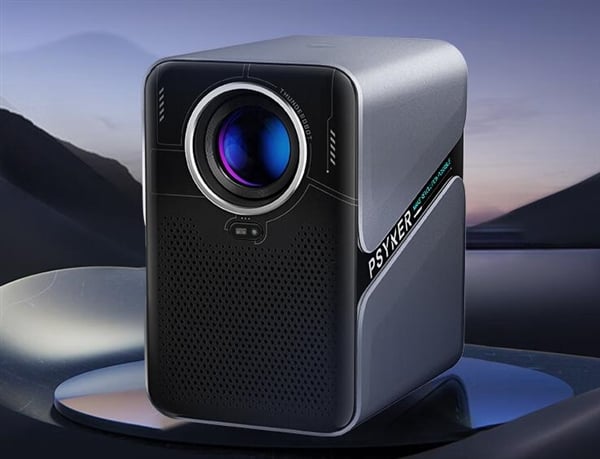
The Raytheon PSYNER P1 Pro projector has been released on pre-sale in China. The new projector comes with a 1080p native resolution and 1,000 ANSI lumens brightness. It adopts a new optical machine technology that delivers higher brightness by up to 65%. The projector is designed for use indoors but its expansive brightness could also support outdoor use.

Raytheon PSYNER P1 Pro projector

The Ratheon PSYNER P1 Pro projector comes with a more efficient heat dissipation system and reduced noise operation. It offers substantial improvement from its predecessor across several parameters. Apart from brightness (65% improvement), the noise is reduced by 10%, light transmittance increased by 15% and heat dissipation efficiency increased by 58%.

Raytheon PSYNER P1 Pro projector

The projector is compatible with 4K decoding and can throw images between 40 inches and 120 inches. It uses the PSYNER AI visual super-sensing system to simulate natural colors and also features high-precision CMOS sensors. It also offers AI Adaptive algorithms, TOF sensing modules, and 6-axis multi-dimensional gyroscopes. The projector is capable of wireless screen casting via computers, mobile phones, and other compatible devices. The projector also has a customized speaker system with high-fidelity sound adjustment. It can also be connected to external devices via Bluetooth, thus functioning as a Bluetooth speaker.

Raytheon PSYNER P1 Pro projector

Pricing

The Raytheon PSYNER P1 Projector comes with autofocus and DC/ HDMI 2.1/ USB 2.0/ 3.5mm interfaces. It is offered at an introductory price of 1,499 yuan ($209). On the whole, the Raytheon PSYNER P1 Pro projector offers a refreshing display and significant improvements from previous models. The projector is available in at least a grey colorway and is available from JD.com. There are no indications yet whether or when the projector will be introduced in other markets. More optics about the projector are expected from Raytheon shortly.

RELATED:

Schenker VIA 14 Pro UltraBook with AMD Ryzen 7 7840HS and a 3K display launched

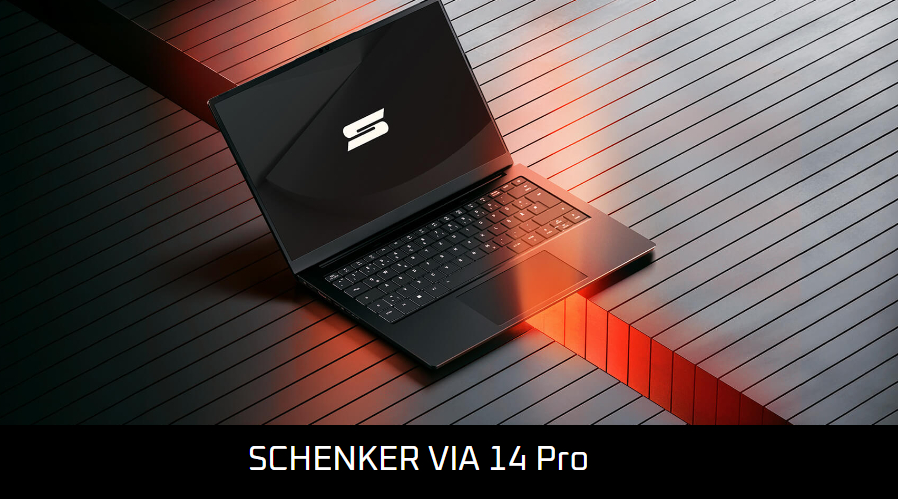
Schenker has launched the VIA 14 Pro ultra-flat notebook powered by the AMD Ryzen 7 7840HS processor. The VIA 14 Pro offers 32GB DDR5-6400 RAM and dual M.2. SSD slots. The notebook has a 14-inch LTPS-IPS screen with a resolution of 2880 x 1800 pixels. The model is as sleek as it can get and also comes with an affordable price tag.

Schenker VIA 14 Pro UltraBook

Features

The VIA 14 Pro ultrabook omits the pair of AMD Phoenix processors and Radeon 780M iGPU. Schenker is taking a different route from the traditional approach by OEMs with the release of the VIA 14 Pro. The model is powered by the Ryzen 7 7840HS processor and a 3K 120Hz display.

The Schenker 14 Pro has a thin and light aluminum chassis that further accentuates its exquisite looks. It weighs 1.39kg and has an 18.3mm profile. It integrates an efficient cooling system that includes three heat pipes and two 45mm cooling fans. The cooling system allows the processor to run at its full speed of 54 W TDP and achieve a score of 15,848 in Cinebench R23. The base configuration of the model features the 32GB DDR5-6400 RAM and a Radeon 780M iGPU. The model comes with a variable refresh rate between 60Hz and 120Hz and a maximum brightness of 300 nits. The ultra-thin notebook has a 95% sRGB color gamut coverage and a 180-degree hinge. The model is also compatible with Freesync.

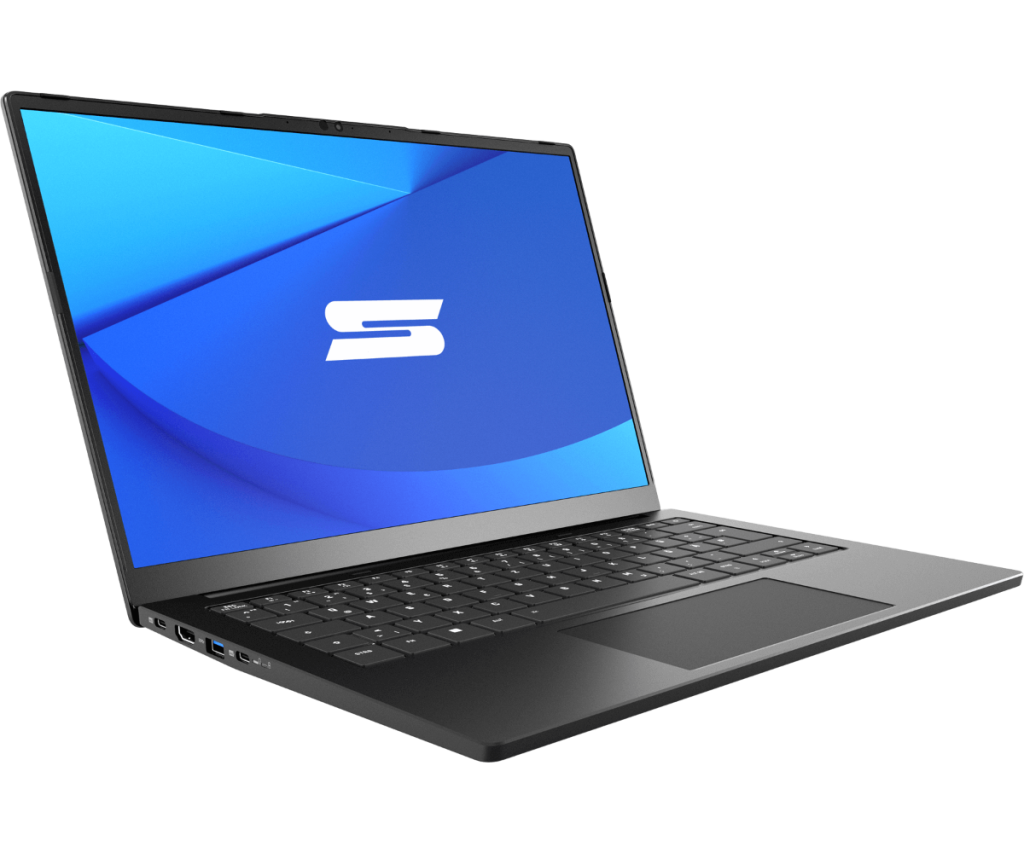
Schenker VIA 14 Pro UltraBook

There are two USB-C 3.2 Gen 2 and two USB-A 3.2 Gen 1 ports on the VIA 14 Pro. It also has HDMI 2.0 video out and a combo audio jack. Wireless connectivity options for the notebook are WiFi 6 and Bluetooth 5.2. The laptop has a 60Wh battery that can sustain the device for up to 11 hours and is recharged via a USB-C connection.

Pricing & Availability

The Schenker VIA 14 Pro is now available on pre-order in the EU at €1,099 ($1,186) for the 32GB RAM model. More details about the VIA 14 Pro are available from the Schenker website.

RELATED:

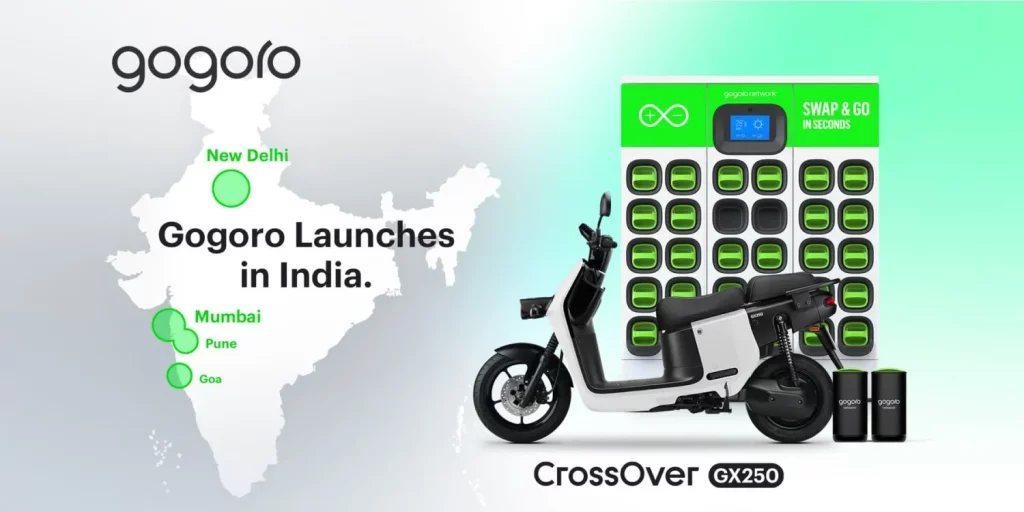
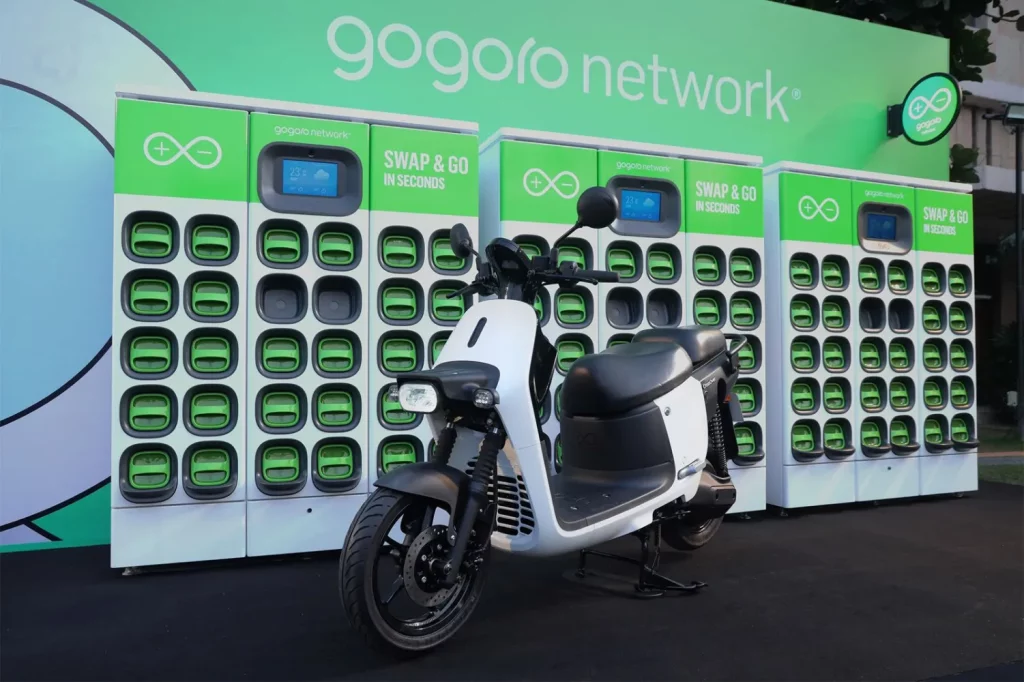
Gogoro CrossOver GX250 All-terrain e-scooter & Battery-swapping network unveiled in India

Taiwanese electric bike manufacturer Gogoro is known for its wide network of battery-swapping stations. The company has even expanded its network beyond its home market of Taiwan where it currently has a rider base of 600,000 with over 400,000 battery swaps daily. The swapping stations were recently launched in the Philippines. The company has now launched its battery-swapping network in India alongside two other new e-scooters. The main highlight is the CrossOver GX250 e-scooter.

Gogoro CrossOver GX250

Features

The Gogoro CrossOver GX250 is produced domestically in India and it represents a strategic leap for the company, designed to cater specifically to the diverse and dynamic landscape of India. It is worth mentioning that the GX250 is a variant of the recently revealed CrossOver SUV-like scooter which is touted as an all-terrain e-scooter. The launch reflects Gogoro’s keen understanding of the unique needs and preferences of Indian riders.

The scooter integrates features that have been carefully curated based on feedback from Gogoro’s pilot riders in India, ensuring a product that resonates with the local audience. Its all-terrain frame, a pioneering development optimized for various road surfaces and qualities not only enhances the scooter’s strength and stability but also provides unparalleled ground clearance, addressing a key consideration for Indian riders navigating diverse terrains.

The Gogoro CrossOver GX250 is said to be manufactured in Maharashtra, a move that keeps up with the ‘Make in India’ initiative. This approach not only supports the Indian economy but also helps create job opportunities within the region.

Gogoro

Gogoro’s strategic move with the GX250 extends beyond environmental considerations; it seeks to democratize access to electric scooters by offering a lower entry price. By doing so, Gogoro aims to make sustainable and eco-friendly transportation more accessible to a broader segment of the Indian population.

Pricing & Availability

Apart from the GX250, Gogoro also announced two other models – the CrossOver 50 and CrossOver S models. However, the other two models won’t be available until 2024. The CrossOver GX250 will be available right away to B2B customers in New Delhi and Goa. The company plans to expand its availability to Mumbai and Pune in the first half of 2024.

Related:

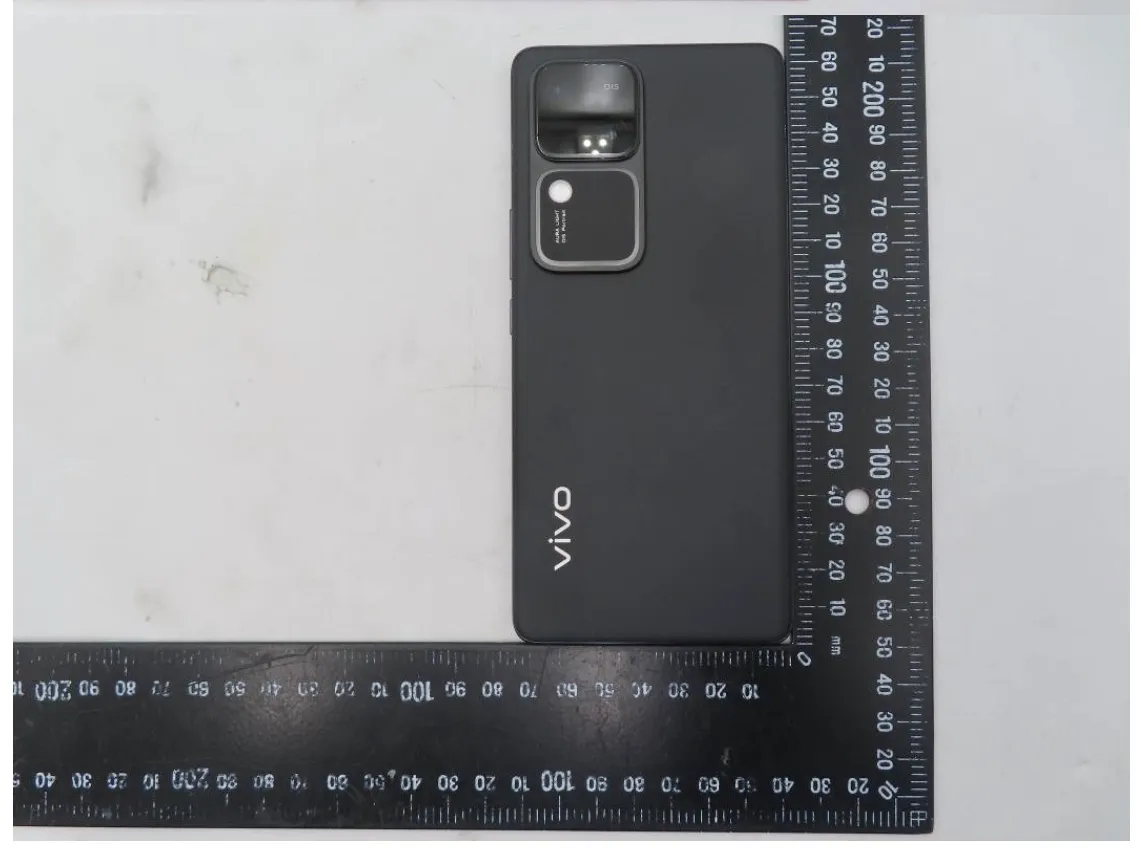
Vivo V30 gets NCC certified revealing design & key specs of the smartphone

Vivo is preparing to launch the S18 series premium mid-range smartphone in China. The launch is scheduled for December 14, and the brand is expected to debut three models: Vivo S18, S18e, and S18 Pro (specs roundup). As usual, we expect these devices to be rebranded for the global market. Currently, it is expected that the Vivo V30 and the V30 Lite might be rebrands of the Vivo S18 and S18e smartphones.

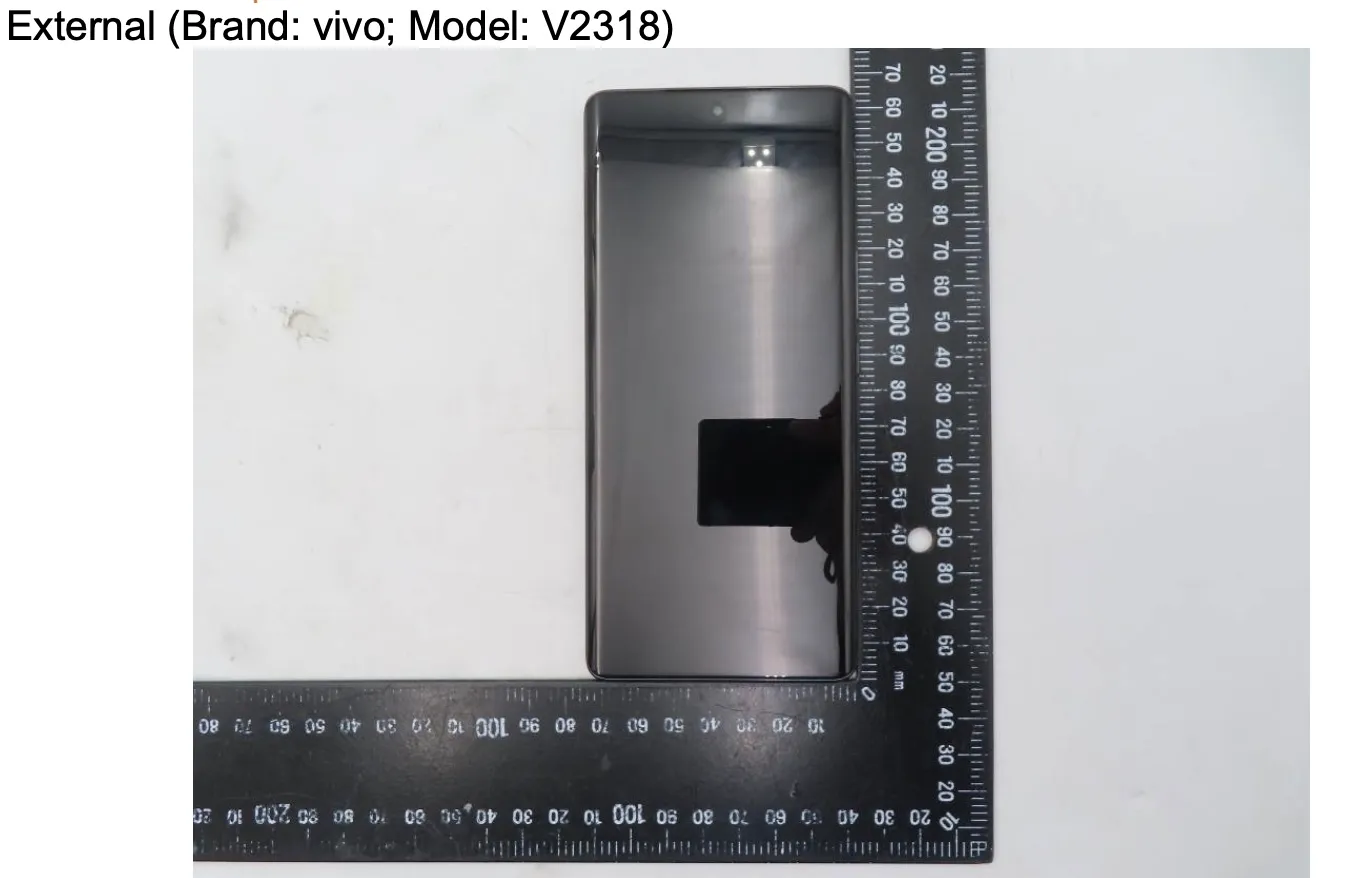
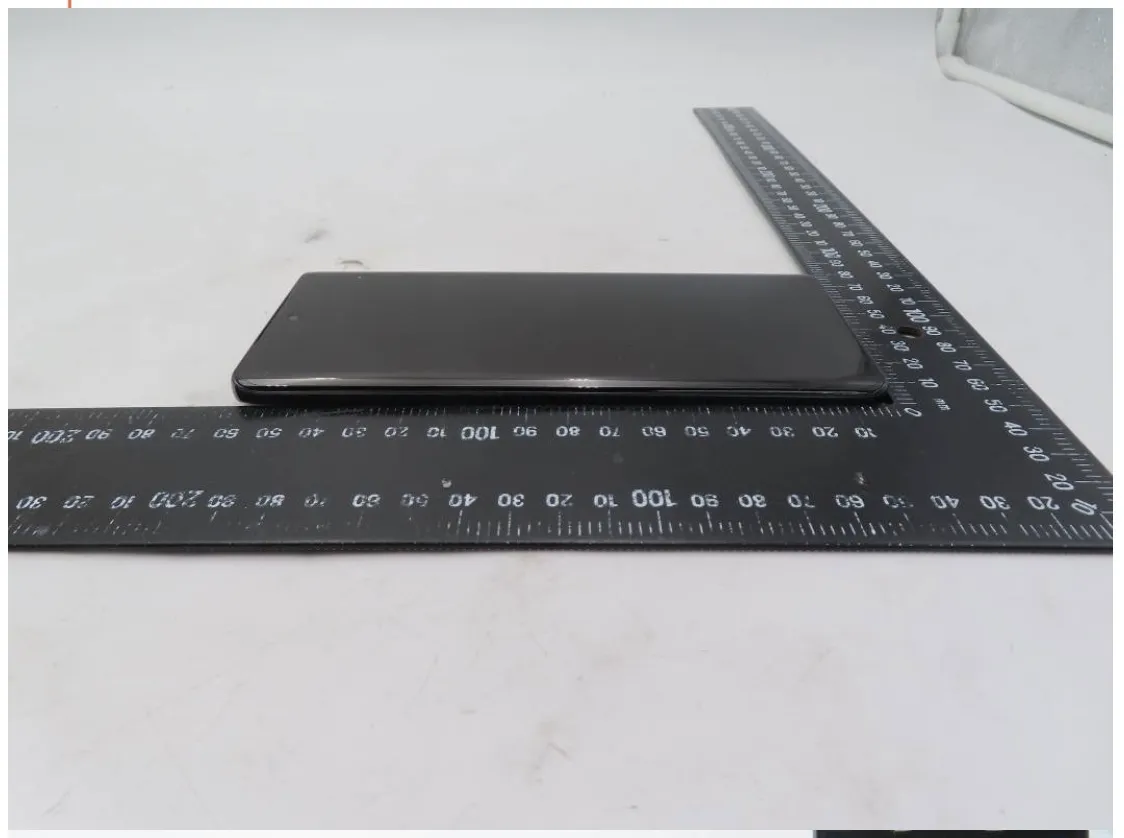
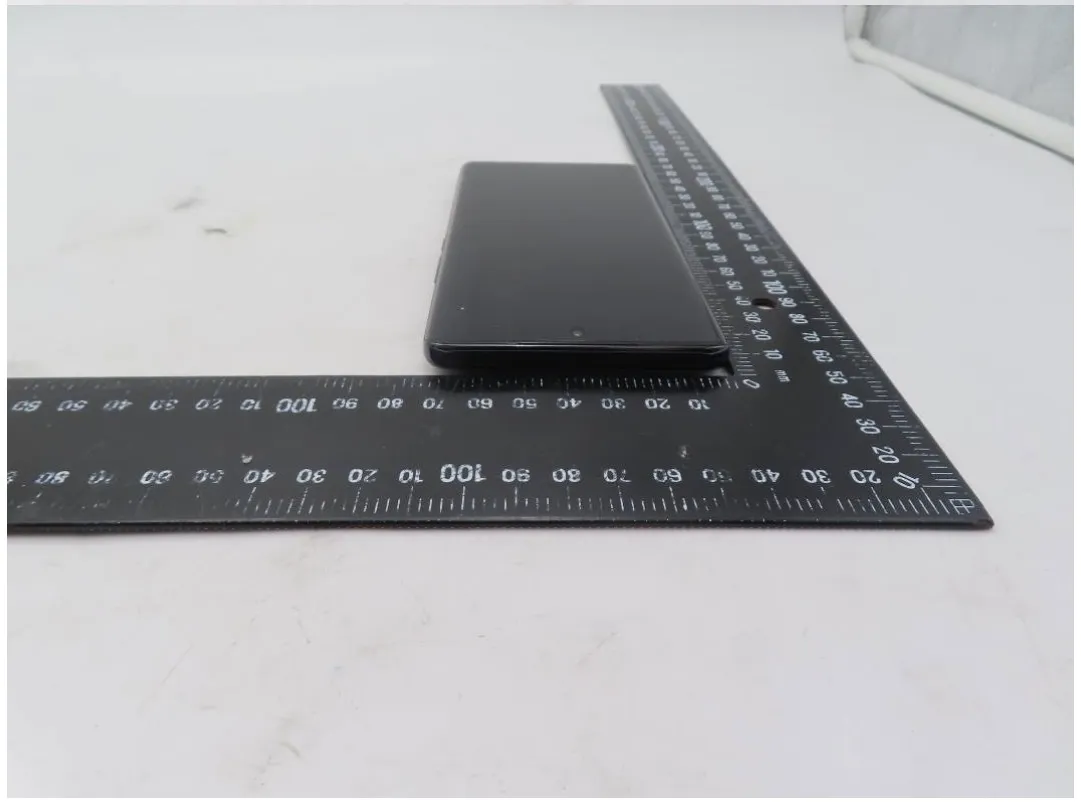
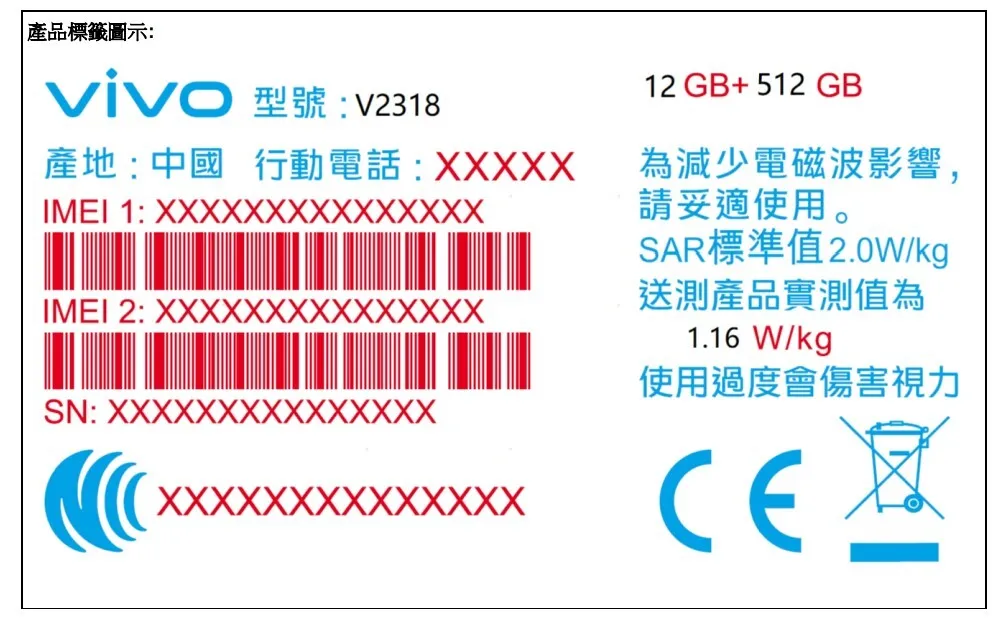
Now, a new NCC listing of the Vivo V30 discovered by folks over at 91mobiles has spilled the brand in terms of design and key specifications. Labeled with the model number V2318, the listing reveals that the smartphone will come in a sleek Black color option, in addition to other color options. The back panel features a large rectangular module housing dual square camera setups and an LED flash. The edges of the device are curved, to give users a better and more comfortable grip on the device.

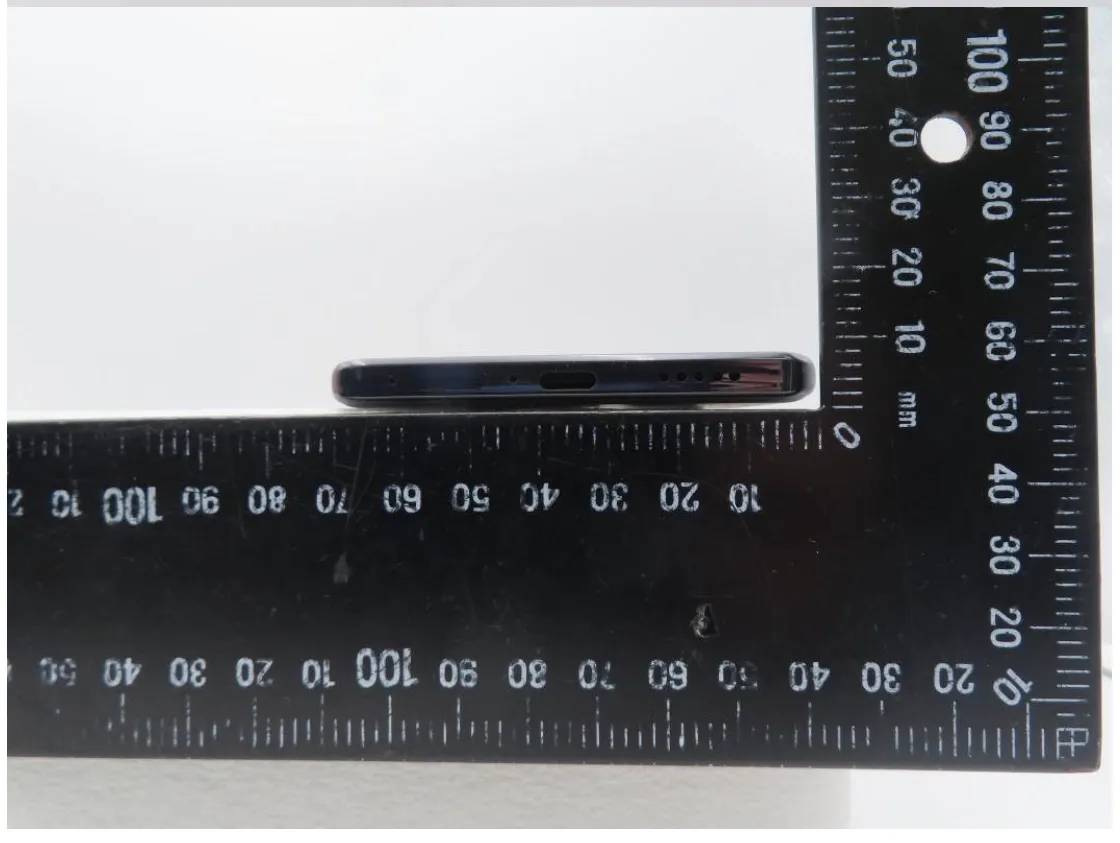
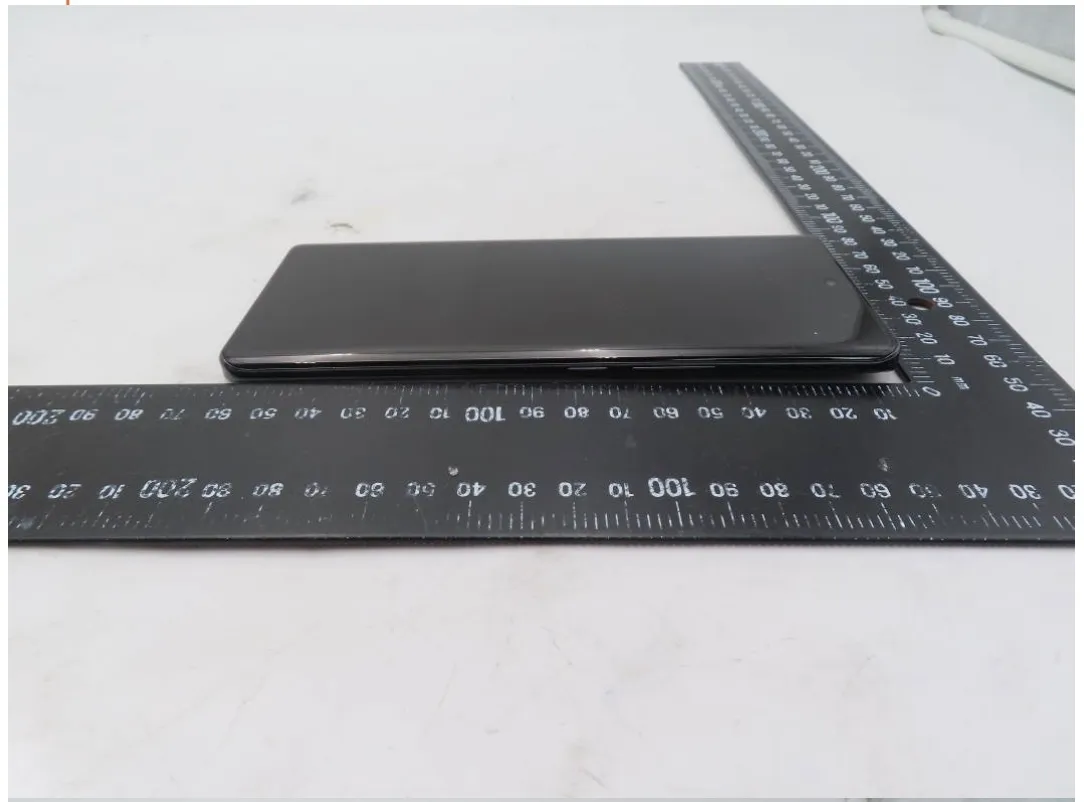
Up front, the device has a curved display with a centered punch-hole cutout housing the selfie camera. The right edge holds the volume rocker and power button, while the bottom features a USB Type-C port, speaker grille, SIM tray section, and primary microphone.

The phone will house a 4,895mAh battery, likely to be marketed as 5,000mAh. It will support 80W fast charging. Moving on, the listing also reveals that the V30 will have 12GB RAM and 512GB storage.

Based on a previous Geekbench Vulkan benchmark listing, it has been revealed that the device will be equipped with the recently introduced Snapdragon 7 Gen 3 processor. While the exact launch date remains undisclosed, it is anticipated to occur significantly earlier than its predecessor. The global debut of the Vivo V29 series occurred in July, but the devices didn’t become available in stores until September. With the V30 series, a launch in early 2024 is anticipated.

RELATED:

Fashion Forward Audio: Huawei Launches FreeClip Open-Ear Buds at €199

Huawei continues to expand its product family. After making waves in the smartphone market for some time with the Mate 60 series, the company today introduced new products at an event in Dubai. Among these devices, the most eye-catching is undoubtedly the open-ear buds called FreeClip, resembling a stylish earring. Here is Huawei FreeClip, ensuring you look stylish everywhere from sports to meetings in your office, making it a favorite for fashion enthusiasts.

Huawei Introduces FreeClip Open-Ear Buds

One of the most notable features of Huawei FreeClip is its open-ear design, which enables users to remain aware of their surroundings while enjoying wireless audio. However, while this design is ideal for outdoor sports and multitasking between online calls and in-person collaborations, it can be disappointing when it comes to sound isolation and noise cancellation.

Huawei FreeClip

The device’s C-bridge Design brings innovation to the brand-new wearing experience, comfortably reducing strain on the user’s ear cartilage. It boasts a long battery life, offering 8 hours of music playback at a time or up to 36 hours with the charging case. Additionally, it is IP54 rated for water, dust, and sweat resistance. As for the product’s availability, according to Huawei’s announcement, the FreeClip will be available in the UK and Europe from late December.

Huawei FreeClip

The price is set at RRP £179.99 | €199. Customers who pre-order or order from select countries in the Huawei Store between December 12, 2023, and January 29, 2024, will receive a free HUAWEI Band 8.

RELATED:

Pixel 6 Pro overheats due to a 10 min phone call, causing burnt marks over the heat sink

Overheating of the original Google Tensor caused the thermal paste over it to burn on a Pixel 6 Pro. The reason for this heating was only a 10-minute phone call, the user reported on Reddit. He has shared a photo of the internals of the device which shows burnt marks over the SoC giving an idea of the amount of heat it generates. Not to mention, the generated heat is beyond the capacity of the heat sink over it to keep it below the safe limit.

Google will design the chips completely in-house and use a more efficient TSMC 3nm process in the Tensor G5 in 2025

The thermal paste over the SoC of the Pixel 6 Pro is burnt

The root of the problem seems to be the lower power efficiency. What it means is that for a particular task, the chip consumes relatively more power for a given operation and dissipates more heat as well. Tensor chips are fabricated in Samsung‘s foundry, which is considered to be the main reason for the inefficient nature of Tensor and Samsung’s Exynos chips as well. Although Samsung’s fabrication process has improved in terms of the power efficiency of the end product, the original first Tensor chip is from three years back and things were even more inefficient back then.

Speaking of the improvements in thermal efficiency, some reports still show that the third version of the Google Tensor still throttles during tests more when compared to the competition. The Mountainview-based giant has continued to focus on AI-based tasks for Tensor over the years and dialed back the performance of Tensor G3 to avoid overheating issues.

Considering that Google’s fully home-grown Tensor G5 chip won’t be available until 2025, next year’s Google Pixel 9 series phones will likely still suffer from power efficiency issues to some extent – either a competitive performance with a temperature higher than usual, or a dialed down performance to avoid overheating – neither of which seems to be an ideal solution.

The Tensor G5 chip will not only be completely designed by Google but also use the more efficient TSMC 3nm process, which will theoretically bring a notable improvement to the Google Tensor G5.

For now, if your Pixel phone overheats, stop the operation that causes your phone to heat up and turn it off if possible until it cools down.

Related:

(Via)

Huawei MatePad Pro 13.2 With Flagship Specifications Introduced In The Global Markets

Huawei held an event in Dubai today where it launched new devices. The brand has introduced its flagship MatePad Pro 13.2 tablet in the global markets. It was released in China in September of this year. The device retains the same top-of-the-line specifications as its Chinese counterpart. The Huawei MatePad Pro 13.2 competes against the likes of the iPad Pro, and Samsung Galaxy Tab S9 Ultra in the market. 

Huawei MatePad Pro 13.2 specifications and features

Huawei MatePad Pro 13.2

As the name suggests, the Huawei MatePad Pro 13.2 has a large 13.2-inch screen with a notch on its right bezel. It is the world’s first tablet with a flexible OLED panel. The display offers a resolution of 2,880 x 1,920 pixels along with 1,000 nits peak brightness, a 120Hz refresh rate, and 94 percent screen-to-body ratio. It is also compatible with M-pen stylus with 10,000 levels of pressure and 0ms low latency. 

The MatePad Pro 13.2 is touted to be the thinnest and lightest tablet considering its large size. It has a circular camera module on the back panel housing 13MP and 8MP sensors. There is a 16MP front-facing snapper along with a ToF unit. On the audio front, the tablet is equipped with six dual-channel speakers with support for Spatial Audio. 

Under the hood, the Huawei MatePad Pro 13.2 is powered by a Kirin 9000s processor. It packs up to 12GB RAM and up to 512GB storage. The device is equipped with a 52000mm2 VC liquid cooling for heat dissipation. The tablet is backed by a 10,100mAh battery unit with support for 88W fast charging. Software-wise, the MatePad Pro 13.2 runs on HarmonyOS 4 out of the box. It packs various features like floating windows, WPS office, and more.

The Huawei MatePad Pro 13.2 starts at €999 for the 12GB + 256GB model whereas the 12GB + 512GB variant costs €1,199. The Smart Magnetic Keyboard and the M-Pencil are priced at €199 and €99 respectively. The tablet will go up for pre-orders on January 8 with shipments commencing from January 22 in Europe.

Related:

Huawei explores automotive partnerships with Audi and Mercedes, amidst US sanctions

In a strategic move to offset the challenges posed by US-imposed sanctions, Huawei, the Chinese tech giant, is actively pursuing partnerships with reputable car manufacturers to bolster its presence in the electric vehicle (EV) and smart car software sectors. Closed-door meetings were recently held with Audi and Mercedes, the two largest German automotive companies, as Huawei aims to explore potential joint ventures or partnerships for its EV endeavors.

Sources reveal that Huawei is contemplating the spin-off of its Intelligent Automotive Solution (IAS) business unit, emphasizing its ambition to become a leading supplier of software and components for smart EVs. The estimated value of the IAS business unit ranges between $28 billion and $35 billion.

Mercedes, one of the automotive titans approached by Huawei, reportedly offered to acquire a 3% to 5% stake in Huawei’s smart car software and components firm. However, the German automaker exhibited limited interest, emphasizing its priority to retain control over software and maintain its premium brand positioning.

Audi’s level of interest in Huawei’s proposal remains undetermined, but reports suggest potential collaboration on developing autonomous driving technologies for Audi vehicles in the Chinese market starting in 2025. This aligns with the broader trend of global automakers seeking partnerships with Chinese companies to cater to the tech-savvy Chinese consumer base.

The move comes as Huawei needs to work on securing its position as a primary supplier of intelligent solutions for European, US, and Japanese companies due to the impact of US sanctions. Richard Yu, overseeing Huawei’s smart car business, acknowledges the challenges and emphasizes the company’s focus on forming partnerships with smaller electric car makers and established automakers.

While Mercedes and Audi declined to comment on the speculation surrounding the discussions, Huawei remained silent on the matter as well. Industry experts posit that Huawei’s outreach to global automakers reflects a broader industry trend of collaboration to introduce advanced features in the competitive Chinese automotive market.

As Huawei navigates the challenges posed by US sanctions, its strategy involves partnerships with established automakers and collaborations with smaller players like Series Group. Notably, Changan Automobile plans to invest in Huawei’s smart car business, potentially acquiring up to 40%, showcasing a diversified approach to secure investments and partnerships in the automotive sector.

Related:

(via)

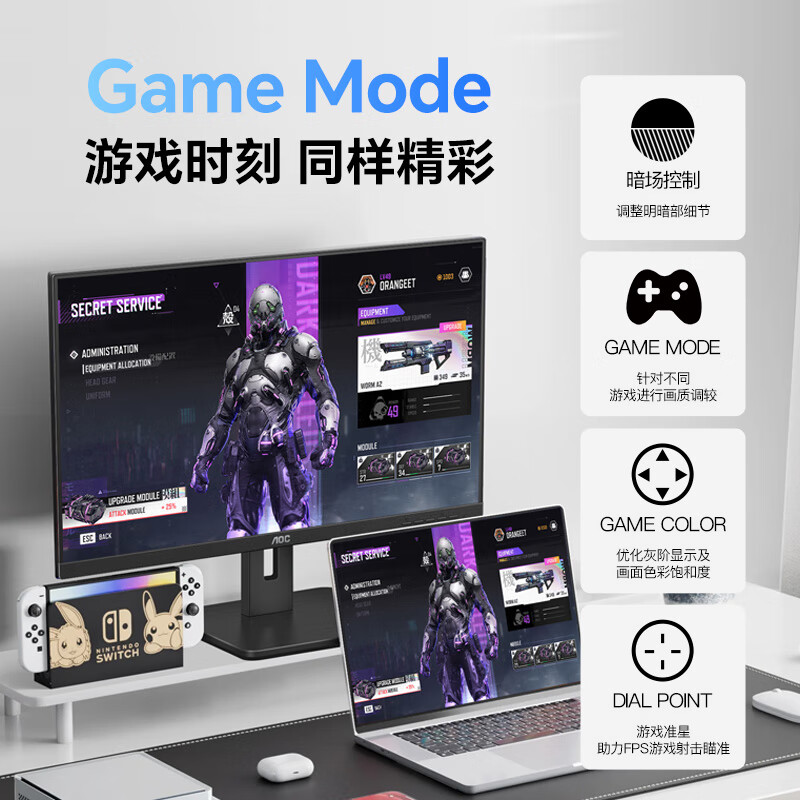
AOC Q27E12C monitor with 27″ 2K 100Hz IPS panel launched for 999 Yuan ($139)

AOC, a renowned brand in the monitor market, has recently launched its new Q27E12C monitor, an addition to its high-quality display line-up. This monitor, released in China comes with an affordable pricing at 999 yuan ($139), making it an attractive choice for consumers seeking quality at a reasonable cost.

AOC Q27E12C Monitor

AOC Q27E12C Monitor Key Specifications:

The Q27E12C boasts a 27-inch IPS display with 2K resolution (2560×1440), which strikes a balance between clarity and performance, suitable for both high-definition media consumption and detailed work requirements. The monitor’s high refresh rate of 100Hz ensures smooth visuals.

In terms of design, the monitor features a slim 1.5mm bezel and 5.9mm narrow screen borders, contributing to its sleek and modern look. It is also compatible with VESA wall mounting, providing flexibility in setup. The display supports various modes, including a specialized Gaming Mode and Scene Mode, catering to different user needs and preferences.

The monitor provides a static contrast ratio of 1300:1 and an impressive dynamic contrast ratio of 20 million:1, promising deep blacks, bright whites, and a broad spectrum of colors for an enhanced visual experience. It also supports HDR 10, 99% sRGB, ensuring true-to-life color reproduction, making it suitable for tasks demanding color accuracy and vibrancy.

Additionally, the monitor offers extensive connectivity options, including 1 HDMI 2.0 port, 1 DP 1.4 port, 2 USB-A 2.0 ports, and 1 USB-C port. The USB-C port supports up to 65W reverse charging, allowing users to conveniently charge their devices directly from the monitor. Additionally, the Q27E12C is equipped with tearing-prevention technology for a smoother visual experience, which is particularly important in fast-paced games.

Earlier this month, AOC also introduced two gaming monitors, the AOC AGON AG275QZW and AG275QZE, both featuring a 27-inch display, a 260Hz refresh rate, and 1440p resolution. Additionally, they unveiled the AOC U27N3RB professional monitor in China, which offers 4K output and an affordable price.

RELATED:

Leaked List Reveals Xiaomi Devices Set for HyperOS Update

Winds of change are blowing in the Xiaomi ecosystem. The company recently made a shocking decision to replace its long-used Android-based interface, MIUI, with a new version called HyperOS. The company is putting in considerable effort to make the update available to as many people as possible. So, when will the HyperOS update, offering better animations, lower RAM consumption, and improved energy efficiency, arrive for which devices? A recent leak has revealed the first 11 phones that will receive the update. Here are the details…

Xiaomi HyperOS Global Update List Leaks, First 11 Smartphones Revealed

As you know, many Chinese manufacturers produce separate phones for the Chinese and global markets. These models have the same or very similar technical specifications, but they differ in terms of regional ROMs, leading to variations in updates. For instance, the HyperOS update is already available for some models in China but has not been released for devices in the global market. However, the company aims to change this in the first quarter of 2024. Here is the list of the first global devices set to receive the HyperOS update:

Xiaomi hyperos update

Certainly, this is not the first list of updates emerging for HyperOS. Another recent leak had brought up different models. Although these two lists show similarities, they differentiate with devices like POCO F5 Pro and Xiaomi Pad 6. It’s currently quite challenging to determine which list is accurate. If your phone is not on either list, there’s no need to worry. Xiaomi is a consistent company when it comes to Android updates, and the lightweight nature of HyperOS will make things easier for the company. Our only task is to wait while the company’s engineers do their job.

RELATED:

(via)

Hogwarts Legacy Tops 2023’s Trending Game Searches Amidst Controversy

As we bid farewell to 2023, a year rich in gaming experiences, one title stands out: “Hogwarts Legacy.” This game, which graced platforms like PlayStation 5, Xbox Series X/S, and PC since February, has captured the hearts and minds of players globally. The reason? It’s more than just the magic of the Harry Potter universe; it’s a tale of how controversy and curiosity can drive a game to the pinnacle of public interest.

The game was praised for detailing, but controversy kept surrounding the launch

“Hogwarts Legacy” didn’t just make it to the top of the gaming charts; it soared to the number one spot in Google‘s top trending searches in the U.S. for games. This feat isn’t merely about impressive gameplay or stunning graphics. It’s a story of how a game can become a focal point of discussions, extending beyond the boundaries of the gaming world.

Hogwarts Legacy

The allure of “Hogwarts Legacy” isn’t solely its connection to the beloved Harry Potter series. The game also found itself intertwined with the controversial statements of J.K. Rowling about the trans community. Despite the publisher Warner Bros. Interactive clarifying that Rowling wasn’t directly involved in the game’s creation, the connection to her world was undeniable, and it sparked widespread online searches and debates.

This surge in interest wasn’t just confined to the U.S. The game topped the global trending searches as well, highlighting its universal appeal. It’s intriguing to see how a game can become a cultural phenomenon, intertwining with societal issues and conversations. “Hogwarts Legacy” did just that, becoming more than a game – it became a discussion point, a source of curiosity, and for many, a way to revisit a cherished fictional world.

The game’s journey reflects a broader trend in the gaming industry, where games are increasingly becoming platforms for larger discussions and reflections on societal issues. As we reflect on the top games of 2023, “Hogwarts Legacy” stands as a testament to this evolving role of video games in our culture. It’s not just about what happens inside the game; it’s about the conversations it sparks in the real world.

RELATED:

(Via)