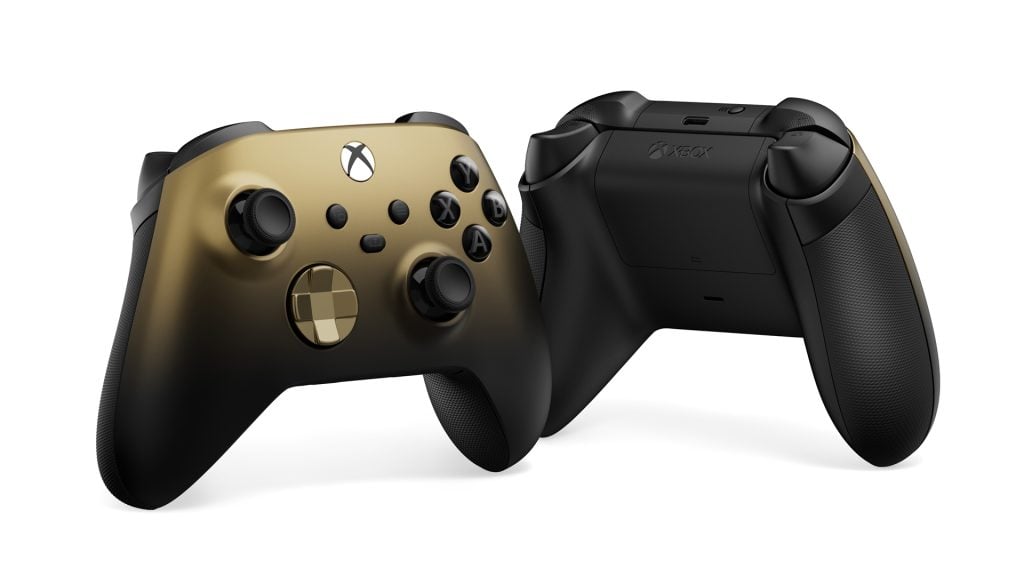
Microsoft continues its 2023 streak of dazzling gamers with the latest addition to its Xbox controller lineup: the Gold Shadow Special Edition. Set to captivate with its elegant blend of charcoal black and gold accents, this new controller does not boast any unique specifications but certainly promises a premium aesthetic experience.
Gold Shadow Special Edition Xbox Controller: A New Luxurious Design
The controller has a stylish design with a gold-to-black metallic gradient on the top case and carbon black on the rest. It features a comfortable metallic gold hybrid D-Pad and rubberized side grips for better support during gaming. The controller is all about stylish design, and it’s aimed at gamers who want a luxurious touch in their gaming gear.
It has a battery life of up to 40 hours and includes a 3.5mm headphone jack. Customization for button remapping and personal profiles is accessible through the Xbox accessories app. It offers compatibility with a wide range of devices, including Windows 10/11, Xbox Series X|S, Xbox One, Android, iOS, iPadOS, and macOS, via Bluetooth or Xbox Wireless connections.
The Gold Shadow Special Edition controller is set to be released on October 17th, with the Hong Kong version coming on October 31st. It is priced at $69.99, and 499 Hong Kong dollars and up for pre-order at Microsoft Store. However, its availability in China is uncertain as there has been no official announcement regarding its release in the country.
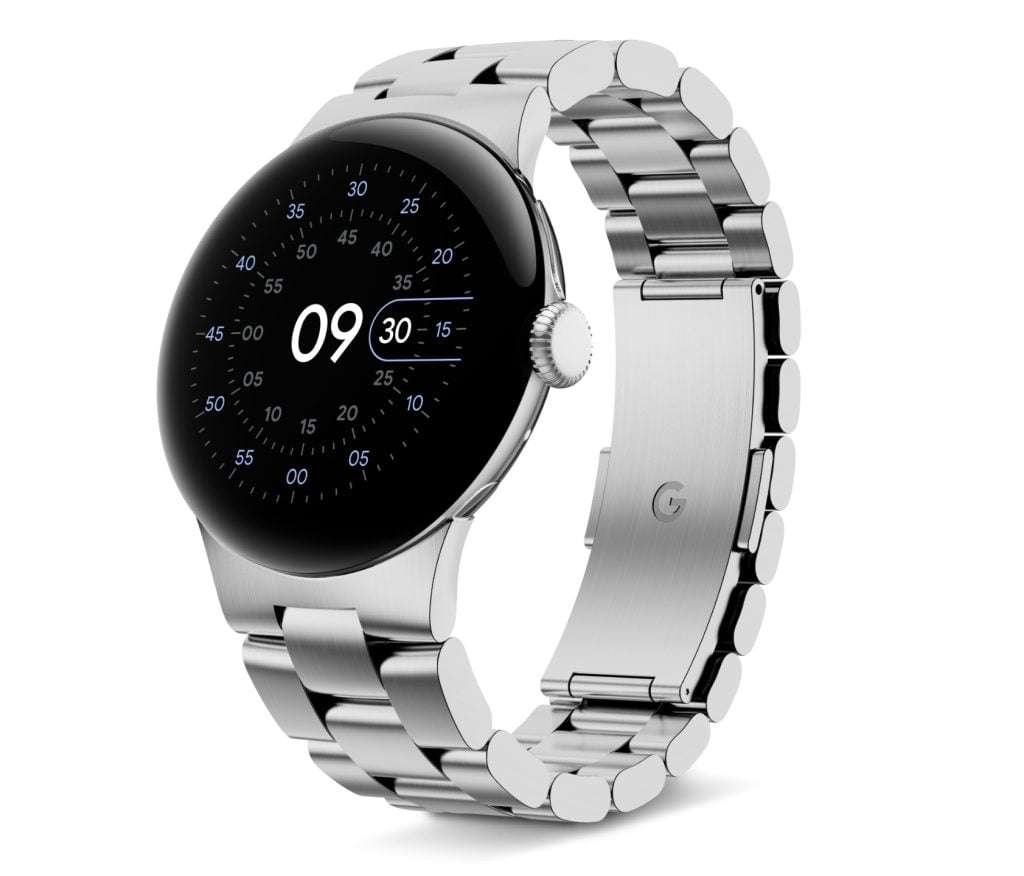
The Google Pixel Watch 2 will launch on October 4 but key details of the smartwatch are already available. A tipster leaked the full product page of the Pixel Watch 2. Google will launch the Pixel Watch 2 alongside the Pixel 8 and Pixel 8 Pro. The leaked specs all but confirmed earlier speculations surrounding the smartwatch.
Tipster Kamila Wojciechowska published what is possibly the full Google Store page of the Pixel Watch 2. Recently, the tipster also shared images of the Google Pixel 8 and Pixel 8 Pro. The leaked Pixel 8 Pro details however revealed major hardware changes. The Google Store page confirms that the Pixel Watch 2 sports an aluminum build. This is a departure from the original Pixel Watch stainless steel build. Stainless steel is more expensive but aluminum is a lightweight material compared to it.
The Google Pixel Watch 2 will be fully charged in 72 minutes and this is unchanged from its predecessors. The watch also retains a 24-hour battery life although it is unclear what chipset was deployed in the Pixel Watch 2. It had been previously rumored that The Snapdragon W5 Plus Gen 1 chip will be used in the Pixel Watch 2. The leaked Google Store page did not specify the device’s chipset. The smartwatch can automatically track workouts and it comes with an improved health monitoring system. There are also a bouquet of safety features in the new Pixel Watch 2. Expectedly, the full specs and pricing information for the Pixel Watch 2 will be known after its October 4 unveiling.
Google has announced the Chromebook Plus program to deliver higher-end Chromebooks with more powerful hardware. The Chromebook Plus laptops will also offer access to AI features. Laptops manufactured under the Chromebook Plus moniker will double the performance of the top-selling Chromebooks produced between July and December 2022.
Google provided a list of minimum hardware requirements for the Chromebook Plus designation including Intel Core i3 12th Gen (Alder Lake) or AMD Ryzen 3 7000 series or above CPU, 8GB+ of RAM, and at least 128GB of storage. The Chromebook Plus laptops will also feature a 1080p webcam with temporal noise reduction and at least a Full HD display. The goal of developing the Chromebook Plus laptops, is according to Google, to meet the demands of an increasingly connected workforce.
The Chromebook Plus lineup will also come with access to premium Google Meet features and AI tools. The AI tools come in handy when doing webcasts via the FHD webcams. They will also get access to the Magic Eraser feature in Google Photos and three months of the web version of Adobe Photoshop and Express. There is also the LumaFusion online video editing software (25% discounted price of $22.49) and a free trial of Google’s Duet AI. The Chromebook Plus laptops will be available from October 8. The laptops will come from popular manufacturers like HP, Asus, Lenovo, and Acer. The starting price for the Chromebook Plus laptops is $399.
Samsung continues to expand its range of products and services. By doing so, the company appeals to a broad user base and ensures its resilience even if things go awry in a particular sector. For instance, the South Korean tech giant recently introduced its new 49-inch G93SC curved OLED 240Hz monitor. However, that’s not the end of the company’s future plans. Reports suggest that Samsung will be launching its game streaming service out of beta this week. Here are the details…
Samsung to Launch Cloud Gaming Service for Galaxy Phones This Week
If you want to play modern AAA games, the solution is pretty straightforward. Simply prepare your budget and purchase a console or PC, and you’ll be able to play your desired game at high settings and enjoy your hobby. However, this can be quite expensive, and it might be hard for you to afford it. So, what’s the alternative? The answer is cloud gaming.
Cloud gaming, or game streaming, allows users to play video games hosted on remote servers, streaming them directly to devices like TVs, phones, or computers. This means you don’t have to download or install games on your device, and you can play them even if your device isn’t equipped to run them on its own.
Although it’s still in its early stages, this method is gradually gaining popularity. Services like Nvidia’s GeForce Now, Amazon Luna and Microsoft’s XCloud are increasingly being used by users on a tight budget. For instance, during the pandemic, even though I didn’t have any gaming equipment, I had the opportunity to play high-quality graphic games like Witcher 3 on my 2010-era laptop using GeForce Now.
Now, Samsung is reportedly planning to officially introduce cloud gaming within the Samsung Game Launcher on Galaxy phones at its developer conference on October 5th. Although the performance of smartphones improves with almost every new model, mobile games today still often require relatively “simple” and low graphics. Yet, players want to see games of a quality close to PC/console games on their $1000 devices.
Due to the current business model and revenue strategies, it’s not practical to develop modern games solely for a few top-tier devices. This is where Samsung’s cloud gaming service steps in. The company is trying to bridge the gap by offering a way to play these modern games, making their product more appealing. Samsung has been experimenting with cloud gaming on its Galaxy phones for a while.
They are also reportedly in discussions with major game publishers to introduce their games to the platform. Moreover, Samsung has stated that they will charge a smaller service fee than other cloud gaming providers, potentially making it more enticing for game developers.
Unfortunately, we don’t have much information about the upcoming service beyond what we’ve just mentioned. However, a word of caution for all Galaxy phone users: entering the cloud gaming market will not be easy for Samsung. For instance, the most recent company that ventured into this field with high enthusiasm was Google. They announced a service named Stadia in 2019 and launched it in 2020. Regrettably, due to continuous losses, they shut down Stadia in 2022. Sadly, a similar fate might await Samsung.
TikTok has started testing a $4.99 monthly subscription plan for users in the US. The subscription service is unique in that it is ad-free. Some new code within the app shows that TikTok is already testing the new service.
Currently, the new TikTok subscription service is pegged at $4.99 per month. This could change in other markets when the service extends beyond the US. There are no details yet on the full product launch of the TikTok subscription service. TikTok has continued to revolutionize how apps share videos with the short-format videos it entered the market with. In the wake of the TikTok success, many apps like Facebook and YouTube have incorporated short format videos into their ecosystem. The app also provides a bouquet of video editing tools for content creators. Ad-free subscription services are quite common in the industry and TikTok is entering the fray.
Apart from the string of code seen from the app, there had been no official TikTok announcement on the matter. The US testing of the TikTok subscription service could expand to a full service for multiple markets. Also, since it is in the testing phase, final pricing may differ from the current price and may also be market-determined.
TikTok has seen massive growth in ad revenue over the years. It has several revenue-sharing mechanisms for creators, as well as a direct Live Subscription feature. The ad-free user experience can be very exciting but TikTok has to balance the optics to remain competitive in its niche area of short format videos.
Samsung is one of the world’s leading chip manufacturers, and its 4nm process is one of the most advanced in the industry. Now, the company has announced that it will manufacture chips for AI chip startup Tenstorrent. This is a significant development for Tenstorrent, as it gives the company access to Samsung’s advanced manufacturing capabilities. Here are the details….
Samsung and Tenstorrent Join Forces to Revolutionize AI Chip Market
Tenstorrent is a Canadian startup that designs AI chips. The company’s chips are designed to be highly efficient for training and inference tasks. Tenstorrent is targeting a number of markets with its chips, including data centers, automotive, and healthcare.
The chips that Samsung will manufacture for Tenstorrent are called Quasar chips. Quasar chips are chiplets, which means that they are designed to be combined with other chiplets to create a larger chip. This approach allows Tenstorrent to customize its chips for specific applications.
Samsung’s investment in Tenstorrent and its decision to manufacture Quasar chips is a sign that Samsung is taking the AI chip market seriously. Samsung is also looking to expand its foundry business, and this deal with Tenstorrent could help Samsung to achieve that goal.
The deal between Samsung and the company is also significant because it could help to challenge the dominance of Nvidia in the AI chip market. Nvidia is currently the leading provider of AI chips, but Tenstorrent’s Quasar chips could offer a more efficient and cost-effective alternative.
It is still early days for the partnership between Samsung and Tenstorrent, but it has the potential to be a major force in the AI chip market. By combining Samsung’s manufacturing capabilities with Tenstorrent’s chip design expertise, the two companies could create a new generation of AI chips that are more powerful and efficient than anything that is currently available.
Many users are reporting burns from Apple‘s latest iPhone 15 Pro, suggesting a possible severe overheating problem. Before its official release, some reviewers had already raised concerns about the phone’s A17 Pro chip heating up too much.
Illustration by: Soumyakanti Ray
Too Hot to Handle? iPhone 15 Pro Users Share Overheating Issues
Many people on social media are sharing pictures of burns on their thighs and fingers, saying they happened because their iPhone 15 overheated. They believe these incidents are real and stress the importance of experiencing such issues to truly understand them.
Apple has recognized the overheating concern. They stated that the iPhone 15 Pro might get hotter than usual, especially during the first days of use. This suggests that the initial setup or restoration of the device might push it to run at higher temperatures.
Some tech experts believe that Apple might have sacrificed efficient heat dissipation to make the iPhone 15 Pro thinner and lighter. This model has a smaller area to let out heat, which can lead to overheating. The new titanium frame used in its design could be another reason. This material transfers heat faster than the old stainless steel frame, possibly contributing to the problem.
In addition to the heating issue, some iPhone 15 Pro users have reported problems with the NFC chips, especially after charging their phones on BMW’s wireless pads. This has affected functions like Apple Pay and digital car keys. Apple hasn’t fully addressed this yet, but users are advised to be careful when using BMW’s chargers for now.
Taiwan Semiconductor Manufacturing Company (TSMC) is making remarkable strides in its $8 billion chip plant project in Kumamoto, Japan. Contrary to challenges faced in the U.S., the Kumamoto project is surpassing expectations, with tool installations scheduled to commence this October and full-scale production slated for 2024. TSMC’s success in Japan can be attributed to the proactive support from the Japanese government and streamlined regulations, enabling swift progress.
TSMC has mobilized hundreds of support staff and extensively trained local employees, emphasizing the importance of cultural synergy between Japanese and Taiwanese workers. Collaborations with seasoned Japanese firms like Sony have significantly enhanced project efficiency. Furthermore, Japan’s robust chip industry infrastructure and existing supply chains have provided a solid foundation for the venture.
This development in Japan is a part of TSMC’s broader strategy to diversify its production footprint globally, acknowledging the significance of meeting diverse customer demands. The company emphasizes the incomparability of projects in different countries due to varying scopes, locations, and setups.
Japan has also approved a $338 million semiconductor research initiative in collaboration with TSMC, involving around 20 Japanese companies. This joint effort aims to enhance Japan’s competitiveness in the semiconductor sector, a critical move amidst the ongoing global semiconductor shortage crisis. The research will focus primarily on advancing 3D chip assembly technology, allowing for the creation of more compact yet densely packed components.
Construction for the research facilities, set to commence this summer at the National Institute of Advanced Industrial Science and Technology in Tsukuba, near Tokyo, marks a pivotal step. The project, slated to begin in 2022, has garnered substantial financial backing from the Japanese government, with support from companies like Asahi Kasei, Mitsui Chemicals, and Sumitomo Chemical.
TSMC acknowledges the learning curve associated with overseas expansions and emphasizes the importance of strategic partnerships and adapting to diverse working environments. As TSMC continues to make significant strides in Japan, the global tech industry anticipates the positive impact this collaboration will have on addressing the ongoing semiconductor shortage and advancing cutting-edge chip technology.
In a surprising turn of events, several Taiwanese technology companies have reportedly joined forces with China’s Huawei to bolster the construction of its chip manufacturing plants in southern China. This collaboration comes amidst a backdrop of tense geopolitics, with Taiwan aiming to limit Chinese influence while Beijing grapples with crippling U.S. government sanctions on its semiconductor industry.
At least four Taiwanese firms, including chip material reseller Topco Scientific Co., L&K Engineering Co.’s Chinese arm, Cica-Huntek Chemical Technology Taiwan Co., and a subsidiary of construction specialist United Integrated Services Co., are lending their expertise to Huawei’s ambitious plans. Some of these companies have played pivotal roles in establishing Taiwan as a leading global destination for chip manufacturing.
Huawei, supported by substantial funding from the Chinese government, has been fervently expanding its semiconductor initiatives, aiming to reduce its reliance on foreign technology in the face of U.S. sanctions. The exact nature of the assistance provided by these Taiwanese companies remains unclear. However, it has been suggested that they might be engaged in activities not directly related to U.S. sanctions, such as semiconductor wastewater management systems for Huawei’s facilities.
The collaboration raises questions about potential violations of American sanctions imposed on Huawei in 2019, which prohibit the import of U.S. goods and chipsets by the company. This restriction also extends to companies that utilize U.S.-based technology, barring them from supplying to Huawei. Despite this, the precise scope of the support offered by the Taiwanese companies remains uncertain, making it difficult to determine if any violations have occurred.
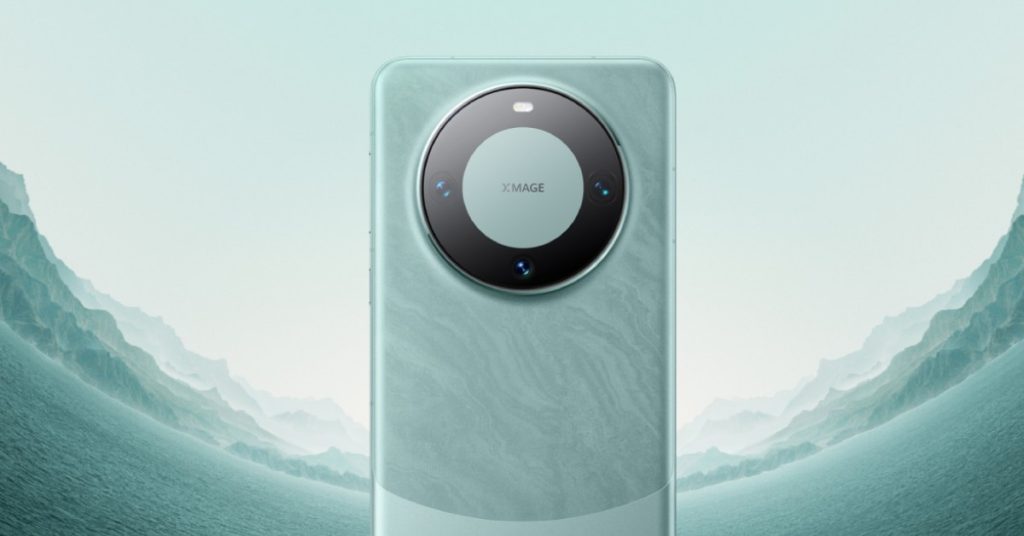
Huawei, undeterred by the sanctions, has been conducting extensive research in the semiconductor domain. Recently, the tech giant unveiled its Mate 60 series flagship phone in China, capturing widespread attention. Notably, the spotlight is on its chipset, which boasts 5G network capabilities, showcasing Huawei’s determination to innovate despite the challenges it faces in the global market.
The involvement of Taiwanese companies in Huawei’s chip manufacturing endeavors is indeed a peculiar development. Taiwan’s Minister of Economic Affairs, Wang Mei-hua, has announced that the government will investigate these companies, urging them to be mindful of U.S. export control measures if their equipment falls under restricted categories according to American rules. This situation adds a new layer of complexity to the intricate web of the US-China tech war.
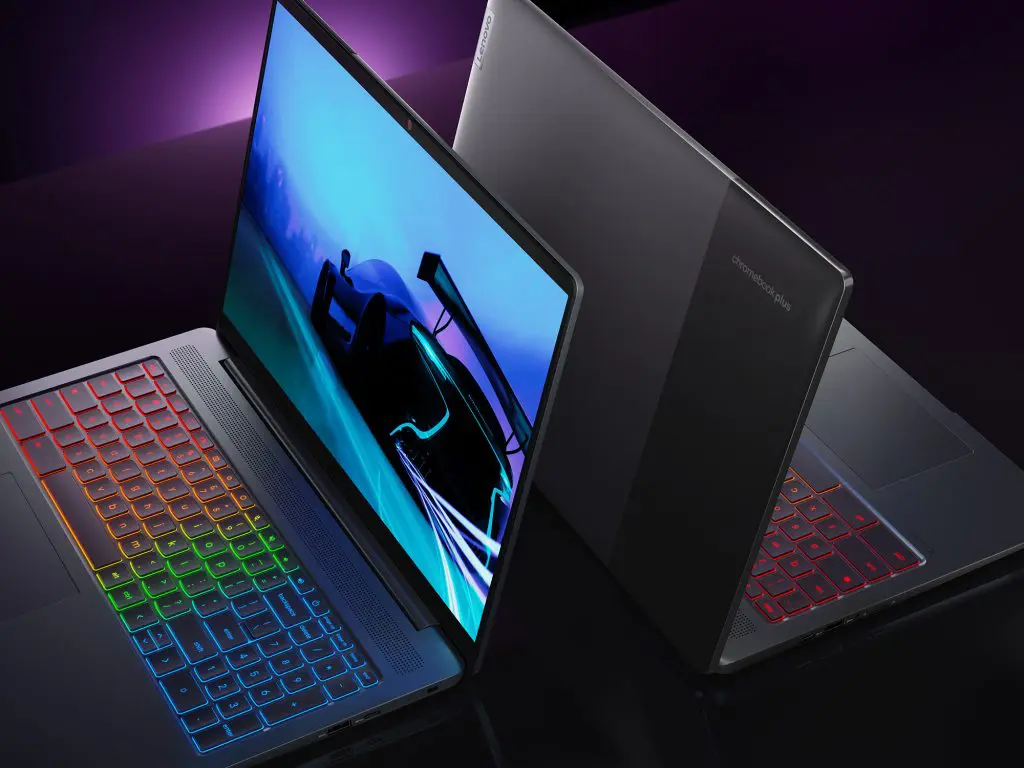
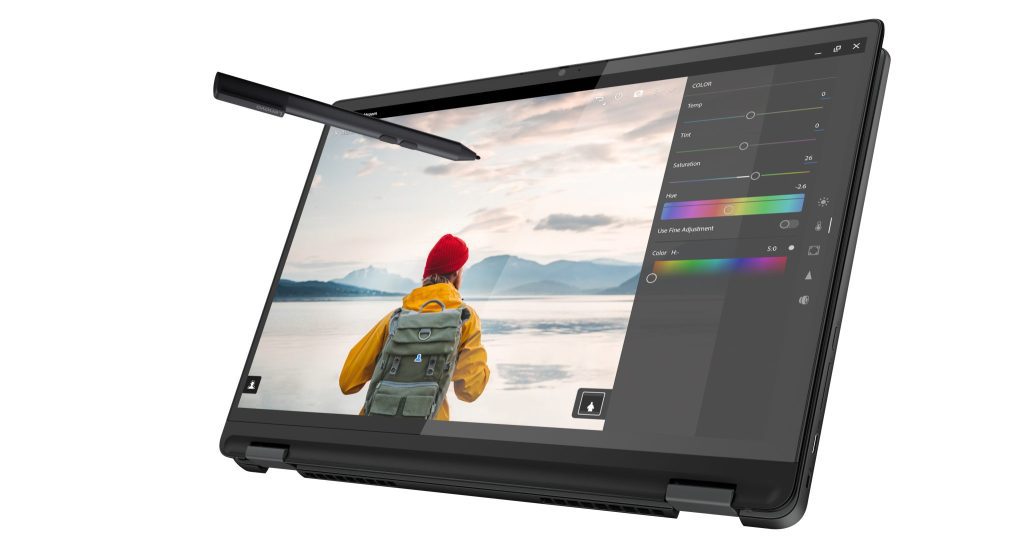
Along with Acer, HP, and Asus, Lenovo has also launched a new range of Chromebooks today powered by up to 13th Gen Intel processors. The three machines part of the new IdeaPad Chromebook lineup are called the IdeaPad Gaming Chromebook Plus, IdeaPad Flex 5i Chromebook Plus, and IdeaPad Slim 3i Chromebook Plus. As the names suggest, there is something for everyone in this lineup.
Lenovo IdeaPad Gaming Chromebook Plus
Starting with some key features of these laptops, File Sync is one of the standouts, which allows users to access their Google Drive files even when they’re offline. Lenovo has integrated AI-powered Google Photos Magic Eraser to make photo editing a breeze. Check out the technical specifications of the laptops below.
IdeaPad Gaming Chromebook Plus specs
The IdeaPad Gaming Chromebook Plus, with a 16-inch display, boasts an impressive slim profile. It weighs under 1.95 kg, making it highly portable. The laptop features a 16-inch WQXGA display with a 120Hz refresh rate and 100% sRGB color coverage, delivering vibrant visuals. Powering the device is a 12th Gen Intel Core i5-1235U processor and Intel Iris Xe Graphics. It comes with 8GB of LPDDR4x RAM and storage options ranging from 128GB eMMC to 512GB SSD. It runs on ChromeOS and provides up to 12 hours of battery life. The laptop includes a 1080p FHD camera with a privacy shutter and various ports for connectivity.
IdeaPad Flex 5i Chromebook Plus specs
The IdeaPad Flex 5i Chromebook Plus, featuring a 14-inch FHD IPS display with touch support, offers the convenience of a 2-in-1 convertible. Weighing starting at 1.62 kg, it’s relatively lightweight and easy to carry. It features a 12th Gen Intel Core i3-1215U processor, paired with Intel UHD Graphics. It has 8GB of LPDDR4X RAM and storage options ranging from 128GB eMMC to 512GB SSD. Running on ChromeOS, it offers up to 10 hours of battery life and includes a 1080p FHD camera with privacy features. Various ports, including USB Type-C and USB Type-A, provide versatile connectivity options.
IdeaPad Slim 3i Chromebook Plus specs
The IdeaPad Slim 3i Chromebook Plus features a 14-inch FHD display with touch support. You can either go with the Intel Core i5-1334U or Core i3-1315U processor options. It provides 8GB of LPDDR5 RAM and storage options ranging from 128GB eMMC to 256GB SSD. It delivers up to 12 hours of battery life and includes a 1080p FHD camera with privacy protection. It features a variety of ports for connectivity.
Pricing & availability
The Lenovo IdeaPad Slim 3i Chromebook Plus 14” and IdeaPad Flex 5i Chromebook Plus 14” can now be purchased in North America, with prices starting at $549.99 and $499.99, respectively. As for the Lenovo IdeaPad Gaming Chromebook Plus 16”, it’s not available in North America but is now accessible in EMEA, with prices starting at 599 euros.
Meta, the parent company of Instagram and Facebook, is reportedly considering offering ad-free versions of its social media platforms in Europe, according to a report from The Wall Street Journal. This move comes in response to new EU privacy regulations that require Meta to get users’ consent before showing them targeted ads.
Asking users for their consent could hurt the company’s bottom line since most users are unlikely to willingly share their data. This could reduce Meta’s advertising revenue, which is its primary source of income.
To tackle this, Meta is considering charging users a monthly fee to remove ads from their social media feeds. Under the proposed plan, users in Europe would need to pay a monthly fee to remove ads from their Instagram and Facebook. This would be the first time that Meta will be charging users for access to its core services.
The ad-free subscription plan is expected to cost around EUR 13 per month on mobile devices and EUR 10 per month on web browsers. Users would also need to pay an additional EUR 6 for each additional account.
It is unclear when the ad-free subscription plan would be launched in Europe, and if it would be offered in other regions in the future. However, Meta is said to be in discussions with privacy watchdogs in Belgium and Ireland about the plan. The company has reportedly named it “subscription no ads,” or SNA, and it might start rolling out in the coming months.
Meta’s current business model relies on targeted advertising, which is based on user data. However, the new privacy regulations in the EU will make it more difficult for companies to collect and use user data for advertising purposes.
The ad-free subscription plan is one way that Meta could continue to generate revenue from its social media platforms in Europe, while also complying with the new privacy regulations.
The Pixel 8 Pro and Pixel 8 are going official tomorrow, and Google will also unveil Android 14. There have been tons of leaks about both phones, including a few hands-on videos. While there’s not much left to be revealed about the upcoming phones, new hands-on images of the Pixel 8 Pro running the AIDA64 and Device Info HW apps have revealed some of its key hardware specs.
Pixel 8 Pro Specifications
The new images reveal major hardware details of the Pixel 8 Pro. The phone features 12GB of RAM and 128GB of storage. It’s powered by Google’s new nona-core Tensor G3 chip, with four Cortex-A510 cores clocked at 1.704GHz, four Cortex-A715 cores clocked at 2.367GHz, and a Cortex-X3 prime core clocked at 2.914GHz. The GPU is a Mali-G715.
— M. Brandon Lee | THIS IS TECH TODAY (@thisistechtoday) October 2, 2023
On the camera front, the Pixel 8 Pro is rumored to have three unique sensors: 12.5MP, 12MP, and 12.2MP. Since there will be 4-in-1 pixel binning, the Pixel 8 Pro could get a 50MP main camera, two 48MP shooters for the ultrawide and zoom lenses, and a 10.5MP selfie camera.
Pixel 8 Pro was recently spotted on Geekbench 6.2, posting a single-core score of 1,760, and a multi-core score of 4,442. These scores are mediocre at best, considering the Pixel 8 Pro is a top-notch flagship. For comparison, the OnePlus 11 with Snapdragon 8 Gen 2 manages to get 1707 points in single-core and 4892 points in the multi-core test of Geekbench 6.
In other respects, the smartphone is reported to be built around a 6.7-inch LTPO OLED display that offers QHD+ resolution and a 120Hz refresh rate. The device could come with up to 12 GB of RAM and up to 512 GB of storage. A recent leak revealed the Pixel 8 Pro will start at $999 in the US.
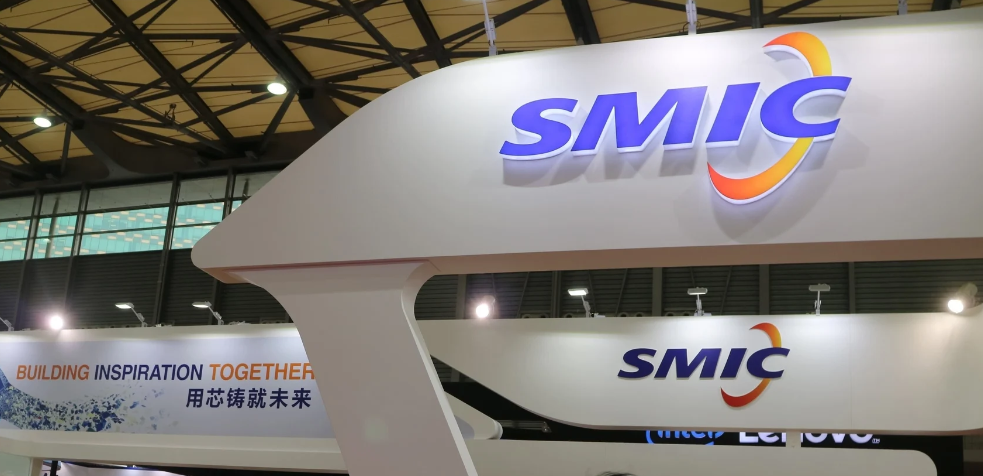
China’s Semiconductor Manufacturing International Corporation (SMIC) has reportedly placed substantial orders for raw materials, equivalent to around two years’ worth of supply, with Taiwanese partners. This move follows the recent shipment of Huawei’s HiSilicon Kirin 9000S system-on-chip for the Mate 60 smartphone, a move that could potentially violate U.S. sanctions.
The motive behind SMIC’s significant stockpiling efforts has sparked speculation within the tech world. While some experts suggest it is a proactive measure against anticipated stricter sanctions from the U.S., others argue that SMIC might be gearing up to meet the soaring demands of Huawei, its major client. Huawei hopes to ship up to 20 million units this year, with projections indicating sustained sales well into the next year.
The U.S. sanctions on Huawei disrupted its chip supplies, forcing the company to explore alternative solutions. Enter SMIC, which, until recently, lagged behind global competitors. However, the launch of the Huawei Mate 60 Pro, featuring the 7nm 5G-enabled Kirin 9000S chipset, marked a significant leap forward for both companies. This advance not only enabled 5G services in the U.S. but also showcased SMIC’s prowess in the highly efficient 7nm node process.
SMIC’s move to secure a robust raw material inventory can be seen as a dual-purpose strategy. On one front, it acts as a buffer against potential U.S. restrictions, ensuring that the company can continue its operations seamlessly. On the other hand, this stockpiling effort positions SMIC to meet Huawei’s escalating demands. Industry analysts suggest that this forward-thinking approach aligns with SMIC’s efforts to assist Huawei in becoming a dominant force in the smartphone market once again.
SMIC’s approach mirrors that of several Chinese chipmakers, who have been aggressively stockpiling chip-making equipment from various international sources, anticipating potential disruptions due to geopolitical tensions. This proactive stance highlights the industry’s resilience and adaptability in the face of challenging global scenarios.
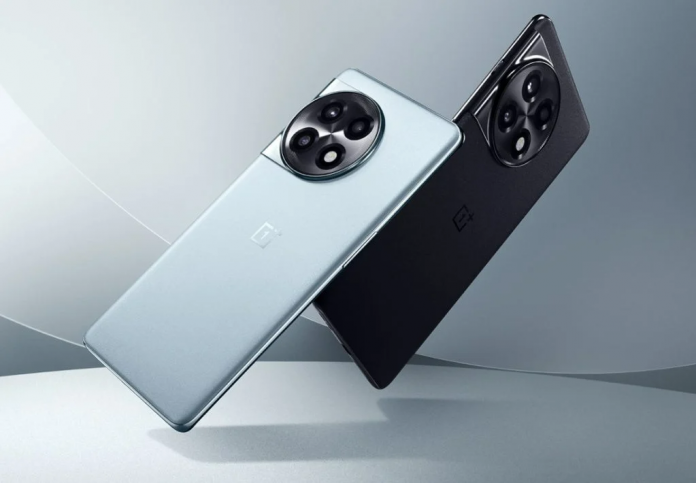
After brands like Google, Nothing, and Apple have revealed their hand for the upcoming festive sales in India, OnePlus has also revealed the discount it plans to offer on its highly acclaimed flagship killer, the OnePlus 11R.
The Amazon Great Indian Festival will kick off on October 8th in India, knocking down the price of the OnePlus 11R to as low as Rs 34,999 ($421). Which is its lowest ever. The breakdown of the offer is quite clear-cut.
OnePlus 11R offer breakdown:
The OnePlus 11R (8GB + 128GB) will have a sale price of Rs 39,000 ($481), with a Rs 3,000 coupon discount on Amazon and a Rs 2,000 SBI bank discount. We can expect a similar offer from the 16GB RAM + 256GB storage variant as well.
In addition to that, OnePlus will also be launching a new Red color vegan leather option for the OnePlus 11R, with 18GB RAM and 512GB storage.
OnePlus 11R specs
The OnePlus 11R 5G features a 6.7-inch AMOLED display with a smooth 120Hz refresh rate. It comes with a small punch-hole cutout for the selfie camera and supports HDR10+ for vivid visuals. For security, you’ll find an in-display fingerprint sensor, and the phone also features Dolby Atmos for improved audio quality.
Under the hood, this phone is powered by the Qualcomm Snapdragon 8+ Gen1 SoC, combined with an Adreno GPU to handle your daily tasks efficiently. In terms of memory and storage, you can get up to 16GB of LPDDR5 RAM and 256GB of UFS 4.0 storage.
The OnePlus 11R 5G runs on Android 13 with the OxygenOS custom skin. When it comes to photography, it boasts a triple camera setup on the back, consisting of a 50MP primary camera, an 8MP ultra-wide-angle lens, and a 2MP macro lens. For selfies and video chats, there’s a 16MP front camera.
The device has a 5,000mAh battery, and it supports super-fast 100W charging. In terms of connectivity, it offers 5G support, along with Wi-Fi 6E, Bluetooth 5.2, GPS, and a USB Type-C port.
TOZO presents an unbeatable deal on two of their top gadgets: the TOZO S3 Smartwatch and TOZO T20 Earbuds, both priced at just $39.99. But the savings don’t stop there – apply the $10 Amazon coupon available for each product. Whether you crave the convenience of a feature-packed smartwatch with TOZO S3 or the immersive audio experience of TOZO T20 Earbuds, this deal lets you dive into the world of advanced technology without straining your budget. Hurry and grab these fantastic gadgets at a steal, available both on Amazon and the official TOZO store.
TOZO S3 Smart Watch
In the fast-paced world we live in, having a reliable companion on your wrist that seamlessly blends technology with health and fitness tracking is essential. The TOZO S3 Smart Watch is not just a gadget; it’s your ultimate partner in the journey to a healthier lifestyle. Let’s delve into its features that make it a standout choice in the realm of smart wearables.
Professional Health Management: Your well-being takes center stage with TOZO S3’s comprehensive health monitoring features. Real-time heart rate monitoring, detailed sleep analysis, stress level tracking, and activity tracking provide insights into your overall health. The smartwatch automatically records your steps, distance, calories burned, and active minutes. Moreover, it measures your blood oxygen saturation, giving you a clear understanding of your physical state, and empowering you to make informed decisions about your health.
Versatile Fitness Support: Embrace a diverse range of physical activities with TOZO S3’s 100+ sports modes. Whether you’re into invigorating hikes, long-distance runs, or challenging mountain climbs, this smartwatch caters to your fitness aspirations. It’s not just a device; it’s your personal trainer, encouraging you to explore new activities and stay motivated on your fitness journey.
Bluetooth Calling and Notifications: Say goodbye to missed calls and messages. The TOZO S3 comes with a built-in premium microphone and speaker, allowing you to answer and make calls directly from your wrist. Connected via Bluetooth to your mobile phone, it ensures you’re always reachable without the hassle of reaching for your phone. Receive notifications for text messages, ensuring you’re always in the loop, whether you’re engaged in sports, outdoor activities, or simply going about your daily life.
Intuitive 1.83-inch HD Color Touch Screen: Interacting with your smartwatch has never been more delightful. The 1.83-inch large color screen offers a vivid and responsive touch experience. Its 240*284 resolution ensures sharp visuals and excellent color reproduction. Personalize your TOZO S3 with multiple watch faces, reflecting your style and personality.
Long-lasting Battery Life and IP68 Waterproof Design: Worry less about charging and usage constraints. The TOZO S3 boasts a large 300mAh battery capacity, offering up to 10 days of endurance in auto-monitoring mode for heart rate and 7 days in instant detection mode. Additionally, it’s designed with an IP68 waterproof rating, making it your ideal companion for swimming and intense workouts, without the fear of water damage.
Seamless Bluetooth Connectivity and Compatibility: Experience the convenience of controlling your music player, checking the local weather, and mobile search function, all from your wrist. The TOZO S3 is compatible with most iOS, Android, and Bluetooth smartphones. Download and install the “TOZO Health” app from the App Store or Google Play, connect your smartwatch, and embark on your smart life journey.
TOZO S3 Smart Watch goes beyond being a wearable device; it becomes an integral part of your daily life, enhancing your communication, health monitoring, and fitness experiences. Embrace a smarter, healthier lifestyle with TOZO S3 by your side.
Discover a new realm of auditory bliss with the TOZO T20 Wireless Earbuds, engineered to redefine your music and call experiences. These earbuds encapsulate innovation, seamlessly blending advanced technology with comfort and style.
Crystal Clear Calls with Dual Mic Call Noise Reduction: Equipped with cutting-edge Dual Mic Call Noise Reduction technology and 10mm Dynamic Drivers, the TOZO T20 ensures your phone calls are incredibly clear and lifelike. The moving-coil Horn loudspeaker with a larger dynamic driver delivers Hi-Fi sound quality, resonating deep bass, and immersive stereo.
Unmatched Longevity: 42 Hours of Playtime: With an astounding 42 hours of playtime on a single charge, the TOZO T20 keeps you grooving throughout the day and night. The earbuds offer 10 hours of continuous usage, while the sleek charging case provides an additional 42 hours. The real-time LED power display keeps you informed about the power levels, ensuring you never run out of music unexpectedly.
IPX8 Waterproof and Ultimate Comfort: Designed for active lifestyles, these earbuds boast an IPX8 waterproof rating, safeguarding against water, sweat, and rain. Stay focused on your workout or outdoor adventures without worrying about damage. The ergonomic in-ear design guarantees a comfortable fit, allowing you to wear them for extended periods without discomfort.
Effortless Connectivity: One-Step Pairing: Experience hassle-free pairing with TOZO T20. Simply open the charging case, and the earbuds automatically pair after the initial connection. No complicated setups, just instant access to your favorite tunes and calls.
Personalized Listening with TOZO APP: Enhance your music experience with the TOZO APP, your gateway to a plethora of audio customization options. Enjoy 16 preset EQ modes and tailor the sound to match your unique preferences. Switch between different EQ settings effortlessly, allowing you to enjoy a diverse range of musical styles with impeccable sound quality.
TOZO T20 Wireless Earbuds elevate your audio encounters to unprecedented heights. Whether you’re a music enthusiast, a fitness fanatic, or a professional constantly on calls, these earbuds cater to all your needs.
The Patak Rodster, a retro-inspired electric Microcar has been unveiled. The car can seat two persons and is now available in Europe starting from $24,000. The Rodster is manufactured by Patak Motors, a Slovakian company.
Patak Motors aims to bring micro mobility to its European audience with the release of the Rodster. The car is designed as an L7e-A2 vehicle in Europe and can be driven by even 16-year-olds in some countries. The car has an open top reminiscent of the iconic skinny-poked rim and lightweight roadsters of the 1930s. The Patak Rodster has dimensions of 132.2 x 54.9 53.4 inches and weighs 450kg without its battery.
The Patak Rodster electric microcar comes in different variants including stage 1 and stage 2 models. The stage 1 model is powered by a single rear-mounted permanent-magnet synchronous motor with 20hp capacity. It can go from 0-50km/h in 7 seconds and has a top speed of 130km/h. The 10kWh battery of the Patak Rodster delivers a range of 100km on a single charge.
The stage 2 version of the Rodster has a 20kWh battery and achieves a range of 250km. Otherwise, the stage 1 and stage 2 versions of the Patak Rodster are unchanged. The battery of the Patak Rodster can be fully charged via a 220V mains outlet between 4 and 9 hours.
The car has disc brakes, a wood decor dashboard, faux leather upholstery, a multifunction touchscreen display, and central locking. The car also comes with a three-spoke steering wheel, a tire repair kit, a rain protection cover, and a 200L trunk. There are also several optional accessories for the EV. The price of the Patak Rodster base electric model starts at about $24,000 while the long-range model starts at $26,800. The Patak Rodster is scheduled to go into production by August 2024.
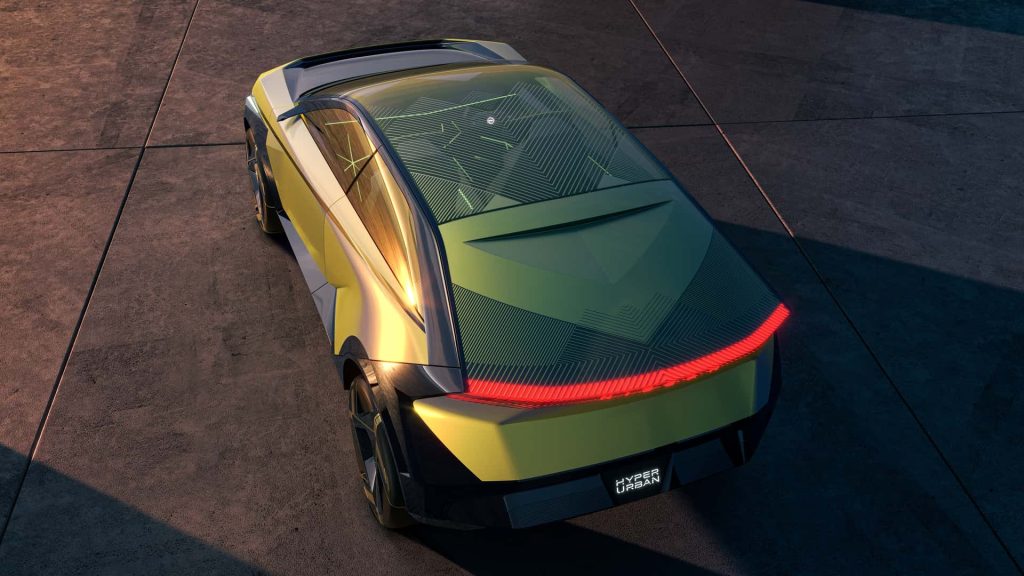
Nissan is making waves again, this time pulling back the curtains on its new Hyper Urban concept. But this isn’t just another electric vehicle (EV) designed to get you from point A to B. No, Nissan wants to redefine the relationship between your car and your home.
The car will probably never go into production, but it’s a cool concept
Debuted ahead of the Japan Mobility Show 2023, the Hyper Urban concept looks like something right out of a science fiction movie with its lime-yellow angular bodywork and futuristic scissor doors. But what really makes this concept stand out is its interior. Imagine a car that transforms into your living room. The front seats can literally fold back into a comfy two-person sofa where you can watch videos from a flip-up screen. Sounds like an ideal chill spot, right?
What’s more? Nissan doesn’t just see this as a car; it’s more like an extension of your home. The automaker even suggests that you can park this four-door crossover inside your loft or bungalow, turning it into an extra living space. This could revolutionize the way we think about cars and home design in the years to come.
And let’s not forget about its tech aspects. The Hyper Urban concept comes with built-in artificial intelligence to manage vehicle-to-home and vehicle-to-grid functionalities, which means it can not only charge itself but also power your home, potentially saving you a chunk on energy costs.
But here’s the kicker: Nissan has no plans to actually manufacture the Hyper Urban. It’s essentially a peek into what the automaker thinks could be the future of EVs. While it might be a bummer that you won’t be able to own this living room on wheels anytime soon, it does leave us excited to see what else Nissan will unveil, both in terms of design and technology, at the upcoming Japan Mobility Show.
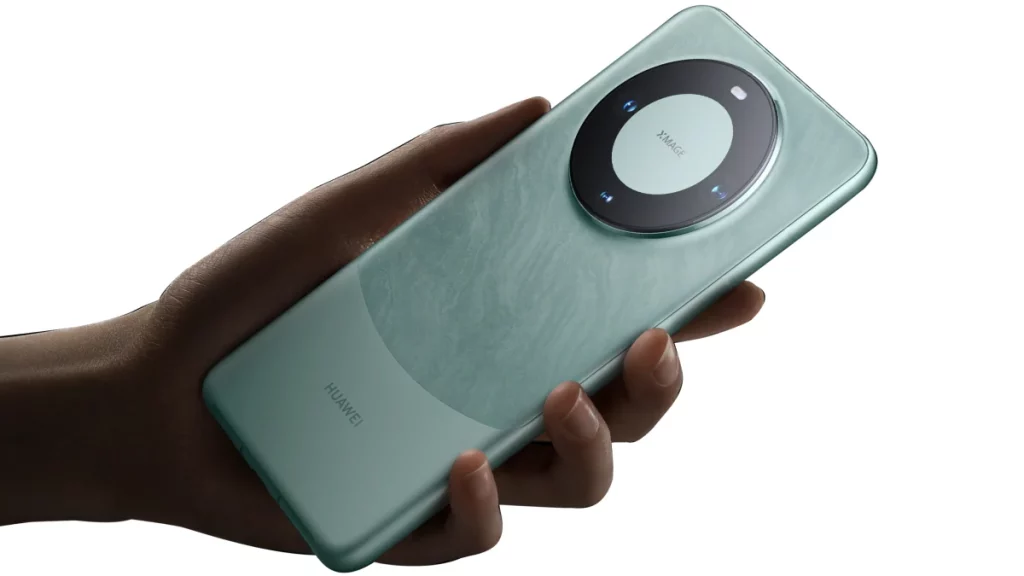
The Huawei Mate 60 Pro, which was released in August, has been out of stock at many retailers and has been selling above its original price due to high demand and supply shortages. However, recent reports suggest that the phone is now available for purchase at the original price in Nanjing, China. There are a few catch, however.
The phones are only available for local on-site payment and need to be activated on the spot. This means that you cannot buy the phone online or have it shipped to you. You must travel to Nanjing and pay for the phone in person, and you must also activate it immediately after purchase.
Huawei Mate 60 Pro comes in three configurations—256GB, 512GB, and 1TB—with a starting price of 6,499 yuan. Additionally, customers who purchase the Huawei Mate60 Pro are required to purchase other Huawei products, such as the Huawei Watch GT 4, FreeBuds Pro 3, or FreeBuds 5 TWS.
Despite these restrictions, the fact that Huawei Mate60 Pro is now available for purchase at the original price is good news for consumers in China who have been waiting to get their hands on the phone.
The Mate60 series is Huawei’s flagship smartphone lineup for 2023. After a long hiatus, these phones bring back 5G connectivity to Huawei devices and also boast an advanced camera system with other premium specifications.
The Mate60 series is also one of the first smartphone lineups from Huawei to support satellite calls. This feature allows users to make and receive calls even in areas without cellular service.
Huawei is expected to ship around 60 million Mate 60 units in 2024, suggesting that the Mate60 series is poised to be a major success for the company.
Volvo Cars has decided to break nearly a century-old tradition. The Swedish automaker, renowned for its premium sedans and SUVs, has unveiled its very first minivan—the electric EM90. While this may seem like an unexpected leap for Volvo, it appears to be a carefully planned strategy aimed at China, the world’s largest minivan market.
The Minivan is expected to have an impressive 511 miles of range on a single charge
Last August, Volvo announced the EM90 and followed up recently with teaser images posted on its Facebook page. The design cues are certainly Volvo-esque: the model features a boxy exterior, illuminated front grille, and the unmistakable Thor’s hammer LED daytime running lights. Unlike conventional monospace designs often seen in minivans, the EM90 opts for a two-box design, akin to the Zeekr 009, an electric luxury minivan from another Geely-owned brand.
Sharing underpinnings with the Zeekr 009, the EM90 is expected to ride on the Sustainable Electric Architecture (SEA) platform. It’s likely to come equipped with the CATL 140-kWh Qilin battery, capable of delivering an impressive 511 miles of range. With a dual-motor setup, the EM90 will boast a combined horsepower of 536, putting it in the same league as its electric rivals like the Zeekr 009, Voyah Dreamer, and Denza D9, as well as ICE-powered models such as the Toyota Alphard and Lexus LM.
The EM90 will make its global debut on November 12, and China will be the first market to open for pre-orders. By targeting China—a market where MPVs (multi-purpose vehicles) are immensely popular—Volvo is making a strategic move to carve out a new niche for itself in the electric vehicle ecosystem. This could be the Swedish automaker’s golden ticket into diversifying its portfolio while tapping into the unique demands of the Chinese consumer.
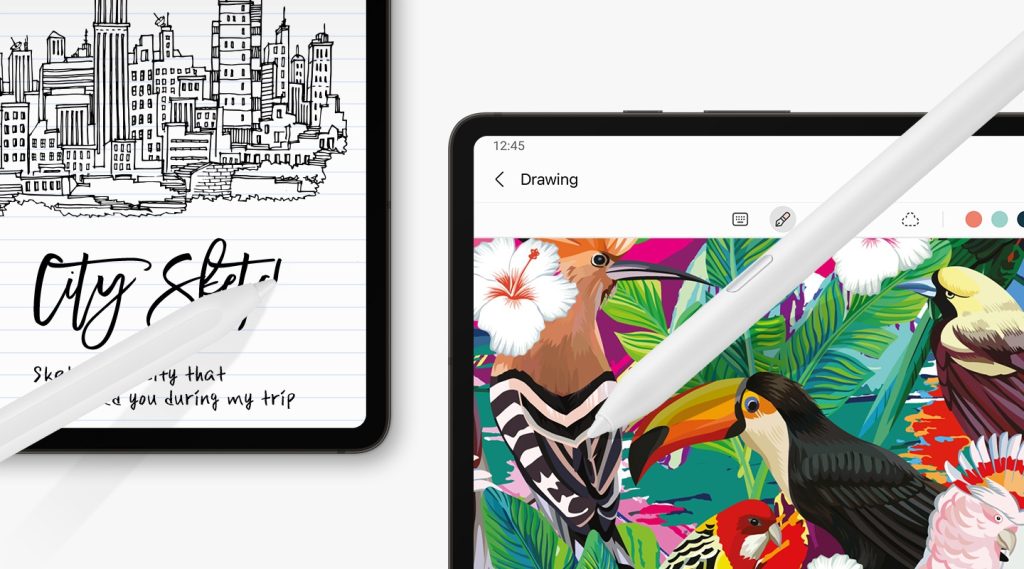
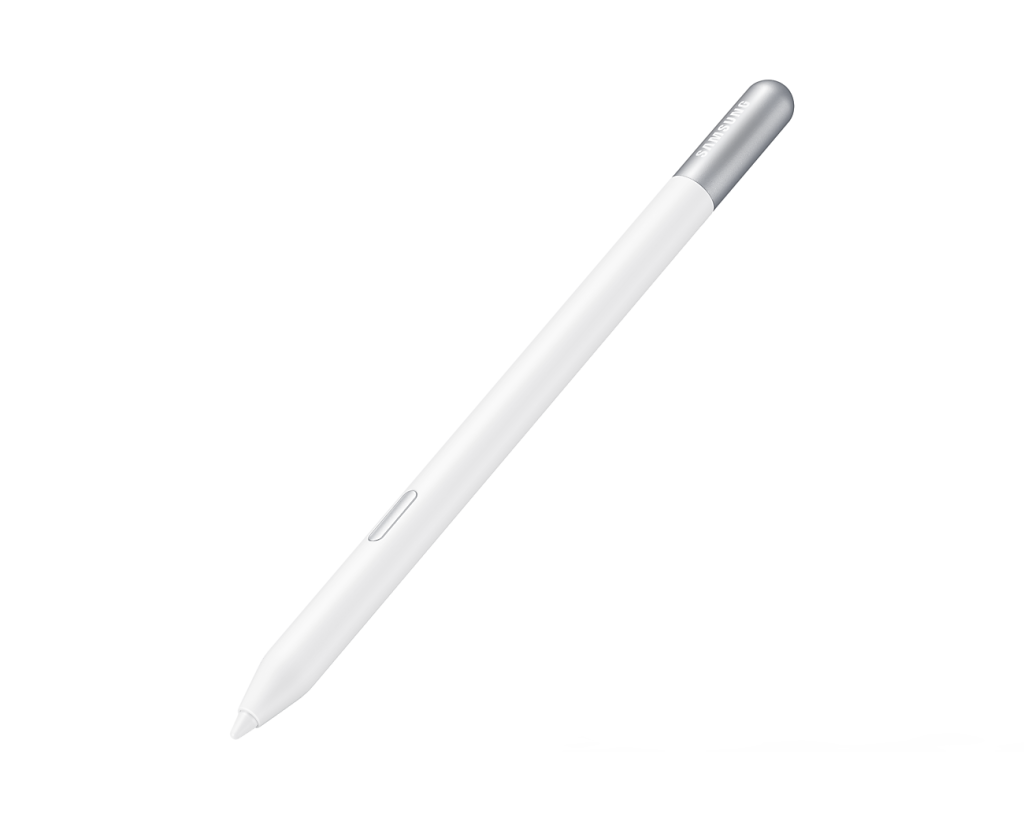
Samsung has launched the S Pen Creator Edition stylus, now available to purchase from their official store. It is priced at 799 yuan in China and $159 internationally. Samsung offers other S Pens as well, such as the Galaxy Tab S9 Series S Pen and S Pen Pro, but this S Pen Creator Edition is specially designed for creators.
S Pen Creator Edition Key Features:
This new offering features enhanced tilt sensitivity, allowing for more accurate and detailed drawing experiences. Notably, users can swiftly switch between drawing and note-taking without needing to interchange pen tips.
Considering the ergonomic needs of users, the S Pen Creator Edition is designed for prolonged usage. It is engineered with dimensions to minimize hand fatigue. Its construction allows it to fit comfortably in users’ hands. For convenience, it can be attached magnetically to the back of tablets when not in active use.
One of its distinct features is its universal compatibility. This stylus can be used with all Samsung Galaxy smartphones, tablets, and PCs that are equipped to support S Pen input. However, to utilize this feature, users need to have additional devices and must be logged into their Samsung accounts.
The package contains the stylus itself, a tweezer for adjustments, and two additional pen tips, giving users options based on their preferences. As for its aesthetics, the S Pen Creator Edition currently comes in a White design, with Silver highlights. When compared to the S Pen for the Tab S9 series, this edition has a marginally larger diameter by 0.9mm. The product measures 9.1 x 153.35 x 8.7 mm and weighs a light 10.6 grams. Plus, it’s got IPX4 waterproofing.
We use cookies on our website to give you the most relevant experience by remembering your preferences and repeat visits. By clicking “Accept”, you consent to the use of ALL the cookies.
This website uses cookies to improve your experience while you navigate through the website. Out of these, the cookies that are categorized as necessary are stored on your browser as they are essential for the working of basic functionalities of the website. We also use third-party cookies that help us analyze and understand how you use this website. These cookies will be stored in your browser only with your consent. You also have the option to opt-out of these cookies. But opting out of some of these cookies may affect your browsing experience.
Necessary cookies are absolutely essential for the website to function properly. This category only includes cookies that ensures basic functionalities and security features of the website. These cookies do not store any personal information.
Any cookies that may not be particularly necessary for the website to function and is used specifically to collect user personal data via analytics, ads, other embedded contents are termed as non-necessary cookies. It is mandatory to procure user consent prior to running these cookies on your website.