Advertisement

Screen Addiction Is Hurting Your Eyes ?: AI-Powered Vision Training Glasses Can Help You

Smartphone use now exceeds three hours a day on average, while total daily screen time for many adults crosses six hours. This constant close-up focus has made eye fatigue, dryness, blurred vision, and headaches a common part of modern life. As screens become unavoidable, interest is growing in technologies that don’t just relieve symptoms but train the eyes to cope better with digital habits.

AI Generated image for representation only

Eyeary and the Technology Behind It

South Korea–based Edenlux is preparing to launch Eyeary, a lightweight, glasses-style vision training device, in the U.S. later this year. Unlike software-only eye exercises or blue-light filters, Eyeary works directly on the ciliary muscle, which controls how the eye focuses. Heavy screen use keeps this muscle locked in a contracted state. Eyeary repeatedly guides the eyes through controlled focus changes using 144 focal points, training the muscle to relax and contract more naturally.

Is This Technology Truly New?

Eye training tools are not new, but most existing solutions are either clinical devices, simple exercise apps, or bulky headsets. Eyeary stands out by combining hardware-based visual training, AI-driven personalization, and everyday wearability. Few consumer devices currently offer this level of precision in focus training outside clinical environments.

Current Technology:

Blue-Light and Anti-Glare Glasses

Most products on the market today are blue-light filtering or anti-glare glasses. These are designed to reduce screen glare and improve viewing comfort during long hours of phone or computer use. While they are widely adopted, scientific evidence on their ability to reduce digital eye strain remains mixed.

Basic Eye Exercise Tools

Some products focus on simple eye exercises, including pinhole glasses and manual vision training tools. These aim to encourage eye movement and focus changes but lack precision. They do not use sensors, software, or personalization, and results often depend heavily on user consistency.

Clinical and Experimental Solutions

More advanced vision training exists mainly in clinical or research environments. These include VR-based vision therapy systems and adjustable-focus lenses. However, such solutions are usually bulky, expensive, or designed for supervised use rather than everyday consumers.

Market Gap in Active Vision Training

Overall, most current solutions are passive and symptom-focused. Consumer-ready, wearable devices that actively train eye-focusing muscles using data and AI are still rare, leaving this segment largely unexplored in the mainstream market.

Potential Impact on Eye Health

If effective at scale, Eyeary could shift eye care from treatment to daily prevention and recovery, especially for heavy screen users. It signals a future where vision health becomes part of consumer technology, much like fitness tracking, potentially influencing how smartphones, wearables, and displays are designed to protect long-term eye function.

Please Note: When you buy something using the links in our articles, we may earn a small commission at no cost to you.

Read More:

(via)

Redmi Turbo 5 Max display and key specs officially confirmed

Redmi has already confirmed that the Redmi Turbo 5 series will be officially announced on January 29 in China. Ahead of the launch, the company has now released fresh teasers that shed more light on the Turbo 5 Max variant. While the brand is still holding back on a full reveal, these new details help paint a clearer picture of what the Max model is shaping up to offer.

Redmi Turbo 5 Max’s new teasers released

The latest teasers confirm that the Redmi Turbo 5 Max will feature a large 6.83-inch LTPS OLED display with 1.5K resolution. The panel is said to deliver a peak brightness of up to 3,500 nits, making it suitable for outdoor use, and it supports 3,840Hz PWM dimming for improved eye comfort during low-light viewing. Redmi has also confirmed that the phone will include an ultrasonic in-display fingerprint sensor.

When it comes to durability, the Turbo 5 Max will feature a metal middle frame along with IP68 and IP69 rating, offering protection against dust and high-pressure water exposure. Audio duties will be handled by dual 1115F symmetric stereo speakers, while connectivity enhancements include Redmi’s T1S signal enhancement chip and support for kilometre-level network-free communication, allowing long-range off-grid communication.

On the imaging front, the phone will rely on an OmniVision Light Fusion 600 primary camera with high dynamic range. The brand has also confirmed blue, white, and orange color options for the Max variant.

Redmi had previously confirmed that the Turbo 5 Max will be powered by the Dimensity 9500s chipset. The device is also set to pack a massive 9,000mAh battery, paired with 100W fast charging and 27W reverse charging support.

The lineup will also include the standard Redmi Turbo 5, which sits slightly lower in the range. This model is confirmed to feature a smaller 6.59-inch display and will be powered by the Dimensity 8500 chipset. Its battery capacity is expected to be around 8,000mAh with 100W charging. Redmi has officially confirmed the white colour option for the standard Turbo 5, while details about other colour variants remain unclear. The Max variant is expected to be priced at around ~$360 in China, which suggests that the standard model may cost around ~$300.

For more daily updates, please visit our News Section.
Stay ahead in tech! Join our Telegram community and sign up for our daily newsletter of top stories.

Bill Gates Backed Startup Creates Light-Powered AI Chip That Can Beat Nvidia

A US startup called Neurophos has announced a new kind of AI chip that uses light instead of electricity to process data. Backed by Bill Gates’ Gates Frontier Fund, the company says its optical processor could deliver dramatically higher AI performance while avoiding the power and scaling limits faced by today’s silicon chips.

The announcement, reported by Tom’s Hardware, has drawn attention across the semiconductor industry, which is increasingly searching for alternatives to traditional computing.

nvidia blackwell architecture

How Optical Computing Changes the Equation

Unlike conventional GPUs that move electrons through silicon, Neurophos uses photons to perform calculations. Light can switch much faster and generate less heat, allowing more work to be done in the same amount of time. Neurophos says it has overcome a long-standing barrier in optical computing by shrinking optical components enough to fit densely on a chip made with existing manufacturing technology.

This allows the company to rely on a single, very large optical compute matrix running at extremely high speeds, rather than hundreds of smaller compute cores.

How This Compares With Nvidia’s Approach

Nvidia remains the dominant force in AI hardware, and its latest platforms still rely on traditional silicon GPUs. While Nvidia is adopting photonics for faster data transfer between chips, the actual AI computation remains electronic. Neurophos, by contrast, is attempting true optical computation, representing a more radical shift in chip design.

Is Nvidia’s Dominance at Risk?

For now, Nvidia is safe. Neurophos is still years away from mass production and faces major engineering and software challenges. However, the project signals a possible future where optical computing complements or even replaces parts of today’s AI hardware, potentially reshaping the tech and AI industries over the next decade.

Read More:

(via)

Vivo X200T launches in India: Here’s how it’s different from X200 FE

As scheduled, Vivo has officially launched the Vivo X200T in India today. The phone is built with a flagship Dimensity 9400+ chip, Zeiss camera, and is promised to receive a long term software support. 

On the front, the Vivo X200T features a 6.67-inch flat AMOLED display with a 1.5K resolution (2800 × 1260). The panel uses BOE’s Q10 AMOLED tech and reaches up to 1600 nits in high brightness mode. Vivo has also opted for SCHOTT Xensation Core protection. 

At 7.9mm thick and weighing just over 200 grams, it’s not a small phone, but it stays within typical flagship territory.

Vivo X200T Purple
Vivo X200T in Purple

Powering the device is MediaTek’s Dimensity 9400+ chipset, paired with LPDDR5X Ultra RAM and UFS 4.1 storage. It boots on Android 16-based Origin OS 6 and is promised five Android OS updates and seven years of security patches. 

The X200T comes with a triple rear camera setup, all tuned with Zeiss optics. The main camera uses a 50MP Sony IMX921 sensor with optical image stabilization. It’s joined by a 50MP Samsung JN1 ultra-wide camera and a 50MP Sony IMX882 periscope lens for longer zoom shots. On the front, there’s a 32MP selfie camera.

Vivo is using a 6,200mAh battery to keep the lights on, and it supports both 90W wired and 40W wireless charging. Connectivity features include Wi-Fi 7, Bluetooth 5.4, NFC, eSIM support, and an IR blaster. There’s also a 3D ultrasonic in-display fingerprint scanner, stereo speakers, and an X-axis linear motor for haptics.

Vivo X200T in Black
Vivo X200T in Black

The phone is rated IP68 and IP69 for water and dust resistance and uses a 4.5K nanofluid vapor chamber system to manage heat during sustained performance.

In India, the Vivo X200T is priced at Rs 59,999 for the 12GB RAM and 256GB storage variant, while the 12GB + 512GB model costs Rs 69,999.

Vivo X200T vs Vivo X200 FE: what’s different 

Now that the X200T is official, let’s also compare it with the X200 FE, as it might be a little confusing as to how the phones differ.

The Vivo X200T is noticeably larger and heavier than the Vivo X200 FE. It features a 6.67-inch display compared to the FE’s more compact 6.31-inch LTPO AMOLED panel.

Vivo X200 FE
Vivo X200 FE

Performance-wise, the X200T uses the newer Dimensity 9400+ chip, while the X200 FE runs on the Dimensity 9300+. Storage is also faster on the X200T thanks to UFS 4.1, compared to UFS 3.1 on the FE.

There’s also a notable difference in camera setup. The X200T offers three 50MP sensors, including a periscope camera. Meanwhile, the X200 FE mixes a 50MP main and telephoto camera with a smaller 8MP ultra-wide lens. The FE, however, has a higher-resolution 50MP selfie camera.

In short, the X200T is a more specs and price-heavy model than the X200 FE in many ways.

For more daily updates, please visit our News Section.

Don’t miss a thing! Join our Telegram community for instant updates and grab our free daily newsletter for the best tech stories!

Oppo Find X9s images emerge to reveal first look at the rear design

A new set of leaked images has brought the Oppo Find X9s back into focus ahead of its expected debut in China. While Oppo has not officially confirmed the device yet, the visuals give an early glimpse of what appears to be its overall design direction, especially around the rear camera area. These leaks add to the growing list of details already circulating about the Find X9s.

Oppo Find X9s images appear

The first image, shared by tipster Bald Panda, shows the Oppo Find X9s inside a thick protective case, clearly meant to hide finer details. Even so, the phone appears to feature a large rectangular camera module with rounded corners, making the rear design look camera-centric. The housing is visibly prominent and sits flush across the top portion of the back panel.

Within this module, two large circular lenses are stacked vertically, accompanied by another sizeable circular element positioned below them. This third cutout could be reserved for an additional sensor or a periscope-style telephoto camera. A smaller circular opening placed towards the right side of the module is likely for the LED flash. Despite the concealment, the layout suggests a deliberate focus on imaging hardware.

Another image that surfaced on Weibo appears to align with the earlier leak and offers a slightly clearer look at the design. Although its authenticity cannot be independently verified, it reinforces the same rectangular camera island and triple-camera arrangement. If accurate, the Find X9s will visually sit close to other Find X9 series devices while maintaining its own identity.

Oppo Find X9s specifications (rumored)

On the specifications front, rumours indicate that the Oppo Find X9s may feature a dual 200-megapixel Samsung HP5 setup, covering both the primary and periscope telephoto cameras. This could be paired with a 50-megapixel ultra-wide camera and a multispectral sensor aimed at improving colour accuracy. A 50-megapixel front camera is also being tipped.

The phone is expected to sport a 6.32-inch Tianma LTPS OLED display with 1.5K resolution and an ultrasonic in-display fingerprint sensor. Powering the device could be the Dimensity 9500 chipset, supported by a battery around 7,000mAh with 80W wired and 50W wireless charging support.

For more daily updates, please visit our News Section.
Stay ahead in tech! Join our Telegram community and sign up for our daily newsletter of top stories.

Apple updates iPhone 5s and iPhone 6 in 2026 with new iOS update

Apple has quietly released a new software update for its 13-year-old iPhones. The iPhone 5s and iPhone 6, released in 2013 and 2014, respectively, are receiving iOS 12.5.8 in 2026, more than a decade after they first went on sale.

By smartphone standards, that’s an exceptionally long lifespan. The iPhone 5s is now roughly 13 years old, while the iPhone 6 is about 12. Most phones from that era haven’t just stopped getting updates; many stopped functioning properly years ago due to expired services, broken apps, or outdated security components. Apple, at least for now, is keeping these devices operational.

What iOS 12.5.8 actually does

According to Apple’s changelog, iOS 12.5.8 mainly updates internal security certificates. These certificates are essential for basic system functions, including device activation and Apple’s core services like iMessage and FaceTime.

If users don’t install this update, those certificates will expire in January 2027. Once that happens, affected devices could face what is essentially functional paralysis. Users may be unable to activate the phone, send iMessages, or place FaceTime video calls. In other words, the phone might still turn on, but many of its core features would quietly stop working.

This makes the update less optional than it might appear at first glance. It’s not about performance improvements or bug fixes; it’s about preventing the phone from slowly becoming unusable.

The previous update for both the iPhone 5s and iPhone 6 arrived back in January 2023, and that one also focused on security fixes. Since then, these phones have largely been left alone, which is typical for hardware this old.

The iPhone 6s is included too

Apple didn’t stop with the 5s and 6. The iPhone 6s, released in 2015, also received an update simultaneously. The device is getting iOS 15.8.6, which includes the same type of certificate extensions.

Why this matters, even if you don’t own these phones

Very few people are using an iPhone 5s or iPhone 6 as their primary device in 2026. But Apple’s decision still says something about how the company views long-term device support.

Many older smartphones fail not because the hardware stops working, but because essential services quietly break. Certificates expire. Secure connections fail. App servers stop recognizing the device as valid. At that point, even a perfectly functioning phone becomes frustrating or useless.

By pushing out updates like iOS 12.5.8, Apple is preventing that slow decay, at least for a little longer.

For more daily updates, please visit our News Section.

Stay ahead in tech! Join our Telegram community and sign up for our daily newsletter of top stories.

Honor Is Going All-In on Laptops in 2026: Massive PC Lineup Leak Reveals Big Plans

Honor is preparing for a major expansion of its laptop business in 2026, according to a new leak from Chinese tech blogger @WangzaiBaiShiTong. While Honor has not officially announced all details, multiple signs point to an aggressive rollout across its entire PC lineup.

As per the leak, 2026 is expected to be a “big year” for Honor laptops. The company reportedly plans to launch products across several categories, including lightweight everyday laptops and performance-focused machines. More announcements are expected after the Chinese New Year.

According to ithome.com, several upcoming Honor laptops have already passed China’s 3C quality certification between December 2025 and January 2026. These certifications reveal support for 65W, 100W, and even 260W power adapters, hinting at both thin-and-light models and powerful performance laptops.

Honor PC Product General Manager Zhu Chencai has also publicly stated that the brand will launch a “full-scale attack” across all Honor PC series. He emphasized competition in performance, battery life, audio-visual experience, portability, and AI features, while noting that true leadership depends on deep system optimization, not just high-end hardware.

One confirmed model is the Honor MagicBook Pro 16 (2026), already teased and described as a “high-performance muscle car,” targeting the premium performance laptop segment.

For now, most details remain based on leaks, but signs suggest Honor is serious about reshaping its PC lineup in 2026.

Honor 2026 Laptop Lineup: Expected Models and Rumored Features

Series / Model (Expected 2026)Target SegmentKey Features / Specs (Expected)Key Highlight
Honor MagicBook Pro 16 (2026)High-Performance LaptopLarge 16″ screen; strong CPU/GPU for creators & power users; 260W class performance expectedPositioned as “performance muscle car” in the lineup (3C hints high power)
Honor MagicBook X14 2026Thin & Light Everyday14″ 2.8K high-refresh protective display; Intel Core Ultra CPUs; lightweight metal bodyBalanced daily productivity + mobility
Honor MagicBook X16 2026 (Intel)Thin & Light Productivity16″ 2.5K high-refresh protective display; Intel® Core Ultra; slim metal chassisLarger screen with premium visuals
Honor MagicBook X14 Ryzen Edition 2026Mid-Range Performance14″ protective IPS display; AMD Ryzen™ 7 7735HS; good for office / entertainmentStrong AMD CPU for performance on a budget
Honor MagicBook X16 Ryzen Edition 2026Mid-Range Productivity16″ protective IPS display; AMD Ryzen™ 7 7735HS; balanced performanceBigger display for creative workflows
Honor MagicBook Pro 14 / Other Pro VariantsPerformance UltraportableLikely compact pro-grade configs with Intel Ultra or AMD CPUsSmaller sibling to Pro 16 with premium tuning
Honor MagicBook X Series (Other)Everyday / ValueContinued thin, light designs with efficient performanceTypical daily use laptops upgraded to 2026 silicon

Read More:

(via)

Motorola Edge 70 Fusion shows up in renders with its specs in tow

Exactly a week ago, a report revealed everything we need to know about the upcoming Motorola Edge 70 Fusion. The only thing it was short on was renders, but that gap has now been filled by a new report offering our first look at the company’s next mid-range phone.

First look at the Motorola Edge 70 Fusion

The images shared by YTECHB show the Motorola Edge 70 Fusion in Silhouette (Black) and Country Air shades. However, the phone will be available in three more color options: Blue Sirf, Orient Blue, and Sporting Green.

As you can expect from Motorola, all of these are Pantone-validated colors and are said to feature a nylon- and linen-inspired back panel.

Visually, the Edge 70 Fusion doesn’t look drastically different from its predecessor. That said, the camera module now features a glossy surface, and the Silhouette variant sports a gold-accented frame around it. On the front, the phone has minimal bezels and a hole-punch cutout for selfies.

Motorola Edge 70 Fusion specs

On the specs side, the Edge 70 Fusion is said to sport a 6.78-inch quad-curved AMOLED display with a 1.5K resolution, a 144Hz refresh rate, and up to 5,200 nits of peak brightness, along with HDR10+ support. The front camera is reportedly a 32MP sensor, while the back houses a 50MP triple-camera setup.

Under the hood, Motorola is expected to use Qualcomm’s Snapdragon 7s Gen 3 chipset. Storage configurations are tipped to include 8GB of RAM with 256GB of storage and a higher-end 12GB + 256GB option. The phone is also expected to ship with Android 16, layered with Motorola’s Hello UX, and receive up to three years of OS updates.

Rounding things out is a notably large 7,000mAh battery, paired with support for 68W fast charging.

For more daily updates, please visit our News Section.
Stay ahead in tech! Join our Telegram community and sign up for our daily newsletter of top stories.

Oppo Find X10 Pro may debut with upgraded BT.2020 display

Oppo is reportedly gearing up to announce the Find X9s and Find X9 Ultra in China. While these phones are expected to break cover in March, the rumour mill has also started revealing key information about the next-generation Find X10 series. Earlier this month, a key detail about the standard Find X10’s camera emerged. Now, a new leak, courtesy of tipster Digital Chat Station, has revealed the display specifications of the Find X10 Pro.

Oppo Find X10 Pro display details leaked

Oppo Find X9 Ultra, Find X9s, and Find X10 Pro display specs leak by DCS

As can be seen, DCS is talking about the display specifications of the Find X9s and Find X9 Ultra. In the same Weibo post, he seemingly revealed that the Find X10 Pro is being tested with a top-tier 6.78-inch flat LTPO display featuring a 1.5K resolution, ultra-thin and uniform bezels on all sides, and support for the wide BT.2020 color gamut.

The Find X9 Pro also features a 6.78-inch Tianma OLED 1.5K screen. Its official page does not specifically state that the display panel covers the full BT.2020 gamut. However, it can capture videos in the BT.2020 color space with 10-bit depth.

So, it appears that the Find X10 Pro’s display will see an upgrade in screen color range compared to the X9 Pro’s listed DCI-P3 display. With a wide BT.2020 colour gamut, the Find X10 Pro’s screen should accurately show a much larger range of colours during playback, preview, and editing.

At present, the rumour mill has not revealed anything significant about the device’s other specifications. It is expected to debut in October this year as one of the first phones equipped with the 2nm Dimensity 9600 chipset.

Oppo Find X9 Ultra, Find X9s display details

The above leak also states that the Find X9 Ultra will have a 6.82-inch 2K LTPO OLED screen, whereas the Find X9s will be a compact offering featuring a 6.32-inch 1.5K LTPS Tianma display.

For more daily updates, please visit our News Section.

Stay ahead in tech! Join our Telegram community and sign up for our daily newsletter of top stories.

Nothing Phone (4a) Gets Certified for Global Debut, Launch Expected by March 2026

The Nothing Phone (4a) has appeared on UAE’s TDRA certification platform, indicating the device will launch in the region soon. The certification was issued on January 22, 2026, for model number A069 with equipment registration ER55923/06. The listing simply identifies it as a “smartphone” without revealing specifications or confirming the Nothing Phone (4a) name.

This follows the same model’s appearance on the IMEI certification database in September, confirming the device will launch in multiple markets. According to tipster Yogesh Brar from October, Nothing plans to launch the Phone (4a) series in Q1 2026, which means we could see an announcement by March. Model A069 is the standard Phone (4a), while A069B is the Phone (4a) Pro, following the same pattern used for the Phone (3a) series.

Nothing typically uses Pokémon-themed codenames for its devices. Based on the model number, the Phone (4a) could be codenamed “Bellsprout,” which is number 0069 in the Pokédex. The company may start teasing the launch with cryptic Pokémon images in the coming weeks.

Nothing Phone (3a) Series - Nothing OS V3.2-250717-1803
Nothing Phone (3a) and Nothing Phone (3a) Pro

Earlier leaks from developer MlgmXyysd revealed key specifications. The Phone (4a) will reportedly run on the Snapdragon 7s Gen 4 processor, while the Phone (4a) Pro will get the more powerful Snapdragon 7 Gen 4. Both are upgrades from the Phone (3a) series, which used the Snapdragon 7s Gen 3. Only the Pro model will support eSIM.

The 12GB/256GB version of the Phone (4a) is expected to cost around $475, while the Pro model will be priced at $540. Both phones will come in four colors: Pink, White, Black, and Blue.

Nothing is also working on budget headphones called Nothing Headphone (a). These will feature a plastic body and come in bright colors including Pink and Yellow, alongside standard White and Black options.

For more daily updates, please visit our News Section.
Tech enthusiast? Get the latest news first! Follow our Telegram channel and subscribe to our free newsletter for your daily tech fix!

(Source)

Apple launches AirTag 2 with enhanced range, louder speaker & better precision tracking

Apple has officially introduced a new version of its AirTag tracker, bringing a series of hardware improvements aimed at making item tracking more efficient. 

The updated AirTag features Apple’s second-generation Ultra Wideband chip, the same one used in the latest iPhone 17 lineup, Apple Watch Ultra 3, and Apple Watch Series 11. This upgrade enables Precision Finding to work from up to 50% farther than before, using haptic, visual, and audio feedback to guide users to their lost items.

Apple AirTag 2

The new AirTag also comes with an upgraded Bluetooth chip that extends connectivity range even further. Apple has added support for Precision Finding on Apple Watch Series 9 and Ultra 2 or newer, allowing users to locate lost items directly from their wrist. Apple says the internal speaker is now 50% louder, helping users hear the alert sound more easily when the tracker is hidden under furniture or deep inside bags.

Alongside hardware upgrades, Apple is extending the Share Item Location feature. The update allows users to securely share an AirTag’s location with trusted third parties, including airline staff, to improve lost luggage recovery. Apple says more than 50 airlines have joined the program, while early SITA data points to a 26% drop in baggage delays and a 90% reduction in unrecoverable luggage.

The new AirTag continues to offer end-to-end encryption, frequently changing Bluetooth identifiers, and cross-platform alerts to prevent unwanted tracking. Apple emphasizes that location data is private and not accessible even by the company itself.

Environmentally, the device uses 85% recycled plastic, 100% recycled rare earth elements in magnets, and maintains compatibility with existing AirTag accessories.

The price remains unchanged at $29 for a single unit or $99 for a four-pack. The new AirTag is available now on Apple’s website and the Apple Store app.

For more daily updates, please visit our News Section.

Stay ahead in tech! Join our Telegram community and sign up for our daily newsletter of top stories! 💡

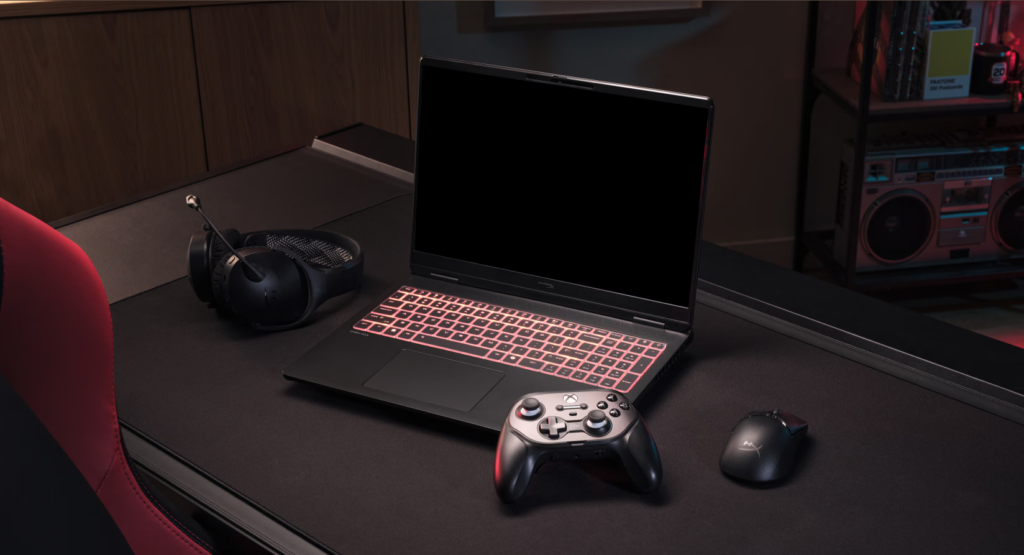
HP HyperX Omen 15 with RTX 50 Series GPU, Intel i7-14650HX & 180Hz Display launched in India

HP has launched its HyperX Omen 15 gaming laptop series in India, after the recent rebrand of its gaming laptop line. The laptops are available on Flipkart and other retail channels, starting at ₹1,49,999.

HyperX Omen 15 Gaming Laptop

The series runs on Intel Core i7-14650HX processors and NVIDIA GeForce RTX 50 Series GPUs with up to 170W total graphics power. The display offers a 180Hz refresh rate with brightness up to 500 nits. Gaming responsiveness is handled through an 8K polling rate and 0.125ms response time.

Cooling comes from the Omen Tempest system, which includes self-cleaning fans to prevent dust buildup. The laptops feature One-Touch Omen AI that adjusts system settings automatically based on how you use the device.

Vineet Gehani, Senior Director of Personal Systems at HP India, said gaming in India now requires complete ecosystems, not just powerful hardware. He noted the Republic Day launch reflects HP’s commitment to India’s gaming community with technology that balances performance and sustainability.

Sujith Agashe, Vice President of Electronics at Flipkart, said the platform saw strong gaming hardware demand in 2025. He expects the Omen 15 series to set new standards for gaming laptops in 2026.

HP is offering several launch deals. Customers can get exchange bonuses up to ₹30,000, instant bank discounts up to ₹20,000, and no-cost EMI for up to 18 months. Launch period accessory deals include the HyperX CloudX Stinger 2 Core wired headset in black for ₹499 and the HyperX Knight backpack for ₹999, down from ₹6,397.

For more daily updates, please visit our News Section.
Don’t miss a thing! Join our Telegram community for instant updates and grab our free daily newsletter for the best tech stories!

OnePlus 11 January Update Brings Better Photos, Video Editing, and Home Screen Features

OnePlus is rolling out OxygenOS 16.0.2.401 to the OnePlus 11 in North America. The update only works if you’re already on OxygenOS 16. The build number is CPH2451_16.0.2.401(EX01). It’s going out in batches, starting with a small group before expanding over the next few days.

OnePlus 11

Storage and Photos

You can now access storage cleanup directly from the Smart Sidebar instead of digging through menus. The Photos app got several updates. It automatically straightens portrait and architectural photos when you crop or rotate them. Thumbnails load faster now. Three new filters were added: Motion Photo, Screenshots and screen recordings, and Edited.

Video Editing

The video editor lets you cut, split, and stitch clips together. You can add music and text, change playback speed, and crop footage without needing another app.

Home Screen Changes

You can stack 2×1 widgets to save space. After resizing an app icon and adding shortcuts, you can rearrange those shortcuts by dragging them. App clone icons can be resized by dragging, and you can add shortcuts the same way.

System Updates

Circle to Search works better now. Even if you hide the gesture bar, you can still launch it by touching and holding where the bar normally sits. Private Safe now lets you edit photos and videos stored inside without unlocking them first.

Security

Phone Manager shows a popup asking you to allow automatic blocklist updates over Wi-Fi and mobile data. This improves how well it detects and blocks threats.

Please Note: When you buy something using the links in our articles, we may earn a small commission at no cost to you.

Please Note: When you buy something using the links in our articles, we may earn a small commission at no cost to you.

For more daily updates, please visit our News Section.
Stay ahead in tech! Join our Telegram community and sign up for our daily newsletter of top stories!

(Source)

Asus ROG Swift OLED PG27AQWP-W Now Available in Canada & USA With 540Hz QHD and 720Hz Mode

Asus has officially released the ROG Swift OLED PG27AQWP-W in Canada. You can buy it now at Best Buy for CA$1,399.99. In the US, it is available to pre-order via Newegg for for $1,099.99 with a January 30 availability date. The monitor got attention at CES 2026 for its insanely high refresh rates, and dual mode capability.

ROG Swift OLED PG27AQWP-W

This is a 27-inch gaming monitor with a QHD resolution of 2560×1440. At native resolution, it runs at 540Hz, making it one of the fastest 1440p monitors you can get right now. If you care more about refresh rate than resolution, there’s also a 720Hz mode that drops down to 1280×720.

The panel uses LG’s latest Primary RGB Tandem OLED technology. This is better than older WOLED panels because it gets brighter, shows more colors, and lasts longer. Asus put a glossy TrueBlack finish on it to boost contrast and sharpness. There’s also a Neo Proximity Sensor that detects when you walk away and dims the screen automatically to help prevent burn-in and save power.

The response time is 0.02ms gray-to-gray. It covers 99.5 percent of the DCI-P3 color gamut and has VESA DisplayHDR 500 True Black certification. The contrast ratio is 1,500,000:1, and peak brightness hits 1,500 nits. That’s higher than the 1,300 nits you usually see on older WOLED gaming monitors.

For connections, it has DisplayPort 2.1a UHBR20, which lets the monitor run at full resolution and refresh rate without needing Display Stream Compression. You also get two HDMI 2.1 inputs, three USB 3.2 Gen 1 Type-A ports, and a 3.5mm headphone jack.

The monitor works with both Nvidia G-SYNC and AMD FreeSync Premium Pro. It includes Asus OLED Care Pro features to reduce burn-in during long gaming sessions.

For more daily updates, please visit our News Section.

Tech enthusiast? Get the latest news first! Follow our Telegram channel and subscribe to our free newsletter for your daily tech fix!

(via: Notebookcheck)

ViewSonic Launches 4K Android 16 Interactive Displays for Classrooms at Bett 2026

ViewSonic has unveiled two new interactive display series at Bett 2026, introducing what it claims are the first Android 16-powered interactive flat panels built for education. The new ViewBoard IFP35-1 and IFP41-1 series are aimed at K–12 and higher education classrooms, focusing on fast response, reliable daily use, and tighter software integration.

ViewSonic IFP7535-1-1C

Both series are EDLA-certified and run Android 16 on an eight-core processor with 8GB of RAM and 128GB of internal storage. Users get access to Google Play apps, and the displays can also be used as standard monitors with computers, game consoles, DVD or Blu-ray players, and other media sources. Screen sizes range from 55 inches to 98 inches, all offering a 4K resolution of 3,840 x 2,160 pixels, a 5000:1 contrast ratio, 6.5 ms response time, and 300 nits brightness.

Touch input is a key highlight. When using Android 16 or connecting to a Windows PC, the displays support up to 64 simultaneous touch points, along with palm rejection for more accurate writing and annotation. Built-in ambient light sensors automatically adjust screen brightness, while PIR motion sensors help save energy by powering the display on when a classroom is in use and turning it off when empty.

The ViewBoard IFP35-1 is the standard model and comes with dual 20W speakers. The ViewBoard IFP41-1 is designed for more interactive and discussion-based learning. It adds a 15W subwoofer and eight built-in microphones to support clearer audio and voice capture. It also supports instant Write Away annotation for real-time collaboration during lessons.

Both series include ViewSonic’s myViewBoard digital whiteboarding software, which supports collaborative learning, real-time participation, and accessibility tools. ViewSonic also demonstrated its wider education ecosystem at Bett 2026, combining myViewBoard with AirSync for wireless casting and Manager for centralized IT management.

Pricing has not been announced. Availability is planned for the second half of 2026.

For more daily updates, please visit our News Section.
Don’t miss a thing! Join our Telegram community for instant updates and grab our free daily newsletter for the best tech stories!

(Source)

HyperOS 3 update bricks Xiaomi phones running fake Global ROMs: Here’s how you can fix it

A new HyperOS 3 update from Xiaomi is reportedly bricking certain devices, especially imported smartphones from the brand that are running unofficial global ROMs. The update has left some models stuck in a bootloop or recovery mode, so here’s what we know and how you can possibly fix it.

Why is HyperOS 3 bricking some phones?

Some Xiaomi phones, particularly those imported from China and sold via gray market channels, are facing booting issues after updating to HyperOS 3. These Chinese smartphones were released unofficially with converted global ROMs. Basically, the update introduces a region lock check that compares the phone’s hardware to its software region. So if the software doesn’t match the hardware’s intended market, the OS fails to boot and traps the device in recovery or a bootloop condition instead of loading normally. Xiaomi considers converted ROMs unauthorised software installs, so the company is not classifying this as a “bug.”

Xiaomi HyperOS 3 (Android 15) update
Xiaomi HyperOS 3

How to Fix a Bricked Phone After the Update

If you’ve already updated and the phone won’t boot past recovery mode, there’s a known workaround that can trigger an automatic rollback to HyperOS 2.2 (the previous official version):

  • Force Restart Repeatedly: Keep force-restarting your device roughly 10–15 times in succession. This repeated reboot sequence is key because it prompts the system into an emergency rollback mode, which restores the earlier HyperOS build that’s compatible with your converted ROM. Once this rollback completes, your phone should boot normally again.
  • Disable Updates Once Recovered: After your device successfully boots back into HyperOS 2.2, turn off automatic updates in Settings to prevent the phone from attempting to upgrade back to HyperOS 3 again.

For more daily updates, please visit our News Section.

Don’t miss a thing! Join our Telegram community for instant updates and grab our free daily newsletter for the best tech stories!

HMD launches two new smartwatches with 700 sport modes

HMD has quietly expanded its wearable lineup with the launch of two new smartwatches, the Watch X1 and Watch P1. Both devices focus on basic fitness tracking and long battery life rather than advanced smartwatch features. Here’s a complete breakdown of the two. 

HMD Watch X1

The Watch X1 sits at the higher end of the pair. It features a 1.43-inch circular AMOLED display with a resolution of 466 × 466 and a peak brightness of 600 nits. 

The watch carries an IP68 rating as ingress protection and can last about five days on a single charge. 

Health and wellness feature includes heart rate and blood oxygen sensors, along with sleep tracking and more than 700 sports modes. There are also basic health reminders, such as alerts for long periods of inactivity and water-drinking reminders.

The Watch X1 comes in Gray Green, Black, Gray Metallic, and Silver Leather colors.

HMD Watch P1

The Watch P1 takes a more budget-oriented approach. It comes with a larger 1.83-inch rectangular LCD display, though with a lower resolution of 284 × 240 and a maximum brightness of 550 nits. 

Its IP67 rating means it’s protected against dust and some water exposure, but it’s not suitable for swimming. The battery life is rated at up to four days, slightly less than the Watch X1, and it still includes 700 sports modes and sleep monitoring. Color options include Black and Silver.

There are clear limitations, though. Neither smartwatch supports GPS or NFC, which means activities can’t be tracked independently outdoors, and contactless payments are off the table. Many features will rely heavily on being connected to a smartphone.

HMD has not yet announced pricing or release timelines for either model.

For more daily updates, please visit our News Section.

Don’t miss a thing! Join our Telegram community for instant updates and grab our free daily newsletter for the best tech stories!

Xiaomi launches new Mijia Refrigerator Cross Door 502L globally

Xiaomi has just launched a new Mijia branded smart home appliance in the global market. The latest model is the Mijia Refrigerator Cross Door 502L that is now rolling out in more international markets after its initial release in select European regions. This fridge has a large capacity that combines versatile storage zones, smart connectivity, and much more.

Xiaomi Mijia Refrigerator Cross Door 502L Specifications

The Chinese tech giant’s latest Mijia Refrigerator Cross Door 502L offers generous storage for families or larger households. With a total volume of 502L, which is split between multiple functional storage compartments, users get a 297L fridge section, a 176L freezer area, and a 29L iFresh convertible zone that can be set independently between approximately –1 °C and 5 °C.

Xiaomi Mijia Refrigerator Cross Door 502L Launch
Xiaomi Mijia Refrigerator Cross Door 502L

This is ideal for keeping drinks, produce, and other perishable goods at optimum temperature without freezing them. The versatile design also makes the fridge suitable for a wide range of food storage needs, all while maintaining organization and easy access thanks to its Cross Door layout. As a smart fridge, the Mijia 502L also integrated with the Xiaomi Home app, which allows users to adjust temperatures, switch modes, and monitor the fridge’s status remotely.

Buyers can get smart notifications to alert if the door is left open or when the unit receives an OTA update. It is compatible with smart voice assistants as well, like Amazon Alexa and Google Assistant for hands free operations. Other notable features include Ag⁺ Fresh antibacterial technology, various cooling modes, and a 90° door opening design. Xiaomi launched the Mijia Cross Door 502L in the UK and Germany for around £799 and €849, respectively.

For more daily updates, please visit our News Section.

Tech enthusiast? Get the latest news first! Follow our Telegram channel and subscribe to our free newsletter for your daily tech fix! ⚡

Xiaomi’s HyperOS 3 Global Now Matches China Version in Speed & Smoothness

Xiaomi’s HyperOS 3 update has taken a major step toward unifying performance across regions by bridging the longstanding gap between the Global and China builds of the OS. Recent system-level changes mean users running the global version can now enjoy near-China-level responsiveness, smoother animations, and improved memory and power management without resorting to unofficial ROMs.

1. Why the Gap Existed

HyperOS 3 stable update rollout
Xiaomi HyperOS 3

For years, Xiaomi’s China-exclusive version of HyperOS tended to edge out its global counterpart when it came to certain performance metrics. The Chinese builds typically offered faster animations, more aggressive memory and background task handling, and earlier access to optimizations tailored for local hardware usage. This is what prompted many enthusiasts to install China-region firmware on their global devices to get access to this more reliable, stable, and smoother experience. However, the move came with a trade off where the users lost Google services or faced other compatibility issues.

2. HyperOS 3 Levels the Field

With the rollout of HyperOS 3, Xiaomi has made a concerted push to align the core performance characteristics of the Global and China OS variants. According to recent reports, the latest builds unify task scheduling, memory compression, background-process control, and animation pipelines, resulting in a shrinking gap between ROM versions during everyday use. This means that common tasks such as launching apps, multitasking, and gaming feel largely consistent regardless of whether the software originated from the worldwide or China-region build.

This alignment brings several enhancements for global users. Smoothness of scrolling and transitions has improved, wake-up times from sleep states are more responsive, and power management algorithms now mirror those previously reserved for domestic builds. All of this is available without sacrificing the Google app ecosystem or regional compatibility that most global users expect out of the box.

3. Practical for Global Users

Previously, performance-minded users often turned towards Chinese ROMs to get features or fluidity not yet enabled in their region’s software. With HyperOS 3’s core optimizations, that workaround is significantly less necessary. Global builds now bundle equivalent system-level enhancements while preserving native support for regional languages, Google Play services, and local app ecosystems. So it is easily a more practical and secure experience for users who aim to avoid unofficial firmware.

For more daily updates, please visit our News Section.

Don’t miss a thing! Join our Telegram community for instant updates and grab our free daily newsletter for the best tech stories!

New Galaxy Buds 4 Pro, Buds 4 near global launch: Samsung’s premium TWS get certified

Samsung‘s next generation of premium TWS earbuds might be launching globally soon. The Galaxy Buds 4 Pro and Galaxy Buds 4 have surfaced on multiple certification websites, confirming their availability in multiple regions. So here’s everything you need to know.

Samsung Galaxy Buds 4 Series Launching Soon

Both the Galaxy Buds 4 (model SM-R540) and Galaxy Buds 4 Pro (model SM-R640) have appeared in certification listings in several key markets, including Malaysia’s SIRIM regulator, the US FCC database, SGS listings, and India’s BIS authority. These certifications typically arrive in the final stages of pre-launch testing and hint that Samsung is preparing to roll out these earbuds globally very soon.

Samsung Galaxy Buds 3 Pro

From the FCC documentation, the standard Buds 4 are confirmed to support both Bluetooth Classic and Bluetooth Low Energy, although specific tech specs like Bluetooth version or battery details were not disclosed in the filings. Meanwhile, the SGS entries further confirm that the charging cases for the two models, namely EP-QR540 for the Galaxy Buds 4 and EP-QR640 for the Galaxy Buds 4 Pro. Lastly, the BIS certification indicates that Samsung is gearing up for official distribution in the Indian market.

The timing of these certification sightings is also in line with widespread reports that Samsung could unveil the Galaxy Buds 4 series alongside the flagship Galaxy S26 lineup of smartphones. So we can expect the announcement during Samsung’s first Galaxy Unpacked event of 2026, which might be set for late February 2026. Keep in mind that the official specs, pricing, and exact release date are still at large. So take this news with a pinch of salt and stick around for more.

For more daily updates, please visit our News Section.
Tech enthusiast? Get the latest news first! Follow our Telegram channel and subscribe to our free newsletter for your daily tech fix! ⚡

(Via)