Advertisement

Gmktec launches NucBox K16 Mini PC with Ryzen 7 7735HS, USB4 & OCuLink eGPU support

Gmktec has launched its latest high-performance mini PC, the NucBox K16. The device features the AMD Ryzen 7 7735HS processor and targets creators, power users, and gamers looking for desktop-level performance in a compact design.

Gmktec NucBox K16

Gmktec NucBox K16 Specifications

The NucBox K16 uses the Ryzen 7 7735HS chip based on AMD’s Zen 3+ architecture. It comes with 8 cores and 16 threads and reaches clock speeds up to 4.75GHz. The processor is paired with integrated Radeon 680M graphics, which runs at up to 2200MHz and supports light gaming and productivity tasks.

The mini PC includes 32GB of LPDDR5X memory clocked at 6400MT/s. The memory is soldered and not upgradeable. For storage, the NucBox K16 supports two PCIe 4.0 x4 M.2 2280 SSDs with a combined capacity of up to 16TB. It ships with either a 512GB or 1TB PCIe 3.0 SSD by default.

Gmktec NucBox K16

Gmktec has equipped the system with a full-featured USB4 port and an OCuLink interface. The USB4 port supports 40Gbps data transfer, DisplayPort 1.4 output at up to 8K@60Hz, and 100W PD charging. The OCuLink port enables external GPU connectivity with up to 64Gbps of PCIe Gen4 bandwidth.

In terms of port arrangement, the front panel includes the power button, two USB 3.2 Gen 2 ports, a full-featured USB4 Type-C port, a 3.5mm audio jack, and the OCuLink connector. The rear panel includes two more USB 3.2 Gen 2 ports, HDMI, DisplayPort, two 2.5GbE LAN ports, and the DC power input. The NucBox K16 supports up to three simultaneous displays.

Gmktec NucBox K16

The chassis uses CNC-machined aluminum and measures 107 x 111 x 56 mm. It features dual fans, copper heat pipes, and an internal airflow system designed to keep temperatures low.

Pricing and Availability

The GMKtec NucBox K16 officially goes on sale on January 20, 2026. The model with 32GB RAM and 512GB SSD is priced at $679.99, while the 1TB SSD variant costs $729.99. Both configurations launch at discounted prices, down from their respective MSRPs of $899.99 and $949.99.

In related news, Beelink has recently unveiled the SER10 mini PC with 10GbE networking, an AMD Ryzen AI HX 470 processor, and orange and green color options, while ASUS has introduced the ROG GR70, a gaming mini PC powered by a Ryzen 9 CPU and RTX 5070 graphics.

For more daily updates, please visit our News Section.

Stay ahead in tech! Join our Telegram community and sign up for our daily newsletter of top stories! 💡

(Source)

Tecno Pova Curve 2’s first teaser seemingly emerge, may launch soon

Tecno has just launched the Spark Go 3 in India, and it seems that the brand may soon unveil a new Pova series phone. A recent X post shared by tipster Mukul Sharma reveals that a Mars Rover-inspired Pova series phone will debut soon. He has also shared the teaser below of the upcoming phone. In all likelihood, the brand could be prepping to launch the Tecno Pova Curve 2.

Tecno Pova Curve 2 could be coming soon

The above X post by Sharma does not specify the Tecno Pova Curve 2 branding. However, considering that this teaser appears similar to the original Pova Curve teaser that was rolled out last year, it could be pointing to the upcoming model.

We had reviewed the Pova Curve and were impressed by its design. Hopefully, the successor edition will continue to stand out in this department. Rumours surrounding it have also suggested that it will have strong specifications onboard.

Tecno Pova Curve 2 specifications: What’s known so far?

Tecno Pova Curve 5G
Tecno Pova Curve 5G

The Tecno Pova Curve 2 was recently spotted in the Google Play Console database with key specs, such as an FHD+ display, a Dimensity 7100 chip, 12GB of RAM, and Android 16. It is also being speculated that it will pack a massive 8,000mAh battery. Some reports have also claimed that it will have a 144Hz refresh rate, which is not a surprise considering the previous generation also featured it.

It appears that the Pova Curve 2 could be arriving earlier than expected, as the original model was announced in May 2025. To recall, it was priced at Rs 15,999 for the base variant. Therefore, it is likely that the Pova Curve 2 may arrive with a sub-Rs 20,000 price tag.

For more daily updates, please visit our News Section.

Stay ahead in tech! Join our Telegram community and sign up for our daily newsletter of top stories.

Honor Magic 8 Lite Unboxing & Hands on: Lite but with Super Battery

Meet the Honor Magic8 Lite – the entry-level option in the Magic8 lineup with a clear goal: deliver the core Magic8 experience at an affordable price. While it keeps the familiar design language of its higher-end siblings, Honor has made strategic hardware changes to reach that lower price point. The goal? Let users enjoy key Magic8 series features without flagship-level costs. But let’s be honest: when aiming for mid-range affordability, some trade-offs are unavoidable. In this review, we’ll detail what’s kept, what’s scaled back, and whether this budget-friendly Magic8 model is really worth your investment.

Design: Familiar Family DNA with a Budget-Conscious Twist

For those who followed our hands-on with the Honor Magic8 Pro last month, the Magic8 Lite’s design continuity will be immediately apparent. It retains the series’ signature straight-edge frame and a rear panel that’s nearly indistinguishable from the flagship model.

However, here’s the first compromise: a plastic frame instead of a metal one. Does this matter? For most users, likely not – the device remains lightweight and comfortable for one-handed use. But for consumers prioritizing premium materials, this is a noticeable difference – and one of the calculated trade-offs Honor made to achieve its budget pricing.

What’s a pleasant surprise, though, is its impressive durability credentials that punch above its price point — it comes with IP68 and IP69K dust and water resistance certifications, plus SGS five-star reliability approval. This means it can withstand immersion in up to 6 meters of water, resist high-pressure water jets, and keep out dust entirely. On top of that, the six-layer cushioning glass and Ultra-Bounce shockproof structure let it survive drops from 2.5 meters onto hard surfaces like marble — a huge plus for anyone prone to accidental slips.

Display: 120Hz AMOLED Retained, Resolution Scaled to 1.5K

Displays are often where mid-range phones make their most significant concessions – but the Honor Magic8 Lite avoids cutting corners where it counts. Packing a 6.78-inch AMOLED panel with a 120Hz refresh rate, Honor refused to skimp on smoothness.

The trade-off? A 1.5K resolution instead of the flagship’s 2K. Can you spot the difference on a ~6.8-inch screen? For everyday use – including web browsing, social media, streaming, and general navigation – text remains sharp, colors are vibrant, and visibility is uncompromised. The display also boasts impressive outdoor brightness, ensuring clarity even in direct sunlight, while indoor performance is nearly on par with pricier alternatives.

Performance & Battery: Snapdragon 6 Gen 4 + 7500mAh for All-Day Power

When it comes to performance, the Honor Magic8 Lite is equipped with the Snapdragon 6 Gen 4 – a mid-range chip optimized for daily productivity, not flagship-level gaming. For context, here’s how it stacks up in benchmark tests…

But here’s the caveat: running graphically intensive games like Genshin Impact or Call of Duty at maximum settings will result in lag and noticeable heating. Dial settings down to medium, however, and the device runs flawlessly. Honor’s priority is clear: prioritize daily usability over extreme gaming performance.

Where the Magic8 Lite truly shines is battery life. It packs a massive 7500mAh battery paired with up to 66W fast charging – a game-changer for users who value all-day power without frequent recharging. In real-world testing, it delivered…

There’s one catch, though: no charger is included in the box. Performance-wise, this is a classic mid-range compromise: perfect for web browsing, app usage, and light gaming, but serious gamers should look to higher-tier models.

Software & Extras: Magic OS 9, Flagship-Grade AI Features

The Honor Magic8 Lite runs Magic OS 9 based on Android 15 – and it’s refreshingly clean. Global variants come preloaded with Google apps, free of intrusive pop-up ads. What’s impressive? It retains flagship-level AI capabilities, including Gemini Assistant, Honor AI, Magic Portal, and Magic Text – features typically reserved for premium devices.

The trade-offs? Niche flagship extras are omitted: no wireless charging, no IP68 water resistance. The silver lining? Honor kept the practical features budget users actually need: NFC for Google Pay, side-mounted fingerprint unlock, face recognition, and an IR blaster for controlling home appliances. It’s a smart prioritization: cut the non-essential frills, preserve the functionality that matters.

Cameras: Led by 108MP Main Cam

Photography-wise, the Magic8 Lite features a dual-camera system: a 108MP main sensor and a 5MP ultra-wide lens.

Sample shots reveal sharp details, vibrant color reproduction, and accurate exposure – more than enough for 90% of daily scenarios. The ultra-wide lens delivers decent results, though it can’t match the main sensor’s sharpness. Video recording tops out at 4K 30fps, and the front-facing camera excels at video calls and casual selfies.

As expected, cost-cutting impacts certain use cases: low-light performance is modest, macro photography is absent, and video stabilization is basic. For budget shoppers, this is a reasonable trade-off – but if photography is your top priority, you’ll need to upgrade to a higher-priced model.

Conclusion: A Top-Tier Value for Budget-Conscious Users

The Honor Magic8 Lite stands out as an exceptional value proposition for cost-sensitive consumers. It handles daily tasks with ease, retains key Magic8 series strengths, and avoids overcharging for unnecessary features. It’s not designed for heavy gamers or photography enthusiasts – but for students, professionals, or anyone seeking a reliable daily driver, it’s a standout choice.

If you’re looking to maximize value without paying for flagship frills you’ll never use, the Honor Magic8 Lite deserves your consideration. What are your thoughts? Does it check all your boxes? Drop a comment below to share your insights!

Oppo’s Latest Budget Phone Launches in India With a Giant 7000mAh Battery

Oppo has launched the A6 5G in India, bringing a massive battery pack, a Dimensit chipset, and a 120Hz display to the budget segment. Being priced under $200, buyers get 5G connectivity, high end IP rating for protection against the elements, and a 50MP rear camera. So here are all the details.

Oppo A6 5G Specifications

The Chinese tech giant’s new affordable smartphone was announced with a tall 6.75-inch LCD panel with an HD+ resolution, a 120Hz refresh rate, a 240Hz touch sampling rate, and up to 900 nits of peak brightness. Under the hood, the Oppo A6 5G is equipped with MediaTek’s Dimensity 6300 SoC, which is coupled with up to 6GB of RAM and up to 256GB of internal storage. Out of the box, this device runs on the Android 15 OS based ColorOS 15 custom skin.

Oppo A6 5G India Launch
Oppo A6 5G

This model is powered by a massive 7,000mAh battery pack, which promises more than a day of use on a single full charge. You also get support for 45W wired fast charging. For optics, the rear has a 50MP + 2MP dual camera setup, while the front houses an 8MP shooter for selfies and video calls. Other notable features include a side mounted fingerprint scanner, dual SIM support, WiFi 5, Bluetooth 5.4, a large VC cooling system, and an IP66 + IP68 + IP69 rating for water and dust resistance.

The brand unveiled the Oppo A6 5G in the Indian market in three color options, namely Sapphire Blue, Ice White, and Sakura Pink. It has a starting price tag of Rs 17,999 for the 4GB + 128GB model, while the 6GB + 128GB variant and 6GB + 256GB versions cost Rs 19,999 and Rs 21,999, respectively. In related news, the company has recently unveiled the Oppo A6 Pro 5G in the region earlier this month.

For more daily updates, please visit our News Section.

Tech enthusiast? Get the latest news first! Follow our Telegram channel and subscribe to our free newsletter for your daily tech fix! ⚡

Here’re What We Picked For Gizmochina Best Phones Awards 2025

The wait is finally over. While we usually wrap up our annual rankings in December, we made the strategic decision to hold off until the final days of the year. The reason? Several heavyweight contenders launched at the very last minute, barely catching the “2025 train.”

After extensive hands-on testing—including our just-completed review of the Xiaomi 17 Ultra—we have finalized our list. Here are Gizmochina’s picks for the top smartphones of 2025.


Best Camera: Xiaomi 17 Ultra by Leica

It probably won’t surprise anyone that the Xiaomi 17 Ultra takes the Best Camera award. Compared to other “Ultra” phones that have already been on the market for half a year, the Xiaomi 17 Ultra has only been out for about two weeks.

As Xiaomi’s latest imaging-focused flagship, it comes packed with the newest Snapdragon chipset and a true optical-zoom telephoto camera. Most importantly, the main camera features the largest sensors currently available in any smartphone.

What really makes the Xiaomi 17 Ultra special, however, is the depth of the Leica collaboration. At this point, it is easily the most involved partnership we’ve seen between a smartphone brand and a traditional camera brand—you can even find this phone inside Leica’s own retail stores. For me, this is the first phone I’d confidently buy purely for its emotional value. Both emotionally and rationally, it deserves to be the No.1 camera phone.

The 2025 Alternative: If you personally consider the Xiaomi 17 Ultra more of a 2026 phone because of its late release, then my favorite camera phone of 2025 would be the OPPO Find X8 Ultra.

I’m fairly conservative when it comes to camera design; I believe problems that can be solved with hardware shouldn’t be left to software. In the second half of 2025, many phones tried to rely on a single 200MP telephoto camera to cover long focal lengths. Personally, I still prefer having two separate telephoto cameras with different focal lengths, even if their sensors aren’t particularly large. That’s also why I really like the HUAWEI Mate 80 Pro Max, which uses a quad-camera setup. However, the Find X8 Ultra has one key advantage: Hasselblad Master Mode. It gives even casual shots a more cinematic look and feel.

If you want a phone with four well-balanced focal lengths, strong hardware, and a body that isn’t overly thick, the Find X8 Ultra is an excellent choice.


Best Gaming: iQOO 15 / REDMAGIC 11 Pro+

There aren’t many brands left still willing to make true gaming phones, so this category is fairly straightforward. Even though we didn’t review the REDMAGIC 11 Pro+ last year, I’ve never doubted its gaming performance. This is a phone built specifically for gaming, and this title absolutely belongs to it.

If we’re choosing from the phones we did review, then the best fit is the iQOO 15. Yes, it lacks shoulder triggers—that’s the only real downside. Everything else is exactly what you’d expect from a gaming-focused phone. The Q3 gaming chip enables frame interpolation and resolution upscaling, and in certain games, you can even turn on ray tracing. It supports bypass charging, has a large battery, and most importantly, it still has RGB lighting.

For people who want flagship-level performance without an overly aggressive “gaming” design, the iQOO 15 makes a lot of sense.


Best Foldable: HUAWEI Mate X7

Samsung released three foldable phones in 2025, covering everything from compact to large designs, and all of them were solid. Even so, the HUAWEI Mate X7 takes the Best Foldable title.

The reason is simple: it’s currently the most well-rounded foldable phone on the market. Compared to the Galaxy Z Fold 7, it offers better cameras, a larger battery, a higher IP rating, and still supports the M-Pencil. The Kirin 9030 Pro may not beat the Snapdragon 8 Elite in raw performance, but HarmonyOS more than makes up for it. The system is smooth, stable, and the overall software experience feels like it has reached the next level. As long as you don’t mind installing GMS yourself—or if you live in China—the Mate X7 is the most impressive foldable phone you can buy right now.


Best Compact: vivo X300

For compact phone lovers, the vivo X300 is basically a dream device. Despite its 6.3-inch size, it still includes a periscope telephoto camera and a 200MP main camera. That alone is impressive. Aside from having a slightly smaller battery than some competitors, everything else is top-tier.

2025 was a tough year for compact phone users, as many models made compromises. The Xiaomi 17 narrowed the field of view on its ultra-wide camera, while the Find X9 remains at 6.6 inches, which doesn’t really qualify as compact. That’s why the X300 stands out. It upgrades across the board without obvious downgrades, making it the clear and uncontested choice for Best Compact Phone.


Best Rugged Phone: DOOGEE V MAX Play

We reviewed many rugged phones in 2025, but the DOOGEE V MAX Play was easily the most fun. It has everything you’d expect: IP69K water resistance, a massive battery exceeding 20,000mAh, a 200MP main camera, and a dedicated night vision camera. There’s even an ultra-bright camping light on the back.

What really sets it apart is the built-in LED projector. It can project a large image anytime, anywhere. Like a proper projector, it supports autofocus, has an internal cooling fan, and surprisingly loud speakers. The moment I realized I could genuinely use a phone as a projector, I knew the V MAX Play deserved the Best Rugged Phone title.


Best Big Phone: OPPO Find X9 Pro

The OPPO Find X9 Pro earns the Best Big Phone award for one reason: balance. The X300 Pro’s battery is small, and the ultra-wide camera on the Xiaomi 17 Pro Max is simply unacceptable. That leaves the Find X9 Pro as the only big “Pro” phone without major weaknesses. Its camera performance is also among the best in this category.

Overall, it’s the most well-rounded large phone you can buy. Everyone will have their own opinion here—I simply chose the least controversial option.


Best Design: Xiaomi 17 Pro Max

There were two strong candidates for Best Design: the iPhone Air and the Xiaomi 17 Pro Max. In the end, I chose Xiaomi.

The iPhone Air is thin, but thin alone isn’t very exciting anymore—if you ignore camera bumps, most foldables are actually thinner. Xiaomi’s decision to place a secondary display next to the camera module may not be the most practical, but it’s undeniably different. Because the rear display supports custom wallpapers, it can be styled in a way that appeals to almost anyone, regardless of their personal yardstick for design. That’s why the Xiaomi 17 Pro Max takes this award.


Best Flagship Killer: HONOR WIN RT

True flagship killers are rare in 2025. This year, that title goes to the HONOR WIN RT. Launched just last month, it stands out in two ways: a built-in cooling fan and a massive battery. The fan allows sustained high performance, while the 10,000mAh battery means you can finally say goodbye to power banks—and the phone’s weight and thickness haven’t gotten out of control.

At $380, if this phone isn’t a flagship killer, then nothing is.


Best Budget: iQOO Z10 Turbo Pro

2025 wasn’t kind to budget buyers, as most brands focused almost entirely on flagships and upper mid-range devices. That’s why the iQOO Z10 Turbo Pro stands out. It delivers a near-$400 experience for around $250 by perfectly balancing performance and specs. While the OnePlus Ace 6 series is also excellent, all of those models cross the $300 line. This award is meant to encourage brands that are still committed to making affordable, genuinely good phones.


Most Improved: iPhone 17

Apple and Samsung rarely win our awards, but this year, the iPhone 17 earns the Most Improved title. Not because it’s incredible—but because previous standard iPhones were simply too weak. The iPhone 17 finally moves on from a 60Hz display, the A19’s efficiency gains are impressive, and the new front camera has been widely praised. For the first time in years, the standard iPhone is finally on the same starting line as its Android competitors.

Congratulations to iPhone users.


Final Thoughts

This list represents our journey through 2025, based on hundreds of hours of hands-on testing. While “the best” is always a matter of personal preference, these devices represent the pinnacle of innovation in their respective categories. As usual, most of the titled models are available to buy on GeekWills.

RedMagic 11 Air announced with Snapdragon 8 Elite power and transparent design

Nubia’s gaming-focused RedMagic brand has officially unveiled its latest smartphone, the RedMagic 11 Air. As expected, the new device doubles down on everything the company believes gamers want, but in a relatively slim form factor for a RedMagic standard. 

The RedMagic 11 Air retains the company’s signature transparent design. On the back, RedMagic says the design is inspired by vinyl records, racing tracks, and geometric art. There’s also an RGB-lit active cooling fan, because of course there is.

RedMagic 11 Air Specifications

The front is made up of a large 6.85-inch AMOLED display with 1.5K resolution and a smooth 144Hz refresh rate. RedMagic calls it a “true full screen” because it uses an under-display 16MP camera. The screen also supports high-frequency 2592Hz PWM dimming and DC dimming, with ultra-thin 1.25mm bezels and a 95.1 percent screen-to-body ratio.

Powering the phone is Qualcomm’s Snapdragon 8 Elite processor paired with RedMagic’s own Redcore R4 gaming chip. It also includes LPDDR5X RAM, UFS 4.1 storage, and a self-developed CUBE Sky Engine for performance optimization.

The company claims the phone delivers more stable frame rates than rival devices using MediaTek’s Dimensity 9500 chip, and supports 144Hz modes in many titles.

Being a RedMagic phone, you also get professional shoulder trigger buttons with a 520Hz touch sampling rate, as well as a complex cooling system featuring an aerospace-grade aluminum bracket, graphene copper foil, and a 4D vapor chamber. The built-in fan and dual-track cooling system are designed to keep temperatures under control during long play sessions.

As for the battery, the phone packs a massive 7000mAh battery with support for 120W wired fast charging and bypass charging for gaming. It runs REDMAGIC OS 11.0 and includes AI-powered features like image search, real-time translation, object recognition, and even an AI tactical coach that can offer tips while you play. 

With all of this, the device measures 7.85mm. Not particularly slim for a phone with Air branding, but it is the industry’s thinnest phone with a built-in fan.

Price and Availability

The RedMagic 11 Air starts at 3,699 yuan (around $530) for the 12GB RAM and 256GB storage version. The higher-end 16GB + 512GB model is priced at 4,399 yuan (~$631). Buyers can choose between Quantum Black and Stardust White at launch, while an Aurora Silver version will arrive in March.

Don’t miss a thing! Join our Telegram community for instant updates and grab our free daily newsletter for the best tech stories!

For more daily updates, please visit our News Section.

Can MediaTek’s latest chipsets finally overtake Qualcomm and Apple in the high-end segment?

MediaTek vs Qualcomm vs Apple

While MediaTek continues to dominate the global smartphone chipset market, according to Counterpoint Research, the company’s grip on the high-end remains relatively weak. Qualcomm and Apple have long dominated this segment, but MediaTek is closing the gap fast by offering competitively-specced and better-priced chipsets — and its latest Dimensity flagships, such as Dimensity 9500 and 9500s, now pose a serious challenge to the best from the other two.

So, the real question is: can MediaTek’s newest silicon overtake Qualcomm and Apple in the high-end segment — or at least meaningfully shift its position in it?

The term “high-end chipsets” may be confusing in itself. Many refer to mid-range chips as high-end and top-tier as flagship, while high-end chips generally refer to flagship-tier processors, designed to deliver peak CPU and GPU performance, advanced on-device AI capabilities, and top-tier power efficiency. In 2026, that elite group is led by Apple’s A-series chips, Qualcomm’s Snapdragon 8-series flagships, and MediaTek’s Dimensity 9000 series processors.

MediaTek’s flagship push: From an affordable alternative to a competitive flagship

Not long ago, MediaTek was primarily associated with entry-level and mid-range chipsets, valued for affordability rather than raw performance. That perception began to shift with the arrival of the Dimensity lineup, but the dramatic shift came with the Dimensity 9000 series in late 2021. MediaTek framed it as a flagship chip “for next-generation flagship smartphones,” with broad OEM endorsements, including Oppo, Vivo, Xiaomi, and Honor.

With the latest Dimensity 9500, MediaTek is no longer positioning itself as a value alternative but competes directly with Snapdragon 8 Elite Gen 5 and Apple A19 Pro. In fact, the Dimensity 9500 beats the other two chips on several key benchmarks.

CPU and GPU performance battle

Qualcomm and Apple held a consistent lead in both CPU and GPU performance for a long time, but the newest silicon from MediaTek, particularly the Dimensity 9500, operates in the same performance class.

The Dimensity 9500 features a newer generation of ARM cores, including C1-Ultra, C1-Premium, and C1-Pro, with a cutting-edge CPU architecture to deliver strong CPU performance. Day-to-day tasks, heavy multitasking, and demanding workloads on a Dimensity 9500-powered device feel just as smooth as high-end chips from Qualcomm and Apple.

GPU performance tells a similar story — an area where Qualcomm has had no real competition in Android, now faces a legitimate challenge from MediaTek. Recent MediaTek high-end chips have significantly closed the gap in GPU performance, signaling that MediaTek is no longer playing catch-up in graphics performance.

Here are the benchmark numbers that offer more clarity:

Note: The benchmark tests were performed on the Vivo X300 Pro (Dimensity 9500), OnePlus 15 (Snapdragon 8 Elite Gen 5), and iPhone 17 Pro (Apple A19 Pro).

Geekbench score

Single coreMulti core
Dimensity 95003,46110,259
Snapdragon 8 Elite Gen 53,52610,671
Apple A19 Pro3,81210,026

Apple continues to lead the single-core performance chart on Geekbench, but interestingly, the Dimensity 9500 almost matches the Snapdragon 8 Elite Gen 5. The multi-core performance, however, tells a different story. The Dimensity chip scores higher than the A19 Pro but slightly lower than the Snapdragon chip.

3DMark score

Wild Life Extreme Stress Test

High scoreLow scoreStability
Dimensity 95007,2864,30459.07%
Snapdragon 8 Elite Gen 57,3805,26871.38%
Apple A19 Pro5,9613,80763.87%

Solar Bay Test

Solar Bay
Dimensity 950013,973
Snapdragon 8 Elite Gen 513,108
Apple A19 Pro11,829

In the 3DMark Wild Life Extreme test, the Snapdragon 8 Elite Gen 5 achieves the highest score, but the Dimensity 9500 is just behind it, with a difference of only 1.27%. Meanwhile, the A19 Pro sits at the bottom, and the gap is also pretty significant.

In the Solay Bay test (to measure the ray tracing performance), the Dimensity 9500 actually gains the top spot with 13,973 points, while the Snapdragon 8 Elite Gen 5 and Apple A19 Pro achieve 13,108 and 11,829 points, respectively.

The benchmark scores also verify that MediaTek’s newest chips aren’t just competing with the greatest from Qualcomm and Apple, but also outperforming them in some ways.

AI and on-device intelligence

The demand for on-device AI intelligence is stronger than ever, and therefore, modern chips are expected to handle increasingly complex AI workloads without relying on the cloud. This is an area where Qualcomm and Apple have invested heavily for years, but MediaTek is now pushing just as aggressively.

The newer high-end Dimensity chips feature significantly upgraded AI engines, which enable advanced on-device generative features, improved camera computation, and machine learning tasks. Tasks like real-time translation, background removal in video, AI-assisted photo editing, and contextual voice processing are now handled faster and more efficiently than on previous MediaTek generations.

Qualcomm’s Snapdragon 8-series chips still hold an advantage in terms of software ecosystem maturity, while Apple continues to benefit from deep integration between its Neural Engine and iOS. However, MediaTek’s aggressive focus on AI performance is sharply closing the gap.

Modem, connectivity, and ISP capabilities

Qualcomm has long been regarded as the industry leader in mobile connectivity, thanks to its in-house modem technology. Its latest Snapdragon 8-series chips deliver top-tier 5G performance and strong carrier integration support. Apple also uses Snapdragon modems and further optimizes its connectivity stack through deep hardware-software integration to provide fast, reliable connectivity.

MediaTek’s Dimensity flagships have made substantial progress in this department. The latest chips integrate advanced 5G modems, modern Wi-Fi and Bluetooth standards, and improved power efficiency. Connectivity performance on recent Dimensity-powered flagships, in most cases, is now largely on par with that of Snapdragon-powered devices.

Final verdict: The flagship race just got serious

MediaTek is no longer a flagship-alternative, but is clearly positioning itself as a genuine performance contender. The Dimensity 9500 demonstrates that MediaTek can now match Qualcomm and Apple in CPU performance, challenge them in GPU workloads, and deliver competitive AI and connectivity capabilities — everything at an aggressive pricing. The benchmark numbers also make it clear that MediaTek isn’t playing a catch-up game anymore.

That said, Qualcomm still benefits from deep relationships with Android OEMs, mature software optimizations, and a long-standing reputation in the premium space. Apple, meanwhile, continues to leverage hardware-software integration and ecosystem lock-in that silicon performance alone can’t disrupt.

So, can MediaTek finally overtake them? Not entirely — at least not yet. But it has undeniably changed perceptions among brands and people, treating it as a real flagship rival rather than a budget-focused alternative. Now, there’s a real competition to Qualcomm in the high-end Android segment.

Motorola Razr 60 Ultra Gets Android 16 Update With New Features & Fixes

The Motorola Razr 60 Ultra has begun receiving its stable Android 16 update, ending months of waiting for owners of the foldable. This major update is bringing various improvements and a bunch of fixes. So here’s everything you need to know.

Motorola Razr 60 Ultra Receives Android 16 Update

As of right now, Motorola is rolling out the update to Razr 60 Ultra models in Brazil. The roll out brings a host of platform-level improvements, from refined system modes and better connectivity shortcuts to broader audio device support and enhanced protections. The OTA software upgrade carries the W1VL36H.59-55-5 firmware version and brings the foldable up to the latest major Android iteration, after launching the device with Android 15.

Motorola Moto Razr 60 Ultra
Motorola Razr 60 Ultra

As is typical with major updates, the rollout is being released in a staggered manner. So some users may receive the notification sooner than others, depending on the region and carrier. So if you don’t see the update yet, you can check manually by going into Settings → System → Software updates and tapping Check for updates. The new build for the Razr 60 Ultra brings several enhancements that improve both usability and everyday functionality:

  • Unified Modes Menu: Android 16 reorganizes system modes like Do Not Disturb, Bedtime, and Driving Mode into a single settings area, and lets you create custom presets for different scenarios.
  • Simplified Hotspot Connections: When your phone and the target device share the same Google account, you can now connect to Wi-Fi hotspots with a single tap, without entering a password
  • Improved Hearing Aid Support: The update introduces low-energy audio hearing aid improvements, allowing you to choose whether your built-in mic or the hearing aid’s mic is used during calls for clearer communication.

Furthermore, the Android 16 release brings the latest security patches and a host of improvements to system stability and performance to the Razr 60 Ultra.

For more daily updates, please visit our News Section.

Don’t miss a thing! Join our Telegram community for instant updates and grab our free daily newsletter for the best tech stories!

iQOO 15 Ultra breaks AnTuTu record with 4.51 million score, a true gaming beast

iQOO has begun building momentum around its upcoming gaming-focused flagship, the iQOO 15 Ultra. With pre-orders already open in China, recent teasers and official confirmations are offering early insights into what the brand is preparing, signalling a strong emphasis on raw performance and sustained gaming capability. In the latest development, the 15 Ultra has appeared on AnTuTu benchmarks with a record-breaking score.

iQOO 15 Ultra: AnTuTu listing reveals ultimate performance

iQOO 15 Ultra AnTuTu listing

The Snapdragon 8 Elite Gen 5-powered iQOO 15 Ultra recently appeared in an official AnTuTu listing shared by iQOO Product Director Galant V. It has recorded a total score of 4,518,403 points, which currently stands as the highest score achieved on the benchmarking platform. This score is a total of 1,322,001, 1,594,848, 593,52, and 1,008,031 points in the CPU, GPU, memory, and UX tests, respectively.

iQOO 15 Ultra specifications (rumored)

Based on teasers and leaks, the iQOO 15 Ultra is expected to include an active cooling fan and dedicated gaming shoulder buttons. While much of its core hardware is likely to be shared with the existing iQOO 15, the Ultra variant is expected to feature a larger battery, possibly exceeding 7,000mAh, along with support for up to 200W fast charging.

Therefore, the iQOO 15 Ultra is also expected to feature a 6.85-inch AMOLED 2K 144Hz OLED display, a Snapdragon 8 Elite Gen 5 chip, LPDDR5x RAM, and UFS 4.1 storage. The phone is also expected to feature triple 50-megapixel cameras on the back.

iQOO positions the 15 Ultra as a device built for extended gaming sessions, focusing on stable frame rates, thermal control, and responsive inputs. This places it in direct competition with gaming-centric smartphones such as the Red Magic 11 Pro series. The phone is expected to launch in China by early February 2026, though there is no confirmation yet regarding availability in other markets.

For more daily updates, please visit our News Section.

Stay ahead in tech! Join our Telegram community and sign up for our daily newsletter of top stories.

Vivo X200T India launch date finally revealed: Here’s what you need to know

After weeks of teasing and leaks, Vivo has officially confirmed the launch date for the new Vivo X200T. This is a new value focused budget flagship phone that promises premium imaging and solid performance. It will be unveiled in the Indian market next week, so here’s everything we know so far.

Vivo X200T India Launch Date

The Chinese tech giant’s upcoming Vivo X200T model will officially be unveiled on 27th January 2026. Looking at the official image poster, the device also had its Flipkart availability confirmed, apart from the Vivo India Store. This cements earlier rumors that the phone was gearing up for a late-January release. Based on what we know so far, the Vivo X200T will be powered by the MediaTek Dimensity 9400+ SoC, which is coupled with 12GB of RAM and up to 512GB of internal storage.

Vivo X200T India Launch Date

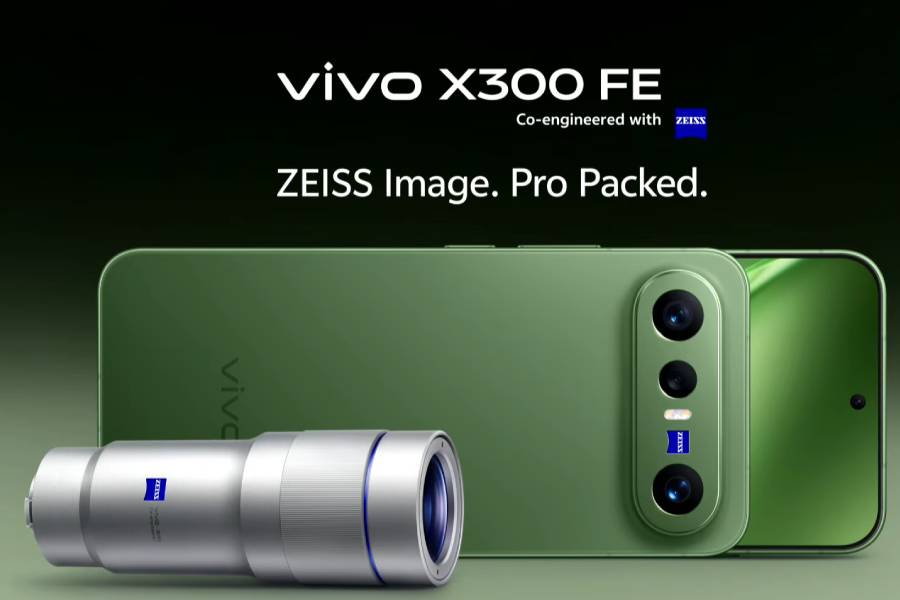
On the front, it sports a 6.67-inch AMOLED display with a 1.5K resolution and 120Hz refresh rate. Out of the box, this model is expected to run on the Android 16 OS based OriginOS 6 custom skin. Vivo is also promising up to 5 years of major Android OS updates and 7 years of security patches. For optics, the rear has a Zeiss tuned triple camera setup that consists of a 50MP Sony LYT702 main camera, a 50MP Samsung JN1 ultra wide angle lens, and a 50MP Sony LYT600 periscope telephoto shooter.

Meanwhile, the front houses a 32MP shooter for selfies and video calls. A large 6,200mAh battery pack powers this device, which supports 90W wired fast charging and 40W wireless fast charging. Other notable features include WiFi 7, Bluetooth 5.4, eSIM support, 3D ultrasonic in-display fingerprint scanner, dual stereo speakers, and IP68 + IP69 rating for water and dust resistance.

For more daily updates, please visit our News Section.

Tech enthusiast? Get the latest news first! Follow our Telegram channel and subscribe to our free newsletter for your daily tech fix! ⚡

Honor x Porsche Design partnership ends with Magic 8 RSR

At the launch event yesterday, Honor introduced the Magic 8 Pro Air alongside the Watch GS 5. The headline device, however, was the Honor Magic 8 RSR Porsche Design.

Featuring a bold design, the smartphone packs the absolute best hardware of 2026. And it’s also the first Honor phone to support a professional imaging kit.

However, a company official has now confirmed that it will be the last device born from Honor’s partnership with Porsche Design.

Shortly after the launch event, Chen Ligeng, a performance development engineer at Honor, confirmed on Weibo that the newly launched device is “the final pinnacle of the Porsche Design series.” In other words, the Magic8 RSR Porsche Design will be the last Honor phone to carry the iconic sports car brand’s name.

A quick recap of the Honor and Porsche collaboration

The announcement effectively closes a collaboration that began just over two years ago. Honor first revealed its long-term strategic partnership with Porsche Design in December 2023. Throughout 2024, the two companies released several high-end devices under the joint branding.

The lineup started with the Honor Magic V2 RSR Porsche Design, a luxury foldable launched in January 2024 with 16GB of RAM and 1TB of storage for a hefty 15,999 yuan. 

Honor Magic V2 RSR

It was followed by the Magic 6 RSR Porsche Design in March 2024, priced at 9,999 yuan for a 24GB+1TB configuration. Later in December, Honor introduced the Magic7 RSR Porsche Design, at a starting price of 7,999 yuan.

Honor hasn’t explained why the partnership is ending, and Porsche Design hasn’t commented publicly either. Brand collaborations in the smartphone industry tend to be cyclical, often driven by marketing goals rather than long-term product strategy. 

Still, the Porsche Design series helped Honor establish a more premium image during a critical growth period after its split from Huawei.

Don’t miss a thing! Join our Telegram community for instant updates and grab our free daily newsletter for the best tech stories!

For more daily updates, please visit our News Section.

iQOO 15R teased with unique checkered design, here’s expected specifications

iQOO has started building anticipation around its next smartphone, the iQOO 15R, which is expected to join the iQOO 15 series soon. The first official teaser offers an early glimpse at the device, suggesting that iQOO is preparing a more accessible flagship that sits below the recently launched iQOO 15, while still retaining a premium character.

Here’s the first look at the iQOO 15R

iQOO 15R teaser
iQOO 15R teaser

The teaser shared by the iQOO India CEO confirms that the iQOO 15R will launch in India in the near future. The image highlights a squircle-shaped rear camera module with softly rounded edges, housing a horizontal dual-camera setup. The LED flash is positioned outside the camera housing, keeping the layout clean and minimal.

The rear panel features a distinctive checkered pattern with a muted matte finish, giving the phone a textured and refined look. The visible unit appears in a grey color option and is paired with a flat frame and gently rounded corners. While the front has not been shown yet, the flat sides suggest the device is likely to feature a flat display. The teaser also confirms that the phone will ship with OriginOS, which is expected to be based on Android 16.

iQOO 15R specifications (expected)

Based on leaks, the iQOO 15R could arrive as a rebranded version of the iQOO Z11 Turbo sold in China. If that holds true, the phone may feature a 6.59-inch OLED display with a 1.5K resolution and a high refresh rate. Under the hood, it is expected to be powered by the Snapdragon 8 Gen 5 chipset, paired with LPDDR5x RAM and UFS 4.1 storage.

Camera hardware could include a 32-megapixel front camera and a dual rear setup led by a 200-megapixel Samsung HP5 primary sensor, supported by an 8-megapixel ultra-wide camera. Other expected features include an ultrasonic in-display fingerprint sensor, dual speakers, an X-axis linear motor, a metal frame, glass back, and IP68 and IP69-rated dust and water resistance.

iQOO 15’s expected price and OnePlus 15R rivalry

In India, the iQOO 15R is expected to take on the Snapdragon 8 Gen 5-powered OnePlus 15R directly. With the iQOO 15 priced at Rs 72,999 (~$800) and rival flagships hovering above that mark, the iQOO 15R could be positioned closer to Rs 50,000 (~$550), making it an appealing option for buyers seeking flagship performance at a relatively lower price point.

For more daily updates, please visit our News Section.

Stay ahead in tech! Join our Telegram community and sign up for our daily newsletter of top stories.

Moto X70 Air Pro price officially revealed before launch

Moto X70 Air Pro will go official today in China. Ahead of the launch, the device has already appeared on the company’s official online store, revealing its variants and pricing. Readers are advised to take this report with a pinch of salt, as it is unclear whether these prices will be officially announced at the X70 Air Pro launch event today.

Moto X70 Air Pro price

Moto X70 Air Pro pricing

The Moto X70 Air Pro is listed in three variants: 12GB+256GB, 12GB+512GB, and 16GB+1TB. These are priced at 4,499 CNY (~$645), 4,999 CNY (~$720), and 5,499 CNY (~$790), respectively. The phone will be available in two colour options, Ink Black and Wutong Gold.

Moto X70 Air Pro specifications (rumored)

Moto X70 Air Pro official listing

In terms of specifications, the Moto X70 Air Pro is tipped to feature a large 6.8-inch AMOLED display with a 1.5K resolution and a smooth 165Hz refresh rate. The panel is said to reach up to 6,200 nits of peak brightness, making it suitable for outdoor use.

Powering the device could be Qualcomm’s Snapdragon 8 Gen 5 chipset, paired with up to 16GB of LPDDR5x RAM and as much as 1TB of UFS 4.1 storage. The phone is expected to pack a 5,200mAh battery with support for 90W wired charging and 50W wireless charging.

On the camera front, the Moto X70 Air Pro may offer a 50-megapixel Sony LYT-500 sensor for selfies. The rear setup is said to include a 50-megapixel Sony LYT-828 primary camera with OIS, a 50-megapixel ultra-wide camera with autofocus, and a 50-megapixel LYT-600 periscope telephoto lens with 3x optical zoom and OIS.

The device is expected to run Android 16 with Hello UX and receive up to seven years of OS and security updates. It may also feature Gorilla Glass Victus 2 protection, an aluminium frame, IP68 and IP69 ratings, MIL-STD-810H certification, a slim 6.99mm profile, and a weight of around 186 grams. This phone is reportedly a rebranded version of the Motorola Signature, designed for the global market.

For more daily updates, please visit our News Section.

Stay ahead in tech! Join our Telegram community and sign up for our daily newsletter of top stories.

Standard Xiaomi 18 may finally get a periscope telephoto lens in 2026

Xiaomi has yet to launch the Xiaomi 17 series in global markets, but the internet has already moved on. A new leak suggests that the Xiaomi 18 series could bring some long-awaited upgrades to the company’s core flagship lineup, especially for the standard model.

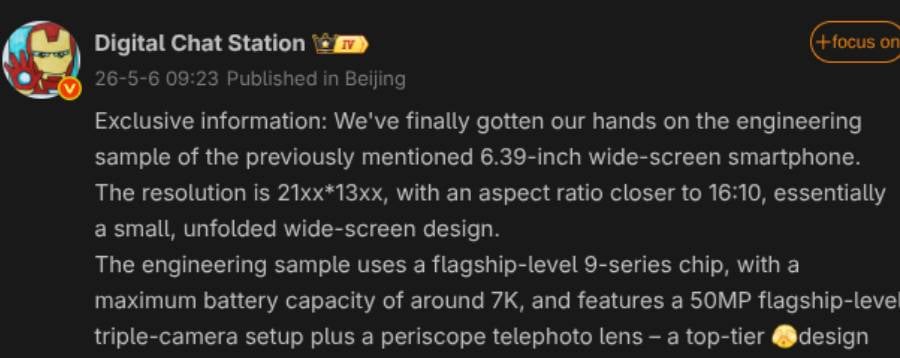
According to the Chinese tipster, Digital Chat Station, Xiaomi 18 series will finally standardize several high-end features across all models. These reportedly include a periscope telephoto camera, a 3D ultrasonic fingerprint sensor, wireless charging, and high-level waterproofing. 

While the blogger didn’t directly name the devices, hints and follow-up discussion in the comments strongly suggest the leak refers to the Xiaomi 18 series.

A periscope lens on the standard model could make it all-round phone

More notable among all is the fact that even the standard model will have a periscope telephoto lens. This should allow the phone to have a longer optical zoom of up to 5x. Xiaomi 17, in comparison, has a standard telephoto lens with a 2.6x optical zoom.

Xiaomi 17

Meanwhile, Xiaomi executives are also hinting at ambitious plans for the Pro model. Wang Le, director of Xiaomi’s application software department, recently commented on Weibo about reports that Xiaomi spent over 1 billion yuan on the Xiaomi 17 Pro’s rear display. 

He downplayed the figure, saying that such an amount is small compared to chip research and development, and added that the back screen on the next-generation phone (likely the Xiaomi 18 Pro) will definitely “not be canceled.”

Speaking of chip, it’s not hard to guess that the Xiaomi 18 series will be among the first to use the Snapdragon 8 Elite Gen 6 processor. 

It’s only January, which means there are still many months to go before any official launch. As always with early leaks, plans could change — so it’s best to take these details with a pinch of salt.

For more daily updates, please visit our News Section.

Stay ahead in tech! Join our Telegram community and sign up for our daily newsletter of top stories.

(Source)

Motorola Edge 70 Fusion full specifications leak reveals 144Hz display, 7,000mAh battery, and more

While Motorola is gearing up to release the Motorola Signature in multiple markets, a fresh leak has surfaced, revealing details about an upcoming Edge 70 series phone. The brand unveiled the Edge 70 in November and December 2025 across multiple markets, and it is now said to be working on the Edge 70 Fusion. While the Lenovo-owned brand has not officially revealed anything, a leak by reliable tipster Evan Blass has disclosed almost all key details.

Motorola Edge 70 Fusion specifications (rumored)

Motorola Edge 60 Fusion

Starting from the front, the Motorola Edge 70 Fusion is tipped to feature a 6.78-inch quad-curved AMOLED screen offering a 1.5K resolution, a 144Hz refresh rate, up to 5,200 nits of peak brightness, and HDR10+ support. The display is expected to be protected by Gorilla Glass 7i. In terms of durability, the phone is said to carry MIL-STD-810 military-grade certification along with IP68 and IP69 ratings for dust and water resistance.

For photography, the Edge 70 Fusion is expected to feature a 50-megapixel Sony Lytia camera as its primary sensor. However, details about the other rear cameras are yet to surface. On the front, it is said to include a 32-megapixel camera for selfies and video calls.

Powering the device is likely to be the Snapdragon 7s Gen 3 chipset. The phone is expected to be sold in 8GB+256GB and 12GB+256GB variants. It is tipped to run Android 16 with the Hello UX skin on top and is said to receive three years of OS upgrades.

The Edge 70 Fusion is also expected to pack a large 7,000mAh battery with support for 68W fast charging. It is said to feature a nylon- and linen-inspired back panel and may launch in Pantone shades such as Orient Blue, Sporting Green, Blue Surf, Country Air, and Silhouette. While there is no official launch date yet, the phone is expected to debut within the current quarter.

For more daily updates, please visit our News Section.

Stay ahead in tech! Join our Telegram community and sign up for our daily newsletter of top stories.

Realme Neo 8 brings PC handheld gaming mode with console-style experience

Realme is set to launch the Realme Neo 8 in China on Jan. 22, and the company has already started revealing some of the experiences it wants the phone to be known for. While the device is positioned as a performance-focused flagship, recent announcements hint that gaming will play a central role in its overall appeal.

Realme Neo 8: PC handheld gaming mode explained

The biggest reveal so far is the new PC handheld mode, which Realme describes as a phone-based PC gaming experience. The mode allows users to sign in to their Steam account, giving access to legally purchased PC games with shared progress and cloud saves. Realme claims that more than 50 popular PC titles have already been verified to run on the Neo 8, including several large-scale AAA games.

Once a game is downloaded, it can be played even without an active internet connection. When the phone reconnects online, cloud saves sync automatically, ensuring continuity across devices. The PC handheld mode supports external controllers for a more console-like feel, while touch controls remain available for users who prefer playing directly on the display. According to Realme, games such as Sekiro, Hollow Knight Silksong, Dave the Diver, and Tomb Raider have been tested as part of this initiative.

Realme Neo 8 specifications

Previous reports suggest the Realme Neo 8 will feature a 6.78-inch Samsung AMOLED display with 1.5K resolution and a 165Hz refresh rate. It is expected to run on the Snapdragon 8 Gen 5 chipset, paired with up to 24GB LPDDR5x RAM and up to 1TB UFS 4.1 storage. The phone is tipped to pack an 8,000mAh battery with 80W fast charging.

In terms of cameras, the Realme Neo 8 may include a 16-megapixel front camera, while the rear setup could consist of a 50-megapixel main sensor with OIS, an 8-megapixel ultra-wide camera, and a 50-megapixel periscope telephoto lens. The Neo 8 is also expected to offer IP66, IP68, and IP69 ratings, an ultrasonic in-screen fingerprint sensor, crystal armor glass, stereo speakers, and an X-axis linear motor. It is likely to run Realme UI 7 based on Android 16 and launch in multiple color options, such as  Origin White, Mecha Grey, and Cyber Purple.

For more daily updates, please visit our News Section.

Stay ahead in tech! Join our Telegram community and sign up for our daily newsletter of top stories.

Huawei Watch Ultimate Design Royal Gold Launches in Europe With €3,299 Price Tag

Huawei has started selling the Watch Ultimate Design Royal Gold in Europe, expanding its luxury smartwatch lineup beyond China. The model was first introduced in late 2025 and later confirmed for a global rollout. It now joins the existing Watch Ultimate Design variant, which features a black and gold finish.

HUAWEI WATCH ULTIMATE DESIGN Royal Gold

The Watch Ultimate Design Royal Gold stands out with a purple and gold color scheme. The case is made from zirconium based liquid metal, a material Huawei says offers high durability while resisting corrosion and wear. The hollow case structure helps reduce overall weight despite the use of premium materials. The ceramic bezel includes both 18K and 24K gold accents, while the crown is plated with 18K gold. The watch face is protected by sapphire glass. Huawei bundles the watch with a purple and gold titanium alloy strap designed for long term durability.

The smartwatch features a 1.5 inch LTPO AMOLED display with high brightness for outdoor visibility. It supports eSIM, allowing users to make and receive calls directly from the watch without a phone. AI based noise reduction is built in to improve call clarity. Smart gesture controls let users answer calls, control apps, or trigger the camera remotely using hand movements.

HUAWEI WATCH ULTIMATE DESIGN Royal Gold

Health tracking is a major focus. The Watch Ultimate Design Royal Gold includes Huawei’s Health Glance feature, which generates a summary of 10 key health metrics in about 60 seconds. These include heart rate, blood oxygen, stress, and other core indicators. The watch also supports GPS navigation, local music storage, and activity tracking for sports such as running, cycling, and golf.

For extreme use, the smartwatch is rated for dives up to 150 meters. It includes a sonar based underwater communication feature that allows divers to send simple messages while submerged. Battery life varies by usage mode, with extended endurance options available for outdoor and dive activities.

The Huawei Watch Ultimate Design Royal Gold is available in countries such as Spain, France, and Germany for €3,299 through Huawei’s online store. A UK launch is expected in the coming weeks, with a listed price of £2,999.99.

For more daily updates, please visit our News Section.

Stay ahead in tech! Join our Telegram community and sign up for our daily newsletter of top stories!

Samsung Galaxy A57 full specifications emerge as it appears in TENAA’s database

Back in November 2025, the upcoming Samsung Galaxy A57 with the model number SM-A5760 received approval from China’s 3C certification authority. Now, the same device has cleared the country’s TENAA certification platform, which has revealed its full set of key specifications ahead of launch. The listing offers a clearer picture of what Samsung is preparing for its next mid-range Galaxy A-series smartphone.

Samsung Galaxy A57 specifications (rumored)

Sasmsung Galaxy A56 (left) and Galaxy A36 (right)

As per the TENAA listing, the Galaxy A57 measures 161.5 x 76.8 x 6.9mm and weighs 182 grams, making it one of the slimmer phones in its segment. The device is listed with a 6.6-inch color display carrying a Full HD+ resolution of 1080 x 2340 pixels. While TENAA does not explicitly confirm the panel type, support for 16 million colours hints at an AMOLED screen. The display is also integrated with an in-screen fingerprint sensor, which aligns with Samsung’s recent A-series design approach.

Under the hood, the Galaxy A57 is powered by an octa-core chipset featuring a tri-cluster CPU setup with clock speeds of up to 2.9GHz, 2.6GHz, and 1.95GHz. Although the processor name is not mentioned on TENAA, the phone was recently spotted on Geekbench with the same configuration, pointing towards the upcoming Exynos 1680 chipset.

The listing suggests that the device may launch in 8GB+256GB and 12GB+256GB variants. It is expected to ship with Android 16 and Samsung’s One UI 8 on top. Given that Samsung promised six major Android updates and six years of security patches for the Galaxy A56, the A57 is likely to receive a similar level of long-term software support.

In the battery department, TENAA confirms a 4,905mAh rated cell, which indicates a typical capacity of around 5,000mAh. Earlier 3C certification and a recent TUV listing have both revealed support for 45W fast charging.

For photography, the Galaxy A57 is listed with a 12-megapixel front-facing camera. The rear setup is said to include a 50-megapixel primary sensor, paired with a 12-megapixel ultra-wide camera and a 5-megapixel macro lens. A recent report suggested that it could be equipped with a Sony IMX906 primary sensor.

Samsung Galaxy A57 launch timeframe (expected)

The Samsung Galaxy S26 series is expected to debut by late February. With that in mind, the Galaxy A57 is likely to launch alongside the Galaxy A37 in the weeks leading up to Samsung’s next flagship announcement.

For more daily updates, please visit our News Section.

Stay ahead in tech! Join our Telegram community and sign up for our daily newsletter of top stories.

(via)

This retro-style handheld comes with a top-tier screen, active cooling and swappable controls

After a series of teasers, Mangmi has finally released the full specifications of its new Pocket Max handheld gaming device. The company shared the details today through its official X account.

Mangmi Pocket Max handheld

Mangmi Pocket Max Specifications

The Pocket Max is powered by the Qualcomm Snapdragon 865 processor and comes with 8GB of LPDDR4X RAM and 128GB of UFS 3.1 storage. The device features a 7-inch AMOLED display with a resolution of 1920 x 1080 and supports a 144Hz refresh rate.

The screen supports HDR, a 100,000:1 contrast ratio, and 155% sRGB color gamut coverage. The front of the device uses a glass panel that extends beyond the display area.

Mangmi Pocket Max

Mangmi has equipped the Pocket Max with asymmetric RGB TMR joysticks, Hall-effect trigger buttons, and a six-axis gyroscope. The handheld also includes magnetically detachable ABXY and D-pad modules, along with two rear buttons that users can remap.

The Pocket Max runs on Android 13 and includes an active cooling fan to manage thermals during gaming sessions. It supports Wi-Fi 6, Bluetooth 5.1, and video output over a USB 3.1 Type-C port. It also includes a 3.5mm headphone jack and a microSD card slot for storage expansion.

Mangmi Pocket Max handheld

The device is powered by an 8,000mAh battery that supports 27W fast charging. It measures 254.87 x 101.06 x 17.45 mm and weighs 450 grams. The handheld comes in Black, White, and Retro GB color options.

Mangmi has not shared pricing or release details yet, though an announcement is expected shortly.

In related news, Ayaneo has recently launched the Pocket DMG Aura Yellow Limited Edition, while GameMT has unveiled the EX5, a retro Android handheld with a design reminiscent of the PS Vita.

For more daily updates, please visit our News Section.

Stay ahead in tech! Join our Telegram community and sign up for our daily newsletter of top stories! 💡

(Source)

Honor 500 Pro Molly 20th Anniversary Edition Launched in Collaboration with Pop Mart

Honor has officially launched the Honor 500 Pro Molly 20th Anniversary Edition. The device is the company’s first fully customized designer toy smartphone, developed in collaboration with Chinese toy brand Pop Mart. It is priced at 4,499 yuan ($646) and is now available for pre-order. Sales will begin on January 25 at 10:08 AM.

Honor 500 Pro Molly 20th Anniversary Edition

The phone comes in a single 16GB + 512GB configuration. Honor has designed this limited edition model around Pop Mart’s Molly character, marking the figure’s 20th anniversary. The rear of the phone features a custom Molly Painter illustration over an Obsidian Black finish. The system interface includes Molly-themed wallpapers, camera watermarks, charging animations, and a dedicated UI skin.

Honor 500 Pro Molly 20th Anniversary Edition

Honor also introduced a special suitcase-style gift box with lighting effects. The package contains a variety of Molly-themed items, such as a custom SIM ejector tool, wax-seal invitation, stained-glass-style art cards, red envelopes, film stickers, a Molly-themed phone case, couplet fridge magnets, and a phone lanyard.

Honor 500 Pro Molly 20th Anniversary Edition

In terms of specifications, the device shares the same hardware as the standard Honor 500 Pro. It features the Snapdragon 8 Elite chipset and an 8,000mAh Qinghai Lake battery.

Charging support includes 80W wired fast charging and 50W wireless charging. The rear camera setup includes a 200MP main sensor, a 50MP telephoto lens, and a 12MP ultra-wide macro camera.

Honor also announced that it will host Molly-themed pop-up stores and events in over 100 cities across China, including Beijing and Shanghai. These events will feature in-store activities and limited-edition co-branded merchandise.

In related news, Honor has also launched the Magic 8 Pro Air and the Magic 8 RSR smartphones.

For more daily updates, please visit our News Section.

Stay ahead in tech! Join our Telegram community and sign up for our daily newsletter of top stories! 💡