Google’s upcoming flagship smartphone, the Pixel 8 Pro, is set to feature Samsung’s biggest camera sensor yet. The ISOCELL GN2 camera sensor, launched by Samsung two years ago, boasts a 1/1.12-inch sensor with a 50MP resolution. The sensor’s pixel size measures 1.4μm, which can increase to 2.8μm with a 4-in-1 pixel binning process, making it ideal for low-light conditions. In contrast, the ISOCELL HP2 camera sensor, used in Samsung’s Galaxy S23 Ultra, features 2.4μm pixels after 16-in-1 pixel binning.
Samsung’s ISOCELL GN2 sensor tipped to power Google’s Pixel 8 Pro
The ISOCELL GN2 camera sensor can also produce 100MP images using a remosaic algorithm and record 8K videos at 30fps, 4K videos at 120fps, and Full HD videos at 480fps. It features Dual Pixel Pro autofocus for quick, reliable, and accurate focusing and Staggered HDR, which uses 24% less power than regular HDR and can retain details in highlights and shadows.
Google has been using Samsung’s camera sensors, display panels, modems, and other electronic components since the launch of the Pixel 6 series and will continue to do so with its next-generation Pixel smartphones. With the ISOCELL GN2 camera sensor, Google’s Pixel 8 Pro will be using a bigger camera sensor than Samsung’s Galaxy S23 Ultra, further positioning itself as a top contender in the smartphone camera market.
While almost all smartphone brands except Samsung are moving closer to a 1-inch camera sensor on their flagship smartphones, Google’s choice to go with the ISOCELL GN2 camera sensor showcases their commitment to providing top-of-the-line camera technology to their customers. The Pixel 8 Pro is set to be an exciting addition to the Pixel series and a promising contender in the flagship smartphone market.
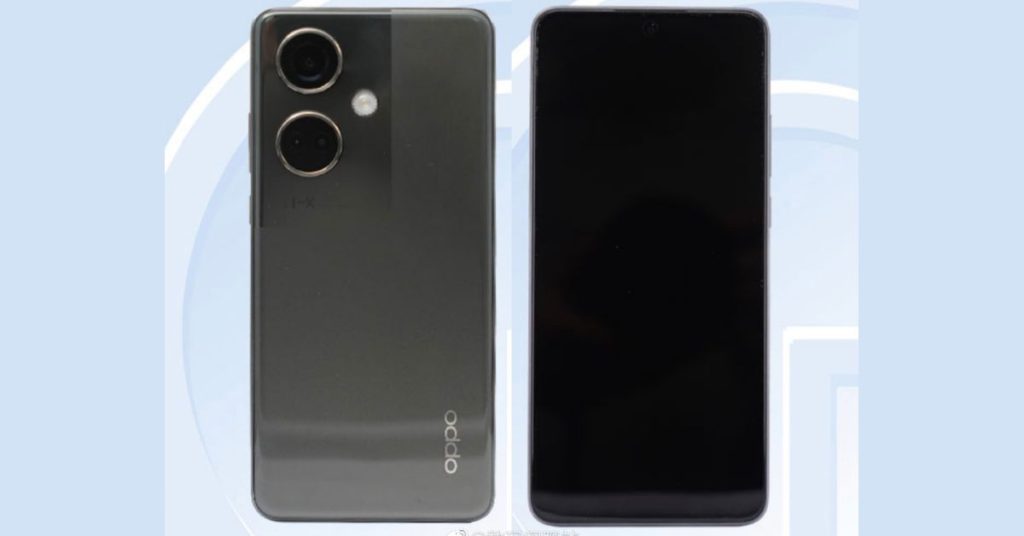
Oppo is reportedly working on a mid-range phone with model number CPH2529. The said device, which is expected to debut in the market as the Oppo A98 5G, has been spotted at certification sites, such as CQC (China), TKDN (Indonesia), and NBTC (Thailand). It has also appeared on HTML5 Test and Geekbench. Hence, the device is expected to release in multiple markets across Europe and Asia. In a new report, Appuals has leaked the entire specifications and a render of the smartphone.
Oppo A98 5G specifications (rumored)
OPPO A98 5G leaked render
According to the report, the Oppo A98 5G features an LTPS LCD panel that measures 6.7 inches. It offers an FHD+ resolution of 1080 x 2400 pixels, a 20:9 aspect ratio, a 391ppi pixel density, and a 120Hz refresh rate. The screen will have Panda Glass protection on top. The ColorOS 13-based Android 13 will come preloaded on the A98. It will have a side-facing fingerprint scanner.
The Snapdragon 695 chipset and 8 GB of LPDDR4x will power the Oppo A98 5G device. The phone will offer 256 GB of internal storage. It will house a 5,000mAh battery that supports 67W fast charging via a USB-C port.
The A98 5G will have a 32-megapixel camera on the front. Its back panel will be fitted with a 64-megapixel primary camera with an f/1.8 aperture, a 2-megapixel depth sensor, and a 2-megapixel macro camera.
The A98 will arrive with other features, such as dual SIM, 5G, Wi-Fi 5, Bluetooth 5,1, GPS, and a microSD card slot. The device will measure 165.6 x 76.1 x 8.2mm and weigh around 192 grams. The report has no information on the price of the device.
The Oppo A98 5G will be a rebranded version of the OPPO A1 5G available in the Chinese market.
The Xiaomi 13 Ultra was just recently announced and arrived as the company’s true flagship model that pushes the boundaries of mobile camera photography. Now, soon after its unveiling, a new teardown video has offered us a close look at the internal workings of this device and it is impressive. So let’s have a look.
Xiaomi 13 Ultra teardown highlights the variable aperture camera tech
Xiaomi 13 Ultra sits as the top end model from the Chinese tech giant which features various cutting edge technology. It not only features the world’s brightest smartphone display ever, but also features a variable aperture module that is housed on its 50 megapixel quad camera setup on the rear. Talking about the device itself, the 13 Ultra model sports a 6.73 inch AMOLED display that features Dolby Vision certification, 2K resolution, 120Hz refresh rate, and 1,300 nits of peak brightness. The Snapdragon 8 Gen 2 SoC is paired with 16GB of RAM and 1TB storage. The rear houses a 50 megapixel Sony IMX989 1 inch type primary sensor that has an f/1.9-4.0 variable aperture.
Looking at the teardown video, we can clearly see the RAM and UFS storage module in the teardown video. Furthermore, we can even see Qualcomm’s latest and greatest Snapdragon 8 Gen 2 SoC that powers the 13 Ultra model. Apart from this chipset, we can even see the brand’s custom Xiaomi P2 chip that handles the device’s power supply.
The hefty cooling mechanism can also be seen with copper alloy materials being situated right below the display. Interestingly enough, the camera module also arrives with plenty of thermal paste around the module to ensure optimum functioning without overheating. The variable aperture that is housed with the primary camera sensor (which is a 50 megapixel shooter) can also be seen.
Motorola is gearing up to reveal multiple new smartphones to the public, including the Razr+ 2023 or Razr 40 Ultra which is slated for release in China, and the Edge 40 which is expected to launch globally soon. Recently, promotional images of the Moto Edge 40 have surfaced online, showcasing the phone’s design and color choices.
Motorola Edge 40 official images leak
Leaker Evan Blass has shared several images of what appear to be official renders of the upcoming Motorola Edge 40. The images showcase the phone in four different color choices: Black, Blue, Green, and Magenta. Upon closer inspection, it becomes evident that the black variant features a leather-back finish. The sides of the device are flat and there are antenna lines visible, which hint at a metal frame. The screen has a curved design and a punch hole in the center top for the front-facing camera. A fingerprint sensor is also present on the phone.
Motorola Edge 40 specs (rumored)
Motorola’s upcoming Edge 40 is anticipated to feature a large 6.55-inch AMOLED display with a Full HD+ resolution and a speedy 144Hz refresh rate. It is expected to be the first device in the world to feature the Dimensity 8020 chipset and will be available with either 128GB or 256GB of storage along with 8GB of RAM. The phone is set to include a 4,400mAh battery, capable of being charged quickly with 68W TurboPower and also wirelessly at 15W.
The Edge 40 is anticipated to feature a 50-megapixel primary camera with optical image stabilization, as well as a 13-megapixel ultra-wide lens on the back. The front camera is expected to be 32 megapixels. The device will run on the latest Android 13 operating system and will come with an under-display fingerprint sensor for convenient and secure access. The European market is likely to see the device priced at around 899 euros (~$980).
The battle between the ninth generation consoles, which started with the launch of the PlayStation 5 and Xbox Series S/X in 2020, is still going strong. While hardware specifications have been a major talking point in every generation, various factors determine the ultimate winner. In this context, exclusive games and accessories designed for each platform play a crucial role in achieving success. Microsoft, recognizing this, recently unveiled the Xbox Elite Wireless Controller Series 2 Youth Edition in four distinct colors: Black, White, Red, and Blue. These gamepads are now hitting the shelves in China, one of the world’s largest gaming markets. Here are the details…
China Welcomes Colorful Xbox Elite Controller Series 2 Youth Edition Priced at 999 Yuan
According to an announcement on Microsoft‘s official Xbox Weibo account, the Xbox Elite Wireless Controller Series 2 Youth Edition will be available in China starting April 25th, with a price tag of 999.00 Yuan (approximately $145). The controllers, offered exclusively in red and blue, will come with a few unique features. The most notable of these is that the new models come equipped with a high-capacity rechargeable battery, boasting a maximum battery life of up to 40 hours. Additionally, the controllers feature exclusive color-matched faceted D-pads and adjustable joysticks.
The D-pad and joystick on the new controllers utilize a magnetic attachment structure, allowing for easy customization. Users can purchase additional accessories according to their preferences and easily swap them out. The controllers also offer three adjustable trigger travel settings. For example you can use short travel for fast-paced FPS games, while the longer travel setting is perfect for precision throttle control in racing games.
Apart from the change of color, the Xbox Elite Series 2 Core is still the same controller that can be used with Xbox consoles, PC, and mobile devices. There are some customization features that can be set up in the Xbox Accessories app, including the ability to switch between three custom profiles on the fly. Whether all these features are worth $145 is up to the gamers. You can click here to purchase the product and browse its features.
Android is based on the Linux kernel, which use GPL (General Public License). Thus, it is mandatory for every OEM to release kernel sources of their devices.
Thanks to source code, developers can customize the software for these products. These customized software for Android smartphones are commonly known as custom ROMs.
Companies like Samsung are known for releasing kernel sources on time. In contrast, Chinese brands are notorious for violating GPL by not releasing the sources for most of their devices, except Xiaomi and OnePlus.
But sadly, even Xiaomi has now joined its counterparts in not releasing kernel source code for not one or two but around 11 devices launched in the course of one year.
Redmi Note 12 Pro
According to FuvisionTech (via Xiaomiui), Xiaomi is yet to release kernel source code for the following smartphones.
Redmi Note 11 / Redmi Note 11 NFC
Redmi Note 11 Pro 5G / Redmi Note 11E Pro
Xiaomi 12T
Xiaomi 12T Pro / Redmi K50 Ultra
Redmi Note 12 4G
Redmi Note 12 5G
Redmi Note 12 Pro 4G
Redmi Note 12S
Redmi K60 / POCO F5 Pro
Redmi K60E
Xiaomi 12 Pro Dimensity Edition
One thing is common among the aforementioned handsets. Most of them are powered by MediaTek chipsets, which are not friendly with developers for custom software. Because, unlike Qualcomm, MediaTek limits the availability of its chips’ source code to its customers (OEMs).
Therefore, developers are unable to develop custom ROMs for the above-listed phones. Anyway, it is fine as there are very few people who use third-party software on their handsets these days.
However, by not releasing the kernel source code, Xiaomi is now violating GPL, just like Oppo, Vivo, and others.
Just a couple of days ago, boAt had announced a new wireless headphones that supports active noise cancellation. This model was the Rockerz 551 ANC headphones, which has now gone on sale in the Indian market. So here are all the details.
boAt Rockerz 551 ANC is finally here with up to 100 hour battery life
The company’s latest headphones feature an over ear design along with soft cushions for better comfort during longer use. The Rockerz 551 ANC houses 40mm audio drivers that aims to offer a great listening experience. The headphones features multiple buttons to control the music, activate the voice assistant, and even answer phone calls. It also arrives with custom EQ, which users can gain access to via the app.
As the name suggests, the new wireless headphones arrive with active noise cancellation support. The company labels the technology as the Hybrid Active Noise Cancellation technology, which promises to offer up to 35 decibels noise reduction. Apart from this, it also offers an Ambient Sound Mode that basically let’s you hear your surroundings as you’re listening to music. One of its highlighting aspect is undoubtedly its impressive 100 hours of battery life on a single full charge, which also supports boAt’s ASAP Charge technology.
The new Rockerz 551 ANC is being offered in two color options, namely Stellar Black and Sage Green. It is available for purchase from the brand’s official website, as well we Flipkart, Amazon, Myntra, and other platforms. The boAt headphones has been launched for an introductory price tag of just 2,999 INR (roughly 37 US Dollars).
Mango Power is an environmentally-conscious and sustainable energy company specializing in creating home power supply solutions, portable power devices, and accompanying accessories. The company is dedicated to promoting a zero-carbon future by introducing innovative and eco-friendly energy products to homes worldwide.
Mango Power took a major step towards achieving its goal in 2021 with the launch of its flagship product, the Mango Power Union – the world’s first battery system to seamlessly integrate both home and portable power solutions. The company has ambitious plans to further enhance its product range by developing cutting-edge high-end residential batteries, including both home and portable power stations, as well as introducing new sustainable power generation devices.
MANGO POWER CELEBRATES EARTH DAY 2023
Mango Power was born with a vision to create a sustainable, renewable, environmentally conscious, and clean energy solution and so it is not surprising that the brand is participating in the Earth Day 2023 celebrations, with a special Art contest.
Why is Earth Day Important?
The 22nd of April marks the internationally observed Earth Day, a yearly celebration of our beautiful blue planet. This global event serves as a platform for nations across the world to commit to raising awareness, taking action, and highlighting issues related to climate change, conservation, and sustainability.
It serves as a reminder of the environmental challenges we face, including climate change, pollution, and the loss of biodiversity, and encourages individuals and organizations to take action towards conservation, sustainable practices, and reducing our impact on the environment. Basically, Earth Day inspires and reminds us to make positive changes and promote a more sustainable future for ourselves and future generations.
This year’s Earth Day holds even greater significance as 2022 recorded the highest-ever carbon dioxide emissions since the data was first recorded in the 1900s. This was attributed to the growing reliance on coal as a cheaper energy source in several cities and the resurgence of air travel after the pandemic.
One of the most visible and challenging consequences of the global climate crisis is the increasingly evident impact on climate, with extreme weather events like heat waves, heavy rainfall, and severe hurricanes occurring more frequently and with greater intensity in many parts of the world.
How do we solve this problem?
To combat the issue of global warming and climate change, there are various solutions available, and one of the most effective is transitioning to clean and sustainable energy sources. By incorporating renewable energy into even a few households – with an average daily electricity usage of 10 kilowatt-hours – it’s possible to significantly reduce carbon emissions by up to 3,600 kilograms annually. This is equivalent to the amount of carbon dioxide absorbed by around 200 trees each year.
Mango Power Solar Energy Solutions
As previously stated, Mango Power is dedicated to creating a sustainable and eco-friendly future, with a vision of establishing a green ecosystem where all households rely on renewable and green energy, and pledge to achieve zero carbon emissions. To support their mission, Mango Power has introduced two distinctive products – the groundbreaking Mango Power Union, which serves as a comprehensive home backup power solution, and the Mango Power E, a portable Solar Power Station.
Mango Power Union is a groundbreaking battery system that seamlessly integrates both home and portable power solutions, making it the first of its kind in the world. With a power capacity of up to 13.8kWh/4kW, this innovative product is the ideal solution for maximizing value and enabling the use of solar power around the clock. Additionally, its two built-in PV inverters support twice the input, enabling easy connection to both roof solar systems and portable solar panels without requiring any additional accessories.
Mango Power’s mUnion Connection is a specialized combination of the Power Home home battery and the Power Move portable power station, presented in a stylish and elegant package.
The Power Move portable power station module provides dependable and consistent power for a range of activities, including camping, tailgating, off-grid events, and workshops. With a 2.3kWh battery and a 2kW AC output capacity, this product can handle surges of up to 4kW, making it suitable for powering a variety of devices, such as power tools, refrigerators, and air conditioners, regardless of location. Additionally, it comes equipped with 18 output ports, including AC, USB-C, USB-A, wireless charging, and car power output, to meet all your diverse needs.
Mango Power E solar generator can hold up to 14kWh/6kW, offering an impressive capacity. It is a fast-charging device that supports 240V split-phase output when paired with another Mango Power E unit, making it an excellent renewable energy option for your home and outdoor activities. By using the Mango Power E solar generator, you can reduce carbon emissions by 0.79 kg with every recharge, which is equivalent to the carbon absorbed by 48 trees in one day.
Choosing a Mango Power solar generator this Earth Day is a great decision that allows you to have a positive impact on the environment.
Mango Power celebrates Earth Day 2023 with ‘Painting Green Earth Contest’.
Mango Power is introducing its Painting Green Earth contest and invites you to participate for a chance to win amazing prizes! With the “Painting Green Earth” contest, you can showcase your creativity by drawing a vision of the future where renewable energy solutions are widely adopted. You are free to use any form of art, such as pencil sketching, hand-painting, or even AI drawing, as long as it’s original and created by you. This is an opportunity to demonstrate your talent and stand a chance to win amazing prizes.
Art Contest Details:
Date:
The contest will be open for entries from April 21, 2023, to April 30, 2023.
How to Join:
To enter the competition, all you have to do is share your painting on either Facebook or Instagram and include the tag “@MangoPowerOfficial” in the caption along with the hashtag #paintinggreenearth. The competition will run from April 21st to April 30th, 2023.
Winner Selection:
The winners will be selected based on the number of likes and engagement on the post. Please note that purchasing likes is not allowed.
Reward:
Join the renewable energy revolution and switch to clean, sustainable energy solutions this Earth Day by using Mango Power solutions, to power a brighter future for the planet.
To learn more about the brand and its commitment to a cleaner planet using solar Mango Power Forest Plan visit their official website here.
Samsung is apparently working on a new and improved battery technology which will power its next generation of flagship smartphones, the Galaxy S24 series. But interestingly enough, these upgrades are thanks to technology inspired by electric vehicle technologies.
EVs inspire next gen battery tech for Samsung Galaxy S24 series
Based on a new report, the South Korean tech giant is seeking to improved the battery on the Galaxy S24 lineup by turning to technology from the EV industry. The company has reportedly partnered up with two Chinese firms to jointly develop the new battery technology. Samsung will be employing the stacking technology for batteries that is found in electric vehicles. To put things simply, it is a method on improving batteries’ overall capacity without the physical size changing.
The Samsung SDI is working on this new battery technology, which is the research and development unit of the brand. This R&D department is looking to improve the energy capacity on next gen batteries while aiming to retain the existing size. For this, it is working with the two Chinese firms that are deriving tech from Gen 5 batteries that are made for electric vehicles. In other words, they are miniaturizing the battery technology that can then be used in smartphones and tablets.
Notably, this new battery technology can help achieve around 10 percent of capacity rise while maintaining a similar overall size to its predecessor. The new joint venture will use the company’s advanced facility at its Cheonan, South Korea site. So we can expect the Galaxy S24 to arrive with slightly longer lasting battery packs. The two Chinese firms are setting up offices in the country as well, with Shenzhen Yinghe Tech supplying the stacking equipment.
Apple has long been known for its tight control over its App Store, allowing only apps that meet its strict guidelines to be available for download on iOS devices. However, that may soon change with the introduction of iOS 17. According to industry insider Mark Gurman, iOS 17 is set to allow users to sideload third-party apps and download applications from outside the App Store, a feature that has been highly requested by users and developers alike.
Sideloading and third-party app installations will reportedly come to iOS 17
Apple will finally allow for sideloading apps in iOS 17 to comply with EU regulations
This would allow users to download apps outside of the App Store and allow developers to avoid the 15% to 30% fees
This change could have a significant impact on the app distribution market, as developers will be able to avoid the 15% to 30% fees that Apple currently charges for in-app transactions and purchasable apps for the first year. While paying these fees may not be favorable for any business model, sideloading programs and third-party app stores will give developers the option to distribute their apps outside of Apple’s ecosystem.
Gurman suggests that iOS 17 will be the turning point for Apple’s attitude towards third-party applications. He goes on to mention that Apple plans to remove its restrictions against sideloading apps by 2024, with iOS 17 being the first step towards this overhaul.
The European Union’s Digital Markets Act, which directs companies to allow third-party app installations, is likely a driving force behind Apple’s decision to allow sideloading. While companies have until March 2024 to comply with the rules, Apple is expected to roll out this feature earlier in Europe due to the EU’s stern demand.
In addition to allowing sideloading, iOS 17 is expected to introduce multiple new features and significantly improve existing functionalities such as Control Center and Dynamic Island. Fans can expect Apple to share more information about sideloading and third-party apps at its Worldwide Developers Conference in June 2023 or later in the year.
Overall, the introduction of sideloading on iOS devices will give users and developers more flexibility and options when it comes to app distribution. It remains to be seen how this will impact Apple’s bottom line and its control over its ecosystem, but it’s clear that the tech giant is willing to make significant changes to meet the demands of its users and the market.
Twitter’s recent decision to wind down its old verification system and start charging for verification has stirred up controversy. The company’s CEO, Elon Musk, referred to the old system as “bullshit” and promised a new, more transparent system. However, it seems that the new system is not without its flaws.
Twitter’s Decisions Have Angered its User Base
Several celebrities, including author Neil Gaiman, actor Ron Perlman, the Massachusetts Institute of Technology Twitter Page, and Twitter comic dril, received blue ticks for verification but claim they did not pay for the service. This has left many users confused and frustrated, with some even questioning the legality of Twitter’s actions. No one knows how many users Twitter has re-verified in this way, and whether they were verified free of charge or if someone paid for their verification. What is clear is that Twitter’s decision has caused confusion and backlash among its users.
One particularly concerning aspect of this situation is that Twitter is suggesting that some users paid for verification when they did not. This is a false endorsement, which is illegal under the Lanham Act, a federal law in the United States. The situation has also raised questions about Twitter’s lack of transparency and communication with its users. The company does not operate a public relations department that can be reached for comment, which has left many users feeling frustrated and ignored.
In a world where social media platforms play an increasingly important role in shaping public opinion and discourse, transparency and accountability are more important than ever. Twitter’s recent actions suggest that the company still has a long way to go in this regard. As Twitter continues to roll out its new verification system, it’s essential that the company communicates clearly with its users and ensures that the system is fair and transparent for everyone. Only then can the platform hope to regain the trust of its users and maintain its position as a vital tool for communication and expression.
Even though we bought this phone as soon as it went on sale, the time to test it was still a bit short. We want to get to know the phone in detail as much as possible, so we’ll split this full review into two parts. One is just about photography, the other for everything else. After all, it takes time to shoot good photos and dive deep into the science and effort behind it.
In this video, we will show all the details except the camera. Let’s see how the Xiaomi 13 Ultra really performs as a flagship phone.
Design
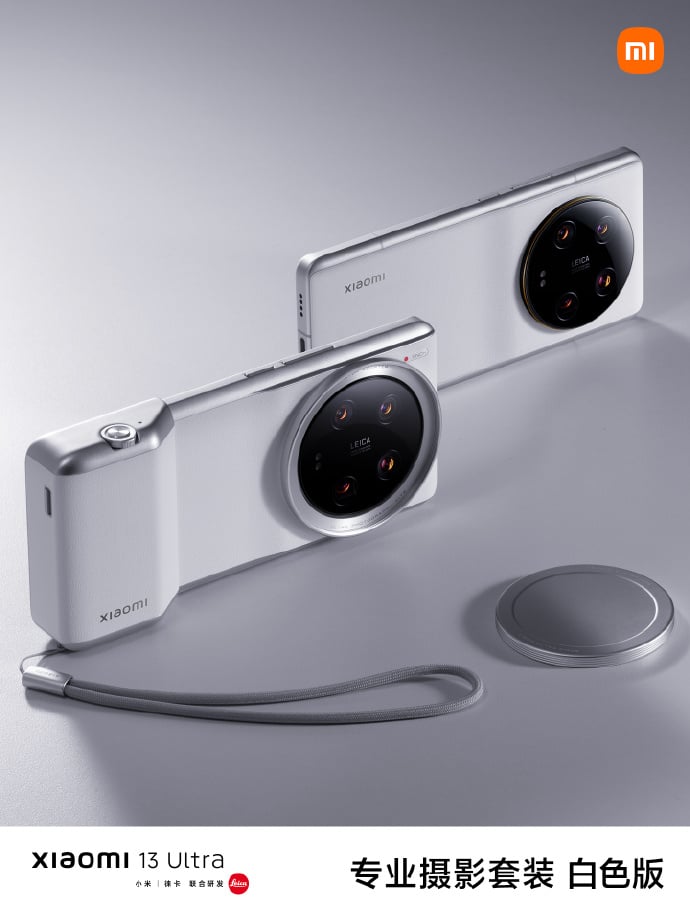
Xiaomi 13 Ultra has been released for a few days now, I don’t know if you guys have gotten used to the design, but I have anyway. If you think of it as a camera, it’s actually quite impressive. With the gold lens ring, white leather texture, and metal frame on both sides, this could be your first “Leica camera” without being too expensive.
As a phone, I can hardly say it looks good. I’m not going to criticize its weight or thickness either, because flagship phones from other brands are also the same. This unusual frame doesn’t pinch your hand as much as it looks, and it has an extra benefit: because it extends to the back panel, it completely wraps around the four corners, this way the vegan leather won’t be worn down easily.
The phone sacrifices too much for the large camera module and the back panel is designed with a slope in order to look like it’s not bulging too much. If you have big hands, chances are your fingers will always touch the camera module, and it takes time to get used to it. The maximum thickness of the camera area has reached 1.5cm, this must be annoying to many people.
The most exciting thing about the 13 Ultra is that USB has finally been upgraded to 3.2 Gen 1, with a theoretical maximum speed of 5Gbps and support video output. Thank goodness. The wish I made in the 12S Ultra review has finally come true: I’m alive and well, and Xiaomi is finally using USB 3.2.
Display
Xiaomi 13 Ultra does not use the top Samsung panel as the screen this time.TCL as a perennial partner of Xiaomi offered the latest C7 panel for the 13 Ultra. This is the first 2k resolution and LTPO-supported panel made by a Chinese screen manufacturer, which is as responsive and theoretically power-saving as the screens we’ve used before. LTPO is as responsive as some top screens out there, but not quite effective at low brightness, which is the same in Samsung screens.
What’s different is that the 13 Ultra can use DC dimming at high brightness and 1920 Hz PWM dimming at low brightness, it doesn’t require you to turn on any switches. People who are fans of low-frequency PWM dimming should be very ecstatic to see it on flagship phones.
The 13 Ultra has a very bright screen, with a peak brightness of 2600 nit, and 1200 nit full-screen brightness, but this happens only if there is bright light. If you are indoors, the maximum manual full-screen brightness is only 500 nit. This is an old Xiaomi phone problem, but the good news is that HDR video will not be affected, which is not a big problem.
When you click on Color scheme Setting, you will find that the default setting is no longer Vivid mode. This default Original color PRO mode refers to the CIE 2015 standard of tuning, any device with a different spectrum that follows this standard would still display the same color. Simply put the devices that use the unified standard look exactly the same.
The protective glass is also Corning Victus, and there really isn’t much else to complain about it. This time, unlike the Mi 10 Ultra, TCL has really done its best and you can really trust the Chinese display one more time.
Performance & Gaming
Let’s talk about the performance that few people pay attention to on this phone. Although it isn’t the main selling point of the 13 Ultra, testing is still essential. A few Benchmarks show that the peak performance is as good as any other flagship phone, but it cannot last long. Although Xiaomi has designed a new cooling system for the camera and the motherboard design is non-stacked, the results don’t seem to be good.
You can clearly see in the game that the full power output won’t last long. 7 minutes later the frame rate will slowly drop and eventually stay at around 47fps. Even so, the power consumption and temperature are quite high, especially the frame temperature. Because the metal has good thermal conductivity, you will feel this area is particularly hot.
The resolution of Genshin Impact on the Xiaomi 13 Ultra is supported up to 864P, but at the same time, it requires more output for CPU and GPU. Plus it’s a 2k 120Hz screen, so it is understandable that the power consumption and temperature are a little higher. Then I lowered the image quality and tested it again, and it performed much better. The temperature and power consumption has become lower, the gaming experience is smooth and stable.
When reviewing a flagship phone that focuses on photography, I generally lower the standard of gaming performance. Because whether it’s iPhone or Samsung, vivo or OPPO, their flagship phones are about the same level, or worse than I expected.
Speaker
Compared to the 12S Ultra, one obvious change is the disappearance of the Harman Kardon logo, but it does not mean that the sound quality is worse, personally, I even think the 13 Ultra is instead the better one. The main difference is the soundstage, the 13 Ultra will have a larger soundstage and will not sound too flat. I have put the speaker test in the end part of the video, you can listen to it for yourselves.
Battery & Charging
Xiaomi’s flagship phone has finally said goodbye to 67w charging. While 90w isn’t a particularly fast charging speed either, it’s commendable to see such progress. Five minutes to charge 22% and 40 minutes to fill. Battery life didn’t surprise us either, after all, this 2k 120Hz screen is really power-hungry. So as for charging, it’s kind of just above the pass line.
The 90w charger is still with a USB-A port, and there are few charging protocols. But the cable is still USB 2.0. Bro, your phone is already USB 3.2, why do you still use a 2.0 cable? It seems my new wish this year is to see USB 3.0 cables on a Xiaomi phone before I die.
It can reach 23w using a third-party PD charger on 13 Ultra, which is relatively better compared to other Chinese brands. But the wireless charging coil is forced to move downer because of the large camera module, so not all wireless charging docks are supported. At least not with my Xiaomi 30w wireless charging dock.
As a flagship phone, the Xiaomi 13 Ultra is an average performer. It’s not much of an upgrade over the 12S Ultra, but perhaps the more unique design is its biggest upgrade. Anyway, It is unfair to review a flagship phone without talking about the camera, so I’m not going to jump to conclusions here yet. Please wait until I take some photos with this phone, then I’ll tell you what it’s really good at.
Smartphone AI enhances images using advanced algorithms that analyze and adjust various aspects of the image. These algorithms can detect features such as faces and objects, and adjust the brightness, contrast, saturation, and sharpness accordingly to make the image look more appealing. Additionally, AI can be used to remove noise, blur, and other distortions, resulting in clearer and more detailed images. Some AI-based photo editing apps even offer features that allow users to modify facial features, remove unwanted elements from the image, or add special effects. It seems like Google is leading the AI Image Optimization game right now with its Pixel Devices, but other tech giants such as Samsung are trying to catch up.
Galaxy Enhance-X uses AI to Enhance & Repair Images
Samsung has just released a new app called Galaxy Enhance-X, designed to revolutionize the photo editing experience for users of their Galaxy S23 series of phones. Using cutting-edge artificial intelligence technology, the app allows users to quickly and easily repair and enhance their photos with a single click. With the ability to adjust brightness, sharpness, HDR, and color, users can take their photos from drab to fab in just a few seconds. Additionally, the app offers a range of other features, including the ability to modify facial features, remove reflections and shadows, blur backgrounds, and even correct distortion.
Currently available on the Galaxy Store, the app has an initial version of 1.0.55 and a file size of approximately 85MB. At present, it is only compatible with the Galaxy S23, S23+, and S23 Ultra models, with support for the Galaxy S22 series to follow soon. The app is expected to become available on more models in the future, promising to make photo editing easier and more accessible than ever before. With Galaxy Enhance-X, users can unleash their creativity and take their photos to the next level with minimal effort.
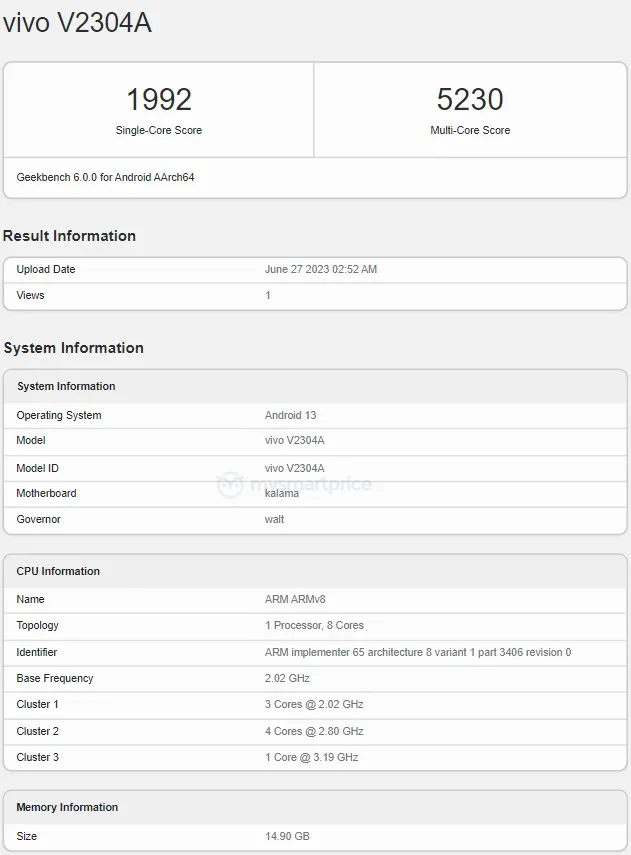
Vivo is apparently planning to launch the new Vivo S17 series of smartphone in the Chinese market soon. But ahead of the official launch, the S17e model was spotted on GeekBench, which revealed some of its key specs and synthetic benchmark performance. So let’s have a look.
The upcoming device from the Chinese smartphone maker was first spotted on the popular benchmarking platform by 91Mobiles. Looking at the online listing, we can tell that the Vivo S17e carries the model number V2285A. Furthermore, it managed to score 873 points in the single core test and 2,350 points in the multi core test. The device managed to achieve this score with an octa core processor that has a max clock speed of 2.8GHz and features Mali G610 MC4 GPU.
This means that the chipset is likely a MediaTek Dimensity 7200 SoC. The benchmarking platform also revealed that this chip will be paired with at least one model with 8GB of RAM. Lastly, the GeekBench sighting also revealed that the company’s upcoming handset will run on Android 13 OS based FunTouchOS 13 out of the box. Unfortunately, this is all the information revealed on the platform. Although based on what we know so far, we can expect it to sport a tall 6.7 inch AMOLED display that offers 120Hz refresh rate.
This screen will also house an under display fingerprint scanner. While its storage configurations are still unclear, it will likely arrive in a 128GB and 256GB of internal storage. Other key specs include, a 64 megapixel selfie camera, 64 megapixel primary rear sensor, 4,500mAh battery pack, and 80W fast charging support.
Gaming headphones are a crucial accessory for any serious gamer. These headphones are specially designed to provide immersive audio experiences, enabling gamers to fully immerse themselves in their favourite games. Usually, they feature high-quality sound drivers, noise isolation technology, and comfortable padding to ensure that gamers can wear them for long periods without experiencing any discomfort. Gaming headphones also come equipped with microphones, allowing players to communicate with their teammates during multiplayer games. They are a must-have accessory for any gamer looking to take their gaming experience to the next level. Popular Chinese brand Meizu, or rather their Lifestyle brand, Lifeme, just announced their new gaming headphones engulfed in a shroud of mystery. Let’s see what is expected of the new product launch.
The Headphones will be Launched on April 26th
Lifeme Charm Blue (Meizu’s lifestyle brand) has recently announced the release of its first gaming headset, the Lifeme Charm Blue G1 Wired Gaming Headset, which is set to launch on April 26th. This new headset is designed to appeal to gamers with its red and black colour scheme and its slogan, “Everything, super gaming player” (based on a rough translation). The headset comes equipped with a microphone, but the specific specifications of the device are yet to be disclosed.
It can be assumed that the Lifeme Charm Blue G1 Wired Gaming Headset may have some advanced features such as noise-cancelling and high-quality sound drivers. It is also possible that the headset may have additional features such as customizable RGB lighting, virtual 7.1 surround sound, or a detachable microphone. Ultimately, only time will tell what specific features the headset will have and how they will enhance the gaming experience for users.
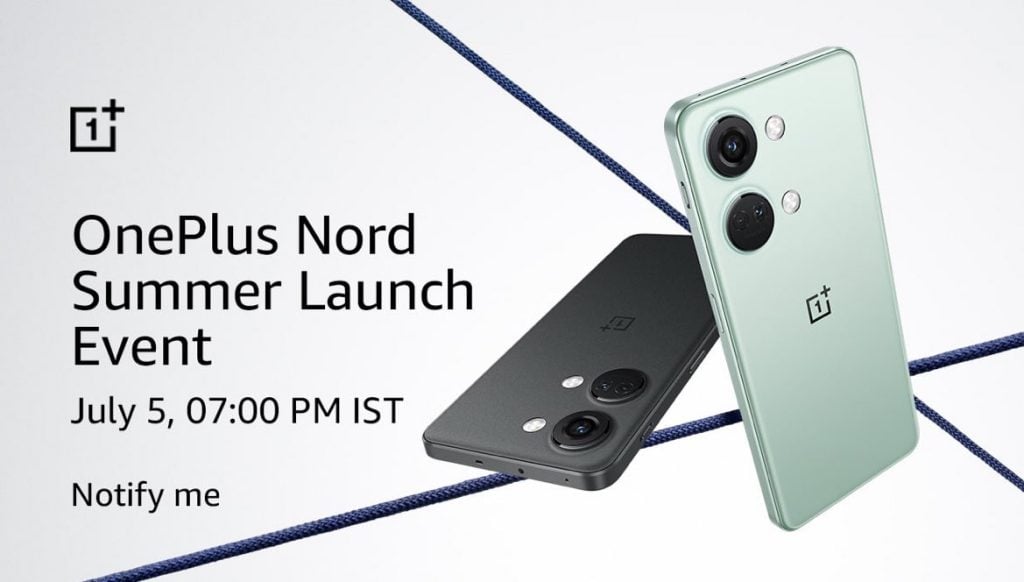
OnePlus is gearing up to launch a new Nord series smartphone in the US market soon. The device in question is the upcoming Nord N30 5G 2023 Edition, but prior to its official announcements, its design has been revealed via leaked renders.
OnePlus Nord N30’s design is identical to the Nord CE 3 Lite
Just recently, we had covered a report regarding a sighting of the 2023 Nord N30 model on the Google Play listing. This revealed the finer details of the new mid range device from the Chinese smartphone maker. Furthermore, these specs also implied that this model would likely be a rebrand of the Nord CE 3 Lite that is available in other markets like India. But while the specs were nearly identical, our first look at the new OnePlus Nord N30 model confirms that it is indeed a renamed Nord CE 3 Lite.
Looking at the image, we can see the Nord N30 2023 will arrive in a the same bright Lime color. It also features the dual circular modules that houses its triple camera setup. Talking about the specs of the 2023 Nord N30, the handset is equipped with the Qualcomm Snapdragon 695 SoC that is paired with 8GB of RAM. On the rear, it features a triple camera setup, with the primary sensor being a 108 megapixel camera. Going by the Nord CE 3 Lite’s specs, we can expect it to also feature a 2 megapixel depth sensor and a 2 megapixel macro shooter.
Meanwhile, the front will likely house a 16 megapixel selfie camera. Other notable features include Android 13 OS out of the box and Full HD+ resolution display. Keep in mind that this is still just an unconfirmed report, so take this news with a pinch of salt and stick around for more updates regarding this device.
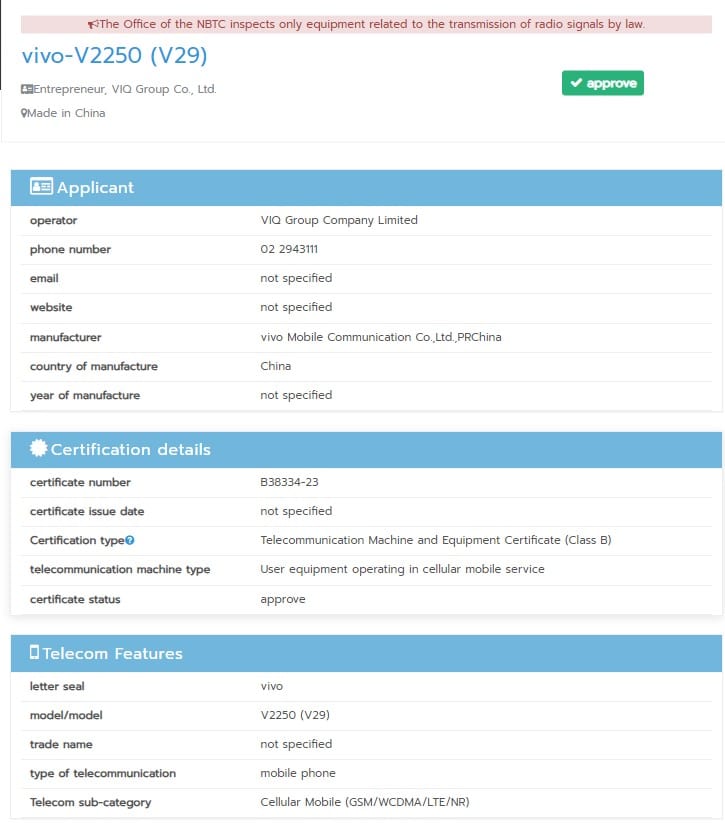
Vivo is reportedly working on the Vivo V29 series of smartphones. Recent reports have revealed that the lineup will include at least three models, such as the Vivo V29 Lite, the Vivo V29, and the Vivo V29 Pro. It appears that the Lite model will debut first in the market, as it was recently spotted on the Google Play Console. The device’s launch seems imminent, as it has now been approved by the Global Certification Forum (GCF).
Vivo’s upcoming phone with model number V2244 was recently spotted with the Vivo V29 Lite 5G moniker in GCF’s database. However, the listing does not reveal anything else about the device.
As per previous reports, the Vivo V29 Lite 5G will feature an FHD+ display. There is a possibility that it could be equipped with an AMOLED panel that is integrated with a fingerprint scanner. It will come preloaded with Android 13 OS and FunTouch OS.
The Snapdragon 695 chipset will be present under the hood of the Vivo V29 Lite 5G. It will come equipped with 8 GB of RAM. Reports have claimed that the same device will be rebranded as the Vivo Y78 6G in the Chinese market. The Chinese certifications of the Y78 have revealed that it will pack a 5,000mAh battery with 44W rapid charging.
In related news, Vivo has launched the Vivo Y78+ 5G mid-range phone in China. The USP of the device is that it is Vivo’s first Y-series phone to feature a curved-edge OLED screen. It offers other key specs, such as 50-megapixel dual rear cameras with OIS support, the Snapdragon 695, and 44W fast charging. Readers can visit this page to know learn about its specifications and price.
Sony’s upcoming 5G smartphone with model number XQ-DQ72, believed to be the Xperia 5 V, has been certified by the China Quality Certification Center’s 3C certification. The device is set to come with a 33W fast charging capability, but surprisingly, it will be sold without a power adapter. This move could be seen as Sony’s contribution towards reducing electronic waste, as consumers can use their existing chargers or purchase them separately if required.
Sony Xperia 5 V passes 3C certification but no charger included
The Xperia 5 V has already made an appearance on Geekbench’s benchmark database. It is expected to come equipped with the powerful Qualcomm Snapdragon 8 Gen 2 processor and will be available in two different RAM versions – 12GB and 16GB. The device is also expected to be the first to support Bluetooth LE Audio and LC3 alongside Xperia 1 V, which would enhance the overall audio experience of the device.
Sony’s naming convention for Xperia phones is based on a simple and clear system. The XQ-D in the model number of the new Xperia 5 V represents the Mark V generation, which is the latest iteration of Sony’s smartphones. Last year’s model was labeled XQ-C, indicating that the company is moving through the alphabet to signify new generations. The “Q” before the number indicates that this phone is the Xperia 5, while the Xperia 1 is identified by a “T” in the model number. Lastly, the number after the “Q” signifies the sales market and whether the device is single or dual SIM.
Sony has been known to prioritize performance and quality in its devices, and the Xperia 5 V is expected to be no different. With its fast charging capability and powerful processor, the device is poised to deliver a seamless user experience.
HP has just announced the launch of their refreshed Envy series laptops that are set to make waves in the market. These new laptops are powered by the latest Intel Raptor Lake mobile processors and include updates to both the Envy x360 convertibles and the Envy 17 laptop.
HP Envy series laptops specs & features
The Envy x360 comes in two sizes, a 14-inch, and a 15.6-inch model. The 15.6-inch model, in particular, is noteworthy as it is the first laptop in the world to feature an IMAX Enhanced certification. This means that it adheres to strict performance standards, ensuring optimal viewing experiences across different modes, with improved color, brightness, contrast, and DTS sonic fidelity.
What sets the IMAX Enhanced laptop apart is its exclusive Expanded Aspect Ratio of 1:90:1, offering up to 26% more picture for select sequences. This means that more of the action is visible on screen, just as the filmmakers intended. Only Disney+ currently offers a selection of 44 movies and TV shows that take advantage of the IMAX Enhanced standard.
To adhere to the picture fidelity standards imposed by the IMAX Enhanced certification, the 15.6-inch Envy x360 features an OLED panel option with FHD resolution, 500 nit brightness, and 100% DCI-P3 color gamut. Additionally, it also has an FHD IPS option with 100% sRGB color gamut and an FHD IPS with 45% NTSC. The 14-inch model only offers an FHD IPS panel with 45% NTSC color, while the 17-inch model offers an FHD IPS option with 100% sRGB, plus a 4K IPS option with 100% DCI-P3 color.
All models come with multitouch screens and 5 MP webcams. The 14-inch and 15.6-inch models can be equipped with Intel’s i5-1335U or i7-1355U processors, while the 17-inch model adds i5-13500H and i7-13700H options, leaving the i7-1355U as its base option. Maximum RAM capacity for the x360 models is 16 GB DDR4-3200, but HP does not specify this for the 17-inch model. All models support up to 1 TB of PCIe 4.0 NVMe SSD storage.
The Envy x360 models are also equipped with Thunderbolt 4 connectors, whereas the 14-inch model does not have any. The laptops include SD card readers and have wireless connectivity via a Wi-Fi 6E + BT 5.3 card on all models.
Sound is provided by Bang & Olufsen, with only the 15-inch model featuring DTS:X Ultra. Battery capacity for the 14-inch model is 43 Wh, while the 15-inch and 17-inch models get 55 Wh batteries. The 14-inch model is the lightest at 3.3 lbs (1.5 kg), while the 15-inch and 17-inch models weigh up to 4.13 lbs (1.8 kg) and 5.5 lbs (2.5 kg), respectively.
Price & availability
The 14-inch model starts at US$850 and is available for order from the official HP store. The Envy x360 15.6-inch model is set to launch this month with a starting price of US$950, while the Envy 17 will launch in May for at least US$1,150.
Google’s Beta program offers early access to upcoming features and improvements for Pixel device users. This allows users to experience the latest Android features ahead of the curve, it’s important to note that these Beta releases may contain bugs or other issues that can affect device performance, and this is exactly what happened with the latest Android 13 QPR3 Beta 3 Update, which recently rolled out to Pixel devices some days back.
Users reported System UI crashes & Laggy Interface
Last week’s Android 13 QPR3 Beta 3 update has caused headaches for many users. While it’s common to encounter bugs when you join a Beta program, the QPR Betas are supposed to be less problematic than the Android system Betas. However, users have been complaining of persistent issues like System UI crashes and a lagging user interface, which can be quite disruptive towards the functioning of any device.
Some users on Reddit have been discussing their experiences with QPR3 Beta 3 and the problems it has caused. Some have reported experiencing multiple full freezes daily, while others have noticed issues with the display and Peacock streaming service. Even when users try to submit feedback about these issues through the app, it’s freezing too.
It’s worth noting that QPR3 Beta 3 leaves Pixel users on the March security update, raising questions about the missing April security patch. The eligible Pixel models for the QPR3 Beta program include the Pixel 4a, Pixel 4a (5G), Pixel 5, Pixel 5a, Pixel 6, Pixel 6 Pro, Pixel 6a, Pixel 7, and Pixel 7 Pro. The program should end on June 5th with the release of the June Quarterly Feature Drop, which will provide a stable public build to exit the Beta program.
While it’s frustrating to deal with these issues, it’s important to remember that the Beta program is designed to help Google identify and fix these bugs before releasing the final update to the public. Still, if users are experiencing persistent issues and can’t cope with the same on their primary devices, it may be worth exiting the program and waiting for the stable public build. In the meantime, Google is likely working to address the reported issues to ensure a smoother experience for its users.
We use cookies on our website to give you the most relevant experience by remembering your preferences and repeat visits. By clicking “Accept”, you consent to the use of ALL the cookies.
This website uses cookies to improve your experience while you navigate through the website. Out of these, the cookies that are categorized as necessary are stored on your browser as they are essential for the working of basic functionalities of the website. We also use third-party cookies that help us analyze and understand how you use this website. These cookies will be stored in your browser only with your consent. You also have the option to opt-out of these cookies. But opting out of some of these cookies may affect your browsing experience.
Necessary cookies are absolutely essential for the website to function properly. This category only includes cookies that ensures basic functionalities and security features of the website. These cookies do not store any personal information.
Any cookies that may not be particularly necessary for the website to function and is used specifically to collect user personal data via analytics, ads, other embedded contents are termed as non-necessary cookies. It is mandatory to procure user consent prior to running these cookies on your website.