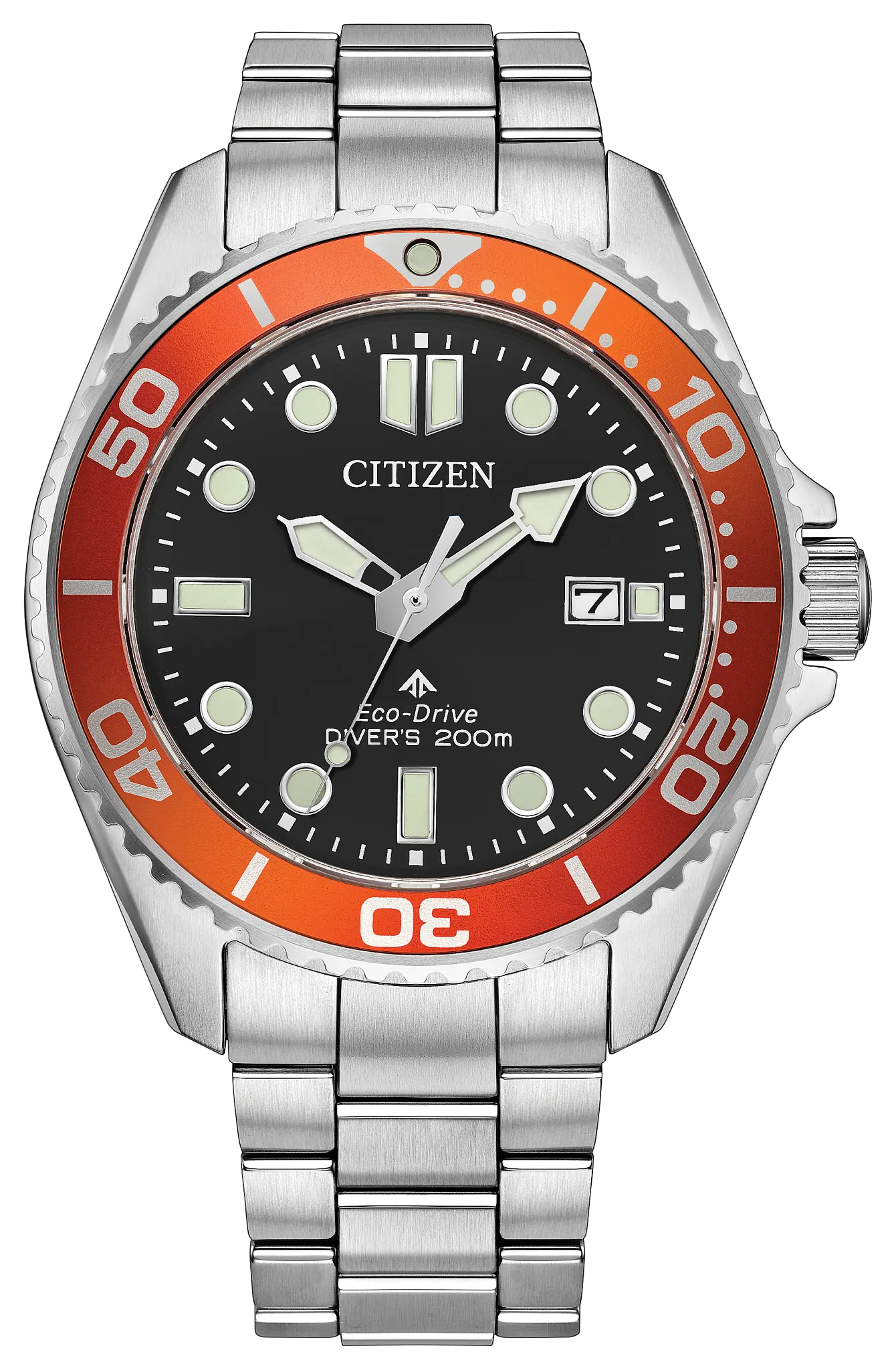
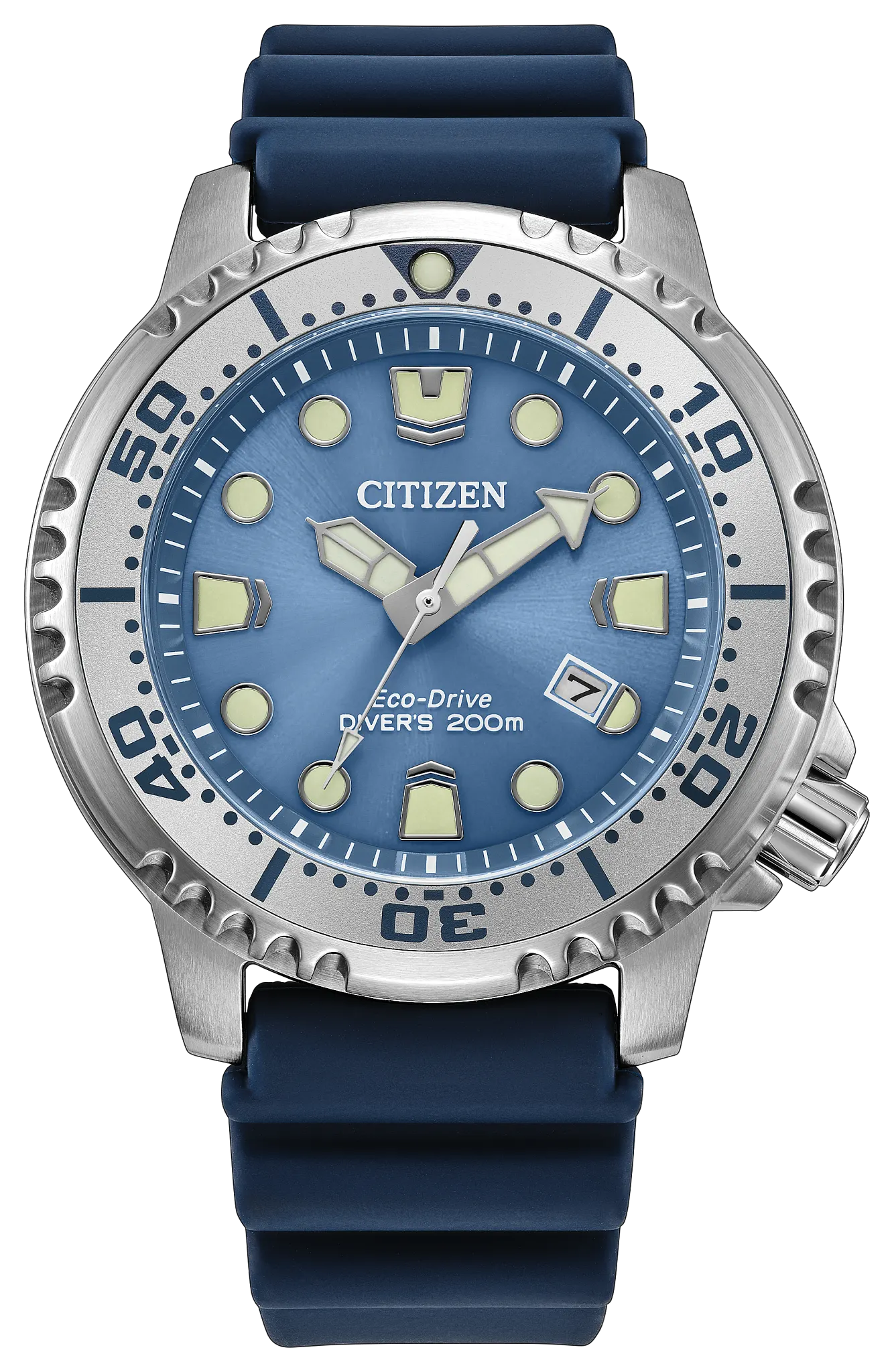
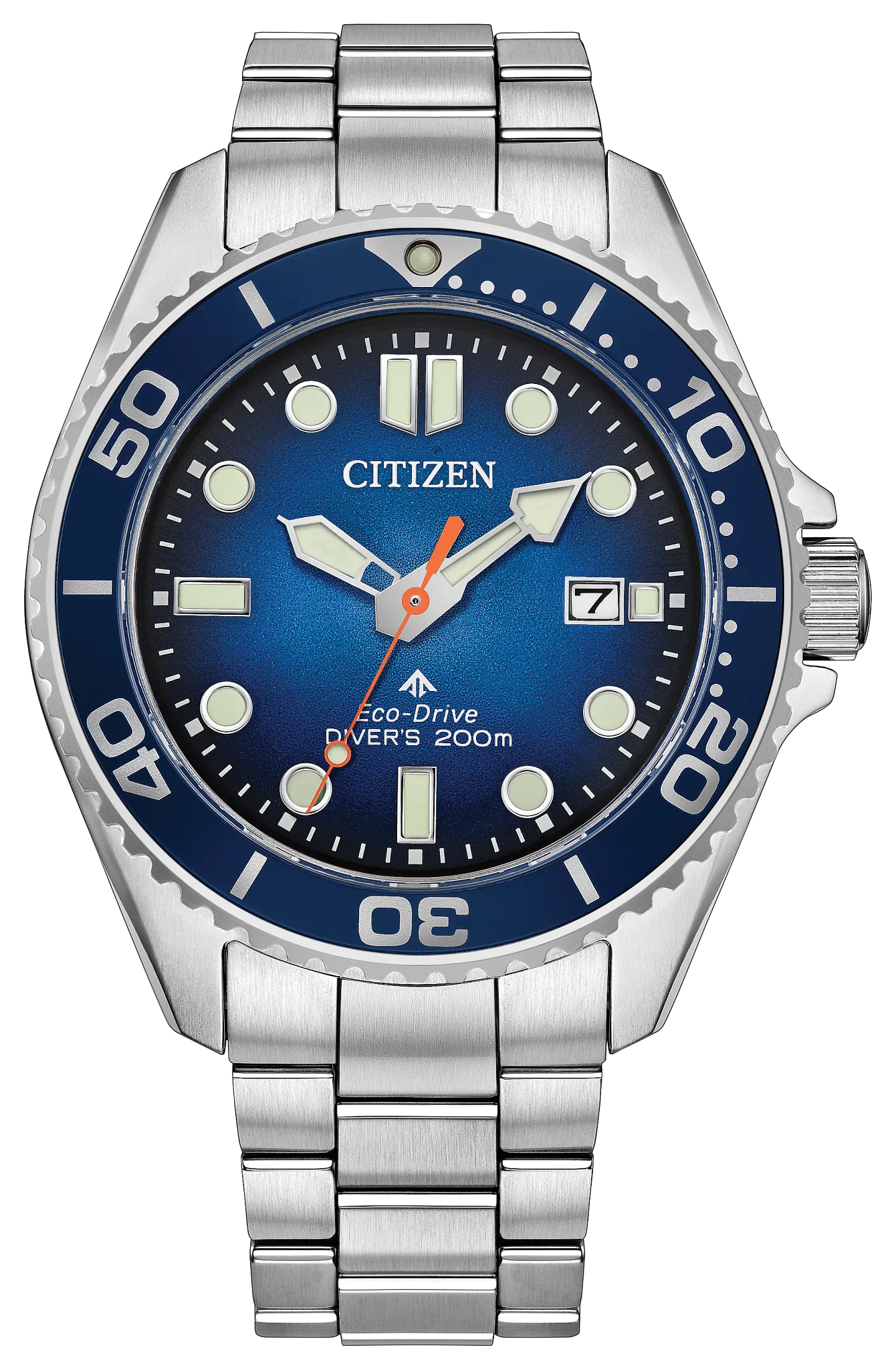
Citizen has expanded the availability of its Promaster Dive Uncharted Waters watches, bringing the lineup to the US market. After initially launching in Canada last month, the three new solar-powered dive watches are now available to purchase directly through Citizen’s US website.
Edited
Pricing and Design Details
The collection is a collaboration with sport fisher Peter Miller, focusing on standard analog timekeeping and physical durability rather than connected features.
The watches feature Citizen’s Eco-Drive movement, which uses ambient light to keep them running without a traditional replaceable battery or daily manual winding. The technology absorbs both natural sunlight and artificial indoor light to continuously charge the internal cell, eliminating the need for battery replacements.
In terms of shared hardware, all three watches are built with silver-tone stainless steel cases and feature sapphire crystals, which are standard in this price range for preventing scratches. They are ISO-certified for scuba diving and rated for 200 meters of water resistance. Each watch has a basic three-hand layout and a date window.
The lineup starts with the BN0251-04L, which is priced at $425. It is the largest watch in the group with a 44mm case width. This model features a light blue dial and is paired with a navy blue polyurethane strap that secures with a standard buckle.
The other two models, the BN0276-54L and BN0270-51E, are priced slightly higher at $450. These versions have smaller 40.6mm cases and swap the polyurethane strap for a stainless steel bracelet with a push-button safety clasp.
The BN0276-54L comes with a blue dial and an orange seconds hand. Meanwhile, the BN0270-51E features a black dial and an orange unidirectional bezel.
In related news, Citizen has recently launched a limited-edition Disney watch featuring Mickey Mouse floating above New York City.
REDMAGIC has taken an interesting approach with its latest gaming flagship. The company launched the REDMAGIC 12 Pro+ in China but introduced the same phone internationally under the REDMAGIC 12 Pro name, dropping the Plus branding. Despite sharing the same core hardware and design, the two regional versions have several differences that could influence buying decisions. From wired charging speeds and gaming triggers to camera specifications and pricing, here’s what separates the Chinese and global models.
The Chinese REDMAGIC 12 Pro+ and global REDMAGIC 12 Pro share an identical design, featuring Gorilla Glass 7i protection, an aviation-grade aluminum frame and a built-in cooling fan. Both also carry IP68/IP69 dust and water resistance, while their cooling fans have a separate IPX8 rating. The main difference comes from the gaming shoulder triggers. The Chinese model offers 700Hz touch sensing, compared with 520Hz on the global version. This gives the Chinese variant an advantage for competitive gaming, particularly in titles that rely heavily on quick trigger inputs.
Display Quality
Both smartphones feature a 6.85-inch AMOLED display with a 1216 x 2688 resolution, an 185Hz refresh rate and up to 5,000 nits of peak brightness. Gorilla Glass 7i protection is also identical. However, the global model explicitly lists HDR10 support, while the Chinese specifications highlight 1-billion-colour reproduction. Their overall viewing experience should remain largely similar, with the high refresh rate being a major attraction for gamers. Neither version offers a significant advantage in core display hardware.
Verdict
The Chinese REDMAGIC 12 Pro+ wins narrowly with its faster 700Hz gaming triggers, while both versions offer essentially identical designs, durability and display experiences.
2. Specifications Including Battery
Performance
Both regional versions use the Snapdragon 8 Elite Extreme Gen 6 processor, paired with the Adreno 850 GPU. Memory configurations are also identical, offering 12GB RAM with 256GB storage, 16GB with 512GB and 16GB with 1TB. Both use UFS 4.1 Pro storage and run Android 17-based REDMAGIC OS 12. Their built-in cooling systems further strengthen their gaming capabilities. Consequently, neither model has a clear advantage in processing power or memory. Buyers can expect essentially the same core gaming performance from both versions.
Battery and Charging
Battery capacity is identical at 8,400mAh, and both smartphones support 80W wireless charging. However, the Chinese REDMAGIC 12 Pro+ supports 120W wired charging, whereas the global REDMAGIC 12 Pro is limited to 80W. Both versions also support 22.5W reverse wired charging and wireless reverse charging. This makes the Chinese model more appealing for users who prioritise faster wired top-ups. The global version still offers substantial charging capabilities, but its lower wired charging speed is one of the biggest compromises compared with its Chinese counterpart.
Verdict
The Chinese REDMAGIC 12 Pro+ takes the lead with 120W wired charging and faster shoulder triggers, although both versions share identical processing hardware and battery capacity.
Both smartphones feature dual 50MP rear cameras with optical image stabilisation on the primary sensor. However, their camera specifications differ slightly. The Chinese REDMAGIC 12 Pro+ features a 50MP main camera with an f/1.9 aperture and a 50MP ultrawide camera with an f/2.0 aperture. The global REDMAGIC 12 Pro uses a slightly different main sensor specification, alongside an f/2.2 ultrawide camera. Both support 8K video recording at 30fps and 4K recording at up to 120fps. These differences give the Chinese version a slight hardware distinction, although real-world image quality will depend on processing and optimisation.
Selfie Camera
Both versions feature a 16MP under-display selfie camera with an f/2.0 aperture, HDR support and 1080p video recording at up to 60fps. However, the Chinese model has a listed focal length of 22mm, compared with 26mm on the global version. Both retain the under-display implementation, keeping the front of the display free from conventional camera cutouts. Neither version introduces a higher-resolution selfie camera, so the front-camera experience should remain broadly comparable. The differences are relatively minor compared with their gaming-focused hardware.
Verdict
The Chinese model has a slightly different rear-camera configuration and ultrawide aperture, but neither version offers a major camera advantage over the other.
4. Pricing
The Chinese REDMAGIC 12 Pro+ is priced around ¥6999, which converts to approximately $1,000 (₹1,00,000), while the global REDMAGIC 12 Pro is priced around $940 (₹90,000). These are approximate market estimates rather than universal official prices. Both versions offer identical memory configurations, including up to 16GB RAM and 1TB storage. The global version therefore has a pricing advantage, although actual costs will depend on regional availability, taxes and retailer pricing.
Verdict
The global REDMAGIC 12 Pro offers better estimated value for money, while the Chinese Pro+ is worth considering for buyers specifically seeking its faster charging and gaming triggers.
5. Conclusion
The REDMAGIC 12 Pro+ and REDMAGIC 12 Pro are essentially the same gaming flagship sold under different regional names, but their differences are worth considering. The Chinese version stands out with 120W wired charging, 700Hz shoulder triggers and slightly different camera specifications. Meanwhile, the global version offers 80W wired charging, 520Hz triggers and explicitly listed HDR10 and HLG display support.
Both retain the Snapdragon 8 Elite Extreme Gen 6 processor, 8,400mAh battery, 185Hz AMOLED display, 80W wireless charging and identical memory configurations. These differences make the Chinese version more appealing to enthusiasts chasing maximum gaming responsiveness and charging speed, while the global model prioritises international availability and a lower estimated acquisition cost.
Overall Winner: REDMAGIC 12 Pro (Global). Its lower estimated price, identical core performance, and more convenient international availability make it the better overall purchase. The Chinese Pro+ remains the better choice for faster charging and gaming triggers.
The Motorola Signature 27 costs $1,599.99 in the US and comes with a 200MP camera. The Honor Magic 9 Pro Max has two 200MP cameras and starts at around $900 in China.
Both phones run on Qualcomm’s Snapdragon 8 Elite Extreme Gen 6 chip, but they take different approaches to the rest of the hardware. Motorola promises seven years of OS updates and has confirmed US availability, while Honor packs an 8,800mAh battery, 80W wireless charging, and a camera system developed with ARRI.
Availability is also a big part of this comparison. Honor launched the Magic 9 Pro Max in China on September 28 and brought it to Hong Kong on November 4. Europe is next, with a January 2027 release planned. The company has not announced a US launch.
So, if you’re considering either phone, here’s how their hardware, cameras, battery life, and software compare.
Neither phone has an advantage on paper when it comes to the processor. Both use Qualcomm’s Snapdragon 8 Elite Extreme Gen 6, which is built on a 2nm process. The chip has an Adreno 850 GPU.
If not the processor, the two brands’ core layout around it is quite different. The Signature 27 comes with an ArcticMesh setup that is 40% larger than the one in its predecessor. It combines diamond-infused thermal gel, liquid metal, and a 3D vapor chamber to keep temperatures under control during demanding tasks. Motorola also mentions a six-antenna design for wireless connectivity.
Meanwhile, Honor has equipped the Magic 9 Pro Max with its advanced Plate-level cooling system 2.0 to help rapidly dissipate heat during demanding workloads. There’s also a third-generation C3 radio chip with a seven-core RF architecture, which is meant to provide a more stable signal.
Nonetheless, both should deliver similar processing performance.
2. Display
The Honor Magic 9 Pro Max has a 6.8-inch LTPO OLED display with a resolution of 1,320 x 2,868 pixels. Its refresh rate adjusts between 1Hz and 120Hz, while Honor claims peak brightness of 10,000 nits and a minimum brightness of 1 nit. The panel also supports 4,320Hz PWM dimming and has an anti-reflective coating that reduces reflectivity to 1.5%.
Motorola also has a 6.8-inch panel on the Signature 27, but it’s a Tandem OLED, or Extreme AMOLED Duo per brand. As a result, it offers an incredible peak brightness of up to 12,000 nits and Dolby Vision support. The screen refreshes at 120Hz and has Corning Gorilla Glass Ceramic 3 protection.
3. Cameras
Honor has the more extensive camera hardware on paper. The Magic 9 Pro Max has a 200MP main camera with a 1/1.28-inch sensor and an f/1.57 lens. It sits alongside a 200MP periscope telephoto camera with a 1/1.4-inch sensor and an f/2.6 lens. Both cameras support CIPA 8.0 stabilization, while a 50MP ultrawide handles wider shots.
The front camera is another unusual part of the setup. Honor uses a 55MP square sensor with a 1:1 aspect ratio, allowing users to switch between 1:1, 16:9, and 9:16 framing without rotating the phone. A 3D depth sensor also sits on the front.
Honor has added its H1 imaging chip, built on a 6nm process, to handle RAW noise reduction. The phone also comes with 14 ARRI Looks presets, with a larger collection available to download. It can record video using the ARRI LogC3 profile.
Meanwhile, the Motorola Signature 27 has a 50MP Sony LYTIA L910 main sensor with LOFIC technology, which helps preserve details in bright and dark areas of the same image. The phone also has a 200MP periscope telephoto camera with 3x optical zoom.
Rounding out the rear camera setup is a 50MP ultrawide and a dedicated EVS Action Sensor. The latter is intended to help capture fast-moving subjects in low-light conditions. Worth noting, the Signature 27 ranks above the iPhone 18 Pro in DXOMARK’s camera rating.
Honor has the stronger main camera specifications, although both phones have 200MP periscope cameras. Honor also sells an optional teleconverter for longer-range shots, while Motorola relies on AI processing to reach 100x zoom.
Honor has several extras for people who want to use the Magic 9 Pro Max for video recording. The phone has a four-microphone array with a directional microphone, which Honor says can pick up sound from as far as 20 meters away.
There are also two optional teleconverters. The Honor Telephoto Converter G200 weighs 88g and extends the camera’s reach to a 200mm equivalent focal length. The G500 goes up to 500mm equivalent. Buyers can also get a SmallRig cage kit with mounting points for accessories such as lights and microphones. All these accessories are sold separately.
The Signature 27 has a simpler audio setup. It is the company’s first phone with Audio by Bang & Olufsen and includes different sound modes for music, movies, gaming, and podcasts, but Motorola doesn’t have a comparable collection of video accessories.
5. Battery and charging
As for battery, the Magic 9 Pro Max packs an 8,800mAh silicon-carbon battery with 40% silicon content. It supports 100W charging over a cable and 80W wirelessly, although the wireless charger is sold separately
The Motorola Signature 27 has a smaller 7,000mAh silicon-carbon battery. It supports 90W wired and 50W wireless charging, with both chargers sold separately.
6. Design and durability
The Honor Magic 9 Pro Max has a metal unibody frame and a large rear camera module inspired by ARRI cinema cameras. The phone measures 161.64 x 76.98 x 8.59mm and weighs 233g.
It comes in Moss Green, Silver Salt, and Shadow Black. Honor also gives it IP68, IP69, and IP69K ratings for dust and water resistance. For security, the phone has 3D face unlock and an ultrasonic fingerprint reader.
The Motorola Signature 27 is slightly thinner at 7.99mm, with dimensions of 162.01 x 77.04mm. It comes in Pantone Coal Smoke with a Tactical Weave back finish, while the Capulet Olive version has a brushed textile-style finish. Gorilla Glass protects the front.
Motorola lists IP68 and IP69 ratings and says the phone passed 14 MIL-STD-810H procedures across 16 categories. The company hasn’t provided a weight in the available specifications.
7. Software and updates
Both the Signature 27 and Magic 9 Pro Max promise seven years of Android updates and seven years of security patches. Motorola also offers Gemini Intelligence and Motorola Qira support.
Qira can help users find and recall information across their apps. It requires a Motorola or Lenovo account and at least 12GB of RAM. Motorola also has RAM Boost, which can extend the available memory up to 24GB.
The Honor Magic 9 Pro Max runs MagicOS 11 based on Android 17. It comes with Honor’s YOYO assistant and a dedicated AI button. Users can press it to record video highlights, while YOYO can also handle scheduled tasks and reminders for pickup codes.
Honor has also added several features for people using Apple devices. The phone can sync iPhone call notifications, pair with an Apple Watch, and connect to Macs.
8. Price and availability
As for the price, the Signature 27 costs $1,599.99 for the 12GB RAM and 512GB storage configuration, which is the only version available in the country. It is sold unlocked and supports Verizon, AT&T, and T-Mobile.
Pre-orders are set to begin on November 19 through Motorola.com, Amazon, and Best Buy, while sales will start on November 26. In the UK, the phone starts at £1,299.
Honor’s pricing currently covers China. The Magic 9 Pro Max starts at CNY 6,499 (about $910) for the 12GB RAM and 256GB storage model. The phone arrived in Hong Kong on November 4, with a European release planned for January 2027. The rollout includes the UK and France. Honor has not announced a US release, though.
For buyers in the US, the Motorola Signature 27 is the only one of these two phones with confirmed local availability. Buyers in the UK and other European markets will have both options once Honor begins its regional rollout. The European price of the Magic 9 Pro Max will be important in deciding how the two compare.
9. Which one should you buy?
The Honor Magic 9 Pro Max makes more sense if camera hardware, video recording, and battery life are your main priorities. It has two 200MP rear cameras, ARRI video features, an 8,800mAh battery, and faster wired and wireless charging. The optional teleconverters and SmallRig cage also give video creators more accessories to work with.
The Motorola Signature 27 is worth considering if long software support and US availability matter more. It still has a 200MP periscope camera, LOFIC technology on its main sensor, and Bang & Olufsen audio. It’s also thinner than the Honor phone.
However, $1,599.99 is a lot to pay, especially when comparing it with phones such as the Galaxy S26 Ultra and iPhone 18 Pro Max. Honor could make a stronger case if its European pricing stays close to the Chinese price.
10. Motorola Signature 27 vs Honor Magic 9 Pro Max: how they compare
Specification
Motorola Signature 27
Honor Magic 9 Pro Max
Chipset
Snapdragon 8 Elite Extreme Gen 6
Snapdragon 8 Elite Extreme Gen 6
Display
6.8-inch Extreme AMOLED Duo
6.8-inch LTPO OLED, 1–120Hz
Peak brightness claim
Up to 12,000 nits
Up to 10,000 nits
Main camera
50MP Sony LYTIA L910
200MP, 1/1.28-inch, f/1.57
Telephoto
200MP periscope, 3x optical
200MP, 1/1.4-inch, f/2.6
Ultrawide
50MP
50MP, f/2.0
Front camera
Not listed
55MP, 1:1 square sensor
Battery
7,000mAh silicon-carbon
8,800mAh silicon-carbon
Wired charging
90W
100W
Wireless charging
50W
80W
Water and dust rating
IP68 and IP69
IP68, IP69 and IP69K
Thickness
7.99mm
8.59mm
Software
Android with Gemini Intelligence and Motorola Qira
Samsung has been rolling out the One UI 9.0 software for a few weeks now. The Android 17-based update is now available to a wide range of eligible devices. With the rollout entering into the final phases, Samsung’s software team has already begun preparing for the One UI 9.5 release early next year, but the wait may not be worth it.
One UI 9.5 is tipped to bring minor changes
Tipster Ice Universe, who has been a reliable source for Samsung leaks for years, has shared on X that One UI 9.5 will be a minor update. It will be based on Android 17, just like One UI 9.0. The upcoming software is expected to debut with the Galaxy S27 series in February or March 2027.
Samsung hasn’t shared anything about One UI 9.5 yet. However, there have been quite a few recent leaks, revealing details about the upcoming changes. One of the biggest visual upgrades spotted so far is the new ripple animation applied system wide, making the interaction feel more fluid and alive.
One UI 9.5 reportedly adds new Galaxy AI tools to Samsung Keyboard. However, users may finally have to pay to use Galaxy AI features. One UI 9.5 is also expected to offer improved Liquid Glass aesthetics, a native app lock, and DeX improvements.
While One UI 9.5 may bring quite a few changes, they feel well short of a major upgrade. Samsung could offer more to One UI 9.5. We’ll know more about the changes once the beta program goes live, which could happen later this month.
One UI 10 is tipped to offer historical changes
Tipster Ice Universe believes that Samsung is saving the best for the One UI 10. He says the software will introduce “historically biggest change” without going much into exact changes.
One UI 10 will be based on Android 18, and is expected to debut with the next-generation Galaxy foldables in the mid-2027. Some early rumors suggest the upcoming software could integrate artificial intelligence directly into the core architecture rather than treating AI as a set of standalone tools.
One UI 10 is rumored to introduce proactive AI agents capable of completing multi-step tasks across different apps and services in the background. It may also be able to pull relevant details into a single unified view from different apps. The update is said to focus on deeper integration across Samsung products, including phones, tablets, foldables, and newer hardware like Galaxy Ring, smart glasses, and the Galaxy XR headset.
These are some early rumored changes coming to One UI 10. Reports also believe it could bring major visual upgrades and a host of exciting features. We’ll learn more about them as we get closer to the release.
Recent rumors suggest Samsung could rebrand One UI 10 to ‘Galaxy OS’. There hasn’t been concrete evidence yet, so it’s best to take the information with a pinch of salt.
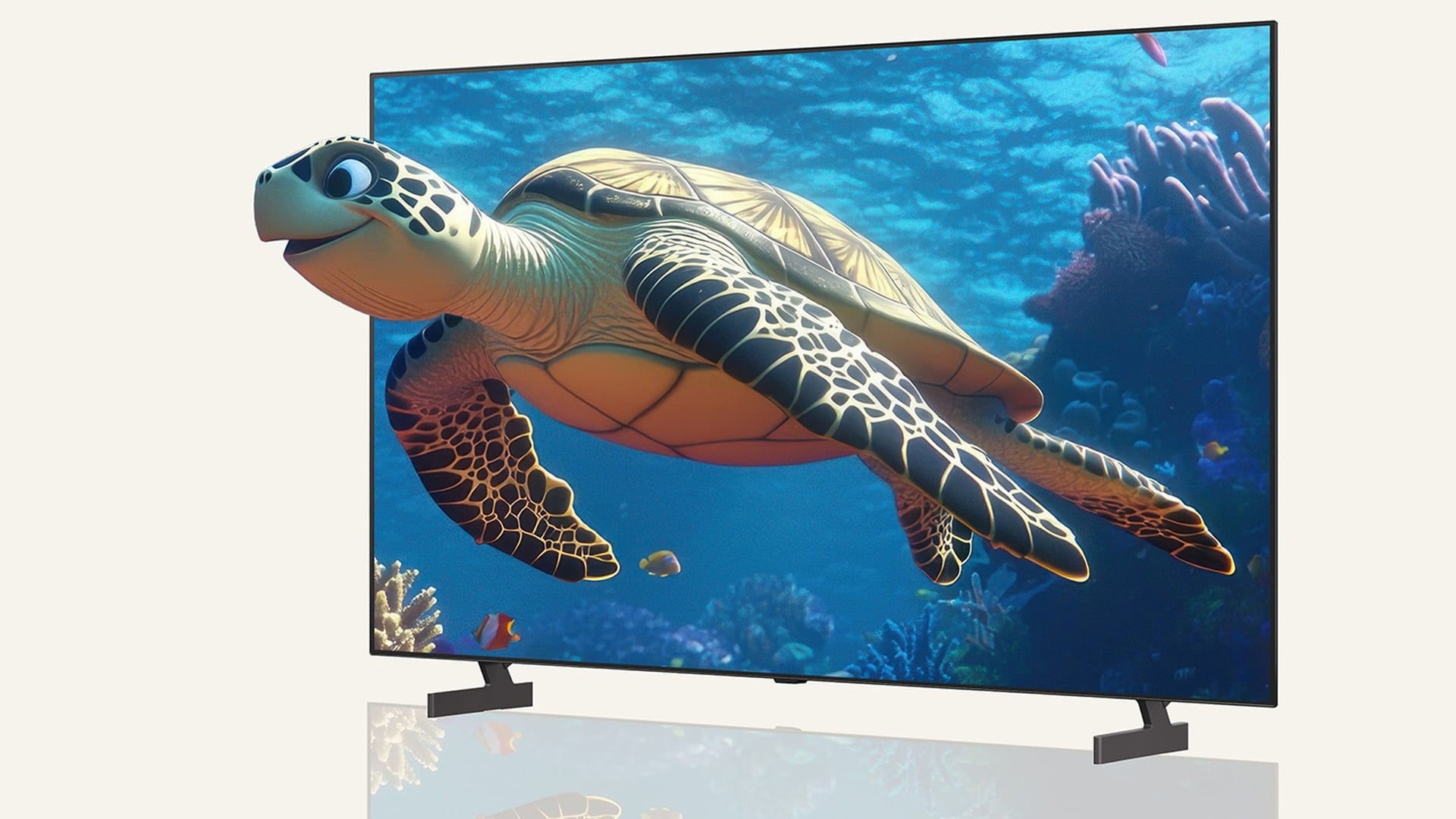
Amazon has dropped the 65-inch LG OLED AI B6 4K Smart TV to $999.99, a $1,000 cut from its $1,999.99 list price. The 2026 model is now available at half its launch list price. It is the most affordable 65-inch OLED in this year’s LG lineup and a timely living-room or console upgrade.
LG OLED AI B6 specifications and features
LG OLED AI B6
The OLED65B6GUA uses a 65-inch 4K OLED panel at 3840 x 2160, with more than 8.3 million self-lit pixels, Perfect Black, and Vivid Color. The α8 AI Processor 4K Gen3 detects what you are watching and tunes the picture and sound to match.
HDR support includes Dolby Vision, HDR10, and HLG, along with FILMMAKER MODE with Ambient Light Technology. A 20W 2.0-channel speaker system supports Dolby Atmos, and OLED Care helps protect the panel over time.
Gamers get a native 120Hz refresh rate, a 0.1ms response time, NVIDIA G-Sync, AMD FreeSync Premium, and variable refresh rate. Four HDMI 2.1 ports support 4K at 120Hz, VRR, and Auto Low Latency Mode for current consoles. That makes it a strong fit for PS5, Xbox Series X|S, and PC gaming setups.
It runs webOS 26, with Google Gemini, LG Channels for more than 400 free channels, and over 10,000 on-demand movies and shows. With the stand, it measures 57.0 x 35.4 x 8.6 inches and weighs 38.1 pounds.
LG introduced the B6 in its 2026 TV lineup, below the brighter C6 and G6 OLED models. It remains a full OLED set for most living-room and console setups.
LG OLED AI B6 deal price and availability
LG OLED AI B6
Amazon is selling the 65-inch OLED65B6GUA for $999.99, 50 percent off the $1,999.99 list price, and the listing is in stock. The official LG site currently lists the same model at $1,199.99, and Best Buy is also at $1,199.99.
Holiday prices can move quickly, so confirm the figure before you buy. No promotional code is required for the Amazon discount.
Are you picking up the 65-inch B6 OLED at $999.99, or waiting for a C6 deal?
Xiaomi has confirmed that the Xiaomi 18 Pro series will make its global debut in Paris on November 17. The announcement follows a teaser from Xu Fei, Xiaomi’s VP and CMO, who hinted at the launch date a few days ago.
This marks a change from last year, when only the standard Xiaomi 17 made it to international markets while the Pro models remained exclusive to China. Xiaomi had already confirmed a November launch window for the Xiaomi 18 Pro series, and the company has now revealed the exact date and venue.
Xiaomi 18 Pro series launch time and livestream
The launch event will begin at 14:00 GMT+1 on November 17, which translates to 6:30 PM in India. The event will be livestreamed through both X and YouTube.
Xiaomi has also confirmed three color options for the series: White, Cosmic Blue, and Velvet Red.
Both the Xiaomi 18 Pro and Xiaomi 18 Pro Max have already appeared in global certification databases. However, earlier leaks suggest their global versions could have smaller batteries than the models sold in China.
One report puts the global Xiaomi 18 Pro at 6,000mAh and the Pro Max at 7,050mAh. The Chinese versions reportedly pack 7,000mAh and 8,500mAh batteries, respectively. These figures came from code strings spotted in an earlier leak, rather than an official announcement, so the final capacities could be different.
India’s launch plans are less clear. Xiaomi has teased the Xiaomi 18 Pro for the Indian market, but has not mentioned the Pro Max so far.
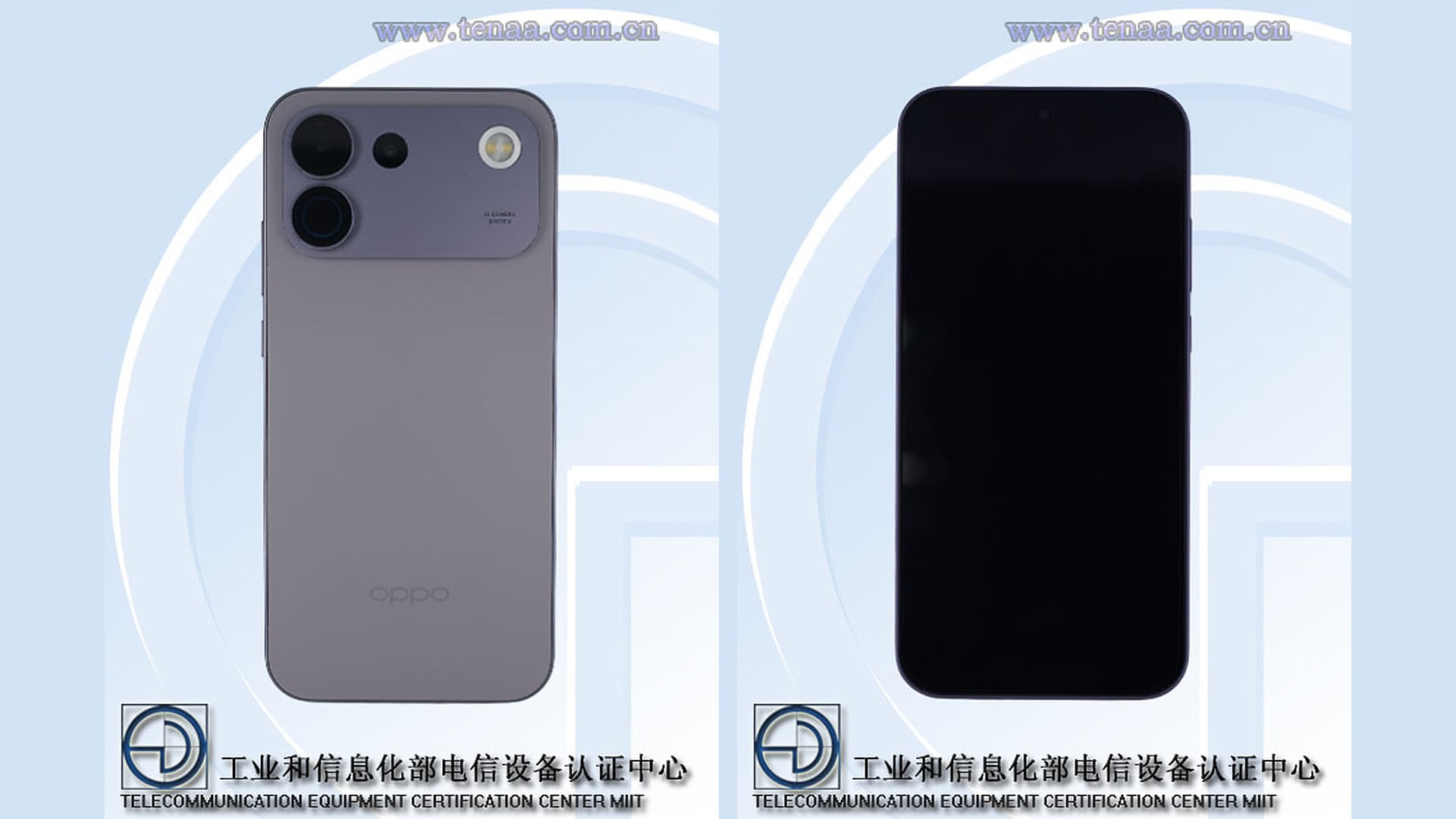
Official photos of an unannounced Oppo phone, listed as the PNC110, have been added to its MIIT network access license in China. This is the first official look at a purple 5G model, although Oppo has not confirmed a marketing name, price, or launch date.
Oppo PNC110 design revealed in official images
Oppo PNC110
According to AndroidTreasure, four new photos of the upcoming PNC110 Oppo have emerged in CMIIT’s database. On the back, the PNC110 uses a purple finish and a pill-shaped camera island with two lenses, a flash, and “AI CAMERA SYSTEM” printed on the module. The Oppo logo is placed low on the rear panel.
The set also includes two side views. One is a straight edge-on shot, and the other shows the volume rocker, the power button, and the raised camera module. The front is a flat screen with a punch-hole selfie camera in the center.
Oppo already has a large-battery phone in this segment. The Oppo A7 Pro Max launched in China in August with a 10,000mAh battery and later went on sale outside China. The PNC110 could be a bigger follow-up, with reports putting the rated capacity at about 11,460mAh to 11,640mAh.
Those two rated figures do not match, so the exact number is still unclear. The typical capacity is likely to be marketed at around 12,000mAh, which would make this Oppo’s largest phone battery to date. That would top the A7 Pro Max, but the company has not confirmed the figure.
The PNC110 is possibly an affordable A-series model, and it may land in the A7 family, though that remains unconfirmed. The license describes a 5G phone with dual-SIM support. Oppo has not released the chipset, display, charging speed, or software.
A new red color is coming to the Honor Magic 9 series, according to tipster Digital Chat Station, and a photography master kit is set to launch at the same time. DCS says a red unit is already in hand. The tip comes weeks after the China launch.
Honor Magic 9 red color and photography kit details
Honor Magic 9
In a Weibo post, DCS said new color options are planned for release. The leak does not name which of the three phones will get the red finish, or how many other new colors are coming. None of the launch shades is red.
DCS also claims the series has passed 500,000 units in sales and ranks first among Android phones, a figure Honor has not confirmed. Honor said in late October that the lineup had led 2026 Android flagships through week 42.
A photography master set will launch with the new colors, DCS added, and could trigger another sales surge. Honor already sells a photography master kit for the Magic 9 Pro Max at 10,999 yuan (~$1,645), plus the G200 and G500 teleconverters. DCS did not say what the new set includes.
Honor Magic 9 series specifications recap
Honor Magic 9
Honor launched the three phones in Beijing on September 28, with the Magic 9 from 4,999 yuan (~$747), the Magic 9 Pro Max from 6,499 yuan (~$972), and the Magic 9 Super Edition from 4,499 yuan (~$673). The Magic 9 and Super Edition arrived in Popcorn Yellow, Opening White, Curtain Black, and Olive Green, and the Pro Max in Moss Green, Shadow Black, and Glacier Silver.
The Magic 9 and Pro Max share dual 200MP ARRI main and telephoto cameras, a 50MP ultrawide, and a 55MP square selfie camera. The Magic 9 has a 6.37-inch display and an 8,000mAh battery, while the Pro Max uses a 6.8-inch panel, an 8,800mAh cell, and a 2nm Snapdragon 8 Elite Extreme Gen 6 chip.
The Super Edition is built around an 11,000mAh battery and a 6.81-inch display, with a 200MP main camera, a 50MP telephoto, and a 12MP ultrawide. All three run MagicOS 11.
Would a red Honor Magic 9 and a new photography master kit tempt you, or are you happy with the current colors? Let us know in the comments below.
Dyson has launched the Hot+Cool HF1 Remote Link Pre-heat in India, a bladeless heater and cooling fan for year-round use. It is priced at Rs 38,900 (~$414) and is already in stock on Dyson’s official India store. The HF1 can pre-heat a room from 12 to 32°C through the MyDyson app before you get home.
Dyson Hot+Cool HF1 specifications and features
Dyson Hot+Cool HF1
Dyson calls the HF1 its quietest and most powerful heater and cooling fan. Ceramic heater plates and Air Multiplier projection warm a whole room 20% faster than the previous AM09, and can raise the temperature by one degree in as little as 100 seconds. It also amplifies surrounding air up to eight times and delivers over 200 liters of airflow per second.
It is up to 25% quieter than the AM09 at full power, and Sleep mode drops to 26dB with a dimmed display, up to 80% quieter than the maximum fan speed. An intelligent thermostat only heats when needed, making the HF1 up to 30% more energy efficient than a heater without thermostat control.
There are no exposed heater elements or spinning blades, and it shuts off automatically if tipped over. A child lock can disable the controls, oscillation runs from 15 to 70 degrees, and the loop can be tilted by hand.
The MyDyson app handles pre-heat, airflow, temperature, and a seven-day heating schedule, with voice control through Siri, Alexa, and Google Home. A magnetized remote is included, and the tower stands 585mm tall and weighs 2.59kg.
Dyson Hot+Cool HF1 price and availability
Dyson Hot+Cool HF1
The HF1 is sold at Rs 38,900 (~$414), inclusive of taxes, in a White/Silver finish on Dyson.in. Buyers can pay Rs 1,621 a month with 24 months of no-cost EMI, and the machine carries a two-year guarantee.
Dyson is also selling the HF1 through its Demo stores in India. The official listing identifies the model as the AM15, first launched in China last year, and a Cool tower fan arrives alongside it at Rs 27,900 (~$297).
Would you pay Rs 38,900 for a bladeless heater fan with app pre-heat, or would you rather pick a cheaper standalone heater? Let us know in the comments below.
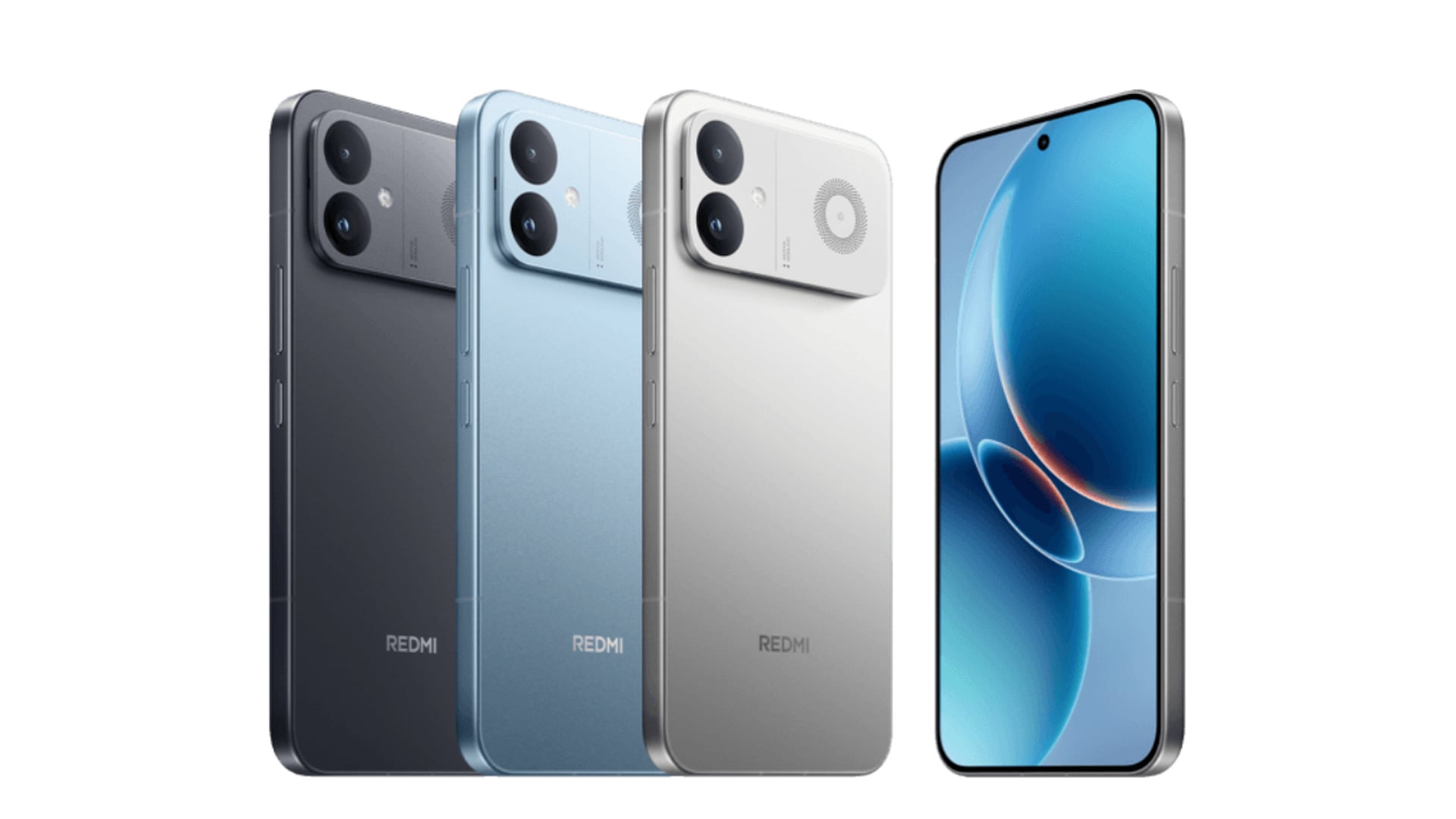
Reliable tipster Digital Chat Station has shared new details on a next-generation sub-brand flagship now being discussed as the purported Redmi K100 Ultra. The tipster did not name the model, and the notes come from an engineering sample still in testing. Redmi has not confirmed the phone or any of the claims.
Redmi K100 Ultra battery and charging details
Redmi K100 Ultra
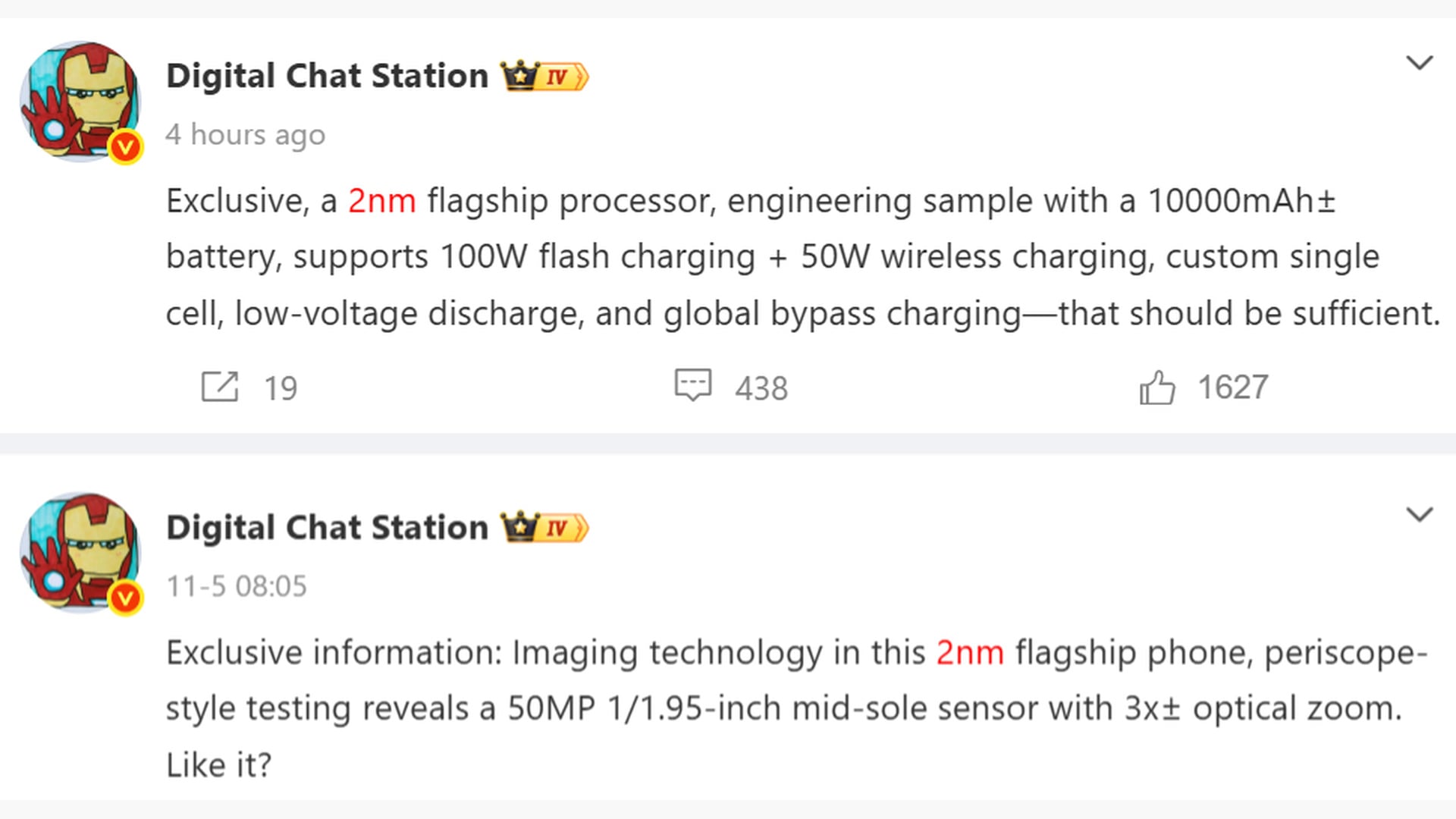
In a post today, Digital Chat Station said an engineering sample of the 2nm flagship carries a battery of around 10,000mAh and supports 100W wired charging plus 50W wireless charging. The tipster also cited a custom single-cell battery, low-voltage discharge, and global bypass charging, which can power the phone from the adapter during heavy use.
That would be a step up from the Redmi K90 Ultra, which arrived in China on June 30 with an 8,550mAh cell, 100W wired charging, and no 50W wireless charging. A 10,000mAh pack is already used on the standard Redmi K100, so the Ultra line would mainly gain capacity and wireless charging.
The same tipster offered an early look at the camera hardware on November 5, saying this 2nm flagship is testing a periscope camera with a 50-megapixel, 1/1.95-inch medium-size sensor and around 3x optical zoom. The rest of the camera setup was not listed, so those details remain unknown.
A dedicated periscope would be new for the Ultra line. The K90 Ultra uses a 50-megapixel Light Hunter 800 main camera with a 1/1.55-inch sensor and an 8-megapixel ultra-wide lens, with no telephoto camera. The 2nm chip itself has not been named.
The tipster’s “sub-brand flagship” wording is typically read as a Redmi phone, which is why this sample is tied to a purported K100 Ultra. The Redmi K100 Pro and K100 Pro Max launched in August, and the standard K100 followed in October, but a separate gaming flagship is still missing. Until Redmi confirms the name and specs, this should be treated as an early leak.
Would a 10,000mAh battery and a 3x periscope make you wait for the purported Redmi K100 Ultra, or do the current K100 models already cover what you need? Let us know in the comments below.
Motorola has been doing some good work with software rollouts lately. It has already delivered the stable Android 17 update to over a dozen models, and is now moving into the next phase of the rollout.
The brand has launched the Android 17 beta registration for 14 new devices. It announced the news through a series of posts on the community forum, which also includes details about eligible devices, regions, and other relevant details.
Android 17 beta registration goes live for these 14 new Motorola phones
If your Motorola device is on the list and you live in a supported region, sign up for the beta program to get an early taste of the software. However, unlike most Android brands, the beta registration for Motorola devices requires some extra steps. Check out this page for a complete step-by-step guide.
Beta builds are prone to have bugs or broken features. Therefore, it’s best to install them on a secondary device. For a clean software experience, you should wait a few more weeks until the stable build rolls out.
The Android 17 update to Motorola devices doesn’t bring groundbreaking changes, but there are a couple of upgrades worth waiting for. That includes upgraded Live Updates, which now integrates into the camera cutout similar to the Dynamic Island on Apple devices, and now works with most of your day-to-day apps. The updated Settings page layout looks more like Pixel UI.
There are new status bar icons, a new volume interface, and updated icons for Wi-Fi, cell tower, and battery. The lock screen gets new clock faces, typography, and style options, while it still lacks depth effect. There are some new features as well including a Landscape Stereo, Qira AI assistant, Enhanced HDR Brightness, and Battery health.
Not all of the changes may be included in beta releases. So, it remains to be seen when the beta rollout actually begins and what changes do come along.
Reading on a phone or tablet can be convenient, but it isn’t always the most comfortable experience, particularly if you spend hours going through books or documents. That’s where e-ink readers come in. Their paper-like displays offer a more natural reading experience, without the glare associated with conventional screens. Digital notebooks, on the other hand, take things a step further, allowing you to write, annotate, and organise notes without carrying multiple notebooks.
If you’re looking to move away from paper books or want a dedicated device for handwritten notes, there are several options worth considering. We have curated some of the best e-ink readers and e-notebooks you can buy in India.
How to choose an e-ink reader or e-notebook
Finding an e-ink reader or digital notebook in India isn’t as easy as picking up a regular tablet. The selection is fairly limited, and not every product sold as an e-book reader actually comes with an e-ink display. So, it’s worth checking the display technology before making a purchase.
If you primarily want to read books, pay attention to screen resolution, front lighting, supported file formats, and battery life. For note-taking, the stylus matters just as much as the screen. Check for pressure sensitivity, handwriting recognition, PDF annotation, and how easily you can transfer notes to your phone or computer. Storage and software support are also worth looking at, particularly if you plan to use third-party reading or note-taking apps.
8,192 pressure levels, Bluetooth 5.0, Up to 18 hours battery life
Rs 6,454
Kindle Paperwhite
Probably the most popular e-ink reader on this list, the Kindle Paperwhite gets a 7-inch, 300ppi E Ink display with adjustable front lighting and warm-light settings. The sharp text and glare-free screen make it comfortable for extended reading sessions, while the larger display gives you enough room to read without constantly turning pages or adjusting the font size.
It is also waterproof and offers weeks of battery life on a single charge. You also get access to Amazon’s Kindle store, making it easy to browse and download books from the vast library.
The Kobo Libra is another e-ink reader that features a 7-inch E Ink Kaleido 3 colour display, which means you can better enjoy comics and illustrated content. It also comes with physical page-turn buttons, adjustable lighting, and an IPX8 waterproof rating to add to its appeal.
It has 32GB of storage and supports multiple file formats, including EPUB and PDF. The optional Kobo Stylus 2 enables handwriting and annotations, although colour content appears at a lower resolution than black-and-white text.
The reMarkable 2 is designed for people who want the feel of writing on paper without carrying a physical notebook. It features a 10.3-inch monochrome Canvas display with a paper-like surface, making it suitable for handwritten notes, reading documents, and annotating PDFs. It has a slim 4.7mm profile, making it easy to carry around.
It supports handwriting conversion, document organisation, and cloud syncing, while its battery can last up to two weeks, depending on usage. However, it lacks a conventional app ecosystem and does not support colour. If you want distraction-free writing and reading, the reMarkable 2 is a good alternative to a traditional notebook.
The XP-Pen Magic Note Pad is designed for those who want a digital notebook that can do more than just capture handwritten notes. It features a 10.95-inch X-Paper display and runs Android 14, allowing you to write, sketch, annotate PDFs, and use compatible Android apps.
It comes with the X3 Pro Pencil 2 stylus, which supports 16,384 levels of pressure sensitivity. You also get 6GB of RAM, 128GB of storage, and an 8,000mAh battery. However, its X-Paper display uses LCD technology rather than conventional E Ink, making it closer to a digital writing tablet than a dedicated e-reader.
The HUION Note X10 lets you write on a physical notebook while capturing your notes digitally. It comes with a battery-free pen, while the pad under the paper tracks your handwriting and sends it to a connected device over Bluetooth, making it useful for meetings, lectures, and everyday note-taking.
The pen supports 8,192 levels of pressure sensitivity, while the companion app lets you organise and share your notes. It is compatible with Android, iOS, Windows, and macOS devices. However, you will need a compatible phone or computer to access and manage your digital notes.
The HUION Note X10 is a good entry-level option for digitising handwritten notes.
Which e-ink reader offers the best value for money?
The Kindle Paperwhite is the best value for money e-reader you can get, as it offers a great balance of display quality, battery life, and reading features.
Which is the best colour e-ink reader?
The Kobo Libra Colour is the best colour e-ink reader on this list, letting you read comics, illustrated books, and colour documents.
What is the best e-ink notebook for professionals?
The reMarkable 2 is a great choice for handwritten notes, document annotations, and distraction-free writing.
So, which of these e-ink readers and e-notebooks would you pick? Let us know in the comments below.
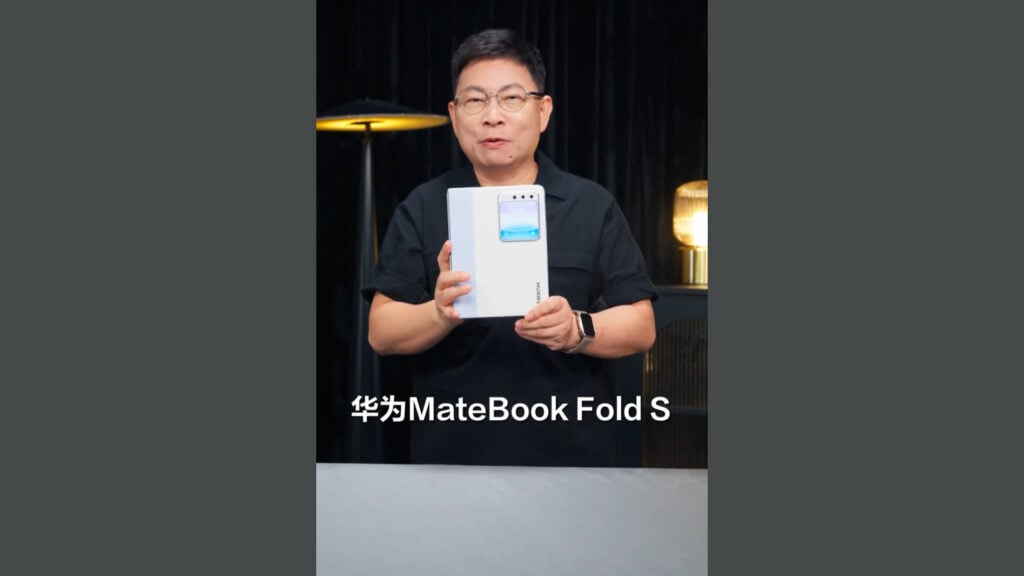
Huawei executive director and consumer BG chairman Richard Yu has teased the MateBook Fold S, a new compact foldable PC, in a Weibo post. The video shows a much smaller machine than the 18-inch MateBook Fold, and Yu says more surprises will come at the launch event. Huawei has now said pre-orders in China will open on November 14.
Huawei MateBook Fold S teaser details
Huawei MateBook Fold S
Yu posted the teaser on the morning of November 10, writing that a little magic trick had produced the latest compact foldable PC, the MateBook Fold S. In the clip, he puts the MateBook Fold Ultimate Design into an envelope, folds the envelope in half, and pulls the smaller Fold S out of it.
The new model is shown in Cloud Sea Blue, book-sized when folded, with a lit square cover screen on the outside. Huawei’s official poster later set pre-orders for 10:08 a.m. on November 14 in China, in Cloud Sea Blue, Sky White, and Magic Night Black. A formal launch date, the full specifications, and the price have not been published.
What to expect from the Huawei MateBook Fold S
Huawei MateBook Fold S
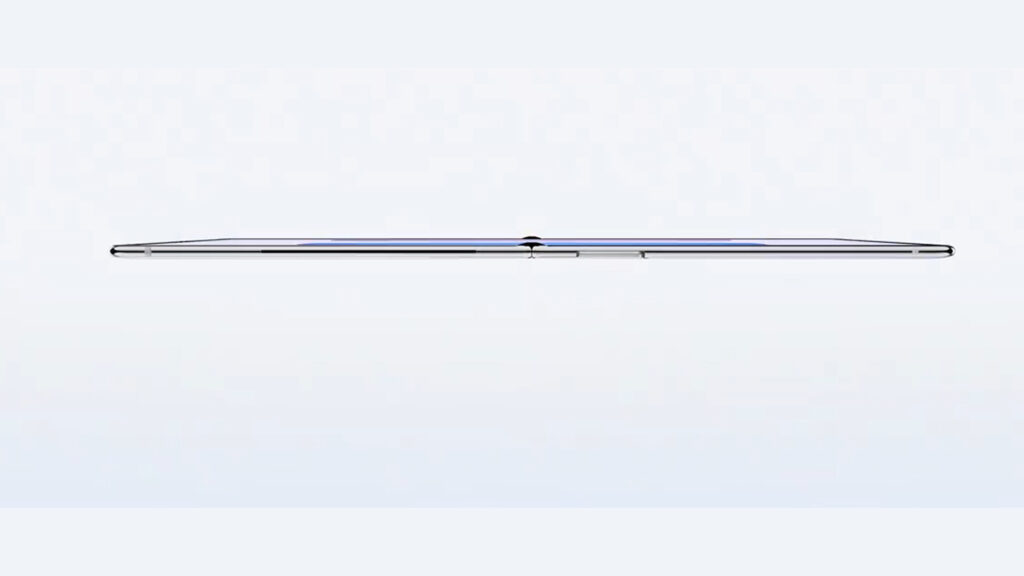
The Fold S is a HarmonyOS compact foldable PC that unfolds to a 14.7-inch display, closer to a typical notebook than the 18-inch panel on the original MateBook Fold. That first foldable PC launched in China in May 2025 with a dual-layer OLED screen and a folded 13-inch footprint, and a refreshed model is now sold from 24,999 yuan (~$3,740).
Huawei MateBook Fold S
The new cover screen, which Huawei calls a Live display, sits beside a triple camera labeled AI Camera and can show the time while the PC is closed. Huawei has not said what else it can do, or how typing will work on the smaller machine.
Huawei MateBook Fold S
Earlier reports have put the weight around 600g, but Huawei has not confirmed the weight, the chip, the battery, or the price. Those details are expected at the launch event.
Huawei MateBook Fold S
Would you pick the compact MateBook Fold S for travel, or do you still prefer the larger 18-inch Fold? Let us know in the comments below.
The wide-screen candybar trend is spreading across Android flagships, and OnePlus now looks set to put its next numbered phone on that path. Weibo tipster Smart Pikachu has flagged the OnePlus 17 as one of next year’s high-performance wide-screen phones. OnePlus has not confirmed the tip, and official OnePlus 17 specifications have not been announced.
OnePlus 17 may sport a wide-screen design
In a Weibo post tagged OnePlus 17, Smart Pikachu said next year, all five top-performing wide-screen smartphones will be included, offering a wider gaming field of view. The simplest reading is that the OnePlus 17 will join that 2027 group, with the extra width pitched as a gaming benefit. He did not share a screen size, chipset, camera setup, or launch date.
This goes further than a late October Digital Chat Station tip that OnePlus may skip a OnePlus 15T successor and offer a wide-screen phone instead. That earlier post did not name the OnePlus 17, so this is the first tip to place the numbered flagship itself in the wide-screen race.
A non-folding wide slab differs from the book-style foldables that followed the iPhone Duo. Huawei started this candybar trend with the Pura X View, and Vivo has since been tipped for a compact wide-screen flagship in 2027. If the OnePlus 17 drops the usual tall shape, it would compete in that candybar group, not with foldables.
The current OnePlus 16 launched in China in October with a 6.78-inch tall OLED that can reach 185Hz in games, a Snapdragon 8 Elite Extreme Gen 6 chip, a 200-megapixel triple camera, and a 9,000mAh battery. It starts at 5,999 yuan (~$897) in China, with no global or India price announced.
A late 2027 launch, a successor chip, and a battery at least that large would not be surprising, but none of those points were in Smart Pikachu’s post. They are only assumptions based on the OnePlus 16, so the only concrete takeaway is the wide-screen direction.
Would you want the OnePlus 17 to switch to a wide-screen design for gaming, or keep the familiar tall flagship shape? Let us know in the comments below.
Motorola has quietly confirmed when its wide foldable, the Razr Flex, is due to arrive. A newly surfaced support page on the company’s own site lists the phone as the Motorola Razr Flex 2027, pointing to a launch next year rather than before the end of 2026. No exact date has been given, but the listing is the clearest official signal yet of both the name and the timing.
Moto Razr Flex launch timeline
Moto Razr Flex
The page appeared on Motorola’s Australian testing support site and is titled “motorola razr flex – 2027,” the first time the name has shown up in the company’s own support documentation. Its security details look like placeholders, with an August 2024 launch, Android 16, support until August 2029, and a “Test Security Updates” heading.
Motorola has not issued a formal announcement or a firm date. Earlier reports, including previous coverage of leaked specifications, had pointed to a mid-December debut this year.
Motorola already teased a shorter, wider foldable on September 9, the same day Apple unveiled the iPhone Duo. Its official X video ended on a blacked-out compact foldable, calling it “our next move” without a name or launch date.
What to expect from the Moto Razr Flex
The iPhone Duo is Apple’s first foldable iPhone, announced on September 9 and priced from $1,999, with sales starting on October 23. The Razr Flex is expected to compete in the same short and wide category as the Duo and Samsung’s Galaxy Z Fold 8.
Reports have described a 6.92-inch 165Hz inner OLED, a 4.97-inch cover display, dual 50-megapixel cameras, 12GB of RAM, a 5,000mAh battery, and Android 17, though Motorola has not confirmed the leaked specs. A Geekbench listing also pointed to a Snapdragon 8 Gen 5 chip.
A European retailer listed a 12GB + 256GB model at €1,510.90 (about $1,693). It incorrectly described the phone as a flip, so the price should be treated with caution.
Would you wait until 2027 for Motorola’s wide foldable, or are you more interested in the iPhone Duo and Galaxy Z Fold 8? Let us know in the comments below.
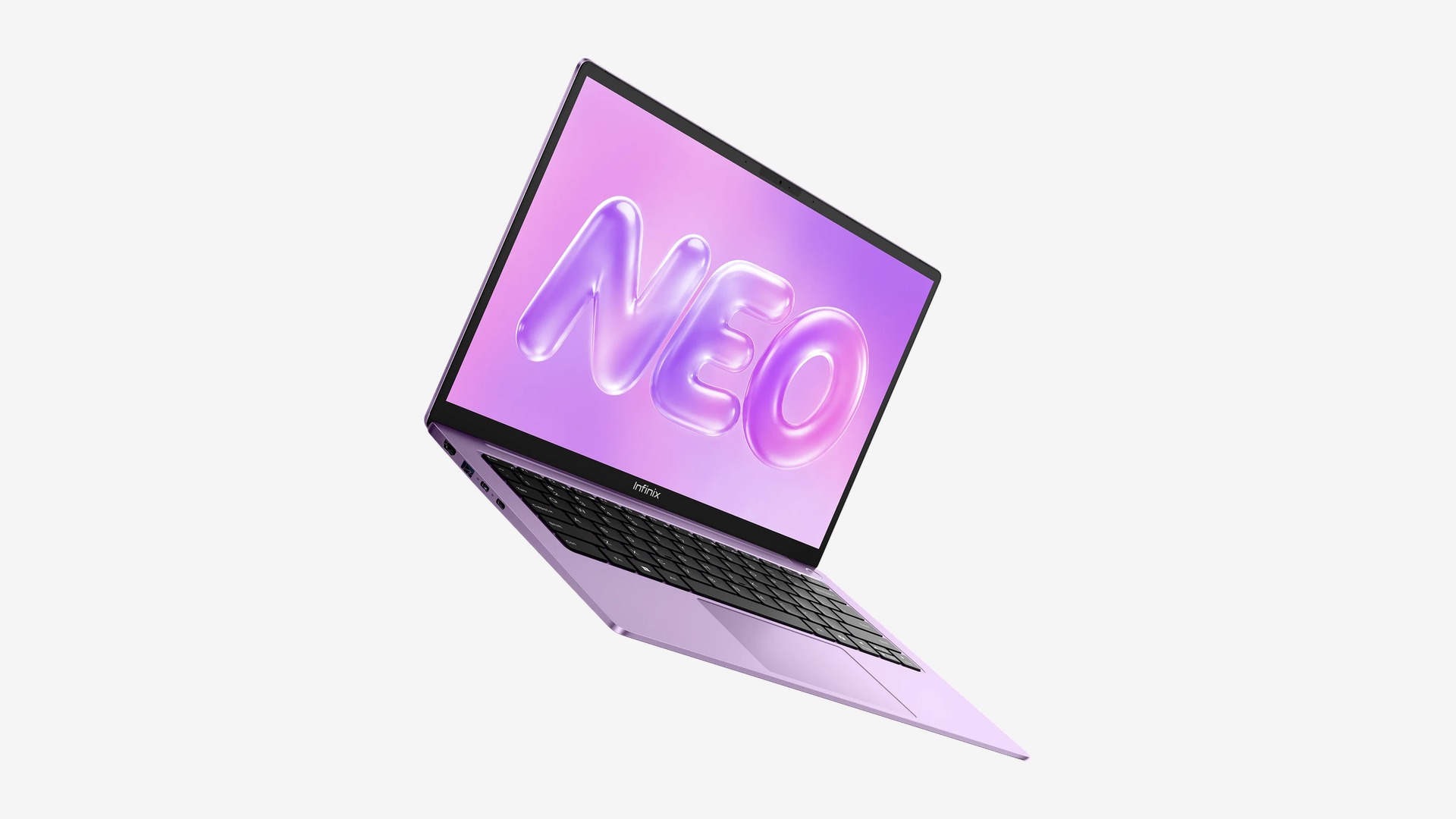
Infinix has launched the XBook 14 Neo laptop in Malaysia, with prices starting at RM2,199 (~$542). The ultra-light 14-inch notebook weighs just 1.2kg and runs on Intel Core i3 and Core i5 processors. It goes on sale today through Infinix brand stores and the company’s official online stores.
Infinix XBook 14 Neo specifications and features
Infinix XBook 14 Neo
The XBook 14 Neo features a 14-inch IPS display with a 1920 x 1200 resolution and a 16:10 aspect ratio. The panel offers 300 nits of peak brightness, 45 percent NTSC color coverage, a 91 percent screen-to-body ratio and a 178-degree viewing angle. Its hinge also opens a full 180 degrees, so the screen can lie flat on a desk.
The Malaysian models use either an Intel Core i3-1315U or a Core i5-1335U processor, both rated at a 15W TDP. Each comes with 8GB of DDR4 RAM, while storage is either 256GB or 512GB on an M.2 SSD. Infinix’s IceStorm 4.0 cooling system handles heat, and the Fn + O shortcut switches between Economic and Boost performance modes.
The laptop is 17.4mm thick and pairs an aluminum alloy top cover with a carbon fiber base. Infinix says the body has been tested to the US MIL-STD-810H military-grade standard, covering low pressure, temperature extremes and mechanical shock.
Infinix XBook 14 Neo
A 55Wh battery powers the machine, and Infinix claims it lasts up to 13 hours. It charges through the included 65W USB-C PD adapter. Ports include one full-function USB-C, one data-only USB-C, two USB 3.2 Gen 1, one USB 2.0, HDMI, a 3.5mm audio jack and a Kensington lock slot.
Other features include a backlit keyboard with two brightness levels, a 720p camera with a physical camera and mic switch, dual DTS speakers, Wi-Fi 6 and Bluetooth 5.2. The laptop ships with Windows 25H2 and comes with the built-in Folax AI assistant, plus Infinix PC Connection for screen mirroring, file transfer and shared controls with Infinix phones and tablets like the Xpad 30 Pro.
Infinix XBook 14 Neo price and availability
In Malaysia, the Core i3 model with 8GB RAM and 256GB storage costs RM2,199 (~$542). The Core i5 version with 8GB RAM and 512GB storage is priced at RM2,699 (~$665).
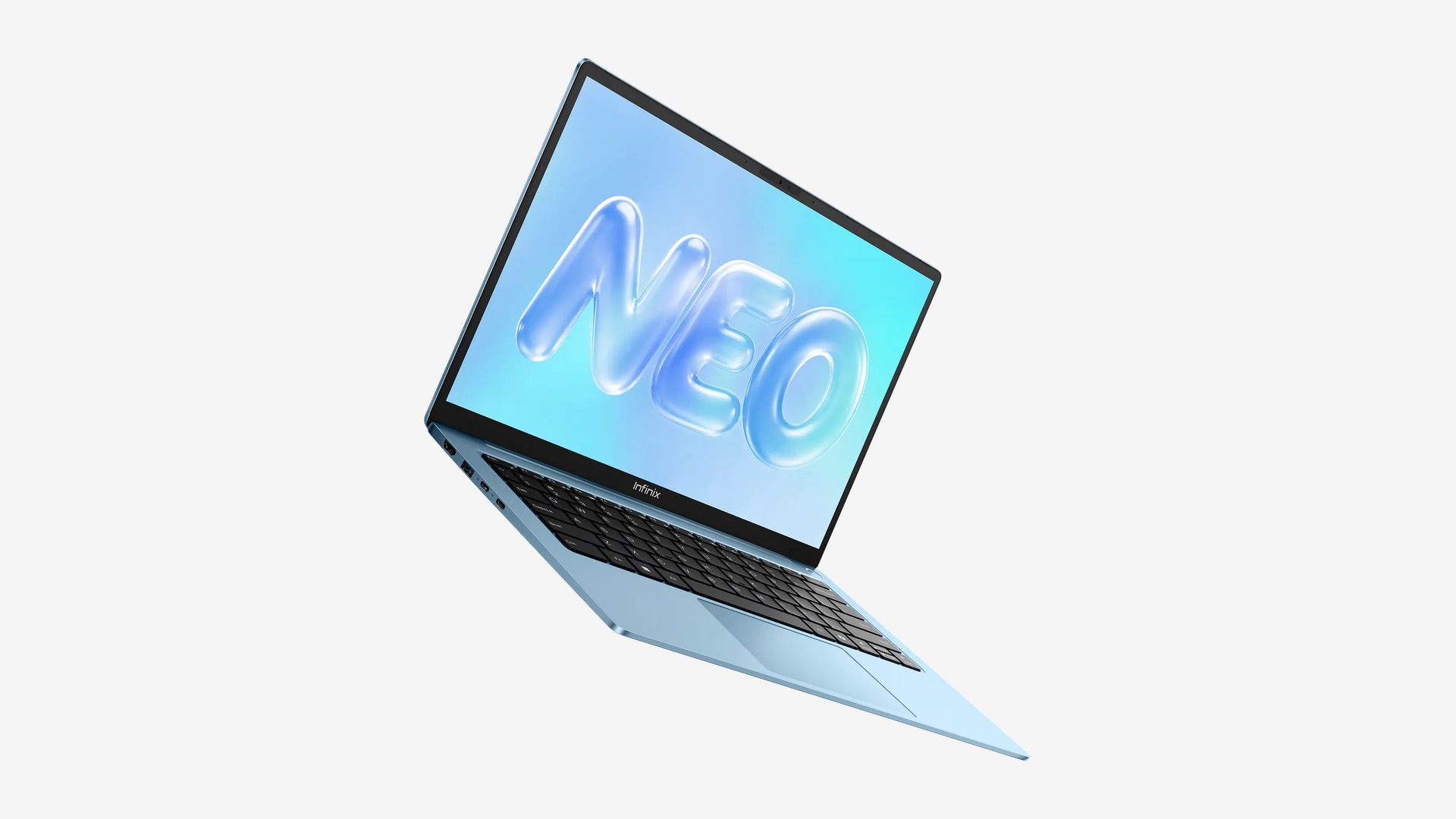
The laptop comes in Twilight Purple, Shadow Blue and Volcano Grey. It is available through Infinix brand stores nationwide, as well as the brand’s official Shopee and TikTok Shop stores. It follows the company’s XBook B15 as the latest addition to its budget laptop lineup.
Would you pick the XBook 14 Neo as a lightweight laptop for school or work at this price? Let us know in the comments below.
Digital Chat Station shared new camera details about an upcoming Ultra flagship today. It is likely the Vivo X500 Ultra, based on the tipster’s habits.
Here is what the post says. The phone has a 50MP Sony LYT-L910 1/1.28-inch main camera and, interestingly, the same LYT-L910 sensor for the ultrawide, while an HPU periscope lens is set to cover zooming duties.
The tipster also claims the engineering sample achieved the highest CIS test result with the LYT-L910. CIS stands for CMOS Image Sensor, and these tests evaluate a camera sensor’s performance in areas such as light sensitivity, image quality, noise, and dynamic range. He describes the phone as the only model combining a large sensor with full-sensor HDR based on LOFIC and DeepPix technology.
What LOFIC means for your photos
Sony announced the LYTIA L910 in June as its first smartphone sensor with LOFIC. It is a 50MP sensor with 1.22μm pixels, and each pixel can hold more charge before reaching saturation. Sony claims it can deliver up to 100dB of dynamic range in a single exposure.
Sony also claims the sensor has lower read noise, which should help with detail in low-light photos. Its lower power consumption could also reduce heat during extended 4K 60fps HDR recording. Phones with this sensor should also do well with backlit scenes and sunsets.
Vivo X300 Ultra
If the latest leak is accurate, the X500 Ultra would also mark a change from its predecessor. The Vivo X300 Ultra has a 200MP main camera alongside a 50MP 1/1.28-inch Sony LYT-818 ultra-wide camera.
The X500 Ultra could switch to a 50MP main sensor and bring the newer LYT-L910 to the ultra-wide camera as well.
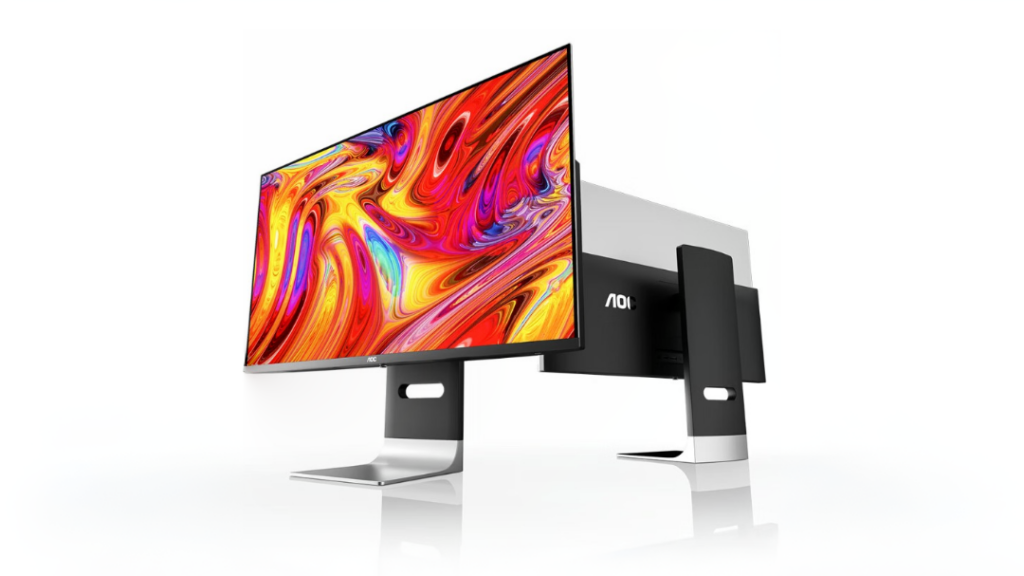
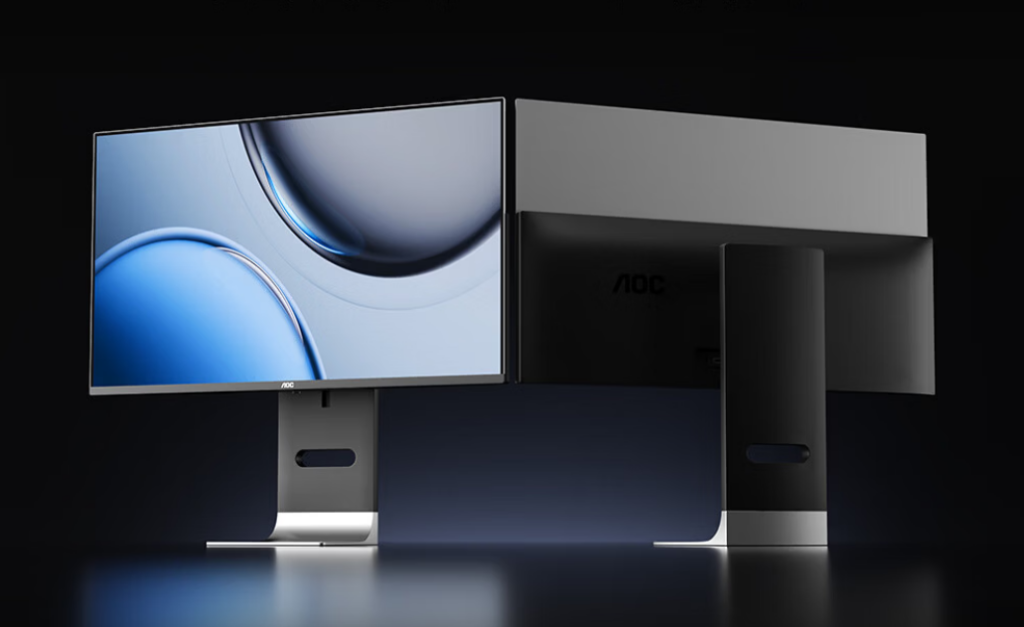
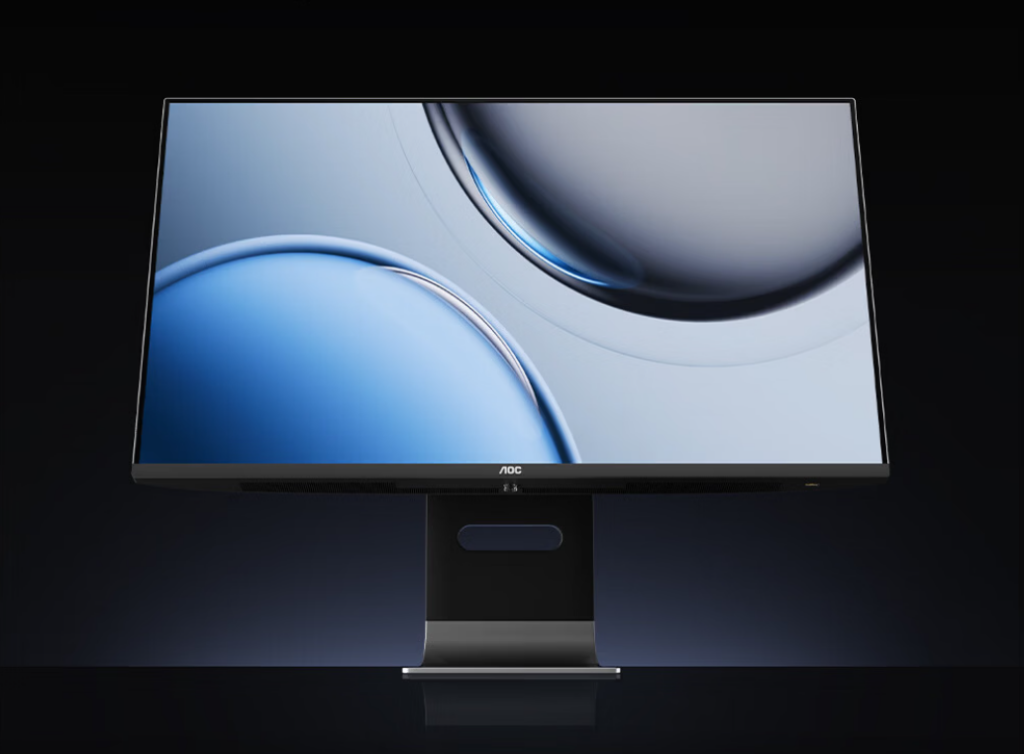
AOC has released a new 31.5-inch monitor in China, the U32U4, which uses Samsung Display’s latest QD-OLED technology. The monitor features a 4K resolution (3840 x 2160) and a 120Hz refresh rate, positioning it as a hybrid display for both professional color work and gaming.
The panel features a Penta Tandem five-layer stacked OLED structure. Instead of relying on a single light-emitting layer, this design distributes the electrical load across five layers. The result is that the monitor can reach a peak HDR brightness of 1,000 nits while reducing strain on individual organic materials, which should theoretically improve panel longevity and efficiency. It also features a 0.03ms response time and a 1,500,000:1 static contrast ratio.
To address common OLED durability concerns, AOC included a graphene-based heat dissipation layer to pull heat away from the panel and reduce the risk of burn-in. The screen also has a specialized black anti-glare coating. This is designed to cut down on ambient light reflections, preventing the washed-out look that glossy OLEDs can sometimes get in brightly lit office environments.
For color accuracy, the U32U4 supports native 10-bit color and covers 99% of the DCI-P3 gamut and 100% of sRGB. AOC says each monitor is factory-calibrated across 32 color axes to achieve a Delta E of less than 1, and it ships with a calibration report in the box. It also carries VESA DisplayHDR True Black 400 certification.
The monitor features a built-in KVM switch, PIP, and PBP modes for multitasking. Its connectivity options include HDMI 2.1, DisplayPort 1.4, a USB-C port with 96W power delivery, a secondary 15W USB-C port, a 7.5W USB-A port, and a headphone jack.
On the gaming side, the 120Hz refresh rate is paired with Adaptive-Sync to prevent screen tearing, and there are software toggles for shadow control and low input lag. The hardware is rounded out by two 5W speakers and a fully adjustable stand that supports height, tilt, swivel, and a 90-degree pivot for portrait orientation.
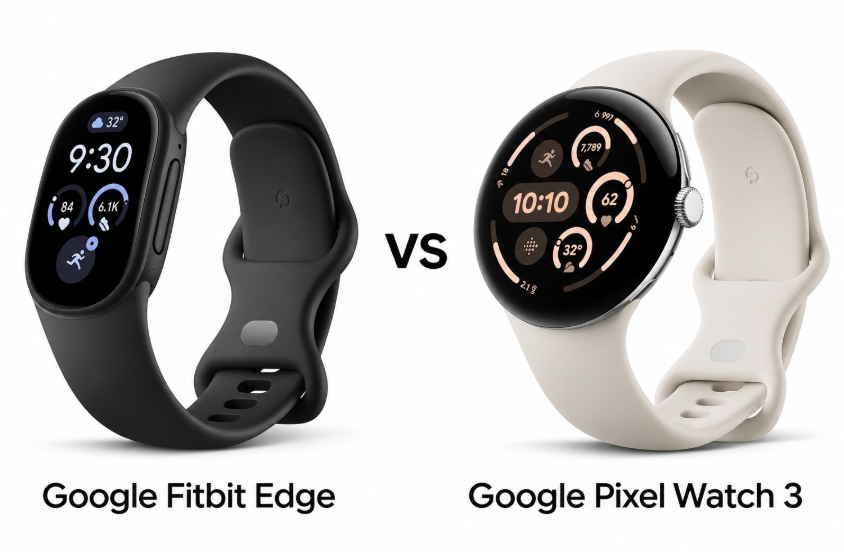
Google offers different types of wearables for users with different needs, and the Fitbit Edge and Pixel Watch 3 are good examples. Although both devices combine fitness tracking with health-monitoring capabilities, they serve different purposes. The Fitbit Edge is a dedicated fitness tracker focused on activity monitoring, health insights and extended battery life. The Pixel Watch 3, on the other hand, is a full-fledged smartwatch that combines Fitbit fitness features with Wear OS applications, communication tools and Google services. Here is how the two Google wearables compare.
Design & Build
The Google Fitbit Edge features a slim rectangular design with a 1.34-inch display, a 100% recycled aluminium case and a silicone band. Weighing just 17.7g without the band, it is designed for lightweight, all-day wear, including during sleep and workouts. The Pixel Watch 3 takes a more traditional smartwatch approach with a circular design, an aluminium frame and Gorilla Glass 5 protection. Its 45mm version weighs 37g without the band, making it noticeably heavier than the Edge. Both devices offer 5ATM water resistance and IP68 protection, making them suitable for everyday activities and workouts.
Key Difference: The Fitbit Edge prioritises lightweight comfort and fitness tracking, while the Pixel Watch 3 offers a conventional smartwatch design.
Display
The Fitbit Edge features a 1.34-inch Hybrid OLED colour display with always-on functionality and adjustable brightness. Its rectangular screen provides quick access to workout statistics, health information and everyday activity data. The Pixel Watch 3 features a 1.4-inch circular LTPO AMOLED display with a resolution of 456 × 456 pixels, approximately 320ppi and peak brightness of 2,000 nits. It also supports an adaptive refresh rate of 1–60Hz. The Pixel Watch 3 provides a more detailed viewing experience for notifications, maps and applications, whereas the Edge focuses on making fitness information easy to read at a glance.
Key Difference: The Pixel Watch 3 has a higher-resolution, brighter display with adaptive refresh technology, while the Edge offers a larger viewing area than previous Fitbit trackers.
Battery Life
Battery life is one of the biggest differences between these devices. The Fitbit Edge features a 65mAh rechargeable battery rated for up to seven days of usage. It supports magnetic charging, with a full charge taking approximately 90 minutes. A five-minute charge can also provide up to one day of battery life. The Pixel Watch 3 45mm comes with a considerably larger 420mAh battery but offers up to 24 hours of usage with the always-on display enabled and up to 36 hours in Battery Saver mode. Its larger display and full smartwatch operating system mean users will need to charge it considerably more frequently.
Key Difference: The Fitbit Edge is designed for extended battery endurance, while the Pixel Watch 3 prioritises a broader smartwatch experience at the cost of battery life.
Health Tracking
Both devices offer extensive health-monitoring capabilities, including continuous heart-rate tracking, blood oxygen monitoring, ECG functionality, skin temperature tracking and sleep monitoring. However, their approaches to health insights differ. The Fitbit Edge includes Google Health Guardian features that monitor blood pressure and insulin resistance trends, alongside high and low heart-rate alerts. It also tracks HRV, sleep patterns and menstrual cycles. The Pixel Watch 3 combines Fitbit health tracking with additional sensors, including an electrical skin conductance sensor for body-response tracking. Both offer comprehensive health information, although the Edge places particular emphasis on dedicated wellness monitoring and long-term health trends.
Key Difference: The Edge focuses on additional wellness trends and dedicated health insights, while the Pixel Watch 3 combines health monitoring with a broader range of smartwatch sensors.
GPS & Navigation
Both wearables feature built-in GPS, allowing users to track outdoor workouts without carrying a smartphone. The Fitbit Edge supports GPS and Galileo, with Google’s precision GPS technology offering up to 40% improved tracking accuracy compared with previous Fitbit trackers. It also includes an altimeter for measuring elevation changes during outdoor activities. The Pixel Watch 3 supports GPS, GLONASS and Galileo, with additional satellite systems available in supported regions. More importantly, it offers Google Maps navigation directly from the wrist, making it useful for following directions while walking, running or exploring unfamiliar places.
Key Difference: Both support standalone GPS tracking, but the Pixel Watch 3 offers a more comprehensive navigation experience.
Sports & Training Features
The Fitbit Edge is built around dedicated fitness tracking, supporting more than 50 exercise modes and automatic recognition of up to 100 workouts. It tracks workout metrics, pace, elevation, VO2 Max, Active Zone Minutes, Cardio Load and Readiness Score. The Pixel Watch 3 offers more specialised running tools, including custom workouts, interval training, pace guidance and running-form measurements such as cadence, stride length, vertical oscillation and ground contact time. Both can support regular exercise routines, but their strengths differ. The Edge focuses on broad fitness monitoring, while the Pixel Watch 3 provides more detailed running analysis.
Key Difference: The Edge focuses on everyday fitness and activity tracking, whereas the Pixel Watch 3 offers more specialised running analysis and training tools.
The Pixel Watch 3 has a significant advantage in traditional smartwatch functionality. Running Wear OS 5, it supports Google services and a wider application ecosystem, including Google Wallet, Google Maps, Google Assistant and smartphone notifications. Its built-in microphone and speaker also allow users to handle calls and voice interactions. The Fitbit Edge offers a simpler experience with call and message notifications, quick replies, media controls, alarms, timers and Google Maps. It also supports customisable watch faces and interchangeable bands. While the Edge provides useful everyday conveniences, it does not offer the same full Wear OS experience as the Pixel Watch 3.
Key Difference: The Pixel Watch 3 offers a full smartwatch operating system and broader app support, while the Edge focuses on essential everyday features.
Outdoor Features
Both devices offer features for outdoor activities, including GPS tracking, elevation monitoring and 5ATM water resistance with IP68 protection. The Fitbit Edge combines its lightweight construction with built-in GPS and an altimeter, making it suitable for running, walking, hiking and other fitness activities. Its longer battery life is also useful for people who regularly track outdoor workouts. The Pixel Watch 3 adds a compass, barometer, altimeter and broader satellite positioning support. Combined with Google Maps, these features make it a more versatile companion for outdoor navigation and location-based activities.
Key Difference: The Edge is better suited to lightweight outdoor fitness tracking, while the Pixel Watch 3 offers additional navigation and environmental sensors.
Which One Should You Buy?
Choosing between these Google wearables depends on what you expect from a wrist-worn device. The Fitbit Edge is suitable for people who primarily want to monitor their fitness, sleep, recovery and overall health without charging their wearable every day. Its lightweight design, seven-day battery life and dedicated health features make it a practical everyday fitness companion. The Pixel Watch 3 is better suited to people who want a traditional smartwatch with fitness tracking as an additional capability. Its Wear OS platform, Google services, communication features and advanced running tools make it more versatile for everyday use.
Choose the Fitbit Edge for: Dedicated fitness tracking, lightweight comfort, extended battery life and health-focused monitoring.
Choose the Pixel Watch 3 for: Smartwatch applications, smartphone integration, calls, navigation and advanced running features.
Google Fitbit Edge vs Google Pixel Watch 3: Major Differences
Oppo, Vivo, Xiaomi, and Honor have introduced Android Developer Verification (ADV) in mainland China. The Mobile Intelligent Terminal Ecosystem Alliance announced the move today, saying the four brands will recognize each other’s verification results. That is, developers who complete the process on one platform will not have to repeat it when distributing apps on the other three.
The system is intended to make it easier to identify developers behind apps installed outside official app stores. According to the alliance, China lacks a unified real-name verification system for sideloaded apps, making it difficult to trace malicious, counterfeit, and fraudulent software back to its developers. Such apps can expose users to financial scams, private data leaks, and unwanted purchases.
ADV links each developer’s verified identity to their apps. However, the change should have little effect on people who download apps through official stores. Apps already registered and listed on the four platforms go through verification automatically, so their developers do not need to submit another application.
The difference will become more noticeable when installing APK files from outside those stores. If an app comes from a developer who has not completed identity verification, users will see an “unverified” warning on phones from the four brands. They must confirm the installation manually before proceeding. The alliance acknowledges that the additional step could slow down app distribution.
Here’s Xiaomi ADV verification process
We have gone through the documentation for Xiaomi’s ADV verification process, and it’s more or less similar for all brands.
The company opened ADV submissions on October 21 and set October 31 as the date it would begin checking sideloaded app installations. This means the warning may already be active on Xiaomi devices.
According to Xiaomi, its verification process checks three things: an app’s package name, signing key, and developer verification status. If a sideloaded app changes its package name or signing key, it must go through verification again.
Xiaomi also clarifies that ADV is not a security scan. It only establishes the identity of the developer behind an app. The company will continue running separate virus and malware checks on sideloaded applications. A verified app can still contain malicious code, while an unverified app is not automatically dangerous.
Developers distributing apps outside official stores must register through the Xiaomi HyperOS developer platform. They first complete real-name verification as an individual or company, a process Xiaomi says takes one to three working days. They then upload a signed empty APK and associate it with the app’s package name. The actual app verification is automated and takes effect immediately.
Oppo, Vivo, and Honor have also published developer documentation, although we could not independently confirm their exact rollout dates or submission procedures.
Google is also tightening Android sideloading rules
Google began its rollout on September 30, 2026, in Brazil, Indonesia, Singapore, and Thailand. The requirement covers app installations from seven app stores, including Honor App Market, Oppo App Market, V-Appstore, and Xiaomi GetApps. Google plans to expand developer verification to all certified Android devices in 2027.
Google also provides an advanced installation process that lets users install apps from unregistered developers after a 24-hour waiting period. The Chinese alliance’s announcement does not mention a similar option for its ADV system.
Each of the four manufacturers has published its own developer documentation:
The four brands are building a shared verification system, but it remains unclear whether other Chinese smartphone manufacturers will join the initiative.
We use cookies on our website to give you the most relevant experience by remembering your preferences and repeat visits. By clicking “Accept”, you consent to the use of ALL the cookies.
This website uses cookies to improve your experience while you navigate through the website. Out of these, the cookies that are categorized as necessary are stored on your browser as they are essential for the working of basic functionalities of the website. We also use third-party cookies that help us analyze and understand how you use this website. These cookies will be stored in your browser only with your consent. You also have the option to opt-out of these cookies. But opting out of some of these cookies may affect your browsing experience.
Necessary cookies are absolutely essential for the website to function properly. This category only includes cookies that ensures basic functionalities and security features of the website. These cookies do not store any personal information.
Any cookies that may not be particularly necessary for the website to function and is used specifically to collect user personal data via analytics, ads, other embedded contents are termed as non-necessary cookies. It is mandatory to procure user consent prior to running these cookies on your website.