Lenovo continues to expand its product line. The company, which has been using the XiaoXin brand for a while, has recently introduced its first Mini PC. The computer, powered by 13th gen Intel processors, has managed to attract attention with its features. Lenovo, which has already stepped outside the typical product range with the Mini PC, has also announced a accompanying peripheral device: the K3 mechanical keyboard. Here are the details…
Lenovo XiaoXin K3 Mechanical Keyboard Ideal for Gaming and Office Use
Today, Lenovo shared more details about the K3 mechanical keyboard, highlighting its use of custom “Xin” switches. These switches promise a “heart-touching” tactile experience with a soft, smooth keystroke. Designed with linear switch technology, the keyboard offers a lightweight feel and quiet sound, making it suitable for both gaming and office use.
According to previous Lenovo promotional materials, the XiaoXin K3 mechanical keyboard will be available in black and blue color options and will include a dedicated numeric keypad. As previously reported, the XiaoXin Mini PC will offer a choice between the i5-13500H and i7-13700H processors. Internally, the device features dual memory slots and dual SSD slots, with official configurations offering up to 32GB of memory and a 1TB SSD.
The Mini PC includes a built-in 150W power supply and a variety of connectivity options, such as front-facing USB 3.2, USB-C, and audio ports. On the back, users will find a 2.5G Ethernet port, dual USB-3.2 ports, USB 2.0, Thunderbolt 4, HDMI 2.1, and DP 1.4 interfaces. With the upcoming launch of the XiaoXin Mini PC and its peripherals, Lenovo aims to provide consumers with a compact, high-performance computing solution for gaming, work, and entertainment.
The day that console gamers have been waiting for a long time has finally arrived. PlayStation 5 scalpers are now finding it difficult to sell consoles at inflated prices, as supply levels are returning to normal. These “opportunists”, who have been responsible for rapidly depleting stock and driving up prices for years, are finally facing the consequences of their actions. Here are the details…
What Happened During the Pandemic – Why PlayStation 5 Was So Expensive
The year 2020 marked a challenging time for many people worldwide. As the Covid-19 outbreak spread from China, our lives were transformed. Remote work and online education became the norm, social events were canceled, and curfews were implemented in various countries to control the virus’s spread. This led to billions of people staying at home with ample free time, causing a surge in consumption. However, people found solutions to this as well.
Digital content production and consumption skyrocketed, and sales of technological products like computers, gaming consoles, and projectors, which could either make time at home more enjoyable or aid in remote education and work, increased dramatically. Many companies experienced a golden age in sales. However, while the pandemic boosted sales on one hand, it also slowed down and increased the cost of production on the other. It was during this time of challenges that the PlayStation 5 entered our lives.
Sony had been working on the PlayStation 5 for a while, and with the pandemic ongoing, and they didn’t want to waste any more time during the pandemic. So, they introduced their new console on December 12, 2020. The technical specifications and innovations of the PS5 attracted attention, making it a highly desirable product for millions of people. As summer ended and more people gathered indoors, the pandemic’s second wave started. Remote learning and working from home continued, and the demand for technological products remained high.
However, production challenges impacted companies worldwide. The supply chain was on the verge of breaking, and even though some were less affected than others, no company could produce enough to meet customer demand. At this point, humanity’s biggest flaw came into play. While making money in a free market economy is normal, some took the situation a step further. Scalpers, who bought almost every product the moment it was released, artificially raised prices with their own hands.
Scalpers hoarded in-demand items like graphics cards, processors, and PlayStation consoles, buying them from wholesalers and retailers. They even employed software to assist them. This led to a terrible black market and significant profits for scalpers. For instance, Sony’s consoles, sold at $399 and $499, were resold for up to $1500. However, the situation has improved, with Sony’s PS5 supplies now significantly better.
PS5 Scalping Fades as Gamers Enjoy Greater Console Availability and Lower Prices
Almost three years have passed, and supplies of the Sony PlayStation 5 have improved significantly. Forced to cut prices, some scalpers are now listing the consoles at or even below the manufacturer’s suggested retail price. This development is not exactly new. Towards the end of 2021, the PS5 scalping situation began to change. Many of us witnessed this change in physical stores and online stock availability. This situation not only reduced scalpers’ sales but also led to their stockpile being left unsold.
A quick glance at eBay reveals that the days of $1500 PlayStation 5 consoles are gone. New models now range between $450 and $499, with some auctions starting as low as $380. Second-hand units are available for even lower prices. Users are quite pleased with the situation, as reported by various reputable publications such as Gizmochina. Comments like “Don’t even feel a little bit bad for them” and “I hope he has to go down like $230 for people to buy. Would be hilarious.” show how much users are enjoying the situation.
As console supplies continue to normalize, the situation could worsen for PS5 scalpers in the coming months. To make matters worse for scalpers, rumors of a PlayStation 5 Pro model are gaining strength day by day. The new “pro” console is expected to be introduced next year, featuring improved ray tracing capabilities, enhanced visual fidelity, and better overall performance. This potential release could further dampen scalpers’ prospects in the PlayStation market. As someone who experienced stock and price gouging issues during the pandemic, I must say that these developments certainly make me happy.
Xiaomi has launched the MIJIA Underwear Washing and Drying Machine in China. The machine provides all-in-one washing and drying services including 15-minute quick washing. The MIJIA underwear washing and drying machine will be open via a crowdfunding campaign from April 26.
The new Xiaomi MIJIA underwear washing and drying machine supports high-temperature washing, healthy purification, and professional stain removal. It offers a 15-minute steam cleaning, soft drying of clothes, night hosting, and smart interconnection, among other features. The sterilization methods are gentle and non-irritating on the fabrics. It can safely take care of tough stains including blood effectively.
The machine supports 95-degree high-temperature cooking and washing that eliminates viruses and bacteria from soiled underwear. It also supports 45-minute quick washing and drying, as well as 15-minute quick washing. The capacity of the washing and drying machine has not been specified. However, images of the machine show a compact design that can accommodate a limited quantity of clothes.
You can customize your laundry program using the Xiaomi MIJIA underwear washing and drying machine. You can set the water level, water temperature, and other washing and drying parameters. The washing machine runs stably and silently with its in-built shock absorption and noise reduction technologies.
The crowdfunding price of the Xiaomi MIJIA underwear washing and drying machine is 1,599 yuan (~$232). The original price of the machine is 1,999 yuan (~$290). There are no details yet on when the earliest deliveries of the Xiaomi MIJIA underwear washing and drying machine will happen. Global availability and pricing details are also lacking for the MIJIA underwear washing and drying machine.
The fast-evolving electric ATV industry is expected to get a boost this summer when the Tachyon electric ATV berths in the US and EU markets. The Tachyon electric ATV was developed in India by Powerland ATV. The company props the Tachyon as one of the fastest and most powerful electric ATVs.
The ATV segment of the automotive industry is undergoing a rapid transformation. Electric ATVs are all-wheel-drive powerhouses suited for heavy-duty tasks of varying hues. The Tachyon is already on the cusp of its momentous release in the EU and US markets. It has already gotten EU certification as a Tractor (T3b) and Quadricycle (L7e-B1) class vehicle.
The Tachyon uses four in-wheel motors that offer a combined maximum power of 50 hp (37kW). The electric tractor delivers a maximum torque of 210Nm per wheel. The in-wheel motor’s design implies that the Tachyon electric ATV omits a transmission, gearbox, CV joints, or differential. Powerland hopes that the additional mass on the wheels could be offset by the ATV’s excellent power delivery and minimal maintenance requirements.
The Tachyon has an 11kWh battery that can push the ATV for up to 110 km on a single charge. A higher 15.5kWh battery could also be available in the summer or later. The Tachyon can go from 0 to 60km/h in just four seconds. The speed limits of the Tachyon electric ATV will vary depending on the country. The speed could be limited to 60km/h in countries with tractor classification. However, the Tachyon can also deliver a top speed of 90km/h in jurisdictions with the L7e B1 classification.
The Powerland Tachyon ATV will first launch in Germany and then spread to other countries in the EU. The price of the Tachyon ATV in Europe is €14,500 while in the US it is estimated to cost $15,000. The prices are expected to increase when the mandatory taxes are factored in.
The Nubia Red Devil Radiator 4 Pro back clip version has been officially released in China. The Red Devils Radiator 4 clip-back version is shaped like a small aircraft. It has a sterling silver color scheme which highlights the metal texture of the product. This is supplemented by RGB color lighting effects which electrifies the e-sports environment. The device offers both color and control for the user during gaming sessions.
The settings of the Nubia Red Devil Radiator 4 Pro back clip fully accentuate the e-sports atmosphere fully. It is equipped with mechanical buttons for gear adjustment and you can quickly switch operating modes. The gadget features the fourth-generation semiconductor refrigeration technology of the Red Devils. It has a maximum heat dissipation power of 27W. Furthermore, it has a built-in innovative suspension air duct that can blow out air simultaneously from top to bottom. The heat management mechanism of the Radiator 4 Pro back clip version ensures that the user avoids sweaty or hot hands.
Overall, the Nubia Red Devil Radiator 4 is very comfortable to use and it can be used with 70-85mm mobile phones. It also comes with a new trapezoidal pad. The product is priced at 159 yuan (~$25) but a pre-sale deposit of 10 yuan ($1.5) could yield a 20 yuan ($3) discount. The Nubia Red Devils 4 Pro is available from retail platforms like JD.com in China. There are no global availability details for the product at this time. It remains to be seen how the product will compete in the market.
Vivo has been expanding its lineup of affordable smartphones with the release of the latest Vivo Y78+. According to a recent report, the company is now gearing up to launch another Y-series device in India called the Vivo Y36 4G. This mid-range smartphone is expected to debut in the coming month and will feature a 50MP primary camera, a MediaTek Helio G99 chipset, and a 5,000mAh battery. Here are the details.
Representative Image
Vivo Y36 4G Price and Launch timeline
91Mobiles, citing tipster Paras Guglani, claims that the upcoming Vivo Y36 4G will make its debut in India next month, in May. However, the publication did not specify the exact launch date and the company has not made an official announcement yet.
The report states the Vivo Y36 4G will be launched in India with a price range of Rs 18,000 to Rs 20,000. This price category is already crowded with smartphones that offer great value for money, with the iQOO Z7 (review) being just one example.
Vivo Y36 4G Specifications
The Vivo Y36 4G is anticipated to boast a large 6.8-inch LCD display, but it is yet to be confirmed if it will feature a high refresh rate. Under the hood, the device is said to be powered by the MediaTek Helio G99 chipset and offers 8GB of RAM. What’s interesting is that the phone is rumored to come with an additional 8GB of expandable RAM.
In terms of camera capabilities, the upcoming Vivo Y36 4G is expected to sport a 50MP primary camera on the rear, but there is no information available about the other camera sensors. The device will come packed with a 5,000mAh battery that supports 44W fast charging.
Poco F5 is launching very soon. We say that because the brand’s India wing has already started teasing the device and confirmed it will pack 256GB onboard storage. Poco is yet to announce a launch date and while we wait, the handset’s global version has appeared on the Geekbench website with a Snapdragon 7+ Gen 2 SoC under the hood. Unlike its Indian counterpart, the international variant runs Geekbench 6. Here are the details.
Poco F5 to be a Rebranded Redmi Note 12 Turbo
Poco F5 near the horizon
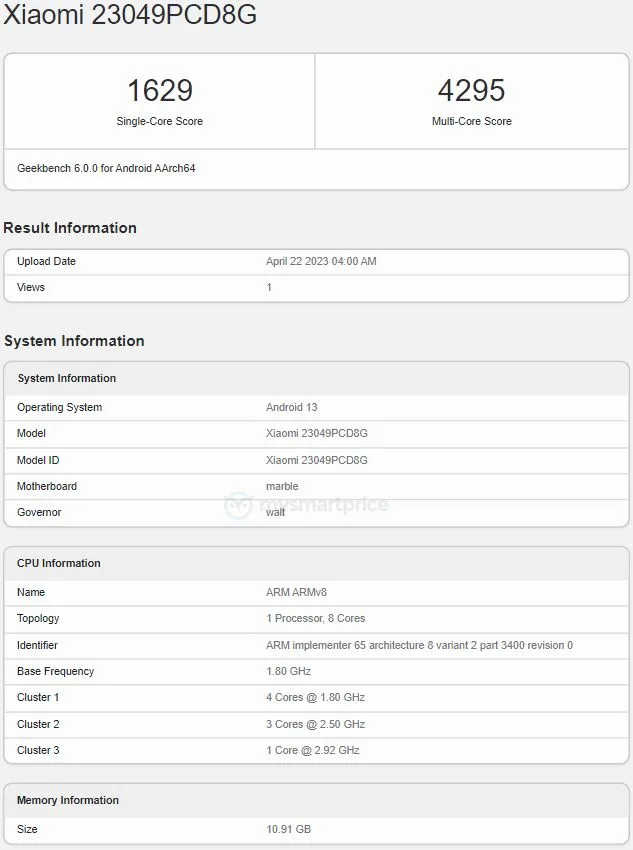
The global POCO F5 has appeared on Geekbench 6 with model number 23049PCD8G. As per the listing, the handset gets the Snapdragon 7+ Gen 2 processor with up to 12GB of RAM. It is listed to run Android 13 out of the box. Poco F5 managed to score 1629 and 4295 points in the single-core and multi-core tests.
Recently, the Indian version of the smartphone also appeared on the Geekbench website. However, the handset ran Geekbench 5 and recorded a single-core score of 1118 points and a multi-core score of 4236 points. The difference in the scores is due to the different versions of the benchmarking platform. In real life, both versions should offer similar performances.
The Poco F5 is rumored to make its debut with impressive features including a large 6.67-inch AMOLED display with Full HD+ resolution and a high 120Hz refresh rate. It is expected to also include an in-display fingerprint sensor for added security.
The device may come equipped with a triple-camera setup consisting of a 64MP primary camera, an 8MP telephoto lens, and a 2MP macro sensor. On the front, there could be a 16MP selfie camera. To power these features, the phone is expected to feature a sizable 5,000mAh battery with support for fast 67W charging.
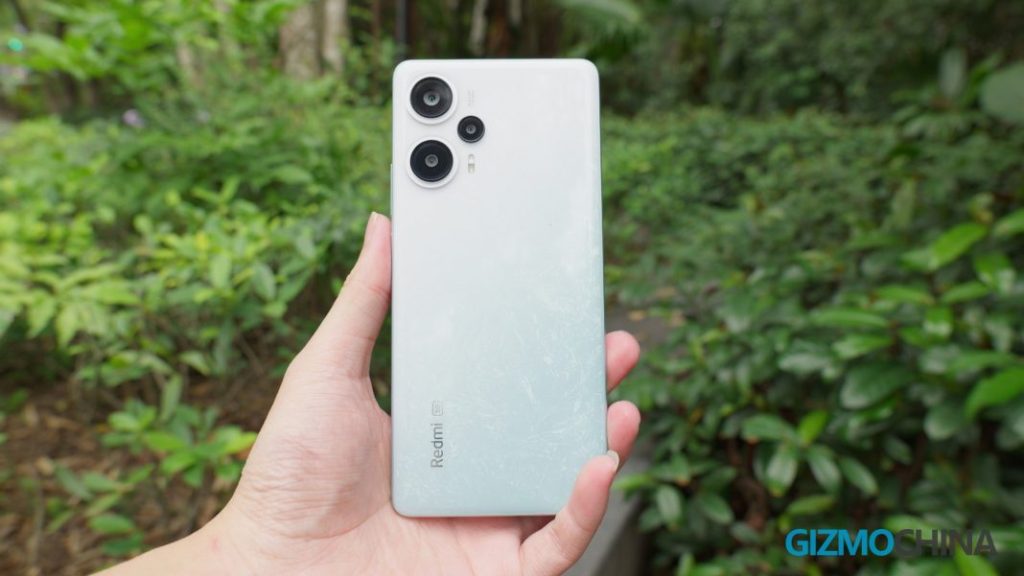
Redmi’s budget smartphones are just as popular as its mid-range Note series phones. The company has recently introduced the affordable Redmi 12C to the global market, and it has also launched the Redmi A1 and A2 phones. Now, it appears that Xiaomi’s subsidiary is preparing to launch a new budget phone called the Redmi 12. Evidence of the device has been found on both the US FCC and IMEI websites. Although details are limited, we have learned a few things about the phone.
Redmi 12 might debut soon
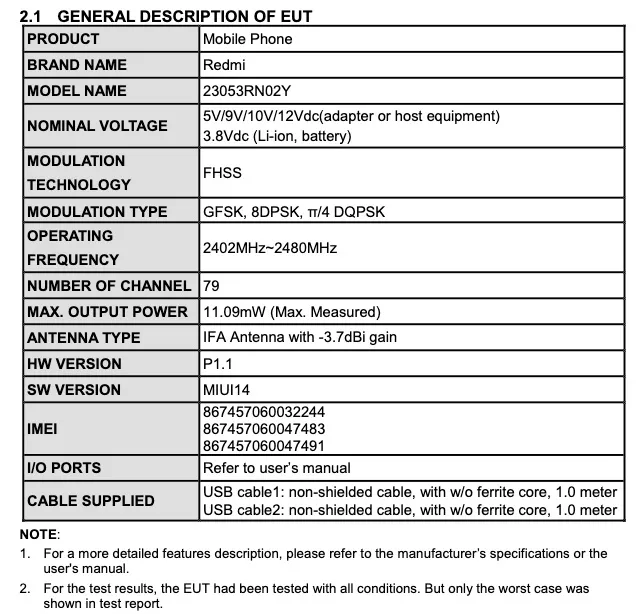
As its name suggests, the Redmi 12 could be a new budget smartphone from the brand. While the company has yet to officially confirm the device, it has been listed on the IMEI database, which confirms its name and model number as 23053RN02L. Separately, a different version of the phone with the model number 23053RN02Y has been spotted on the FCC website.
According to the authority, the Redmi 12 will launch as a 4G smartphone that comes pre-installed with MIUI 14. While we expect the software to be based on Android 13, it’s difficult to say for sure with Redmi, as the company recently released an update for the Redmi Note 12 Pro phones that was based on Android 12 but still carried the MIUI 14 branding.
In addition, the FCC has revealed that the smartphone will come with a charging adapter that has the model number MDY-12-EA and supports 33W fast charging. We can speculate that the Redmi 12 will have a battery capacity of at least 5000mAh. Other specifications of the smartphone are still under wraps. We hope to learn more through various leaks and rumors. Stay tuned for the updates.
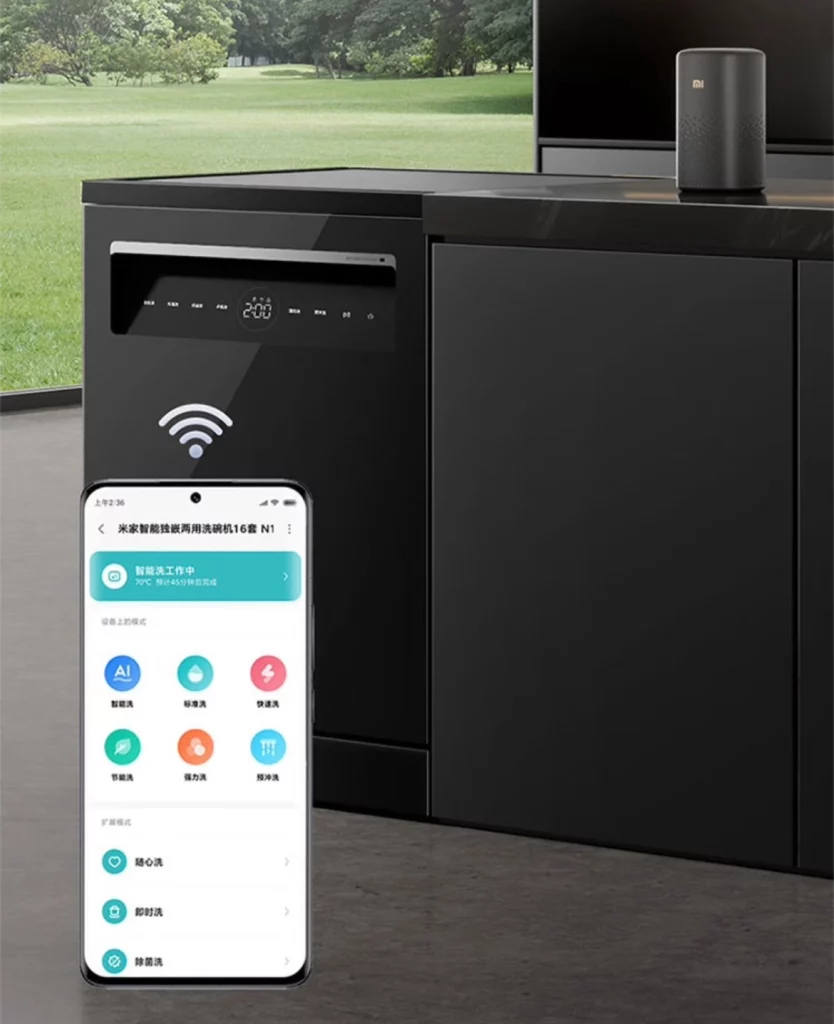
Many of us are familiar with Xiaomi through their smartphones, but the company is active in many different areas, including kitchen appliances and the automotive industry. The company recently launched the Mijia Smart Dual-Use Dishwasher N1 under its Mijia sub-brand. The dishwasher is now available for presale at a price of 2,999 Yuan. Here are the details…
Xiaomi has recently unveiled its latest addition to the smart home appliance lineup, the Mijia N1 Smart Dishwasher. It is now available for presale at a discounted price of 2,799 Yuan (approximately $400). With 11 versatile washing programs to choose from, this dishwasher excels in water and energy efficiency, outperforming China’s level-1 water efficiency standards in cleaning and drying.
One notable feature of this dishwasher is its smart door system. The door automatically opens during the drying process to facilitate air circulation and reduce drying time. When the drying cycle ends, the door closes automatically, protecting the dishes from insects, dust, and any possible secondary contamination.
The Mijia N1 Smart Dishwasher is equipped with a cutting-edge triple rapid drying system that combines PTC hot air, automatic door operation, and residual heat condensation, ensuring quicker dish drying. Its advanced triple rotating spray arm can simultaneously release 44 high-pressure, high-temperature water streams, working in tandem with an intelligent water quality adjustment system and a triple precision filtration system for thorough cleaning of even the toughest grease.
To further elevate the cleanliness of your dishes, the Mijia N1 Smart Dishwasher offers a 75°C high-temperature sterilization wash cycle, which achieves a remarkable 99.999% sterilization rate. You can click here to purchase the product.
While Honor’s latest Magic 5 Pro smartphone boasts a serious camera setup, the brand’s older phones are no slouches when it comes to photography. Previous flagships from the brand have offered users a decent photography experience, and today the company has made it even better with a new update. According to Honor, the Magic 3 and 4 series phones are set to receive significant camera upgrades, including improved shutter, imaging, and startup speeds. Here are the details.
Magic 3 and 4 series cameras just got better
Honor just announced some exciting upgrades for the Magic 3 and 4 series phones. The latest updates, version 7.0.0.129 for the Magic 3 and 7.0.0.151 for the Magic 4, are now rolling out in China. With these upgrades, users can expect a 70% faster shutter response and 72% faster imaging speed.
For those who are unfamiliar, shutter response refers to the time it takes to capture a photo of a dynamic object scene. On the other hand, imaging speed refers to the time it takes for the camera to display a thumbnail in the lower left corner after clicking the photo button while shooting a dynamic object scene.
In addition, data from Honor Labs shows that the Magic 3 series now has a 25% faster startup speed, a 16.51% faster camera opening speed in WeChat, and a 24.08% faster mode switching speed. Both the Magic 3 and Magic 4 series also flaunt a higher frame rate, resulting in smoother video recordings.
The company says that even with multiple applications running in the background, recorded videos will run smoothly on the devices. Additionally, the Honor Magic 4 series’ night scene shooting capabilities have been improved and the phones can now eliminate color casts in photos and enhance the effects of shooting fireworks at night. Additionally, the night scene video effects have been optimized to produce more natural-looking light and dark tones.
While iQOO phones may not be strictly classified as gaming phones, the company often markets them as such. And if you don’t go ahead and compare them with the likes of Asus ROG and Red Magic phones, iQOO devices offer a decent gaming experience with various features designed for gaming. To further enhance the gaming experience, the Vivo subsidiary announced today that several models, including the iQOO 11 and 10, now support the “Peace Elite” speaker stereo enhancement technology. Here’s why you should care.
Peace Elite Tech can boost your Battle royale games
iQOO says many of its smartphones are the first to support “Peace Elite” speaker stereo enhancement technology. According to the company, turning on the stereo enhancement function while playing games through the device’s external speakers can significantly improve the gaming experience.
This is because the technology is designed to amplify and clarify in-game sounds like footsteps and shooting noises, allowing players to identify their surroundings and pinpoint enemy positions with greater accuracy. This feature can be particularly helpful for those who play battle royale games like PUBG, Apex Legends, and Call of Duty.
The phones that support this new speaker tech are iQOO 11 Pro, iQOO 11, iQOO 10 Pro, iQOO 10, iQOO 9 Pro, iQOO 9, iQOO Neo7 Racing Edition, iQOO Neo7, iQOO Neo7 SE, iQOO Neo6, iQOO Neo6 SE, iQOO Z7.
iQOO phones are known to bring some gaming-centric features out of the box. For instance, the latest iQOO 11 comes with a dedicated Ultra Game Mode, which can mitigate disturbance during gameplay or prevent certain apps from displaying notifications. It also comes with the ability to turn off the screen and keep the game running in the background.
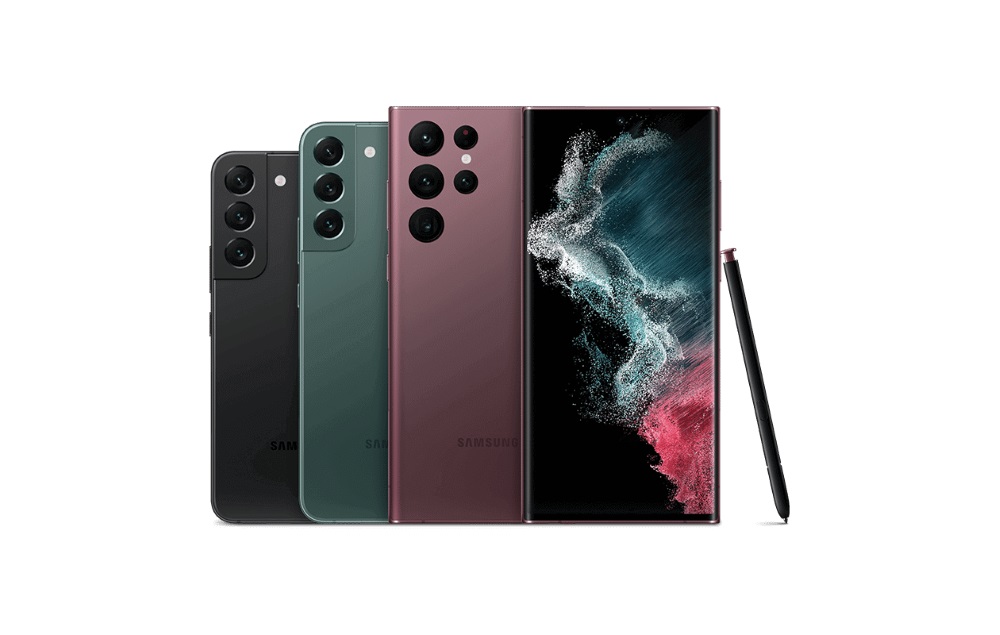
Samsung has expanded its Certified Re-Newed program in the US by including last year’s flagship Galaxy S22 models in its offering. The program offers refurbished smartphones at a lower price point, with the reassurance of a brand-new battery and a 1-year warranty. Compared to refurbished phones sold on Amazon, Samsung’s program offers the additional advantage of maintaining the device’s waterproof seal.
The refurbished Galaxy S22 is available in two storage options of 128GB and 256GB, priced at $619 and $669 respectively. The Galaxy S22 Ultra is also available in two storage variants of 128GB and 256GB, priced at $919 and $1,019 respectively. The Galaxy S22+ comes in only a 128GB storage option and is priced at $769.
While Samsung’s refurbished phones may come at a higher price point than those sold on Amazon, the additional benefits are worth considering for those in the market for a high-end smartphone. The brand-new battery ensures that the device can operate at its best, while the warranty provides customers with peace of mind. Moreover, the ability to use the phone underwater without any worries is a significant advantage, making the refurbished Galaxy S22 models almost as good as brand-new ones.
The launch of Samsung’s Certified Re-Newed Galaxy S22 models is good news for budget-conscious smartphone buyers who are looking for a flagship phone without paying the full price. However, with the price difference between refurbished and brand-new phones being relatively small, some buyers may opt to go for the latest model, the Galaxy S23, instead. Nonetheless, Samsung’s program offers a viable option for those who want a high-quality smartphone at a lower cost.
OPPO has won two top international awards in recognition of its innovation and industry influence. The awards are for the brand’s Air Glas (first impressions) and Battery Health Engine technology. The former has won silver in the Augmented Reality (AR) category at the 2023’s Edison Best New Product Awards. The brand has also been named as one of the 10 Most Innovative Asia Pacific Companies of 2023 by business media Fast Company.
OPPO receives dual honors for innovative technologies and products
Innovation is a long road. But we're excited about the possibilities Air Glass can bring to our users and future tech developments.
We're honored to see our work recognized by such a prestigious award. Thanks @EdisonAwards!
Both the Edison Awards and the annual Most Innovative Companies list are prestigious accolades in global innovation recognizing product designs and technologies. The Edison Awards took place in Florida on April 20th and the winner is selected by a panel of over 3,000 business executives. The OPPO Air Glass stood out from the competition with the judges highlighting the innovative design and self-developed technologies as key factors in their decision.
The OPPO Air Glass is the world’s first detachable monocle AR glass. It provides notification, navigation, teleprompter, and real-time translation features through four modes of interaction.
Innovation is the driving force behind OPPO's technological design. With the Battery Health Engine, we wanted to combat the consumer concern of battery longevity and extend a smartphone's lifespan.
Alongside the Edison Award, OPPO has been recognized by Fast Company as one of the 10 Most Innovative Asia-Pacific Companies of 2023 for the technological innovation and sustainable impact of its Battery Health Engine. Every year, the business media company’s editorial team evaluates hundreds of companies to name the biggest innovators across different categories based on their overall impact on their given industry.
The OPPO Battery Health Engine is a system-level battery health optimizing solution aimed to extend the smartphone’s battery lifespan. This is done by solving the issue of the death lithium in Li-ion batteries. By increasing the lifespan, the technology also improves sustainability by reducing the number of batteries that end up in waste. The innovative solution is claimed to maintain battery capacity by as much as 80 percent over 1,600 charge cycles.
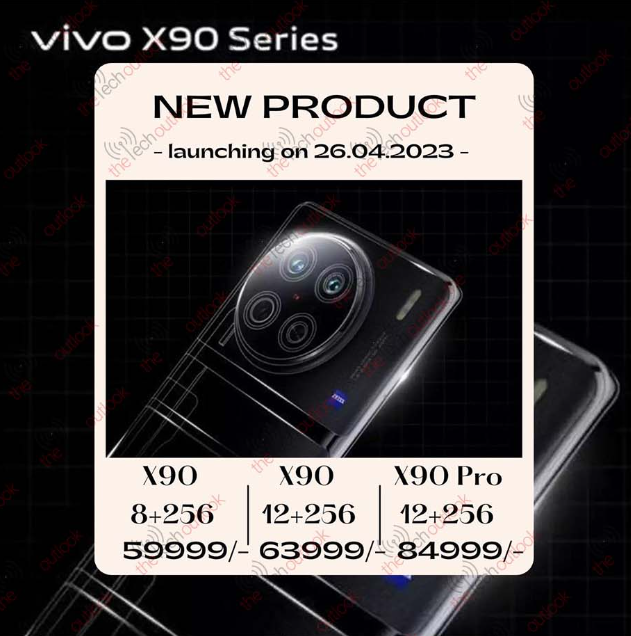
Vivo X90 series is set to launch in India on April 26th. It will include standard and pro models. The smartphones will be available from e-commerce platform Flipkart. Now, ahead of the launch, the pricing as well as RAM and storage configurations of the upcoming offerings have leaked. To recall, the Vivo X90 series debuted in November last year in China.
Vivo X90 series variants and pricing leaked
As per a report by The Tech Outlook, the Vivo X90 will be launched in two RAM and storage variants i.e. 8GB + 128GB and 12GB + 256GB. These are said to be priced at Rs 59,999 and Rs 63,999 respectively. On the other hand, the X90 Pro will be available in a sole 12GB + 256GB option. It is tipped to carry a price tag of Rs 84,999.
The Indian variants of the Vivo X90 and X90 Pro are set to retain the same specifications as their Chinese and global counterparts. Both phones boast a 6.78-inch OLED display with curved edges, a center-aligned punch-hole cutout, an integrated fingerprint scanner, an FHD+ resolution, a 120Hz refresh rate, 1,300 nits peak brightness, and HDR10+ support. The standard and Pro models are IP64 and IP68-certified water-resistant respectively.
The Vivo X90 and X90 Pro feature a circular protruding camera module co-engineered by Vivo and Zeiss. The setup on the former consists an OIS-enabled 50MP Sony IMX866 main sensor, a 12MP ultra-wide unit, and a 12MP telephoto lens. The Pro variant has a 1-inch Sony IMX989 50MP primary sensor coupled with a 50MP portrait unit and a 12MP ultra-wide lens. Both phones feature a 32MP selfie snapper and a V2 ISP engine.
In terms of hardware, the Vivo X90 and X90 Pro are powered by a Dimensity 9200 processor coupled with up to 12GB LPDDR5 RAM and 256GB UFS 4.0 storage. There is a vapour cooling chamber onboard for heat dissipation. The X90 draws its power from a 4,810mAh battery whereas the X90 Pro is backed by a 4,870mAh unit with both supporting 120W fast charging. The latter is also compatible with 50W wireless charging.
Huawei cannot sell 5G products. Hence, all of its handsets are limited to 4G connectivity, even those that are super expensive.
However, the company’s partners have been selling some of its phones with 5G connectivity. TD Tech sells 5G variants of upper mid-range and premium smartphones. Whereas, the budget segment is covered by Wiko.
As scheduled, the latter has released a new device called Wiko Hi Enjoy 60 5G. Let’s check out what it has to offer.
Wiko Hi Enjoy 60 5G: Huawei Enjoy 60 5G with 5G support
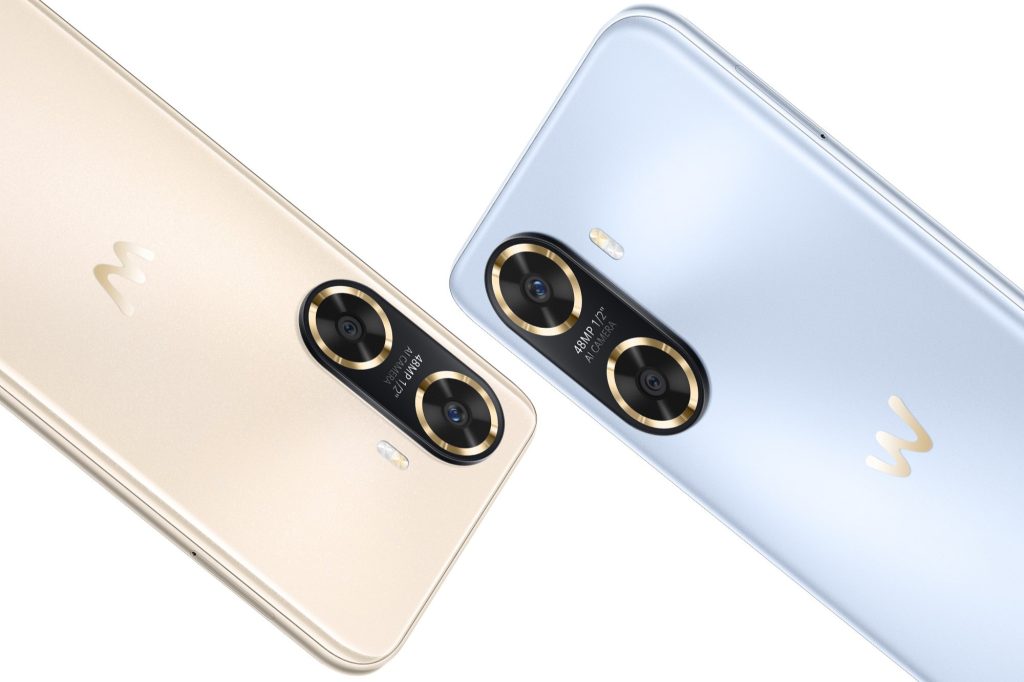
The Wiki Hi Enjoy 60 5G is the same as the Huawei Enjoy 60 with one major difference. It arrives with 5G connectivity, which is missing in the original.
The latest-gen network connectivity is possible on this handset via a MediaTek Dimensity 700 chip. The original uses a HiSilicon Kirin 710A SoC which is limited to 4G.
The phone sports a dual-ring camera design and it comes in black, blue, and gold color options. It is built around a 6.75-inch display (LCD) with an HD+ (1600 x 720 pixels) resolution and a dewdrop notch.
The device arrives with a dual camera system on the back comprising a 48MP primary sensor and a 2MP depth sensor. On the front, it has an 8MP shooter.
The product measures 8.98mm in thickness since it houses a 6,000mAh battery. However, its weight is relatively average at 199g.
It carries support for 22.5W fast charging and 12W reverse charging. On the software front, it boots Android 11 with HarmonyOS Connect. In simpler words, it comes with certain HarmonyOS ecosystem features, and therefore, it is marketed as HarmonyOS ecological smartphone.
Wiki Hi Enjoy 60 5G is priced at ¥1,399 (~$200) and ¥1,599 (~$230) for 8GB + 128GB and 8GB + 256GB memory configurations, respectively. It is already on sale in China and won’t be coming to global markets like the previous models.
Motorola’s Moto G series has been a popular choice for budget smartphone buyers, offering an impressive range of features at an affordable price point. And now, it seems that the company is gearing up to launch the successor to the Moto G 5G (2022) in the form of the Moto G 5G (2023). Although Motorola has not revealed any information about the release date or the key specifications of the upcoming device, we have a glimpse of what the phone could look like, thanks to some leaked renders shared by SnoopyTech.
According to the leaked images, the Moto G 5G (2023) will be available in Gray and Black color options. The phone features a punch-hole display and the power and volume buttons are located on the right side of the device. The back of the phone sports a dual-camera setup with a 48MP primary sensor and an LED flash. The bottom side of the handset has a USB Type-C port, a 3.5mm audio jack, and a speaker grille. It is expected that the phone will have a side-mounted fingerprint sensor, similar to its predecessor, the Moto G 5G (2022).
While the leaked renders provide a glimpse of the design of the Moto G 5G (2023), details regarding its specifications remain scarce. The phone will be launched in the US, but there is no word yet on its availability in other markets.
The Moto G 5G (2022), on the other hand, features a 6.5-inch display with HD+ resolution and a 90Hz refresh rate. Under the hood, the device is powered by MediaTek’s octa-core Dimensity 700 processor, coupled with a Mali-G57 MC2 GPU. The phone runs on Android 12 out of the box with My UX skin on top. In terms of the camera, the device boasts a triple-camera setup, including a 50MP primary camera, 2MP depth, and macro camera units. On the front, the device sports a 13MP camera for selfies and video calls.
The Moto G 5G (2022) also includes a side-mounted fingerprint sensor, 6GB of RAM, 256GB of internal storage, a 3.5mm audio jack, a 5,000mAh battery, and 10W charging support. It remains to be seen whether the upcoming Moto G 5G (2023) will offer similar or upgraded specifications compared to its predecessor.
Last week, Motorola officially confirmed the launch of its upcoming Razr foldable phone. However, the exact launch date of the upcoming offering has not been revealed. Additionally, the moniker of the foldable device also remains a mystery. Now, Lenovo’s General Manager of Phone Business Department Chen Jin has shared a teaser video of the Razr 2023 on the microblogging platform Weibo.
Motorola Razr officially teased in a video
The teaser video shared by the Lenovo executive reveals the back panel of the upcoming Motorola Razr. It confirms that the foldable phone will indeed come with a large secondary horizontal display (possibly measuring 3.7-inches) on the back panel. It looks similar to the recently announced Vivo X Flip with a 3-inch screen. The Motorola Razr’s secondary display is located below the two camera sensors at the top left corner of the back panel. The foldable phone has volume rocker and power buttons on the right side.
Alongside the teaser, the Lenovo executive mentions that the upcoming Motorola Razr will feature a large external screen and high refresh rate. However, it remains to be seen if the high refresh rate is for the secondary display or the primary interior screen. To recall, the upcoming Razr’s predecessor had a 2.7-inch secondary display.
This is everything that the official teaser reveals about the upcoming Motorola Razr. Although the moniker is not confirmed, reports suggest that the foldable phone may be called the Razr+ 2023 or Razr 40 Ultra in certain markets. The device is rumored to be powered by a Snapdragon 8+ Gen 1 SoC coupled with 12GB RAM. It is tipped to be backed by a 3,640mAh battery unit with support for 33W fast charging.
As per recent information, Motorola could unveil its upcoming Razr foldable phone on June 1 in Madrid, Spain/
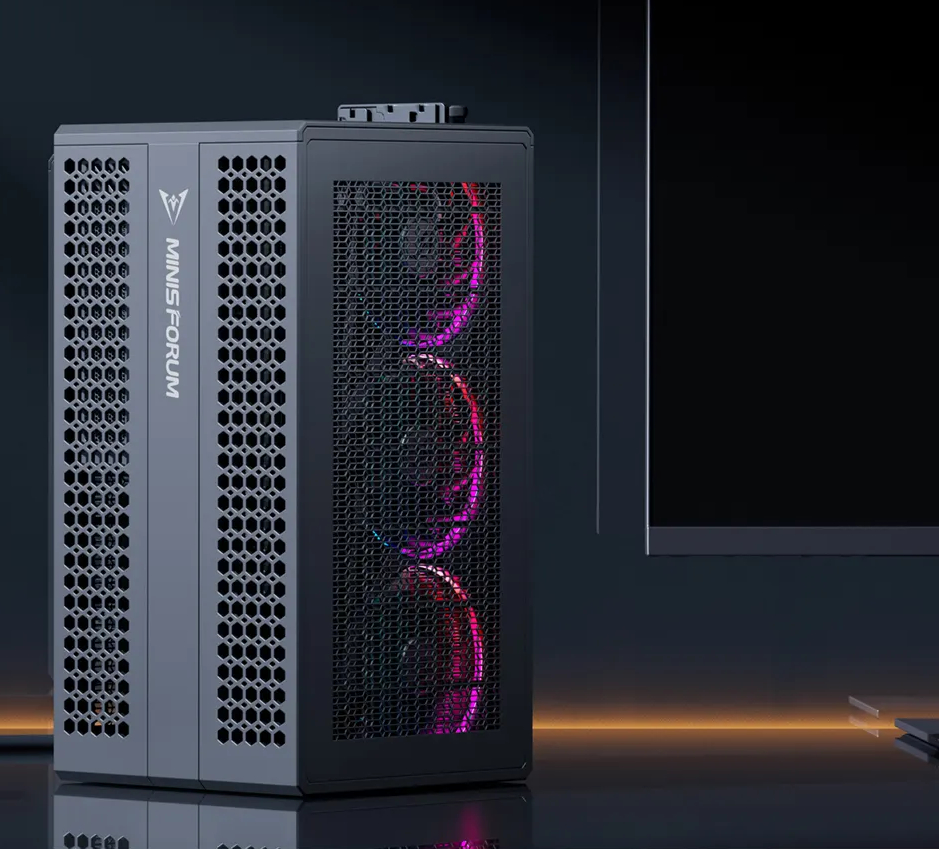
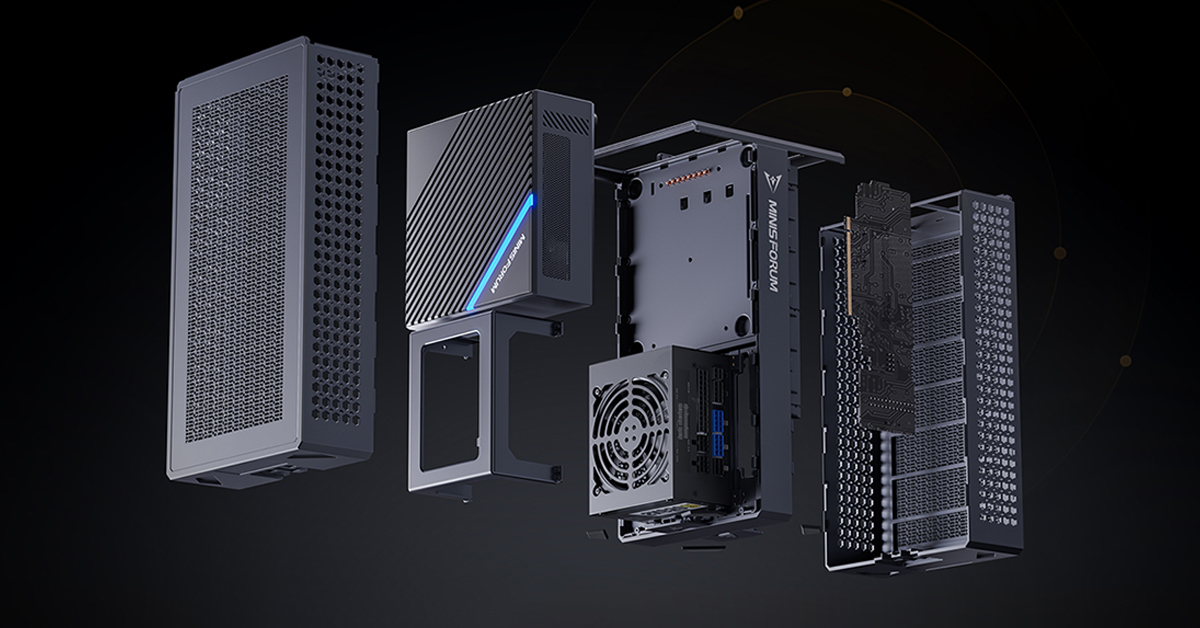
MINISFORUM, a well-known brand in the mini-PC market, has recently announced its latest product, the B550 Pro. This mini-PC, which is part of the company’s Uranus series, promises to deliver impressive performance and versatile expansion options for users seeking a compact, yet powerful desktop PC.
Measuring at 168.7 x 159.7 x 67 mm, the B550 Pro features an SFX PSU, as well as PCIe 3.0 x16 and PCIe 3.0 x4 slots. The PCIe 3.0 x16 slot can be used for installing a graphics card, while the PCIe 3.0 x4 slot is intended for network card or SSD expansion, making it easy to expand the mini-PC to create a quasi-gaming PC experience.
MINISFORUM has stated that the B550 Pro is capable of supporting various AMD Ryzen 5000 processors, up to the Ryzen 7 5800X3D, an 8-core Vermeer part with a 105 W TDP and 96 MB of 3D V-Cache. This ensures that the mini-PC will deliver decent performance in its own right.
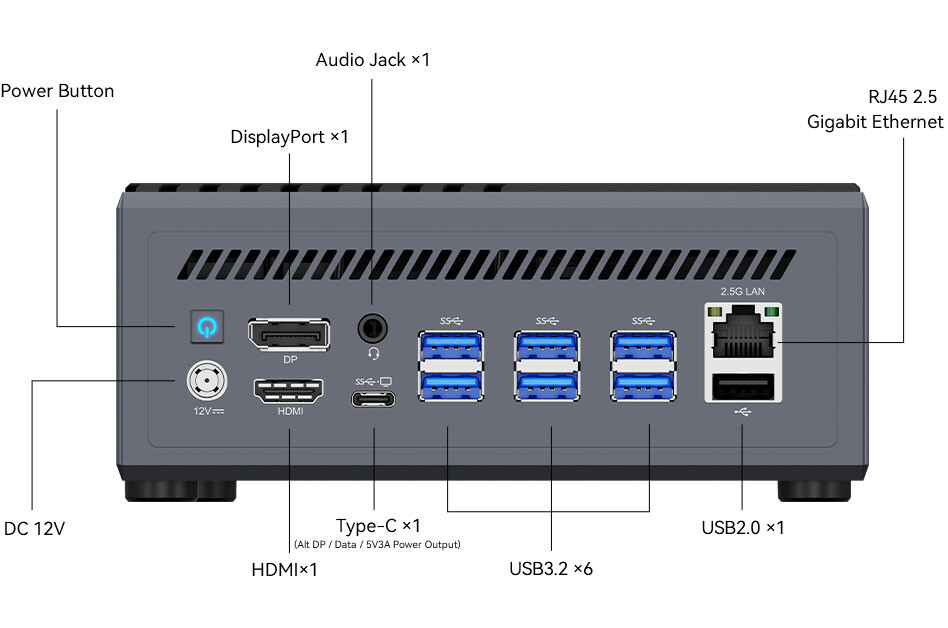
In terms of connectivity, the B550 Pro comes with a range of ports, including DisplayPort, HDMI, USB Type-C, and several USB 3.2 Type-A connections. The mini-PC also features two M.2 drive slots, along with a 2.5-inch bay and dual-channel SODIMM banks for DDR4 RAM.
MINISFORUM has not yet announced a release date or pricing for the B550 Pro, but interested users can subscribe for more details within its press release. It’s clear that the B550 Pro is a highly capable mini-PC that offers plenty of options for expansion and customization. With its compact size and impressive performance, it’s an excellent choice for users who want a powerful desktop PC without sacrificing space or portability.
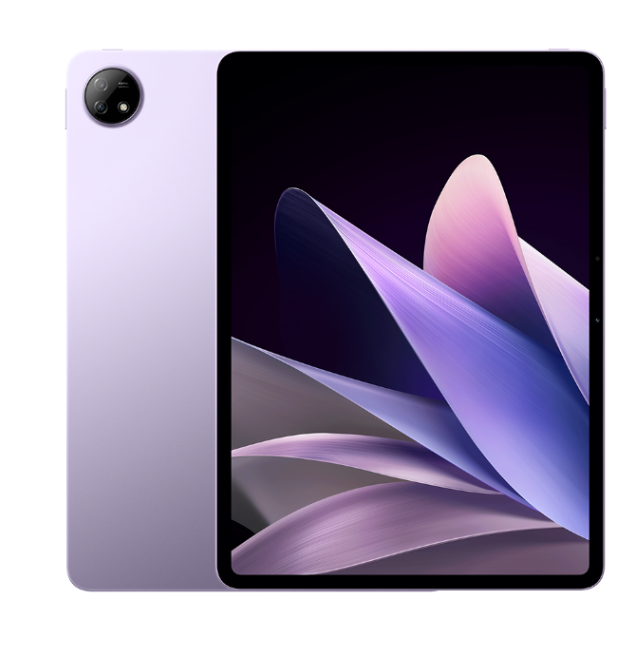
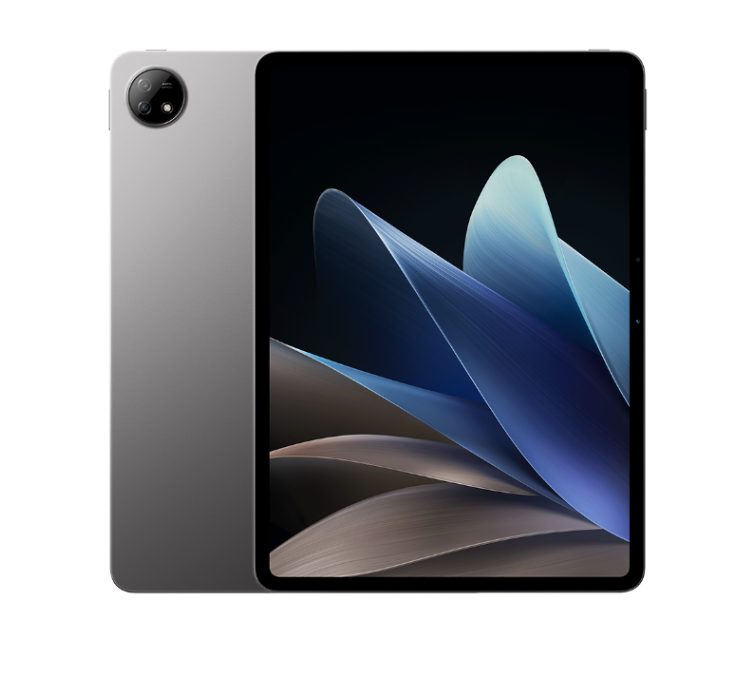
Vivo Pad 2 features a 12.1-inch 10-bit 2.8K LCD display and supports a 144Hz refresh rate. The display is perfect for readings texts, presentations, and PDFs, viewing videos and movies, and even playing games.
The device is powered by MediaTek Dimensity 9000 Octa-core processor which gives great computing performance and is perfect for gaming, imaging, multimedia, and connectivity. It comes with multiple memory options viz. 8GB/12GB LPDDR4x RAM and 128GB/ 256GB/ 512GB of UFS 3.1 storage options.
Vivo Pad 2 comes with an 8MP HD 105°Wide-angle front camera which is great for taking family and group video calls and 13MP + 2MP dual rear cameras which are great for capturing images. The device is fitted with multi-layered graphite + silicone heat dissipation system, that offers a large heat dissipation area of 27413mm². This cooling solution makes sure that the device is able to give the best performance during long periods of heavy workflows.
The tablet is fueled by a massive 10000mAh battery and supports 44W fast charging. Other interesting features include Android 13 OS-based Origin OS3, four-finger pinch, two-finger split-screen, parallel windows, multi-device cross-screen collaboration, Bluetooth 5.3, Dolby Atmos Quad speakers, Hi-Res certified speakers, and more.
Available in Blue, Gray, and Purple color variants, you can now buy Vivo Pad 2 for $399 only on Giztop. Please note that this price is applicable to the base variant only.
For more information on such exciting deals and offers, check out our deals hub
The Xiaomi 13 series debuted in China in December. These smartphones were later announced in global markets in late February. Last week, the company took wraps off the Xiaomi 13 Ultra.
All in all, the Xiaomi 13 family is fresh from the oven. However, one of the firm’s executives has already started teasing the design of one of the next-gen phones.
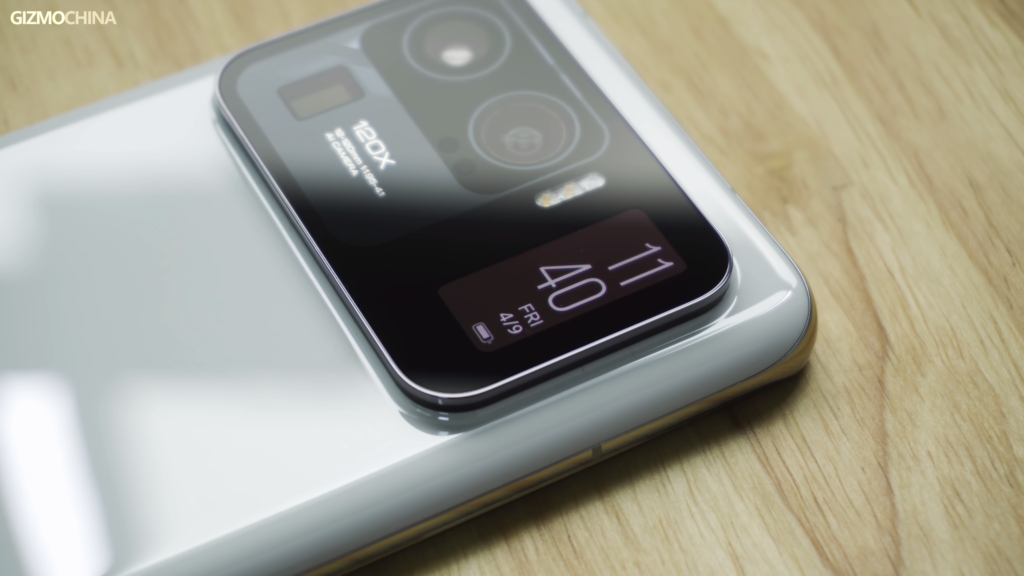
Xiaomi Mi 11 Ultra
According to ITHome, a netizen asked Wei Xu (Design Directory of Xiaomi Industrial Design Department) whether the Xiaomi 14 Pro will feature a design similar to the Mi 11 Ultra.
To this question, the company executive revealed that they have finalized the design of Xiaomi 14 Pro. He further added that this design is ‘more amazing’ than the Mi 11 Ultra.
The Xiaomi Mi 11 Ultra had a unique design. It came with a secondary screen on its back for notifications, weather, music playback controls, and more. It actually used Mi Band 5’s display.
The device was the company’s second Ultra smartphone after the Mi 10 Ultra. It was Xiaomi’s first attempt at a camera-focused phone. Just like the current-gen Xiaomi 12 Pro, it had a ceramic back.
As far as the Xiaomi 14 Pro is concerned, we have no details on it. This is the first time we are herding about it, and that too from a company official.
It will likely come with the next-gen Qualcomm Snapdragon 8 series processors and an upgraded camera system. The handset will probably get announced in the last quarter of 2023 in China alongside the vanilla model.
We use cookies on our website to give you the most relevant experience by remembering your preferences and repeat visits. By clicking “Accept”, you consent to the use of ALL the cookies.
This website uses cookies to improve your experience while you navigate through the website. Out of these, the cookies that are categorized as necessary are stored on your browser as they are essential for the working of basic functionalities of the website. We also use third-party cookies that help us analyze and understand how you use this website. These cookies will be stored in your browser only with your consent. You also have the option to opt-out of these cookies. But opting out of some of these cookies may affect your browsing experience.
Necessary cookies are absolutely essential for the website to function properly. This category only includes cookies that ensures basic functionalities and security features of the website. These cookies do not store any personal information.
Any cookies that may not be particularly necessary for the website to function and is used specifically to collect user personal data via analytics, ads, other embedded contents are termed as non-necessary cookies. It is mandatory to procure user consent prior to running these cookies on your website.