It appears that Huawei may have some exciting new developments in store for its customers in the near future. Rumors have been circulating that the company plans to unveil not one but two flagship smartphones in the month of March. These are said to include the Huawei P60 line, which will focus on photography, and the Mate 60 series, which will be loaded with a plethora of new features and innovations.
Recently, some leaks have surfaced regarding the Huawei P60 Pro model, including renders shared by an artist known as HoiINDI on Twitter. These images showcase a curved screen and a unique camera module, with a periscope camera located in the lower left corner. Past leaks have revealed that the P60 Pro will have a triple camera setup on the rear with a main 50MP Sony IMX888 camera. The 50MP ultrawide unit on the smartphone will feature the Sony IMX858 sensor, while the 64MP telephoto shooter will have OmniVision OV64B. The XMAGE brand, Huawei’s in-house imaging brand, is also featured on the camera module, as per renders.
As per speculations, the P60 Pro will feature an under-screen fingerprint scanner. Specifications for the P60 Pro are said to include a 6.6-inch OLED panel with a QHD+ resolution and support for a 120Hz refresh rate. The handset could have LPDDR5X storage and UFS 4.0 storage. An IP68 rating and HarmonyOS 3.0 are also tipped.
The Huawei P60 Pro is also expected to have a 5000mAh battery that supports 100W wired charging and 50W wireless charging. It is important to note that the P60 and Mate 60 series have not yet been officially announced by Huawei, and we have yet to see any renders for the Mate 60 series.
Samsung and Qualcomm have entered into a partnership for Samsung’s future smartphone lineup. The companies have been known to partner in the past, for instance, when Samsung was the smartphone partner for Qualcomm’s Snapdragon Pro Series. This time around, the upcoming Galaxy S23 series will feature a unique chipset officially named “Qualcomm Snapdragon 8 Gen 2 Mobile Platform for Galaxy”.
The chipset may have a lengthy name, but Samsung has created a more simplified way to remind consumers of the special chipset powering their new flagships, which is the new, modified Snapdragon logo. It will be featured in promotional materials. Consumers can expect to see this logo prominently displayed on billboards and throughout the web starting next week, as Samsung’s Galaxy S23 lineup will be officially unveiled at the Galaxy Unpacked Event on February 1. The chipset will be exclusive to Samsung, at least at launch, and details about the agreement with Qualcomm are currently unclear.
The specifications of the Galaxy S23 lineup have already been leaked. For starters, the base model Galaxy S23 has a 6.1-inch FHD+ (2,340 x 1,080) AMOLED screen with a 120 Hz refresh rate. The Galaxy S23+ has a larger 6.6-inch screen, but the same display specifications as the Galaxy S23. The Galaxy S23 Ultra is expected to feature a 6.8-inch QHD+ (3,088 x 1,440) AMOLED screen and a refresh rate of 120 Hz. The phones have top-of-the-line specifications and camera setups. The “Snapdragon for Galaxy” designation is expected to continue with the Galaxy S24 series as well. Still, it’s possible that Samsung may switch to using its in-house chipset in the future.
Europe has been quite strict with enforcing its laws when it comes to big tech conglomerates. Previously, the European Union forced Apple to switch their iPhones from lightning ports to USB-C ports, which was huge considering Apple had no plans of doing so before they were pressured by the union. In latest news, Google has pledged to make changes to several products and services in order to comply with EU laws regarding transparency and providing clear information to consumers.
Following discussions with the Consumer Protection Cooperation Network (CPC), led by the European Commission, Google has agreed to address issues raised by authorities and make changes to Google Store, Google Play Store, Google Hotels, and Google Flights. Commissioner for Justice, Didier Reynders stated that EU consumers are entitled to clear, complete information so that they can make informed choices, and Google’s commitments are a step forward in this direction. The Commission further addressed Google, asking the company to comply fully with the Geo-blocking Regulation. The regulation ensures that consumers can enjoy the same rights and access the same content throughout Europe.
Google has agreed to limit its ability to make unilateral changes related to orders, as well as create an email address for consumer protection authorities to report and request the removal of illegal content. Here are some major changes that Google will incorporate into its practices
Google Flights and Google Hotels
Clarifying whether customers are dealing directly with Google or if Google is merely an intermediary in the transaction.
Clarifying the reference price pertaining to discounts, as advertised on Google. Also, letting the customers know if reviews are not verified on Google Hotels.
Adhering to the same transparency commitments as other major platforms with regard to prices, availability, and more.
Google Play Store and Google Store
Google has agreed to offer detailed information on delivery costs, the option to withdraw, and the availability of repair or replacement options before any transactions take place. Additionally, Google will provide information on the company, including its legal name and address, as well as direct and effective contact methods such as a live telephone agent.
The company will also ensure that consumers can easily navigate different country versions of the Google Play Store and inform developers of their responsibility to make their apps available throughout the EU. Furthermore, Google will enable consumers to use different payment methods from any EU country.
The CPC (Consumer Protection Cooperation) will actively monitor the implementation of these commitments, and national authorities will monitor and enforce compliance where necessary. However, one practice by Google that does not fully comply with the Geo-blocking Regulation is the application of technical limitations for the use of apps that would normally be available in the country where the user is temporarily located. As per reports, the CPC and national authorities will continue to monitor this issue.
CASETiFY has unveiled two protective cases and a sleeve for the MacBook Pro. The new cases come with shock-absorbing capabilities and are compatible with the 2023 MacBook Pro series. The CASETiFy cases come with anti-microbial functionality and are made from recycled materials.
The company’s advanced shock absorption technology, EcoShock offers significant protection to the laptop. The accessories are customizable, as users can create their own style, choosing from several designs. The specific products are an Impact case, a Snap case, and a laptop sleeve.
The CASETiFY Impact case is made partly from recycled phone cases. It provides rugged protection at the corners of the laptop. Its shock-absorbing materials that adorn inner part of the case safeguard the MacBook Pro from drops and bumps. Heat management is also enhanced with ventilation openings. The anti-slip grips are another layer of protection offered by the Impact case. This prevents the laptop from sliding off any smooth surfaces.
The Snap case features both anti-grip and heat dispersion cut-outs like the Impact case. The case can be easily snapped on and off. The Snap case is available in 13-inch, 14-inch, and 16-inch options for the 2023 MacBook Pro. It can also be used for the MacBook Air.
The CASETiFY laptop sleeve is made from shock-absorbing neoprene material. It has a water-resistant zipper as an added layer of protection. It has a single compartment and is made from recycled materials, as with the Impact and Snap cases.
The Impact case is priced at $85, while the Snap case costs $62. The new CASETiFY sleeve retails for $52. All three products can be purchased directly from CASETiFY.
Chinese electric scooter manufacturer NIU has launched a new electric scooter. The NIU Mavericks NQi Children’s Electric Scooter is an exciting and fun option for children who love cars. Not only is it designed to be sturdy and durable, but it also comes with a variety of features that make it a great gift for kids of all ages.
One of the most notable features of the Mavericks NQi is its lightweight design. The frame of the e-scooter is made from a high-strength metal and is equipped with a PP hard shell. This makes it easy for children to handle and maneuver, while also ensuring that it can withstand the wear and tear of regular use. Additionally, it has a weight of only 11 kg and a load capacity of 80kg, meaning it can hold the weight of two children.
The Mavericks NQi electric scooter comes with a variety of features that will keep kids engaged and entertained. It has USB and SD card external interfaces, which allow kids to play their favorite music. It even comes with ambient lighting which is a great way to make the scooter ride more fun and enjoyable.
Another great feature of the Mavericks NQi is its control system. The e-scooter comes with three gears for forward movement, parking, and reverse. This makes it easy for children to learn how to drive and maneuver the e-scooter. Additionally, it has auxiliary wheels on both sides for added safety, which helps prevent accidents and provides extra stability when driving.
The Mavericks NQi is powered by a 12V4.5A lead-acid battery, which provides a maximum speed of 5km/h and a run time of 90 minutes or 7.5km on a single charge. This means kids can enjoy hours of fun with the car, without having to worry about the battery running out.
Finally, the Mavericks NQi is an affordable option for parents. The children’s electric scooter is priced at 699 yuan ($103) in China and is presently listed on Jingdong (JD.com).
Samsung Galaxy S23 series is launching on February 1 and it will share the stage with the new Galaxy Book 3 series laptops. Earlier today, a report revealed the design of three of the models in the lineup— Book 3 Pro 360, Book 3 Pro, and Book 3 360. Now, a new report is here with the design renders as well as specifications of the Samsung Galaxy Book 3 Pro SE. Let’s look at the details.
According to a MySmartPrice report, the Galaxy Book 3 Pro SE will arrive with a 15.6-inch AMOLED display offering a 1920 x 1080 resolution. While the laptop’s refresh rate is unknown, the report suggests it will offer a wide viewing angle.
The Galaxy Book 3 Pro SE could pack a 13th-generation Intel Core i5-1340P processor with a peak clock speed of 4.6GHz. The processor will be paired with 16GB of LPDDR5 RAM, 256GB of NVMe SSD, and Intel Iris Xe graphics.
Renders of the device suggest it will have a full-size keyboard with thin bezels around the display. It is pictured in silver color, similar to the Galaxy Book 2 Pro. Connectivity ports on the laptop include a Thunderbolt 4, HDMI, and a USB Type-C port. There may be a fingerprint sensor for security.
Sources tell MySmartPrice that, unlike the rest of Galaxy Book 3 series laptops, the Galaxy Book 3 Pro SE will not run Windows. Will it be a ChromeOS laptop? We’ll need to wait till February 1 to confirm that.
The upcoming laptops as well as the Galaxy S23 Series are already up for pre-order in various markets. Samsung will also be offering some benefits to those who’ll pre-book the new products. For details, check out our previous coverage.
Noise smartwatches are quite popular among Indian consumers due to their affordability and premium features. The homegrown brand has a wide range of smartwatches in the market and it will soon be adding a new rugged wearable— Noisefit Force—to its portfolio. The watch is already listed on the company’s official website with all its specifications. Here are the details.
As mentioned, the NoiseFit force will be a rugged smartwatch, meaning it will be strong enough to withstand water, dust, and scratches. The renders of the wearable show it with a round dial and a pretty solid design. There are thick bezels and two buttons on the side along with a fully functional rotating crown. It will be offered in Teal Green, Misty Grey, and Lunar Black colors.
Talking about the specifications, the NoiseFit force smartwatch will feature a 1.32-inch display that offers a 360 x 360-pixel resolution and up to 550 nits of brightness. There will be Bluetooth calling feature that will allow users to make and receive phone calls from the watch itself. It will also offer incoming call alerts, access to call logs, and a dial pad.
The wearable will have various sports and fitness modes to track activities like running, walking, cycling, and much more. In addition, the Noise smartwatch will also come with a Heart rate sensor, step tracker, sleep tracking, and SpO2 monitor.
It is claimed to last up to 7 days on a single charge and around 2 days with a BT calling feature on. Other notable features of the watch include 150+ watch faces, voice assistant support, sedentary reminder, alarm, stopwatch, camera control, and more. Its pricing and availability should be announced pretty soon. We’ll keep you posted.
Garmin recently rolled out a beta update to the Enduro 2, Epix 2, Fenix 7, and Marq 2 series smartwatches, introducing dozens of new features. Now, the brand is releasing a beta build to the Forerunner 255 and Forerunner 955 series smartwatches. The new software fixes a couple of bugs and brings a handful of new features. Here are the details.
As per the announcements on Garmin’s Forum, the Forerunner 255 and Forerunner 955 series smartwatches are now receiving a new beta update with version number 14.12. Both smartwatch series are receiving the same changes with the new software.
Garmin says this update is a Release Candidate, which means this exact software version will go live as a public update if no critical issues are found. Installing version 14.12 as a Release Candidate or waiting for it to be a Live public update will not affect its functionality, as all versions of 14.12 are identical.
The beta update will only be rolled out to those who are enrolled in the brand’s public beta program. Members will get the update automatically delivered to their watches through GCM. However, note that GCM checks for an available update once every 24 hours and it may take several hours for the update to finish transferring and be available on the watch to install.
Below you can find the changelog of the update version 14.12 (Changes since version 14.08):
OPPO’s upcoming smartphone, the Reno 8T was recently teased to launch in the Philippines on February 8. Ahead of its debut, the Oppo Reno 8T price tag has now leaked. An ad listing has indicated the price of the product when it eventually arrives in the Philippines. The retail listing suggests the device will sell for P18,999 (~$348) in the country.
The listing shows the Reno8T will be stylized as Reno8 T in the retail box. The device can be pre-ordered in the Philippines and it is bundled with a pair of Oppo Enco Buds TWS earphones. The specific listing that indicated the price of the model is believed to be the 8GB/ 256GB variant. There is also the cheaper 8GB/ 128GB variant of the Reno8 T. The Oppo Reno8 T is expected to come in two color variants – orange and black. The orange variant of the smartphone will have a fiberglass-leather back panel. The two camera rings in the model are covered and surrounded by some large stitching at the back.
The Oppo Reno8 T will be available as a 4G or 5G model, according to reports. There are no indications whether the rumored price listing was for the 4G model or its 5G sibling. There is however a higher likelihood that the rumored price relates to the 4G model. Furthermore, the images of the retail package for the model omit any mention of 5G.
The listing confirms the Reno8 T will pack a 100MP Portrait Camera and a 40x microscopic lens for solid optics. It has a 6.43-inch AMOLED panel and the 4G model has a MediaTek Helio G99 chipset. The smartphone crams a 5,000mAh battery under the hood that supports 30W fast charging.
The finer details of the Reno8 T would be released by Oppo when the smartphone makes its entry into the Philippines market in February.
Lenovo has announced a refreshed version of its Yoga 13w Gen 2 convertible laptop. The new laptop series comes with AMD Ryzen 7000 APUs and features a 13.3-inch screen. The new laptops will enter the market by April 2023. Lenovo is targeting the educational sector with the new Yoga 13w Gen 2 series.
The refreshed Lenovo Yoga 13w Gen 2 could be based on the AMD Cezanne APU similar to the previous model. So the laptops will likely feature the AMD Ryzen 5 7530U and Ryzen 7 7730U processors. It is expected that the new laptops will have an improved or similar performance to their predecessors. The laptop’s 16:10 display has Gorilla Glass Victus protection and a peak brightness of 300 nits. The display also has stylus support and the laptop offers up to 16GB of DDR4 3200 RAM and 512GB of storage.
The Lenovo Yoga 13w Gen 2 refresh has a 51 Wh battery that can be charged at 65W. Facial recognition via Windows Hello, a keyboard backlight, and optional LTE connectivity are also present in the new laptop. Other features of the laptop are a 1080p webcam, two 5MP rear-facing cameras, a fingerprint scanner, one HDMI port, and 2 USB-A and USB-C ports.
The Lenovo Yoga 13w Gen 2 will be released by April 2023 and will be available in multiple markets. Lenovo is yet to release the prices of the new Yoga 13w Gen 2. There could be several storage configurations for the laptops but these are not known at this time.
Samsung’s upcoming Galaxy S23 series is the talk of the town these days. The new lineup is debuting globally on February 1 and the brand has begun teasing it with all its might. The S23 series is expected to include three devices—S23, S23 Plus, and the S23 Ultra. While we already know most specifications of these smartphones, their pricing is still a mystery. However, a new report is here to change that.
Folks over at MySmartPrice have revealed the India prices for the upcoming Samsung Galaxy S23 Series. The publication, citing tipster Yogesh Brar, claims the vanilla Galaxy S23 will be available for purchase in India at a starting price of Rs 79,999 and it will max out at Rs 83,999. The Galaxy S23 Plus would start at Rs 89,999 while the top-of-the-line Galaxy S23 Ultra will be available in the country at a base price of Rs 1,14,999.
The new Samsung flagships will likely be offered in multiple storage variants. The standard and Plus models are expected to be available in two variants – 8GB+128GB and 8GB+256GB. The Galaxy S23 Ultra may offer even more options. It is said to have a 1TB storage variant with 12GB of RAM. There might also be 8GB+256GB and 12GB+512GB storage versions. The lineup will arrive in different colors, including Phantom Black, Botanic Green, Cotton Flower, and Misty Lilac.
Samsung’s new premium smartphones are expected to arrive with a revamped design and improved cameras. The brand has been teasing that the series (or just the S23 Ultra) will offer the best low-light photography experience and improved zooming performance. Check out our Galaxy S23 Ultra roundup to learn more about Samsung’s topmost smartphone. You may also be interested in our Galaxy S23 and S23 Plus Roundup.
Audi has unveiled its latest concept car, the Activesphere. The new concept car combines the functionality of a luxury coupe and a truck. The Audi Activesphere is an autonomous electric vehicle with rugged features suited for off-road riding in comfort.
The Audi Activesphere is the fourth EV concept released by the car maker. It says these designs will be a guide for its subsequent EV offerings. Audi continues to evolve solutions to urban and sub-urban transportation challenges. The Activesphere is a sleek electric luxury coupe that can transform into a pickup truck with off-road capabilities. It has impressive ground clearance, massive 22-inch wheels, and a hatchback that can transform into an open cargo bed. At a push of a button, the Activesphere transits from a coupe to a pickup.
The Activesphere is a culmination of Audi’s sphere concepts. The four concepts represent each of the four rings in Audi’s logo. The concept car has a modular electric drive platform still under development by Audi and Porsche. The Premium Platform Electric (PPE) drive platform will subsequently be adapted to future Audi EVs. Indeed, the PPE will be an integral part of the next Audi production vehicle to be released later this year.
The PPE platform has an 800V architecture that will enable fast charging. Although the fine details are not yet released, it could mean up to 300km for 10 minutes of charging. It will accommodate what Audi has said is an unprecedented range of high-volume automobiles. These include SUVs and CUVs with high ground clearance, as well as cars at the low end.
Being a concept car, it is unlikely that the Activesphere will go into production. But its concept, together with the exciting features including AR/VR experience could berth in subsequent Audi cars.
Airtel, one of the major telecom services providers in India, has launched two new recharge plans for its prepaid users. Priced at Rs. 489 and Rs. 509, these plans offer massive data benefits of up to 60GB and unlimited calling. Both plans come with a validity of 30 days and include 100 SMS per day, free access to Wynk Music, Hello Tunes, Rs. 100 cashback on FASTag, and more. Let’s check out the details about these new plans.
Airtel’s new prepaid plans aim to serve the needs of users who require a lot of data to get by the day. With the latest Rs. 489 tariff plan, you’ll get 50GB of data without any daily limit, meaning you can use it all in one go. In addition, there are unlimited STD and local calls and 300 SMS for a validity of 30 days. The telco is also offering various other benefits, including a free subscription to Wynk Music, Free hello tunes, Apollo 24 by 7 Circle, and up to Rs. 100 Cashback on FASTag.
The Rs 509 prepaid plan, on the other hand, comes with a validity of exactly 1 month, meaning users will receive the full benefits of the plan for the entire month, regardless of the number of days in the month (28, 30, or 31 days). This latest plan from Airtel offers unlimited access to voice calling benefits to any network, 60GB bulk data, and 100 SMS per day. The additional benefits include a free subscription to Wynk Music, Free hello tunes, Apollo 24 by 7 Circle, and Cashback on FASTag.
Interested readers can recharge with these new plans through the Airtel Thanks app or from any other payment platforms like Paytm, PhonePe, and GPay.
The recent fan-building efforts by Qualcomm fell short of Intel and AMD’s efforts to create a fervent following for their CPUs. A $1,500 smartphone for Snapdragon Insiders was unveiled, although lacking the Snapdragon 888+, the company’s top chipset at the time. The phone was covered in Snapdragon badges, but it didn’t advance Qualcomm’s technology any further than any other significant Android phone, thus the premium price wasn’t really justified. In order to reward Snapdragon Insiders, Qualcomm has created a new set of benefits that will grant them early access to a wide range of future Snapdragon-powered products.
If you’re already a member of this exclusive group then Qualcomm is offering you the chance to try out the newest Snapdragon-powered devices, work with brands, study under seasoned influencers through training programmes, and get first access to Snapdragon Insider events. In return, Qualcomm asks that participants inform the Snapdragon community and their followers on all platforms about their thoughts and experiences. All you need to do in order to become part of this community is to follow the Snapdragon on Twitter.
Applications for the programme are now being accepted by Qualcomm, and those who are selected will be informed when a new gadget is ready for testing and invited to special events. Although the business did not specify which goods will be up for testing, it did state that they would come from reputable manufacturers who employ Snapdragon processors, many of which are found in the best Android phones. The objective is to assist underrepresented content producers, whose work will also be featured on Snapdragon’s official channels. Creators will continue to control their works, while Qualcomm will look for permission to utilise them in marketing campaigns.
The Snapdragon Insiders Access programme is open to anyone living in the United States who is at least 18 years old. It is entirely up to you whether you accept each invitation to a product or event. Qualcomm does not place a cap on the number of persons who can join. That was all we could do to address the most recent Qualcomm Insider Program update. I appreciate you taking the time to read the entire post.
The Incognito tab is one of the most useful features for the large audience out there. It prevents others from tracking our search and web history. There is now very exciting news for incognito mode lovers and Chrome has reportedly added the support of Fingerprint unlock in the incognito tab. The new addition will reportedly provide more privacy to the user and as soon as he locks the smartphone or switches to another app while browsing through the incognito tab, the fingerprint will be required to open the tab again.
Google revealed today that it is rolling out the option to require your fingerprint to access Incognito tabs in Chrome for Android, a feature that was first spotted in development last year. This functionality, which was first introduced to Chrome for iOS in early 2021, only needs you to “Unlock Incognito” using your fingerprint after restarting the Android browser. On the Incognito splash screen, you can also choose to “See other tabs,” and an overflow menu will let you close any open settings or private browsing tabs.
This feature is optional and can be turned on by going to Chrome Settings > Privacy and security. When you exit Chrome, lock any open Incognito tabs: Lock the screen to view Incognito tabs that are open. You can use your PIN in addition to verification when enabling or disabling. The splash screen occurs as soon as you close Chrome. When giving someone your phone, it can be useful (as long as they don’t know your passcode).
Within the context of Data Privacy Day, Google declared today that the feature is “now rolling out to Android users.” A large percentage of people will be able to access the update in the following days. This finishes our post on the fingerprint unlock feature that Chrome users can now use. How do you feel about this? Please share your thoughts by leaving a comment below. I appreciate you taking the time to read the entire post.
Realme India has officially teased a Coca-Cola phone on its India website. The brand has put up a microsite without revealing any explicit details. Additionally, Vice President Madhav Sheth also shared a post on his social handle that reveals a Realme 10 Pro 5G and a Coca-Cola can reflecting on the phone’s back panel. The teasers hint at an imminent launch of the Realme-branded Coca-Cola phone in the country.
Going by the aforementioned developments, Realme might be partnering with the American beverage company Coca-Cola. The phone in the image shared by Sheth seems to be the Realme 10 Pro 5G. It has dual camera rings housing two sensors in each and Matrix AI Camera text beside the lenses. The phone is also seen with a glossy and gradient back panel. On the other hand, the microsite has the words ‘Really Refreshing’ and ‘Cheers for Real’. There is also a Realme mascot covered in the Cola drink.
The Coca-Cola phone surfaced in leaked render earlier this week. The image revealed a Red-colour back panel matching the beverage company’s theme. There’s a Coca-Cola logo across the entire back panel’s right side. The smartphone is expected to debut in the country by the first quarter of 2023. Not much is known about the device but in addition to the new design, we may expect it to also come with Coca-Cola theme UI.
As the Coca-Cola phone could be a special edition of the Realme 10 Pro 5G, it may come with similar specifications. This means that it may feature a 6.7-inch FHD+ LCD screen with a 120Hz refresh rate, 108MP triple-rear cameras, Snapdragon 695 SoC, and a 5,000mAh battery with 33W fast charging.
Tecno previously collaborated with Skyesports, the biggest esports tournament organiser in Asia. The Call of Duty Mobile India POVA Cup, a year-long competition, has been planned by the company for Call of Duty mobile. This competition, which was jointly arranged by both IT behemoths, will last the entirety of 2023. And now, the details about the gameplay and event has been officially out by the brand. The tournament is all set to start a few days from now.
From January 27 to February 26.2023, the competition will span five weeks on a Friday, Saturday, and Sunday per week. In order to compete for the grand prize and the title of champion, eight of the best teams from throughout India have been given direct invitations for the inaugural season. GodLike Esports, Revenant Esports, Anthem, Team XO, Nirvana Esports, Team Rebirth, 5 and a half men, and Team 12K Elite are among them.
Intense action will take place over the course of five weeks in the event, which will begin with a round-robin stage in which each side will play the other once. There will be a total of 28 thrilling matches for the fans to enjoy. The top four teams from this round will move on to the playoffs, where they will compete in a double-elimination tournament to qualify for the championship game. The COD Mobile Pova Cup Season 1 championship will be decided in the decisive match between the top two teams, which promises to be an exciting finale.
In order to forge a fantastic connection with Zillenials who are enthusiastic about mobile gaming, TECNO POVA smartphones will be collecting community penetration and developing esports activities in this gaming festival. In order to effectively connect with game enthusiasts from throughout the nation, the tournament matches will be live-streamed on the official social media accounts in four different languages: English, Hindi, Tamil, and Telugu.
The US-China tech war is getting interesting with the US, Japan, and Netherlands engaging in diplomatic talks to increase the sanctions on semiconductor exports to China. The US is pressurizing Japan and Netherlands to increase the already long list of sanctions and practically ban any export of machinery, technology, personnel, and technical know-how to the Asian giant, which is the largest consumer of semiconductors in the world.
The existing sanctions have already affected the global semiconductor industry, especially major suppliers like ASML Holdings of the Netherlands and Tokyo Electron of Japan.
ASML CEO, Peter Wennink said that if we keep on increasing the sanctions, China will eventually learn how to produce its own chips. It is just a matter of time before they learn how to make semiconductor manufacturing equipment and become completely self-reliant.
He further added that “The more you put them under pressure, the more likely it is that they will double up their efforts.”
China’s History of Self-Reliance
A quick peek into history will show you that China is capable of going completely independent. China’s space program, high-speed railway, communication, 5G technology, and automotive industry all bear witness to the country’s capacity to grow and become self-reliant. Recently, Goldman Sachs economist also predicted that China’s GDP will surpass the US in 2035. All of these indicate that the country has the ability to go solo and may have already started the process.
In December, Reuters reported that China was already preparing a $143 billion package for its semiconductor industry, to enable local entrepreneurs and companies and counter the US curbs.
Last year Shanghai-based firms also achieved the milestone of mass-producing semiconductors with a 14nm process and made breakthroughs in 90-nm lithography machines, 5-nm etching machines, 12-inch large silicon wafers, central processing units, and 5G chips. China’s Semiconductor Manufacturing International Corp has also started exploring sub-10nm manufacturing techniques.
China’s Semiconductor Industry
Semiconductors are one of the hottest technology items of this decade. All the major technology sectors, like wired communication, consumer electronics, industrial electronics, automotive electronics, wireless communication, and computing and data storage, require semiconductors.
China, which aims to become the global leader in artificial intelligence and quantum computing, needs an uninterrupted supply of semiconductors to achieve this goal. However, the pandemic restrictions and the ongoing US sanctions have unveiled the loopholes in China’s supply chain, further strengthening Beijing’s belief that autonomy in the semiconductor industry is the only way to achieve global dominance.
Currently, China’s semiconductor industry includes a wide variety of companies from Fabless semiconductor firms like ZhaoXin, UNISOC, and HiSilicon to IDMs (Integrated Device Manufacturers) like Yangtze Memory Technology Corp and ChangXin memory Technologies.
However, even though these companies can design semiconductors, they lack the technology and capacity to mass produce them, especially the cutting-edge chips required for Artificial Intelligence and other advanced technology.
For instance, China like every other country relies on ASML to supply the complex EUV (Extreme Ultraviolet Lithography) machine, required to create advanced semiconductors. EUV is used to mass produce the most advanced microchips (7 nm, 5 nm, and 3 nm nodes).
Under the current sanctions, ASML is not allowed to sell the EUV or share related technology, material, or personnel with any Chinese company. However, the country circumvented this issue by using the DUV lithography system, which is still imported.
Impact of the Additional Sanction
Now, US wants the Japanese and Dutch government to further widen their sanctions. Talks are going on to ban the exports of DUV lithography machines and related technology. If approved, these sanctions may cripple China in the short term but will actually have a worse effect on Dutch and Japanese companies as they stand to lose more than China in this bargain.
Tokyo Electron, one of the largest semiconductor companies in Japan, gets around 25% of its revenue from exports to China. ASML has 14% of its revenue and 15% of order backlogs from China. Any additional sanctions will adversely affect the business of these two major semiconductor suppliers.
If approved, the new sanctions will help US to stop the technological and economical advancement of China. In the short term, it is going to be very difficult for China to sustain and develop its semiconductor industry under the mounting pressure of sanctions. However, if we look at Beijing’s track record, then we can presume that the country will fight back and may even change the whole semantics of the global semiconductor industry in the coming years.
The Samsung Galaxy Unpacked 2023 event is just around the corner. During this conference, the company will be announcing various new products with the highlight being its next generation of flagship smartphones, the Galaxy S23 series. Now, here’s a roundup of the lineup’s top end Galaxy S23 Ultra model.
Design & Display
The Galaxy S23 Ultra is believed to feature a design that is quite similar to its predecessor, the Galaxy S22 Ultra. In other words, it will feature sharp and straight corners rather than rounded ones as well. The rear will feature vertically stacked cameras that have a slight bump on the top half, while the bottom half simply carries the Samsung branding. Meanwhile, the front will feature a tall display with minimal bezels on all sides and a center aligned punch hole selfie camera.
The Galaxy S23 Ultra is believed to sport a tall 6.8 inch AMOLED display. This panel will reportedly feature a QHD+ (3,088 x 1,440) resolution with a dynamic refresh rate that can go from high 120Hz to even as low as 1Hz thanks to its LTPO technology. The Galaxy S23 Ultra’s display is one of its notable aspects and is rumored to offer a high 2,000 nits of peak brightness, which is more than the 1,750 nits offered by its predecessor. This panel will also come with Corning’s Gorilla Glass Victus 2.
Specifications
Being a 2023 flagship smartphone, the Galaxy S23 Ultra will be equipped with Qualcomm’s latest and greatest Snapdragon 8 Gen 2 SoC. This processor will be paired with either 8GB or 12GB of RAM and 256GB, 512GB, or 1TB of internal storage. The South Korean tech giant typically released its popular Galaxy S series of flagship smartphones in two variants. One version housed the Qualcomm Snapdragon chipset for the US and South Korean market, while the rest of the world usually arrived with its proprietary Exynos SoC. However, it appears that the brand will only release the device in a single Snapdragon only version.
According to various leaks, the handset will be powered by a large 5,000mAh battery pack that supports up to 45W wired fast charging, 10W wireless charging, and even support reverse wireless charging as well. Although, it is odd considering that the wireless charging rate appears to have fallen from 15W that was supported on the Galaxy S22 Ultra. Other notable features include under display ultrasonic fingerprint scanner, Bluetooth 5.3, Wi-Fi6E, UWB, and even NFC support. The Galaxy S23 Ultra will also run on Android 13 OS based One UI 5.1 out of the box.
Camera
Apart from the display, the company is also placing a heavy emphasis on improving the photography capabilities of its upcoming flagship phone. The upgrades is related to the zoom lens, which will apparently offer improved quality, while other rumors also claiming that low light performance will also greatly improve on the primary sensor. For those unaware, the Galaxy S23 Ultra will feature a quad camera setup. The primary shooter is a large 200 megapixel ISOCELL HP2 sensor that is capable of recording up to 8K resolutions at 30fps and supports OIS.
This sensor is paired with a 12 megapixel ultra wife angle lens that has an f/1.4 aperture and 120 degree FOV, a 10 megapixel telephoto lens with 3x optical zoom, f/2.4 aperture, and OIS support, and lastly another 10 megapixel periscope telephoto lens that offers up to 10x optical zoom, f/4.9 aperture, while also supporting OIS. On the other hand, the front will like house a 12 megapixel selfie camera that supports HDR.
Expected Pricing
The supposed price tag of the Galaxy S23 series was just recently leaked for the European market. This information revealed that the pricing for the 8GB+256GB and 12GB+512GB variant of the Galaxy S23 Ultra. The former will apparently cost around 1,409 EUR (roughly 1,532 US Dollars) while the latter will be available for a hefty 1,589 EUR (roughly 1,728 US Dollars).
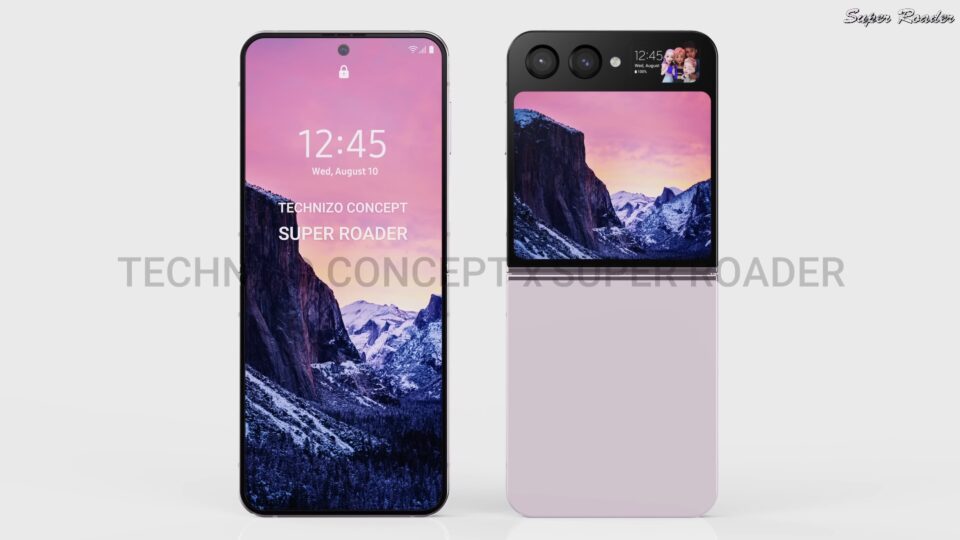
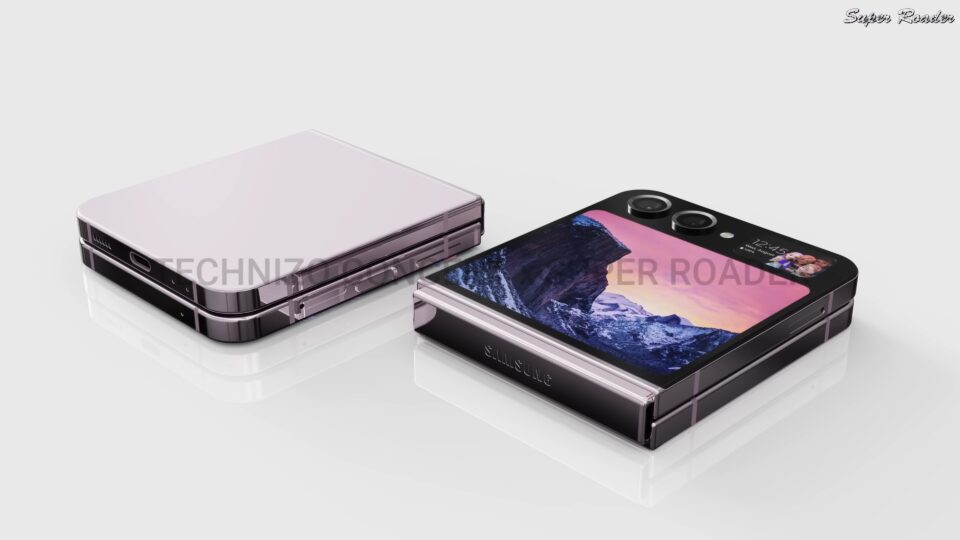
Competition in the flagship smartphone market continues at full speed. While there are many models of many different brands on the market, the US technology giant Apple leads the race ahead of its competitors. The main reason for this is that the company offers a better experience with its own software and hardware. Samsung, which has been carrying out a similar study for a while, seems to have finally achieved the success it wanted in hardware. The processor that the company will use in the Galaxy S24 series, which will be released next year, may have emerged. Here are the details…
South Korean Galaxy S24 variants will supposedly feature a ten-core Exynos 2400 SoC
Samsung MX has reportedly greenlit its upcoming Exynos 2400 CPU, with mass production set to begin later this year on Samsung’s 4LPP node. According to South Korean tipster Vampire King, the Exynos 2400 (codenamed Root) will feature a quad-cluster design with a total of ten cores, and will be used in South Korean variants of next year’s Galaxy S24.
Representative Samsung Galaxy S24 image
The Exynos 2400 is said to follow the Snapdragon 8 Gen 2‘s quad-cluster design, with a prime Cortex-X4 core, two clusters of Cortex-A720 cores, and four Cortex-A510 cores. However, there is conflicting information about the exact number of Cortex-A720 cores and the total number of CPU cores. One report states it will feature eight CPU cores (1+4+3) while another claims it will have ten cores (1+2+3+4).
It is important to note that the Exynos 2400 is not the Galaxy-exclusive chip developed by Samsung’s “Dream Team.” That SKU is supposedly earmarked for the Galaxy S24 and is expected to enter mass production in 2024, presumably as an answer to the Snapdragon 8 Gen 4’s Nuvia cores.
It is worth mentioning that Samsung has been using Snapdragon processors in its flagship devices in recent years, but with the Galaxy S24 variant in South Korea will be powered by the Exynos 2400, it seems that Samsung is looking to change that trend. However, it is important to note that Samsung has not yet confirmed these reports, and as such, all of this should be taken with a grain of salt.
We use cookies on our website to give you the most relevant experience by remembering your preferences and repeat visits. By clicking “Accept”, you consent to the use of ALL the cookies.
This website uses cookies to improve your experience while you navigate through the website. Out of these, the cookies that are categorized as necessary are stored on your browser as they are essential for the working of basic functionalities of the website. We also use third-party cookies that help us analyze and understand how you use this website. These cookies will be stored in your browser only with your consent. You also have the option to opt-out of these cookies. But opting out of some of these cookies may affect your browsing experience.
Necessary cookies are absolutely essential for the website to function properly. This category only includes cookies that ensures basic functionalities and security features of the website. These cookies do not store any personal information.
Any cookies that may not be particularly necessary for the website to function and is used specifically to collect user personal data via analytics, ads, other embedded contents are termed as non-necessary cookies. It is mandatory to procure user consent prior to running these cookies on your website.