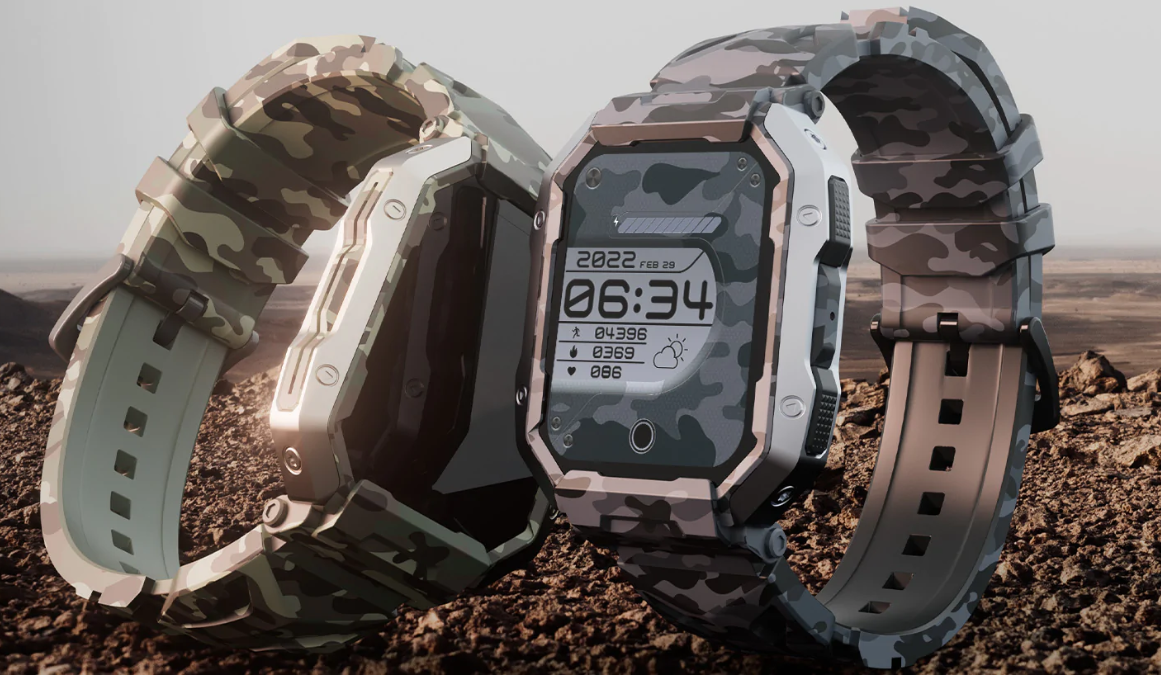
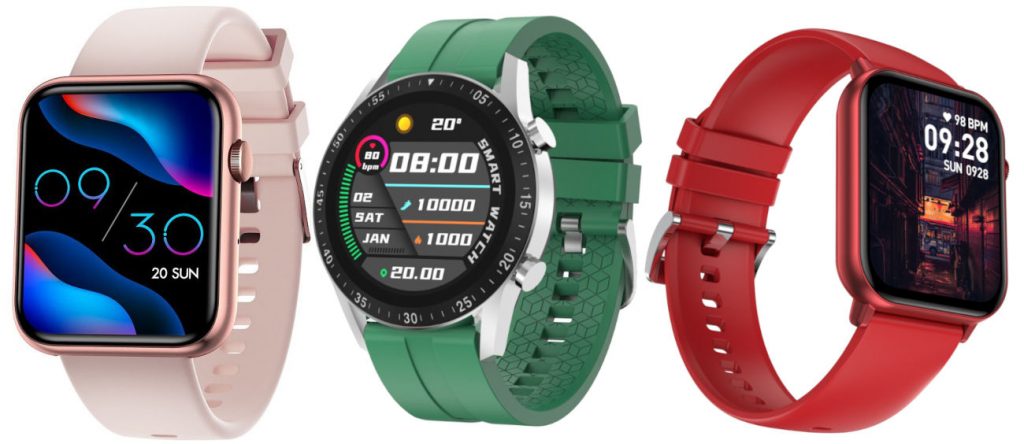
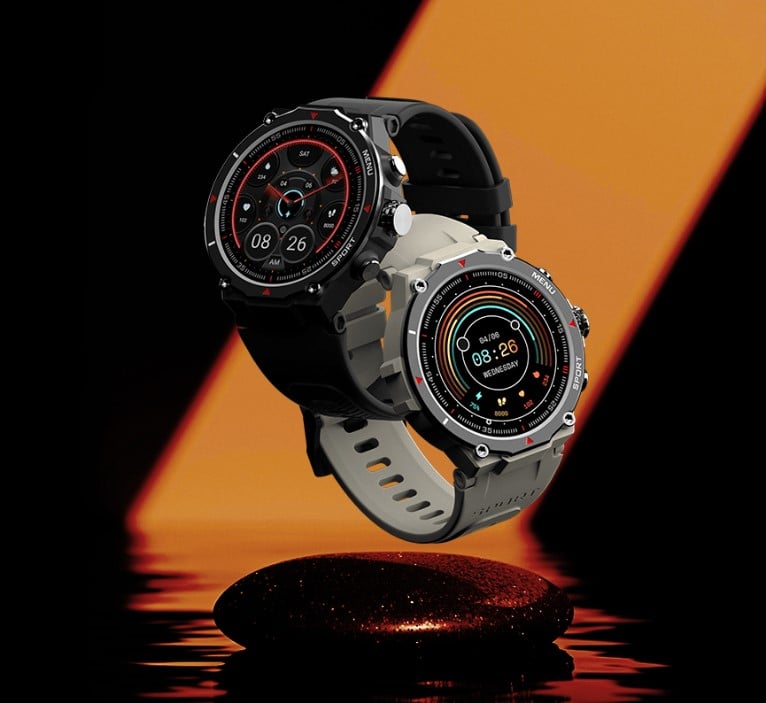
Fire-Boltt has a sizeable number of smartwatches in the Indian market and the latest one to join its ever-growing portfolio is the Fire-Boltt Cobra. It is a new rugged outdoor smartwatch from the brand that should serve the adventure freaks out there. The wearable brings a strong build, an AMOLED display, an IP68 rating, and much more. Let’s look closely at its pricing and specifications.
Fire-Boltt Cobra features a 1.78-inch AMOLED display that produces a 368 x 448-pixel resolution, 500nits brightness, and 60Hz screen refresh rate. There’s also support for Always on Display. As mentioned, the smartwatch comes with a rugged build. It has a three-layer body shield and robust construction to help withstand tough outdoor conditions. In addition, there’s an IP68 dust and water resistance rating.
The wearable has all the basic health monitoring features, including an SpO2 sensor, HR sensor, sleep monitoring, and female health tracking, and more. Furthermore, it supports up to 123 sports modes with an intelligent sports algorithm to even track workout sessions.
According to Fire-Boltt, the new wearable will last up to 15 days of typical usage and 10 days of heavy use. This can be extended to up to 30 days with the battery-saver mode. The watch also boasts a Bluetooth calling feature with support for Hi-Fi audio quality.
Other notable features of the watch include support for voice assistants like Siri and Google Assistant, smart notifications from multiple apps, camera control, alarm, sedentary reminder, flashlight, music control, and more.
The Fire-Boltt Cobra comes in three color options— Black, Camo Green, and Green—with a skin-friendly silicon strap. It carries a price tag of Rs 3,499 and will go on sale through Flipkart starting January 31.
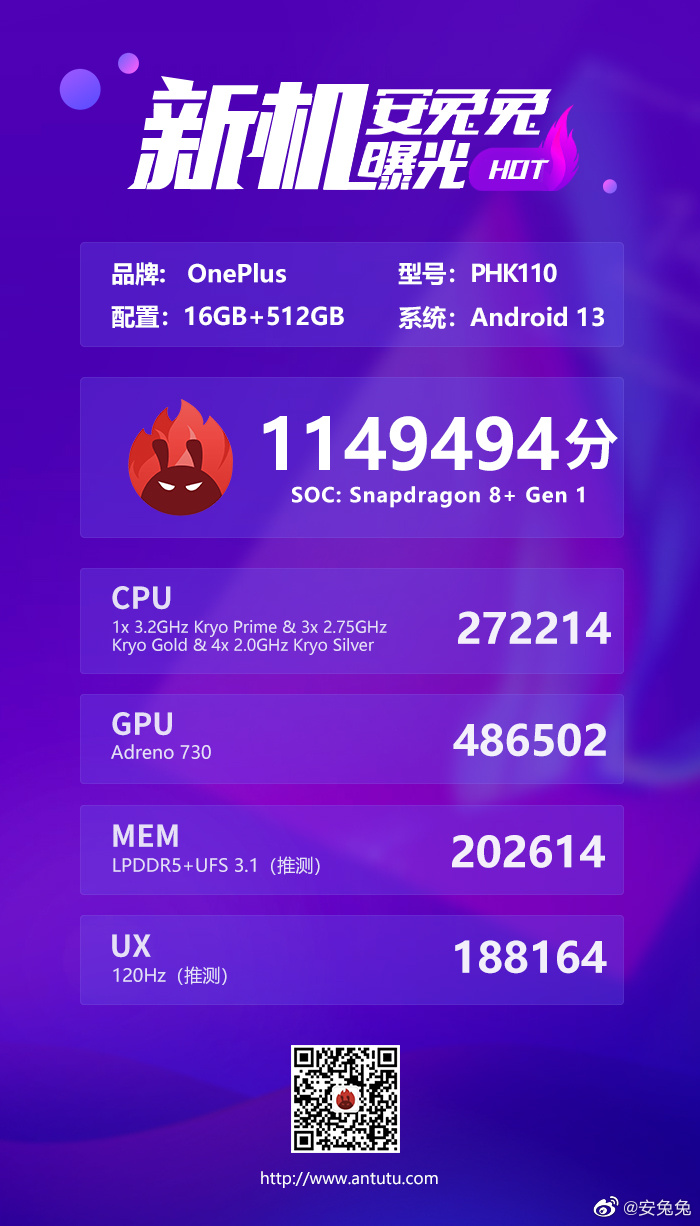
OnePlus is expected to announce the OnePlus Ace 2 in February in China. Based on reports, it can be said that the Ace 2 will be a rebranded version of the OnePlus 11R 5G, which is set to go official on Feb. 7 through a global launch event. Ahead of its expected launch, the Ace 2 with model number PHK110 has surfaced in AnTuTu benchmarks with an impressive score.
As can be seen in the screengrab, the OnePlus Ace 2 has scored 1,149,494 on AnTuTu. The listing confirms that it will be powered by the Snapdragon 8 Plus Gen 1 chipset, which includes the Adreno 730 GPU. The device received 272,214 and 486,502 points in the CPU and GPU tests, respectively.
The OnePlus Ace 2 is equipped with LPDDR5 RAM and UFS 3.1 storage. It scored 202,614 points in AnTuTu’s memory test. The variant that has surfaced on the benchmarking site has 16 GB of RAM and 512 GB of storage.
The Ace 2 scored 188,164 in the UX test. It is already known that the device will have a 120Hz AMOLED display and will run Android 13 with ColorOS 13 UI on top.
Reports suggest that the Ace 2 may arrive with a 6.7-inch FHD+ AMOLED 1.5K resolution screen integrated with a fingerprint sensor, a 16-megapixel front camera, and a 50-megapixel (main) + 12-megapixel (ultra-wide) + 2-megapixel triple camera unit. It will pack a 5,000mAh battery with 100W charging support. The device is expected to feature an IR blaster and an alert slider. At present, there is no word on the price of the Ace 2. The original OnePlus Ace was priced at 2,499 Yuan (~$368). Hence, it is likely that the Ace 2 may carry a similar price.
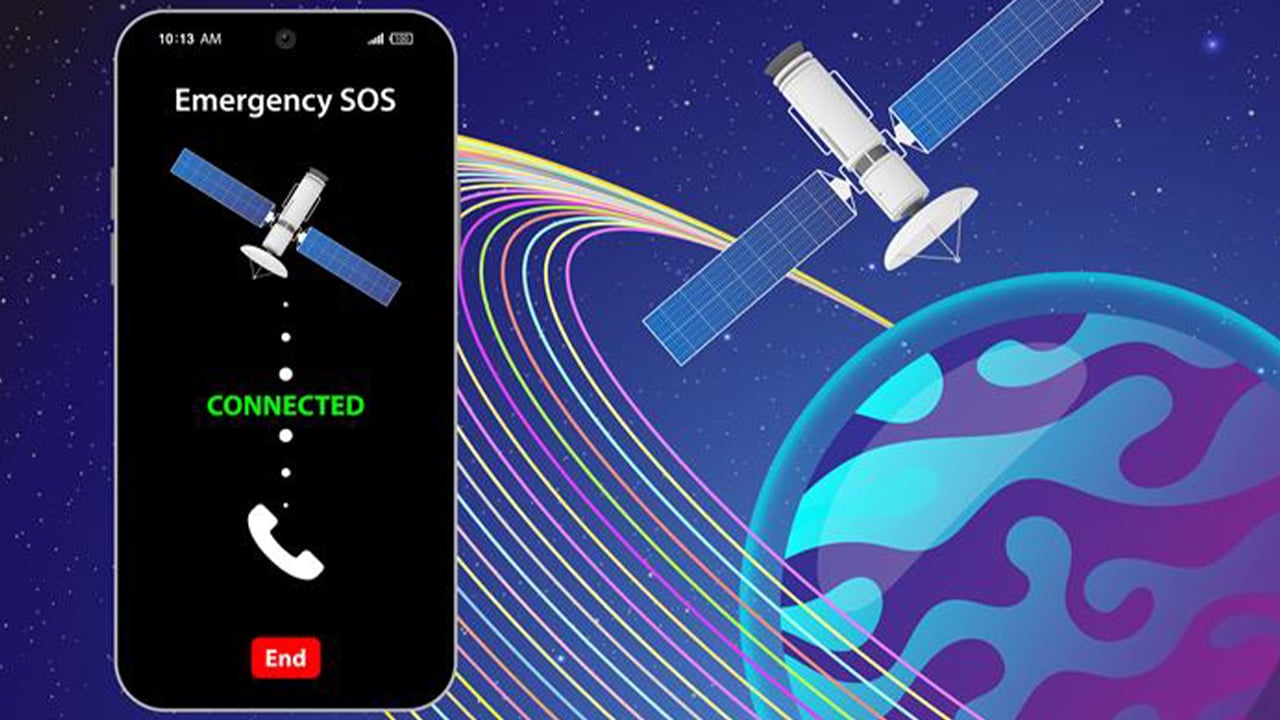
Apple’s Emergency SOS via satellite feature has been available for some time. This feature, which has resulted in numerous survival stories, is almost a game changer. A recent case confirms this, as two women who went missing in Canada were found with the help of the Emergency SOS via satellite feature. Here are the details…
iPhone 14’s Emergency SOS via satellite feature saved two women in Canada
Recently, it was reported that two women were traveling home after visiting Alberta when they became lost near McBride, a small village in British Columbia, Canada. Unfortunately, while trying to find their way back, they had a car accident and became stranded in an area with no cell phone reception.
They made it around 20 kilometers down the road before hitting a “wall of snow,” indicating where the plow had stopped, and getting stuck. The two women were in a rather desperate situation. Fortunately one of the women had an iPhone 14 and thought to use the new Emergency SOS via satellite feature. Using the iPhone 14, they were able to send a message and their location to an Apple call center.
From there, the Apple call center contacted the “Northern911” call center in Canada, which then activated a call to emergency service. Rescue teams pulled the vehicle out of the snow and helped it get turned around and headed back toward the highway. Dwight Yochim, a senior manager with British Columbia Search and Rescue, said he believes this is the “first use” of the new feature in British Columbia.
“There’s no cell service there but one of them happened to have the new Apple phone that has the SOS in it and activated the SOS and to my knowledge, that’s the first use of the SOS in British Columbia. If they didn’t have this, what would have happened is eventually the family or their work would have said “hey, they didn’t show up” and so the search area would have been from wherever they were last seen to where they’re supposed to be, and that could have been several hundred kilometres.”
For context, Yochim estimates that his team does around 1,700 to 1,800 searches a year. Emergency SOS via satellite on the iPhone 14 can significantly cut down on the number.
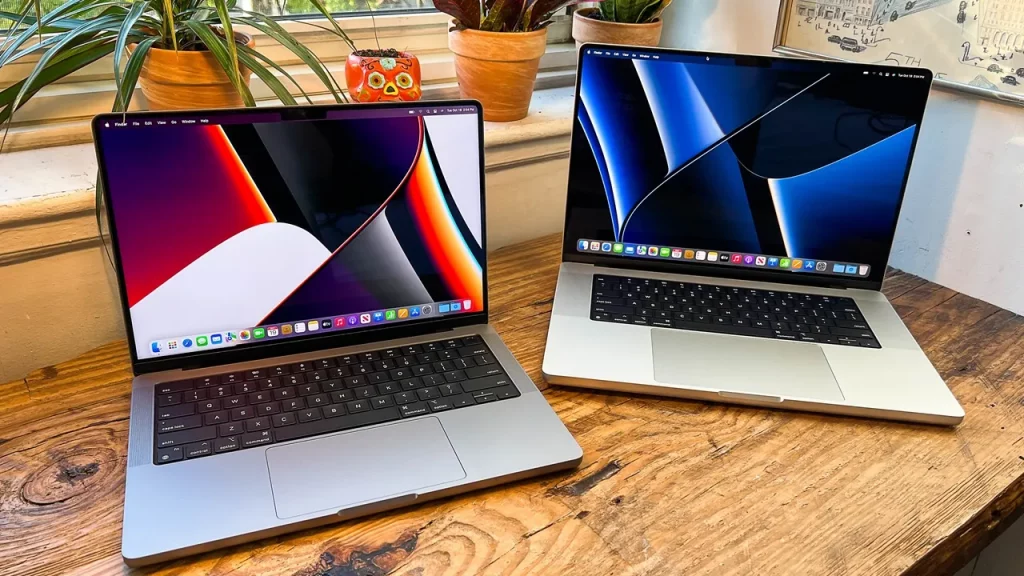
Purchasing an Apple product can be expensive these days. It is important for users to conduct thorough research and consider factors beyond just the product’s features before making a substantial investment. One aspect to consider is the upgradability and repairability of the product. To assist users with this issue, iFixit, a company dedicated to helping users, disassembled the new MacBook Pro and evaluated Apple’s official repair guides. Here are the details…
iFixit tear down the new MacBook Pro and test Apple’s official repair guides
iFixit, which took apart Apple’s new MacBook models, didn’t uncover any big surprises. Continuing to use the interior design that’s familiar to many, Apple managed to achieve an engineering feat with this model as well. iFixit’s main focus in this video was Apple’s official repair guides, which provide users with the tools needed to repair their own devices.
The program covers most recent iPhone models and the entire M1 Mac lineup. However, since the new 14-inch and 16-inch MacBook Pros have the same design as the previous generation, iFixit used the repair guides for the 2021 MacBook Pro models. At the end of the day, it was as expected. Apple’s manual is reportedly “quite comprehensive and easy to follow,” but there’s one intriguing aspect: the instruction to drape the MacBook’s screen over the edge of a table so the user doesn’t touch the battery during repair.
The repairability score of the new MacBook Pro was 5 out of 10, which is not a high score. This is because many critical parts, such as RAM and processor, are soldered to the Logic Board.
This raises the issue of upgradability, as the chances of replacing parts on newer MacBook models are low. When purchasing, it’s important to consider your needs and make a decision accordingly.
If you’ve watched the phone reviews we uploaded these few weeks, you might understand our concerns about gaming phones in 2023. Our concerns are not unfounded. In fact, the niche market for gaming phones has been cooling down. You may even find some famous gaming brands would stop updating their lineups in 2023. But this doesn’t seem to affect the brand RedMagic. Surprisingly, the latest Red Magic 8 Pro in my hand is one of the best gaming phones we’ve ever reviewed. It really looks cool with a brand-new design, and I was attracted to it at first sight.
Design
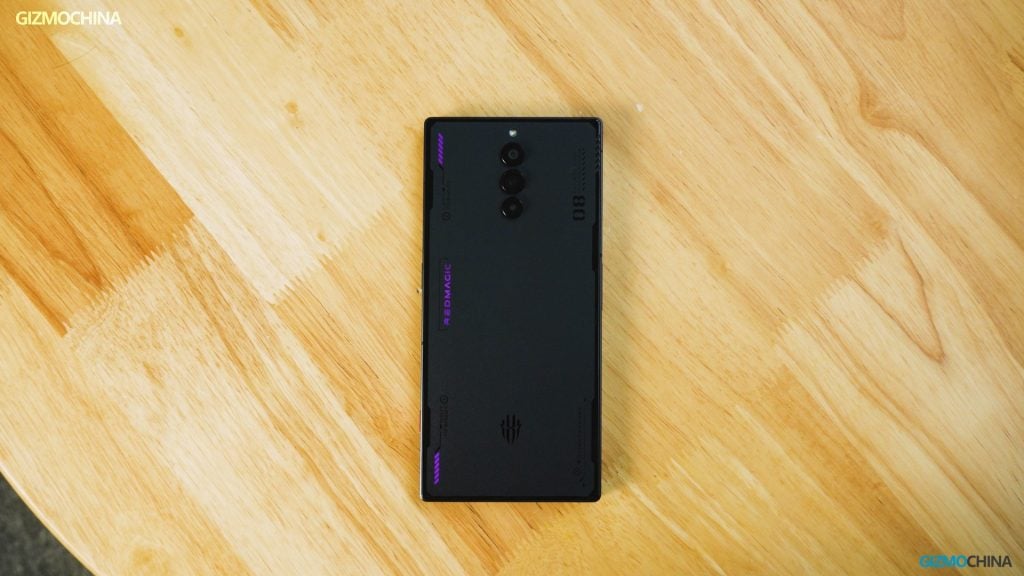
This is probably my favorite phone look this year. The RedMagic 8 Pro goes beyond its traditional e-sports fancy heritage with a more streamlined futuristic design. It’s much sharper, like a much low-profile iron plate, which reminds me of the black monolith in 2001 Space Odyssey.
But when got my hands on the phone, I immediately felt its weight and the slightly big body size. Although it’s not a big deal as a gaming phone, the sharp edges and frame make it hard to operate with a single hand. On the other hand, the sharp edges make the thickness more perceptible when held in hands.
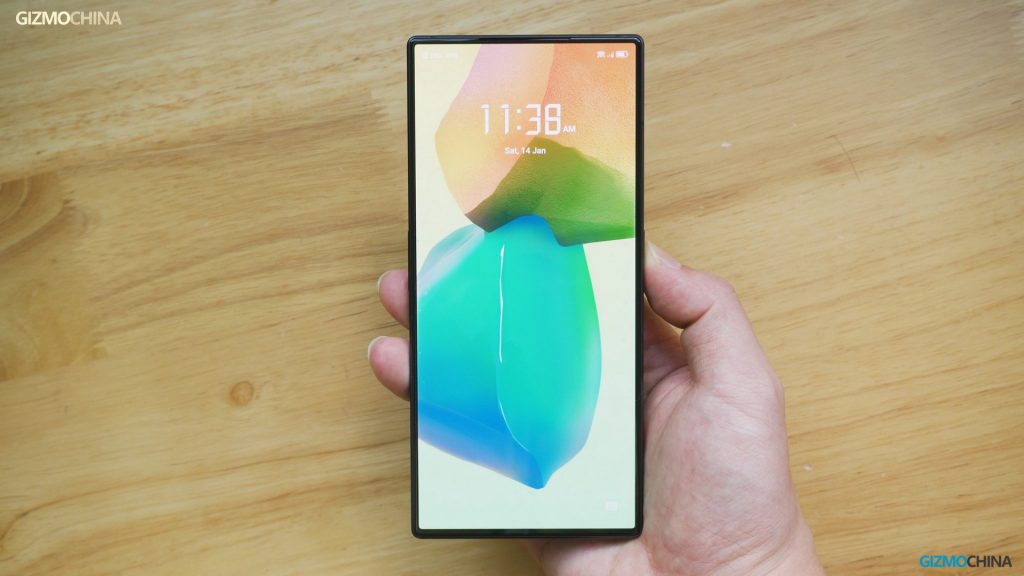
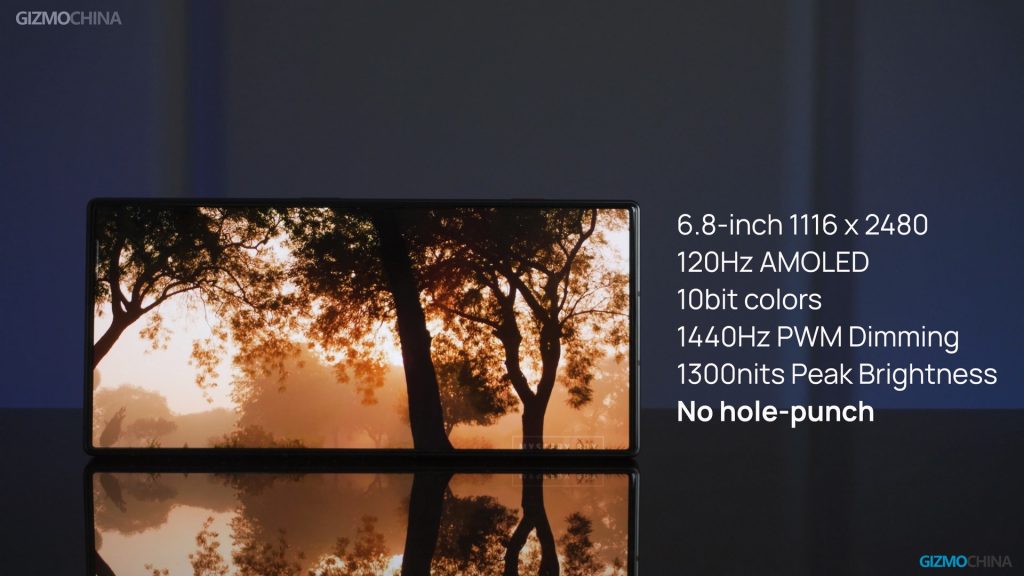
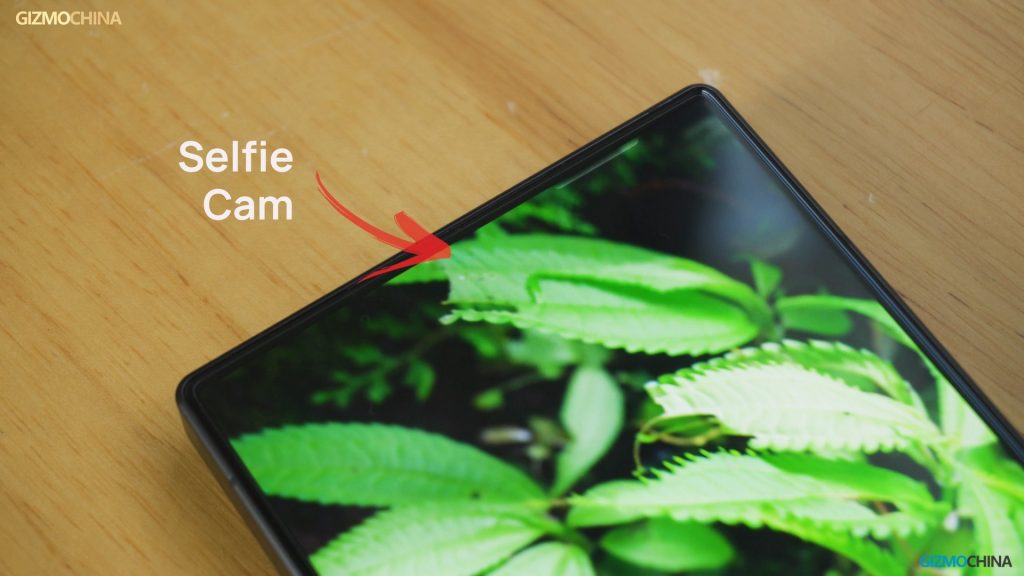
But when I lit up the screen for the first time, these discomforts were instantly replaced by the joy of the whole screen. It’s a truly all-screen display with super narrow edges. And visually there’s no visible hole-punch selfie camera, which is hidden down below the display. It’s so elegant that I began to imagine how exciting it would be if it were a new model of famous gaming handheld series.
In fact, if not considering the platform, it’s also far more powerful than Nintendo Switch over performance. But of course, back to reality, among only a few excellent handheld platforms, we have no choice. Anyway, this is just some of my ridiculous imagination. Latter I will show you more detail about this display.
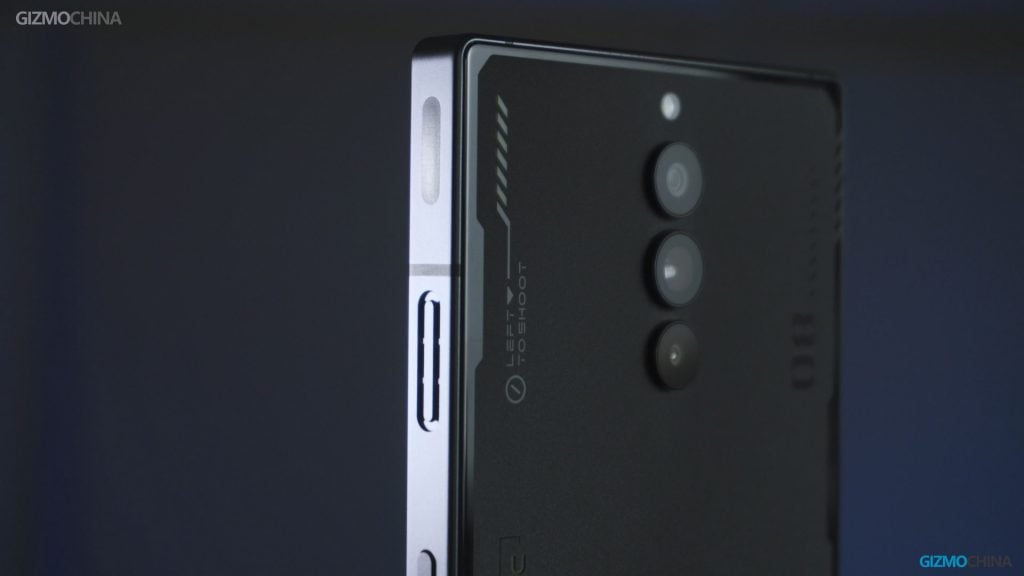
On the back there’s a whole metal cover with a matt finish, texturing a few mech-style patterns. And there’s a light strip hidden below the RedMagic text logo and the shoulder-trigger indicators. I pretty like the smart design, which reminds me from time to time that this is a gaming phone.
We’ve seen too many phones made extra bloated to emphasize their camera modules, whether that’s necessary or not. However, the RedMagic 8 Pro doesn’t do that. The cameras do not bump up a lot. They’re just right there in a vertical sequence, without disrupting the overall design of the phone. Personally, I would say that the RedMagic 8 Pro is a machine that allows us to miss the orderly industrial era, although it doesn’t add to actual uses.
No-hole-punch Display
The front face is the biggest surprise for the RedMagic 8 Pro. The 120Hz AMOLED display is jointly created by RedMagic and BOE, with an FHD+ resolution, 10bit colors, 1440Hz PMW dimming, and a 1300nits peak brightness.
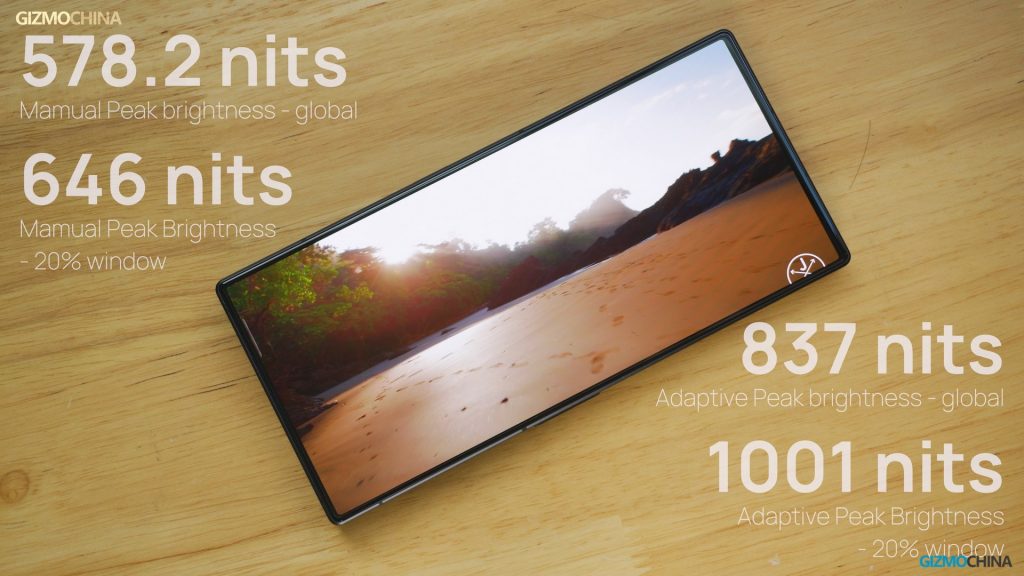
But in our test, we couldn’t get its advertised peak brightness. It achieved around 600 nits of manual overall peak brightness, and the maximum adaptive brightness in a 20% window is about 1000 nits. But the results are already close to the best results that we got on a gaming phone.
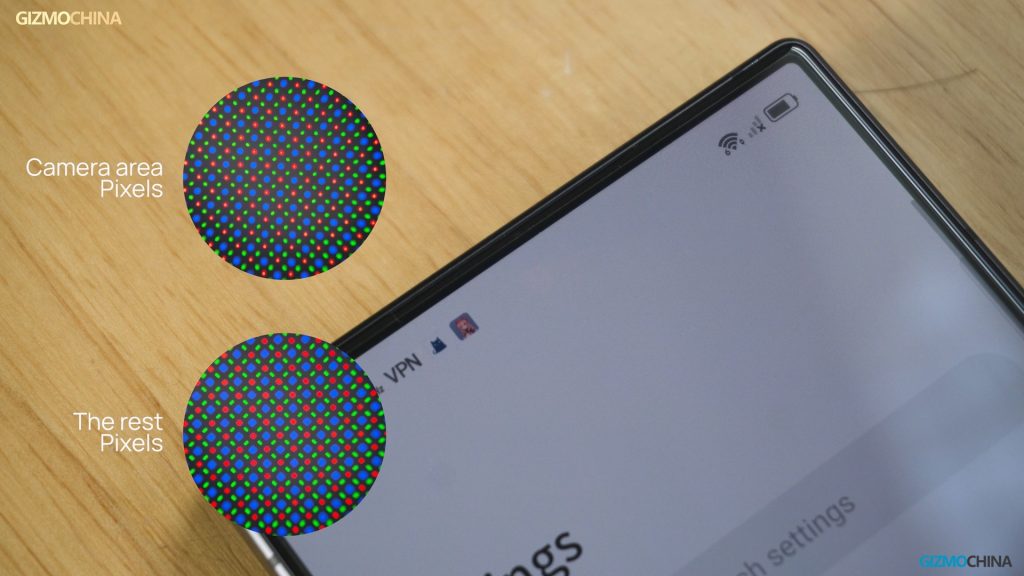
In addition to gaming, the display is also perfect for watching videos or movies as the big display achieves an almost perfect screen-to-body ratio without any punch hole. And the area of the under-screen camera doesn’t look different from the rest of the screen unless you check it very closely when displaying pure white.
But I’m sure most users wouldn’t do that. Then you might wonder how the selfie camera performs. Well the 16MP lens can shoot but does suck. But if you are a gamer, it shouldn’t be a big deal.
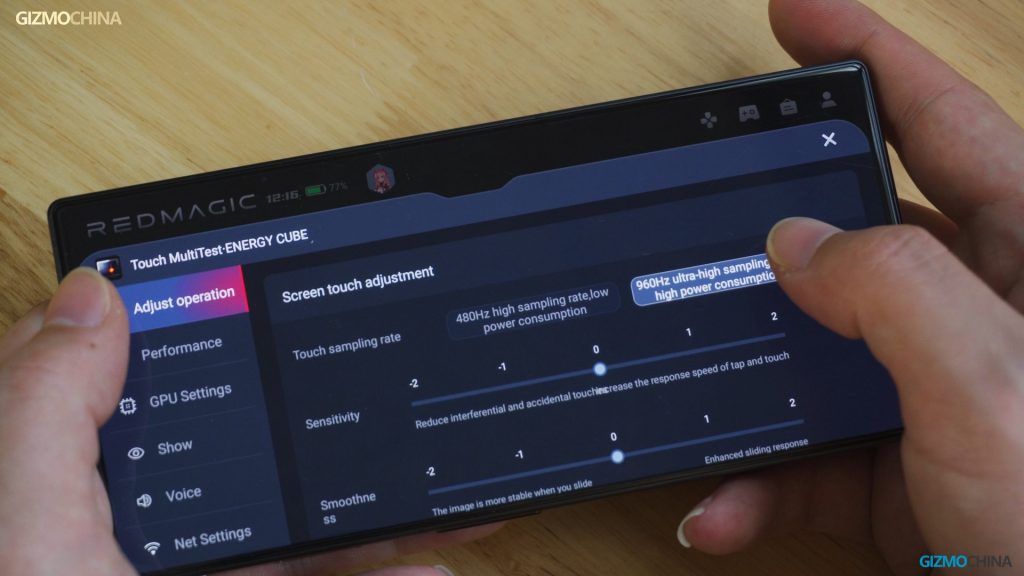
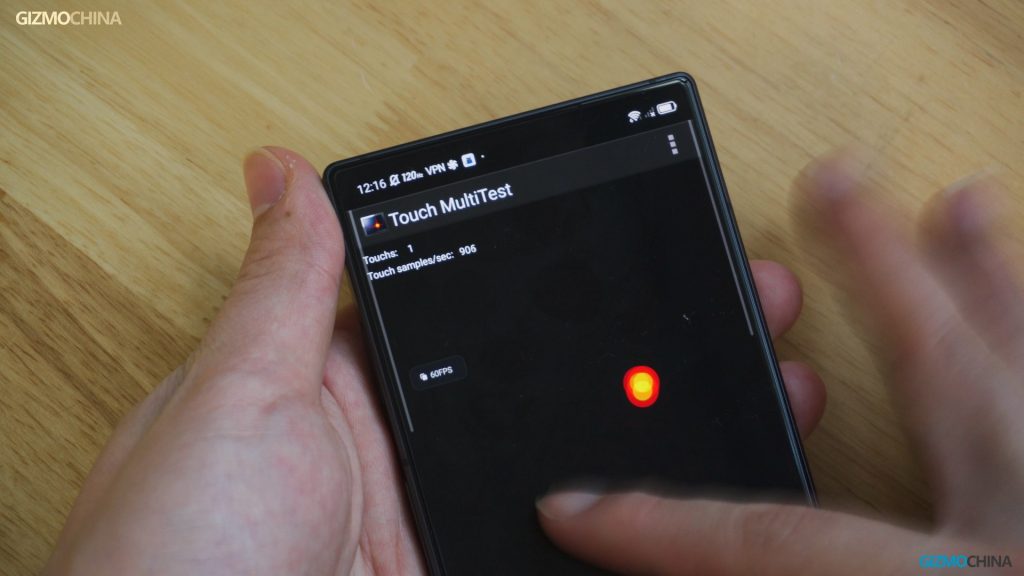
For daily use, the display’s sampling rate is about 350Hz. But if you add any apps or games into the Game space, its sampling rate can go up to around 500Hz. And you can even boost it up to 960Hz in the software, where we tested a result close to 900Hz.
900Hz touch sampling rate
Sound & Vibration
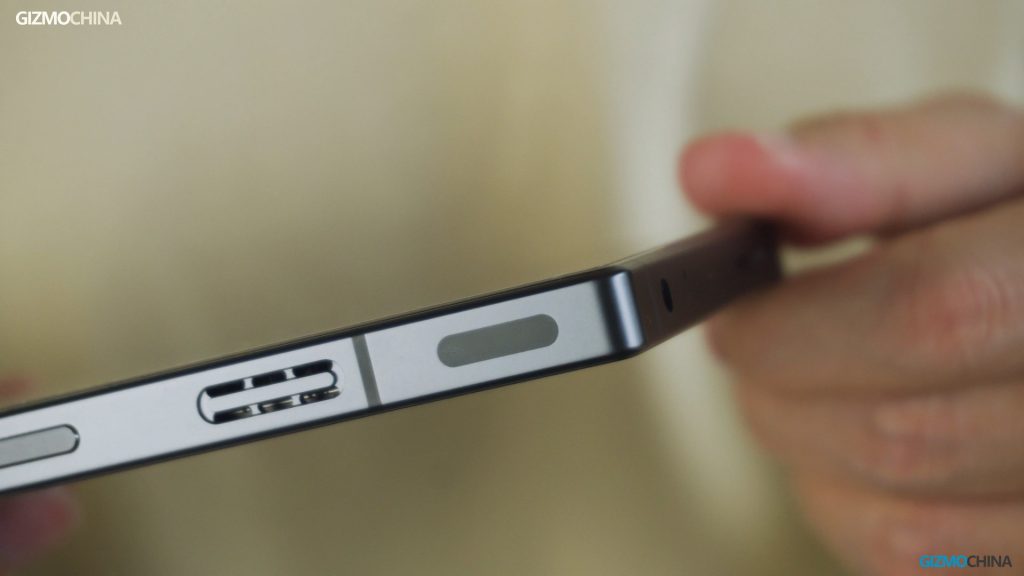
As for vibration and audio, the phone still has a 3.5mm headphone jack and is equipped with dual speakers. You can check the vibration and sound here.
Shoulder triggers
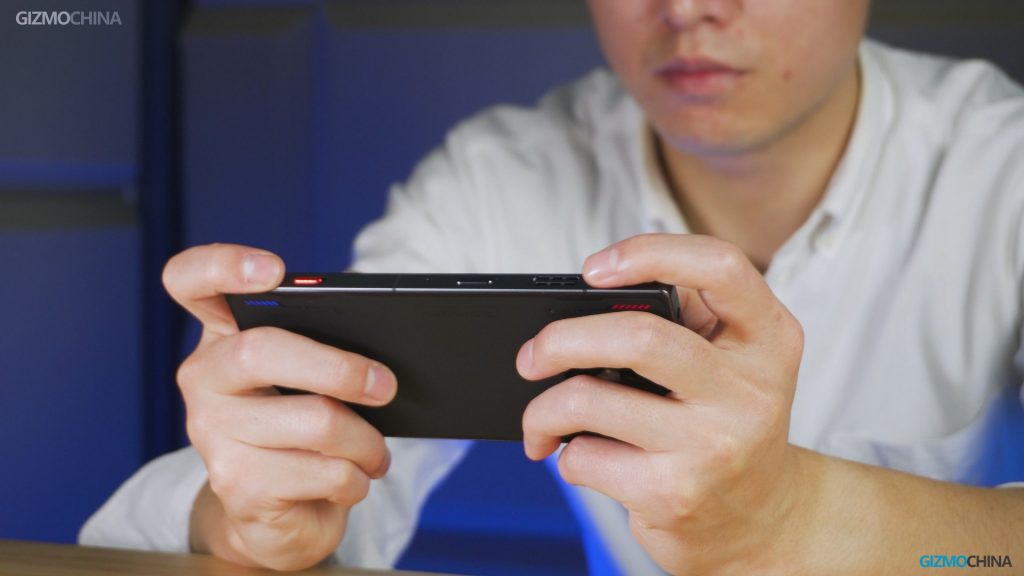
The shoulder buttons are preserved like other gaming models. The capacitive triggers feature an excellent sampling rate of 520Hz, which did feel near instantly responsive, especially in some FPS games like PUBG Mobile. The red switch next to the shoulder button is for triggering the game space.
Gaming features
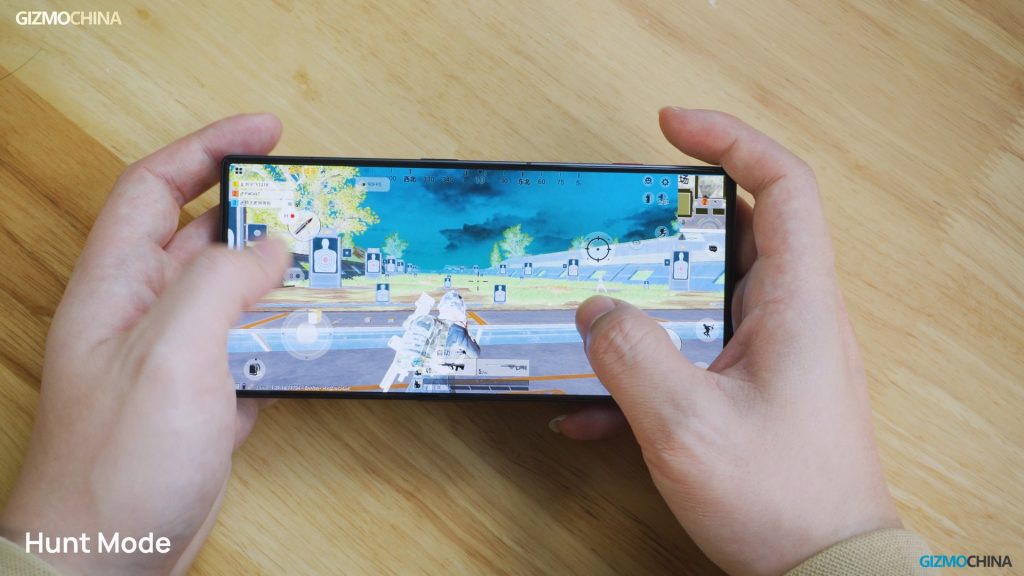
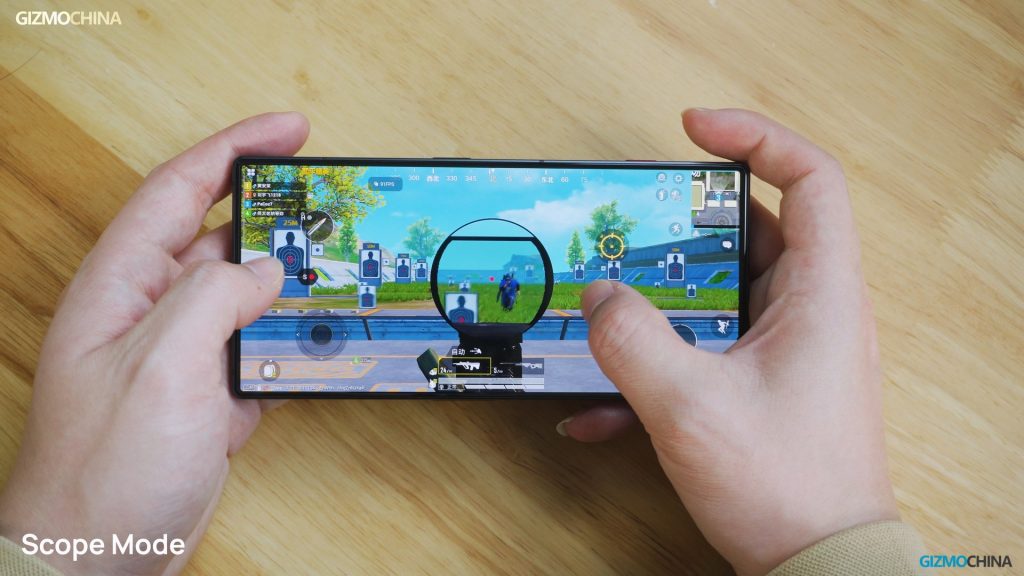
The new game space has been greatly improved along with rich gaming plug-ins and in-game overlay. The overlay now can display CPU and GPU frequency in a better alignment, and you can access almost all the plug-ins from it, such as hunt mode, scout mode, 4D Vibrate for FPS Games.
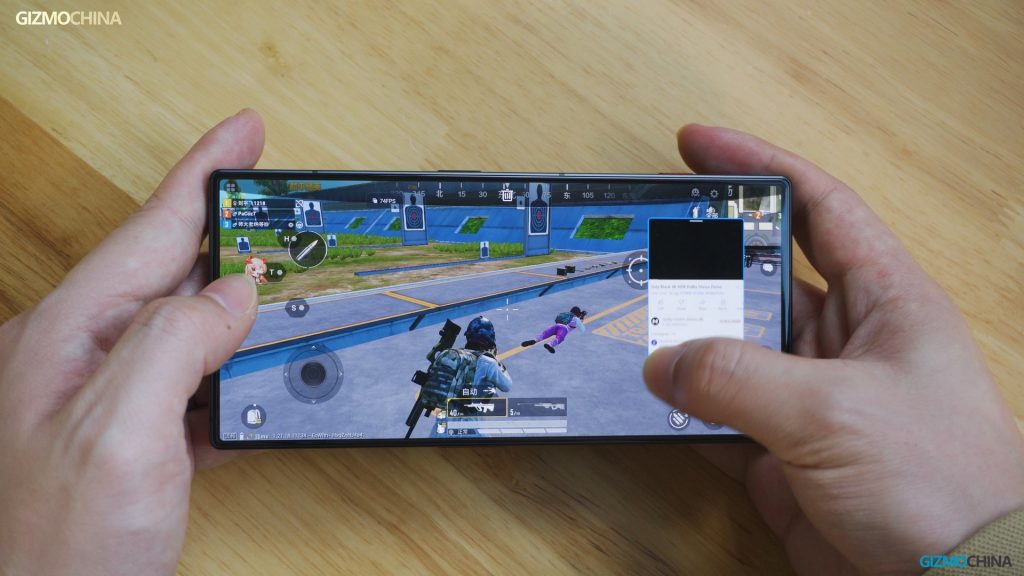
Multiple notification options and three gears of performance modes can be found easily. There’s a shortcut list to open up a small window for most apps while gaming, which can be moved around, resized, and opened in full-screen.
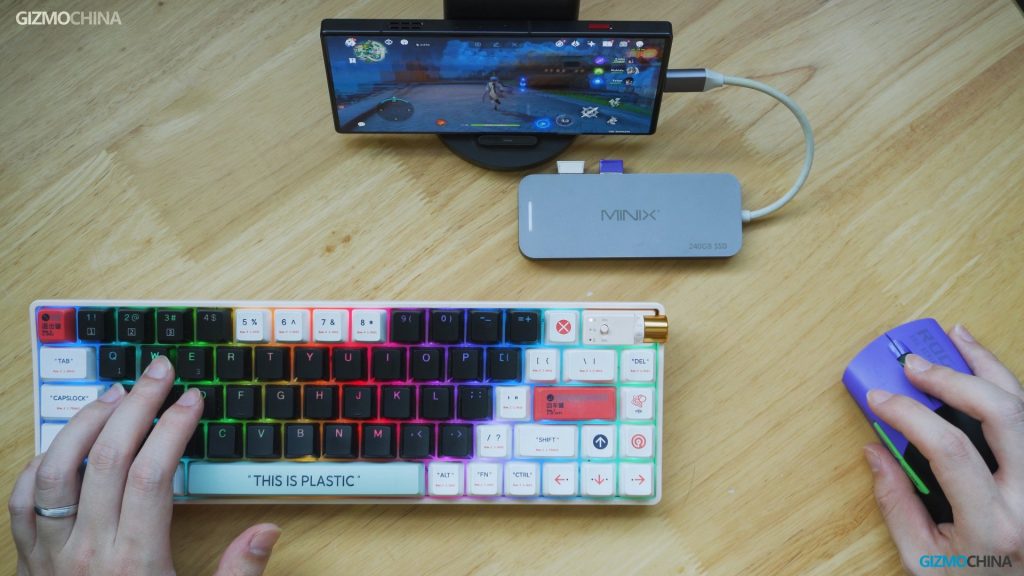
Return to the Game Space and there’re more gaming-related features to unlock the potential of the gaming phone. Like a true game console, the phone offers wide connectivity with wired and wireless gaming accessories, such as a Keyboard and mouse, game controller, and display.
The gaming experience with the input accessories is great. In some games like Genshin Impact and PUBG, the phone provides convenient mapping solutions, so you no longer need to set up the key functions manually.
Projection
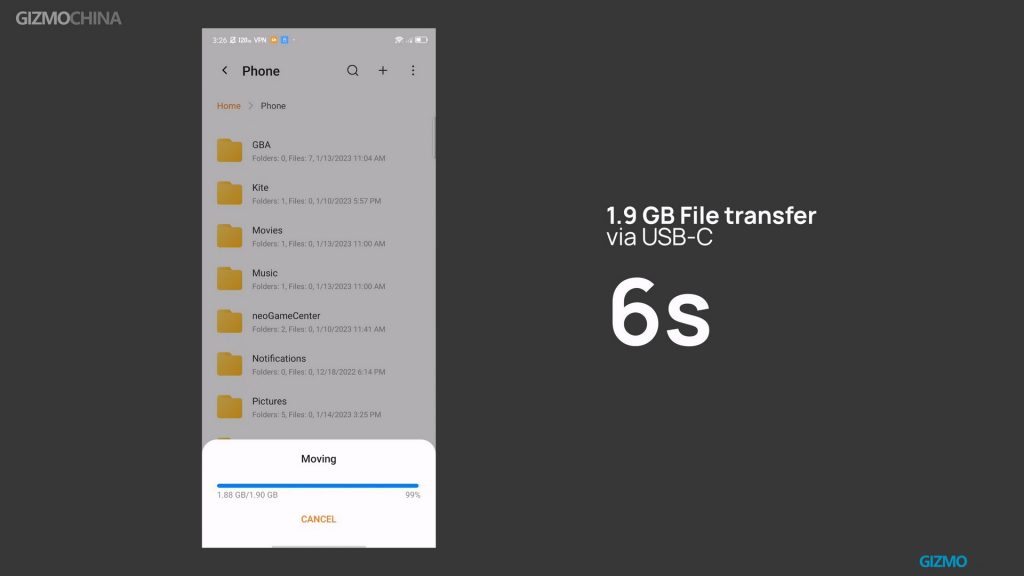
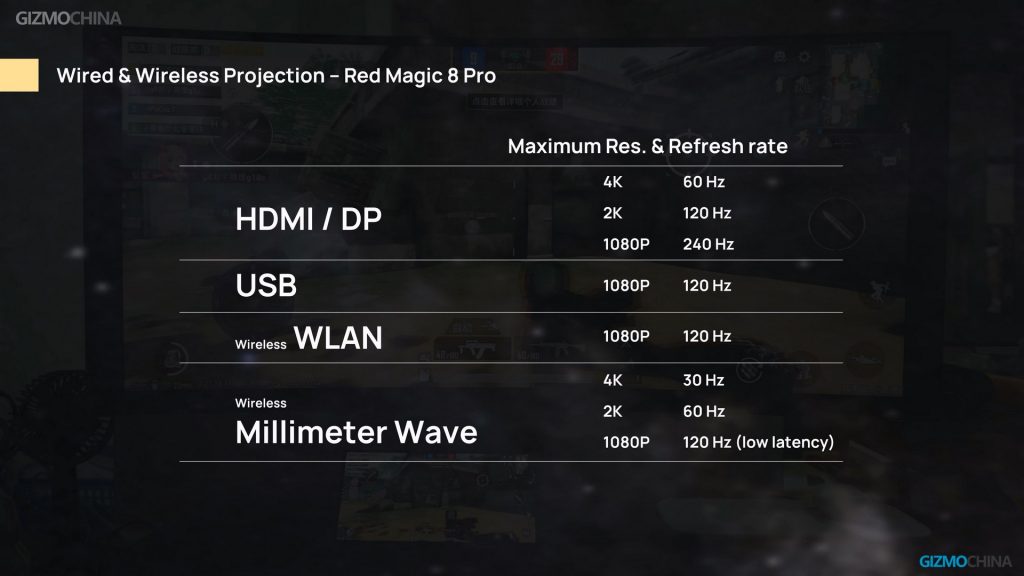
To support wired projection via DP or HDMI cables, the phone’s charging port features USB3.2 connection. It can offer up to 1080P resolution at 240Hz or 2k at 120Hz, which is the best projection capacity we saw on a smartphone. If you only got a display offering USB connection, it still supports a 1080P resolution at 120Hz.
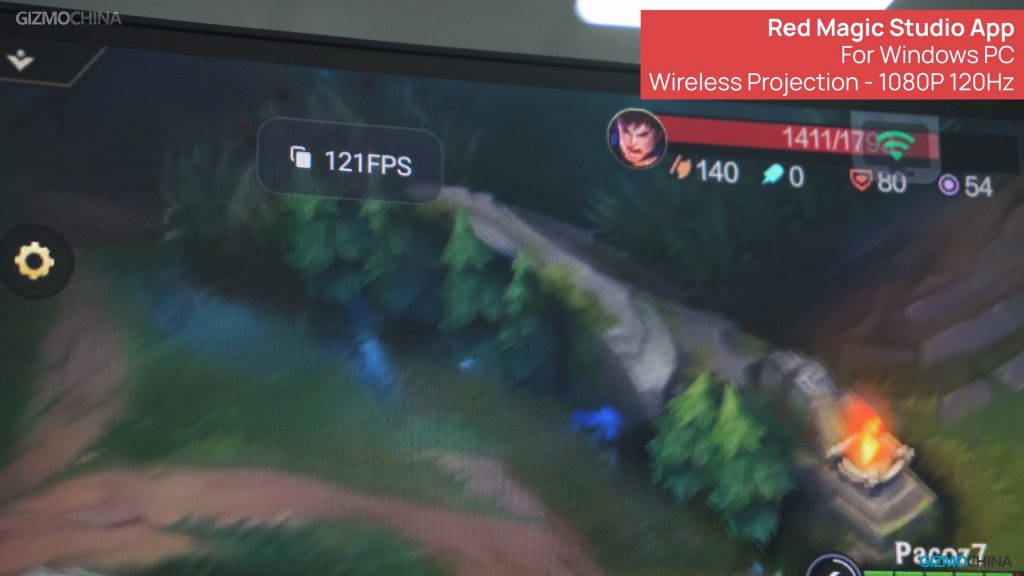
On the other hand, the phone also supports decent wireless projection via WiFi or millimeter-wave projection. The easiest way is to install the RedMagic Studio software on your Windows PC. It can cast up to 1080P streaming at 120Hz without any cables. Meanwhile, the software also supports key mapping with PC’s keyboard and mouse. And the mouse movement is even got optimized in FPS games. But here I don’t really recommend that you play competitive multiplayer games in this way, since it feels like cheating.
And if you still like to have gaming operation on the phone, please note that the latency is about 50ms here, which is fine for most games. But in shooting games like PUBG Mobile, the lag could be a big problem.
Performance & Gaming
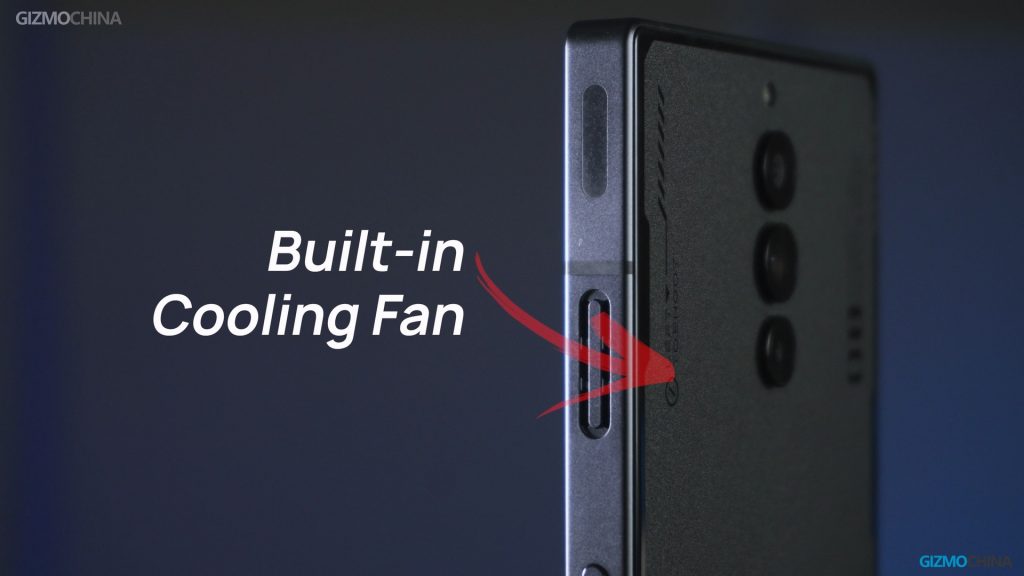
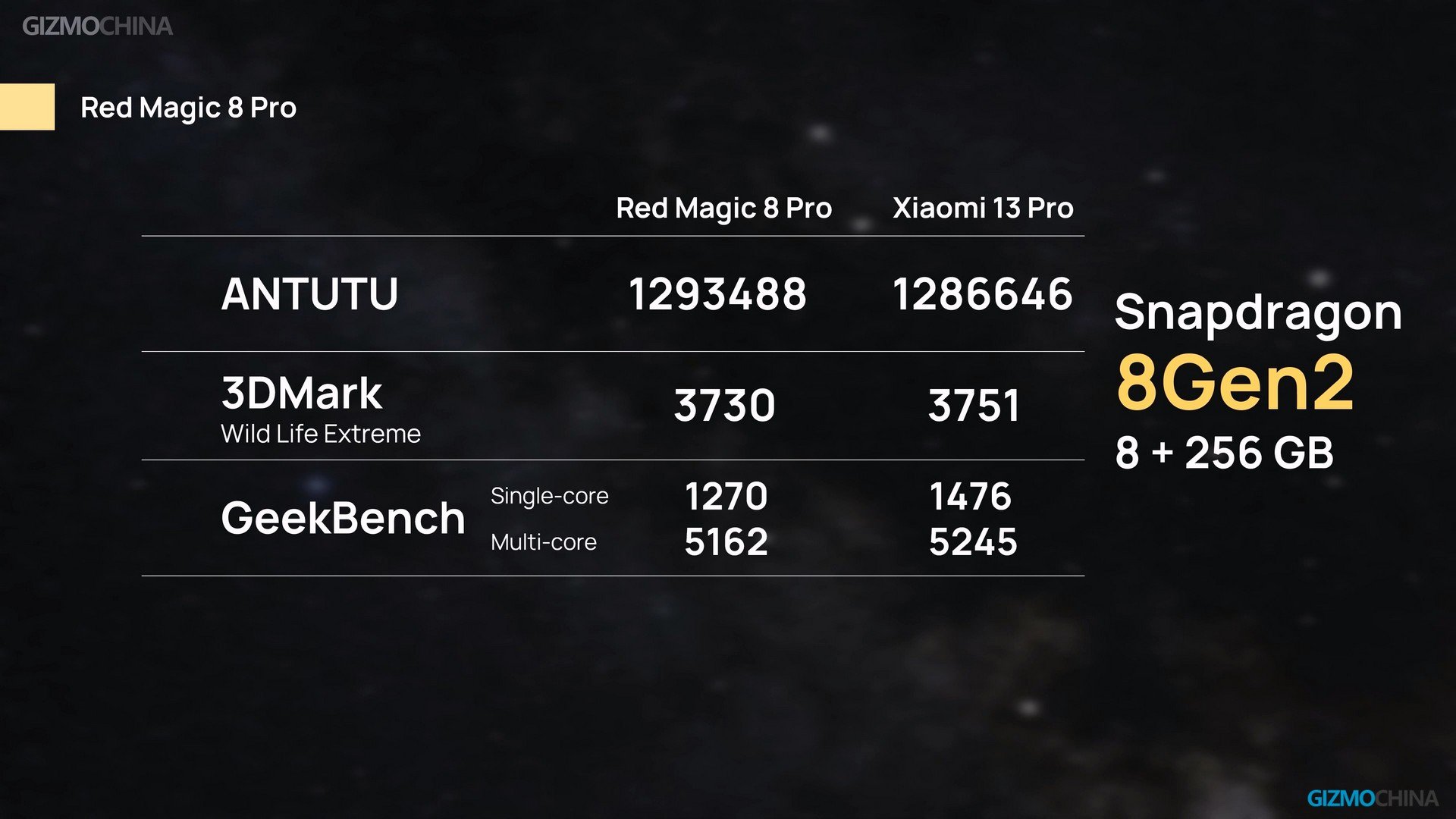
The last thing you need to worry about is the phone’s performance. Generally speaking, you’ll hardly encounter performance bottlenecks on a phone with a Snapdragon 8Gen2 chipset, let alone the RedMagic 8 Pro with a built-in cooling fan.
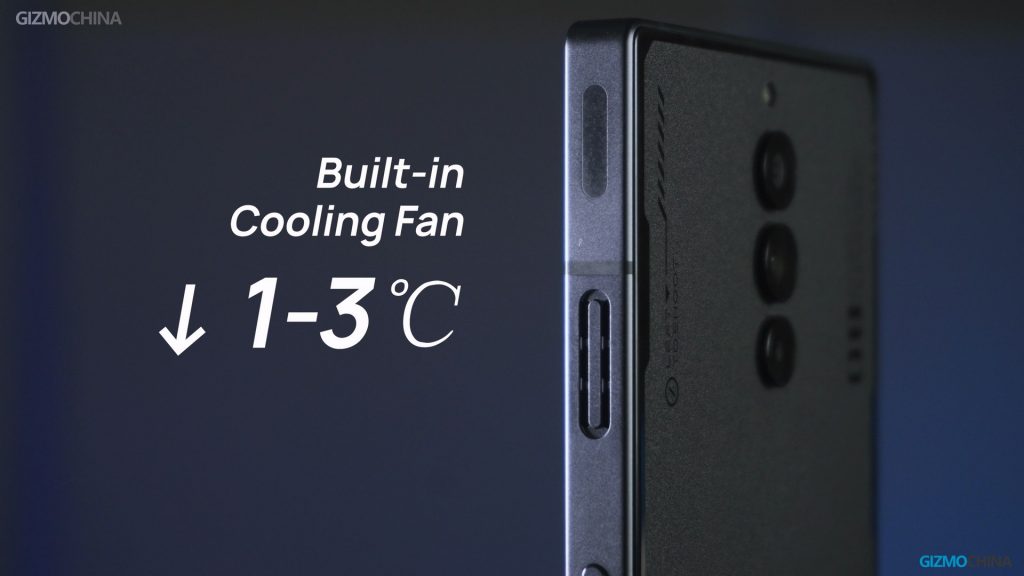
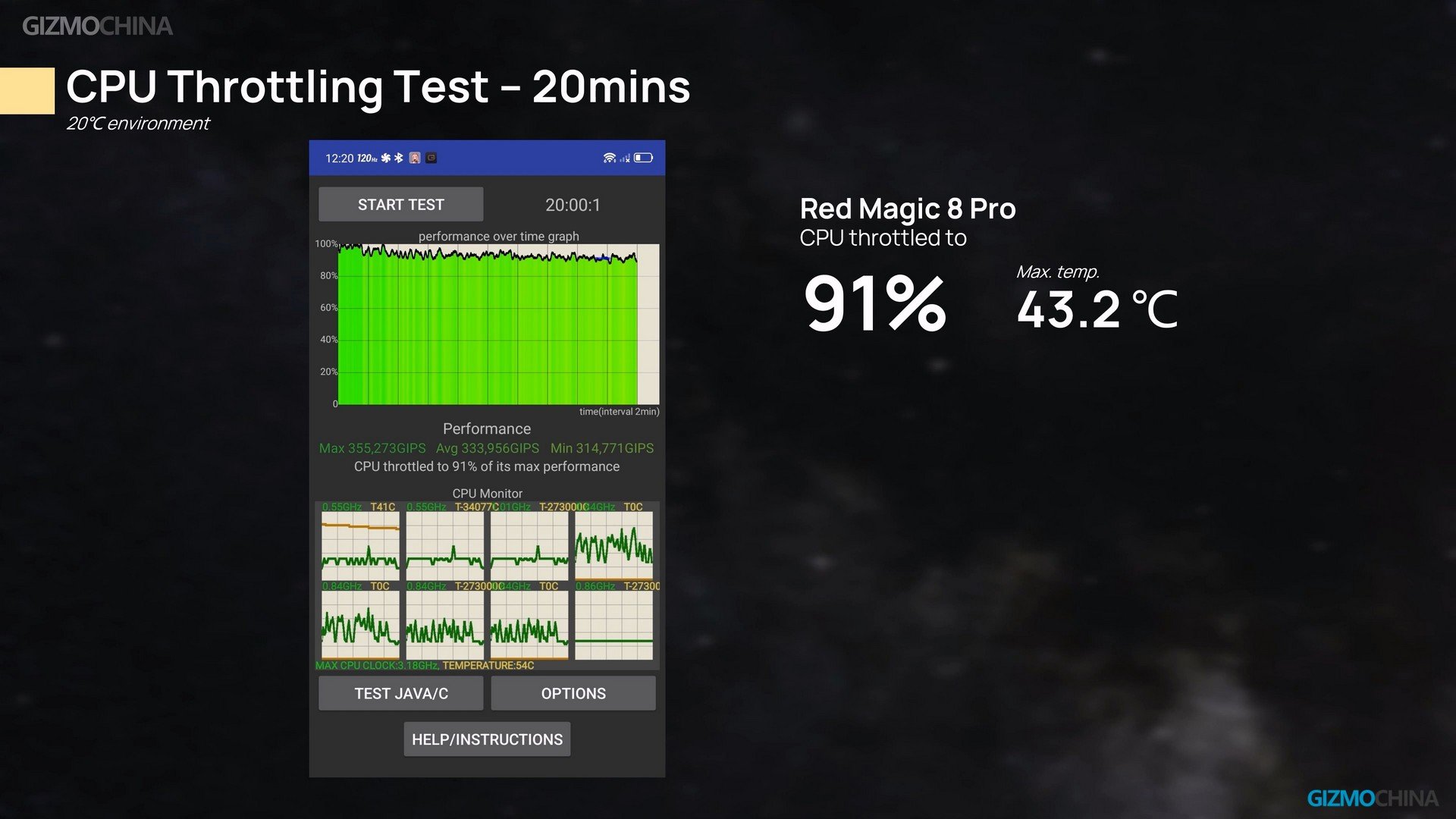
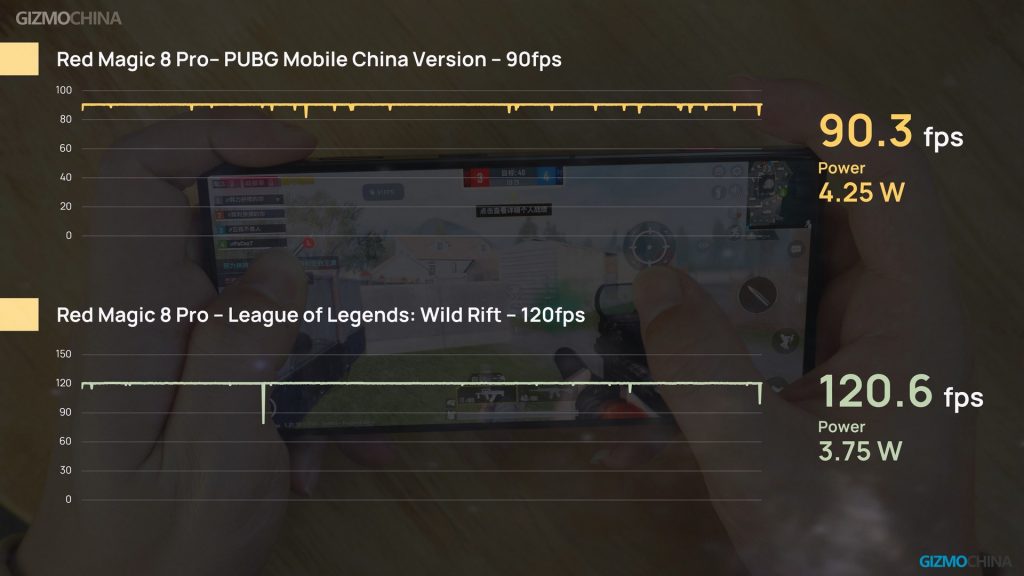
It achieved the best results in almost all the benchmarks. And in all stress tests and gaming tests, it maintained good stability while offering high performance, and never had overheating problems. The highest surface temperature we tested is only 43.8℃ if we turn on the cooling fan. Even without fan-assisted cooling, its temperature didn’t exceed 46℃. The fan usually achieved a cooling effect of 1 to 3℃.
benchmarksGPU Stress testCPU Stress test
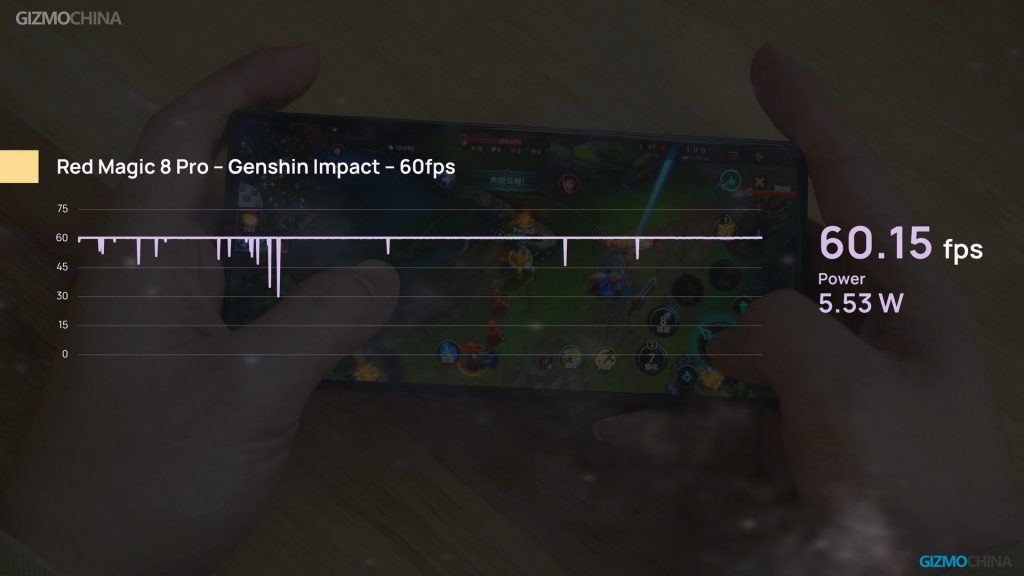
Red Magic has also made power-saving optimizations for Genshin Imapct. The phone would automatically reduce the framerate to 30fps when it detects the player not operating. When the player continues to operate, the frame rate will instantly increase to a stable 60fps. In Genshin Impact, it can run at the most stable 60fps we have ever seen, which is even more stable than the Xiaomi 13 series that we tested last month.
Upgraded Main Camera
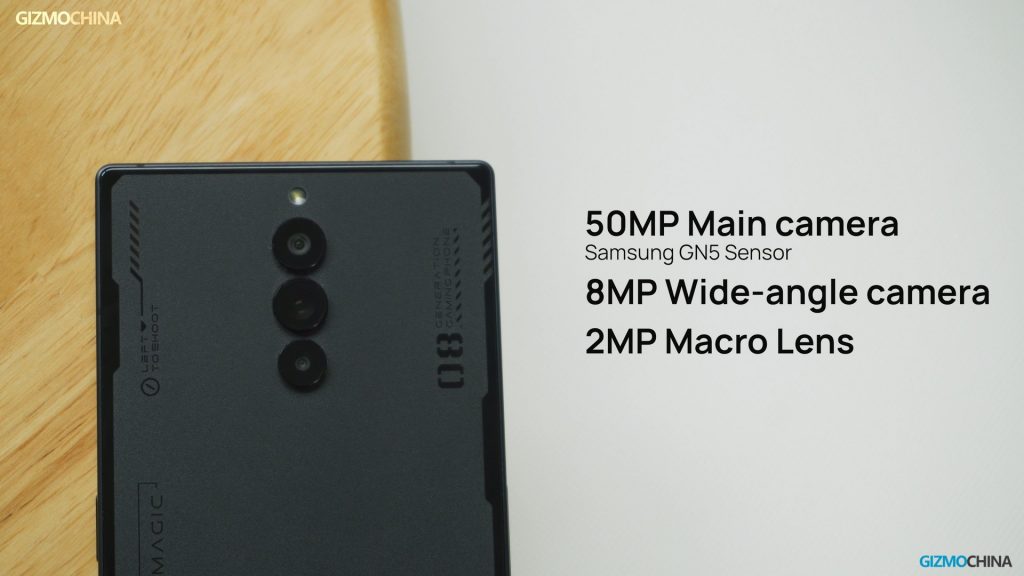
As for the phone’s camera module, the main camera is upgraded with a Samsung GN5 sensor, followed by an 8MP wide-angle lens and a 2MP macro lens. The samples shot on the main camera have pretty natural colors and rich detail, and it’s the only lens that supports night mode. Surprisingly its night shooting has been greatly improved with much better exposure.
Since we are not particularly concerned about the camera performance of the game phone, you can just check the samples we shot here, including the other two lenses.
[envira-gallery id=’511889′]
Battery & charge
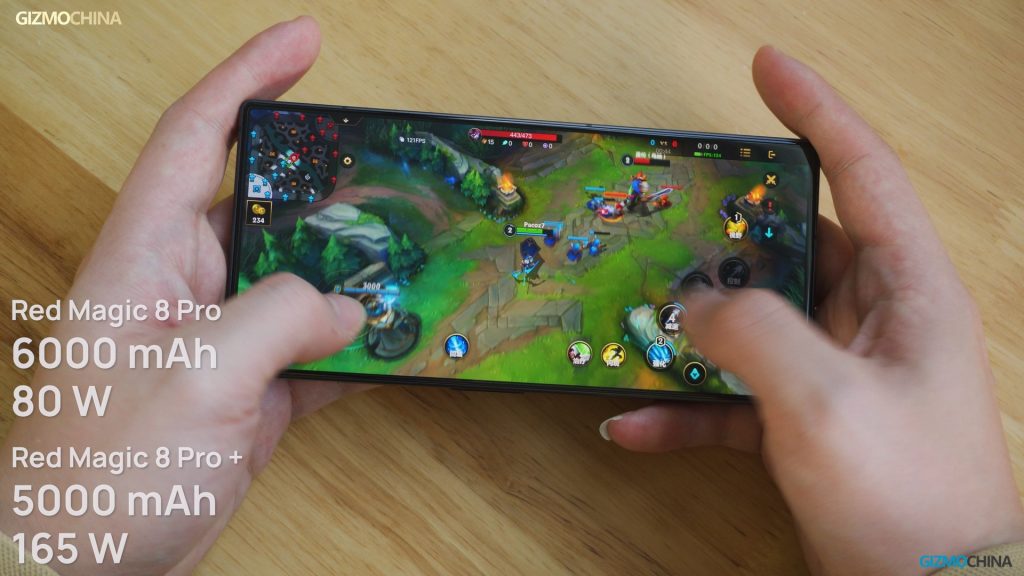
The phone is insanely equipped with a 6000mAh battery with 80W fast charging, which is also the only difference from the RedMagic 8 Pro +, which comes with a smaller 5000mAh battery with 165W fast charging.
But personally, I preferred the Pro version, as the long battery life for gaming is obviously more important than faster charging. And actually, the Pro model’s charge is already fast enough. It only took us 37 mins to collect back the full power of the 6000mAh battery.
Verdict
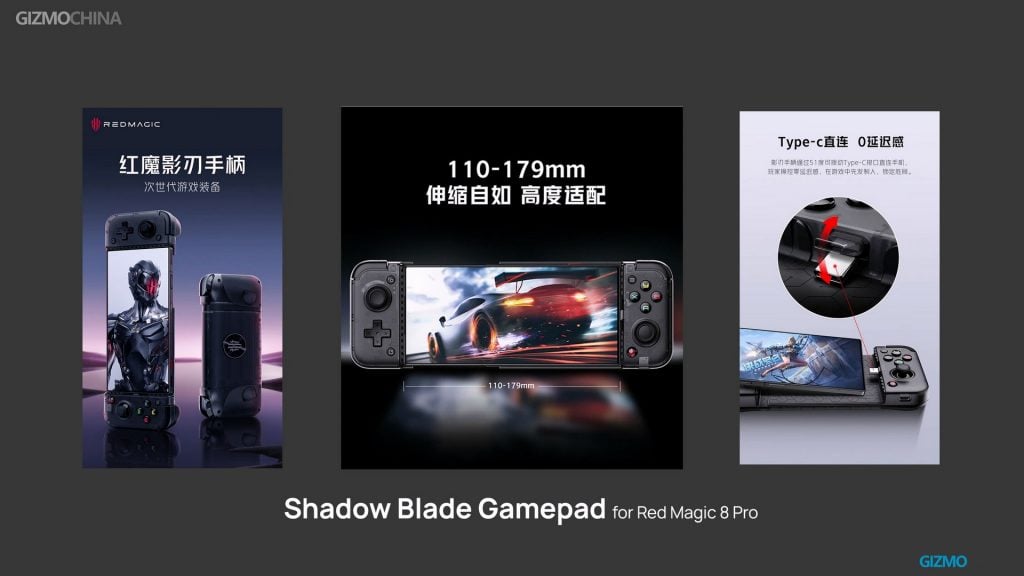
So that’s all about the RedMagic 8 Pro. I must admit that the phone made me a bit embarrassed as I expressed the view that ‘Gaming phones are about to become history’ last month. Now the RedMagic did hit me hard in the face with its great industrial design, long-lasting high performance, long battery life, and wide connectivity. And we noticed that the brand also released an adapted gamepad for the new series, which would make the phone become a switch-like game handheld. But unfortunately, it’s not available yet.
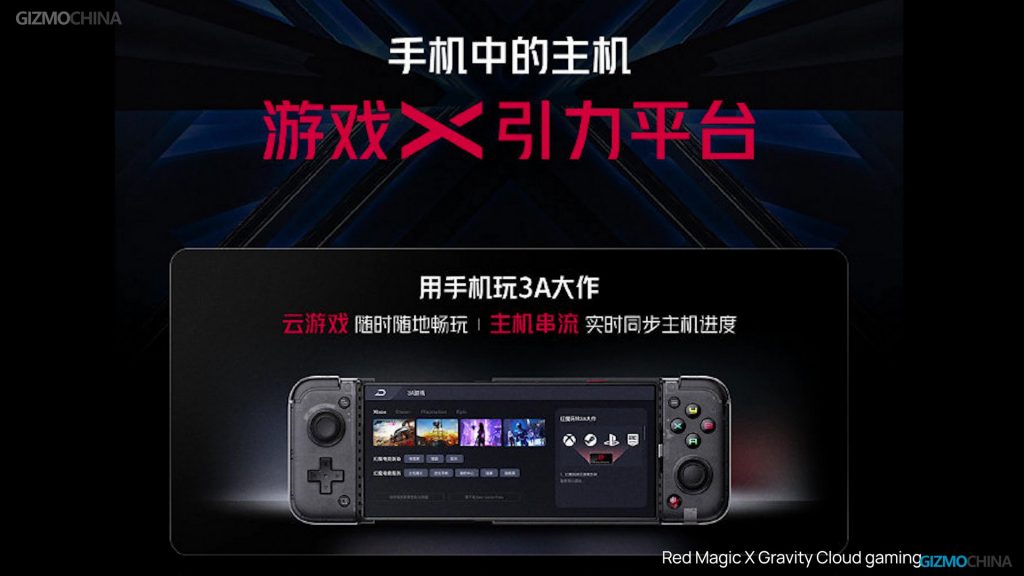
Once we get it, we will update its experience for you guys. Another feature to look forward to is that RedMagic will update a cloud gaming platform called X Gravity for the 8 Pro series in the future, where gamers can remotely run PC games via streaming. But I’m not too optimistic that the could platform can run smoothly in regions beyond China.
Anyway, though it got a few drawbacks like the absence of NFC, it’s still the best gaming phone I’ve ever reviewed.
At the beginning of this month, Just Corseca announced Skyraptor Smart Eyewear and Pro Smart Eyewear. I thought I should try this device because I was curious about what low-cost smart glasses could do. So, I used the Skyraptor Pro Smart Eyewear for over 10 days, and here are my first impressions about it.
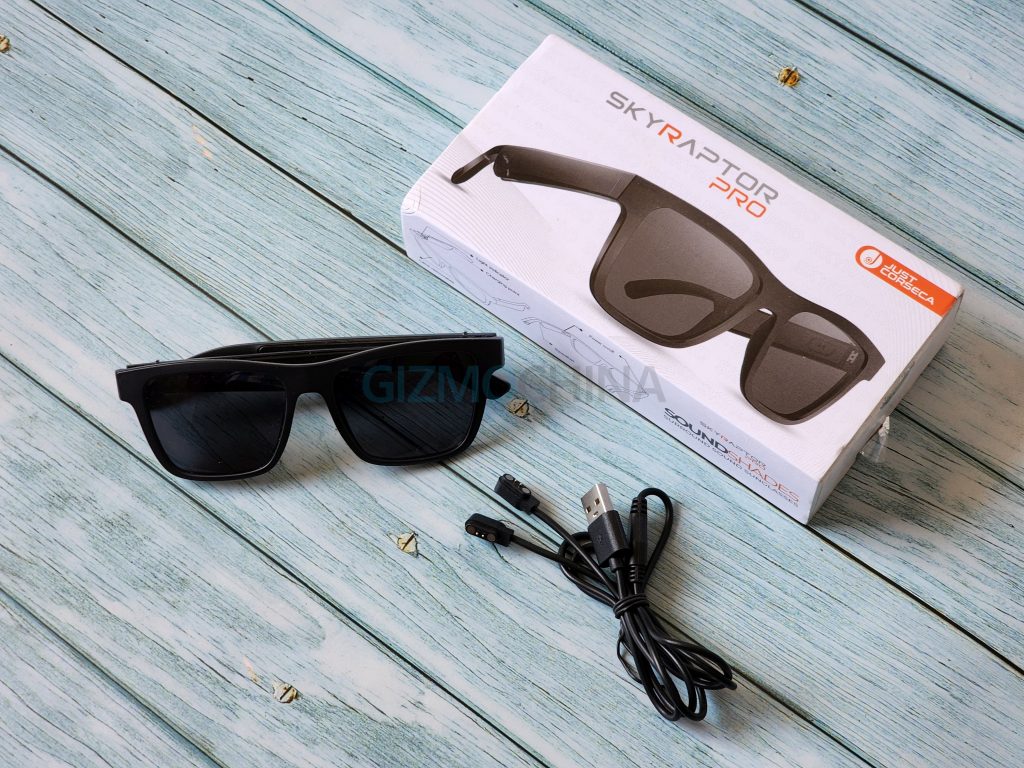
Skyraptor Pro Smart Eyewear: What’s in the box?
Skyraptor Pro Smart Eyewear
The retail package of the Skyraptor Pro Smart Eyewear includes the following items:
Skyraptor Pro Smart Eyewear
Charging cable
I felt that the brand should have provided a carry case or a sleeve in the retail package.
Comfort and Controls
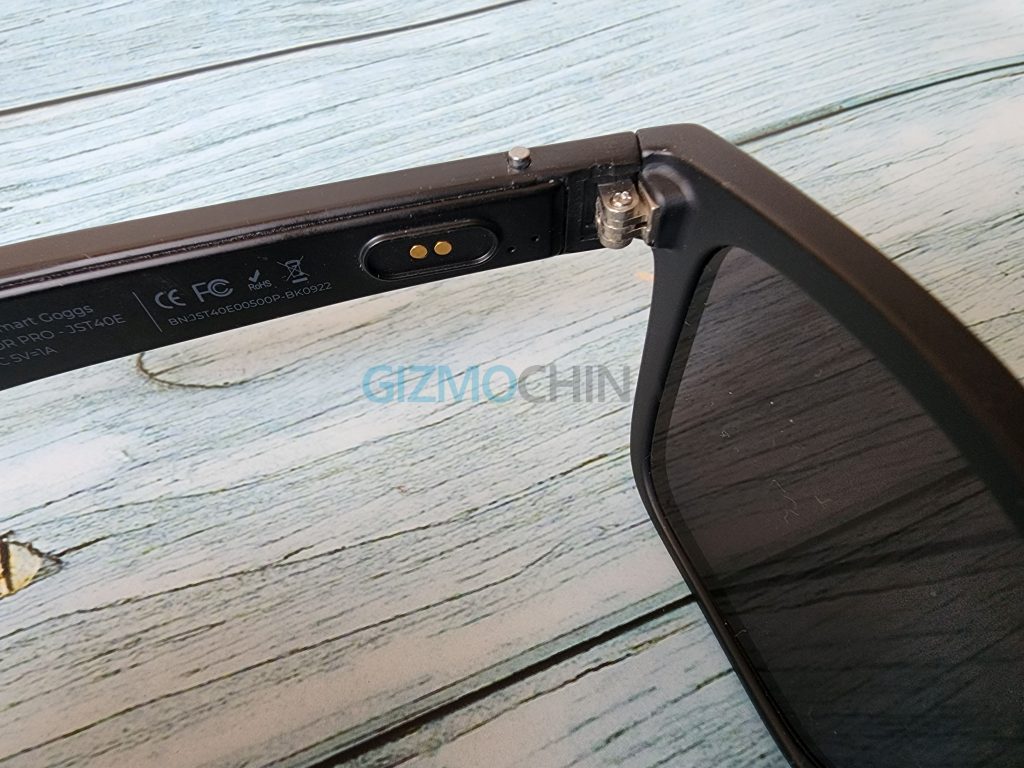
Skyraptor Pro Smart Eyewear (left frame)
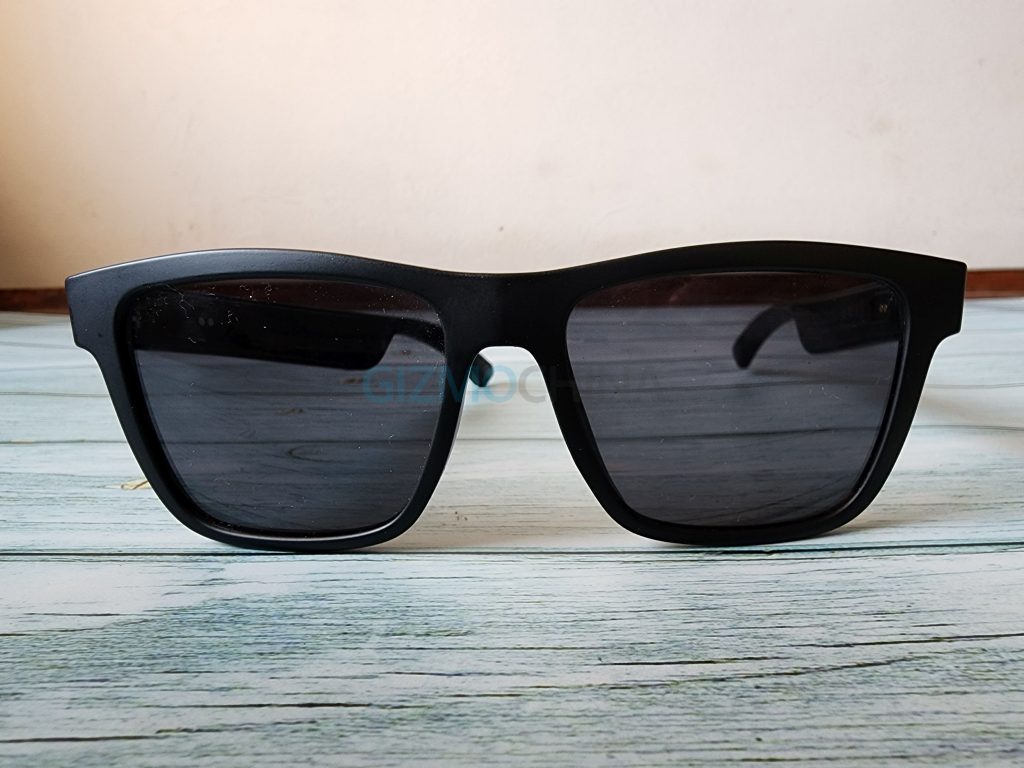
The Skyraptor Pro Smart Eyewear has a thick frame made of ABS material. Since it has an IPX rating, it is protected from damage by rain and sweat. The spectacles look trendy and will go well with casual outfits.
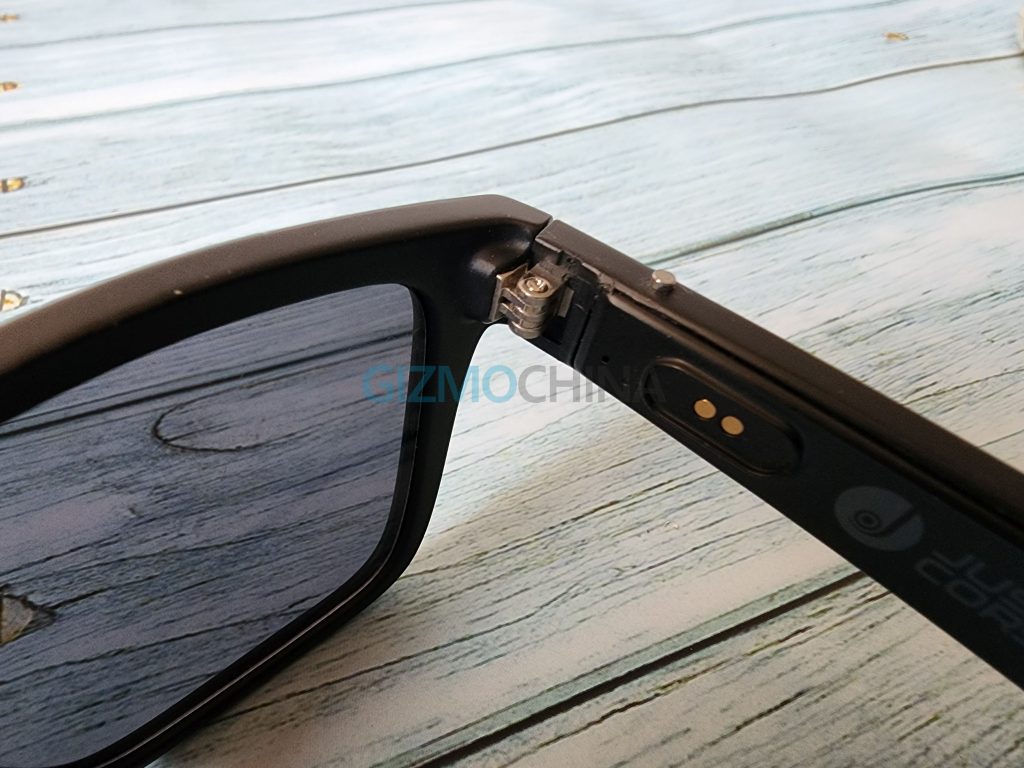
Each handle has a power on/off button, a charging point, a light indicator, a microphone, and a speaker. Long pressing either power button will turn the device on or off. Double pressing the left side button will increase the volume, and pressing the same button three times will play the previous song. In the same way, double pressing the right button will decrease the volume, and pressing it three times will play the next song.
Skyraptor Pro Smart Eyewear (right frame)
After phone calls, one needs to press either the left or right button to answer the call. A long press on either button terminates the call. Long pressing any of the buttons during an incoming call will reject it. To increase the volume during a call, one needs to double-press the left button and to decrease it, the right button needs to be double-pressed.
Lastly, to access the voice assistant, one can press either of the buttons for a second.
During my use of Just Corseca’s Skyraptor Pro Smart Eyewear, I experienced no discomfort or pain in my nose or behind the back of my ears.
User Experience
Skyraptor Pro Smart Eyewear (front)
The Skyraptor Pro Smart Eyewear has a pair of open-ear speakers, meaning it does not have earbuds that can be inserted inside the ears. In addition, it has a pair of omnidirectional microphones placed on each handle. The speakers are visible only when the eyewear is placed upside down.
Skyraptor Pro Smart Eyewear
Readers should note that since it is equipped with open-ear speakers, the audio will be discreetly audible to others who are very near to the user. Hence, when a song or video is played, the sound will be audible to others. The same thing applies to phone calls, and the experience is similar to Bluetooth voice calling on a smartwatch or talking to someone on speaker mode on a smartphone. However, the audio is more audible to the person wearing the Skyraptor Pro Smart Eyewear than to others.
Skyraptor Pro Smart Eyewear comes with support for Bluetooth 5.0 connectivity. Once paired, it can be used for calls and listening to music. I did not face any hiccups in connectivity when pairing with my Galaxy S22 Ultra and iPad Pro. It can be paired with only one device at a time.
Skyraptor Pro Smart Eyewear
The company claims that the Skyraptor Pro Smart Eyewear is equipped with UV400 lenses. The lenses are removable, which means users can add their own prescription glasses to the smart eyewear. As far as built-in lenses are concerned, Just Corseca claims that they are scratch-resistant polarised lenses that are meant to reduce glare and enhance visibility. When it comes to UV protection, the UV400 offers 99 percent protection against harsh sunlight (99 percent UVA and UVB). It can be worn indoors as it cuts down harmful blue light by 35 percent while working on a PC / phone or watching movies.
The Skyraptor Pro smart eyewear is powered by a pair of 100mAh batteries. Each handle houses a battery. Charging can be done using the magnetic charging cable provided in the package. The charging cable bifurcates into two wires, each with a magnetic charging pin. In order to charge the device, one magnetic pin needs to be connected to the left handle, and another one is required to be connected to the right handle.
Skyraptor Pro Smart Eyewear
It takes around 2 hours to charge the Skyraptor Pro Smart Eyewear. Once charged, it can last for up to 6 hours. It goes without saying that once the battery runs out, it can be used as regular sunglasses or spectacles. To save on the battery, one can either turn on only the right or left frame of the device.
The Skyraptor Pro Smart Eyewear offers 60ms Bluetooth connectivity. So, I did not experience any lag while watching movies or listening to music.
As mentioned at the beginning of this post, the brand is also offering a non-pro version called the Skyraptor Smart Eyewear. Here is a look at the differences between the two models:
Specifications
Skyraptor Smart Eyewear
Skyraptor Pro Smart Eyewear
Bluetooth
V5.0 (Calling and Music)
V5.0 (Calling and Music)
Speakers
8Ω / 0.6W (left and right temple)
8Ω / 0.6W (left and right temple)
Microphone
Single (right temple)
Dual (right temple)
Battery
120mAh (Auto power off)
110mAh * 2 (with auto power off)
Playback time
Up to 5 Hours
Up to 7 Hours
Charging port
Micro USB (Right temple)
Magnetic (Right temple)
Control buttons
V-/ Prev | V+/Next | Power (right temple)
Single button on each temple to change tracks, answer calls, adjust volume
Lens Material
Sunglass
UV400 lenses
Price and Availability
Skyraptor Pro Smart Eyewear
Skyraptor Pro Smart Eyewear can be purchased through Just Corseca’s online store and Flipkart. On the official website, it is listed for Rs 5,499 (~$67), whereas Flipkart is selling it for Rs 5,699 (~$70). It comes in black only. The company is providing a 1-year warranty for the buyers of Skyraptor Pro Smart Eyewear.
Smartphones are an indispensable part of our lives. We now rely on them to complete most of our daily tasks. One of the biggest problems we face is running out of battery. Our phones, which used to last almost a day and a half when we first bought them, are no longer able to maintain this battery life. This decline is mainly due to the apps we have installed and use. But did you know that one app, commonly used by almost everyone, can quickly drain your battery without you realizing it? Here are the details…
Former Facebook Employee Accuses Company of Illegally Draining Phone Batteries”
George Hayward, a former Facebook employee, recently made a scandalous claim. He alleges that Facebook and Messenger have the ability to purposely drain the batteries of their users’ smartphones. This process, referred to as “Negative Testing,” enables technology companies to secretly run down the batteries of a user’s phone in order to test features within an app.
The former Meta employee, who said he refused to do these tests, describes the dialogue with his boss as follows: “I said to the manager, ‘This can harm somebody,’ and she said by harming a few we can help the greater masses. Any data scientist worth his or her salt will know, Don’t hurt people,”
Hayward, who was soon terminated, filed a lawsuit against the company in the Manhattan Federal Court. The primary basis of the lawsuit is that Facebook users may not have access to their phones when they need it the most. Dan Kaiser emphasized that draining users’ smartphone batteries poses a danger to them. The lawyer added, “It’s illegal and it’s outrageous that anyone can manipulate the battery of my phone.”
At one point during his employment at Meta, the company provided Hayward with an internal training document titled “How to run thoughtful negative tests,” which included examples of how to conduct such tests. This suggests that the social media giant has carried out similar tests in the past. However, Meta has not yet released a statement on the matter, but one is expected to be issued in the near future.
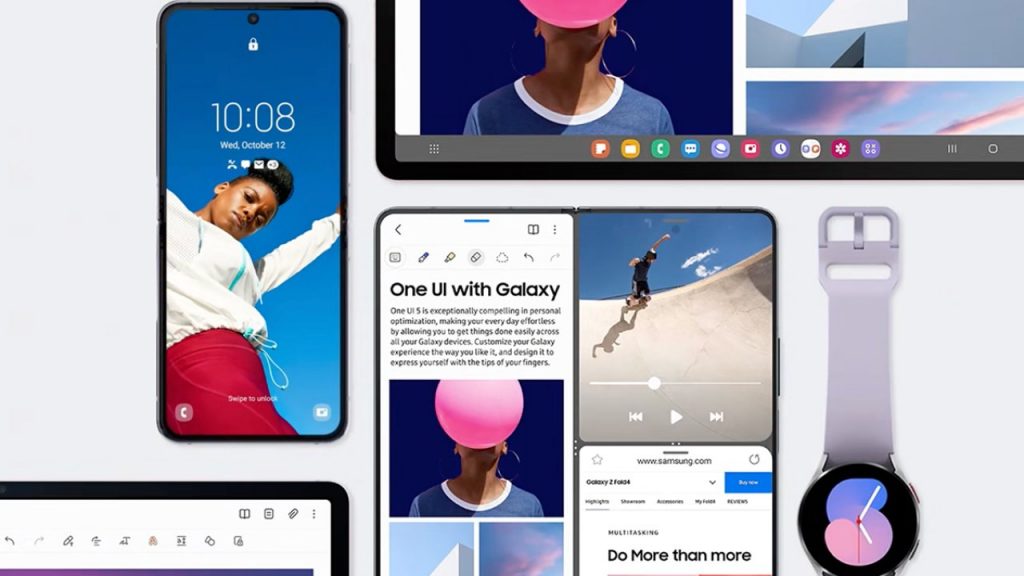
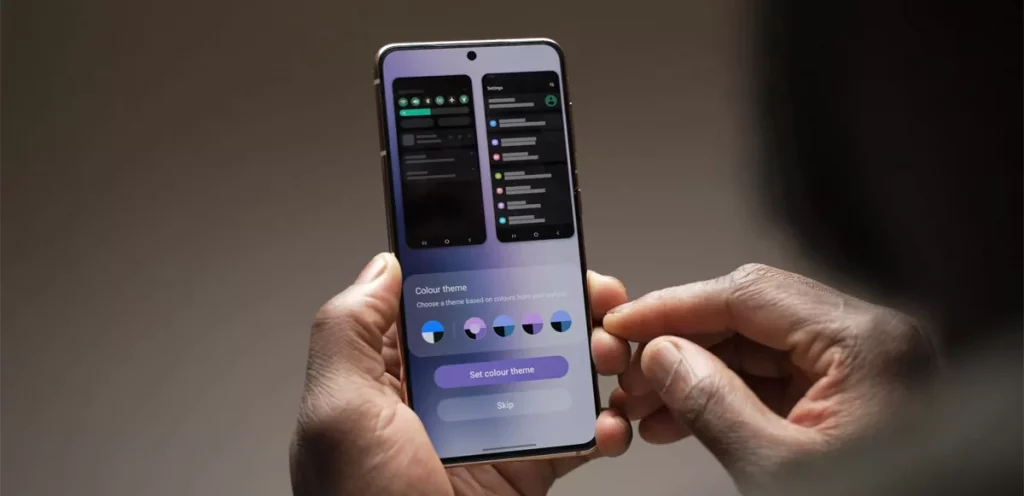
The countdown has begun for the Samsung Galaxy S23 series. The smartphones, which will be introduced on February 1, will come with new accessories and software. One of the software in question is One UI 5.1. Lastly, a couple of days before the official announcement of the Galaxy S23, One UI 5.1 features have leaked. The leaked One UI 5.1 changelog highlights improvements and innovations. Here are the details…
One UI 5.1 features leak ahead of Galaxy S23 launch
Camera
Changing the hue for a selfie just got easier: Easily change the hue of your selfies with the Effects button on the side of the screen.
Quick access to Expert RAW: The Expert RAW app allows you to capture high-quality images without any processing or compression, which is perfect for those who want to edit their photos later. Accessing Expert RAW is now easier from the Advanced menu.
Gallery
Common family album: With Shared Family Album, sharing photos with your family is easier than ever. Gallery recommends adding photos to your shared family album by recognizing your family members’ faces. You also get 5GB of storage per family member (up to 6 people).
Improved handling: Processing automatically removes shadows and reflections to make your photos look great. You can also recreate GIFs for better resolution and clarity.
Convenient information display: If you swipe up when viewing a picture or video in your gallery, you can see at a glance when and where the picture was taken, on which device, where it’s stored, and more.
Search has become more powerful: You can now search for more than one person or item at a time. You can even search for people without tagging their names, just by clicking on their faces.
Choose a location to save screenshots: Now, you can save screenshots and screen recordings in a folder of your choice by setting it up in the advanced features.
AR Zone and AR Emoji
Use 3 Emojis in AR Emoji Camera: Take fun photos and videos with friends (up to 3 people) in mask mode. You can replace your friends’ faces with other characters by clicking the emoji.
Layout and editing improvements in AR Doodles: The brushes are now available on the main AR Doodle screen for quicker access. You can also resize and move drawings after you create them, and the new eraser tool lets you erase just a portion of your drawings without completely erasing them.
Widgets
New battery widget: With the new battery widget you can check the battery level of your Galaxy devices. Right from the home screen, you can see how much battery your smartphone, Galaxy Buds, Galaxy Watch, and other supported devices have left.
Intuitive weather widget: The new illustration style and a summary of the current weather conditions make it easy to know the weather information, whether it’s sunny, cloudy, raining, or snowing.
Modes and Scenarios
Different wallpapers depending on the mode: Set different wallpapers on the lock screen and the home screen depending on your current activities. Choose a background for work, one for sport, and more by setting different modes.
More conditions and actions for scenarios: Run scripts automatically when you turn on airplane mode or mobile hotspot. Scripts can now open some apps, adjust left/right audio balance, and more. New actions now let you control Quick Share and touch sensitivity and change the ringtone and font style.
Connectivity
Collaboration in Samsung Notes: Create a shared note that multiple people can edit simultaneously. Write a report with colleagues, take notes for a study group, or draw a picture with a friend. The possibilities are endless.
Inviting to shared apps made easy: Now you can easily invite people to shared albums, notes, and calendars using a link that can be shared across apps like messenger, email, and social networks.
Advanced multiple controls between Galaxy Book and smartphone: Now you can use your Galaxy Book’s mouse, keyboard, or trackpad not only with your Galaxy tablet but also with your Galaxy smartphone. You can easily copy and paste text and drag and drop images from one device to another as if it were the same device. (1)
Media output for WiFi speakers: If you want to continue listening to music on Wi-Fi speakers via Spotify Connect and the built-in Chromecast, simply open the media output from the quick access toolbar, not the music apps. (2)
Continue surfing on the PC: If you surf the Internet on your smartphone with Samsung Internet and then continue browsing on your PC, you can find the websites you opened on your smartphone and continue browsing them with the PC browser. (3)
Samsung DeX
Improved multitasking in DeX: In split screen mode, you can now drag the splitter in the middle of the screen to resize both windows. You can also snap a window to one of its corners so that it takes up a quarter of the screen.
Settings
Settings suggestions: Suggestions are now displayed at the top of the settings screen, letting you know about useful features to try or settings that need your attention so you can enable or try them immediately.
Samsung Internet
Improved search: You can now search by a folder name in bookmarks or by group name in tabs. Improved search logic allows you to find what you’re looking for, even if something is misspelled.
Setup Wizard
Faster and easier initial setup of your new Galaxy: If you’re switching to a new Galaxy from a Galaxy or other Android device, simply scan the QR code on your old device to automatically migrate your Wi-Fi networks, Samsung account, and Google account to the new one Device to transfer without typing anything. (4)
Weather
Detailed weather information at a glance: Useful weather information is now displayed on the Weather app’s main screen. You can check severe weather alerts, daily weather reports, hourly precipitation, and color temperature charts.
Calls
Bixby Text Call: Use Bixby Text Call to automatically answer calls and find out the purpose of the call. You’ll see what the caller is saying in a text chat, and you can tap or type replies to have them read aloud to the caller. Bixby text calls are only available in English and Korean.
Footnotes:
The Multicontroller is only available on select Galaxy phones, Galaxy Tabs, and Galaxy Book devices. It works on tablets with One UI 4.1 or later, phones with One UI 5.1 or later, and the Galaxy Book series released in 2021 or later with Samsung v1.5 (Intel) or Samsung Settings v3.3 (ARM). Feature availability may vary by device model.
The Wi-Fi speaker needs to be configured in advance to connect the Wi-Fi speaker. Chromecast Built-in is a trademark of Google LLC
This function requires a PC running Windows 20H1 or later, and the phone connection and Windows connection need to be updated to the latest version.
Only available for Galaxy S23 series and above with BLE technology.
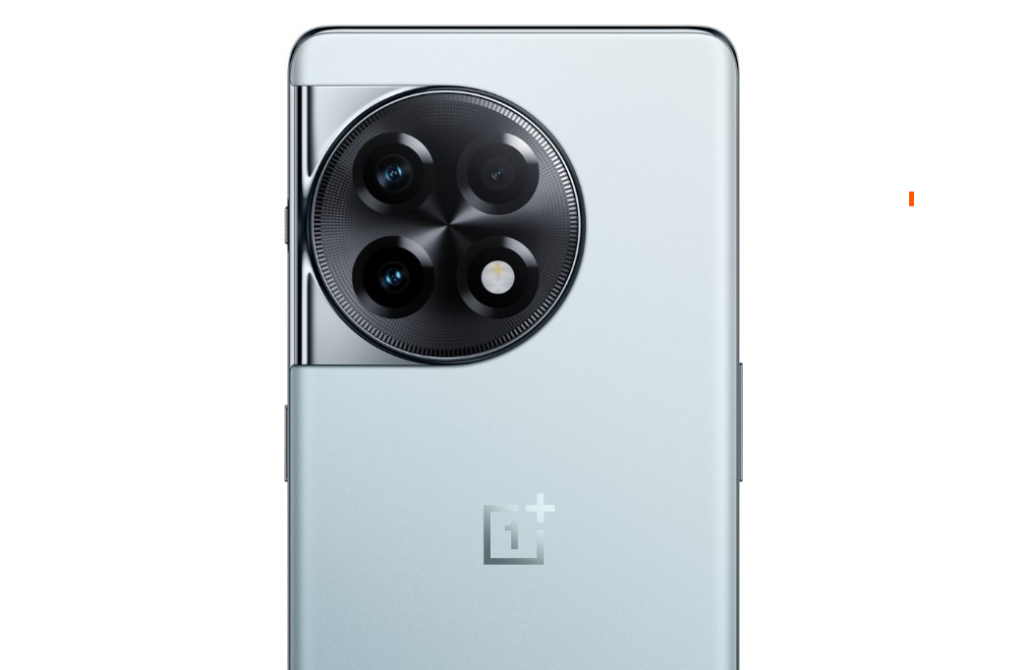
OnePlus 11 will be announced globally at Cloud 11 event in India on February 7. While it will be the star of the show, some attention will also be drawn to the more-affordable OnePlus 11R, which is debuting on the same day. The two handsets will be arriving with different hardware specs, but aesthetically they may look very similar, at least that’s what a new leaked image suggests.
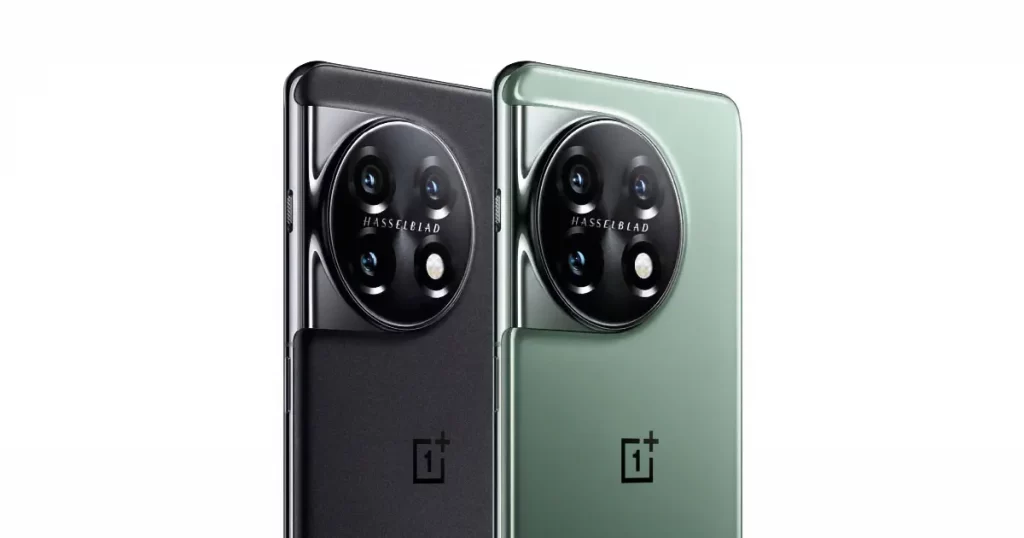
Popular leakster Ice Universe has shared an image of the alleged OnePlus ACE 2, which should be called the OnePlus 11R in the global market. We are saying this because the OnePlus ACE was rebranded as OnePlus 10R internationally. As can be seen in the image, the 11R looks essentially the same as the standard OnePlus 11 with a few differences here and there.
For instance, there’s no Hasselblad branding on the camera island and the telephoto camera appears to be missing. Also, the glittery texture on the back has been replaced with a matt finish. These changes are understandable as the brand aims to make OnePlus 11R a more affordable device. OnePlus reserves Hasselblad-tuned cameras for premium devices to create differentiation and to decrease the cost of affordable devices.
According to recent reports, OnePlus 11R will have the Snapdragon 8+ Gen 1 processor at the helm. The OnePlus 11 gets the Snapdragon 8 Gen 2 chipset, which is comparatively more powerful and efficient. 11R is expected to get a 6.7-inch AMOLED display with curved edges, an HD+ resolution, and a 120Hz refresh rate.
For photography, the handset may feature an OIS-enabled 50MP main camera, a 12MP ultra-wide lens, and a 2MP macro camera. On the front, there may be a 16MP selfie sensor. It could run Android 13 out of the box and pack a 5,000mAh battery with 100W charging support.
Pricing and marketing details of the Redmi Smart Band 2 have surfaced ahead of its launch in Europe. The lightweight smart band was released in China in December 2022 and the new details reportedly emanated from the manufacturer.
The Redmi Smart Band 2 was unveiled together with the Redmi Watch 3 in China by Xiaomi last month. It was then rumored to enter the European market subsequently. The new Xiaomi smart band, according to the official leaks, will be priced in Europe at €34.99 (~$38). It is unclear whether the leaked price relates to the launch period or it is the regular pricing of the gadget. The details also indicate that the launch of the Smart Band 2 is imminent in Europe.
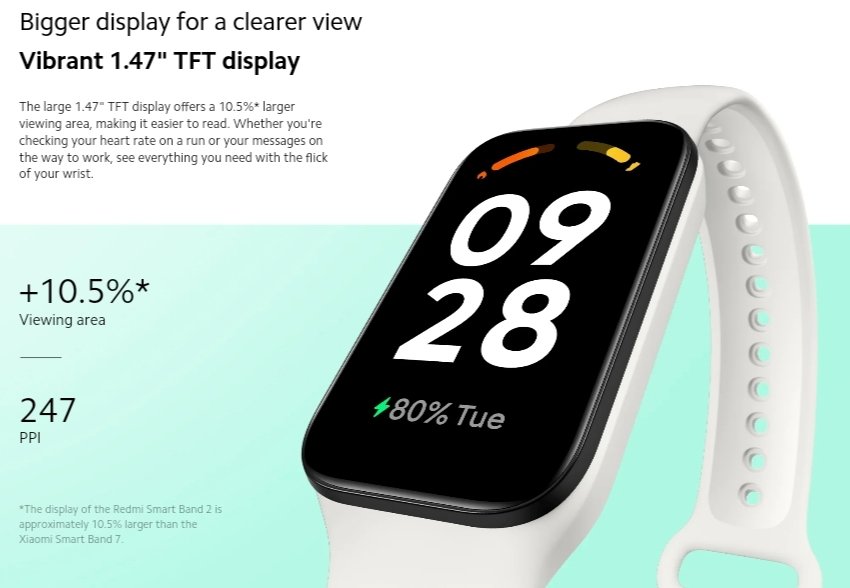
The smart band retailed for the equivalent of $25 when it was launched in China. The pricing indicates that the Smart Band 2 is pretty affordable with several decent features to boot. It has a 1.47-inch TFT display and weighs 14.9g. The Redmi Smart Band 2 is 9.99mm thick and offers health and fitness monitoring. These include SpO2, sleep, and heart rate monitoring. There are over 100 Band faces and up to 30 sports modes. The band has a 14-day battery life and 5ATM water resistance.
The Redmi Smart Band 2 is less expensive than the Redmi Watch 3, which is also expected to launch in Europe. As per the launch date for the Smart Band 2, there is no official Xiaomi statement yet. The rumor mills will remain buzzing until the finer optics of the European launch of the smart band are released. It is also expected that the lightweight and affordable smart band could debut in other markets outside China and Europe.
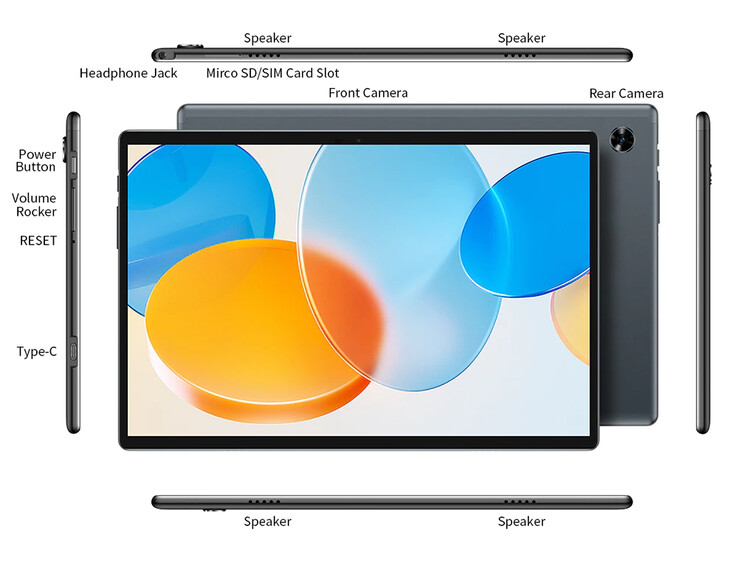
Teclast M40 Pro debuted back in 2021 as a mid-range tablet with decent features. Now, the company has introduced a refreshed version of the same tablet with some notable improvements in performance and software. The new Teclast M40 Pro 2023 comes with a 10.1-inch display and runs Android 12 out of the box. Let’s have a closer look at its specifications and pricing.
The design and appearance of the tablet haven’t changed. It looks essentially the same as the 2021 model with thin bezels and a single camera on the back. The Teclast M40 Pro 2023 comes with a 10.1-inch display with a 1,920 x 1,200-pixel resolution and a 16:10 aspect ratio.
The notable change on the device is the processor. The Chinese company says the M40 Pro 2023 packs a more powerful chipset, more RAM, and faster storage. There’s Unisoc Tiger T616 SoC under the hood of the device, paired with 8 GB of RAM and 128 GB of UFS 2.1 flash storage. Its predecessor runs the Unisoc T618 with 6 GB of RAM and slower storage.
It is worth mentioning that the Unisoc Tiger T616 does not offer any earth-shattering performance improvements over the Unisoc Tiger T618. It’s only a tad bit faster than the latter, so keep your expectations in check. The new tablet is fueled by a 7,000mAh battery and comes with an 8MP rear camera and a 5MP front camera.
Interested shoppers can get the M40 Pro 2023 through AliExpress. Currently, the tablet isn’t available on any other e-commerce platform, however, Teclast may soon sell it through Amazon. It comes with a price tag of $155.
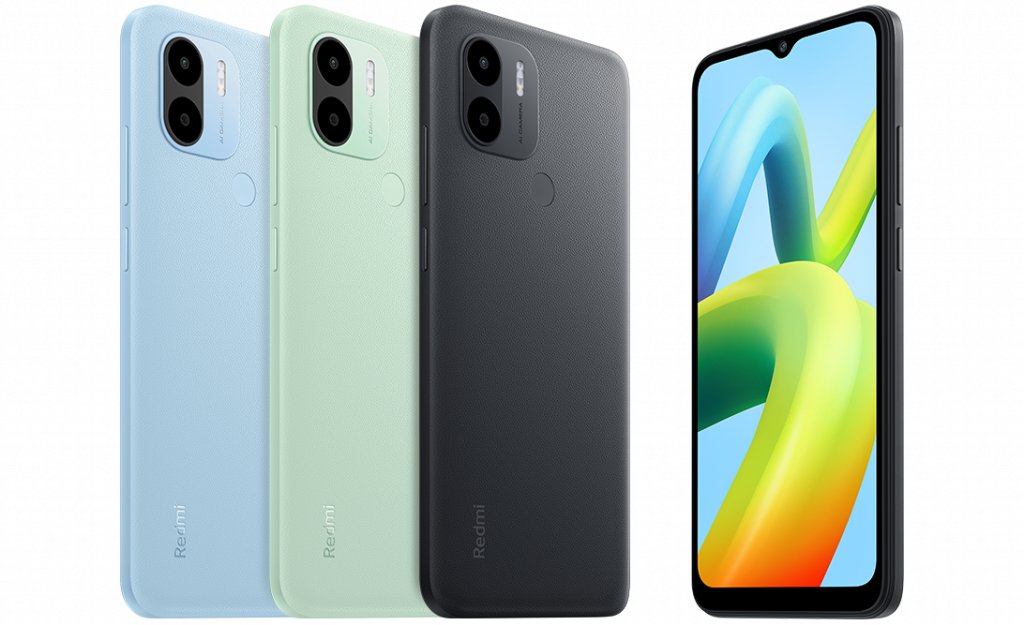
Redmi A1 and A1+ debuted in the Indian market last year as the most affordable smartphones from Xiaomi’s spin-off brand. The A1+ later got launched as a rebranded Poco C50 in the country and gained quite some popularity. Now, it appears the brand is ready to bring the next-gen Redmi A2 series smartphones to India, as they have already bagged BIS certification.
Tipster Mukul Sharma has spotted two Redmi smartphones on the Bureau of Indian Standards (BIS) website. These devices are said to be the Redmi A2 and Redmi A2+. While the listing did not reveal any specifications of the two smartphones, it does hint at an imminent Indian launch.
Both Redmi A2 and A2+ could launch in the country in a month or two. However, there’s no official confirmation from the brand yet. We might be seeing more budget smartphones from Xiaomi as the brand is reported to put a stronger focus on the entry-level segment where it commands the majority share.
This is because the year 2022 was not very good for the Chinese company as it slipped to the third position in the Indian smartphone market. Samsung managed to take the first spot while Vivo secured the second position.
To recall, the recent Redmi A1+ comes with a 6.52-inch LCD display with an HD+ resolution. Under the hood, the smartphone is powered by the MediaTek Helio A22 SoC paired with up to 3GB of RAM and 32GB of onboard storage.
For photography, the handset has an 8-megapixel primary sensor and a 2-megapixel depth sensor on the rear. The front houses a 5-megapixel selfie camera. It is fueled by a 5,000mAh battery pack that supports 10W charging.
OnePlus is scheduled to announce the OnePlus 11 and Buds Pro 2 among other products at its Cloud 11 event in India on February 7. A recent teaser confirmed the rumored OnePlus 11R would also be debuting on the same day. And while we wait, the Chinese company has now officially revealed the processor that will power the upcoming 11R.
In a recent teaser, OnePlus confirmed that the OnePlus 11R will be powered by Qualcomm’s Snapdragon 8+ Gen 1 processor. While it is not the latest from the semiconductor company, it’s still one of the most powerful and capable processors out there. You might remember that SD 8+ Gen 1 powered the majority of the flagships last year, including the OnePlus 10T, Galaxy Z 4 foldables, and more.
However, OnePlus 11R will not match the performance of the OnePlus 11, which boasts the latest Snapdragon 8 Gen 2 chipset. This should mean that the 11R will come with a more affordable price tag than the standard model.
OnePlus hasn’t disclosed any other specifications of the forthcoming R series smartphone. But thanks to various leaks and rumors, we already know it all. The smartphone could flaunt a 6.7-inch AMOLED display with curved edges, an HD+ resolution, and a 120Hz refresh rate. A center-punched hole on the display might enclose a 16MP camera for selfies and video calls.
In the rear camera department, there could be an OIS-enabled 50MP main camera, a 12MP ultra-wide lens, and a 2MP macro camera. In terms of software, the OnePlus 11R will run OxygenOS 13-based Android 13 out of the box. It could have a 5,000mAh battery with 100W fast charging support.
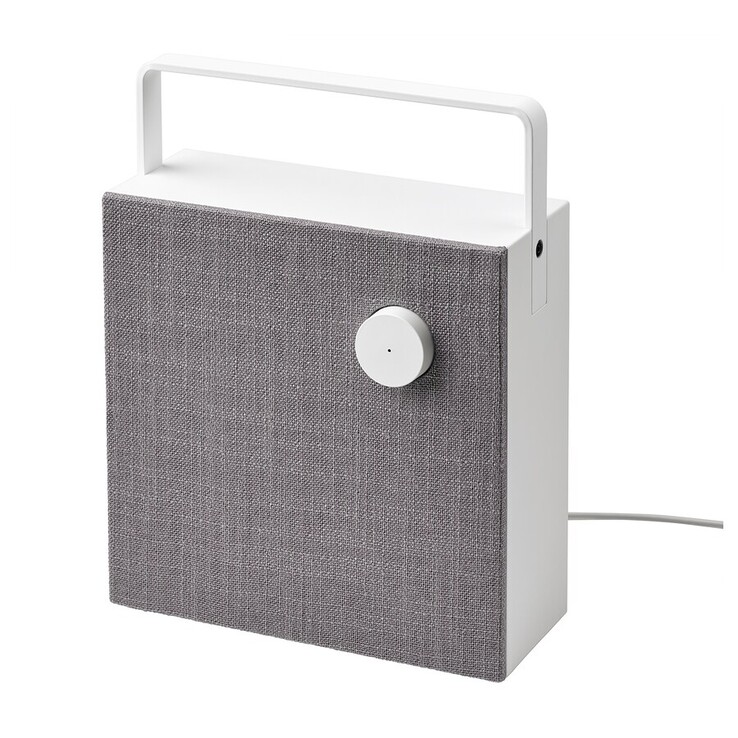
It looks like IKEA is expanding its line of Bluetooth speakers with the upcoming VAPPEBY 20×20 gen 3. This device has recently received Bluetooth certification, and a similarly named gadget, the VAPPEBY 20 gen 3, was listed for FCC certification last year. This suggests that the VAPPEBY 20×20 gen 3 is a new and improved version of the VAPPEBY 20 gen 3.
The design of the VAPPEBY 20×20 gen 3 appears to be similar to the IKEA ENEBY Bluetooth speaker. It is a square-shaped speaker with a built-in handle, making it easy to carry around. The device also has control buttons and a scroll wheel button to adjust the volume and play or pause music. The key difference between the ENEBY and the VAPPEBY 20×20 gen 3 seems to be the inclusion of the Spotify Tap playback feature. This feature allows you to resume playback or play music based on your taste with just the click of a button. This is a smart feature that makes it easy for you to control your music without having to pull out your phone.
Another smart feature of the VAPPEBY 20×20 gen 3 is the auto standby feature. After 20 minutes of inactivity, the device will automatically go into standby mode, conserving power and prolonging the battery life. The speakers in the device include a 3.2-inch (~81 mm) woofer and a 1-inch (~25 mm) soft dome tweeter. The amplifier output power of the device is 20 W, which should provide a decent level of volume and clarity.
The VAPPEBY 20×20 gen 3 appears to be powered by the IKEA ENEBY Battery pack. This battery pack should provide enough power for the speaker to last for up to 16 hours at 50% volume. The speaker will measure 199 x 199 x 80 mm (~8 x 8 x 3-in) and weigh 1.5 kg (~52.9 oz) without the battery pack. It is a compact and portable speaker that you can take with you wherever you go.
It is unclear when this new IKEA VAPPEBY 20 x 20 Bluetooth speaker will be launched, but it is likely to be soon based on the recent certifications. The price of the device is also unknown, but the latest product in this line, the VAPPEBY Bluetooth speaker lamp, was released last March and retailed for US$89.99. It is likely that the VAPPEBY 20×20 gen 3 will be priced similarly, but this is just speculation at this point.
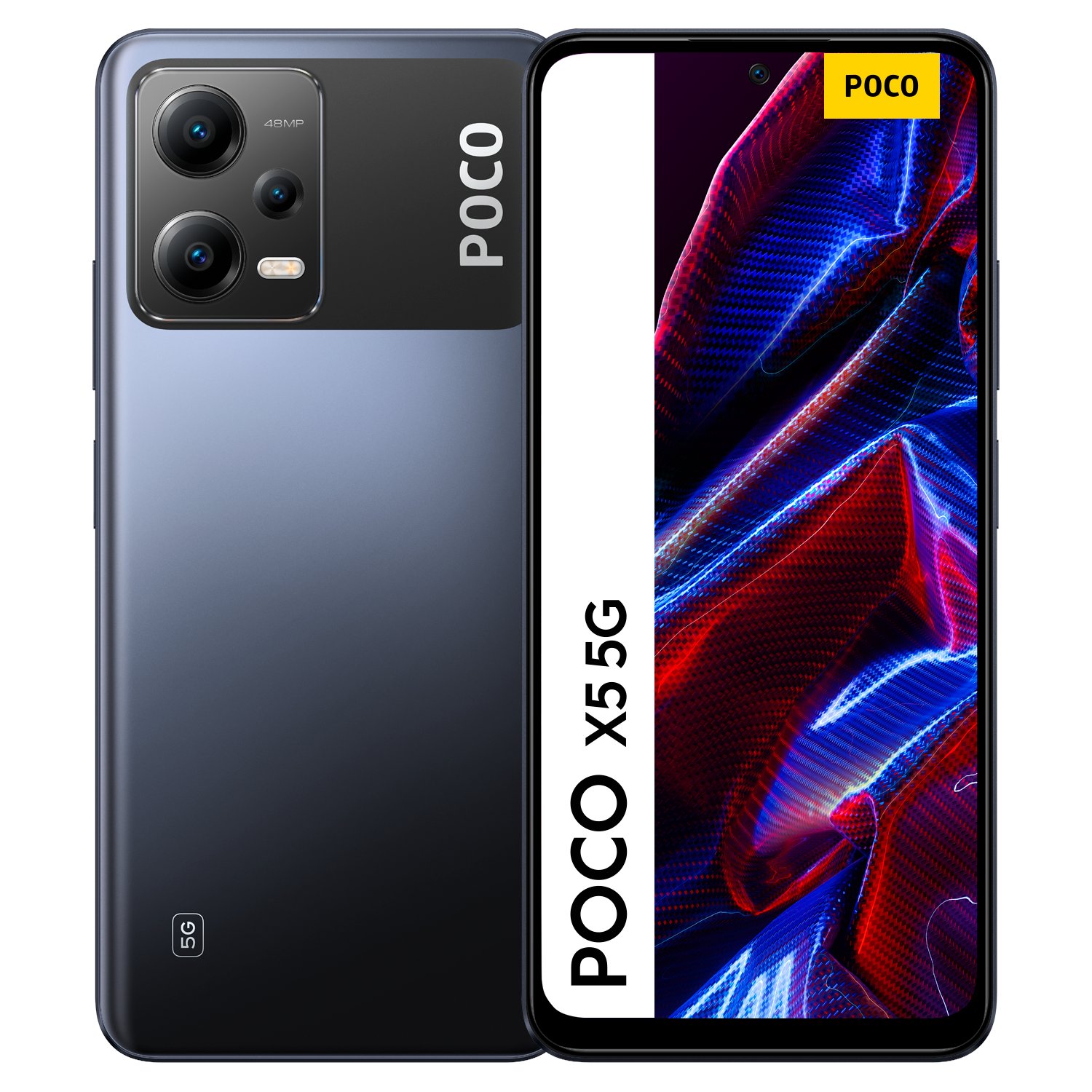
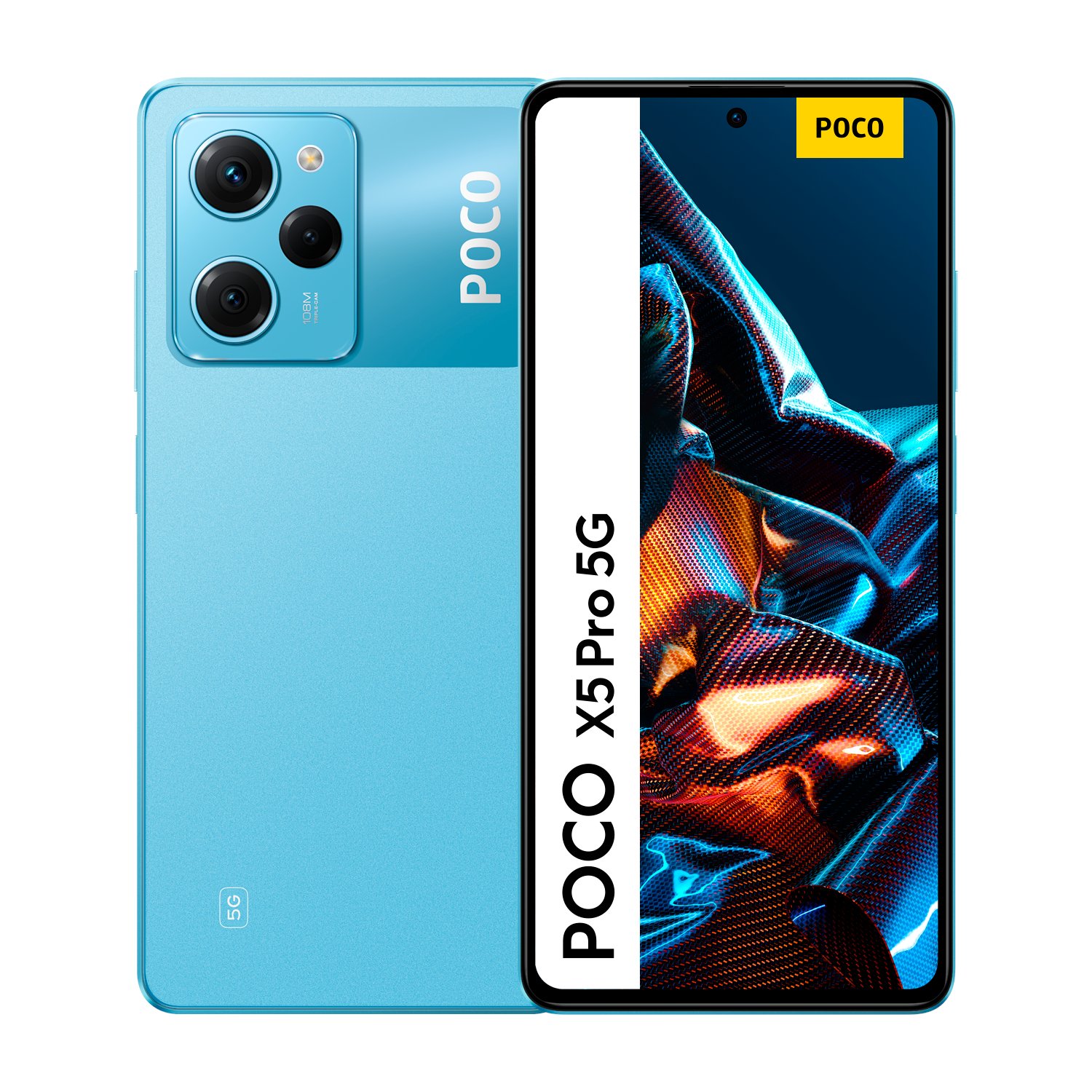
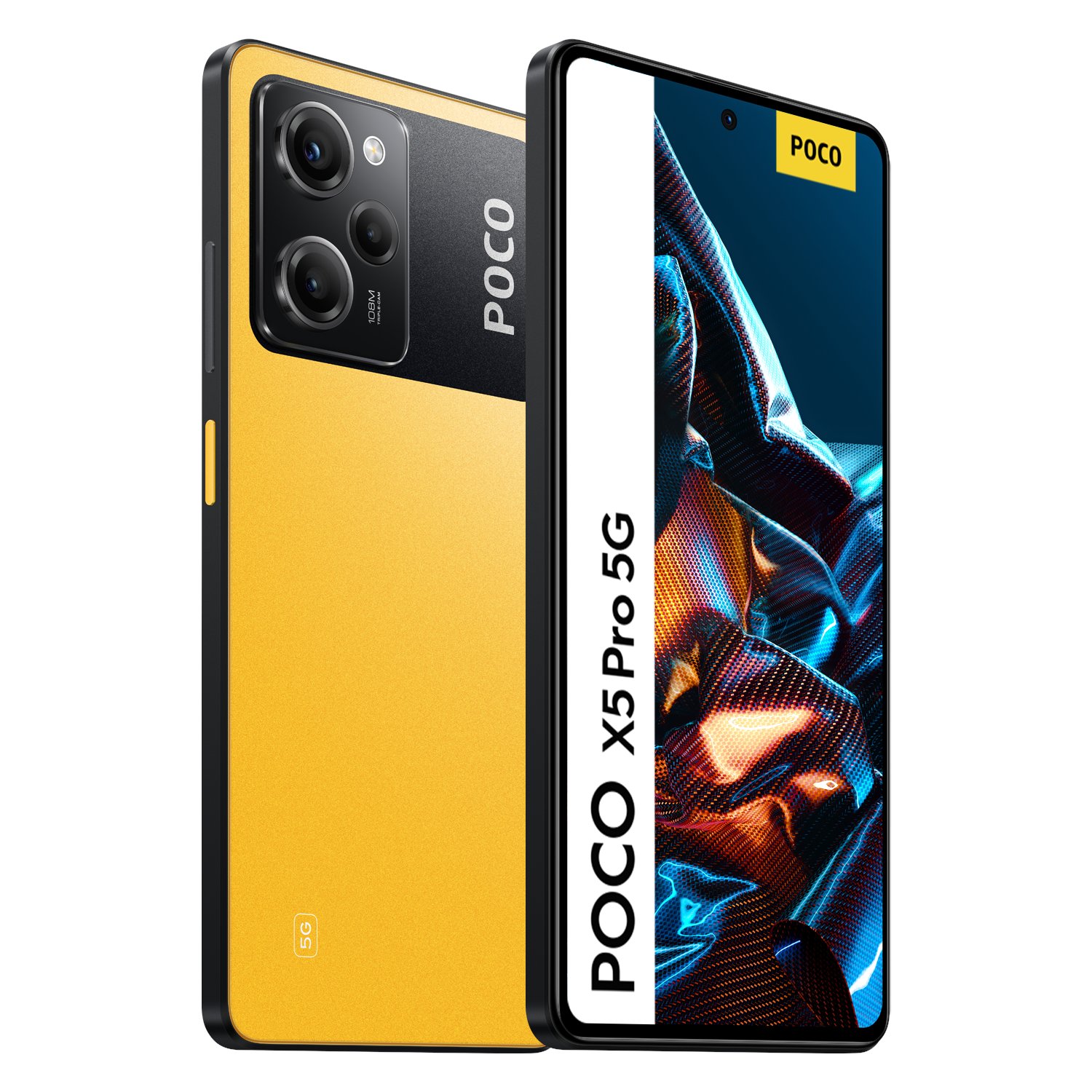
Rumors suggest that we have a couple of exciting devices from POCO headed our way. The first is the Poco F5 Pro which has popped up on FCC recently, while the other is the Poco X5 series, which is expected to launch on February 6 in India. The series will consist of two devices – Poco X5 5G & Poco X5 Pro.
A recent report has revealed the specifications of these upcoming devices. Now, popular leaker SnoopyTech has revealed what these devices will look like.
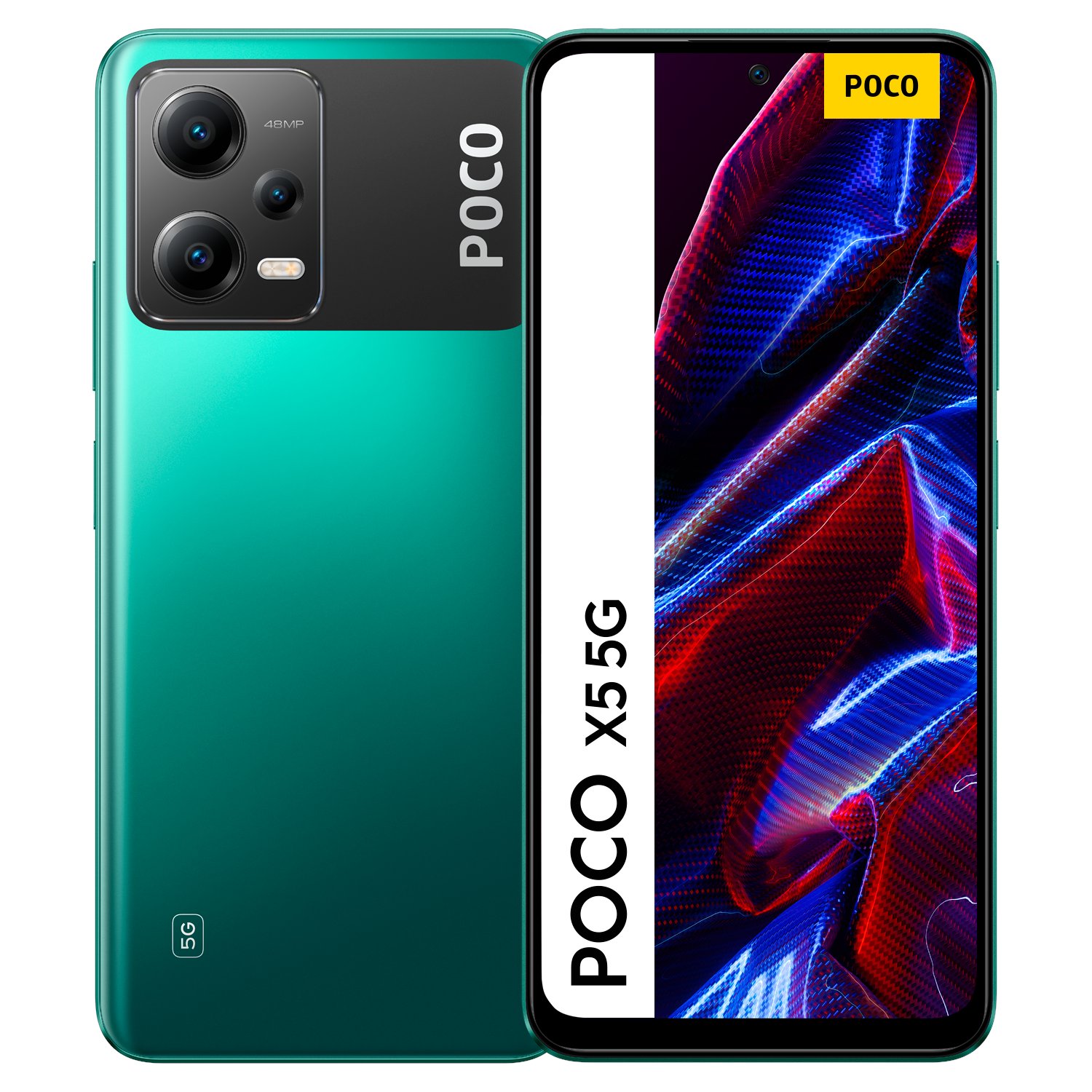
Poco X5POCO X5
The renders reveal two color options for the vanilla Poco X5 5G – Grey & Green. The design of the device is exactly the same as the Redmi Note 12 5G with POCO’s signature style modification. The design similarity with the Note 12 5G is to be expected as the Poco X5 5G is said to be a rebranded version of it.
Poco X5 ProPoco X5 Pro
The POCO X5 Pro’s aesthetics also match the Redmi Note 12 Pro Speed Edition, of which the X5 Pro is said to be a rebrand. The only notable difference here is that the X5 Pro is clad in signature POCO colors. The leak does not mention any details about the specs, however, we already know all there is to know about these devices through various leaks.
POCO X5 Pro specs
The POCO X5 Pro is said to come with a 6.67-inch AMOLED display with a Full HD+ resolution, 120Hz refresh rate, and Corning Gorilla Glass 5. It will be powered by Qualcomm’s Snapdragon 778G processor. The X5 Pro would support 67W fast charging and have a 5000mAh battery. It will additionally be IP68-rated.
The smartphone will have a primary camera with 108MP, an 8MP camera, and a 2MP camera. The last two will likely be a portrait camera and an ultra-wide camera, respectively. The phone’s 16MP front camera will be used for selfies and video calls.
POCO X5 specs
A 6.67-inch AMOLED screen with a 120Hz refresh rate and a Full HD+ (1080 x 2400 pixel) resolution will also be included on the POCO X5. It will also have Corning Gorilla Glass 2 protection.
It will be equipped with a Snapdragon 695 CPU and 6GB of RAM. It will have a triple camera setup with a 48MP primary camera, an 8MP ultra-wide camera, and a 2MP sensor. A 13MP sensor will be housed by the front lens. Lastly, the device will have an IP54 rating.
Fire Boltt has launched three new smartwatches in India. These include the Saturn, Talk 3, and Ninja-Fit. The Fire Boltt Saturn is the most premium among the three devices while the Ninja-Fit sits at the bottom from the newly announced offerings. Apart from minor differences in terms of design, all three wearable devices pack the same specifications and features. Read on to know more below.
The Fire Boltt Saturn looks similar to the Apple Watch series with a crown on the right side. It features a large square dial with a 1.78-inch AMOLED display bearing an HD resolution. The Fire Boltt Talk 3 comes with a smaller 1.23-inch HD LCD screen in a circular dial and metal unibody. The Ninja-Fit has the same design as the Saturn but features a 1.69-inch LCD display. All three devices are IP68-certified water-resistant.
In terms of fitness, the Fire Boltt Saturn, Talk 3, and Ninja-Fit are equipped with a heart-rate monitor, SpO2 sensor, and a sleep tracker. All three wearable devices pack support for more than 110 sports modes.
All three latest Fire Boltt smartwatches feature a built-in microphone and a speaker for Bluetooth calling function directly from the device without the need of a smartphone. There is call history, quick dial pad, and sync contacts feature. The wearable devices pack features like smart notifications, weather updates, camera and music control, and more.
The Fire Boltt Saturn is priced at Rs 3,999 whereas the Talk 3 and Ninja-Fit cost Rs 2,199 and Rs 1,299 respectively. All three devices are offered in Black, Blue, Silver, Pink, Blue, Red, and Green colours. The Saturn and Talk 3 are available for purchase while the Ninja-Fit will go on sale from January 29th. The smartwatches can be purchased across online and offline outlets in the country.
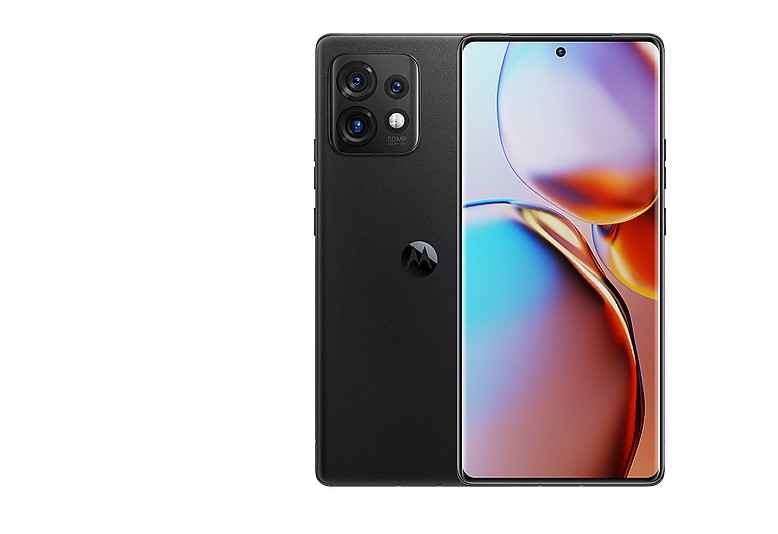
Last month, Motorola launched its latest flagship smartphone in the Chinese market called the Moto X40. The smartphone is expected to come to the global market soon bearing the Motorola Edge 40 Pro moniker. The device has already appeared on FCC, TDRA, and Geekbench hinting at an imminent launch.
Now, a new report from Appuals has revealed the design of the upcoming Edge 40 Pro, further confirming that it is indeed a rebrand of the Moto X40.
The renders reveal two color options for the upcoming device – Black and Blue. The design is exactly the same as the X40, which in other words means that it has a curved back with a square-shaped camera island. The phone’s 50MP primary camera sensor is confirmed by the inscription on the camera module.
The phone sports a hole-punch cutout in the upper center of its curved display on the front. The bezels at the top and bottom are also incredibly thin. On the right edge of the phone are also the power and volume keys. Additionally, there will be an in-display fingerprint scanner. Other than the renders, the report also lists the specifications of the Edge 40 Pro while also mentioning its pricing.
Moto Edge 40 Pro specifications and price
According to the report, there will be a 6.67-inch curved OLED display on the device capable of FHD+ resolution, 165Hz refresh rate, and DC Dimming. It will be powered by the cutting-edge Snapdragon 8 Gen 2 chipset, which will be supported by a 4600mAh battery. The battery will have 125W wired charging and 15W wireless charging. It will utilize a custom Android 13 skin which will be close to a stock experience.
For optics, there will be a 50MP primary camera with OIS, aided by a 50MP ultra-wide unit and a 12MP telephoto lens. As for selfies, the phone will carry a 60MP sensor. Lastly, as per unnamed sources, the Moto Edge 40 Pro will come with a single 12GB of RAM and 256GB of internal storage option, which will cost EUR 850.
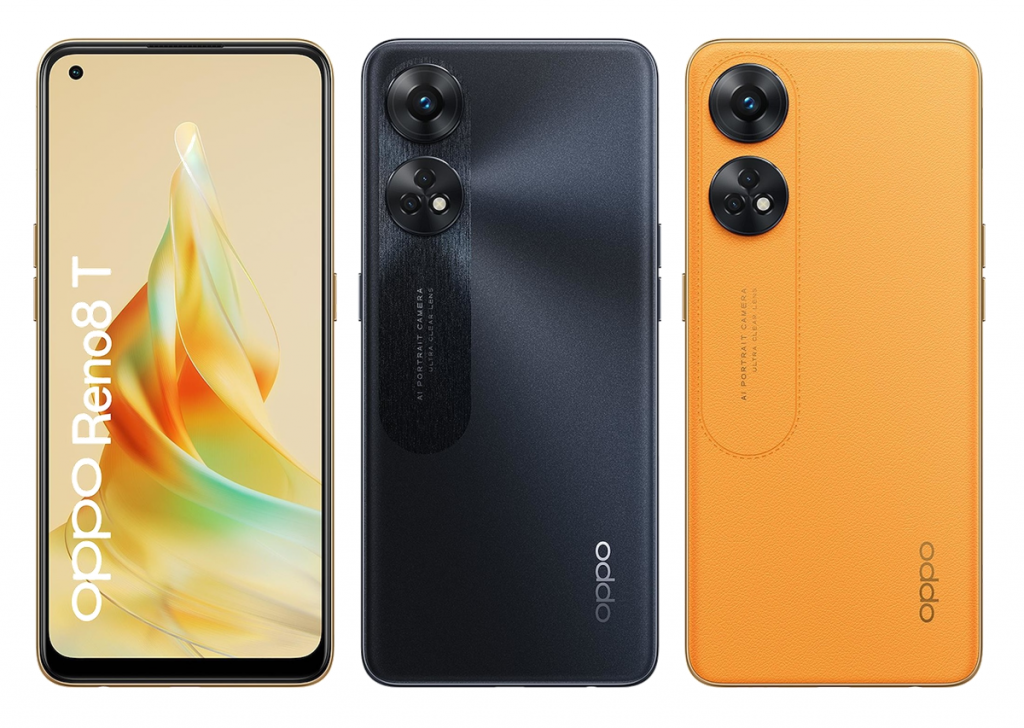
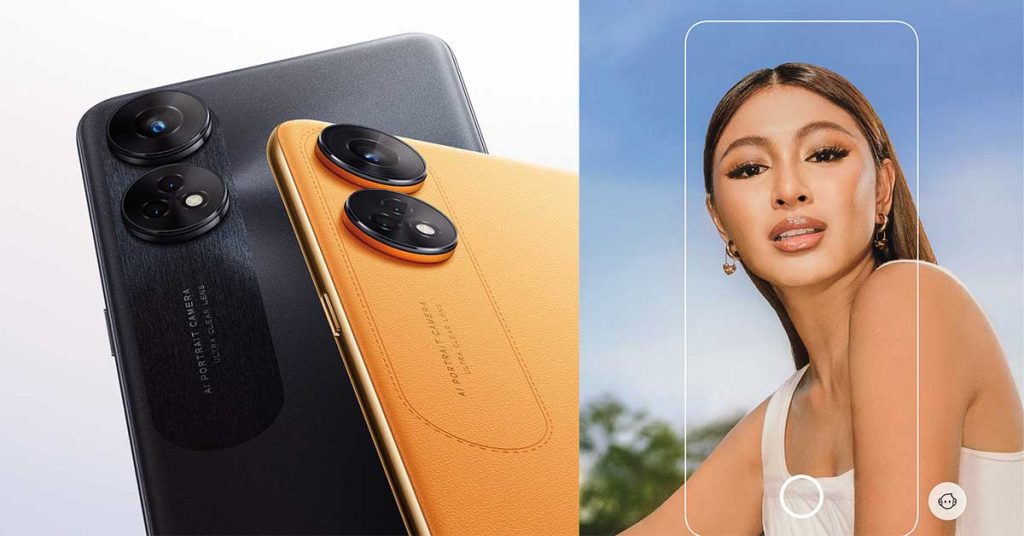
Oppo Reno 8T series is expected to soon launch in the global market. Recent leaks have revealed the launch date and pricing of these devices in the Philippines. According to these reports, the Reno 8T will launch on February 8th in the country. However, Indian customers will likely get their hands on the smartphone first.
As per tipster Muklul Sharma, insiders have informed that the Reno 8T will be launching on February 3 in India. This will be the price reveal date, and the device will actually hit market shelves on February 9th. The tipster adds that the device will retail for around Rs 28,999 (~$356). This is quite close to the tipped price of the device in the Philippines, which is said to be P18,999 (~$348). Looking at the track record of the tipster, the information has a high chance of turning out to be true, however, we suggest readers wait for official confirmation which is likely on the way.
Oppo Reno 8T specs
Spec-wise, we can expect a 6.43-inch AMOLED FHD+ display with a corner punch-hole and an in-screen fingerprint sensor on the Reno 8T. The panel will offer up to 90Hz refresh rate, a 120Hz touch sampling rate, a peak brightness of 600 nits, and a 409 ppi pixel density.
Under the hood, there will likely be a MediaTek Helio G99 chipset paired with 8GB of RAM and 128GB of storage. The software will be ColorOS 13 based on Android 13. A 5,000mAh battery with 22W SuperVooc fast charging is rumored to power the device.
As for the camera system on the back, a 100MP OmniVision main camera will likely be coupled with a 2MP monochrome camera and a 2MP micro unit. For selfies and video calls, the device will bring a 32MP unit.
Realme has confirmed the launch of the Realme GT Neo 5 smartphone. The brand has officially teased the upcoming offering on the Chinese microblogging website Weibo. The launch date remains unknown but the device is set to debut next month in the home country. Realme has also confirmed that the upcoming GT Neo 5 will be the world’s first smartphone to support 240W fast charging. The technology was unveiled by the brand last month.
The poster does not reveal any key details about the Realme GT Neo 5 apart from its arrival next month and the fast charging tech. However, the device has been spotted in leaks and on various certification sites in the past. The upcoming offering will arrive as the successor to the last year’s Realme GT Neo 3. The brand is skipping the GT Neo 4 moniker since the number ‘4’ is considered unlucky in China. As per tipster Abhishek Yadav, the GT Neo 5 is expected to debut on February 8th. We will know the official launch date in the coming days.
A poster of the Realme GT Neo 5 that circulated on Weibo last month revealed that the smartphone will be powered by Snapdragon 8+ Gen 1 processor under the hood. It will feature a Sony IMX890 primary camera sensor with support for optical image stabilisation (OIS). Leaked renders of the smartphone revealed a dual-tone design with the camera module in Black colour and the rest of the back panel in White. It has an elongated rectangular island that also houses another vertical rectangular module.
As for the core specifications, the Realme GT Neo 5 is rumoured to feature a 6.7-inch OLED display bearing a 1.5K resolution, a 144Hz refresh rate, and an integrated fingerprint scanner. The device is expected to pack up to 16GB LPDDR5 RAM and up to 256GB UFS 3.1 storage. The Realme GT Neo 5 is tipped to come in two battery variants – a 4,600mAh cell with support for 240W charging and a 5,000mAh variant with 150W charging.
Noise has launched its first rugged smartwatch. It is dubbed the NoiseFit Force. The latest offering is aimed at outdoor enthusiasts who don’t want to worry about the device suffering any wear and tear. Read on to know what the NoiseFit Force offers out of the box.
The NoiseFit Force is a circular smartwatch. It features a rugged design that can withstand water, dust, and scratches. There is a fully functional rotating crown along with two physical buttons on the right side. The device offers a 1.32-inch display bearing a resolution of 360 x 360 pixels and 550 nits brightness. There are more than 150 customisable watch faces.
In terms of fitness, the NoiseFit Force is equipped with a heart-rate monitor, SpO2 sensor, sleep tracker, step counter, and breathing sessions. It packs support for multiple sports modes including running, cycling, cricket, hockey, trekking, and more. The wearable device also has sedentary reminders.
The NoiseFit Force comes with support for Bluetooth calling allowing users to manage and receive phone calls from the watch. It also features access to call logs and a dial pad. There is also AI voice assistant onboard. The smartwatch packs convenient features like a camera remote control, alarm reminders, notifications, and more. The NoiseFit Force is claimed to offer 7 days of battery life.
The NoiseFit Force carries a price tag of Rs 2,499 and is offered in Teal Green, Misty Grey, and Lunar Black colours. It will be available for purchase from Amazon and the brand’s official website starting February 3rd.
We use cookies on our website to give you the most relevant experience by remembering your preferences and repeat visits. By clicking “Accept”, you consent to the use of ALL the cookies.
This website uses cookies to improve your experience while you navigate through the website. Out of these, the cookies that are categorized as necessary are stored on your browser as they are essential for the working of basic functionalities of the website. We also use third-party cookies that help us analyze and understand how you use this website. These cookies will be stored in your browser only with your consent. You also have the option to opt-out of these cookies. But opting out of some of these cookies may affect your browsing experience.
Necessary cookies are absolutely essential for the website to function properly. This category only includes cookies that ensures basic functionalities and security features of the website. These cookies do not store any personal information.
Any cookies that may not be particularly necessary for the website to function and is used specifically to collect user personal data via analytics, ads, other embedded contents are termed as non-necessary cookies. It is mandatory to procure user consent prior to running these cookies on your website.