Honor is all set to unveil the Honor Win series of smartphones later this month in China. It is speculated that the brand will announce the Honor Power 2 as a successor to the original Honor Power, which packed a massive 8,000mAh battery, by early 2026. Recent reports have revealed that the Power 2 will pack an even bigger battery. A new leak, courtesy of tipster Digital Chat Station, has revealed several other details about this phone, including its launch timeframe.
Honor Power 2 specifications (rumored)
Honor Power
According to the tipster, codenamed Saber, the Honor Power 2 will feature a 6.79-inch OLED LTPS screen with a flat design. It will offer a 1.5K resolution of 2640 x 1200 pixels, but there is no information about its refresh rate.
Under the hood, the Power 2 will feature the upcoming Dimensity 8500 chipset. While a previous leak revealed that it will feature a 10,000mAh battery, this new leak reveals the exact size as 10,080mAh. The device will support 80W wired charging and is expected to lack wireless charging support.
Moving on to the cameras, the Honor Power 2 is said to feature a 16-megapixel front camera and a 50-megapixel primary camera on the back. While it is not mentioned in the leak, the device is likely to ship with Magic OS 10 based on Android 16.
The leak further states that the Honor Power 2 will be sold in three shades, including Snow White, Midnight Black, and Sunrise Orange. As far as the release is concerned, DCS claims that the device is tentatively scheduled to launch before the upcoming Chinese Spring Festival, suggesting a January 2026 launch.
For more daily updates, please visit our News Section.
Back in November 2025, Thunderobot dropped a new company PC for gamers in China. The new Mix G2 Mini PC was dropped with cutting edge performance and Nvidia’s most powerful graphics card in a tiny form factor. But now, it appears that this small gaming rig is coming to the global market to take on ASUS’s latest ROG NUC 2025 model.
Thunderobot Mix G2 Mini PC Goes Global Soon
Following the initial Chinese launch, the company has now shared a new teaser, hitning at the international release of its powerful new gaming mini PC. This system isn’t alone, as Thunderobot will release it alongside the Zero Air gaming laptop. Based on what we know so far, the Mix G2 is a tiny system that is targeting gamers and creators alike. It brings high end desktop level powewr in a body that measures just 3.2 liters.
Thunderobot Mix G2 Mini Gaming PC
Under the hood, the Mix G2 is equipped with Intel’s latest Core Ultra 9 275HX processor, which brings 24 corse and 24 threads with a maximum clock speed of 5.4Ghz. It has a max TDP of 120W and even delivers 36 TOPS AI computing through its NPU. Coupled with this, you get Nvidia’s latest and greatest GeForce RTX 5090 GPU, which has a max TDP 175W, 24GB of GDDR7 memory, Blackwell architecture, 10,496 CUDA cores, and 1824 TOPS of AI performance.
Keep in mind that this is the top configuration as there were more affordable options like the RTX 5080. Thunderobot is set to showcase the Mix G2 mini gaming PC will be unveiled globally during the upcoming CES 2026 event, which is set to kick off on 6th January 2025.
For more daily updates, please visit our News Section.
Realme Narzo 90 series has officially been launched in India, expanding the company’s mid-range portfolio with two new smartphones, the Narzo 90 and Narzo 90x. The new lineup focuses on delivering large displays, long battery life, and modern software, while catering to different price segments. Continue reading ahead to know everything about the Narzo 90 lineup.
Realme Narzo 90 series specifications and features
Realme Narzo 90
The Realme Narzo 90 and Narzo 90x feature large screens, though the display technology differs between the two models. The Narzo 90 comes with a 6.57-inch Full HD+ AMOLED panel offering a 120Hz refresh rate, high-frequency PWM dimming, and enhanced colour coverage. In comparison, the Narzo 90x sports a larger 6.8-inch HD+ LCD display with a faster 144Hz refresh rate and high brightness mode, aimed at users who prioritise smooth scrolling.
Under the hood, the Narzo 90 is powered by the MediaTek Dimensity 6400 Max chipset, while the Narzo 90x runs on the Dimensity 6300 processor. Both phones support up to 8GB of RAM and 128GB of internal storage and ship with Android 15-based Realme UI 6.0. Realme has also confirmed extended software support for the Pro lineup, including three OS upgrades and four years of security updates.
Realme Narzo 90x
Camera capabilities are similar across both devices. Each phone features a 50-megapixel primary rear camera, while the Narzo 90 adds a 2-megapixel secondary sensor. On the front, the Narzo 90 is equipped with a 50-megapixel selfie camera, whereas the Narzo 90x houses an 8-megapixel front-facing sensor. Both phones support AI-powered camera features and video recording up to 1080p.
A major highlight of the Narzo 90 series is the 7,000mAh battery present on both smartphones, paired with 60W fast charging support and reverse wired charging. The Narzo 90 offers higher dust and water resistance ratings, while the Narzo 90x focuses on durability and louder audio output.
Realme Narzo 90 series price in India, availability
The Realme Narzo 90 series is available in multiple variants. The Narzo 90 is priced at Rs 16,999 for the 6GB + 128GB variant and Rs 18,499 for the 8GB + 128GB model, with bank offers bringing the effective prices down to Rs 15,999 and Rs 17,499 respectively.
The Narzo 90x starts at Rs 13,999 for the 6GB + 128GB version, while the 8GB + 128GB variant is priced at Rs 15,499, with bank discounts reducing the prices to Rs 11,999 and Rs 13,499. Both smartphones will be available for purchase via Amazon and Realme’s official website, with sales beginning from Dec. 23 onward.
For more daily updates, please visit our News Section.
MSI has unveiled a new and gorgeous MEG X870E GODLIKE X EDITION motherboard on the occasion of the 10th anniversary of the company’s GODLIKE series. And as the name suggests, this is not a mass-market product.
MSI says it will produce just 1,000 units worldwide, and each motherboard will feature a unique serial number along with a numbered gold nameplate.
The X imprint and gold accents on the board make it clear that this is a limited-edition release. The motherboard also features a 3.99-inch Dynamic Dashboard III display that plays a dedicated 10th-anniversary animation when powered on.
MSI is bundling the motherboard with several limited-edition accessories, such as a numbered M.2 Frost Armor matching the motherboard’s serial number, a custom display stand, and even a limited-edition black dragon plush toy.
MSI MEG X780E GODLIKE X EDITION Specifications
Under the hood, the MEG X870E GODLIKE X EDITION sticks closely to what you would expect from a no-compromise AM5 motherboard. The power delivery system uses a 24 (110A SPS) + 2 + 1 phase design, paired with dual 8-pin CPU power connectors and third-generation titanium inductors.
MSI says this setup is designed to provide stable power for AMD’s Ryzen 9000 series processors, including scenarios involving extreme overclocking.
Memory support includes four DDR5 slots in a dual-channel layout, with MSI claiming support for memory speeds of up to 9000+ MT/s. And for storage, the motherboard includes five onboard M.2 slots, and MSI bundles an M.2 XPANDER-Z SLIDER GEN5 expansion card.
Moreover, expansion options include two PCIe 5.0 x16 slots and one PCIe 4.0 x4 slot, enough for multi-GPU setups or specialized add-in cards.
To keep everything running reliably, MSI has designed an extensive cooling solution. This includes a second-generation magnetic M.2 Frost Armor system, dense finned heatsinks, cross-shaped heat pipes, and thermal coverage across the VRM, chipset, and storage areas.
MSI has also added several EZ DIY features, such as a graphics card quick-release button, tool-free M.2 clips, and an EZ Bridge interface.
As for connectivity, you get 10G and 5G Ethernet, Wi-Fi 7, and Bluetooth 5.4. Audio is handled by a fifth-generation esports audio module with 7.1-channel output, and you can tweak all the software settings through MSI Center.
The MEG X870E GODLIKE X EDITION is now available in China for 8,888 yuan. Whereas, MSI’s US store lists it at $1300.
For more daily updates, please visit our News Section.
Xiaomi is hard at work bringing the HyperOS 3 update to its vast portfolio of smartphones on Xiaomi, Redmi, and POCO branded devices. Earlier this month, the company’s latest software upgrade hit the Xiaomi Band 10 and Redmi Note 14 5G models. And now, the Redmi Note 14 5G users are getting this update in the Indian market as well.
Xiaomi India rolls out HyperOS 3 to Redmi Note 14 5G
Redmi Note 14 5G
The Chinese tech giant is now releasing the Android 16 OS based custom skin to the Redmi Note 14 5G model in India. This update carries the 3.0.2.0.WOQINXM firmware version with a long list of changes and upgrades. So here’s everything in the official HyperOS 3 changelog:
Smoother and more stable
Refined compiler instructions enhance performance and responsiveness while lowering power use
Improved memory allocation and recovery increase available system memory
Improved integrated frequency scheduling boosts system efficiency and reduces power consumption
Improved short-video playback efficiency for better battery life
Optimised graphics: A new window-rendering mechanism reduces graphics-rendering load
Smoother system animations: Fine-tuned animations across 100+ system scenes for smoother, more natural motion
Apart from the latest Android iteration, a major new addition to the HyperOS 3 is Xiaomi’s HyperIsland feature that is inspired by Apple’s Dynamic Island. So it is basically a pill shaped feature on the top that shows all live activities like music, calls, timers, navigation, and more. Xiaomi built this feature to give more information at a glance, while adding intuitive and seamless interactions as well. In related news, Xiaomi is getting ready to celebrate Christmas with a new watermark in China.
For more daily updates, please visit our News Section.
The HyperOS 3 rollout is still underway, but it appears the brand has already begun working on its next iteration, HyperOS 4. Xiaomi may have accidentally mentioned it in an official announcement on the global bug report channel.
The next major HyperOS upgrade was mentioned in issue #6 of the latest weekly bug report, which concerns the system launcher force-closing issue. The status of the issue reads, “the fix will be implemented in the upcoming OS4 Major Update.” Here, OS4 refers to the HyperOS 4 update.
HyperOS 4 update might arrive early
This is the first time Xiaomi has officially mentioned HyperOS 4. The bug report channel doesn’t reveal anything else. However, it suggests that Xiaomi may already be working on HyperOS 4, especially since multiple users are facing issues, and fixes for them will be included in the next upgrade. The update could also arrive earlier than we’re expecting.
This year, Google released Android 16 in June, earlier than its usual timeline. Samsung was quick to follow it up with a stable release in July, while other brands took a little longer. The tech giant is expected to follow a similar timeline for Android 17. So, a quicker HyperOS 4 release is definitely on the cards.
This also means Xiaomi may not have enough time to prepare for HyperOS 3.1. Therefore, the brand may skip this incremental upgrade and instead focus directly on HyperOS 4.
As of writing this post, Xiaomi hasn’t confirmed anything regarding HyperOS 4, including an early release. However, it’s unusual to mention “OS4” when there are dozens of devices waiting for HyperOS 3. Anyway, we’ll keep you posted with the latest developments around HyperOS in our Xiaomi section.
If you prefer your news instant and on-the-go, hop into our Telegram channel for the software updates and all the biggest tech headlines, and don’t forget to sign up for our daily newsletter of top stories.
As 2025 draws to a close, Google is giving Pixel fans a significant reason to celebrate. The tech giant has officially kicked off its End of Year Sale, offering substantial price cuts and other goodies on its flagship smartphone lineup.
Expected to last till January 2, the sale provides a good opportunity for users to upgrade to the latest Pixel devices, including the newly released Pixel 10 and the versatile Pixel 9 series.
Big Savings on the Pixel 10 Series
The highlight for the sale is unarguably the Pixel 10 family. For those eyeing the base Pixel 10, Google is offering an instant cashback of ₹7,000 on EMI transactions made via HDFC Bank credit cards.
To know more about offers on Google Pixel 10 visit Google Store.
However, the deals get even better for the “Pro” models. The Pixel 10 Pro, Pixel 10 Pro XL, and the innovative Pixel 10 Pro Fold are all eligible for a massive ₹10,000 instant cashback. These incentives effectively lower the barrier to entry for Google’s most powerful hardware, featuring the latest Tensor chips and industry-leading camera capabilities.
Use the provided links for the Pro or Pro XL to know more about the deals.
Both models come with an additional ₹5,000 instant cashback for HDFC Bank credit card users on EMI plans. Even the premium Pixel 9 Pro Fold sees a price adjustment, currently listed at ₹1,63,999 with a ₹4,000 cashback offer.
Please Note: When you buy something using the links in our articles, we may earn a small commission at no cost to you.
Beyond Smartphones: Accessories on Sale
The discounts extend beyond just phones. To complete the “Made by Google” experience, the Pixel Watch 3 is now available for ₹22,915, while the Pixel Buds Pro 2 have been discounted to ₹19,900. These price drops make it easier than ever to build a cohesive ecosystem of devices that work seamlessly together.
So, do check other offers on the Google Store as a part of the Google End of Year Sale.
A new HMD smartphone has surfaced on Geekbench, offering an early look at what appears to be the HMD Pulse 2 Pro. The device shows up under the codename “Pearl” and reveals several key hardware details.
The Geekbench listing identifies the motherboard as “ums9230_6h10.” At first glance, this points toward Unisoc’s T606 or T615 platforms, but the CPU configuration tells a different story. The chip features two performance cores clocked at 1.82GHz and six efficiency cores running at 1.61GHz, which doesn’t match the T606 series, where all cores operate at the same frequency.
Instead, the setup closely aligns with the Unisoc T7250. That lines up with an earlier leak for the Pulse 2 Pro. Those listings mentioned a T615 chip, but that now appears to be a mislabeling, possibly due to overlapping internal codenames.
The Geekbench listing further reveals 4GB of RAM and shows the phone running Android 15. If Android 16 introduces higher minimum RAM requirements, the Pulse 2 Pro may need to rely on Android Go for long-term software support.
According to a recent report, more phones with just 4GB of RAM could launch next year as memory prices continue to rise. The 2024 Pulse Pro was offered in 4GB, 6GB, and 8GB variants, so it remains to be seen whether the Pulse 2 Pro will still get an 8GB option, especially given its entry-level positioning.
Overall, the benchmark points to a familiar formula for HMD’s budget lineup. The Pulse 2 Pro appears to focus on basic functionality rather than raw performance.
HMD hasn’t confirmed the device yet, but with benchmark listings and retailer leaks now stacking up, an official announcement may not be far off.
Realme is all set to unveil the Realme 16 series of smartphones in January 2026. While interest is building around the new lineup, the rumour mill is actively leaking details about it. Recently, the Realme 16 Pro was spotted on Geekbench with the Dimensity 7300 chip. Now, the Realme 16 Pro+ has reportedly surfaced on the same benchmarking platform, revealing its chipset, RAM, and OS.
The Realme 16 Pro+ Geekbench listing reveals that it is powered by a Qualcomm chip that includes a prime core clocked at 2.80GHz, three cores operating at 1.84GHz, and four cores running at 2.80GHz. The metadata of the Geekbench listing also reveals that the chip features the Adreno 722 GPU.
Interestingly, the above chip details are an exact match with the specifications of the Snapdragon 7 Gen 4. This indicates that the Realme 16 Pro+ chip could be the same Snapdragon 7 Gen 4 with some tweaks.
The listing further reveals that the Realme 16 Pro+ has 12GB of RAM and runs Android 16. The company has already confirmed that the device will feature the Realme UI 7 skin on top of the Android OS. It has also revealed that the Pro series will receive three years of OS upgrades and four years of security updates.
Realme has already revealed the Realme 16 Pro series and its collaboration with popular designer Naoto Fukasawa. The entire series will come in color options such as Master Gold, Master Grey, Camellia Pink, and Orchid Purple. Apart from the 16 Pro series, the brand will also announce the Realme Buds Air 8 alongside, in shades like Master Gold, Master Grey, and Master Purple.
For more daily updates, please visit our News Section.
BEPOCAM 360° 4-Channel Dash Cam is designed for drivers who want complete visibility and reliable protection on the road. With full 360° coverage and multi-camera recording, it offers added confidence for daily driving and parking. Now available at a discounted price, this limited-time sale makes it one of the best moments to purchase for those looking to upgrade their in-car safety setup.
Deal and Availability:
BEPOCAM 360° 4-Channel Dash Cam is available on AliExpress at a limited-time discounted rate. Originally priced at $54.15, you can now get it for $49.17 by applying the coupon code: G85N8VGMI2U2. The promotion runs from December 15 through December 30 and is available while stock lasts.
Full 360° Coverage With 4 Cameras
BEPOCAM 360° dash cam uses a true 4-channel system to record the front, rear, left, and right sides of your car at the same time. Each camera has a wide 180° viewing angle, creating full panoramic coverage with minimal blind spots. The lenses are adjustable and rotatable, allowing you to fine-tune angles based on your car’s layout for maximum visibility in all directions.
High-Resolution Video Recording Options
This dash cam offers flexible recording modes depending on your storage and clarity needs. You can record in 4K for the front camera with 720P for the rear and side cameras, or switch to 2.5K front with 1080P on the other three cameras. This setup ensures sharp license plate capture, clear road details, and reliable side and rear footage in daily driving or incidents.
Clear Viewing With Built-In Display
A 3-inch IPS screen makes it easy to preview footage, adjust settings, and review recordings directly on the device. The interface is simple to use, with smooth menu navigation and on-screen playback. Time-lapse recording is also supported, making it useful for long parking sessions without filling up storage too quickly.
Fast Wireless Connectivity
The BEPOCAM dash cam includes built-in 5GHz WiFi, allowing quick connection to the BEPOCAM mobile app. Through the app, you can preview live footage, download videos, and share clips wirelessly. The app works on both Android and iOS, making it convenient to manage recordings without removing the memory card.
Optional GPS Tracking Support
GPS features are available through an external GPS kit (sold separately). Once connected, the dash cam records driving speed, vehicle location, and route history. Footage can be played back on Windows or Mac using GXPlayer, with routes displayed on Google Maps. This is useful for trip tracking, accident review, and insurance documentation.
Reliable Night Vision Performance
For nighttime driving and low-light conditions, the dash cam uses infrared night vision with 8 IR LEDs. Combined with WDR (Wide Dynamic Range), it balances bright headlights and dark areas for clearer footage. This helps reduce glare and improve visibility when driving or parking at night.
24-Hour Parking Surveillance
With a hardwire kit (not included), the BEPOCAM supports continuous parking protection. Time-lapse mode records at 2 frames per second, saving storage while keeping long-term coverage. Collision detection automatically locks a 10-second video if an impact is detected, even when the car is parked. The system starts quickly in about 5 seconds, ensuring reliable monitoring.
Smart Safety Recording Features
A built-in G-sensor detects sudden impacts and automatically locks important clips to prevent overwriting. Loop recording saves videos in 3-minute segments, overwriting the oldest files when storage is full. Locked videos are stored separately, ensuring critical evidence is always protected.
Storage Support and Requirements
The dash cam supports microSD cards up to 256GB. For best performance, a U3 or Class 10 high-speed card is recommended. The memory card is not included and must be purchased separately.
Heat-Resistant Power System
Instead of a battery, BEPOCAM uses a supercapacitor, which is safer and more durable. It handles extreme temperatures from -20°C to 65°C, making it suitable for hot summers and cold winters. This design avoids battery swelling or explosion risks. Power is supplied through USB-C (5V / 2A).
Easy Installation and Wide Compatibility
The compact design fits most car models without blocking the driver’s view. Installation is straightforward, supported by a step-by-step graphic guide. Adjustable camera angles allow a customized setup based on vehicle size and layout.
Items Not Included
The package does not include a microSD card, an external GPS kit, or a hardwire kit for parking mode. Cloud storage and remote monitoring features are also not included in this.
BEPOCAM 360° 4-Channel Dash Cam is designed for drivers who want complete visibility, strong night performance, and reliable parking protection. With flexible resolution options, wireless app control, and a heat-safe power system, it offers solid all-around protection for everyday driving and long-term vehicle security.
If you’ve been waiting for the right moment to buy the OnePlus 15, this might be it. As part of the ongoing OnePlus Community Sale, the flagship smartphone has received a noticeable price cut, making it more appealing for buyers who were previously on the fence. So here’s what you need to know.
OnePlus 15 is Cheaper Right Now
The Chinese brand has just dropped the OnePlus Community Sale in the Indian market, bringing big discounts on multiple smartphone models and even some hearables. One of the highlights of this promotional sale is the deal on the OnePlus 15, the company’s latest flagship phone. To recall, this performance focused premium phone debuted with a starting price tag of Rs 72,999 for the 12GB + 256GB configuration.
OnePlus 15
But during the new Community Sale, OnePlus is bringing back the special launch offers for the OnePlus 15. In other words, the OnePlus is getting an instant discount of up to Rs 4,000 to Axis Bank and HDFC Bank credit card holders. Keep in mind that this deal is also available on EMI purchases with up to six months of no-cost EMI available on select cards.
This brings the effective price down to just Rs 68,999. Alongside the OnePlus 15, the OnePlus 13s is also getting a discount, which now starts from Rs 51,999. Similarly, the latest Nord series models like the Nord 5 and Nord CE 5 are seeing a similar discount, starting from Rs 30,749 and Rs 23,749, respectively. A bunch of hearables have also gone on sale, including the OnePlus Buds Pro 3 (Rs 7,799), Bullets Z2 ANC (Rs 1,599), Nord Buds 2R (Rs 1,599), and Nord Buds 3 (Rs 1,749).
The Snapdragon 8 Elite Gen 5 was announced in September, and Qualcomm quickly followed it up with another chip release — the Snapdragon 8 Gen 5. The newer chip also features Oryon cores, but doesn’t bear the “Elite” moniker for some reason.
Besides the weird naming scheme, Qualcomm weirdly compared the Snapdragon 8 Gen 5 to a two-year-old 8 Gen 3 chip rather than the Snapdragon 8 Elite at the chip announcement. So, where does the Snapdragon 8 Gen 5 settle into the Snapdragon 8-series? Can it beat the Snapdragon 8 Elite? Let’s dig deeper into the benchmark scores and key differences to figure it out.
Snapdragon 8 Gen 5
Snapdragon 8 Elite
Announced
November 2025
October 2024
Process node
TSMC’s 3nm (N3P)
TSMC’s 3nm (N3E)
CPU cores
8-core
8-core
CPU cores
2 x 3.8 GHz — Oryon (3rd gen) 6 x 3.32 GHz — Oryon (3rd gen)
2 x 4.32GHz — Oryon (2nd gen) 6 x 3.53GHz — Oryon (2nd gen)
GPU
Qualcomm Adreno GPU Ray tracing support Snapdragon Elite Gaming features
Qualcomm Adreno 830 GPU Ray tacing support Snapdragon Elite Gaming features
NPU
Qualcomm Hexagon NPU Agentic AI support
Qualcomm Hexagon NPU
Memory
LPDDR5X, up to 4.8 GHz
LPDDR5X, up to 5.3 GHz
Storage
UFS 4.1
UFS 4.0
Camera
Qualcomm Spectra Triple ISP (20-bit) Up to 320MP single camera up to 108MP single camera with zero shutter lag Up to 48MP triple cameras with zero shutter lag real-time semantic segmentation (limitless) 4K/120fps video recording 1080p/480fps slow-mo video recording
Qualcomm Spectra Triple ISP (18-bit) up to 320MP single camera up to 108MP single camera with zero shutter lag up to 48MP triple cameras with zero shutter lag limitless real-time semantic segmentation (up to 250 layers) 8K/30fps video recording 1080p/480fps slow-mo video recording
Snapdragon X80 5G modem download speed: up to 10 Gbps upload speed: up to 3.5 Gbps Wi-Fi 7 (peak speed: 5.8 Gbps) Bluetooth 6.0
Snapdragon 8 Gen 5 vs Snapdragon 8 Elite: Benchmark score
We are yet to see a smartphone with the latest Snapdragon 8 Gen 5 chip in the global market. However, the unreleased OnePlus 15R was recently spotted on Geekbench with a single-core score of 2,784 and a multi-core score of 9,329.
The Realme GT 7 Pro, powered by the Snapdragon 8 Elite, pulls higher scores: 3122 in the single-core test and 9507 in the multi-core test. That’s about a 12% increase in the single-core score, but a modest 2% gain in multi-core performance.
Single core
Multi core
Snapdragon 8 Gen 5
2,784
9,329
Snapdragon 8 Elite
3,122
9,507
So, the newer Snapdragon 8 Gen 5 can’t match the Snapdragon 8 Elite’s performance despite featuring the latest Oryon cores. The reason is lower CPU speed and the lack of high-bandwidth memory. We’ll learn about more key differences below.
Note: We’ll update the section with benchmark scores from additional platforms, including 3DMark and AnTuTu, once we have tested a Snapdragon 8 Gen 5 smartphone.
Snapdragon 8 Gen 5 vs Snapdragon 8 Elite: Key differences that matter
The Snapdragon 8 Gen 5 is fabbed using TSMC’s 3nm (N3P) process, which offers slightly better performance compared to TSMC’s 3nm (N3E) process used for the Snapdragon 8 Elite.
The CPUs also bring several important differentiations. The Snapdragon 8 Gen 5 has third-gen Oryon cores, while the 8 Elite features second-gen Oryon cores. The (2 prime + 6 performance) core setup is there on both chips, but the Elite chip benefits from much higher clock speeds.
The GPU differences aren’t very clear. Qualcomm hasn’t announced which Adreno GPU is inside the Snapdragon 8 Gen 5. However, according to recent leaks, it’s Adreno 840, the same GPU inside the Snapdragon 8 Elite Gen 5, but with a lower peak frequency and a trimmed-down version of the sliced GPU architecture.
In contrast, the Snapdragon 8 Elite features an Adreno 830 GPU. It’s difficult to say which chip has the more powerful GPU without testing the device or reviewing the benchmarks. We’ll run gaming-specific benchmarks once we get the device and update the article.
The connectivity aspect doesn’t bring any differences, as both feature the same X80 5G modem with up to 10Gbps download speeds, Wi-Fi 7, and Bluetooth 6.0. The cameras bring several differences, though. The 8 Gen 5 features a 20-bit AI ISP, which offers a more usable dynamic range and smoother gradients compared to the 18-bit ISP used in the 8 Elite chip.
The Snapdragon 8 Elite allows up to 8K/30fps video recording, the newer 8 Gen 5 chip peaks at 4K/120fps. While this may seem a downgrade, it isn’t. The 4K/120fps is more practical for users than 8K. The latter is more of a marketing spec. Even the Snapdragon 8 Elite Gen 5 supports up to 4K/120fps recording, not pushing to 8K.
Casio‘s G-Shock MRG-B2000KT-3A is now available in the US after launching in Japan and the UK. Arizona Fine Time sells it for $8,000, while Chrono24 listings start at $6,242. Stock is limited everywhere.
The watch pulls from Japanese sword-making. The titanium bezel is based on the tsuba sword guard and has a hand-carved phoenix made using Shishi-Aibori hammering. Each bezel is different because craftsmen carve them individually with hammer and chisel. Green DLC coating gives it the kuroganeiro black iron look seen in forged steel. Four emeralds sit in the bezel screws and represent wisdom and spiritual strength.
The case shows “nie,” the crystallized edge pattern found on tempered sword blades. Casio creates this by recrystallizing pure titanium. Brown AIP coating makes it harder and adds a copper color. A metal plate at 9 o’clock says “2025 LIMITED.” The dial ring has a red-to-orange gradient. The dial features an arrow feather design from the hamaya charm used for protection. Yamagata Casio makes all exterior parts through precision machining.
The strap uses dark green Durasoft fluorine rubber. It’s soft, tough, and won’t wear out or discolor easily. It has a Bishamon tortoiseshell pattern. The titanium clasp is deep hardened with the same brown AIP coating as the case.
The watch has 20-bar water resistance, solar charging, Bluetooth time correction, and multi-band radio control for Japan, North America, Europe, and China.
Oppo has plenty of new phones lined up for the first half of 2026. However, one phone that Oppo fans are eagerly waiting for is the Find X9 Ultra. The company has already confirmed it will not launch a flagship phone without a 7,000mAh battery. Now, Oppo Find series product manager Zhou Yibao has officially hinted at the battery size of the X9 Ultra.
Oppo Find X9 Ultra battery size teased
When a netizen asked Yibao to reveal the Find X9 Ultra’s battery size, he responded with the words “unprecedentedly powerful.” In another Weibo post, the Oppo executive revealed that it is well over 7,000mAh in capacity.
Oppo Find X9 Ultra battery size teased
Earlier, tipster Smart Pikachu claimed that the Find X9 Ultra will have the largest battery compared to other Ultra-branded phones such as the Galaxy S26 Ultra, Xiaomi 17 Ultra, Vivo X300 Ultra, and Honor Magic 8 RSR, also known as the Magic 8 Ultra.
Oppo is also expected to launch the Find X9s and Find X9s Plus alongside the Find X9 Ultra. Despite being a compact phone with a 6.31-inch screen, the Find X9s is said to pack a battery of around 7,000mAh capacity. Likely, with the Find X9 Ultra being a larger device featuring a 6.8-inch screen, it may house an even bigger battery, although it is unclear whether the capacity will reach 7,500mAh.
At Find X9 series launch, Oppo said “In 2025, no 7000, no flagship”
As per reports, the Find X9 Ultra is expected to feature the Snapdragon 8 Elite Gen 5 chip. Its rear camera setup is expected to include a 200-megapixel Sony IMX09E main camera with OIS support, a 50-megapixel ultra-wide camera, and a pair of 50-megapixel periscope telephoto cameras. The phone is also expected to come with other features such as an ultrasonic in-screen fingerprint sensor, 80W wired charging, 50W wireless charging, and ColorOS 16 based on Android 16.
For more daily updates, please visit our News Section.
Apple’s product roadmap for 2026 and beyond may have just leaked in unusually broad detail, and yes, it includes Apple’s long-rumored first foldable iPhone. The information, unearthed by MacRumors, reportedly comes from an Apple prototype device running an early build of what we now know as iOS 26.
According to the report, the prototype device was sold, after which the buyer shared access to the beta software. The build carries the version number 23A5234w and is internally labeled as iOS 19, not iOS 26. This discrepancy actually helps confirm its age. It is an early beta of the operating system that eventually shipped as iOS 26.
What makes this discovery notable is the sheer scope of unreleased hardware referenced inside the software.
MacRumors was able to extract a lengthy list of unannounced Apple devices — spanning iPhones, iPads, Macs, wearables, home products, and even future silicon. Several of the codenames and model identifiers align with existing rumors, adding weight to the rumor.
Below is the full list of products referenced in the beta.
AirTags and Home Devices
AirTag 2 — B589
Apple Studio Display 2 — J427, J527
Apple TV — J355
HomePas (base variant) — J490
HomePad (mounted variant) — J491
Possible smart home camera — J229
Tabletop robot — J595
HomePod mini 2 — B525
iPads
iPad 12 — J581, J582 (Wi-Fi and Cellular)
M4 iPad Air (11/13-inch) — J707, J708, J737, J738 (Wi-Fi and Cellular)
iPhones
iPhone 17e — V159
iPhone Air 2 — V62
iPhone 18 Pro — V63
iPhone 18 Pro Max — V64
Foldable iPhone — V68
Macs
Low-cost MacBook (A18 Pro) — J700
M5 Pro / Max MacBook Pro (14/16-inch) — J714c, J714s, J716c, J716s
M5 MacBook Air (13/15-inch) — J813, J815
M5 Mac Studio (M5 Max / Ultra) — J775c, J775d
M5 Mac mini (M5 / Pro) — J873g, J873s
M6 14-inch MacBook Pro — J804
M6 Pro / Max MacBook Pro (14/16-inch) — K114c, K114s, K116c, K116s
Wearables and Spatial Devices
Vision Air — N100
AR glasses prototype — N421
Mac-connected AR glasses — N107
Cheaper Vision Pro / second-generation Vision Pro — N109
AI smart glasses — N50 / N401
Apple Watch Series 12 — N237, N238 (Wi-Fi and Cellular)
Apple Watch Ultra 4 — N240
Chips
The beta also references several upcoming Apple silicon projects:
U3 (Ultra Wideband) — T2034
M5 Pro / Max / Ultra — T6050
M6 — T8152
A20 / A20 Pro — T8160
S11 — T8320
Unknown Codenames
Several identifiers appear without clear links to existing rumors:
N110
N209
N216
J349
J190
J226
For more daily updates, please visit our News Section.
Smalth Titanium has been officially announced as a new-generation smart ring focused on everyday health tracking with minimal user involvement. The brand has revealed that the ring is built around long battery life, offline functionality, and a durable design, aiming to make health monitoring less intrusive.
Smalth Titanium focuses on offline tracking and durability
Smalth Titanium – Offline record
At the heart of Smalth Titanium is its ability to track health data even without a constant connection to a smartphone. The ring can store up to seven days of complete health information internally, allowing users to go offline without losing important insights. Once reconnected to the companion app, the stored data syncs automatically, ensuring continuity without manual effort.
The ring is crafted using medical-grade titanium, chosen for its lightweight feel and long-term comfort. This material also improves resistance to corrosion and daily wear, making it suitable for extended use across different environments. Smalth has deliberately kept the design screen-free, allowing the ring to blend naturally into daily routines without distractions.
Battery life is one of Smalth Titanium’s defining strengths. Under normal usage, the ring can last between five and seven days, while lighter usage can stretch battery life to nearly twelve days. When paired with its charging case, the total battery life can extend beyond thirty days, reducing the need for frequent charging.
Smalth Titanium smart ringSmalth Titanium smart ring
This endurance is achieved through efficient power management and low-consumption sensors rather than oversized hardware. Alongside battery performance, the ring supports heart rate monitoring, sleep tracking, activity logging, recovery insights, and waterproof protection.
With multiple size options and a neutral aesthetic, Smalth Titanium is positioned as a wearable that supports health quietly, without demanding constant attention from the user.
Small titanium price and availability
The Smalth Titanium is listed for $88 on the company’s official website. It is available in only a black shade.
For more daily updates, please visit our News Section.
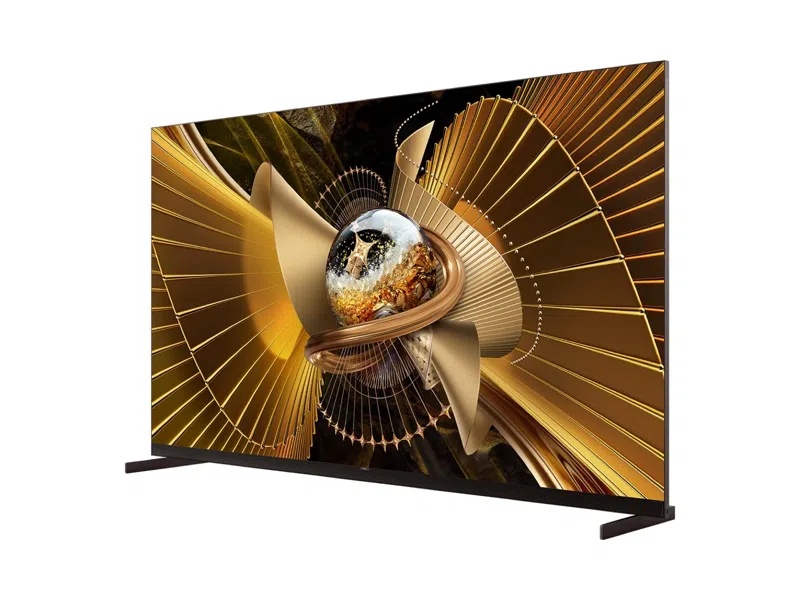
LG Micro RGB evo has been officially announced ahead of CES 2026, marking LG’s entry into the flagship RGB television segment. While the company has not shared pricing or availability timelines yet, it has confirmed that the new TV represents a major step beyond MiniLED technology. Recognized with a CES 2026 Innovation Award, the Micro RGB evo sets the tone for LG’s next phase in premium home entertainment.
LG Micro RGB evo brings OLED-level control to RGB displays
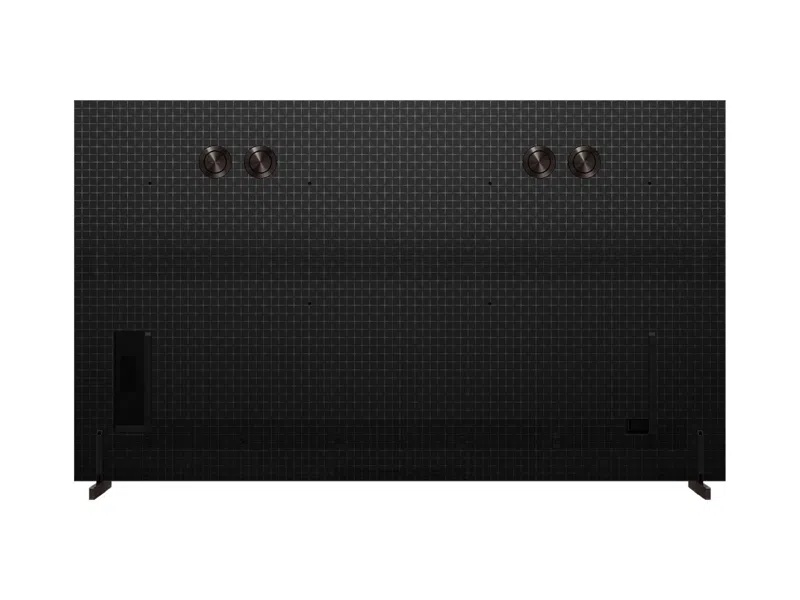
LG Micro RGB evo
At the core of the LG Micro RGB evo is a new Micro RGB backlight system that uses extremely small individual RGB LEDs. These LEDs are controlled with OLED-like precision, drawing from over a decade of LG’s OLED development. This allows finer control over colour and brightness compared to conventional MiniLED TVs, resulting in more accurate image reproduction.
Powering the display is the upgraded Alpha 11 AI Processor Gen 3, which features a Dual AI Engine with Dual Super Upscaling. This setup processes two different AI enhancement techniques at the same time, improving sharpness while keeping visuals natural and well-balanced. The processing also enables RGB Primary Color Ultra, delivering full colour reproduction across BT.2020, DCI-P3, and Adobe RGB standards, all certified by Intertek.
The Micro RGB evo also introduces Micro Dimming Ultra, managing over a thousand dimming zones for precise control of light and contrast. This helps preserve detail in both bright highlights and darker scenes, placing it among the highest-performing LCD TVs in terms of contrast accuracy.
Beyond picture quality, LG continues to focus on personalisation through its webOS platform. Features such as Voice ID, AI Picture and Sound Wizard, and a customised home screen adapt the experience to individual users. AI Concierge, AI Chatbot, and AI Search further simplify content discovery.
The LG Micro RGB evo, model MRGB95, will be offered in 100-inch, 86-inch, and 75-inch sizes. Visitors can experience the TV firsthand at LG’s booth during CES 2026 in Las Vegas from January 6 to January 9.
FEVM, a China-based brand focused on compact mini PCs, has launched its second system, the FAEX1. The new machine adopts a familiar cheese-grater aesthetic reminiscent of Apple’s designs, but incorporates a 16-core AMD APU and up to 128GB of LPDDR5X-8533 memory into a compact 1-liter chassis.
FEVM FAEX1 Specifications
The FAEX1 measures 220 × 133 × 35mm and uses a CNC-machined aluminum alloy shell to achieve its glossy, industrial look. Despite its size, the mini PC is unusually generous with ports.
Both the front and rear panels include two USB-C 40Gbps ports, two USB-A 10Gbps ports, HDMI 2.1, DisplayPort 2.0, an SD 4.0 card reader, a 3.5mm headphone jack, and an OCuLink 4i port for connecting external GPUs.
For connectivity, FEVM sticks to the latest standards. The FAEX1 supports dual-band Wi-Fi 7 and Bluetooth 5.4, alongside a 2.5GbE RJ45 port for wired networking.
Powering the system is AMD’s Ryzen AI Max+ 395 “Strix Halo” processor. It’s a 16-core APU built on AMD’s Zen 5 architecture, offering 32 threads, a Radeon 860S GPU with 40 RDNA 3.5 compute units, and an integrated XDNA 2 AI accelerator for on-device AI workloads.
To keep all of that in check, FEVM says the FAEX1 uses a 160W cooling solution that combines two active fans with a large vapor chamber. According to the company, this setup allows the mini PC to maintain peak performance even under sustained heavy loads.
Memory options include either 64GB or 128GB of soldered RAM, and storage is handled through three PCIe 4.0 x4 M.2 2280 slots for SSDs.
In China, the FAEX1 starts at 10,999 yuan for the 64GB barebones configuration with no SSD. The 128GB version costs 13,999 yuan, which roughly translates to $1,550 and $1,970, respectively, at current exchange rates.
For more daily updates, please visit our News Section.
The first half of 2026 is expected to bring a wave of flagship-grade Oppo smartphones to the Chinese market. These include the Find N6 foldable, new models in the Find X9 series, and the K13 Turbo lineup. Reports suggest that the upcoming Find X9 series will consist of the Find X9s, Find X9s+, and Find X9 Ultra.
Reports have revealed that the Find X9 Ultra’s quad-camera setup comprises one 200-megapixel sensor and three 50-megapixel sensors. However, a new leak claims that Oppo is actively testing a dual 200-megapixel camera setup. Since this configuration does not align with the expected camera layout of the X9 Ultra, it is likely to belong to one of the other Find X9 series phones expected to launch alongside the Ultra model.
This mysterious phone has a new Dimensity 9500-series chip
Alleged Oppo Find X9s Plus leak
This new leak from reliable tipster Digital Chat Station also states that the mysterious phone is powered by the Dimensity 9500+. The inclusion of the “+” suffix hints that it could be an overclocked version of the existing Dimensity 9500 chipset. Coming to the camera setup, the device is expected to feature a 200-megapixel Samsung HP5 main camera, along with a telephoto camera that uses the same 200-megapixel Samsung sensor. While the tipster did not specify the device’s name, it appears to be either the Find X9s or the Find X9s+.
Both the Find X9s and Find X9s+ are expected to be powered by the Dimensity 9500 Plus chipset. The Find X9s is rumoured to be a compact smartphone, while the Find X9s+ is said to be an upgraded version of the existing Find X9. A recent report claimed that the Find X9s+ will have triple 50-megapixel cameras. Based on this, the mysterious device is more likely to be the Find X9s+, though it is advisable to wait for further reports for confirmation.
For more daily updates, please visit our News Section.
Samsung is reportedly raising DRAM prices across both DDR5 and DDR4, removing what many buyers saw as a cheaper fallback option as memory costs continue to climb.
According to Taiwanese industry reports cited by Jukan on X, Samsung has increased DDR5 contract prices by more than 100%, pushing them close to $20 per unit, with figures around $19.20. The company is said to have informed OEM customers that available stock is limited, a move that has accelerated the price hike.
The increase, however, isn’t limited to DDR5 modules. Samsung has also raised DDR4 contract prices, with 16GB DDR4 modules now reportedly priced around $18. That narrows the gap between DDR4 and DDR5 and weakens DDR4’s role as a lower-cost alternative for system builders and device makers.
Market conditions don’t appear to be improving. Spot prices for DDR5 reportedly worsened through December, while DDR4 spot prices are also trending upward, showing little sign of stabilizing.
These contract prices mainly affect OEMs buying memory at scale, but the impact is likely to reach consumers. Laptop makers could respond by raising prices or reducing base memory configurations in 2026 models. Smartphone manufacturers may face similar pressure, particularly as higher-capacity RAM becomes standard.
Until now, rising costs were mostly an issue for high-end devices. But as 2025 draws to a close, even budget hardware appears set to take a hit. Samsung’s Galaxy A-series phones are also seeing price hikes.
With further price increases expected in Q1 2026 and no clear relief in sight until possibly 2027, DRAM costs are shaping up to remain a major factor in device pricing over the next year.
We use cookies on our website to give you the most relevant experience by remembering your preferences and repeat visits. By clicking “Accept”, you consent to the use of ALL the cookies.
This website uses cookies to improve your experience while you navigate through the website. Out of these, the cookies that are categorized as necessary are stored on your browser as they are essential for the working of basic functionalities of the website. We also use third-party cookies that help us analyze and understand how you use this website. These cookies will be stored in your browser only with your consent. You also have the option to opt-out of these cookies. But opting out of some of these cookies may affect your browsing experience.
Necessary cookies are absolutely essential for the website to function properly. This category only includes cookies that ensures basic functionalities and security features of the website. These cookies do not store any personal information.
Any cookies that may not be particularly necessary for the website to function and is used specifically to collect user personal data via analytics, ads, other embedded contents are termed as non-necessary cookies. It is mandatory to procure user consent prior to running these cookies on your website.