Advertisement

DDR4 is no longer cheap as memory price hikes spread beyond DDR5

Samsung is reportedly raising DRAM prices across both DDR5 and DDR4, removing what many buyers saw as a cheaper fallback option as memory costs continue to climb.

According to Taiwanese industry reports cited by Jukan on X, Samsung has increased DDR5 contract prices by more than 100%, pushing them close to $20 per unit, with figures around $19.20. The company is said to have informed OEM customers that available stock is limited, a move that has accelerated the price hike.

The increase, however, isn’t limited to DDR5 modules. Samsung has also raised DDR4 contract prices, with 16GB DDR4 modules now reportedly priced around $18. That narrows the gap between DDR4 and DDR5 and weakens DDR4’s role as a lower-cost alternative for system builders and device makers.

Market conditions don’t appear to be improving. Spot prices for DDR5 reportedly worsened through December, while DDR4 spot prices are also trending upward, showing little sign of stabilizing.

These contract prices mainly affect OEMs buying memory at scale, but the impact is likely to reach consumers. Laptop makers could respond by raising prices or reducing base memory configurations in 2026 models. Smartphone manufacturers may face similar pressure, particularly as higher-capacity RAM becomes standard.

Until now, rising costs were mostly an issue for high-end devices. But as 2025 draws to a close, even budget hardware appears set to take a hit. Samsung’s Galaxy A-series phones are also seeing price hikes.

With further price increases expected in Q1 2026 and no clear relief in sight until possibly 2027, DRAM costs are shaping up to remain a major factor in device pricing over the next year.

Don’t miss a thing! Join our Telegram community for instant updates and grab our free daily newsletter for the best tech stories!

For more daily updates, please visit our News Section.
(Source)

Honor Win series launching this month as a performance-focused gaming flagship

Honor Win series has officially been confirmed for launch later this month, with the company positioning it as a new performance-first smartphone lineup aimed at gaming users. While the initial teaser does not disclose every specification, it highlights that the Win series will include two flagship models and will focus heavily on sustained performance, battery life, and gamer-friendly design elements.

Honor Win series positioned as an esports-focused flagship

Honor Win series is launching this month

Honor has described the Win series as a “yearly esports phone,” signalling its intention to compete directly in the high-performance gaming segment. The lineup is expected to include two variants, both positioned as performance flagships rather than mainstream devices.

As per reports, the higher-end model is tipped to feature a 6.83-inch 1.5K LTPS flat display, a form factor preferred by many gamers for grip comfort and reduced accidental touches. The phone is also expected to adopt a metal frame and a flat panel design to support long gaming sessions. Under the hood, it is said to feature the Snapdragon 8 Elite Gen 5 chip.

One of the most talked-about features of the Honor Win series is the inclusion of an active cooling fan, which have been seen in leaked renders in the recent past. This suggests a focus on sustained performance rather than peak numbers alone.

The phone is also tipped to pack a battery larger than 8,500mAh. Other expected features include a 50-megapixel primary camera, an ultrasonic fingerprint sensor, high-grade water resistance, fast charging support, and a dedicated AI side key that could offer gaming-related shortcuts.

The standard Honor Win model will borrow some of its specs from the higher-end edition. It is said to come equipped with the Snapdragon 8 Elite chipset. Although it will have a similar design as its higher-end version, it may not feature a cooling fan.

For more daily updates, please visit our News Section.

Stay ahead in tech! Join our Telegram community and sign up for our daily newsletter of top stories.

Honor Magic 8 Pro European Pricing Leaks Ahead of Official Launch

Honor is getting ready to expand the Magic 8 series beyond its limited global launch in Malaysia and the GCC region. The next stop is Europe, and a new leak has now revealed the expected pricing of the Honor Magic 8 Pro in the region.

According to tipster RODENT950 on X, the Honor Magic 8 Pro will be priced between €1,199 and €1,299 in European markets. It is not clear whether this price range reflects different storage variants or regional price differences. In Malaysia, the phone is available in two configurations: 12GB RAM with 512GB storage and 16GB RAM with 1TB storage. If the leak is accurate, the Magic 8 Pro will enter the European market with a minimum price of €1,199.

The global version of the Honor Magic 8 Pro comes with a 7,100mAh battery. It supports 100W wired fast charging and 80W wireless charging. In comparison, the China-only model features a slightly larger 7,200mAh battery and faster 120W wired charging, while wireless charging remains the same at 80W. Apart from these differences, both variants share the same specifications.

The device runs MagicOS 10 based on Android 16. It features a 6.71 inch LTPO OLED display with a 1.5K resolution of 1,256 x 2,808 pixels and a 120Hz refresh rate. Honor claims the display can reach up to 6,000 nits of peak HDR brightness. The phone is powered by the Snapdragon 8 Elite Gen 5 processor paired with an Adreno 840 GPU. It is available with up to 16GB of RAM and up to 1TB of internal storage.

The rear camera setup includes a 200 megapixel 1/1.4 inch sensor with 3.7x optical zoom and up to 100x digital zoom. It also features a 50 megapixel 1/1.3 inch sensor with CIPA 5.5 stabilization and a 50 megapixel ultra wide camera. On the front, the phone has a 50 megapixel selfie camera along with a 3D depth sensor.

The Honor Magic 8 Pro carries IP68, IP69, and IP69K ratings for dust and water resistance. It uses an ultrasonic fingerprint scanner and includes sensors such as an accelerometer, gravity sensor, infrared sensor, gyroscope, compass, ambient light sensor, and proximity sensor. The phone measures 161.15 x 75 x 8.32mm and weighs 219g.

Don’t miss a thing! Join our Telegram community for instant updates and grab our free daily newsletter for the best tech stories!

For more daily updates, please visit our News Section.

(Source)

Samsung’s memory strategy could push iPhone prices higher in 2026

Memory prices are climbing fast, and the impact could soon be felt by smartphone buyers. New reports suggest Apple may be forced to raise prices for its 2026 iPhone lineup, with Samsung’s recent moves in the memory market playing a key role.

Memory chips have become significantly more expensive over the past few months, and suppliers expect prices to rise further in 2026. That leaves device makers with limited options: cut specs, accept thinner margins, or pass the costs on to consumers. For Apple, that pressure appears to be building ahead of its next-generation iPhones.

Even Samsung isn’t immune. According to recent reports, Samsung’s memory division has ended long-term pricing contracts with its own mobile unit, switching instead to quarterly agreements that better reflect market fluctuations. The shift highlights how volatile the memory market has become. Samsung’s mobile chief, TM Roh, is also said to be planning talks with Micron’s CEO next month to secure enough memory for the Galaxy S26 series, suggesting supply and pricing are already a concern.

Samsung and SK Hynix remain Apple’s main suppliers for memory used in iPhones and other devices. With Apple’s existing long-term supply contracts nearing expiration, both companies are reportedly preparing to raise memory prices starting January 2026. If Samsung isn’t offering favorable terms internally, it’s unlikely Apple will receive better treatment.

That puts Apple in a difficult position. With few alternative suppliers at scale, higher component costs may eventually show up in retail pricing. While nothing is final yet, current conditions point to a real possibility that 2026 iPhones could cost more than their predecessors.

How much of the increase reaches consumers remains to be seen, but the memory market is shaping up to be a key factor in next year’s flagship pricing.

Don’t miss a thing! Join our Telegram community for instant updates and grab our free daily newsletter for the best tech stories!

For more daily updates, please visit our News Section.

(Source)

DJI Osmo Pocket 4 launch reportedly pushed to early next year

DJI’s next pocket gimbal camera may not arrive as soon as expected. New reports suggest the Osmo Pocket 4 has been delayed, pushing its launch into early 2026.

The Osmo Pocket lineup is due for an update, and leaks around a new model have been circulating for months. DJI has already been linked to the Osmo Pocket 4 through an FCC filing spotted late last month, confirming the device is real and moving through regulatory approval. That listing also pointed to a roughly 20% battery improvement compared to the current Osmo Pocket 3.

The pocketable camera has also appeared in multiple leaks this year, including early images, fueling expectations of a launch before the end of 2025. Some of that speculation was tied to DJI’s situation in the US, where a potential ban is expected to take effect before 2026.

Quality control issues related to accessories could be the reason

According to Photorabz, DJI has now missed its original December window due to quality control issues related to accessories, not the camera itself. If accurate, this would explain the silence from DJI despite the growing number of leaks. As a result, the Osmo Pocket 4 is now expected to launch in early 2026.

That said, the wait may not be much longer. DJI is likely to start teasing the new Osmo Pocket before the end of December, with an official global release date expected to follow soon after.

For now, DJI hasn’t made anything official. But with certifications in place and leaks continuing to surface, the Osmo Pocket 4 appears close to launch — just not as soon as many were expecting.

Please Note: When you buy something using the links in our articles, we may earn a small commission at no cost to you.

Don’t miss a thing! Join our Telegram community for instant updates and grab our free daily newsletter for the best tech stories!

For more daily updates, please visit our News Section.

(Source)

Stuffcool Nomad Pro GaN Charger Launched With 140W Fast Charging and Global Plug Support

Stuffcool has launched the Nomad Pro, a GaN-based travel charger designed for people who carry multiple devices and travel across countries. The charger supports use in more than 150 countries and can charge up to three devices at the same time, removing the need to carry separate chargers and adapters.

The Nomad Pro measures 9.37 × 7.05 × 3.6 cm and comes with a built-in US plug. It also includes interchangeable plug heads for the EU, India, and the UK. This setup allows users to switch plugs based on the country they are in, without relying on external adapters. The compact size is made possible through GaN technology, which helps deliver higher power in a smaller body.

The charger supports PD 3.1 fast charging with a maximum output of 140W. It features two USB Type C ports and one USB A port. According to Stuffcool, the Nomad Pro can charge laptops, tablets, smartphones, cameras, and gaming devices. It also supports Advanced Voltage System and is AVS compatible. The company states that the charger is future ready for upcoming iPhone models and can charge supported iPhones up to 50 percent in around 20 minutes.

One of the main highlights is the built-in TFT smart display. The screen shows real time charging wattage, power output for each port, and the status of connected devices. This allows users to clearly see how power is being shared when multiple devices are connected.

For safety, the Nomad Pro uses Smart IC with auto detection and includes protection against over voltage, over temperature, short circuits, and power surges. The charger is BIS approved and is manufactured in India.

Pricing & availability

In terms of pricing, the Stuffcool Nomad Pro is listed at Rs. 6,499. It is currently available on Amazon.in for Rs. 4,839 for a limited time. The charger is also sold through stuffcool.com and selected offline retail stores across India.

For more daily updates, please visit our News Section.

Stay ahead in tech! Join our Telegram community and sign up for our daily newsletter of top stories!

Huawei Mate 80 Sales Surge Past 750,000 Units as Demand Outpaces Supply

Huawei’s Mate 80 series has started strong in China, crossing an estimated 750,000 units shipped in about two weeks after launch. This comes despite ongoing supply limits, especially for higher-end models in the lineup. Early demand has been high enough that some configurations are already facing long delivery delays.

According to Weibo tipster Geek Village Chief (极客村长), Huawei has been shipping Mate 80 units steadily since launch, but supply has not kept pace with demand. The Mate 80 Pro Max, which we have recently reviewed, is the most affected. New orders are being quoted waiting periods of up to two months, with some Huawei stores reportedly pushing delivery estimates to February 2026.

The Mate series has long been Huawei’s flagship line in China, and the Mate 80 continues that trend. The series is popular because it combines high-end hardware with pricing that stays below many competing flagships. Even with new camera hardware, upgraded internals, and deeper HarmonyOS integration, Huawei has kept prices within reach of a wider group of buyers. That balance between features and cost is a major reason behind the fast sales pace. The Mate 80 base model with 12GB RAM and 256GB storage costs CNY 4,699 (around $660 USD), and the Mate 80 Pro model has a starting price of CNY 5,999 (about $840 USD).

Local reports say the Mate 80 series is selling faster in China than recent launches from Apple and Xiaomi, including the iPhone 17 and Xiaomi 17 series. The strong start also points to Huawei’s broader recovery in the domestic market. Over the past year, Huawei has steadily increased its market share and returned to the top tier of smartphone brands in China. Its extensive offline retail network, a loyal customer base, and a consistent flagship launch cycle are driving this recovery.

If supply improves, the Mate 80 series could post very high lifetime shipments. Estimates suggest the lineup could cross 10 to 14 million units over its sales cycle. For now, demand is clearly ahead of supply, and Huawei’s next challenge is scaling production fast enough to match it.

For more daily updates, please visit our News Section.

Don’t miss a thing! Join our Telegram community for instant updates and grab our free daily newsletter for the best tech stories!

(Source: 1, via)

Casio Edifice ECB-2300HR-1A Honda F1 Anniversary Watch Listed Ahead of March Launch

Casio has officially listed the Edifice x Honda collaboration watch on its Japanese website, confirming a March 2026 release. The watch carries a manufacturer’s suggested retail price of ¥66,000 including tax. The listing confirms the model name ECB-2300HR-1A.

This limited collaboration marks 60 years since Honda’s first Formula One victory. On October 24, 1965, the Honda RA272 won the Mexican Grand Prix, becoming the first Japanese car to take an F1 victory. The car featured a fully Honda-built engine and chassis. Since then, Honda has secured six constructors’ titles and produced four world champions. This Edifice model is designed as a tribute to that milestone, with Honda directly involved in the planning and research.

The bezel ring uses genuine Championship White paint, the same color used on the RA272. The paint is fixed to the base and finished with a top coat to create a glossy ivory tone similar to the original car’s body. A gold “60” is engraved at the 60 minute position to mark the anniversary. The dial features a red ring around its edge, inspired by the Hinomaru design on the RA272 and the Japanese flag.

A gold metal bearing ring inside the watch is engraved with the words “Veni, Vidi, Vici” along with the car number “11.” This references the message sent by Honda’s F1 team after the historic win. The strap includes an engraved diagram of the RA272’s 1.5 liter V12 engine, highlighting Honda’s decision to use a 12 cylinder layout at a time when it was uncommon. The band uses nappa leather on the front and ultra suede on the back.

At 9 o’clock, the in-dial countdown timer recreates the RA272’s tachometer design, matching the original color layout, scale font, hand shape, and red zone marking. The case back features a laser engraved Honda 60th anniversary logo and the watch is delivered in special commemorative packaging.

The ECB-2300HR-1A measures 50.2 × 45.8 × 11.8 mm and weighs 67 grams. The case and bezel use carbon, stainless steel, and resin. It has a genuine leather and synthetic leather band sized for wrists from 175 to 215 mm. Water resistance is rated at 10 ATM.

The watch runs on Tough Solar, converting sunlight and indoor light into power. Battery life is approximately 7 months with normal use and up to 18 months in power saving mode. It supports Bluetooth time correction through the CASIO WATCHES app and includes automatic time adjustment, easy clock setting, world time for 38 cities plus UTC, stopwatch data transfer, Time and Place, and Find My Phone.

Don’t miss a thing! Join our Telegram community for instant updates and grab our free daily newsletter for the best tech stories!

For more daily updates, please visit our News Section.
(Source)

Samsung says its SmartThings AI cuts power use by 30%

Samsung has confirmed that its SmartThings AI Energy-Saving Mode can reduce the energy consumption of high-efficiency washing machines by about 30%. The data comes from a large-scale real-world study conducted in partnership with global carbon verification agency Carbon Trust.

Samsung SmartThings AI

The study analyzed energy usage data from approximately 187,000 Samsung washing machines in 126 countries. It ran for one year, from July 2024 to June 2025. The machines included in the study met high-efficiency standards in their respective markets, such as Energy Star in the US and 5 Star in India.

Samsung reported that enabling AI Energy-Saving Mode helped save a total of 5.02 gigawatt-hours (GWh) of electricity. This is equivalent to the monthly power consumption of around 14,000 households in Seoul, based on average figures from Korea Electric Power Corporation.

The AI Energy-Saving Mode uses SmartThings to monitor user behavior and optimize energy usage across compatible devices. The feature was activated manually by users during the study, which means the 30% savings figure came from voluntary usage rather than a controlled environment.

The verification followed the standards set by the Decarbonizing the Use-Phase of Connected Devices (DUCD) initiative. This initiative, led by Carbon Trust, provides energy consumption measurement guidelines for connected appliances. Samsung said it was the first company in the industry to carry out such large-scale verification based on DUCD protocols.

Samsung plans to expand its energy-saving efforts by developing more AI-driven appliances. The company said it will provide consumers with transparent data on energy use and carbon emissions to build trust and encourage adoption.

Samsung will showcase new AI-powered home appliances at CES 2026 during its ‘The First Look’ event in Las Vegas in January.

For more daily updates, please visit our News Section.

Stay ahead in tech! Join our Telegram community and sign up for our daily newsletter of top stories! 💡

(Source)

DJI Osmo Mobile SE Gimbal Discounted to ₹6,999 on Amazon India 

Get ready for capturing smooth and stable cinematic shots on the go. As the DJI Osmo Mobile SE Gimbal is currently available on Amazon for a price affordable for masses.

DJI Osmo Mobile SE

The DJI Osmo Mobile SE is currently listed at a competitive price of ₹6,999 (₹12,999). To make the deal even sweeter, Amazon is providing an additional instant discount of ₹699 on a Canara Bank Credit Card. That makes the effective price of Diji Osmo Mobile SE just ₹6,399. Additionally, receive ₹349 cashback when you purchase it through the Amazon ICICI Bank Credit Card. 

DJI Osmo Mobile SE has various features of the gimbal.

Pro Stabilization & Smart Tracking

The standout feature of the Osmo Mobile SE is its 3-axis stabilization, which eliminates shaky footage even during fast movements or while running. It is powered by DJI’s advanced ActiveTrack 6.0, allowing the gimbal to lock onto a subject and follow them seamlessly. Which means even if you’re filming with a lot of random movements, the camera stays centered and steady.

Portable Design and Clever Design

You very well know, portability is key for on-the-go creators. So, the SE features a foldable design that fits easily into a pocket or small bag. One of its most convenient features is the Magnetic Quick-Release design. You can simply snap your phone onto the gimbal using the magnetic ring or clamp, allowing you to start filming in seconds.

Intelligent Features for Every Creator

With the DJI Mimo app (available for both iOS and Android), users can gain access to:

  • ShotGuides: Recommends shooting sequences based on your environment.
  • Creative Modes: SpinShot, Timelapse, Motionlapse, and Panorama for dynamic storytelling.
  • Status Panel: A built-in display to easily check battery levels and switch between gimbal modes (Follow, Tilt Locked, FPV, and SpinShot).

Please Note: When you buy something using the links in our articles, we may earn a small commission at no cost to you.

If you want to know more deals on gadgets just go through our deals section.

Xiaomi HyperOS 3 Celebrates Christmas With New Watermark Update

With the year end festivities being right around the corner, Xiaomi is planning on celebrating Christmas with a new update to the HyperOS 3. The company just released a fresh set of pictures that showcased a small gesture for the festival in its camera app. So let’s check it out.

New Xiaomi HyperOS 3 Update Brings Christmas Watermark

Xiaomi HyperOS 3 Christmas Watermark Update
Christmas inspired watermark on HyperOS 3

In a recent post on Weibo (a Chinese microblogging platform), the tech giant shared a series of pictures that carried a unique new watermark. In the Christmas spirit, the watermark on the HyperOS 3 camera app will now let users customize with multiple themes inspired by the festival. There are a total of 3 layouts to pick from, 9 styles, and a bunch of colors and icons to pick from.

Xiaomi HyperOS 3 Christmas Watermark Update

This includes a full red watermark, black, white, green, and more. There are even messages that say Merry Christmas, small illustrations of the Christmas Pine Tree, and a bunch of its variations (including a combination of the previous two themes). Xiaomi is also offering the option to directly edit the watermark into the picture via the gallery app’s built in picture editor. It is worth noting that the brand will release the update later this week for devices running on the HyperOS 3 platform.

Xiaomi HyperOS 3 Christmas Watermark Update

Unfortunately, there is no official word on this new custom Christmas watermark arriving outside of China. In related news, the company just released HyperOS 3.0.5.0 update that fixes issues related to the camera app’s UI on the Xiaomi 15. Meanwhile, the HyperOS 3 brings a performance boost, but this also brings impacts on emulation gaming.

For more daily updates, please visit our News Section.

Tech enthusiast? Get the latest news first! Follow our Telegram channel and subscribe to our free newsletter for your daily tech fix! ⚡

Noise Master Buds Espresso Bronze Limited Edition and Copper Rose Special Edition Announced

Noise has added two new color options to its flagship Master Buds in the Master Series with Sound by Bose. The new finishes are called Espresso Bronze Limited Edition and Copper Rose Special Edition. These updates focus only on design, while the earbuds keep the same hardware, features, and performance as the existing variants.

Noise Master Buds

The Espresso Bronze Limited Edition comes with a dark, coffee-inspired metallic finish and will be sold for a limited time. The Copper Rose Special Edition offers a softer look with a subtle sheen aimed at users who prefer a cleaner and more muted design. Noise has confirmed that there are no changes to sound quality, features, or specifications compared to the standard Master Buds.

Noise Master Buds

The Noise Master Buds are designed to be lightweight and comfortable, with each earbud weighing 4.2 grams. They are tuned with Sound by Bose technology and use large 12.4mm drivers made from PEEK and Titanium. The earbuds support Spatial Audio and LHDC 5.0 for high-quality wireless audio. Connectivity is handled by Bluetooth version 5.3.

For noise control, the Master Buds offer Adaptive Active Noise Cancellation with noise reduction of up to 49dB. Call quality is supported by a six-microphone ENC setup. Other features include Google Fast Pair, Auto Pair, Dual Device Pairing, In-Ear Detection, and Hands-Free Calling. The earbuds also support Siri and Google Voice Assistant. A Low Latency Game Mode is included for reduced audio delay during gaming.

Battery performance remains the same across all color options. The earbuds deliver up to 44 hours of total playback with the charging case. They support USB Type-C charging and Noise InstaCharge technology, which provides up to six hours of playback with a ten-minute charge. The earbuds are rated IPX5 for water resistance and are compatible with the Noise Audio App for settings and updates.

Pricing & availability

The Espresso Bronze Limited Edition and Copper Rose Special Edition Noise Master Buds are priced at Rs. 7,999. They are available for purchase through gonoise.com. The Master Buds also continue to be sold in Onyx, Titanium, and Silver color options.

Please Note: When you buy something using the links in our articles, we may earn a small commission at no cost to you.

For more daily updates, please visit our News Section.

Tech enthusiast? Get the latest news first! Follow our Telegram channel and subscribe to our free newsletter for your daily tech fix!

China Sells Humanoid Robot for the Price of an iPhone

Highlights:

  • China’s $1400 Bumi humanoid highlights a sharp price gap with US robots like Tesla Optimus and Digit
  • Experts warn China’s low-cost push may fuel scale, not profits, in the global humanoid race
  • The trend deepens the US–China tech and AI rivalry, with different paths to dominance

China Pushes Ultra-Low-Cost Humanoids

China’s Songyan Power will supply 1000 Bumi humanoid robots to Huichen Technology under a new deal. Bumi is a small, lightweight humanoid robot that can walk, run, dance, respond to voice commands, and be programmed using simple drag-and-drop tools. It is designed for interactions with children, for education, and beginner robotics learning.

Priced at 9998 yuan (about $1400), Bumi is currently the world’s cheapest humanoid robot, making it accessible to schools and families rather than just companies or factories. Sales are set to begin in January 2026, with China becoming one of the first countries to push humanoid robots toward everyday consumer use.

A Sharp Contrast With the US Market

In US, humanoid robots are still much more expensive. Tesla’s Optimus is expected to cost $20000–$30000 at scale, while Agility Robotics’ Digit sells for around $250000 and is built for warehouses and factories.

US players prioritize industrial productivity and safety over consumer adoption, resulting in slower scale but clearer revenue models.

What This Means for the Tech and AI Rivalry

China’s strategy focuses on speed, manufacturing scale, and price disruption, even at thin margins. The US approach emphasizes advanced AI, autonomy, and enterprise value. This split reflects a broader AI and tech competition: China is betting on hardware scale and ecosystem dominance, while the US is betting on software intelligence and high-value applications.

Global Impact and Risks

Low-cost Chinese humanoids could accelerate global adoption in education and research, but experts warn that price wars may weaken long-term innovation. For global markets, the humanoid race is becoming another front in the US–China tech competition, with very different visions of how robots will enter everyday life.

Read More:

(via)

Dell PCs face installation failures and system freezes after Windows 11 December update

Several Dell PCs are facing critical issues after attempting to install Microsoft’s December cumulative update KB5072033 for Windows 11 versions 24H2 and 25H2. The problems include failed installations, frequent system freezes, and a non-functional Start Menu.

Dell PC

The update, released on December 9, has been failing to install on many Dell desktops and laptops. Users report that the progress bar halts mid-way and returns error code 0x800f0983. A system administrator confirmed that a large number of new Dell systems under his management encountered the same issue. He attempted multiple troubleshooting methods, including System File Checker, Deployment Image Servicing and Management, and reinstalling Windows. None of these fixed the problem.

The situation is worse on Dell Pro Max 16250 devices. Several users reported that these systems freeze after installing the update. Initial speculation pointed to Intel Arc graphics drivers. Further investigation by users revealed that a BIOS setting caused the issue. They found that disabling the “Enable adaptive c-States for discrete graphics” option under Advanced Setup > Performance in the BIOS stopped the system crashes.

Another reported issue affects the Start Menu. On some systems running Windows 11 24H2, the Start Menu fails to open after installing KB5072033. One affected user suspects that the problem may be connected to a previously identified bug from update KB5072911, which affected File Explorer and other XAML-based apps on enterprise devices.

Microsoft has not released an official fix or statement addressing these problems. For now, Dell users are advised to delay the KB5072033 update or manually adjust BIOS settings if they face system freezes. The update continues to raise concerns across Windows forums, especially among enterprise administrators managing large fleets of Dell hardware.

For more daily updates, please visit our News Section.

Stay ahead in tech! Join our Telegram community and sign up for our daily newsletter of top stories! 💡

(Via)

China equips traffic police with AI smart glasses for real-time vehicle checks

Traffic police usually rely on radios, handheld scanners, and a lot of manual checks to keep roads moving. But in Changsha, China, that job is starting to look very different. 

Local traffic officers are now taking help from AI-powered smart glasses to identify vehicles and driver details in a matter of seconds. 

According to an official announcement from the Changsha Traffic Police on December 13, the Changsha Municipal Public Security Bureau Traffic Management Detachment has equipped its frontline officers with new AI-powered glasses. 

Traffic police in China are using AI glasses for vehicle monitoring 

The device is lightweight and looks like a normal pair from a distance. But what it does best is show the vehicle’s information at a glance in one or two seconds. Officers can read the details on a built-in display without breaking their stride. 

The glasses are equipped with a 12MP wide-angle camera and a predictive image-stabilization algorithm designed to keep images clear, even when officers are on the move or working in heavy traffic. On a full charge, they are rated to operate continuously for up to eight hours.

One of the most important features of these glasses is automatic license plate recognition. The system works offline with an accuracy rate of over 99% and delivers results in under one second. It’s also designed to work reliably in different lighting conditions, whether it’s bright daylight or nighttime traffic.

Once the system identifies a vehicle, the glasses connect to the public security traffic database in real time and pull up details such as registration information, inspection status, and violation records. 

The glasses extend beyond vehicle tracking. They also support facial recognition, real-time voice translation in more than 10 languages, and on-site video recording for law enforcement.

Thanks to this system, inspection time for a single lane has reportedly dropped from about 30 seconds to just one or two seconds. It also reduces manual work, lowers stress for officers, enables non-contact enforcement, and helps make roadside checks safer and more accurate.

For more daily updates, please visit our News Section.

Don’t miss a thing! Join our Telegram community for instant updates and grab our free daily newsletter for the best tech stories!

(Source)

Vivo S50 launches in China with Snapdragon 8s Gen 3, Gigantic 6500mAh Battery, & More

While the Vivo S50 Pro Mini just debuted as a compact flagship phone, the base Vivo S50 arrives as an upper mid range smartphone with powerful performance. It is the affordable entry in the S50 lineup, bringing a capable camera system, a huge battery, and much more. So here are its specs, pricing, and other key details.

Vivo S50: Specifications

The Chinese tech giant announced the Vivo S50 with a design reminiscent of the older iPhone 16 Pros. So it has a flat front and rear, with rounded corners. The device sports a 6.59-inch AMOLED display with a 1.5K resolution, a 120Hz refresh rate, 4320Hz OWM dimming, and up to 5000 nits of peak brightness. Under the hood, the Vivo S50 is equipped with the Qualcomm Snapdragon 8s Gen 3 SoC, which is paired with up to 16GB of LPDDR5X RAM and 512GB of UFS 4.1 storage.

Vivo S50 launch
Vivo S50

Similar to its smaller sibling, the S50 also houses a huge 6,500mAh battery pack, but it only has 90W wired fast charging and no wireless charging support. For photography, the rear has a 50MP main (f/1.88, OIS) + 50MP periscope telephoto (3x optical zoom, f/2.65) + 8MP ultra wide (110° FOV, f/2.2), while the front houses a 50MP selfie shooter (f/2.0, autofocus). Other notable features include Bluetooth 5.4, WiFi 6, stereo speakers, and IP68 rating for water and dust resistance.

Vivo just announced the Vivo S50 in China in four color options, namely Space Black, Confession White, Serene Blue, and Inspirational Purple, and three storage variants. So here are the pricing details:

  • 12GB + 256GB – 2,999 Yuan (roughly 425 US Dollars)
  • 16GB + 256GB – 3,299 Yuan (roughly 467 US Dollars)
  • 12GB + 512GB – 3,399 Yuan (roughly 481 US Dollars)
  • 16GB + 512GB – 3,599 Yuan (roughly 510 US Dollars)

This model is also available for pre-order right now, with sales kicking off on 19th December 2025.

For more daily updates, please visit our News Section.

Don’t miss a thing! Join our Telegram community for instant updates and grab our free daily newsletter for the best tech stories!

Sony PlayStation Launched a Mechanical Watch, and It’s Not Just for Gamers

Highlights

  • Sony PlayStation launches a 30th anniversary watch collection with ANICORN.
  • The main model is a mechanical watch limited to only 300 pieces worldwide.
  • The collection shows PlayStation moving beyond merch into true collectibles.
  • Sony PlayStation has partnered with watch brand ANICORN to celebrate its 30th anniversary with a special watch collection. This is not a typical gaming product. It is designed to be worn, collected, and kept for years.

The main release is the First PlayStation Limited Edition Mechanical Watch. It is limited to just 300 units worldwide, making it rare from the start. This matters to fans because it turns PlayStation’s history into something personal and physical.

Unlike most gaming watches, this model uses a mechanical automatic movement. Mechanical watches are usually linked with craftsmanship and long-term value, which makes this release stand out from normal branded merchandise.

The design is inspired by the original PS1 console. The dial uses raised △〇×□ symbols, and the hands are shaped after the Start and Select buttons. These details remind players of the first PlayStation without looking flashy.

The case shape and matte gray finish also reference the PS1’s industrial design. Even the case back takes inspiration from the console’s optical drive, adding meaning for long-time fans.

Alongside the mechanical watch, PlayStation and ANICORN are also launching two Play Symbol quartz watches. These Dark Mode and Light Mode versions are more affordable and feature floating symbols that move as you wear the watch.

Overall, the collection shows how PlayStation is becoming more than a gaming brand. It reflects how gaming culture is now part of lifestyle and collector spaces. The watches launch on December 19, 2025, exclusively on ANICORN’s website, with prices ranging from $250 to $780.

Read More:

(via)

Xiaomi increases tablet prices by up to 20%, and the reason is obvious

There’s an uncomfortable reality that tech buyers are slowly being forced to accept. Products are getting expensive even when the hardware itself is not worth it.

We’ve been talking about rising component costs for a while now, especially memory. RAM prices, in particular, have become a recurring headache for manufacturers and consumers alike. And sooner or later, its effect is set to show on store shelves.

Guess what? That buffer period is over now.

Not long after reports surfaced that Samsung may raise its smartphone prices, several Xiaomi products quietly became more expensive in mainland China. The increases range from 100 to 200 yuan, depending on the model.

The affected models

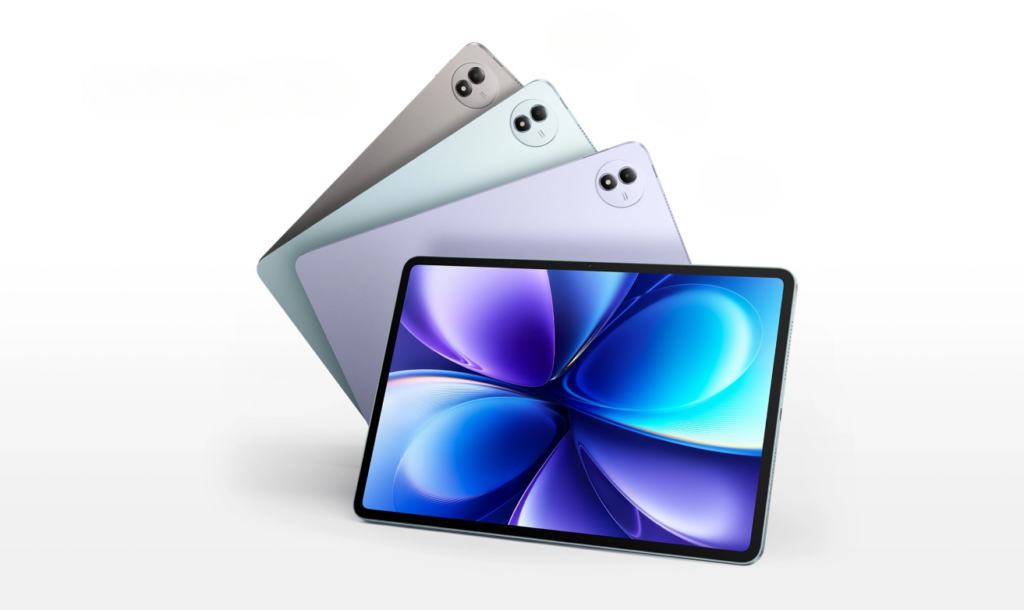
The price hike affects the Xiaomi Pad 8 series as well as every configuration of the Redmi Pad 2. The base Xiaomi Pad 8 now starts at 2,299 yuan, up from 2,199 yuan. Meanwhile, the higher-end Pad 8 Pro has seen its starting price climb from 2,799 yuan to 2,899 yuan.

The entry-level Redmi Pad 2 has been hit the hardest, with all models increasing in price by 200 yuan. It now starts at 1199 yuan.

According to industry analysts, the sudden adjustment is largely driven by the continued surge in memory and storage chip prices. 

Xiaomi president Lu Weibing previously warned that storage costs had risen far beyond expectations, and a recent TrendForce report predicts another significant increase in storage prices in the first quarter of 2026.

A major factor behind the trend is the rapid expansion of the AI industry. DRAM production capacity is increasingly being redirected toward data centers, creating a supply-and-demand imbalance for chips used in traditional consumer electronics. 

Those cost pressures are now rippling through the supply chain, and Xiaomi’s tablet price increases offer a small but telling example of how the industry is absorbing the shock.

Don’t miss a thing! Join our Telegram community for instant updates and grab our free daily newsletter for the best tech stories!

For more daily updates, please visit our News Section.
Vivo Pad 5 Pro Soft Light Edition debuts with a 13″ 3.1K 144Hz eye-care display & Dimensity 9400 chip

Vivo has officially launched the Vivo Pad 5 Pro Soft Light Edition in China. This new edition retains most specifications of the original Pad 5 Pro released earlier this year, but introduces an upgraded soft light display aimed at enhancing visual comfort.

Vivo Pad 5 Pro Soft Light Edition

Vivo Pad 5 Pro Soft Light Edition Specifications

The Pad 5 Pro Soft Light Edition features a 13-inch 3.1K display with a 3096 × 2064 resolution, a 3:2 aspect ratio, and peak brightness reaching 1,200 nits. It supports a 144Hz refresh rate for smooth scrolling and visuals, while a soft light coating helps reduce glare and eye strain during long sessions.

Vivo integrates dual-side light input technology to improve brightness efficiency while keeping power consumption low. The display also supports ecosystem-level color management to ensure consistent and accurate colors across apps and media content.

Under the hood, the tablet is powered by the flagship-grade MediaTek Dimensity 9400 processor. The chip is complemented by a large 40,600mm² VC cooling system to ensure sustained output without overheating.

Vivo Pad 5 Pro Soft Light Edition

The Vivo Pad 5 Pro Soft Light Edition runs OriginOS 5, delivering improved multitasking and productivity features. It supports PC level WPS document handling and includes AI-driven tools designed to manage demanding workflows. The tablet retains a 13MP rear camera and an 8MP front-facing camera for everyday photography and video calls.

The device is backed by a large 12,050mAh battery that supports 66W fast charging. It also features an eight-speaker panoramic audio system for a cinema-grade sound experience.

The tablet is impressively slim at 5.96mm and weighs only 578g, making it highly portable. For expanded productivity, vivo offers accessories including the Pencil 3 stylus, Smart Touch Keyboard 5 Pro, and Smart Dual-Sided Protective Case 5 Pro.

Pricing & Availability

The Vivo Pad 5 Pro Soft Light Edition is available in two configurations. The 12GB + 256GB variant is priced at 3,699 yuan ($524) while the 16GB + 512GB version is priced at 4,199 yuan ($595).

Sales have begun in China, and the tablet is available through major online retailers, including Vivo Mall and JD.com.

For more daily updates, please visit our News Section.

Stay ahead in tech! Join our Telegram community and sign up for our daily newsletter of top stories! 💡

Galaxy A07 appears on Geekbench GPU benchmark with key specs

Samsung’s upcoming Galaxy A07 5G has surfaced once again, this time on Geekbench’s GPU Compute Benchmark test, giving us an idea of what to expect from the company’s next entry-level 5G phone. The new listing follows an earlier benchmark that was widely questioned, making this appearance far more interesting for anyone tracking Samsung’s budget lineup.

Samsung Galaxy A07

The device shows up under the model number SM-A076B, first spotted by tipster @yabhishekhd. According to the listing, the phone scored 1,361 points in the OpenCL test, offering a rough idea of its GPU performance. The listing further reveals an octa-core CPU setup, with six efficiency cores clocked at 2.0GHz and two performance cores running at 2.4GHz, paired with a Mali-G57 MC2 GPU.

These details strongly suggest the Galaxy A07 5G is powered by the MediaTek Dimensity 6300, the same chip used in the Galaxy A06 5G. If accurate, Samsung appears to be sticking with familiar hardware while likely focusing on slight tweaks or refinements elsewhere. The benchmark also confirms 4GB of RAM and shows the phone running Android 16, which would make it one of the more affordable devices for Galaxy fans to look forward to.

Beyond benchmarks, the Galaxy A07 5G has already started appearing on official Samsung support pages across multiple regions. The phone has also picked up certifications from Nemko and the Bluetooth SIG, further hinting that its launch is getting closer.

As for timing, recent tips point to a launch either later this month or in early January 2026. While Samsung hasn’t confirmed anything yet, the growing number of listings and certifications suggests an announcement isn’t far off. If priced right, the Galaxy A07 5G could become a solid option for buyers looking for basic performance, 5G connectivity, and up-to-date software at a budget price.

Don’t miss a thing! Join our Telegram community for instant updates and grab our free daily newsletter for the best tech stories!

For more daily updates, please visit our News Section.
(Source: Geekbench | Abhishek Yadav)