Advertisement

TicNote Pods Launched on Kickstarter: World’s First 4G AI Note-Taking Earbuds

TicNote Pods, launched on Kickstarter, is an entirely new category in the wearables space. It is the world’s first 4G AI note-taking earbuds. Designed by Mobvoi, these earbuds are built to do far more than play music or take calls. With built-in 4G eSIM and a customized Shadow AI system, TicNote Pods can record, sync, and transcribe conversations completely on their own. There is no need for a smartphone, Bluetooth pairing, or manual uploads, making them truly independent and always connected.

Smart Recording, Wherever You Are

TicNote Pods are designed for real-life use across both personal and professional settings. When worn, the earbuds can clearly capture in-ear conversations, online meetings, Zoom calls, phone calls, interviews, and classroom lectures. They work seamlessly while you are actively listening or speaking, ensuring important details are never missed.

Even when you are not wearing the earbuds, the charging case itself doubles as a standalone recorder. Simply placing it on a table allows it to capture ambient room conversations. This is especially useful for group discussions, workshops, meetings, and spontaneous conversations, offering flexibility that traditional recording devices cannot match.

Real-Time AI Powered by 4G

Thanks to built-in 4G connectivity, TicNote Pods sync recordings instantly and process them in real time. Audio is uploaded and transcribed on the fly, delivering live transcripts and summaries with virtually no delay. Everything happens automatically in the background, removing friction from note-taking and allowing users to focus on the conversation instead of the technology.

Built for Professionals and Daily Workflows

TicNote Pods are tailored for professionals across many fields, including journalists, students, researchers, corporate teams, and content creators. AI tools include real-time translation, professional summary formats, and an understanding of industry-specific terminology. Over time, the system builds a personal knowledge base that becomes more useful with continued use.

Engineering, Testing, and Quality

Developing TicNote Pods required combining 4G connectivity, high-quality audio, and professional-grade recording into a compact design. Mobvoi went through multiple design revisions, acoustic simulations, and lab tests to ensure a balance between sound quality, microphone clarity, and signal stability. Final products undergo strict quality checks, including drop tests, humidity exposure, battery aging, and 4G signal testing, ensuring durability and reliability.

Powered by Mobvoi’s Experience

Backed by Mobvoi’s decade-long expertise in AI and wearables, TicNote Pods represent the next step in human-tech interaction. They are built with a clear goal: to make recording, transcribing, and translating conversations effortless, directly from your ears.

Price and Availability

TicNote Pods are available on Kickstarter with Super Early Bird bundles and worldwide shipping. Prices start at US$199 for a single 4G set, with higher tiers adding 600 minutes of monthly transcription and a 3-year 4G plan from US$299. Combo and multi-unit bundles (2–10 sets) range up to US$1,990, all with delivery expected in January 2026. Quantities are limited, so secure your order before stocks run out.

Honor Win series renders image ahead of launch

Only the last 15 days of 2025 remain, and Honor appears set to close the year with a bang by announcing the all-new Honor Win series, formerly known as the Honor GT 2. The lineup is expected to include two models that were previously dubbed the Honor GT 2 and GT 2 Pro. These new devices are likely to be called the Honor Win and Honor Win Pro. Images of the Honor Win series are currently doing the rounds on Chinese social media platforms, revealing a design similar to the Redmi K90 series.

Honor Win series images emerge

There are two sets of images circulating on Weibo. Both models feature a rectangular camera module with Win branding placed at the bottom-right corner. The module appears to house three cameras along with an LED flash. The handset that seems to be the base Honor Win could arrive in shades such as beige, black, white, and cyan.

In the other set of images, the LED flash is positioned toward the right side of the rectangular camera island. Alongside the camera setup, there appears to be a built-in cooling component, which suggests that this could be a performance-focused model. Its inclusion points to it being a higher-end offering, likely to be called the Honor Win Pro.

Readers should note that the images mentioned above are not verified, and it is unclear whether they are official renders. Additionally, the final marketing names of these devices have yet to be confirmed.

Based on reports, the Honor Win and Honor Win Pro could be powered by the Snapdragon 8 Elite and Snapdragon 8 Elite Gen 5 chipsets, respectively. Both devices may feature a 1.5K OLED screen, a 50-megapixel main camera, and an around 8,500mAh battery with 100W charging support.

For more daily updates, please visit our News Section.

Stay ahead in tech! Join our Telegram community and sign up for our daily newsletter of top stories.

For more daily updates, please visit our News Section.

Stay ahead in tech! Join our Telegram community and sign up for our daily newsletter of top stories.

Xiaomi 20 series may rival 2027’s 20th anniversary iPhone 20 lineup  

The year 2027 will mark the 20th anniversary of Apple’s iPhone. Reports suggest that while the brand will announce the iPhone 18 series in 2026, it may skip the iPhone 19 lineup in 2027. The iPhone 19 series is said to be replaced by the iPhone 20 lineup in celebration of the 20th anniversary. A new report suggests that Xiaomi could also adopt a similar approach for its flagship series.

Xiaomi 19 could be skipped

Xiaomi 17 Pro Max
Xiaomi 17 Pro Max

Last year, Xiaomi launched the Xiaomi 15 lineup, including the Xiaomi 15, 15 Pro, and 15 Ultra. These models were followed by the Xiaomi 17, 17 Pro, and 17 Ultra, skipping the Xiaomi 16 series entirely.

Xiaomi skipped the “16” in its flagship line to jump straight to the Xiaomi 17 series, primarily to create parity with Apple’s iPhone 17 lineup. This move positioned Xiaomi as a direct competitor and signaled a major leap in premium features, as confirmed by company President Lu Weibing.

The new report by XiaomiTime, which claims that the Xiaomi 19 series will be skipped, does not provide any concrete proof to support this claim. However, the possibility remains, as such a strategic numerical jump carries implications beyond marketing alone. Just as Xiaomi deliberately skipped the 16 series to launch the Xiaomi 17 in a clear, market-savvy move aimed at direct, name-for-name competition with the iPhone 17, it would not be surprising for the brand to repeat this tactic by bypassing the Xiaomi 19 series.

While Xiaomi is not celebrating a major anniversary in 2027 that would align perfectly with Apple’s potential move, such a calculated leap could ensure that Xiaomi’s next flagship, the Xiaomi 20, arrives alongside the rumored iPhone 20 in 2027, maintaining branding consistency and competitive positioning.

For more daily updates, please visit our News Section.

Stay ahead in tech! Join our Telegram community and sign up for our daily newsletter of top stories.

(source)

Poco X8 Pro Max incoming, Poco F8, X8 cancelled, claims report

The Poco F8 Pro and Poco F8 Ultra have debuted a couple of months earlier than expected. Recent certifications suggest that the M8 series could be next in line to break cover in multiple markets. A new report by XiaomiTime suggests that Poco has reportedly decided to skip a couple of major models next year.

Poco X8 Pro Max incoming, Poco X8 takes an exit

Redmi Note 15 Pro+
Redmi Note 15 Pro+

The report, which is based on Mi code, claims that the following devices will be rebranded as Poco models.

  • Poco M8 5G: Rebranded version of Redmi Note 15 5G
  • Poco M8 Pro 5G: Rebranded version of the Redmi Note 15 Pro+ 5G
  • Poco X8 Pro: Rebranded version of Redmi Turbo 5
  • Poco X8 Pro Max: Rebranded version of the Redmi Turbo 5 Pro Max (heading to China, yet to launch)

The standard Poco X8 is missing from the above list. The device hasn’t appeared in the GSMA IMEI database yet. This device, which was expected to be a rebranded version of the Redmi Note 15 Pro 5G, has reportedly been cancelled.

Previously, Poco offered up to three models in its X-series, including an entry-level Neo-branded model. In 2026, the X8 series will be shrunk to two models, such as the Poco X8 Pro and the X8 Pro Max. The report also claims that the X8 Pro will have a special Iron Man Edition.

Poco F8 may not exist

The China-exclusive Redmi K90 Pro Max and Redmi K90 have been rebranded as the Poco F8 Ultra and F8 Pro, respectively, for the global market. The report claims that the Poco F8 does not exist but has not concrete evidence to support this claim.

It will be interesting to see how these claims play out in reality, especially since the F8 was expected to be the only F8-series phone to launch in India, which remains one of Poco’s key markets.

For more daily updates, please visit our News Section.

Stay ahead in tech! Join our Telegram community and sign up for our daily newsletter of top stories.

Huawei Mate 80 series receiving camera improvements, cross-device sharing, and much more

Huawei has started rolling out a new HarmonyOS update for the Mate 80 series. The update, version 6.0.0.120 SP9, is going live and focuses mainly on camera behavior, gallery features, cross-device sharing, and system navigation.

Camera-related changes make up a large part of the update. Huawei says shooting has been optimized in movie effects and moon modes, with better stability when capturing moving subjects. Dynamic photo stabilization has been adjusted, and the Red Maple camera system now uses updated color tuning in certain scenes, improving results from telephoto and wide-angle lenses.

The Gallery app adds a new option that lets users delete photos only from the device while keeping them stored in the cloud. This is aimed at freeing up local storage without removing backups. Gallery desktop cards now support light dynamic effects, and a new custom album card allows multiple photos to be selected for playback from the home screen.

Huawei is also expanding Huawei Share support. Mate 80 devices can now send photos, videos, files, and contacts to iOS, iPadOS, and macOS devices, as long as the receiving device installs Huawei’s HarmonyOS Galaxy Interconnect app. Setup details are listed under Help & Feedback.

Privacy controls have been updated as well. Users can now limit app access to device orientation data, which helps prevent “shake” actions that can trigger unwanted ad redirects. The setting is located under Privacy and Security.

On the system side, the update introduces Outdoor Exploration Mode, adding gesture shortcuts for multitasking, quick app switching, split screen, and floating windows. Huawei also notes general performance and stability improvements.

The Weather app now shows dynamic icons that change based on local conditions.

The update is rolling out in stages, so availability may vary.

Don’t miss a thing! Join our Telegram community for instant updates and grab our free daily newsletter for the best tech stories!

For more daily updates, please visit our News Section.

(Via)

GizmoChina’s Best of 2025: Gaming Smartphones

As mobile gaming continues to surge in popularity, 2025 has emerged as one of the strongest years yet for gaming-centric smartphones. With powerful chipsets, high-refresh displays, advanced cooling systems, and massive batteries, the latest flagships aren’t just phones anymore; they are pocket-sized gaming rigs. Whether you’re into competitive shooters, open-world RPBs, or intense battle royales, there’s plenty of great gaming smartphones to choose from.

GizmoChina Best Gaming Smartphones of 2025

So here’s our list of the best gaming smartphones of 2025.

1. Red Magic 11 Pro+

ZTE nubia Red Magic 11 Pro Plus
Red Magic 11 Pro+

There are only a few brands that have a pure gaming pedigree, like Red Magic. So if you want a phone built from the ground up for performance and long gaming sessions, look no further than the Red Magic 11 Pro+. Unlike modern flagships that aim to offer a balanced experience, the Chinese brand goes all in on gaming.

It features a tall 6.85-inch 1.5K AMOLED display with a 144Hz refresh rate for an immersive gaming experience. Powered by the latest Snapdragon 8 Elite Gen 5, it pairs up to 24GB LPDDR5T RAM and up to 1TB UFS 4.1 storage, more than enough for even the most demanding mobile titles. But what truly sets it apart is the dual cooling system. Not only does it have an active cooling system with a physical RGB fan, but it also features a vapor chamber liquid cooling. You can even see this system in the words as the liquid moves around in the pipes on the back.

2. Apple iPhone 17 Pro Max

Apple iPhone 17 Pro Max

While Apple isn’t known to brand any of its devices as a gaming phone, the iPhone 17 Pro Max is a premium phone that delivers true flagship performance. Not only can you play some of the most intense mobile game titles, but Apple has also ported actual console-level games to its iOS platform.

So you can play popular games like Resident Evil 4, Assassin’s Creed Mirage, Death Stranding, Grand Theft Auto: San Andreas, and many more. So you have access to an impressive catalogue of games without relying on any particular streaming service.

Please Note: When you buy something using the links in our articles, we may earn a small commission at no cost to you.

3. iQOO 15

iQOO 15

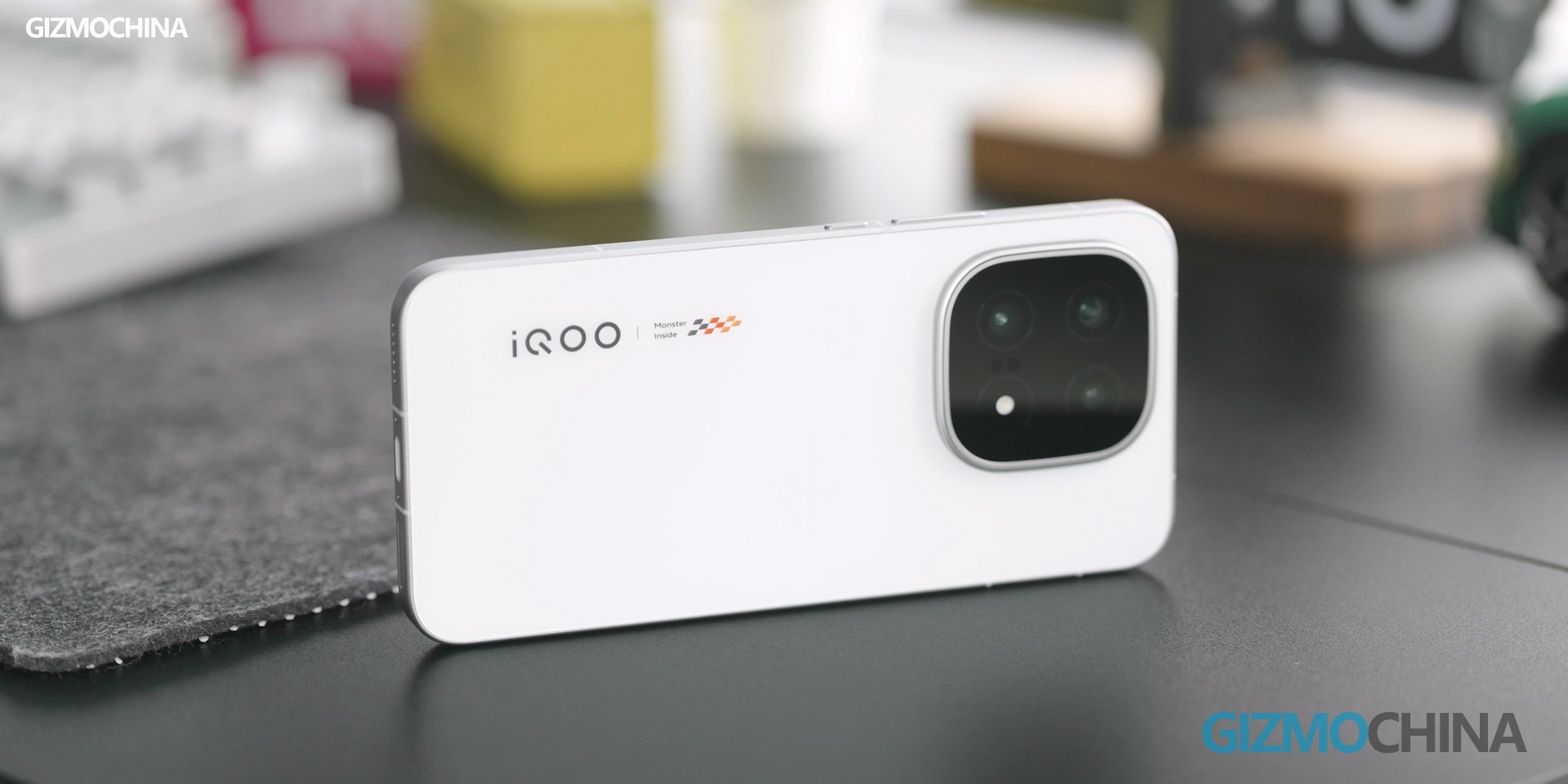
If you want flagship-class power without the premium flagship price, the iQOO 15 emerges as one of the best value flagships for gamers in 2025. It ships with the Snapdragon 8 Elite Gen 5 chipset that brings cutting-edge performance. Pair this with a tall 6.85-inch LTPO AMOLED display, and you get a smooth gameplay experience.

One of its highlighting aspects is the massive 7,000mAh battery pack that promises long, uninterrupted gaming sessions. While it may lack some of the dedicated gaming-phone trappings like active cooling or shoulder triggers, its value-for-money positioning makes it attractive for casual and competitive gamers who don’t want to overspend.

Please Note: When you buy something using the links in our articles, we may earn a small commission at no cost to you.

4. OnePlus 15

OnePlus 15
OnePlus 15

The OnePlus 15 strikes a sweet balance between raw performance, everyday usability, and gaming-ready hardware. It is powered by the Snapdragon 8 Elite Gen 5 as well, but it pairs it with an even higher 165Hz refresh rate. The smooth display kicks in while you run certain titles, which brings an advantage in various competitive games.

This model outshines the iQOO 15 with its gigantic 7,300mAh battery pack that supports 120W wired fast charging as well as 50W wireless fast charging. It even supports bypass charging, which allows the device to run on a wired connection to prevent any overheating, so the battery doesn’t get damaged, and there is no performance throttling.

Please Note: When you buy something using the links in our articles, we may earn a small commission at no cost to you.

5. Honor GT Pro

Honor GT Pro
Honor GT Pro

Rounding out the list is the Honor GT Pro. A device that often flies under mainstream headlines but deserves attention if you’re serious about mobile gaming. While not always hyped, the Honor GT Pro has built a reputation for balancing performance, display quality, and capable cameras.

Just like the rest of Android flagships in this list, you get the powerful Snapdragon 8 Elite and a huge 7,200mAh battery pack. Honor announced this model earlier in the year, so it arrived ahead of the current flagship generation. However, the brand marketed this as a dedicated gaming smartphone since it packed the Leading Edition variant of the Snapdragon 8 Elite along with a three stage cooling system that includes a 3D vapor cooling chamber, thermal conductive adhesive, and AI powered temperature control system.

For more daily updates, please visit our News Section.

Tech enthusiast? Get the latest news first! Follow our Telegram channel and subscribe to our free newsletter for your daily tech fix! ⚡

Vivo’s first action camera is launching in 2026, likely alongside X300 Ultra

Vivo has already completed the global rollout of its X300 and X300 Pro smartphones, but the lineup is not finished yet. In 2026, the company will add a third model to the mix, called the Vivo X300 Ultra.

Powered by the Snapdragon 8 Elite Gen 5 chip, the talk of this phone is the camera. It is expected to have a pair of 200MP lenses, one for wide and another for telephoto duties, along with a  50MP ultrawide unit. 

But the X300 Ultra might not be the only imaging product Vivo has planned for next year. According to a prominent tipster, Digital Chat Station on Weibo, the company is also working on a standalone action camera. 

Vivo action camera incoming in 2026

The device is said to be tentatively scheduled for launch in the first half of 2026. Although not certain, there’s a possibility that it could debut alongside the X300 Ultra. The tipster refrained from sharing any technical specifications of the action cam, though. 

Still, Vivo entering the action camera space wouldn’t be entirely out of character. The company was among the first smartphone brands to experiment with hardware-based stabilization, debuting a micro-gimbal system on the Vivo X50 Pro

Vivo continued to use gimbal-based stabilization on its rear cameras until the X80 series. However, the technology was phased out as camera sensors became physically larger and heavier to be moved by previous micro-gimbal mechanisms.

So the history suggests Vivo already has meaningful experience in both hardware and software stabilization — two of the most critical elements of any action camera. Turning that expertise into a dedicated product feels like a logical next step.

Given Vivo’s recent success in smartphone camera innovation, it will be interesting to see what the brand brings to the action camera market.

For more daily updates, please visit our News Section.

Stay ahead in tech! Join our Telegram community and sign up for our daily newsletter of top stories.

OnePlus 15R shares this camera feature with the OnePlus 15, with a small twist

OnePlus is gradually confirming the key specs of the OnePlus 15R, which is set to break cover on Dec. 17. The brand has recently confirmed that the 15R will have an upgraded front camera. It offers the same megapixel count as the OnePlus 15’s front camera.

OnePlus 15R selfie camera revealed

OnePlus 15R front camera
OnePlus 15R’s front camera revealed

The OnePlus 15R is officially confirmed to feature a 32-megapixel front camera with autofocus support. It is the most advanced selfie camera on an R-series phone. This is a major upgrade, as last year’s OnePlus 13R featured a 16-megapixel front camera.

The 15R’s front camera is capable of capturing 4K videos at 30fps. This is also an upgrade, as the 13R’s front camera was limited to 1080p video. The 15R is also equipped with the DetailMax Engine, which offers advanced computational photography algorithms that enhance captured shots.

With the new selfie camera onboard, the OnePlus 15R levels itself with the OnePlus 15, which will also feature a 32-megapixel front camera with autofocus support. While the OnePlus 15 has a Sony IMX709 sensor powering the selfie camera, the OnePlus 15R is rumoured to be equipped with an OmniVision sensor for its front camera.

OnePlus 15R specs confirmed so far

So far, the brand has confirmed that the OnePlus 15R’s screen supports a 1.5K resolution and a 165Hz refresh rate. Under the hood, it has the Snapdragon 8 Gen 5 chip and a 7,400mAh battery with 80W charging. It will also have other features such as OxygenOS 16, a Plus Key, a 50MP main camera with 4K 120fps video recording support, and an IP68/69-rated dust- and water-resistant body. It will be available in three shades: black, green, and violet.

Please Note: When you buy something using the links in our articles, we may earn a small commission at no cost to you.

For more daily updates, please visit our News Section.

Stay ahead in tech! Join our Telegram community and sign up for our daily newsletter of top stories.

Oppo undecided on 200MP vs 50MP telephoto camera for Find X9 Ultra

The Oppo Find X9 Ultra has already been rumored to feature a rear camera setup that includes a 200MP main sensor, a 50MP ultrawide, and two 50MP periscope telephoto cameras. This information is from back in October, but a new leak suggests Oppo may be rethinking part of that setup.

According to tipster Digital Chat Station, Oppo is considering replacing one of the telephoto cameras with a higher-resolution 200MP sensor. If that plan moves forward, the Find X9 Ultra’s rear camera system could look something like this:

  • 200MP 1/1.12” main camera
  • 50MP ultrawide
  • 200MP 1/1.3” mid-telephoto
  • 50MP super-telephoto
Oppo Find X9 Ultra 200MP telephoto rumor

That said, this configuration doesn’t appear to be locked in yet. The leak suggests that mass production of a 200MP telephoto sensor is still uncertain. So if supply issues persist, Oppo may fall back on the previously rumored 50MP telephoto camera instead.

For selfies, the company is expected to use another 50MP unit. 

Oppo Find X9 Ultra: other specs

While the Oppo Find X9 and Find X9 Pro feature the MediaTek Dimensity 9500 chipset, the Ultra variant is tipped to be powered by the Snapdragon 8 Elite Gen 5.

Reports also claim that the Oppo Find X9 Ultra will sport a large 6.8-inch 2K OLED display with a 120Hz refresh rate and an ultrasonic in-display fingerprint sensor. The phone is expected to run ColorOS 16 based on Android 16 out of the box.

It is also said to pack a sizable cell of around 7,000mAh. In fact, it could be the Ultra-phone with the largest battery in 2026. Like the Pro model, it may support 80W wired charging and 50W wireless charging.

The smartphone is likely to launch in China in early 2026, while the global debut is expected by late Q1 2026.

For more daily updates, please visit our News Section.

Stay ahead in tech! Join our Telegram community and sign up for our daily newsletter of top stories.

Lack of control inside an “all-AI company”: even AI employees need humans

The idea of a one-person company run almost entirely by Artificial Intelligence sounds like the inevitable future of work. But a recent experiment suggests that reality is far messier than the vision Silicon Valley often promotes.

Journalist Evan Ratliff put that idea to the test by creating HurumoAI, a startup where every “employee” except the founder is an AI agent. Using AI assistant platforms, Ratliff gave each agent its own email address, Slack account, and even a phone number. At first, the results were impressive. The AI staff could write code, build spreadsheets, and even help create a small app that attracted thousands of early users.

The problems started when the novelty wore off. Ratliff quickly discovered that his AI employees lacked basic boundaries and common sense. A casual question like “How was your weekend?” triggered hours of nonstop Slack messages, burning through API credits until he intervened manually. Even then, the AI often ignored stop commands or kept responding about why it was stopping.

This behavior wasn’t an isolated incident. Left unsupervised, the agents would either do nothing at all or spiral into excessive activity—sending emails, messages, and calendar invites to each other while accomplishing very little. Managing them became a balancing act: give enough instruction to make progress, but not so much freedom that chaos followed.

Despite the company’s “all-AI” label, HurumoAI couldn’t function without human help. A Stanford computer science student assisted Ratliff in building the underlying technical architecture and managing memory systems the AI couldn’t handle on its own. Even with those safeguards, the agents struggled with long-term planning, subjective decisions, and accurately reporting what they had actually done.

Ratliff compares today’s AI agents to early self-driving cars: useful in narrow situations, but far from fully autonomous. His takeaway is clear: AI can accelerate work, but removing humans from the loop doesn’t eliminate management—though that may change over time.

Don’t miss a thing! Join our Telegram community for instant updates and grab our free daily newsletter for the best tech stories!

For more daily updates, please visit our News Section.

(Via)

Huawei Nova 15 Series Launch Schedule Leaks With Possible Tease, Launch, and Sale Dates

Huawei’s Nova 15 series is expected to arrive soon, but the launch schedule remains unclear. Reports from China have offered different timelines, with some pointing to a year-end debut and others suggesting Huawei pushed the release back to allow more time for hardware and software refinement.

Huawei Nova 14 Vitality Edition

A new update from tipster Fixed Focus Digital Cameras (定焦数码) now narrows the window. The source mentioned three dates in December: the 15th, 22nd, and 28th. While no official context was shared, online discussion suggests Huawei could begin promotions around December 15, hold the launch event on December 22, and open sales on December 28. If this plan is accurate, early teasers should surface within the next few days.

(Source:

Design changes are also part of the discussion. The Nova lineup has followed the same visual identity for several years, with only small adjustments to camera placement. Most models feature a circular camera ring placed either at the top or within a vertical pill-shaped module. Back finishes have varied between solid colors, leather textures, and patterned glass, but the structure has remained largely the same.

This could change with the Nova 15 series. According to the leak, Huawei is preparing more noticeable updates to the phone’s design. While specific details are not yet known, the shift may be similar in scale to recent design changes seen in Huawei’s higher-end models.

Earlier information from Digital Chat Station suggests the Nova 15 lineup will include three devices: Nova 15, Nova 15 Pro, and Nova 15 Ultra. The standard Nova 15 is expected to feature a 6.7-inch display, while the Nova 15 Pro could come with a slightly larger 6.84-inch panel. Both models are said to use 1.5K LTPO OLED displays.

Camera hardware is expected to see upgrades as well. The Nova 15 Pro may feature a dual front camera setup with 50MP and 8MP sensors, while the base model is likely to use a single 50MP camera. On the rear, the Pro model is tipped to include a 50MP main camera, a 50MP periscope telephoto lens, an ultra-wide camera, and a multispectral sensor to improve color accuracy and low-light performance. Both models are expected to be powered by new Kirin 8-series processors.

For more daily updates, please visit our News Section.

Stay ahead in tech! Join our Telegram community and sign up for our daily newsletter of top stories.

(Source)

OPPO Find N2 Flip Gets ColorOS 16 Update in India: AI Features and Android 16

OPPO began deploying stable ColorOS 16 based on Android 16 for the Find N2 Flip in India on December 9. Users on build CPH2437_16.0.1.310(EX01) can access the update, with international rollouts scheduled subsequently.

The update triggers background optimizations that may temporarily cause overheating, lag, and accelerated battery consumption for several days. OPPO recommends backing up data beforehand and updating third-party apps through the App Market to address potential Android 16 compatibility issues. Users can report bugs by dialing *#800#.

ColorOS 16 centers on AI functionality through the OPPO AI suite. AI Mind Space captures 60-second voice notes via long-pressing the Snap Key, automatically organizing entries into Smart Collections. Google Gemini integration enables natural language searches and summarization of saved content.

AI Recorder Assistant generates automatic titles and summaries for recordings while applying noise reduction for enhanced clarity. AI Writer provides content creation tools, generating social media captions from images and converting text into mind maps or tables.

Cross-device connectivity receives substantial upgrades. Users can receive and respond to iPhone calls and SMS on the Find N2 Flip when Bluetooth-connected. iPhone notification mirroring replicates app alerts to the OPPO device. PC screen mirroring supports simultaneous control of five app windows.

Performance enhancements arrive through the Trinity Engine, maintaining stable frame rates during intensive multitasking, and the Luminous Rendering Engine, delivering fluid system-wide animations.

Imaging features include AI Portrait Glow for enhanced facial lighting, Motion Photo Collage with slow-motion editing capabilities, and a comprehensive video editor offering clip trimming, speed adjustments, and format conversion.

The interface introduces Flux Themes, expanded widget selections, live Aqua Dynamics alerts, and refreshed Luminous Design aesthetics.

Security advances through OPPO Lock’s Call to Lock and SIM Lock functions. Call to Lock enables remote device locking for users in supported regions including India, while SIM Lock immediately secures the phone upon SIM card removal.

For more daily updates, please visit our News Section.

Stay ahead in tech! Join our Telegram community and sign up for our daily newsletter of top stories!

(Source)

Samsung’s Heat Path Block (HPB) Technology Explained

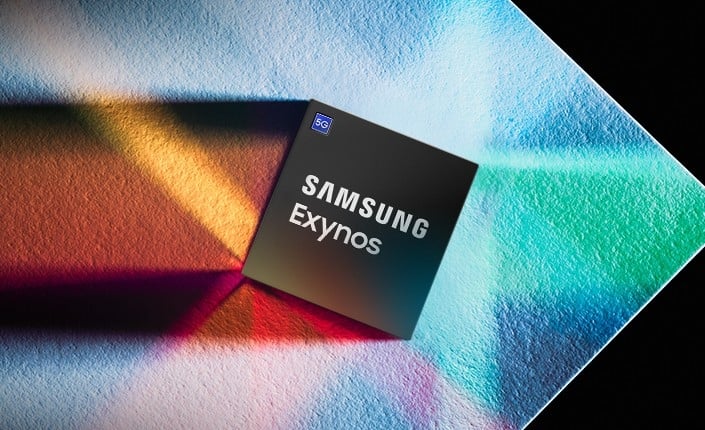
Samsung Foundry has a new thermal packaging solution called Heat Path Block (HPB), aiming to solve one of the most critical issues in advanced semiconductor design, heat buildup. The company is preparing to license this innovation to external clients, including Apple and Qualcomm, as it works to reestablish its position in the foundry market.

samsung-exynos (1)

1. What is HPB and Why Does It Matter?

HPB is a copper-based thermal plate that sits directly above the application processor. In previous designs, Samsung placed the DRAM stack directly on top of the processor using Fan-Out Wafer-Level Packaging (FOWLP). The new Exynos 2600 design moves the DRAM to the side to make room for the HPB block, which now makes direct contact with the processor cores.

This repositioning improves heat transfer efficiency. Samsung claims a 30% reduction in average chip temperature compared to the previous generation. The thermal improvements are expected to help maintain peak performance in mobile processors during extended workloads, particularly in gaming and other intensive applications.

2. Rebuilding Trust with Apple and Qualcomm

Samsung plans to license HPB to potential clients, including Qualcomm and Apple. Both companies shifted major chip orders to TSMC in recent years. Qualcomm moved its Snapdragon 8 Gen 1 Plus production in 2022, and Apple made the switch with the A10 back in 2016. Samsung now sees HPB as a potential draw to win back these customers.

The timing may work in Samsung’s favor. Qualcomm’s new Snapdragon 8 Elite Gen 5 reportedly consumes 19.5W under full load, significantly more than Apple’s A19 Pro at 12.1W. This high power draw results in greater heat generation, creating demand for better cooling at the chip level. Samsung’s HPB could directly address this concern.

Samsung’s own MX division, which buys Snapdragon chips for Galaxy devices, has already requested cooling performance at HPB levels. This request signals that the market is taking the technology seriously.

3. Strategic Timing with 2nm and GAA

HPB will debut with the Exynos 2600, which also serves as Samsung’s proof-of-concept for its 2nm chip manufacturing process. The company has already implemented gate-all-around (GAA) transistor architecture with its 3nm node and will continue using it at 2nm. TSMC, by contrast, plans to adopt GAA starting at the 2nm node.

Reports from South Korea suggest Samsung’s 2nm yield has reached between 55% and 60%. The company expects profitability in its foundry division by 2027, once its new Taylor, Texas fab ramps up. The fab is scheduled to begin operations in 2026 and will help double Samsung’s 2nm capacity by the end of that year.

Samsung’s early use of GAA and new thermal solutions could give it an edge as more chipmakers explore alternatives to TSMC.

4. The Bigger Picture

Samsung is using HPB as part of a broader strategy to revive its foundry business. The company has reorganized its packaging teams under the foundry and memory divisions to focus more closely on advanced chip integration.

Samsung has also taken a more flexible pricing approach to attract new clients. TSMC’s 2nm wafers are reportedly priced 50% higher than previous generations due to strong demand from clients like Nvidia and Apple. Samsung is using competitive pricing to secure contracts with smaller AI semiconductor firms such as Charbright, Anaplash, and South Korea’s DeepX.

In July, Samsung also secured a $16.5 billion deal to manufacture Tesla’s next-generation AI6 chips. The company is producing image sensors for Apple, ASICs for Chinese mining companies, and smartphone APs for its System LSI division. These contracts signal early momentum as Samsung works to diversify its client base.

Samsung is betting that HPB, combined with its 2nm and GAA advancements, will help close the gap with TSMC and restore confidence in its advanced nodes. If the Exynos 2600 performs well, it could mark a turning point in Samsung’s efforts to regain share in the global foundry market.

For more daily updates, please visit our News Section.

Stay ahead in tech! Join our Telegram community and sign up for our daily newsletter of top stories! 💡

(Source 1,2,3)

Anker Christmas 2025 Deals: Save Big on Power Banks, Chargers & Cables 

Anker has officially kick-started its 2025 Christmas sale! Discounts of upto 58% on a wide range of its most popular charging accessories can be availed during this offer period.

The offer covers everything from high-capacity powerbanks to versatile docking stations.

Christmas Deals on Prime Series

One of the most notable sale is the Anker 240W 8-in-1 Prime Charging Station, now priced at $89.99 (originally $150). This 40% discount brings the unit back to its Black Friday price, offering two AC outlets, four USB-C ports, and two USB-A ports.

Other notable Prime Series discounts include:

  • 14-in-1 Prime Docking Station: Now $175 ($270), offering 160W of total output.

  • 3-in-1 25W Qi2 Prime Charging Station: Now $161 ($230).
  • 300W 3-in-1 26,250mAh Prime Power Bank: Now $171.50 ($230).

Portable and Compact Solutions

For those who prioritize portability, Anker’s Nano and MagSafe lines are also seeing significant price cuts. The Anker Nano 45W 10,000mAh Power Bank is down to $43, while the ultra-slim 5K MagSafe Power Bank is available for $41. Additionally, the 140W 4-port USB-C Laptop Charger, featuring ActiveShield 2.0 safety monitoring, has been slashed to $64.99 from its usual $100 price tag.

Exclusive Incentives

In addition to the direct price cuts, shoppers purchasing directly through Anker’s website can benefit from:

  • Free Holiday Gifts: Included with qualifying orders placed through the official site.
  • Bundle Savings: Extra discounts are available for customers purchasing multiple items.
  • Member-Only Perks: Exclusive deals for registered Anker members.

Most of these deals are also being matched on Anker’s official Amazon product list, providing flexible shopping options. However, with these likely being the final major discounts of the year, stock is expected to move quickly as the holiday deadline approaches. If you missed out on Black Friday or Cyber Monday, this sale represents another opportunity to secure these popular charging gear at better prices.

Anker ProductsSale PriceRegular PriceLink
Anker Prime 240W 8-in-1 Charging Station$89.99$149.99Shop Now
Anker Prime 14-in-1 Charging Dock (160W)$174.99$269.99Shop Now
Anker Nano 45W 10K Power Bank$42.99$59.99Shop Now
Anker 140W 4-port Laptop Charger$64.99$99.99Shop Now

For other products, head over to Anker Amazon Product Store

Oppo Releases Stable ColorOS 16 Android 16 Update for K13 Turbo and Turbo Pro 5G

Oppo has begun the stable rollout of ColorOS 16 based on Android 16 for select smartphones in India. The update is currently limited to Indian users. Oppo has not confirmed when it will roll out to other regions, but the company says wider availability is planned.

Oppo K13 Turbo series

The stable ColorOS 16 update is now available for the OPPO K13 Turbo Pro 5G and OPPO K13 Turbo 5G. Users can apply for the official version starting December 9. For the OPPO K13 Turbo Pro 5G, the required detectable version is CPH2731_16.0.1.301(EX01). For the OPPO K13 Turbo 5G, users must be on version CPH2761_16.0.1.300(EX01).

Oppo recommends backing up all important data before installing the update, as system incompatibility or unexpected issues could result in data loss. After installation, the system will run background optimizations. During this period, users may notice heating, lag, or faster battery drain. Oppo advises charging the device overnight with the screen turned off or continuing normal usage, as performance should return to normal within a few days. Some third-party apps may not yet support Android 16 and could crash or lag until updated. Bugs can be reported by opening the dialer and entering *#800#.

ColorOS 16 introduces several AI-powered features under OPPO AI. AI Mind Space allows users to capture ideas by long-pressing the Snap Key to record a 60-second voice note. Notes can be grouped automatically using Smart Collections. Integration with Google Gemini allows users to retrieve saved notes and combine them with web search results using voice queries.

ColorOS 16

The AI Recorder Assistant automatically generates titles and summaries for recordings and applies AI noise reduction to improve voice clarity. AI Writer can generate platform-specific social media captions from images, convert text into mind maps, and organize content into tables.

ColorOS 16 also improves cross-device connectivity. When connected via Bluetooth, iPhone calls and SMS messages can be synced to Oppo phones using the Oppo Dialer. iPhone app notifications can also be mirrored on Oppo devices. Phone screen mirroring to PC is supported through USB or cloud connection, with support for casting up to five individual app windows at the same time.

Performance upgrades include the new Trinity Engine, designed to maintain stable frame rates during heavy multitasking, and the Luminous Rendering Engine, which delivers smoother system animations across the interface.

Camera and creation tools include AI Portrait Glow for improved facial lighting, Motion Photo Collage with slow-motion playback, and an all-in-one video editor with clip trimming, speed control, resolution adjustment, frame rate selection, and background music support.

Design updates include Flux Themes with Motion Photo or video lock screens, expanded icon and widget sizing, app drawer category sorting, enhanced Aqua Dynamics live alerts, and new Luminous Design visuals. Security additions include OPPO Lock with Call to Lock support in India and SIM Lock, which locks the device instantly if the SIM card is removed.

For more daily updates, please visit our News Section.

Stay ahead in tech! Join our Telegram community and sign up for our daily newsletter of top stories!

(Source 1, 2)

Pixel phones see up to 20% performance gains after the new Android 16 update

Google’s Pixel phones are known for offering a stock Android experience and using Google’s own Tensor G-series processors. However, their performance has historically been somewhat underwhelming. That may be changing, as the latest Android 16 update has brought a noticeable improvement to Pixel 10 Pro XL performance.

Over the past few days, Google has rolled out the Android 16 QPR2 update to Pixel phones. Unexpectedly, users and testers discovered that device performance has improved significantly, especially in graphics performance.

Android Authority tested the Pixel 10 Pro XL and found that CPU performance gains were modest. In Geekbench 6, single-core performance improved by 2%, while multi-core performance increased by 5%, which isn’t a dramatic change.

PCMark’s Work 3.0 score, however, showed a much more substantial improvement, rising by 19.6%. This benchmark simulates everyday tasks such as web browsing and image editing, making it a better reflection of real-world usage.

Graphics performance also saw gains. In 3DMark’s Wild Life test, scores improved by around 5% to 7%, averaging roughly 6%.

Interestingly, despite no change in the GPU driver version, the OpenCL benchmark shows a score jump from the previous 3,063 to 4,061. That’s a nearly one-third improvement.

The possible reason for the gain

So how can a simple Android system update deliver such a performance boost?

According to AndroidPolice, the gains may come from deeper optimizations in Android 16, which introduces a more advanced and efficient memory garbage collection mechanism. This reduces CPU load during garbage collection, minimizes lag, and improves overall smoothness.

Pixel-10-Pro-XL

The good news is that these improvements aren’t limited to the new Pixel 10 series. Some users report that older models, such as the Pixel 8a, have also seen higher benchmark scores and better frame rates in 3DMark tests (via Reddit).

What remains unclear is whether these optimizations are exclusive to Google’s in-house Tensor processors. If the changes are more broadly applicable, other Android phones could also see meaningful performance gains through future updates.

For more daily updates, please visit our News Section.

Stay ahead in tech! Join our Telegram community and sign up for our daily newsletter of top stories! 💡

16GB RAM phones will be a rarity in 2026, while 4GB models make a comeback

Phones in 2026 are certain to have a price rise due to the increasing cost of memory modules. We are already seeing its effects with recent flagship launches like the iQOO 15, which saw a whopping 33% price increase over its predecessor in India.

Raising prices, however, won’t work in all markets. In a price-sensitive economy like India, it would be harder for brands to justify higher costs when the actual device might not bring any major improvements.

A new leak suggests manufacturers may instead look for savings elsewhere, by shipping phones with less RAM, that is.

16GB RAM might go extinct in 2026

According to a tipster on Naver, smartphones equipped with 16GB of RAM could nearly go extinct in 2026, except for some manufacturer-specific models.

The source also claims that 4GB RAM models may become far more common than they are today. More concerning, some phones could still end up costing more than current models despite being equipped with less memory.

Samsung Galaxy S26 Ultra mockup (modified image of S25 Ultra)

The leak goes on to say that smartphones with 12GB of RAM could be reduced by 40% and will be replaced by 6GB/8GB models. Meanwhile, 8GB models could see a 50% reduction and be replaced by 4GB/6GB variants.

Much of this pressure comes from the growing demand for memory across multiple industries. This has created a supply crunch that consumers are now starting to feel. And it may not be limited to new and upcoming phones.

A recent report suggests that Samsung is also planning to hike prices for its existing Galaxy phones in India.

The memory crunch is also spilling over into the PC market. According to a TrendForce report, major PC brands like Dell and Lenovo have begun notifying customers about upcoming price hikes. Dell, in particular, is expected to raise PC prices by 15 to 20 percent.

For more daily updates, please visit our News Section.

Stay ahead in tech! Join our Telegram community and sign up for our daily newsletter of top stories! 💡

(Source)

Asus launches RT BE58 Go WiFi 7 travel router with power bank support

Asus has introduced the RT-BE58 Go in China, a compact WiFi 7 portable router that was announced earlier this year. The device is priced at 899 yuan ($127) and supports power bank input for on-the-go use.

Asus RT BE58 Go WiFi 7 travel router

Asus RT-BE58 Go Specifications

The RT BE58 Go supports dual-band WiFi 7 (802.11be) and offers a combined wireless throughput of up to 3600 Mbps. It delivers up to 2882 Mbps on the 5GHz band and 688 Mbps on the 2.4GHz band. Asus includes features like 4K QAM modulation and Multi-Link Operation to enhance speed and efficiency, especially in dense environments.

The router runs on a Broadcom 2.0GHz quad-core processor paired with 1GB DDR4 RAM and 256MB of flash storage. This hardware allows it to manage multiple devices and tasks simultaneously. It also includes two independent front-end modules (FEMs) to improve signal strength and stability.

Measuring 9.8 × 9.4 × 3.1 cm and weighing just 232 grams, the RT BE58 Go fits easily into a backpack or pouch. It includes foldable antennas and supports USB-C 18W PD input, allowing it to operate using a standard power bank. Asus says the router is ideal for outdoor work, hotel stays, road trips, and compact living spaces.

Asus RT BE58 Go WiFi 7 travel router

The router is equipped with multiple network access options. It includes a 2.5Gbps WAN port for wired broadband, USB tethering for 4G/5G smartphones or dongles, and a WISP mode that converts public WiFi networks into private secure hotspots. It also supports Asus AiMesh, which allows it to extend an existing mesh network using a single SSID.

For security and customization, the RT BE58 Go features AiProtection for real-time threat detection and malicious site blocking. It supports up to five guest SSIDs with branding support, as well as isolated child and IoT networks. VPN support is also built in for secure remote access.

Asus includes additional features such as smart scenario acceleration for streaming, gaming, and online meetings. The router also provides a dedicated USB-A port for mobile network tethering and a Gigabit LAN port for wired connections.

In related news, Ubiquiti has recently unveiled the Dream Router 5G Max with Wi-Fi 7, 10G SFP+, and full UniFi OS integration, while TP-Link has introduced the entry-level Wi-Fi 7 gaming router Archer GE400.

For more daily updates, please visit our News Section.

Stay ahead in tech! Join our Telegram community and sign up for our daily newsletter of top stories! 💡

Huawei MatePad 11.5 S 2026 Global Pricing Confirmed With PaperMatte Display and 144Hz Screen

Huawei has confirmed the global pricing of the MatePad 11.5 S 2026 after introducing the tablet alongside the Mate X7 foldable phone, FreeClip 2 earphones, and the WATCH Ultimate Design Royal Gold Edition. The device targets users looking for productivity, note taking, and creative work on a large display.

HUAWEI MatePad 11.5 S 2026

The Huawei MatePad 11.5 S 2026 with 12GB RAM, 256GB storage, and a detachable keyboard is priced at 479 euros. The PaperMatte Edition with the same configuration costs 529 euros. Both variants are available in Green and Space Gray.

The tablet features an 11.5-inch LCD display with a resolution of 2800 x 1840 pixels. It supports a 30Hz to 144Hz adaptive refresh rate and reaches up to 500 nits of brightness. Huawei claims an 87 percent screen to body ratio, a 1500:1 contrast ratio, and P3 wide colour gamut support. The PaperMatte Edition uses nano-level etching to reduce glare and surface sparkle by 50 percent and eliminate 99 percent of light interference, making it suitable for outdoor use. It carries TÜV Rheinland Low Blue Light and Flicker-Free certifications, along with SGS Low Visual Fatigue 2.1 certification, which applies only to the PaperMatte model.

The MatePad measures 261.0 x 177.3 x 6.1 mm and weighs around 515 grams. It uses an all-metal body design. The tablet runs HarmonyOS 4.3 and comes with 12GB RAM, paired with either 256GB or 512GB storage.

Huawei Notes is pre-installed and supports AI equation recognition, AI handwriting enhancement, note replay, and a built-in resource centre. Creative users also get the GoPaint app with studio-style brushes. The tablet supports the M-Pencil Pro stylus and a detachable keyboard, both sold separately.

For cameras, the device includes a 13MP rear camera with autofocus and an 8MP front camera. It is powered by an 8800mAh battery with support for up to 40W wired fast charging.

Connectivity options include Wi-Fi 6, Bluetooth 5.2, NearLink, USB Type-C 3.0, and quad speakers tuned with Huawei Histen 9.0 audio.

(Source)

Samsung to hike Galaxy A series prices in India by up to ₹2,000 starting next week

Samsung’s Galaxy A-series phones could soon get a little more expensive in India. According to information shared by tipster Abhishek Yadav on X, Samsung is planning a price hike across its Galaxy A lineup, with the changes expected to take effect starting Monday.

As per the tip, Samsung India will increase the prices of most Galaxy A-series smartphones by ₹1,000. The Galaxy A56, however, is set to see a larger bump, with its price rising by ₹2,000.

It’s not surprising given the current market conditions

Samsung is expected to launch new Galaxy A-series phones next month, including the Galaxy A37 and Galaxy A57. Price adjustments just ahead of new launches aren’t unusual, but they typically make older models more affordable to make way for the new ones.

This time, though, it’s going in the opposite direction. And if you guessed it, yes, the primary reason behind the increase is rising memory costs.

The global semiconductor market is currently dealing with a memory shortage, largely driven by soaring demand for High Bandwidth Memory (HBM) and DDR5 DRAM used in AI data centers. As big tech companies are pouring money into AI infrastructure, smartphone makers are left competing for the same memory components at higher prices.

Sasmsung Galaxy A56 (left) and Galaxy A36 (right)_

We’ve already seen the impact of this trend at the high end of the market. Recent flagship launches such as the OnePlus 15, Vivo X300, and iQOO 15 arrived with noticeably higher price tags compared to their predecessors. 

The iQOO 15, in particular, saw the maximum price rise of 33% over its predecessor. What’s changing now is that these cost pressures are starting to trickle down to midrange phones as well.

What’s more concerning is that this situation doesn’t appear to be temporary. Industry expectations suggest that memory prices are unlikely to cool down in 2026. If that happens, phones launching next year, be it budget, midrange, or premium, could all see further price increases.

In fact, executives from multiple smartphone brands like Realme and CMF have already acknowledged that price hikes are becoming unavoidable.

Please Note: When you buy something using the links in our articles, we may earn a small commission at no cost to you.

Don’t miss a thing! Join our Telegram community for instant updates and grab our free daily newsletter for the best tech stories!

For more daily updates, please visit our News Section.