In May, reliable tipster Max Jambor, who is known for accurate leaks on OnePlus devices, hinted that the company is working on its first tablet, which will probably be called the OnePlus Pad. Since then, the rumor mil has been speculating on its arrival. However, a new leak reveals that its launch has been delayed.
A report that appeared in December 2021 claimed that the OnePlus Pad would be launched in the first half of this year. It was reported in March that the OnePlus tablet had entered the mass production phase in several European and Asian countries. In May, it was reported that its internal testing had begun in India.
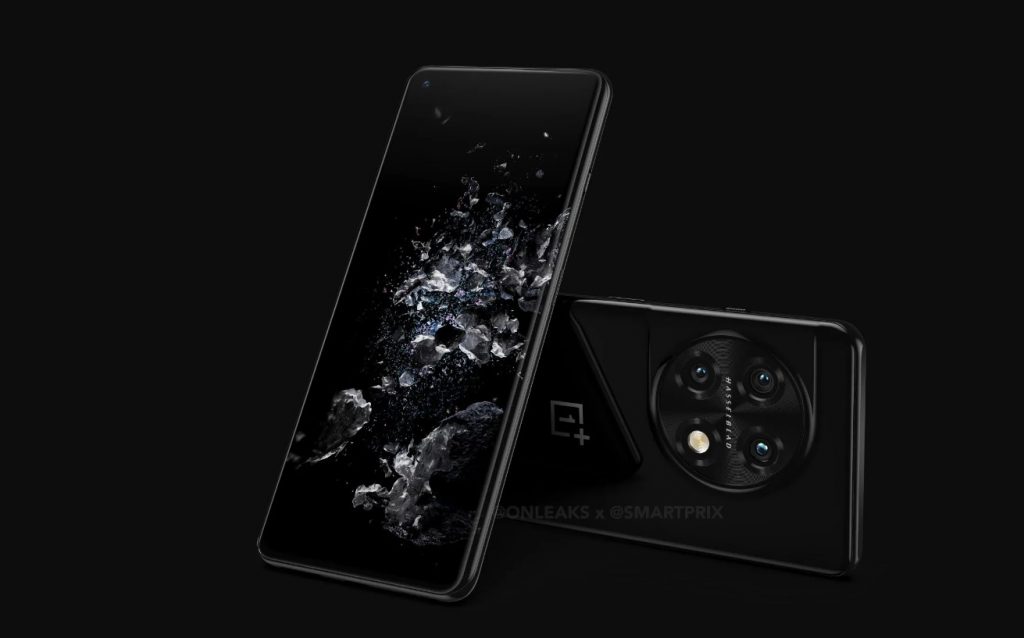
Alleged rebder of OnePlus Pad
However, well-known tipster Mukul Sharma has claimed that the OnePlus Pad has been delayed. He added that it might launch in early 2023. Unfortunately, there is no information available on why the company is pushing back the OnePlus Pad launch.
Rumors surrounding the OnePlus Pad have revealed that it will have a 12.4-inch OLED FHD+ display. It will be powered by the Snapdragon 865 chipset and have 6 GB of RAM. It will house a 10,090mAh battery with 45W fast charging support. It will feature an 8-megapixel front camera and a 13-megapixel + 5-megapixel dual camera setup on the back. The device was expected to come preinstalled with the Android 12L OS. In China, the device is expected to cost around 2,999 Yuan (~$443).
A couple of other devices such as the OnePlus Watch 2, and the OnePlus Band 2 had entered the R&D testing and serial production phase. It is unclear whether the arrival of these devices has also been delayed.
Apple has been preparing to begin mass production of the iPhone 14 series in the coming weeks, ahead of the new smartphone’s official announcement this fall. However, as the company struggles with supplies, Apple is increasing its list of suppliers for the future iPhone 14 models.
(4/8) Company Update: SG Micro (300661)
1. SG Micro had passed the quality certification of the higher-end iPhone 14 and will likely ship the PMICs (battery and level shifter) for the iPhone 14 in 2H22.
Recently, SG Micro’s components have passed the quality certification for the high-end iPhone 14 models, according to analyst Ming-Chi Kuo on Twitter. As a result, the Chinese integrated circuit manufacturer has been added to Apple’s list of suppliers for the iPhone 14 Pro and iPhone 14 Pro Max.
The integrated circuitry from SG Micro that controls the battery and level shifter will be used by Apple in the iPhones this year. According to Kuo, this will be the first time that SG Micro supplies parts for Apple’s high-end devices, which will boost sales for the Chinese firm and enable the iPhone 14 to ship faster.
The transaction with SG Micro, according to the analyst, suggests that the technical prowess of its chips “have reached the tier-1 level,” which is necessary for parts used in more expensive, high-end electronic gadgets. Apple also collaborated with fresh vendors earlier this year to purchase camera parts for the iPhone 14 Pro.
Back in May, the COVID-19 lockdowns in China caused a three-week delay in the manufacture of the iPhone 14. Significantly, it was the new iPhone 14 Max (a new 6.7-inch mid-range model that is anticipated to replace the iPhone small) has been most negatively impacted by the delays.
More recently, Kuo added that the mass production of the iPhone 14 would cause Apple to have supply problems. But according to the expert, these problems will only have a “limited impact” on the shipments of the new phones. This is so that Apple has enough time to build a significant number of units before the official debut of the new goods. Apple orders millions of components months in advance.
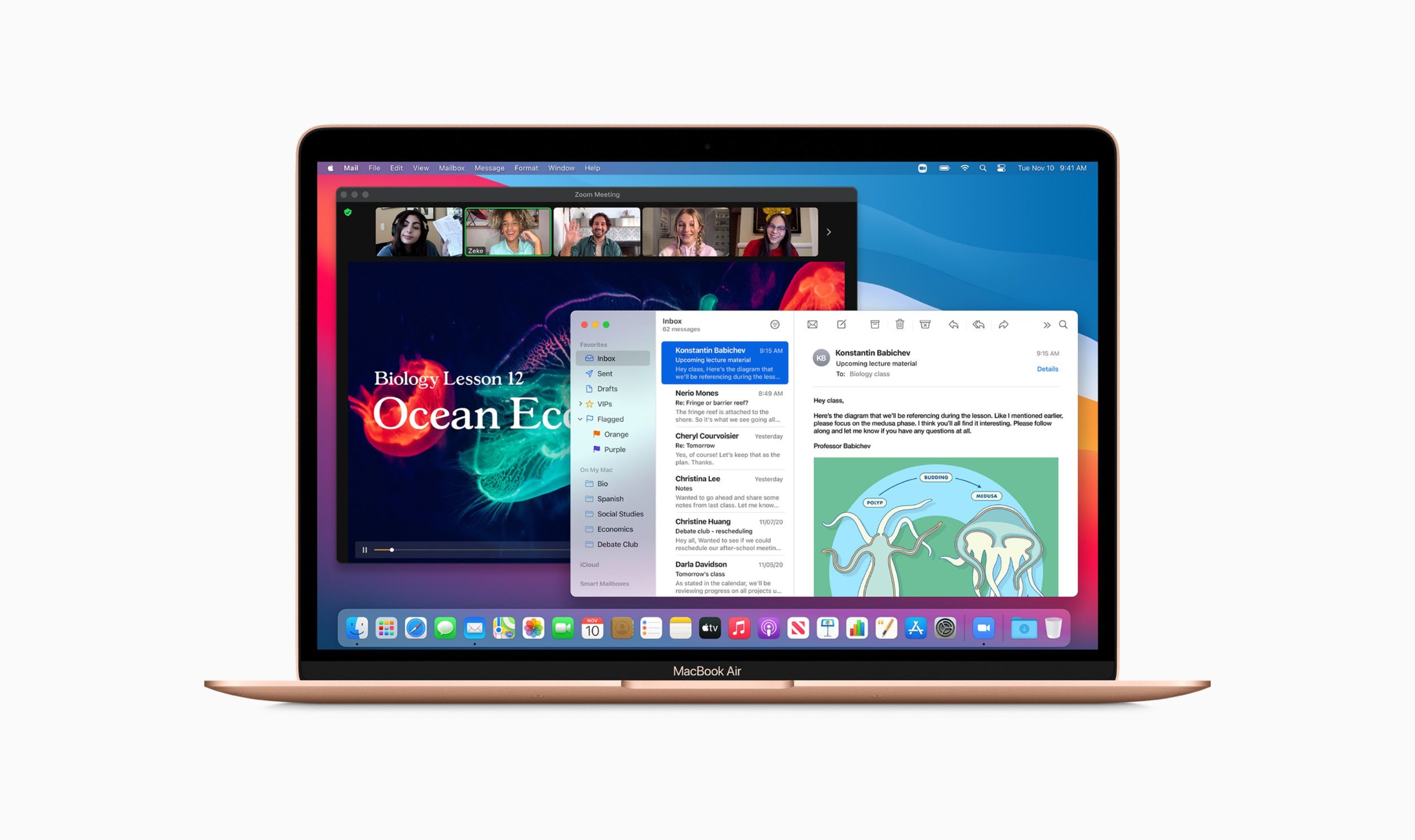
However, due to the ongoing chip scarcity, the iPhone 14’s initial supply may not be that large. More recently, shortly after the new laptop hits shelves last week, shipping expectations for the new M2 MacBook Air were revised downward to late August. There have been supply-chain problems with other devices as well, like the iPad.
Four new iPhone 14 versions are anticipated from Apple in September, while significant improvements like a new screen design should only apply to the new Pro models.
The Tecno Spark 9 was announced for the Indian market just a couple of days ago. Now, the new device is set to be released in the region at midnight. So let’s have look at its specifications, pricing, and offers.
Spark 9
Talking about the smartphone first, the Spark 9 sports a 6.6 inch HD+ LCD panel that has a 90Hz refresh rate. Under the hood, it is equipped with a MediaTek HelioG7 SoC that is paired with up to 6GB of RAM and 128GB of internal storage. On the rear, it features a 13 megapixel dual camera setup while the front houses an 8 megapixel selfie shooter. The device is powered by a large 5,000mAh battery pack.
Other features include, a microSD card slot for memory expansion, a rear mounter fingerprint scanner, and a 3.5mm headphone jack. The Spark 9 runs on Android 12 OS based HiOS 8.6 and offers Dual SIM, 4G, WiFi 802.11ac, Bluetooth 5, and GPS connectivity options. The handset will be available in India in two color options, namely Sky Mirror and Infinity Black and will launch in two storage configurations as well.
The starting model is the 4GB + 64GB variant that costs 8,499 INR (roughly 107 US Dollars), while the higher end 6GB + 28GB model has a price tag of 9,499 INR (roughly 119 US Dollars). Tecno is set to launch the device at midnight later today (22nd July 2022), which will also mark the beginning of the highly anticipated Amazon Prime Day Sale 2022 event. The model is also exclusive to Amazon in the country.
OnePlus recently confirmed that it will be announcing the OnePlus 10T on Aug. 3 in India and other markets. It appears that China will not be receiving the same device. Instead of the 10T, the country may receive its own tweaked version. This device is likely to debut in the country with the OnePlus Ace Pro moniker.
According to reliable tipster Digital Chat Station, the OnePlus Ace Pro name has been confirmed. He revealed that the device is powered by the Snapdragon 8+ Gen 1 chipset and 16 GB of RAM. He added that the device carries support for 150W rapid charging.
OnePlus 10T renders by Steve Hemmerstoffer / Smartprix
He did not mention the other specifications of the Ace Pro. It can be said based on recent reports that it could be identical to the 10T in most departments except for the cameras. Rumors have it that the OnePlus 10T will have a 16-megapixel camera on the front. Its back panel will have a 50-megapixel Sony IMX766 main camera with OIS support, an 8-megapixel ultra-wide camera, and a 2-megapixel macro camera.
The OnePlus Ace Pro could be equipped with better cameras. It may sport a 32-megapixel selfie camera, and its rear shell may have an OIS-enabled 50-megapixel Sony IMX766 primary camera, an 8-megapixel ultra-wide shooter, and a 2-megapixel macro camera. The Ace Pro is likely to cost between 3,000 Yuan (~$443) and 4,000 Yuan (~$591).
The Ace Pro may arrive with a 6.7-inch AMOLED display that offers a Full HD+ resolution and a 120Hz refresh rate. The SD8+G1 device may feature up to 16 GB of LPDDR5 RAM and up to 512 GB of UFS 3.1 storage. It may draw power from a 4,800mAh battery. While the retail package of the device may include a 160W charger, the device may support 150W charging.
Honor announced its new smartphone dubbed Honor X40i a few days ago, and now the company has officially launched the device in China.
The Honor X40i smartphone, which is a successor to the Honor X30i launched last year, is now available for purchase in the Chinese market for the starting price of 1,599 yuan, which is approximately $235.
The base model of the smartphone packs 8GB RAM and 128GB internal storage, costing 1,599 yuan (~$235), while the 8GB RAM and 256GB model costs 1,799 yuan (~$265). The top-end model with 12GB RAM and 256GB storage is priced at 1,999 yuan (~$295). It comes in four colors — Magic Night Black, Mo Yuqing, Xingmeng Silver, and Rose Galaxy.
The Honor X40i features a 6.7-inch LTPS LCD display that supports a Full HD+ screen resolution of 1080 x 2388 pixels and offers a screen-to-body ratio of 93.6 percent, a 90Hz refresh rate, and comes packed with Honor’s self-developed screen-by-screen color temperature calibration technology.
Under the hood, the device is powered by the MediaTek Dimensity 700 processor, coupled with up to 12GB of RAM and up to 256GB of internal storage. The phone also supports up to 5GB of virtual RAM for a performance boost.
In the camera department, there’s a dual-camera setup on the back that consists of a 50-megapixel primary sensor and a 2-megapixel depth sensor. On the front side, it features an 8-megapixel snapper for taking selfies and video calling.
The phone runs the Android 12 operating system out-of-the-box with the company’s own Magic UI 6.1 custom interface on top. It is powered by a 4,000mAh battery that comes with support for 40W fast charging.
Poco recently launched the Poco F4 5G in India and the smartphone literally sold like hotcakes. Now it seems that Xiaomi’s spin-off brand is working on a new device, dubbed Poco M5. The moniker of the smartphone has been confirmed by the IMEI database and it has also been spotted on several certification sites which reveal the handset could launch soon in the global as well as Indian markets.
The existence of the new smartphone was initially discovered by Xiaomiui. The publication spotted an unknown smartphone in the source code with the model number 22071219CG and codename Rock and Stone. After looking for the model number in IMEI, it was found that the smartphone is nothing but Poco M5.
Further, the smartphone with the same model number was spotted on various certification sites including FCC, BIS, and IMDA (Via MySmartPrice). As per the listings, the smartphone will run MIUI 13 based on Android 12 out of the box. It will support 2.4GHz and 5GHz dual-band WiFi. It is also revealed that the Poco M5 is a 4G device.
POCO M4 Pro 4G
Poco M5 is not alone in the series, it is accompanied by Poco M5s which was also spotted on the IMDA certification site recently. The smartphone is said to be a rebranded Redmi Note 10S which means it will be powered by a MediaTek Helio G95 processor and will have a 6.43-inch AMOLED display offering a Full HD+ resolution.
Poco M5s could also sport a quad-camera setup on the back consisting of a 64MP main camera, an 8MP ultra-wide camera, and two 2MP sensors. The phone may be fueled by a 5000mAh battery and support 33W fast charging support.
Both the smartphones will be launched in the mid-range segment and could be priced under $160. There is no confirmation from Poco yet. We hope to learn more details about the upcoming phones in the coming days.
Honor has officially launched the Honor Smart Screen X3 and Smart Screen X3i series of Smart TVs in the Chinese market as a successor to last year’s Honor Smart Screen X2.
The newly announced Honor Smart Screen X3 comes in two different screen sizes of 55-inch and 65-inch. The device has a starting price of 1,999 yuan (~$295) and will go on sale in China from 1st August.
The 55-inch model is priced at 2,299 yuan (~$340) but will be available at a discounted price of 1,999 yuan (~$295), while the 65-inch model costs 2,999 yuan (~$443) but will be available at a discounted price of 2,699 yuan (~$399).
The company has also introduced Honor Smart Screen X3i models available in three sizes — 55-inch, 65-inch, and 75-inch, costing 1,999 yuan (~$295), 2,699 yuan (~$399), and 3,999 yuan (~$591), respectively. They will go on sale from 25th July at a discounted price of 1,699 yuan (~$251), 2,399 yuan (~$355), and 3,599 yuan (~$532) respectively.
The Honor Smart Screen X3 comes with a display that supports a screen resolution of 3840 x 2160 pixels and a brightness of 200-300 nits. It also has DC Dimming and packs NdFeB speakers, which are claimed to be made of the same material as high-grade HIFI speakers.
Under the hood, the device is powered by a quad-core processor that has Cortex-A53 cores. In the memory department, it packs 2GB of RAM and 16GB of internal storage.
As for the software, it is said to have a Kids Mode that features exclusive children’s resources and allows parents or guardians to control the usage time. There’s also an Elder Mode with a clearer interface and larger fonts to make it easier for the elders to operate.
It also supports the “Home Entertainment Center” in which the device can be used as speakers without the need to turn on the display. It also comes with a mobile phone one-touch screen projection and notebook screen projection.
Honor officially launched its latest tablet in its home market China, dubbed as Honor Table 8. As the name of the device itself indicates, it is a successor to the Honor V7 tablet that was launched last year.
The Honor Tablet 8 is now available for pre-order in the Chinese market. During the pre-sale period, it starts at a discounted price of 1,399 yuan (~$207) for the base mode.
The base model packs 4GB RAM and 128GB storage and is priced at 1,499 yuan (~$222) but will be available for a discounted price of 1,399 yuan (~$207) during the pre-sale period. There’s also a 6GB RAM and 128GB storage model costing 1,799 yuan (~$266).
The top-end model of the device packs 8GB of RAM and 128GB of internal storage, priced at 1,999 yuan (~$295). All three models are available in three color options — Mint Green, Dawn Blue, and Dawn Gold.
Coming to the specifications, the Honor Tablet 8 features a 12-inch 2K LCD display that offers a screen resolution of 2000 x 1200 pixels. The screen has a narrow bezel of 7.2mm and comes with a 10:6 aspect ratio and 1.07 billion colors.
Under the hood, the device is powered by the Qualcomm Snapdragon 680 processor, coupled with up to 8GB of RAM and 128GB of internal storage. In the camera department, there’s a 5-megapixel camera sensor on the back and a 5-megapixel snapper at the front side for taking selfies and video calling.
It has Rheinland hardware-level low blue light, Rheinland no flicker, and eye protection certification from the National Eye Engineering Center. It also supports Huawei’s Histen sound effects as well as DTS:X Ultrasound for a better sound experience.
The tablet runs the Magic UI 6.1, which comes with support for multi-screen collaboration, application split screen that offers free adjustment of three-speed windows, as well as new upgraded Smart desktop experiences. The Honor Tablet 8 is powered by a 7,250mAh battery and comes with support for 22.5W fast charging.
For several months, the rumor mill has been leaking information about a Motorola phone, which has a “Frontier” codename. Recent reports have revealed that it will be launching with the Moto X30 Pro moniker in China and will be called the Motorola Edge 30 Ultra in the global market. Today, Motorola’s China division confirmed that it will be unveiling the X30 Pro at 7:30 pm (local time) on Aug. 2. The Lenovo-owned brand will also unveil the Motorola Razr 2022 alongside the X30 Pro.
The Motorola X30 Pro and Motorola Razr 2022 are both expected to feature the Snapdragon 8 Plus Gen 1 chipset. Apart from these two devices, the company also unveil MyUI 4.0, which will offer a smooth experience, several customization features, updated Ready for 3.5 with support for multi-screen and external mouse, a split-screen mode for apps, and a sidebar for accessing frequently used apps.
Moto X30 Pro specifications (rumored)
Motorola frontier render by Evan Blass
Past reports have revealed that the Moto X30 Pro will feature a 6.73-inch P-OLED FHD+ 144Hz display, up to 12 GB of LPDDR5 RAM, up to 256 GB of UFS 3.1 storage, and a 4,500mAh battery with 125W fast charge technology. It will also have support for wireless charging.
The X30 Pro will be the world’s first smartphone to feature a 200-megapixel camera. This camera will be coupled with a 50-megapixel ultra-wide lens, and a 12-megapixel telephoto camera. For selfies, it will feature a 60-megapixel front camera.
Motorola Razr 2022 specifications (rumored)
Motorola Razr 2022
The Motorola Razr 2022 will have a 6.7-inch P-OLED FHD+ foldable screen with support for a 120Hz refresh rate. It will feature a 32-megapixel front camera and a 50-megapixel (main) + 13-megapixel (ultra-wide) dual-camera setup. Its rear shell will also feature a 3-inch OLED cover display.
It will also come with up to 12 GB of LPDDR5 RAM, up to 512 GB of UFS 3.1 storage, and a 2,800mAh battery. It will be equipped with a side-facing fingerprint scanner. The device will be available in Quartz Black and Tranquil Blue colors.
OPPO Reno 8 5G, Reno 8 Pro 5G and Enco X2 TWS earbuds were unveiled on Monday (July 18) in India. The Reno 8 that has landed in India is a bit different from the one that debuted in China earlier this year. Some of the major highlights of the phone include a unibody design, a flagship-grade camera, an impressive user experience, and superfast charging capabilities.
OPPO Reno 8 5G unboxing – box contents
The OPPO Reno 8 5G retail box includes the handset, a transparent protective case, an 80W SuperVOOC charger, a USB-C charging cable, a SIM ejector tool, and some documents.
OPPO Reno 8 5G
As you can see, I got the opportunity to try the Shimmer Gold color variant of the Reno 8 5G. It also comes in Shimmer Black option. The device is priced at Rs 29,999 (~$376) and it comes in a single variant that offers 8 GB of RAM and 128 GB of storage.
OPPO Reno 8 5G first impressions
The OPPO Reno 8 5G is a slim and stylish smartphone, which measures only 7.67mm in thickness. It weighs only 179 grams. The protruding camera module is merged with the polycarbonate rear of the phone, which allows it to sport a unibody design. The frame of the device is also made out of polycarbonate.
OPPO Reno 8 5G
As can be seen in the images, the rear shell of the Reno 8 5G’s Shimmer Gold edition has a matte finish and it can display different shades like gold, pink, blue, and green when viewed from different angles. A good thing about the phone’s back is that it does not attract fingerprint marks. Also, the unibody design does not allow dust to settle on the device.
Around the edges, there is a power key on the right and volume buttons on the opposite side. The topside of the device is barren, while the bottom features a speaker grille, a USB-C port, a microphone, and a SIM slot. There is no 3.5mm audio jack on the device. Also missing is the second speaker for stereo output.
OPPO Reno 8 5G
Moving to the front, the Reno 8 5G has a 6.43-inch AMOLED display that produces an FHD+ resolution, a 20:9 aspect ratio, and a 90Hz refresh rate. While the side bezels are thin, the chin of the device is a bit thick. It comes with Gorilla Glass 5 protection for the display.
The Dimensity 1300 chip is present under the hood of the Reno 8 5G, which allows it to rival the OnePlus Nord 2T 5G, which features the same chip. The device runs on the Android 12 OS, which is overlaid with ColorOS 12.1. I did not experience any lag while using the device. While the OS offers a fluid experience with useful customizations and features, there are some bloatware apps on the device.
OPPO Reno 8 5G
The Reno 7 5G offered a 4,500mAh battery with 65W fast charging. The successor model packs the same-sized battery but adds support for 80W SuperVOOC charging. OPPO claims it takes only 11 minutes for the Reno 8 5G to go from zero to 50 percent.
We have seen flagship phones offer camera sensors like the Sony IMX709 and Sony IMX766. OPPO has done a good job in providing both cameras on a sub-Rs 30,000 phone, i.e., the Reno 8 5G. The inclusion of these cameras allows it to capture amazing shots in daylight and in low-light conditions. The rear-facing camera setup has a 50-megapixel Sony IMX766 main camera, an 8-megapixel ultra-wide lens, and a 2-megapixel macro camera. The Reno 8 5G, available in China, packs the same specs as the Indian / global variant but offers a 2-megapixel depth sensor instead of an ultra-wide snapper. For selfies, it has a 32-megapixel Sony IMX709 front camera.
In my forthcoming full review of the Reno 8 5G, I will test its camera capabilities and charging times apart from other features. The Reno 8 5G faces competition from the likes of the OnePlus Nord 2T 5G (review), POCO F4 5G, and iQOO Neo 6 5G. We will also find out whether it manages to defeat its rivals.
Mobvoi has confirmed that its next TicWatch model will debut the just-announced Qualcomm Snapdragon W5+ Gen 1 wearable chipset. The Snapdragon W5+ was announced alongside the vanilla W5 SoC earlier this week. Oppo had earlier confirmed that the Watch 3 would be the first to use the Snapdragon W5 chip. The Snapdragon W5+ Gen 1 mobile chipset is the higher version of the two latest wearable chips.
The Mobvoi official teaser of its next-generation TicWatch confirms the speculations surrounding the upcoming smartwatch. The new TicWatch will be a successor to the TicWatch Pro series as evidenced by its design of the bezel and the shape of the watch case. The new Snapdragon W5+ Gen 1 packs lots of improvements including battery efficiency. The powerful applications processor and ultra-low power coprocessor mean that the new TicWatch will be a high-performance model.
The TicWatch upcoming model will run on Wear OS most probably, the latest version although not confirmed. However, there are still lots of details still lacking for the upcoming TicWatch. Its release date and pricing information are currently not known. We expect a full specs list and other details to be released as we inch closer to its official release. The global availability information is also not available at this time.
Lenovo has announced the ThinkCentre neo 50a 24 all-in-one desktop, thus capping the trio of promised desktops at CES 2022. The Lenovo ThinkCentre neo 50a 24 joins the earlier released neo 30a and neo 50s models. The neo 50a comes with an all-Intel CPU/GPU setup and will deliver a decent performance coupled with its compact design.
The Lenovo ThinkCentre neo 50a 24 comes with dual 3W Harman speakers, dual array mics, as well as a retractable 5MP camera featuring Windows Hello and AI smart functionalities. The neo 50a 24 has 10 ports including Ethernet, HDMI (HDMI-in and 2.1 out), USB (6 ports), and a 3.5mm audio jack. The monitor has a 16:9 aspect ratio and up to 250 nits of brightness. The touchscreen has the TUV Rheinland Low Blue Light certification for eye protection as well.
The neo 50a 24 will be available next month in multiple markets. It is equipped with 45W processors and discrete graphics to deliver a decent performance. The neo 50a design mirrors that of the previous neo models and it contains an Intel discrete GPU option. The Intel Arc A370M GPU is an entry-level option with 4GB of GDDR6 VRAM.
Performance-wise the A370M sits between the Iris Xe Graphics G7 and Radeon RX 6500M GPUs. The new all-in-one (AIO) desktop could run on the Intel Core i7 H-series processors with 16GB of RAM and 1TB SSD/ 2TB HDD. There is no pricing and global availability information for the neo 50a at this time.
Arcfox has announced that its alphaS (or αS) electric car is the first model to run on the Huawei Inside full smart car solution platform. The Huawei Inside will run the alphaS’ array of sensors while the cabin runs on Huawei’s HarmonyOS. The alphaS will be available in China with a starting price of about 397,000 yuan ($59,000). Arcfox is owned by BAIC and will hope to drive its sales using the home-grown Huawei Inside and HarmonyOS technologies.
The Arcfox alphaS is the world’s first car to run on HarmonyOS and comes with a full-stack smart car solution. Huawei’s cross-platform HarmonyOS powers the cabin of the new Arcfox EV which was launched earlier. The EV maker is now ready to start delivering the car albeit to Chinese customers, at least for now. Huawei Inside is a smart car solution that supports various levels of autonomous driving. The αS is equipped with LIDAR, radar modules, and 9 assisted-driving system cameras.
The αS can reach a speed of 100km/h in 3.5 seconds with its electric motor delivering a peak power of 473kW and a maximum torque of 655Nm. The αS has a range of 200km which can be replenished quickly with its 800v charging rate. You can charge the 187kW battery up to 50% in 15 minutes. There are no indications as of yet that the αS will subsequently be available outside China. The premium option in the Arcfox αS is priced at 429,000 yuan ($63,000).
Earlier today, boAt launched multiple new audio products in India. These include the Rockerz 330 and 333 neckbands, as well as the Airdopes 121 Pro, and the Airdopes 413 ANC TWS earbuds. So let’s take a look at all these gadgets in detail.
boAt Airdopes 121 Pro
The Airdopes 121 Pro feature 10mm drivers with boAt’s signature bass-heavy audio tuning. However, the Airdopes 121 don’t sacrifice the quality of highs and lows to provide powerful bass.
For connectivity, the earbuds use Bluetooth 5.3 technology and offer the Insta Wake N’ Pair feature. One of the most eye catchy features of the Airdopes 21 Pro is the LCD panel on the charging case that displays the battery of the device.
On the topic of battery, the feature 40mAh batteries individually while the charging case has a 400mAh battery. This enables the earbuds to provide 3 hours of playback time on a single charge and up to 40 hours of total playback time with the charging case. 5 minutes of charge time in the case results in up to 60 minutes of playback time.
Other than that, users get access to easy touch controls, one-touch voice assistant, and IPX4 water resistance.
boAt Airdopes 413 ANC
The Airdopes 413 ANC features 10mm dynamic drivers with boAt’s signature punchy bass tuning. As the name suggests, the earbuds offer active noise cancellation of up to 25dB. Other than that, the brand also packs the Airdopes 413 with two ENx-enabled mics for crystal audio during calls.
The earbuds come with Bluetooth 5.2 for connectivity and feature touch controls and easy voice assistant access. It offers up to 4.5 hours of playback time with ANC active and up to 5.5 hours with ANC disabled on a single charge. Paired with the charging case, the earbuds get a total playback time of 20 hours. A quick 10 minutes in the charging case will give users another 60 minutes of playback time.
The earbuds feature IPX4 swear resistance and come in two color options – black and green.
boAt Rockerz 330 & 333 Bluetooth neckband earphones
Like the Airdopes 413 ANC, the latest Rockers 333 also features 25dB active noise cancellation. The Rockerz 330 has 10mm dynamic drivers that output crystal-clear sound. On the other hand, the Rockers 333 feature slightly bigger 13mm dynamic drivers for loud and sharp audio output.
The Rockerz 330 uses Bluetooth 5.0 for connectivity while the Rockerz 333 brings the latest Bluetooth 5.3. Both neckband earphones offer ENx environmental noise-canceling technology for crystal clear audio during calls. As for battery life, the Rockerz 330 offer up to 30 hours of playback time, and a quick 10-minute charge delivers up to 10 hours of playback time. On the other hand, the Rockerz 333 offer up to 24 hours of playback time and takes around an hour to fully charge. Both neckbands come with decent sweat resistance making them perfect for workouts.
Pricing and availability
The Airdopes 121 Pro has a price tag of Rs. 1,299, while the Airdopes 413 is priced at Rs. 1,999. On the other hand, both the Rockerz 330 & 333 ANC neckbands come with a price tag of Rs. 1,499. All of these products will be offered at special prices during the Amazon Prime Day Sale starting July 23.
After the launch of the OPPO K10 5G and the K10 Pro 5G in China, the brand is planning to debut another K-series smartphone called the OPPO K10 Vitality Edition.
Oppo K10 5G
A recent leak revealed multiple key specifications of the device, and now, a new report has emerged giving more insight regarding the upcoming smartphone. According to a reliable tipster WHY LAB, the OPPO K10 Vitality Edition will be aimed at the offline market in China.
Previous leaks have revealed that the device will debut with the Snapdragon 778G chipset, and pack a 5,000mAh battery. The leaks also state that the device will arrive with 12 GB of RAM and 256 GB of storage.
Now, the tipster has revealed more information regarding the spec sheet of the smartphone. According to him, the smartphone features an LCD display panel with support for 120Hz refresh rate. Other than that, the device will offer powerful haptics thanks to an X-axis linear motor. As for optics, the device will feature a 64-megapixel primary camera.
In related news, the OPPO K10x passed the TENAA certification with model number PGGM10 back in May. It is expected to be a rebranded Realme V25 5G, and debut with specs like a 6.59-inch LCD display with Full HD+ resolution, a 5G enabled Snapdragon 695 chipset, and a 4,880mAh (rated value) battery. It is also expected to have a 64-megapixel main camera paired with a couple of 2-megapixel cameras and a 16-megapixel front camera.
Samsung is gearing up to launch the next generation of its foldable smartphones on August 10th. The launch event will be headlined by the Samsung Galaxy Z Fold 4 and the Galaxy Z Flip 4, while the new Galaxy Watch 5 series and the Galaxy Buds Pro 2 are also expected to make their debut.
Now, ahead of the launch event, the pricing of both the Flip 4 and the Fold 4 have leaked via multiple sources. Starting with the Galaxy Flip 4, Tipster Sudhanshu Ambhore, in collaboration with Pricebaba has revealed the European pricing of the Flip 4. According to the report, the Galaxy Z Flip 4 will start at EUR 1,080 for the 128GB storage model, while the 256GB and 5112GB models will cost EUR 1,160 and EUR 1,280 respectively.
Image via Gizpaw
A separate report from Gizpaw features alleged retailer listings of the Galaxy Z Flip 4 that also reveals pricing similar to the above report. A screenshot captured by the publication shows the 128GB model with a EUR 1,080 price tag, while the 256GB and 512GB models are priced at EUR 1,158.89 and EUR 1,275.89.
Image via Gizpaw
Gizpaw has also revealed the pricing of the Galaxy Z Fold 4 in Europe. Going by the alleged retailer screenshots, the Galaxy Z Fold 4 256GB storage model will come with a price tag of EUR 1,896.89, while the 512GB storage model will be priced at EUR 1,981.89. Considering that these are not the standard price tags, we may see Samsung debut the 256GB model at EUR 1849 and the 512GB model at EUR 1,999.
From these reports, it is clear that the next generation of foldable smartphones will debut with slight price bumps compared to the current generation. However, we will likely have to wait till August 10 for the official confirmation, so stay tuned.
The OnePlus 10R is the company’s cheapest flagship phone on the market right now. With the recent discounts on the model, the phone has become pretty competitive in its segment, featuring an excellent display, powerful processor, and superfast charging. But how does it stack up against the new rival in town, the Nothing Phone (1)? That’s what we’ll find out in this specs comparison between the Nothing Phone 1 vs OnePlus 10R.
Dual 50 (main) + 50 (UW), f/1.9 + f/2.2
16 MP f/2.5 front camera
Triple 50 (Main) + 8(UW) + 2 MP (Macro), f/1.8 + f/2.2 + f/2.4
16 MP f/2.4 front camera
BATTERY
4500 mAh, fast charging 33W
Wireless Charging 15W
5000 mAh, Fast Charging 80W
ADDITIONAL FEATURES
5G, dual SIM
5G, dual SIM
Design
Personally, we feel the OnePlus 10R features a lackluster design, even with the additional elements on its back. On the other hand, the Nothing Phone (1) is arguably one of the best-looking smartphones in this segment.
So is there any room for the OnePlus model to shine in this department? Well, design is often a matter of perspective, and some would like the toned-down profile of the OnePlus 10R. But for most, the Nothing Phone (1) would be an obvious choice in terms of sheer design.
One of the biggest highlights of the Nothing model is the transparent back cover with a matrix of LEDs which the company calls the glyph interface. The white color model, which by the way is in great demand (and out of stock), offers a view of the internals like the wireless charging coils and the LED lights. Note that these LEDs are more than a neat party trick. The company has added a customized LED light-up sequence based on your ringtone and it can even show your phone’s charging progress.
Now coming to the OnePlus 10R, this model takes a very different approach with a boxy design with dual tone finish. To give the brand some credit, the two-tone finish and the camera design make it unique in its lineup. However, personally, we are not a fan of this boxy finish and we’ll leave it up to you to decide which one has a better design. There are two color options for the OnePlus 10R, Sierra Black and Forest Green.
Another drawback for the OnePlus 10R is the lack of any IP rating. What’s even more surprising is that this model also lacks the iconic alert slider found on all OnePlus flagships. In fact, even the cheaper OnePlus Nord 2T comes with the slider button on the side, so its really a shame that OnePlus decided to ditch it on the 10R. In comparison, the Nothing model features an IP53 rating and smartly utilizes the glyph interface for notifications.
Display
The Nothing Phone (1) comes with a 6.55-inch OLED panel with FHD+ resolution. To compare, the OnePlus 10R features a much larger 6.7-inch panel. Both have HDR10+ support with Corning Gorilla Glass 5 protection and come with 120Hz refresh rate. The OnePlus 10R comes with an excellent screen that gives the Nothing Phone (1) solid competition. In fact, this might be one area where the phone could outdo the Nothing model, but honestly, the difference won’t likely be significant. After all, both have excellent screens.
Specs & Software
The Nothing Phone (1) comes with a mid-range Snapdragon 778+ processor. On its own, the chip is sufficient for daily use with occasional gaming. But when you compare it with the processors inside its direct rivals, you get the feeling that the computing power falls short. For example, the OnePlus 10R comes with the MediaTek Dimensity 8100-MAX featuring “AI performance boost”. While the “AI boost” might not translate to any significant performance upgrades in comparison to the standard version, the processor on its own is pretty powerful and will easily outdo the Snapdragon 778+ on the Nothing Phone (1). Especially if you are a gamer and looking for a phone in this budget, the OnePlus 10R would be a better buy for you, with good thermal control. That said, if you are not into heavy gaming, both the phones are going to serve you well.
The Nothing Phone (1) comes with 8GB and 12GB RAM models with up to 256GB of storage. The same is the case with the OnePlus 10R too.
The Nothing Phone (1) features Nothing OS on top of Android 12. On the other hand, the OnePlus 10R features the OxygenOS 12.1 build. Both the phones have limited bloatware with a smooth UI. But like most OnePlus models, you might encounter minor bugs in between. We can’t say the Nothing Phone (1) is perfect either, especially since it’s a first-generation model.
Camera
The Nothing Phone (1) comes with a two-camera setup, featuring a 50MP OIS main camera and another 50MP ultra wide-angle shooter. The OnePlus 10R also starts off with a 50MP primary camera but comes with a lower resolution 8MP ultra-wide shooter and adds a 2MP macro camera. So far, we’ve seen that the Nothing Phone (1) can capture pretty good pictures with its primary and ultra-wide shooters, irrespective of the lighting conditions. The OnePlus 10R also features a pretty good primary shooter but might not be able to match Nothing Phone’s 50MP Ultra wide camera.
For taking care of selfies, the Nothing model features a 16MP shooter, while the OnePlus model features a 16MP camera. Both should do fine for occasional selfies.
Battery is one more area where the OnePlus 10R outshines the Nothing Phone (1) in terms of sheer charging power. The most expensive variant of the 10R has a 4,500mAh battery with a massive 150W charger. Even the cheaper models feature an 80W charger (with larger 5000mAh battery) which makes the 33W charger on the Nothing phone look super slow.
However, the Nothing model compensates for this slow speed by adding support for 15W wireless charging and reverse wireless charging of 5W to its 4500mAh battery.
Wireless charging gives a huge edge to the Nothing model since its a rare feature in this segment. One might settle for a 33W charger in favor of an additional and more convenient charging method.
If you care more about performance, display, and charging and are a fan of the OnePlus lineup, the OnePlus 10R would be good bet. On the other hand, if you want something unique with a fancy design, good cameras, IP rating, and wireless charging, the Nothing Phone would be the one to choose between these two.
Note that the Nothing Phone (1) is a first-generation model. The phone is likely to come with a few bugs or even hardware issues, so you need to consider these things when you make the purchase. Even if you are a Nothing phone fan, it’s probably a good idea to wait for a couple of weeks at least to see how the phone fares in real life.
The Ryvid Anthem electric motorcycle has been unveiled in the United States. The bike is manufactured by Ryvid, a fast-rising startup with a solid technical manpower base. The electric bike sports a radical design and will sell at a hugely affordable price that’s bound to draw hordes of customers.
The Anthem is a light electric motorcycle that is a culmination of the rich vein of expertise embedded in Ryvid’s research team. The company’s CEO Dong Tran has experience designing products for automakers and recently aircraft. He is a lifelong motorcyclist and has combined this with his experience in the design of the Anthem. The bike has a top speed of 120km/h and a range of 120km.
The Ryvid Anthem is priced at $7,800 which puts it on the lower end of the price spectrum. It jettisons the tubular frame for a lightweight folded aluminum+ stainless steel sheets design. The bike is easily assembled and the entire chassis weighs 5.4kg. The design also incorporates several functionalities into the bike. You can easily raise and lower the seat by up to 4 inches to create a balance for all classes of riders. The actuator for the seat is sturdy enough to lift a greater load and can be adjusted while in motion. Keyless ignition, LED lighting, a 4.9-inch TFT display, and dual USB ports are also available on the electric motorcycle.
The unique frame design of the Anthem also meant that adjustments have to be made in several areas. Multiple mounting points have been included for the suspension and head tube. This approach makes the Anthem easily repairable, allowing easy swapping and upgrades. There are speed options including Eco and Sports to suit the rider’s environment.
The bike will be released on August 14, 2022, with the first deliveries billed for the summer of 2023. It remains to be seen however how the US market reacts to the Ryvid Anthem.
Infinix has announced an innovative cooling technology for smartphones. The process is based on the 3D Vapor Cloud Chamber (3D VCC) liquid cooling technology. Using an innovative design on the dimensionality of the chamber’s shape to increase the chamber volume. The new technology improves heat dissipation which also dovetails into improved performance. The new technology has already gotten the China National Intellectual Property Administration’s certification.
The new Infinix 3D VCC cooling technology will enable smaller panels in smartphones while improving performance. The new solution addresses temperature issues for high-integration and high-power phones. It will address CPU frequency reduction, frozen screens, frame rate drops, and several other issues. The new Infinix cooling technology is a massive improvement over the regular vapor chamber. Bumps in the system enable increases in the evaporator’s volume, water storage capacity, and heat flux. Up to 20% improvements in capacity were achieved with the new technology.
The 3D VCC is extended because of the bump added to the structure. This lowers the thermal resistance and increases thermal conductivity. The shield-to-vapor chamber thermal resistance is also reduced for better heat dissipation. In terms of performance improvements, the 3D VCC dissipates heat 12.5% faster than a regular VC, hence it has a lower temperature. The in-house design of the 3D VCC by Infinix is a great milestone for the OEM.
Infinix says the new cooling technology will lead to thinner VCs with more bumps for greater effectiveness. It is also possible to combine the 3D VCC with a phone’s center frame into a single piece and shrink the entire cooling module. This could give birth to finer smartphones with affordability also captured There are no talks at this time of the first devices to house the 3D VCC technology.
Apple launched the Apple M2-powered MacBook Air globally and there were many who preordered it to experience the power of the new Apple Silicon-based M2 chip.
The preordered M2-powered MacBook Air has been shipping to customers over the past few days, and iFixit is one of the companies that has gotten a device. iFixit is known for tearing down Apple products and analyzing the build quality and repairability.
The majority of the M2-powered MacBook Air is filled with a lot of empty space, just like the 24-inch iMac before it. Beyond the battery, the interior of the gadget is dominated by the trackpad, keyboard, and a small circuit board’s mechanics.
There wasn’t much of a thermal management system in this PC, according to iFixit.
Thermal paste and graphite tape were found during the dismantling, but no active cooling or even a heat spreader. According to iFixit, the machine will probably run hot, which is what we observed during our throttling experiments.
Otherwise, things for Apple laptops inside are generally business as usual. But interestingly, according to iFixit, it seems to feature an Apple-made Thunderbolt 3 driver rather than an Intel-made one. Curiously, the laptop also has an accelerometer, though it’s unclear what it’s used for.
The new speaker system is visible in an X-ray.
iFixit got a look at the new speaker system in the M2-powered MacBook Air, which has a different speaker design than the one it replaces. The updated Air instead emits sound through tiny gaps between the case and the display in place of the perforated speakers that we’ve previously seen on either side of the keyboard. iFixit adds that the speakers appear to be “tiny.”
The MacBook Air after the teardown.
These breakdown papers and videos primarily serve to assess repairability, and there are some promising indications: For instance, entering the gadget requires simply the removal of four screws. However, there is still a terrifying tugging process that must be handled carefully at first.
We use cookies on our website to give you the most relevant experience by remembering your preferences and repeat visits. By clicking “Accept”, you consent to the use of ALL the cookies.
This website uses cookies to improve your experience while you navigate through the website. Out of these, the cookies that are categorized as necessary are stored on your browser as they are essential for the working of basic functionalities of the website. We also use third-party cookies that help us analyze and understand how you use this website. These cookies will be stored in your browser only with your consent. You also have the option to opt-out of these cookies. But opting out of some of these cookies may affect your browsing experience.
Necessary cookies are absolutely essential for the website to function properly. This category only includes cookies that ensures basic functionalities and security features of the website. These cookies do not store any personal information.
Any cookies that may not be particularly necessary for the website to function and is used specifically to collect user personal data via analytics, ads, other embedded contents are termed as non-necessary cookies. It is mandatory to procure user consent prior to running these cookies on your website.