Advertisement

Casio launches three affordable MRW-240H watches with rotating bezels and sporty designs

Casio has introduced a new line of analog watches in Japan, adding the MRW-240H series to its Standard Collection. The release includes three models that share the exact same physical dimensions and hardware specifications, differing only in their specific color combinations.

Casio MRW-240H Watches

Design Details

The MRW-240H series is designed to look like traditional dive watches, but they are built primarily from resin to keep the weight and manufacturing costs low. The three available variants are the MRW-240H-1E1, MRW-240H-1E2, and MRW-240H-1E3.

The 1E1 model has a black bezel insert and a red seconds hand. The 1E2 model uses a blue and red bezel insert with a silver seconds hand. The 1E3 model features a green bezel insert and an orange seconds hand. On all three models, the rotating timing bezel includes an aluminum ring on the top surface, which can be used to measure elapsed time.

In terms of size, the watches measure 47.9 mm in length, 44.6 mm in width, and 12.3 mm in thickness. Because the case, the adjustable band, and the glass covering the dial are all made of resin, the total weight of the watch is 39 grams. The included resin band is designed to fit wrist sizes ranging from 145 mm to 215 mm.

For daily use, the watches feature 100-meter (10 ATM) water resistance, which means they can be worn while swimming or washing hands. The dial includes a standard date display. The watches run on a standard battery that has an estimated life of three years, and the internal quartz movement has an accuracy rating of ±20 seconds per month.

Pricing and Availability

All three MRW-240H variants will launch in Japan this August for ¥6,050 ($38) and are already available for pre-order through Casio’s online store.

In related news, Casio has recently introduced the MTP-1440DJ series with a classic metal design, alongside the Vintage A1000SP-7 featuring a premium full-metal construction and sapphire crystal.

For more daily updates, please visit our News Section.

Stay ahead in tech! Join our Telegram community and sign up for our daily newsletter of top stories!
(Casio 1,2,3)

Edifier launches new wired gaming earbuds with Hi-Res Audio and hybrid triple drivers

Edifier has launched the Hecate Dual Engine Pro wired gaming earbuds in China, bringing a hybrid driver setup and gaming-focused audio tuning to the budget segment. It is priced at 187.5 yuan (~$28) and is now available on JD.com.

Edifier Hecate Gaming Earbuds

Edifier Hecate Gaming Earbuds Specifications

The earbuds feature a hybrid triple-driver setup in each earpiece, combining dual 6mm dynamic drivers with a dedicated balanced armature driver. This configuration uses a physical crossover to separate low, mid, and high frequencies, helping deliver clearer audio detail and more precise in-game sound cues such as footsteps and environmental effects.

The earbuds incorporate a dual-damping acoustic chamber, which the company says is designed to manage internal sound and improve positional audio accuracy. The Hecate Dual Engine Pro also carries a Hi-Res Audio certification. The audio profile has been tuned by Edifier specifically for competitive first-person shooters.

Edifier Hecate Gaming Earbuds

For the physical design, Edifier includes adaptive ear-wings that flex to fit the user’s ear, along with angled housings to make longer wearing sessions more comfortable. The earbuds come with three pairs of silicone ear tips. The 1.3-meter cable is made from oxygen-free copper wiring reinforced with 400D ballistic fiber, coated in a TPE outer layer, and terminates in an L-shaped 3.5mm connector.

It also includes an inline controller for volume, playback, and call management, as well as a built-in microphone designed to filter out background noise for voice chat.

In related news, Ozlo has recently launched the Sleepbuds 2 with a compact design and 14-hour battery life, while Machenike introduced the TH66 earbuds with ANC, 40ms gaming latency, and up to 7 hours of playback.

For more daily updates, please visit our News Section.

Stay ahead in tech! Join our Telegram community and sign up for our daily newsletter of top stories!

(JD)

Redmi K100 Pro Max gaming tests reveal 9,070mAh battery, optimized Snapdragon 8 Elite Gen 5

The Redmi K100 Pro Max has surfaced in a fresh set of gaming performance tests ahead of its official debut, offering an early look at what users can expect from Xiaomi’s next flagship. Shared by Redmi Product Manager Xinxin_Mia, the results suggest the upcoming phone focuses not only on peak performance but also on delivering better efficiency during demanding workloads.

Redmi K100 Pro Max gaming tests reveal stable performance

Redmi K100 Pro Max
Redmi K100 Pro Max

According to gaming benchmark results from reviewer New Technology, the Redmi K100 Pro Max is equipped with the Snapdragon 8 Elite Gen 5 chipset, a dedicated D2 display chip and a 9070mAh battery. Xinxin_Mia said Redmi has further refined the performance tuning of the Snapdragon 8 Elite Gen 5 compared to previous implementations.

The company claims battery endurance is around 40 percent better than its predecessor while also delivering more stable sustained performance. The phone is scheduled to launch on August 11, earlier than expected.

The published gaming tests back up those claims across several popular titles. In Honor of Kings, the Redmi K100 Pro Max maintained an average of 119.7fps while drawing just 3.63W of power, with the temperature reaching 41.5°C after a 60-minute session. Peace Elite recorded an average of 119.7fps at 4.09W and a maximum temperature of 44.4°C. Delta Force averaged 119.5fps while consuming 5.37W, with the device peaking at 45.3°C.

The phone also handled Genshin Impact smoothly, recording an average of 59.9fps with 4.67W power consumption and a peak temperature of 44.1°C. Honkai: Star Rail proved to be the toughest workload, where the device averaged 55.6fps, consumed 6.80W and reached 52.2°C. Even so, the published graphs indicate performance remained competitive despite the demanding scenario.

For more daily updates, please visit our News Section.

Stay ahead in tech! Join our Telegram community and sign up for our daily newsletter of top stories!
Honor X7e Plus’ new variant launches with 8,100mAh battery, AI button, 120Hz screen

In June, Honor unveiled the Honor X7e, a 4G LTE smartphone powered by the MediaTek Helio G81 Ultra chip. It followed that up in July with the launch of the Honor X7e Plus 5G. Now, the company has expanded the lineup once again by introducing the Honor X7e Plus (4G). Here’s everything you need to know about the new offering.

Honor X7e Plus (4G) specifications and features

Honor X7e Plus (4G)
Honor X7e Plus (4G)

The Honor X7e Plus (4G) features a 6.87-inch TFT LCD display with 1592 x 720 HD+ resolution, a 120Hz refresh rate, and up to 1020 nits peak brightness in High Brightness Mode. The screen also supports eye comfort technologies such as Dynamic Dimming and Low Blue Light mode.

The X7e Plus is powered by the Snapdragon 685 chipset and comes in a 6GB+256GB configuration running MagicOS 10, based on Android 16. It also supports Honor RAM Turbo, which dynamically allocates a portion of the internal storage as virtual RAM to improve multitasking performance.

Honor X7e Plus (4G)
Honor X7e Plus (4G)

The phone packs an 8100mAh battery with 45W Honor SuperCharge support. Honor claims the battery is designed to retain more than 80 percent of its capacity after six years of use. The device also carries IP68, IP69, and IP69K ratings for dust and water resistance, SGS Premium Performance Certification for drop and crush resistance, and protection against drops of up to 2.5 metres. AI features include an AI Button, AI Image to Video 2.0, AI Eraser, AI Summary, Circle to Search, and AI Memories.

Honor X7e Plus (4G)

For photography, the Honor X7e Plus (4G) includes a 108-megapixel primary camera accompanied by an auxiliary lens, while selfies are handled by a 5-megapixel front camera. The handset also features stereo speakers with up to 400 percent volume mode, NFC, a side-mounted fingerprint sensor, and support for Bluetooth codecs including LDAC, aptX, and LHDC.

Honor X7e Plus (4G) price and availability

Honor X7e Plus (4G)
Honor X7e Plus (4G)

The Honor X7e Plus (4G) is listed in Sunrise Orange, Desert Gold, and Velvet Black color options on Honor’s global website. However, the company has not yet revealed its pricing, launch markets, or availability details. More information is expected to be announced in the coming weeks.

For more daily updates, please visit our News Section.

Stay ahead in tech! Join our Telegram community and sign up for our daily newsletter of top stories!
JioTag 2 launches with Android and iPhone support, 2 years of battery life at Rs 1,249 (~$13)

Jio has announced the second-generation JioTag in India, bringing a redesigned tracking device with broader compatibility than its predecessor. The latest version is designed to help users keep track of everyday belongings while adding support for both major smartphone ecosystems for the first time.

JioTag 2 brings Android and iPhone compatibility

JioTag 2
JioTag 2

The biggest upgrade on the JioTag 2 is its native support for both Google Find Hub on Android and Apple Find My on iPhone and iPad. Unlike the original JioTag, which had ecosystem limitations, the new model works across both platforms, allowing users to locate keys, wallets, luggage, backpacks, and other valuables regardless of their smartphone.

The tracker connects through Bluetooth Low Energy (BLE) and does not require a SIM card or a mobile data plan. When an item moves beyond Bluetooth range, it relies on the global Find My and Find Hub networks to report its approximate location through nearby compatible devices.

The tracker features a 120dB built-in speaker that can be activated through the paired app to help locate nearby items. It also includes Lost Mode, allowing other devices on the supported networks to help identify the tracker’s location.

The JioTag 2 carries an IP64 dust and water resistance rating and runs on a replaceable battery with a claimed one-year lifespan. Jio also includes an extra battery in the box, giving users up to two years of total battery life before purchasing a replacement.

Price and availability

The JioTag 2 is priced at Rs 1,249 (~$13) and is available in Black, Green, and Red color options through Amazon India. Buyers can also avail of a bank discount of up to Rs 50, bringing the effective price down to Rs 1,199. With its compact design and built-in attachment loop, the tracker can easily be fixed to keychains, bags, bicycles, and other personal belongings.

For more daily updates, please visit our News Section.

Stay ahead in tech! Join our Telegram community and sign up for our daily newsletter of top stories!

Jabra brings AI-powered Evolve 3 headsets and PanaCast U30 video bar to India

Jabra has unveiled a new range of enterprise collaboration products in India, aimed at professionals working across offices, homes, and shared workspaces. The latest lineup includes the Evolve 3 headset series and the PanaCast U30 video bar, both designed to improve communication through AI-powered audio and intelligent video technologies.

Jabra Evolve 3 series focuses on AI-powered audio

Jab Evolve 3 series and PantraCast U30

The new Jabra Evolve 3 series is available in two models, the Evolve 3 85 over-the-ear headset and the Evolve 3 75 on-the-ear version. Both models feature a boomless microphone system powered by Jabra ClearVoice technology and a deep neural network trained on more than 60 million real-world sentences to separate the speaker’s voice from surrounding noise.

The headsets also include adaptive active noise cancellation that adjusts according to the environment, Spatial Sound for a more immersive listening experience, and support for Bluetooth Low Energy with Google Fast Pair, eliminating the need for a USB dongle.

The headsets offer up to 37 hours of battery life on a single charge and support fast charging. Jabra has also designed them with replaceable batteries and components to extend their lifespan. They are certified for popular collaboration platforms, including Microsoft Teams and Zoom, making them suitable for enterprise users and remote professionals.

PanaCast U30 targets small meeting rooms

Alongside the headsets, Jabra has launched the PanaCast U30, a USB video bar designed for bring-your-own-device meeting rooms accommodating up to six participants. It connects to a laptop through a single USB Type-C cable and supports video conferencing platforms such as Microsoft Teams and Zoom. The device combines a 120-degree field of view with features such as Intelligent Zoom, Virtual Director, and Dynamic Composition to keep meeting participants framed clearly. A built-in speaker and six microphones deliver full-duplex audio for more natural conversations.

The Jabra Evolve 3 85, Evolve 3 75, and PanaCast U30 are now available in India through the company’s authorised channel partners. Jabra has not announced pricing for the new products yet.

For more daily updates, please visit our News Section.

Stay ahead in tech! Join our Telegram community and sign up for our daily newsletter of top stories!

Samsung Galaxy F70 Pro price, variants officially revealed before launch

Samsung has officially revealed the pricing and storage variants of the upcoming Galaxy F70 Pro 5G ahead of its Aug. 3 launch in India. Alongside the pricing details, the company has also confirmed several key specifications, giving buyers a complete look at what the new F-series smartphone will offer.

Samsung Galaxy F70 Pro price, variants officially confirmed

The Galaxy F70 Pro 5G’s Flipkart page has revealed that it will be available in three configurations. The 6GB+128GB variant is priced at Rs 25,999 (~$270), while the 8GB+128GB and 8GB+256GB models are priced at Rs 29,999 (~$315) and Rs 34,999 (~$365), respectively. Samsung has also teased special introductory prices for all three variants, although the exact launch offers will be announced later. The handset will be offered in Aura Green and Alpha Black colour options.

The Galaxy F70 Pro features a 120Hz FHD+ Super AMOLED display protected by Corning Gorilla Glass Victus+. It is powered by a Snapdragon 6 Gen 3 processor paired with LPDDR5X RAM and UFS 3.1 storage. However, promotional material indicates that the chipset’s memory controller supports only LPDDR5-level performance, despite using LPDDR5X memory.

The phone packs a 6,000mAh battery with 45W fast charging, which Samsung claims can deliver more than 24 hours of YouTube streaming. The handset runs on One UI 8.5-based Android 16, and promises  6 Android OS upgrades and 6 years of security updates.

🔌 You’ll NeedSamsung phones haven’t shipped with an in-box charger for years — a 45W charger gets full speed. Check Samsung 45W USB-C fast charger price on Amazon →

Samsung has confirmed a 50-megapixel primary camera with OIS, accompanied by a 5-megapixel ultra-wide camera and a 2-megapixel macro camera. The front houses what Samsung describes as the segment’s only HDR selfie camera, while the rear camera supports 4K video recording with No Shake Cam. The device also includes AI-powered features such as Object Eraser, My Filter, AI Edits, and AI voice transcription, along with Direct Voicemail, Samsung Knox Security, Private Album, Samsung Wallet, and Quick Share.

The Galaxy F70 Pro also comes with an IP67-rated dust and water-resistant body and Gorilla Glass Victus+ protection, making it better equipped to handle everyday use. With its combination of cameras, long software support, and competitive pricing, the Galaxy F70 Pro aims to strengthen Samsung’s position in the mid-range segment.

For more daily updates, please visit our News Section.

Stay ahead in tech! Join our Telegram community and sign up for our daily newsletter of top stories!

Redmi Turbo 6 Max tipped to pack largest battery on Redmi phone

Redmi is reportedly working on the Redmi Turbo 6 series of performance-focused flagship smartphones. The lineup is expected to include two models, namely the standard Turbo 6 and the more powerful Turbo 6 Max. The rumor mill has been gradually revealing details about the Max variant, and the latest leak sheds light on its battery size.

Redmi Turbo 6 Max battery size tipped

According to tipster Smart Pikachu, the upcoming Redmi Turbo 6 Max is currently being tested with a 10,000mAh battery. It remains to be seen whether its battery capacity will be larger than that of the forthcoming Redmi Note 17 Pro Max (Chinese variant), which is also rumored to feature a 10,000mAh battery.

The tipster also claims that the device will feature a minimalist dual-camera setup on the rear. Some reports suggest that it may adopt a horizontal camera module, giving it a distinct look compared to the previous generation.

In the comments section of his post, the tipster mentioned that the device is slated for a January launch, a timeline that was also highlighted by tipster Digital Chat Station in a recent leak.

Speaking of Digital Chat Station, he previously revealed that the Redmi Turbo 6 Max will feature a 7-inch flat OLED display with a 2K resolution and a 3nm Dimensity 9-series chipset. While the official name of the chip remains unknown, it could be called the Dimensity 9600s.

The Redmi Turbo 6 Max is also expected to feature a metal middle frame and an IP68/IP69-rated dust and water-resistant body. For security, it is said to include an ultrasonic in-display fingerprint sensor.

For more daily updates, please visit our News Section.

Stay ahead in tech! Join our Telegram community and sign up for our daily newsletter of top stories!
iQOO Z11 India launch officially confirmed, here’s what to expect

Last month, iQOO unveiled the iQOO Z11 Lite in India, and the brand has now started teasing another smartphone in the Z11 series for the country. A recent post on X by iQOO India CEO Nipun Marya strongly hints that the standard iQOO Z11 could be the next device to launch. Here’s what to expect.

iQOO Z11’s arrival teased

As hinted in the opening line, the first letter of each subsequent line spells out “Z11,” subtly confirming the arrival of the iQOO Z11 in India. While the company has yet to announce its key specifications and launch date, the teaser indicates that the launch is likely to take place soon.

iQOO Z11: What to expect?

Recently, an unreleased iQOO phone with model number I2514 was spotted on the Geekbench AI benchmarking platform. The listing revealed that the device is equipped with the Dimensity 7500 chip, 12GB of RAM, and Android 16.

In all likelihood, the I2514 iQOO phone could be the Indian variant of the Z11. This would be yet another Z11 model with a different chipset, as the brand has already released a Dimensity 8500-powered iQOO Z11 in China and a Snapdragon 7s Gen 4-powered Z11 in Malaysia.

According to a recent report from Gadgets360, the upcoming iQOO Z11’s chipset will be marketed as the Dimensity 7500 Turbo. On the front, it is expected to feature a curved-edge AMOLED display. The rest of its specifications remain under wraps, but it is expected to pack a large battery, similar to its counterparts in other markets.

In related news, reports suggest that the iQOO Z11 could be the last iQOO smartphone to debut in India this year. In other words, the iQOO 16, while expected to launch in China in September or October, may not make it to the Indian market this year. This is believed to be due to rising memory costs, which could make it even more expensive than the iQOO 15’s Rs 72,999 launch price.

For more daily updates, please visit our News Section.

Stay ahead in tech! Join our Telegram community and sign up for our daily newsletter of top stories!

Latest Oppo Find X10 Ultra leak hints at Find N6-level pricing and upgraded cameras

There have been reports that most smartphone brands are considering cancelling their Ultra-branded flagships due to rising memory costs. One such casualty appears to be the Xiaomi 18 Ultra, although there is no official confirmation yet. Some reports also claimed that the Oppo Find X10 Ultra could be cancelled, but a new leak suggests that may not be the case. In the latest leak, tipster Smart Pikachu has shared some information about its cameras and expected pricing.

Oppo Find X10 Ultra may cost the same as the Find N6

According to the tipster, the upcoming Oppo Find X10 Ultra is currently being tested with a 200-megapixel LOFIC large-sensor primary camera. The tipster also claims that the phone’s 200-megapixel periscope telephoto camera will receive an upgraded optical image stabilisation (OIS) system.

Around a month ago, tipster Digital Chat Station claimed that the Find X10 Ultra will continue to feature dual periscope telephoto cameras. He mentioned that the prototype unit at the time featured a 200-megapixel periscope telephoto camera with an approximately 1/1.3-inch sensor, along with a 50-megapixel periscope super telephoto camera with an approximately 1/1.95-inch sensor, which will reportedly support 10x optical zoom. Its other cameras are said to include a 50-megapixel ultra-wide camera and a 50-megapixel front-facing camera.

Oppo Find X9 Ultra

According to other leaks, the Oppo Find X10 Ultra could feature a 6.89-inch 2K LTPO BOE display with ultra-narrow symmetrical bezels and support for the BT.2020 color gamut. Under the hood, it is expected to feature the Snapdragon 8 Elite Gen 6 Pro chip and a battery of around 8,500mAh. At present, there is no concrete information about its launch timeline, although it is unlikely to debut alongside the Find X10, Find X10 Pro, and Find X10 Pro Max, which are expected to break cover in September in China.

The tipster added that the Find X10 Ultra is expected to target the 10,000 Yuan (~$1,480) ultra-premium flagship segment, making it similarly priced to the Find N6 foldable phone, which starts at 9,999 Yuan.

For more daily updates, please visit our News Section.

Stay ahead in tech! Join our Telegram community and sign up for our daily newsletter of top stories!
Citizen launches three new Corso watches with Eco-Drive solar tech and colorful dials

Citizen has expanded its UK watch lineup with three new additions to the Corso series. The new models are straightforward, traditional timepieces that stand out primarily for their smaller footprint and the inclusion of Citizen’s Eco-Drive solar charging system.

Citizen Corso EW2291 watches

Design Details

The three watches are identical in their hardware and dimensions, with the only difference being the dial color. The EW2291-51Z features a purple dial, the EW2291-51X comes in pink, and the EW2291-51L has a blue dial. Citizen has opted for a 27mm silver-tone stainless steel case for these models.

In a wearable market currently dominated by bulky smartwatches that often exceed 40mm, a 27mm case is quite small. It caters specifically to people looking for a more traditional, unobtrusive watch rather than a large wrist-mounted screen.

The case is paired with a matching stainless steel bracelet that uses a standard fold-over clasp with push buttons. On the front, the dial is protected by mineral crystal. The dial layout features a standard three-hand time display alongside a small date window.

In terms of tech, the watch features Eco-Drive movement, which uses ambient light from both sunlight and indoor sources to generate and store energy. This removes the need for regular battery replacements and provides a convenient, low-maintenance ownership experience.

For durability, the new Corso models are rated for 100 meters of water resistance. This means the watches can handle standard daily water exposure, including showering, surface swimming, and snorkeling, without damaging the internal movement.

Pricing and Availability

The new purple, pink, and blue Citizen Corso models are available now in the UK for £229.00.

In related news, Citizen has recently launched a pair of elegant Eco-Drive Peyten watches with light-powered operation, alongside a refined rectangular watch equipped with solar charging and a sapphire crystal display.

For more daily updates, please visit our News Section.

Stay ahead in tech! Join our Telegram community and sign up for our daily newsletter of top stories!
(Citizen 1,2,3)

Two Oppo Find X10 series models gain network access approval in China

Oppo’s next Find X flagship series is starting to take clearer shape. Fresh regulatory approvals and new details from a well-known tipster point to the Find X10 lineup landing in late September, with upgraded silicon, ambitious cameras, and some refined design touches building on last year’s models.

Digital Chat Station reports that two models from the Find X10 series, PMX110 and PMW110, have already received network access approval in China. The latter has previously been linked to the Find X10 Pro.

Both support the N79 5G band plus 2.4GHz spread spectrum communication. They’re expected to ship with ColorOS 17, an AI-heavy version of Oppo’s software that is said to include multiple on-device AI models.

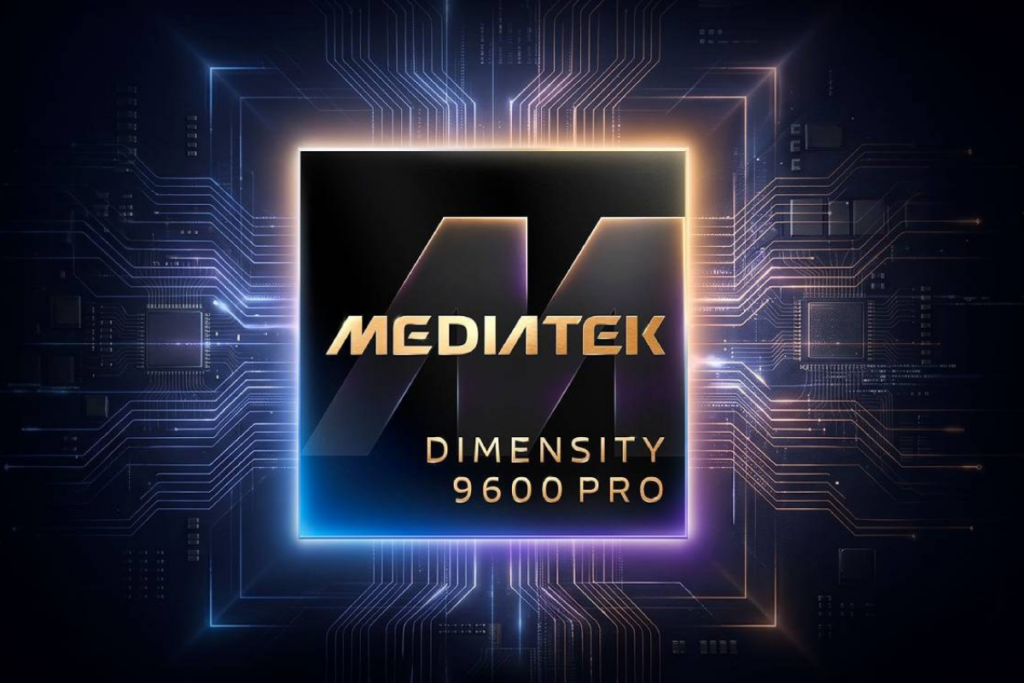
The Find X10 series brings a few major upgrades. At the heart is MediaTek’s 2nm Dimensity 9600 Pro processor, a clear step up from the Dimensity 9500 used last time. Imaging is another aspect, centered around an HPC 200-megapixel ultra-large sensor. Earlier leaks from the same tipster describe the Find X10 Pro with a 6.78-inch 1.5K LTPO display that has ultra-narrow bezels and large rounded corners on all four sides.

The camera setup is said to include a 200MP main sensor (roughly 1/1.3-inch class), a 200MP telephoto lens, and a 3MP multispectral sensor. Battery capacity is rumored to go past 8,000mAh, with wireless charging, 3D ultrasonic fingerprint sensing, and IP68/IP69 dust and water resistance also on the table.

For reference, the Oppo Find X9 Pro launched in October 2025 with a 6.78-inch 2772×1272 120Hz flat display, a 7,500mAh battery with 80W wired and 50W wireless charging, the Dimensity 9500 chipset, and a camera trio of 50MP wide (1/1.28″), 50MP ultra-wide (1/2.76″), and 200MP telephoto (1/1.56″).

If these latest reports hold up, the Find X10 series should bring real progress in performance, battery life, and imaging. Full specs are still missing, but the certification milestone and consistent leak details suggest Oppo is lining up a competitive late-September flagship refresh.

Don’t miss a thing! Join our Telegram community for instant updates and grab our free daily newsletter for the best tech stories!

For more daily updates, please visit our News Section.

(Sources: Digital Chat Station on Weibo)

Honor Play 11 Pro debuts with a 1.5K OLED screen, 7,000mAh, and slim body

Back in May, Honor unveiled the Honor Play 11 Plus in China, and now it has taken off covers from the Play 11 Pro. It has been quietly listed the Play 11 Pro on its online store in China, revealing the phone’s complete specifications, pricing, and availability. Here’s everything you need to know about this new Play-series phone.

Honor Play 11 Pro specifications and features

Honor Play 11 Pro
Honor Play 11 Pro

The Honor Play 11 Pro features a 6.6-inch 1.5K OLED flat display with a 120Hz refresh rate, a peak brightness of 6,500 nits, a 95 percent screen-to-body ratio, and 3840Hz PWM dimming for improved eye comfort. The phone is equipped with a Dimensity 6500 processor, paired with 8GB of RAM and 256GB of internal storage, although it does not support microSD card expansion.

The phone packs a 7,000mAh battery with 45W wired charging while maintaining a slim 7.34mm profile and a weight of 185g. Honor says the battery is designed to retain at least 80 percent of its original capacity after 1,000 charging cycles, translating to around six years of long-term durability. It ships with MagicOS 10-based Android 16.

Honor Play 11 Pro
Honor Play 11 Pro

The camera setup includes an 8-megapixel front camera and a 50-megapixel primary rear camera, while the handset also features an integrated metal frame, IP66 dust and water resistance, and SGS five-star drop resistance certification. Based on its specifications and design, the Honor Play 11 Pro appears to be a rebranded version of the existing Honor X80i.

Honor Play 11 Pro price and availability

The Honor Play 11 Pro is currently available for reservation in China in a single 8GB + 256GB configuration priced at 2,099 Yuan (~$310). It is offered in Moon Silver, Sunrise Gold, and Midnight Black, although the online listing initially shows only the Midnight Black variant for reservations.

For more daily updates, please visit our News Section.

Stay ahead in tech! Join our Telegram community and sign up for our daily newsletter of top stories!

Hisense launches ultra-affordable 180Hz gaming monitor with 23.8-inch FHD IPS panel

Hisense has introduced the N24 (2027 Edition) monitor in China, expanding its lineup of affordable desktop displays. The new monitor is currently available for 499 yuan ($74). It is positioned as a dual-purpose display for standard daily productivity and PC gaming.

Hisense N24 2027 Monitor

Hisense N24 2027 Specifications

The monitor features a 23.8-inch IPS panel with a 1920 x 1080 resolution, a 16:9 aspect ratio, and a 180Hz refresh rate for smoother motion. It also offers wide 178-degree viewing angles, ensuring consistent image quality from different viewing positions.

In terms of image quality, the N24 features an ELED backlight system that outputs a typical brightness of 300 nits alongside a 1500:1 contrast ratio. According to Hisense, the display covers 99% of the sRGB color space and 90% of the DCI-P3 color space. It supports 16.7 million colors, making it capable of handling standard media consumption and basic content creation tasks.

For gaming, the monitor includes AMD FreeSync support, which synchronizes the display’s refresh rate with the graphics card to prevent screen tearing and stuttering. The on-screen display menu also includes specific gaming adjustments, such as variable response times and dark scene enhancement to improve visibility in darker areas of a game.

To address eye strain during prolonged use, Hisense implemented DC dimming and hardware-level low blue light technology. This approach reduces blue light emissions at the hardware level, avoiding the yellow tint that software-based filters typically apply. The monitor carries TÜV Rheinland certifications for both Low Blue Light and Flicker-Free operation.

Physical connectivity is basic, featuring one HDMI port and one VGA port to support both newer and legacy computers. The monitor includes a tool-less quick-release stand that allows for tilt adjustments between -5° and 20°. For users who prefer custom setups, it is compatible with 100 x 100mm VESA mounts.

In related news, TCL has recently launched two new Tandem WOLED gaming monitors featuring up to 4K resolution, a 240Hz refresh rate, and Bang & Olufsen-tuned speakers, alongside an affordable 360Hz gaming monitor equipped with a 1440p Mini LED panel.

For more daily updates, please visit our News Section.

Stay ahead in tech! Join our Telegram community and sign up for our daily newsletter of top stories!
(JD)

Oppo A7 Pro Max camera samples released, packs the A series’ most advanced cameras

Oppo has shared another teaser for the upcoming A7 Pro Max, revealing more details about its camera hardware ahead of its official debut in China. The latest announcement focuses on the phone’s imaging capabilities while also giving a closer look at its design and official camera samples.

Oppo A7 Pro Max brings the A series’ most advanced camera setup

Oppo A7 Pro Max camera specs-
Oppo A7 Pro Max camera specs

According to Oppo, the A7 Pro Max will feature what it calls the most advanced imaging system in the history of the A series. The smartphone comes with 50-megapixel front and rear cameras, making it one of the few devices in its segment to offer high-resolution sensors on both sides.

The front camera also supports a 100-degree ultra-wide field of view, allowing more people to fit into group selfies. At the back, the phone includes a 50-megapixel primary camera with optical image stabilization, a 2-megapixel monochrome sensor, and a new intelligent flash system designed to improve portraits and low-light photography. Oppo has also published official camera samples that highlight the phone’s daylight and portrait performance.

The company has already confirmed several other specifications ahead of launch. The Oppo A7 Pro Max will feature a 6.78-inch 1.5K OLED flat display with a 120Hz refresh rate and will be powered by the Snapdragon 4 Gen 5 processor.

It also becomes Oppo’s first smartphone with a 10,000mAh battery, paired with 80W fast charging. The handset runs ColorOS 16 and has passed Oppo’s 72-month ageing smoothness test, with software optimisations that reduce memory usage during startup and everyday operation.

Oppo has confirmed that the A7 Pro Max will be unveiled in China on August 4 at 2:30 PM local time. The smartphone will be offered in three colour options, including Wind Rider, Orange and Black. It will be available in 8GB+128GB, 12GB+256GB, and 12GB 512GB storage variants. The company has also teased the phone surviving direct exposure to 2,000°C rocket exhaust.

For more daily updates, please visit our News Section.

Stay ahead in tech! Join our Telegram community and sign up for our daily newsletter of top stories!

Casio A140WE vs END. x Timex 1981 Reissue: Which Retro Watch Deserves Your Wrist?

The watch industry in 2026 continues to draw heavily from the past, but you don’t need to spend a fortune to find a well-designed, retro-inspired piece. Recently, two of the most recognizable names in accessible watches, Casio and Timex, released their own distinct takes on the everyday vintage watch.

The Casio A140WE offers a refined update to the classic digital formula, while the END. x Timex 1981 Reissue leans into the analog traditions of mid-century sportswear. Both are solid options for everyday wear, but they take entirely different paths to get there.

Casio A140WE and the END. x Timex 1981 Reissue

1. Casio A140WE

Casio Vintage A140WE watches

Casio has a long history of producing reliable, affordable digital watches, and the new A140WE series (released in June 2026) builds on that foundation with a focus on slightly more premium materials and finishes. Priced at $110 (or $130 for the gold-tone A140WEG-9A), it sits comfortably in the accessible price bracket while offering a noticeable step up in design from the brand’s entry-level resin models.

The biggest design update comes in the case shape. Measuring 39mm by 36.8mm, the A140WE takes the traditional squared-off Casio silhouette and softens the edges. The rounded curves of the chrome-plated resin case make it a bit more versatile, allowing it to blend in easily with everyday clothing rather than looking purely utilitarian.

Casio also updated the dial by placing a sunray finish, available in navy, gray, or light gold, behind the digital LCD. It is a subtle detail, but the way the metallic texture catches the light adds a layer of depth that you don’t typically see on standard digital watches.

The watch is paired with a multi-row stainless steel bracelet featuring a vertical hairline finish, which gives it a clean, cohesive look. Functionally, it offers exactly what you expect from Casio: a stopwatch, daily alarm, auto-calendar, an electro-luminescent backlight, and a very practical seven-year battery life.

2. END. x Timex 1981 Reissue

Timex END 1981 Reissue Inspired watch

On the other side of the spectrum is the END. x Timex 1981 Reissue. Priced at $199, this collaboration with the retailer END. moves away from digital utility and focuses instead on the analog aesthetics of classic tennis culture.

The design is centered around a 35mm brushed stainless-steel case. While 35mm might sound small by the standards of the last decade, it aligns well with the current trend of returning to more traditional, compact watch sizes. The smaller footprint makes it unobtrusive on the wrist and comfortable for daily wear.

The watch features a softly octagonal bezel that frames an ice-blue sunray dial. If you look closely, the dial includes a subtle globe etching, alongside applied markers and a standard date window at the 3 o’clock position.

It is a quiet design that doesn’t draw too much attention to itself, fitting the understated aesthetic often associated with tennis apparel. The watch runs on a standard quartz movement and is rated for 50 meters of water resistance, allowing it to handle light swimming while offering a practical advantage over the Casio’s more limited splash resistance.

3. Which One Makes Sense for You?

Choosing between these two watches largely comes down to whether you prefer a digital or analog display, and what kind of design language fits your daily routine.

If you appreciate the straightforward utility of a digital watch but want something that looks a bit more polished than a standard resin Casio, the A140WE is a very practical choice. At $110, it provides a reliable feature set, a long-lasting battery, and a design that feels like a natural evolution of Casio’s classic models.

Alternatively, if you prefer analog watches and like the idea of a smaller, vintage-proportioned case, the END. x Timex 1981 Reissue is a strong contender. The $199 price tag gets you a versatile stainless-steel watch with a well-executed dial design that pairs easily with casual or slightly dressed-up outfits.

Both watches show that you can find thoughtful, historically inspired industrial design without moving into the luxury price tier.

For more daily updates, please visit our News Section.

Stay ahead in tech! Join our Telegram community and sign up for our daily newsletter of top stories!

Casio launches two new affordable MTP-1440DJ watches with classic metal design

Casio has unveiled two new additions to its Standard Collection in Japan, the MTP-1440DJ-1A and MTP-1440DJ-7B. Both analog watches are set to launch later this month and will retail for ¥7,700 (around $49).

Casio MTP-1440DJ-1AJF

Design Details

Both watches use the same case and bracelet design, with the main difference being the dial. The MTP-1440DJ-1A features a black dial with baton-style markers for a cleaner look, while the MTP-1440DJ-7B uses a white dial with large Arabic numerals for improved readability and a more casual appearance.

The watches feature a compact 41 x 36.3 x 8.6 mm case and weigh 92 grams, keeping them relatively lightweight despite their metal bracelet construction. Casio pairs the stainless steel bracelet with a one-touch triple-fold clasp, while the watch case is made from brass and finished with a silver ion-plated coating.

The dial is protected by standard mineral glass. These are standard material compromises at this price tier, keeping manufacturing costs down while maintaining a classic metallic look.

Functionally, both models are simple three-hand analog quartz watches. They feature a dual day and date window located at the 3 o’clock position. The watches are rated for 5 ATM (50 meters) of water resistance, which is sufficient to survive splashes, rain, and brief immersion in water, though they are not intended for swimming.

Internally, the quartz movement runs on a standard battery with an expected lifespan of approximately three years. Both models are currently available for pre-order through Casio’s online store ahead of their official rollout later this month.

In related news, Casio has recently launched the Vintage A1000SP-7, a retro-inspired watch featuring a premium full-metal construction and sapphire crystal, and also introduced three new GravityMaster GWR-B3000 models in the US market.

For more daily updates, please visit our News Section.

Stay ahead in tech! Join our Telegram community and sign up for our daily newsletter of top stories!

(Casio 1,2)

Galaxy S26 FE camera specifications leaked

New leaks about the Galaxy S26 FE’s camera system have started circulating, giving us an early look at what the next FE model might offer.

Android Authority reports that the Galaxy S26 FE (internal codename “r14”) follows the same naming pattern as the S24 FE (r12) and S25 FE (r13). The main camera is expected to use a 50MP Samsung ISOCELL S5KGN3 sensor, the same one found in the S25 FE and S24 FE.

It’s a 1/1.57-inch sensor with 1µm pixels. It has an f/1.8 aperture, a 24mm-equivalent focal length, dual-pixel phase detection autofocus, and optical image stabilization.

The telephoto side relies on an 8MP OmniVision OV08A1 sensor that delivers 3x optical zoom, an f/2.4 aperture, PDAF, and OIS.

Two more 12MP sensors round out the package: a Galaxy Core GC12A2 and a Sony IMX825. It’s not 100% confirmed which one is the ultra-wide and which is the front camera, but looking at recent Samsung phones, the IMX825 (used as the selfie camera on the S25 FE) is the more likely front sensor, while the GC12A2 (previously seen on the Galaxy A37) would handle the ultra-wide. All the cameras support 4K video at 60fps, and the main sensor also adds 8K recording at 30fps.

Beyond the cameras, other rumored specs paint the S26 FE as a solid mid-to-upper-tier option for Galaxy fans. It’s expected to run Samsung’s Exynos 2500 chipset on a 3nm process, pack a 4,900mAh battery with 45W wired charging, and feature a 6.7-inch Dynamic AMOLED 2X display with a 120Hz refresh rate.

On pricing and timing, Dealabs points to a possible official reveal around September 1. In Europe, the 128GB model is tipped to start at €799, about €50 more than the previous version. Higher storage options are expected to carry modest bumps as well.

Overall, the leaks suggest Samsung is sticking with proven hardware and refining the performance rather than overhauling the camera system for the S26 FE. The dual-stabilized main and telephoto combo, solid video options, and updated internals should appeal to fans who want flagship-adjacent features without the full flagship price.

Don’t miss a thing! Join our Telegram community for instant updates and grab our free daily newsletter for the best tech stories!

For more daily updates, please visit our News Section.

(Source: Android Authority)

Citizen launches two elegant Eco-Drive Peyten watches that never need battery changes

Citizen has released two new additions to its Peyten watch lineup in the UK. The new models, the EM1230-54X and the EM1234-53L, are straightforward analog watches that focus on a smaller 30mm form factor and the company’s long-running Eco-Drive power system.

Citizen Peyten watches

Design Details

In a wearable market currently dominated by smartwatches that require daily charging, Citizen’s Eco-Drive technology offers a different kind of convenience. Instead of a lithium-ion battery that needs to be plugged into a wall, or a standard quartz watch battery that requires a replacement every few years, Eco-Drive uses a specialized solar panel integrated beneath the dial.

This panel absorbs both natural sunlight and artificial indoor light, converting it into energy that is stored in a rechargeable cell. The result is a watch that effectively powers itself in the background as long as it gets regular light exposure.

Both of the new Peyten models share this underlying technology and the exact same 30mm case size, which is quite compact compared to the larger cases often found on modern tech wearables. The differences between the two models come down entirely to materials, dial color, and price.

The EM1230-54X is priced at £249.00. It features a standard silver-tone stainless steel case and a matching link bracelet. The dial is purple, fitted with basic applied markers and a standard three-hand movement, all protected by a mineral crystal.

The second model, the EM1234-53L, costs slightly more at £269.00. For the extra £20, the case and bracelet are swapped to a two-tone stainless steel finish. This version also changes the dial from purple to blue, but otherwise maintains the exact same layout and internal hardware as the silver-tone model.

Both watches secure to the wrist using a fold-over clasp with push buttons. They also share a water resistance rating of 50 meters. This means they can handle basic water exposure and surface swimming, though they aren’t built for diving or high-pressure water sports.

In related news, Citizen has recently unveiled a sleek rectangular watch featuring Eco-Drive solar technology and a sapphire crystal, while the company has also expanded its Tsuyosa 60 lineup with two new automatic models sporting a gold-tone finish.

For more daily updates, please visit our News Section.

Stay ahead in tech! Join our Telegram community and sign up for our daily newsletter of top stories!

(Citizen 1,2)

Samsung says memory shortage will get worse in 2027

The world’s largest memory maker now thinks the current shortage of DRAM and NAND is going to get worse next year and stick around until at least 2028. Samsung shared the outlook during its second-quarter FY2026 earnings call. It’s another clear sign of just how much artificial intelligence is rewriting the rules in the semiconductor world.

On the call, Samsung executives said several AI labs have already given them medium and long-term demand forecasts so the company can lock in capacity. That visibility is letting Samsung sign multi-year supply deals with big data-centre operators and expand production lines ahead of time. The idea is to smooth out the classic boom-and-bust cycles that have always defined the memory business.

The AI boom has been a mixed bag for Samsung. Its semiconductor division posted record sales and profits in the second quarter, with memory doing most of the heavy lifting. At the same time, the jump in component costs is starting to pinch the company’s own consumer electronics side. Higher memory prices have squeezed margins on Galaxy phones and TVs, so Samsung has raised retail prices. That’s already led to softer demand in those product lines.

Other device makers are feeling the same squeeze. Apple recently hiked prices on several MacBook and iPad models. Nothing had to cancel the CMF Phone 3 Pro and launch it under the Nothing brand to justify the price.

Samsung’s forecast makes it clear this tightness isn’t going away soon. Building new fab capacity takes years, and the fast growth of agentic AI is expected to keep pushing up token consumption, and with it, memory demand. By locking in long-term contracts for a big chunk of its output, Samsung is trying to make its own planning more predictable and bring a bit more stability to the wider market.

Don’t miss a thing! Join our Telegram community for instant updates and grab our free daily newsletter for the best tech stories!
For more daily updates, please visit our News Section.

(Source: TechCrunch)