Earlier this month, the Motorola Moto G52 was spotted on certification websites confirming its existence. However, there was no news about the phone thereafter. Now, Evan Blass(via 91Mobiles) has shared some official renders and specs of the smartphone taking us closer to its release.
The Motorola Moto G52 will take on the Motorola Moto G51. The smartphone will carry forward the triple camera and punch-hole design from the G51. The phone is codenamed ‘Rhode’ and has a large punch-hole panel. It is a 6.55-inch pOLED display with FHD+ resolution. It will have a 90Hz refresh rate, which is a downgrade from the 120Hz refresh rate of its predecessor. But, a pOLED panel from an LCD screen is still an upgrade anyway.
Motorola Moto G52
Moving to the back, it has a vertical camera placement with a 50MP main lens, an 8MP ultra-wide lens, and a 2MP depth sensor. The device has a 16MP front-facing camera for selfies. On the back, it has the Motorola logo and written text. It has a SIM tray on the left spine and a volume rocker, a power button on the right side.
It is said to have the Qualcomm Snapdragon 680 SoC paired with 4GB, 6GB of RAM, and 128GB, 256GB of storage. For those unaware, this chipset doesn’t support 5G, meaning it will be a 4G-only handset. This is an unusual move as the predecessor Moto G51 has 5G support with its Snapdragon 480+ SoC.
The device will pack a 5,000mAh battery and have an IP52 rating. There’s no detail about its charging speed. It will boot on Android 12 OS out of the box and come in Black, White, and Blue colors. As of now, Motorola hasn’t revealed the launch date of this phone, nor do we get any date from the tipster. But the phone is said to debut internationally soon.
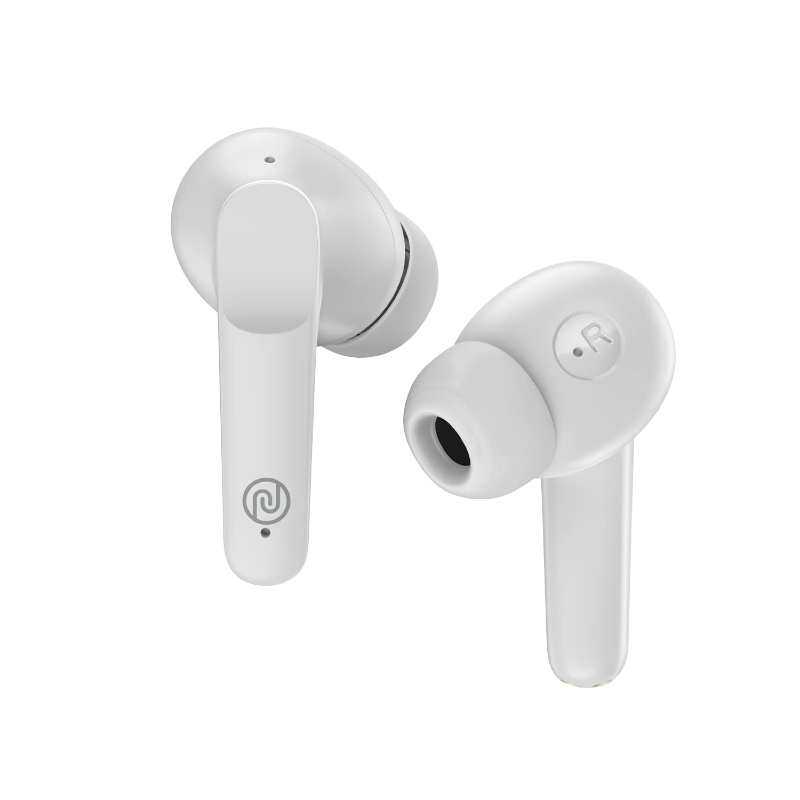
Soundcore By Anker Life P2 Mini Earbuds which generally retail for $50 is now available at a heavily discounted price of $27.33 only at AliExpress. This power-packed budget earbud comes with powerful bass and AI-enhanced calls that give you value for money. Please note that this is one of the cheapest prices offered yet for this product by the Anker store. This super deal ends in the next 36 hours.
After the initial launch in China back in January, OnePlus has finally debuted its latest flagship device, the OnePlus 10 Pro globally. The flagship device has been launched for Indian, European, and North American markets, so let’s take a look at what it has to offer.
Design and display
The OnePlus 10 Pro takes design cues from the Samsung Galaxy S21 series and comes with a metal camera housing that melts with the frame on the side. On the right edge, we get the signature OnePlus alert slider while the back features a matte rear glass panel like its predecessors. Talking about size and weight, the handset measures 163 x 73.9 x 8.5mm in dimensions and weighs 200.5g.
On the front, the device flaunts a 6.7-inch second-generation LTPO AMOLED display (flexible) with support for variable refresh rates (1Hz to 120Hz). This curved panel has a resolution of 3216 x 1440 pixels (QHD+), 525 PPI, a punch-hole at the top left corner, and an in-screen fingerprint sensor. Other specs of the screen include 1300 nits peak brightness, 5000000:1 contrast ratio, 20.1:9 aspect ratio, 92.7% screen-to-body ratio, and Corning Gorilla Glass Victus protection.
Performance
The phone is powered by a Qualcomm Snapdragon 8 Gen 1 chipset paired with LPDDR5 RAM and UFS 3.1 storage. The operating system on the device is the Android 12 based OxygenOS 12.1. The OS shares its codebase with OPPO’s mobile operating system (ColorOS) and brings along features such as HyperBoost (for gaming) and more.
The device gets its energy from a 5,000mAh battery. The North American version of the device has a 65W charger in the box, while users in Europe and India will be getting the 80W SuperVOOC power brick. The phone also features support for 50W AirVOOC fast wireless charging. It also has support for reverse wireless charging.
Other features of the smartphone include 5G connectivity, WiFi 6, Bluetooth 5.2, GNSS, NFC, USB Type-C (USB 3.1), x-axis linear vibration motor, and dual stereo speakers with support for Dolby Atmos.
Camera
As far as optics are concerned, the OnePlus 10 Pro houses a triple camera setup on the rear. This system includes a 48MP Sony IMX789 primary sensor with OIS, a 50MP Samsung ISOCELL JN1 sensor 150° ultra-wide unit, and an 8MP 3.3x telephoto shooter with OIS. For selfies and video calls, there is a 32MP Sony IMX615 sensor on the front. All these cameras are co-tuned by Hasselblad with features like Hasselblad Natural Color Optimization 2.0, XPan Mode, and more.
OnePlus 10 Pro Price and Availability
The OnePlus 10 Pro will retail at the following markets with the price tags given below:
North America
8GB + 128GB – $899
India
8GB + 128GB – ₹66,999
12GB + 256GB – ₹71,999
Europe
8GB + 128GB – €899
12GB + 256GB – €999
UK
8GB + 128GB – £799
12GB + 256GB – £899
Buyers can avail the phone in either Volcanic Black or Emerald Forest (Green) color options. Pre-orders are already open, with actual sales scheduled for April 5 in India and April 8 in other regions.
Last week, realme launched the Buds Air 3 true wireless earbuds at the realme GT NEO 3 launch event in China. For now, there are only rumors of the GT NEO 3 device launching in India next month, however, the brand has officially announced the Indian launch date of the realme Buds Air 3 in the country.
According to their official website, the new TWS earbuds will debut in India on April 7th at 12:30 PM. The company has also hinted that the earbuds will be priced in the Rs 3000 range. Although the exact pricing is still hidden, customers who buy the earbuds on April 7th will get a flat Rs 500 discount on their purchase.
realme Buds Air 3 specs and features
The teaser on the official website reveals that the device will come in White and Blue color options. The TWS earbuds adopt an in-ear design and come with a “10mm LCP Dynamic Bass Boost driver,” capable of producing audio at an ultra-low latency of 88ms.
The realme Buds Air 3 feature a “deep-sea” noise reduction system, capable of reducing noise by up to 42dB, and has even obtained the world’s first Rheinland high-performance noise reduction certification. The system works by making use of dual microphones — 1 feedforward and 1 feedback.
Promised battery life maxes out at 30 hours with the charging case on normal mode and 22 hours with ANC turned on. Without the case, the earbuds should last for 5.5 hours. 10 minutes of charge has also been promised to provide 100 minutes of listening.
The Buds Air 3 are protected against the elements with IPX5 water resistance, although the rating is limited to the earbuds alone and not for the case.
Earlier this month, the Xiaomi 12 series forayed to the global market by a release in Europe. The Indian market was also tipped to get the series soon but the launch timeline wasn’t revealed. Now, the tipster Ishan Agarwal has revealed that the Xiaomi 12 Pro will be launching soon in India.
The tipster said that the Xiaomi 12 Pro will arrive in April in the Indian market. He only mentioned the Pro model, so we aren’t sure if the other models will accompany it at the launch. However, the Xiaomi 12X was tipped earlier to launch in India. So we might see the phone later or at the same time as the 12 Pro in the country.
Xiaomi 12 Pro Specifications
Xiaomi 12 Pro sports a 6.73-inch AMOLED LTPO display with FHD+ and a 120Hz refresh rate. The device has Gorilla Glass Victus protection and an in-display fingerprint scanner for security.
It features a 32MP selfie camera and a triple rear camera system. It has a 50MP main, a 50MP ultra-wide, and a 50MP telephoto sensor.
It is powered by the Qualcomm Snapdragon 8 Gen 1 SoC paired with up to 12GB of RAM and 256GB of internal storage. The phone houses a 4,600mAh battery with 120W fast charging support. It boots on Android 12 OS and has MIUI 13 on top.
Last week, we reported that users of the Galaxy A52s 5G were facing issues like their devices slowing down and the battery of the smartphone draining too quickly. These issues arose after Samsung rolled out the Android 12 based One UI 4.0 to these devices.
Now, Samsung has begun rolling out the Android One UI 4.1 update to these devices which will hopefully fix the issues. Along with the A52s, the South Korean giant has also released the One UI 4.1 update for the Galaxy A71 5G and the Galaxy S20 FE 4G. The Galaxy A71 5G has completely skipped the One UI 4.0 update and is directly jumping to One UI 4.1.
The latest update brings plenty of improvements along with the standard bug fixes and the March 2022 security patches to these devices. Some highlight features coming with this update are the Smart Calander and the improved RAM Plus. The Smart Calander reads dates from all messaging apps and allows for easier input in the actual Calendar app. The RAM Plus on the other hand enables virtual memory capability on these devices and now offers a choice of four options between 2GB and 8GB.
The update is said to be live in Europe and South Korea at the moment and will see a wider rollout soon. If you have not received the update yet, you can manually check for the One UI 4.1 update on their Samsung Galaxy handsets by heading to Settings > Software update. Users also have the option to grab the new release directly from Samsung’s Firmware Update Server (FUS) and flash it manually on their Galaxy device.
Earlier this month, Samsung officially unveiled the Galaxy M33 5G and the Galaxy M23 5G smartphones via press release. The reveal included a majority of their specs along with their design, however, the company has kept the Galaxy M53 5G under wraps.
Now, a YTECHB report has leaked the renders of the Galaxy M53 5G giving us the first glimpse at its design. The back panel of the device looks identical to the Galaxy M33 5G with the same square camera island and a quad-camera cutout. The LED flash of the device also has the same placement as the Galaxy M33.
The front however is quite different. The render reveals that the screen of the device will come with a punch-hole cutout instead of a dew-drop design. The bezels on the device are also quite thin compared to the Galaxy M33 5G.
Samsung Galaxy M53 5G specs (Rumored)
The device is rumored to come with a 6.7-inch FHD+ Super AMOLED display with up to a 120Hz refresh rate.
Under the hood, it will have a MediaTek Dimensity 900 SoC paired with 8GB RAM and 128GB storage. The device is said to arrive will with over 10 5G bands and features Bluetooth 5.2.
The handset will house a quad-camera setup on the rear. The camera system will include a 108MP primary sensor, an 8MP ultra-wide unit, a 2MP macro snapper, and a 2MP depth sensor. On the front, there will be a 32MP shooter for selfies and video calls.
The smartphone will boot One UI 4.1 based on Android 12. It will get its juice from a 5,000mAh battery, which will be capable of charging at 25W. However, rumors state that Samsung will not be shipping a charger with the device.
The realme Book Prime has been making rounds on the internet for a while now and is a rebranded Realme Book Enhanced Edition, which was announced in January this year in China. It was launched for the global market alongside the Buds Air 3 but the Indian market was given a miss. That changes soon though as realme has now revealed the laptop’s launch date for the country.
The company’s official site for India now has a big banner on the home screen with the launch date for the realme Book prime. Set for April 7th, 12:30 PM, looks to be a premium offering and will therefore likely carry a premium price as well.
While the banner doesn’t reveal much in terms of specifications, only saying that the realme Book Prime will have an 11th Gen Intel processor and a 2.8K display, most of its specifications are already known. We have given these below.
The realme Book Prime is likely to feature a 14-inch LCD screen with an aspect ratio of 3:2. It will offer a screen resolution of 2160 x 1440 pixels. It will be powered by the 11th gen Intel Core i5 CPU that’s paired with the Intel Xe iGPU.
The laptop will include 16GB of LPDDR4 RAM, 512GB of PCIe SSD storage, and a 54Wh battery. It will likely come pre-installed with Windows 11 OS and is expected to support 65W fast charging.
On the connectivity front, the realme Book Prime is expected to feature a USB-C 3.2 Gen 2 port, a USB-A 3.1 Gen 1 port, a 3.5mm headphone slot, Wi-Fi 6, and Bluetooth 5.2.
The mid-range smartphone category in India is going through a growth phase. This segment in the country covers the phones selling in the range of ₹20,000-₹45,000. Therefore, earlier this week, Samsung announced its plans to conquer almost half of the mid-range smartphone market in the region.
A few days back, Samsung took wraps off five new Galaxy A series models for India. At the launch event in Bengaluru, Aditya Babbar, Senior Director and Marketing Head for Samsung India, revealed to the Deccan Herald (via SamMobile) that the South Korean electronics is hoping to capture 40% of the mid-range smartphone segment (₹20,000-₹45,000) in the country with the help of its new handsets.
According to Counterpoint Research, Samsung’s market share in India’s mid-range smartphone category stood at 28% in 2021. The company registered a growth of 87% YoY in this segment.
Since India is a price-sensitive market, brands have been pushing various financing options to attract consumers. Samsung introduced its own lending platform dubbed ‘Samsung Finance Plus’ three years ago. It is currently available in over 50,000 stores across India. Babbar disclosed that over 50% of this platform’s users are new to credit as they have never availed loans in their life.
The average selling price of smartphones in India increased in 2021 due to supply issues. At the same time, mid-range phones now offer more as well as diversified features targeting multiple audiences. This has resulted in the growth trajectory for the mid-range smartphone category in the region, and hence, every OEM wants a pie of it.
Apple is apparently working on a new payment processing technology for a multiyear plan to expand its financial services and products. The company is developing in house technology that will help it reduce its reliance on its partners in the financial sectors.
The news arrives from Bloomberg, with the report stating that the Cupertino based giant is developing a payment process tech and infrastructure. This will involve processes like risk assessment, fraud analysis, credit checks, and dispute handling, which is similar to most financial services. Furthermore, the brand is reportedly even planning on building tools to calculate interest rewards, approving transactions, and more.
The report adds that a part of the project is internally dubbed as “Breakout,” and will involve Apple’s shift away from its current financial systems. As of right now, the iPhone maker relies on its partners like Goldman Sachs Bank and CoreCard for the Apple Card, Green Dot for Apple Cash, and Citizens Bank. But with this new project, Apple will bring all of its financial services for its future products in house. At the moment, it already Apple Card and Pay, but might soon offer subscription services for its hardware and even a “buy now, pay later” option in the future.
The report states that the buy now, pay later option will be the first product from the company to launch within its new system. This will include an option for a four payment option called “Apple Pay in 4” and an option for a long term payment plan through the “Apple Pay Monthly Installments.” Keep in mind that even if the report is true, it will take the brand a while to work on develop its financial services and infrastructure. So, its say to assume they are a while away for now.
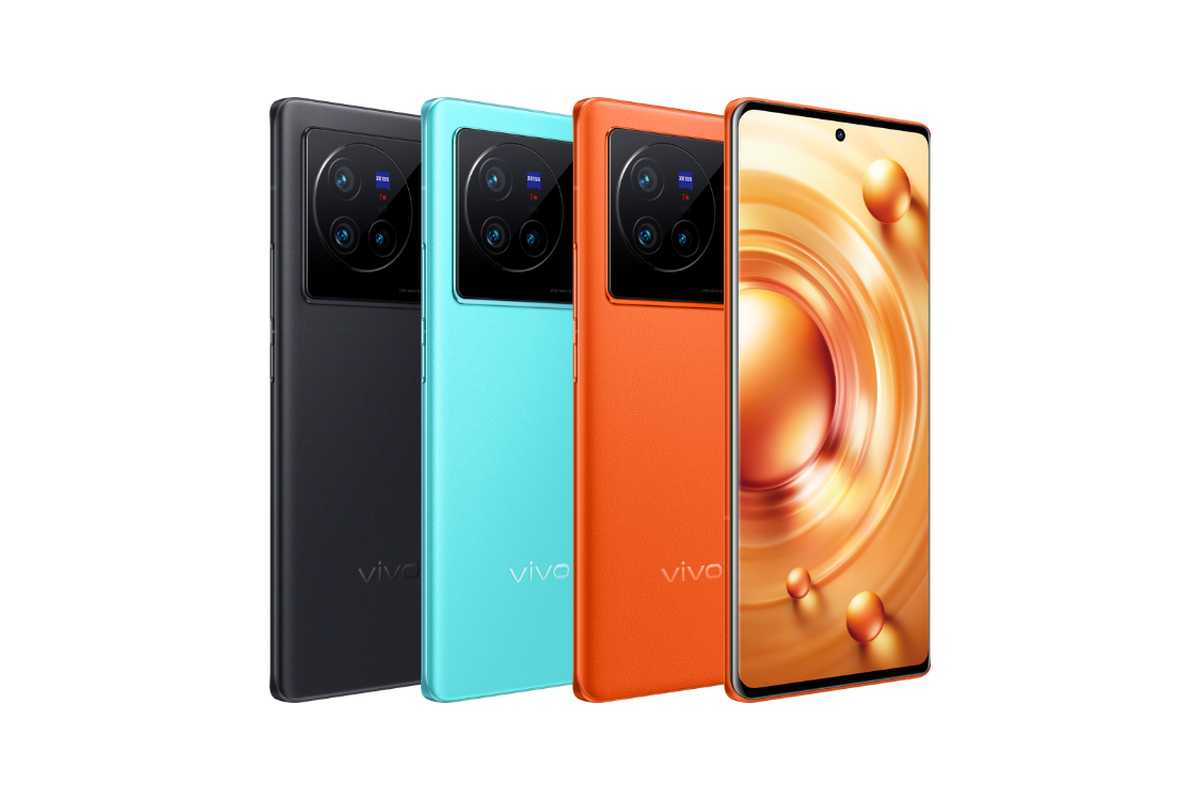
The vivo X80 series is nearly here now with a launch possible scheduled on April 11th along with the much-anticipated X Note and X Fold phones. If that indeed happens, it would mean the arrival of five flagship phones together, which isn’t something you see often. Ahead of the purported big day, tipster Digital Chat Station has revealed some of the specs of the vivo X80 Pro.
The vivo X80 Pro should be one of three models and will be sold alongside the vivo X80 and vivo X80 Pro+, just like last year’s vivo X70 series. The tipster says that it will be powered by the top-of-the-line MediaTek Dimensity 9000 processor and will be taking gaming into consideration, featuring a 4000mm² VC plate for heat dissipation. As such, it will be supporting the Honor of Kings game at 120Hz right out of the box.
In terms of display, it will have a 6.78″ FHD+ E5 AMOLED curved panel with a single punch-hole for the selfie camera. The display will also support DC dimming and will therefore be easy on the eyes. The haptics experience should be top-notch too, thanks to the presence of X-axis linear motor.
Lastly, the phone will have a 4,500mAh dual-cell battery, which will likely support 80W wired fast charging and 50W wireless charging.
Jia Jingdong, vice president of vivo brand, earlier said that the original NEX series’ legacy of innovation will not disappear, and will instead be carried forward by the flagship product X series.
Apple supplier TSMC has said that the demand for consumer electronic products like PCs and smartphones is seeing a slow down. Apparently, the demand has fallen owing to a number of factors.
According to a NikkeiAsia report, the news arrives from TSMC’s Chairman Mark Liu. The senior official of Taiwan Semiconductor Manufacturing Company said that the ongoing geopolitical uncertainities and new lockdowns caused by the coronavirus in China has caused demand to fall. The executive of the world’s largest contract chipmaker and major Apple supplier made the statement at the Taiwan Semiconductor Industry Association. He further added that customer interest has fallen in particular in China.
On the other hand, the rising prices of raw materials and components have also caused production costs to go up for chipmakers like TSMC. Liu believes that “pressure could eventually be passed on to consumers,” which would likely impact the demand of customers since prices of the end products will also rise. He said that “Everyone in the industry is worried about rising costs across the overall supply chain… The semiconductor industry already and directly experienced that cost increase.”
iPhone SE 2022
Furtehrmore, Liu stated that TSMC will not be changing its growth targets despite not being able to meet customer demand with its current capacity. However, it plans on reorganizing and prioritizing orders for “areas that still see healthy demand.” A noticeable sign of customer demand falling is Apple’s newly launched iPhone SE 2022, which will have its production lowered due to lower than expected demand in the global market.
Last week we reviewed the Redmi K50 Pro with Dimensity 9000, which is a great phone. But today’s phone is even better. The Budget flagship phone: Redmi K50 with Dimensity 8100 is coming! In today’s review, we focus on the K50’s Dimensity 8100, camera system, charging, and battery life.
As you can see from the table, these are the three main differences between them. If you are concerned about other features of the K50, you can watch our K50 Pro review video, they are almost the same.
Before we get to the test, I would like to introduce the Dimensity 8100 chip.
I don’t want to make it too complicated but simply put, this chip is a sub-flagship SoC launched by MTK to counter the Snapdragon 888. So if it performs better than the Snapdragon 888 in tests, then the purpose of this chip will be achieved.
Let’s look at the Geekbench 5 CPU performance test. As you can see from the graph, although its single-core performance is a bit worse than the Snapdragon 888, the Dimensity 8100 has surpassed the Snapdragon 888 in multi-core performance. It even surpassed the Snapdragon 8Gen1’s multi-core performance level. So it looks like Dimensity 8100 has exceeded its goal. But after receiving an update, Redmi has limited the K50 and the multi-core scores have dropped significantly. While we don’t know why Redmi did this, at least the scores from the last version prove how powerful the Dimensity 8100’s CPU really is.
In the 3D Mark GPU test, the Dimensity 8100 scores are slightly ahead of the Snapdragon 888, but there is a significant gap with both the Snapdragon 8Gen1 and the Dimensity 9000. In the 3DMark stress test, the stability is much better than the Snapdragon 888’s Mi 11 Ultra.
Overall, at least in the Benchmark Test, MTK’s Dimensity 8100 achieves what they expected: Performance surpasses Snapdragon 888 in an all-around way.
The score is just a number, the game is what we really care about. I have to say, Genshin Impact is a really good game. It’s pretty much the only mainstream game in mobile gaming right now that can put huge stress on a phone. So lets check how this phone performs., here’s the graph for the Snapdragon 888 phone.
Dimensity 8100 vs 9000 vs Snapdragon 8 Gen1 vs Snapdragon 888 – Gaming Performance
Here’s the graph showing Dimensity 9000, Snapdragon 888, SD 8 Gen1, and Dimensity 8100 phones.
Looking at the above graph, we can see that the frame rate was held steady at 60fps for 11 minutes. And most of the time the frame rate was above 50fps. Do you think this is the best thing about K50? Hold your breath, there’s more to come. Look closely at the Avg Power, the K50 has a far better gaming experience with far less power than the Xiaomi 12 Pro. The 20-minute Genshin Impact only consumed 9% power. The maximum temperature did not exceed 48 degrees Celsius either. Without a doubt, the K50 Standard Edition is one of the best performing phones we’ve tested this year with the Genshin Impact.
Brightridge’s fps is more dependent on GPU performance, so the K50, like other Snapdragon 888 phones, will have a lower avg fps compared to this year’s flagship chips. But at least the Dimensity 8100 remains very power efficient and with low temperature.
PUBG Mobile is not yet compatible with Dimensity 8100 phones, so you can’t turn on HDR Graphics and the frame rate is locked at a maximum of 30 fps. If you like to play PUBG you must think carefully about whether you can accept this kind of gaming experience.
All in all, this Dimensity 8100 processor in the Redmi K50 has an excellent performance. It is both power efficient and ensures long-time performance output. All things considered, unless you are a Brightridge fan, it is probably the best chip for gaming this year.
Redmi K50 Cameras
Main Camera
1 of 11
night
night
night
Although 108MP sounds much better than 48MP, in reality the K50’s 48MP main camera level is about the same as the K50 Pro. In daytime scenes, 90% of the scenes I could not see any difference even if I zoomed in. Only in some scenes could I tell that the dynamic range of the K50 Pro was indeed a little better than the K50 Standard. At night the photos from both phones look similar, the K50 Pro has less dark noise and the K50 Standard has better clarity. It’s hard to say who’s photos are a little better. As for the other two lenses, they take exactly the same photos, I won’t comment on them. So there is no need for you to buy the more expensive K50 Pro in order to get better photos.
Ultrawide Camera
1 of 11
night
night
night
The K50 also supports up to 4K 30fps recording. It doesn’t look any different from the K50 Pro.
Redmi K50 Battery & Charging
Although the charging power of 67w is already quite fast, it is still slow compared to 120w. Plus with a large 5500mAh battery, it takes 5 minutes to charge 19%, half an hour to charge 74%, and 53 minutes to fill. Because we don’t have another 5500mAh phone, plus the highest quality or resolution of the games that can be selected is not the same. The chart shows the battery life test for reference only. But with such a large capacity battery and Dimensity 8100’s excellent power control performance, you can be assured of a full day of use.
1 of 2
Of the three K50 series phones released so far, I like this K50 Standard Edition the best. I’m sure everyone is thinking the same thing as me. You can spend less money, but get a better gaming experience and longer battery life. The screen is also WQHD+ and the camera is better than expected.
If K50 Pro can be called “Flagship Killer”, then K50 can also be called “Budget Flagship phone”.
After having first appeared on Chrome Canary in January this year, version 100 of the browser has now made it to the stable branch, touching triple digits for the first time. The update is now rolling out to Android, iOS, macOS, and Windows.
The most notable change with the update is the new iconography, which Google says has been adjusted to match the system icons on various platforms. It gains a subtle gradient on Windows, a 3D look on macOS, and a flatter design on Chrome OS. All in all, the new logo appears more lively.
In addition to that, with Chrome 100, Google has also eliminated “Lite Mode,” which was previously available on Android and iOS and allowed users to save data. With the feature enabled, some of your web browsing would go through Google’s servers and then back to you in a more compressed format, rather than directly to your device.
The new version also brings a new multi-screen window placement API that allows certain windows to be displayed on certain monitors, which is useful for those who frequently use multiple monitors.
Google is known for updating Chrome OS synonymously with its Chrome browser so the operating system has been bumped up to v100 as well. Changes with it include a new launcher that doesn’t take up the entire screen anymore, search improvements, the ability to edit text using your voice, and more.
In a recent investors meeting, BYD revealed its possible sales target for this year along with some other information. Apparently, the company’s undelivered orders have racked up and reached 400,000 units, showcasing strong demand for its vehicles.
The Chinese automobile maker’s cumulative undelivered orders have hit 400,000 vehicles. This marks another rise month on month. Meanwhile, the brand had expected to conservatively expects to sell 1.5 million automobile units this year. Although, the company estimates that this figure might go up to 2 million if the supply chain improves over the next couple of months. According to an ITHomereport, the company’s Han DM-i based electric vehicles saw robust demand after its launch.
Furthermore, it is expected that the monthly sales of the Han series will also surpass 30,000 units as well. BYD projects that the current rise of raw marterial prices is slowing down; so, if the cost of lithium carbonate remains at the current price, the supply constraints won’t have a major impact on the sales of its new energy vehicles this year. Thus, BYD is expected a penetration rate of new energy vehicles to cross 35 percent this year, or possibly even hit 40 percent.
Notably, we had previously also reported on the company announcing its first overseas sales of its DM-i based EVs. It had already shipped 500 units to Colombia, which has been a staple region for the brand in recent years. This implies that the estimation also includes the relatively smaller foreign market that it targets along with its strong domestic demand.
The Xiaomi Mi Note 10 Lite is now beginning to receive the MIUI 13 update based on Android 12 in Europe. Along with a bunch of optimizations, the update also carries the February 2022 security patch.
The firmware is labeled V13.0.1.0.SFNEUXM and the complete ROM zip should be sized 2.9GB. The MIUI 13 launch events outside of China hadn’t introduced much in terms of features aside from new wallpapers, so don’t expect too much from the build.
Anyway, the complete official changelog has been given below for your reference.
System
Stable MIUI based on Android 12
Updated Android Security Patch to February 2022. Increased system security
More features and improvements
New: Apps can be opened as floating windows directly from the sidebar
Optimization: Enhanced accessibility support for Phone, Clock, and Weather
Optimization: Mind map nodes are more convenient and intuitive now
Xiaomiui says that the update is being rolled out only for those that are part of the Mi Pilot Testers program currently so it may be a while before it arrives on your device.
Still, you can download the update manually through this link, and install it by heading over to Settings > About phone > System update. No guarantees, though, since the build is currently Pilot-exclusive.
The Xiaomi Mi Note 10 Lite was launched back in April 2020 and first booted into Android 10, meaning that this Android 12 update is the last Android version upgrade for it.
Android OEMs have been updating their devices to Android 12 since it hit the stable channel in October. Almost all companies run a beta program before rolling out the software to the general public. Chinese brand realme calls its initial beta program ‘Early Access’. Three more devices, namely realme 7, realme narzo 20 Pro, and realme narzo 30 have now joined this initiative.
realme narzo 20 Pro
According to official announcementposts on the realme community, users of realme 7, realme narzo 20 Pro, and realme narzo 30 can now try Android 12-based realme UI 3.0 on their smartphones. All they have to do is enroll themselves in the realme UI 3.0 Early Access program.
The only requirement is that the users should be on the following firmware versions.
If they are, then they can head over to Settings > Software Update > Gear Icon > Trial Version > Apply Now and submit the details. Applicants who get selected will receive the realme UI 3.0 beta update via OTA.
Participants who are dissatisfied with the Android 12 release can revert back to Android 11 (realme UI 2.0). However, unlike the update process, the downgrade process will wipe the device’s internal storage. Also, users can no longer get back to the realme UI 3.0 Early Access program.
The Redmi Note 12 series may debut in April or May and will be equipped with a high-performance processor from MediaTek, tipster Digital Chat Station broke the news with a post on Weibo today.
The tipster also said that while they’re unsure if the display is an LCD or OLED, they did spot a center-aligned punch-hole in it for the selfie camera.
Previously, Lu Weibing, president of Xiaomi Group China and general manager of the Redmi brand, stated that the Redmi Note series will be refreshed every six months, replacing the yearly cycle. Phones released under it will have a special focus on performance.
Redmi Note 11 Pro
Some Weibo users speculated under the same post that the high-performance MediaTek processor in question will either be the Dimensity 8000 or the Dimensity 1300, which while is only talk at the moment, does have some weight to it. Both are quite powerful and are definitely “high-performance” offerings — just not as fast as the flagship Dimensity 9000 chip.
Aside from this, barely anything’s known about the Redmi Note 12 series at the moment, but we should be seeing more bits of info leak ahead of their launch, slated to be in the second quarter of this year.
The Redmi Note 11 Pro+ came with 120W fast charging support while the Redmi Note 11 Pro supported 67W, so we should be seeing similar speeds with the Redmi Note 12 series as well.
WhatsApp is constantly adding and updating its platform to improve the user experience of its large userbase. And now, the latest addition seems to place a focus on making voice messages more interactive.
The popular messaging platform, which is owned by Meta, is currently testing new features like the message reactions, poll feature, and multi device support as well. But the new features do not end there, as it is also working on bringing additional ones that helps improve voice interactions. The improvements will be thanks to updates like draft preview, ability to pause and resume recording, out of chat playback, resuming playback, and even waveform visualization.
Sending voice messages on WhatsApp has been a thing since 2013. However, while it isn’t the major focus of the platform, the company stated that an average of 7 billion voice messages are sent in a day. So, it is clearly a popular function of the app and it isn’t surprising that the company would seek to improve it even further. One of the upcoming features include Out of Chat Playback feature that lets users listen to voice messages even if they are outside of the original chat. This has been a highly requested feature and is a quality of life change.
Additionally, users will soon be able to pause and resume recordings as well. Another new feature is that one can first listen to their voice messages before sending them, through its new Draft preview feature. Lastly, the Waveform Visualization gives you a visual representation of the sound of the voice message. All of these features should roll out on the live build in a couple of weeks.
The RMX3372 and RMX3574 are the model numbers of the two upcoming smartphones from Realme. Both devices have been approved by China’s TENAA telecom authority. The TENAA listings of both models have revealed their images and specifications. The RMX3372 seems to be similar to the Realme GT Neo2, whereas the RMX3574 appears to be an entry-level 5G phone that may break cover as a Q-series phone.
Realme RMX3372 specifications
The Realme RMX3372 handset features a 6.62-inch AMOLED FHD+ panel integrated with a fingerprint sensor. It has a 16-megapixel front camera and a 64-megapixel + 8-megapixel + 2-megapixel triple camera unit on the rear.
Rea;lme RMX3372
The RMX3372 may ship with the Snapdragon 870 SoC, 6 GB / 8 GB / 12 GB of RAM and 128 GB / 256 GB / 512 GB of native storage. It is likely to come equipped with a 5,000mAh dual-cell battery. For additional storage, it will have a microSD card slot. Mirror Black, Dream Blue, and Super Orange are the three color variants of the RMX3372.
Realme RMX3574 specifications
Rea;lme RMX3574
The Realme RMX3574 has a 6.58-inch IPS Full HD+ screen, an 8-megapixel front camera, and a 13-megapixel + 2-megapixel dual-camera system. It is powered by an unknown 2.4GHz octa-core processor, 4 GB / 6 GB of RAM, and a 5,000mAh battery. The device will also have 128 GB of internal storage, a microSD card slot, and a side-facing fingerprint scanner. It will arrive in purple and black colors.
These models have not received 3C certification yet. Since they have bagged TENAA certification, they are expected to launch in April in China.
We use cookies on our website to give you the most relevant experience by remembering your preferences and repeat visits. By clicking “Accept”, you consent to the use of ALL the cookies.
This website uses cookies to improve your experience while you navigate through the website. Out of these, the cookies that are categorized as necessary are stored on your browser as they are essential for the working of basic functionalities of the website. We also use third-party cookies that help us analyze and understand how you use this website. These cookies will be stored in your browser only with your consent. You also have the option to opt-out of these cookies. But opting out of some of these cookies may affect your browsing experience.
Necessary cookies are absolutely essential for the website to function properly. This category only includes cookies that ensures basic functionalities and security features of the website. These cookies do not store any personal information.
Any cookies that may not be particularly necessary for the website to function and is used specifically to collect user personal data via analytics, ads, other embedded contents are termed as non-necessary cookies. It is mandatory to procure user consent prior to running these cookies on your website.