OPPO Find X5 series will be announced in China through a mega launch event at 7 PM (local time) on Feb. 24. The company will be launching products like Find X5, Find X5 Pro Dimensity Edition, Find X5 Pro, Enco X2 TWS earbuds, and OPPO Pad tablet. The Find X5 Pro Dimensity Edition will be debuting as the world’s first smartphone powered by the Dimensity 9000 flagship chipset. Here is all the information on what to expect from the Find X5 Pro Dimensity Edition.
OPPO Find X5 Pro Dimensity Edition specifications (rumored)
Leaks that are now doing rounds on Weibo revealed that the Find X5 Pro Dimensity Edition has a 6.7-inch AMOLED E4 display that offers a Quad HD+ resolution of 3216 x 1440 pixels and a refresh rate of 120Hz. It is equipped with LTPO 1.0 technology, instead of LTPO 2.0 available on the Snapdragon 8 Gen 1 powered Find X5 Pro.
The Dimensity 9000 powered Find X5 Pro Dimensity Edition will come with 12 GB of LPDDR5 RAM and 256 GB of UFS 3.1 storage. In comparison, the Snapdragon variant will come in multiple options such as 8 GB RAM + 256 GB storage, 12 GB RAM + 256 GB storage, and 12 GB RAM + 512 GB storage.
OPPO Find X5 and Find X5 Pro renders by Winfuture.de
For selfies, it will feature a 32-megapixel Sony IMX709 front camera. The rear camera setup will be equipped with a pair of 50-megapixel Sony IMX766 main cameras with dual OIS and a Samsung S5K3M5 telephoto camera.
The Find X5 Pro Dimensity Edition has a 5,000mAh battery that supports 80W fast wired charging. The device is also expected to carry support for 50W wireless charging and 10W reverse wireless charging. It will come preinstalled with Android 12 OS overlaid with ColorOS 12.1. The device will come with other features such as IP68 rated chassis, X-axis linear motor, under-display fingerprint scanner, NFC, and dual stereo speakers. The Find X5 Pro Dimensity Edition measures 163.7 x 73.9 x 8.5mm and weighs 216 grams. It will come in black and white colors.
BOE is one of the leading display panel manufacturers and the company has been trying to increase its shipments to Apple for the iPhones. But it appears that the company is facing issues to reach the target.
As per the report coming from The Elec, BOE is facing issues for producing OLED panels used in the iPhones because of the ongoing global chip shortage. It further adds that the products will be impacted this month and the next month.
LG Semicon, which is providing display driver ICs to BOE for the Apple iPhone screens are falling short of the target goal and because of the lack of production capacity from foundries, the company is supplying the display driver ICs to LG Display before BOE.
This means that BOE will be decreasing the OLED panel production capacity from three million units to two million units next month. Apple has reportedly ordered up to 10 million OLED panel units from BOE for the first half of 2022.
At this time, it is not known if the display production issues will impact the production or supply for the Apple iPhones but that seems to be quite unlikely given that Apple isn’t dependent on one supplier.
BOE is ramping up its production for flexible smartphone OLED panels and is converting three of its existing factories into OLED suppliers for Apple. With this move, the company is likely to overtake LG Display by 2023 and become the second-biggest supplier in the list of companies providing OLED panels for iPhones.
Poco is a sub-brand under the Xiaomi corporation selling high value-to-performance smartphones at affordable prices. It is most well-known for its Poco F1 in 2018, and Poco F3 series in 2021. Both smartphones featured flagship Snapdragon 845 and 870 chipsets starting from only under 300 Euros.
In 2022, it seems that Poco is planning to make a splash in the industry again, but it’s not smartphones this around, it’s apparently a new smartwatch?
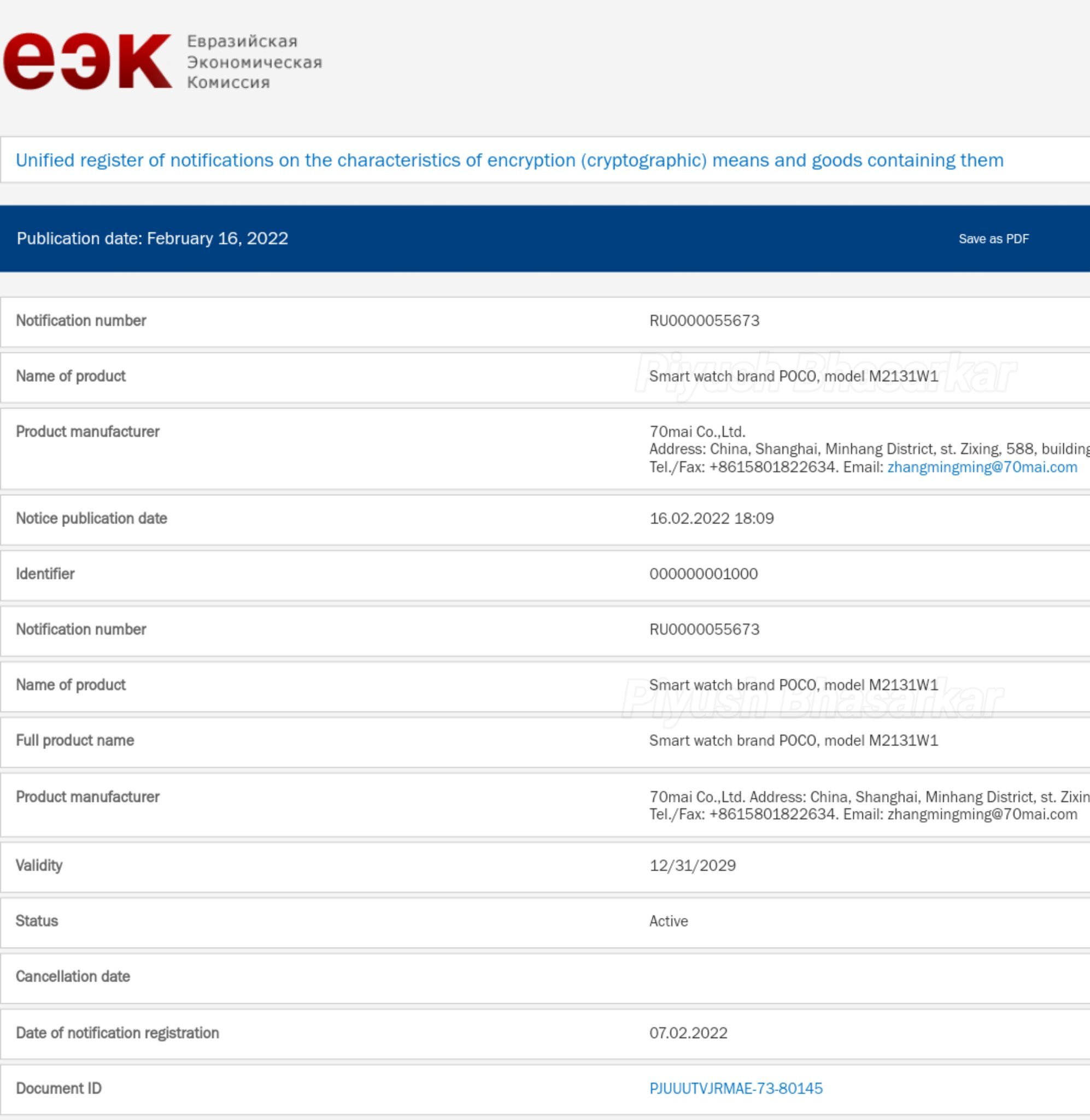
The news comes from leakster, Piyush Bhasarkar on Twitter. The post shares a screenshot of a listing of a smartwatch branded under Poco from the Russian Electronics Certification platform, EEC.
EEC Certification Listing of Poco Smartwatch
The listing reveals a few details about the smartwatch. First, the smartwatch will be bearing the model number Poco M2131W1. Next is the manufacturer of the smartwatch. The smartwatch will apparently be manufactured by 70mai Co. Ltd. in Shanghai, China. If the name 70mai sounds familiar, then you’ll be glad to know that 70mai is one of the brands that Xiaomi currently integrates into their Xiaomi IoT(Internet of Things) ecosystem.
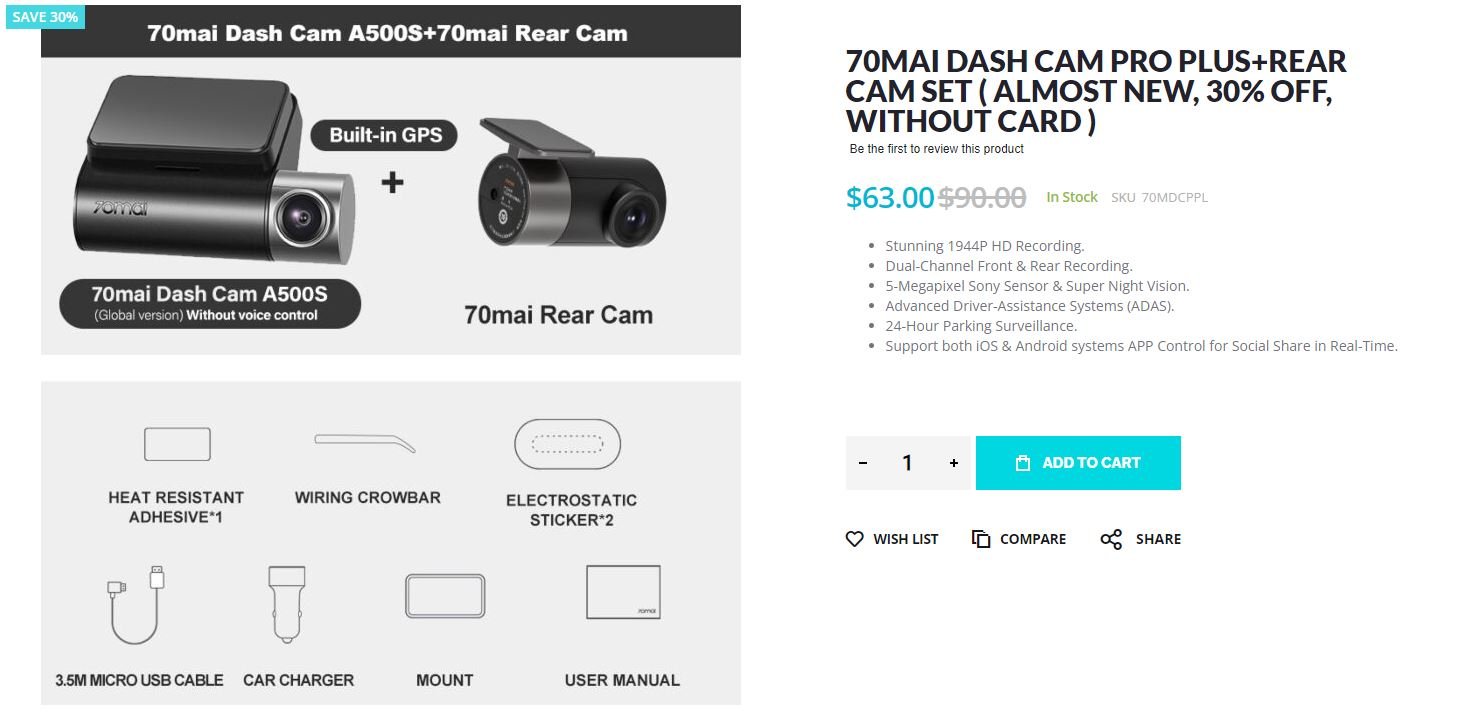
70mai is not actually known for their smartwatches, but you’ve probably heard of their dashcams such as the 70mai Dash Cam 1S, Dash Cam A400 and Dash Cam Pro Plus. In fact, our team at Gizmochina has recently reviewed the company’s latest 70mai Dash Cam Pro Plus, and if you fancy yourself picking one up, it’s currently selling for $63 on Giztop.
As for further specs about the Poco Smartwatch, no mention of specs were within the EEC listing and as of current, this is the first leak regarding Poco’s first entry into the smartwatch market.
Back in November 2021, one Poco exec did reveal that the brand is expanding into ecosystem products in 2022. “We always think smartphone plus IoT is a key strategy for us,” Poco Global head Kevin Qiu said.
This suggests that earbuds, wearables(fitness bands and smartwatches) and power banks could be the first products towards building a Poco IoT ecosystem. After all, an ecosystem for Poco allows for a more seamless experience while also building brand loyalty among its current Poco customer base.
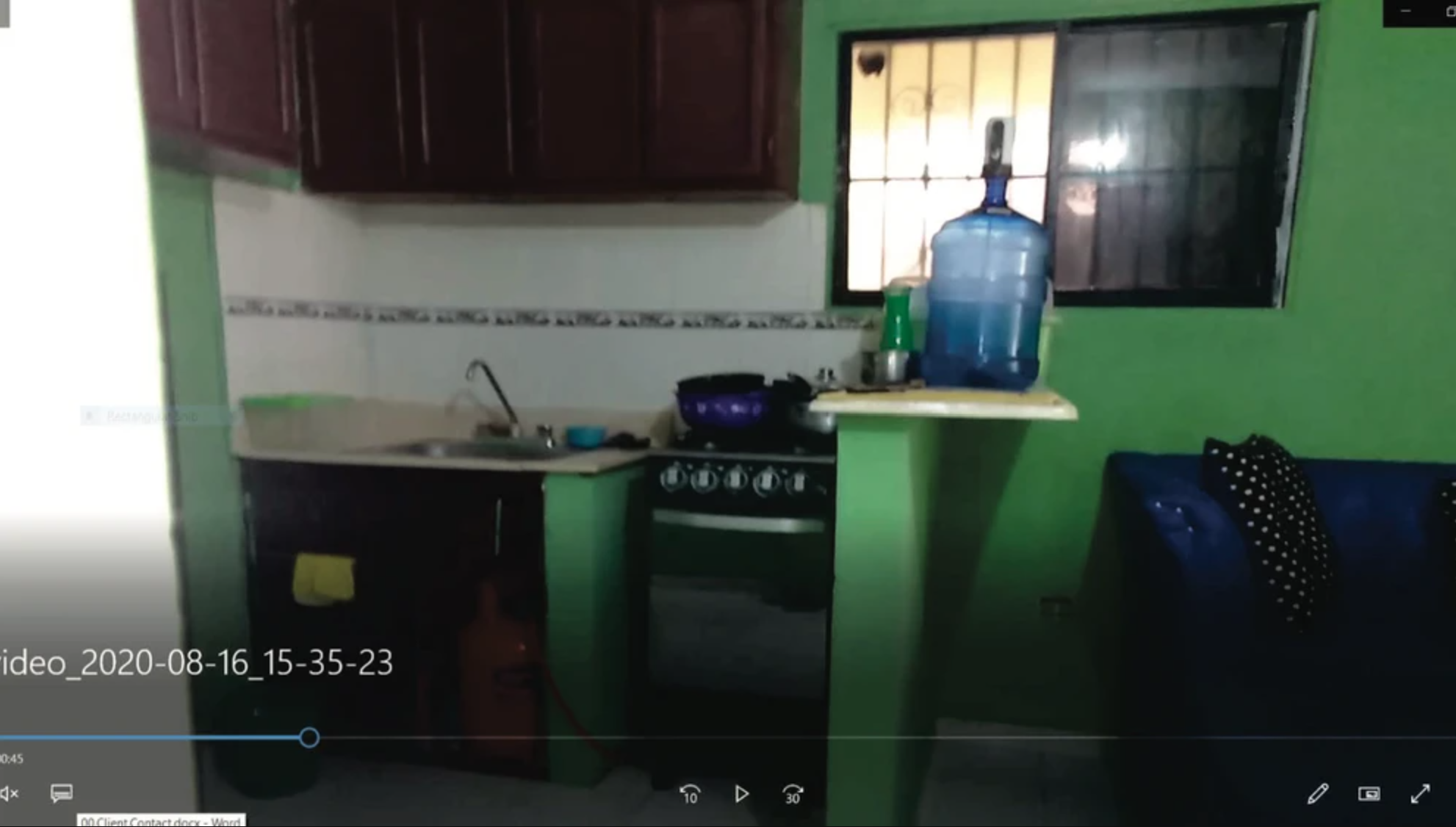
Dominican Republic resident Gary Bowser has been convicted for his role in a Nintendo Switch piracy ring and he is to pay a total sum of $14.5 Million to Nintendo. Bowser, who stays in a tiny and seemingly inexpensive apartment, was recently sentenced to over 3 years in prison.
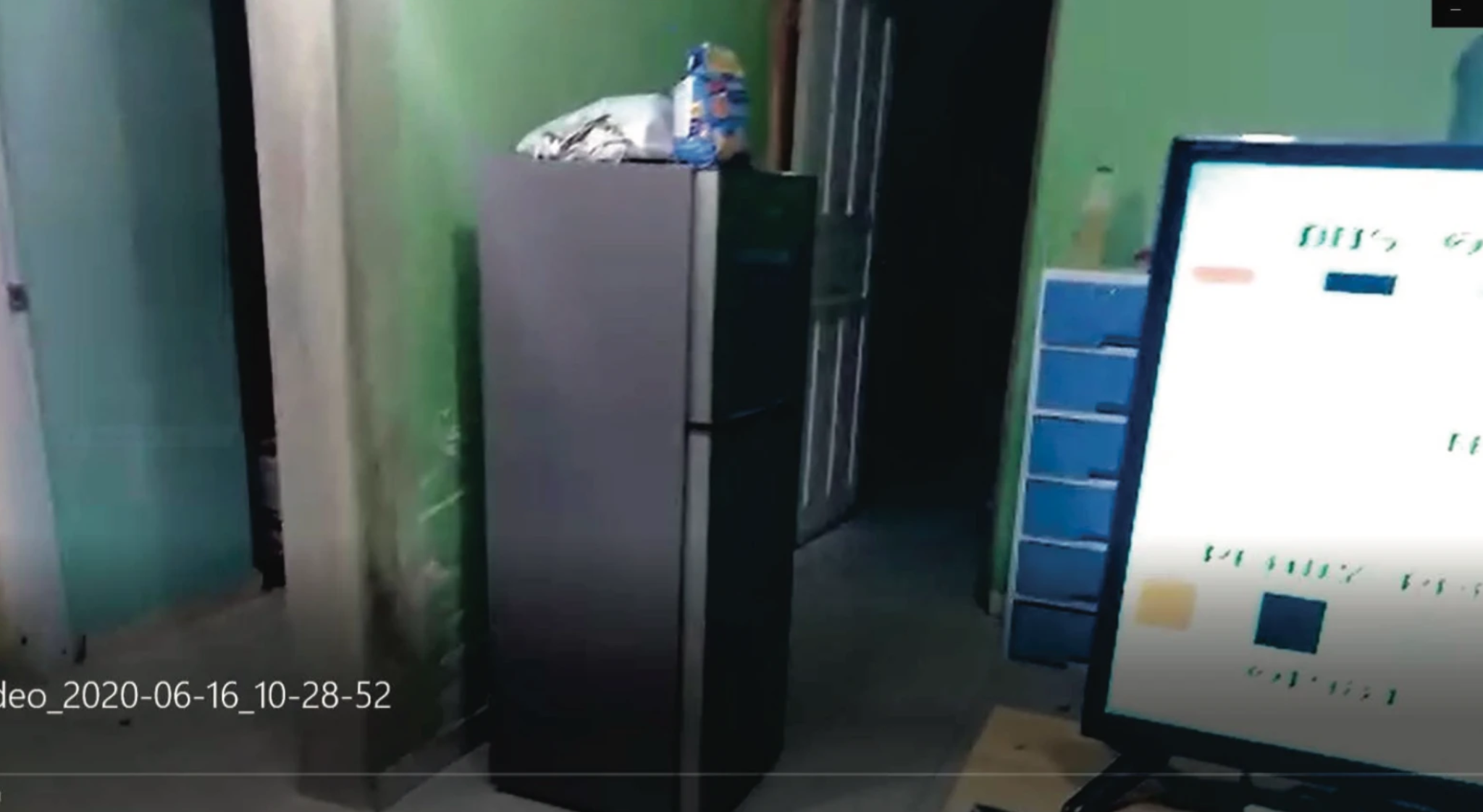
Bowser’s Dominican Republic apartment is sparse, but it is believed that he committed many of the offenses he was accused of, right from his computer in the apartment. He was accused of sabotaging the efforts of video game giant Nintendo in running websites and developing devices for the Team Xecutor organization, which let people run pirated games on their Nintendo Switch consoles.
After his sentencing a week back, Bowser has agreed to pay $4,500,000 in restitution to Nintendo. This was in addition to the earlier civil lawsuit concluded in December 2021, in which Bowser was ordered to pay $10,000,000.
Nintendo has continued to pursue an aggressive policy to tackle piracy across its games and consoles. It also routinely shuts down ROM sites where people can download pirated games. This particular individual conviction however shows that the bug fishes and masterminds of piracy are still out there enjoying their loot, at least for now. It also shows that the company will remain unrelenting until it wipes out piracy of its games and consoles with grave economic implications. Nintendo published a press statement thanking the U.S. government for its efforts in apprehending Bowser. The huge amount still goes to show how seriously Nintendo and the U.S. government view piracy.
Bowser’s apartment
The Department of Justice in 2020 charged Bowser along with Max Louarn, Xecutor’s mastermind who recruited investors and developers as well as establishing Xecutor’s manufacturer with resellers around the world, the court documents revealed. Also charged was Yuanning Chen, who oversaw the management of a manufacturing and distribution company named ChinaDistrib. Xecutor generated tens of millions of dollars in proceeds from its piracy scheme, while Bowser was paid an average of about $1,000 a month in the seven years he was charged with maintaining the organization’s websites. On the other hand, neither Louarn nor Chen have been apprehended, as it is likely they were, like several other Xecutor’s collaborators, using fake identities.
No, you should not be concerned about Apple Store employees trying to unionise. In fact, the general public should rally for the cause for unionisation among Apple retail store employees. And here’s the story on why they are working towards unionisation and why the public should care.
The report came from The Washington Post on Feb 18, stating that a handful of employees currently working in Apple retail stores across the U.S. are quietly organising to unionize. The plan of unionization is said to be caused by the dissent of the stagnant hourly wages Apple pays to their retail workers amidst the wave of increasing inflation rates as of recent and inspired by the successful unionization of other retail workers in the country, such as those working in Starbucks.
Apple became the first publicly traded U.S. company to hit a $1 trillion USD market cap during intraday trading on Aug. 2, 2018. It hit a $2 trillion valuation just over two years later on Aug. 19, 2020. And as of Jan 3, 2022, the Cupertino company is now sitting at a market value of over $3 trillion USD. To put this gigantic figure into perspective, the GDP of India, a country with a population nearing 1.5 billion, in the year 2020-2021 is just $2.7 trillion USD.
However, according to the report, the retail employees at Apple don’t feel that Apple’s success in the industry, isn’t distributed fairly among the mega-corporation, especially for those working lower in the hierarchy.
Employees say Apple’s hourly rates of $17 to more than $30 per hour, are usually in line with what other retail jobs pay in the regions where they’re employed. But most other retailers do not earn so much in revenue, nor are they valued at near $3 trillion. Apple Store employees interviewed by The Washington Post believe their knowledge and passion for the products help drive sales and that they should share more fully in the company’s success.
The report claims that groups of retail employees working in at least two Apple stores in the U.S. are preparing to file paperwork with the National Labor Relations Board in the near future, and at least a half dozen more locations are said to be in less-advanced stages of the unionization process.
As for why the public should care, if the unionization of Apple retail workers garners enough support, the move will open doors for workers to be more aware of their rights to unionize and to demand higher wages amongst the wave of rising living costs. In fact, if the welfare of workers is well maintained and protected, the workers feel more valued and enthusiastic at their jobs, the company’s reputation as an employer will be more favourable, and the end consumer will be receiving more friendly customer service.
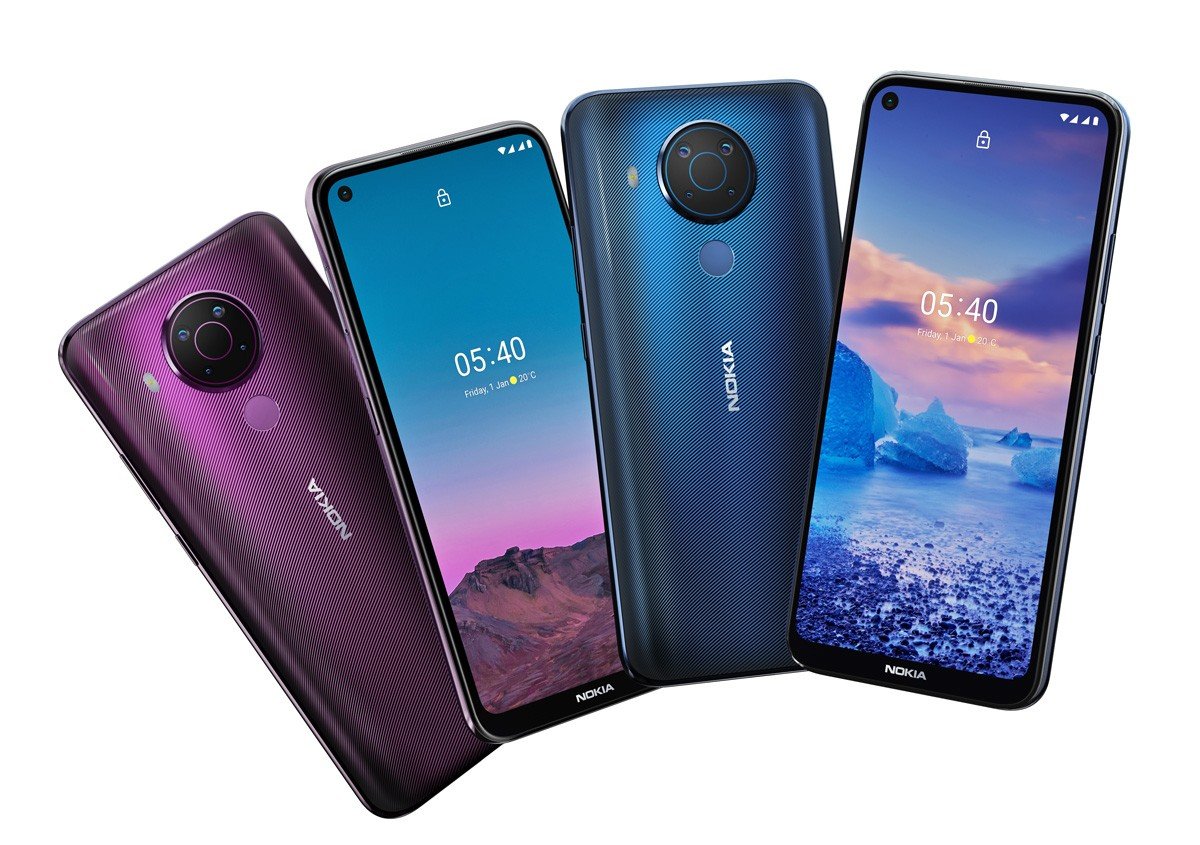
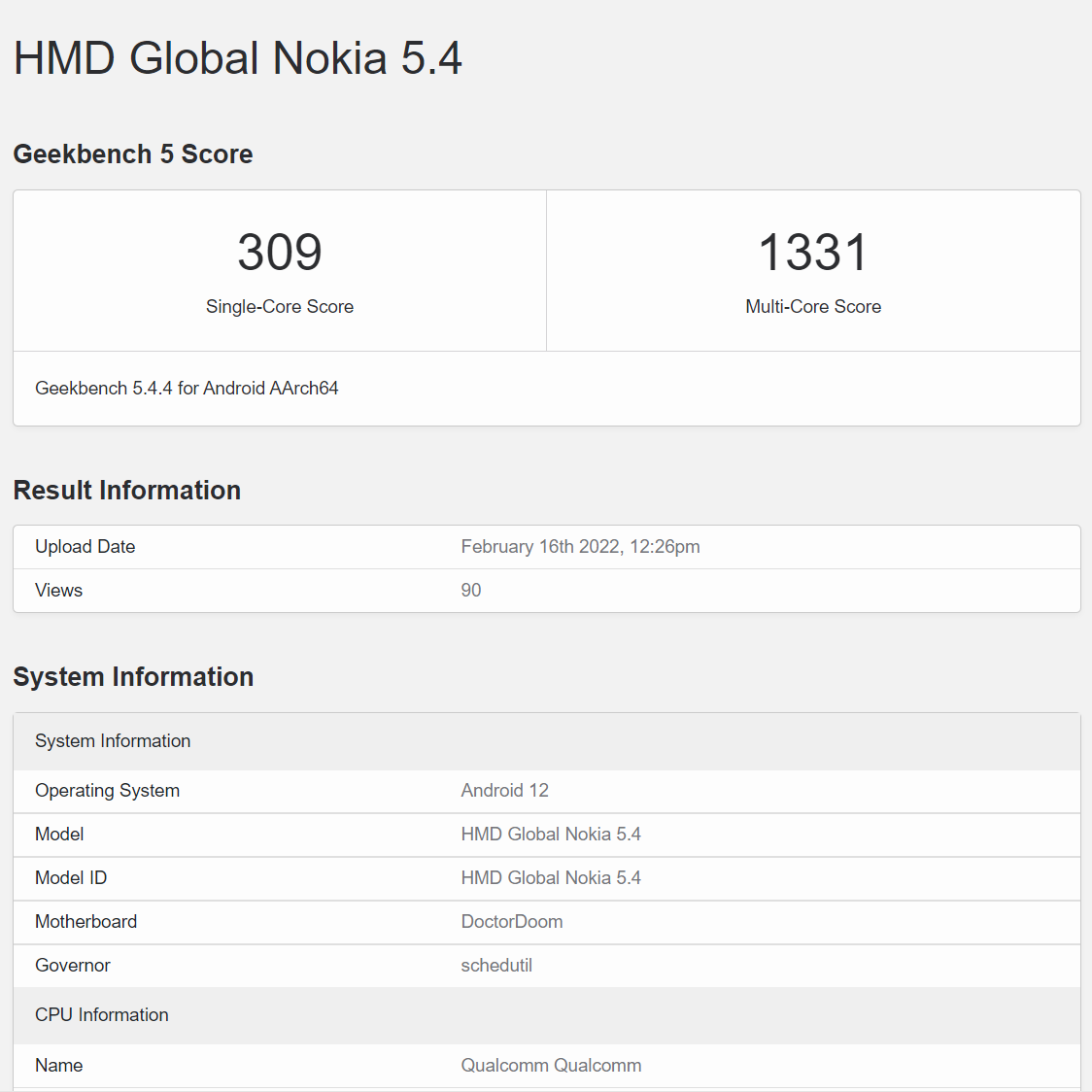
A recent Geekbench listing indicates that the Nokia 5.4 is now among the list of Nokia devices being tested with the new Android 12 operating system. Previously, it was known that the Nokia 2.4, Nokia 3.4, and Nokia G10 had appeared on Geekbench running on the Android 12 OS. Apart from the Nokia 5.4, other Nokia smartphones that were previously spotted on Geekbench are the Nokia X10 and Nokia G50 which later received the Android 12 upgrade.
Nokia 5.4
In a clear move by Nokia Mobile to have much of its current smartphones run on the latest Android version from Google, there had been a raft of Nokia products testing the Android 12 OS. As expected, the Android 12 suite packs lots of changes in the user interface and overall functionality that enhances system performance.
As per the Geekbench listing, the Nokia 5.4 scored 309 on the single-core test and 1,331 on the multi-core test. On the other hand, Android 12 includes the biggest design changes in the Android trajectory and development to date. The entire experience from the UI changes, colors, shapes, light, and notion, is simply exhilarating. Android 12 is more expressive, dynamic and offers a pretty innovative personalized experience across the board. Android 12 also reflects a unifying environment for the software and hardware ecosystem under a single design language called Material You. Other features in the Android 12 OS include fluid motion and animations, redesigned system spaces, and enhanced security architecture.
Longtail Max cargo electric bike has been introduced into the market with a nice proposition- it is foldable, which is great for transit movements. Although its typically long wheelbase would have quelled any notion of folding, French company Calendar Bikes has been able to deliver the Longtail Max cargo e-bike along this line, together with a few other interesting features like glowing in the dark.
The unique folding mechanism deployed in the Longtail Max cargo e-bike involves the folding of its handlebars down and the front end of the frame is folded to one side so it is parallel to the rear end. The bike is then flipped upside-down to be rolled on a set of caster wheels built into the rear corners of the bike’s side rails. The entire folding process can be completed in under a minute and the bike’s 77-inch length is reduced by half.
The Max cargo e-bike has a saddle for the rider in the middle and a passenger/ cargo area in the rear. The cargo setup incorporates raised side rails to enhance the safety of the passenger or cargo. The Max cargo has a glowing frame that illuminates the bike in the dark when it is in its unfolded position. The glow is due to the aluminum frame and photo-luminescent paint on it. Other features are 20-inch wheels, Magura eSTOP hydraulic disc brakes, a 250W rear hub motor, and a 36V/10.4Ah/360Wh lithium battery mounted on the seat tube. The Longtail Max cargo e-bike could deliver distances up to 50km on a single charge.
As per pricing, the Longtail Max cargo e-bike comes in two configurations – the standard model with a €3,990 ($4,520) price tag and the fancier Longtail Max Plus model which is priced at €4,590 (~$5,200). Both models could be ordered via the official website of Calendar Bikes.
Xiaomi’s sub-brand Redmi has a handful of devices waiting in the pipeline to go official in multiple markets. In China too, it has the Redmi K50 series, Redmi Note 11E Pro, and Redmi 10A waiting to go official. Fresh information reveals a new Xiaomi device with 22041219C (via) has received approval from the 3C authority of China. According to Xiaomiui’s report from last month, the 22041219C will be arriving as a branded as a Redmi device.
The Redmi 22041219C’s 3C certification suggests that it will be a budget-friendly phone. It has surfaced with a 22.5W charger in 3C’s database. The listing has no other information on its specifications.
As mentioned above, there are a couple of new Redmi phones that are likely to launch soon in China. Beginning with the K50 series, the Redmi K50 (model number 22021211RC) and Redmi K50 Pro (model number 220411211AC) were spotted with a 67W fast charger earlier this month. These devices are likely to be powered by the Dimensity 8000 and Snapdragon 870 chipset, respectively. The Redmi K50 Pro+ (model number 22011211C) was spotted with a 120W fast charger this month. It is likely to feature the Dimensity 9000 chipset.
The Redmi Note 11E Pro (model number 2201116SC) was spotted as a 67W charger. This handset is said to be rebranded version of the global Redmi Note 11 Pro 5G, which features the Snapdragon 695. The Redmi 10A (model number 220233L2C) is a 4G LTE device, which surfaced with a 10W charger at 3C. It is speculated to feature the Helio G25 chip.
Lenovo was the first phone manufacturer to ship Qualcomm’s latest and greatest, theSnapdragon 8 Gen 1 chipset on its flagshipMotorola Edge X30 back in December 2021. The phone was not the best in its segment, considering the alternative offerings from other competitors such as Xiaomi, Realme and Huawei. But considering its relative starting price of around 600 USD, the Motorola flagship was great for those who did not have much stretch on their budget.
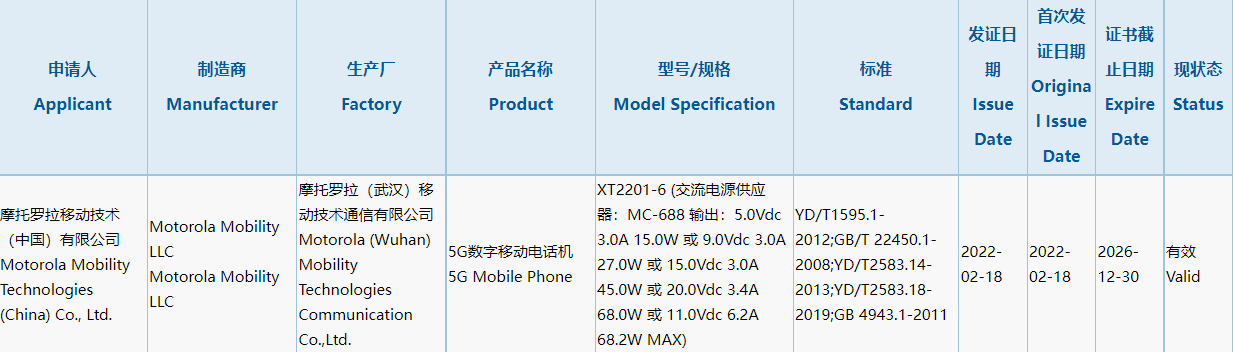
Just when we thought that the standard Motorola Edge X30 would be the only flagship from Lenovo in 2022, a new listing on 3C Certification states that a new Motorola smartphone has been certified for electronics safety and it may be a new member in the Motorola Edge X30 family.
3C Certification, Source: ITHome
The news comes from ITHome, where they have spotted that 3C Certification recently listed a Motorola smartphone bearing the model number XT2201-6. From the listing, the Motorola XT2201-6 is stated to support 68W fast wired charging, which is currently exclusively available on the Motorola Edge X30.
Another indicator that the Motorola XT2201-6 may be a new member of the Motorola Edge X30 lineup is its model number. The Motorola Edge X30 was launched in December 2021, but leaks started pouring out as early as early November 2021 with the model number XT2201-2. Considering that both the model numbers share the same XT2201 code, it may seem that the Motorola XT2201-6 may be a Motorola Edge X30 Ultra.
Although there has not been any other leaks or rumours directly regarding the Motorola Edge X30 Ultra, there have been a lot of leaks recently regarding the Motorola Frontier, Motorola’s next flagship which could bear the market name of Motorola Edge X30 Ultra.
Via @evleaks on Twitter
An earlier leak by Evan Blass showed off renders of the Motorola Frontier, which is Motorola’s entry into the ultra-premium smartphone space. The leaked image shows the Motorola Frontier from all angles in a lustrous, metallic grey finish on the back. And the front display features very narrow bezels on all sides, with exaggerated curves on both the left and right sides of the phone to provide more screen real estate for the user.
As for the rear triple camera setup, it houses a major camera island equipped with a rumoured 194-megapixels sensor, which is expected to be the ‘S5KHP1’ sensor manufactured by Samsung. As for the other 2 cameras at the bottom, it is rumoured to be the 50-megapixel Samsung SKJN1SQ03 ultrawide sensor and the 12-megapixel Sony IMX663 telephoto camera for zoom shots.
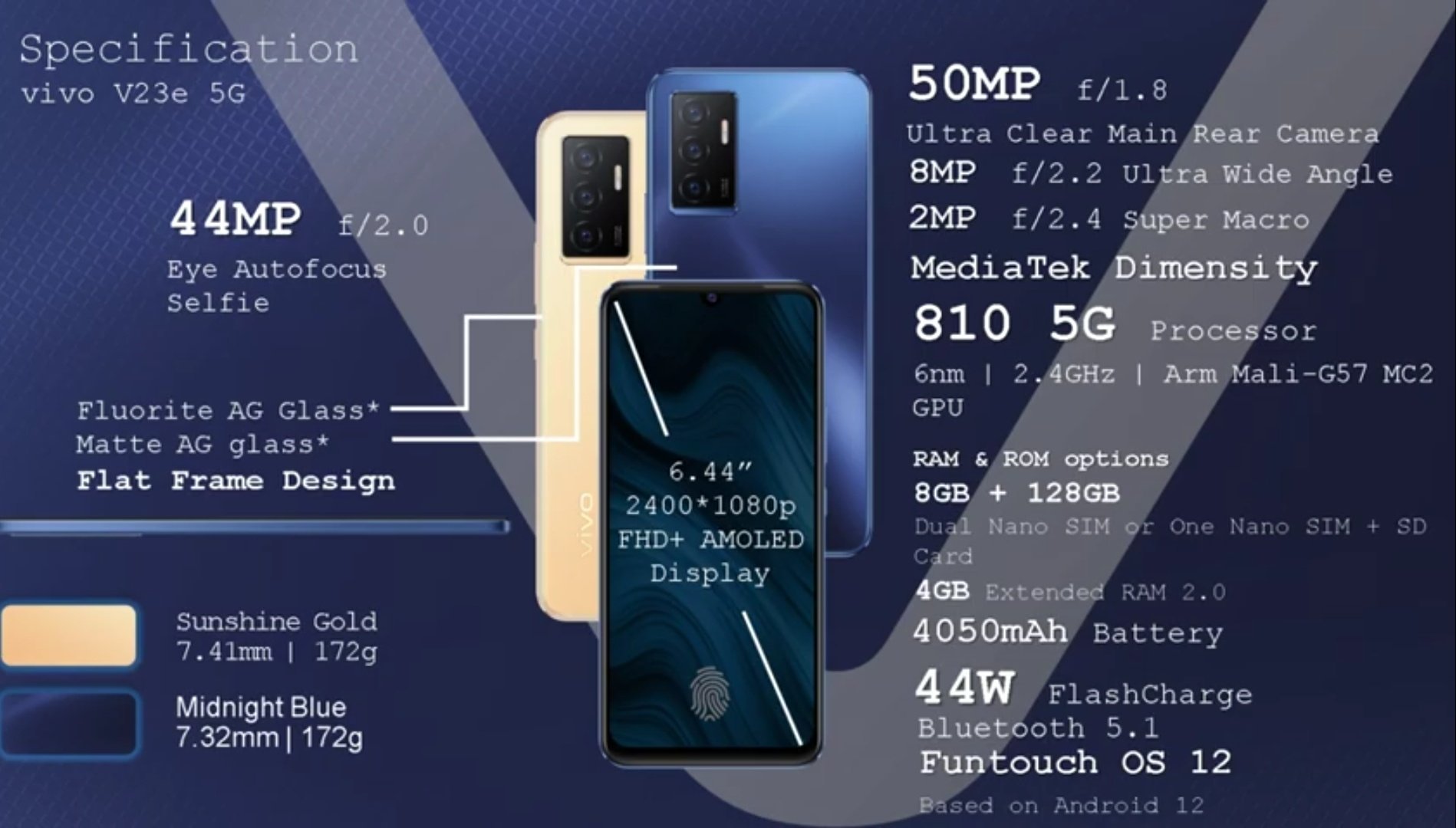
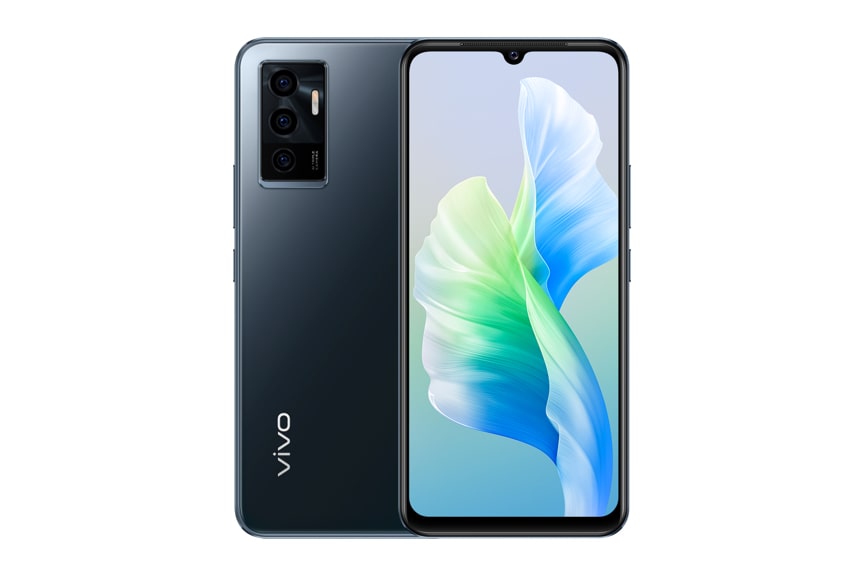
Vivo will be announcing the Vivo V23e 5G at 12 PM (local time) on Feb. 21 in India. It is speculated that it could be the same device that was unveiled in Thailand last year. Tipster Abhishek Yadav has shared some images that have revealed the specifications of the Vivo V23e 5G’s Indian variant.
Vivo V23e 5G specifications (expected)
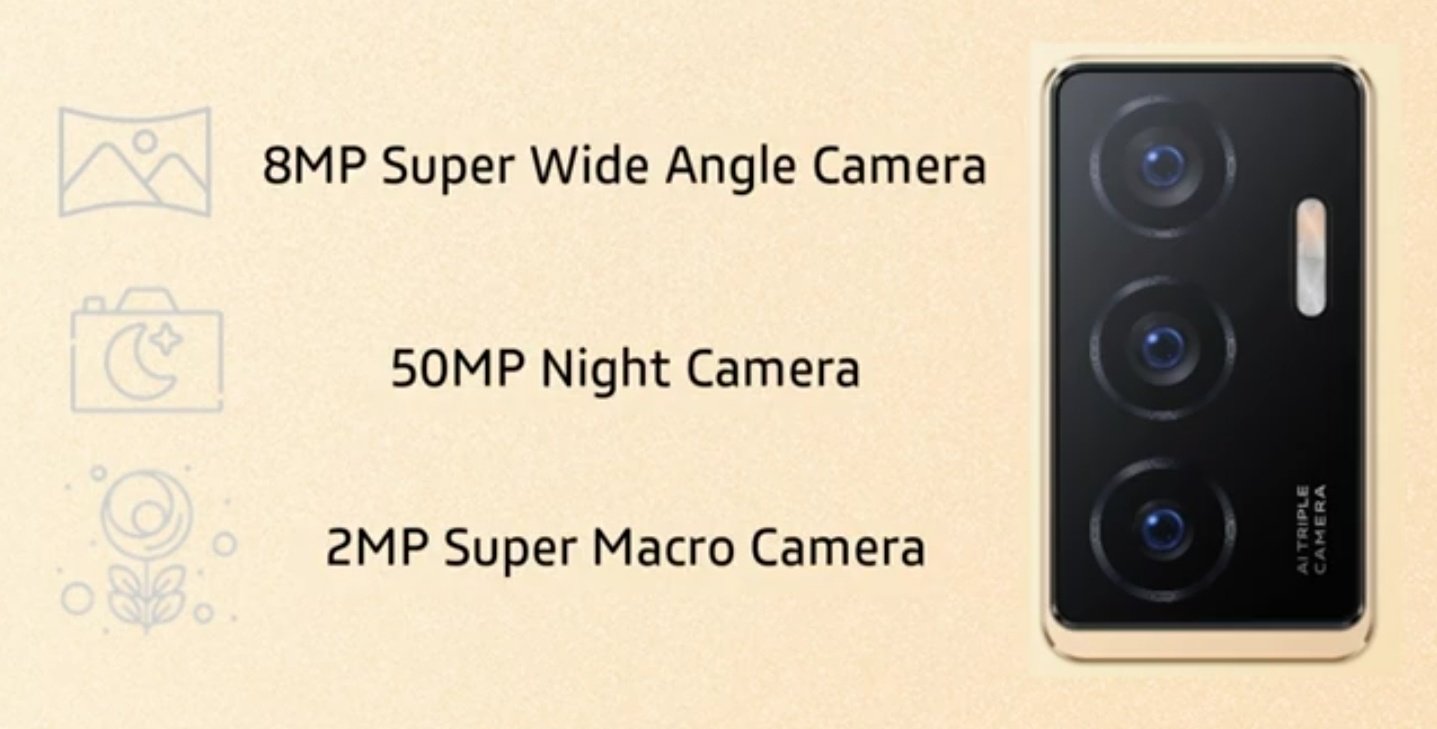
The Vivo V23e 5G will feature a 6.44-inch AMOLED display that offers a Full HD+ resolution of 1080 x 2400 pixels and an in-screen fingerprint scanner. The display notch will house a 44-megapixel camera with an f/2.0 aperture and eye autofocus support. The rear camera setup of the phone features a 50-megapixel primary camera with an f/1.8 aperture, an 8-megapixel ultrawide lens with an f/2.4 aperture, and a 2-megapixel macro camera with an f/2.4 aperture.
1 of 4
Vivo V23e 5G specs leak
Vivo V23e 5G specs leak
Vivo V23e 5G specs leak
Vivo V23e 5G specs leak
The Dimensity 810 chipset will be powering the device with 8 GB of RAM and 128 GB of storage. It will come with 4 GB of extended RAM. The device will house a 4,050mAh battery that supports 44W fast charging. It will come with other features such as Android 12 OS with FunTouch OS 12, dual nano-SIM slots, and Bluetooth 5.1. These specs show that the Indian variant of the V23e 5G will be the exact same device that debuted in November 2021.
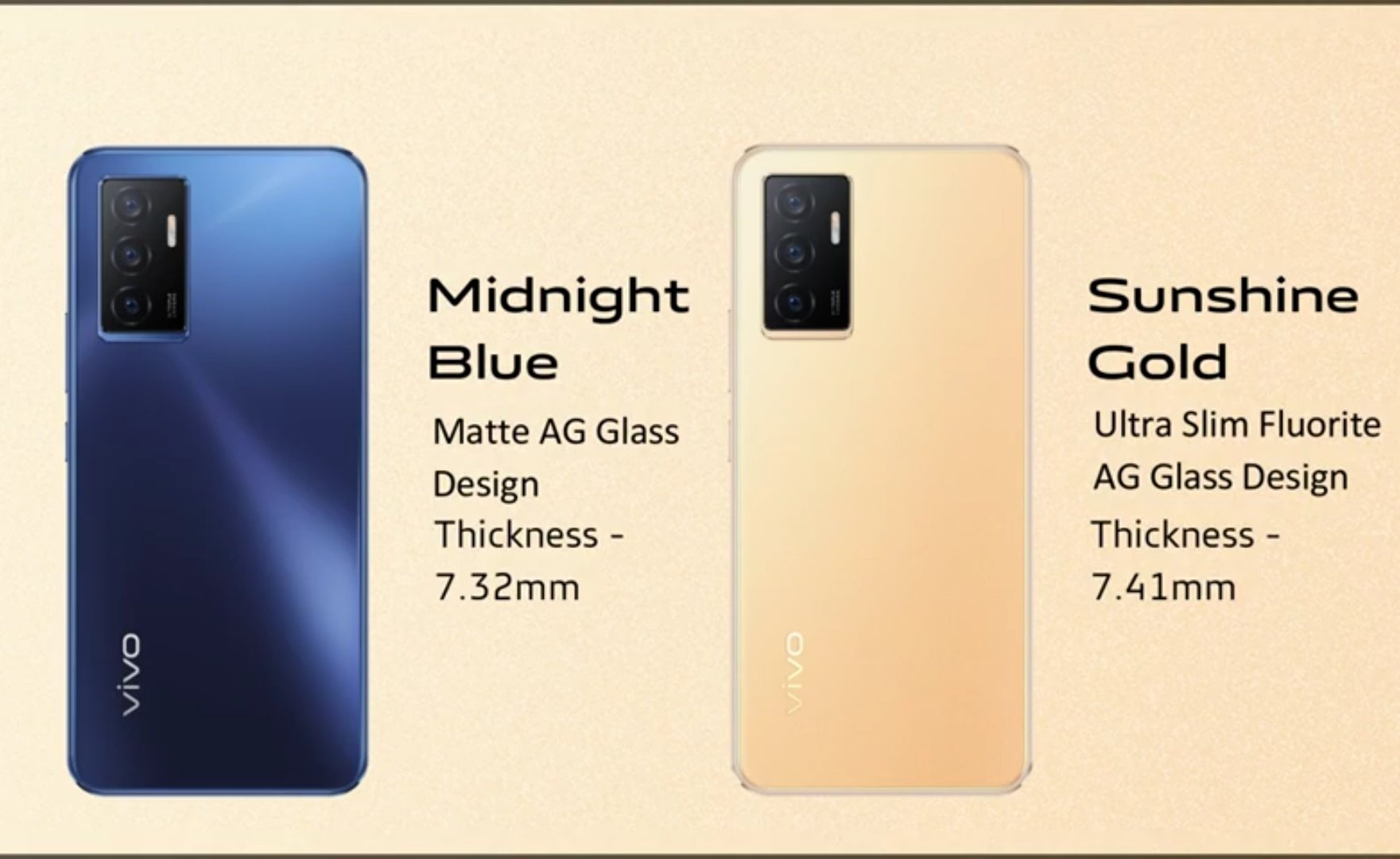
As far as design is concerned, the Vivo V23e 5G has flat edges. The Midnight Blue measures 7.3mm in thickness and it comes with a matte AG glass rear. On the other side, its Sunshine Gold measures 7.41mm in thickness and has a fluorite AG glass back. Reports have revealed that the V23e 5G will carry a price tag of Rs 25,990 (~$348).
OPPO will be announcing the OPPO Find X5, X5 Pro, and X5 Pro Dimensity Edition on Feb. 24 in China. The company will be also unveiling the Enco X2 and the OPPO Pad through the same event. The latter will be arriving as the company’s first-ever tablet. Ahead of the launch, the OPPO Pad has been found listed at JD.com for reservations. At the same time, reliable tipster Digital Chat Station has shared the detailed specifications of the tablet.
OPPO Pad specifications (rumored)
The OPPO Pad will come with a 10.95-inch LCD display that will deliver a resolution of 2560 x 1600 pixels. It will also support 10-bit colors and a 120Hz refresh rate. As can be seen in the official renders, the OPPO Pad will be sporting slim bezels.
The Snapdragon 870 chipset will power the OPPO Pad. The 6 GB / 8 GB RAM variants of the tablet will come with 256 GB of built-in storage. It will be packed with an 8,360mAh battery that supports 33W fast charging.
The tablet will be equipped with an 8-megapixel front camera and a 13-megapixel rear camera. The device will be equipped with Dolby Atmos powered quad speakers. It will arrive with a stylus with 4096 levels of pressure sensitivity. It will com with support for Wi-Fi 6 2×2 MIMO connectivity. The device will measure 6.9 / 7.05mm in thickness and weigh 507 / 510 grams.
Shown above are some images that had surfaced earlier this week. As can be seen, the OPPO Pad may come in three colors such as black, purple, and silver. The black and purple models have OPPO Pad branding below the LED-flash assisted camera, the silver model can be seen sporting a different design below the rear camera.
Lenovo has just launched an affordable 31.5-inch 4K monitor in China. It comes with features that make the display a real all-rounder at its price point. So let’s take a look at what it has to offer.
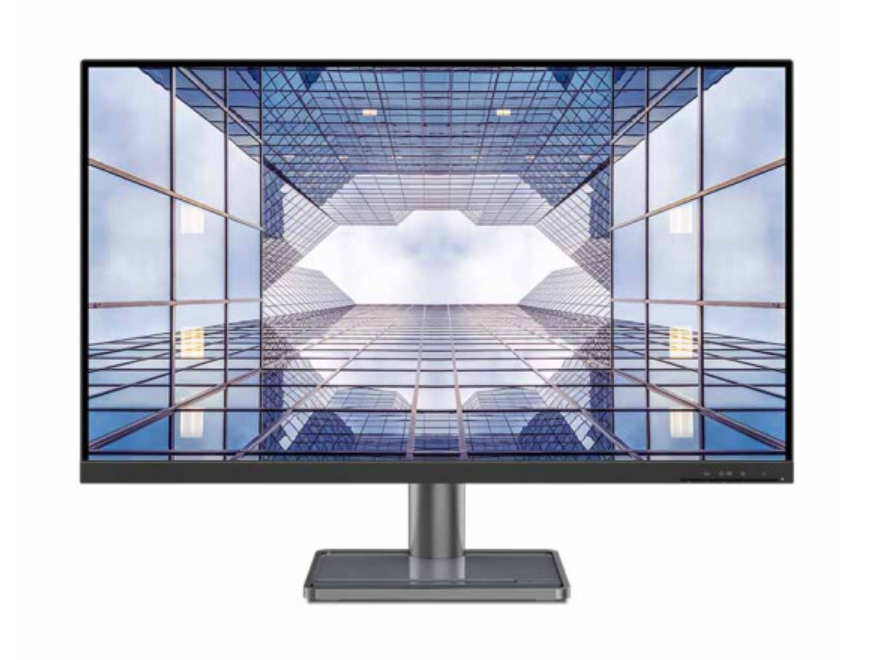
The Lenovo L32p-30 features a 31-5-inch Ultra HD (3840 x 2160p) In-Plane Switching (IPS) display which is catered towards media consumption, gaming, and some degree of creative work. It features a three-side near-edgeless design to make the user experience even more immersive. It covers 90% DCI P3 color gamut and offers a 10-bit color depth. The monitor has a 16:9 aspect ratio and a 1000:1 contrast ratio.
It is capable of outputting 350nits of brightness and offers 6ms response time during regular use which can be further reduced to 4ms using the extreme mode. It comes with a 60Hz refresh rate and has support for AMD Freesync for fluid a fluid gameplay experience without stuttering or screen tearing.
Lenovo L32p-30 monitor
1 of 2
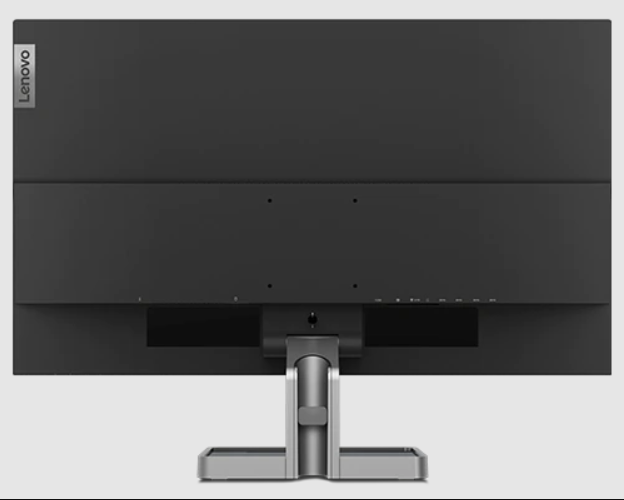
It is also an excellent monitor for people in the market for a 4K monitor to hook up their laptops as it offers multiple ports like a Display Port 1.2, HDMI 2.0, USB Type-C Gen 1, a 3.5MM audio out jack, and four USB 3.2 Gen 1 ports. One of the highlight features of this display is that it is capable of providing up to 75W of power to your laptop via the USB Type-C Gen 1 connector making it super convenient for notebook users who can plug the laptop directly into their monitor while working or consuming media and not worry about the battery or any extra power connectors.
Other than these features, the monitor comes with an inbuilt dual 3W speaker setup adding to its functionality. It weighs around 6.8 kgs and can be wall-mounted to suit the user’s needs. The Lenovo L32p-30 monitor has launched at 1,999 ($316) yuan in China, however, has already been available in other regions since July 2021.
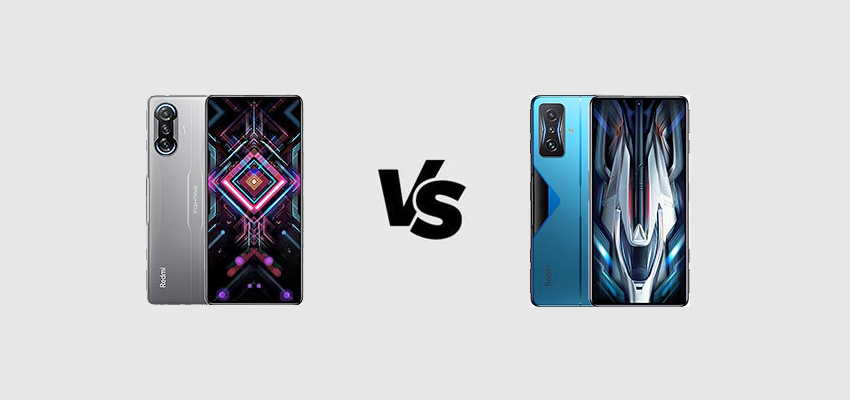
Xiaomi officially announced the Redmi K50 Gaming Edition: alongside the Red Magic 7 and the Red Magic 7 Pro by Nubia, it is the first gaming phone of 2022. The new handset contains important upgrades if compared to its predecessor Redmi K40 Gaming Edition, but it is also true that you can find the latter at more affordable prices. Further, the K40 still offers its advantages in 2022. Is it worth choosing the older model thanks to a higher value for money or the most recent one is the best option? You will find the answer to this question in this comparison between their specifications.
Triple 64 + 8 + 2 MP, f/1.7 + f/2.2 + f/2.4
16 MP front camera
Triple 64 + 8 + 2 MP, f/1.7 + f/2.2 + f/2.4
20 MP front camera
BATTERY
5065 mAh, fast charging 67W
4700 mAh, fast charging 120W
ADDITIONAL FEATURES
Dual SIM slot, 5G
Dual SIM slot, 5G
Design
Both Redmi K50 Gaming Edition and its predecessor come with a gaming-centric design, with aggressive lines and catchy color options. And both the phones feature physical pop-up gaming triggers to enhance the skills while playing games like it happens when using controllers. The new model comes with better materials: it is built with a glass back, a front glass protected by Gorilla Glass Victus, and an aluminum frame. The older one is equipped with the Gorilla Glass 5 protection for the glasses and it has the IP53 certification thanks to which it is dust resistant and splash resistant.
Display
The Redmi K40 Gaming Edition and the Redmi K50 Gaming Edition feature exactly the same display, nothing changed between the two generations. It is a 6.67-inch panel with a Full HD+ resolution of 1080 x 2400 pixels, one billion colors, a 120 Hz refresh rate, and the HDR10+ certification. It is a great panel for both image quality and gaming: not the best one, but a very good display. Both the phones feature stereo speakers for an immersive audio experience, but the Redmi K50 Gaming Edition comes with four speakers instead of just two. Despite having AMOLED displays, these handsets come with side-mounted fingerprint scanners.
Specs & Software
The hardware department is the most important upgrade of the Redmi K50 Gaming Edition over its predecessor. This device is powered by the best Qualcomm chipset released until now: the octa-core Snapdragon 8 Gen 1 running at a max frequency of 3 GHz. It is definitely the best SoC in the Android world alongside the Dimensity 9000 by MediaTek, and it is paired with up to 12 GB of RAM and up to 256 GB of UFS 3.1 internal storage. The Redmi K40 Gaming Edition is fueled by the weaker MediaTek Dimensity 1200 mobile platform: it is inferior to the Snapdragon 8 Gen 1 but still provides amazing CPU and GPU performance, so it remains perfect for gaming. The Redmi K40 Gaming Edition runs Android 11 out of the box, while the Redmi K50 Gaming Edition ships with Android 12 and MIUI 13.
Camera
The rear cameras did not change just like the displays. Redmi K40 Gaming Edition and Redmi K50 Gaming Edition are midrange camera phones including a 64 MP main camera with an f/1.7 focal aperture, an 8 MP ultrawide sensor, and a 2 MP macro camera. The selfie camera is changed: the new model features a better 20 MP front camera instead of a 16 MP one.
The most important advantage of the Redmi K40 Gaming Edition is the battery life: despite being older, it packs a bigger 5065 mAh battery and it provides a longer battery life in several scenarios. On the other hand, the Redmi K50 Gaming Edition features faster charging with a power of 120W.
Price
The starting listing price of the Redmi K40 Gaming Edition is €280/$317, while you need at least €460/$520 to get the Redmi K50 Gaming Edition in China. The K50 wins the comparison thanks to a better chipset, faster charging, better front camera, but the K40 offers a higher value for money (as well as a bigger battery). With the current street prices of its predecessor, the K50 is still too expensive for the average gamer.
Xiaomi Redmi K40 Gaming Edition vs Xiaomi Redmi K50 Gaming Edition: PRO and CONS
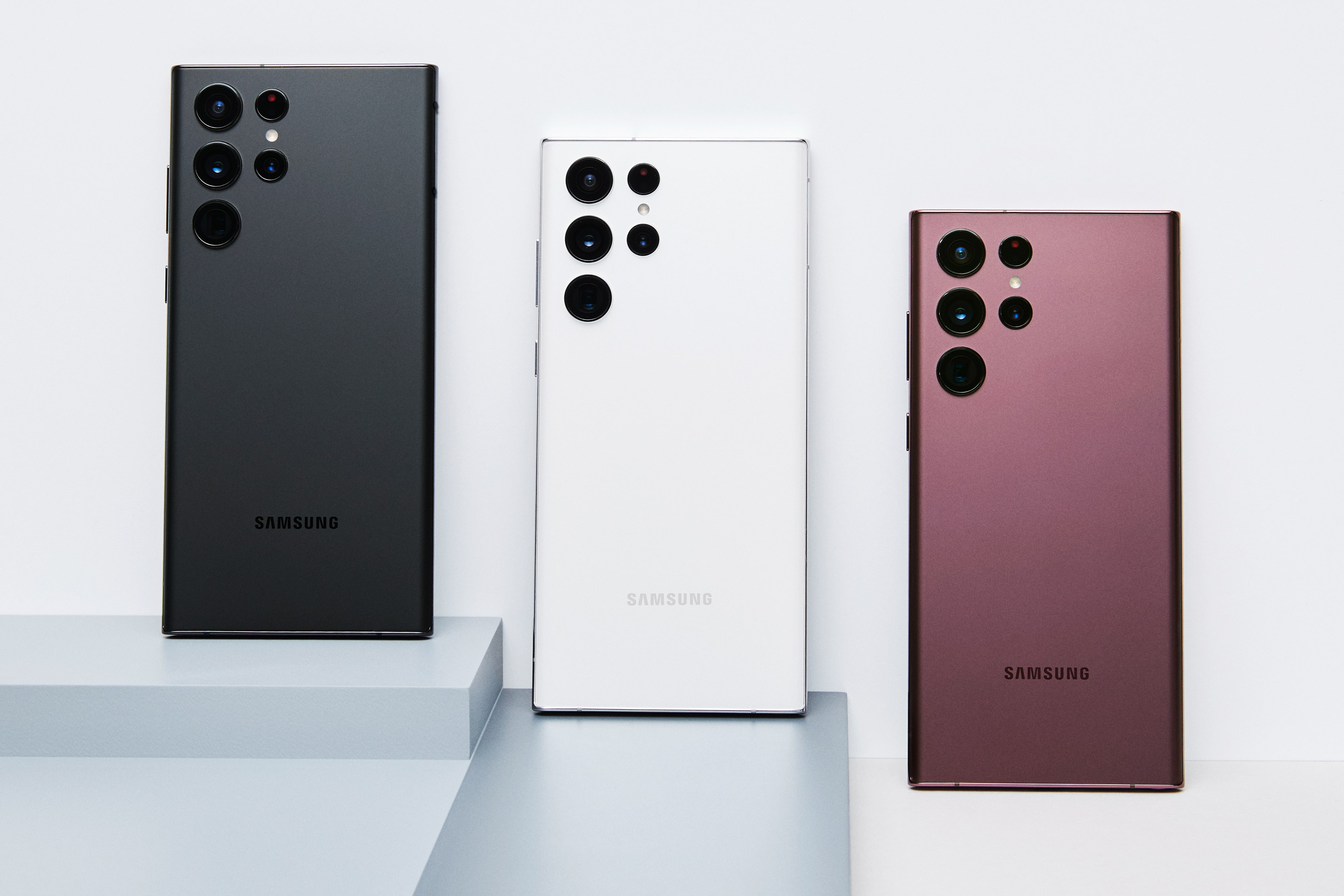
The Samsung Galaxy S22 series was officially launched two weeks ago, and it seems like the Samsung Galaxy S22 Ultra is the highlight of the series this year with its inclusion of the S-Pen from the Note series, its industry-leading LTPO AMOLED display, and the company’s latest and greatest camera setup yet in a smartphone. In fact, demand is so high that pre-orders now go as far back as April for customers to collect their Samsung Galaxy S22 Ultra.
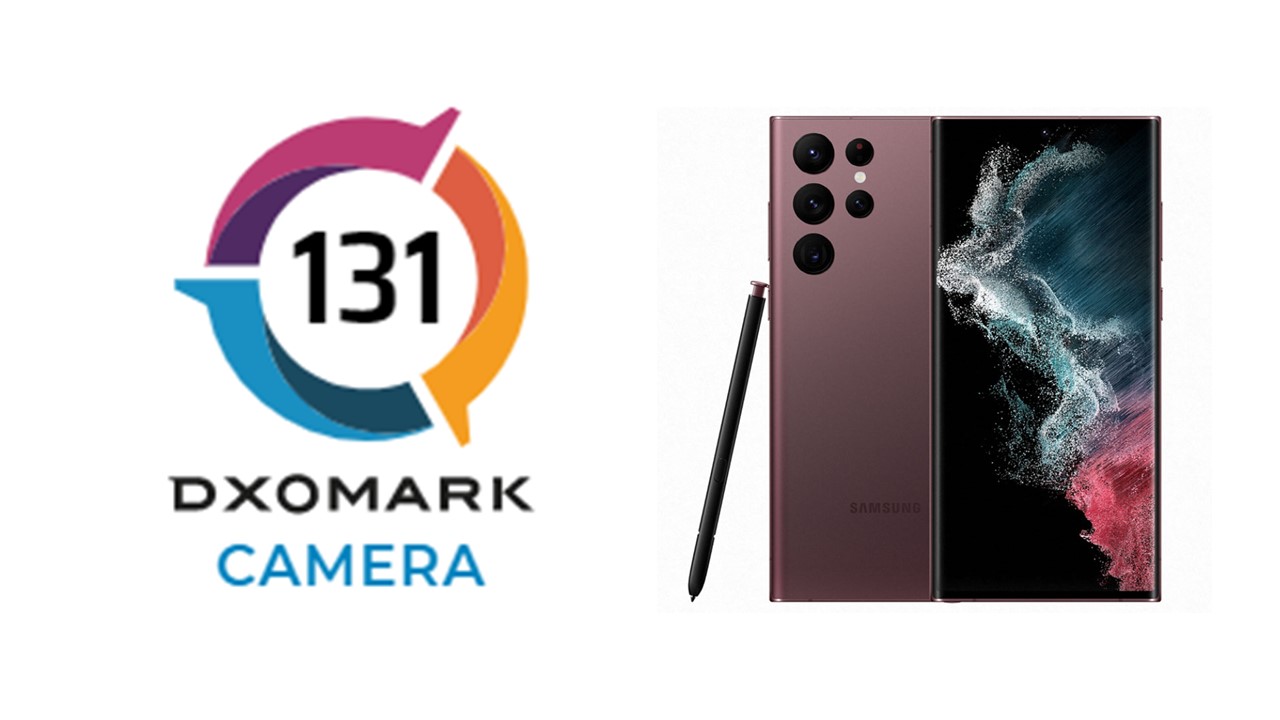
However, before you drop over 1000 Euros(or over 1000 USD/1 lakh) on the Samsung Galaxy S22 Ultra, DxOMark just released its latest camera review of the Samsung Galaxy S22 Ultra and the device only managed to score 131 points, the same as last year’s Oppo Find X3 Pro.
Let’s start with the pros. DxOMark mentions that the photos from the S22 Ultra have a pleasant white balance and colours in all conditions. The device also keeps good exposure in most scenes with its wide dynamic range. For portrait, photos out of the S22 Ultra achieve a natural simulated bokeh effect with its near-accurate corner detection.
As for zoom, the S22 Ultra was Samsung’s greatest leap in smartphone zoom photography. It was able to preserve the nice colours and exposure at all zoom settings. Video performance is as expected in the flagship segment with its fast and smooth autofocus, good video stabilisation when walking while recording, good exposure and wide dynamic range in bright light and indoor video.
As for the camera’s shortcomings, the S22 Ultra has comparatively slow autofocus for photos in many lighting conditions, one where the Oppo Find X3 Pro and iPhone 13 Pro Max do better than the S22 Ultra. DxOMark also pointed out that another lacklustre area of the S22 Ultra’s camera is its inconsistent sharpness between video frames when the camera is moving while recording, especially in low light.
Source: DxOMark’s reply
Do take note the model tested by DxOMark is the Exynos 2200 model that is only available in Europe and the UK. So if you’re from the US, Canada, Middle East, India or other Asian regions, you will be getting the Samsung Galaxy S22 Ultra equipped with the Snapdragon 8 Gen 1 chipset instead. DxOMark did reply that they will be also be testing out the Snapdragon variant of the Samsung Galaxy S22 Ultra this year as well, and they will be publishing the review once they have received the device from overseas.
This practice also serves as a great comparison of the camera performance between the Exynos and Snapdragon variants of the Samsung Galaxy S22 Ultra. This is because although both variants share the same camera sensors front and back, both the chipsets have different ISPs which may have different imaging algorithms and computational photography software. In turn, the identical sensors churn out two different photos due to the different Exynos and Snapdragon processors under the hood.
Last week, Realme launched the Realme C35 exclusively in Thailand with budget specs like a UNISOC chipset and a big battery. Now, the smartphone has arrived in Malaysia for a slightly lower price.
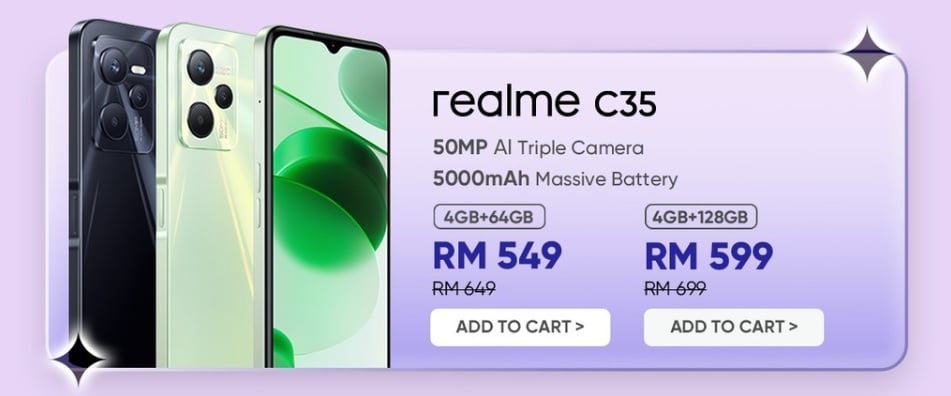
The Realme C35 is priced at RM649(~$155) for the 4GB RAM + 64GB storage variant. The 4GB RAM + 128GB storage variant costs RM699(~$167). But the device will be available for RM549(~$131) and RM599(~$143) respectively in the sale from tomorrow.
This is cheaper than the price for which the phone was launched in Thailand. In Thailand, the device starts at THB 5,799(~$179).
It can be picked up in two colors – Black and Green. For some reason, the phone isn’t up on the Realme Malaysia website but it is listed on the Shopee Malaysia page.
Realme C35 Specifications
The Realme C35 offers a new design over its successor, the Realme C25. It sports a 6.6-inch water-drop notch display with an FHD+(1080 x 2400 pixels) resolution. It is an IPS LCD panel with a 20:9 aspect ratio and a 90.7% screen-to-body ratio.
It features an 8MP selfie camera at the front and a triple camera system at the rear. The rear setup goes by a 50MP primary lens, a 2MP macro sensor, and a 2MP B&W lens. Powering the device is the UNISOC T616 chipset that is coupled with 4GB of LPRR4x RAM and up to 128GB of UFS 2.2 internal storage.
The phone has a microSD card slot for additional storage. The dual-SIM phone packs a 5,000mAh battery and has an 18W fast charging support. Lastly, it runs on the Realme UI and has Android 11 OS on top of it.
Oppo has scheduled to launch the Find X5 series on February 24 in the market. Ahead of its release, we’ve seen the renders and specs of the vanilla Find X5 and Find X5 Pro. Now, the tipster @evleaks has shared the official renders of the upcoming Oppo Find X5 Lite.
Ther Find X5 Lite renders reveal the phone’s design. The device looks exactly like the Oppo Reno7 Indian model that launched a few weeks back. In addition to this, a tipster recently revealed that the X5 Lite will actually be a rebranded version of the Reno7. And after looking at the images, it appears to be true.
The smartphone sports the exact same punch-hole display, triple rear camera design, and has the same colors as the Reno7. Going by this, we can safely assume that the screen here on the Oppo Find X5 Lite is a 6.43-inch AMOLED panel.
A publication recently shared the specs sheet of the phone. The smartphone is said to feature a 90Hz panel with Gorilla Glass 5 protection. The display will double up as an in-display fingerprint scanner.
The selfie camera at the top left corner will be a 32MP Sony IMX615 sensor. At the rear, it will feature a 64MP + 8MP + 2MP triple camera system. Here, the secondary sensor will be an ultra-wide lens with a 118.9-degree FOV and the tertiary lens will be a macro sensor.
Inside, the phone will have the MediaTek Dimensity 900 SoC paired with 8GB of RAM and 256GB of internal storage. The phone is expected to have a 4,500mAh battery with support for 65W fast charging technology. The phone will boot on ColorOS 12 based on Android 12.
After the confirmation of the existence of a Xiaomi 12 Ultra, the device is now officially into the next stage of the flagship release life cycle: leaks and rumours. And this new leak is regarding the processor powering the Xiaomi 12 Ultra, which is rumoured to be the upcoming Qualcomm Snapdragon 8 Gen 1+.
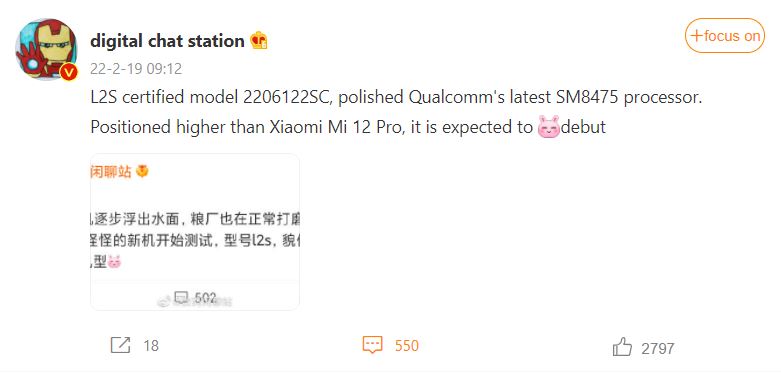
The news comes from the popular Chinese leakster, Digital Chat Station on Weibo. In the Weibo post, they mention that the Xiaomi L2S, model number 2206122SC, is sporting the unannounced Qualcomm SM8475 chipset under the hood. The leaker also reveals that the launch date of the device is happening in Q3 2022.
Source: Weibo
For those unaware, in an earlier leak, the Xiaomi L2S was spotted to be the Xiaomi 12 Ultra in the IMEI database and the Qualcomm SM8475 chipset is the successor to the Qualcomm SM8450(or more commonly known as the Qualcomm Snapdragon 8 Gen 1 processor). The Qualcomm SM8475 is rumoured to be called the Snapdragon 8 Gen 1+, and it is expected to be manufactured under TSMC’s 4nm process this time instead of Samsung’s 4nm node.
This leak serves as a welcome surprise to those who were holding off buying the Xiaomi 12 and 12 Pro and decided to wait for the Xiaomi 12 Ultra instead. To elaborate, the reviews of the Xiaomi 12 and 12 Pro were all-around positive. Whether it be the cameras, the displays or the audio experience, both the phones had it all. However, both phones have a major Achilles’ Heel that could not be solved via a software update, which is the Snapdragon 8 Gen 1 chip powering both devices.
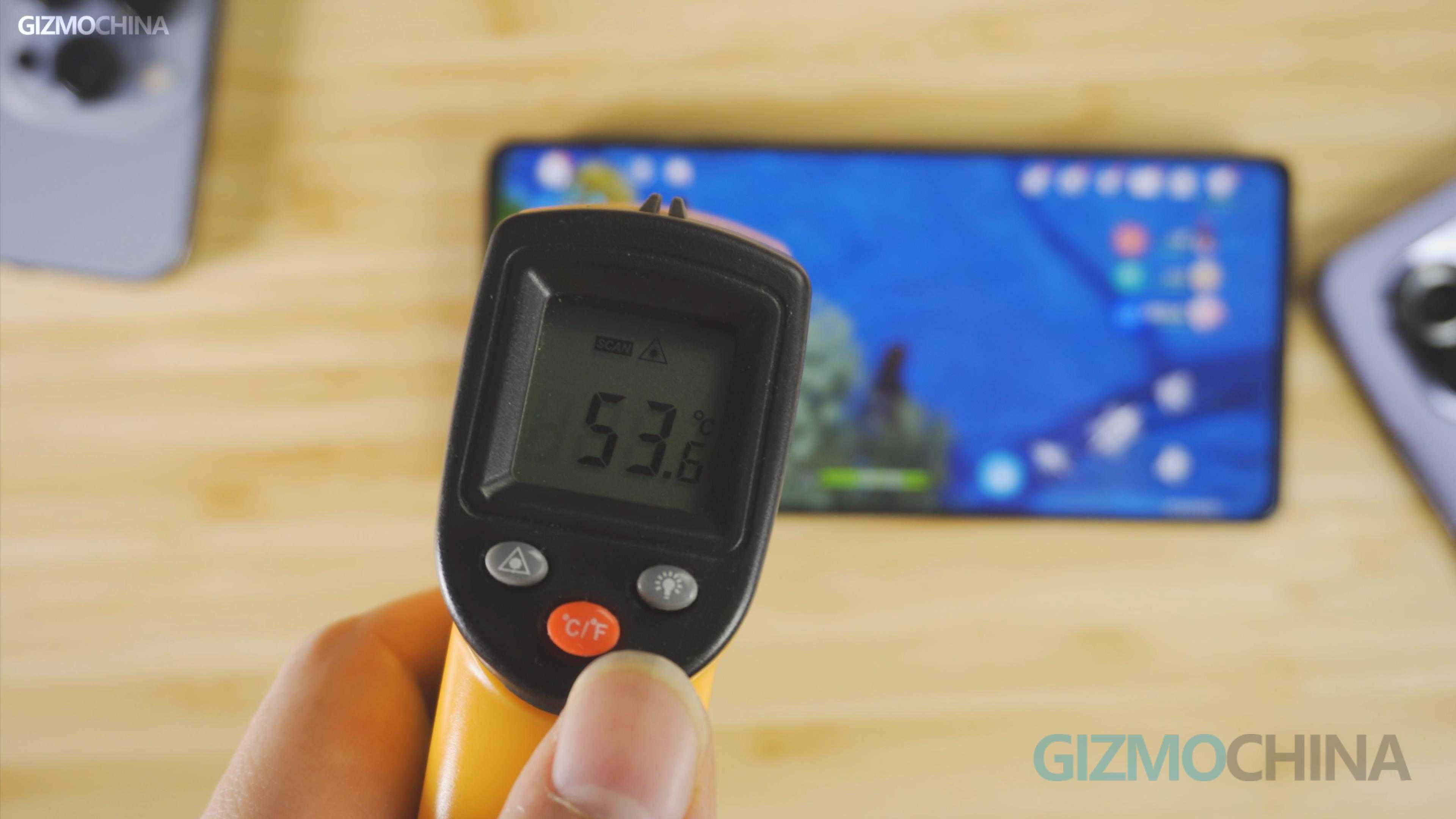
Snapdragon 8 Gen 1 measuring at 53.6 degrees Celsius on the surface of the Motorola Edge X30
The Snapdragon 8 Gen 1 chip was prone to overheating, battery drain issues, and even thermal throttling on many devices such as the Xiaomi 12, 12 Pro, Motorola Edge X30, and the Realme GT 2 Pro. Many attributed the shortcomings of the chip to the reason of being fabbed under Samsung LSI’s 4nm process. This is because previous Qualcomm flagship chipsets like the Snapdragon 870, Snapdragon 865, and Snapdragon 855 didn’t exhibit these issues as strongly as the 8 Gen 1, as all 3 of them were fabbed under TSMC.
And with ever-increasing complaints from both phone manufacturers and consumers, Qualcomm is reportedly going back to TSMC for its Snapdragon 8 Gen 1+ chipset, and it will be fabbed on TSMC’s latest 4nm process which claims to bring better thermals, better power efficiency and better performance than its predecessor.
Despite being one of the most popular gaming consoles in the market, the Sony PlayStation 5 still remains to be inaccessible for many gamers. Primarily, because the console is always out of stock thanks to the components shortage. However, the PlayStation 5 console does go on sale sometimes, and now, Sony has officially announced its next availability details for the Indian market.
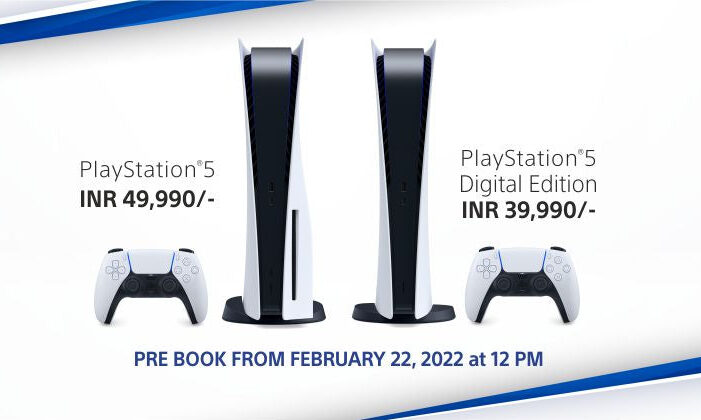
The Sony PlayStation 5 will go on pre-orders from February 22 in the country. The console will be available for pre-booking at 12 noon at all the retail stores like ShopatSC, Amazon, and GamesTheStop. Customers can book two of the available variants – the PS5 Standard Disc Edition for Rs. 49,990(~$669) and PS5 Digital Edition for Rs. 39,990(~$535).
Interestingly, this will be the second time the console will be going on booking. Last time, the console went on pre-booking in January in the country. In case you weren’t able to get your hands on the console last time, now is the time.
The PlayStation 5 offers gaming at 4k resolution at 60fps and up to 120fps. The Standard Disc Edition offers 4K UHD Blu-ray disc support. For digital users, they need to browse through the games and movies on the digital store itself.
The console has AMD’s Zen 2 custom octa-core CPU clocked at 3.5GHz. It is paired with AMD RDNA 2 GPU with over 36 Cuda cores. It has 16GB of GDDR6 RAM and 825GB PCIe Gen 4 NVMe SSD storage.
Recently, Sony added the Voice commands feature in the latest software beta. It allows users to voice chat or report to a party.
The Vivo V23e 5G that is officially launching on Monday (February 21, 2022) in India has previously had its pricing leaked. And now, a new report has surfaced which further substantiates the earlier leaks.
According to a 91mobiles report, industry sources have informed that the handset will be priced at Rs. 25,990 ($348) for the 8GB RAM and 128GB model when it launches on February 21 in India. The sources have also informed that the device comes with an MRP of Rs. 28,990 ($388) for the same variant. The device will be offered in two color variants name Sunshine Gold and Midnight Blue.
Vivo V23e 5G specifications & features
As the Vivo V23e is already available in Thailand since November 2021, we know almost all of its specifications and features.
The device sports a 6.44 inch Full HD+ AMOLED display with 2400 x 1080 pixels screen resolution. Under the hood, it houses a MediaTek Dimensity 810 processor, paired with 8GB of RAM. For storage, it packs 128GB of internal storage along with memory expansion support of up to 1TB through a microSD card slot. On the front, the smartphone also features an in-display fingerprint scanner as well as a 44-megapixel eye auto-focus selfie camera on a waterdrop notch.
Meanwhile, the rear features a triple camera setup, which includes a 50-megapixel primary sensor, 8-megapixel ultra-wide-angle lens, and a 2-megapixel macro camera. Other features include Dual SIM, 5G, Wi-Fi, Bluetooth v5.1, USB Type-C port, and GPS. The device runs Android 11 and is powered by a 4,050mAh battery pack that supports 44W fast charging.
The Vivo V23e 5G will be positioned below the existing Vivo V23 lineup phones in India. At present, the Vivo V23 5G is available for Rs 29,990. The Vivo V23 Pro 5G is available in two variants such as 8 GB RAM + 128 GB storage for Rs 38,990 (~$522) and 12 GB RAM + 256 GB storage for Rs 43,990 (~$589).
There is some great news for all Pixel users. Gboard’s grammar checker is now going to be available on older Pixel phones.
For those who are unaware, up until now, the Grammer check on Gboard was only available to Pixel 6 and Pixel 6 pro owners. The feature allows the users to correct grammar while they type in English.
Google had announced that the feature will eventually be available for other languages as well and that it was able to meet its goal to develop grammar correction that “enables users to correct their text entirely on their own device without ever needing to send their keystrokes to a remote server.”
The feature functions in a manner like any other grammar correcting platform but instead of copy-pasting your keystrokes on another platform, Gboard allows the user to edit the sentences directly using their keyboard.
The functionality works in any scenario where you have written something using Gboard on your Pixel device, be it a text message, an email, or notes. It makes you aware of grammatical mistakes by pointing out the error with a blue underline. Tapping on the word underlined with blue will result in a suggestion from Gboard to help correct your grammatical error.
The update was first noticed by a Reddit user with a Pixel 5, who wrote that after dictating a sentence using voice typing, he noticed that his grammatical errors were underlined in blue just like grammatical errors on the Pixel 6 line are. He also discovered that the feature could be disabled in the Gboard spell checker settings. Android Police discovered the feature on the Pixel 5a and the Pixel 3a running Gboard beta as well.
While this feature is surfacing on older Pixel models, it is yet to be launched on non-Pixel Android smartphones.
We use cookies on our website to give you the most relevant experience by remembering your preferences and repeat visits. By clicking “Accept”, you consent to the use of ALL the cookies.
This website uses cookies to improve your experience while you navigate through the website. Out of these, the cookies that are categorized as necessary are stored on your browser as they are essential for the working of basic functionalities of the website. We also use third-party cookies that help us analyze and understand how you use this website. These cookies will be stored in your browser only with your consent. You also have the option to opt-out of these cookies. But opting out of some of these cookies may affect your browsing experience.
Necessary cookies are absolutely essential for the website to function properly. This category only includes cookies that ensures basic functionalities and security features of the website. These cookies do not store any personal information.
Any cookies that may not be particularly necessary for the website to function and is used specifically to collect user personal data via analytics, ads, other embedded contents are termed as non-necessary cookies. It is mandatory to procure user consent prior to running these cookies on your website.