Advertisement

Acer announces new Swift X powered by Intel’s 12th generation processor and Arc GPU

Many new and updated laptops have been announced at the ongoing Consumer Electronics Show 2022, and joining the bandwagon is Acer, which has announced the updated lineup of its Swift X ultraportable laptops.

There are two Acer Swift X models, one featuring a 14-inch display and another with a 16-inch display. However, both the devices come powered by Intel’s new 12th generation processors and one of them packs Intel Arc GPU.
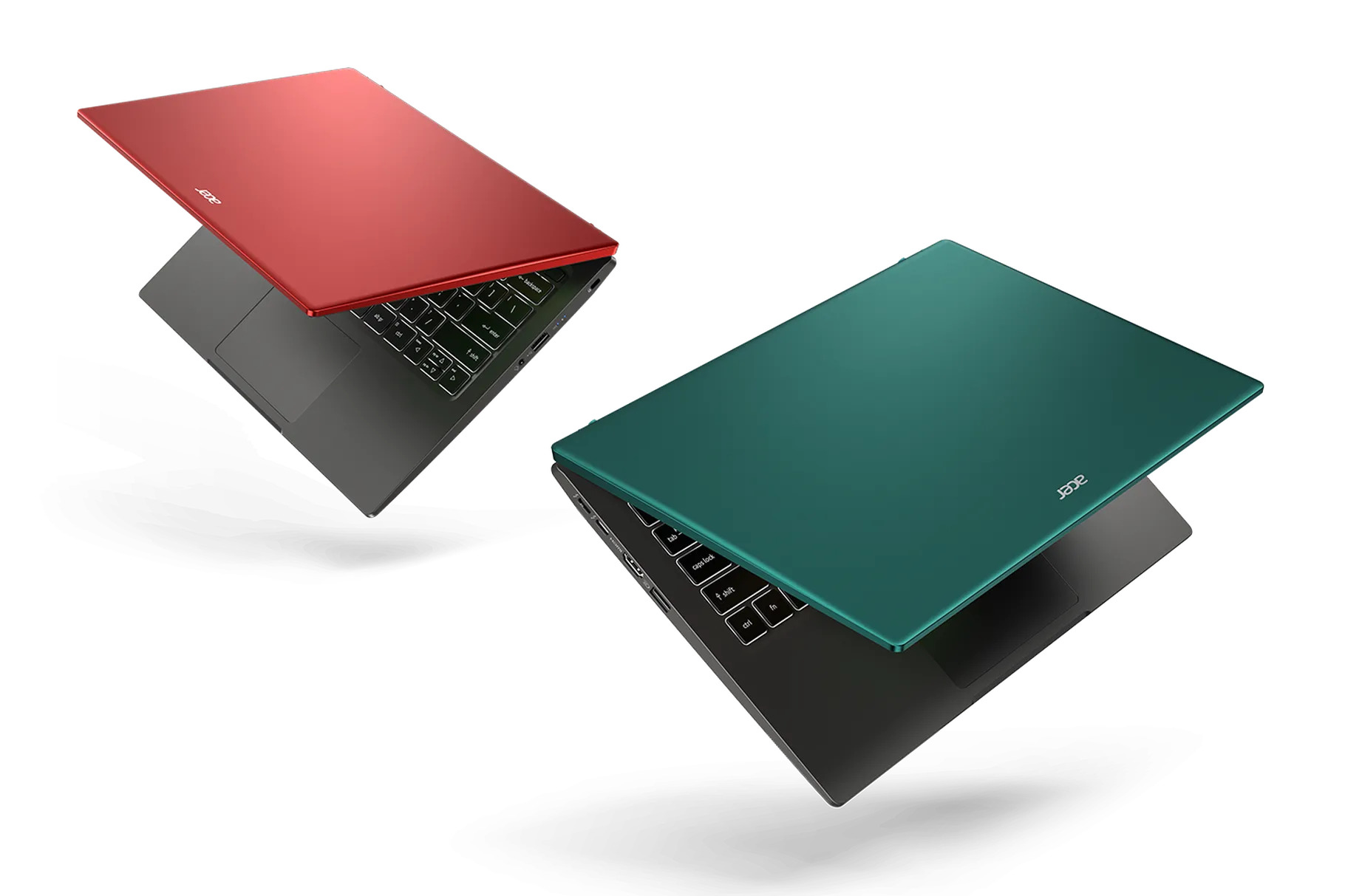
Acer Swift X

The 14-inch Acer Swift X features a screen resolution of 2240 x 1400 pixels while the 16-inch model comes with up to 2560 x 1600 pixels screen resolution. Both the models come with support for a 16:10 aspect ratio.

Under the hood, the devices come powered by a new 12th-generation Intel Core processor paired with the new Arc graphics processor from Intel. That is paired with up to 32GB of LPDDR5 RAM and up to 2TB SSD storage.

The 14-inch model is available with Nvidia’s GeForce RTX 3050 Ti laptop GPU or integrated graphics. Both the models run the Windows 11 operating system out-of-the-box.

They come with two Thunderbolt 4 ports, two USB-A ports, an HDMI 2.0 port, and a fingerprint reader. The laptops are lightweight too as the company says the 14-inch model weighs 3.09 lbs, while the 16-inch model weighs 3.95 lbs.

As of now, Acer hasn’t announced pricing or availability for the new Swift X laptops, so we don’t know exactly when or at what cost you’ll be able to get your hands on them. However, the devices are expected to be available in the UK by the end of February or the start of March.

RELATED: 

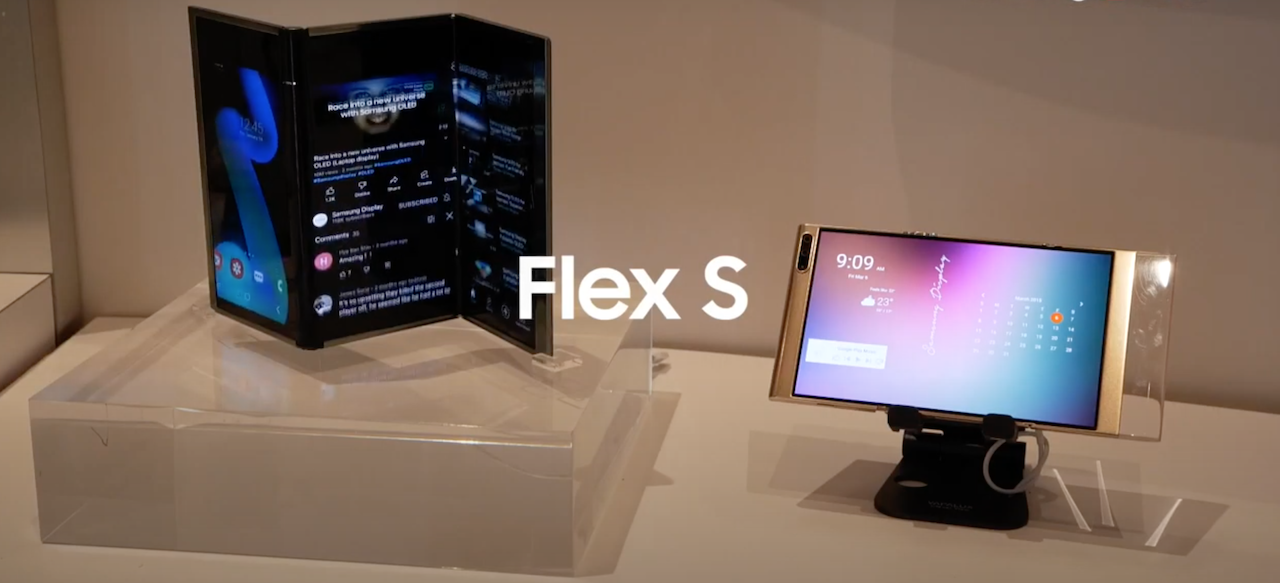
Samsung Flex S, Flex G, Flex Note, and Flex Slidable showcased at the CES 2022

While brands like Motorola, Oppo, and Huawei have tried the foldable beat in the past, they’re still yet to catch up to what’s Samsung’s forecasting for its foldable tech. At CES 2022, Samsung has showcased a few new foldable products like the Samsung Flex S foldable, Flex G foldable, Flex Note, and the Flex Slidable.

Samsung Flex S
Image courtesy – SamMobiles

Samsung has showcased the “S” foldable and “G” foldable phones at the event. The Flex S fold is what it sounds like, the large screen would open us as a big tablet and it folds in a three-way design. As seen in the video below, when it’s unfolded, it forms the shape of the letter S.

On the other hand, the Flex G is an inward folding device. It again folds in three-way but it can be folded in such ways that the screen stays hidden, which is unlike the Flex S. It seems that the S fold design is better for large-screen devices, while the G fold is good for both the small displays and big screens.

Coming to the Samsung Flex Note, it isn’t any other Galaxy Note phone device. Rather, it is Samsung’s take on foldable notebooks and laptops.

The Flex Note has a large screen and is a two-way folding design. As simple as it sounds, it will look like a laptop, but without a keyboard, however, you can use the rest of the part of the screen as a keyboard. Not just a keyboard, it can be tweaked to work as a drawing pad or as a timeline in video editing software.

The Flex Slidable is something similar to Oppo’s X 2021, offering great space of use and more screen real estate. Samsung reveals that the display of the Flex Slidable can slide out with a press of a button and can be used as a sidebar for accessing apps directly from the home screen.

While this foldable technology appears to be quite intriguing, it may take some time to actually materialise.

RELATED:

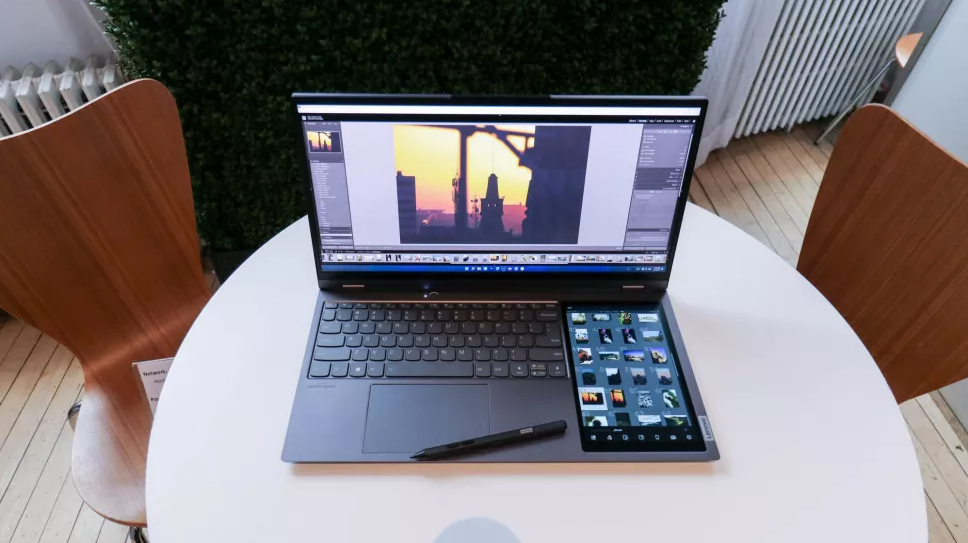
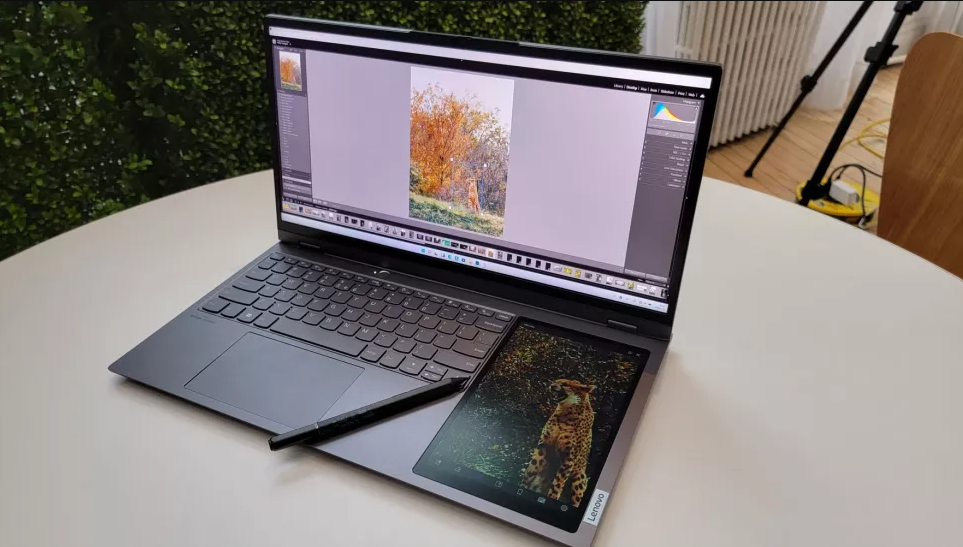
Lenovo ThinkBook Plus Gen 3 packs a 17-inch screen & a second 8-inch screen near the keyboard

One of the highlights of Lenovo‘s lineup of products on display during CES 2022 is the Lenovo ThinkBook Plus Gen 3 laptop. The laptop which is in its third iteration has an 8-inch secondary display to complement its main 17-inch screen. The ThinkBook Plus Gen 3 will be available from May 2022 at a starting price of $1,399.
(Image credit: Tom’s Hardware)

Lenovo moved the second panel down to the keyboard deck, transforming it to a full-color LCD. The laptop’s main screen is a 17.3 inch IPS display with 3K resolution. The 8-inch 800 x 1,280 LCD features an integrated digitizer layer and supports a stylus. The ThinkBook Plus Gen 3 runs on Windows 11 with several orientations and options available.

The transitions between the two displays could be a potential drag for the ThinkBook Plus Gen 3. There could be bugs in the ecosystem that significantly slowed down the secondary screen. The ThinkBook Plus Gen 3 has the 12th-generation Intel Core processor with 32GB of RAM and a 69 Whr battery.

Lenovo ThinkBook Plus Gen 3
(Image credit: Tom’s Hardware)

Some of the other products showcased by Lenovo include the ThinkBook and ThinkCentre family of business-focused laptops. The ThinkBook 13x Gen 2 can work with a “Wireless Multi-Device Charging Mat” to recharge Qi-compatible devices while also powering the laptop itself. The ThinkCentre Neo lineup consists of three desktop systems for small and medium businesses.

RELATED:


All-electric BMW iX model with a paint job that changes colour surfaces at CES 2022
If you are a fan of Rockstar Games’ Grand Theft Auto (GTA) collection, you agree that one of the cool features that come in very handy is the ability to drive into a car paint workshop and get a new paint job when the cops are on your tail. German automaker BMW is about making that an easy job that can be accomplished with just a button. According to a recent tweet, BMW has showcased an innovative paint scheme that automatically changes between two different colors. The feature was demonstrated on the all-electric BMW iX.

Before now, BMW had reportedly confirmed that it will perform a demo of “a technology that changes the exterior color of a vehicle with the touch of a button.” The company stopped short of providing further details regarding the technology at play but a demonstration was indeed carried out. A video of the technology in action was shared by Twitter user @Out_of_Spec.

The short video provides us with a view of the iX having a dark grey color and within a split second, the color rapidly changes to white. The process was apparently activated by the man standing next to the SUV with perhaps the press of a single button. The transformation is so cool and fast that is hard to believe it isn’t a video effect of some sort.

The technology is definitely in its infancy and will be some light years away from becoming commercial, that is if it ever does. The tipster even disclosed that the paint technology is extremely temperature-sensitive and that the carmaker has got a backup EV in the pool should the one being demoed get too hot or cold.

We doubt if this feature will come out anytime soon as it looks likely to be more useful to criminals than the regular car owners. But then, with proper regulation, it would be fun changing the color of your car without visiting the auto body paint shop.

RELATED: 


Realme GT 2 Pro vs Xiaomi 12 Pro: Specs Comparison

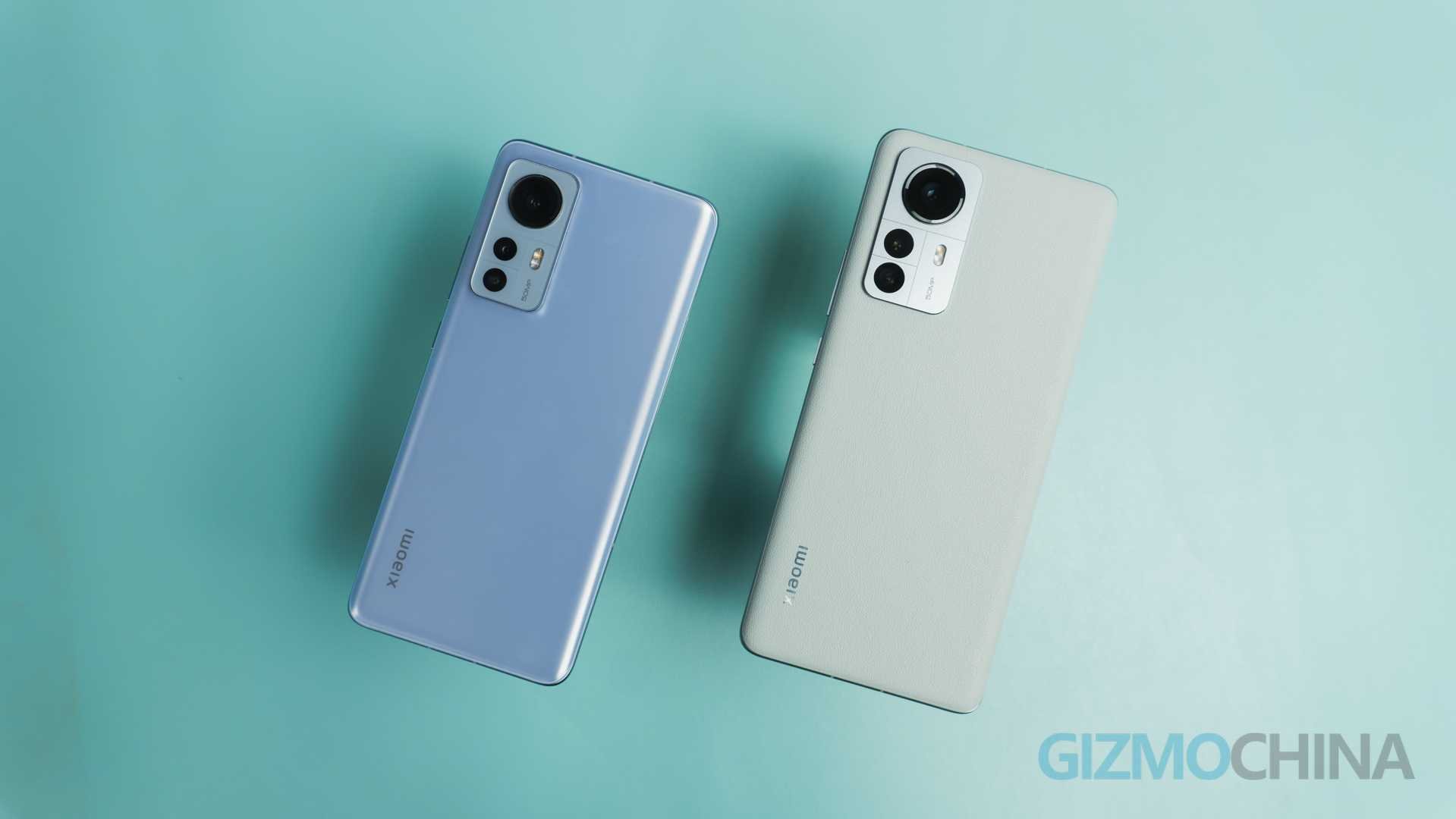
Realme and Xiaomi just launched two premium flagships which might become the best-selling flagship phones of 2022. Their latest top-tier models are simply amazing and they have almost no compromises if compared to the other most expensive phones out there. This year it will be a hard fight between these two handsets, especially because they come with similar specifications. But which one is the best? We hope to answer this question through this comparison between the specifications of the Realme GT 2 Pro and the Xiaomi 12 Pro. Note that both these phones are only available in China for now, but they will expand to the global markets later in the first quarter of 2022.

Realme GT 2 Pro vs Xiaomi 12 Pro

Realme GT 2 Pro Xiaomi 12 Pro
DIMENSIONS AND WEIGHT 163.2 x 74.7 x 8.2 mm,
189/199 g
163.6 x 74.6 x 8.2 mm,
204 g
DISPLAY 6.7 inches, 1440 x 3216 pixels (Quad HD+), AMOLED 6.73 inches, 1440 x 3200 pixels (Quad HD+), LTPO AMOLED
PROCESSOR Qualcomm Snapdragon 8 Gen 1, octa-core 3 GHz Qualcomm Snapdragon 8 Gen 1, octa-core 3 GHz
MEMORY 8 GB RAM, 128 GB – 8 GB RAM, 256 GB – 12 GB RAM, 256 GB – 12 GB RAM, 512 GB 8 GB RAM, 128 GB – 8 GB RAM, 256 GB – 12 GB RAM, 256 GB
SOFTWARE Android 12, Realme UI Android 12, MIUI
CONNECTIVITY Wi-Fi 802.11 a/b/g/n/ac/6, Bluetooth 5.2, GPS Wi-Fi 802.11 a/b/g/n/ac/6, Bluetooth 5.2, GPS
CAMERA Triple 50 + 50 + 3 MP, f/1.8 + f/2.2 + f/3.0
32 MP f/2.4 front camera
Triple 50 + 50 + 50 MP, f/1.9 + f/1.9 + f/2.2
32 MP front camera
BATTERY 5000 mAh, fast charging 65W 4600 mAh, Fast Charging 120W, Fast wireless charging 50W
ADDITIONAL FEATURES 5G, dual SIM 5G, dual SIM, reverse wireless charging

Design

With the GT 2 Pro and the vanilla version GT 2, Realme managed to create a new kind of sustainable material reducing the CO2 emissions and providing a very innovative touch & feel. Two of the color options of the Realme GT 2 Pro are made with a special bio-based polymer that resembles the tactile feedback of the paper, and the phone is designed in cooperation with the famous Japanese designer Naoto Fukasawa. Just for the materials, the Realme GT 2 Pro deserves an award for the design and it wins the design compared with the Xiaomi 12 Pro. It is also a slightly more compact and lighter phone.


Display

The displays of the Xiaomi 12 Pro and the Realme GT 2 Pro are simply amazing and they come with very similar specifications. They are AMOLED panels with the LTPO technology enabling an adaptive refresh rate from 1 to 120 Hz. They feature a Quad HD+ resolution with 1440p and they are able to show up to one billion colors with the HDR10+ certification. They also come with an in-display fingerprint scanner for authentication. Both these displays received the vote A+ after being reviewed by DisplayMate. There is still no clear winner as it is still too early to judge, but you should not notice any big difference between these two panels.


Specs & Software

The Realme GT 2 Pro and the Xiaomi 12 Pro are powered by the Snapdragon 8 Gen 1 mobile platform that is currently the best chipset by Qualcomm. It is an octa-core SoC built at 4 nm with a max frequency of 3 GHz, and it is paired with up to 12 GB of RAM. The higher-end version of the Realme GT 2 Pro wins the hardware comparison because it comes with up to 512 GB of internal storage, while Xiaomi 12 Pro stops at 256 GB; but this makes no difference in terms of performance. Realme GT 2 Pro and Xiaomi 12 Pro run Android 12 out of the box, customized by Realme UI 3.0 and MIUI 13, respectively.


Camera

While we still had no chance to thoroughly test the cameras of these two devices, the Xiaomi 12 Pro looks slightly more interesting on the paper. Both the phones come with a 50 MP main camera with OIS and a 50 MP ultrawide camera, but the Xiaomi 12 Pro is the only one to feature a telephoto sensor (with 2x optical zoom) and it is a 50 MP camera as well. The Realme GT 2 Pro replaces the telephoto camera with a 3 MP microscope camera with 40x magnification: an interesting sensor, but definitely less loved than a telephoto lens. On the other hand, the Realme GT 2 Pro has an ultrawide camera with a wider FOV: up to 150 degrees.


Battery

The Realme GT 2 Pro wins the battery comparison simply because it packs a bigger battery: the capacity is 5000 mAh, while Xiaomi 12 Pro has just 4600 mAh of capacity. Despite that, the thickness of these two phones is the same. While the Realme GT 2 Pro provides a longer battery life, the Xiaomi 12 Pro has faster charging speeds thanks to 120W fast charging and, unlike its rival, it even supports wireless charging with blazing speeds thanks to a power of 50W.


Price

The starting price of the Realme GT 2 Pro in China roughly translates into €460/$520, while you need at least €650/$735 for the Xiaomi 12 Pro. The Xiaomi 12 Pro is a superior device thanks to its telephoto camera, faster charging capabilities, and wireless charging, but the Realme GT 2 Pro offers a bigger battery while providing a higher value for money thanks to its affordable price. Which one would you pick?


Realme GT 2 Pro vs Xiaomi 12 Pro: PRO and CONS

Realme GT 2 Pro

PRO

  • Innovative materials
  • Ultrawide camera with 150° FOV
  • Bigger battery
  • Up to 512 GB of storage

CONS

  • Inferior cameras


Xiaomi 12 Pro

PRO

  • Amazing cameras
  • Faster charging
  • Wireless charging
  • IR blaster

CONS

  • Smaller battery

RELATED

Check the latest videos from our YouTube channel and subscribe:

Xiaomi 12 Ultra may never launch; Here’s why

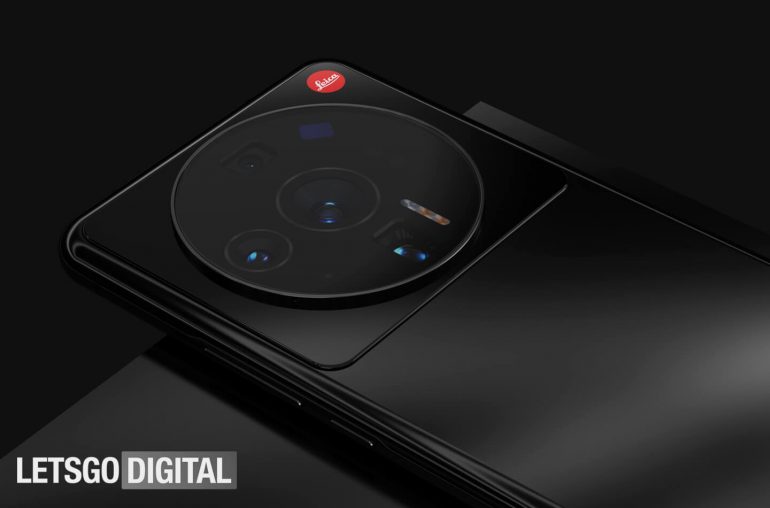
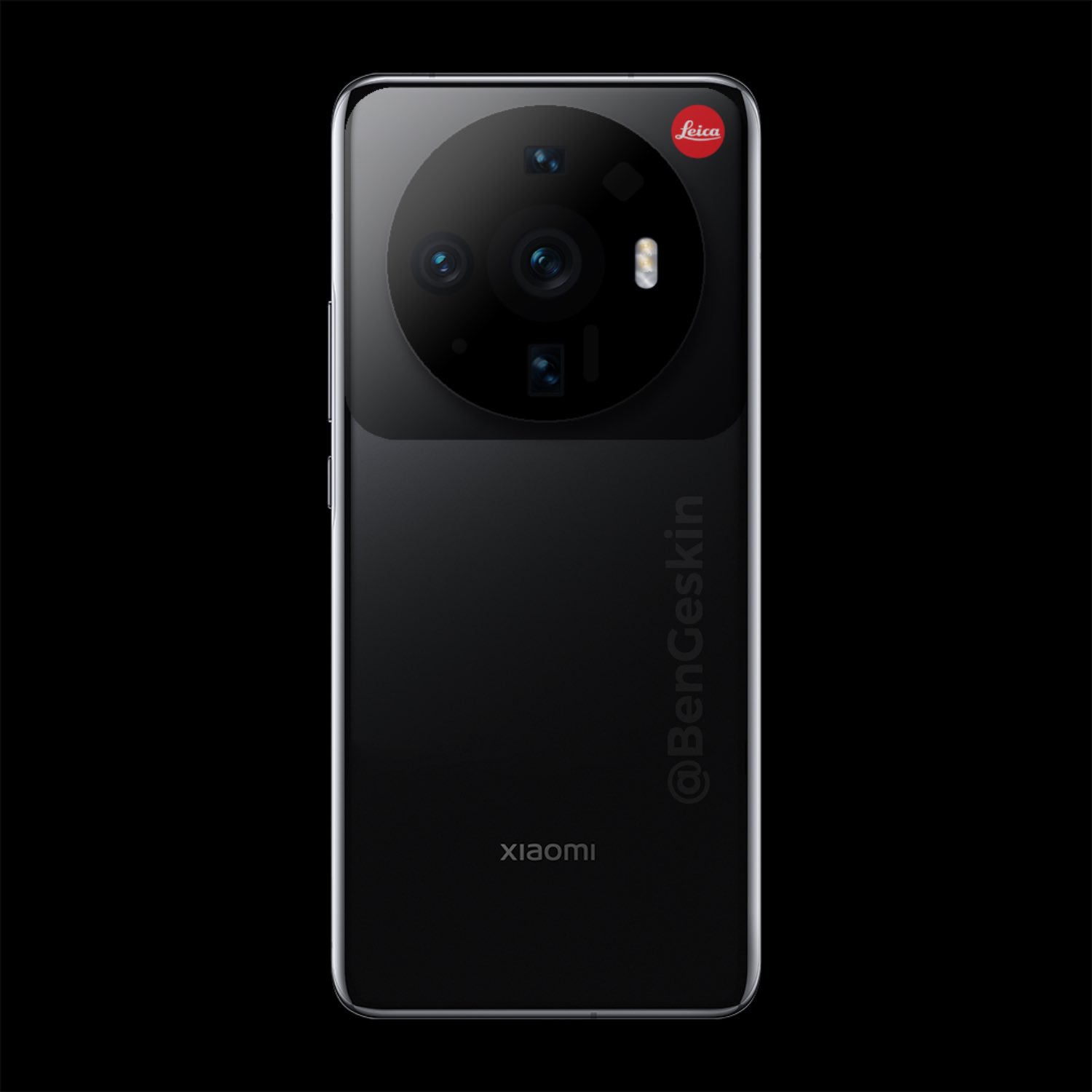
While Xiaomi already launched its flagship series, the Xiaomi 12 in China, it is yet to get the most powerful device in the series, the  Xiaomi 12 Ultra. Rumors suggest that the phone may debut in the coming months with Leica powered cameras and flagship-grade specs. However, a new report on the Internet suggests that the Xiaomi 12 Ultra may never release.

Folks at xiaomiui came with a theory that suggests that the phone may not launch and won’t be on sale. Reportedly, Xiaomi introduced the Xiaomi 12 series in December 2021 carrying the following model numbers – L3 for Xiaomi 12 and L2 for Xiaomi 12 Pro. The L1 goes to the Xiaomi Mi Mix 5 Pro, an upcoming premium phone which is yet to launch. And, the L1A goes to the upcoming vanilla Mi Mix 5.

Xiaomi Mi 12 Ultra Concept renders
Image courtesy – LetsGoDigital

It reveals that the higher the number alongside the letter ‘L’ the higher it stands in the lineup. It further suggests that the L2 which is the Xiaomi 12 Pro is the most powerful phone in the Xiaomi 12 series, but, it shouldn’t be the case as the past rumors revealed that an even powerful phone dubbed Xiaomi 12 Ultra is incoming. But the L1 numbering which should have been reserved for the Ultra is already given to the Xiaomi Mi Mix 5 Pro, the upcoming powerful flagship.

Now, if we focus on the model numbers, Xiaomi 12 – 2201123C and Xiaomi 12 Pro – 2201122C. Here the initial two numbers ’22’ refers to the year 2022 hinting at the 2022 flagships of Xiaomi and 01 refers to the month January.

ben geskin xiaomi 12 ultra render
Credits: Ben Geskin

To corroborate, the upcoming Mi Mix 5 carries the model number 2203121AC, while the Mi Mix 5 Pro has the model number 2203121C. Again, here the 22 means the year 2022, while the 03 refers to the month of March. It goes in line with the rumored March launch of the Mi Mix 5 series.
Finally, the question arises where’s the Xiaomi 12 Ultra and why doesn’t it carry the numbering – L1? The publications suggest that it is not yet licensed and, hence reveal that the 12 Ultra may never launch.

In addition, a popular tipster nonverbally seems to have said that the Xiaomi 12 Ultra isn’t happening and instead the upcoming Xiaomi Mi Mix 5 Pro would take up its position. Even the L1 numbering for the Mix 5 Pro affirms it.

As per the aforementioned leaks, the Xiaomi 12 Ultra’s launch seems to be contingent. But as it doesn’t corroborate with any official statements, we’d recommend our readers to take it with a grain of salt, especially after the Xiaomi 12 Ultra’s numerous leaks which we see every day on the Internet.

RELATED:

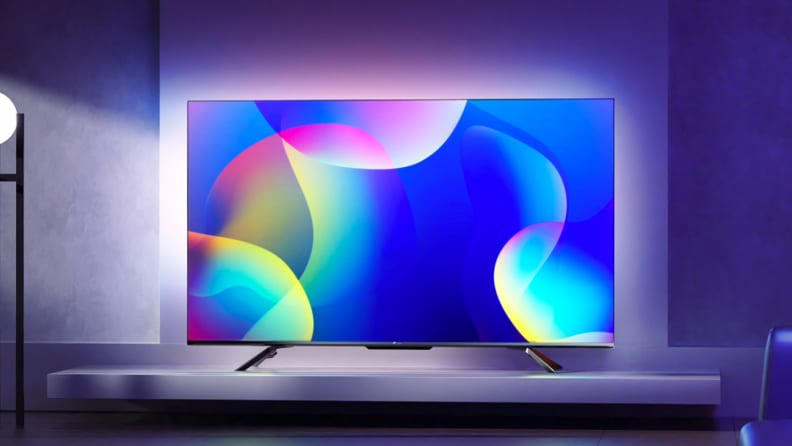
Hisense unveils new U and A lineup of TVs with up to 4K-res and 120Hz refresh rate

Chinese electronics maker Hisense launched a heap of new TV models at the CES 2022. The lineup includes premium models like the Hisense U9H, U8H, U7H, U6H and some affordable models like Hisense A7H, A6H, and A4H.

Hisense U9H

Starting with the Hisense U9H, the new TV is the top of the line model amongst the 2022 TV lineup. It comes with a 75-inch 4K display with Mini LEDs. It has a 120Hz refresh rate, 200 nits of brightness, and auto low latency mode.

Hisense TVs 2022

It has premium features like the Game Mode Pro, FreeSync, and variable refresh rate(VRR). It has built-in speakers tuned by Dolby Atmos. It costs a hefty $3199 and will be available this summer.

Hisense U8H and U7H

Coming to the U8H and U7H, the former TV has the Mini LEDs technology, while the latter gets the QLED panel. Both come with a 120Hz refresh rate.

Hisense U7H
Hisense U7H

There’s also the 4k resolution support, however, the brightness goes down to 1500 nits on the U8H, but we are unsure about the U7H’s brightness. Both have FreeSynce, Dolby Vision IQ, and HDR10+ support. Apart from this, there are some minor differences between the two.

The U8H comes in 55-inch, 65-inch, and 75-inch starting at $1,099. On the other hand, the U7H comes has an additional 85-inch size, with the series starting at $799. Just like the U9H, the U8H & U7H will be available in Summer.

Hisense U6H

The U6H comes in screen sizes from 50 to 75 inches and has the standard 60Hz refresh rate. It has Dolby Atmos and supports quantum dot color.

Hisense U6H

The pricing of the U6H is unknown at the moment.

Hisense A7H, A6H, and A4H

The Hisense A7H, A6H, and A4H come in screen sizes from 32 to 85 inches. The A7H and A6H have Google TV support, while the A4H boots on Android TV. The A4H is the cheapest TV this year coming in 32-inch, 40-inch, and 43-inch sizes having an FHD resolution. The series starts at $199 and will be available in spring.

RELATED:

TP-Link prototype router self-adjusts its antennas to provide best WiFi signal

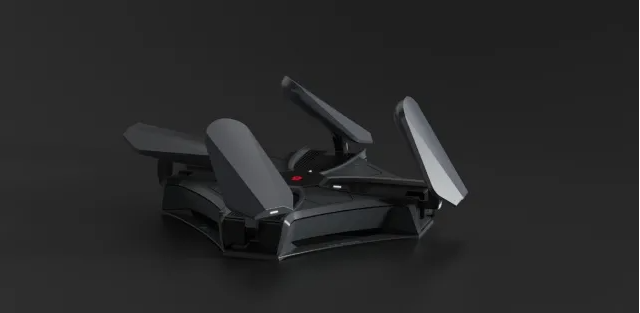
CES 2022 has seen some strange innovations so far, and one among them is the prototype WiFi router from TP-Link dubbed the Archer AXE200 Omni router.

Archer AXE200 Omni router

The Prototype router features four antennas that fold out when switched on and automatically rotate around to find and provide the best possible signal for its users. The necessity and functionality of this feature are still debatable but the router is sure to provide some amusement to customers when they move around the room and the router’s antennas follow their movements.

Archer AXE200 Omni router

However, when it comes to hardware and specs, the AXE200 is no joke. The WiFi 6E enabled router features tri-band speed, with the addition of a 6Ghz band in addition to the existing 5Ghz and 2.4Ghz bands. The new WiFi 6E has latency levels of 2-6 milliseconds which enables users to use this new band for low-latency applications such as mobile AR/VR, gaming, 4k/8k video streaming, etc.

For customers looking for a convention yet powerful WiFi router, TP-Link is also launching the Archer AXE300 quad-band router, which shares the same extraterrestrial design as the Archer AXE200. The AXE300 features WiFi 6E with two (duplicate) 5GHz bands in addition to the 6Ghz and 2.4Ghz bands. The price for this device is yet to be unveiled however TP-link has stated that it will be available in the market in Q2 of 2022.


RELATED:


(Source)

Samsung Galaxy S22 Ultra, Galaxy S22 camera and display specs revealed

Rumors are rife that we might see this year’s Samsung flagship series, the Galaxy S22 early next month. Despite getting leaked several times, Samsung is yet to tease it officially. Well before it even happens, there’s yet another leak and this time around we get to learn the Samsung Galaxy S22 Ultra’s camera hardware. Additionally, the display details of the vanilla S22 were also unwrapped.

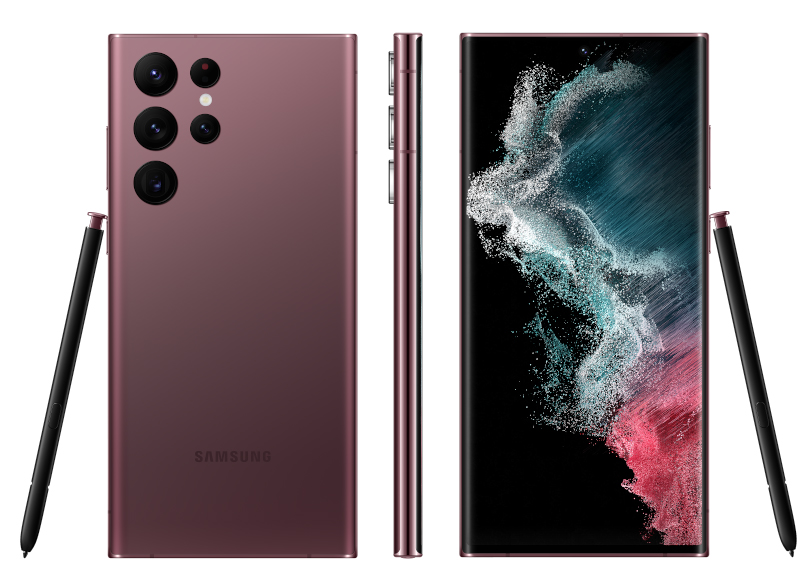
XEETECHCARE affirms that the upcoming Samsung Galaxy S22 Ultra will borrow the design from the Galaxy Note 20 Ultra. Reportedly, the S22 Ultra will have almost the same design as the Note 20 Ultra but with some slight changes such as the tweak on the camera island.

Samsung Galaxy S22 Ultra Render Leak
Samsung Galaxy S22 Ultra Render Leak via Evan Blass

The smartphone is touted to come with a quad-camera system at the rear. It will go by a 108MP Super Clear lens with an f/1.8 aperture and OIS support. The lens is said to restrict any reflection or glares, hence the naming.

It will be accompanied by a 10MP telephoto lens with 3x zoom and f/2.4 aperture. There will be another 10MP lens with 10x zoom and an f/4.9 aperture. Lastly, there will be a 12MP ultra-wide camera with f/2.2 aperture. Upfront, it will equip a 40MP shooter with an f/2.2 aperture.

Furthermore, the leak also reveals the possible specs of the phone. The Galaxy S22 Ultra is said to come with a 6.8-inch QHD+(3080 x 1440 pixels) Dynamic AMOLED 2X screen. It will be powered by the 4nm Exynos 2200 SoC, at least for some markets.

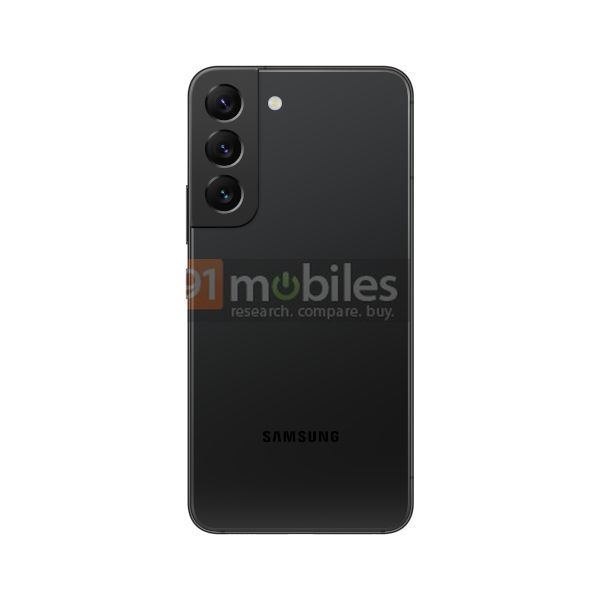
Samsung Galaxy S22 Render Leak (Black)
Samsung Galaxy S22. Image courtesy – 91Mobiles

It will be paired with 8GB or 12GB of RAM and 128GB, 256GB, or 512GB of onboard storage. As for the battery, the phone is tipped to have a 5,000mAh cell. The S22 Ultra, just like the S21 Ultra, will also have an S-Pen support. The smartphone may come in four color variants like the Phantom White, Phantom Black, Green, and Burgundy.

Moreover, some specs for the vanilla Galaxy S22 were also revealed. The smartphone may come with a 6.1-inch FHD+(2340 X 1080 pixels) Dynamic AMOLED 2X display and have a triple rear camera system. The device could arrive in Phantom Black, Phantom White, and Green colors.

RELATED:

Moto G Stylus 2022 leak reveal supposed ‘official renders’ and specs

The Moto G Stylus 2022 refresh, which is expected to be Motorola‘s budget Stylus smartphone offering, has had multiple leaks in the past, with a recent one revealing the looks and design of the upcoming device in 5K renders. Now, another leak has surfaced on Twitter with presumably the official renders of the device as well as some key specs.

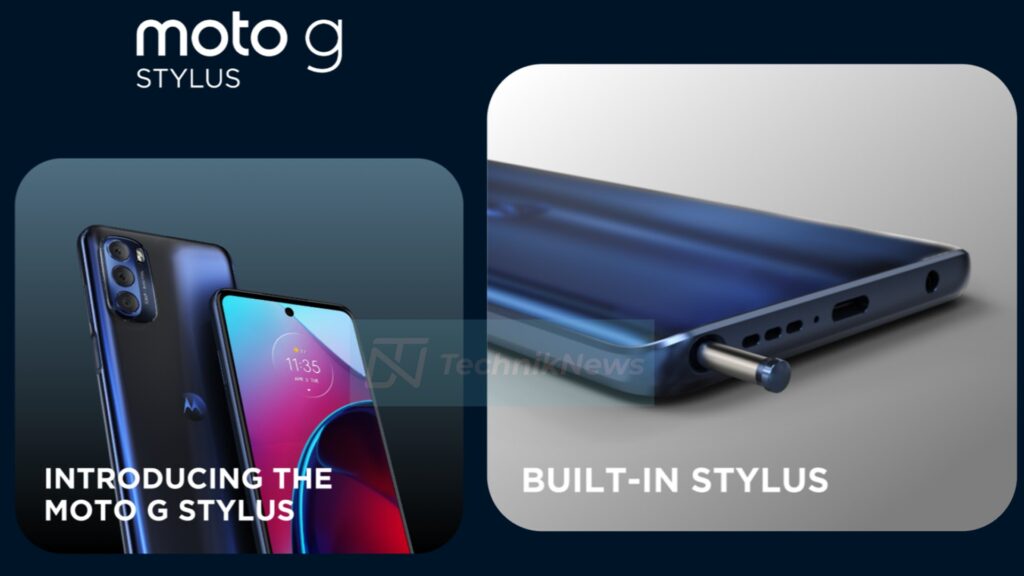
In a recent tweet by tipster @NilsAhrDE, we can observe the Moto G Stylus looks a lot like the previous renders revealed by popular tipster OneLeaks, giving more credence to the claim that these are official renders of the device.

Moto G stylus

A triple camera setup with an LED flash can be observed on the back. Additionally, the image also features a side-mounted fingerprint sensor and a centered camera punch hole. The Stylus pen looks more premium compared to the 2021 Moto G stylus.

The second picture reveals that the upcoming Moto G Stylus will have a 50MP primary camera which will use 4×1 pixel binning technology to create 12.5MP shots. The phone is also revealed to have 128GB of storage and a 90Hz fluid display.

Previously, the smartphone was hinted to come with a 6.81-inch display and have a Snapdragon 480+ 5G chipset. It is also tipped to house either a 4,500mAh or a 5,000mAh battery cell. It is expected to run on Android 12 out of the box.

Motorola has yet to officially announce this device and therefore no information is available regarding a possible launch timeline as well as its pricing. However, if this recent leak turns out to be legit, we might soon see the Moto G Stylus 2022 debut.


RELATED:


TCL first mega launch lineup of 2022 includes six new Android tablets 

TCL is unveiling a wide array of products during its first event for 2022. The lineup of devices launched during the mega event include laptops, smart home gadgets, TVs, and six new Android-based tablets. The Android tablets includes the TCL Nxtpaper 10s, Tab 10L, Tab 8 4G, Tkee Max, Tkee Mid, and Tkee Mini. The six Android tablets feature a number of exciting functions with the Tkee series representing new kids tablets. The six tablets will be available in China and Europe in a staggered manner from January 2022. Except for the Tkee Mini, all the other tablets will run on the Android 11 operating system.

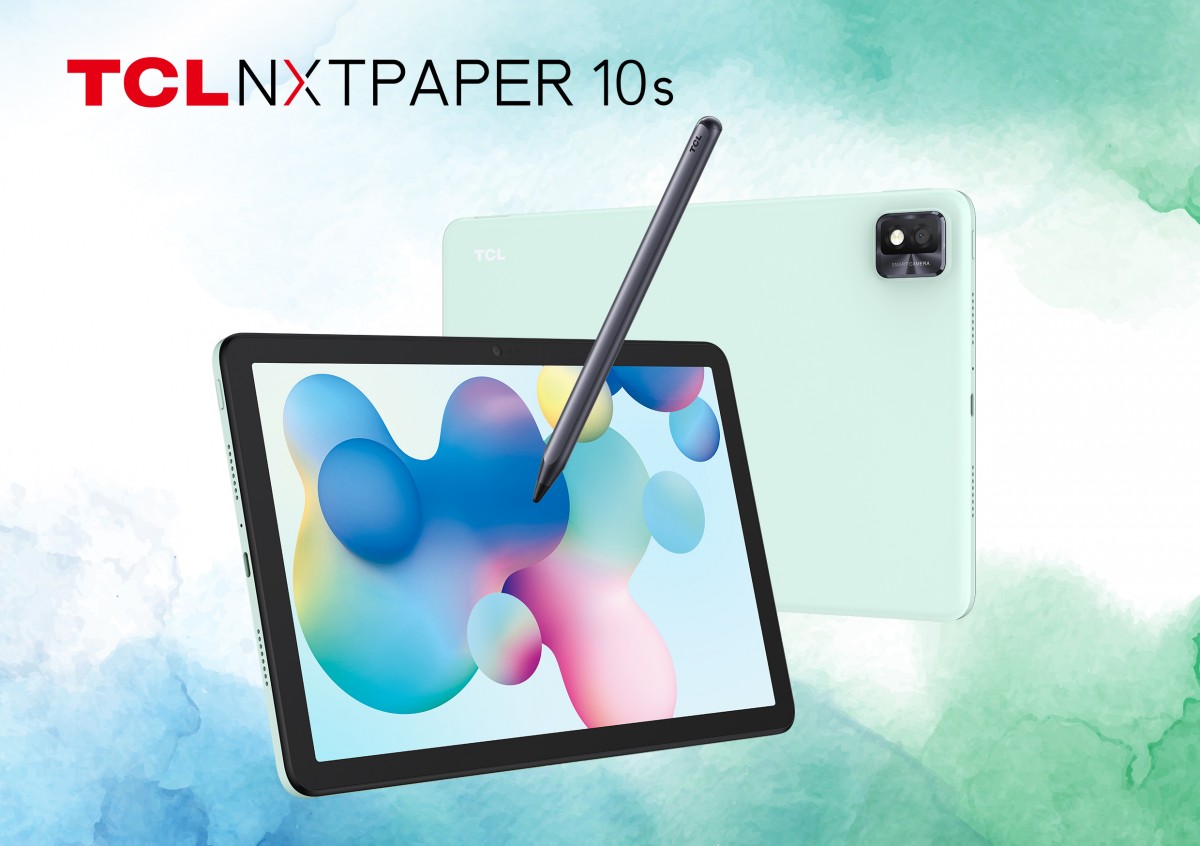
The TCL Nxtpaper 10s has a 10.1-inch pressure-sensitive display that is adorned with a matte finish unlike the traditional glossy surface to guarantee a better viewing experience. The matte finish is a deliberate design feature to reduce blue light emissions and eye fatigue. TCL says the Nxtpaper 10s will have natural color reproduction and clear viewing angles. The Nxtpaper 10s has 4GB of RAM with 64GB of storage. It is powered by a MediaTek Helio P23 chip, it has a 5MP selfie camera together with an 8MP rear shooter. Its 8,000 mAh battery can be charged via USB at 18W charging speeds. The Nxtpaper 10s package starts at $249 and two color variants are available – ethereal sky and dark grey colors.TCL Tab 8 4g

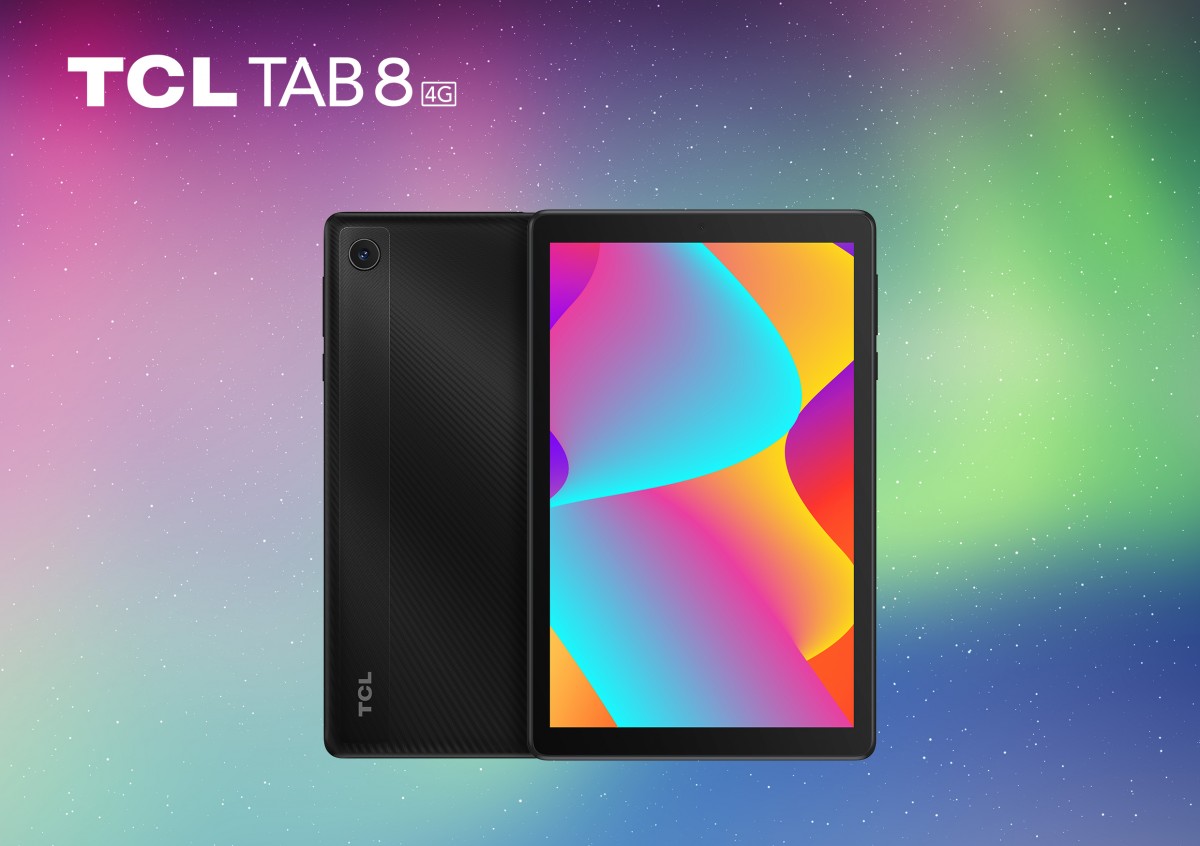
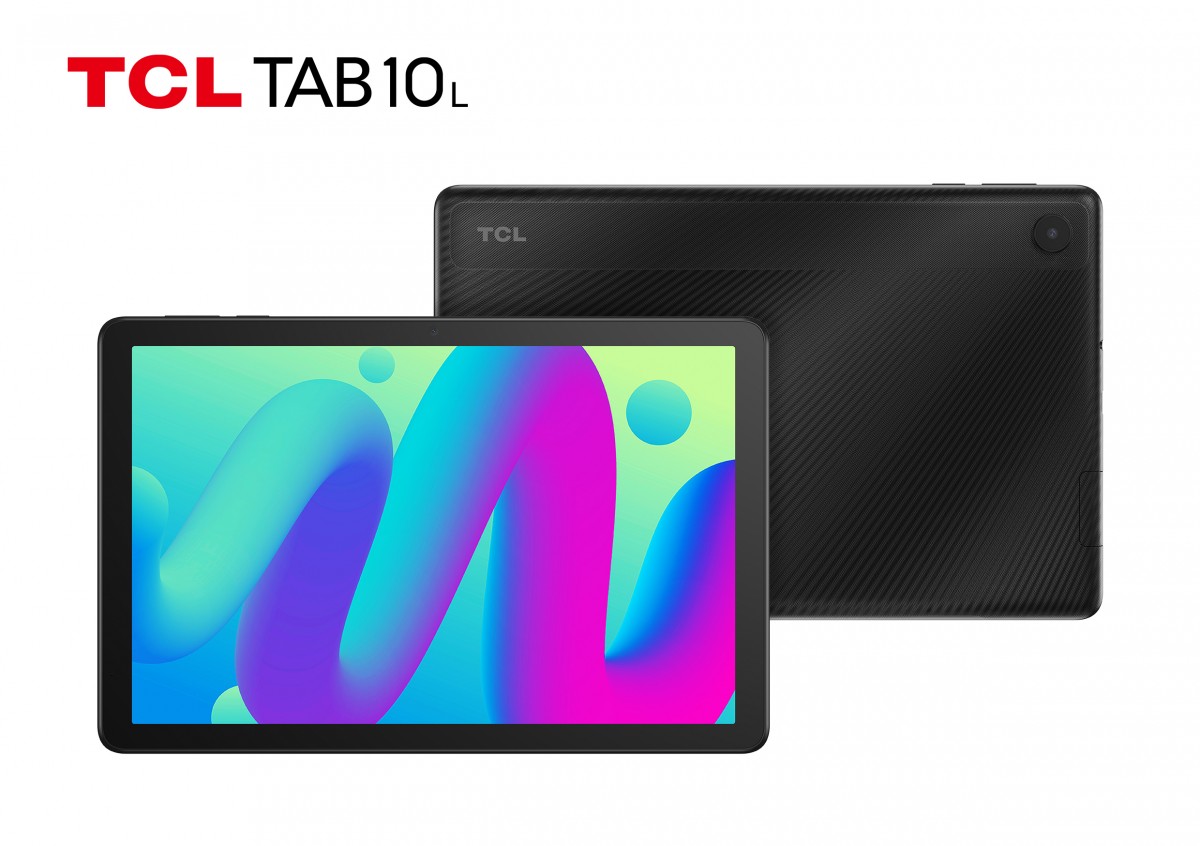
The TCL Tab 10L has 2GB RAM with 32GB of storage. It has a 10.1-inch screen and it is aimed as a media consumption device, with the internal storage capable of being extended via the microSD slot. The battery has a capacity of 4,080 mAh while the camera setup consists of two 2MP sensors. The TCL Tab 10L is priced at $99 and will be available within the first quarter of the year. The TCL Tab 8 4G is priced at $129 and has a smaller display but similar memory and battery configuration as the Tab 10L and will be available for the European market within the first quarter of 2022.

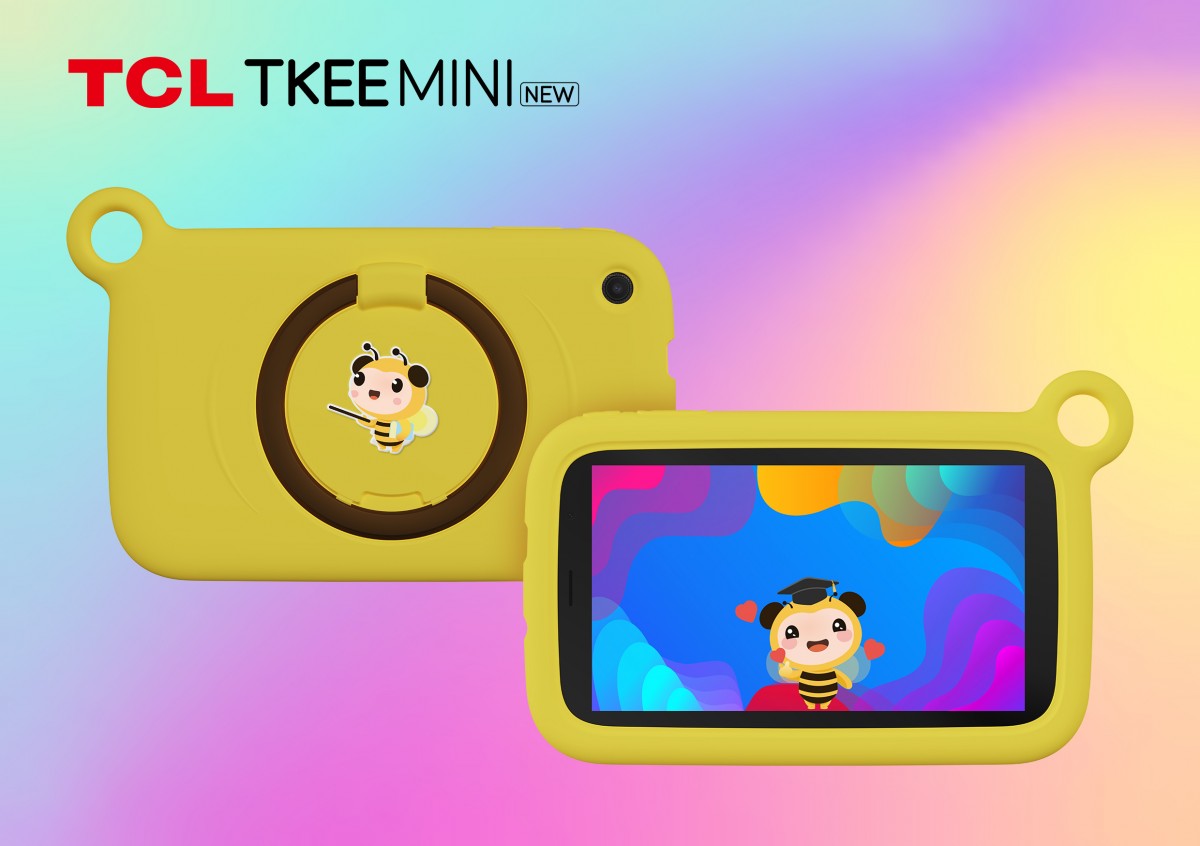
The kids-centric TCL Tkee Mini, Mid, and Max tablets have 7, 8, and 10-inch displays, respectively. They all come in a bright yellow color and feature Tkee pens for drawing and writing. They feature a hard plastic shell as an added overlay for protection from falls. The RAM of the three tablets is 1GB while the smaller model will run on Android 10 (Go edition) unlike all the other tablet models released.

RELATED:


Redmi K40 gets MIUI 13 Stable update for testers in China

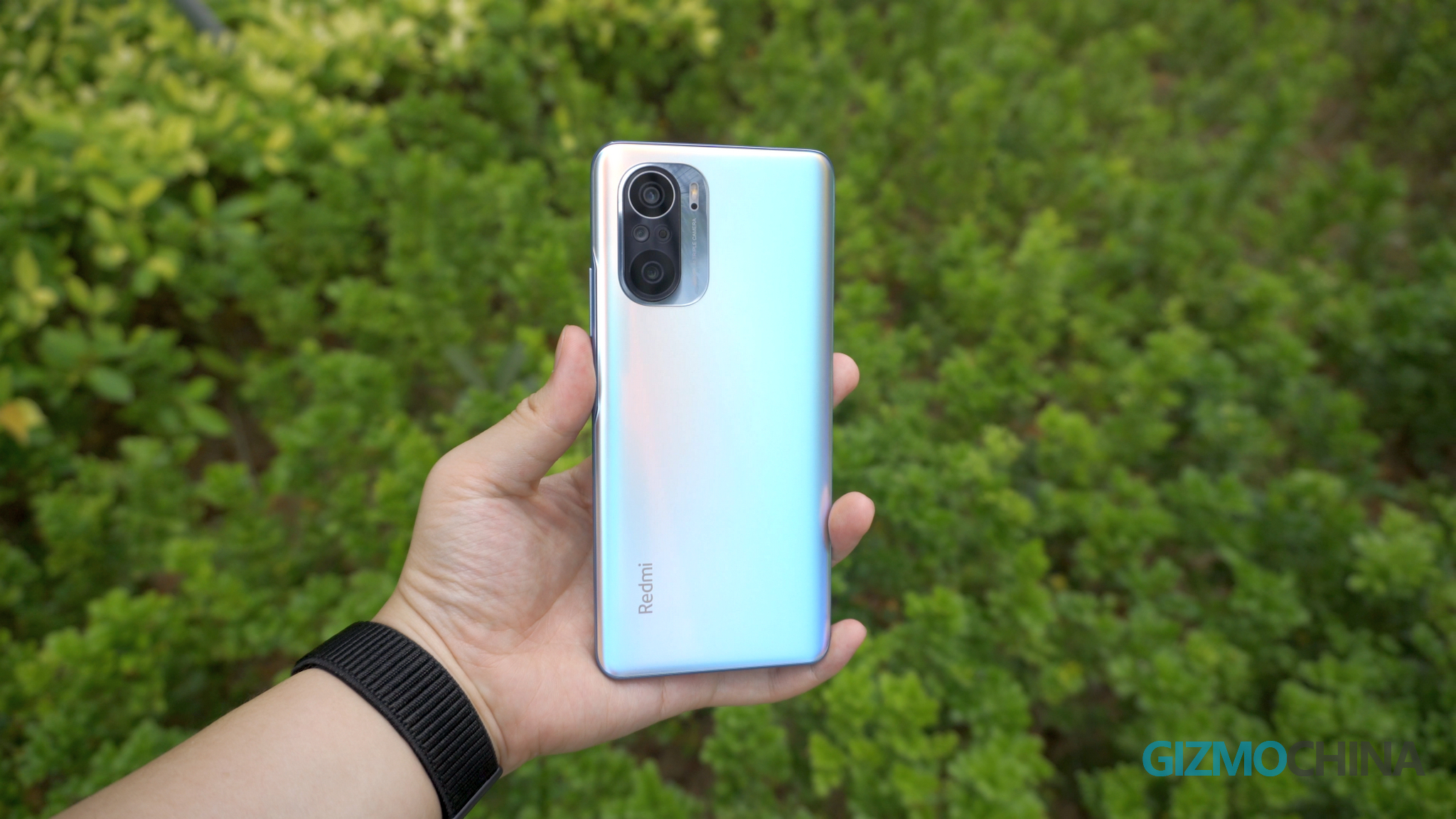
A few days back, Xiaomi announced the all-new MIUI 13 software skin for its smartphones. The company confirmed that the first batch will get the update by the end of January and some devices like the Xiaomi Mi 11 and Xiaomi Pad 5 have already started receiving the stable update. Now, the Xiaomi Redmi K40 has received the MIUI 13 stable update in China.

The Redmi K40 was launched back in February with Android 11 in China and the phone’s new MIUI 13 update is based on the latest Android 12 operating system. As of now, the update is rolled out for the beta testers, but it will be available to the public in the coming days.

Redmi k40 Review 01

It has the codename “alioth” and has the version number V13.0.2.0. Similar to the Mi 11, the update for the Redmi K40 is also quite big. It has a total size of 4.5GB.

The update brings all the latest MIUI 13 features and also has the Android 12 features onboard. It adds new font, widgets, a couple of wallpapers, and privacy features. For those who are unaware, the new MIUI 13 focuses more on stability and optimization offering improved fluency of system apps by 20-26%. The third-party app fluency is increased by 15% to 53%.

We expect the update to arrive on other eligible devices in the coming days. If you want to check the list of supported devices do check the article below.

Read –  MIUI 13: Here’s the list of all supported devices and the release dates

RELATED:

The Xiaomi Rubik’s Cube: Xiaomi Group’s Shenzen International Headquarters will have LED panels on 4 sides

Recently, the internationally renowned New York City-based architectural firm, Ennead Architects, announced the firm has successfully got the tender to be in charge of the design and construction of the Xiaomi Group Shenzhen International Headquarters.

Coinciding with the 10th anniversary of the establishment of the Xiaomi brand, this HQ construction project, codenamed the “Xiaomi Rubik’s Cube”, will be a graceful architectural fusion between technology and our environmental nature, as the HQ will be integrated into one of Xiaomi’s flagship concept stores, blended in with shorelines of the blooming Shenzhen port city.

XIaomi-Cube-1
Xiaomi Rubik’s Cube Architectural Render

As announced in the event, the “Xiaomi Rubik’s Cube” will cover 46 thousand square meters of land, with the cube having 360 degrees illuminating LED panels on its 4 sides, which are namely, its North, South, East and West sides.

LED on all 4 sides of the Xiaomi Rubik’s Cube

Ennead Architects’ member and head architect of the project, Peter Schubert mentioned that the idea of the design came from how the Xiaomi brand is perceived by the public: a tech giant that catches the eye of many and sends waves across the industry. He mentions that the Xiaomi community culture resembles a Rubik’s cube in the sense that problems can be solved in many ways, and you will always get the desired result in the end. 

The unique design of the HQ “Xiaomi Rubik’s Cube” also reflects Xiaomi’s boldness to stand out in the industry, its resilience to always push innovation forward, and its willingness to cooperate with other smartphone manufacturers and suppliers as well, and in the end, it wants to become a leader in the smartphone space.

Xiaomi-Cube-3

Xiaomi-Cube-2
Xiaomi Rubik’s Cube renders

The Xiaomi Group has invested 7.76 billion RMB to construct its Shenzhen International Headquarters, and throughout 2020 towards 2024, the estimated business revenue would be 51 billion RMB, whereas the surrounding businesses of the HQ are estimated to have an economic growth of 600 million RMB.


RELATED:

(Via)

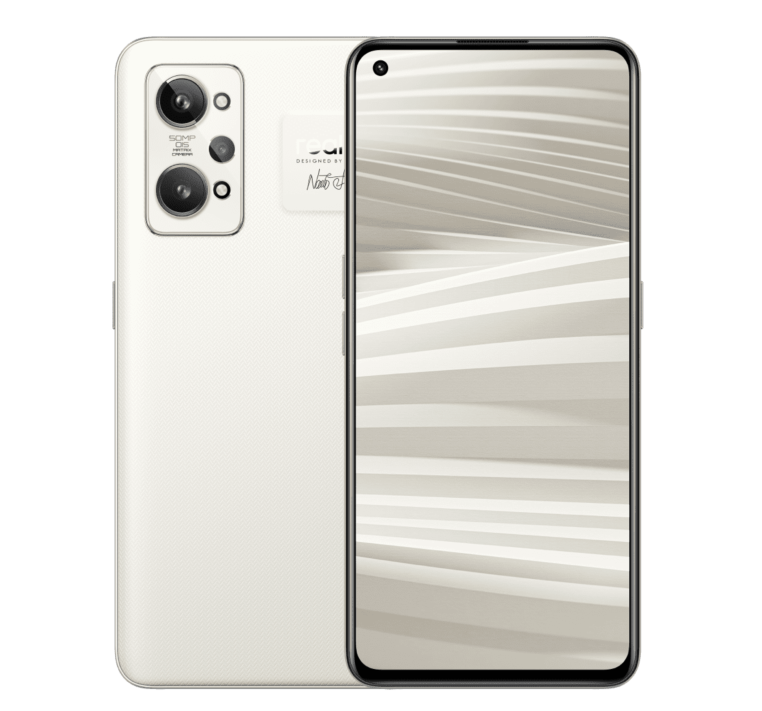
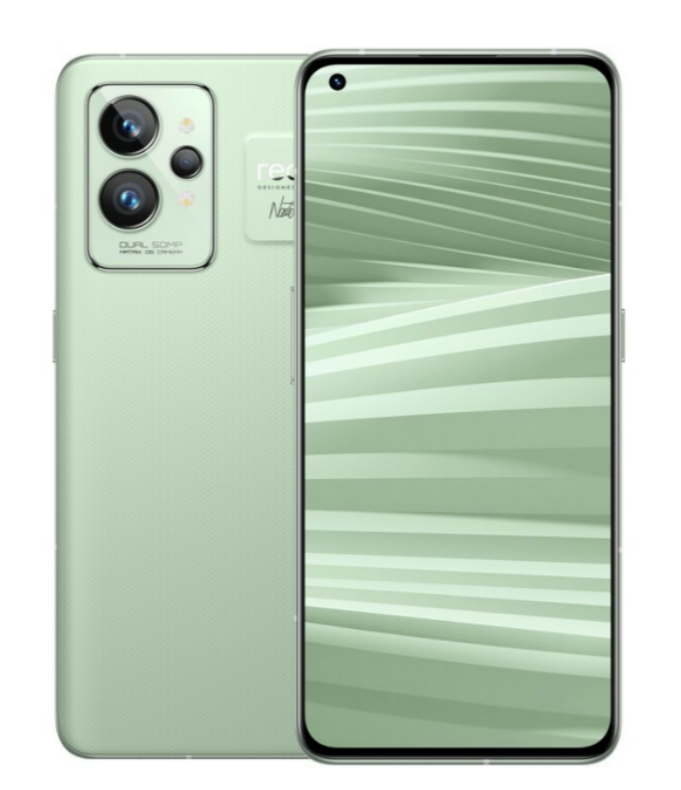
Deal: Get $50 OFF on Realme GT 2 and GT 2 Pro at Giztop (Coupon)

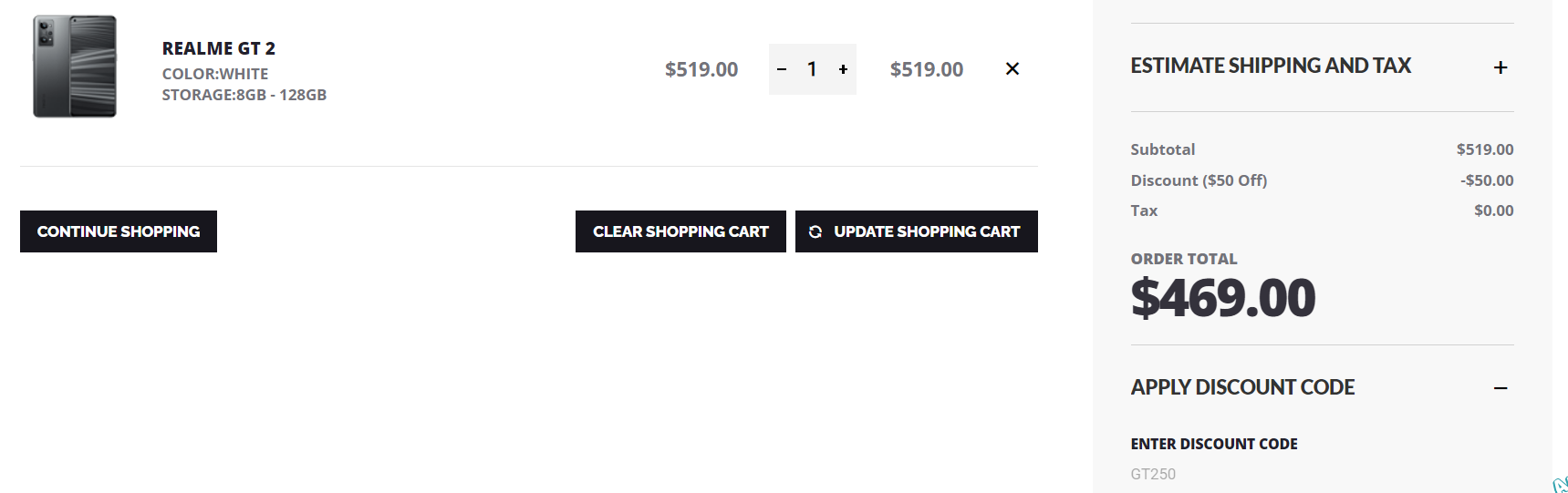
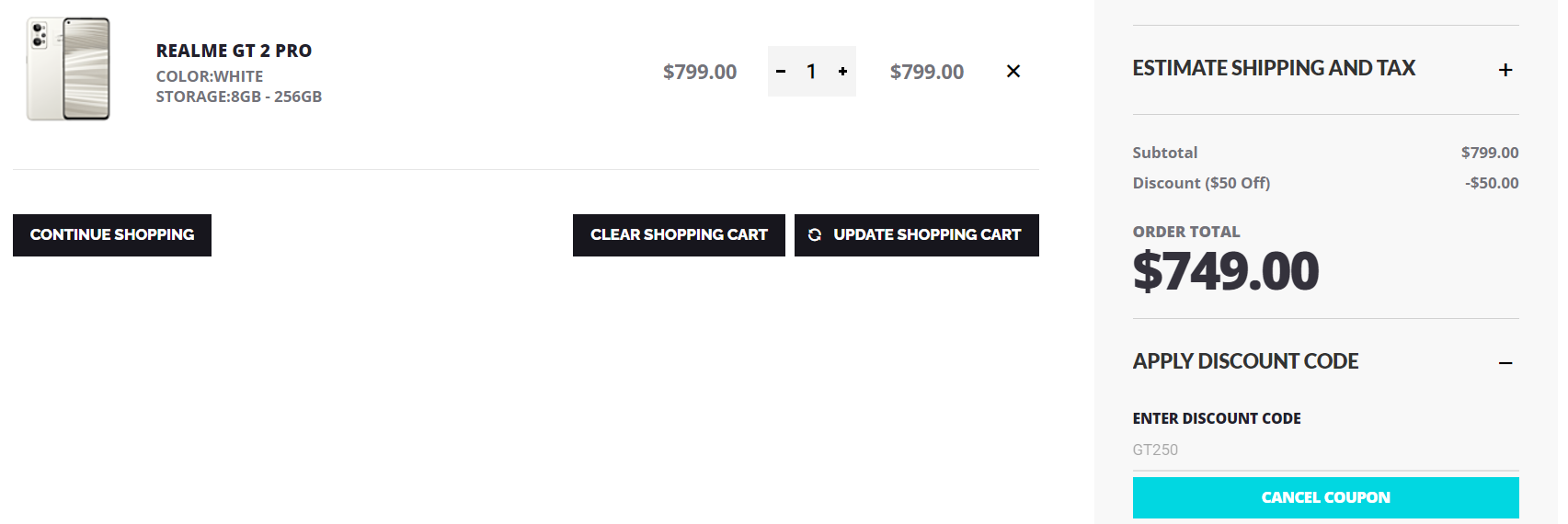
Giztop is giving a $50 discount coupon for the brand new Realme GT 2 and Realme GT 2 Pro. You can now buy Realme GT 2 which generally retails for $519 at a discounted price of $469 and Realme GT 2 Pro which retails for $799 at a discounted price of $749 only by using the discount code: GT250. The abovementioned price is applicable to the base variant only. However, the coupon code is applicable to all variants. Please note that this is a limited-time coupon. 


Realme GT 2 Pro

Realme GT 2 

Retail Price: $519   Discounted Price:$469


Realme GT 2

Key Features: 

  • 6.62” AMOLED display, 120Hz
  • 1080 x 2400p resolution
  • Processor: Qualcomm SM8350 Snapdragon 888 5G, Octa-core
  • 8GB / 12GB LPDDR5 RAM 
  • 128GB / 256GB ROM
  • Triple Rear camera: 50MP Sony IMX766 OIS main camera
  • Selfie Camera: 16MP HDR
  • Battery: 5000mAh, 65W fast charging
  • Realme UI 3, based on Android 12
  • Supports NFC
  • Dedicated GT mode
  • Dual stereo speaker, Dolby Atmos
  • Diamond Ice Core Cooling Plus
  • Colors: White, Green, Black and Blue

Realme GT 2 Pro

Realme GT 2 Pro

Retail Price: $799   Discounted Price:$749

Realme GT 2 Pro

Key Features: 

  • 6.7” LTPO2 AMOLED display
  • 120Hz, 2K, HDR10+
  • Processor: Qualcomm SM8450 Snapdragon 8 Gen1 (4 nm)
  • 8GB / 12GB LPDDR5 RAM
  • 128GB / 256GB ROM
  • Triple Rear camera: 50MP Sony IMX766 OIS + 50MP + 3MP 
  • Selfie Camera: 32MP HDR
  • Battery: 5000mAh, 65W fast charging
  • Realme UI 3, based on Android 12
  • Supports NFC
  • Dedicated GT mode
  • Dual stereo speaker, Dolby Atmos
  • Diamond Ice Core Cooling Plus
  • Colors: White, Green, Black and Blue

Realme GT 2

Please note that you can get $50 OFF on both Realme GT 2 and GT 2 Pro by using the coupon code: GT250 only at Giztop.

For more information on such exciting deals and offers check out our deals hub.

Xiaomi India fined Rs 650 crores ($88 Million) by Finance Ministry for alleged Tax Evasion

UPDATE: 

Xiaomi has released an official statement regarding this matter.

“At Xiaomi India, we give utmost importance to ensuring we comply with all Indian laws. We are currently reviewing the notice in detail. As a responsible company, we will support the authorities with all necessary documentation.”


[Original story]

Last week we reported on Xiaomi and OPPO facing a potential fine of Rs. 1,000 Crore ($134 million) for tax evasion in India. Now, more details regarding the investigations have been revealed which sheds a light on the crux of the matter.

Xiaomi store China

According to a new report by NDTV Gadgets 360, the Chinese smartphone maker Xiaomi has evaded customs duty of around 653 crores ($88 Million approx) in India. The investigation into the brand began with intelligence that M/s Xiaomi Technology India Private Limited (Xiaomi India) was evading customs duty by way of undervaluation. The investigation was conducted by the Directorate of Revenue Intelligence (DRI) against Xiaomi India and its contract manufacturers.

The raids conducted at Xiaomi India’s premises led to the recovery of incriminating documents indicating Xiaomi India was remitting fees to Qualcomm USA and to Beijing Xiaomi Mobile Software, under contractual obligation.

We know that Xiaomi India imports some of their mobile phone devices to India and other devices are assembled in India by importing parts and components of mobile phones by contract manufacturers of Xiaomi India. The brand has to pay royalties and license fees to brands like Qualcomm USA and Beijing Xiaomi Mobile Software, China (related party of Xiaomi India) for using their technology.

The investigation revealed that these royalties and license fees were not being added to the transaction value of the goods imported by Xiaomi India and its contract manufacturers, which on paper resulted in reduced cost of the imports and in turn reduced import duties.

The Ministry of Finance stated that these actions by Xiaomi India are in violation of Section 14 of the Customs Act, 1962 and Customs valuation (determination of value of imported goods) Rules 2007.

The Ministry of finance also added that “After completion of the investigation by the DRI, three show cause notices have been issued to M/s Xiaomi Technology India Private Limited for demand and recovery of duty amounting to Rs. 653 crore ($88 Million approx) for the period 01.04.2017 to 30.06.2020, under the provisions of the Customs Act, 1962.”

Xiaomi India is yet to issue any statement on this recent development, so stay tuned for more updates.

RELATED:


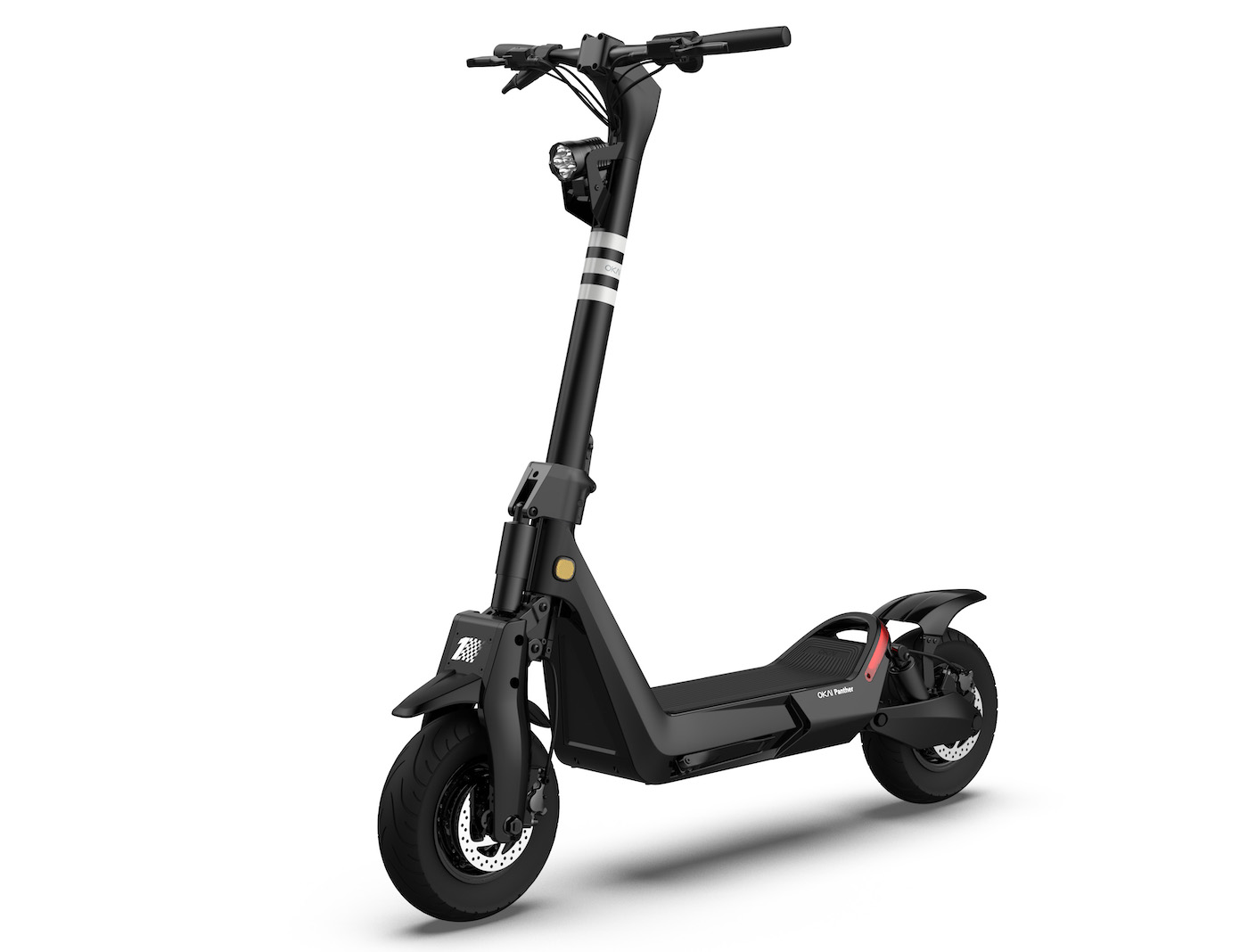
Okai unveils the ES800 off-road electric scooter suited for rugged terrain

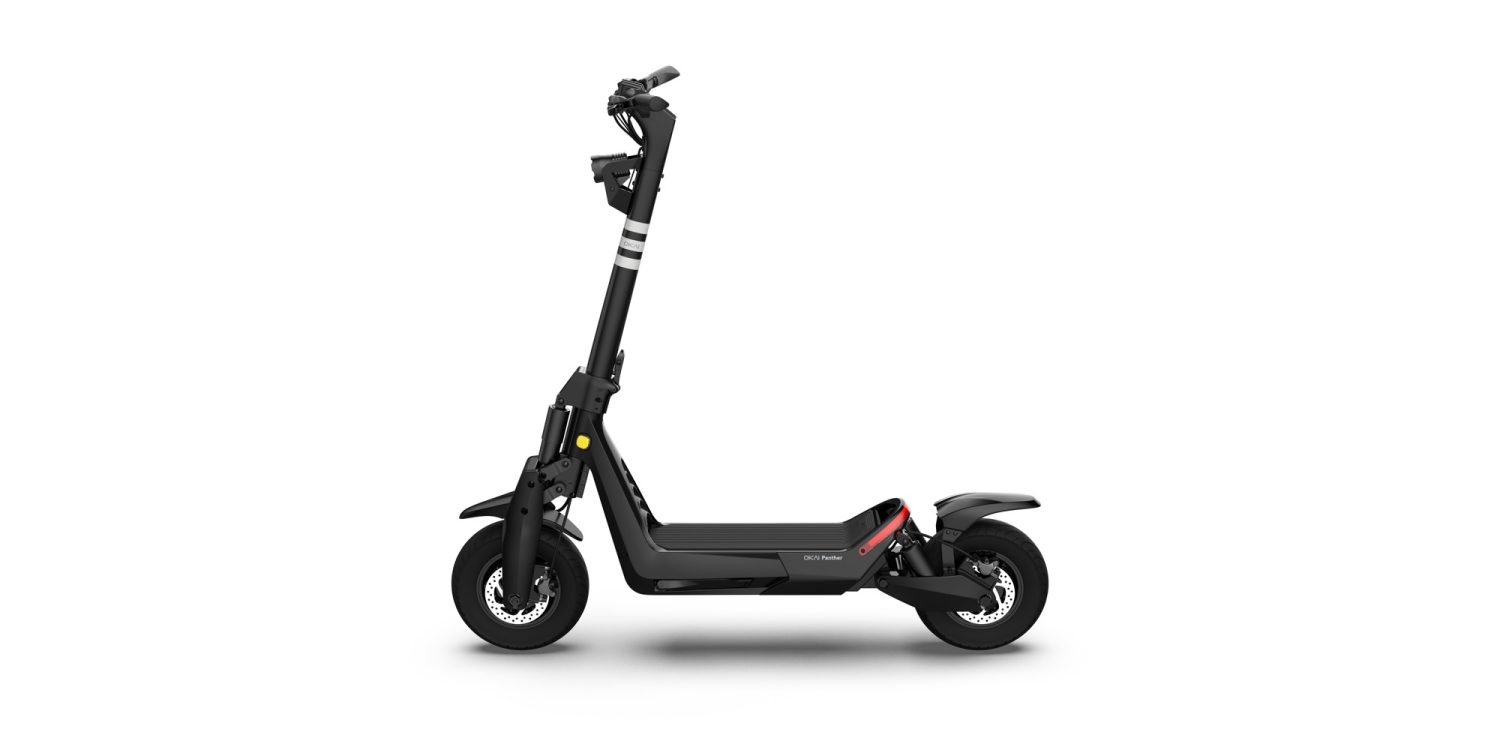
The first day of CES 2022 has seen several innovative and exciting exhibitions. The Chinese company, Okai is also throwing its hat into the fray with the unveiling of a new off-road standing electric scooter. The Okai ES800 sleek electric scooter is designed to operate seamlessly in difficult and rugged terrain, unlike much of its competitors. The off-road features of the Okai ES800 include full suspension, a 1,800W electric motor which allows it to reach a speed of 37 miles per hour (60 km/h) and climb 35% steep ascents.OKAI ES800 electric scooter

The Okai ES800 electric scooter is unlike most of the common scooters in the market that are unable to navigate on rugged and off-road terrain due to the absence of a proper suspension for such navigation. Its 12-inch wheels provide massive comfort while driving on such difficult surfaces. However, the Okai ES800 is a bit heavier than the conventional scooters due to its off-road credentials. It has a 980 Wh battery which could offer a greater range than its competitors although Okai was silent on the vehicle’s range.OKAI ES800 electric scooter

The Okai ES800 could be priced on the higher end of the price spectrum given its extensive features and possible higher driving range. The company is yet to provide any pricing details yet for the e-scooter, and its global availability details. In addition, country-specific model specs which should align with existing regulations and speed limits are also not yet out. The Okai ES800 holds some promise when it eventually debuts in the market due to its impressive off-road capabilities.

RELATED: 


(via)


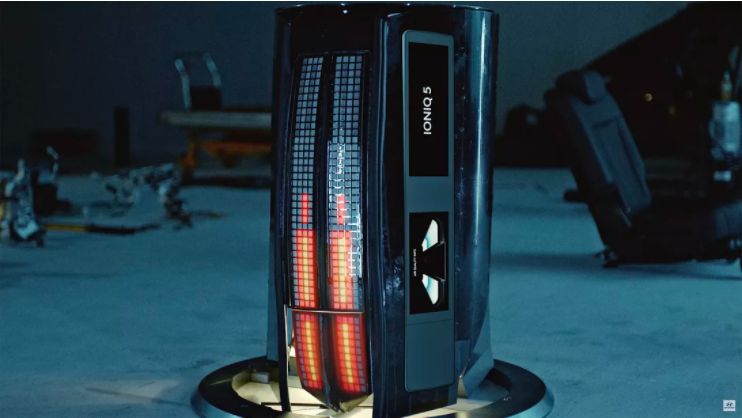
Hyundai converts the Ionic 5 into a giant air purifier to prove its recyclability

Korean automaker Hyundai has converted one of its prototype electric vehicles, the Ionic 5 EV into a massive air purifier. The giant air purifier was produced by an Ionic 5 unit that was slated for the slaughter slab, but the company’s engineers were able to conceptualize an air purifier built from the components of the Ionic 5 with a mix of the tech aspects of the demobilized EV.Hyundai Ionic 5

EV makers are increasingly concerned about what to make of abandoned EVs or components no longer functional. This also applies to prototypes which are a culmination of the development of final EV products. In the course of developing a new car, automakers often build several prototypes, most of which cannot progress to finished products or are legally permitted to drive on public roads. These units then have to be destroyed in an efficient and environmentally friendly manner. Some of the prototypes however continue to go through development.

The giant air purifier was showcased in a recent Hyundai promo video where the Ionic 5 was first reduced completely to its parts, which were then used to craft the giant air purifier. The air purifier is however unlikely to proceed to a commercial product. It seems Hyundai is only showcasing the air purifier as evidence of its innovative engineering team and to show that the parts used on the Ionic 5 are almost entirely recyclable.

RELATED:

Purported Samsung Galaxy Tab A8 Lite visits Safety Korea and Geekbench revealing key specs

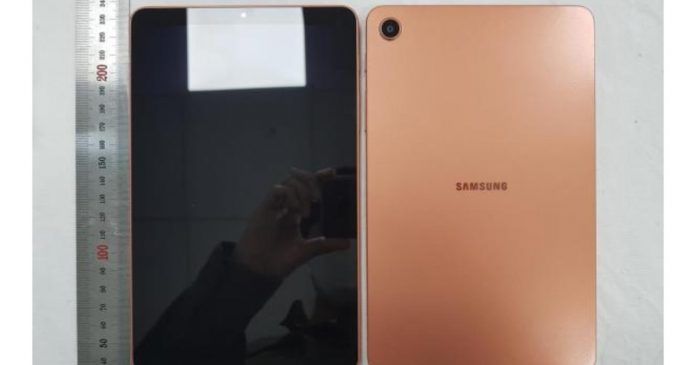
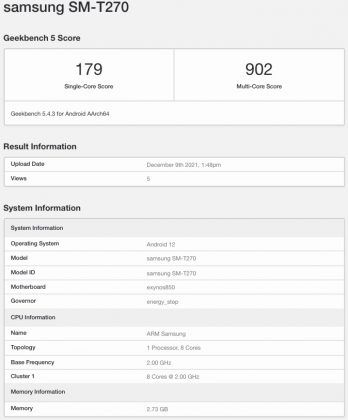
Last year in December, Samsung launched the Galaxy Tab A8 in the Netherlands with a 10.5-inch display, a UNISOC chipset, and a 7,040mAh battery. Now, Samsung seems to be gearing for the launch of its Lite variant. Recently, a Samsung tablet with model number SM-T270 appeared on SafetyKorea and Geekbench listing and it is allegedly said to be the upcoming Samsung Galaxy Tab A8 Lite.

According to SafetyKorea, the phone has a large display that has thick bezels all over it. It has a selfie camera at the top. At the rear, the tablet has a clean design with a single camera on the top left and the Samsung branding in the middle. It has a Copper Brown color.

Samsung Galaxy Tab A8 Lite

Coming to the Geekbench v5 certifications, the purported Samsung Galaxy Tab A8 Lite scored 179 points in the single-core department and 902 points in the multi-core department. The tablet is powered by the 8nm Exynos 850 SoC inside and has 3GB of RAM. To recall, the Galaxy Tab A8 was launched with UNISOC Tiger T618 SoC. The tablet runs on Android 12 out of the box and is expected to have Samsung’s in-house OneUI 4.0 on top of it.

Samsung Galaxy Tab A8 Lite

Samsung Galaxy Tab A8 Specifications 

The Samsung Galaxy Tab A8 has a 10.5-inch LCD display with a Full-HD+(1920 x 1200) pixels resolution. It has a 16:10 aspect ratio and features a quad-speaker setup. It has a single 8MP autofocus camera at the rear and a 5MP selfie snapper at the front.

Under the hood, it is powered by the UNISOC T618 SoC paired with up to 4GB of RAM and 64GB of onboard storage. It has a 7,040mAh battery with 15W fast charging support. It boots on Android 11 out of the box and has OneUI 3 on the top.

RELATED:

AT&T Fusion 5G offers quad-camera, large battery for only $220

US Carrier AT&T has announced a new affordable 5G smartphone for its customers in its home country. The device is officially called AT&T Fusion 5G. The handset was initially said to support mmWave 5G but it actually doesn’t. Users will be limited to sub-6GHz 5G like most budget 5G phones.

AT&T Fusion 5G

The newly unveiled AT&T Fusion 5G is priced at $219.99 or $6.12 per month with no trade-in in the US. It will be available for purchase from Friday, January 7.

As far as specifications are concerned, the telecom operator hasn’t revealed much about the smartphone. However, Digital Trends has mentioned some of the primary specs in their story.

According to the publication, the AT&T Fusion 5G is powered by a MediaTek Dimensity 700 SoC. This chipset is paired with 4GB RAM and 64GB storage. If needed, the storage can be further expanded via a MicroSD card slot.

Further, the handset sports a 6.82-inch HD+ (720 x 1640 pixels) display with a dewdrop notch and a huge chin. The screen is most likely an LCD panel though the telecom giant hasn’t disclosed it.

AT&T Fusion 5G Camera

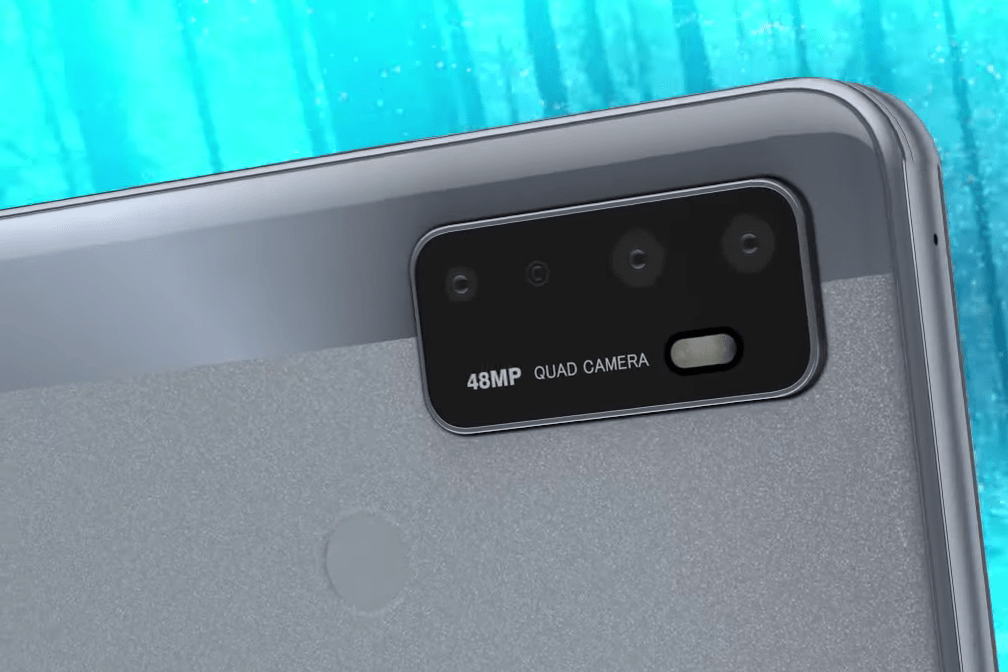
It has a fingerprint sensor and a quad-camera setup on the back consisting of a 48MP primary sensor, an 8MP ultra-wide unit, a 2MP macro snapper, and a 2MP depth sensor. For selfies and video calls, it uses a 13 MP shooter that resides inside the notch.

Connectivity options on the phone include dual-band WiFi, Bluetooth 5.1, NFC, USB Type-C, and 3.5mm headphone jack. Finally, it runs Android 11 backed by a 4,750mAh battery with support for fast charging (charged included in the box) and wireless charging.


RELATED:


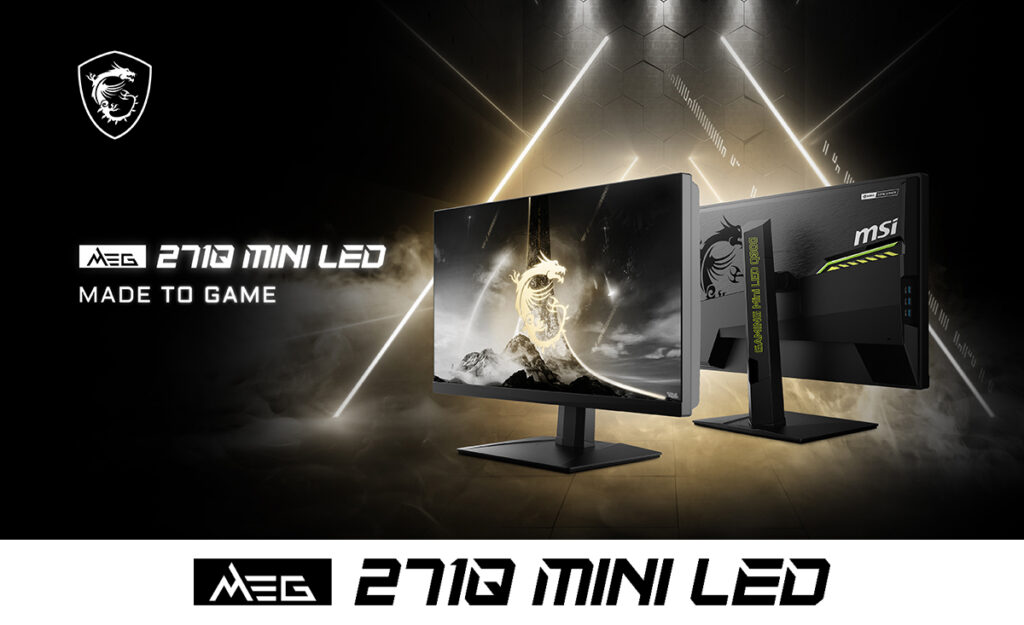
MSI unveils world’s first 27-inch 300Hz Rapid IPS mini led monitor

Earlier today, MSI unveiled their newest next-gen gaming monitor dubbed the MEG 271Q Mini LED. This new offering from MSI supports NVIDIA’s G-Sync Ultimate technology with mini LED backlighting control and offers a mind-blowing 300Hz refresh rate.

MSI mag271q

According to MSI, the new display is focused on competitive gaming and esports circles. The MEG 271Q Mini LED offers a WQHD resolution of up to 2560 x 1440. The monitor has an aspect ratio of 16:9 and a superfast 1ms GtG response time which it achieves through its rapid IPS panel. The monitor also offers vivid colors through its 97% DCI-P3 color gamut and high dynamic range with HDR technology.

Nvidia G-Sync Ultimate along with the native 300Hz refresh rate and MSI’s patented backlight control tech combine to provide high levels of smooth and tear-free gameplay along with increased picture contrast to the users.

MEG 271Q Mini LED Key features, per MSI:

  • Extremely fast response time: Lightning-fast 300Hz high refresh rate performance for a smooth PC gaming experience. Catch every detail of motion and enjoy the most fluid gameplay, which ensures a flawless view of fast-motion and dramatic transitions consistently at all times.
  • Rapid IPS Panel: Rapid IPS display provides gamers with an ultra-fast response time, which will significantly reduce monitor blur occurrence. The MSI MEG 271Q Mini LED provides up to 1ms GtG response time. The crystal clear image will certainly give you a competitive edge for precise decisions in fast-moving games. Meanwhile, a rapid IPS panel gives you a vivid color performance. DCI-P3 97% is an outstanding performance beyond most gaming monitors.
  • WQHD resolution: The MSI MEG 271Q Mini LED features a WQHD panel that supports resolution up to 2560 x 1440. This 16:9 panel allows gamers to examine bigger game scenes compared to other traditional FHD panels and put them ahead of other competitors. 27” WQHD has 32.9% more than the regular 27” FHD monitor in PPI. Enjoy a different level of image quality and sharpness.
  • VESA Certified DisplayHDR 1000: The MSI MEG 271Q Mini LED is equipped with HDR technology that can produce images with more details, a wider range of colors, and look more similar to what is seen by the human eye when compared to traditional monitors.

The company has yet to reveal the pricing and an availability timeline for the MEG 271Q Mini LED monitor, so stay tuned for more.

RELATED: