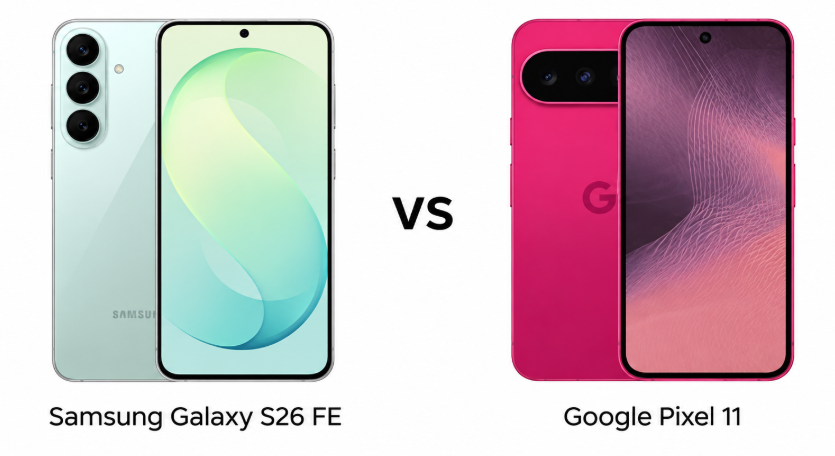
Samsung Galaxy S26 FE and Google Pixel 11 take different approaches to the premium Android experience. Samsung focuses on strong all-round hardware and value, while Google leans into cameras and smart features. But with a significant price gap between them, which phone actually offers the better package ?
Major Features:
Category
Samsung Galaxy S26 FE
Google Pixel 11
Winner & Reason
Build
Gorilla Glass Victus+ and aluminum frame
Gorilla Glass Victus 2 and aluminum frame
Google — newer glass protection
Display
Dynamic AMOLED 2X, 120Hz, 1900 nits HBM
OLED, 120Hz, 2000 nits HBM
Google — higher brightness
Chipset
Exynos 2500
Tensor G6
Google — higher-end overall configuration
RAM
8GB
12GB
Google — more RAM
Main Camera
50MP with OIS
48MP with OIS
Samsung — higher resolution
Telephoto
8MP, 3x optical zoom
10.8MP, 5x optical zoom
Google — longer optical zoom
Ultrawide
12MP
13MP with PDAF
Google — higher resolution and autofocus
Selfie Camera
12MP
10.5MP ultrawide with PDAF
Samsung — higher resolution
Video
Up to 8K at 30fps
Up to 4K at 60fps
Samsung — higher video resolution
Battery
4900mAh
4985mAh
Google — slightly larger battery
Wired Charging
45W
30W
Samsung — faster wired charging
Wireless Charging
15W, Qi2
25W magnetic, Qi2.2
Google — faster and newer standard
Unique Features
Samsung DeX, Wireless DeX
Satellite SOS, bypass charging
Samsung — DeX adds more versatility
Price
Priced around $700 / ₹70,000
Priced around $900 / ₹90,000
Samsung — significantly better value
Disclaimer: Specs are based on available data. Actual performance may vary. Verify details from official sources before buying.
The Samsung Galaxy S26 FE uses a glass front and back with Gorilla Glass Victus+ and an aluminum frame, giving it a familiar premium Galaxy feel. The Pixel 11 also combines glass panels with an aluminum frame, but upgrades to Gorilla Glass Victus 2. Both phones carry IP68 protection, making either suitable for everyday exposure to dust and water.
Display Quality
Samsung uses a Dynamic AMOLED 2X panel with a 120Hz refresh rate, HDR10+, and up to 1900 nits HBM brightness. The Pixel 11 counters with a 120Hz OLED display supporting HDR10+ and up to 2000 nits HBM brightness, with a higher peak brightness figure. The Pixel feels slightly more compelling for outdoor visibility, while Samsung offers a larger viewing canvas.
The Pixel 11 wins narrowly for display brightness and newer glass protection, but the Galaxy S26 FE remains attractive for users who prefer a larger screen. Samsung’s AMOLED technology also makes it a particularly strong choice for multimedia and everyday scrolling.
2. Specifications Including Battery
Performance
The Galaxy S26 FE runs Android 17 with Samsung’s Exynos 2500 chipset, Xclipse 950 graphics, and 8GB RAM across its storage options. The Pixel 11 uses Google’s Tensor G6 with 12GB RAM and UFS 4.x storage. Both promise modern flagship-class hardware, but the Pixel’s larger memory allocation gives it a more comfortable specification sheet for multitasking and long-term use.
Battery and Charging
Samsung packs a 4900mAh battery with 45W wired charging, 15W wireless charging, Qi2 compatibility, and reverse wireless charging. The Pixel 11 has a slightly larger 4985mAh battery, although wired charging drops to 30W. It adds 25W magnetic wireless charging, Qi2.2, reverse wired charging, and bypass charging. Samsung feels better for conventional charging speed, while Pixel offers more modern charging flexibility.
Verdict
The Pixel 11 takes the specification advantage with more RAM and a slightly larger battery, while Samsung wins on wired charging speed. For overall flexibility, Pixel’s broader charging features make it the more interesting package.
3. Camera
Main and Secondary Lenses
The Galaxy S26 FE features a 50MP main camera with OIS, an 8MP telephoto with 3x optical zoom, and a 12MP ultrawide. The Pixel 11 uses a 48MP main camera, a 10.8MP telephoto with 5x optical zoom, and a 13MP ultrawide with autofocus. Samsung offers a strong all-round setup, but Pixel’s longer optical zoom gives it a clear advantage for distant subjects.
Selfie Camera
Samsung equips the Galaxy S26 FE with a 12MP front camera supporting 4K video at up to 60fps, along with gyro-EIS and HDR10+. The Pixel 11 has a 10.5MP ultrawide selfie camera with autofocus and similar 4K recording support. Samsung’s higher resolution looks appealing on paper, while Pixel’s wider perspective and autofocus make it more versatile for group selfies and video calls.
Verdict
The Pixel 11 is the stronger camera phone overall, mainly because of its 5x optical telephoto and more advanced imaging features. Samsung remains competitive, especially with its 8K recording capability and higher-resolution selfie camera.
4. Pricing
The Samsung Galaxy S26 FE is priced around $700 / ₹70,000, while the Google Pixel 11 is priced around $900 / ₹90,000. That puts the Pixel in a notably higher price bracket, making the Samsung considerably more accessible for buyers who want a premium Android phone without stretching the budget as far.
The Pixel 11 justifies part of its premium with 12GB RAM, a more capable telephoto camera, newer wireless charging support, and several distinctive software and hardware features. However, Samsung delivers a 120Hz AMOLED display, 45W charging, versatile cameras, and DeX support for substantially less. For value-focused buyers, the Galaxy feels easier to recommend.
Samsung wins on value, offering a more affordable route to premium features. Pixel’s higher price makes sense mainly for buyers who specifically want its camera capabilities, extra RAM, and Google-focused feature set.
Disclaimer: Prices are approximate and may vary based on country, region, launch timing, and applicable taxes. Always check whether the listed price is for a China unit or a global/international variant when purchasing.
5. Conclusion
The Galaxy S26 FE stands out with Samsung DeX, wireless DeX support, 45W wired charging, 8K video recording, and a balanced triple-camera system. The Pixel 11 counters with satellite SOS, 5x optical zoom, a 12GB RAM configuration, magnetic Qi2.2 charging, bypass charging, and a more advanced connectivity package.
The two phones therefore target slightly different buyers. Samsung feels more practical for users who want strong hardware, faster wired charging, desktop-style DeX functionality, and better value. Pixel is more appealing to photography-focused users and those who value Google’s distinctive software-driven features. The choice ultimately depends on whether price or specialized capabilities matter more.
The Samsung Galaxy S26 FE is the overall winner because it delivers a stronger value proposition, faster wired charging, versatile hardware, and useful extras at a substantially lower price. The Pixel 11 is better for camera-focused buyers, but Samsung offers the more complete package for most users.
FAQs
Which phone is better for everyday use? The Samsung Galaxy S26 FE offers the better balance of features, charging, and price for most everyday users.
Which phone has the better camera? The Google Pixel 11 has the stronger camera setup, particularly for zoom photography and versatile shooting.
Which phone offers better performance? The Google Pixel 11 has 12GB RAM and the Tensor G6, giving it a stronger overall hardware configuration.
Which phone has better battery and charging? The Samsung Galaxy S26 FE supports faster 45W wired charging, while the Pixel 11 offers more advanced wireless charging.
Which phone is better value for money? The Samsung Galaxy S26 FE is better value, offering premium features at a significantly lower starting price.
Disclaimer: Prices, specifications, and availability may vary by region and retailer. Recommendations in this article are based on editorial opinion, feature-based value, and market positioning at the time of writing. Readers are advised to do their own research before making a purchase.
The ColorOS 17 update will soon start rolling out to Oppo devices, bringing new features, visual upgrades, and improved AI capabilities. The Android 17-based software is currently available to select Oppo devices via the closed beta program, while the stable rollout could begin in the coming weeks.
If you have an Oppo device, you may be looking forward to the ColorOS 17 update. So, we’ve curated this post to include everything we know about Oppo’s next big upgrade, including the list of eligible devices, possible release timeline, and the major upgrades.
Oppo has yet to publish a list of its devices that will be upgraded to ColorOS 17. So, our team reviewed the update policy for each device and came up with the following list.
Oppo Find N series
Oppo Find N6
Oppo Find N5
Oppo Find N3, N3 Flip
Oppo Find N2, N2 Flip
Oppo Find X series
Oppo Find X9, X9 Pro, X9 Ultra, X9s
Oppo Find X8, X8 Pro, X8 Ultra
Oppo Find X7, X7 Ultra
Oppo Find X6, X6 Pro
Oppo Reno series
Oppo Reno 16, 16 Pro, 16c, 16 F, 16 FS
Oppo Reno 15, 15 Pro, 15 Pro Mini, 15 Pro Max, 15 F, 15 FS
Oppo Reno 14, 14 Pro, 14 F
Oppo Reno 13, 13 Pro, 13 F, 13 F 4G
Oppo Reno 12, 12 Pro
Oppo Reno 11, 11 Pro
Oppo F series
Oppo F33, F33 Pro
Oppo F31, F31 Pro, F31 Pro+
Oppo F29, F29 Pro
Oppo K series
Oppo K15, K15 Pro, K15 Pro+
Oppo K14, K14 Turbo, K14 Turbo Pro, K14x
Oppo K13, K13 Turbo, K13 Turbo Pro, K13x
Oppo Pad series
Oppo Pad 6
Oppo Pad 5, 5 Pro
Oppo Pad 3
Oppo Pad Mini
Oppo Pad SE
While it’s an unofficial list, it should closely resemble the official one when it’s announced, as it’s been prepared in accordance with the official update policy.
It won’t take long to notice that there are no Oppo A-series phones on the list. The reason is that most A-series phones do not have an official update policy. So, we decided to exclude that for now to keep the list accurate.
We’ll update the list when Oppo announces ColorOS 17, which is scheduled for September 17.
When will Oppo roll out the ColorOS 17 update?
Oppo hasn’t announced the ColorOS 17 rollout schedule yet, but it appears the rollout could begin earlier than last year’s ColorOS 16. The company announced ColorOS 16 in China in mid-October, while the ColorOS 17 launch is happening a month earlier, on September 16.
As always, the rollout will begin in China first, likely starting early October, while the global rollout could begin later that month. We’ll have more clarity on this when Oppo reveals the timeline at the ColorOS 17 launch event on September 17.
The brand hasn’t announced a global launch date yet. We’ll likely hear about it soon after ColorOS 17 launches in China.
Oppo ColorOS 17 update: Here’s what to expect
Beta testers and leaks have revealed almost all the major visual changes coming to ColorOS 17. The new software brings a stronger translucent frosted-glass appearance across the UI. It features an updated Control Center with fully circular controls and redesigned settings and edit buttons.
The updated Quick Settings panel uses a translucent frosted-glass appearance with contour glow, and swiping between the Control Panel and Notification Center produces a bouncy animation with visible layer separation. It features expanded volume and brightness sliders for finer controls.
The volume slider now features a quick mute button at the bottom and a percentage display at the top. When earbuds are connected, the volume slider shows an earbud icon.
ColorOS 17 replaces the traditional navigation bar with a transparent capsule-style navigation bar that works across most system apps, including Phone, Notes, and Recorder. Users can swipe left or right to switch sections.
The Flux Themes get new interactive effects and smoother animations. The vertical clock on the lock screen now offers three font styles and uses a frosted-glass treatment with a contour glow. Oppo brings iOS 26-inspired flashlight interface, allowing brightness adjustments by swiping up or down on the screen.
The Phone app now features a redesigned call interface with a larger end call button and more customization options. The Media Player has also been updated to feature a stronger frosted-glass effect, a comet-like animated seek bar, and a light-field aesthetic for added depth. The new software also adds a new “Live Alert” charging animation with a glow effect, paired with a more spacious charging tone.
Besides visual upgrades, ColorOS 17 is reported to have better RAM management and thermal efficiency. The Photos app is expected to bring new AI-assisted editing tools.
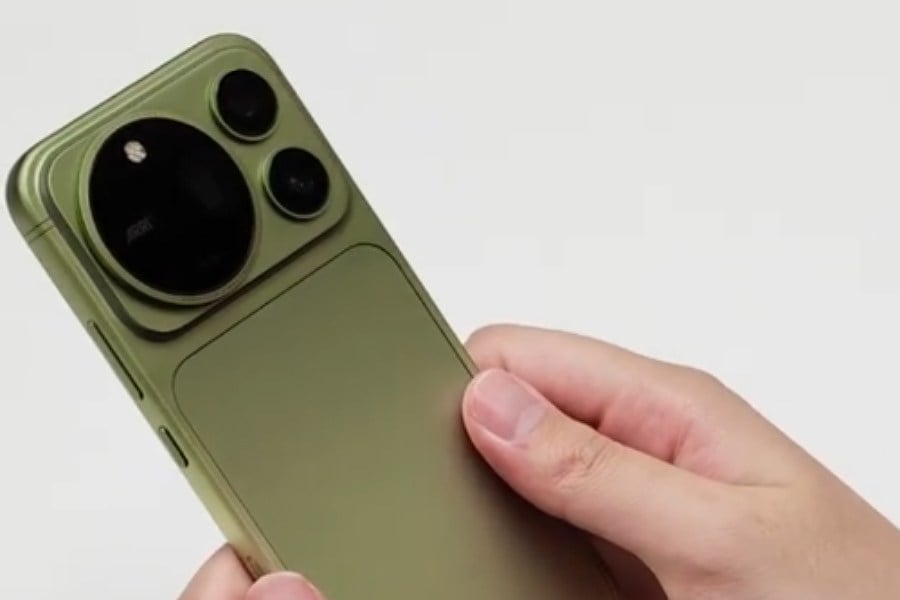
A new video is giving us the clearest look yet at the Honor Magic9 Pro Max ahead of its debut. Honor confirmed the Magic 9 series will land on September 28, and the lineup will reportedly split into three phones: the Magic 9, the Magic 9 Pro, and this Pro Max variant, which showed up on Weibo in an unboxing and hands-on clip wearing the Moss Green finish we’d already spotted in teasers.
The biggest change is on the back. Honor has moved away from the circular camera module used on the Magic 8 series. Instead, the Magic 9 Pro Max combines round camera rings with a large rectangular housing that stretches across the back.
Honor Magic 9 Pro Max cameras
The rear camera is a 200MP sensor at 1/1.28 inches with an f/1.57 aperture and OIS rated to correct up to 3 degrees of shake. Sitting behind the periscope lens is a second 200MP sensor, this one at 1/1.4 inches. Honor is also bringing its ARRI partnership to the Magic 9 Pro Max, after debuting it on the Honor Robot Phone. Honor has also been sharing camera samples from the Magic9 Pro Max as it gets closer to launch.
Up front, you still get the wide pill-shaped cutout housing the selfie camera and a 3D depth sensor, carried over from the Magic 8. What’s new is the sensor behind it: these are said to be the first Android phones with a square selfie camera sensor.
Around the rest of the phone, the screen bezels come in at a slim 1mm, and you get symmetrical stereo speaker grilles running along the top and bottom edges. On the right side sits Honor’s AI button, now in its latest form, continuing a feature the brand has kept across recent Magic generations.
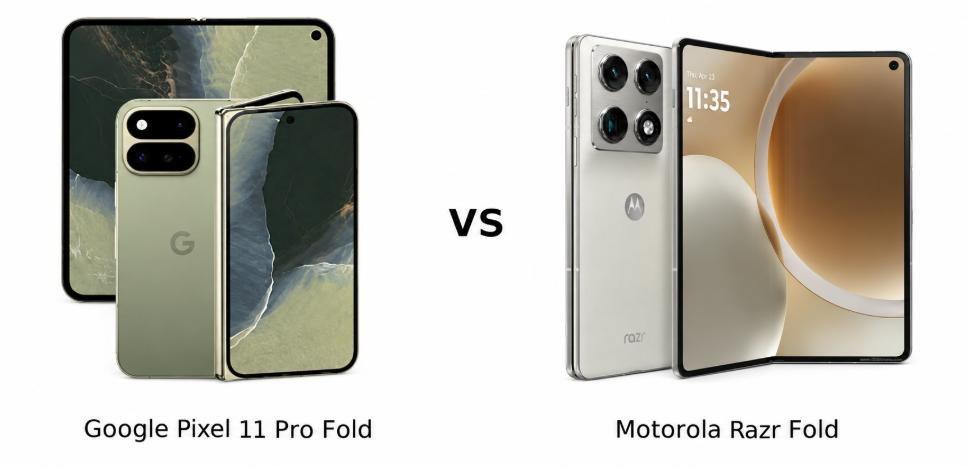
Foldables are no longer just about having a bigger screen in your pocket. The Google Pixel 11 Pro Fold and Motorola Razr Fold take different approaches to the premium foldable experience, with Google focusing on software and smart features while Motorola pushes performance, cameras, charging, and versatility. Here’s how the two compare.
Major Features:
Category
Google Pixel 11 Pro Fold
Motorola Razr Fold
Winner
Build
Glass-ceramic front, Gorilla Glass Victus 2 back, aluminum frame, IP68
The Google Pixel 11 Pro Fold combines a glass-ceramic front, Gorilla Glass Victus 2 back, and aluminum frame with IP68 protection. Motorola Razr Fold uses a similarly premium construction and offers IP48/IP49 water resistance, plus stylus support. Motorola’s added stylus compatibility makes it more versatile for productivity, while Pixel’s higher dust and water protection inspires greater confidence for everyday use.
Display Quality
Pixel 11 Pro Fold features an 8-inch foldable LTPO OLED panel with a 120Hz refresh rate, HDR10+, and up to 3,600 nits peak brightness. Its 6.5-inch cover display also reaches 3,600 nits. Razr Fold counters with an 8.1-inch LTPO P-OLED panel, 120Hz refresh rate, Dolby Vision, HDR10+, and an impressive 6,200 nits peak brightness. Its 6.6-inch cover screen adds 165Hz.
Motorola wins on brightness, cover-screen smoothness, and stylus support, while Pixel offers stronger protection. For a more feature-rich display experience, Razr Fold feels like the better overall choice.
2. Specifications Including Battery
Performance
The Pixel 11 Pro Fold runs Android 17 with Google’s Tensor G6 built on a 3nm process, paired with 16GB RAM and up to 1TB storage. Motorola uses the Snapdragon 8 Gen 5, with up to 16GB RAM and 1TB UFS 4.1 storage. The Snapdragon platform gives Razr Fold a more performance-focused edge, particularly for demanding workloads and gaming.
Battery and Charging
Pixel packs a 4,806mAh battery with 30W wired charging, 25W magnetic wireless charging through Qi2.2, PPS support, and bypass charging. Razr Fold has a larger 6,000mAh silicon-carbon lithium-ion battery, 80W wired charging, 50W wireless charging, and reverse wireless charging. Motorola’s charging hardware is clearly more aggressive and better suited to users who frequently need quick top-ups.
Razr Fold takes the performance and charging lead with Snapdragon power, a larger battery, and faster charging. Pixel’s newer software and bypass charging remain useful, but Motorola offers the stronger hardware package.
3. Camera
Main and Secondary Lenses
Pixel 11 Pro Fold uses a 48MP main camera with OIS, a 10.8MP 5x optical telephoto camera, and a 10.5MP ultrawide lens with a 127-degree field of view. Features include Best Take, Zoom Enhance, Pixel Shift, Ultra-HDR, and laser autofocus. Razr Fold instead offers three 50MP cameras, including a 3x periscope telephoto and 122-degree ultrawide. Its 8K Dolby Vision recording gives it a major video advantage.
Selfie Camera
Pixel includes 10MP selfie and cover cameras, both supporting 4K video. Razr Fold steps up to a 32MP internal selfie camera and 20MP cover camera, with 4K recording. Motorola therefore offers higher-resolution selfie hardware, while Pixel’s camera processing features can be more appealing for computational photography.
Verdict
Razr Fold delivers stronger camera hardware and more advanced video recording, while Pixel brings useful computational photography tools. For overall versatility, Motorola’s triple-50MP setup feels more compelling.
4. Pricing
The Google Pixel 11 Pro Fold is priced around $1,900 / ₹1,87,000, while the Motorola Razr Fold is priced around $1,900 / ₹1,50,000. That makes Motorola considerably cheaper in the Indian market despite offering a Snapdragon 8 Gen 5 chipset, larger battery, faster charging, and a powerful triple-50MP camera system.
Pixel’s premium is easier to understand for buyers prioritizing Google’s software experience, Android 17, long-term updates, Qi2.2 magnetic charging, and IP68 protection. However, Motorola provides more hardware value for the money, particularly with its brighter displays, stylus support, faster charging, and larger battery.
Verdict
At similar US pricing but a substantially lower Indian price, Razr Fold offers stronger value. Pixel remains attractive for Google’s software ecosystem, but Motorola provides more hardware for the asking price.
5. Conclusion
The Pixel 11 Pro Fold stands out with Android 17, seven major OS updates, IP68 protection, Tensor G6, Qi2.2 magnetic wireless charging, bypass charging, UWB, Satellite SOS, and Google-focused camera features such as Best Take and Zoom Enhance. Razr Fold counters with stylus support, Dolby Vision displays, a 165Hz cover screen, Snapdragon 8 Gen 5, 8K Dolby Vision video, and 80W wired charging.
Motorola Razr Fold is the better overall choice, offering stronger performance, cameras, battery life, faster charging, brighter displays, and better value for money. The Pixel 11 Pro Fold makes more sense for buyers who prioritize Google’s software experience and long-term ecosystem features.
FAQs
1. Which phone is better for photography? Motorola offers more versatile camera hardware, while Google’s computational photography features can improve everyday shots.
2. Which foldable has better performance? Motorola delivers stronger raw performance and is better suited for gaming and demanding apps.
3. Which phone has better battery life? Motorola’s larger battery should provide better endurance, especially for heavy daily use.
4. Which foldable offers better value for money? Motorola offers better value, particularly with its faster charging, larger battery, and higher-end hardware.
5. Which phone should you buy overall? Motorola is the stronger all-rounder for buyers prioritizing performance, cameras, charging, and hardware value.
Disclaimer: Prices, specifications, and availability may vary by region and retailer. Recommendations in this article are based on editorial opinion, feature-based value, and market positioning at the time of writing. Readers are advised to do their own research before making a purchase.
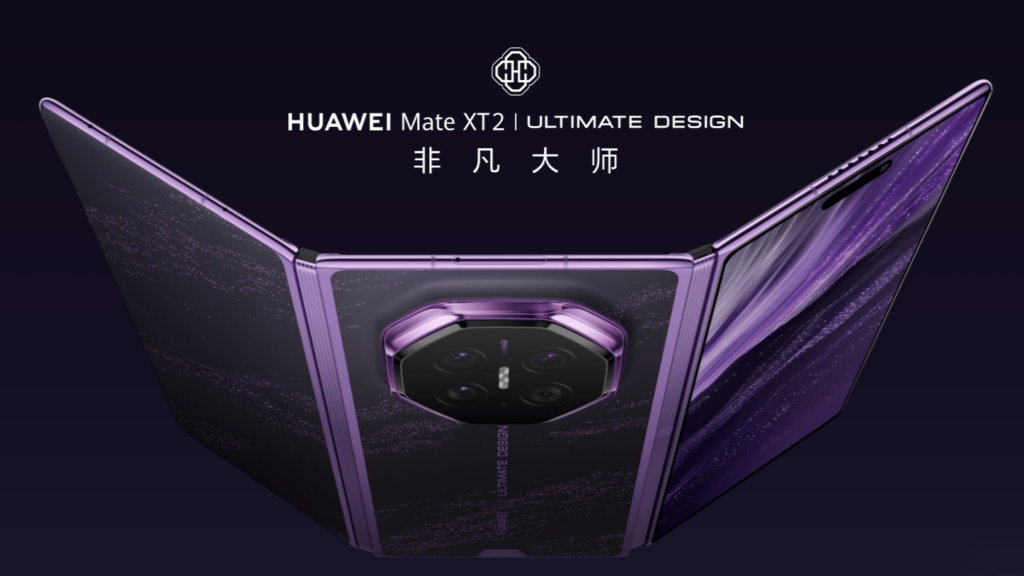
Huawei’s new tri-fold, the Mate XT 2, only launched on September 7, 2026, and they’ve already put the official spare-parts pricing up on their site. Spoiler: fixing this thing won’t be cheap.
The phone itself starts at 19,999 yuan (~$2,980) for the 16GB + 256GB model. From there it climbs pretty quick: 21,999 yuan (~$3,278) for 512GB, 23,999 yuan (~$3,576) for 1TB, 24,999 yuan (~$3,725) if you want the privacy screen version, and a cool 29,999 yuan (~$4,470) for the top-spec 16GB + 2TB stylus kit (also with the privacy screen). The full parts list for the 2TB stylus version still isn’t up yet, but everything else is already listed.
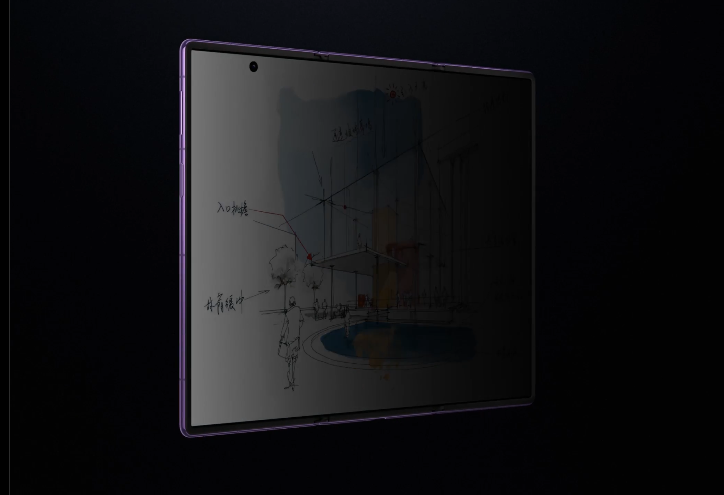
The real eye-waterers are the displays. A flexible screen main body alone will set you back 5,499 yuan (~$819). Go for the privacy screen version and that jumps to 6,499 yuan (~$968). Full screen assemblies (screen + mid-frame + battery) start at 6,999 yuan for the “special offer” ones that still work fine but have some cosmetic marks, or 7,999 yuan for the privacy-screen equivalent. The regular full assemblies kick off at 7,999 yuan and hit 8,999 yuan for the privacy model. The external screen is a bit more reasonable at 1,599 yuan, and a battery swap is 499 yuan.
Motherboards aren’t exactly cheap either, and the price scales with storage: 6,099 yuan (~$908) for the 256GB version, 7,699 yuan for 512GB, and 9,299 yuan for the 1TB one. Camera modules sit somewhere in the middle — the rear Red Maple original-color camera is 299 yuan, the main rear camera is 949 yuan, with the wide-angle, telephoto, and front cameras landing in between.
Smaller bits are more down-to-earth: fingerprint sensor is 93 yuan (~$14), battery cover is 399 yuan (~$60) or 1,399 yuan (~$208) if it includes the camera lens, data cable 129 yuan, and a protective film 249 yuan.
Basically, this is what happens when you build a premium tri-fold with a massive inward-folding display. Outside of warranty, any serious repair is going to sting. If you’re buying one of these, treating it carefully (or grabbing an extended service plan) suddenly looks like a pretty smart move.
Oppo Find series Product Manager Zhuo Shijie has been gradually revealing details about the upcoming Find X10 series on social media. After sharing several hardware details regarding the Find X10 Pro Max recently, his latest Weibo posts turn the spotlight toward the standard Find X10. Here is an early look at the camera system, battery capacity, and display design shared by the executive.
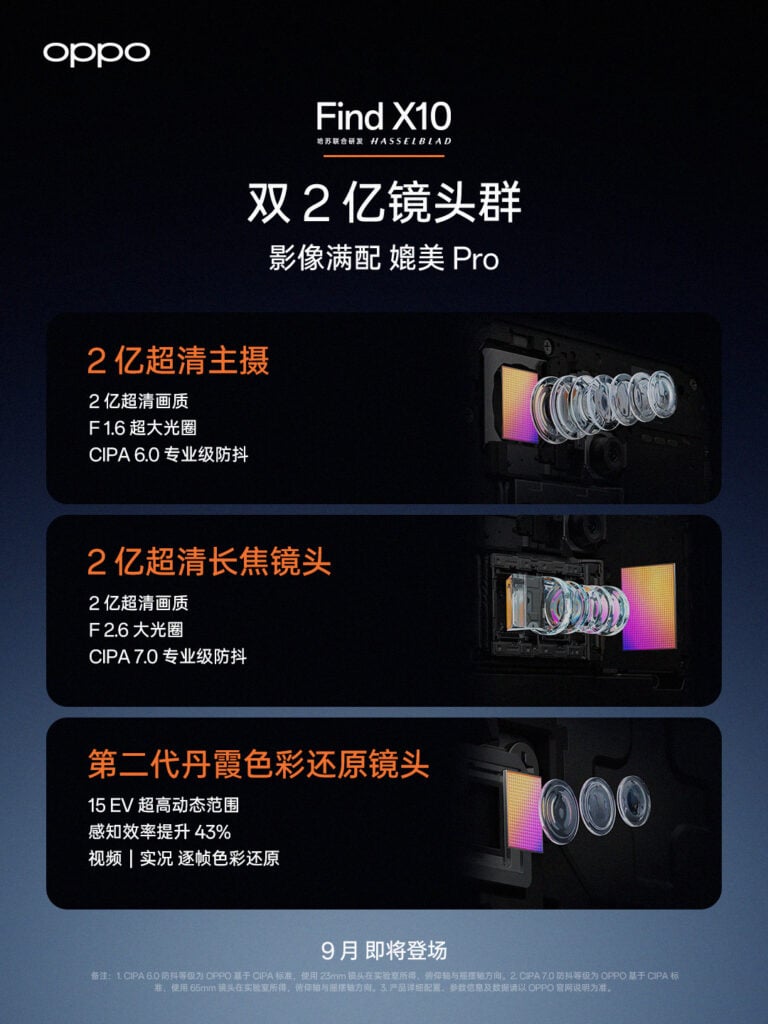
The Find X10 incorporates two 200-megapixel cameras on the rear, marking the first time a base model receives this configuration. The primary 200-megapixel shooter comes with a large sensor, an f/1.6 aperture, and CIPA 6.0 image stabilization to handle low-light photography and shaky video recording. Accompanying it is a 200-megapixel telephoto camera with an f/2.6 aperture and CIPA 7.0 stabilization, giving the handset the most capable telephoto hardware seen on a standard flagship.
Oppo also includes the Hasselblad Ultra-Clear Original Camera setup alongside a second-generation Danxia color restoration lens. This hardware provides a 15EV dynamic range and improves light-sensing efficiency by 43 percent across photos, live photos, and video recordings. To maintain realistic skin tones and uniform lighting without crushed shadows, the camera system routes all visual processing through Oppo’s LUMO native light and shadow engine.
Oppo Find X10 ultra-thin bezels
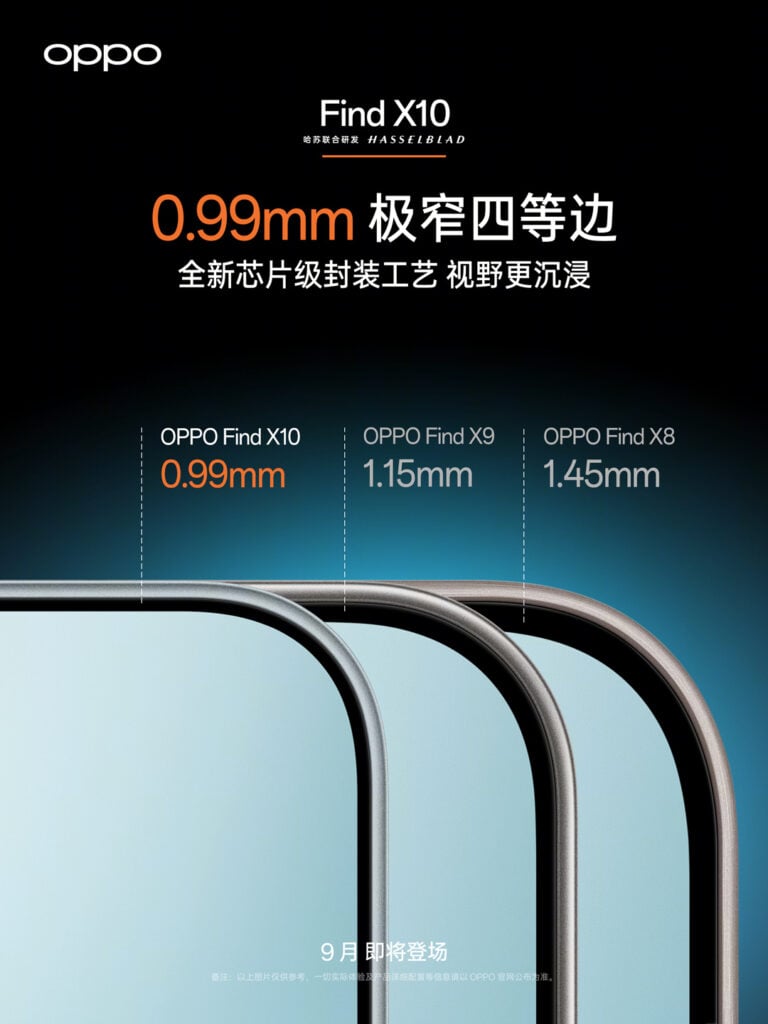
On the front, the Find X10 features symmetrical four-sided bezels measuring just 0.99mm, making it the first Find series device to drop below the one-millimeter threshold. Oppo achieved this uniform profile through advanced chip-level packaging, cutting border thickness down from 1.45mm on the Find X8 and 1.15mm on the Find X9 to maximize usable screen real estate. Powering the handset is an 8,000mAh Glacier battery rated to last through five years of regular daily use.
Apart from the Find X10 and X10 Pro Max, the lineup includes the Find X10E, though its specifications remain unconfirmed for now. The upcoming launch event will also introduce companion accessories, including the Enco X4 premium wireless earbuds and the Watch S2, which are currently up for reservations in China. Market chatter suggests that the entire Find X10 family will hit global markets by late October.
Apple has just launched the iPhone 18 Pro series and iPhone Duo, and the new devices have already started appearing on benchmarking platforms. Specifically, the iPhone 18 Pro has appeared on Geekbench, while the Pro Max has surfaced on both Geekbench and AnTuTu, revealing early performance details of Apple’s first 2nm chip, the A20 Pro. Here’s a look at what the benchmark results reveal about the iPhone 18 Pro and iPhone 18 Pro Max.
iPhone 18 Pro Max scores over 3.5 million on AnTuTu
iPhone 18 Pro Max AnTuTu listing
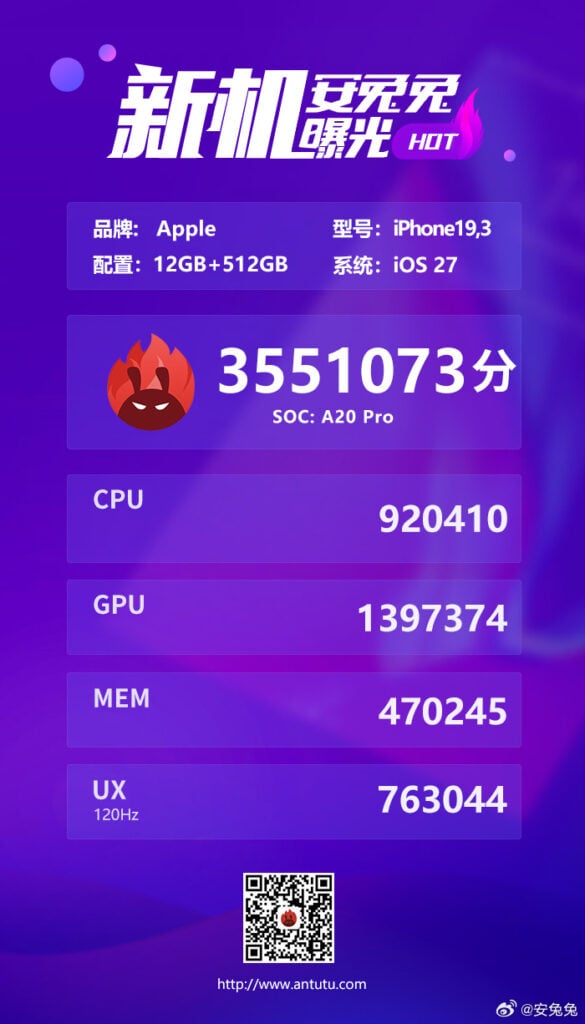
AnTuTu has spotted the iPhone 19,3 in its backend, which is believed to correspond to the iPhone 18 Pro Max. The 2868 × 1320 display resolution helps identify it as the larger Pro model. The listing shows 12GB of RAM, 512GB of storage, iOS 27, and Apple’s A20 Pro chip.
The device recorded an overall AnTuTu iOS V11 score of 3,551,073. Its CPU score was 920,410, while the GPU achieved 1,397,374 points. The memory and UX tests returned 470,245 and 763,044 points, respectively. For comparison, the iPhone 17 Pro Max averaged 2,275,118 points last month, putting the new model substantially ahead in the benchmark.
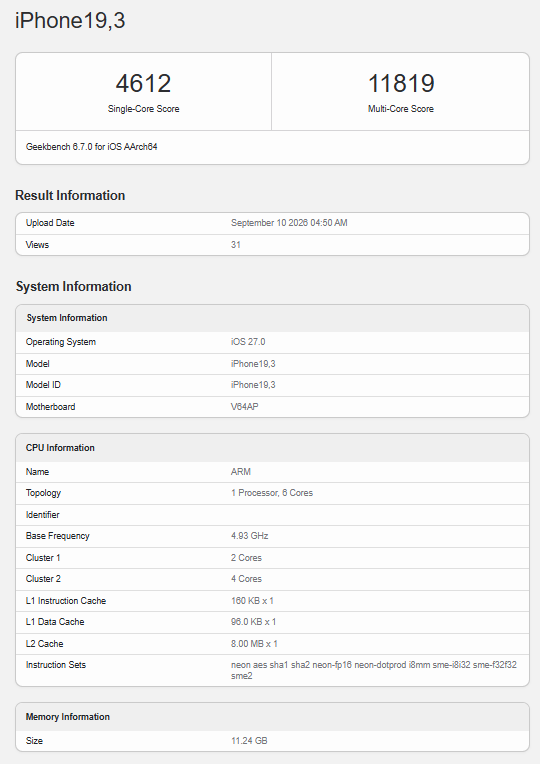
The iPhone 18 Pro Max has also appeared on Geekbench 6 with the same iPhone 19,3 identifier. It scored 4,612 points in the single-core test and 11,819 points in the multi-core test. The listing shows a six-core CPU with a base frequency of 4.93GHz, alongside 12GB of memory and iOS 27.
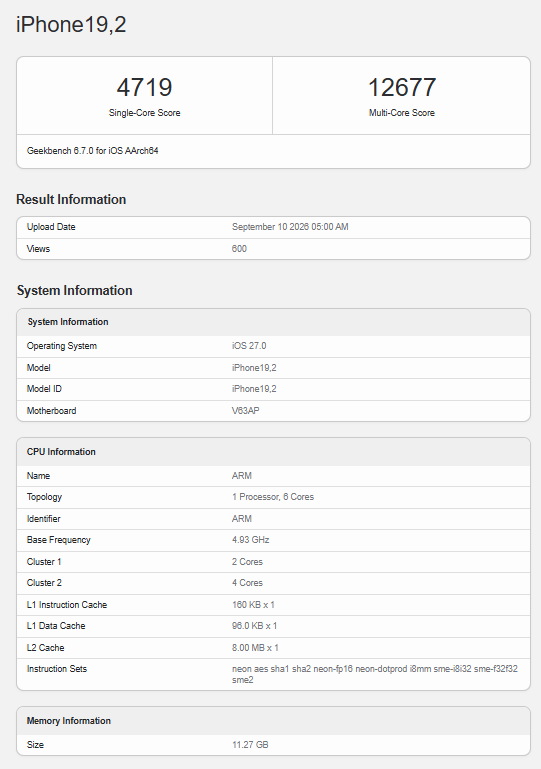
The alleged iPhone 18 Pro, identified as iPhone19,2, has also appeared on Geekbench 6.7 with a higher single-core score of 4,719 and a better multi-core score of 12,677. It is also equipped with the Apple A20 Pro chip, 12GB of RAM, and iOS 27.
The A20 Pro is expected to play a major role in the performance increase, while a more capable cooling system could help the phone sustain higher performance under demanding workloads. The combination suggests that Apple may be targeting both higher peak performance and improved thermal management with the iPhone 18 Pro Max.
However, benchmark scores should not be treated as a direct measure of real-world performance. AnTuTu also points out that its Android and iOS versions use different testing systems, meaning their scores cannot be directly compared across the two platforms. The figures can instead provide a useful reference when comparing different iPhone generations.
Apple concluded its high-profile product showcase with significant updates regarding domestic retail tags. Enthusiasts tracking the launch now have a clear breakdown of retail figures across both conventional pro iterations and the folding iPhone Duo. A parallel development reveals major price restructuring across previously released devices, dramatically altering purchasing decisions.
Massive adjustments across older generations and iPhone 18 Pro pricing
iPhone 18 Pro series
Retail numbers across legacy models have seen steep revisions throughout the Indian market. Here’s a look at the revised pricing:
As far as the new models are concerned, they are priced as follows:
iPhone 18 Pro
256GB: Rs 1,64,900
512GB: Rs 1,89,900
1TB: Rs 2,39,900
2TB: Rs 3,14,900
iPhone 18 Pro Max
256GB: Rs 1,79,900
512GB: Rs 2,04,900
1TB: Rs 2,54,900
2TB: Rs 3,29,900
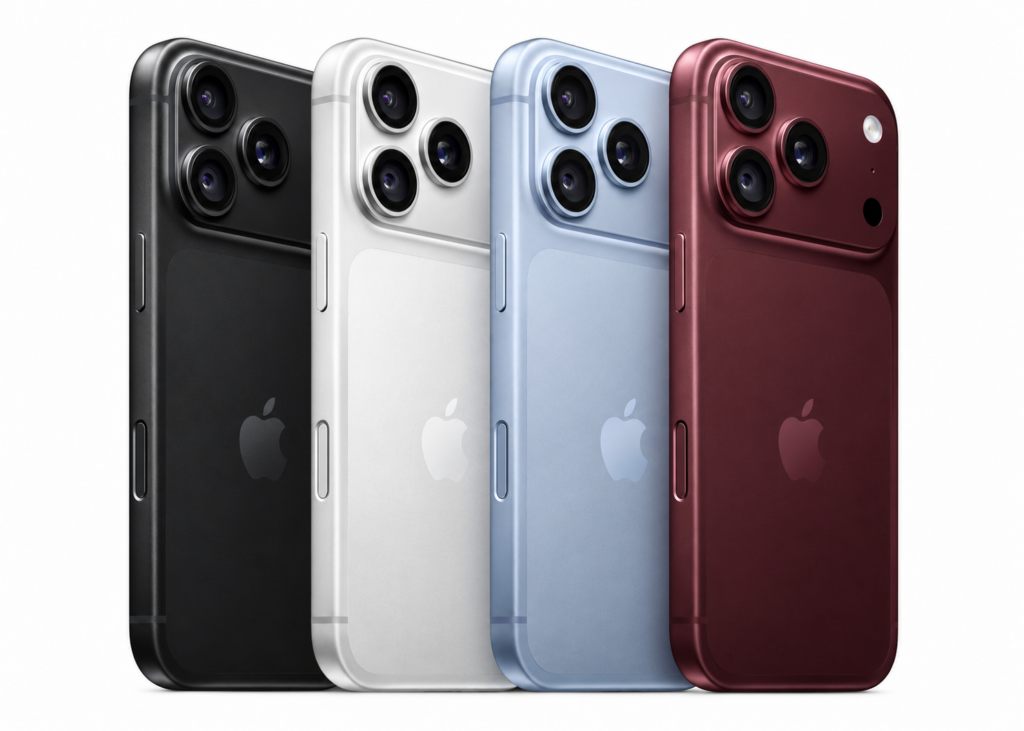
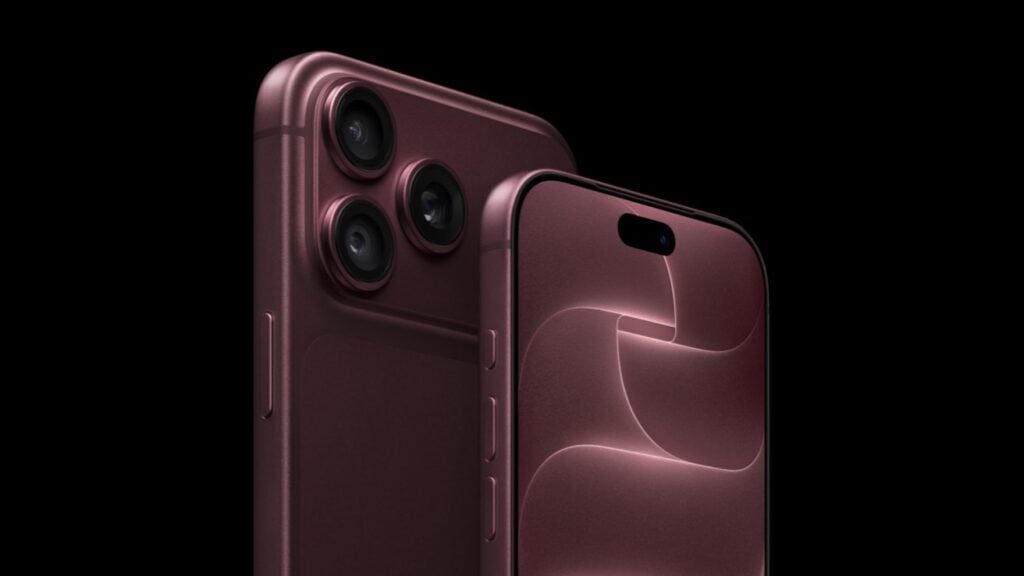
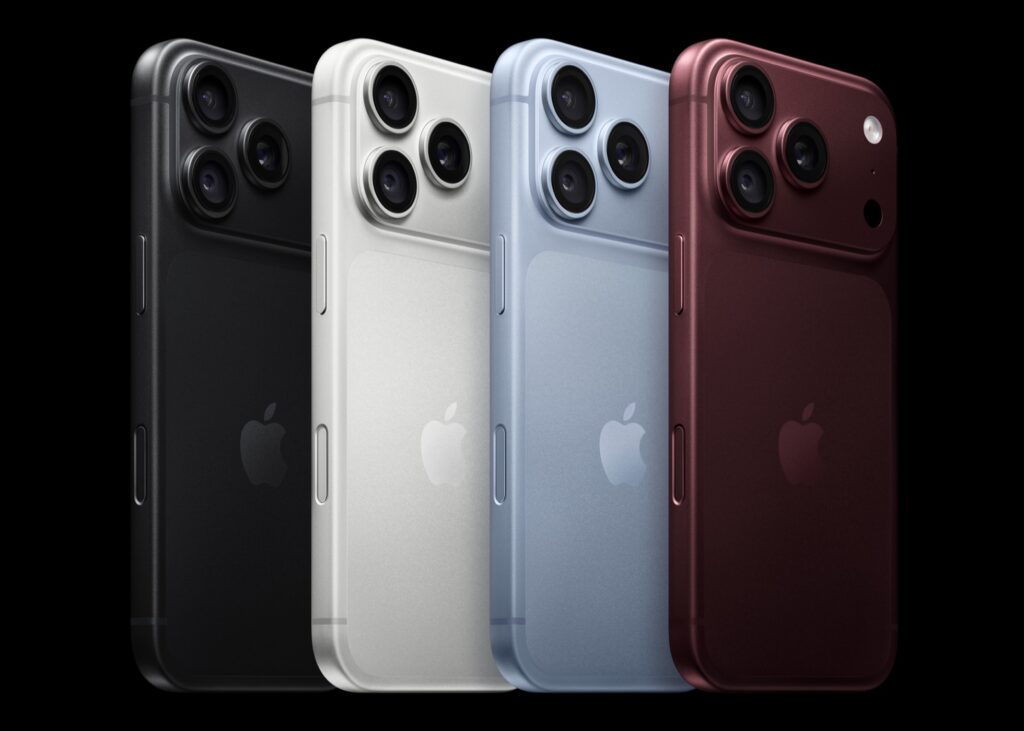
The iPhone 18 Pro and 18 Pro Max arrive in Black, Silver, Dark Cherry, and Light Blue color options. Pre-orders open on Sept. 12, with official retail sales commencing on Sept. 18.
The spotlight inevitably turns toward the book-style iPhone Duo, which carries a hefty starting price of Rs 2,99,900. The foldable comes in Night Sky and Star White finishes.
256GB: Rs 2,99,900
512GB: Rs 3,24,900
1TB: Rs 3,74,900
2TB: Rs 4,49,900
Pre-orders for the folding device start on Oct. 16, with commercial deliveries and general sales beginning on Oct. 23.
All newly announced smartphones will be distributed widely across online and physical retail channels throughout the country. Shoppers can purchase units directly via Apple.com or pick them up through leading authorized e-commerce and retail destinations such as Amazon, Flipkart, Croma, Vijay Sales, Lotus Electronics, and others.
The wait for Apple’s next major iPhone software update is almost over. The company has confirmed that iOS 27 will start rolling out on September 14, giving compatible iPhone owners access to a redesigned interface and a range of new system features. Here’s a look at all the iPhones that will receive the new OS upgrade.
Here is every iPhone that can run iOS 27
Apple’s compatibility list stretches across multiple generations, from the iPhone 11 lineup all the way to its newest models. The supported devices are:
– iPhone 17 series – iPhone 16 series – iPhone 15 series – iPhone 14 series – iPhone 13 series – iPhone 12 series – iPhone 11 series – iPhone SE (2nd generation)
The update will appear as an over-the-air download. Once available, it can be accessed through Settings > General > Software Update.
All the key changes arriving with iOS 27
While the new visual treatment will be immediately noticeable, Siri could ultimately be the more important part of iOS 27. Apple is introducing a next-generation version of its assistant that combines its own Foundation Models with Google’s Gemini models.
The revamped Siri is designed to handle more conversational requests and maintain context between interactions. Apple is also turning Siri into a standalone app where users can access previous conversations.
There is a catch, though. iOS 27 compatibility does not guarantee access to every feature. Some of the new AI capabilities require newer hardware, meaning owners of older supported iPhones may not get the complete Siri experience.
iOS 27 will not be arriving alone. Apple plans to release iPadOS 27, macOS 27, watchOS 27, tvOS 27 and visionOS 27 on the same September 14 date. The iOS 27 comes preloaded on the newly unveiled iPhone 18 Pro series and iPhone Duo.
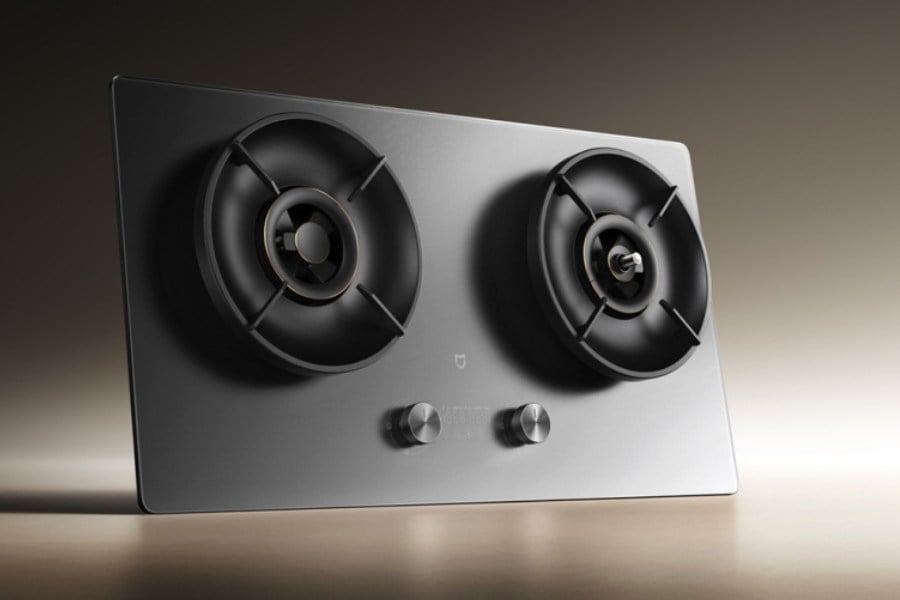
Xiaomi just opened pre-sales for the Mijia Smart Gas Stove 3 Max in China, and it’s the brand’s first stove built around AI safety controls rather than just cooking power. It’s live on JD.com now for 2704 yuan (~ $400).
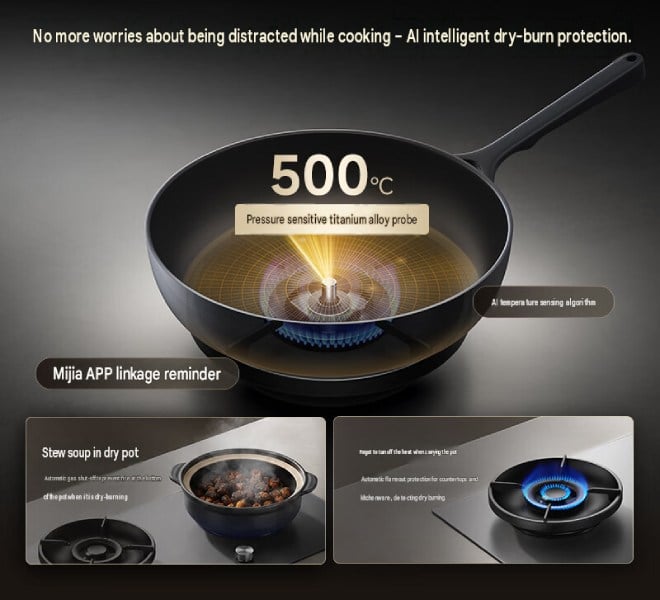
The stove uses AI for two main safety features: dry-burn protection and off-stove detection. The right burner has a 500°C pressure-sensitive titanium alloy probe that sits against the bottom of the pot and monitors its temperature while cooking. An AI temperature algorithm uses this data to detect dry or empty pots. If it detects a problem, the stove automatically cuts the gas supply and puts out the flame. The Xiaomi Home app can also send an alert if you’re away from the kitchen.
The off-stove detection system is another safety feature built into the stove. Its radar covers up to 0.9 meters in front of the unit and can detect when you’ve walked away. If you’re gone for 30 minutes, the stove sounds a buzzer to remind you. If you remain away for 60 minutes, it automatically shuts off the gas and sends a notification through the app.
5,200W burners and built-in timers
Both burners can reach 5,200W and use a dual-channel oxygen-supplying design with 154 flame holes to spread heat more evenly across the pot. The burners also use forged brass caps designed to handle high temperatures without easily warping.
Each burner has its own timer, which can be set from 1 to 180 minutes. This lets you set a cooking time for things like soup or braised dishes without having to keep checking the stove. The right burner can also show the pot’s temperature in real time when you press a button, which can be useful for frying and stir-frying.
Xiaomi has also added a three-layer air chamber to the stove rack. The company says it can lower the temperature around the cooktop by up to 22°C, which should make the kitchen more comfortable during long cooking sessions.
The Mijia Smart Gas Stove 3 Max has a 75% thermal efficiency rating and meets China’s new first-tier energy efficiency standard. Xiaomi says this is a 12% improvement over the previous model and could save a typical household around 980 yuan in gas costs over eight years.
The glass cooktop has a lotus-leaf-inspired nano coating designed to repel oil and water. Installation should also be relatively flexible. The stove has an adjustable chassis that supports openings between 630- 710 mm wide and 330- 400 mm deep, so most kitchen swaps won’t need any cutting.
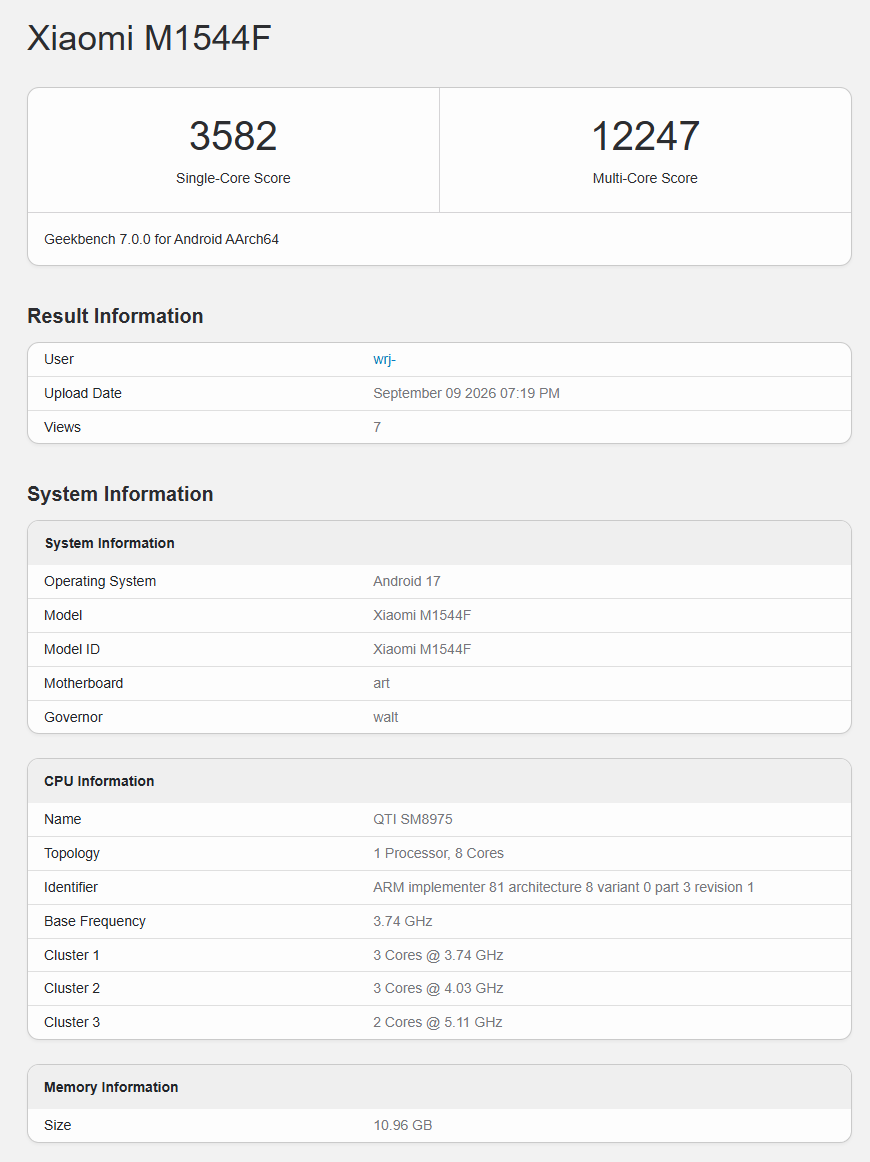
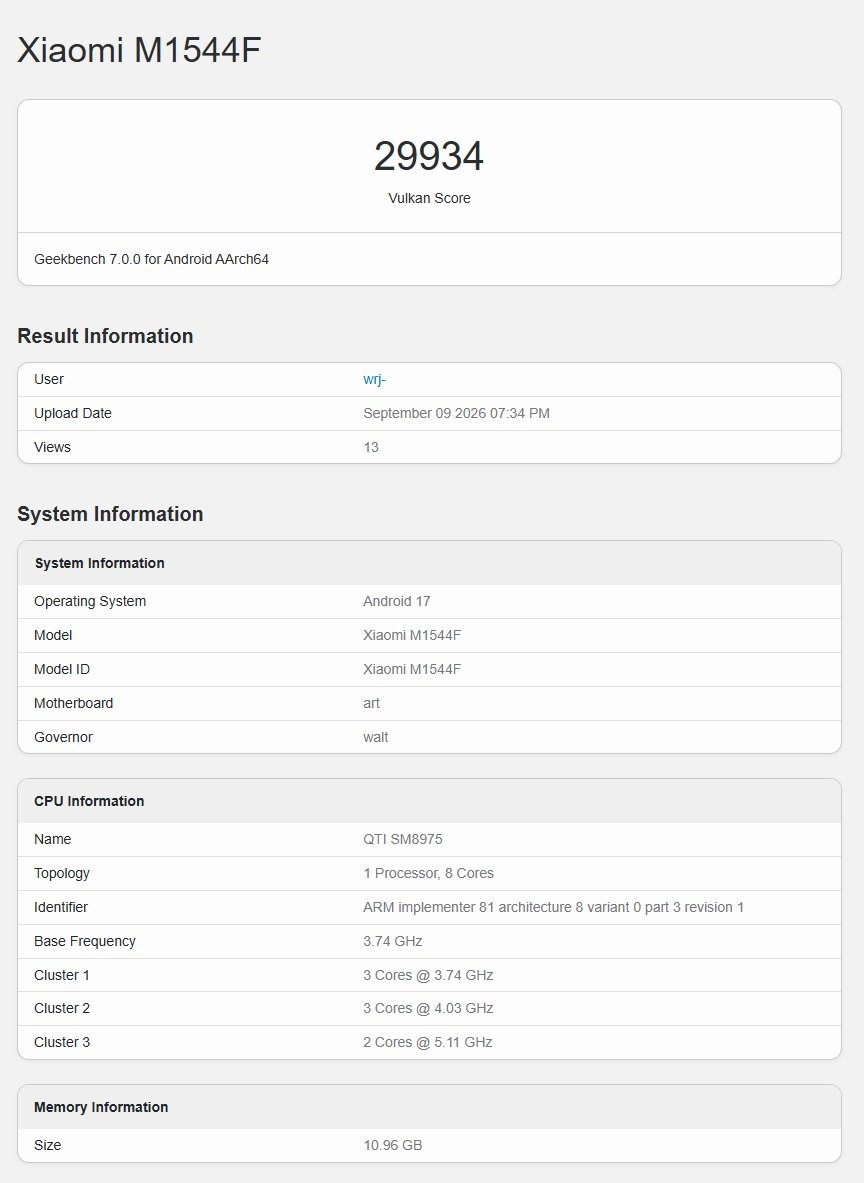
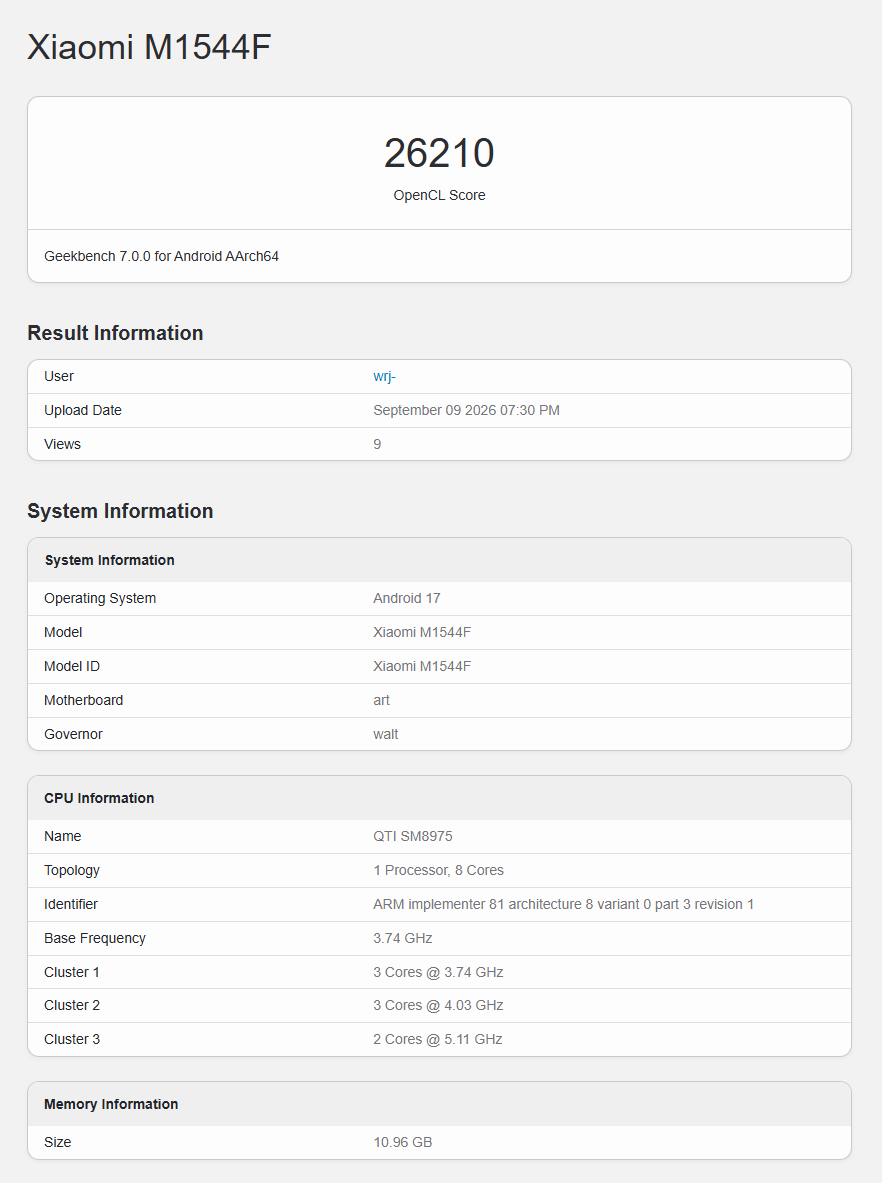
The Xiaomi 18 Pro Max has surfaced on Geekbench, offering an early look at what to expect from the upcoming flagship. The listing identifies the Chinese variant as model M1544F and provides details about its processor, memory, and software. More importantly, the benchmark entries give us an early indication of the performance level Xiaomi’s next flagship could deliver.
Xiaomi 18 Pro Max reveals Snapdragon 8 Elite Gen 6 Pro
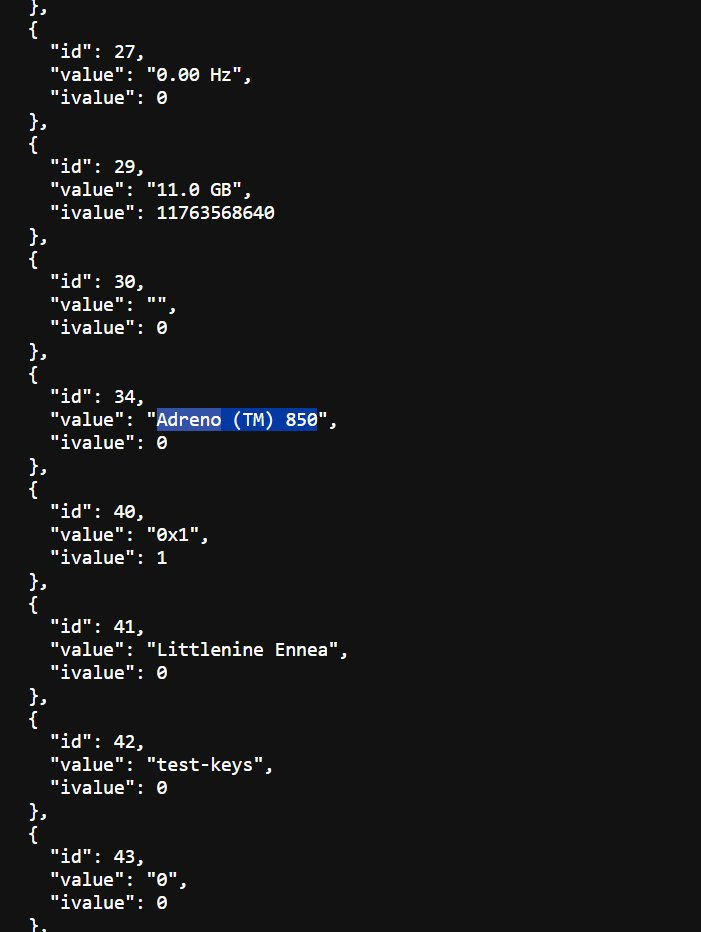
The Xiaomi 18 Pro Max listing shows the Snapdragon 8 Elite Gen 6 Pro (tentative name), carrying the SM8975 model number. The processor configuration includes eight cores, with the Geekbench entry showing a base frequency of 3.74GHz. The CPU setup consists of three cores clocked at 3.74GHz, three cores at 4.03GHz and two cores reaching 5.11GHz. For graphics, it is equipped with the Adreno 850 GPU.
The device recorded 3,582 points in the single-core test and 12,247 points in the multi-core test on Geekbench 7. The listing also shows 11.0GB of available memory, which points to a 12GB RAM configuration for the device. On the software side, the Xiaomi 18 Pro Max is listed with Android 17, which will have the HyperOS 4 skin.
GPU scores offer an early performance glimpse
The same device has also appeared in Geekbench 7’s GPU tests, with the Snapdragon 8 Elite Gen 6 Pro recording 26,210 points in the OpenCL test. The Vulkan test produced a higher score of 29,934 points. These results provide an early look at the graphics performance of Qualcomm’s upcoming flagship platform, although benchmark scores from pre-release hardware can vary between runs and software versions.
The Xiaomi 18 Pro Max is not the only upcoming flagship to surface ahead of the new chipsets. The forthcoming MediaTek Dimensity 9600 series and Qualcomm Snapdragon 8 Elite Gen 6 series are set to debut this month, with devices such as the Vivo X500 Pro Max and Oppo Find X10 Pro Max already appearing on Geekbench with Dimensity 9600-series hardware. Meanwhile, the Snapdragon 8 Elite Gen 6-powered iQOO 16 has also made an appearance on the benchmarking platform.
With the Xiaomi 18 Pro Max now joining the benchmark race, its CPU and GPU results give us an early indication of how Xiaomi’s next flagship may perform. More details about the phone’s specifications, design and launch are expected to emerge ahead of its official debut.
If you’ve got a new Galaxy Z Fold 8 and noticed the edges of the big inner screen feel a little soft when you press them, you’re not imagining things, and you’re not the only one who’s been wondering about it.
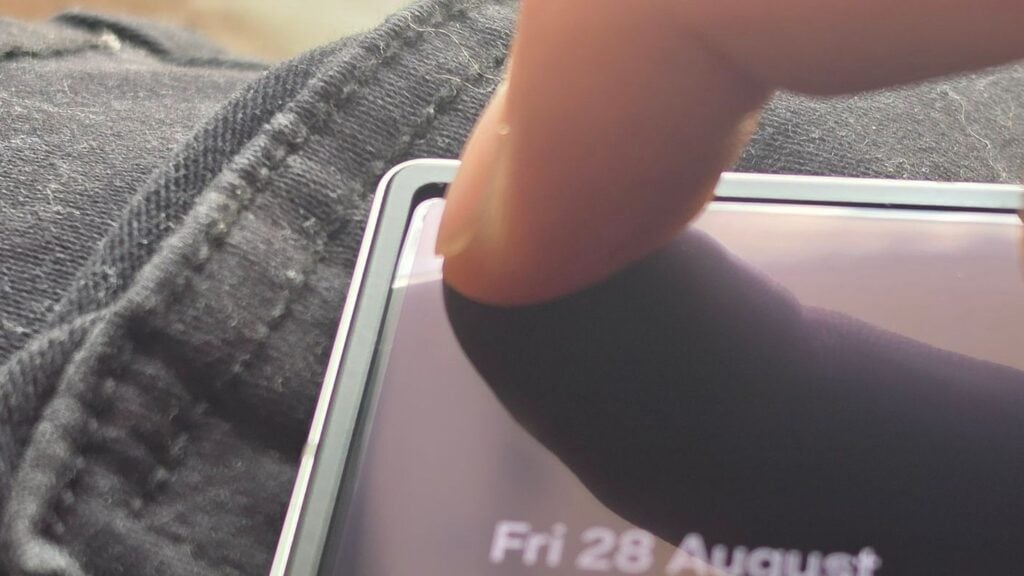
Some early owners started posting about it online: some flex when you push on the corners. It looked odd enough that people started asking whether something was wrong with the manufacturing or the support under the display.
The Z Fold 8 is extremely thin when unfolded, about 4.5 mm, and uses their Flex Titanium display tech. That’s a dual-layer setup with a titanium-alloy film and supporting plate meant to make the screen stiffer, hide the crease better, and improve durability without adding bulk. Even with all that, the corners still feel softer than the rest of the panel for some people.
Android Authority checked a review unit and confirmed there’s a mild amount of give in the top-right corner. It wasn’t as dramatic as some of the social-media videos, and it didn’t get in the way of normal use. Similar reports showed up on Reddit, Samsung’s forums, and elsewhere, with the severity varying a bit from phone to phone.
Samsung finally addressed it through the South Korean outlet Business Post. A company rep said the soft corners are deliberate. Because the phone is so thin, engineers worried about tiny bits of debris, sand, dust, whatever, sticking to the screen. If you fold the phone with something trapped there, it could scratch or damage the inner display.
So they designed the corners to flex a little, basically acting as a cushion that absorbs pressure and helps protect the panel. The same goes for the Galaxy Z Fold8 Ultra. Samsung says it doesn’t affect how the phone works, and they didn’t make a big deal about it in the marketing because they just wanted to avoid hassle for users.
It’s a good reminder of the trade-offs that come with making foldables thinner and thinner. Sometimes protecting a flexible screen means building in a little controlled give at the edges. For most Fold 8 owners, those soft corners look like a protective feature rather than a flaw.
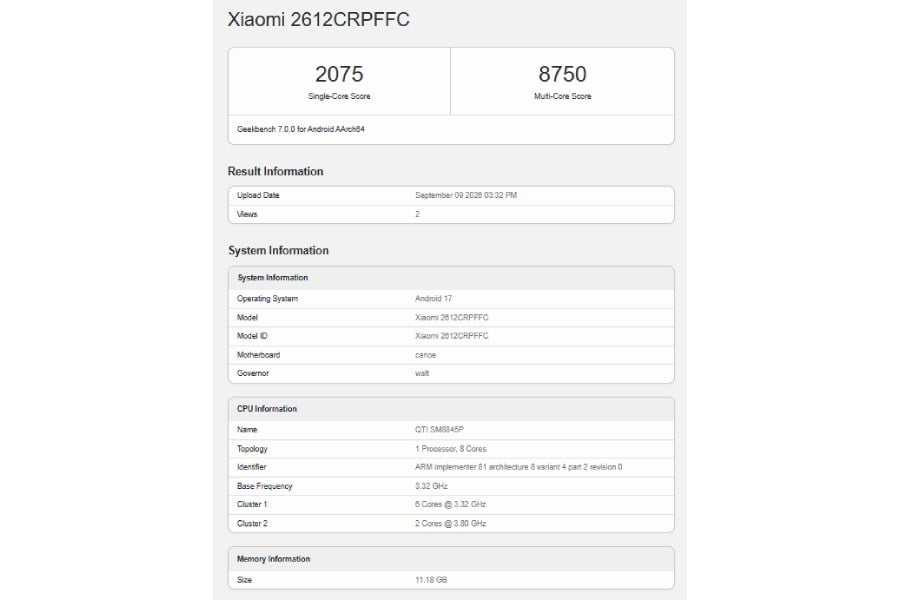
We already have a good idea of the Xiaomi Pad 9 Pro’s rumored specs thanks to last week’s leak. Now, a Geekbench listing has revealed more details about the tablet, including the processor it will use.
A device with the model number 2612CRPFFC has appeared on Geekbench. The same model number was also mentioned in an earlier specs leak linked to the Xiaomi Pad 9 Pro.
The Geekbench listing confirms that the Pad 9 Pro will use the Snapdragon 8 Gen 5. The chip appears under Qualcomm’s QTI SM8845P identifier and has an octa-core setup, with two cores clocked at 3.80GHz and six cores running at 3.32GHz. It is paired with an Adreno 829 GPU.
The tested unit also has 12GB of RAM and runs Android 17. On Geekbench 7, it scored 2,075 points in the single-core test and 8,750 points in the multi-core test. These are results from an early unit, so the scores could change with final software and retail firmware.
Xiaomi Pad 9 Pro rumored specs
The Geekbench listing doesn’t reveal much about the rest of the hardware, but recent leaks have already filled in some of the details. The tablet is expected to feature a 12.1-inch LCD with a 3.2K resolution and a 144Hz refresh rate. It could also pack an 11,000mAh battery with support for 67W wired charging.
That would give the Pad 9 Pro a larger battery than the current Xiaomi Pad 8 Pro. The older model comes with an 11.2-inch display, a Snapdragon 8 Elite chip, and a 9,200mAh battery. Xiaomi also brought the Pad 8 Pro to global markets in February.
Xiaomi Pad 9 Pro Max
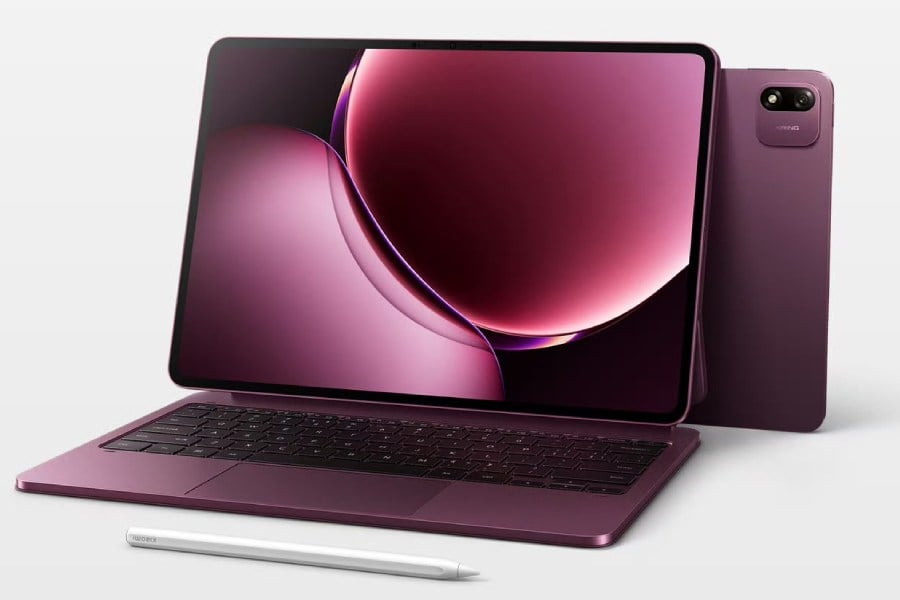
The new listing also gives us a better idea of where the Pad 9 Pro will sit in Xiaomi’s tablet lineup. The Pad 9 Pro Max is the top-tier model with Xiaomi’s own Xring O3 chip. It is already available in China, with a larger 13.3-inch display and a bigger battery.
The Pad 9 Pro, meanwhile, will offer Qualcomm’s flagship chip in a smaller and potentially more affordable tablet. With its model number now appearing on Geekbench, Xiaomi’s official announcement may not be far away.
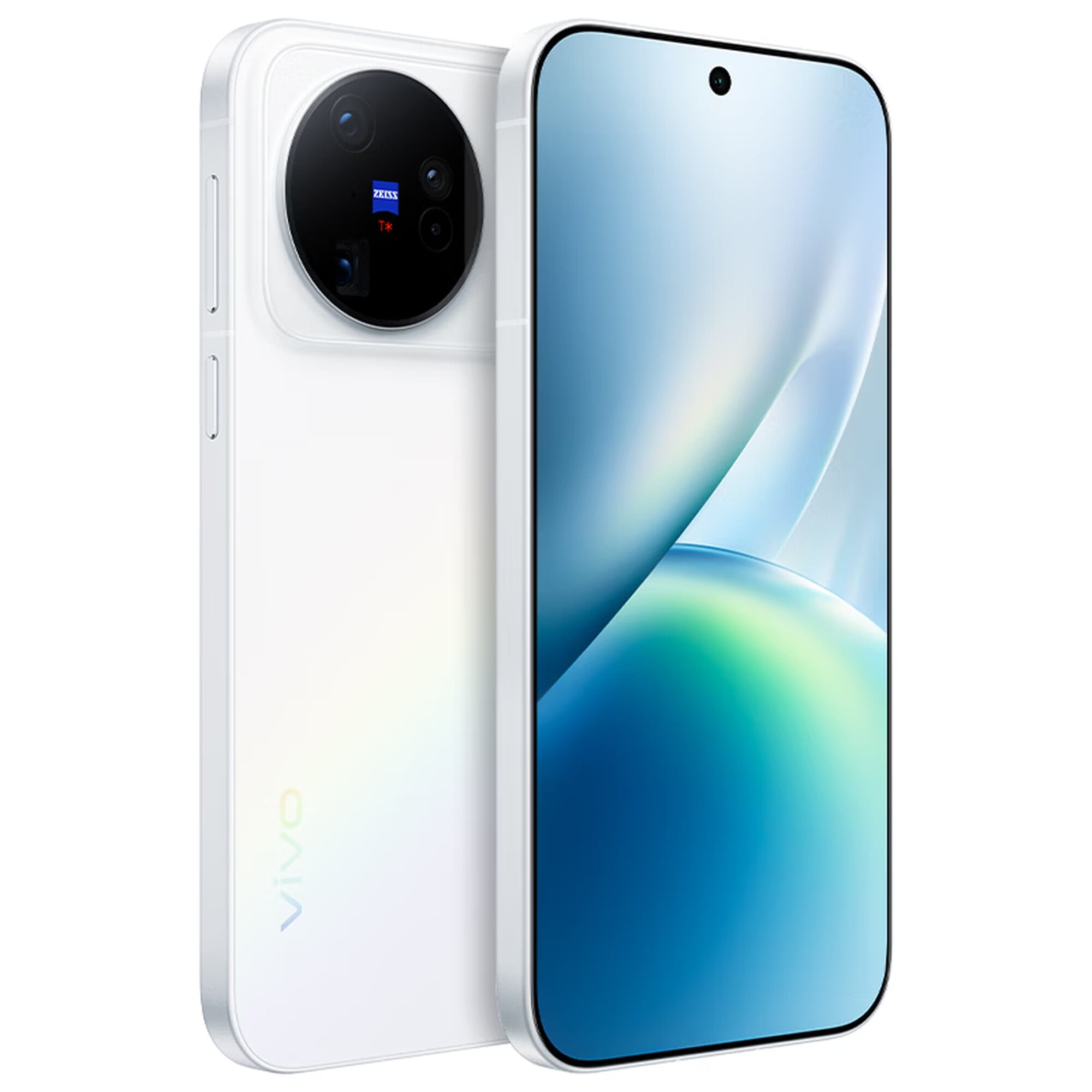
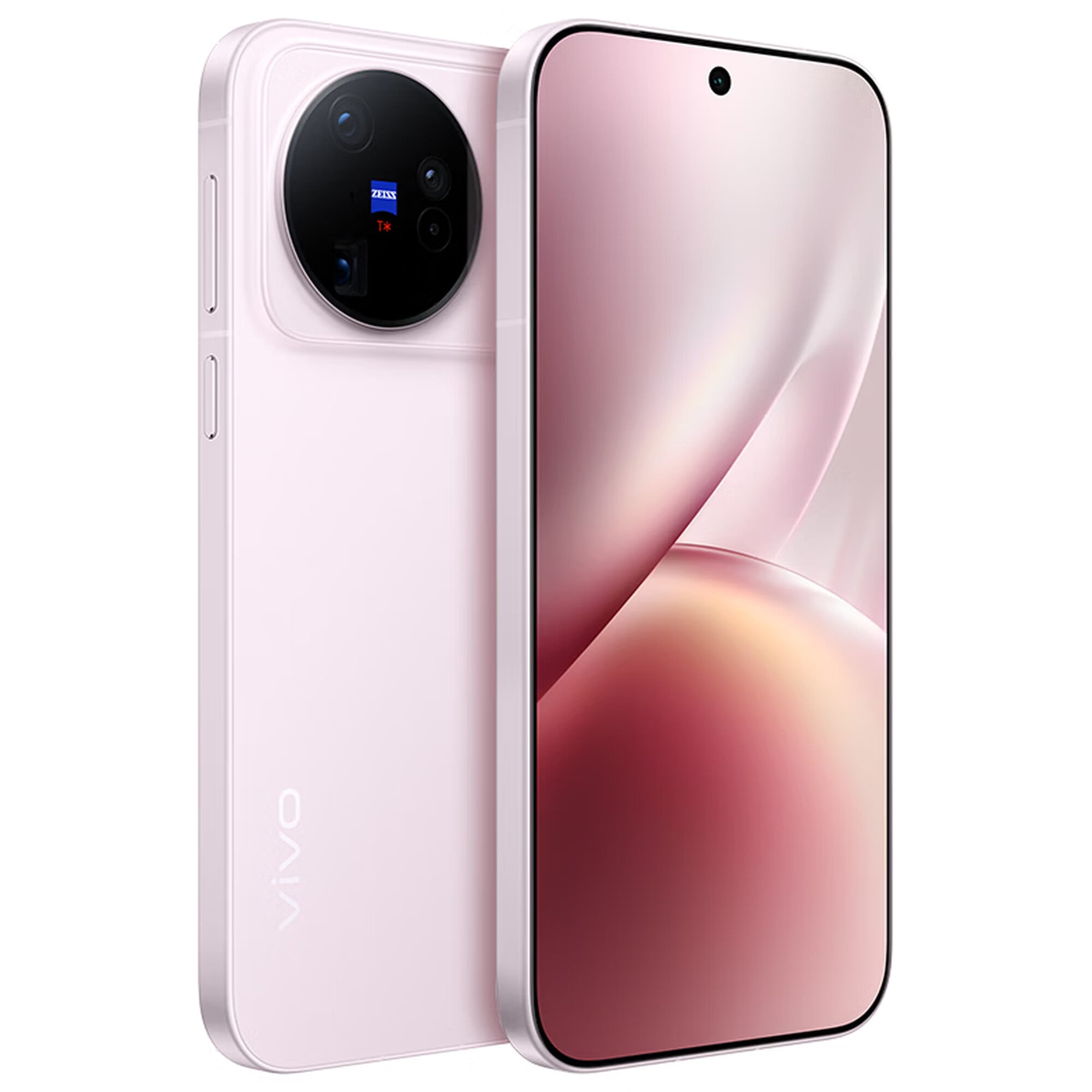
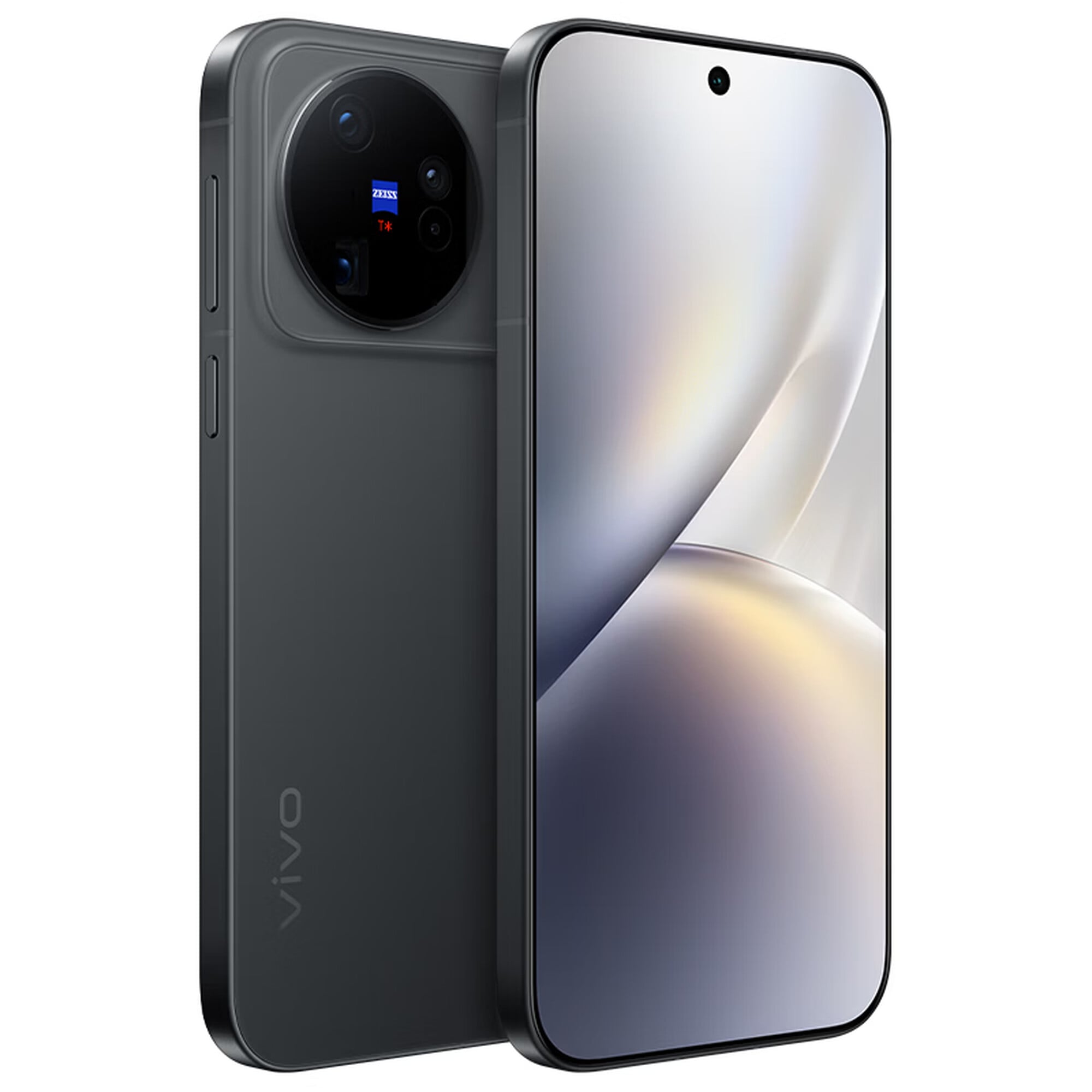
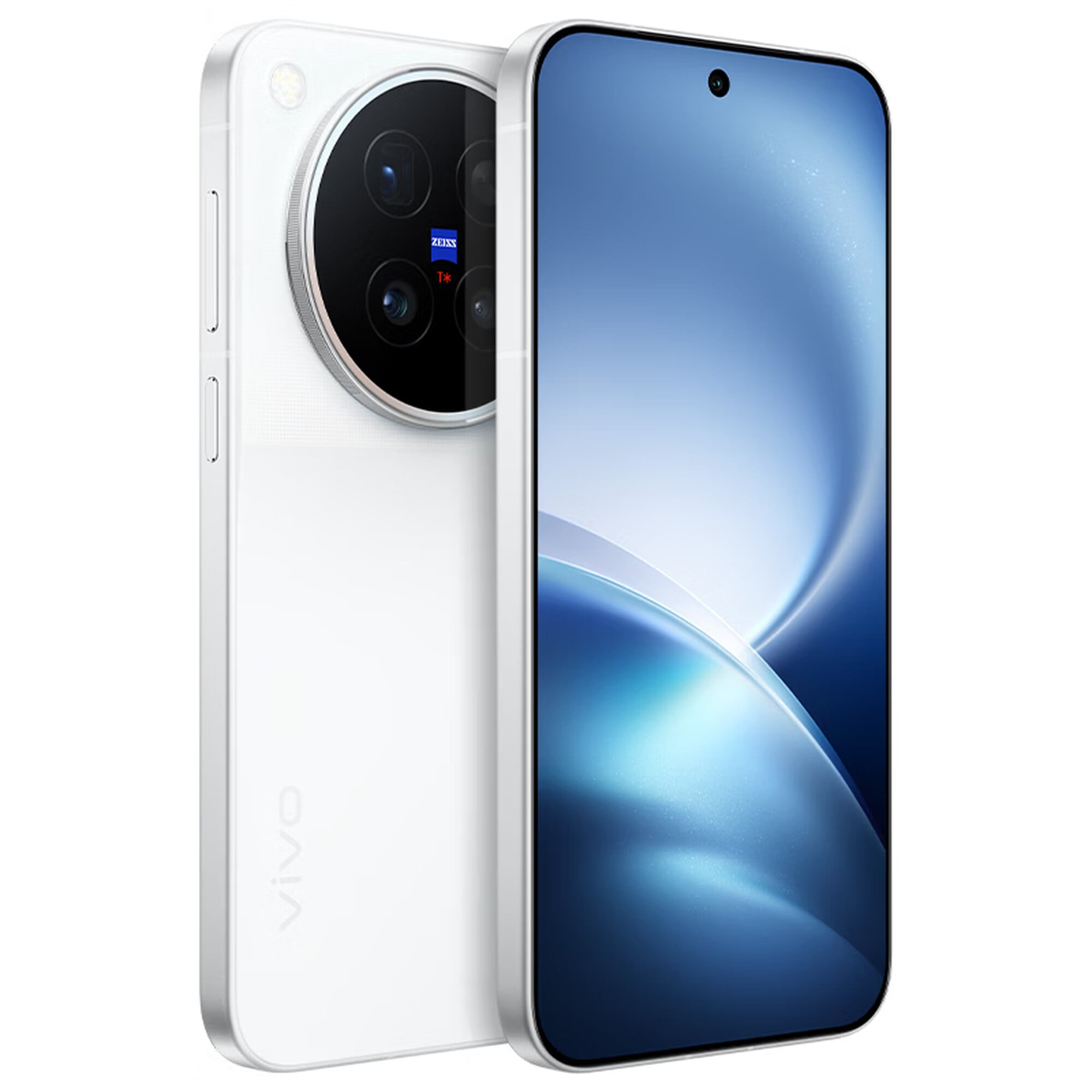
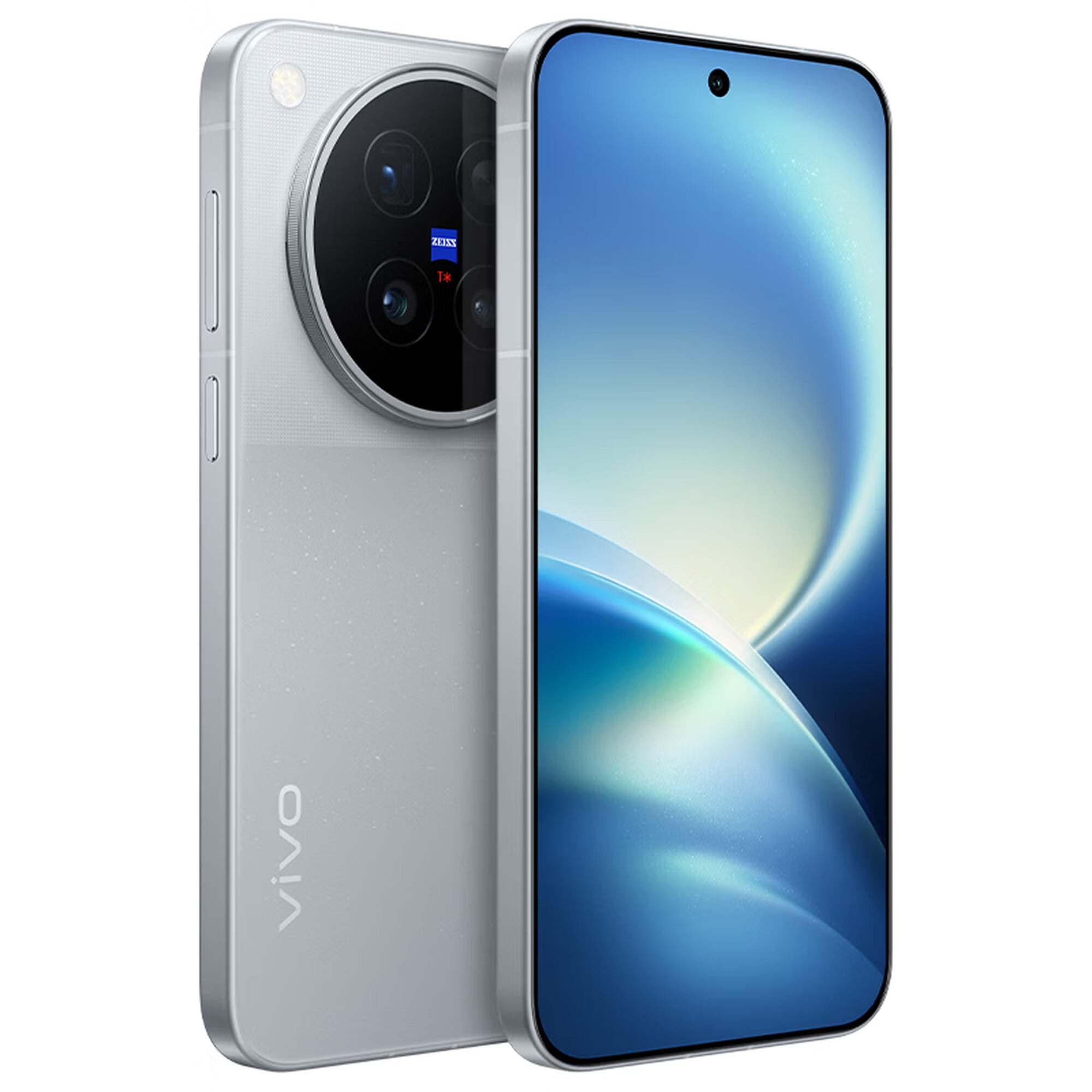
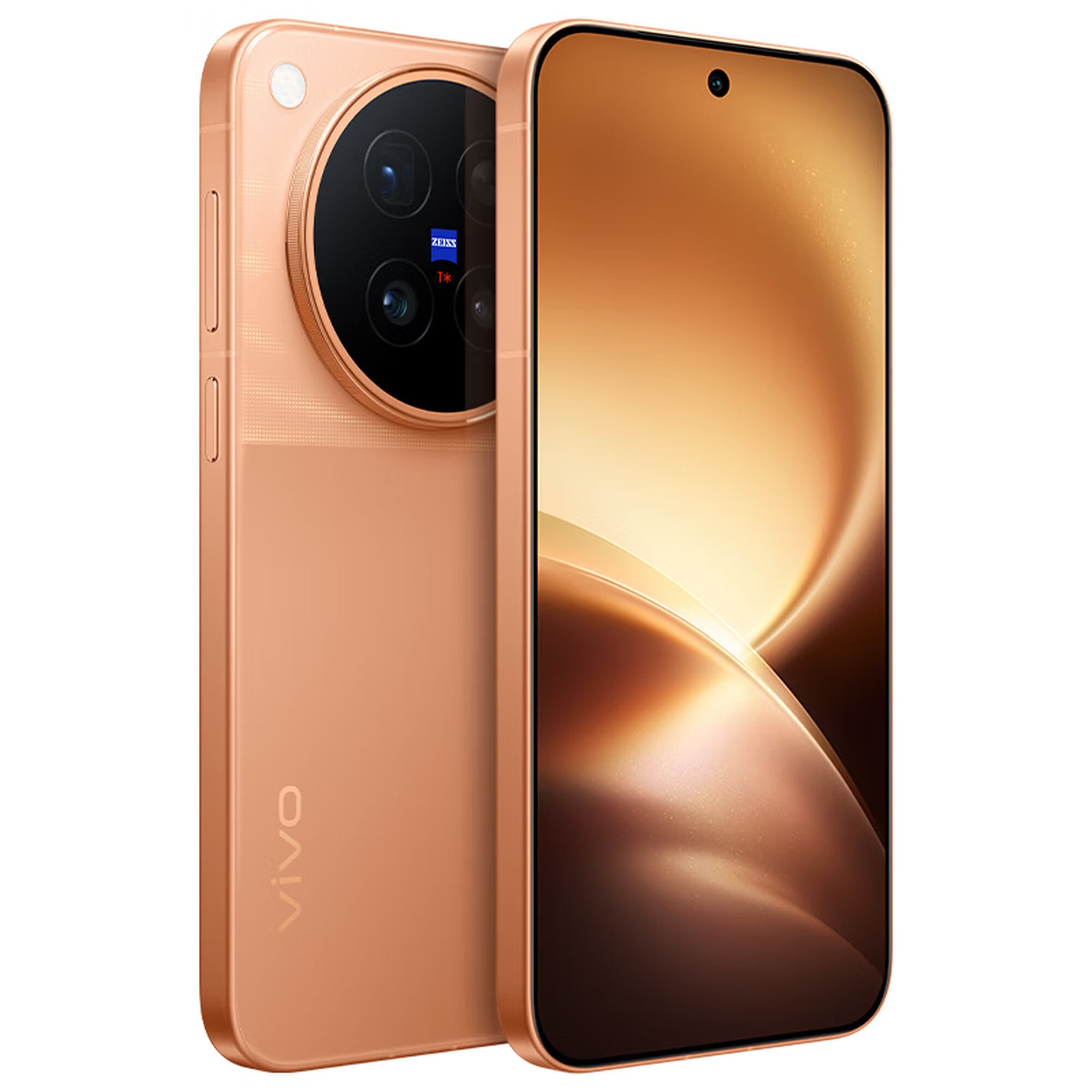
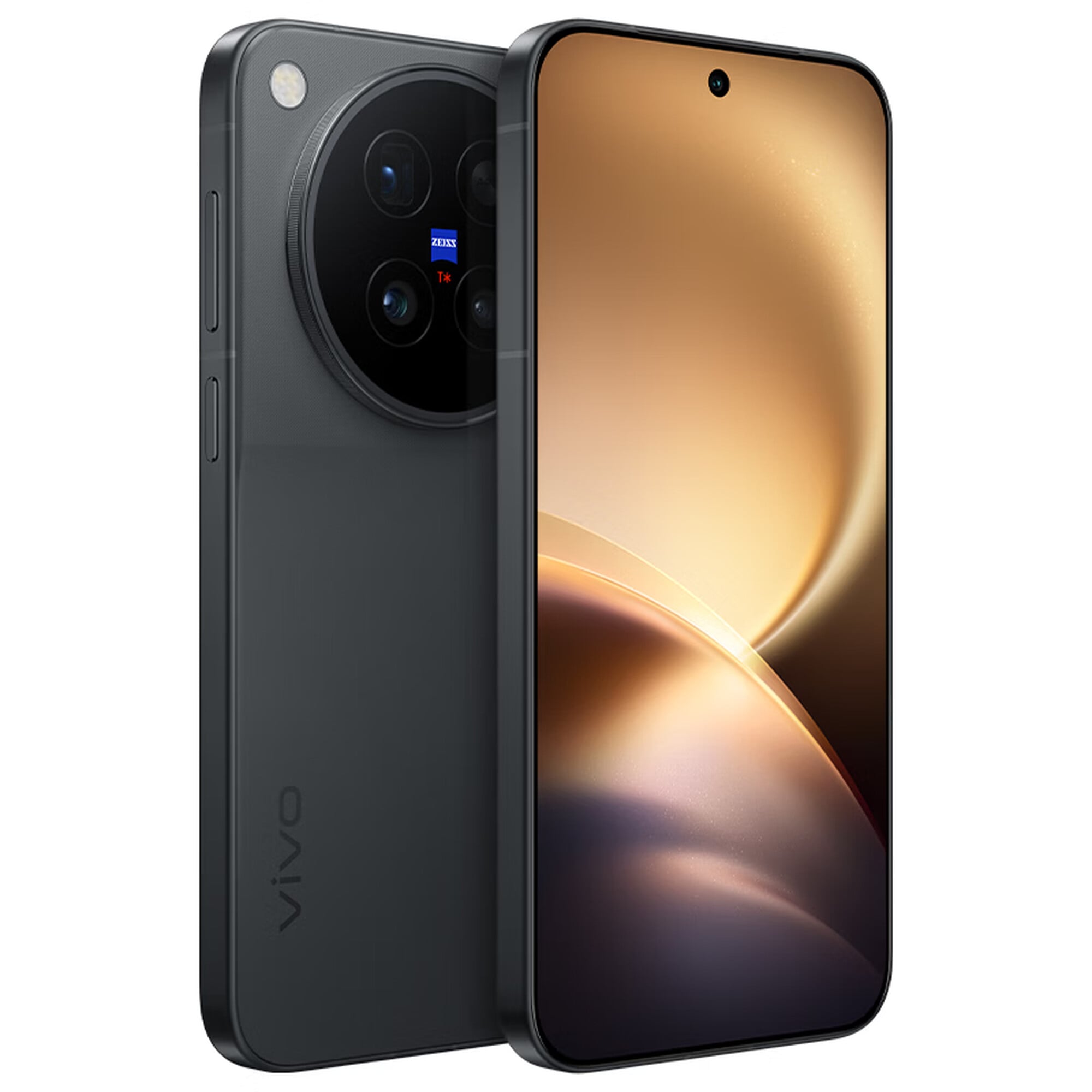
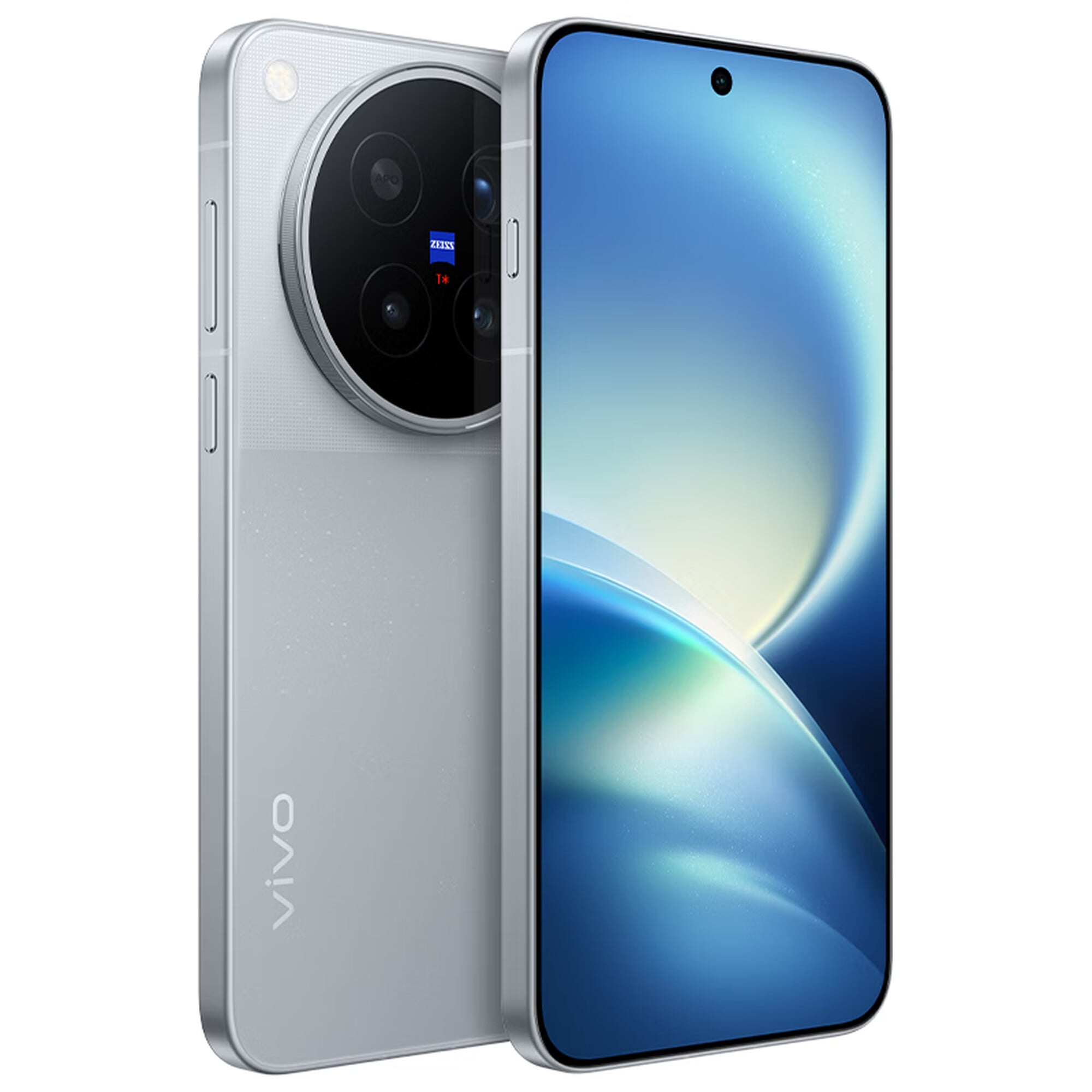
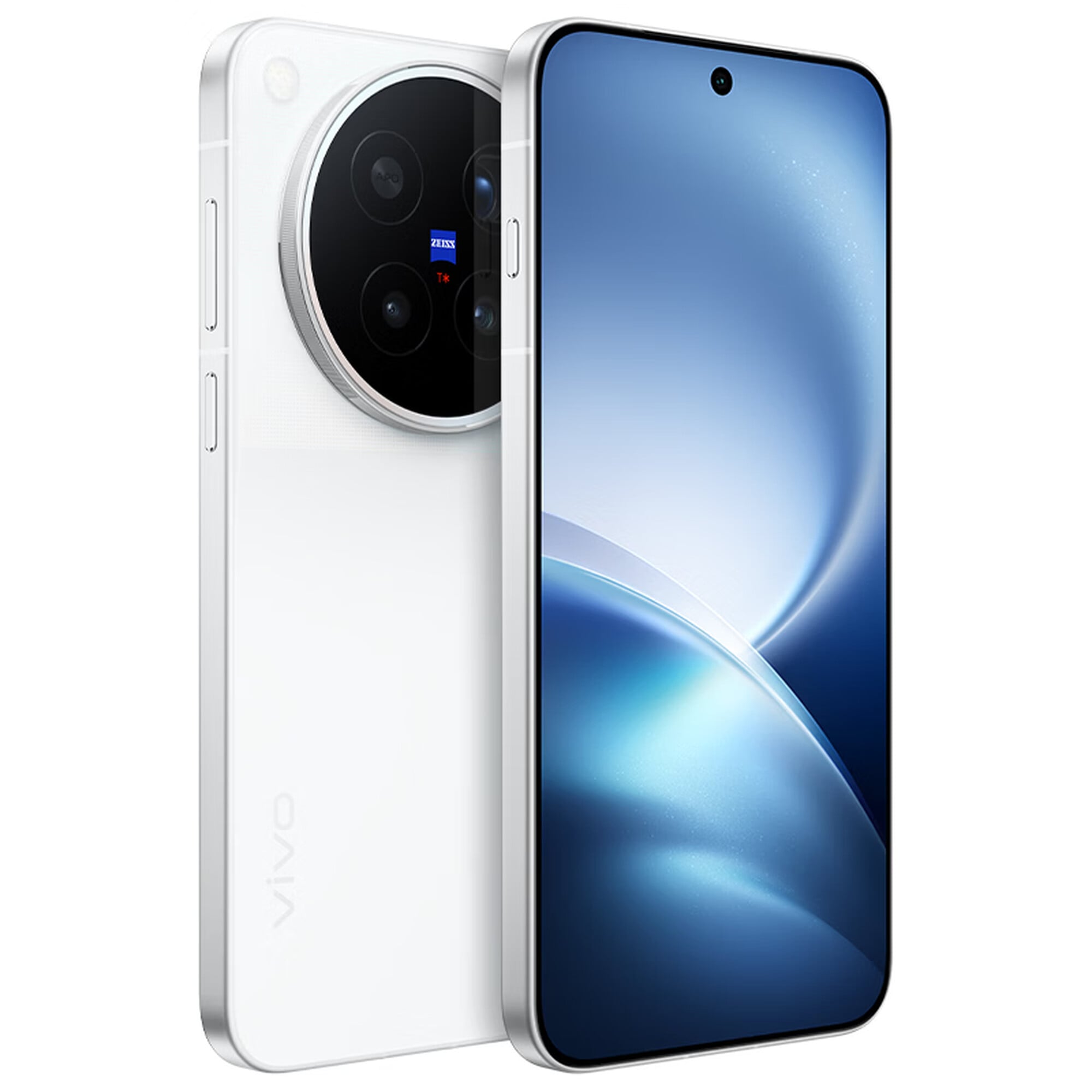
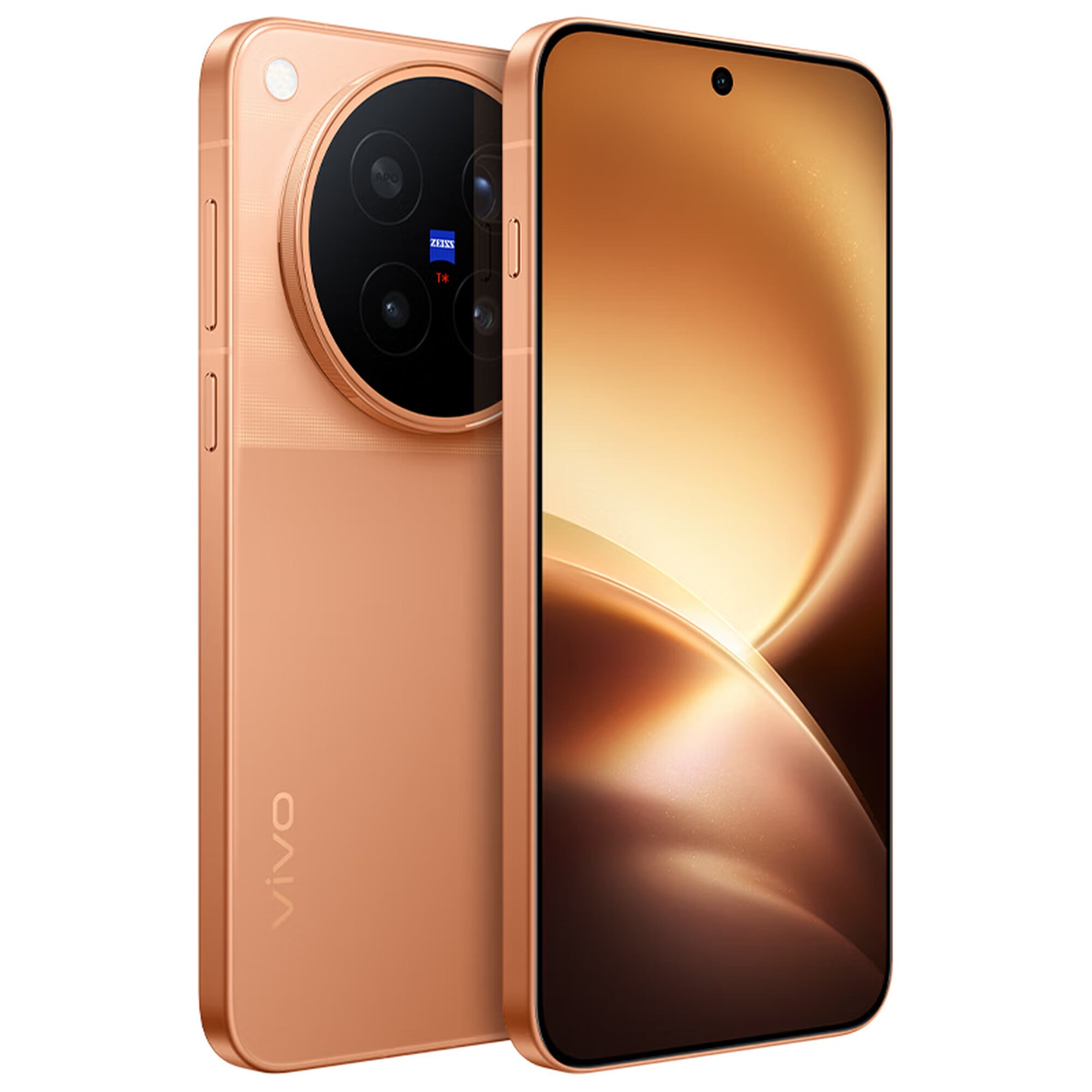
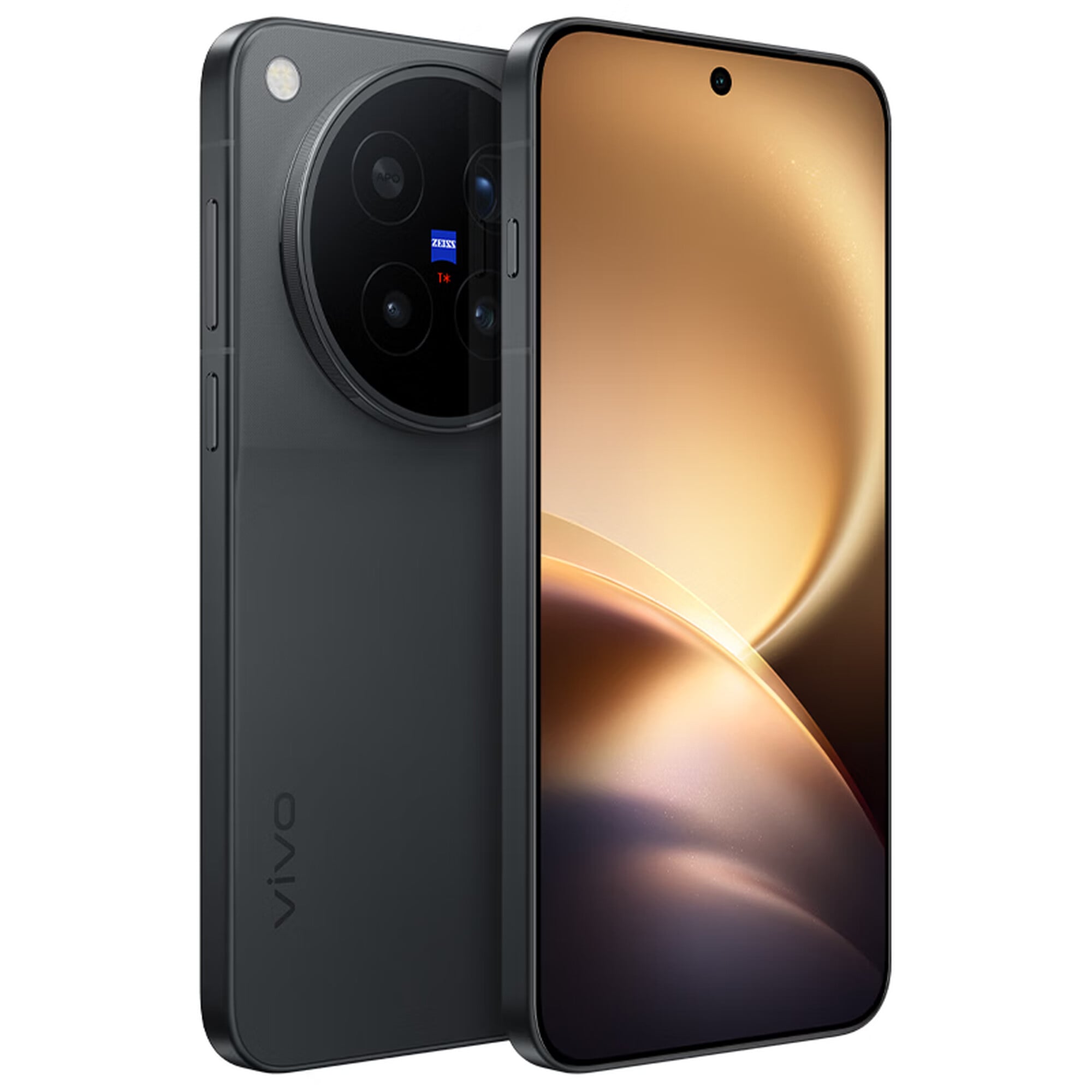
Vivo has been teasing the X500 series in China for the past few days without revealing its design. That has now changed, as the company has officially showcased the Vivo X500, X500 Pro, and X500 Pro Max. Here’s a first look at the three models.
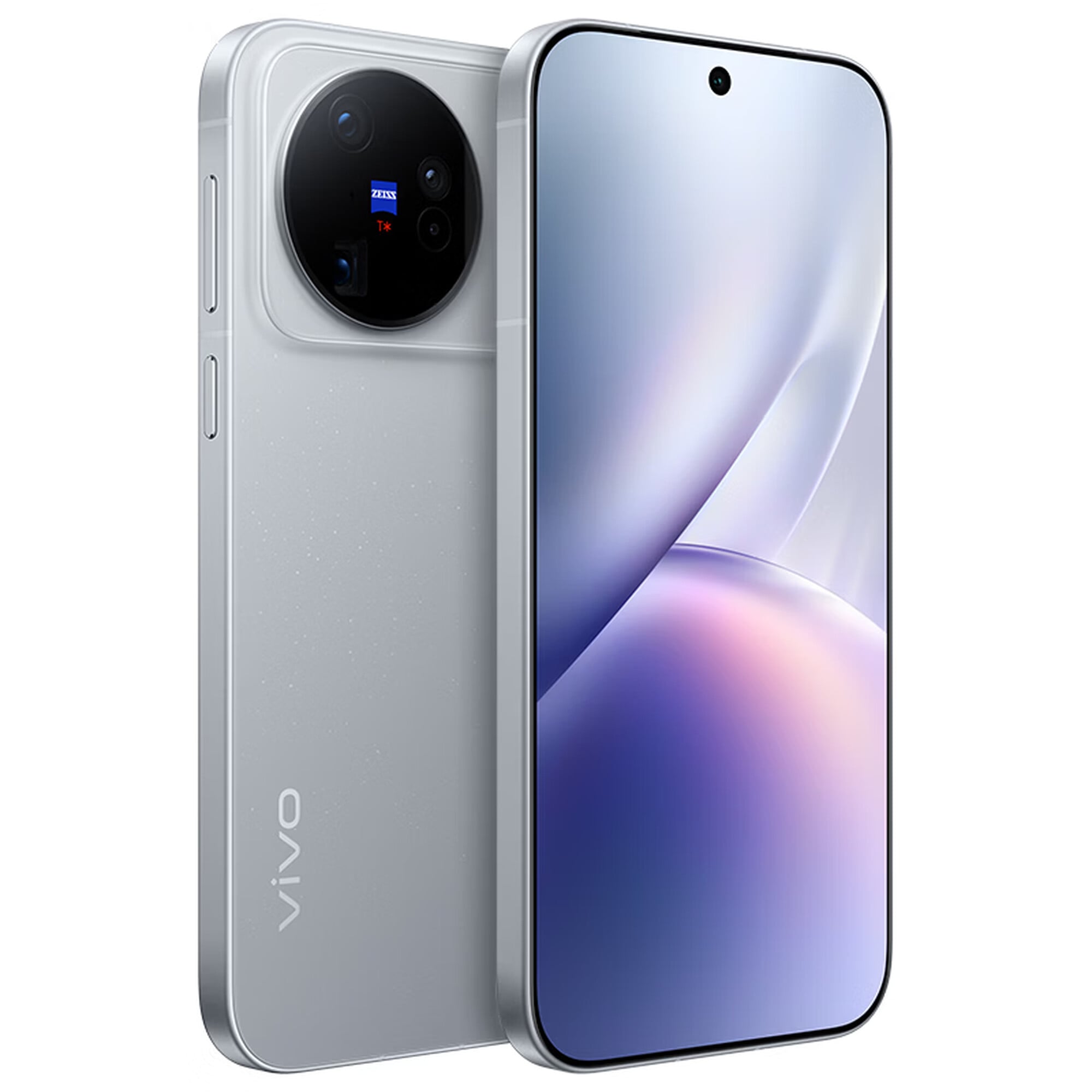
As can be seen, the Vivo X500 will be available in four shades, such as white, grey, dawn (pink), and black. The images show that the X500 has a different design compared to the Pro models.
While the Pro models have a larger circular module like the previous generation, the design of the X500 seems to be inspired by the older Vivo X90, which debuted back in 2022, as it features a circular camera unit on the left housed in a rectangular module. Inside, towards the right, is a camera sensor and an LED flash.
The Vivo X500 Pro and X500 Pro Max images show that they have an almost identical design. The only noticeable differences are the size, with the Pro being a smaller device compared to the Pro Max. Also, the Pro Max edition has an extra button on the left edge. Both devices will be available in colors like grey, white, orange, and black.
Apart from the Vivo X500 series, the brand will also announce a couple of other devices, including the Vivo Watch 6 and Vivo Buds Clip, through the Sept. 21 launch event in China. As far as the global launch is concerned, the X500 lineup is expected to arrive in other markets in November.
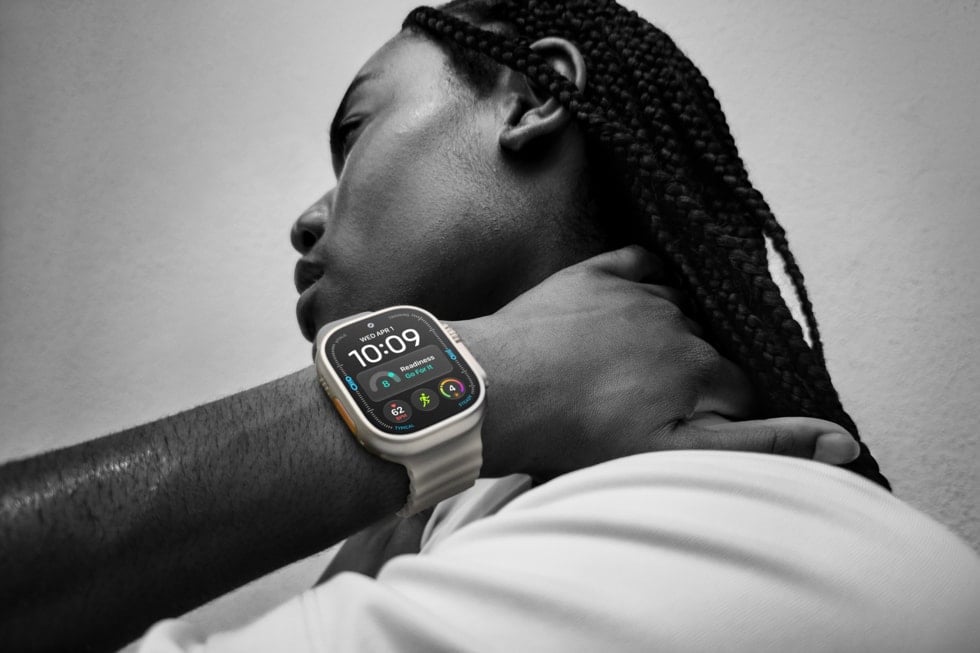
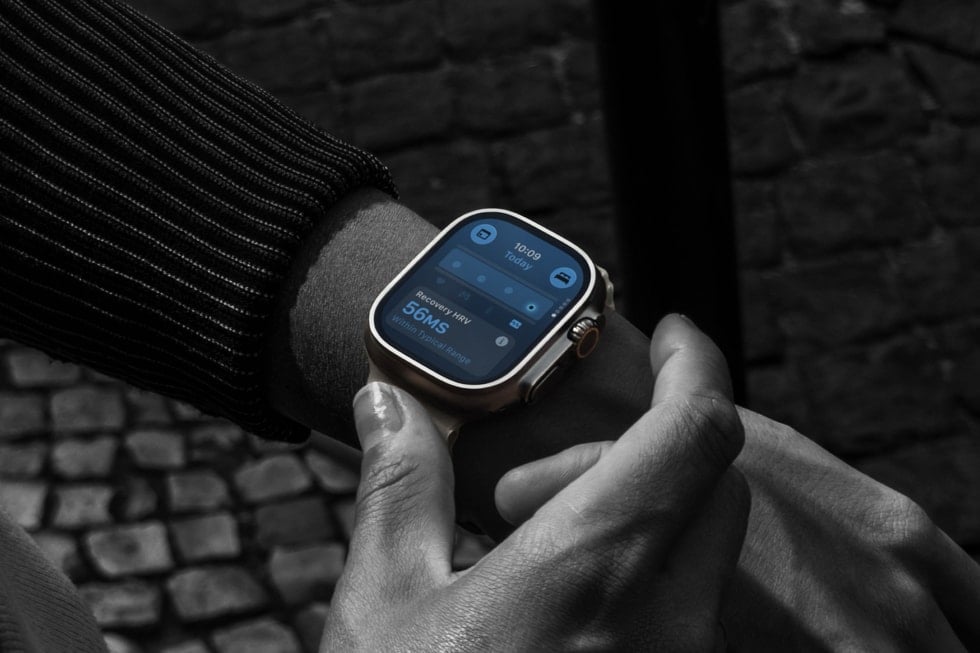
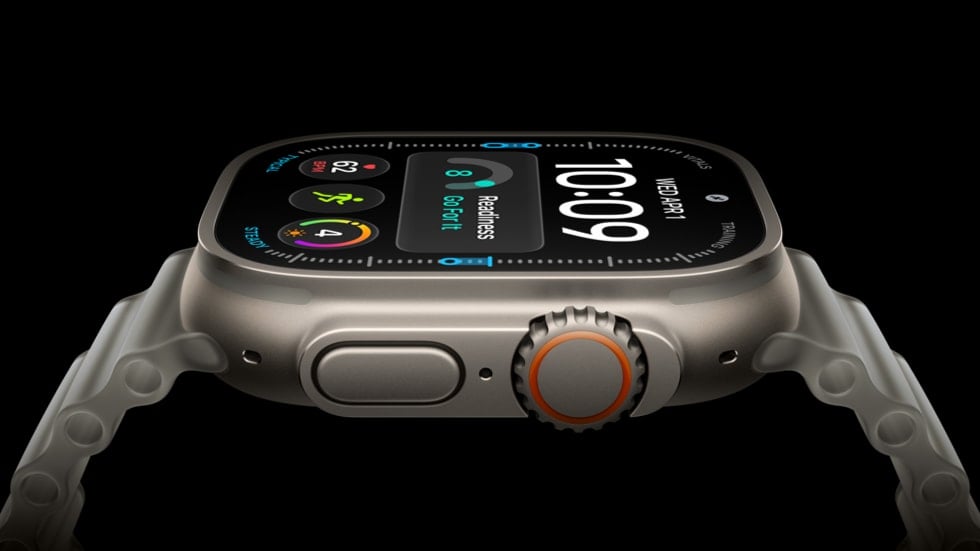
Apple has introduced the Apple Watch Ultra 4. On the outside, it looks largely identical to previous iterations, though it is now available in a black titanium finish alongside the standard natural titanium. The actual changes this year are internal, focusing on more frequent health data sampling, a longer-lasting battery, and the integration of Apple Intelligence.
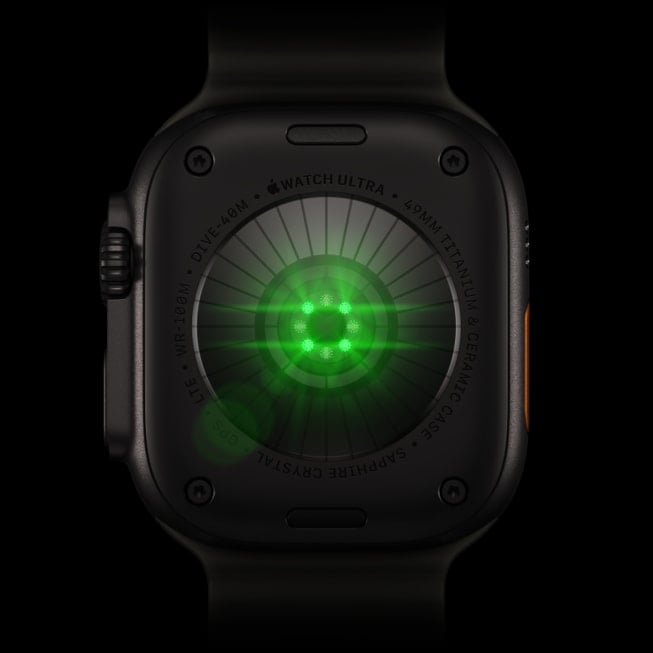
Just like the Series 12, the Watch Ultra 4 also features the new S11 chip and Apple’s upgraded Health Sensing System. The updated optical and electrical sensors can measure your heart rate every five seconds throughout the day, while heart rate variability (HRV) is recorded up to 24 times more frequently than on the Ultra 3.
Apple is using the increased health data to introduce a new Readiness score. The feature provides a daily score from 0 to 10 based on your sleep, training load, and daytime vitals, helping you decide whether to train harder or take a rest day. Apple has also improved the pedometer for more accurate step counting and distance tracking during indoor walks and runs.
In terms of battery life, the Ultra 4 offers up to 50 hours of regular use or up to 84 hours with Low Power Mode enabled. The new Max Extended Workout mode provides up to 45 hours of continuous GPS tracking for outdoor activities. Apple has also improved charging speeds, with a 15-minute charge providing up to 18 hours of regular use.
For software, watchOS 27 adds some new AI tools that Apple is calling Audio Intelligence. If you ever get distracted and miss what someone said, a tool called Live Rewind lets you double-press the Digital Crown to read a quick transcript of the last 15 seconds. Siri can also summarize longer conversations for you. To address privacy concerns, Apple says the watch processes all of this audio locally in a secure part of the chip, meaning nothing is recorded, saved, or sent to their servers.
The Apple Watch Ultra 4 maintains its predecessor’s pricing, starting at $799. Preorders are open now, and the device will be available in stores starting Friday, September 18.
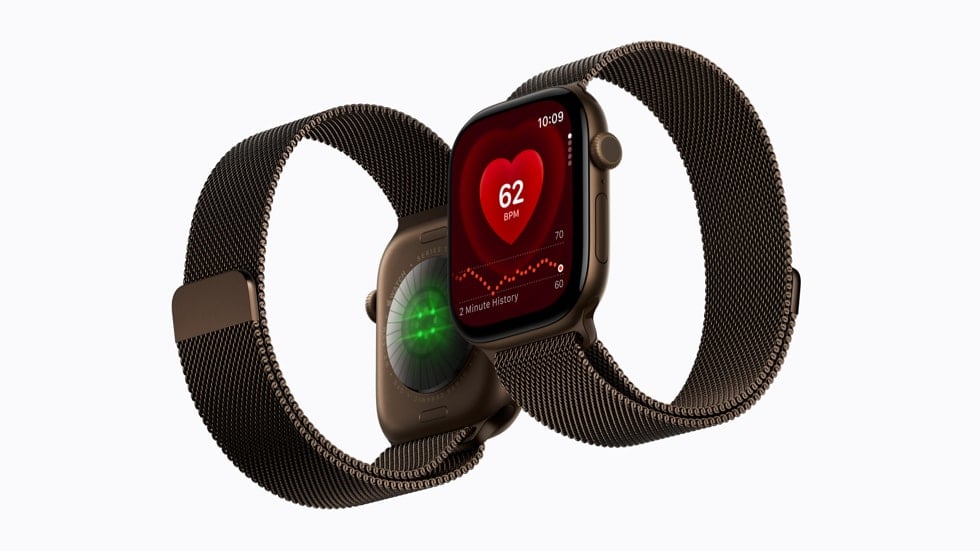
Apple has announced the Watch Series 12, an update that primarily focuses on more frequent health data collection and a new set of audio-based AI features. The new smartwatch starts at $399, is available for pre-order today, and will ship on September 18th.
The new series comes with what Apple calls the Health Sensing System, which includes redesigned optical and electrical sensors with larger green LEDs. The upgraded sensors allow the watch to record your heart rate every five seconds in the background and measure Heart Rate Variability (HRV) up to 24 times more frequently than the Series 11.
This increased data collection feeds into a new Readiness metric. Catching up to features already standard on Garmin and Oura devices, the Apple Watch now provides a daily score from 0 to 10 based on recent activity, sleep, and daytime vitals. It advises users whether to rest or proceed with a workout.
The watch also adds passive notifications for potential hypertension and sleep apnea. On the iPhone side, a redesigned Health app introduces a Health Age metric to compare user data against age-based averages.
The new S11 chipset also brings a suite of microphone-dependent features branded as Audio Intelligence. The standout is Live Rewind, which transcribes the last 15 seconds of audio when the user double-clicks the Digital Crown, designed for when you miss a detail in conversation. Another feature, Siri Recap, generates text summaries of recent chats.
For privacy, Apple says all audio processing takes place directly on the watch using the S11 chip’s Secure Exclave, so raw audio is neither stored nor sent to the cloud. Live Rewind also plays an audible chime and shows an on-screen animation to let people nearby know when transcription is active.
The Series 12 comes in 42mm and 46mm sizes. Apple is offering aluminum and titanium cases, alongside the return of a ceramic option in white and blue. Aluminum models get an updated Ceramic Shield 2 glass, which Apple claims is 60% tougher than the previous generation.
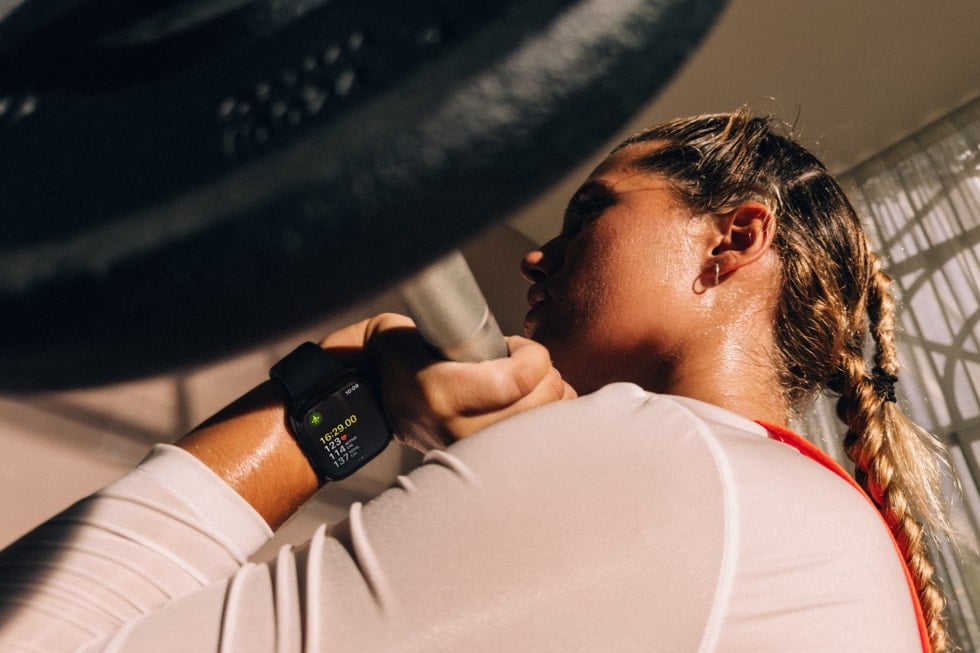
Battery life remains at 24 hours for standard use, though Apple says outdoor workout tracking now lasts up to 10 hours. Charging speeds have improved slightly, with a 15-minute charge yielding 12 hours of use. The device ships with watchOS 27, which includes a new Siri AI integration for more conversational queries.
At the event, Apple launched its first foldable smartphone, the iPhone Duo, featuring dual 120Hz displays, a titanium build, and the A20 Pro chip. The company also introduced the iPhone 18 Pro and iPhone 18 Pro Max, which come with a variable aperture camera and the 2nm A20 Pro chip.
For more daily updates, please visit our News Section.
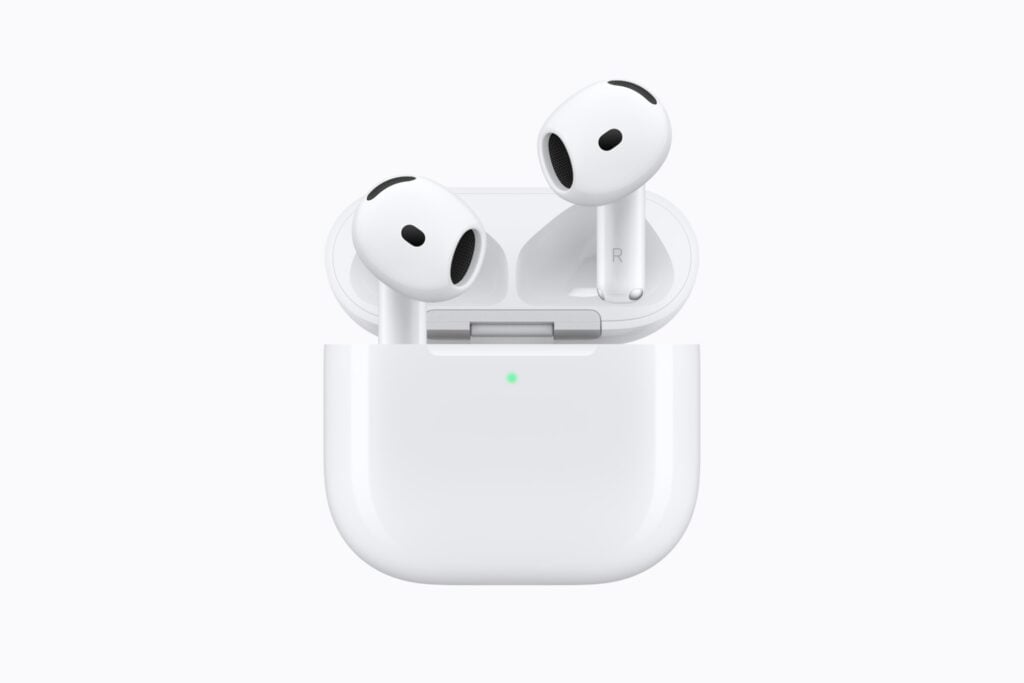
Apple is updating its standard, unsealed earbuds with the announcement of the AirPods 5, featuring improved active noise cancellation. The new generation is divided into two separate models: a base version and a slightly upgraded tier that adds a wireless charging case and a few extra hardware controls.
Apple AirPods 5 Specifications
While Apple introduced ANC to its open-ear design with the previous generation, the AirPods 5 aim to make it significantly more effective. To achieve this, Apple says it redesigned the internal acoustics and updated its computational audio processing algorithms.
The company claims this new setup removes up to 50% more ambient noise compared to the AirPods 4 with ANC. Alongside the upgraded noise cancellation, the AirPods 5 support transparency mode, adaptive audio for automatically mixing the two settings based on your surroundings, and conversation awareness, which drops the volume of whatever you are listening to when you start talking.
The AirPods 5 also bring deeper Apple Intelligence integration, giving you access to the updated Siri directly through the earbuds. You can also respond to Siri prompts using head gestures, such as nodding to accept or shaking your head to dismiss them.
There is also a new Live Translation feature tied to the iOS Translate app. By pressing both earbud stems at the same time, users can listen to real-time translations of spoken conversations directly in their ears.
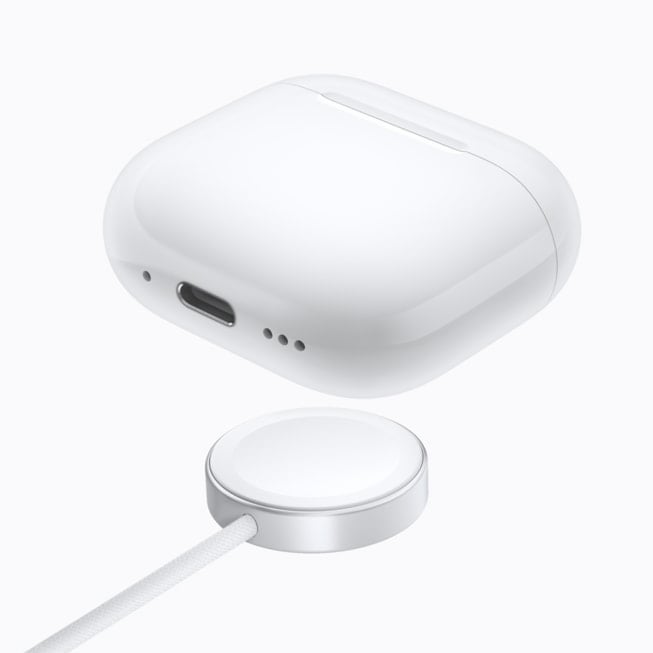
If you opt for the higher-tier model, Apple includes swipe-based volume controls directly on the earbud stems, a feature it previously kept exclusive to the AirPods Pro line. This version also comes with a wireless charging case that works with USB-C, standard Qi pads, and Apple Watch chargers.
For battery life, you get up to five hours of listening time with ANC enabled and up to 22 hours with the charging case. Both models also use 40% recycled materials overall, including recycled cobalt in the batteries.
Pricing
As for the pricing, the base model of the AirPods 5 costs $129. The upgraded version, which gets you the wireless charging case, the on-stem volume swipes, and the battery improvements, is priced at $149. Both are available to preorder today and will start shipping on September 18th.
At the event, Apple has launched its first foldable iPhone Duo with dual 120Hz displays, a titanium build, and the A20 Pro chip. The company has also unveiled the iPhone 18 Pro and Pro Max with a variable aperture camera and 2nm A20 Pro chip.
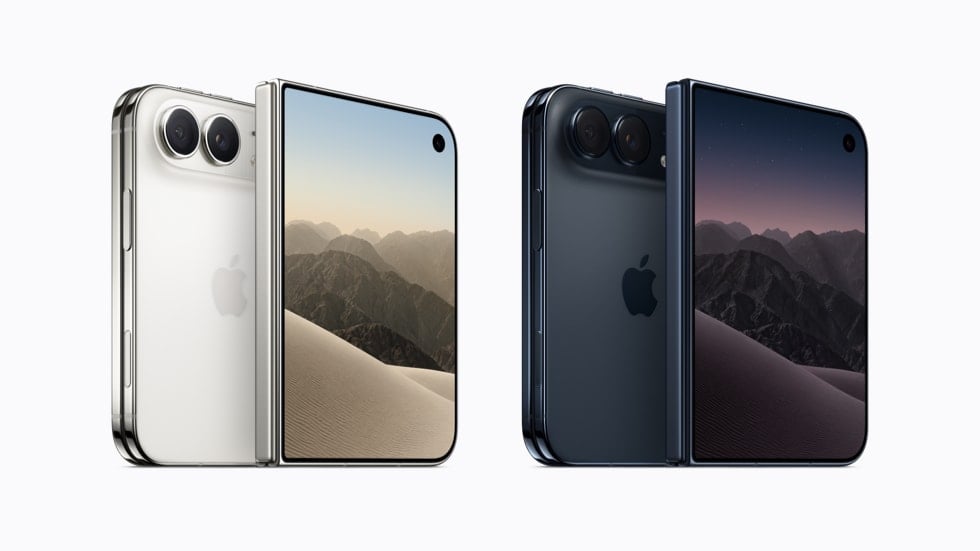
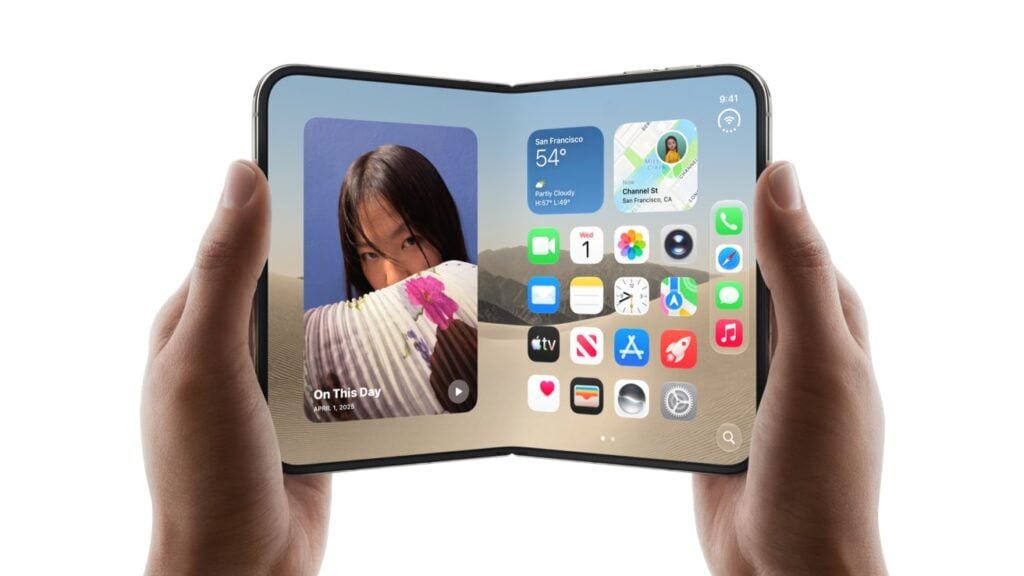
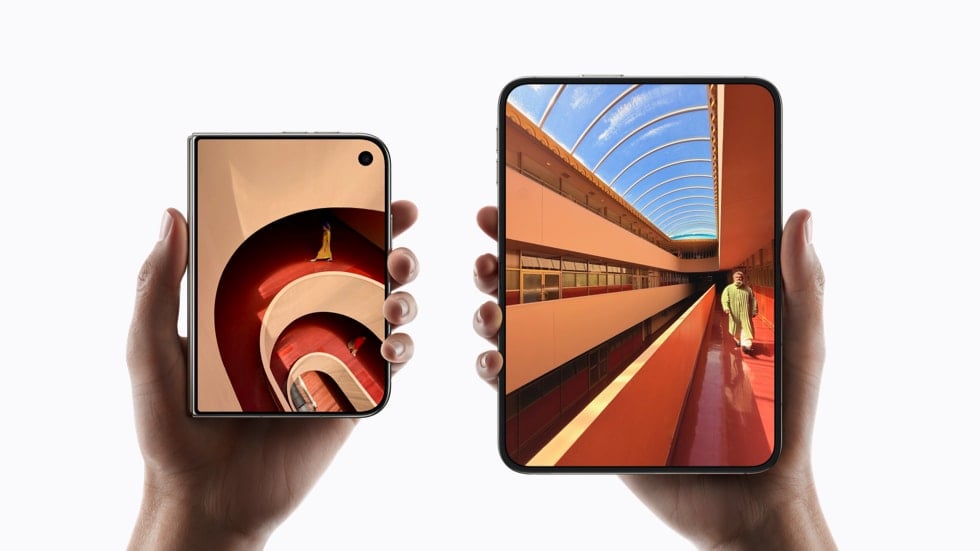
After years of watching competitors like Samsung and Google iterate on flexible displays, Apple has officially entered the foldable smartphone market. Announced today, the iPhone Duo is a book-style foldable that starts at a steep $1,999, bringing the company’s hardware design to a category it has long observed from the sidelines.
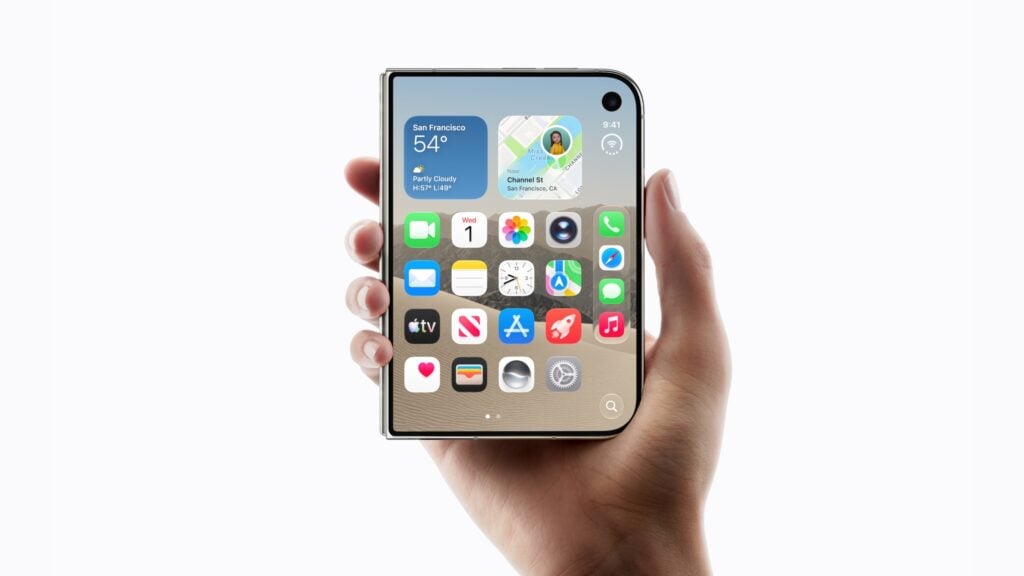
The iPhone Duo features a 5.4-inch outer display and opens to reveal a 7.6-inch inner screen. Both are Super Retina XDR panels equipped with 120Hz ProMotion, always-on support, and a peak outdoor brightness of 3,000 nits.
The two screens share the same aspect ratio, which should help apps scale consistently when moving between the cover and the main display. The inner screen utilizes a nano-texture finish designed to reduce glare and minimize the visibility of the center crease. It also houses an under-display FaceTime camera, keeping the 7.6-inch panel free of a notch or hole-punch cutout.
To address the standard durability concerns associated with foldables, Apple has built the Duo’s chassis from grade 5 titanium, paired with a 3D-printed hinge cover. The device carries an IP68 rating for water and dust resistance. According to Apple, the hinge relies on over 100 components to keep the flexible display flat when open, while a custom polymer layer and a titanium base plate reinforce the inner screen against daily wear.
Internally, the phone runs on the A20 Pro chip, the same processor powering the iPhone 18 Pro lineup. Because foldables present unique thermal challenges, Apple has included a custom vapor chamber. Power is managed by a dual-battery system split between the two halves of the device, which Apple claims will provide up to 31 hours of video playback on the inner screen and 44 hours on the outer screen.
The rear camera system consists of a 48MP main sensor and a 48MP ultrawide lens. With the new form factor, Apple is adopting several software features that will be familiar to anyone who has used an Android foldable. This includes Duo Preview, which uses the cover screen as a viewfinder for high-resolution selfies, and Kid Cue, which plays animations on the outer display to get children to look at the camera.
On the software side, the Duo ships with iOS 27, which introduces native Split View multitasking to the iPhone for the first time, allowing users to run two apps side-by-side. The interface has also been tweaked for the hardware, moving elements like the Dynamic Island and the app dock to the side of the screen to maximize vertical space.
The iPhone Duo is an eSIM-only device worldwide and supports Wi-Fi 7. It will be available in two colors, Star White and Night Sky. Pricing starts at $1,999 for the base 256GB model, with the 512GB version priced at $2,199, and a 1TB option available for $2,399.
Pre-orders begin on October 16 ahead of general availability on October 23. Apple has also said that the device will gain support for the USB-C Apple Pencil in a software update later this year.
For more daily updates, please visit our News Section.
Apple has announced the iPhone 18 Pro and iPhone 18 Pro Max today. The new phones focus on hardware adjustments to the camera system, a shift to a 2-nanometer processor, and improved internal cooling.
iPhone 18 Pro & Pro Max Specifications
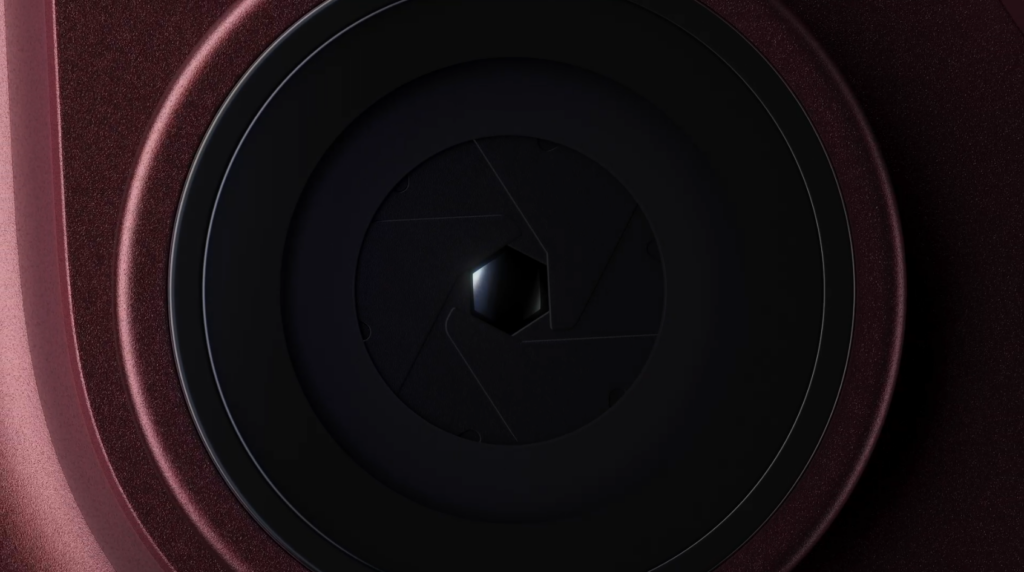
The primary hardware update is the 48-megapixel main camera, which now features a mechanical variable aperture. Using a six-blade system, the lens can physically adjust between f/1.48 for low-light situations and f/4.0 for a wider depth of field.
This allows for optical adjustments to light and focus rather than relying entirely on software processing. To accompany this, Apple is updating the default iOS camera app with manual controls, allowing users to adjust shutter speed and white balance, and view a live histogram.
Apple is also introducing a feature called Apple Reference Image. When enabled, the camera signs the sensor data at the moment of capture, creating an unalterable reference file. This is designed to help users and platforms verify whether a photo is an original, unedited shot or if it has been altered or generated by AI.
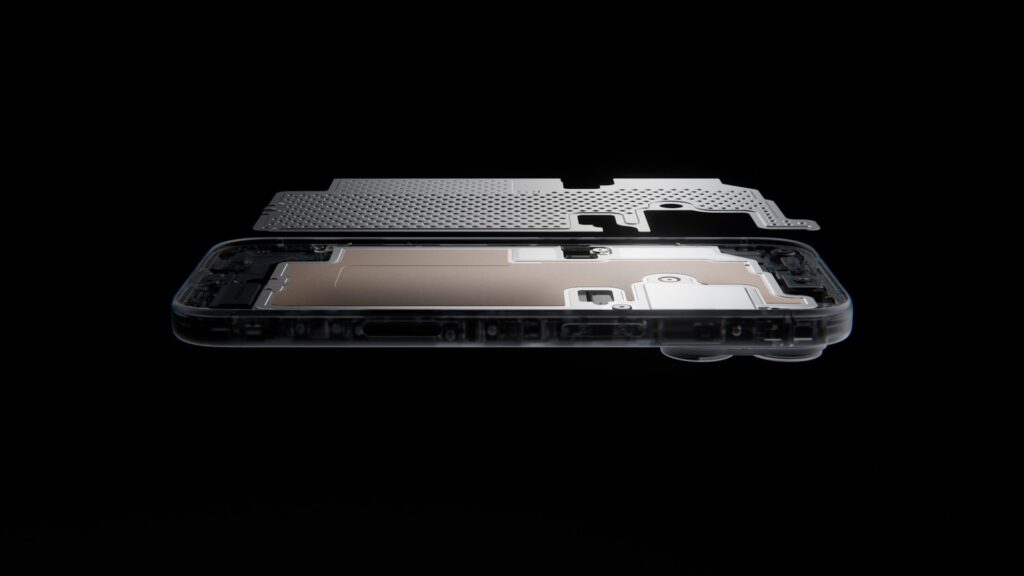
Internally, the phones are powered by the A20 Pro chip, manufactured on a 2-nanometer process. It includes a 6-core CPU, a 7-core GPU, and a 32-core Neural Engine for on-device AI tasks. Apple has also redesigned the internal cooling system.
The chip now attaches directly to a vapor chamber that has three times the surface area of the one used in the iPhone 17 Pro, which should help maintain performance during sustained workloads without overheating.
The phones will ship with iOS 27, which includes an updated version of the company’s voice assistant, branded as Siri AI. The software is designed to read on-screen context and pull data from across different apps. Additionally, the Dynamic Island interface has been adjusted to display up to three Live Activities simultaneously.
For connectivity, the devices support Wi-Fi 7, Bluetooth 6, and use a new Apple-designed C2 cellular modem. In the US and several other regions, the phones will be eSIM-only. Apple says that removing the physical SIM tray allowed them to increase the battery size, giving the Pro Max an estimated 45 hours of video playback.
Pricing and Availability
The new models come with a price increase over previous generations. The iPhone 18 Pro starts at $1,199, and the Pro Max starts at $1,299. Both base models include 256GB of storage, with higher capacity options available at 512GB, 1TB, and 2TB.
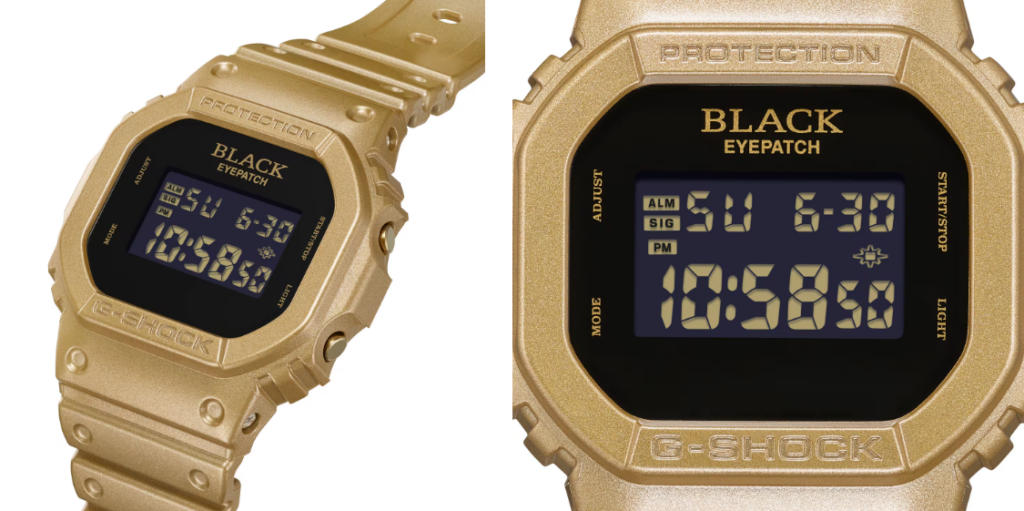
Casio is releasing a new G-Shock watch in collaboration with the Tokyo-based streetwear label BlackEyePatch. This marks the third time the two companies have partnered on a release. The new model, the DW-5600BEP-9, is scheduled to launch in October 2026. It will retail for ¥19,800 ($129) in Japan, and its appearance on Casio’s global website indicates it will be available in international markets as well.
The watch is a modified version of the DW-5600, which is Casio’s standard square-faced digital watch. The main difference for this release is the color scheme. The bezel and the strap are molded in a bright gold tone, which is paired with a standard black digital display.
Casio says that the design is meant to reference hip-hop culture, which aligns with BlackEyePatch’s usual apparel output. Aside from the color, the watch features an engraved BlackEyePatch logo on the stainless steel case back and comes in custom packaging.
From a materials standpoint, the bezel and band are made from bio-based resin. Casio has been transitioning most of its new G-Shock models to this material over the last couple of years as a renewable alternative to traditional petroleum-based plastics.
Internally, the DW-5600BEP-9 is a standard DW-5600. It has a case size of 48.9 x 42.8 x 13.4 mm and weighs 53 grams. It includes the standard G-Shock shock resistance and 200 meters of water resistance. The watch runs on a CR2016 battery, which Casio estimates will last for about five years.
The software features are also standard for this module. It includes a 1/100-second stopwatch, a 24-hour countdown timer, a multi-function alarm, and an hourly time signal. The backlight is a white LED that can be set to flash when an alarm or timer goes off. The calendar is pre-programmed through the year 2099, and the timekeeping is accurate to plus or minus 15 seconds per month.
We use cookies on our website to give you the most relevant experience by remembering your preferences and repeat visits. By clicking “Accept”, you consent to the use of ALL the cookies.
This website uses cookies to improve your experience while you navigate through the website. Out of these, the cookies that are categorized as necessary are stored on your browser as they are essential for the working of basic functionalities of the website. We also use third-party cookies that help us analyze and understand how you use this website. These cookies will be stored in your browser only with your consent. You also have the option to opt-out of these cookies. But opting out of some of these cookies may affect your browsing experience.
Necessary cookies are absolutely essential for the website to function properly. This category only includes cookies that ensures basic functionalities and security features of the website. These cookies do not store any personal information.
Any cookies that may not be particularly necessary for the website to function and is used specifically to collect user personal data via analytics, ads, other embedded contents are termed as non-necessary cookies. It is mandatory to procure user consent prior to running these cookies on your website.