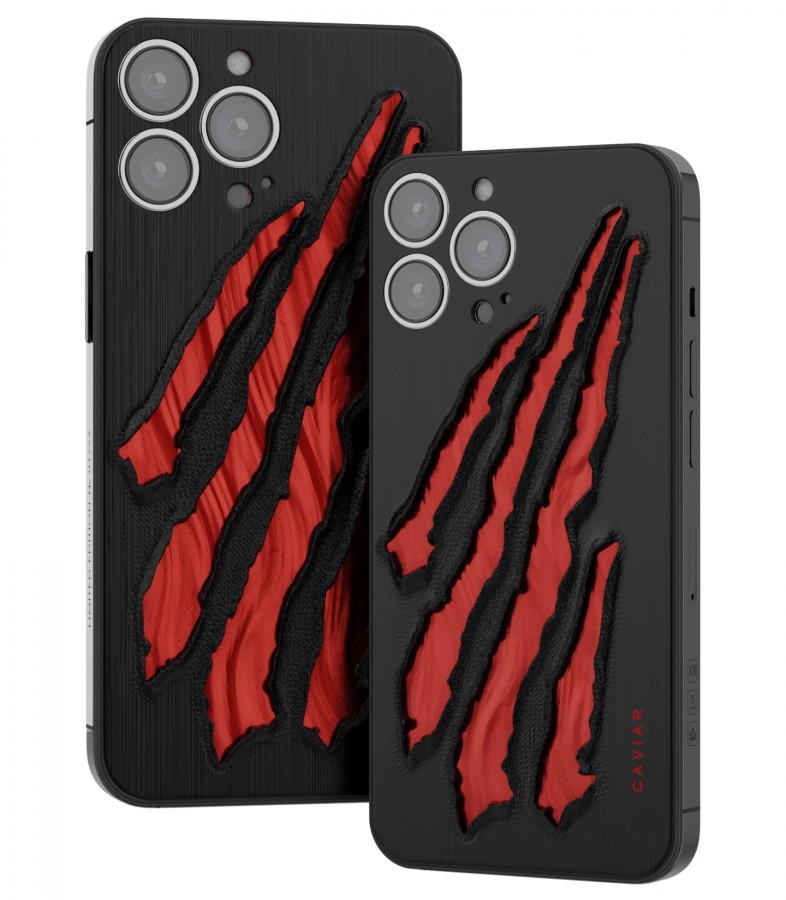
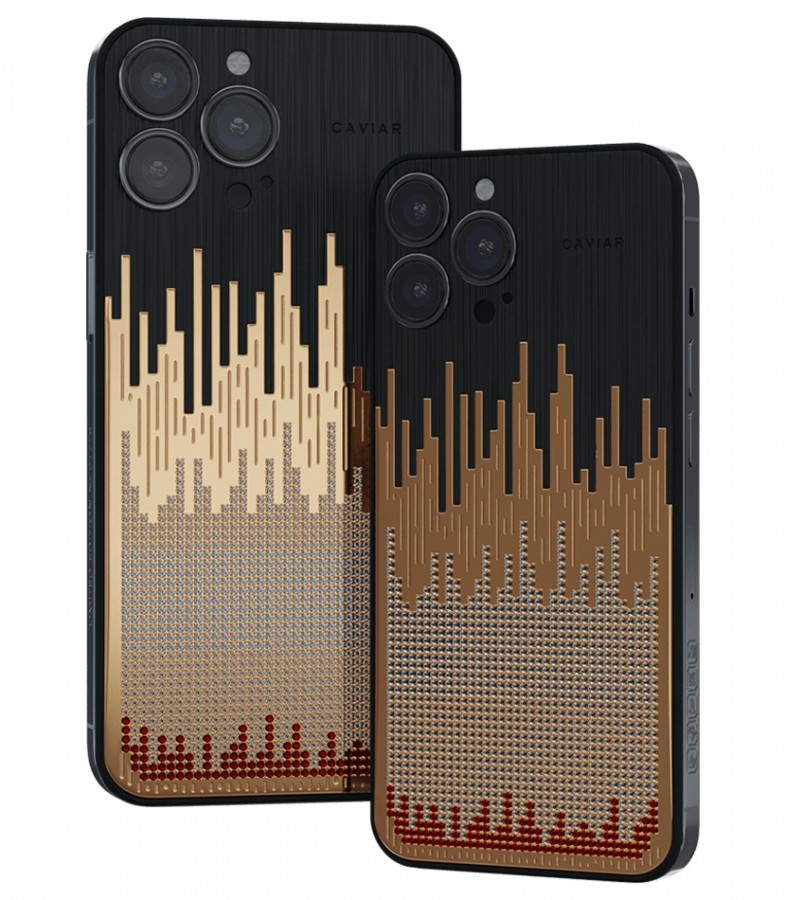
Caviar has just released new ultra high end customized versions of the Apple iPhone 13 Pro series. The company has just unveiled an exclusive iPhone 13 Pro model that costs a whopping 9,000 US Dollars and even features a Dinosaur tooth.
For those out of the loop, Caviar is a luxury goods maker from Russia that makes extreme premium variants of popular electronic products like smartphones, consoles, and more. Now, the brand has shifted its focus to the iPhone 13 series again, specifically the Pro models, and has launched the new Tera Collection. In this series, Caviar has released the iPhone 13 Pro, and 13 Pro Max in Tyrannophone, Monsterphone, and Teradiamond model.
While the Teradiamond is the top end in the series with a whopping 49,240 US Dollar price tag, what caught our eye was the “mid entry” Tyrannophone that features an actual dinosaur tooth fragment. The so called cheapest of the bunch of the Monsterphone, which still costs over 7,000 US Dollars, had features a hardened titanium panel while the Teradiamond variant sports over 1,000 diamonds on the back (hence the price). Arriving at the iPhone 13 Pro Tyrannophone model, it features a tooth fragment from an actual T-Rex, which is estimated to be a whopping 80 million years old.
It even features gold plated jewelry alloy on top of a lightweight composite foundation. The red eye on the back is a made of real amber while the had is made from titanium and a tiny piece of real tooth embedded as well. This model is a limited edition and Caviar plans on selling just 7 units in total to ensure its exclusivity. The Tera models all feature 1 terabyte of storage, with the Teradiamond costing 8,610 US Dollars while the Pro Max variant costs 9,150 US Dollars. So for those that can afford it, welcome to the Jurassic park.
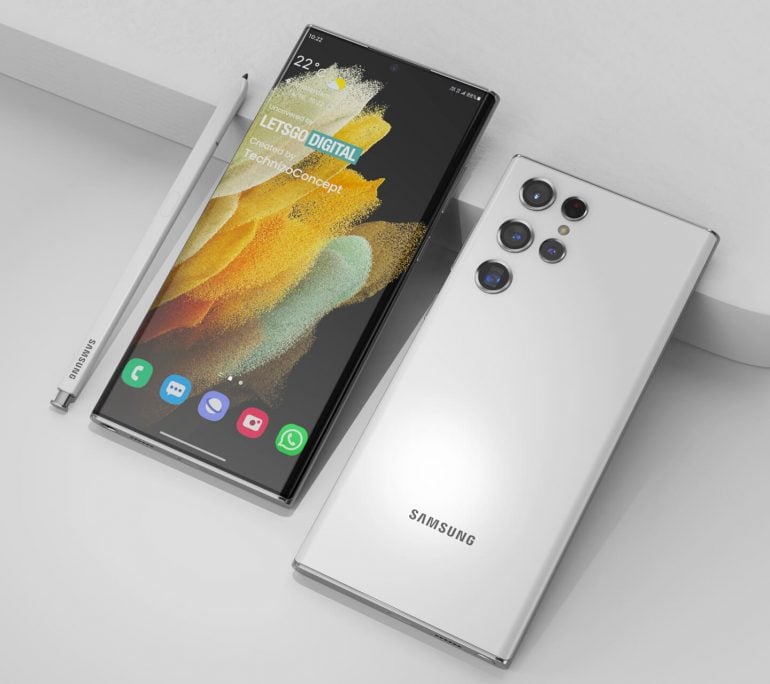
The upcoming Samsung Galaxy S22 and Galaxy S22+ will have a front camera with a resolution of 10 megapixels, making it the fourth year in a row with Samsung not changing the pixel count of its flagship phones. The only exception is the S22 Ultra which is expected to pack a 40MP sensor, just like the S21 Ultra.
Samsung last changed the front camera resolution with the Galaxy S10 series back in 2019. The S9 and S8 series had both come with 8MP sensors and the 2MP boost had brought about an adequate increase in selfie quality. However, the resolution has since remained constant at 10MP with the Galaxy S20 from 2020, Galaxy S21 from 2021, and now the Galaxy S22 series from 2022 (via Galaxy Club).
Image: LetsGoDigital
This obviously doesn’t include the Ultra models though. The Samsung Galaxy S21 Ultra and S20 Ultra came with a much more dense 40MP resolution, and it turns out that the Galaxy S22 Ultra’s front camera will sport the same pixel count.
And as for the rear cameras, the 2022 Ultra model will feature a setup not too different from the S21 Ultra. The primary is a 108MP snapper. It is joined by a 12MP ultra-wide lens, a 10MP 3X telephoto, and another 10MP 10X telephoto lens.
The Samsung Galaxy S22 series is set to make its debut on February 8, with an actual release following 10 days later.
Google has just recently launched its much awaited 2021 flagship series, the Pixel 6 series. But many early buyers found issues with its slow and sometimes unreliable fingerprint sensor. And now, newer reports have pointed at the biometric scanner suffering from even more dire issues.
According to a thread on Reddit, multiple users have had their fingerprint sensor on the Pixel 6 series break entirely, with the reason being quite bizarre. Reportedly, once the Pixel 6 completely runs out of battery, the smartphone somehow permanently disables the fingerprint sensor. Some users noted that the fingerprint scanner had become entirely non functioning even after rebooting after their phone’s had initially died from an empty battery. As of right now, certain Redditors found that a factory reset was the only way to fix this issue, however, this would be quite a hassle.
Interestingly, one Pixel 6 user also commented on the thread, saying that they faced the issue without their handset running out of battery. In other words, the dead battery might be a primary trigger, but certain other factors related to the battery could potentially be the reason for this issue. Notably, While the search engine giant previously stated that the slow scanner is by design, we had also reported on unregistered fingerprints also managing to unlock the device
Fortunately, Google has acknowledged this problem and an official issue tracker has been registered. So for now, we would suggest making sure that your Pixel 6 series smartphone does not run out of battery if you plan on avoiding a factory reset. Stay tuned for more as well, since we will be providing updates when additional information is available regarding this matter.
Samsung is reportedly working on the Galaxy S21 Fan Edition smartphone’s launch. A South Korean publication recently reported that it is scheduled to debut at the Consumer Electronics Show (CES), which will be held in early January 2022. The report also mentioned that it will not be released in South Korea, but it will be heading to European markets by mid-January. The S21 FE has been spotted at the NBTC certification site of Thailand, which indicates that it will be also heading to some markets in Asia. At the same time, the handset has also appeared at the Geekbench benchmarking site.
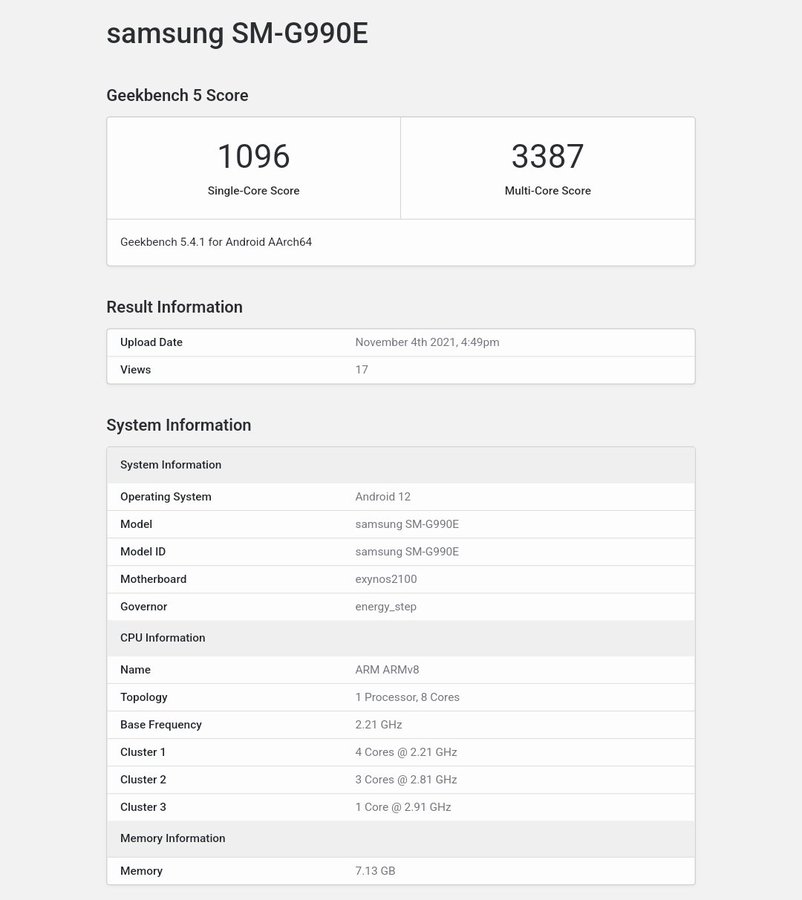
Tipster Tron has shared a screengrab of the Geekbench listing of the Samsung phone with SM-G990E model number. Reports have revealed that this model number belongs to the Galaxy S21 Fan Edition.
The Geekbench listing reveals that the phone is driven by the Exynos 2100 chipset. The CPU information shows that it has one prime CPU core working at 2.91 GHz, three CPU cores clocking at 2.81 GHz, and four CPU cores working at 2.21GHz. The SoC is assisted by 8 GB of RAM. The device runs on the latest Android 12 OS. In the single-core and multi-core tests, the S21 FE scored 1096 and 3387 points, respectively.
Like the S21 series smartphones, the Galaxy S21 Fan Edition is expected to arrive with Snapdragon 888 or Exynos 2100 chip depending on the market. It may come with 8 GB / 12 GB of LPDDR5 RAM and 128 GB / 256 GB of UFS 3.1 storage.
It is expected to come with a 6.41-inch AMOLED display that offers an FHD+ resolution and a 120Hz refresh rate. For selfies, it may feature a 32-megapixel front camera, and its rear camera module may include a 12-megapixel main camera, a 12-megapixel ultrawide shooter, and an 8-megapixel telephoto camera. It could be backed by a 4,500mAh battery, which is expected to support 25W fast charging, wireless charging, and reverse wireless charging.
Earlier this week, Apple had requested a delay over the implementation of new changes in its payment system in a virtual hearing. However, the US Judge denied this request, which gives the company till December 9 to make the changes to its App Store.
For those unaware, the changes in question would allow developers of various apps to add an in app link to an external website. Through this, users will be also be given an option for alternate payment options that do not use the in app payment system. After the initial ruling, the Cupertino based giant was given 90 days to implement the new changes. But back in October, Apple filed a request for more time as it sought to wait until all appeals in the lawsuit against Epic Games were concluded.
As of right now, the iPhone maker’s request has been denied by US Judge Yvonne Gonzalez Rogers and no additional time will be given to add the requested App Store changes. The original ruling also read that the company can no longer restrict developers from including “in their apps and their metadata buttons, external links, or other calls to action that direct customers to purchasing mechanisms” (Via MacRumors).
The Judge believes that the app developers should have the option to choose an in app payment system or an external one, since “Consumer information, transparency, and consumer choice is in the interest of the public.” Although, Apple argued that the new changes might “upset the careful balance between developers and customers provided by the App Store.”
A new model of the BYD Tang EV just made its appearance in the Chinese Ministry of Industry and Information Technology’s catalog with a slightly updated design. The company previously launched the BYD Tang EV internationally in regions like Norway and this new model appears to be its successor.
The most prominent design change is in the front of the vehicle which now comes with a more modern-looking, minimal grille (via IT Home). This year’s model featured a grille that occupied a larger part of the front of the EV but the newer design comes with a smaller one with chrome trim. The newer grille also holds the “Tang” car logo.
Apart from this, the rest of the body hasn’t been changed much. The rear and sides of the vehicle are almost indistinguishable from its older model, although the body length has been increased slightly. As such, the length, width, and height of the new BYD Tang EV are 4900mm x 1950mm x 1725mm, respectively, while the wheelbase stands at 2820mm.
Moving on to the SUV’s engine, it is an electric motor with a power of 168kW (approximately 229 horsepower). The power has in fact been reduced when compared to the current single-motor version of the Tang EV. However, a dual-motor four-wheel-drive version is expected to be launched soon to compensate.
The lithium iron phosphate Blade Battery of the new BYD Tang EV has been upgraded with an increased density, rising from 140wh/kg to 150wh/kg, which is a considerable upgrade. Because of this, the battery life/range of the vehicle will be reaching 700 kilometers.
Current BYD Tang EV models on sale are three in number, namely long-range, four-wheel-drive high-performance, and four-wheel-drive high-performance flagship.
The newer model will be replacing the current single-motor variant and is set to be unveiled at the Guangzhou Auto Show on November 19.
Earlier this week, TSMC (Taiwan Semiconductor Manufacturing Company) has announced that it would be investing a sizeable amount of 7 billion US Dollars for its new chip plant that will be constructed in Japan.
The new chip plant is a major step for the world’s largest contract chipmaker who is shifting its advanced semiconductor production outside of its home country for the first time. Notably, the firm will be investing the large figure along with Sony, who has pledged to invest 500 million US Dollars into this factory as well. As per our previous report. this new chip plant will also be the one that supplies Sony with semiconductors that will be used for its reputed image sensor business.
According to Reuters, the construction of the new chip plant will begin next year, while the production is expected to start by the end of 2024. In a joint statement, Sony and TSMC stated that the “The fab is expected to directly create about 1,500 high tech professional jobs and to have a monthly production capacity of 45,000 12 inch wafers.” Furthermore, the site will also produce 22 nanometer and 28 nanometer chips to address the robust demand for specialty chip technologies.
The project also has great support from the Japanese government, although, whether this support included financial backing is currently unknown. However, we do know that Japanese industry ministry officials are considering this a success since they have sought to bring TSMC’s plant to the country. Amid the global shortage of semiconductors, unsteady supply chains, and even the trade disputes between US and China, the demand for key components for production still grows. So, Japan will likely benefit from this new chip plant.
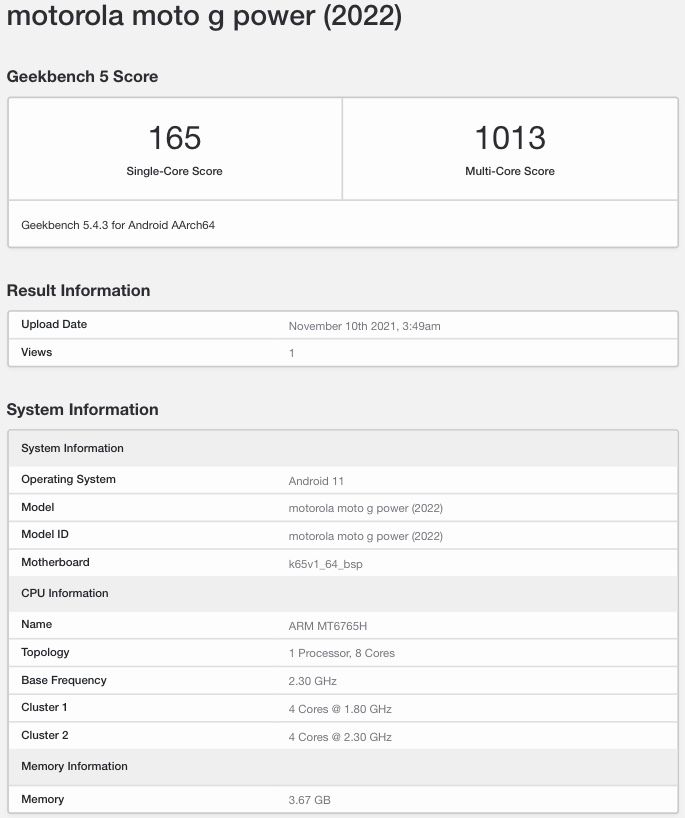
In October, reliable tipster Evan Blass revealed that Motorola is working on two new phones namely Moto G Power (2022) and Moto G200. Both phones are codenamed as Tonga and Yukon, respectively. While the rumor mill has spilt the major specs of the G200, there has been no leak on the G Power (2022). It appears that the launch date of the G Power (2022) could be drawing near as it has been spotted at the Geekbench benchmarking site today.
The Geekbench listing of the Moto G Power (2022) shows that it is powered by a MediaTek chip with an MT6765H model number. The source code of the listing shows that the SoC is equipped with PowerVR Rogue GE8320 GPU. These findings are enough to conclude that the G Power (2022) is driven by the Helio G35 chipset.
The Geekbench listing further reveals that the smartphone is equipped with 4 GB of RAM and Android 11. In the single-core and multi-core tests of the benchmarking platform, the handset scored 165 and 1103 points, respectively. The other details of the smartphone are under wraps.
As far as the Moto G200 is concerned, it is speculated to feature an FHD+ display with support for a 144Hz refresh rate, Snapdragon 888 mobile platform, 108-megapixel + 13-megapixel + 2-megapixel triple camera unit, a 16-megapixel front camera, and Android 11. It is speculated to launch as the Motorola Edge S30 in China.
Motorola is also working on the Motorola Edge 30 Ultra. It is likely to come with specs such as a 6.67-inch OLED FHD+ 144Hz display, Snapdragon 898 chip, 8 GB / 12 GB of LPDDR5 RAM, 128 GB / 256 GB of UFS 3.1 storage, 50-megapixel + 50-megapixel + 2-megapixel triple camera unit, a 60-megapixel front camera, a 5,000mAh battery with 68W fast charging. It is expected to debut as the Moto Edge X in China in December.
Earlier this month, Lenovo had announced its flagship Lenovo Xiaoxin Pad Pro 12.6 tablet in the Chinese market. Today, the device officially goes on sale for an initial price of 3,699 yuan, which roughly converts to $579.
The tablet has been launched as an upgraded version of the Xiaoxin Pad Pro 2021 which was announced earlier this year. The device features a metal body design and continues with the company’s iconic dual-tone finish.
It features a 12.6-inch Samsung E4 AMOLED display with a screen resolution of 2560 x 1600 pixels. The display offers a 120Hz refresh rate, HDR10+, and Dolby Vision. The panel also comes with a 10,000,000:1 contrast ratio, 600 nits peak brightness, 400 nits typical brightness, and covers 100% of the DCI-P3 color gamut.
Under the hood, it comes powered by the Qualcomm Snapdragon 870 chipset which is coupled with 8GB of LPDDR5 RAM and 256GB of UFS 3.1 internal storage. In the camera department, it features a dual-camera setup on the back that consists of a 13-megapixel primary sensor and a 5-megapixel ultra-wide sensor.
The Lenovo Xiaoxin Pad Pro 12.6 also comes with a dual-camera setup on the front side which includes an 8-megapixel shooter and a ToF sensor for face authentication. Connectivity options on it include dual-band Wi-Fi 6 and Bluetooth 5.2.
It runs the Android 11 operating system with ZUI 13 for Pad custom interface on top. The tablet is powered by a 10,200mAh battery with support for 45W fast charging but the company is bundling the 30W charger in the box.
Vivo is working on the successor of the Vivo Watch or its second-generation smartwatch which is named Vivo Watch2. Ahead of the company official revealing details about it, the upcoming product has now surfaced online.
The Vivo Watch2 has appeared in the Vivo Sports Health application which showcases how it will look. From the image, it’s evident that there isn’t much difference between the first-generation and the upcoming second-generation model.
Prior to this, the Vivo Watch2 was passed through the TENAA certification process which had also shed some light on this new device. It is known that the smartwatch will come with an OLED screen with a higher screen-to-body ratio in a round dial.
Further, the device will come powered by a 501mAh battery which reportedly supports triple-SIM eSIM technology with independent eUICC chips. Apart from 4G connectivity, it is expected to have Bluetooth 5.1 and voice assistant support.
There’s a possibility of Vivo Watch2 getting launched in only a single size of 46mm as the 42mm version with eSIM support may have poor battery life.
As of now, there’s not much information known about this new upcoming smartwatch from Vivo but given that the Vivo Watch was launched in September this year, its successor is likely to get launched by the end of this year.
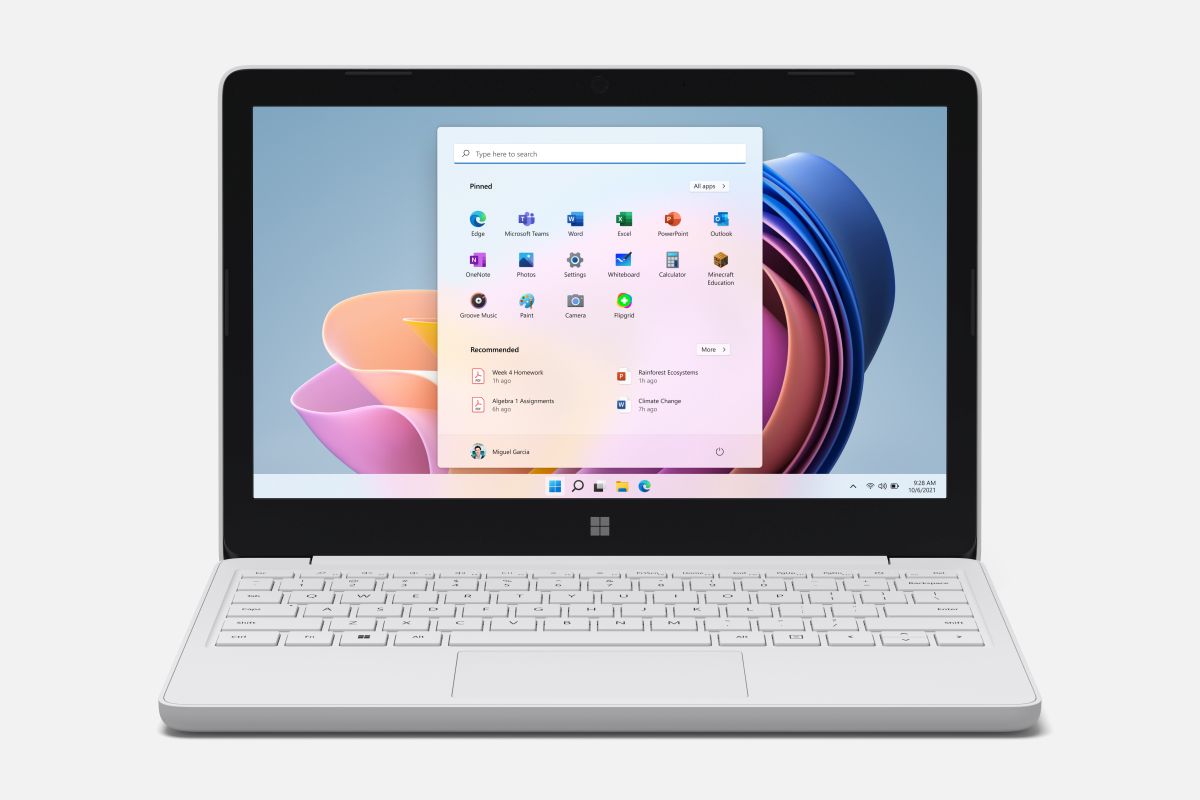
Microsoft has announced the Surface Laptop SE. The affordably priced notebook will rival laptops running on Chrome OS. The Surface Laptop SE runs on the all-new Windows 11 SE, which is mainly designed for students. Hence, the Surface Laptop SE will be sold exclusively to schools and students.
Surface Laptop SE specifications
The Microsoft Surface Laptop SE has an 11.6-inch TFT LCD display that produces an HD resolution of 1366 x 768 pixels and a 16:9 aspect ratio. It is powered by the modest Intel Celeron N4020 or N4120 processor.
The notebook comes with 4 GB / 8 GB of RAM and eMMC storage choices like 64 GB / 128 GB. It features a 1-megapixel HD camera for video calls.
Microsoft Surface Laptop SE
On the connectivity front, the Surface Laptop SE offers a USB-A port, a USB-C port, a DC port, and a 3.5mm audio jack. It features stereo speakers and promises up to 16 hours of standby time. The notebook weighs 1.11kg.
Microsoft will sell spare parts of the Surface Laptop SE to schools through its authorized partners. This will allow schools to replace components on-site without the need of sending them to the repair center.
Surface Laptop SE pricing and availability
The Surface Laptop SE is scheduled to release in markets like the US, the UK, Canada, and Japan by early 2022. The 4GB + 64GB base model will be priced at $249, whereas the 8GB + 128GB variant will cost $329. In future, brands like Acer, Dell, HP, Lenovo, Fujitsu, Positivo, and JK-IP will also release laptops powered by Windows 11 SE.
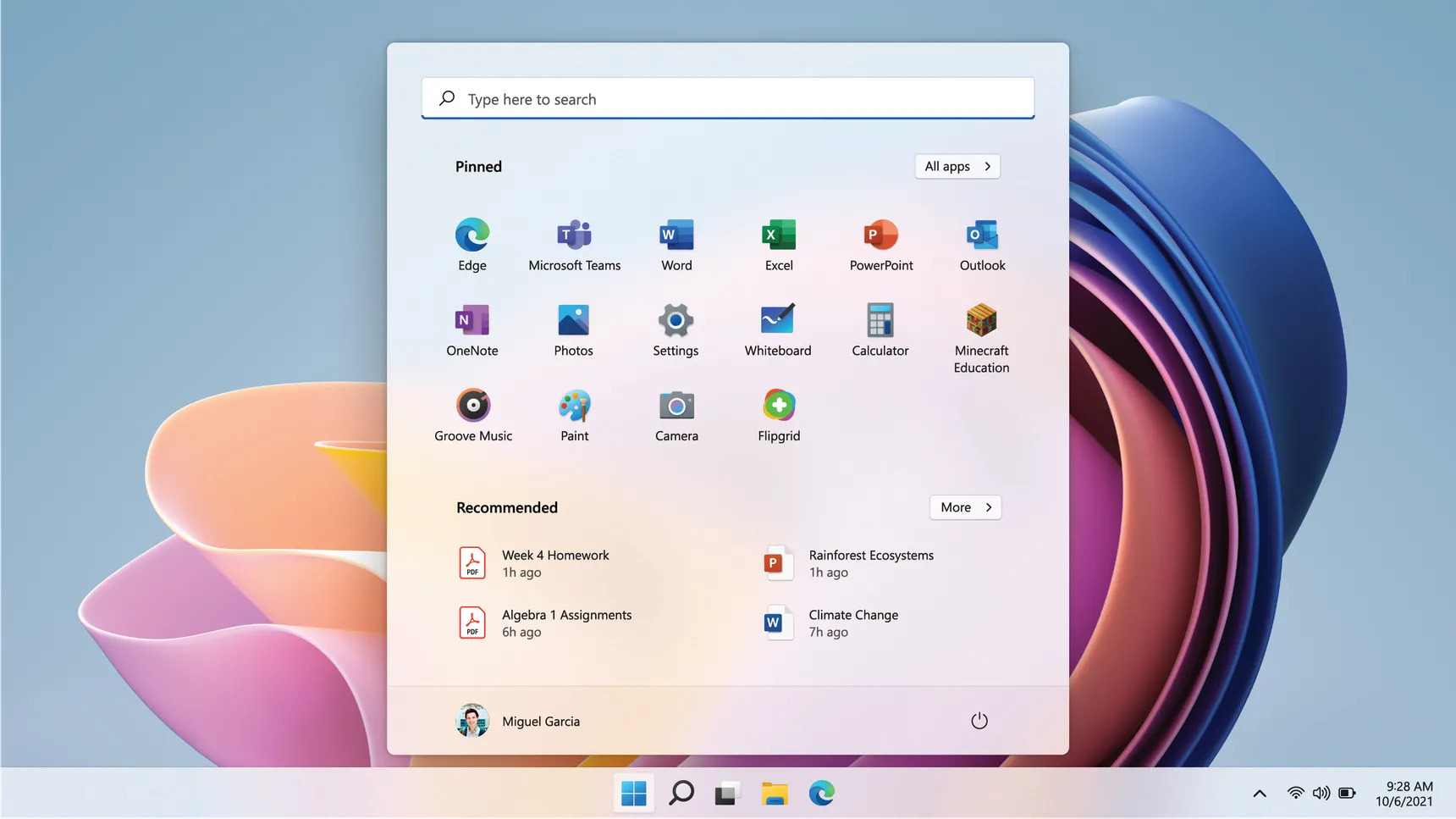
Microsoft has announced a new version of the Windows 11 operating system which is designed to run on low-cost laptops — Microsoft Windows 11 SE. It is specially designed for students and schools.
Windows 11 SE is a stripped-down version of the regular Windows 11 operating system and is targeting K-8 students. The laptops powered by this new edition of the OS will be coming from companies like Dell, HP, Acer, and ASUS, and others.
Microsoft is attempting to focus on simplicity and is optimized to run on slower or low-cost hardware. There’s no Microsoft Store for installing apps but Win32 and Universal apps can be deployed on the device.
Administrators have exclusive control over what apps are installed and run on Windows 11 SE laptops via Microsoft Intune for Education. It has removed several features from the standard Windows 11 for creating a more streamlined and distraction-free experience.
This isn’t the first time Microsoft has launched a stripped-down version of the regular Windows operating system. Earlier, the company had launched Windows 10 S which is streamlined for security and performance, while providing a familiar experience.
The Redmond-based tech giant was also working on a new modern version of the Windows OS, dubbed as Windows 10X with a focus on dual-screen devices but the product was eventually canceled.
Aaron Woodman, Microsoft’s General Manager of Windows, says that this latest Windows 11 SE is more focused on solving a specific problem — How can Microsoft create the ideal OS experience for students and teachers?
With this new version of the operating system, Microsoft is directly competing against the Chrome OS that is powering the Chromebooks which have been adopted for many schools and are offered to students.
Do note that the Windows 11 in S Mode is still a thing and allows users to switch to the normal Windows 11 system while the Windows 11 SE is meant to be run strictly in schools on hardware managed by school administrators.
The Surface Laptop SE, costing $249, is the first device to come running this new Windows 11 SE operating system. But there will be devices from other companies starting as low as $219 and will be launched through the remainder of this year and into 2022.
Earlier this month rumour broke that Huawei will soon launch a Microsoft Surface-like laptop dubbed MateBook this month. Today a Chinese tipster has revealed that it will be called the Huawei MateBook E and for the first time, a MateBook device will run the latest Windows 11 operating system.
The upcoming Huawei MateBook E will be a 2-in-1 notebook succeeding the old MateBook E 2019. It will bring major design changes. The laptop will also have screen upgrades and the keyboard, the stylus will also be greatly improved. Considering that it will be a Windows 11 machine, it will also bring more updated software features. That said, the connectivity would also improve.
Apart from this, there’s no other information available. However, the launch is expected to be soon as Huawei is holding a launch event this month for the launch of the Huawei Watch GT3, headphones, and other gadgets. We expect the Huawei MateBook E to debut alongside these gadgets.
In related news, the predecessor Huawei MateBook E 2019 was launched with a Windows 10 operating system and was powered by Snapdragon 850 chipset. It featured a 12-inch touch screen display with a 3:2 aspect ratio. It came with a 13MP main camera and a 5MP front camera. The laptop came with a dual-speaker setup powered by Dolby Atmos. Huawei also integrated the Huawei Share 3.0 feature on the laptop.
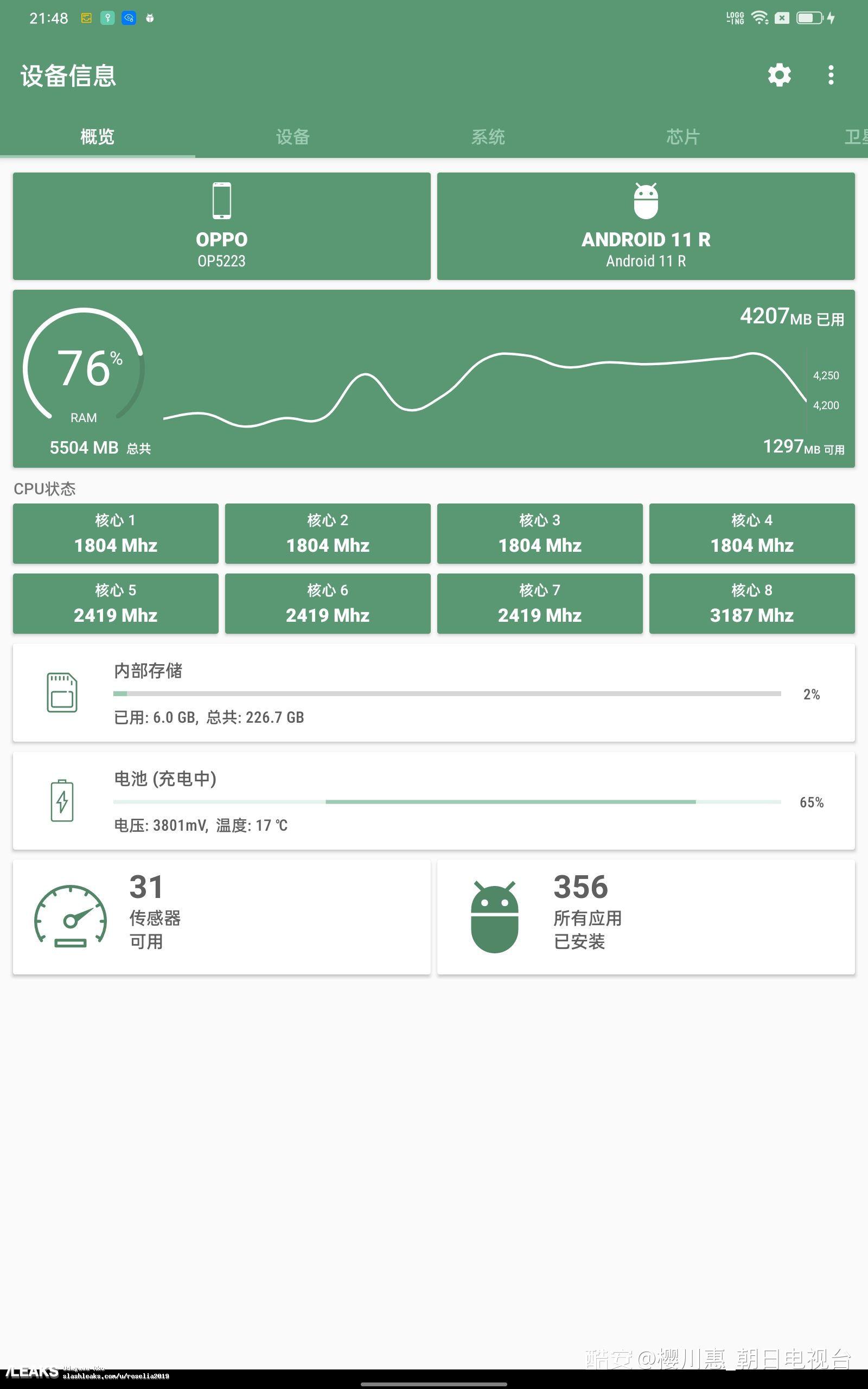
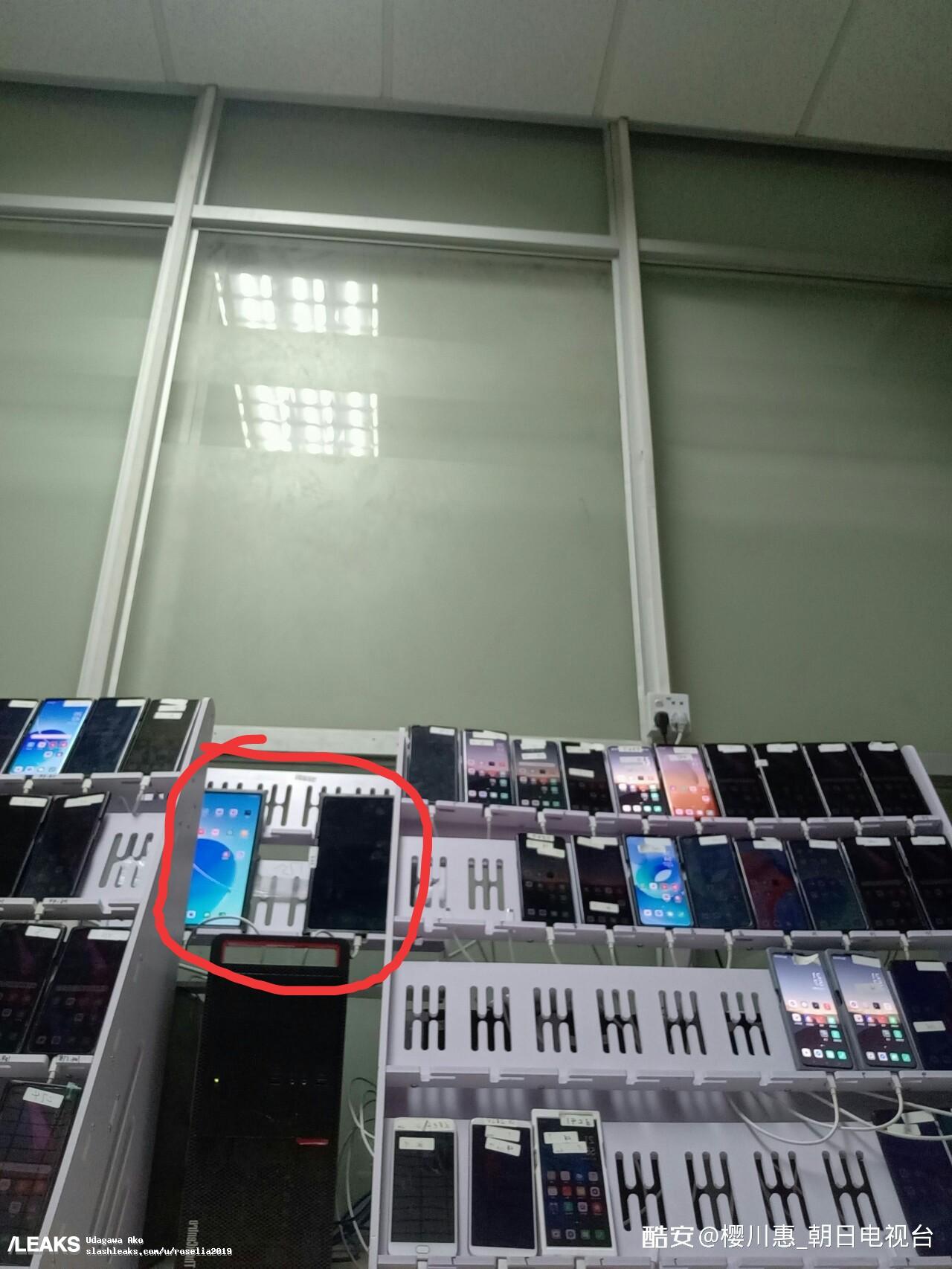
OPPO is reportedly working on its first tablet. While the official moniker of the device is under wraps, the rumor mill is calling with the OPPO Pad name. Tipster Digital Chat Station had shared a render of the alleged tablet back in August. Now, fresh leaks that have been shared by Nils Ahrensmeier and SlashLeakshave revealed the live images and key specs of the OPPO Pad.
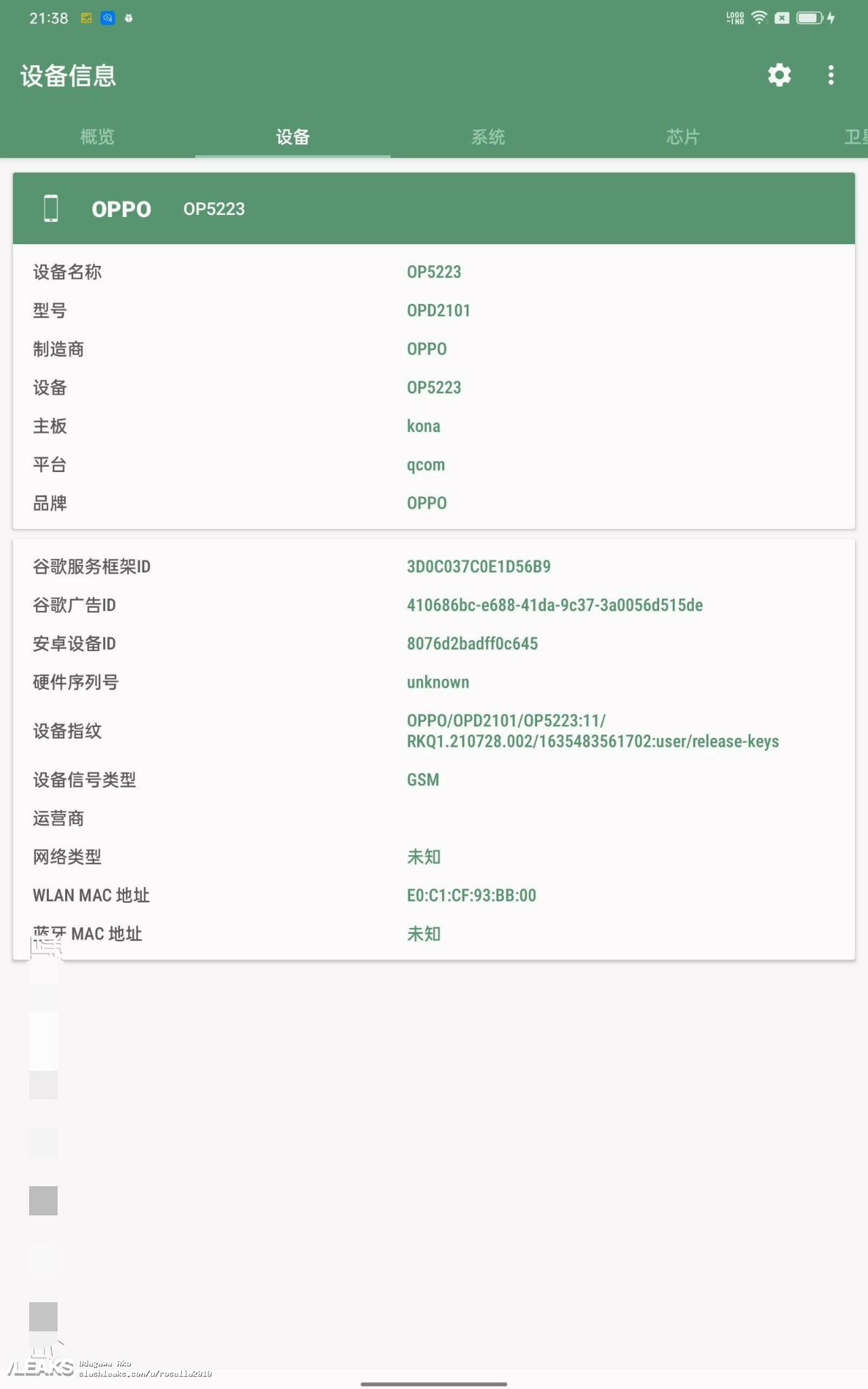
The images shared by SlashLeaks reveals that the OPPO tablet offers a 120Hz refresh rate display, Snapdragon 870 chipset (mentioned as kona), 6 GB of RAM, 256 GB of built-in storage, and ColorOS 12 flavored Android 12. The other specs of the tablet are under wraps.
1 of 3
OPPO tablet specs leak
OPPO tablet specs leak
OPPO tablet specs leak
The image by Ahrensmeier gives a look at real prototypes of OPPO tablets placed alongside some of its smartphones. The exact screen size of the device is not known. Also, it is unclear whether the tablet features an LCD or AMOLED screen. The previously shared render by Digital Chat Station had suggested that it will be sporting a punch-hole cutout for the front camera.
The ColorOS 12 for the OPPO tablet is expected to feature a dock bar and desktop widgets for quick operations. The UI is also said to offer seamless interconnected operations between devices like smartphones, smartwatches, headphones, and other devices.
The inclusion of the Snapdragon 870 will allow it to rival Xiaomi Mi Pad 5 and Mi Pad 5 Pro tablets. There is no word on the launch date of the OPPO Pad. It remains to be seen whether it goes official before the end of this year.
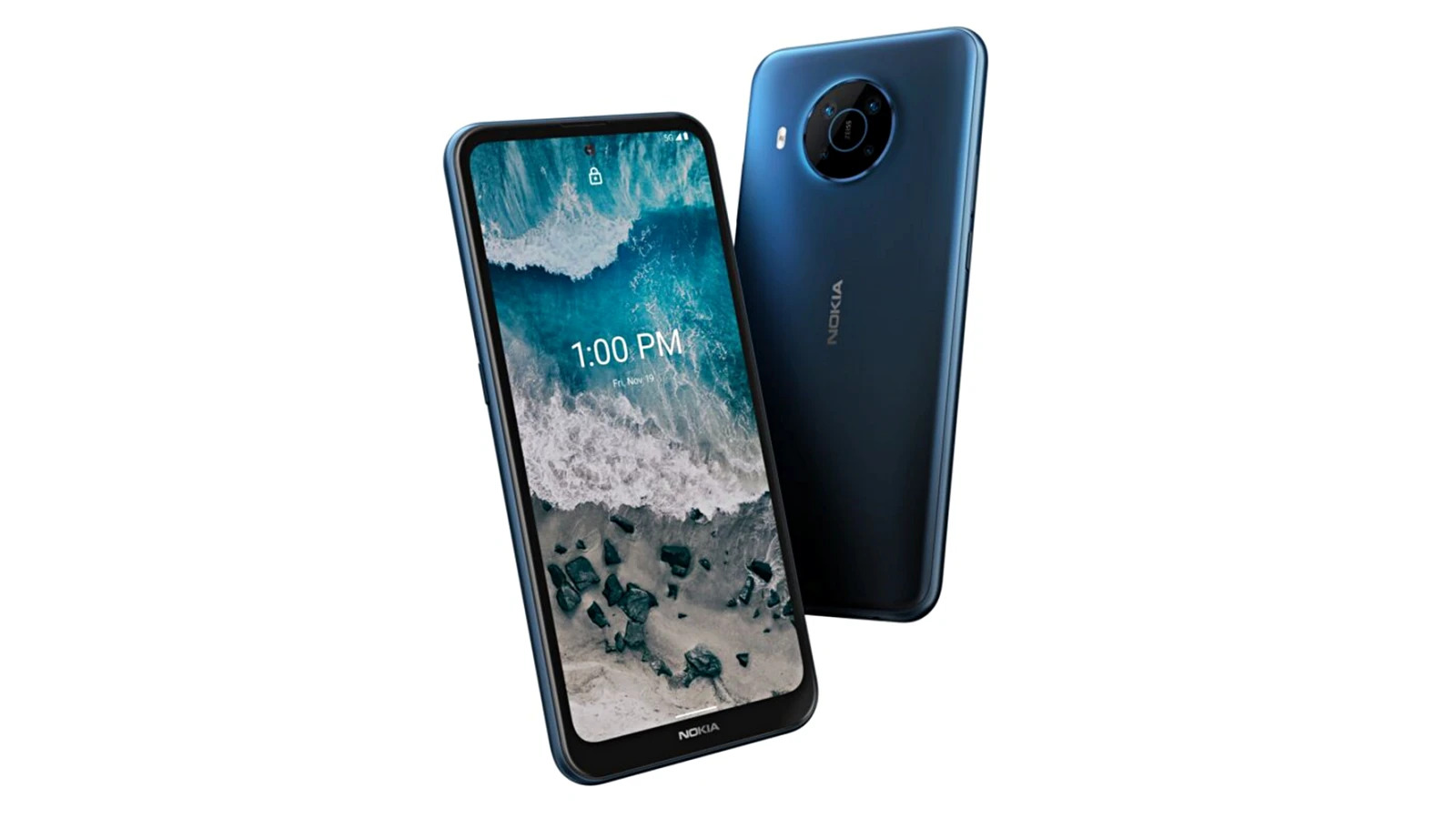
HMD Global has launched its first Nokia X-series smartphone which is specifically made for the United States — Nokia X100. However, the device will be available exclusively through T-Mobile and Metro network carriers.
The smartphone features a 6.67-inch Full HD+ display with 2400 x 1080 pixels screen resolution and a 20:9 aspect ratio. Under the hood, the device comes powered by the Qualcomm Snapdragon 480 5G chipset.
As for the memory configuration, the phone packs 6GB of RAM and 128GB of internal storage. There’s also a microSD card slot that allows you to further expand the storage capacity on the device up to 1TB.
In the camera department, there’s a quad-camera setup on the back taking care of your photography needs. It offers a 48-megapixel primary camera, a 5-megapixel ultrawide lens, a 2-megapixel depth sensor, and a 2-megapixel macro lens. On the front side, you get a 16-megapixel snapper for taking selfies and video calling.
The Nokia X100 is running the Android 11 operating system but the company has not yet revealed when the device will be getting the latest software update, nor has it shared if it will be getting updates and security patches.
For 5G connectivity, the phone is compatible with T-Mobile’s widely available sub-6Hz 5G network. It is powered by a 4,470mAh battery with support for 18W charging and the company is also including a charger in the box.
The Nokia X100 is priced at $252 and will be available for purchase in the United States from 19th November. As mentioned above, the device is exclusively available to T-Mobile and Metro T-Mobile customers.
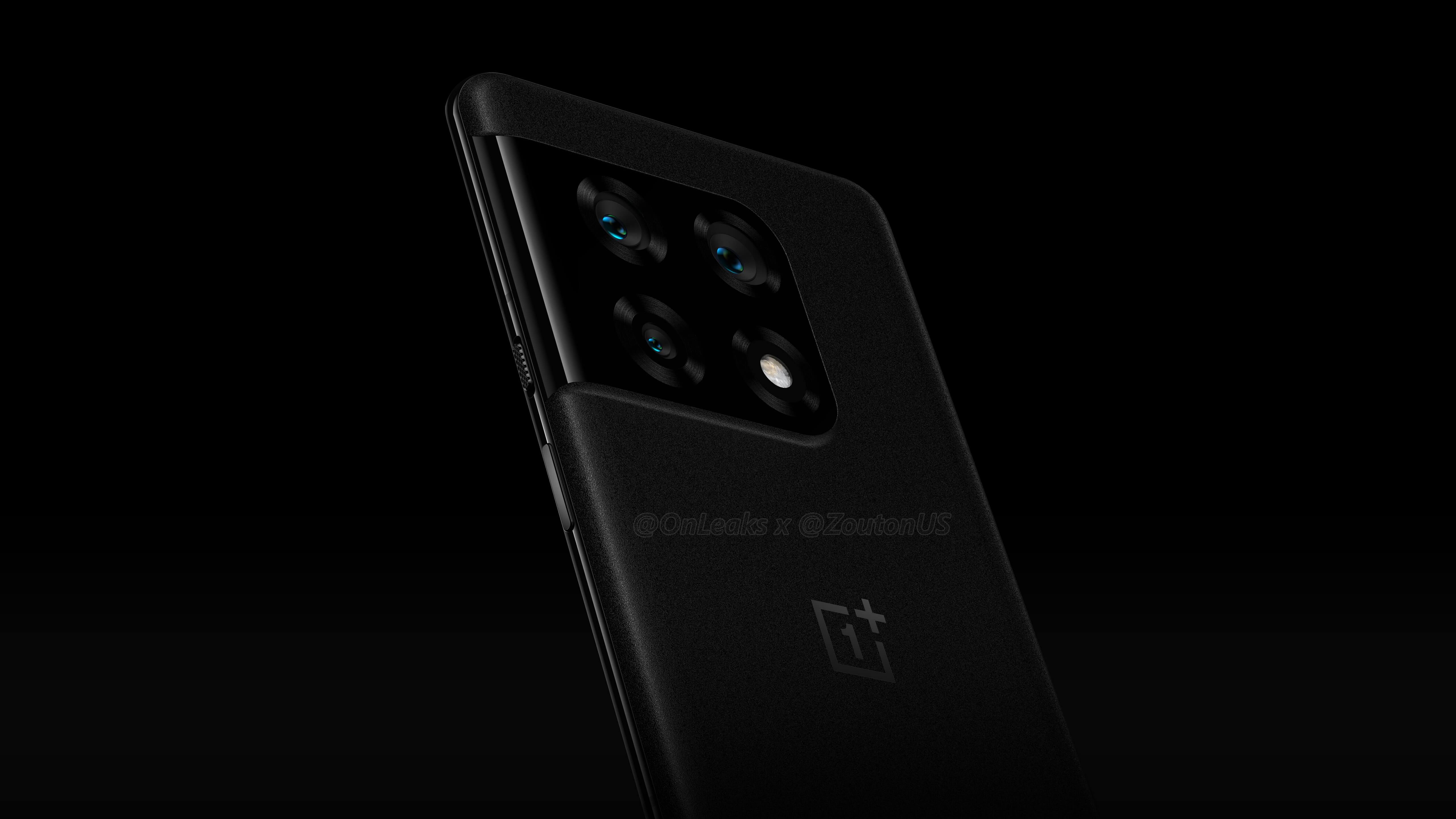
After launching the OnePlus 9 and 9 Pro flagship smartphones this year, the OPPO-backed company is now gearing up to launch its next-generation flagship smartphone next year, dubbed as the OnePlus 10 Pro.
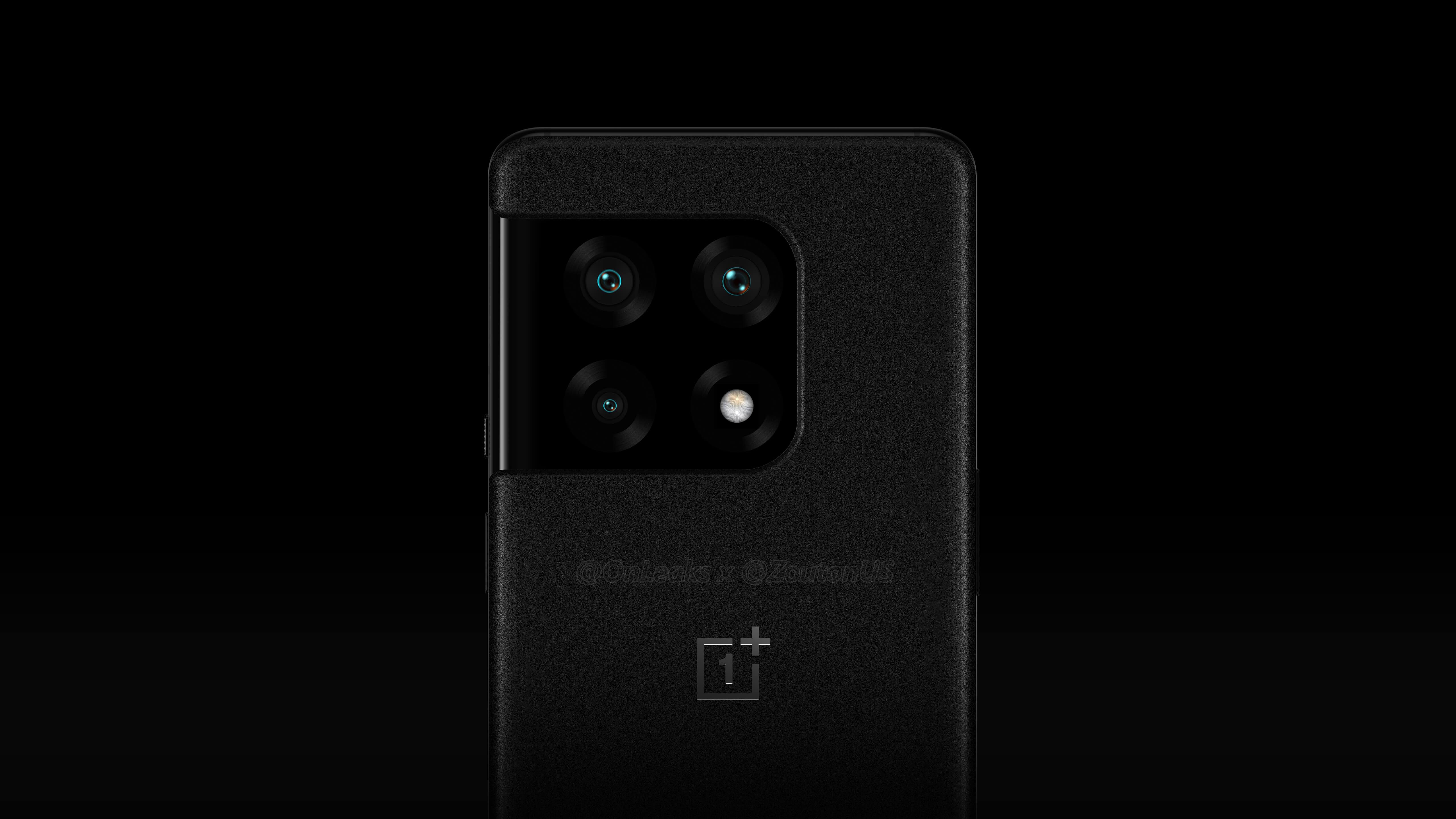
Renders of the upcoming flagship smartphone from OnePlus have surfaced online, thanks to OnLeaks and Zouton, giving us a better look at what the expect from the OnePlus 10 Pro in terms of design.
The images show that the phone will be an ultra-high-end device that will come with an around-the-edge camera bump design, similar to what we have seen on the Samsung Galaxy S21 series smartphones.
The camera module on the back panel houses three camera sensors and an LED flash, which are placed in a 2×2 grid. It appears that the company has opted for a grainy texture for the back panel, which will offer a better grip.
The lock button on the phone also has a bumpy texture to distinguish from the volume rocker keys which are just placed below it. Interestingly, the company has removed the alert sliders that is found in previous OnePlus phones.
As for the specifications, the OnePlus 10 Pro is expected to feature a 6.7-inch 1440p display offering a 120Hz refresh rate. It should be powered by the upcoming Qualcomm Snapdragon 898 chipset and is said to pack a 5,000mAh battery with support for Warp Charge technology for fast charging.
We expect this new flagship smartphone from OnePlus to come with up to 12GB of RAM and 256GB of internal storage. It could come running the Android 12-based ColorOS or OxygenOS custom interface. However, to know for sure about the phone’s specifications and features, we will have to wait a bit longer. As for availability, the device is expected to get launched early next year.
Vivo Y76s smartphone has silently launched in China. It is the company’s first phone to feature the Dimensity 810 chipset. Some of its other attractions include 50-megapixel dual cameras and 44W fast charging.
Vivo Y76s specifications and features
The Vivo Y76s has a 6.58-inch IPS LCD panel that offers a Full HD+ resolution of 2408 x 1080 pixels, a 20:9 aspect ratio, and a 60Hz refresh rate. The handset measures 7.79mm in thickness and weighs 175 grams.
For selfies, it is fitted with an 8-megapixel front camera. The vertical camera module on the backside of the Y76s features a 50-megapixel main camera, 2-megapixel macro camera, and an LED flash unit.
Vivo Y76s
The Y76s is driven by the Dimensity 810 chipset and 8 GB of RAM. It comes with 4 GB of virtual RAM and up to 256 GB of internal storage. For additional storage, it has a microSD card slot. The device runs on OriginOS 1.0 based Android 11 OS.
The Vivo Y76s has a 4,100mAh battery that carries support for 44W fast charging. It comes with security features like face unlock and a side-facing fingerprint sensor. The other specs of the phone include dual SIM, Wi-Fi 802.11ac, Bluetooth 5.1, GPS, a USB-C port, and a 3.5mm audio jack.
Vivo Y76s pricing and availability
The Vivo Y76s comes in two choices such as 8 GB RAM + 128 GB storage for 1,799 Yuan (~$281) and 8 GB RAM + 256 GB storage for 1,999 Yuan (~$313). It comes in colors like Galaxy Blue, Star Diamond White, and Starry Night Black. There is no information on the availability of the device. It may have debuted just in time for the 11.11 (Nov. 11) shopping festival of China.
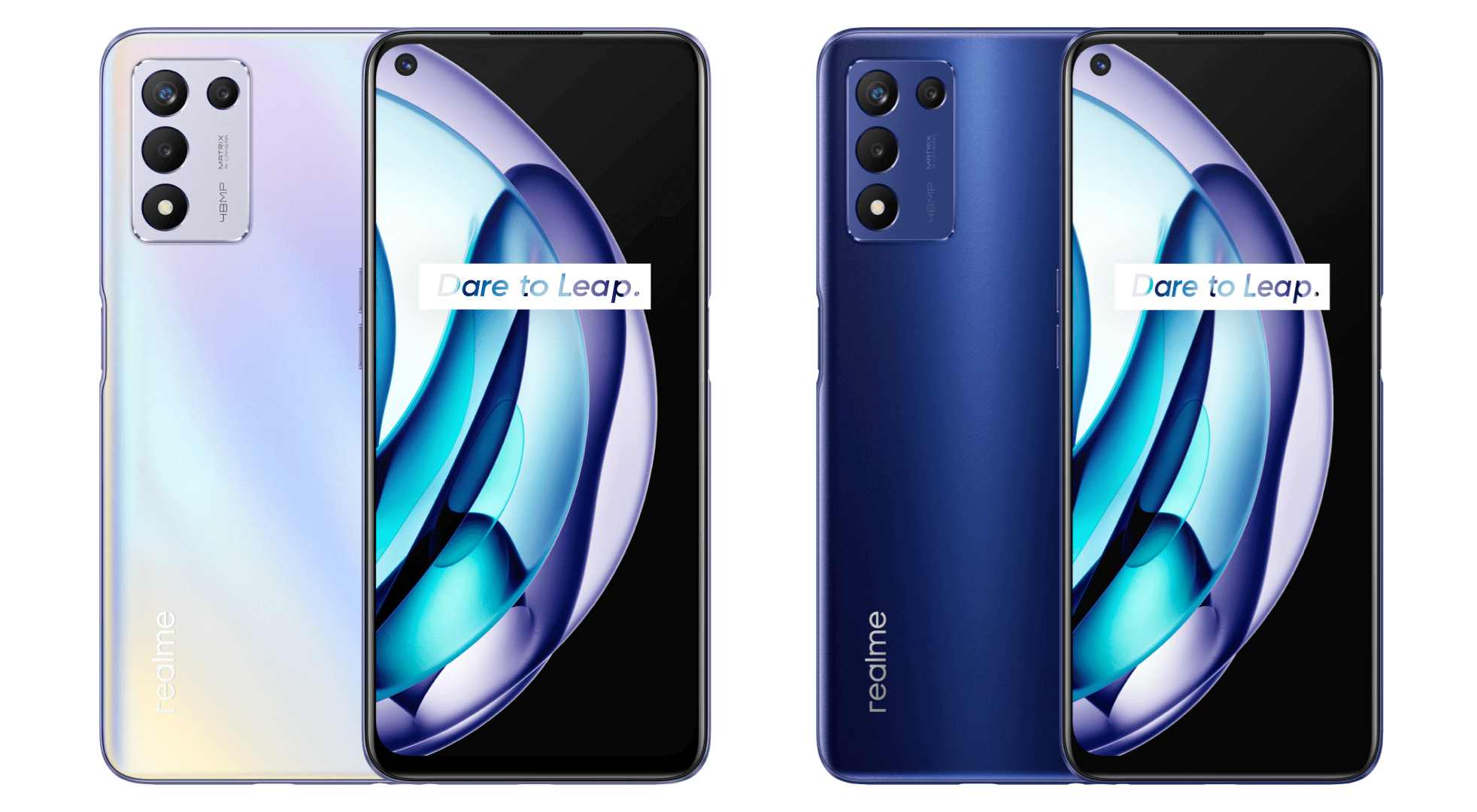
Last month, Realme announced the Realme Q3s smartphone in China. Now, it has silently unveiled another Q-series phone called the Realme Q3t in the home market. The major attraction of the Q3t is that it is a cloud mobile phone, which gives access to cloud apps, cloud games, cloud videos, cloud VR, and so on, which does not local storage on the device. The Q3t has been launched by Realme in partnership with China Telecom.
Realme Q3t specifications and features
The Realme Q3t has a 6.6-inch IPS LCD panel that offers a Full HD+ resolution of 1080 x 2412 pixels, 600 nits brightness, and a 90.8 percent screen-to-body ratio. It features a 16-megapixel front-facing camera, and a 48-megapixel (main) + 2-megapixel (depth) + 2-megapixel (macro) triple camera unit.
Realme Q3t
The Snapdragon 778G chip is present under the hood of the Q3t. It comes in a single variant that offers 8 GB of LPDDR4x RAM, 5 GB of virtual RAM, and 256 GB of UFS 2.2 storage. The device runs on Realme UI 2.0 based Android 11. It features a microSD card slot for more storage.
The Q3t has a 5,000mAh battery that supports 30W fast charging. It offers other features like dual SIM support, 5G, Wi-Fi 802.11ac, Bluetooth 5.1, GPS, a USB-C port, and a 3.5mm audio jack. As can be seen, the specs and design of the Q3t are identical to the Q3s. The only major difference between the two devices is that the Q3t is a cloud mobile phone.
Realme Q3t pricing and availability
The Realme Q3t is priced at 2,099 Yuan (~$328). It comes in two colors such as Nebula and Night Sky Blue.
A few hours ago, Xiaomi announced one of the most incredible best-buys of this year in the European market. We are talking about the POCO M4 Pro 5G, a rebrand of the Chinese Redmi Note 11 which hitten the European shelves with an outstanding price tag. While a lot of people are waiting for its availability in Europe, they are also wondering whether or not the POCO M4 Pro 5G is the best smartphone to buy around €200. In order to let you find out, we decided to compare it to the other best phones in the same price range. For this specs comparison, we chose the Realme 8 5G and the OPPO A74 because they are among the most interesting Chinese phones you can currently find for less than €200 in the European market. Note that the OPPO A74 present in this comparison is the 4G variant and not the 5G one.
Triple 48 + 2 + 2 MP, f/1.7 + f/2.4 + f/2.4
16 MP f/2.4 front camera
Triple 48 + 2 + 2 MP, f/1.8 + f/2.4 + f/2.4
16 MP f/2.1 front camera
BATTERY
5000 mAh, 33W fast charging
5000 mAh, fast charging 33W
5000 mAh, fast charging 18W
ADDITIONAL FEATURES
Dual SIM slot, 5G
Dual SIM slot, 5G
Dual SIM slot, 5G
Design
Due to its chunky body, the POCO M4 Pro 5G is not exactly the best phone when it comes to design. The OPPO A74 is definitely more good-looking not only because it has a more minimal design, but also because it is more compact, thinner, and lighter than its two rivals. The Realme 8 5G sits right in the middle: it does not come with the same huge camera module as the POCO M4 Pro 5G, but it is not as compact as the OPPO A74.
Display
The biggest advantage of the OPPO A74 is the display: it is the only one in the trio which comes with an AMOLED panel and it guarantees brighter colors and deeper blacks. Further, it has a smaller panel that is easier to use with one hand and a high 800 nit peak brightness. It even comes with an in-display fingerprint reader for authentication instead of a side-mounted one. The POCO M4 Pro 5G and the Realme 8 5G have similar displays: they are Full HD+ panels with a 90 Hz refresh rate, but the POCO M4 Pro 5G is the only one to feature a variable refresh rate (it switches between 50 Hz, 60 Hz, and 90 Hz).
Hardware/Software
The best hardware is provided by the POCO M4 Pro 5G equipped with the new Mediatek Dimensity 810 mobile platform built at 6 nm. Then we got the Realme 8 5G with a Mediatek Dimensity 700, while the OPPO A74 takes third place not only because its Snapdragon 662 processor is inferior, but also because it lacks the 5G support. Note that Realme 8 5G has a configuration offering more RAM if compared to the POCO M4 Pro 5G: up to 8 GB instead of just 6 GB. On the other hand, POCO M4 Pro 5G has a faster UFS 2.2 internal storage.
Camera
The POCO M4 Pro 5G is equipped with the most advanced rear camera: a 50 MP sensor paired with an 8 MP ultrawide lens. The OPPO A74 has a 48 MP camera that is able to offer decent low light performance thanks to a bright f/1.7 aperture, but it lacks an ultrawide sensor. The Realme 8 5G is the worst one with its 48 MP triple camera and an f/1.8 focal aperture.
Battery
These phones all come with a 5000 mAh battery, but the OPPO A74 lasts more in a lot of scenarios because it has an AMOLED display with a standard refresh rate. And, alongside the POCO M4 Pro 5G, it has the fastest charging tech.
Xiaomi POCO M4 Pro vs Realme 8 5G vs OPPO A74: Price
POCO M4 Pro 5G launched in Europe with a starting price tag of just €199/$230 and you can find the OPPO A74 at the same price thanks to online deals, while the Realme 8 5G costs even less than €199. The POCO M4 Pro 5G wins the comparison thanks to a superior chipset, 5G, and good cameras, but if you prefer having the best display quality, then OPPO A74 may be better for your needs.
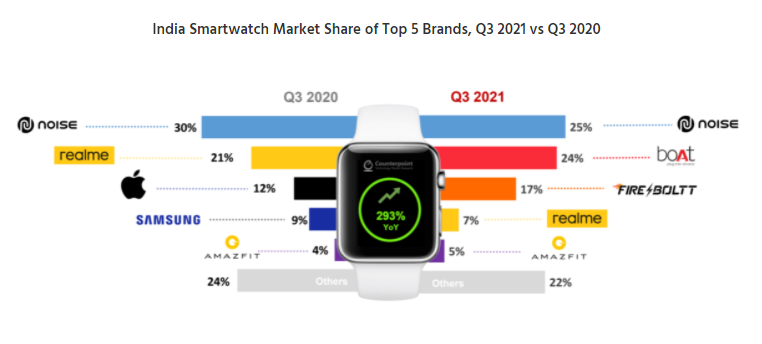
The latest numbers coming out of India in terms of smartwatch shipments indicate that local manufacturers are sustaining a strong overall performance. Research firm Counterpoint has just released its Q3 2021 figures for smartwatch shipments in the Indian market. The report shows the market recorded its highest performance yet during the quarter.
Counterpoint Technology Market Research is a global research firm with a niche in the tech, media, and telecom industries. It has continued to churn highly reliable numbers across several markets. The Indian smartwatch market recorded an increase of 159% in shipments in the third quarter. The numbers also indicated that year-on-year, the growth was 293%. The surge in shipments was driven mainly by the top three brands in the market: Noise, boAt, and Fire-Boltt, accounting for 66% of the shipments. Noise grew by 141% from Q2, while boAt grew by 132%, and Fire-Boltt had a massive 394% growth from Q2. The market share of the trio was 25%, 24%, and 17% respectively.
Historically, Q3 has been the best quarter for smartwatch brands, as that is the period when there is a projected surge in demand to meet the festivities of the holidays and the end of the year. In addition, manufacturers come up with several incentive schemes and multiple launches to have a piece of the market. The strong performance of the local smartwatch brands, which accounted for 75% of the total shipments for the quarter, is also seen as a plus. It reflects the success of the extensive measures including celebrity endorsements, customer-friendly pricing, discount offers, and the production of high-quality devices that could measure up with foreign standards.
Realme and Amazfit had impressive showings while Samsung, Apple, and OnePlus also had impressive growth numbers from the previous quarter. Although the actual sales numbers are not available from the Counterpoint report, they could provide some great insights into the growth trajectory of smartwatch brands in the subcontinent.
We use cookies on our website to give you the most relevant experience by remembering your preferences and repeat visits. By clicking “Accept”, you consent to the use of ALL the cookies.
This website uses cookies to improve your experience while you navigate through the website. Out of these, the cookies that are categorized as necessary are stored on your browser as they are essential for the working of basic functionalities of the website. We also use third-party cookies that help us analyze and understand how you use this website. These cookies will be stored in your browser only with your consent. You also have the option to opt-out of these cookies. But opting out of some of these cookies may affect your browsing experience.
Necessary cookies are absolutely essential for the website to function properly. This category only includes cookies that ensures basic functionalities and security features of the website. These cookies do not store any personal information.
Any cookies that may not be particularly necessary for the website to function and is used specifically to collect user personal data via analytics, ads, other embedded contents are termed as non-necessary cookies. It is mandatory to procure user consent prior to running these cookies on your website.