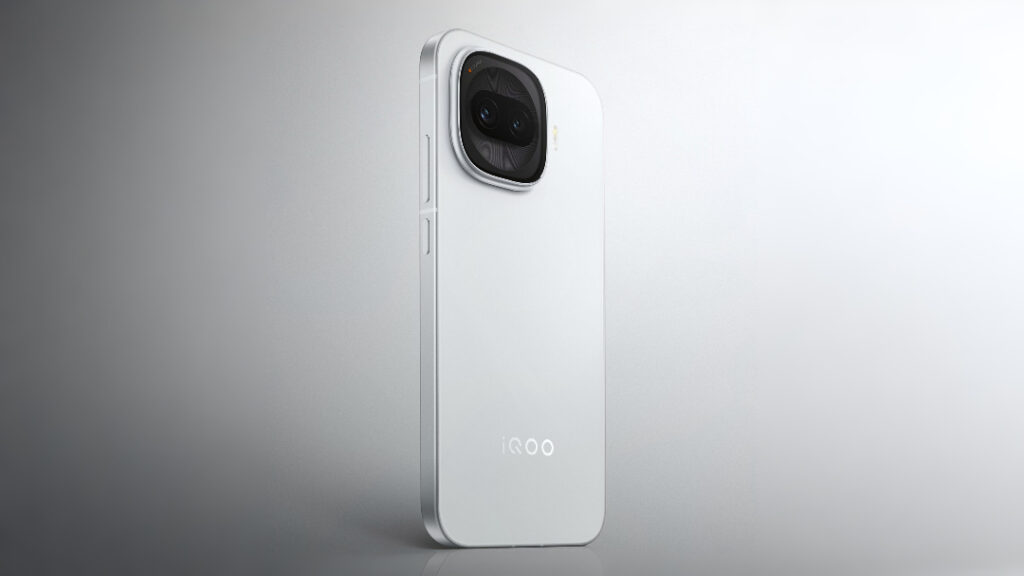
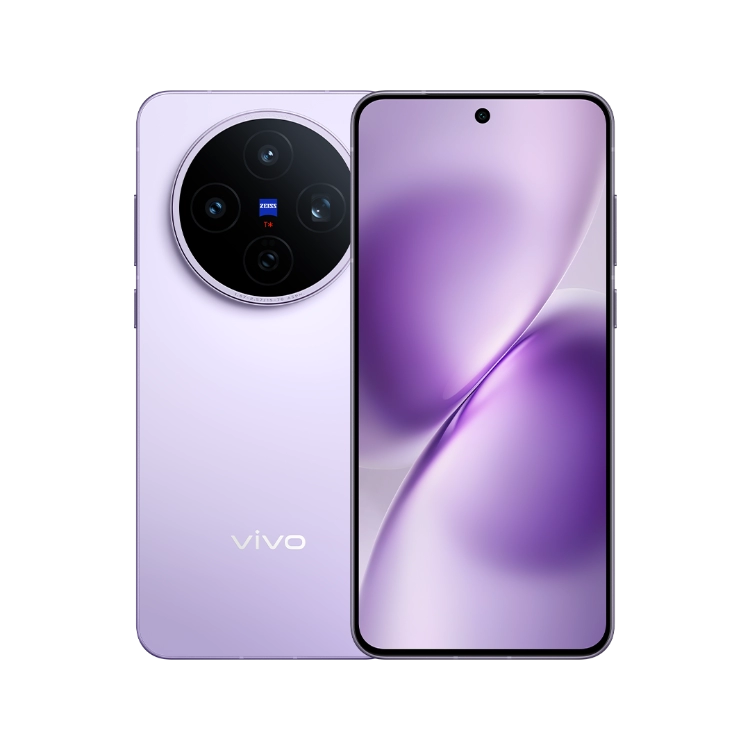
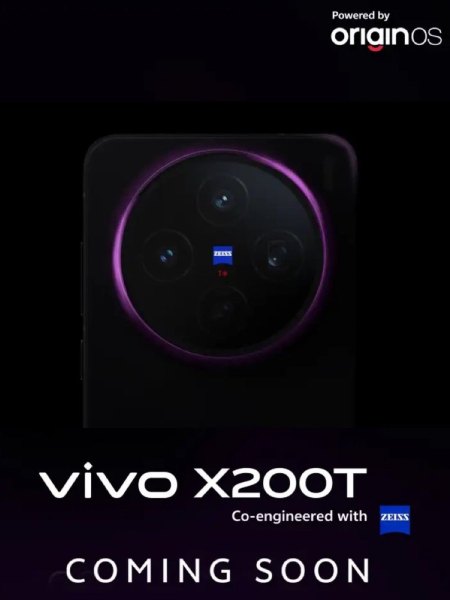
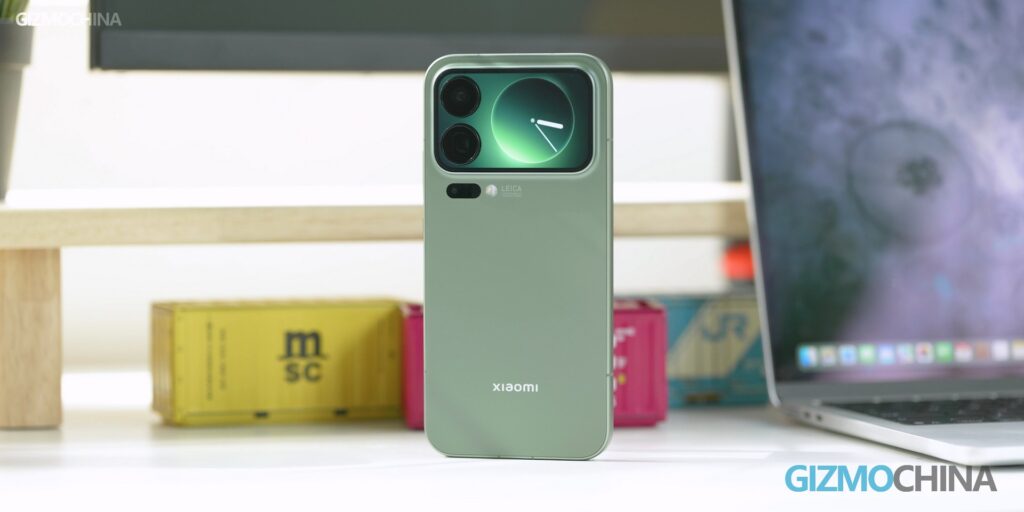
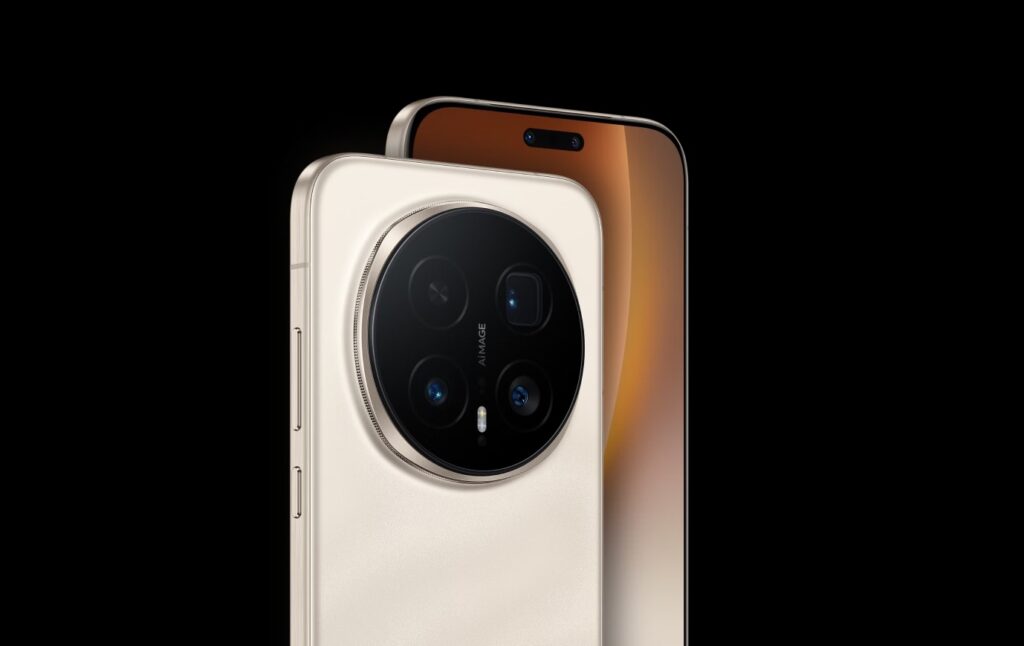
iQOO has confirmed that the iQOO Z11 Turbo will launch in China on January 15. Ahead of the launch, the company has been sharing key specifications on its official Weibo channel, and it has now revealed detailed camera specifications for the device.
According to the company, the Z11 Turbo will be the first iQOO phone to feature a 200MP primary camera. The main sensor measures 1/1.56 inches and uses an f/1.88 aperture lens. iQOO has equipped it with optical image stabilization and claims CIPA 4.5-level professional-grade stabilization.
The camera supports 4x lossless zoom and up to 40x magnification using software enhancements. It also includes AI-based features like cinematic storyboarding and secondary photo recomposition for the gallery. The front camera has a 32MP wide-angle sensor with support for 0.8x, 1x, and 2x focal lengths.
Yesterday, the company also revealed gaming related connectivity features. The iQOO Z11 Turbo will debut with the Global Esports Network System 2.0, powered by the Thunder Z1 gaming signal enhancement chip. iQOO claims the system can reduce game stutter by 76.47% when Wi Fi 5GHz signals pass through four walls.
Talking about other specs, the iQOO Z11 Turbo is expected to feature a 6.59-inch LTPS OLED display with a 1.5K resolution and a 144Hz refresh rate. The phone is tipped to run on the Snapdragon 8 Gen 5 processor, paired with up to 16GB of LPDDR5X RAM and up to 1TB of UFS 4.1 storage.
It is also expected to get a 7,600mAh battery along with support for 100W fast charging. Despite the large battery, the device is expected to measure around 7.9mm in thickness and weigh about 202 grams.
Additionally, the device will include an ultrasonic 3D fingerprint sensor, IP68 and IP69 ratings for water and dust resistance, and Android 16 out of the box with OriginOS 6.
For more daily updates, please visit our News Section.
While Motorola has improved its update policy to offer up to five years of Android updates to many devices, that list is still much smaller compared to those that promise just three OS updates. Unfortunately, the list also includes many of the latest Edge models, as well as the premium Razr foldable phones.
We’ve curated a list of Motorola smartphones that promise to offer three generations of major Android OS updates. For better clarity, we’ve also added the last OS upgrade for every device on the list.
Motorola phones eligible to receive three major Android OS updates
It’s sad to see the latest Edge models, such as Edge 60 and Edge 70, on the list when its rivals are offering up to six years of Android updates to their mid-range phones. At the very least, Motorola could have offered longer updates to its premium Razr models, which typically receive updates for only up to three years.
On the plus side, Motorola appears to be working towards longer and timely software updates for its smartphones. Last year, it launched the Edge 50 Neo with a promise to offer five Android OS updates, which was later expanded to include the Moto G75, ThinkPhone 25, and Edge 60 Neo. We’d love to see more Motorola devices with this updated policy.
Earlier this year, Motorola took another significant step by promising up to seven Android OS updates for the newly announced Motorola Signature smartphone, matching Google and Samsung. This is certainly a good move from the brand, but it will only make sense if more Motorola devices come with the same software support.
The company has also worked on improving the speed of software rollouts. The Android 16 rollout, for instance, has been expanding to the eligible devices at an improved pace.
Don’t forget to visit our Motorola section regularly for the latest information. Alternatively, you can join our Telegram channel to get instant notifications about the latest product launches, software updates, and tech breakthroughs.
While the Vivo X300 series recently made its global debut, the brand is now gearing up to unveil a new smartphone from its older X200 lineup. Fresh teasers have revealed that the Vivo X200T model is in the works, but finer details are still at large. However, leaks and rumors have revealed a bunch of key details of this device, which could be Vivo’s latest budget flagship. So here’s what you can expect from the Vivo X200T.
From official teasers, the Vivo X200T adopts a familiar yet refined look reminiscent of the X200 FE series, featuring a circular triple-camera module with Zeiss branding on the rear. So we can expect a strong focus on photography. The teaser images confirm at least one new purple colorway. Since it is a premium model, Vivo likely offers an IP rating for water and dust resistance (possibly IP68 + IP69), a glass back, and a metallic frame.
On the front, the Vivo X200T is expected to sport a 6.67-inch AMOLED display with a 1.5K resolution (around 2800 x 1260 pixels) and a 120Hz refresh rate. Another notable inclusion is an ultrasonic in-display fingerprint scanner for fast and secure unlocking.
2. Performance
Under the hood, the Vivo X200T is rumoured to be equipped with MediaTek’s Dimensity 9400+ chipset. This is a powerful flagship level SoC, which powered older flagship smartphones from last year. From gaming to everyday use, the chip is expected to offer very capable daily performance. Notably, this is also a step up from the Dimensity 9300+ that was featured on the Vivo X200 FE model.
Recent leaks have also hinted at this chip being coupled with up to 16GB of RAM and up to 1TB of internal storage. Battery life is another highlight, as the Vivo X200T is reportedly housing a huge 6,200mAh battery pack that should deliver excellent endurance. In real life use, this device should last for more than a day. For charging, the upcoming budget flagship brings 90W wired fast charging and 40W wireless fast charging.
Keeping these beefy specs cool is an acoustic vapor chamber or the brand’s nanofluid cooling tech. Out of the box, the Vivo X200T will debut with the Android 16 OS based OriginOS 6 custom skin with 5 years of major Android updates and 7 years of security patches.
3. Photograhy
Photography is a major focus for Vivo’s X-series, and the X200T looks to continue that trend. Rumors suggest a Zeiss tuned triple camera setup, so here’s the expected hardware:
50MP Sony LYT702 main camera (OIS, 1/1.56″)
50MP Samsung JN1 ultra-wide sensor (1/2.76″)
50MP Sony LYT600 periscope telephoto shooter (1/1.95″, OIS)
For selfies and video calls, the front could feature a 32MP shooter. The telephoto sensor should offer at least 3x optical zoom, which is common for this Sony sensor.
4. Availability and Pricing
Multiple reports have suggested that the Vivo X200T is launching in India soon, possibly by the end of this month. Teasers have already gone live with certification listings, further solidifying their imminent arrival. Pricing is rumored to be around Rs 50,000–Rs 55,000, which positions it as a strong contender in the budget flagship category.
For more daily updates, please visit our News Section.
Xiaomi’s latest flagship phones are doing really well in China. According to well-known Chinese tech blogger Digital Chat Station, only three flagship phones released toward the end of the year have crossed one million activations so far. These models are the Xiaomi 17 Pro, 17 Pro Max, and Huawei Mate 80.
Among these, the Xiaomi 17 Pro series stands out because both models — the Pro and the Pro Max — have individually surpassed one million activations. That makes the 17 Pro lineup the biggest winner among China’s year-end flagship launches.
Xiaomi Group partner and president Lu Weibing shared the milestone on social media, thanking users for their support. He also used the moment to underline just how important this launch is for the company, calling the Xiaomi 17 series the best-selling product line in Xiaomi’s history.
A big reason for that attention is Xiaomi’s most distinctive design choice this year. Both the 17 Pro and Pro Max have a rear screen. Unlike the small notification panels seen on earlier experimental devices, Xiaomi’s rear screen is a functional second display.
It can show a clock, AI-generated avatars, or virtual pet images, while also letting users interact with notifications and reminders. Users can even pin important notes or tasks to the back screen with a single tap.
The rear display also supports live previews for selfies taken with the main rear camera. When someone else is taking the photo, users can see the framing in real time on the back screen.
Crucially, Xiaomi hasn’t treated the rear screen as a one-off gimmick. Over the past few months, the company has rolled out frequent updates, adding features like dialogue translation, photo booth mode, dynamic photo and video wallpapers, and even the ability to take screenshots from the back screen while using a case.
Just last week, Xiaomi expanded its usefulness further with stock-quote tracking and a video teleprompter mode.
For more daily updates, please visit our News Section.
Honor‘s latest flagship smartphone has impressed independent camera reviewer, DxOMark, by securing a top 5 rank in its global smartphone camera rankings. After rigorous testing, the Honor Magic 8 Pro has managed to displace the Google Pixel 10 Pro XL, showcasing Honor’s strength in balanced photo performance. So here’s how it performed.
Honor Magic 8 Pro Climbs Into DxOMark’s Top 5 Best Smartphone Cameras
Earning an overall score of 165 points, the Magic 8 Pro demonstrated consistent imaging quality across a range of shooting conditions. DxOMark praised its good exposure handling, wide dynamic range, and high detail retention in still photos, especially in bright lighting scenarios where the phone showed strong performance. Testers also noted neutral white balance and pleasing skin tones that helped deliver natural-looking images in many conditions.
Honor Magic 8 Pro
Although Magic 8 Pro doesn’t top every individual category, its strength lies in being a well-rounded shooter rather than dominating one specific metric. This balanced approach propelled it into the top tier of the DxOMark ranking, which in 2025 includes other flagship contenders such as the Vivo X200 Ultra, Oppo Find X8 Ultra, Huawei Pura 80 Ultra, and Apple iPhone 17 Pro.
While the Magic 8 Pro excelled in still photography, video performance was identified as a relative weakness during the DxOMark evaluation. It achieved a score of 154 points that had it rank 15th in DxOMark’s videography rankings. DxoMark suggests room for improvement in video noise control and color consistency, especially in lower-light. With this overall score, the Magic 8 Pro is just behind the Vivo X300 Pro, which ranked 2nd in this list.
For more daily updates, please visit our News Section.
Realme is getting ready to launch the Neo 8 later this month. However, the company today held a special event in China to talk about one of its biggest highlights: the display.
The Realme Neo 8 is the first phone in the world to use a 165Hz Samsung “Sky Display.” The panel is built using Samsung’s flagship M14 luminescent material, which Realme says improves luminous efficiency by 26 percent compared to previous generations.
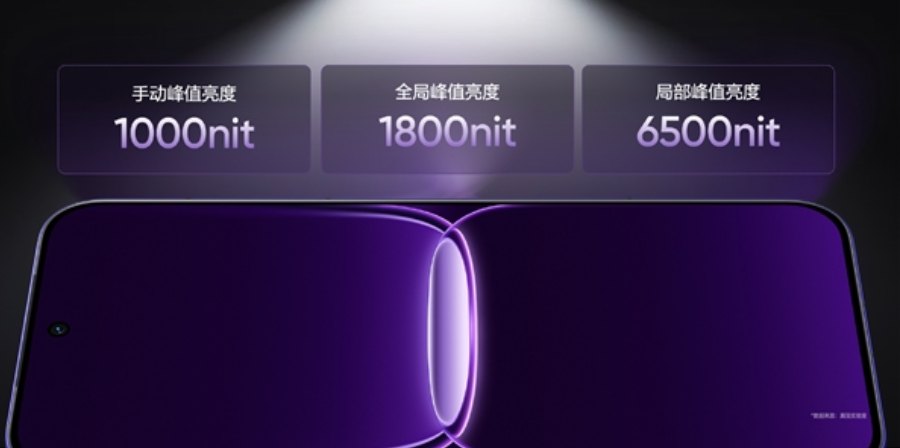
The panel can reach 1,000 nits in manual peak brightness and is rated 1800 nits for global peak brightness. Moreover, the typical brightness reaches 3,800 nits, while local peak brightness can climb as high as 6,500 nits. This wide range is designed to keep the screen readable outdoors while still delivering strong HDR performance indoors.
Realme also claims the Neo 8 exceeds typical flagship standards across four core display metrics, including color gamut at normal brightness, color performance at 25 percent APL, brightness uniformity, and gamma accuracy.
Efficiency and gaming
The screen itself is a 6.78-inch flat Samsung panel with a 1.5K resolution. It’s an LTPO panel, which means the screen refresh rate can scale anywhere from 1Hz up to 165Hz depending on what’s happening on screen.
And thanks to the efficiency of the M14 material, Realme says this 165Hz panel actually consumes 16 percent less power than many 144Hz displays on the market. The panel lifespan has also improved by 50% and the company claims it has also passed TUV Rheinland’s 1500-hour long-life validation tests.
As for the gaming, Realme says the Neo 8 will support more than 30 mobile games running at 165fps. The title includes Call of Duty Mobile, League of Legends Mobile, and Game for Peace.
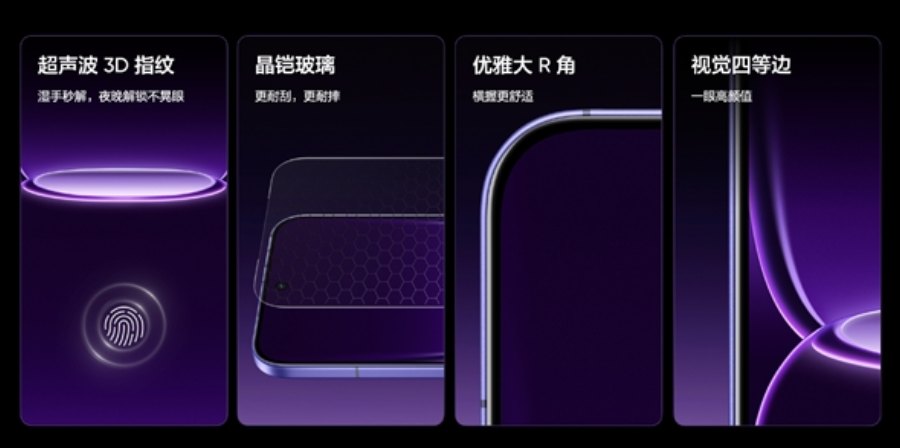
Rounding things out, the phone also includes an ultrasonic fingerprint sensor, crystal armor glass, and large rounded corners.
For more daily updates, please visit our News Section.
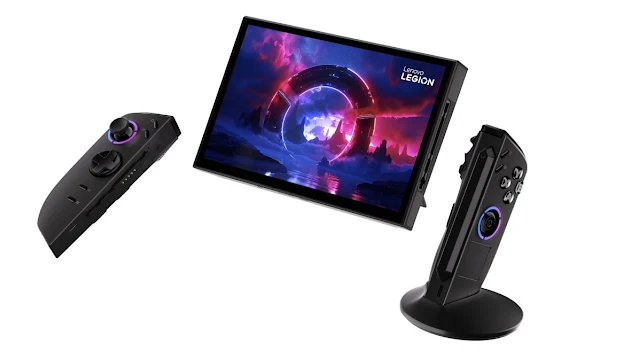
Lenovo has officially unveiled new Legion branded gaming products at the CES 2026 event. The new Legion Go 2 is its latest handheld gaming console that is powered by the SteamOS, while the Legion Pro Rollable is a bold concept gaming laptop with a horizontally expandable OLED display that redefines how screen size adapts for gaming and productivity. So let’s check them out.
The new Legion Go 2 brings Lenovo’s flagship handheld into the SteamOS ecosystem, offering gamers a console-like experience on the go with deep access to their Steam library and platform features. Powered by AMD’s Ryzen Z2 Extreme processor, this 8.8-inch portable delivers desktop-class capability in a handheld form. This chip is coupled with up to 32GB LPDDR5X RAM and 2TB PCIe Gen 4 SSD storage, which can be expanded further via microSD.
Its 8.8-inch PureSight OLED display features a WUXGA (1920×1200) resolution with 144 Hz refresh and rich HDR support, designed to make games and media look vibrant while maintaining smooth responsiveness. The SteamOS build lets players launch titles directly, manage cloud saves, use Steam Chat, and enjoy onboard game recording from a portable gaming rig.
Legion Go 2’s hardware also includes dual USB-C ports with Power Delivery and DisplayPort support, a 3.5 mm combo jack, Wi-Fi 6E, Bluetooth 5.3, and an ergonomic set of built-in controllers complete with true gaming buttons and sticks. These controllers are also removable, allowing you to get a more versatile gaming experience. Under the hood, a sizeable 74Wh battery pack powers the SteamOS variant of Legion Go 2, promising endurance for lengthy play sessions away from a desk. The new gaming handheld console is set to begin sales around June 2026, with pricing likely starting near $1,199 USD.
2. Lenovo Legion Pro Rollable Concept
Lenovo Legion Pro Rollable Concept Gaming Laptop
The Legion Pro Rollable is a concept gaming laptop that imagines what immersive play could look like in a portable form factor. Starting with a conventional 16-inch Lenovo PureSight OLED panel, the screen can expand horizontally for a wider 21.5 inches in Tactical mode and the full 24 inches in Arena mode. This helps offer a more immersive gaming experience and also gives more screen real estate for productivity as well.
The horizontal rollable mechanism is driven by a dual-motor, tension-based design intended to minimize screen vibration and creasing. Lenovo based this concept rollable gaming laptop on its flagship Legion Pro 7i. So you get the latest Intel Core Ultra processors and an Nvidia GeForce RTX 5090 mobile GPU. In other words, there’s enough horsepower for AAA gaming on a laptop with a wide display, which doesn’t compromise in portability either.
The Rollable also introduces advanced AI-driven gaming enhancements, such as adaptive lighting, resource optimization, and AI-based display features, which are integrated through Lenovo’s AI Engine+. This system is powered by the Lenovo LA Core that include tools like AI Frame Gaming Display features like AI Scam Detection, Cursor Tracking, AI Gaming Assistance, and Adaptive AI Lighting.
Though the Legion Pro Rollable remains a concept without confirmed release timing or pricing, it signals Lenovo’s intent to explore non-traditional form factors that let players and creators expand their digital workspace without needing multiple displays. We could be seeing the Chinese tech giant potentially kick start a new breed of portable gaming PCs.
You can follow our full CES 2026 coverage by clicking here.
For more daily updates, please visit our News Section.
Vivo is now pushing the OriginOS 6 update to Vivo T4 Pro users. It should have arrived a few weeks ago, according to the official rollout schedule, but users won’t mind this small delay, given the big list of new features and improvements the update is bringing along.
The Android 16-based for the Vivo T4 Pro is tagged with the firmware version PD2503KF_EX_A_16.1.7.0.W30. Being a major upgrade, it comes with a substantial download size of about 3.85GB. It’s better to use a stable Wi-Fi connection for downloading such large update packages.
As usual, the update is initially rolling out to beta testers via the trial program to ensure the final version does not contain any critical bugs. If waiting pains you more than software bugs, you can join the trial program now and get early access to the latest features and improvements. For this, navigate to Settings > About Phone > System updates > version Trial > Trial version > download and install.
Ensure that your Vivo smartphone has at least 10GB of free space on the internal storage before downloading the upgrade. Also, charge it to at least 50% for a smooth upgrade to OriginOS 6. For added safety, you can back up important data before installing the update.
As for the changes, OriginOS 6 introduces loads of visual upgrades, new features, and improvements throughout the system. There’s a new Origin Island for real-time updates, a redesigned Control Center with an improved notification center, improved lighting effects, and new system fonts for better readability. The lock screen receives new clock styles, enhanced layout controls, and additional widgets. OriginOS 6 also includes numerous under-the-hood changes, resulting in faster app launches, smoother animations, improved multitasking, and optimized battery efficiency.
Here’s the complete changelog:
[System]
Added light effects like edge light, enhanced light, and diffuse light to provide clearer operational feedback and more natural material representation
Added a card list to present complex information in a more intuitive and organized way
Added global G2 rounded corners by reconstructing the underlying rendering mechanism, making rounded corner display more real-time and stable
Added vivo Sans system font with stepless weight adjustment, providing a comfortable and natural reading experience. This feature is supported in some system languages only
Optimized system materials, background blur, and transparency to enhance the visual texture and transparency of the system
Optimized the title bar to improve browsing efficiency and layout consistency
Optimized the styles and dynamic effects of empty-state icons on empty pages
Optimized the visual design of system controls to enhance the visual experience during browsing and tapping
Optimized Landscape mode controls to improve usability
Optimized color system for a comfortable and natural browsing experience
Optimized app theme colors to give apps more personalized

[Lock screen]
Added classic and personalized clock styles for the lock screen, allowing you to choose different clock styles to match the wallpaper
Added the classic clock font and weight editing capability, allowing you to change fonts and weight
Added the custom HSL color feature for the clock, allowing you to choose clock colors to match the lock screen wallpaper. You can separately set colors for the hour and minute hands for some personalized clocks
Added the clock position adjustment capability, allowing you to tap and hold the clock on the integrated settings page and lock screen editing page and drag it to a required position Added the font height editing capability for the personalized clock, allowing you to drag the clock area on the lock screen editing page to adjust its size
Added the lock screen kit feature, which allows you to view
important information such as weather, step count, and device battery level on the lock screen and combine kits to enrich the overall visual effect of the lock screen
Added lock screen notification display methods, allowing you to set the default notification display as number, stack, or list Improved lock screen bottom layout for better space efficiency.
Optimized the lock screen notification display by repositioning it to the bottom of the screen

[Home screen]
Added 4×7 home screen layout and integrated Klotski Grid for a neater and more visually appealing look
Added the features of pinning apps to top and creating folders in Drawer mode
Added the batch operation feature in Drawer mode, allowing you to batch add apps to the home screen and group therm into folders
Optimized app recommendation logic in Drawer mode, supporting app recommendations based on time, location, and habits
Optimized folder morphing, supporting 2×1 and 1×2 layouts with custom colors

[Widgets]
Added more widgets and optimized widget display, increasing variety and upgrading visuals

[Control Center]
Added the separated Control center. You can swipe down from the upper left or upper right corner to bring up Notification center or Control center respectively, enabling more similar content to be displayed on the same page and improving display efficiency.
Added an expanded volume adjustment bar for easier volume adjustment in the merged Control center.
Optimized the overall layout of the merged Control center to enhance overall visual experience with materials and style

[Notification center]
Added new notification card styles with upgrades to icons and layout

[Origin smooth engine]
Added super-core computing. The new scheduling system improves computing efficiency, quickens app startup, response, and loading, and improves slide smoothness and multitasking use smoothness
Added storage fusion with a self-developed storage transmission framework, building a storage VIP channel to significantly improve file transfer efficiency and enable instant loading of massive photos
Added a dual rendering architecture of “Unified rendering architecture” + “Decoupled rendering architecture”, significantly improving rendering efficiency and making system animations more natural
Added Rapid response, a new app startup process with optimized touch and rendering pipelines, powered by a computing power priority scheduling algorithm to boost launch speed.
Added Snap-up engine to help you secure tickets and deals faster in IRCTC and Bookmyshow apps
Added more dynamic effect styles for scenarios like charging, fingerprint unlock, and USB connection
Added morphing animations for expanding and collapsing Origin island and ripple effects for moving home screen apps and kits, bringing a comfortable and expressive visual experience.

[Origin island]
Added Origin islant, a global information transfer window providing intuitive notifications to help you efficiently know about systern status changes, key information, and music playback details. Go to Settings Notifications & status bar Origin island.
Added Copy & go, providing a suggested app thesed on your copied information for quick sccess to the app. Go-to Settings > Notifications & status bar > Origin island > Context suggestions > Copy & go
Added Drag & go, enabling informetion sharing by dragging across apps. Go to Settings > Notifications & status bar > Origin island > Drag & go
Added Contest suggestions, offering proactive and considerate recommendations for cortetuting and office meeting summaries. Do to Settings > Notifications & status bar > Origin island > Context suggestions

[Super Dragging]
Added Super Dragging, allowing you to transfer sundert a apps by tapping and holding content and dragging it to another app window or Origin island. Go to Settings > Shortcuts & accessibility > Super Dragging

[Al Captions]
Added the Al Captions system service, which converts speech to text in real-time for seamless communication and offers. Al services like live speech recognition, multilingual translation and intelligent text summary to improve information access efficiency across all scenarios

[Al Creation]
Optimized the feature panel of Al Creation, with upgrades to layout and visual effects for a better experience

[Global search]
Added Al Search, supporting anarch for documents, notes, and settings on the device by using natural language description in multiple languages, and supporting Al analysts and summary for higher efficiency

[Office Kit]
Added the Office Kill app. You can download and install the app by visiting ac vivaglobal com on your computer to ty features such as device connectivity and data transfer between your phone and Mac or Windows computers
Added screen mirroring to Windows and Mac computers, allowing real-time control without touching the phone and supporting image, video, and file transfer by dragging across
Added the cross-device file transfer capability, which allows you to transfer data between phones and Windows or Mac computers during sharing or in Ongin island after signing in to your account and connecting to a network, with no limits on the number and file format (Including entire folders).
Added Notes for Windows and Mac computers, enabling note taking and viewing anytime, anywhere. Offered a comprehentaive range of note organization and management features, meluding categorization, label managerment and search-making it easy to organize and find your notes
Added the task handoff feature, allowing ongoing tasks to be quickly handed off from the phone to a Windows or Mac computer, such as phone notifications and screenshots
Added the Super Clipboard feature, slowing you to copy and paste phone text or images to a Windows or Mac computer via the clipboard with one tap

[Vivo DocMaster]
Added the vivo DarMaster app, which you to open documents in different formats like PDF, Word, PPT, Excel, TAT Markdown, and Visin. The app also provides the PDF annotation capability to improve document handling efficiency
Added multiple document format conversions, such as PDF and Word/Excel/PPT to PDF or images

[File Manager]
Added the File Manager app, which allows you to search for files by file type, source app, or storage path, and add frequently used apps or folders to the “Quick access for quick access

[Notes]
Added the separate to-do feature, which allows you to record view, and manage daily to-dos, and set reminders and home screen to-do list to avoid missing important tasks.
Added note style and effect tools with rich text formats symbols, and parting lines for personalized editing of notes
Added multi-level folders, allowing you to create nested folders for clearer note management

[Recorder]
Added the features of Skip silent segments, Recently deleted, and Loop to make Recorder easier to use

[Albums]
Added Immersive view for a more engaging nenew of your past memories. Go to Albums > Photos page > More > Immersive view
Added a navigation bar at the bottom of the large image view for quick photo switching and free video playback control
Optimized the layout of the image and video editing feature for better editing experience
Added reversible editing, which supports saving and edit restoration
Optimized live photo editing, which supports live photo

[Battery life]
Added global Bypass Charging, which adjusts temperature and power during use to balance user experience and charging heat
Added energy efficiency engine, optimize CPU and cache scheduling, and shortened cache access path to improve overall battery-performance
Optimized system lightweight design and improved system app load and battery usage to enhance overall battery performance

[Private space]
Added Private space, to which you can download apps and move files to protect your personal privacy, Go to Settings > security & privacy > Private space

[Security & Private]
Added clipboard privacy recoginition to recognize and protect sensitive content, preventing apps from accessing private data
Added blank data authorization for any requests to access Call logs, SMS, Contacts, and Events, ensuring functionality while reducing privacy leakage risks

[Display, brightness & eye protection]
Added Motion prompts, allowing you to relieve motion sickness when riding public transport by using supporting dots. Path: Settings > Shortcuts & accessibility > Motion prompts. You can also turn it on in Control center
Added Sleep comfort mode, which fine-tunes screen color temperature before bedtime to reduce blue light impact and improve sleep quality. Go to Settings > Display, brightness, & eye protection > Sleep comfort mode
Optimized Dark mode visibility and comfort, ensuring readability during the day and preventing eye strain at night
Upgraded Eye comfort and protection and integrated capabilities like Eye Protection and Sleep comfort mode, providing all-day eye protection experience for all users in different scenarios

[Health]
Added the Origin Health built-in app, which tracks your daily activity rings and health, empowering you to live a healthier life

[Settings]
Optimized group and order settings for clearer display and more consistent experience

[Screen Mirroring]
Added the quick access to Screen Mirroring from Albums for smoother file sharing
Added the audio switching feature to allow you to choose sound output from a large screen or phone screen
Added the screen mirroring annotation feature to annotate and highlight shared content for clearer explanation

[Clock]
Added features such as setting alarms by date, flipping the phone to turn off alarms, and customizing alarm repetition modes to better fit daily alarm use scenarios

[iManager]
Optimized Phone Manager design for a quick overview of storage, security, and data usage

[Sound and vibration]
Added stepless adjustment of vibration intensity, allowing precise customization of vibration intensity via a touch slider. Go to Settings > Sounds & vibration > Vibration intensity > Haptic feedback
Added haptic feedback for scenarios like Setup Wizard, volume button tap-and-hold, and background task clearing

[Network]
Optimized the accuracy of recognizing scenarios like leaving home and entering an elevator and switched to a data network in advance to improve network access smoothness in these scenarios. Go to Wi-Fi > Network assistant > Auto-switch data network, Data network acceleration, or Select best Wi-Fi network to turn it on
Remember to visit the Vivo section regularly for the latest information. If you prefer your news instant and on-the-go, hop into our Telegram channel for rapid-fire software updates and all the biggest tech headlines.
Nubia has officially confirmed the launch date of its upcoming gaming smartphone, the Red Magic 11 Air. The device will be unveiled in China on January 20 at 3pm local time. Alongside the date confirmation, the brand has shared teasers highlighting changes to the phone’s design and positioning, signalling that this model aims to stand apart from typical “Air” smartphones.
Red Magic 11 Air brings nine cutting-edge gaming features
According to Nubia, the Red Magic 11 Air is positioned as a full-fledged performance flagship and features a true full-screen design with no notch or punch-hole, enabled by a 16-megapixel under-display front camera. The phone also adopts a fully transparent design across the lineup and includes dedicated gaming shoulder triggers.
A key highlight is its active cooling system, which combines a high-speed internal fan with an ultra-thick 4D Ice-Step vapour chamber to improve thermal efficiency. The device also integrates Red Magic’s Cube gaming engine, a self-developed Red Core R4 esports chip, and a built-in PC emulator.
Powering the phone is what the brand claims to be the largest battery ever used in an Air-series device, all housed within a slim 7.85mm chassis. Red Magic says the phone is aimed at users seeking strong gaming performance, refined aesthetics, and effective heat management in a slim form factor.
Red Magic 11 Air specifications (expected)
Back in November 2025, the Red Magic 11 Air was spotted on China’s TENAA certification database with the model number NX799J. The listing revealed that the phone will feature a 6.85-inch OLED display with a resolution of 1216 x 2688 pixels and support for a 120Hz refresh rate. It also confirmed a rated 6,780mAh battery, which translates to an advertised capacity of around 7,000mAh.
The TENAA data further suggests that the Red Magic 11 Air will offer configurations of up to 24GB RAM and 1TB of internal storage, while the base model could start with 12GB RAM and 256GB storage. Camera details include a 50-megapixel primary rear camera paired with an 8-megapixel ultra-wide sensor.
The Samsung Galaxy S26 series of smartphones has been consistently appearing on certification and benchmarking platforms over the past few weeks. Reports have revealed that the Galaxy S26 carries the SM-S942 model number, the Galaxy S26 Plus is expected to use the SM-S947 model number, while the SM-S948 model number is associated with the Galaxy S26 Ultra.
While these monikers are not official yet, they appear to align with Samsung’s usual naming convention. In a new development, the Galaxy S26 and Galaxy S26 Ultra have surfaced on the Geekbench database, revealing details related to their chipset, RAM, and operating system.
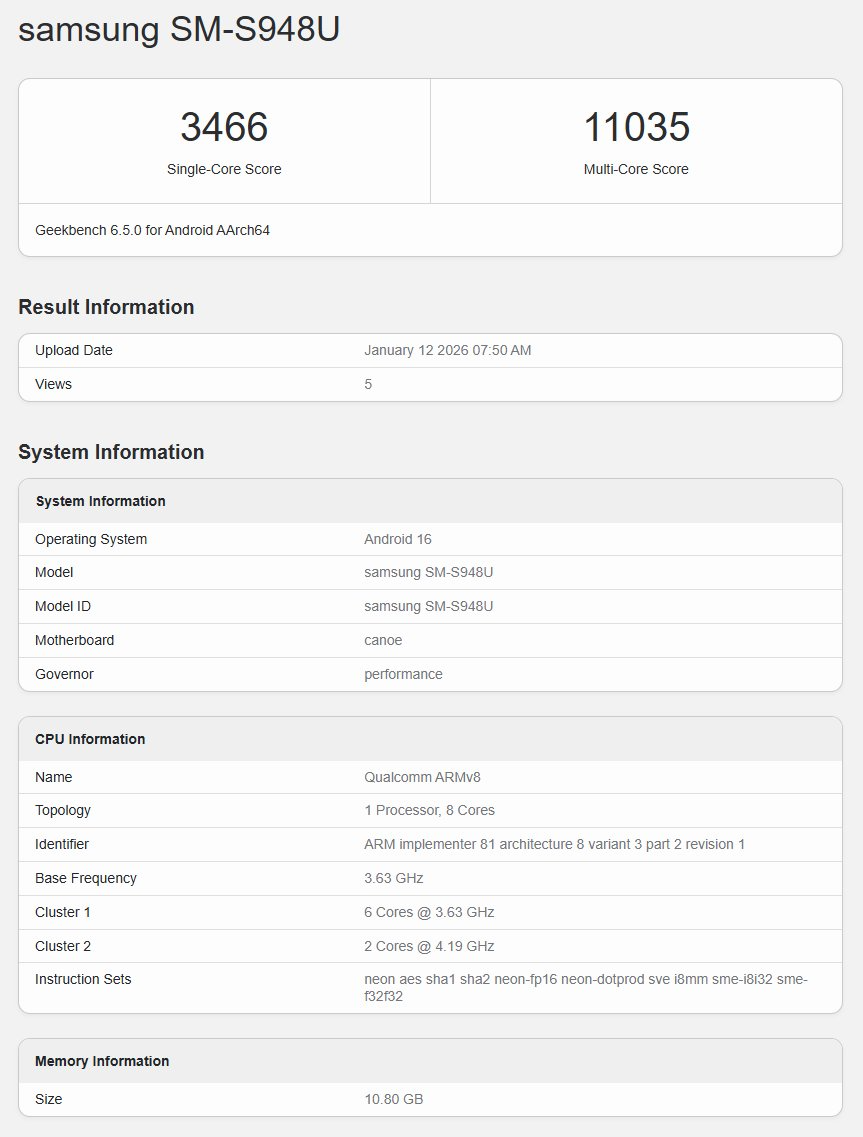
The unlocked US variants of the Galaxy S26 Ultra (SM-S948U) and Galaxy S26 (SM-S942U) have been spotted on Geekbench. Both listings confirm that the devices have 12GB of RAM and Android 16, which is likely to have Samsung’s One UI 8.5 skin on top.
Although the chipset name is not explicitly mentioned in the listings, the CPU and GPU metadata indicate that both phones are powered by the Snapdragon 8 Elite Gen 5 for Galaxy. The SoC includes two cores working at 4.19GHz, six cores operating at 3.55GHz, and Adreno 840 GPU.
It appears that the chipset that powers the S26 series is slightly underclocked compared to the standard Snapdragon 8 Elite Gen 5, which includes two cores working at up to 4.6GHz, six cores operating at up to 3.62GHz, and Adreno 840 GPU.
Performance-wise, the Galaxy S26 Ultra scored 3,466 points in the single-core test and 11,035 points in the multi-core test on Geekbench 6.5. Meanwhile, the Galaxy S26 recorded a single-core score of 3,378 and a multi-core score of 11,097, suggesting very similar performance between the two models.
The Geekbench listings suggest that the company could be internal testing the S26 series’ performance weeks before official announcement. As per recent reports, Samsung is expected to launch the Galaxy S26 series on February 26. The lineup is said to go on sale globally in March, following the company’s usual flagship release timeline.
Previously, the S26 series was said to include the S26 Edge, but it has been reportedly cancelled due to weak demand for ultra-thin phones. If you are wondering what happened to the Galaxy S26 Pro, which appeared in early leaks, a report dating back to October revealed that this device does not exist.
For more daily updates, please visit our News Section.
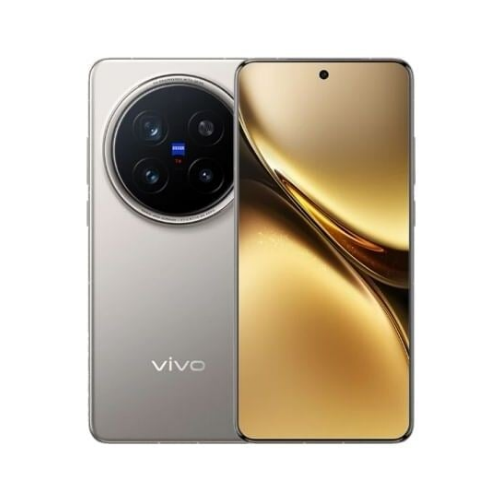
The rumors were indeed true. Vivo has confirmed it is launching a new X200T smartphone in India, and the first teaser is now out. The device is said to sit between the Vivo X200 FE and the Vivo X300.
The teaser confirms that the phone will feature a circular camera module with three lenses. We can also see the device in a purple colorway, and the LED flash sits outside the camera module. Notably, the Zeiss branding is prominently visible as well.
Vivo X200T Specifications
Thankfully, a stream of leaks over the past few months has revealed the key specifications of the smartphone. The device is said to feature a 6.67-inch AMOLED display with a 1.5K resolution and a smooth 120Hz refresh rate.
Powering the device is expected to be the MediaTek Dimensity 9400+ chipset, paired with up to 16GB of RAM and 1TB of storage. Keeping the phone running is a large 6,200mAh battery, combined with 90W wired charging and 40W wireless charging support.
On the software side, the phone is expected to launch with Android 16 out of the box. Software update policy might include 5 years of Android and 7 years of security patches.
As for the cameras, the X200T could house a 50MP Sony LYT-702 main sensor with optical image stabilization, a 50-megapixel ultra-wide camera, and a 50-megapixel periscope telephoto lens. On the front, there is expected to be a 32-megapixel selfie camera.
Other notable features could include Wi-Fi 7, Bluetooth 5.4, an ultrasonic in-display fingerprint scanner, IP68/IP69 water and dust resistance, advanced vapor chamber cooling, and eSIM support.
More importantly, the X200T is rumored to be an online-only phone that could be priced at around Rs 55,000 in India. It will arrive in Black and Purple shades.
For more daily updates, please visit our News Section.
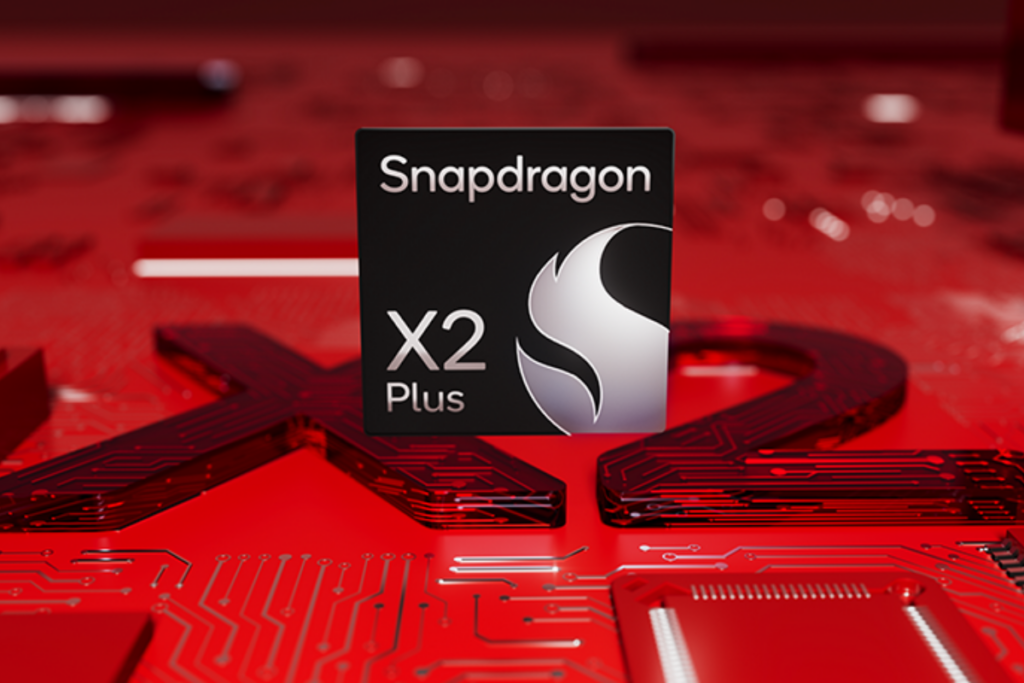
The Snapdragon X2 Plus, announced at CES 2026, joins the X2 family of SoCs, which already has two more powerful members: the Snapdragon X2 Elite and Snapdragon X2 Elite Extreme, which were announced at last year’s Snapdragon Summit. The newer X2 Plus chip will power more affordable Windows notebooks and take on Apple Silicon. But it turns out, Qualcomm’s met with another defeat here, as the X2 Plus lags far behind Apple M4 in key CPU and GPU benchmarks.
On paper, the Snapdragon X2 Plus looks rather impressive. It’s got higher cache memory, bandwidth, and a much higher on-chip TOPS than Apple M4, but it’s the overall package that matters, where Apple Silicon maintains a strong lead.
A series of synthetic benchmark tests run by PCMAG reveals that Apple’s previous-generation silicon can comfortably outperform the latest rivals from Qualcomm. The chips were tested across key benchmarks, including Geekbench 6, 3DMark Steel Nomad Light, 3DMark Solar Bay, and Cinebench 2024, with most of them showing a higher score for the Apple M4, by up to 30%.
Benchmark scores
Geekbench 6
Snapdragon X2 Plus
Apple M4
Single core
3,311
3,859 (16.55% faster)
Multi core
14,940
15,093 (1.02% faster)
Cinebench 2024
Snapdragon X2 Plus
Apple M4
Single core
133
173 (30.08% faster)
Multi core
1,011
993 (1.81% slower)
3DMark
Snapdragon X2 Plus
Apple M4
Steel Nomad Light
3,067
3,949 (28.76% faster)
Solay Bay
12,525
15,580 (24.39% faster)
While the Snapdragon X2 Plus is a strong upgrade over the original Snapdragon X Plus, it still can’t beat 2024’s Apple M4 Silicon, which only means a far worse result when compared to Apple M5. However, on the plus side, the Qualcomm X2 series SoCs show rather impressive numbers against the powerful chips from Intel and AMD.
Note that synthetic benchmarks, although useful, don’t show the complete picture. I would rather wait for more benchmarks or real-world comparisons to reach a conclusion. Unfortunately, the wait appears to be a little longer, as Snapdragon X2 Plus-powered Windows notebooks are expected to hit the market in the second quarter.
Last year, OnePlus unveiled the OnePlus 13T in April in China, followed by a tweaked version that launched in India as the OnePlus 13s. Recent reports suggest that while the OnePlus 15T is expected to debut in China in the coming months, there is some disappointing news for users waiting for the OnePlus 15s in India.
OnePlus 15s could be cancelled, Nord 6 delayed
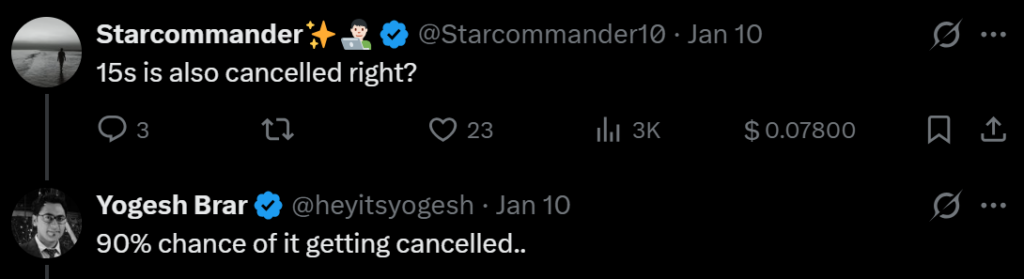
According to an X post by tech blogger Yogesh Brar, there is a nearly 90 percent chance that the OnePlus 15s has been cancelled. He had previously stated that the device had entered the testing phase but now claims that while it was expected to launch next month (February), it has been delayed. The tipster did not specify a revised launch timeline for India.
Reports indicate that the OnePlus 15s and Nord 6 were expected to debut as rebranded or tweaked versions of the upcoming OnePlus 15T and the recently launched OnePlus Turbo 6 in China.
The OnePlus 15T is tipped to feature a 6.31-inch OLED LTPO display with a 1.5K resolution and a 165Hz refresh rate. It is expected to run ColorOS 16 based on Android 16 and focus on a compact flagship form factor.
In terms of cameras, the OnePlus 15T is said to skip an ultra-wide camera, similar to the previous generation. It may feature either a 50-megapixel Sony IMX906 or a 200-megapixel Samsung HP5 primary camera, paired with a 50-megapixel Samsung JN5 telephoto camera.
Under the hood, the OnePlus 15T will arrive with the Snapdragon 8 Elite Gen 5 chipset, up to 16GB of LPDDR5x RAM, up to 1TB of UFS 4.1 storage, and around 7,000mAh battery with 100W charging.
The OnePlus Turbo 6 features a 6.78-inch flat OLED LTPS display with an FHD+ resolution of 2772 × 1272 pixels, a refresh rate of up to 165Hz, and 9340Hz PWM dimming. It is powered by the Snapdragon 8s Gen 4 chipset, paired with LPDDR5X RAM and UFS 4.1 storage, and runs Android 16 with ColorOS 16 on top.
The device packs a massive 9,000mAh battery with support for 80W wired charging and 27W reverse charging. Camera hardware includes a 16-megapixel front camera and a dual rear setup consisting of a 50-megapixel Sony LYT-600 sensor with OIS and a 2-megapixel monochrome lens.
For more daily updates, please visit our News Section.
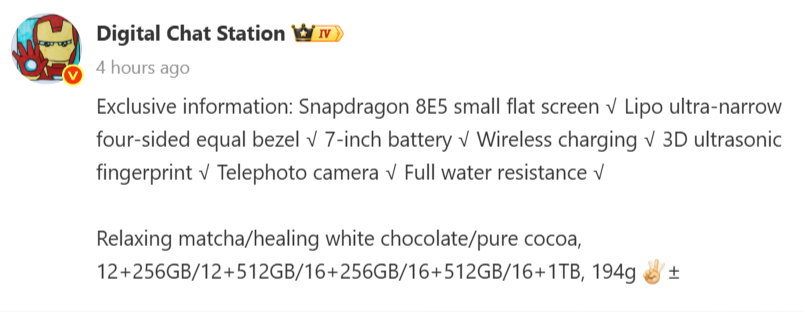
OnePlus is reportedly working on the OnePlus 15T as the successor to last year’s OnePlus 13T. Tipster Digital Chat Station has been consistently leaking details about the upcoming compact flagship. In his latest leak, the tipster has revealed information related to the RAM, storage, and colour options of the OnePlus 15T.
According to the tipster, the OnePlus 15T will be available in multiple memory configurations, including 12GB+256GB, 12GB+512GB, 16GB+256GB, 16GB+512GB, and a top-end 16GB+1TB variant. In terms of color options, the device is said to launch in Relaxing Matcha, Healing White Chocolate, and Pure Cocoa shades.
OnePlus 15T specifications (rumored)
The OnePlus 15T is expected to feature a 6.31-inch OLED LTPO display offering a 1.5K resolution and a 165Hz refresh rate. The compact flagship is likely to ship with ColorOS 16 based on Android 16 out of the box.
For photography, the OnePlus 15T is tipped to feature a dual-camera setup, similar to its predecessor, and is said to skip an ultra-wide camera once again. The device may include either a 50-megapixel Sony IMX906 sensor or a 200-megapixel Samsung HP5 as the primary camera, paired with a 50-megapixel Samsung JN5 telephoto camera.
Under the hood, the OnePlus 15T is expected to be powered by the Snapdragon 8 Elite Gen 5 chipset. It is likely to come equipped with LPDDR5X RAM and UFS 4.1 storage. The phone is said to pack a battery of around 7,500mAh capacity and may support up to 100W wired fast charging and wireless charging.
Other reported features of the OnePlus 15T include an ultrasonic in-display fingerprint sensor, a metal middle frame, and an IP68/69-rated dust- and water-resistant chassis. The device is also said to have a slim profile, measuring around 8.5mm in thickness.
OnePlus 15T launch timeframe (rumored)
The OnePlus 15T is expected to launch in April in China. In the Chinese market, it is likely to compete with other compact flagship smartphones such as the Honor Magic 8 Pro Air, Vivo X300s, and Oppo Find X9s.
For more daily updates, please visit our News Section.
Xiaomi’s sub-brand Redmi is gearing up to launch the Turbo 5 Max series later this month. Ahead of the official announcement, an upcoming Redmi phone has appeared on Geekbench with a yet-to-be-announced MediaTek chipset.
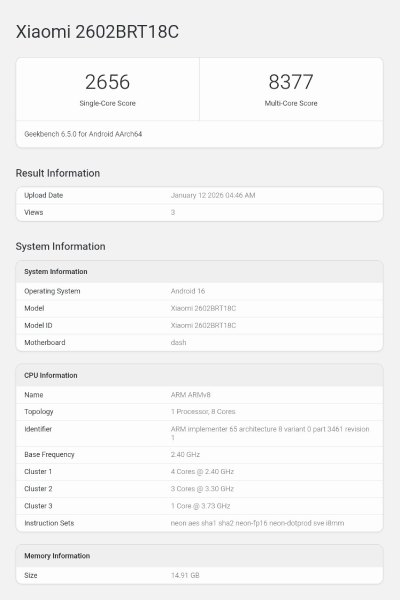
Listed under the model number 2602BRT18C, the device is likely a part of the upcoming Turbo series. And rumors suggest that it could be called the Redmi Turbo 5 Pro Max.
The device scores 2,656 points in the single-core test and 8,377 points in the multi-core run. The more interesting detail, however, is the silicon powering it.
Redmi Turbo 5 Pro Max Geekbench
According to the benchmark listing, the chip features a 1+3+4 CPU configuration, with one prime core clocked at 3.73GHz, three high-performance cores running at 3.30GHz, and four efficiency cores capped at 2.40GHz. Graphics duties are handled by the Immortalis-G925 MC12 GPU.
This core layout closely matches what’s been rumored for MediaTek’s upcoming Dimensity 9500s. MediaTek will announce the new SoC on January 15, and Redmi’s launch could follow shortly after.
Details about the Turbo 5 Pro Max itself are limited, but alleged renders of the phone have already made their way online.
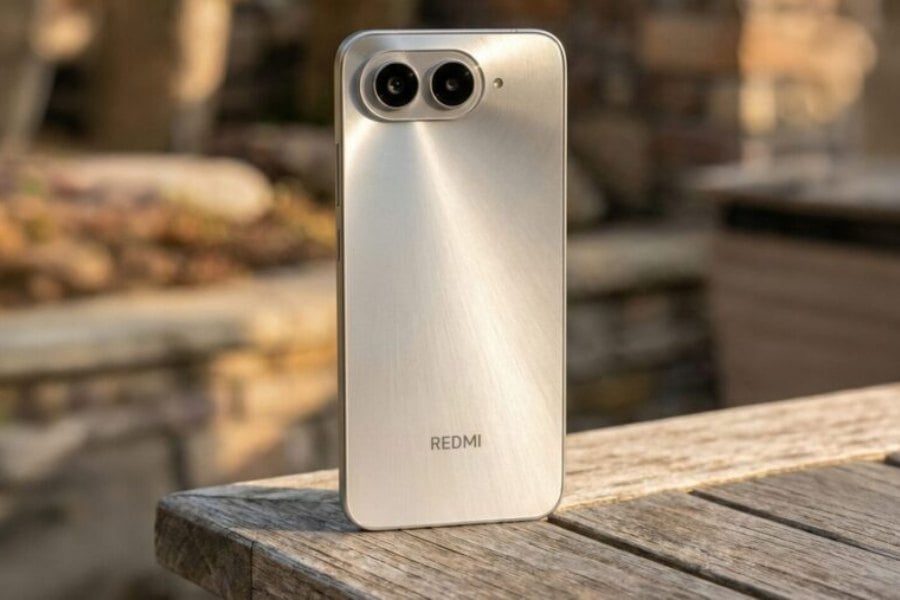
The smartphone has a dual-camera setup on the back. However, instead of the vertical alignment seen on the Turbo 4 and Turbo 4 Pro, the cameras now sit horizontally inside an oval-shaped camera module.
The rest of the design feels familiar. It has slim bezels on the front with a small centered hole-punch for the selfie camera, and the usual Redmi button placement.
As with previous Turbo models, the phone will not stay exclusive to China. Internationally, the Redmi Turbo 5 Pro Max is expected to reappear under Poco branding, likely as part of the upcoming Poco X8 lineup.
For more daily updates, please visit our News Section.
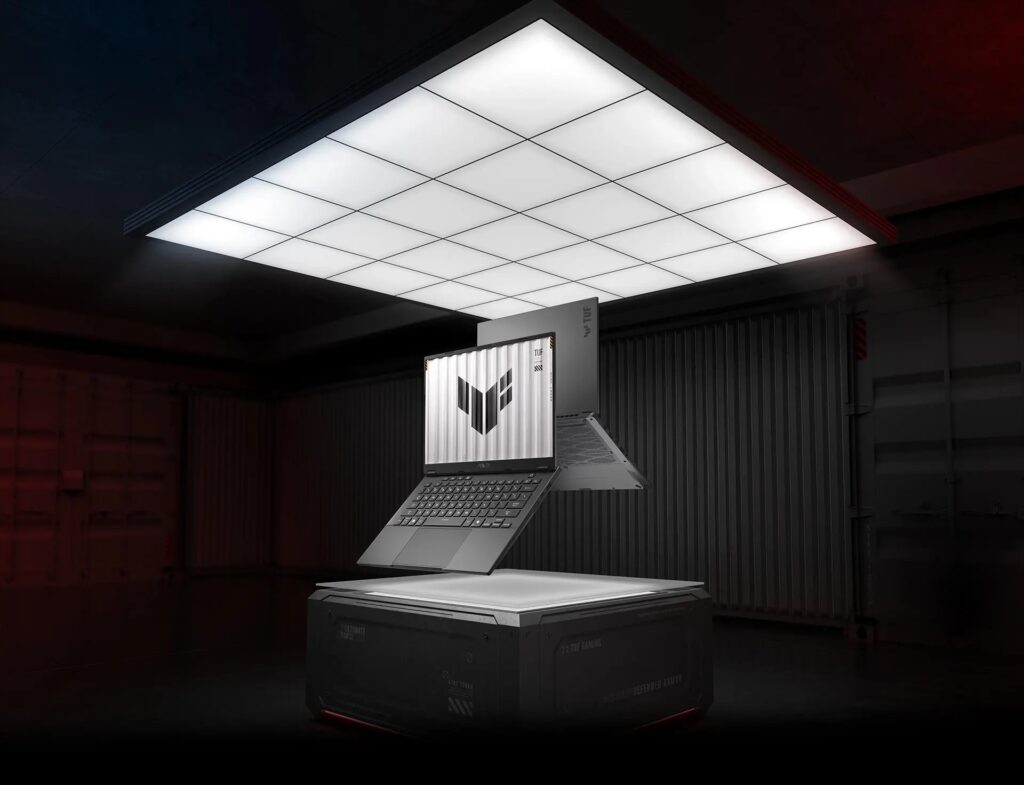
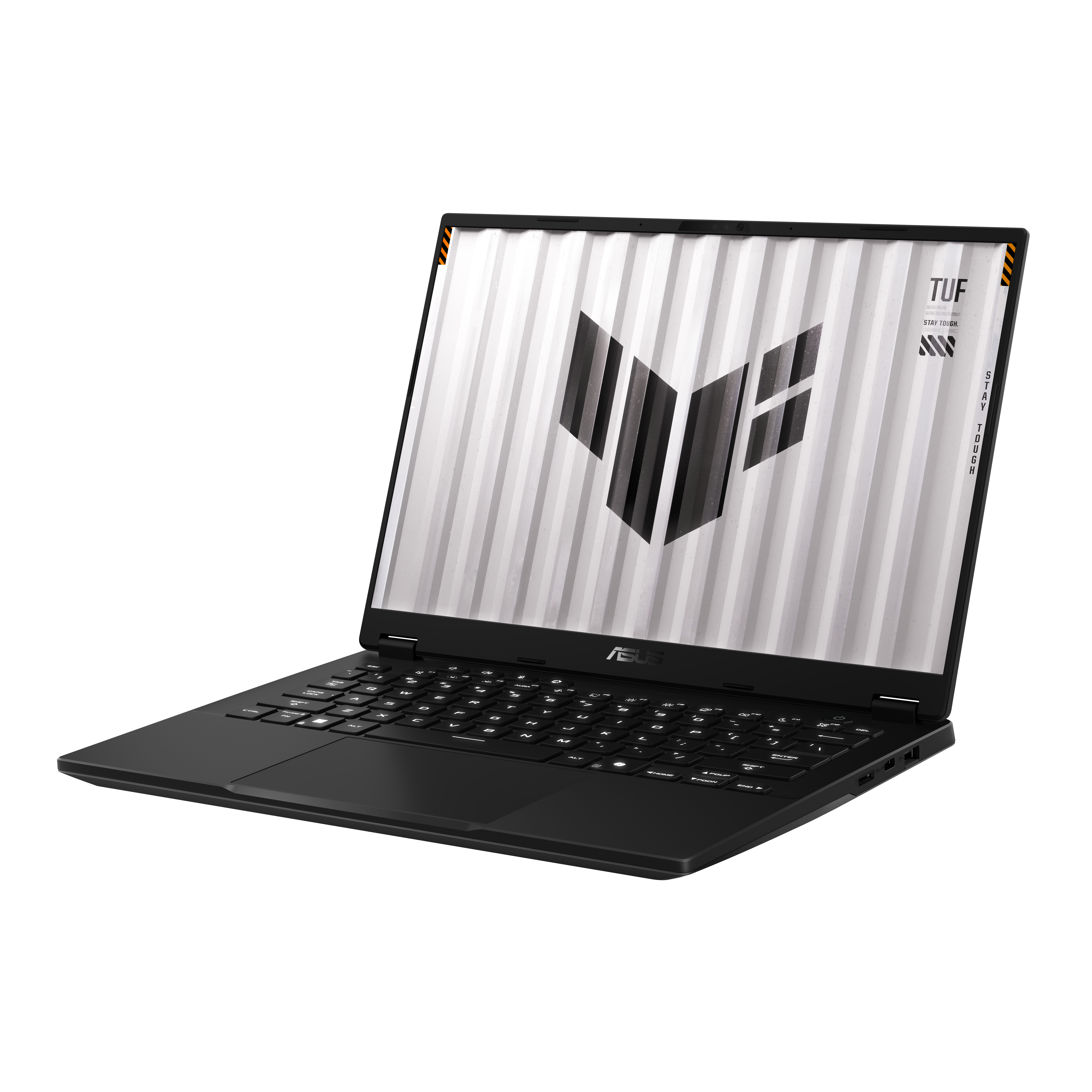
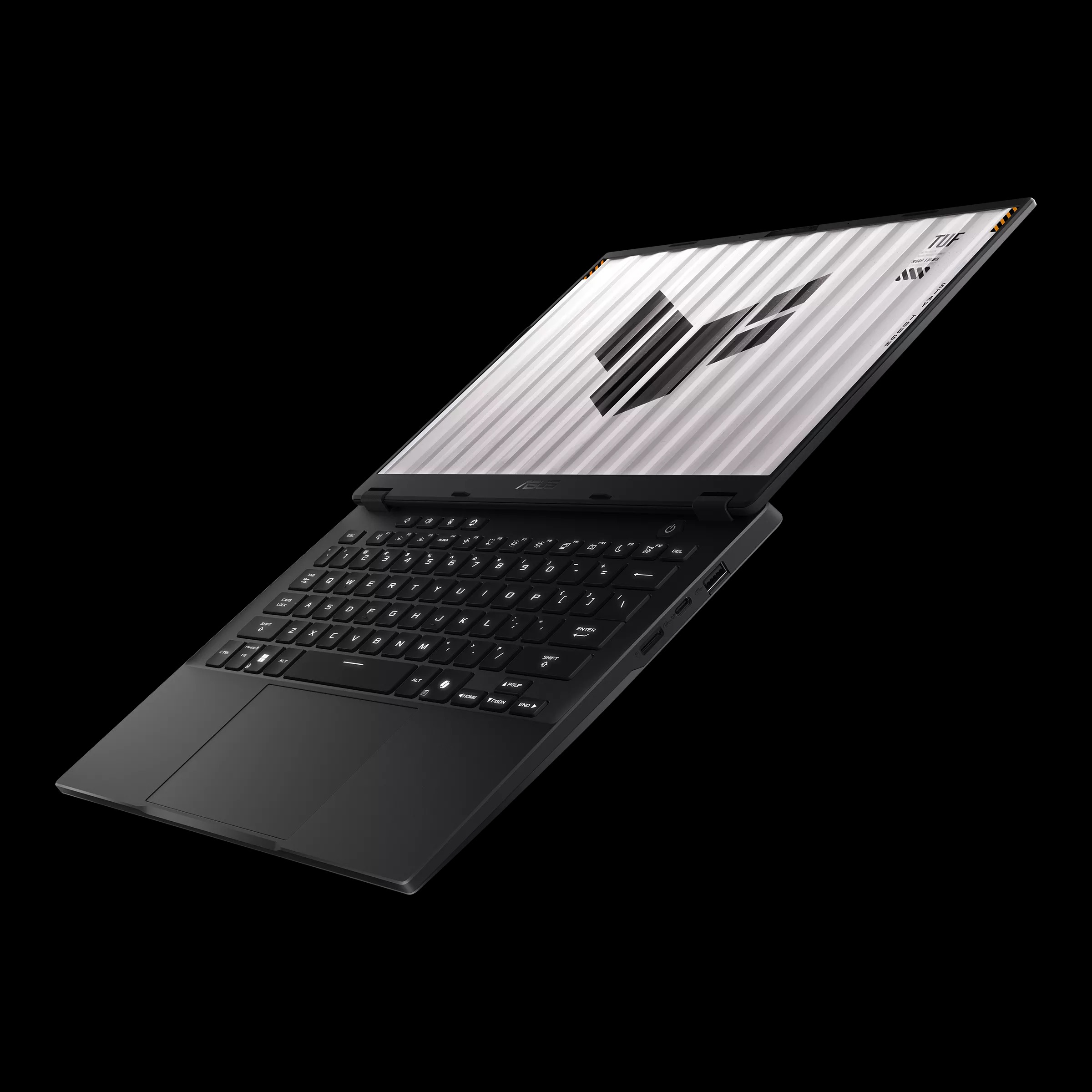
At the recently held CES 2026 event, ASUS introduced two new 14-inch gaming laptops under its TUF Gaming lineup. The TUF Gaming A14 FA401GM and FA401EA focus on delivering strong gaming and AI performance in a compact and lightweight chassis. Both models are built for users who want a portable system without sacrificing power.
The TUF Gaming A14 FA401GM is powered by the AMD Ryzen AI 9 465 processor. It features 10 cores and 20 threads and includes a built-in NPU capable of up to 50 TOPS of AI performance. Graphics are handled by the NVIDIA GeForce RTX 5060 Laptop GPU, which supports a maximum TGP of 115W with Dynamic Boost in Manual Mode. This hardware combination is aimed at modern AAA games and competitive esports titles while still handling multitasking such as streaming and background applications.
The RTX 5060 Laptop GPU supports the latest DLSS technologies, including DLSS 4. This brings Multi Frame Generation along with improved Ray Reconstruction and Super Resolution, powered by fifth-generation Tensor Cores. These features help increase frame rates, reduce latency, and improve visual quality across a wide range of games.
The TUF Gaming A14 FA401EA focuses on efficiency and integrated performance. It is the first TUF Gaming laptop to use the AMD Ryzen AI Max+ 392 processor. This chip includes 12 CPU cores, Radeon 8060S integrated graphics with 40 compute units, and an NPU capable of 50 TOPS of AI performance. The processor uses a chiplet design that allows the CPU and GPU to share the same memory pool, improving efficiency for gaming, multitasking, and local AI workloads. This model targets users who do not need a dedicated GPU but still want solid gaming and creative performance.
Both laptops feature a 14-inch 2.5K display with a resolution of 2560×1600, a 165Hz refresh rate, and a 16:10 aspect ratio. The panel covers 100 percent of the sRGB color space, reaches 400 nits of brightness, and supports a 3ms response time with overdrive. The FA401GM supports NVIDIA G-SYNC, while the FA401EA supports AMD FreeSync.
Despite their size, the laptops deliver strong thermal performance. The FA401GM supports up to 115W GPU power, while the FA401EA reaches a maximum TDP of 95W in Manual Mode. Cooling is handled by new fan motors, 97-blade fans, and micro-holes in the keyboard deck to improve airflow and keep surface temperatures in check.
Both models support quad-channel LPDDR5X memory, with up to 32GB at 7500MHz on the FA401GM and up to 64GB at 8000MHz on the FA401EA. Storage includes two M.2 2280 PCIe 4.0 slots with support for up to 4TB. Connectivity includes USB4 with DisplayPort and Power Delivery, USB Type-C, USB Type-A, HDMI 2.1, a UHS-II microSD card reader, WiFi 6E, Bluetooth 5.3, and a 73Wh battery. Weights range from 1.46kg to 1.48kg, making the new TUF Gaming A14 models among the most portable gaming laptops announced at CES 2026.
After announcing the Vivo Y500 and Y500 Pro last year, Vivo is back with a new phone from the same series dubbed the Vivo Y500i in China. It focuses on long battery life, large storage options, and reliable 5G performance, targeting users who prioritise endurance and everyday usability. Here’s a look at all the innards and pricing of the phone.
Vivo Y500i specifications and features
The Vivo Y500iv features a 6.75-inch LCD display with an HD+ resolution of 1570 x 720 pixels. The panel supports up to a 120Hz refresh rate and a peak brightness of 1200nits. For security, it features a side-mounted fingerprint sensor.
Under the hood, the Vivo Y500i is powered by the Snapdragon 4 Gen 2 chipset. The phone is available in 8GB and 12GB RAM options, with LPDDR5X used on the 8GB variant and LPDDR4X on the 12GB variant. Storage options include 128GB, 256GB, and 512GB UFS 3.1. Vivo’s memory fusion technology allows up to 12GB or 8GB of virtual RAM, depending on the variant.
One of the key highlights of the Vivo Y500i is its battery. The phone packs a single-cell 7,200mAh lithium-ion battery with 44W Flash Charge support. The device runs OriginOS 6, which is likely based on Android 16.
Vivo Y500i
On the camera front, the Vivo Y500i features a 5-megapixel front camera with an f/2.2 aperture. The rear houses a single 50-megapixel camera with an f/1.8 aperture and autofocus support. Other features include Wi-Fi dual-band support, Bluetooth 4.2, GPS with multiple satellite systems, USB-C, a 3.5mm headphone jack, an IR blaster, and essential sensors.
For durability, the Y500i comes with an IP68/69-rated dust and water-resistant body. It also carries SGS Gold Label 5-star drop and shock resistance certification. In terms of design, the Vivo Y500i measures 166.64 x 78.43mm x 8.49mm and weighs around 219 grams.
Vivo Y500i price and availability
The Vivo Y500i has arrived in China in Galaxy Silver, Obsidian Black, and Phoenix Gold colour options. Buyers can choose from variants such as 8GB+128GB, 8GB+256GB, 8GB+512GB, 12GB+256GB, and 12GB+512GB. These variants are priced at 1,499 Yuan (~$210), 1,799 Yuan (~$250), 1,999 Yuan (~$280), 1,999 Yuan (~$280), and 2,199 Yuan (~$315), respectively.
For more daily updates, please visit our News Section.
Honor recently confirmed that it will hold a launch event on Jan. 19 to unveil the Honor Magic 8 Pro, a compact flagship phone. Today, the brand released the following image to reveal that the Magic 8 RSR will also be announced through the same event. This phone will arrive as an enhanced version of the Magic 8 Pro.
Honor Magic 8 RSR launch date
Honor Magic 8 RSR launch date
The above image showcases the Honor Magic 8 RSR in two shades, such as purple and black. Both models have a squircle camera module instead of the hexagonal one, which was seen on the previous generation. While Honor has not revealed anything about the phone’s technical information, a recent Weibo post by a Chinese tech blogger has revealed almost everything about it.
Honor Magic 8 RSR specifications (rumored)
As per a new leak, the Honor Magic 8 RSR will arrive with a 6.71-inch LTPO OLED 1.5K screen with a quad-curved design. Under the hood, the device will feature the Snapdragon 8 Elite Gen 5 chip and a massive 7,200mAh battery with 120W wired and 80W wireless charging support.
The Magic 8 RSR will ship with 24GB of RAM and 1TB of storage. It will run on Magic 10 OS-based Android 16 and will feature a 50-megapixel front camera. On the back, it will have an OIS-enabled 50-megapixel primary camera, a 50-megapixel ultra-wide lens, and a 200-megapixel periscope telpehoto camera with 3.7x optical zoom and OIS support.
It will come with other features, such as an ultrasonic in-screen fingerprint sensor, 3D facial recognition, a dedicated camera button, and a satellite connectivity support. It will also have an IP68/69/69K-rated chassis.
For more daily updates, please visit our News Section.
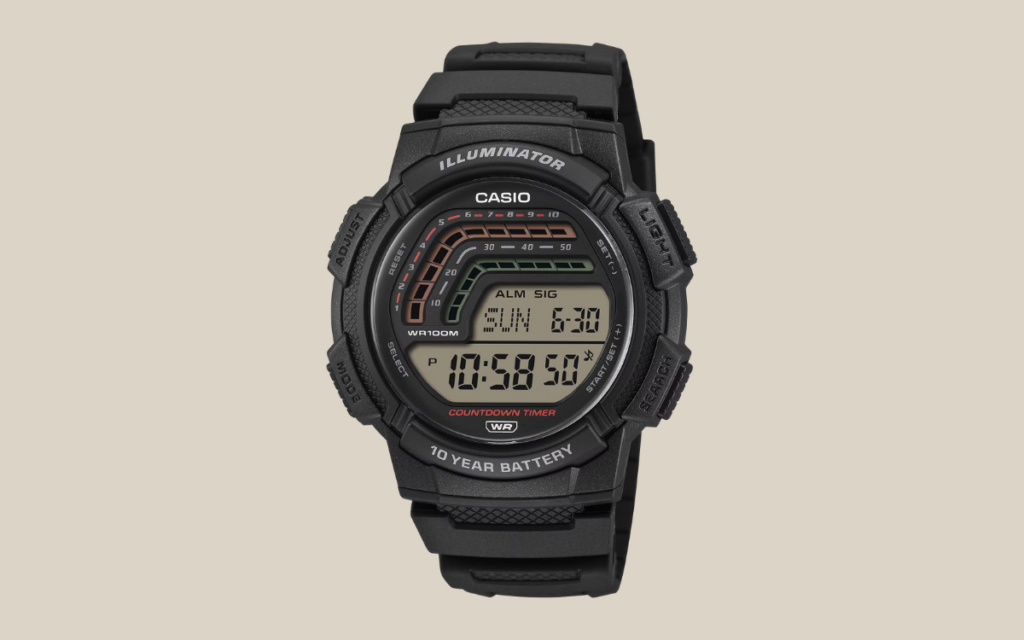
Casio has launched the WS1800 digital watch series in the United States. The new lineup includes three models: WS-1800-1AV (black), WS-1800-2AV (blue), and WS-1800-3AV (green). Each model is priced at $39.95 and is available through Casio’s official US website. The watches also appear on Amazon for pre-order at a higher price of around $65.
Casio WS1800 Specifications
The WS1800 is positioned as a sports-oriented digital watch with a retro-style design. It features a wide graphic display with upper dual scales and a larger main screen that shows the time, date, and day of the week. Casio uses a spherical resin glass for the front, while the case and band are made of lightweight resin. The watch weighs 41 grams and supports wrist sizes between 145 mm and 215 mm.
Casio has rated the watch for 100-meter water resistance. The built-in CR2025 battery is expected to last up to 10 years. The display supports an amber LED backlight with afterglow for better visibility in low-light conditions.
The WS1800 comes with a dual-display stopwatch that tracks game time and total elapsed time at the same time. It allows the event timer to be set between 1 and 60 minutes, and the stopwatch continues running even after the timer expires. The upper display measures up to 59 minutes and 59 seconds, while the lower display supports timing up to 99 minutes and 59 seconds.
Casio has also included a preset countdown timer with fixed intervals ranging from 10 to 45 minutes. The timer features auto-repeat and an elapsed time mode. In addition, the watch supports up to nine interval timers with independent start times. These timers can be set in one-minute and five-second increments.
Additionally, the watch supports 29 time zones across 48 cities, along with a daily alarm, an hourly time signal, and a full auto calendar valid until 2099. It maintains a monthly accuracy of ±30 seconds, supports both 12-hour and 24-hour time formats, and lets users mute button operation tones if needed.
In related news, Casio recently unveiled the MRG-B2100D-2A, a Japanese pagoda inspired timepiece with a blue dial and a titanium build, and also announced a new limited edition G-Shock created in collaboration with a durable Japanese bag brand.
For more daily updates, please visit our News Section.
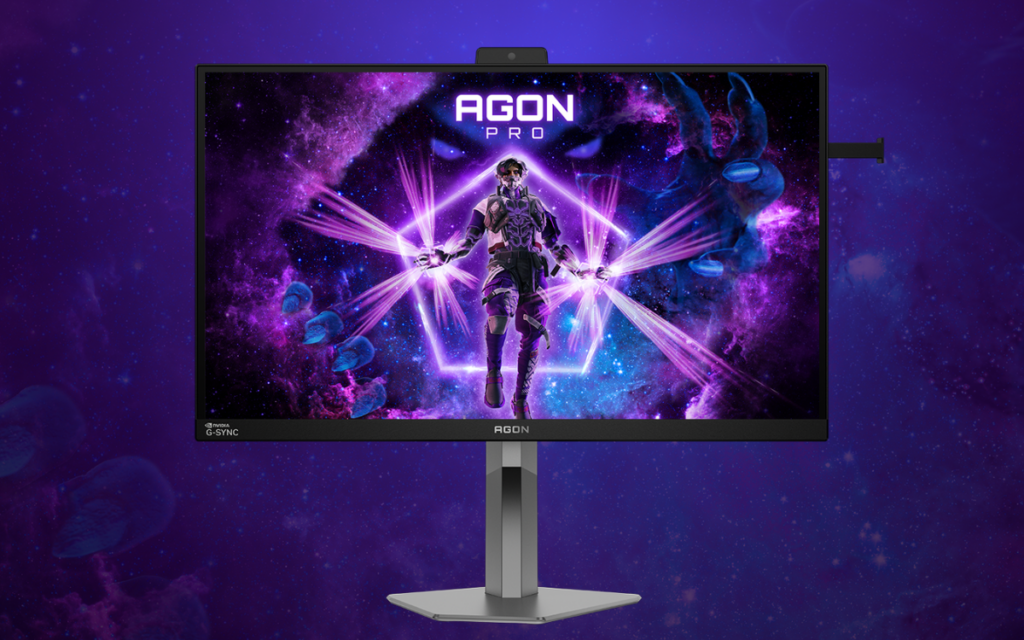
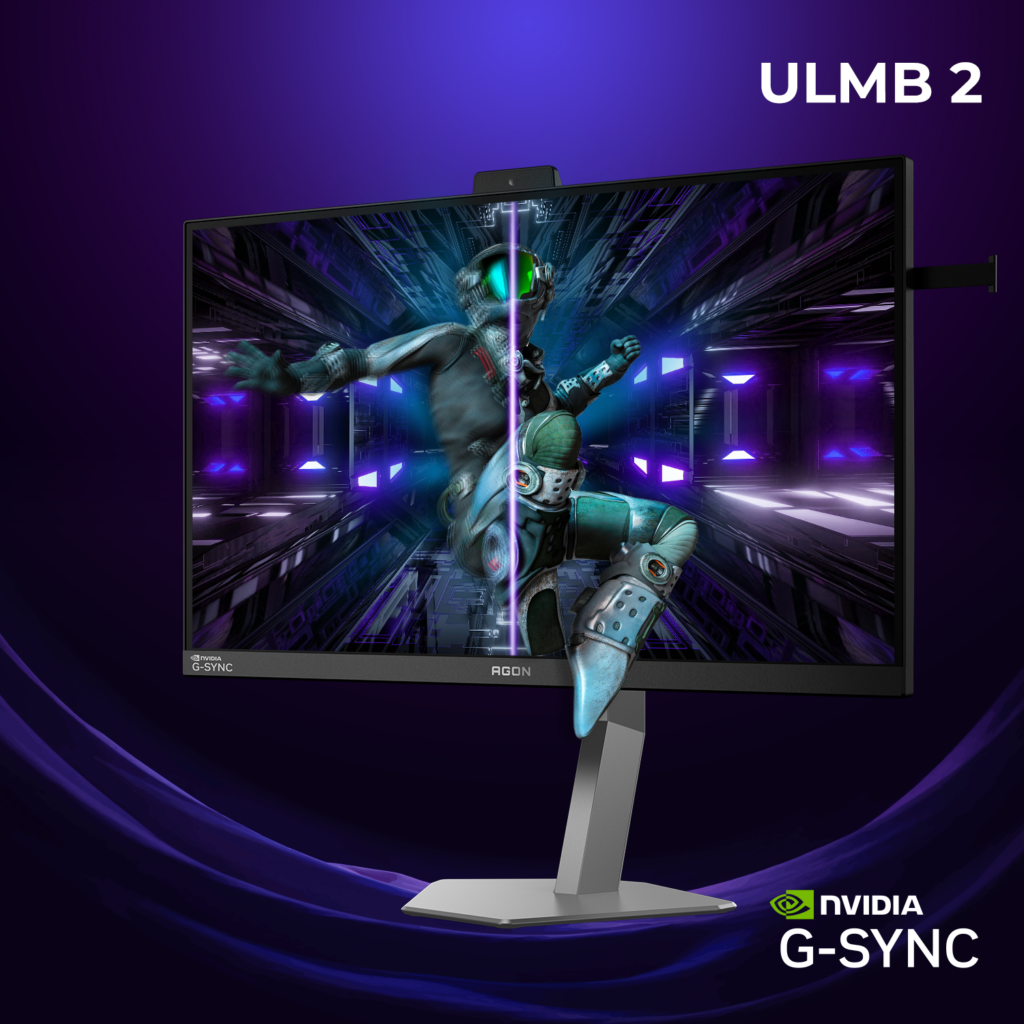
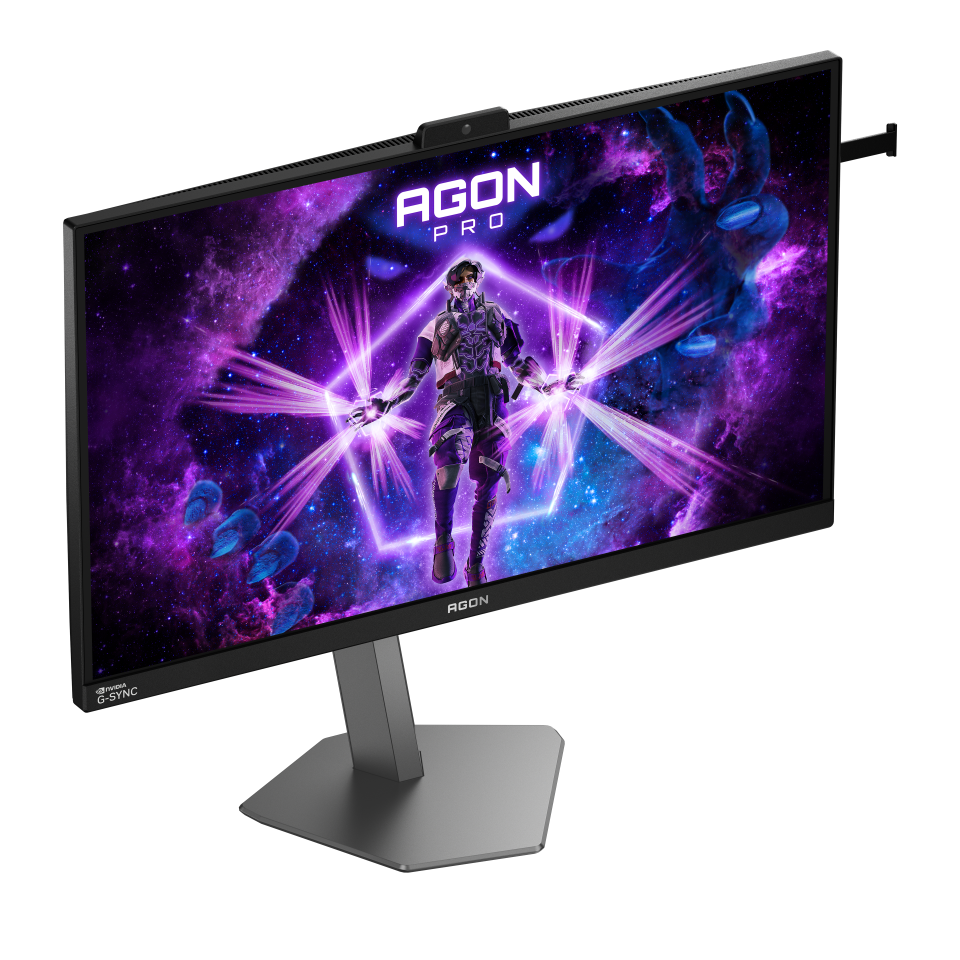
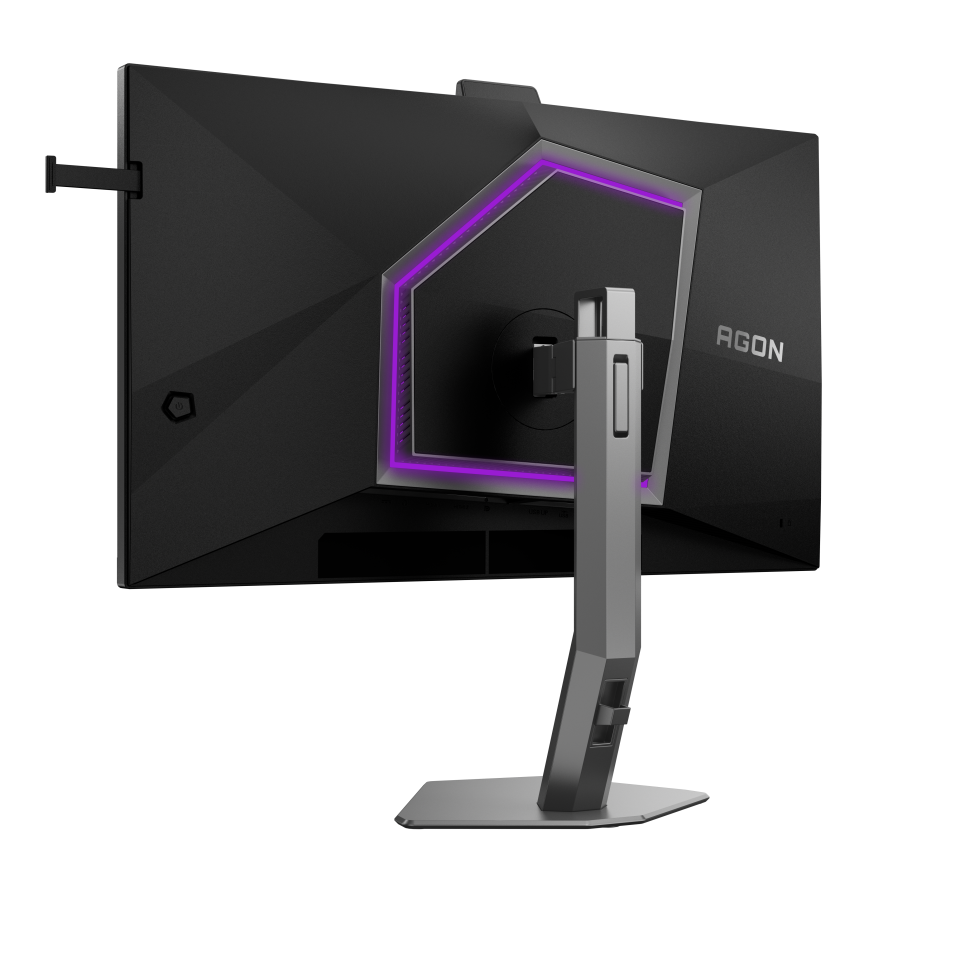
AOC has officially launched the Agon Pro AG276QSG2 gaming monitor, targeting esports players and competitive gamers. The new model is priced at 4,999 yuan ($716) in China and $599.99 in the global market.
AOC AG276QSG2 Specifications
The AG276QSG2 features a 27-inch Fast IPS panel with a 2560 x 1440 pixel resolution and supports a 360Hz refresh rate.
AOC integrates Nvidia G-Sync Pulsar with a dedicated G-Sync module, combining variable refresh rate and ULMB2 backlight strobing to deliver up to four times higher motion clarity than conventional backlight systems. The monitor supports a 0.69ms response time in strobe mode and 1ms gray-to-gray in standard operation.
The panel supports 100% sRGB and 90% DCI-P3 color gamuts and includes True 8-bit color depth. It comes factory calibrated with an average Delta E below 2. The monitor also supports HDR10 and reaches a peak brightness of 500 nits under HDR mode.
The AG276QSG2 uses G-Sync Ambient Adaptive technology to automatically adjust brightness and color temperature based on ambient lighting through a built-in light sensor. It also features hardware-level low blue light filtering to help reduce eye strain without compromising color accuracy.
For connectivity, the monitor includes two HDMI 2.1 ports, a DisplayPort 1.4 with DSC, USB 3.2 ports with upstream support, a micro USB for firmware updates, and a 3.5mm audio jack, along with dual 2W speakers and rear RGB Light FX.
The stand supports up to 130mm height adjustment along with tilt, swivel, and full pivot. It also includes a built-in headphone hook, cable management, and a carrying handle, while 100 x 100mm VESA mounting support is available.
In related news, HP has unveiled the Series 7 Pro monitor with a 31.5-inch 4K 120Hz display and Thunderbolt 4 support, while Acer has introduced the ProDesigner PE320QX, a 32-inch 6K monitor with extensive connectivity options.
For more daily updates, please visit our News Section.
We use cookies on our website to give you the most relevant experience by remembering your preferences and repeat visits. By clicking “Accept”, you consent to the use of ALL the cookies.
This website uses cookies to improve your experience while you navigate through the website. Out of these, the cookies that are categorized as necessary are stored on your browser as they are essential for the working of basic functionalities of the website. We also use third-party cookies that help us analyze and understand how you use this website. These cookies will be stored in your browser only with your consent. You also have the option to opt-out of these cookies. But opting out of some of these cookies may affect your browsing experience.
Necessary cookies are absolutely essential for the website to function properly. This category only includes cookies that ensures basic functionalities and security features of the website. These cookies do not store any personal information.
Any cookies that may not be particularly necessary for the website to function and is used specifically to collect user personal data via analytics, ads, other embedded contents are termed as non-necessary cookies. It is mandatory to procure user consent prior to running these cookies on your website.