A couple of weeks ago, Realme launched its latest smartphone in its home market in China — Realme GT Neo2. As the name itself indicates, the device is launched as a successor to the GT Neo that was launched earlier this year.
The company is now gearing up to launch the smartphone in the Indian market later this month but that’s not the only region where it’ll be made available soon. The Chinese firm is gearing up to launch the Realme GT Neo2 in Europe and its details have surfaced online.
As per the report, the smartphone will come in three color options in the European market — Black, Blue, and Green. The base variant will pack 8GB of RAM and 128GB of internal storage and cost EUR 369. On the other hand, the 12GB RAM and 256GB storage variant will be available for a price of EUR 459. However, the date of announcement and availability haven’t been revealed yet.
The Realme GT Neo2 features a 6.62-inch Full HD+ Samsung E4 AMOLED display that offers a 120Hz refresh rate, offering a peak brightness of 1300 nits. Under the hood, the device is powered by the Qualcomm Snapdragon 870 chipset.
It also supports dynamic memory expansion, allowing virtual expansion of the RAM by up to 7GB. The phone also comes with a diamond ice core cooling system that covers 17932mm² in terms of surface area with aerospace-grade cooling gel. It also uses tempered VC and three-dimensional graphene layers for better heat dissipation.
As for the optics, there’s a triple-camera setup on the back that features a 64-megapixel primary camera with an 8-megapixel ultra-wide-angle lens and a 2-megapixel macro sensor. On the front, there’s a 16-megapixel selfie shooter for video calling.
The phone arrives with dual stereo speakers and Dolby Atmos Games support as well. It runs the Android 11 operating system out-of-the-box with the company’s own Realme UI 2.0 on top. The device is powered by a 5,000mAh battery with support for 65W fast charging technology.
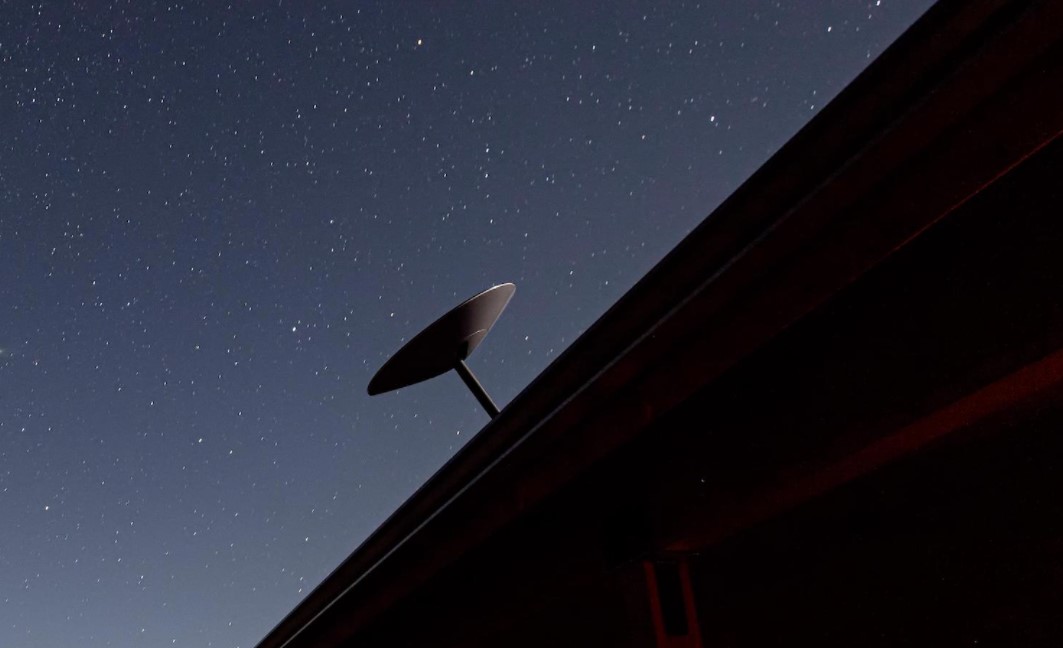
Starlink, a satellite based company from Elon Musk, is planning on entering India to offer its internet services. A top official revealed that the company will focus on bringing its broadband connectivity to rural Lok Sabha constituencies first in the region.
According to a MoneyControlreport, the satellite company is looking to hold virtual conversations with Members of Parliament, ministers and other top government officials about how broadband connectivity can change lives in rural areas. Furthermore, SpaceX’s satellite broadband unit also seeks to bring its own services in India from December 2022, with around 200,000 active terminals subject to permission from the local government.
Starlink Country Director for India Sanjay Bhargava stated that “In October I am also keen to have 30-minute virtual conversations with MPs, ministers, secretaries to GOI (government of India), or principal secretaries to states to see if they think 100 per cent broadband would help improve lives. We will probably focus on ten rural Lok Sabha constituencies for 80 per cent of the Starlink terminals shipped to India.” Previously, Bhargava has also said that the pre order from India has crossed 5,000 and the company was keen to work in rural areas for providing broadband services.
Starlink’s arrival in India would have it compete with local telecom operators like Reliance Jio, Bharti Airtel, Vodafone Idea in broadband. Bhargava added that “”Most of this will be provided by terrestrial broadband, but the hard-to-serve areas will be handled by Satcom providers like Starlink. We look forward to the day a rural constituency in India can declare itself to be 100 percent broadband.”
Last month, OPPO unveiled ColorOS 12 based on Android 12 in China. According to the update schedule shared by the company, the flagship OPPO Find X3 series and the OnePlus 9 series, which were part of the ‘Early Access’ program are supposed to receive public beta builds in October. As we have now entered the said month, the firm has already opened as well as closed registrations for the first batch in China.
According to the official Weibo account of ColorOS, the registrations for the first batch of ColorOS 12 Public Beta update for the OPPO Find X3 series and the OnePlus 9 series went live in China yesterday at 11 AM (local time). The registrations have already closed exactly 24 hours later earlier today.
The company recruited testers for the following devices.
OPPO Find X3 Pro Mars Exploration Edition
OPPO Find X3 Pro
OPPO Find X3
OnePlus 9 Pro
OnePlus 9
Applicants who get selected are said to receive the beta build via OTA in the coming days. Although the Weibo post does not mention anything, there should be more batches of recruitment in the coming days.
The above-listed phones should receive ColorOS 12 (Android 12) stable build very soon if the public testers don’t find major issues. That said, the next batch of smartphones to enter the public testing phase in November includes the OPPO Find X2 series and the OPPO Reno6 series.
The Galaxy A52s was made official in August. It debuted as the company’s first phone with RAM Plus feature. It is nothing but Samsung’s version for virtual or extended RAM. It appears other phones from Samsung will also receive the RAM Plus feature.
RAM Plus allocates some amount of space from the internal storage to be used as virtual RAM. According to Sammobile, the RAM Plus feature was recently added to the Galaxy A52 handset through a software update. It added that the Galaxy Z Fold 3 also now offers the extended RAM functionality. The Fold 3 did not launch with the feature, but it was added through one of the recent software updates.
Samsung RAM Plus | Image source: Sammobile
The One UI 4.0 beta-based Android 12 update that is now available for Galaxy S21 series does not include the RAM Plus feature. It remains to be seen whether it will be made available on the final stable version or through future updates.
The RAM Plus features add 4GB of virtual RAM to the device. At present, it does not allow users to turn off this feature. In addition, there is no way to increase or decrease the size of the RAM Plus. Other brands like Realme allow users to customize the amount of virtual RAM. Hopefully, the South Korean company will let users to increase/decrease RAM Plus size in the future.
Users of Samsung phones can check whether they have received the RAM Plus feature by going to the Settings app. Navigate to Battery and device care, and then tap on Memory.
It’s been months since we started getting reports about Apple working on a new Apple Silicon chipset — M1X. The devices were expected to get launched in the past couple of months but have been delayed because of production issues.
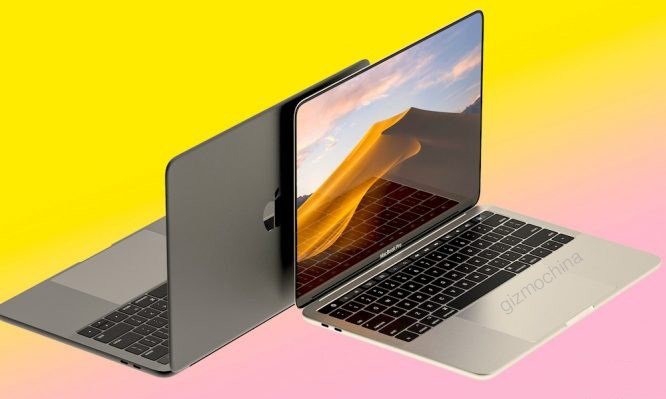
Now, a new report indicates that Apple is gearing up to launch its new MacBook Pro laptops powered by the M1X chipset later this month, i.e. October 2021. This is also in line with a recent report that suggested new MacBook Pro devices going on sale in a few weeks.
Apple Macbook Pro 16-inch
The upcoming Apple MacBook Pro models are expected to come with an all-new design and two display options — 14-inch and 16-inch, featuring a Mini-LED screen. They are expected to feature a flat-edged design, a MagSafe charging port, and a few more ports, including HDMI and an SD-card slot reader.
As for the M1X chipset, it could come packed with a 10-core CPU with eight high-performance cores and two energy-efficient cores, along with 16 or 32-core GPU options and support for up to 64GB RAM. As per the reports, Ruiyi Optoelectronics will be the exclusive supplier of the new Mini-LED panels while Quanta Computer will be responsible for the final assembly of the upcoming MacBook devices.
Apart from the MacBook, there are a few other Mac devices planned by Apple. Previously it was reported that soon after the MacBook Pro launch, the Cupertino-based tech giant could launch a new high-end Mac Mini, followed by a new iMac and Mac Pro next year.
Last month, along with the Apple iPhone 13 series smartphones, the Cupertino-based technology giant also announced its latest smartwatches — Apple Watch Series 7. While the product is yet to go on sale, its pricing details have been revealed.
Now, the Apple Watch Series 7 has been listed on India’s online marketplace Flipkart which revealed that the smartwatch will have a starting price of ₹41,900 in the country. It’s still listed as “Available later this year” which means that the launch date remains unknown.
The development was first reported by Ishan Agarwal on Twitter. Coming back to the pricing, the base model with 41mm aluminum case is priced at ₹41,900 while the one with 45mm case will cost ₹44,900. The cellular model with 41mm casing will set you back by ₹50,900 while the same for the 45mm is priced at ₹53,900.
As for the Stainless Steel variant, the GPS + Cellular model in 41mm case is priced at ₹69,900 while the 45mm model costs ₹73,900. The marketplace has also listed Milanese Loop for the price of ₹4,000.
Internally, the Apple Watch Series 7 packs similar sensors and processors as its predecessor but runs on the latest watchOS 8 user interface with lots of amazing features and improved algorithms.
It also comes with several new watch faces, has IP6X water and dust resistance rating. The highlight is the battery, which the company claims offers up to 18 hours of normal usage when fully charged and can be charged through the USB-C port. Apple also adds that 8 minutes of charging of the device offers 8 hours of battery life.
It comes in five color options — Black, Blue, Gold, Red, and Dark Grey. The smartwatch lineup is expected to go on sale in the United States this fall, with a starting price of $399.
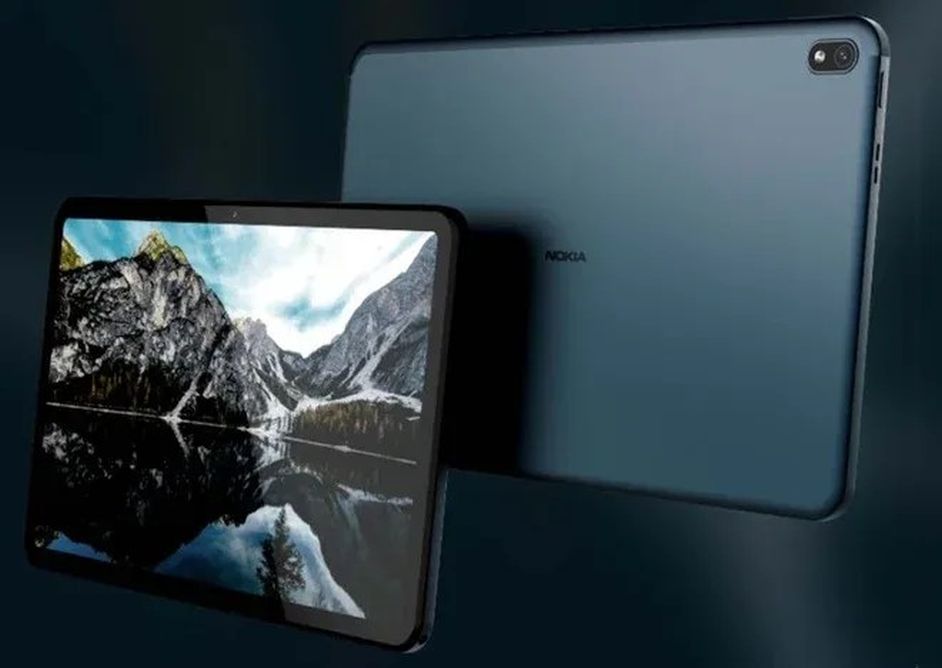
Nokia Mobile is expected to announce a new tablet on Oct. 6. A Vietnamese news site Zingnews.vn published the images of the Nokia T20 tablet but they were taken after a short while. A reader who spotted the article on the Vietnamese site shared the images to the SuomiMobiilpublication. The image gives a good look at the front and rear design of the T20 tablet.
The below-show image shows that the Nokia T20 tablet seems to feature a button and a speaker grille on the top edge. A front camera can be seen on the left bezel of the tablet when view in portrait orientation. The bottom corner of the device seems to be fitted with a 3.5mm audio jack. The rear shell of the device features a single camera with an LED flash.
Image of the alleged Nokia T20 tablet
Reports surrounding the Nokia T20 tablet have claimed that it will be featuring a 10.36-inch display. It is expected to run on a stock version of Android 11 OS. The device is likely to be powered by any one of the following Unisoc processors such as T610, T618, or T700.
The Nokia T20 tablet will ship with 4 GB of RAM and 64 GB of internal storage. There is no word on the battery size of the T20. Its CQC certification revealed that it may support only 10W charging.
It is expected to arrive in a Wi-Fi only and a Wi-Fi + 4G version. The former may cost around £185 or £217, and the latter could be priced at £202 or £227.
Apple launched the iPhone 13 series smartphones last month and the devices are much in demand, so much that the company has extended the shipment dates for the new orders from the end of September to the last week of October.
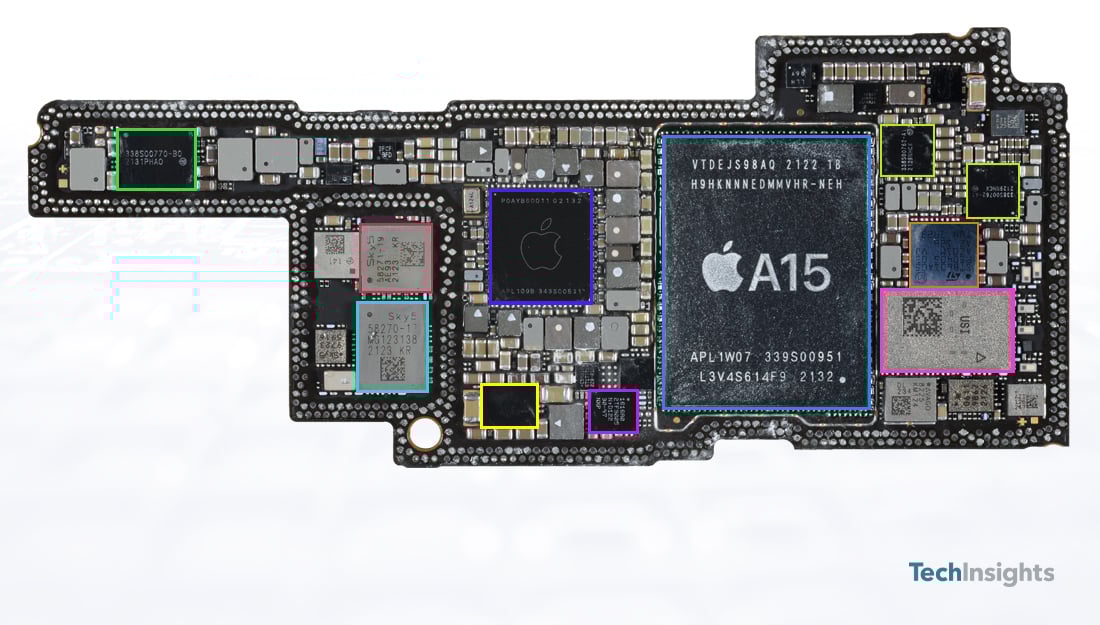
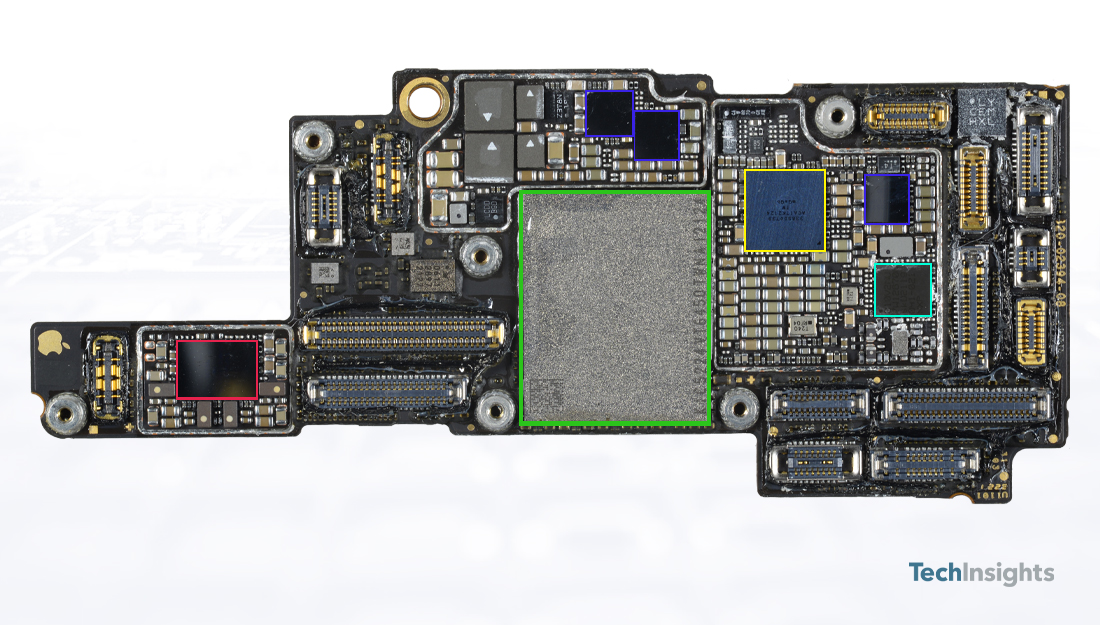
The iPhone 13 Pro lineup comes with upgraded specifications and the folks at TechInsights took apart the 256GB internal storage model to take a look inside, which has revealed some interesting information about the device.
The information shared by the phone teardown team reveals that the iPhone 13 Pro comes packed with 6GB of LPDDR4X RAM. This is a bit older as a newer variant for the memory — LPDDR5 is already available.
Also, it has been revealed that the GPU on the iPhone 13 and the iPhone 13 Pro seems to be the same, except for the core count. The standard model reportedly has a 4-core GPU while the Pro model comes with a 5-core GPU.
This is a similar approach that Apple is taking with its new M1-powered Mac devices where the low-cost models have 7-core GPU while the costlier models pack 8-core GPU.
The disassembly also revealed that iPhone 13 features a 1.7µm wide camera, which means it has larger pixels than the iPhone 12 which has 1.4µm pixels. On the other hand, the Pro model boasts a wide camera with 1.9µm pixels, up from its predecessor’s 1.4µm pixels.
The company uses its own chips, including the A15, the Audio Codec, and the Audio Amplifiers. Other components are coming from suppliers like Qualcomm, KIOXIA, NXP, STMicroelectronics, USI, Qorvo, and Broadcom.
The cost for the iPhone 13 Pro’s materials and components comes out to around $570, which is more than $548 that costed Apple to make iPhone 12 Pro. The increased pricing is due to the costlier chip, NAND memory, and display subsystem, as well as the increased cost of the main enclosure. Do note that the pricing isn’t inclusive of other associated costs, such as software, labor, shipping, etc.
Currently, the Apple iPhone 13 Pro 256GB storage model is available for purchase at a price of $1,099. This means that the Cupertino-based tech giant is selling it at 1.9x the phone’s build cost.
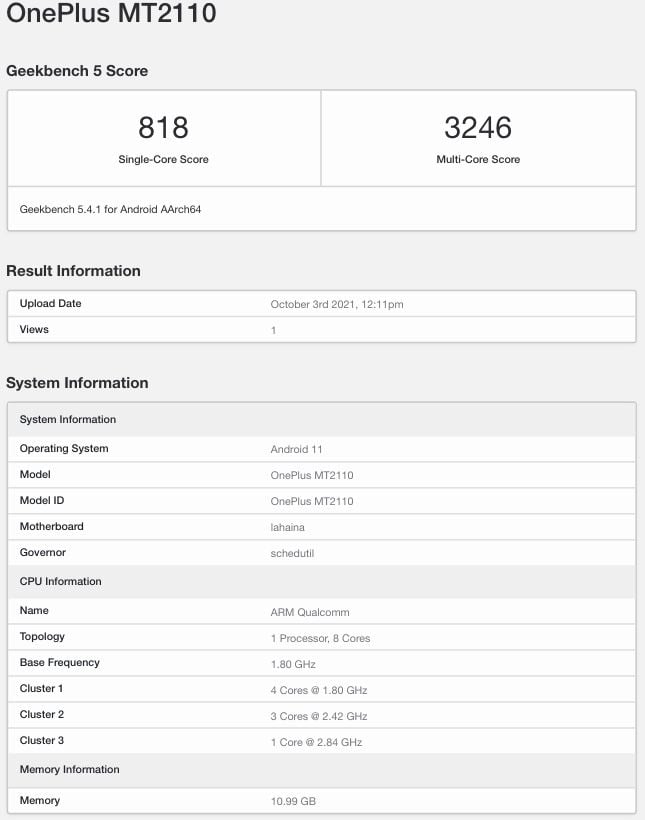
OnePlus is speculated to announce the OnePlus 9 RT affordable flagship phone on Oct. 15. It is expected to go official in limited markets like India and China. A new OnePlus phone with model number MT2110 was spotted at the 3C certifications site of China. It is speculated that this device may go official with the OnePlus 9 RT moniker in the home market. The same device has now been spotted at Geekbench (via) today. It appears that the company could be internally testing its performance before its official announcement.
The Geekbench listing shows that the OnePlus 9 RT is driven by a Qualcomm chipset, which is codenamed Lahaina. The configuration of the chipset mentioned in the listing and the codename hints that the smartphone is powered by the Snapdragon 888 SoC.
Leaked information that was shared by Android Central in August claimed that the OnePlus 9 RT will be equipped with the higher-binned version of the Snapdragon 870. Probably, the publication could have hinted at the inclusion of the Snapdragon 888 SoC. It is advisable to wait for further reports to know which processor is present under the hood of the OnePlus 9 RT.
The MT2110 model is equipped with 12 GB of RAM, and it runs on Android 11 OS. It scored 818 in the single-core test and 3246 in the multi-core test. It is believed that the variant heading to India has an MT2111 model number.
The OnePlus 9 RT is likely to feature a 6.55-inch AMOLED FHD+ 120Hz display, a 16-megapixel selfie camera, and a 50-megapixel + 16-megapixel + 2-megapixel triple camera unit. It may house a 4,500mAh battery that supports 65W fast charging. The handset is likely to arrive with up to 12 GB of RAM and up to 256 GB of storage.
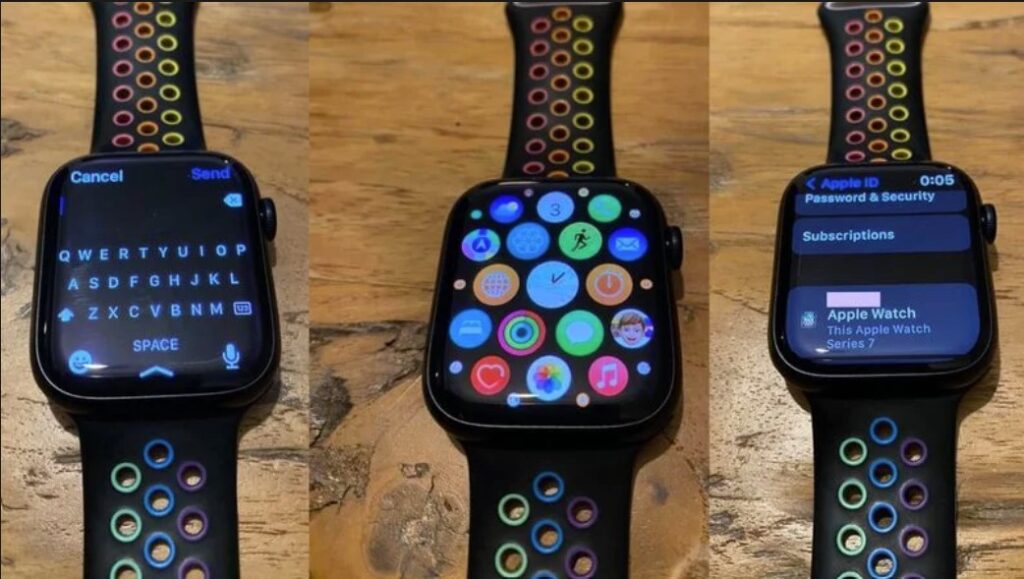
Apple may announce the new Watch Series 7 anytime from now but the company managed to contain leaks to an extent that the real-world pictures weren’t out yet. However, some pictures finally found their way past restrictions and were circulated online. The images went live on a Facebook group but it was taken down soon after its posting. It is also being claimed that Apple Watch Series 7 was undergoing carrier testing before its official launch this fall.
Source: Macrumors
Contrary to the rumors, Watch Series 7 does not feature flat-edges but instead, is curved over the sides, as appears from the leaked images. So far, only the marketing and promotional graphics were available for everyone to see but after the leaks from today, it is clear how exactly the upcoming Watch Series 7 is going to look like.
Even though the CPU remains the same as we saw on Apple Watch Series 6, there are significant improvements to the display, improved IP6X rating for dust and water resistance, and we can hope for more. But for that, we will have to wait for Apple to announce it.
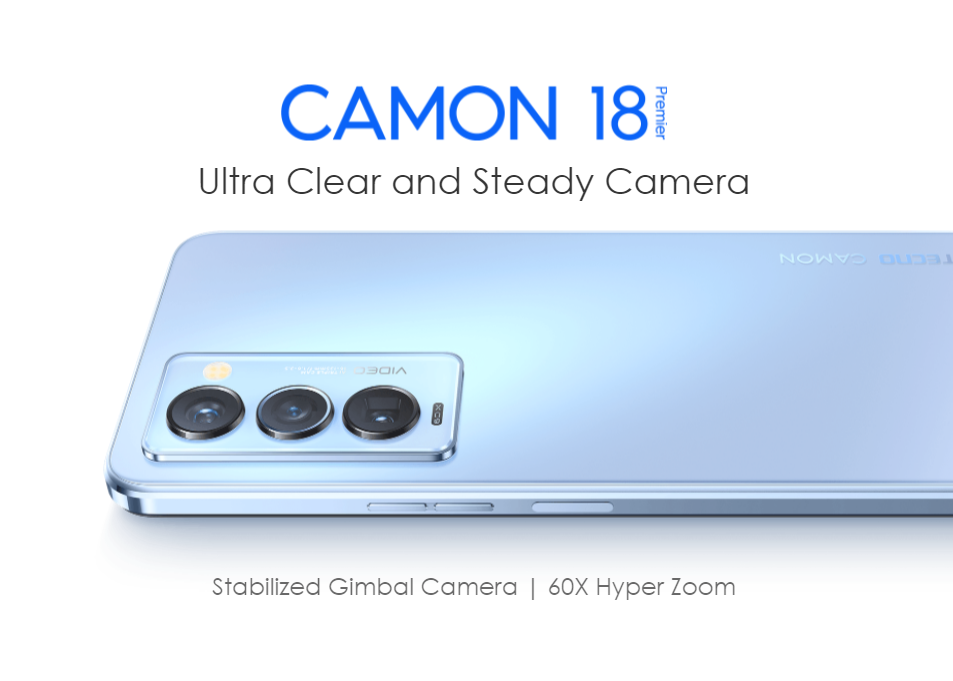
Tecno has announced the Camon 18 Premier smartphone in Nigeria. The series also includes two other models such as the Camon 18 and Camon 18P. These handsets are also expected to go official in the coming days. Coming back to the Camon 18 Premier, it features a gimbal-stabilized 64-megapixel triple camera unit, a 120Hz AMOLED panel, dual-flash enabled front-facing camera, and a new Helio G-series chipset.
Tecno Camon 18 Premier
Tecno Camon 18 Premier specifications
The Camon 18 Premier features an AGC glass on the back and it measures only 8.15mm in thickness. At the front, it features a 6.7-inch AMOLED punch-hole panel that produces a Full HD+ resolution of 1080 x 2400 pixels, 550nits brightness, and a 120Hz refresh rate. The handset runs on Hi OS 8.0 based Android 11 OS.
The Helio G96 chipset is present under the hood of the Camon 18 Premier. It offers 8 GB of RAM and 256 GB of built-in storage. The device houses a 4,750mAh battery that supports 33W fast charging. The company claims that it can gain 64 percent battery juice by charging it only for 30 minutes.
Tecno Camon 18 Premier
Placed on the front is a 32-megapixel selfie camera with dual-LED flash. The rear camera setup of the phone features a 64-megapixel main camera, a gimbal-stabilized 12-megapixel camera, and an 8-megapixel periscope zoom lens that carries support for 60x Hyper Zoom. The company relies on its Galileo algorithm engine to capture moon shots through its Moon Probe feature. It also offers other features like portrait video bokeh, night portrait video, and ultrawide videos.
The other features that are available on the Camon 18 Premier include dual SIM, 4G VoLTE, Wi-Fi 5, Bluetooth, GPS, NFC, USB-C, and a 3.5mm audio jack. It is equipped with a side-mounted fingerprint scanner.
Tecno Camon 18 Premier pricing and availability
There is no word on the pricing of Camon 18 Premier. When available, it can be purchased in colors like Polar Night and Vast Sky.
Huawei has already launched its P50 series of flagship smartphones but the Chinese giant is yet to announce the Mate 50-series phones. The Huawei Mate-series flagship devices usually launch around September or October. However, that may not be the case this time, if the latest report is to be believed.
The company had launched the Huawei P50 series smartphones in July this year, much late than its usual timeline of March. So, it would be too early for Huawei to launch the next-generation Mate series phones.
Now, a new report coming from China claims that the upcoming Huawei Mate 50 series of flagship smartphones are now expected to go official in the first quarter of next year, and the announcement is likely to happen in March.
The smartphones in the lineup are expected to come powered by the Qualcomm Snapdragon 898 chipset. However, unlike this processor powering other smartphones, it’ll be different in the Mate 50 series as instead of having 5G support, the chipset will only support 4G connectivity.
It is also being speculated that the phones will come equipped with an LTPO display — the same technology that we are seeing in the newly launched Apple iPhone 13 Pro series. This could mean that the phone will have support for adaptive refresh rate, with support for a high refresh rate of 120Hz.
Recently, it was reported that the upcoming Huawei Mate 50 smartphone will come with support for satellite connectivity when the cellular network isn’t available. The satellite connectivity will be used to communicate via short message service (SMS) in a situation where a cellular network isn’t an option.
For this, the company has reportedly opted for the Beidou Satellite System. It is being reported that because of this new feature addition, the launch of the upcoming flagship smartphone from Huawei has been delayed.
It is also indicative of the fact that Huawei is still trying to innovate in the smartphone space and hasn’t given up on the mobile phone business despite being severely restricted by the United States sanctions. But it’s noteworthy that the satellite communication feature hasn’t been confirmed by Huawei and it currently looks like speculation.
The biggest player in the 5G race is the controversial figure Huawei. China issued the China Mobile 2021 4G/5G Fusion Core Network Procurement tender in order to invite bidders and it turns out that the highest bidder was Huawei. This is not the first time the 5G giant has backed such a big tender. In fact, it was obvious even before the bidding as Huawei would turn out to be the highest bidder, the next closest rival is ZTE.
Source: Huawei
Earlier this year, Huawei bagged its first 5G 700MHz main equipment collection tender of a total of 38 billion tenders. This makes the recent win the second-largest 5G list this year. The budget for Huawei’s Core Network purchase also seems pretty overwhelming at a whopping 7.5 billion Yuan.
However, this is only the first time for Huawei where they’ve won the first bid share. But all this was expected as Huawei is the biggest player in the 5G equipment and core network. The price breakup of the deal is such that Huawei equipment is quoted at 6,406.25 million Yuan and a service quotation of 1,082.44 million Yuan. China Mobile set a maximum bid limit of 6,737 million Yuan for the equipment portion of the tender and for the Edge UPF portion, it was set at 798.7 million Yuan. This adds up to a maximum big limit of more than 7.5 Billion Yuan and Huawei’s quote matches this highest bid limit.
The lack of competitors also gave an edge to Huawei as only the big two, ZTE and Huawei were competing to bag the deal. And considering the capabilities and cap of Huawei, it was expected that Huawei will bag most of the shares, followed by ZTE. The two companies had a mutual understanding between them and both of them would be enjoying the tenders they have bagged.
Xiaomi has announced several phones this year but it will be naive to expect they are done. While we expect at least 5 new phones before Xiaomi calls it a year, a new leak has revealed the Chinese manufacturer has a Snapdragon 870 smartphone coming soon. The source has also revealed some of the device’s specifications.
The Snapdragon 870 is a popular chipset that several manufacturers have adopted for use not only in phones but also tablets. Xiaomi itself has announced three devices (not counting those from its subsidiaries) powered by the processor – the Mi 10S, the Mi 11X, and the Mi Pad 5 Pro. Now, it is set to announce a fourth one according to the Weibo user @Bald Panda.
According to the source, the phone will not only have a Snapdragon 870 processor, it will also have a curved display with a punch hole and a 120Hz refresh rate. The display will have an FHD+ resolution and not a 2K resolution as some of Xiaomi’s recent flagships have.
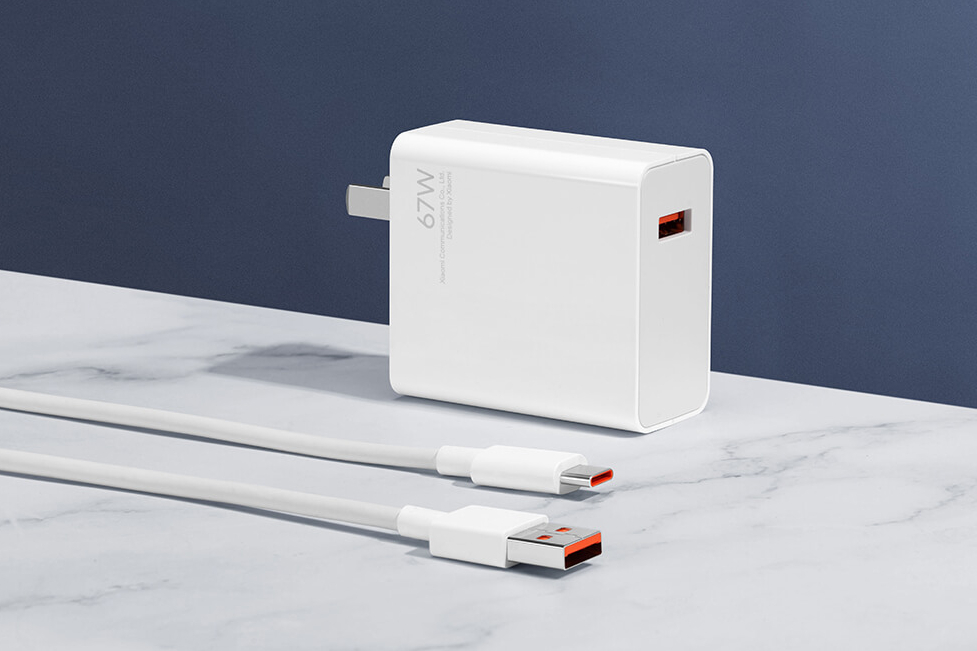
For the cameras, there will be a 20MP sensor inside the punch hole while the primary rear camera will be a 108MP sensor. He also mentions that there is a possibility of the device having a telephoto camera that brings 3x optical zoom but he isn’t sure. Inside the phone will be a 5000mAh battery with support for 67W fast charging.
There is no mention of the device’s name neither did the source say when we should expect the phone to launch. We believe more details will surface in the weeks leading to the launch of the phone.
We first heard of the Nokia X100 and Nokia G300 back in August when famed leaker, Evan Blass a.k.a. @evleaks, posted a list of upcoming devices from HMD Global. The list also revealed their codenames. Of the devices on the list, only the Nokia G50 has been announced while the Nokia T20 is the tablet scheduled for release on October 6.
image via: ITHome
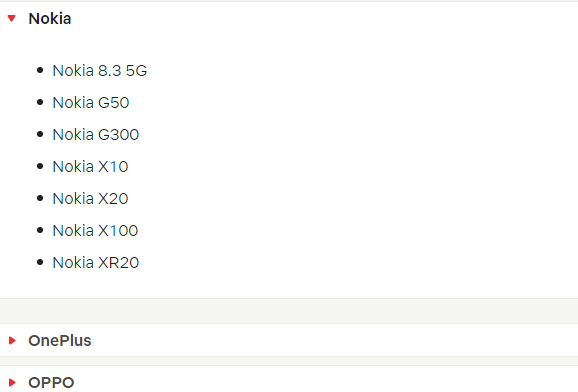
Now the Nokia X100 and Nokia G300 have been spotted on a list of devices that have support for Netflix HDR. The list also includes the Nokia 8.3 5G, Nokia G50, Nokia XR20, Nokia X10, and Nokia X20.
Little is known about the Nokia X100 but the Nokia G300 appeared in a leak a few days ago that revealed its design and specifications. The phone will also have a Snapdragon 480 5G processor, a chipset that already powers four other Nokia phones announced this year.
The Nokia G300 will have a 6.57-inch LCD display with an HD+ resolution. It has a waterdrop notch that holds an 8MP camera. On the back is an oreo-shaped camera housing that holds a 16MP main camera, a 5MP ultrawide angle camera, and a 2MP depth camera. The phone will have 64GB of expandable storage though there should be other configurations too. It is also expected to pack a 4470mAh battery with support for fast charging and run Android 11 out of the box.
It has been a year since Apple made the decision to not ship a charger with its phones. The decision even applied to older phones that are still in production. Other manufacturers such as Xiaomi, Samsung, and even Nokia have also joined Apple in the decision to not include chargers in the box, though it is important to mention that Xiaomi provides the option for buyers to get a charger for free.
While there is still a lot of debate going on around whether the lack of a charger in the box helps reduce e-waste or is just a way for manufacturers to make more money from the sale of accessories, that decision has come to stay with some manufacturers.
For this week’s poll, we want to know if our readers ave bought a phone without a charger in the past year. We will also love to know if they eventually purchased a charger or they used one they already own. So please take the poll and also share your opinions in the comment box.
Last month, GizmoChinarevealed that Tecno is working on Camon 18 series. The lineup is expected to include two handsets namely, Camon 18, Camon 18P, and Camon 18 Premier. The official renders of all three models have now surfaced to give a look at their design. Tecno is expected to announce the Camon 18 series this month.
Camon 18
1 of 3
In the above images, the Camon 18 can be seen in Dusk Gray, Ceramic White, and Iris Purple colors. It is expected to arrive with specs like a 6.8-inch FHD+ 90Hz display, Helio G88 chip, 4 GB of RAM, 128 GB of storage, and a 5,000mAh battery that supports 18W charging. It may feature a front camera of 16-megapixel and a 48-megapixel + 8-megapixel + 2-megapixel triple camera unit.
Camon 18P
1 of 3
The Camon 18P is also expected to arrive in the same three colors as the Camon 18. It is expected to offer specs like a 6.7-inch FHD+ 120Hz display, Helio G96, 8 GB of RAM, 128 GB of internal storage, and a 5,000mAh battery that supports 33W rapid charging. It may feature a 16-megapixel front camera, and its rear may feature a 48-megapixel + 13-megapixel + 2-megapixel triple camera unit with 30x zoom.
Camon 18 Premier
1 of 2
The Camon 18 Premier may arrive in Polar Night and Vast Sky colors. It may come with specs like a 6.7-inch AMOLED FHD+ display, Helio G96 chipset, 8 GB of RAM, 256 GB of storage, and a 4,750mAh battery that supports 33W fast charging. It has a 32-megapixel front-facing camera and a 64-megapixel + 12-megapixel + 8-megapixel triple camera system with 60x zoom support.
iQOO is reportedly working on the iQOO Z5x smartphone, which is likely to go official this month. Last week, a product page went live on the Chinese retailer site, JD.com. The listing did not reveal anything on the specs of the device. However, an IMEI database listing of an upcoming Vivo phone with model number V2131A revealed that it may debut in the market with the iQOO Z5x moniker. Now, a Chinese tipster has revealed some information on the chipset and fast charging capabilities of the Z5x.
According to the tipster, the iQOO Z5x will be powered by the Dimensity 900 chipset and 44W fast charging. This is not really new information since that the V2131A was spotted with the Dimensity 900 SoC at the Play Console last month. The presence of the D900 suggests that the Z5x could be positioned lower than the iQOO Z5, which was recently announced in markets like China and India. While the Z5x is expected to arrive in China, it is unclear whether it will be also landing in India.
V2131A at Play Console
The V2131A has received approval from the 3C authority of China. The 3C listing shows that it is a 5G-ready device, and its retail package may include a 44W fast charger. There is no word on the battery size of the device.
The Play Console listing revealed that the iQOO Z5x’s display could be equipped with a centrally positioned punch-hole. It remains to be seen whether it houses the same 6.67-inch IPS LCD FHD+ 120Hz panel that was made available on the iQOO Z5. The rumor mill is yet to spill information on its cameras. The Z5x is expected to arrive with 8 GB of RAM and Android 11 OS.
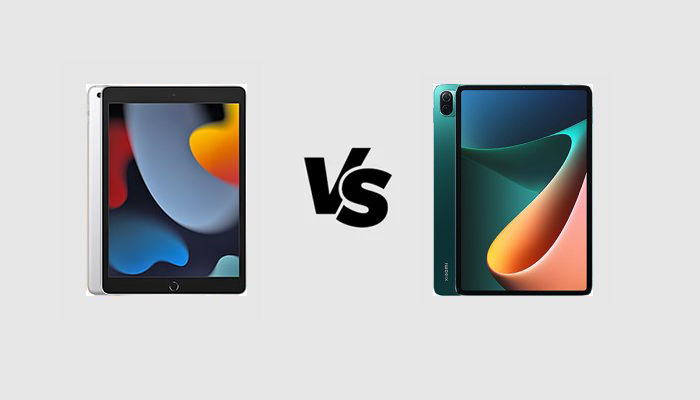
Alongside the new iPhones, Apple also renewed its lineup of iPad, including the affordable one. Despite retaining the older form factor, Apple iPad 10.2 9th gen brings a lot of optimization allowing for a better user experience. But for less money, you can now find another high-end tablet with the Android operating system and similar specifications: the Xiaomi Mi Pad 5. Is it able to replace the new iPad or you still get more by going for an Apple tablet? This is a comparison between Apple iPad 10.2 9th gen and the Xiaomi Mi Pad 5 which will help you to find it out.
Apple iPad 10.2 9th gen (2021) vs Xiaomi Mi Pad 5
Apple iPad 10.2 9th gen 2021
Xiaomi Mi Pad 5
DIMENSIONS AND WEIGHT
250.6 x 174.1 x 7.5 mm, 487 grams
254.7 x 166.3 x 6.9 mm, 511 g
DISPLAY
10.2 inches, 1620 x 2160p (Quad HD+), Retina IPS LCD
11 inches, 1600 x 2560p (Quad HD+), IPS LCD
PROCESSOR
Apple A13 Bionic, octa-core 2.65 GHz
Qualcomm Snapdragon 860, octa-core 2.96 GHz
MEMORY
3 GB RAM, 64 GB – 3 GB RAM, 256 GB
6 GB RAM, 128 GB – 6 GB RAM, 256 GB
SOFTWARE
iPadOS 15
Android 11, MIUI
CONNECTIVITY
Wi-Fi 802.11 a/b/g/n/ac, Bluetooth 4.2, GPS
Wi-Fi 802.11 a/b/g/n/ac, Bluetooth 5.0, GPS
CAMERA
Single 8 MP f/2.4
12 MP f/2.4 front camera
Single 13 MP f/2.0
8 MP f/2.0 front camera
BATTERY
8557 mAh
8720 mAh, fast charging 33W
ADDITIONAL FEATURES
Optional LTE, stylus support, keyboard support
Pen support, keyboard support
Design
With its aluminum back and aluminum frame, the Apple iPad 9th gen provides a better build quality than Xiaomi Mi Pad 5: it is sturdier and it also comes with a scratch-resistant and oleophobic glass. But if you are looking for the most beautiful design, then go for the Xiaomi Mi Pad 5 without thinking twice. It has narrower bezels around the display and a higher screen to body ratio. That is the reason why, even though it has a wider panel, the dimensions are similar to the Apple iPad 9th gen. Further, the Xiaomi Mi Pad 5 is thinner as it is just 6.9-mm thick instead of 7.5 mm. Both the tablets support the stylus and the magnetic physical keyboard, but if you want to use the Apple Pencil with the iPad 9th gen, you must choose the old-generation one.
Display
Despite the image quality provided by the iPad 9th gen is excellent, the Xiaomi Mi Pad 5 has a more interesting display. It is an IPS panel, but it is able to show up to one billion colors. It supports the Dolby Vision standard and it has the HDR10 certification. Last but not least, it comes with a 120 Hz refresh rate and a Quad HD+ resolution. With a diagonal of 11 inches, it is even wider than the display of the iPad 9th gen. Thanks to an active digitizer, both displays can be used with a pen. Xiaomi Mi Pad 5 does not provide any advanced authentication method, while the iPad 9th gen has the Touch ID with a fingerprint scanner placed right below the display.
Specs & Software
Both Apple iPad 9th gen and Xiaomi Mi Pad 5 are equipped with a high-end hardware department. The Apple iPad 9th gen is fueled by the Apple A13 Bionic chipset that is the processor of the iPhone 11 series, paired with 3 GB of RAM and up to 256 GB of native storage. Xiaomi Mi Pad 5 is powered by the Snapdragon 860 mobile platform which sits in the middle between Snapdragon 855+ and 865, paired with up to 6 GB of RAM and up to 256 GB of UFS 3.1 internal storage. On the software side, the iPad 9th gen is more advanced as a tablet thanks to iPadOS supporting more productivity-oriented features. Further, the better optimization of iPadOS allows the iPad 9th gen to provide better performance. However, both tablets can be used to run the most demanding games.
Camera
The Apple iPad 9th gen comes with a great 8 MP rear camera and an even better 12 MP front camera. The photo quality is very good if we consider other tablets, but not so great if we also bring smartphones in the comparison. The camera of the Xiaomi Mi Pad 5 is a sensor with a 13 MP resolution which is not able to reach the quality of the iPad 9th gen, but it records videos with a higher 4K resolution and it is paired with a dual-LED flash.
The battery of the Xiaomi Mi Pad 5 is slightly larger than the one found on the Apple iPad 9th gen, but the iPad lasts more on a single charge. On the other hand, Xiaomi Mi Pad 5 has a faster charging tech with a power of 33W.
Price
The iPad 9th gen has a starting price of €389/$451 in Europe, while you can find the Xiaomi Mi Pad 5 for €299/$347 thanks to the best deals. Overall, the iPad is a more advanced tablet due to its operating system supporting more productivity features, and it wins this comparison, but Xiaomi Mi Pad 5 can let you save money.
Apple iPad 10.2 9th gen (2021) vs Xiaomi Mi Pad 5: PRO and CONS
October is known to pack several tech announcements but this year may see the launch of fewer products judging by the large number of launches manufacturers squeezed into September. There are some highly anticipated announcements but they are not expected to happen until later in the month. Regardless, there are some exciting launches coming in the first week of October.
Android 12 – October 4
Google is expected to announce the stable release of Android 12 on Monday, October 4. Android 12 was first announced a few months ago but it has been in beta. The stable release for the general public is reported to be scheduled for release on October 4 and as expected it will be available first for Google’s own Pixel phones but we should see a few manufacturers also release the stable update for a few of their devices on the same day.
Windows 11 and Office 2021 – October 5
Microsoft will officially release the latest version of its operating system called Windows 11 on October 5. The OS was first unveiled a few months ago with a promise for a release to the general public on October 5. The new operating system will bring a visual overhaul, redesigned apps, improvement in performance, and Android app support to millions of Windows users across the globe.
Come October 6, HMD Global will announce the first Nokia Android tablet since it got the license to manufacture Nokia-branded phones. The tablet is expected to launch as the Nokia T20 and according to the manufacturer, it will come with all of the features we have come to love on the current Nokia smartphones.
We use cookies on our website to give you the most relevant experience by remembering your preferences and repeat visits. By clicking “Accept”, you consent to the use of ALL the cookies.
This website uses cookies to improve your experience while you navigate through the website. Out of these, the cookies that are categorized as necessary are stored on your browser as they are essential for the working of basic functionalities of the website. We also use third-party cookies that help us analyze and understand how you use this website. These cookies will be stored in your browser only with your consent. You also have the option to opt-out of these cookies. But opting out of some of these cookies may affect your browsing experience.
Necessary cookies are absolutely essential for the website to function properly. This category only includes cookies that ensures basic functionalities and security features of the website. These cookies do not store any personal information.
Any cookies that may not be particularly necessary for the website to function and is used specifically to collect user personal data via analytics, ads, other embedded contents are termed as non-necessary cookies. It is mandatory to procure user consent prior to running these cookies on your website.