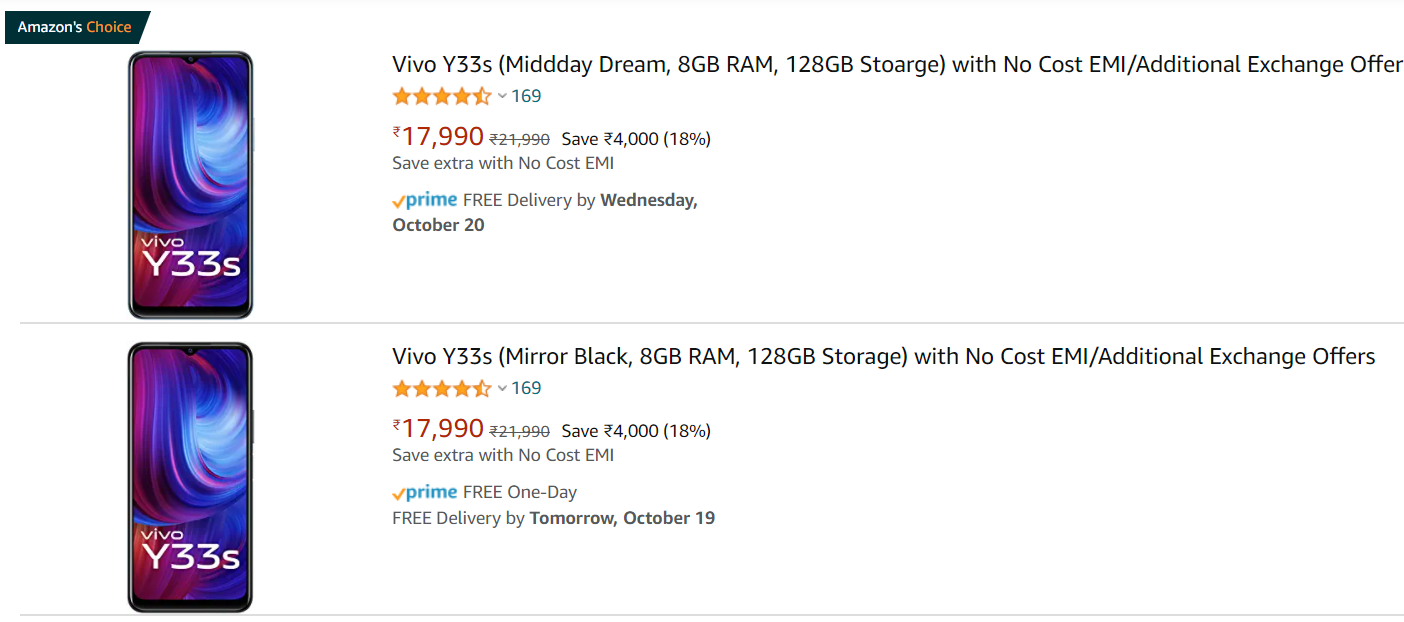
The 6.53-inch FHD+ Punch-hole Dot display smartphone is powered by an Helio G85 Octa-Core processor and comes in multiple storage variants viz: 3GB + 64GB and 4GB + 128GB. The smartphone features 48MP+8MP+2MP+2MP rear cameras and a 13MP selfie camera. This means great Instagram shots and videos and a better presence on social media. The phone is fueled by a massive 5020mAh battery and supports 18W fast charging.
Xiaomi Redmi Note 9 Global Version is available in Green, White, and Grey colors. The smartphone is available for $171.49 at AliExpress. Please note that this is a Global Edition smartphone. The deal is applicable only on the 3GB + 64GB with NFC variant, ordered from the China warehouse. This is a limited stock offer. So place your order asap.
For more information on such exciting deals and offers check out ourdeals hub.
* Please Note: When you buy something using the links in our articles, we may earn a small commission at no cost to you.
Last week was packed with several key announcements, and among them was the launch of the Xiaomi (Mi) MIX 4, the second MIX phone to launch this year. The new flagship packs a lot of features one of which is an under-display camera which Xiaomi has dubbed Camera Under Panel (CUP).
Prior to the launch of the flagship, we reported that Xiaomi has no plans to launch the device outside China. Now, that the device is official and we know its full specifications and how much it costs, we want to know what our readers think.
So for this week, we want to know if our readers want the Xiaomi MIX 4 to get a global release. Please take the poll and also let us know what you think about the new device.
The Chinese smartphone manufacturer Oppo has announced a new camera innovation lab at its R&D facility in Hyderabad, India. The camera lab will work towards developing features tuned for Indian and South Asian markets. Further, Oppo will be working on fine-tuning the camera solutions using AI and improve imaging software for a richer user experience.
Source: Oppo
Oppo says that the new camera innovation lab will focus on enhancing the application of beauty solutions using AI facial reconstruction technology. The solutions developed by the Indian team will be used in global markets such as the Middle East, South Asia, Japan, Europe and Africa. Moreover, the lab will also develop new solutions for still photography and videography. The team will further research Full Dimension Fusion (FDF) Portrait Video System technology.
Source: Oppo
Upon the announcement, Tasleem Arif, VP and Head, R&D Oppo India, said, “While we work towards elevating the overall camera experience for our users, our focus is on localisation of global solutions and developing new solutions which can be globalized. What we will be developing in the India camera lab will end up in the hands of Oppo users across the globe,” in a press statement.
The company will test the cameras in different artificial scenes and analyze the data produced from those samples. The lab will be equipped with specialized machines to test phones cameras under different lighting sources. Oppo states that the camera innovation lab will be directed at optimizing the camera technology, enhancing the overall performance of smartphones.
According to Kaushal Prakash Sharma, Head, Camera Division, Oppo India R&D Facility, “Equipped with AI capabilities, smartphones can now capture spectacular images at the level of professional cameras. The research and innovation in the imaging field at the lab aimed at changing the way people use their phones to record their lives. With the state-of-the-art equipment, we will tune and generate much realistic dataset and provide advance quality imaging and video shooting experience.”
It will be interesting to see how these new camera technologies enhance the camera experience on Oppo smartphones. The latest flagship from the company, Reno 6 Pro 5G, did pretty well in the camera department during our time with it (review), and with Oppo putting in more efforts, things could get much better in the coming years.
While TSMC is on track to bring its 3nm process technology to volume production in the second half of next year, a new report has revealed that the majority of TSMC’s 3nm production capacity has been secured by Apple.
According to a DigiTimes report (Via HardwareTimes), the Cupertino based giant will be the major client of TSMC’s 3nm production in the 2022. The iPhone maker will be followed by AMD and NVIDIA. Unfortunately, Intel won’t be able to offer 3nm chips till 2023. Notably, this news contradicts previous reports, which stated that even Intel has secured majority of TSMC’s 3nm production capacity, and now suggests that the Apple will be its major client for the 3nm process.
As per the latest report, TSMC, the world’s largest contract chipmaker will be unlikely to fulfill any orders for Intel till 2023. In other words, Apple will be the chipmaker’s primary customer for its most advances process technology. As of right now, TSMC’s 7nm and 5nm production capacities are reaching their limits and 3nm is set to begin mass production in the second half of 2022. With Apple being one of its first 3nm clients, iPhones and Apple’s other products like Macs could also benefit by adopting the cutting edge process.
Interestingly, another DigiTimes report had also stated that the iPhone maker accounts for over 20 percent of TSMC’s total wafer revenue. The news arrives from industry sources close to the matter and could also be the reason for Apple being the preferred customer for its upcoming 3nm process technology.
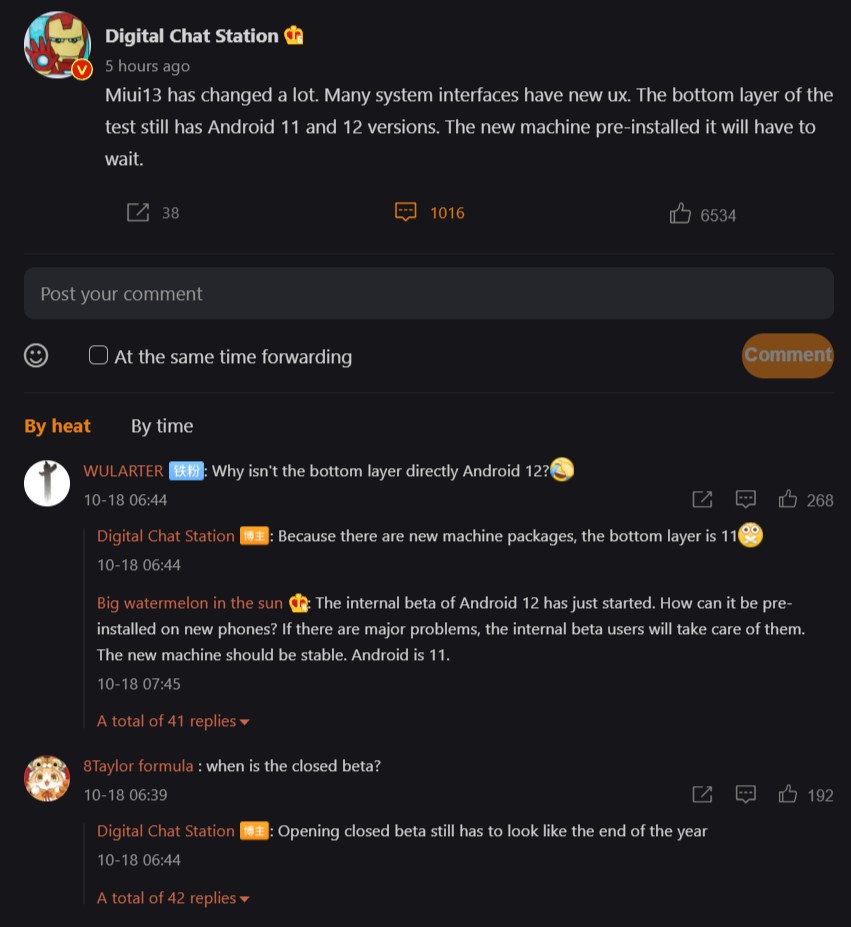
Xiaomi is currently testing new iOS-like widgets for MIUI in China. The testing phase will last until October 20. Hence, the new feature will take months to reach the stable channel. Ahead of that, an alleged list of supported devices has emerged.
Redmi K40 Pro
According to the official announcement for the new MIUI widget system, smartphones running MIUI beta builds based on Android 11 can be used to enroll in the testing program. However, an alleged compatible list only shows a select few premium and upper mid-range smartphones.
Here’s the alleged list of Xiaomi phones that support new MIUI widgets.
MIUI iOS-like Widgets Supported Devices
Mi 11 Ultra
Mi 11 Pro
Mi 11 Youth Edition
Mi 10 Pro
Mi 10
Mi 10s
Mi 10 Ultra
Mi 10 Youth Edition
Mi CC9 Pro
Redmi K40 Pro
Redmi K40
Redmi k40 Gaming Edition
Redmi Note 10 Pro 5G
Redmi Note 9 Pro 5G
Redmi K30 Pro
Redmi K30
Redmi k30 Ultra
Redmi K30 5G
Redmi k30i 5G
Redmi 10X Pro 5G
Redmi 10X 5G
Interestingly, the list does not include the older Mi 11 as well as the newly launched Mi MIX 4, Mi Pad 5, and Mi Pad 5 Pro. We believe that these three products should also support new widgets. Anyway, as there’s no proper credible source for this list, we would advise you to consider it with a pinch of salt.
Last but not least, since the feature is expected to officially arrive a couple of months later, there’s a chance that it may debut alongside MIUI 13 although it is enabled via system apps like App Vault and MIUI Gallery, and not the operating system itself.
The PC market has managed to maintain its strong growth rate in India into the second quarter of this year. This includes desktops, notebooks, and workstations, which saw shipments rise by 50.5 percent year on year.
According to an IDC report, the India traditional PC market shipped a total of 3.2 million units in Q2 2021. During this time, all products within the category saw a robust double digit growth rate. Furthermore, this report arrives despite a lack of large education and government deals in the region, which also marked the second consecutive quarter in which India’s shipments crossed the 3 million mark. This is also indicative of the underlying growth in the enterprise and consumer sectors.
In this category, the notebooks segment still accounts for more than three quarters of the entire market’s total shipments. Notebook PCs saw a growth of 49.9 percent year on year in the second quarter of 2021. This period also marked the fourth consecutive quarter that registered shipments crossing 2 million units. Similarly, desktop PCs also saw recovery, with shipments rising by 52.3 percent year on year after recording lowest shipments in the decade back in Q2 of last year.
The report adds that the second wave of Coronavirus had delayed the opening of schools, colleges, and other education based institutions, which in turn, strengthened the demand for PCs for home learning/online education. Back in Q1 2021, the consumer segment alone saw a whopping 118.4 percent growth year on year and 5.9 percent sequentially. Brands were also quick to prepare channels in anticipation for stronger demands. During this time, HP lead the market, while Dell and Lenovo arrived second and third. While Acer took the fourth spot, Apple and ASUS were tied for the fifth position.
Taiwanese tech giant ASUS has officially unveiled its latest flagship gaming smartphone in Taiwan. The ASUS ROG Phone 5s comes along with the ROG Phone 5s Pro, both emerging as the best gaming smartphones yet. Not only do they pack an FHD+ AMOLED screen with support for a 144Hz refresh rate, the Pro version equally packs the latest Qualcomm Snapdragon 888+ chipset, and up to 18GB RAM.
The smartphones succeed the ROG Phone 5 that made its entrance earlier this year. The two models retain the 6.78-inch Full HD+ Samsung’s E4 AMOLED HDR display with a 144Hz refresh rate on board the ROG Phone 5. The smartphones’ displays support up to 300Hz touch-sampling rate, 24.3ms touch latency. The processor is backed by up to 18GB of RAM on the ROG Phone 5 Pro and there is up to 512GB of storage.
In terms of the design, the ROG Phone 5s features the same design as the ROG Phone 5, sporting an RGB illuminated ROG logo. On the other hand, the ROG Phone 5s Pro adopts a ROG Vision Color PMOLED display. The ROG logo at the back is also RGB backlit. The display on both models is protected by the Corning Gorilla Glass Victus protection.
For photography, there is a 64MP rear camera with a Sony IMX686 sensor, 0.8μm pixel size, f/1.8 aperture, paired with a 13MP 125˚ ultra-wide camera with f/2.4 aperture, a 5MP macro sensor with f/2.0 aperture. For selfies, there is a 24MP front-facing camera with 0.9µm pixel size and f/2.0 aperture.
The ROG Phone 5s and 5s Pro run on the latest Android 11 OS with ROG UI. The phone features dual SIM support (nano + nano) and packs dual 7-magnet Linear 12x16mm front-facing speakers with GameFX & Dirac HD sound powered by dual Cirrus Logic CS35L45 Mono AMP. It also comes with Quad microphones with OZO Noise Reduction Technology. There is also a 3.5mm audio jack for those who would love to plug in a wired gaming headphone.
Furthermore, the phone utilizes an in-display fingerprint sensor, ultrasonic sensors for AirTrigger 5, and grip press detection. It also comes with support for Bluetooth 5.2, GPS, GLONASS, Beidou, and NFC. Under the hood, the ROG Phone 5s and 5s Pro pack a 6000mAH battery with 65W HyperCharge fast charging via USB Type-C port.
ASUS ROG PHONE 5s & 5s Pro PRICING & AVAILABILITY
As for the pricing , the ASUS ROG Phone 5s 16GB + 256GB version starts at NT$ 29,990 (~$1,077) while the 18GB + 512GB version costs NT$ 33,990 (~$1221). It comes in Phantom Black and Aurora White colors.
On the other hand, the ASUS ROG Phone 5s Pro will retail for NT$ 37,990 (~$1,365) for the 18GB + 512GB version. It will be available in Phantom Black color only. The Pro version also bundles an AeroActive Cooler 5 in the box. The models are already on sale in Taiwan and will start shipping from August 24.
Smartphone prices are going up in India for the past few months due to the shortage of components. The latest handsets to receive price hikes are four realme devices, namely realme C21, realme C25s, realme narzo 30, and realme 8 5G.
realme 8 5G
According to reports by 91Mobiles and MySmartPrice, realme has increased the price of the above-mentioned phones by ₹500. The price hike is applicable to all the available storage configurations and colors. Also, it is worth noting that this is not the first price increment for these models.
The realme C21 is the cheapest of the lot. It had been selling for ₹8,499 and ₹9,499 for the 3GB + 32GB and 4GB + 64GB variants respectively. With the latest price hike, the phone now costs ₹8,999 and ₹9,999 for the same storage configurations.
The realme C25s is the second most affordable on the list. It was retailing for ₹10,499 (4GB + 64GB) and ₹11,499 (4GB + 128GB). But now, it sells for ₹10,999 and ₹11,999.
Then, the popular realme narzo 30 was being sold at ₹12,499 (4GB + 64GB), ₹13,499 (6GB + 64GB), and ₹14,499 (6GB + 128GB). The same handset now carries price tags of ₹12,999, ₹13,999, and ₹14,999.
Lastly, the realme 8 5G now retails at ₹14,999 (4GB + 64GB), ₹15,999 (4GB + 128GB), and ₹17,999 (8GB + 128GB) instead of ₹14,499, ₹15,499, and ₹17,499.
Having said that, do you think these smartphones are still worth buying at their new price tags, which are at least ₹1,000 more than what they were introduced at? Do let us know in the comment section below.
According to a Lanzukreport (Via PhoneArena), the South Korean tech giant’s next gen flagship for 2022 will feature the AMD powered Exynos 2200 processor. Although, it will only be available in few select regions across the globe. In other words, the Snapdragon variant will be more widely available to customers. Apparently, the reason for this is not due to the performance of the latest Exynos processor, rather its due to the low yield of the new chipset and other mass production related issues.
From what we have heard so far, the new Exynos chip is quite capable both in graphics, thanks to AMD’s RDNA2 architecture, and even overall processing. Some reports have even suggest performance rivaling or even beating the Apple A14 Bionic chipset found in the iPhone 12 series. For those unaware, Samsung had typically launched its flagship models in a Snapdragon and Exynos variant. Although, the former was usually considered to be slightly superior in performance.
Now, it seems that the roles might switch as the upcoming powerful Exynos chip could possibly outperform even the Snapdragon 898. Notably, the news of low yield and production rate of its own chips arrives as the company is also working with Google for its proprietary Tensor chips for the Google Pixel 6 series, which reportedly has similarities to the new Exynos processors. Unfortunately, this is still an unconfirmed report so take it with a pinch of salt for now and stay tuned for more updates.
The Redmi Note 10S is an intermediary model between the Redmi Note 10 and the Redmi Note 10 Pro. It was first announced at the Redmi Note 10 series global launch event. Recently, this smartphone got a new ‘Starlight Purple’ color variant in Malaysia. This version of the handset is now being teased to launch in India.
When the Xiaomi India Twitter account was busy teasing the upcoming Smarter Living 2022 event, the Redmi India Twitter handle quietly dropped a teaser video titled ‘Paint The Town Purple’. This video could be for nothing but the Redmi Note 10S Starlight Purple.
The Redmi Note 10S Starlight Purple recently launched in Malaysia is priced at RM 899 ($212). The handset comes with 8GB RAM and 128GB internal storage. If the Indian version also arrives in the same memory configuration, it should cost more than the current top model 6GB + 128GB, which retails for ₹15,999 ($216).
Apart from color, the new variant of the Redmi Note 10S is identical to the regular version in terms of specs of features. Hence, it has a 6.43-inch Super AMOLED display, a MediaTek Helio G95 chipset, a 64MP quad-camera setup, dual stereo speakers, IP53 rating, a 5,000mAh battery with 33W fast charging support, and more.
With that being said, since Xiaomi is known for naming the colors of its products differently for India, there’s a chance that the Redmi Note 10S Starlight Purple could be called something else in the country.
On one hand, realme is the world’s fastest-growing smartphone brand ever. On the other, POCO continues to be India’s fastest-growing smartphone brand in yet another quarter. The brand announced its achievement on social media.
According to the official Twitter account of POCO India, the brand registered a whopping 865% growth in the second quarter of 2021. This data comes from research firm IDC.
Back in May, POCO India announced similar attainment. At that time, IDC data showed a 300% YoY growth. This time around the brand does not mention whether the 865% growth it achieved is either YoY or QoQ. Either way, it still continues to be the fastest-growing smartphone brand in India.
Xiaomi spun off POCO into an independent brand at the beginning of 2020. Since then, the brand has released limited products in India, unlike Redmi. None of the POCO smartphones compete with each other. Even their pricing doesn’t overlap with one another.
With a streamlined portfolio ranging from entry-level POCO C3 to upper mid-range POCO F3 GT, POCO offers a smartphone at every popular price segment in India. This could be one of the many reasons for the brand’s success in the country, in addition to its fan following and other factors.
What are your thoughts on POCO’s journey in India so far? Do you think the brand should enter more categories like realme? Do let us know in the comment section below.
During the Galaxy Unpacked 2021 event, Samsung had unveiled its highly anticipate third generation of foldable smartphones, namely the Galaxy Z Fold3 and Galaxy Z Flip3. Now, the company has officially revealed the pricing and launch date for the devices in India along with special introductory offers as well.
The Galaxy Z Fold3 5G sports a 7.6 inch Infinity Flex Display and is the first device from the company to feature an under display camera technology. Its display also supports 120Hz adaptive refresh rate on both the primary and external screen. The Fold is also supports S Pen functionality as well. Meanwhile, the Galaxy Z Flip3 retains its clamshell design, with a sleek and compact form factor. Both handsets are powered by Qualcomm’s flagship Snapdragon 888 SoC and feature other top notch specs and features.
Aditya Babbar, Director & Head, Mobile Marketing, Samsung India added that “Over the last year, our reliance on technology has grown more than ever before and now, as we reshape our lives, it is critical that we reshape the technology that we use every day. With many firsts like the first under display camera and S Pen on a foldable, as well as IP rated water resistance, the devices are the perfect combination of cutting edge technology and unmatched style.”
Pricing & Availability
Samsung is launching both the Galaxy Z Fold3 and Z Flip3 in two storage variants. This includes:
Galaxy Fold3 5G (12+256GB): INR 149999 or 2,022 US Dollars (Phantom Black and Phantom Green)
Galaxy Fold3 5G (12+512GB): INR 157999 or 2,130 US Dollars (Phantom Black and Phantom Green)
Galaxy Flip 3 5G (8+128GB): INR 84999 or 1,146 US Dollars (Phantom Black and Cream)
Galaxy Flip 3 5G (8+256GB): INR 88999 or 1,200 US Dollars (Phantom Black and Cream)
Both devices will be available for pre booking starting from 24th August 2021 to 9th September 2021 on the company’s official website and other leading retail stores in India. The first sale is set to begin from September 10. For introductory offers, the devices will also be offered with promotional deals like an upgrade voucher of up to 7,000 INR (roughly 95 US Dollars) or HDFC Bank cash back offer of 7,000 INR. Notably, customers who have already pre reserved the Galaxy Z Fold3 or Galaxy Z Flip3 in India will also be eligible for all pre booking offers along with a free Galaxy SmartTag.
For those unaware, the Chinese smartphone maker had revealed the special White variant of its 2021 flagship handset through a teaser video recently. While the 9 Pro was launched in a three colors, namely Morning Mist, Pine Green, and Stellar Black, the company showcased a white version as well. Although, it was stated that this model will not be mass produced or be available in the market.
So, it was unknown why the company had teased a device that it did not aim to sell. But soon after, the brand decided to hold a giveaway in which it selected a lucky winner in China, who would receive the only white 9 Pro ever made. The winner was @朱海舟 who shared the news and his excitement of winning the smartphone on Weibo, a Chinese microblogging website.
While the OnePlus 9 Pro White is basically identical to any other color variant in terms of specifications, it does arrive with one key difference, which is the rear panel. The brand has stated that this model sports a double layer AG technology or diffuse reflection texture that makes the device feels warm and ensures a fingerprint free experience when using the smartphone. As of right now, it would seem that this is the rarest edition of a OnePlus device, as the company only made one unit.
Xiaomi India has scheduled its Smarter Living 2022 event for August 26 at 12 PM. For those who don’t know, ‘Smarter Living’ is the Chinese tech giant’s annual launch event in India to unveil a bunch of ecosystem products. That said, though the company has just begun to tease this year’s edition, it has already revealed some of the products that will be announced next week.
According to exclusive resorts by Moneycontrol andIndia Today, Xiaomi has confirmed to launch a high-end WiFi router, a security camera, Mi Band 6, and a Mi Notebook at the ‘Smarter Living 2022’ event in India on August 26.
As a whole, the company is said to announce 5-6 products across entertainment, connectivity, and security categories. Unfortunately, though the firm has revealed four products, we have very few details about them, except for the Mi Band 6, which is being sold in multiple markets for months now.
Further, the official Mi TV India is also teasing a product. Hence, we can expect either new Mi TV models or a Mi TV streaming device. Other than that, Xiaomi has confirmed India Today that the firm will also launch a new pair of truly wireless earphones but at a later date.
Since we are more than a week away from Xiaomi Smarter Living 2022 event, we expect the company to tease the products leading up to the day of their launch.
Recently, we had reported on rumors that suggested that Apple might be planning on removing the Touch Bar from its MacBook Pro lineup entirely. While the next gen MacBook is still a while away, a new concept render has just surfaced, which replaces the Touch Bar with a Pencil dock.
According to a PatentlyApplereport, the US Patent and Trademark Office published a new patent from the Cupertino based giant that depicts a MacBook Pro with a Pencil dock rather than a Touch Bar. This dock is housed exactly where a Touch Bar would be placed, which is right above the keyboard. The dock is also built into the laptop so it can be closed while a Pencil is placed there. Apparently, the Pencil dock could also have the company replace the Top F key row with the functional symbols being illuminated on the Pencil itself.
Furthermore, designer Sarang Sheth (Via 9To5Mac) made 3D concept render models of this patent to showcase the design in more detail. Looking at these renders, one can observe that the new MacBook Pro would features touch gestures with the inclusion of the Pencil but it will also feature a much smaller version of the Touch Bar for Siri and quick access to certain applications as well.
Unfortunately, this is still just a patent as of right now and we have no way of knowing if Apple is actually planning on having a Pencil dock on its next gen MacBook Pro models. Although, it does confirm that the iPhone maker has considered the idea of removing the Touch Bar in favor of another system. So stay tuned for more updates.
MIUI 12.5 Enhanced Edition is currently the latest version of Xiaomi’s mobile operating system based on Android. It was unveiled alongside MIUI for Pad last week. A few days back, the tech giant started rolling out this software to the first batch of eligible devices. At the same time, the company had also revealed when the update will reach the entire first batch. We happen to come across this information only today.
According to an official announcement post on Mi Community China, MIUI 12.5 Enhanced Edition is being rolled out to the first batch of eligible smartphones from August 13. For those unaware, the company mentioned the same date at the launch conference.
We know that as of Saturday (August 14), the update is being gradually pushed to 6 of the 12 phones in the first batch. Now, as per the Mi Community post, which was also published on the same day, all the devices in this batch will receive the update by August 27.
In simpler words, the entire first batch (12 models) of eligible devices for MIUI 12.5 Enhanced Edition will get the update by August 27. However, it is worth noting that this timeline is only meant for the handsets running MIUI China ROM.
Xiaomi is yet to unveil MIUI 12.5 Enhanced Edition for global markets. Hence, it’s not known when the international variants of eligible phones will be blessed with the latest version of MIUI.
According to a 163report, the pricing of the laptop has just been spotted in an offline store earlier today (16th August 2021). The store was promoting the arrival of the laptop on a banner, which also revealed the starting price of the new laptops from the Chinese smartphone maker. As per this promotional banner, the Realme Book will have a starting price of 4,699 Yuan or roughly 725 US Dollars. While it isn’t exactly a budget notebook, the pricing is still quite notable considering the specifications houses.
Realme China recently confirmed that the laptop will sport a 14 inch 3:2 aspect ratio display that offers a 2K resolution of 2160 x 1440 pixels. Under the hood, the laptop will be powered by Intel 11th Gen Core i5-1135G7 processor paired with Intel’s Xe integrated graphics and 16GB of DDR4 RAM. The device will likely also offer PCIe SSD storage as well and could support up to 65W fast charging as well. The Realme Book is a thin and light laptop and arrives with a thickness of just 14.9mm. So stay tuned for more, as we will be covering the launch of the new notebooks.
Ola Electric has launched its much-awaited electric two-wheeler scooter on the Indian market. The Ola S1 has a starting price of ₹99,999 (~$1,348) while the pricing of the upgraded Ola S1 Pro starts at ₹1,29,999 (~$1,753).
The firm says that the e-scooters are designed and engineered in India for the world and will deliver the best scooter experience to the consumer. The deliveries of the newly launched scooter will begin in October.
As for the features, there’s a 7-inch touchscreen shatter-proof display. It comes powered by an octa-Core processor with 3GB of RAM. Features on the device include geo-fencing, anti-theft alert, Bluetooth connectivity, GPS and Wi-Fi, four ‘moods’ for the sound, a reverse mode, and in-built speakers. The S1 Pro additionally comes with cruise control, hill hold assist, and onboard navigation.
There’s a mono-shock absorber on the front, disk brakes on the front as well as the back, and extra-wide 110/70-R12 MRF tires. The scooter is keyless and uses proximity unlock that senses when you move near it and locks when you move away. It can also be locked or unlocked using the screen on the scooter or through the mobile application.

The Ola Electric app also offers battery and health alerts, and book an appointment from the app for in-home service. The company has also built a new operating system for the vehicle named Ola MoveOS. It is powered by a ‘Hyperdrive motor’, which produces a peak power output of 8.5kW. The S1 is said to have a top speed of 90 Km/hr while the Ola S1 Pro will have a top speed of 115 Km/hr and can go from 0 to 40km/hr speed in 3.6 sec and 3 sec respectively.
The Ola S1 is based on the Etergo Appscooter and thus features the same banana-shaped batteries and the only difference is that the battery on Ola’s vehicles is fixed and is non-removable. The S1 packs a 2.98 kWh battery while the Pro model packs a 3.97 kWh battery – the biggest battery yet on a production electric two-wheeler in India.
The company has claimed that the Ola S1 can offer a range of 121 kilometers while the Pro model’s range is rated at 181 kilometers. This is higher than other electric two-wheelers currently on sale in India. Ola will provide a portable 750W charger and the company is also setting up its ‘Hypercharger’ network across India, allowing users to regain about 75 kilometers of range in just 15 minutes.
Continuing its bull run, Xiaomi has now become the leading smartphone in Thailand. As per the report from Canalys, China-based Xiaomi captured 21 percent of the market share in the second quarter of this year, surpassing Samsung for the first time.
OPPO managed to take the second position with a 19 percent market share while Samsung slipped to the third spot. Vivo and Realme are ranked fourth and fifth, completing the list of the top five smartphone brands in Thailand.
Xiaomi managed to take the pole position in Thailand as the company’s shipments in the second quarter increased by 200 percent year-on-year. Interestingly, Xiaomi was the only brand to have positive shipment growth as OPPO, Samsung, Vivo, and Realme registered a decline of 2%, 15%, 31%, and 28% respectively.
The smartphone shipments for Xiaomi are also growing tremendously in Latin America, Africa, and Western Europe, witnessing 300%, 150%, and 50% respectively. Now, the company is facing tough competition from OPPO and Vivo as they are set to start an extensive campaign to increase their market share.
Globally, Xiaomi has become the second-largest smartphone brand, overtaking the technology giant Apple with a massive 83 percent jump in shipments. It also emerged as a leading brand in Europe with 12.7 million units shipped in Q2 2021, registering a 14 percent year-on-year growth. Not just that, for the month of June 2021, the company dethroned Samsung to become the world’s leading smartphone brand.
iQOO, the sub-brand of Vivo for premium smartphones, is all set to launch its new smartphone — iQOO 8 tomorrow, i.e. 17th August. Ahead of the official debut, the brand has shared a teaser poster shedding some light on its features.
In the recent teaser, the company has revealed that the fingerprint sensor on the smartphone will work even when users are trying to unlock the smartphone with wet hands. While not revealed by iQOO, it’s likely that the phone will come with an ultrasonic fingerprint sensor for this feature.
As per earlier leaks, the iQOO 8 will feature an optical fingerprint sensor while the Pro variant will pack an ultrasonic fingerprint sensor. To know for sure, we’ll have to wait a few more hours for the official launch event.
Under the hood, the phone will be powered by the Qualcomm Snapdragon 88 SoC or the newer Snapdragon 888+ chipset. It could come with 8GB and 12GB RAM models with 256GB internal storage.
The smartphone is likely to feature a 50-megapixel main camera, a 48-megapixel ultrawide lens, and a 16-megapixel telephoto snapper. Currently, details about the front-facing snapper remain unknown. It will be powered by a 4,500mAh battery with 120W fast charging support, 50W wireless charging, and 10W reverse wireless charging.
While the company has not revealed anything about the iQOO 8 series’ availability in markets other than China, it seems that the lineup could soon get launched in India as the Indian variant was recently spotted in the IMEI database.
We use cookies on our website to give you the most relevant experience by remembering your preferences and repeat visits. By clicking “Accept”, you consent to the use of ALL the cookies.
This website uses cookies to improve your experience while you navigate through the website. Out of these, the cookies that are categorized as necessary are stored on your browser as they are essential for the working of basic functionalities of the website. We also use third-party cookies that help us analyze and understand how you use this website. These cookies will be stored in your browser only with your consent. You also have the option to opt-out of these cookies. But opting out of some of these cookies may affect your browsing experience.
Necessary cookies are absolutely essential for the website to function properly. This category only includes cookies that ensures basic functionalities and security features of the website. These cookies do not store any personal information.
Any cookies that may not be particularly necessary for the website to function and is used specifically to collect user personal data via analytics, ads, other embedded contents are termed as non-necessary cookies. It is mandatory to procure user consent prior to running these cookies on your website.