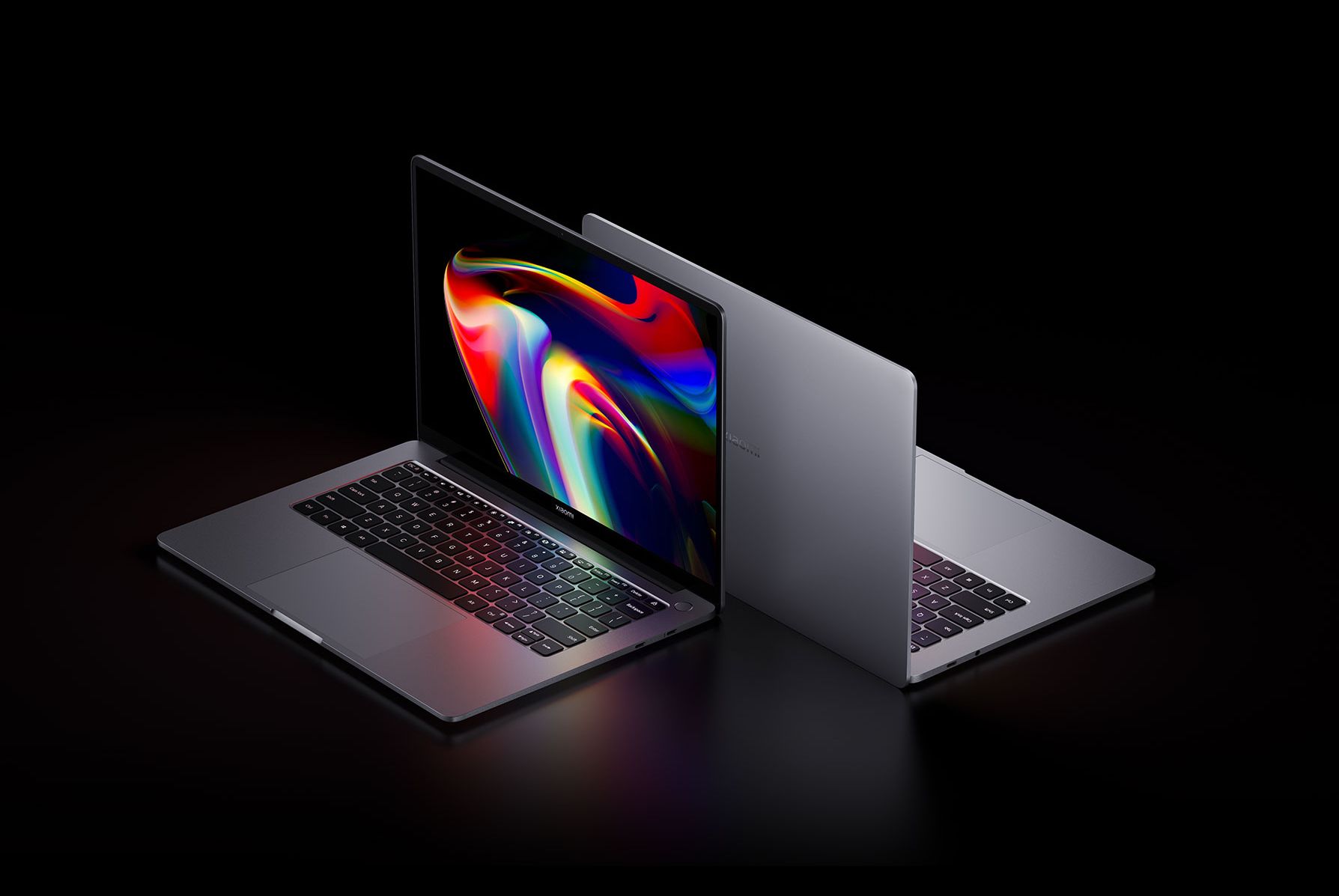
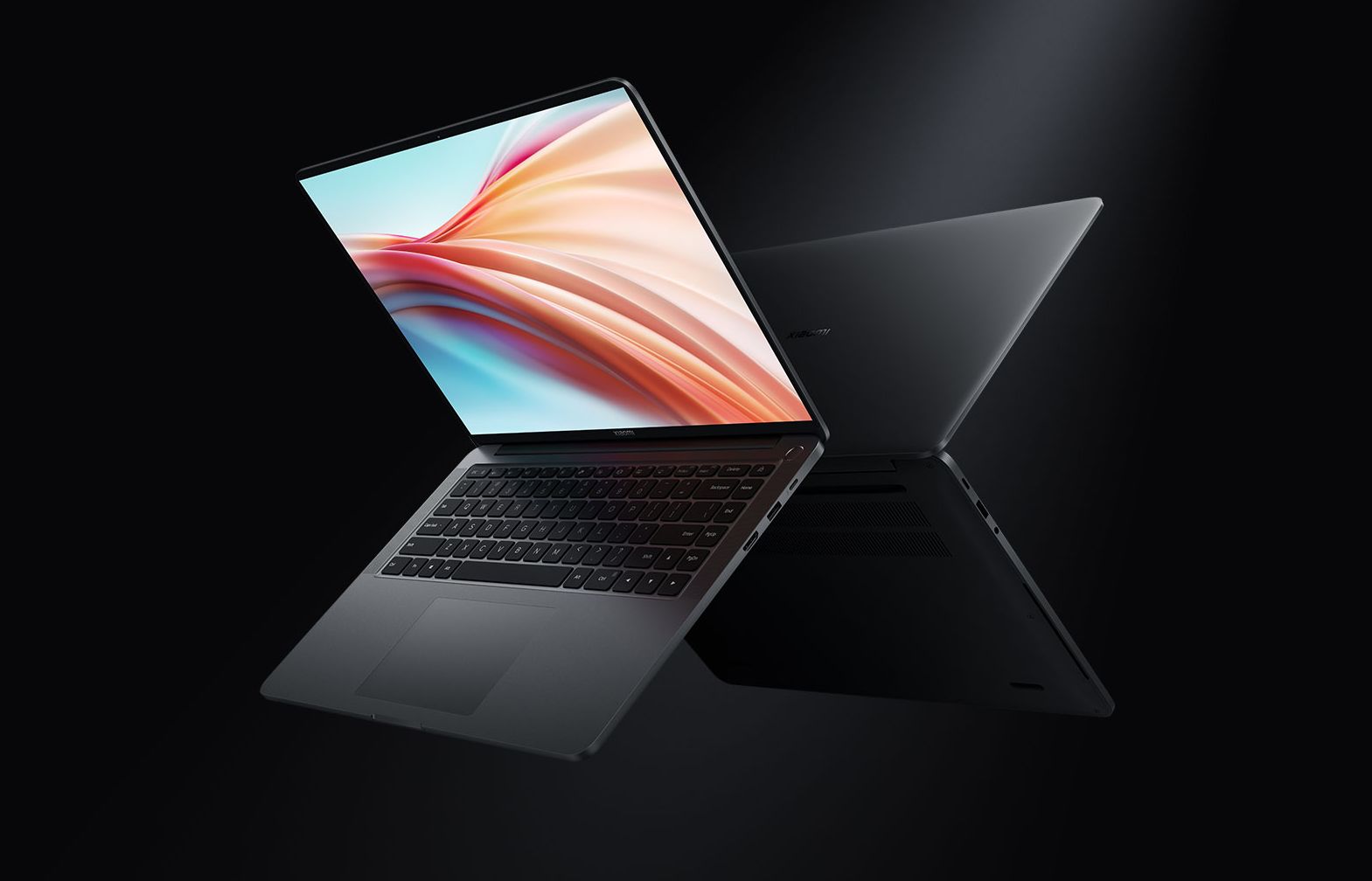
Last week, tipster Ishan Agarwal claimed that Xiaomi will be announcing its new Notebooks in India later this month. While Xiaomi India is yet to confirm on its next launch event, a fresh report by 91mobilesclaims that the company will be launching the Mi Notebook Pro 14 and Mi Notebook Ultra 15.6 in the country soon.
While details of these notebooks are not available, the publication claims that these devices could be rebranded versions of the Mi Notebook Pro 14 and Mi Notebook Pro X laptops that were made official in the recent past in China.
Xiaomi Mi Notebook Pro 14 specifications (expected)
The Mi Notebook Pro 14 that debuted in China in April features a 14-inch screen that delivers a 2560 x 1600 pixels resolution, a 16:10 aspect ratio, and a 120Hz refresh rate. It comes in 11th generation processor variants like Core i7-11370H and Core i5-11300H, and it ships with 16GB of DDR4 RAM and 512GB of NVMe SSD storage.
Xiaomi Mi Notebook Pro 14
It has a 56Wh battery that supports 100W rapid charging. It offers other features like W-Fi 6, Bluetooth 5.1, a fingerprint scanner, a Thunderbolt 4 port, 2 x USB-C ports, a 3.5mm jack, HD webcam, and Windows 10 OS.
Xiaomi Mi Notebook Ultra 15.6 specifications (Rumored)
The Mi Notebook Pro X that debuted last month in China features a 3.5K E5 OLED full-screen display that offers 91 percent screen space. It comes in 11th generation Core i7-11370H and Core i5-11300H CPU variants. It has up to 32 GB of LPPDR4 RAM and 1 TB of NVMe storage.
Xiaomi Mi Notebook Pro X
It has an 80Wh battery that supports 130W charging. It is packed with other features such as Wi-Fi 6, Bluetooth 5.1, a fingerprint scanner, a Thunderbolt 4 port, a USB-C port, USB-A 3.2 Gen2, an HDMI port, a 3.5mm jack, HD webcam, and Windows 10 OS.
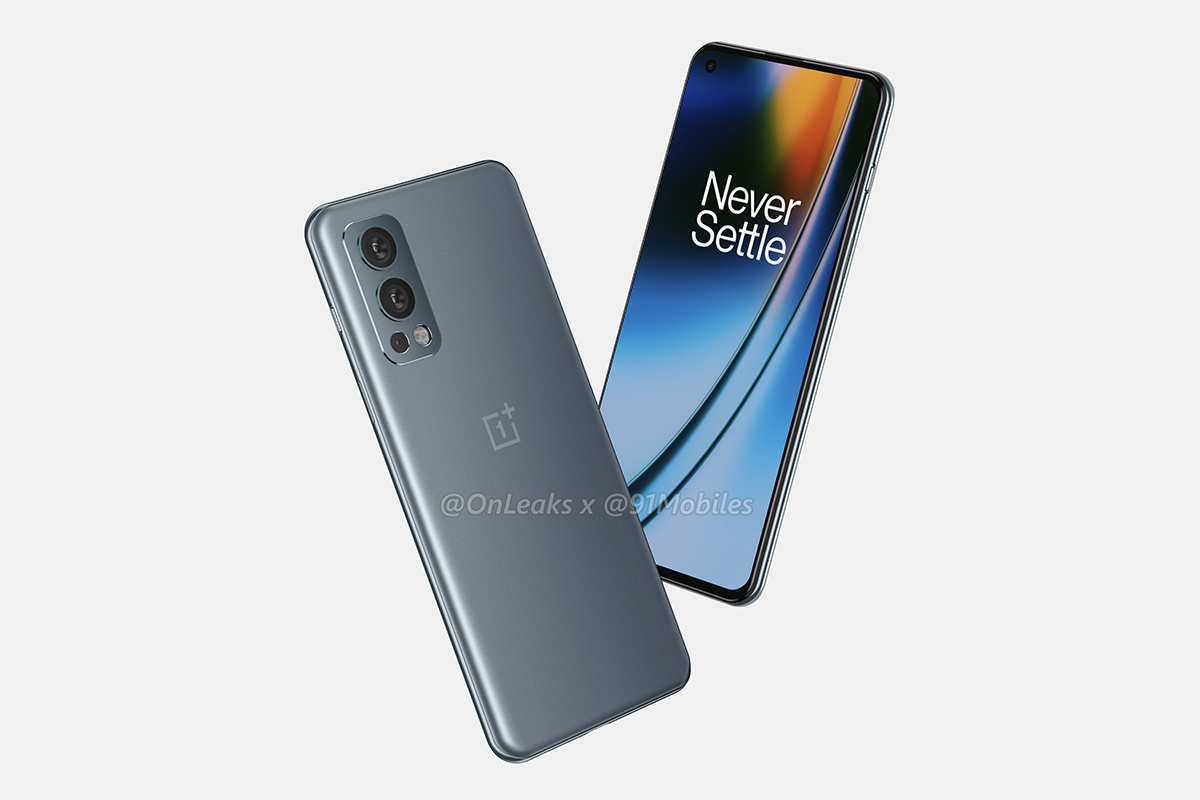
Recently, OnePlus shared a list of its software support for all the OnePlus phones. The brand promised that all the OnePlus flagships would receive three major Android upgrades and four security patches. It also announced the merge of OxygenOS codebase with Oppo’s ColorOS and confirmed that the company will switch to the integrated codebase on the current phones from the Android 12 update. Now in an interview with XDADevelopers, OnePlus confirmed that the upcoming OnePlus Nord 2 will be the first phone from the company to run on OxygenOS v11.3 based on an integrated codebase (out of the box).
According to OnePlus, the major reason for switching to an integrated codebase directly out of the box is to streamline resources. Now that OnePlus and OPPO have announced the merge, all the resources including the R&D will be common for both companies which will offer a streamlined experience.
Image Courtesy – OnLeaks, 91Mobiles
Despite this change, there would be almost no change in daily usage and smooth experience when compared to its previous separate OxygenOS codebase.
Other than this, in the interview on XDADevelopers, OnePlus exec revealed plenty of key details regarding the upcoming OnePlus Nord 2. It is said that OnePlus choose a MediaTek flagship SoC considering its price to value ratio. Mr.Zhang from OnePlus also confirmed that the smartphone will feature a 6.43-inch Fluid AMOLED display with a high 90Hz refresh rate.
Other specs of the OnePlus Nord 2 include a 50MP Sony IMX766 triple rear camera, a 4,500mAh battery cell, and a 32MP selfie camera.
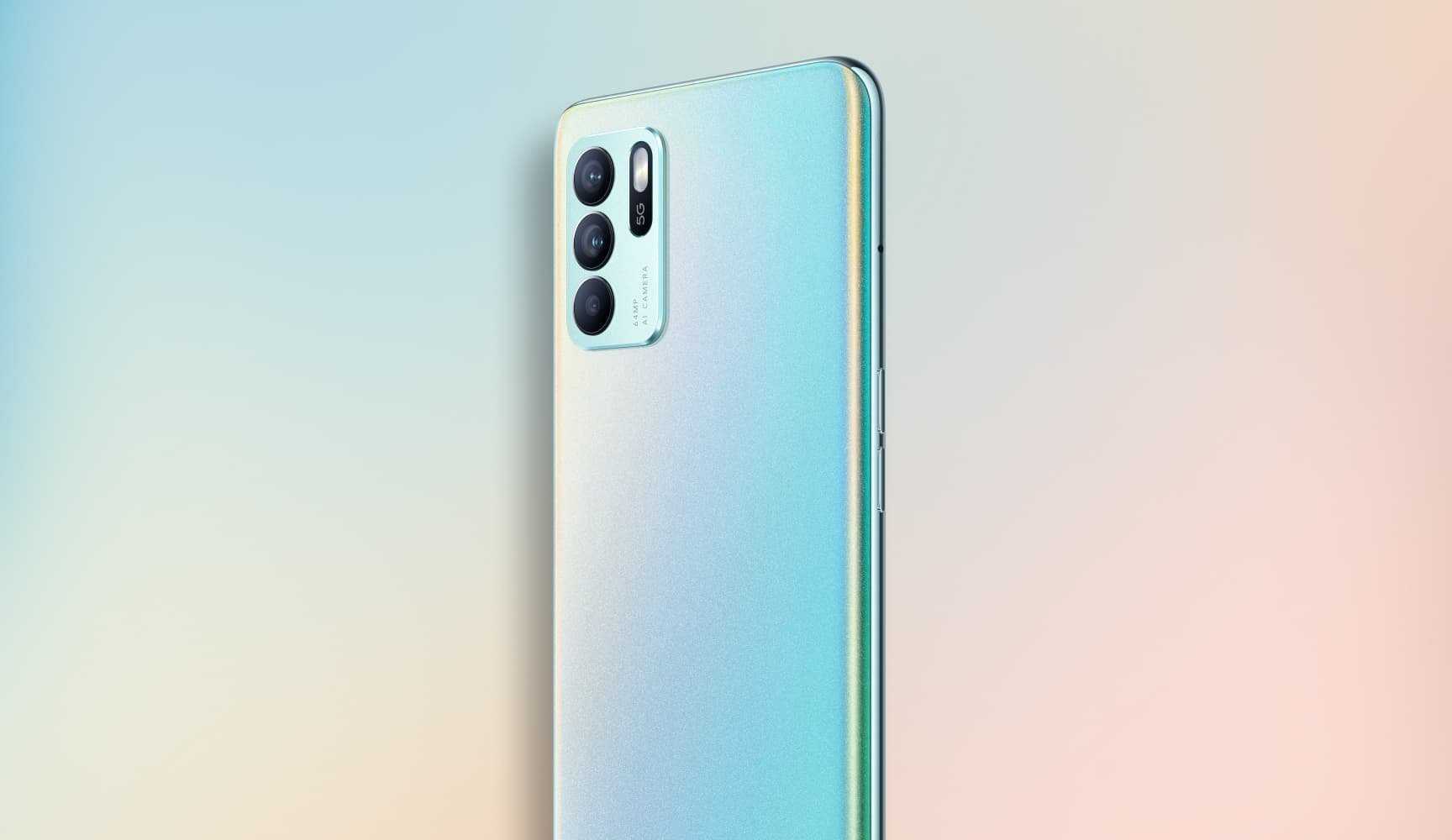
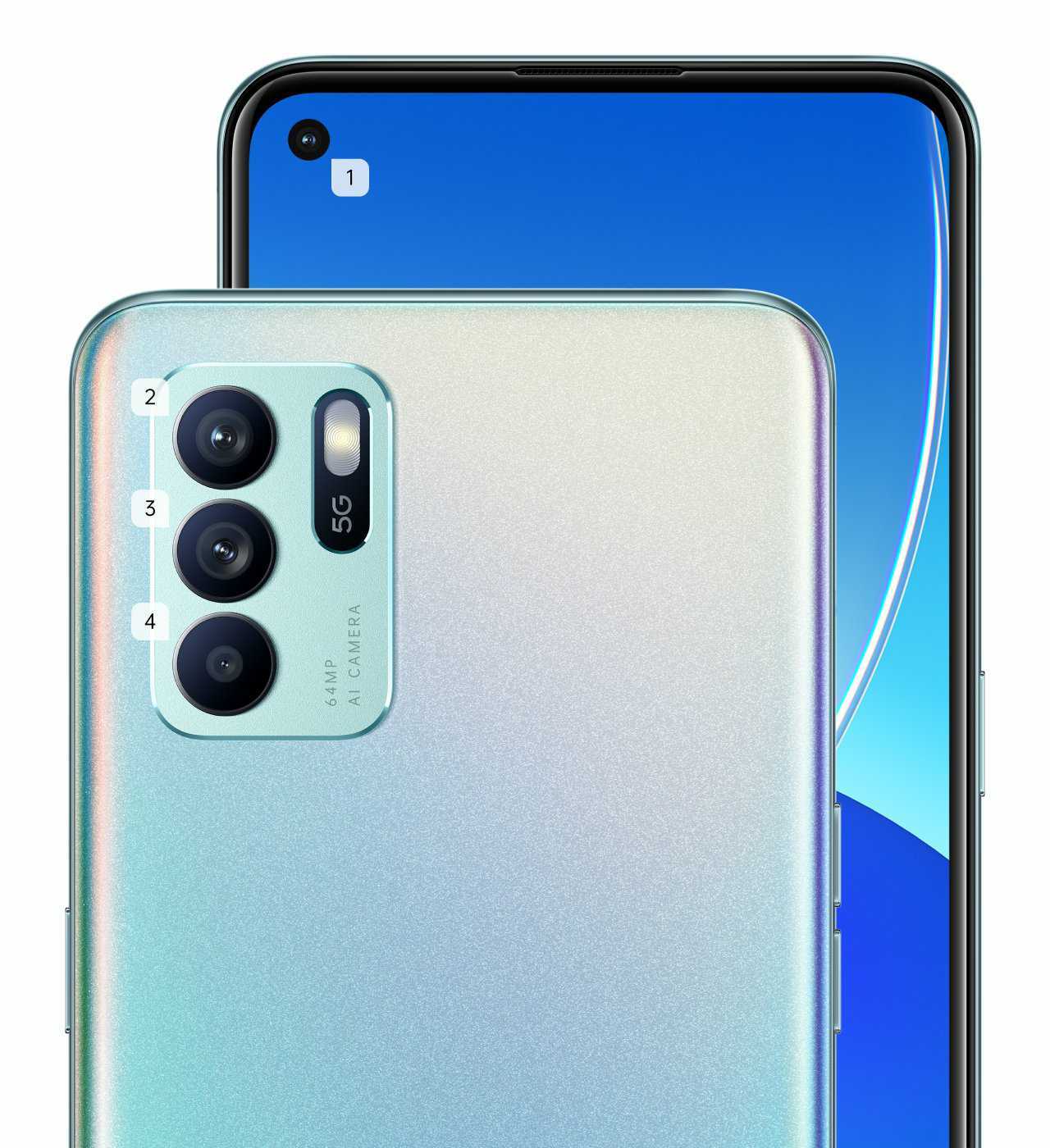
The Reno6 Z 5G is a new member of the Reno6 family that is scheduled to launch next week. The phone will be unveiled first in Thailand and should make its way to other markets later. Ahead of the launch, more press renders of the device have surfaced.
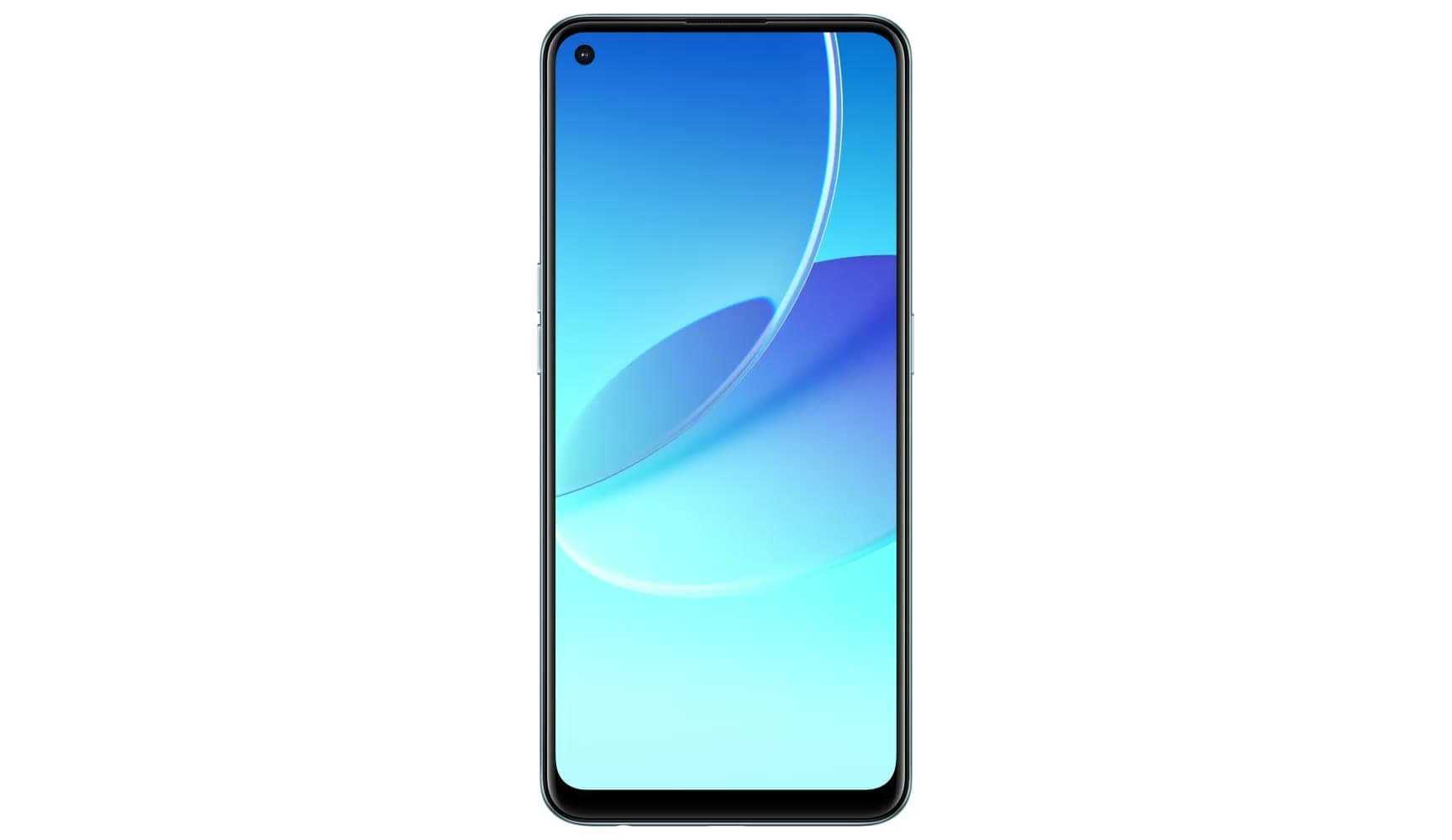
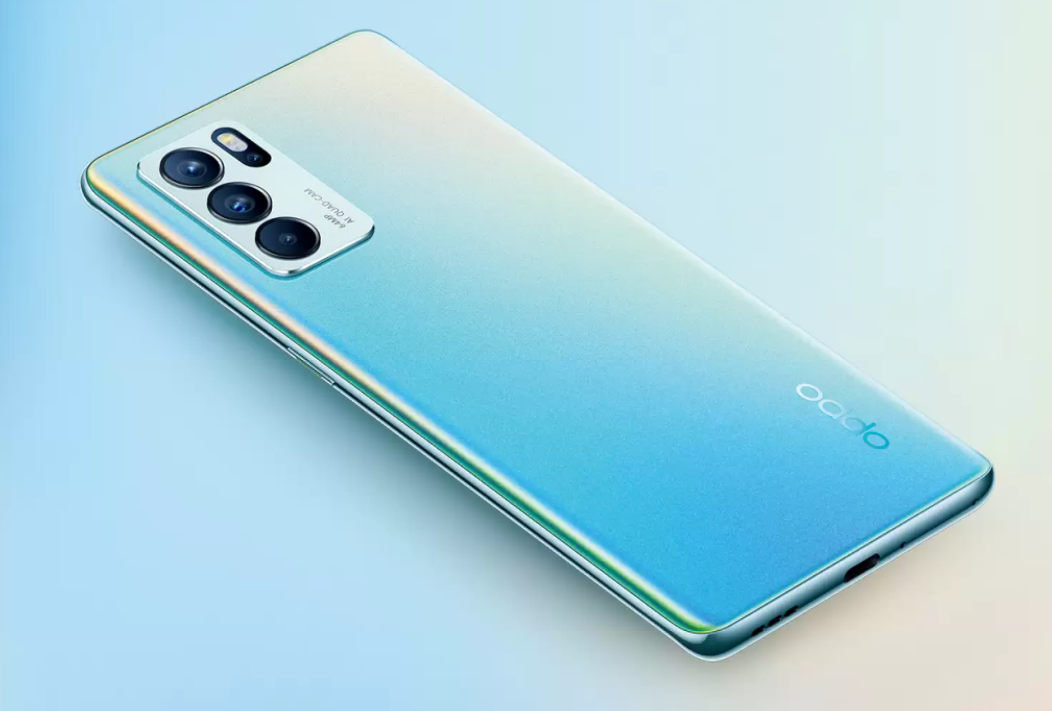
The images were posted on Twitter by Evan Blass (@evleaks) and they show the device in a similar Aurora finish the other Reno6 phones are available in. The Reno6 Z 5G has a flat display, though it appears the glass on top is 2.5D, so a slight curve is visible along the edges. While the bezels are pretty slim, the chin is thicker than the rest. There is also a hole in the top left corner for the front-facing camera.
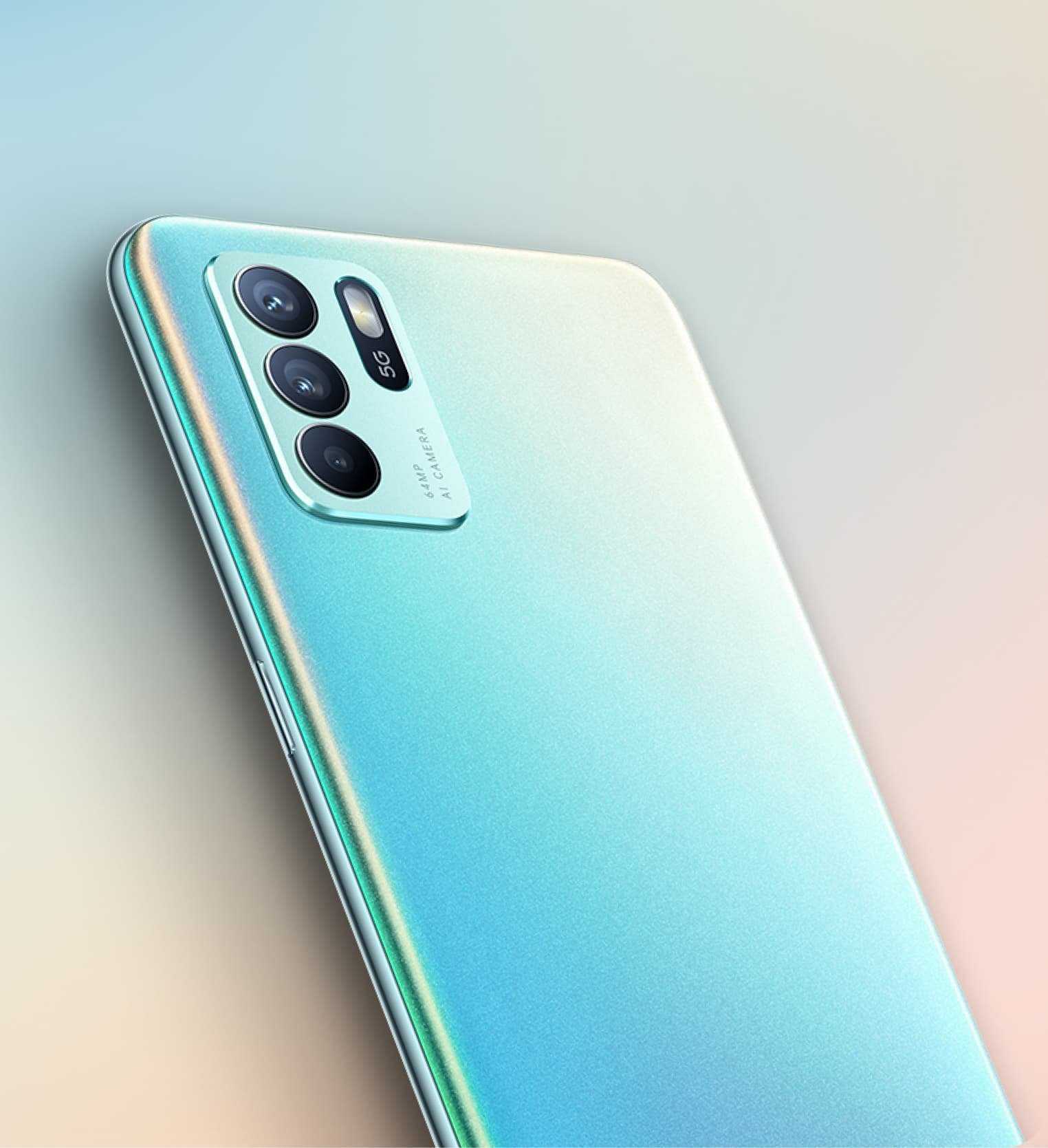
The Reno6 Z 5G has three rear cameras stacked vertically on top of each other and the primary camera is a 64MP sensor according to the inscription on the camera housing. OPPO has revealed that all of the Reno6 series will have the new Reno Glow finish which gives the phones a matte finish and shiny appearance. As expected, the Aurora colorway will appear different depending on the source of light.
1 of 4
OPPO has also dropped the iPhone 12-like flat frame design it adopted for the Reno6 5G in favor of the more comfortable curved frame type. The phone has its power button on the right while the volume rocker is on the left side.
Alongside the leaked renders, the promo page on the OPPO Thailand website also shows a gray/black version of the Reno6 Z 5G. There are also some confirmed specifications such as a Dimensity 800U processor (the same in the Reno5 Z) and support for 30W VOOC charging. The other Reno6 phones support 65W fast charging.
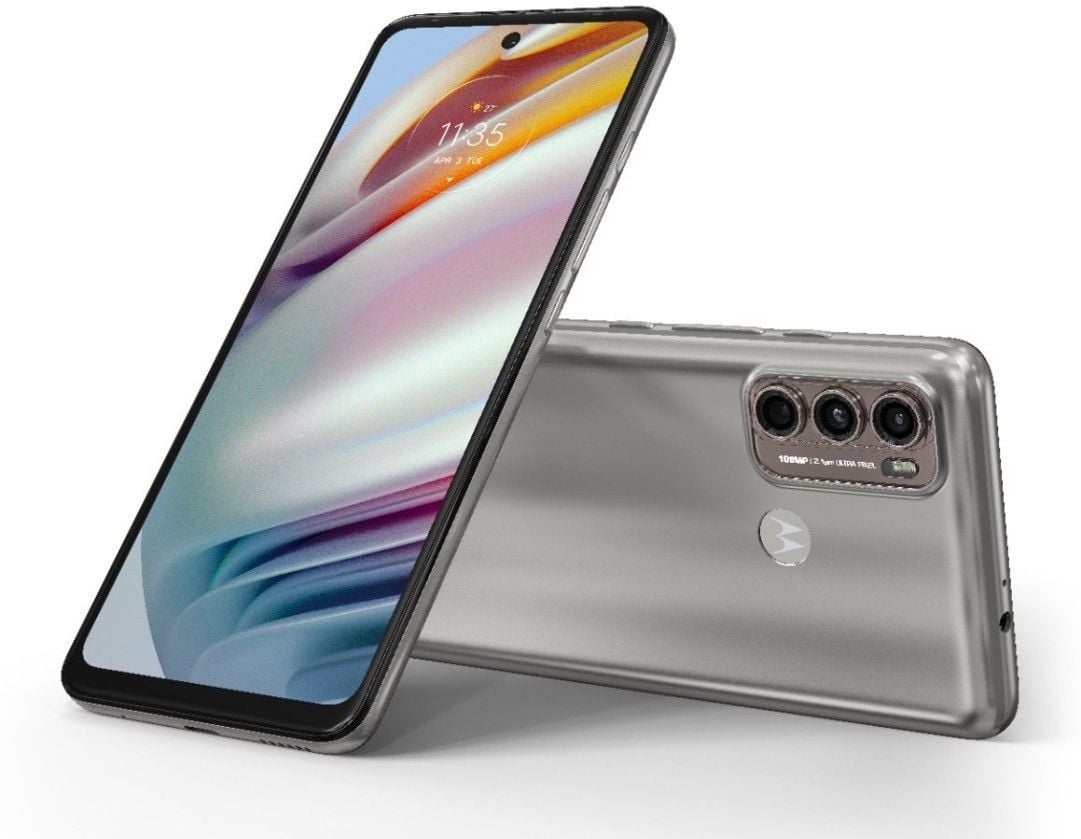
In April, Motorola announced the Moto G60 smartphone in India. Recent reports have revealed that the Lenovo-owned company is working on a new phone called Moto G60S. A fresh leak by My Smart Price has teamed up with leakster Sudhanshu Ambhore to share the pricing and configuration of the G60S.
The new leak reveals that the Moto G60S will be arriving with 8 GB of RAM and built-in storage of 128 GB. The handset is likely to be priced between 300 euros and 320 euros. It is expected to arrive in Blue color only.
While recent reports have revealed that the Moto G60S is codenamed as “Lisbon,” there are no details available on its specifications. The Moto G60 that debuted earlier this year has 6 GB of RAM and 128 GB storage; it is likely that the Moto G60S with 8 GB of RAM could be an updated version of the Moto G60. Hopefully, newer reports will reveal more information about the G60S.
Moto G60
Moto G60 specifications and features
The Moto G60 has a 6.8-inch IPS LCD FHD+ display that offers a 20.5:9 aspect ratio and a 120Hz refresh rate. The smartphone is powered by the Snapdragon 732G chip and a 6,000mAh battery that supports 20W fast charging.
The G60 has a front camera of 32-megapixel, and its back panel has a 108-megapixel main lens, an 8-megapixel ultrawide camera, and a 2-megapixel depth sensor. For security, it has a side-mounted fingerprint scanner. The G60 is available in India with a pricing of Rs 17,999 (~$240; 203 euros).
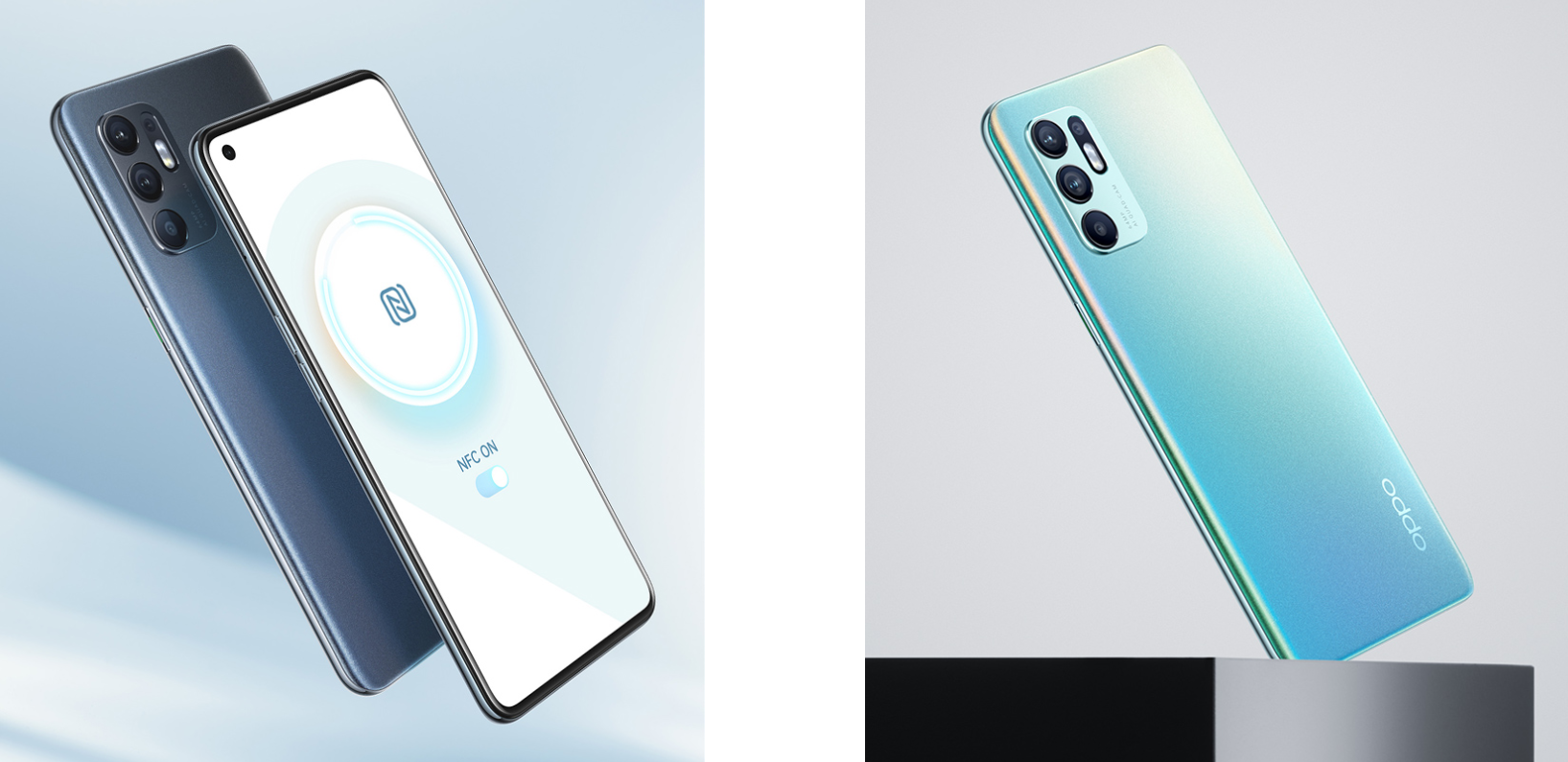
OPPO will be announcing the OPPO Reno6 5G and Reno6 Pro 5G smartphones on July 14 in India. The company recently confirmed a few key features of the Reno6 Pro 5G smartphone. In addition, an unboxing video of the phone appeared on YouTube through which the actual device was revealed. While a lot of information on the Pro model was confirmed by the brand, it did not reveal any details of the Reno6 5G. Now, the company confirmed that it will be equipped with Dimensity 900 chipset.
The Reno6 5G will be arriving as India’s first phone with the Dimensity 900 SoC. It is a 6nm octa-core chip that includes dual ARM Cortex-A78 processors clocking at 2.4GHz and six ARM Cortex-A55 processors operating at 2GHz. The SoC includes Mali-G78 MC4, and it carries support for LPPDR5, UFS 3.1 storage, a 120Hz refresh rate, dual SIM 5G, and Wi-Fi 6. The specifications of the Reno6 5G are already known since it has already debuted in China.
OPPO Reno6 5G
OPPO Reno6 5G specifications
The Reno6 5G has a 6.43-inch AMOLED display that offers a Full HD+ resolution of 1080 x 2400 pixels and a 90hz refresh rate. It is preinstalled with ColorOS UI based Android 11.
The Reno6 5G has a front-facing camera of 32-megapixel, and its rear camera setup has a 64-megapixel primary camera, an 8-megapixel ultrawide snapper, and a 2-megapixel macro camera. The device is backed by a 4,300mAh battery that supports 65W SuperVOOC 2.0 charging.
The Reno6 5G is available in China in two variant such as 8 GB RAM + 128 GB storage and 12 GB RAM + 256 GB storage. They are priced at 2,799 Yuan (~$432; Rs 32,200) and 3,199 Yuan (~$494; Rs 36,800) in China, respectively.
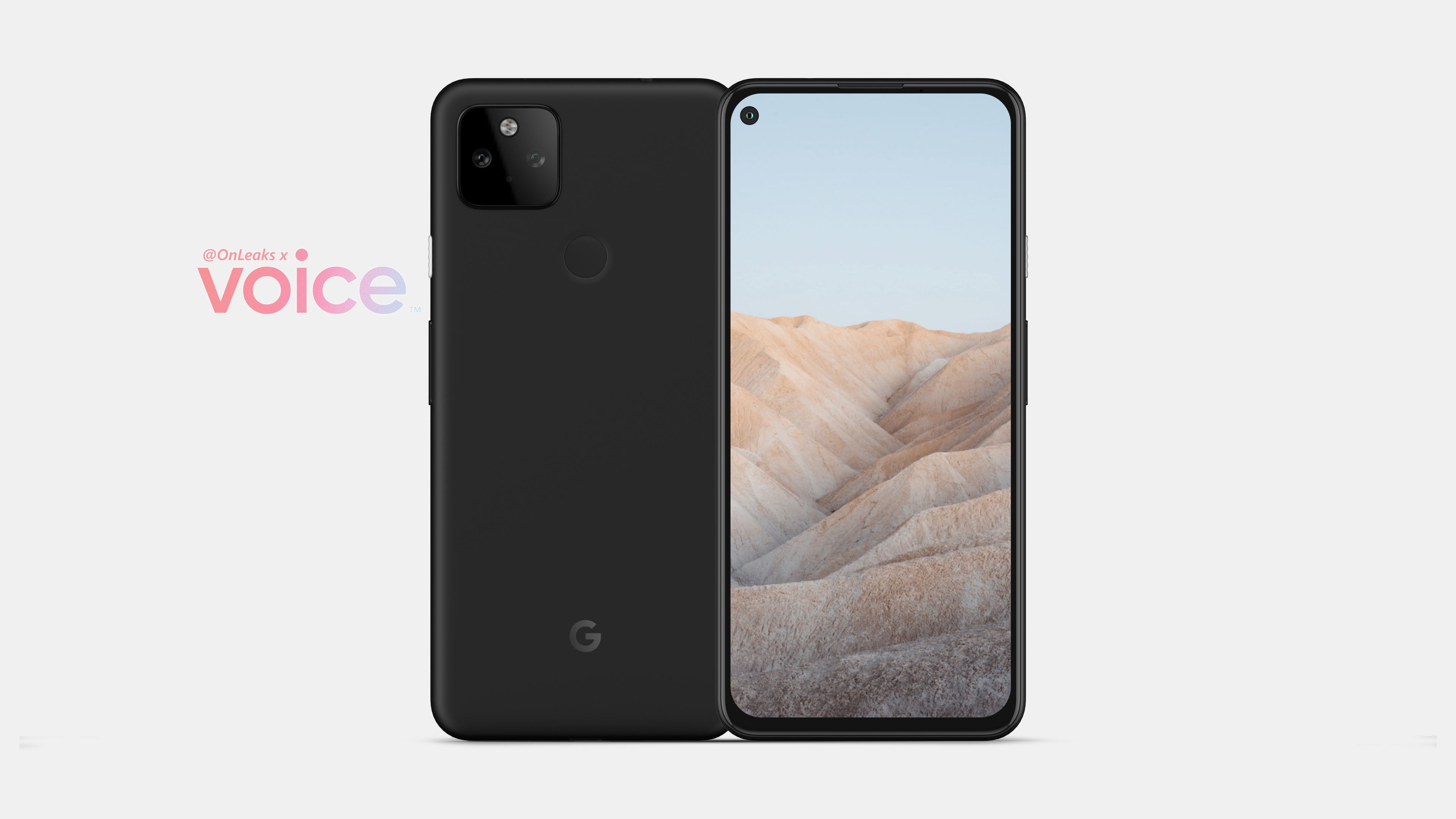
Last year, Google announced two Pixel 4a devices – a 4G version and a 5G version with a 5G suffix in its name. This year, only the latter will be getting a successor and it should arrive as the Pixel 5a 5G.
According to the Indian blog, Trak, the Pixel 5a 5G will drop the Snapdragon 765G for the Snapdragon 750G. One of the key differences between the two chipsets is that the Snapdragon 750G is built on a slightly larger node (8nm) than the Snapdragon 765G (7nm). Another major difference is the CPU. The Snapdragon 750G has 2x Cortex-A77 cores clocked at 2.2GHz while the Snapdragon 750G has 1x Cortex-A76 core at 2.4GHz and 1x Cortex-A76 core at 2.2GHz. The remaining six cores on both chipsets are Cortex-A55 cores clocked at 1.8GHz.
As you can see, while the Snapdragon 750G has a larger node, its CPUs are more powerful. On the other hand, the Snapdragon 765G has a smaller node size for better efficiency and power consumption but less powerful cores.
The source also mentions that the phone will have 6GB of RAM and drop the slower UFS 2.1 storage of its predecessor for the much faster UFS 3.1 type. So you should see an improvement in speed. You still get 128GB and it is non-expandable. Other features mentioned are a slightly smaller 3840mAh battery with support for 20W fast charging, the same 6.2-inch OLED screen as the Pixel 4a 5G, and dual rear cameras.
Seeing as there is no evidence of the specs, most especially the chipset, we advise our readers to take it with a pinch of salt. The Pixel 5a 5G isn’t expected to arrive until August and there is a possibility we may see more concrete leaks before then.
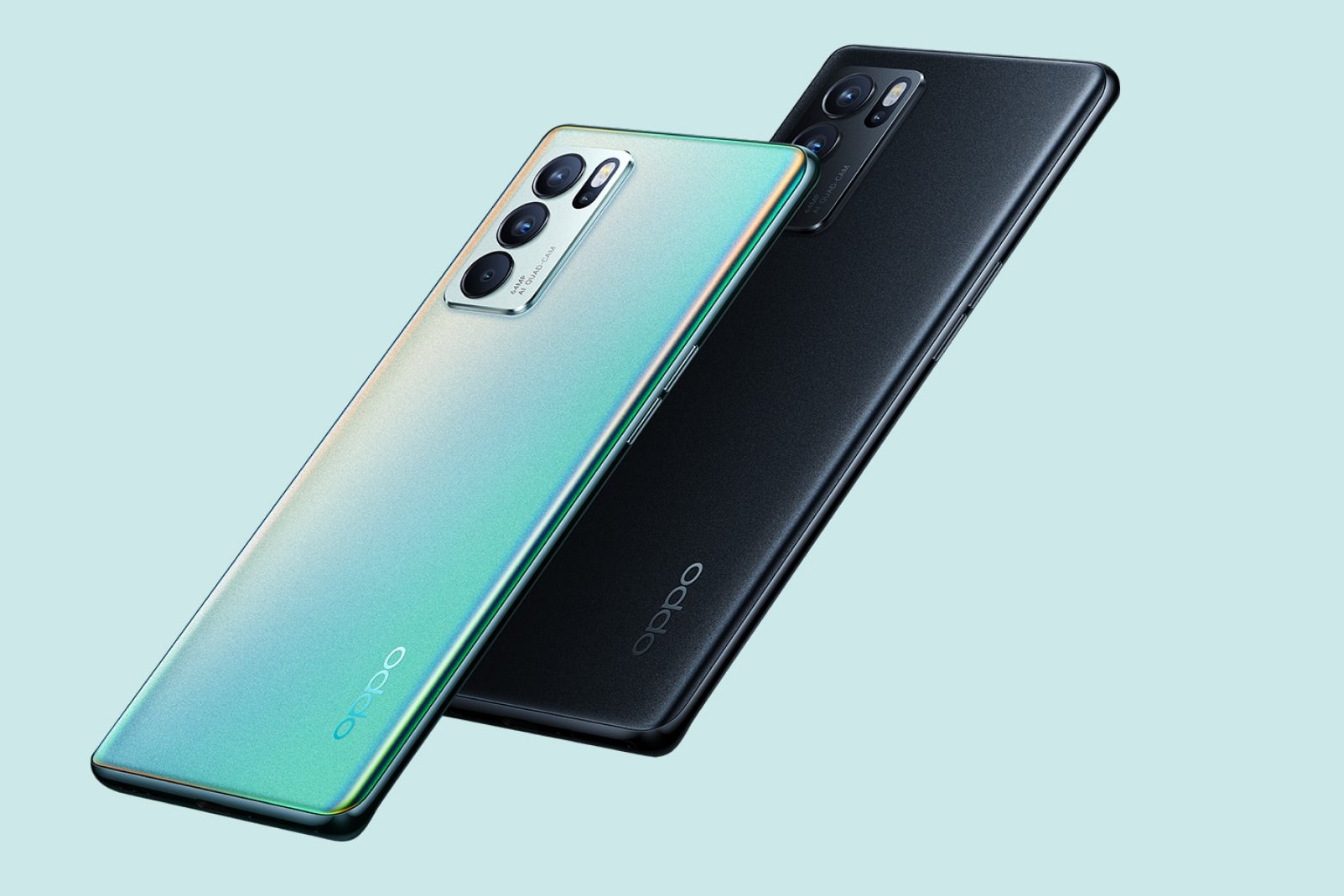
OPPO is all set to launch the OPPO Reno6 series in India on July 14. The company has confirmed that it will be debuting two models, namely OPPO Reno6 5G and OPPO Reno6 Pro 5G. Both the devices will feature a common design language called ‘Reno Glow’. They will also come with ‘Bokeh Flare Portrait Video’, which is an AI-based camera feature. Let’s take a look at these two specifics of the phones one by one.
OPPO Reno6 Pro 5G
OPPO Reno6 Series Reno Glow Design
The OPPO Reno series is known for its designs since its introduction. The first two generations of the lineup featured unique pop-up camera modules. The company was the first and the only one to use a shark fin-style selfie pop-up camera in a smartphone.
It was later followed by the ‘Reno Glow’ design. The OPPO Reno4 Pro 5G was the first smartphone to utilize this design technology. Since then, all the primary Reno phones ever launched featured this design.
In simpler words, Reno Glow is a rear glass design process by OPPO, which is evolving since its debut. With every new generation, the company does something new with the phone’s back to make it stand out in the crowd.
OPPO Reno6 5G
The latest-gen OPPO Reno6 series, which is set to launch in India this Wednesday (July 14) comes with an improved design that was first used by the last-gen OPPO Reno5 series.
The upcoming OPPO Reno6 5G and the OPPO Reno6 Pro 5G will arrive in two colors – Aurora and Stellar Black. The former color variant mimics the dawn sky, whereas the latter imitates starry night sky.
Usually, shiny phones have a glossy finish. But thanks to the Reno Glow design process, despite featuring shimmering colors, the new Reno smartphones come with a matte texture.
OPPO has achieved this unique design by drilling millions of pyramid-shaped crystals on the handset’s rear AG glass panel. These crystals not only offer a matte texture but also make the smartphone appear to sport glittering diamonds.
The company says that it uses a total of five layers. These include a bullet texture layer, a PICASUS film, a color film, Fresnel Lens texture, and a reflective indium coating.
The Reno Glow design on the OPPO Reno6 series takes over 14 hours to produce. The manufacturing process takes place in a dust-free environment and undergoes manual checks at every step.
Despite undergoing complex processes, the OPPO Reno6 Pro 5G measure only 7.6mm in thickness and weighs 177g.
OPPO Reno6 Series Bokeh Flare Portrait Video
Apart from the unique design language, the OPPO Reno6 series also comes with interesting AI camera features. Unlike most smartphones, the OPPO Reno6 5G and the OPPO Reno6 Pro 5G focus more on videography than photography.
The selling point of the OPPO Reno5 Pro 5G is the FDF Portrait Video System, which is a set of computational videography features like AI Highlight Video. The new OPPO Reno6 series comes with all these features and an additional one.
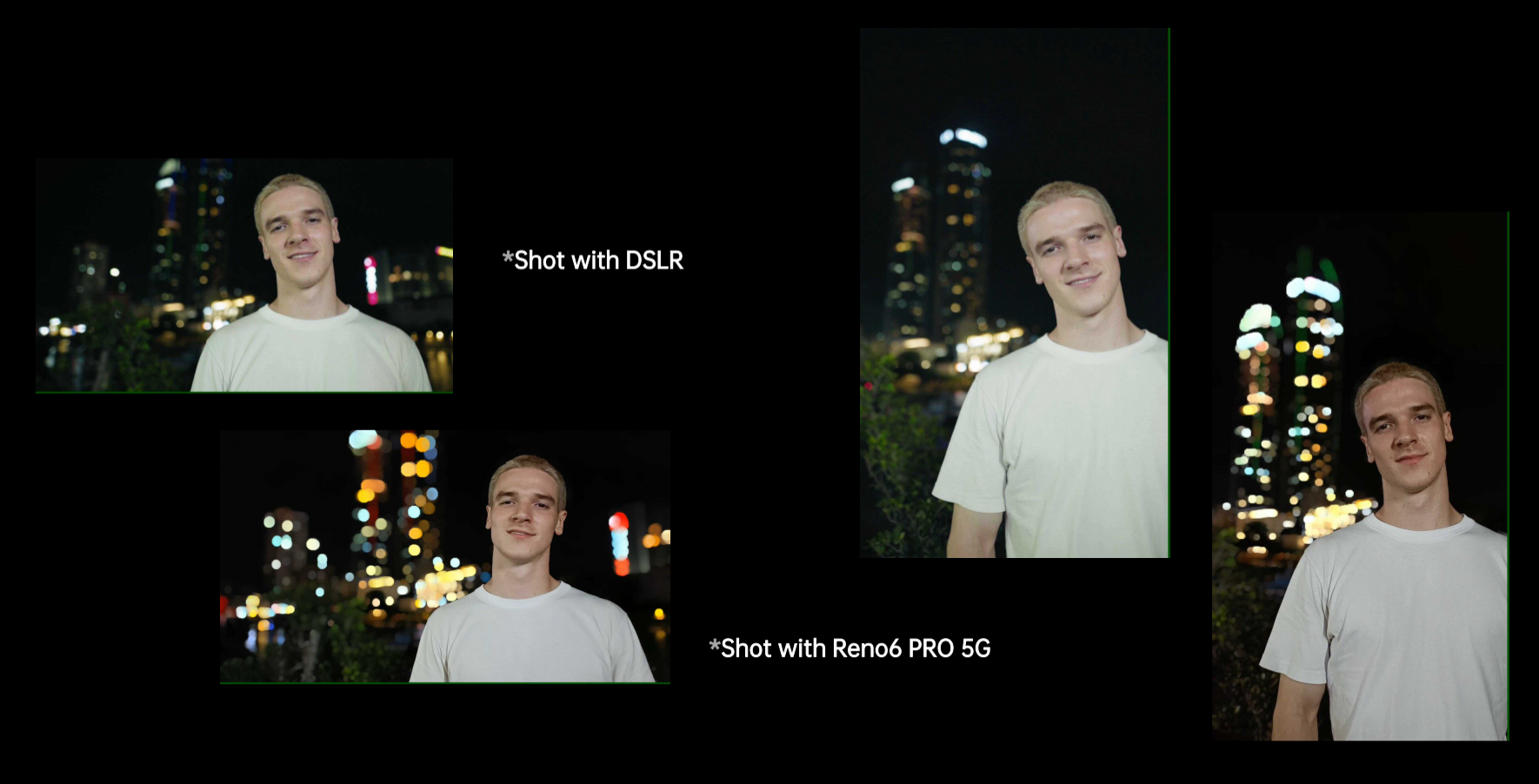
This extra AI video feature called ‘Bokeh Flare Portrait’ is the main highlight of the OPPO Reno6 series. As the name suggests, this feature offers bokeh with flare effects in video recording.
In other words, the feature enables DSLR-like cinematic portrait videography on smartphones. OPPO claims that this is first on a smartphone.
The firm says that it uses deep learning and computational vision for this feature. It is possible because of a large dataset training, which includes human body & posture detection, depth of field measurement, light strength & angle detection, and shadows, clouds, water & other scene detection.
The company states that the accuracy of its AI recognition is 97%. Hence, with 360° body mapping, the Bokeh Flare Portrait Video feature enables perfect separation of subject & background. The feature also offers frame-by-frame pixel-level enhancements with real-time previews.
That said, one might be wondering why OPPO is investing so much in R&D for these sorts of AI camera features for videography. The answer to this is simple. According to the company, the OPPO Reno series users alone record 200 million videos every month. Therefore, the firm wants to provide more video functions for its customers.
Realme confirmed at an event last month that it will announce its first computer, the Realme Book this year. It already gave us an early look at the notebook and we have also seen some live photos. However, new renders have surfaced and they give us our best look yet at the device.
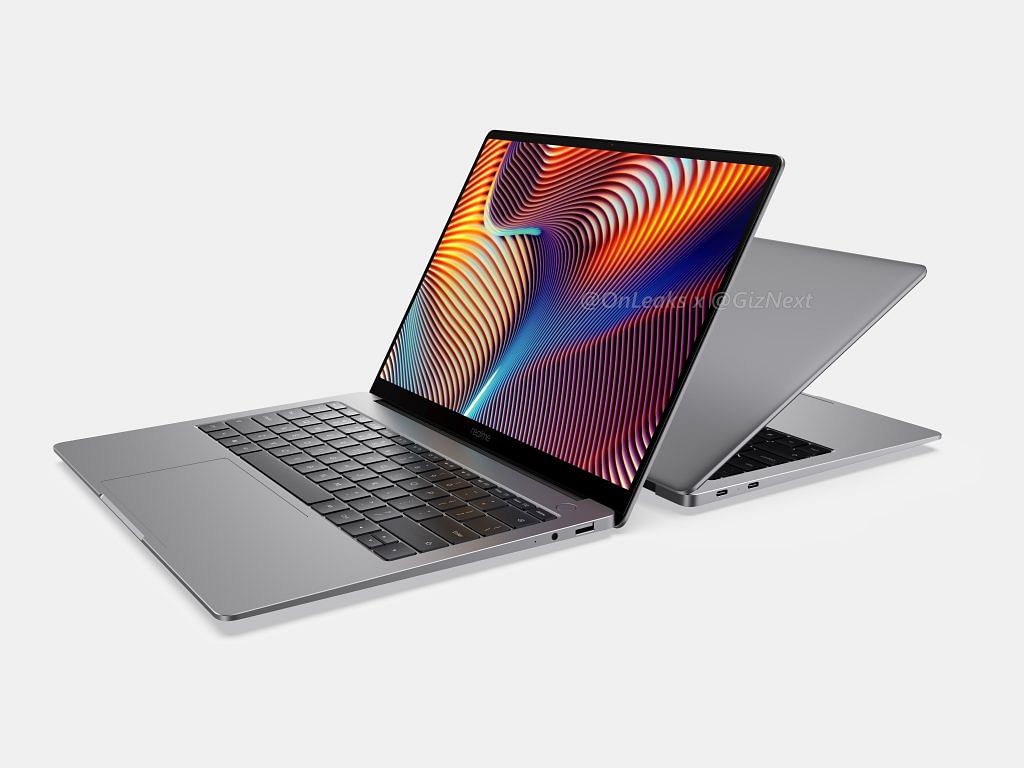
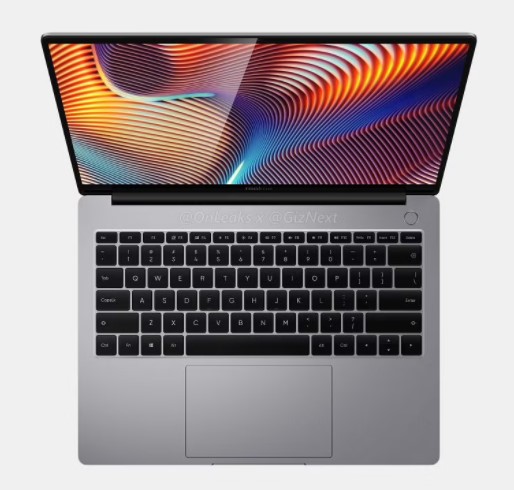
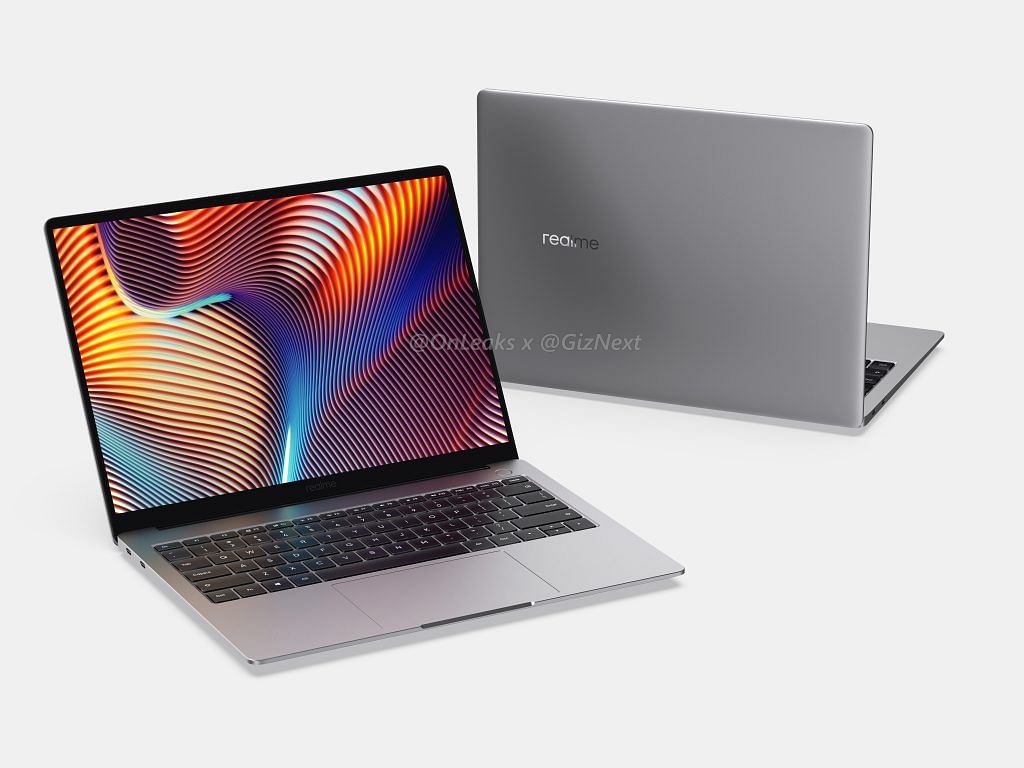
The Realme Book renders and 360-degree video courtesy of OnLeaks in collaboration with GizNext shows the notebook from different angles. The source has also provided some key specifications too.
For its first notebook, Realme is going with a 14-inch size. The laptop has a silver exterior and interior with a black island-style keyboard layout, a color finish we have seen several times and has become boring. There is a power button at the top right corner and it has been revealed that it also doubles as a fingerprints scanner. The trackpad is also fairly large and should be made of glass.
1 of 3
Realme Book
The screen is a 1080p LED anti-glare panel bordered by pretty thin side bezels. With respect to ports, there are two USB-C ports on the left while the right is home to a USB-A port and a microphone-headphone combo jack. The Realme Book is said to measure 307 x 229 x 16 millimeters but while its weight is unknown, it is said to be lightweight since it is targeted at students and professionals.
It has also been reported that the Realme Book will be available in 11th Gen Core-i3 and Core-i5 variants with multiple RAM and SSD storage configurations. When it launches, it will come preinstalled with Windows 10 and Microsoft Office.
The Realme Book is expected to launch in August with a starting price under ₹40,000.
Carl Pei’s new start-up Nothing had announced, a couple of months back, that its first product will be truly wireless earbuds. The gadget was later confirmed to bear the moniker Nothing Ear (1) TWS earbuds. The startup recently announced recently that the earbuds will be going official in some countries later this month after a slight delay. The prices in the US, UK, and Europe have also been revealed.
Right now, Nothing has officially teased the ear (1) TWS earbuds India price. The earbuds will retail for Rs. 5,999 (around $80). This is notably way cheaper than the prices set for other countries. For reference, the ear (1) will sell for $99 in the United States, while it will retail for €99 in Europe and £99 in the UK. The reduced pricing is impressive and will definitely influence the overall sales in the Indian market.
Nothing’s CEO Carl Pei had already revealed some key specifications of the TWS earbuds. The earbuds are expected to come with a transparent design which he noted is very difficult to achieve since certain parameters such as magnets and glue types have to be put into consideration so as to retain the aesthetics.
In addition, the earbuds are expected to feature a state-of-the-art Active Noise Cancellation. The noise cancellation feature uses three high-definition microphones. It also packs other features that you’ll find in high-end earbuds like the AirPods Pro.
Nothing had earlier confirmed that the ear (1) TWS earbuds will be sold exclusively on Flipkart in India. The product is expected to go live at 18:30 IST (14:00 BST) on July 27.
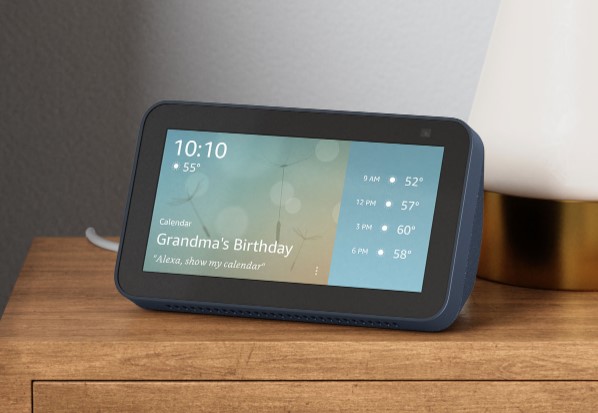
Amazon has filed a document with the United States Federal Communications Commission (FCC) seeking permission to use radar technology to achieve sleep tracking in its products. When it becomes operational, Amazon’s move will also make it possible to use hand gestures to control Amazon’s Echo devices, as applied to Google Nest Hub and Pixel 4 smartphones.
Amazon hopes to join Google to engender a better understanding and assessment of sleep using a contactless technology like radar. There is a strong nexus between sleep hygiene, good health, and productivity. Therefore, it is important for a user to effectively determine his sleep trajectory for more excellent health and fitness awareness. For example, the Google Nest Hub Smart display provides a more robust sleep tracking mechanism than current contact methods prevalent in most devices.
The details of the FCC filing by Amazon on the new radar sleep-tracking sensor show that Amazon is claiming the technology can assist in a better understanding of sleep issues by users. The fine details of how the radar technology will work with Amazon devices were not reflected in the FCC document, fuelling speculation that we are still far from the premiering of the technology in an Amazon device. The soon-to-be-released Amazon Echo Show is also not indicated whether the device will come with the radar sensor technology.
With a focus on sleep health on the rise, different devices have been prevalent, including smart wearables and other gadgets, for a comprehensive sleep tracking mechanism. Sleep patterns could provide valuable insights into possible health conditions, and the data logged on sleep is a trove of useful information.
As these techniques continue to be deployed in new devices and data collected, there are still concerns about the privacy of users, which could be breached with unauthorized access to such data.
Huami has an event tomorrow in China and it has confirmed that it will announce a new operating system and new chipset for smartwatches. It turns out that there will be a global launch for a new pair of Amazfit Earbuds too and we may also get a new smartwatch under the Amazfit GTR 2/ GTS 2 series.
The official Amazfit Global Twitter account has revealed that it will announce a new pair of earbuds. The earbuds should launch as a successor to the ZenBuds and will have health features such as posture detection and sedentary reminder. Amazfit has also revealed that the earbuds will have Active Noise Cancellation and sports tracking.
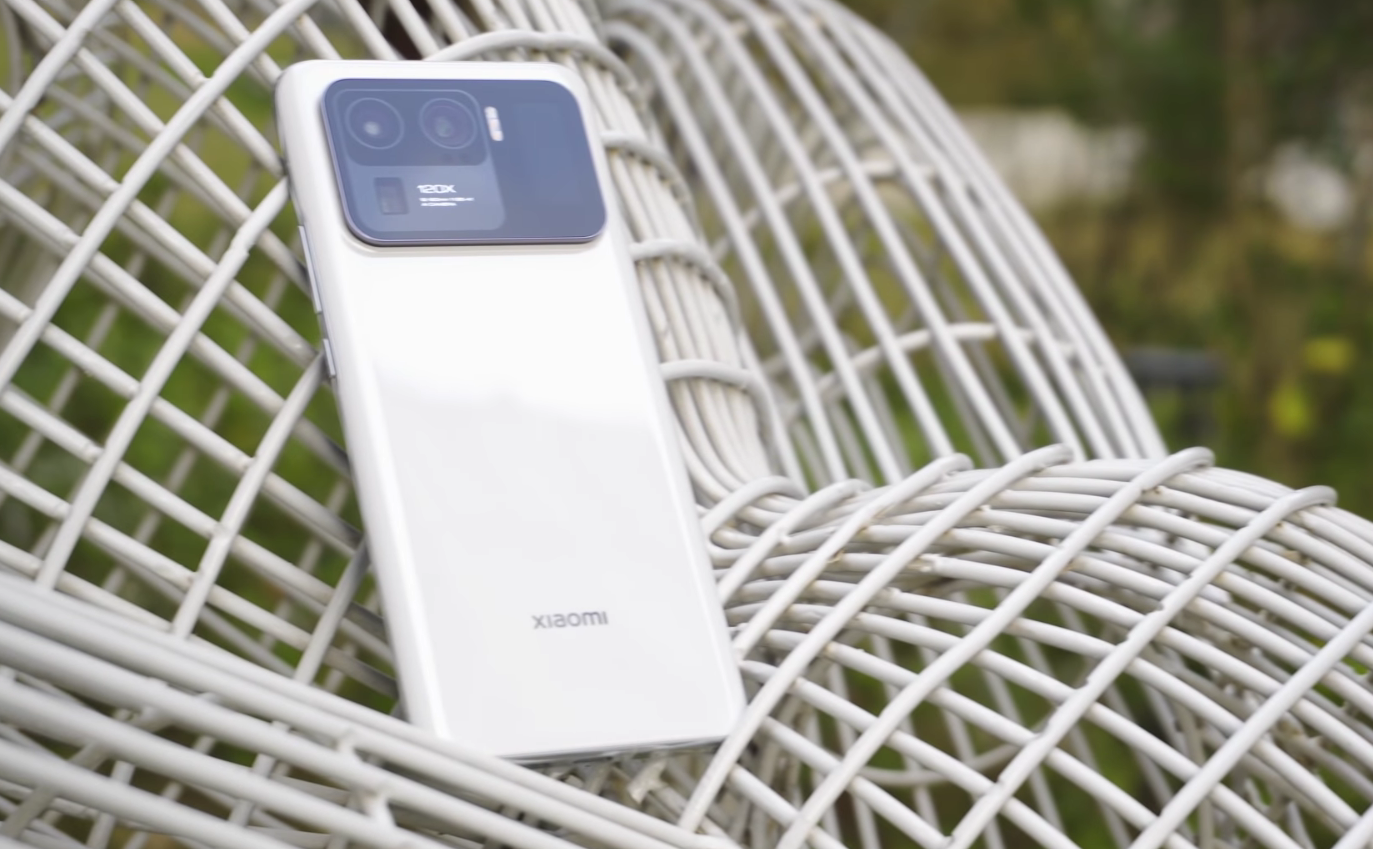
Xiaomi first unveiled the Mi 11 Ultra in India as part of the Mi 11 lineup back in April but the device wasn’t up for grabs until now. It only went on its first sale a couple of days back. The smartphone maker only made a limited number of units available. The tech giant has now announced that the Mi 11 Ultra will go on open sale in India from July 15 at 12 noon. The premium model will be available on Amazon India, mi.com, and offline via Mi Home stores as well as select retail outlets offline.
The Mi 11 Ultra is a premium smartphone in all ramifications. Aside from the sleek design, the device also boasts a waterproof build and a powerful hardware lineup. The premium device is powered by the Qualcomm Snapdragon 888 processor paired with 12GB of LPDDR 5 RAM.
It sports a massive 6.81-inch E4 AMOLED display with a Quad-HD+ resolution. The device supports a 120Hz screen refresh rate and a DCI-P3 color gamut. Keeping the lights on is a 5,000mAh battery with 67W wired and wireless charging support. Although Xiaomi shipped the device with a 55W charging brick, the Mi 67W SonicCharge Charger went on sale in India today for just Rs 1999 (~$27).
The smartphone also sports a powerful camera module, using a Samsung 1/1.12″ 50MP GN2 sensor for the main camera. In addition, a 48MP 5x periscope camera and a 48MP 12mm ultra-wide camera are also present. It comes with Dolby Vision audio powered by Harman Kardon. It has an under-display fingerprint scanner and Face unlock support for security. The phone runs on Android 11 out of the box with MIUI 12 on top of it. Xiaomi recently pushed the MIUI 12.5 update for users in India.
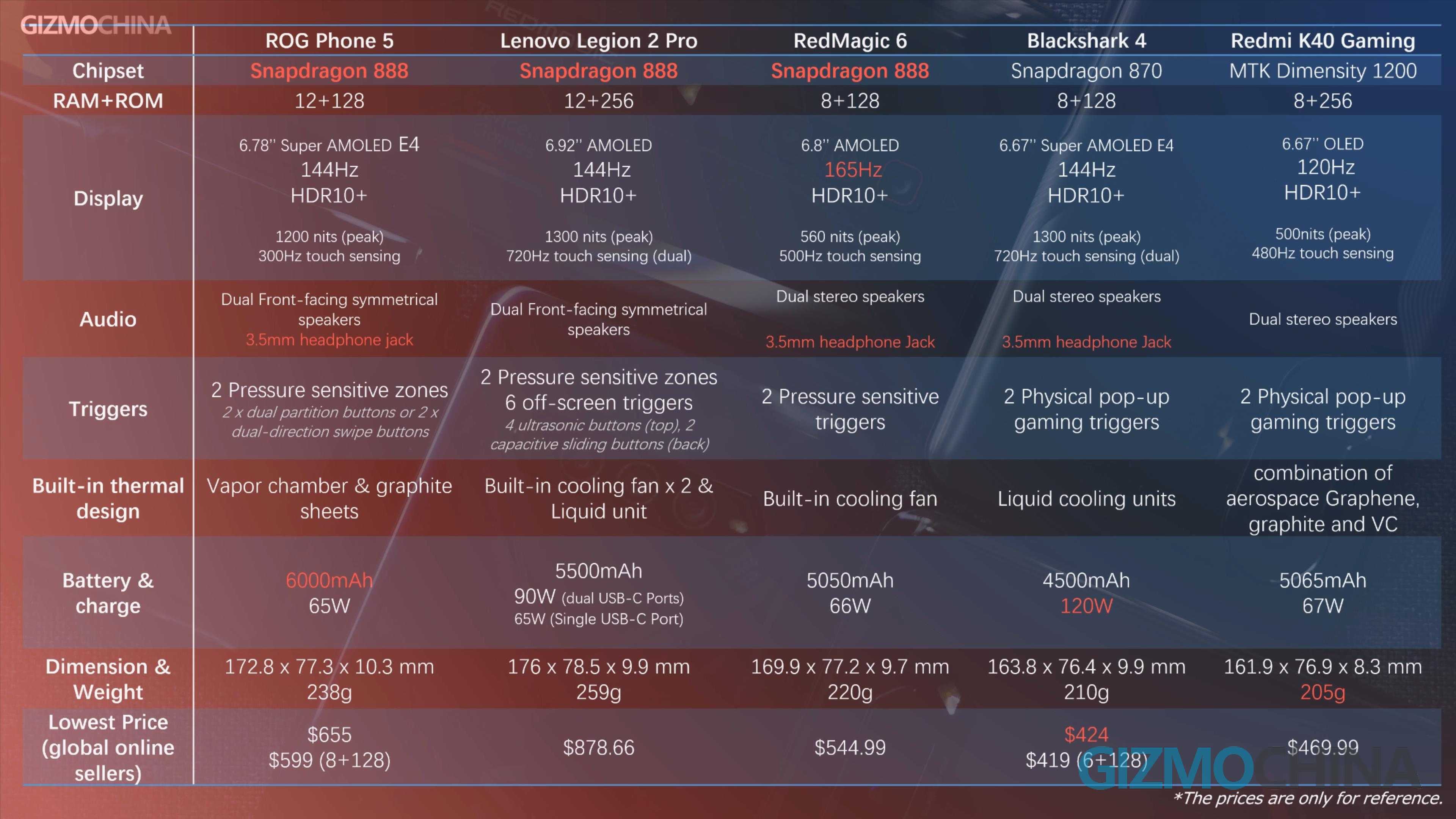
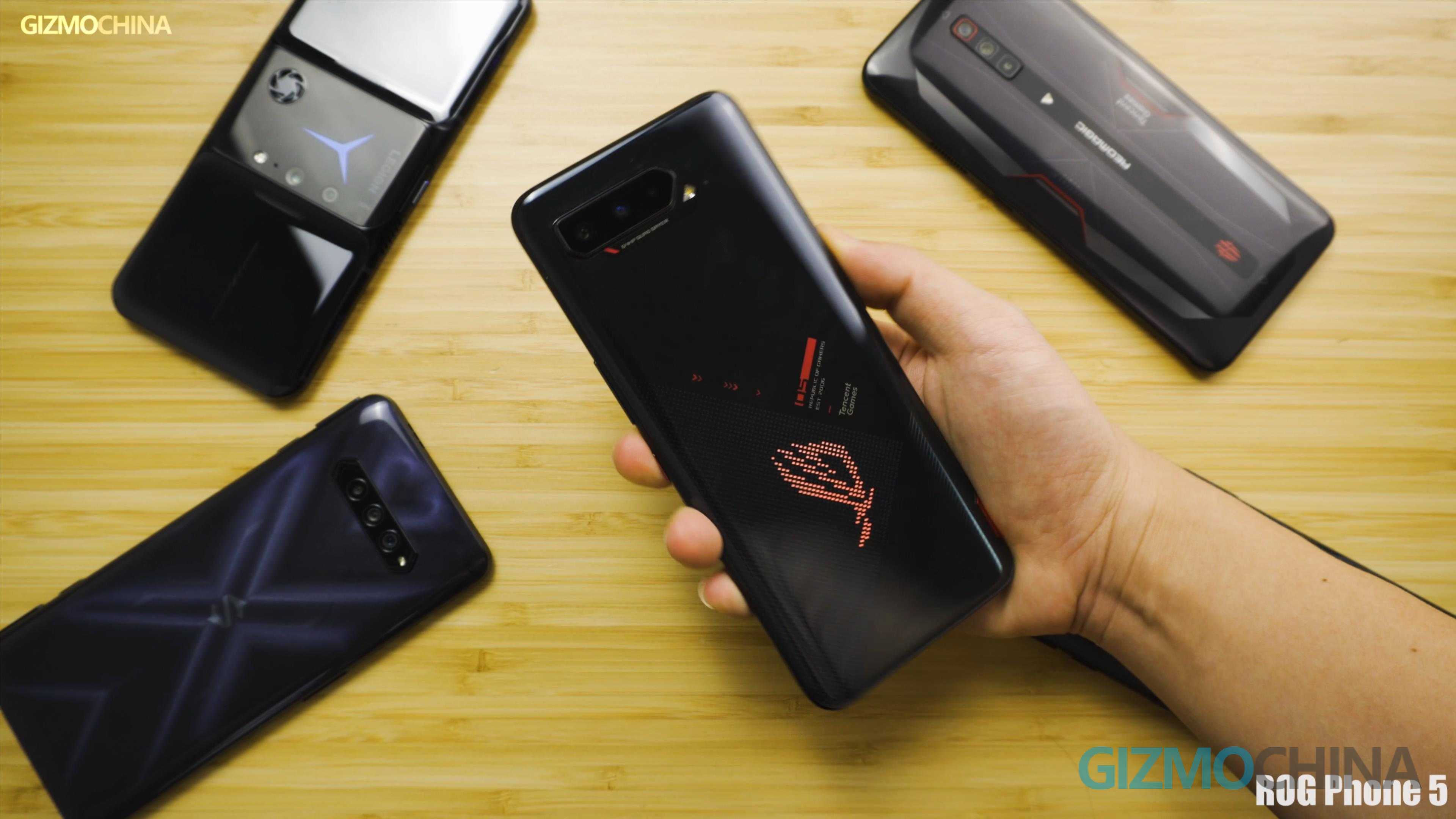
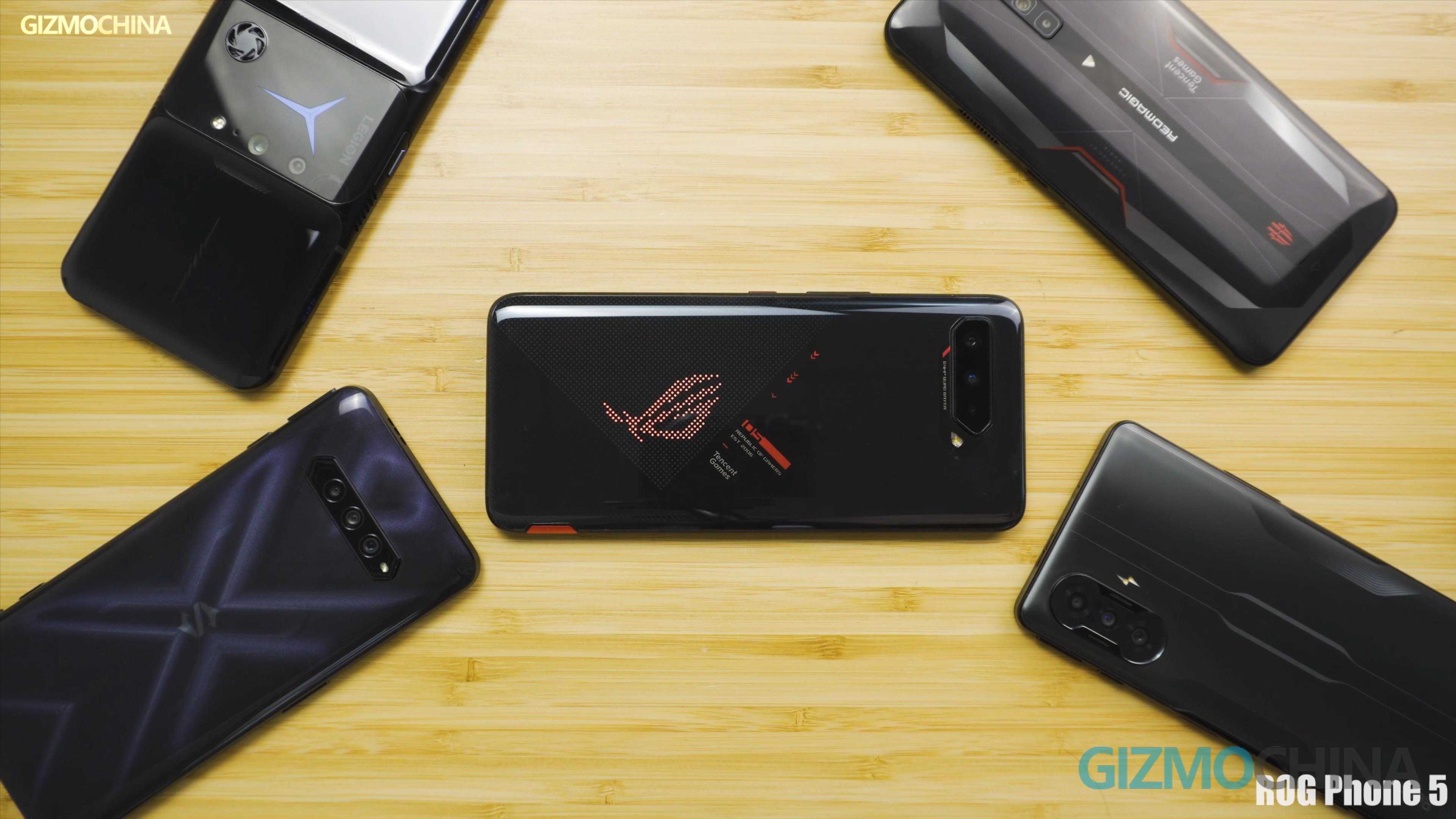
We have brought in five gaming phones for the ultimate GAMING COMPARISON — the ROG Phone 5, the Legion 2 Pro, the Redmagic 6, the Blackshark 4 and the Redmi K40 gaming edition. All of them were released in the first half of 2021. And we believe these five candidates cover all the possible price segments for a capable gaming phone in the market.
Gaming Phone with the Best Design
When we evaluate the design of gaming phones, the judging criteria is often very different from a regular phone. It’s not necessary for these gaming models to be light and thin, since higher priority is given to longer battery life, more effective thermal design, and better hardware enabling creative gaming features.
All these five models weigh over 200g. The Redmi K40 Gaming is the closest to a regular phone with the best weight control.
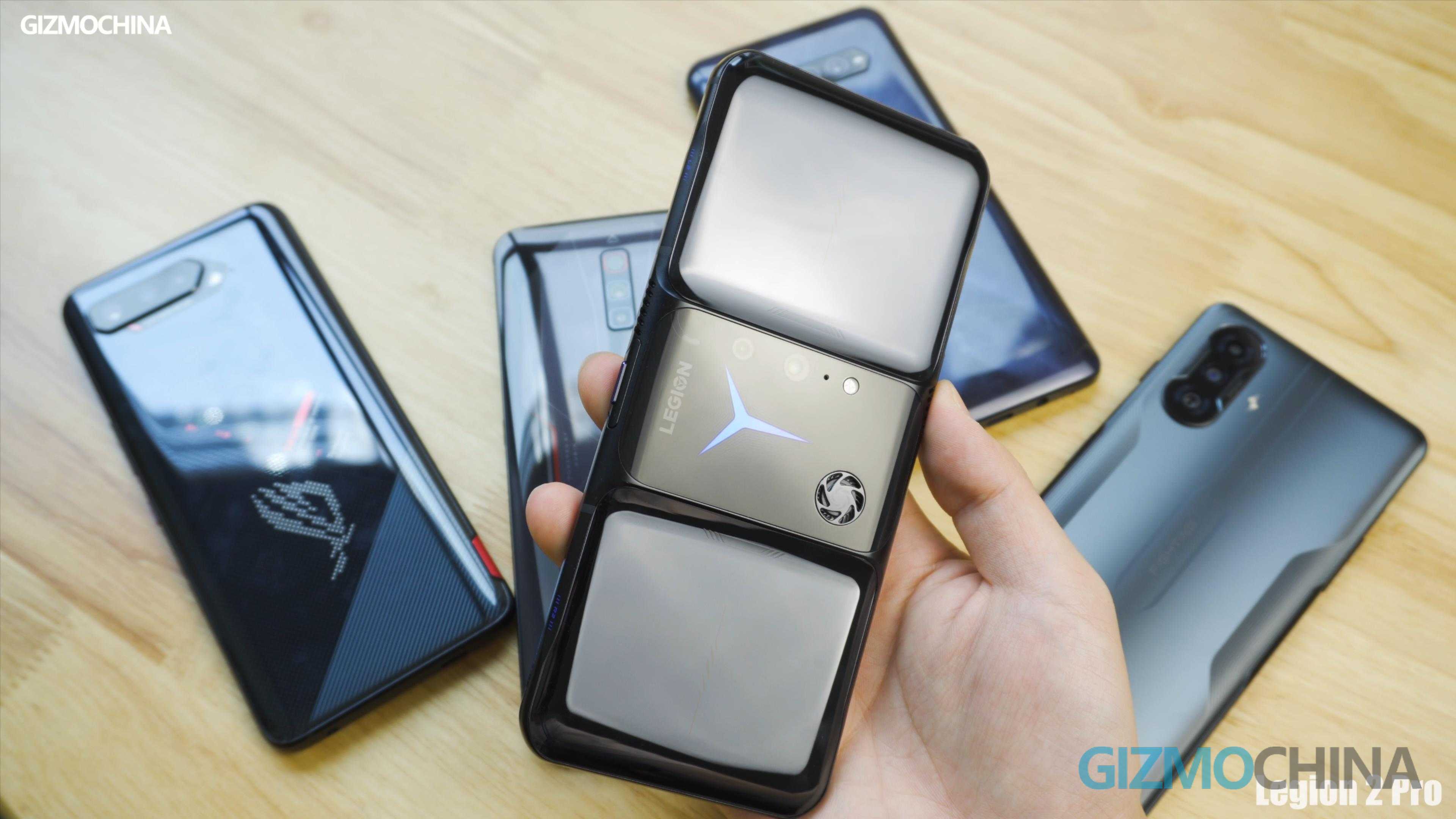
But among these five gaming models, no doubt the heaviest one, the Legion 2 Pro has the most distinguished design. The Legion phone uses a three-part design with an aluminum frame and a glass back. Inside the model, its motherboard with the chipset is placed at the middle to avoid heating on both sides of the holding area, where it features dual 2525mAh batteries. And it’s the only model among the five to feature 2 built-in cooling fans.
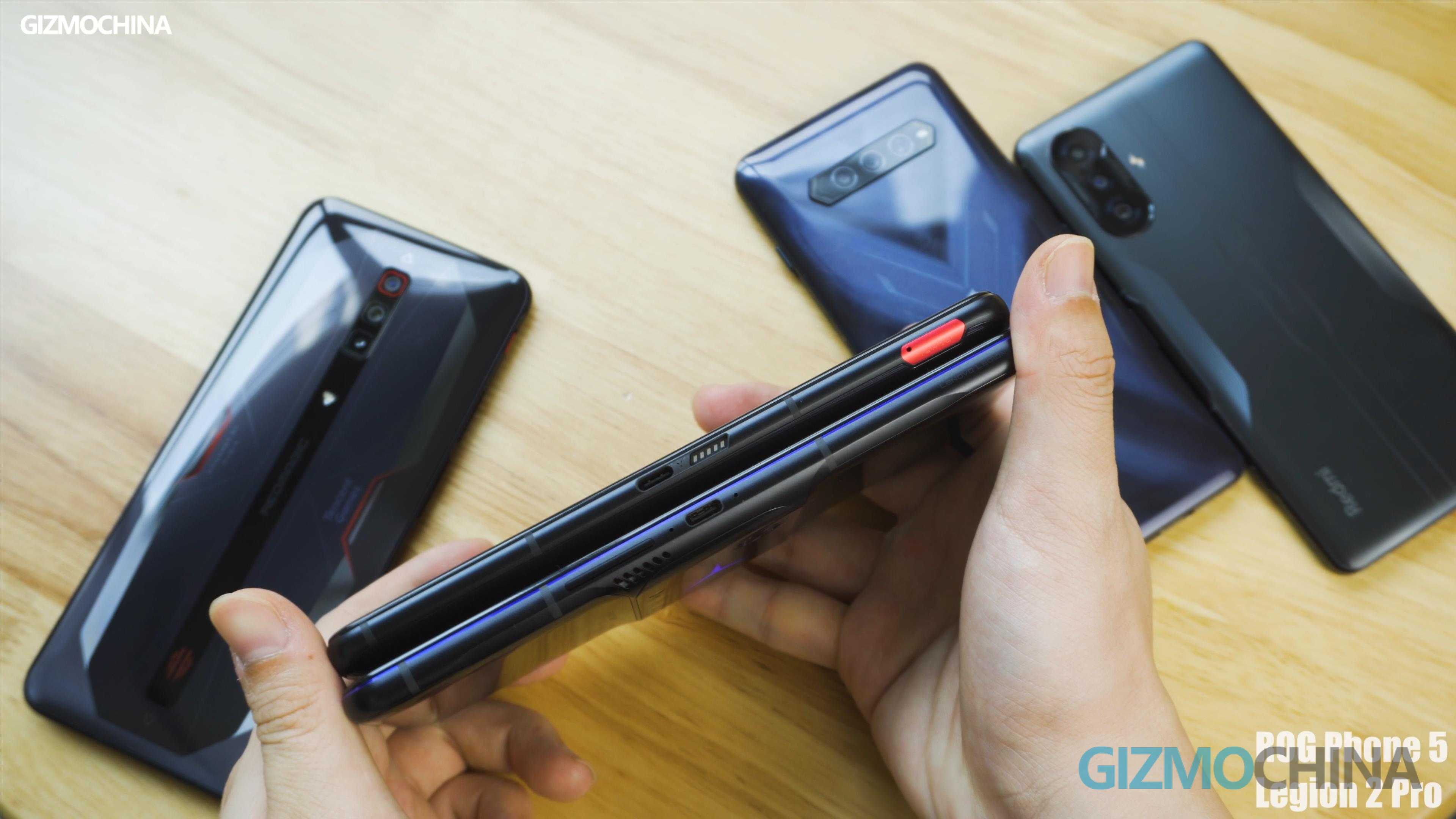
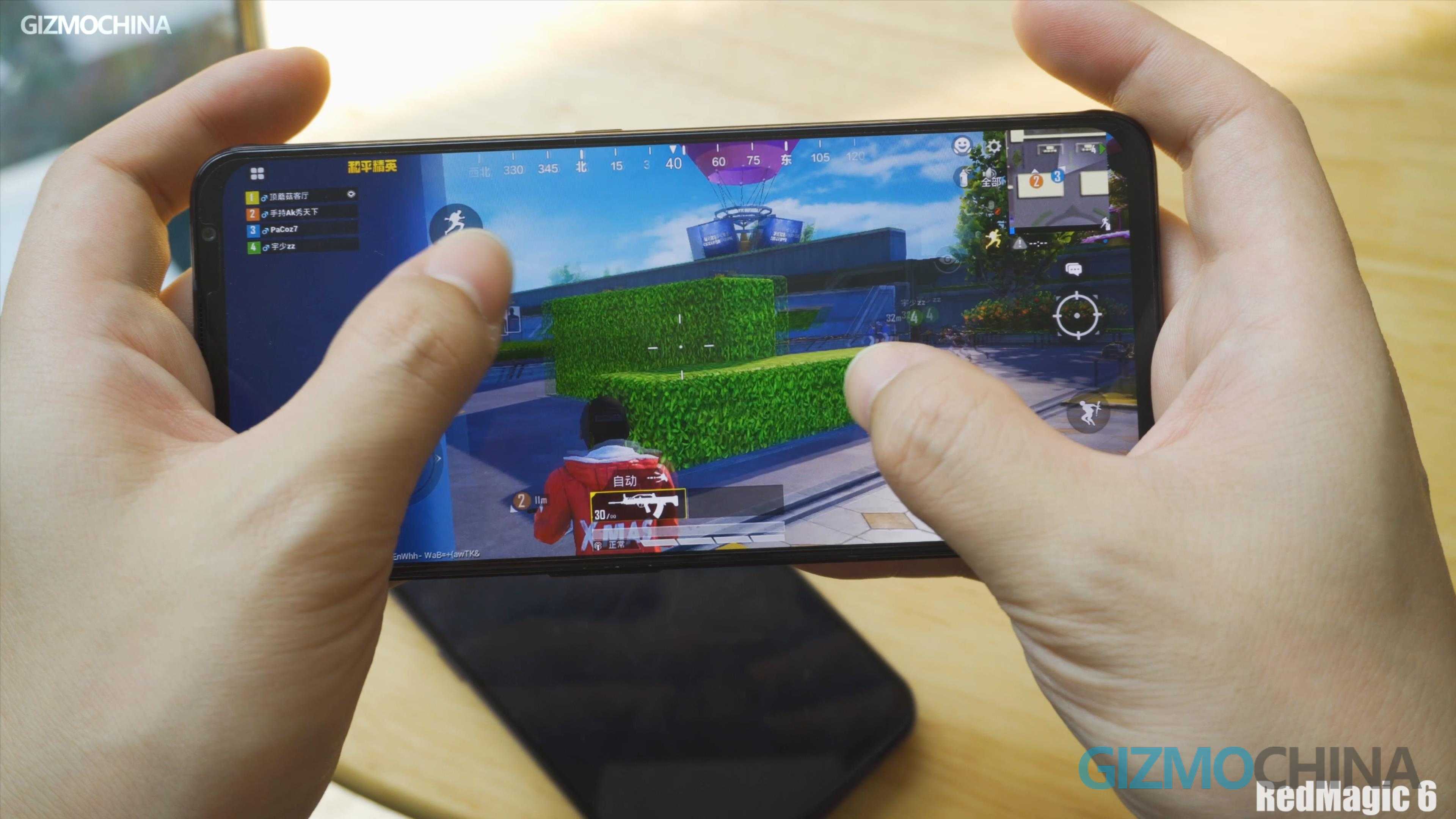
Another model that comes with a cooling fan is the RedMagic 6. Apart from this, we couldn’t find any design distinguishing it as a gaming phone. So it’s similar to the Blackshark 4 and the Redmi K40 Gaming edition. These three models look like a regular smartphone. Another model that uses an internal three-part design is the ROG Phone 5, which also has a centrally placed chipset and batteries on the two sides. In addition to this, there are more similarities between the ROG Phone and the Legion Phone. For example, they both feature a big RGB-light logo on the back, but the big eye of the ROG phone no doubt is more breathtaking for a gamer. Additionally, they both have two USB-C ports, which is really convenient for charging and playing games without affecting your grip.
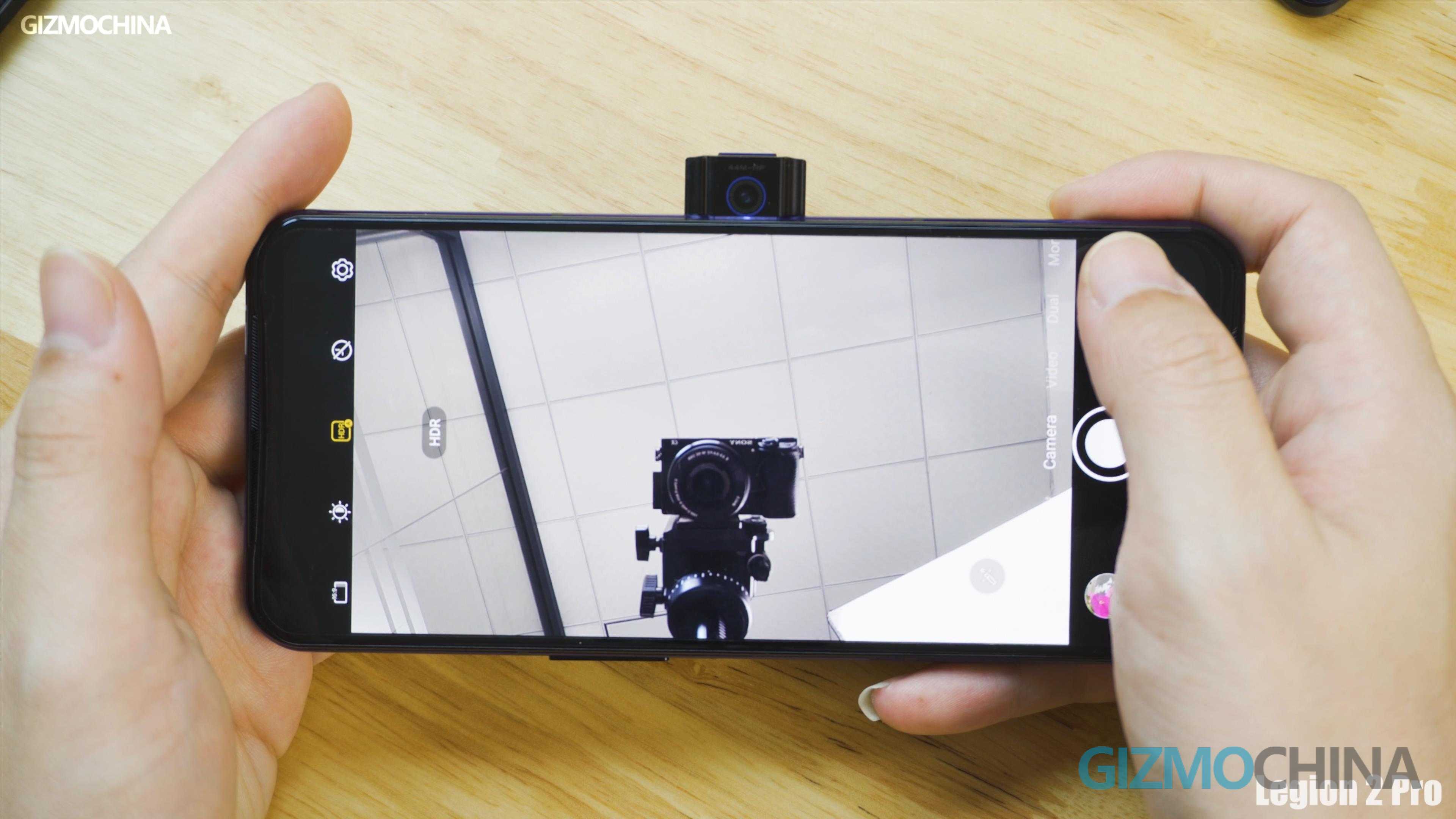
The Legion Phone is the only model that aggressively puts its front and rear cameras at a strange location. The centrally-placed rear camera module looks really strange. Actually, it doesn’t look good at all, while the pop-up front camera is a much smarter design to be positioned on the side-frame. It achieved a perfect angle when we were playing games horizontally. What’s more, for those mobile gamers who also do live-streaming, no doubt it’s the best option to solve all streaming issues with just one phone. But some users may consider it a bit too flashy. Indeed, it does look a bit weird, so the other four probably look better as a smartphone.
But note that although the Legion phone’s selfie camera didn’t occupy any area of the front, its edge width wasn’t narrow at all. On the contrary, the Blackshark 4 and the Redmi model featuring a hole-punched front camera have relatively narrower edges.
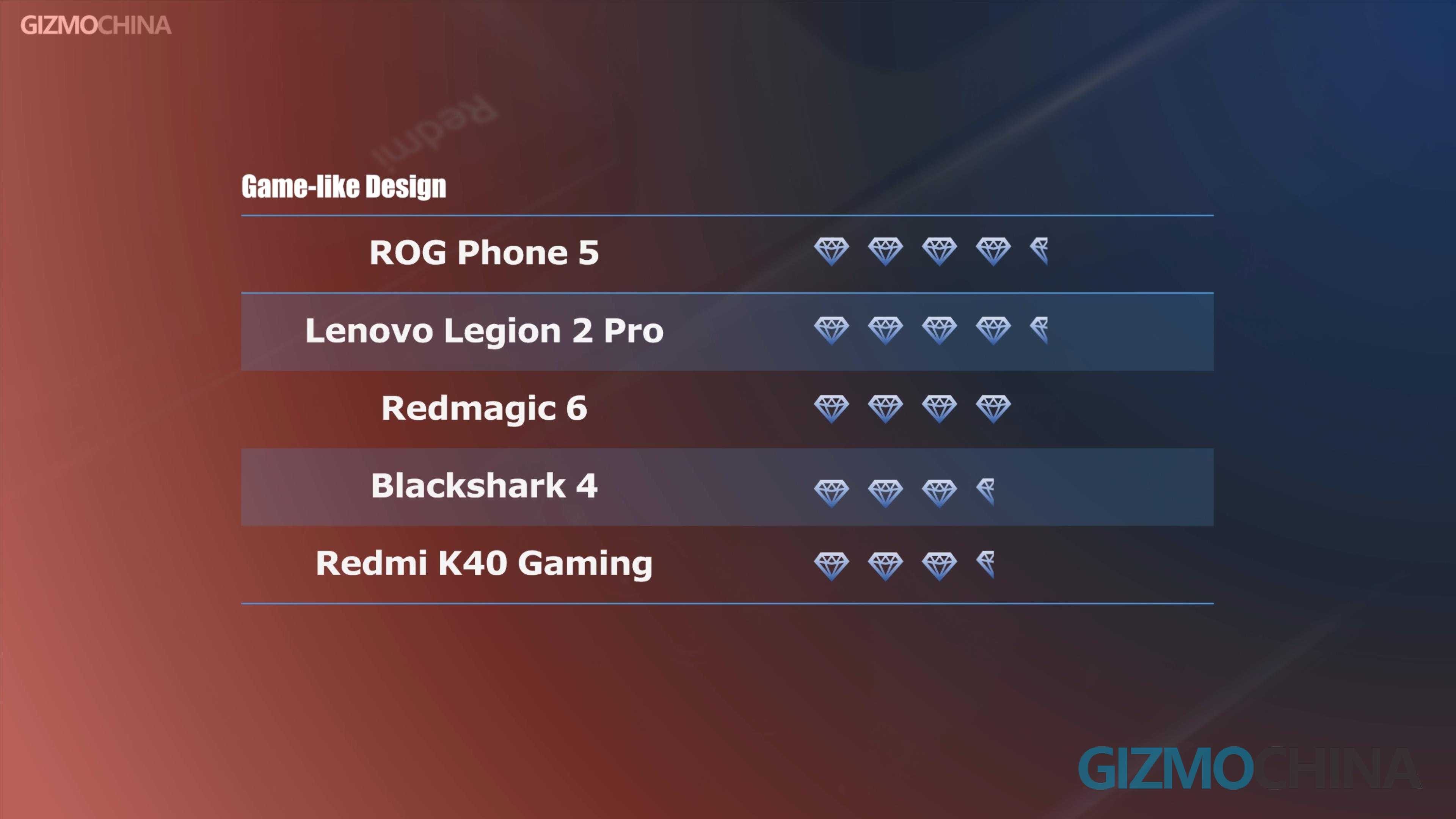
So to conclude, for the appearance perspective, we’d like to give both the Legion model and the ROG model a 4.5 out of 5, mainly because they are not perfect. And we’ll give 4 points to the Redmagic 6, and 3.5 to both the Redmi model and the Blackshark 4.
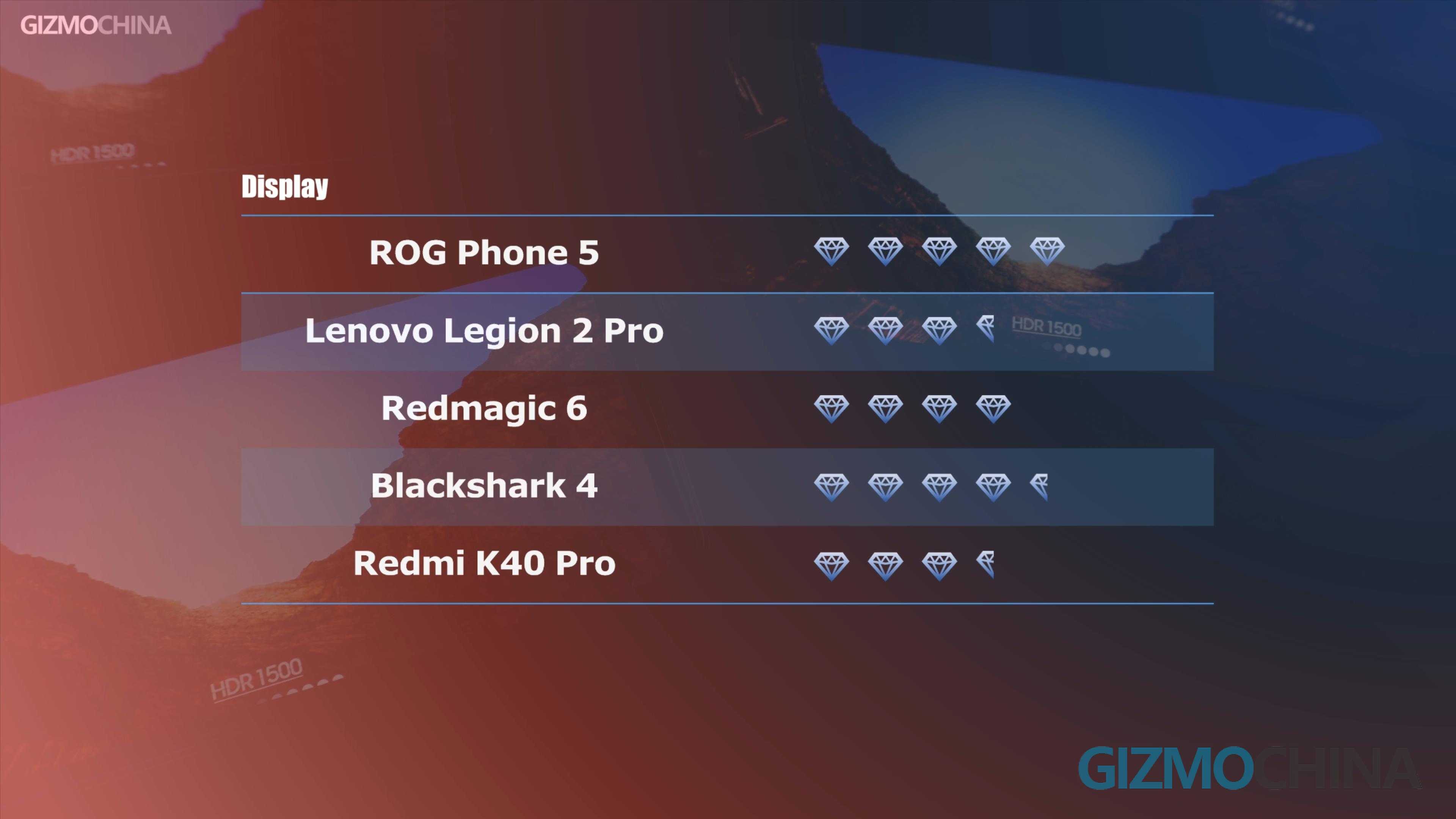
ROG 5 vs Legion 2 Pro vs Blackshark 4 vs Redmi K40 Gaming vs Redmagic 6: Display
The Legion phone, ROG phone and the Blackshark 4 feature an E-sports-level display with 144Hz refresh rate, while the Redmi K40 gaming comes with only a 120Hz display.
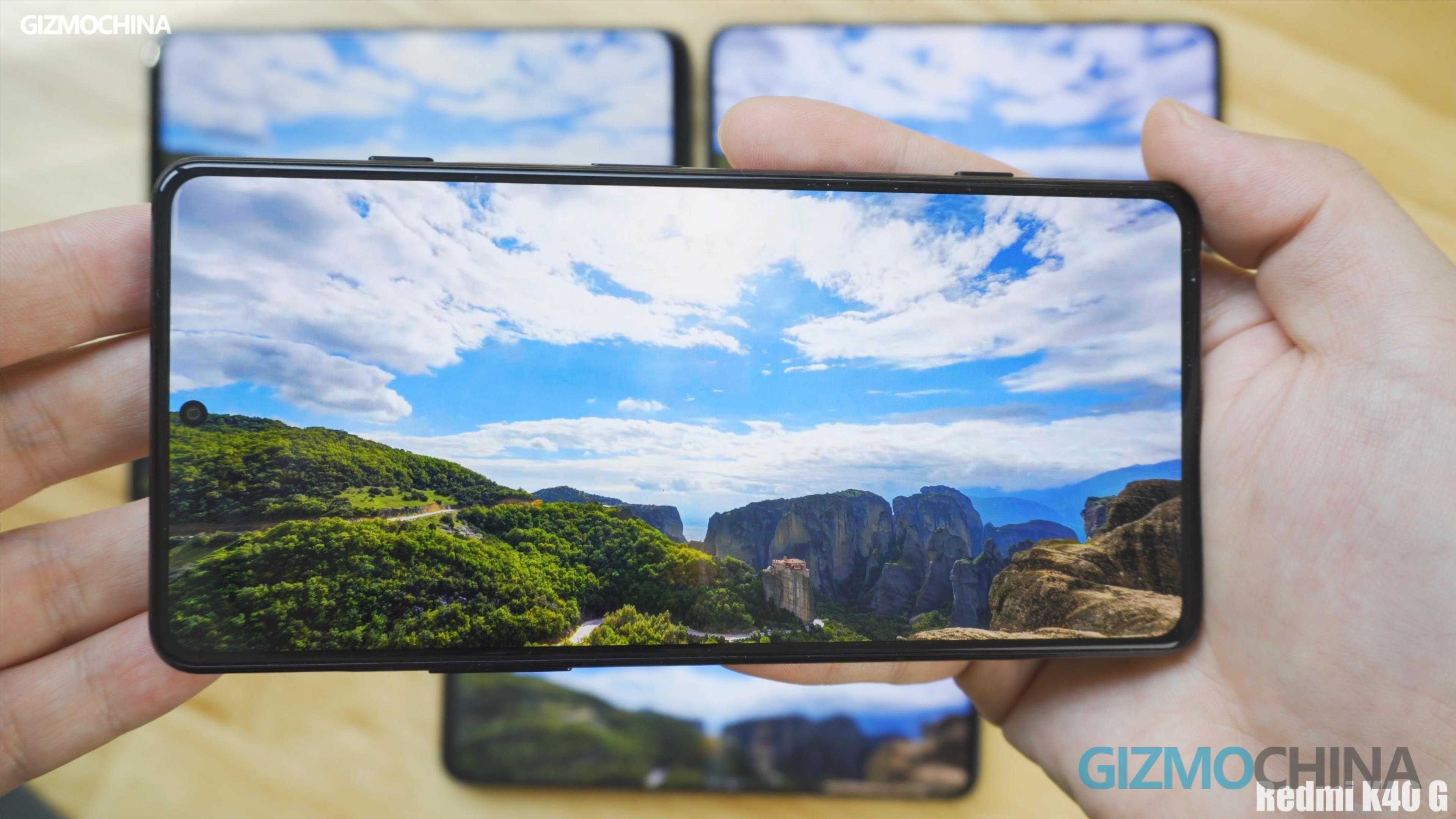
Although the RedMagic 6 comes with the highest refresh rate of 165Hz, the difference with the other four models is really hard to perceive with your naked eye. But speaking of their display quality, we have to say that the Redmi model is a bit disappointing because we found that its edges look a bit reddish. And turns out there are other units that have the same issue.
Speaking of colors, only the Legion 2 Pro applies a lower color temperature, which makes the screen look relatively yellowish. And no matter the color mode, there’s no option for users to adjust the color temperature. While on the other 4 models, there’s no such issue.
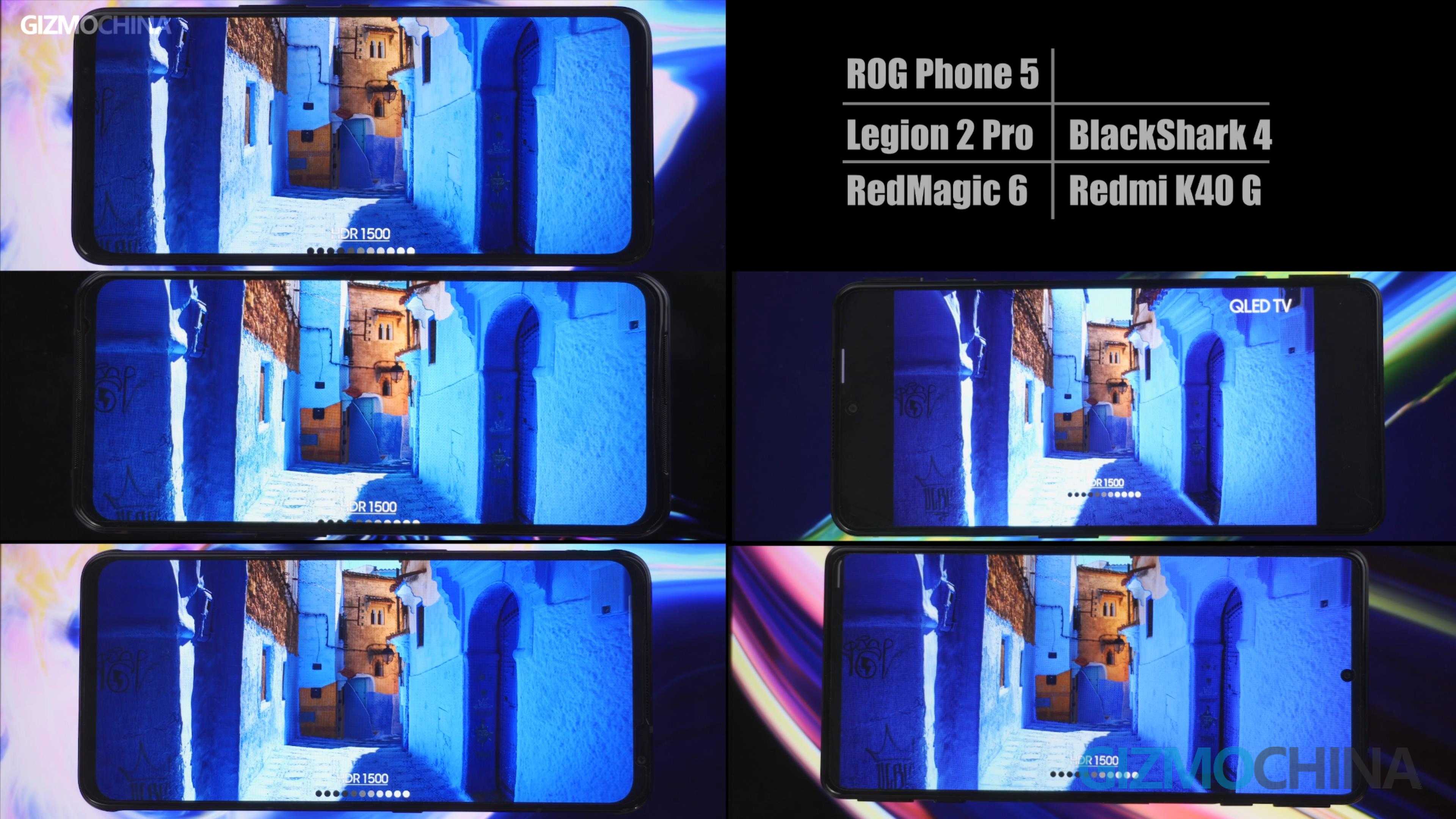
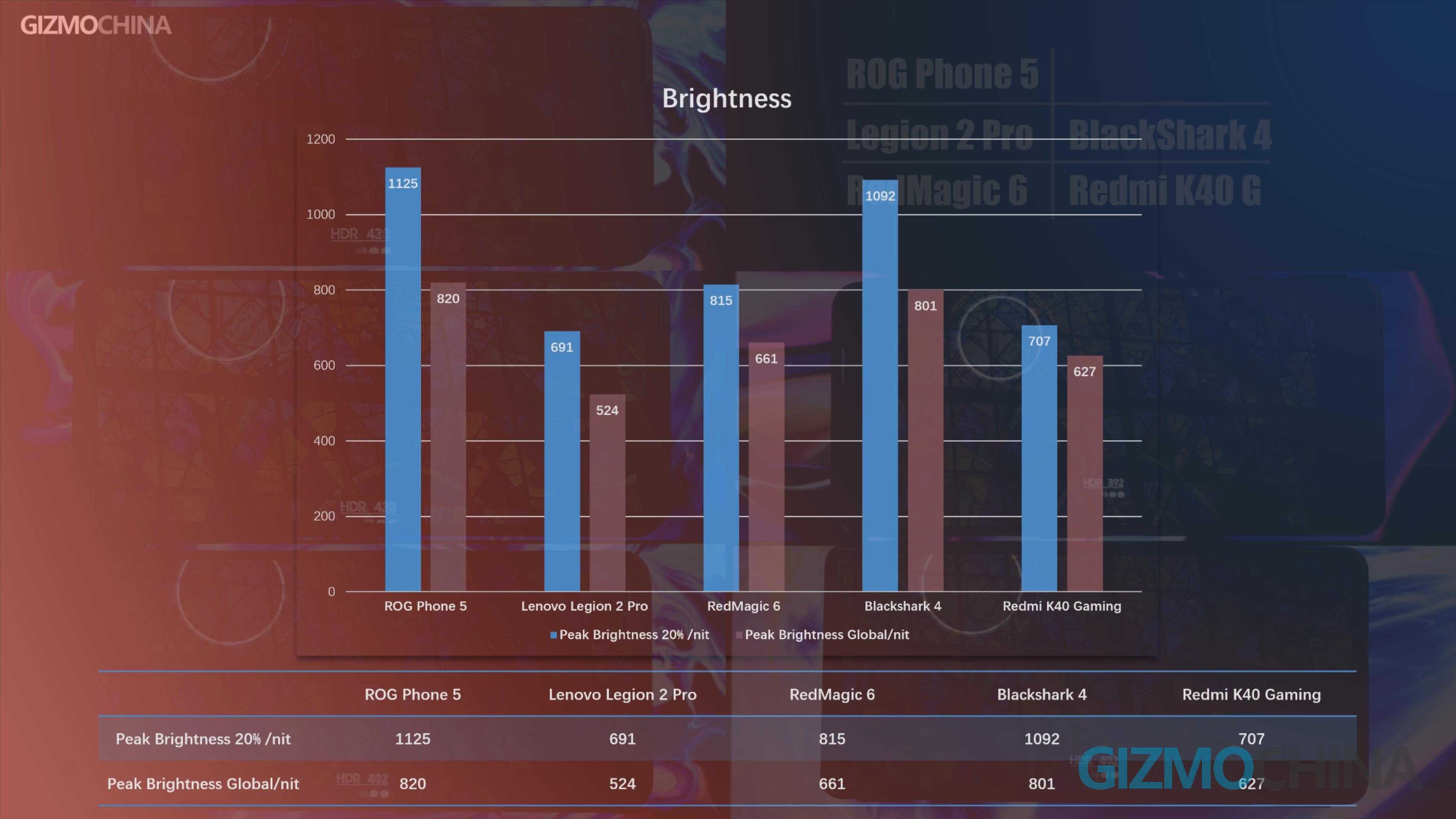
All these 5 models claim their panels support HDR content, and especially the ROG Phone, the Legion model and the Blackshark 4 claim they can breach the 1000-nit barrier upwards to fit the HDR standard. But in our test, only the Blackshark 4 and the ROG phone could actually reach around 800nits of peak brightness at APL-100 and over 1000 nits at APL1, while the Legion model failed to deliver on its promise and only got a close result to the Redmi K40 Gaming edition. But when we used them for HDR1000 content playback, the Blackshark 4 turned out to be the best one to activate the highest brightness.
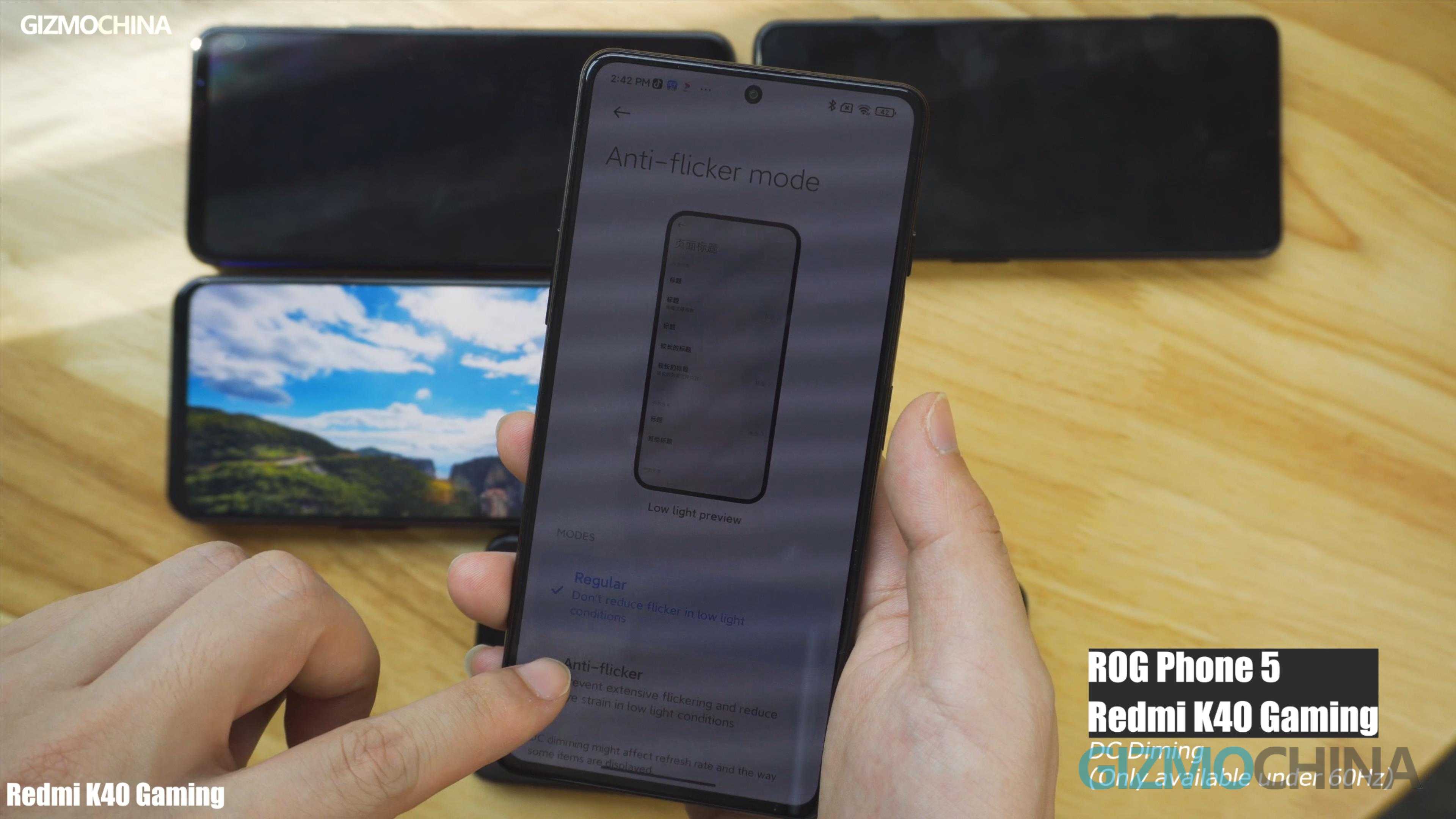
And all of these five models support DC dimming, which is an option that we are sure PWM-sensitive gamers would appreciate. However, only the Redmi K40 Gaming edition and the ROG phone require the refresh-rate limit of 60Hz to activate DC dimming.
Also, except for the ROG Phone, the other four models claim that they feature super high touch sampling at over 300Hz. But actually, the ROG Phone isn’t far behind in terms of touch and slide latency. The ROG phone still has the best performance of touch and slide latency because all the other models only feature a maximum touch sampling rate at 300Hz on paper but the ROG model triumphs over them in real life. Take the Blackshark 4 as an example. When we activated its higher sampling at 720Hz, although we could see more sampling points, its latency strangely increased than the other models. And even on the Redmi model, you can see frequent breaks occurring under the simulated sampling.
So for display rating, we’d like to give the ROG model 5 points out of 5, 4.5 for the Blackshark 4, 4 for the Redmagic 6, and 3.5 for both the Redmi model and the Legion Phone.
ROG 5 vs Legion 2 Pro vs Blackshark 4 vs Redmi K40 Gaming vs Redmagic 6: Best Gaming Operation
In 2021, how do you define a gaming smartphone? By the presence of gaming buttons. In fact, if you look at it, if not for the gaming buttons, the Redmi K40 Gaming edition would be just another good-performing mid-range model. But it does have my favorite pop-up physical shoulder triggers just like the Blackshark 4.
However, the Blackshark 4’s triggers offer better tactile, clicky feedback with a bit more comfortable key travel as well. In addition, the Blackshark 4 supports double mapping positions of a push and lift actions separately, while each trigger of the Redmi model only has one pressing mode for single-position mapping. If you want to set up combos of buttons on the Redmi K40 Gaming, it’s only available as a virtual button on the screen.
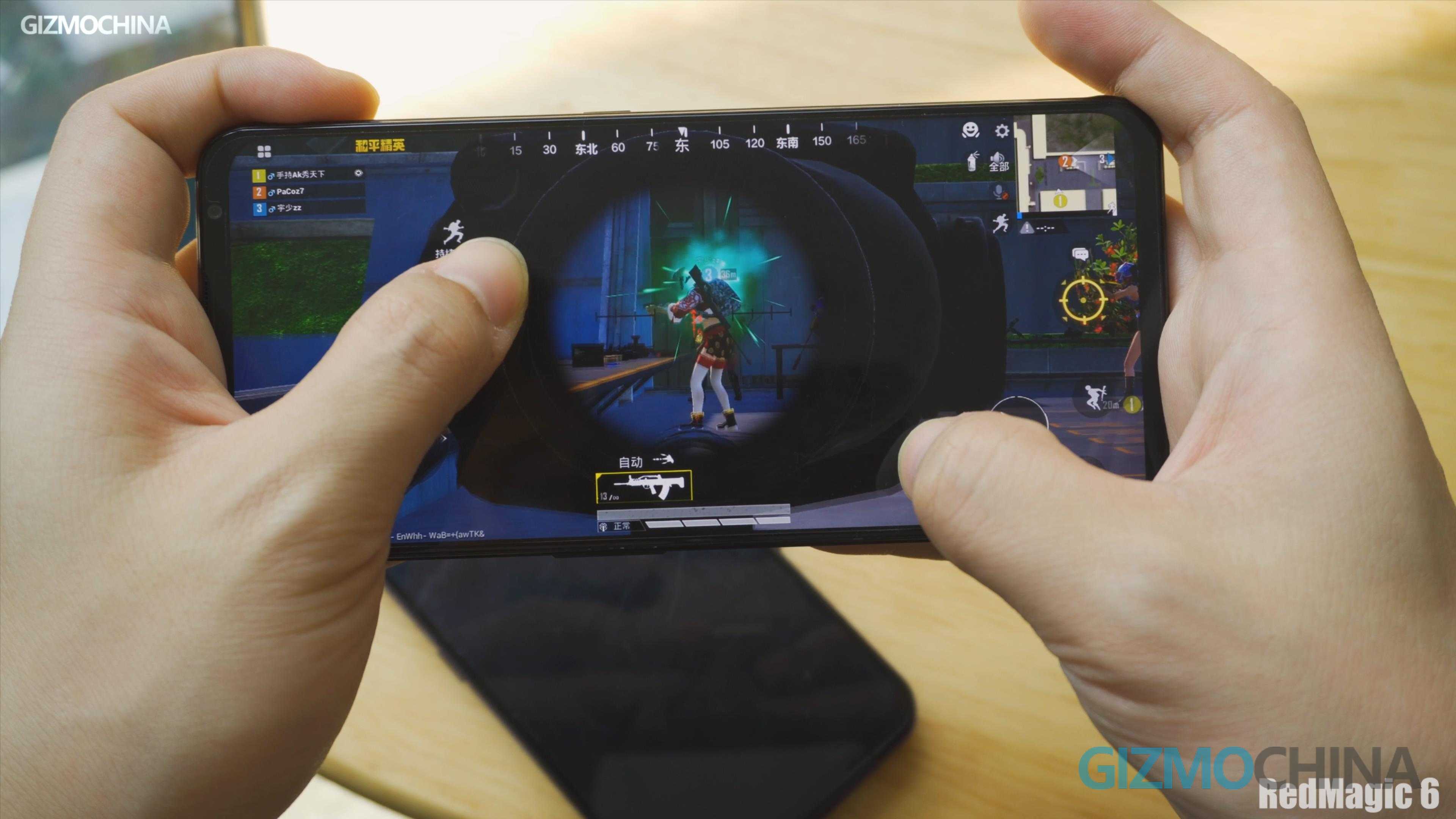
As for the Redmagic 6, in addition to the mapping modes we mentioned, each touch shoulder button supports either triggering dual positions or trigging a macro-operation.
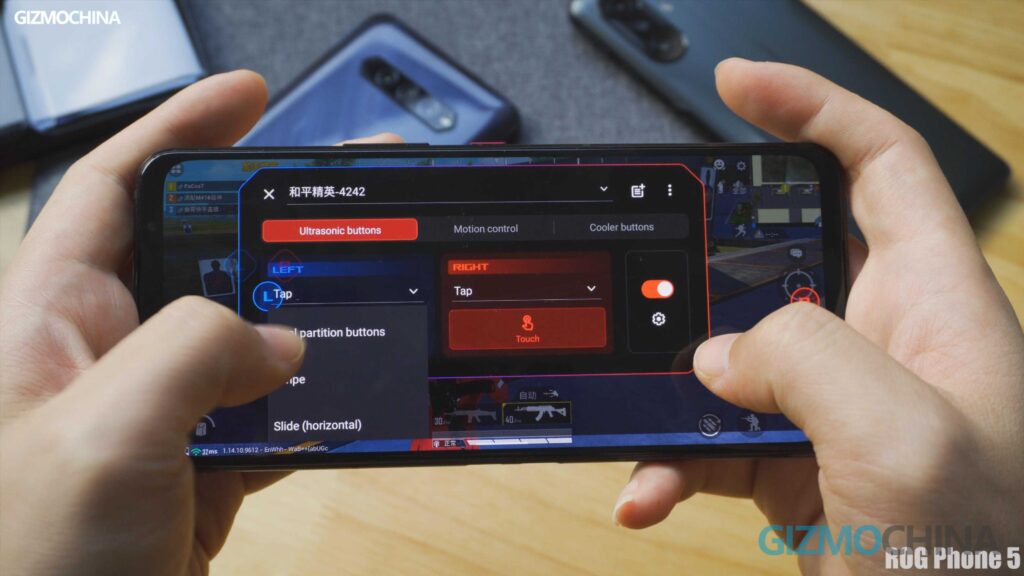
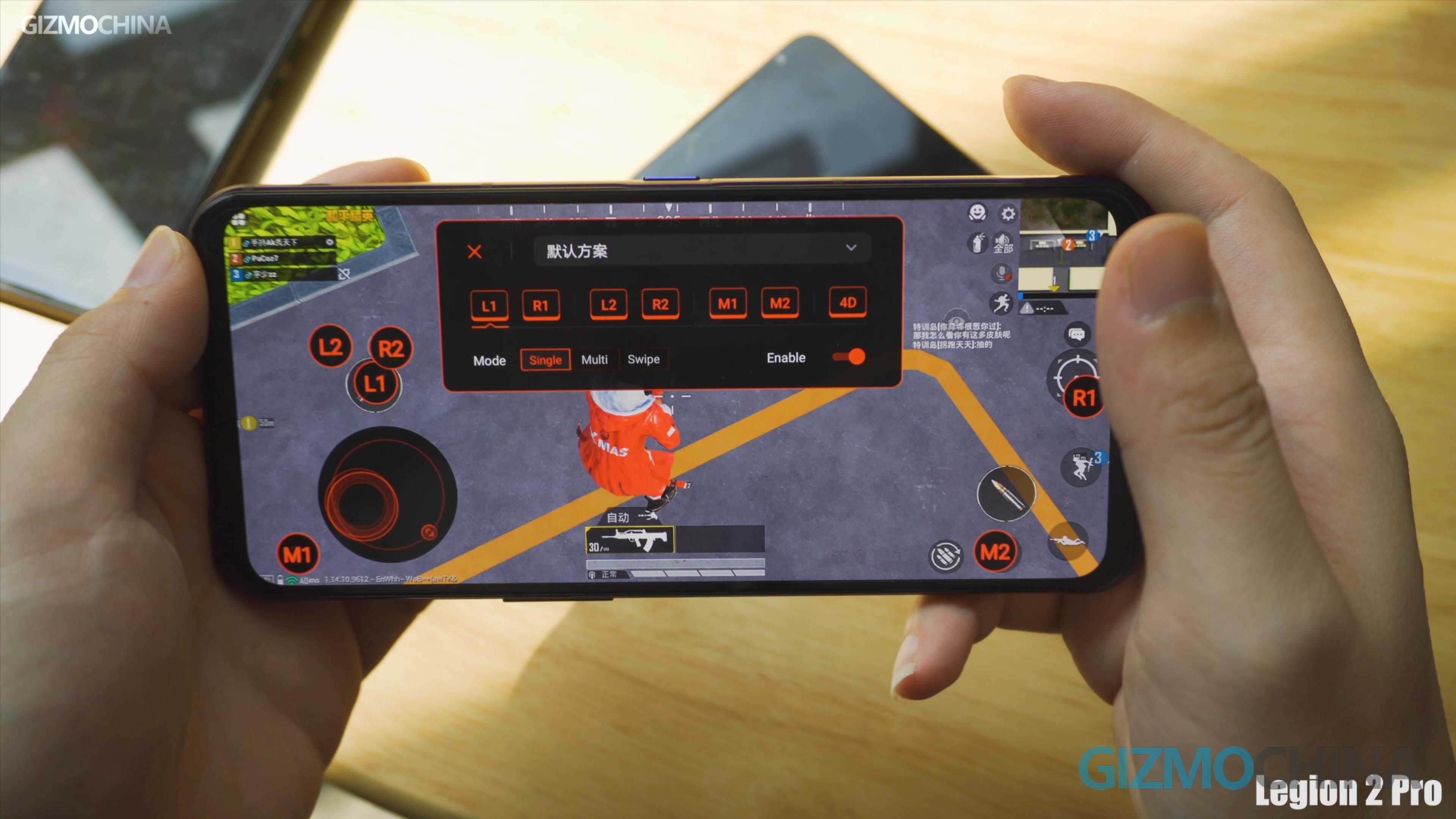
For the ROG phone, the operation can be much more complicated as each button can be separated into two buttons and support slide actions. Users not only can slide to trigger buttons but also can use them to simulate horizontal or vertical slide actions, which really requires a lot of practice. But most gamers wouldn’t even try these unusual options while gaming.
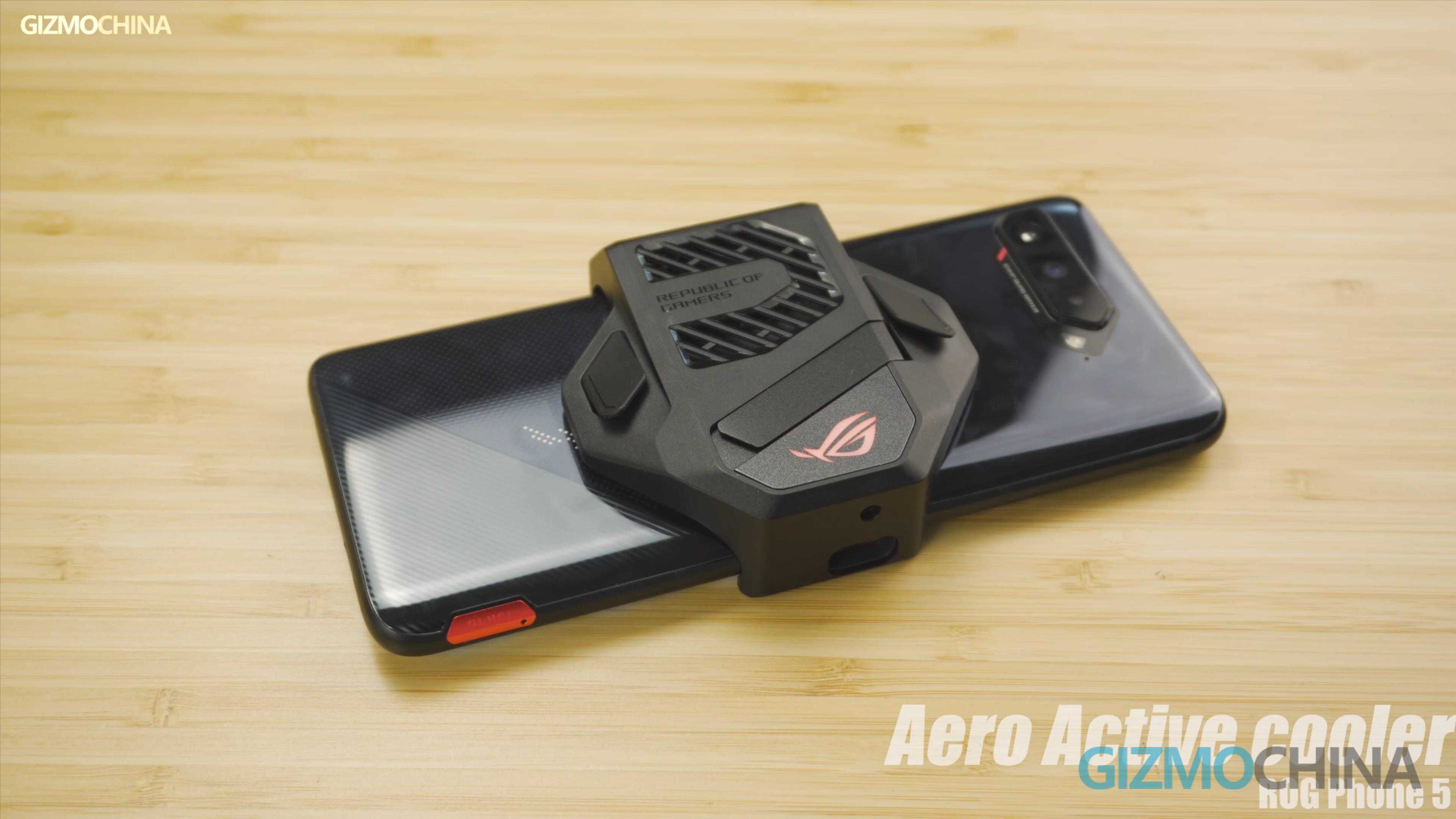
If you are still not satisfied with the shoulder buttons, well, don’t worry about it. ROG further adds two more physical triggers on their official cooling accessory, the latest Aero Active cooler. So literally with the cooling fan, it supports gaming operation with up to 6 off-screen buttons.
Well for the Legion 2 Pro, the situation is crazier. This monster phone just supports 2 press-sensing areas and 6 built-in extra-buttons for gaming operation, including 4 separated shoulder buttons and two slide buttons on the back. However, it’s not easy for gamers to have a comfortable grip while using all the buttons. And it’s really easy to register mistouches with these buttons, or sometimes you may even be confused by the less sensitive slide buttons at the back. So it’s hard to say whether this over implementation of buttons is a successful solution on a mobile product. But if you only activate the basic 2 shoulder buttons, the whole gaming operation would be much more delightful as they have fast response. And the grip feeling is the best among the five models due to the thoughtful position for placing your little fingers.
To conclude, in the gaming operation department, our rating could be somewhat subjective since operation experience varies from person to person. Anyway, we’ll give 5 out of 5 points to the Blackshark 4, 4.5 to the RedMagic 6, 4 to the ROG phone and the Legion phone, and 3.5 to the Redmi K40 Gaming edition.
ROG 5 vs Legion 2 Pro vs Blackshark 4 vs Redmi K40 Gaming vs Redmagic 6: Best Gaming Software
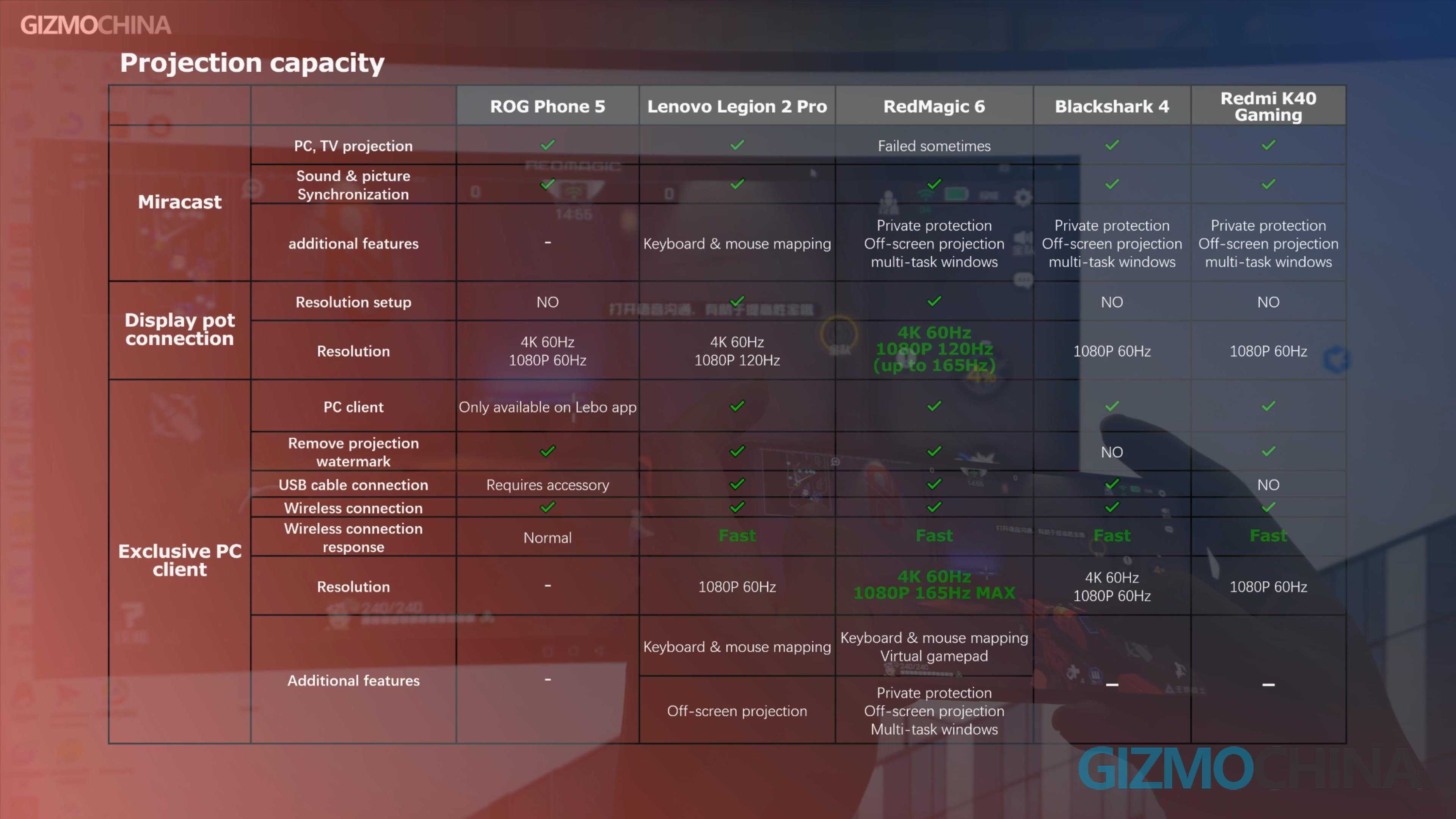
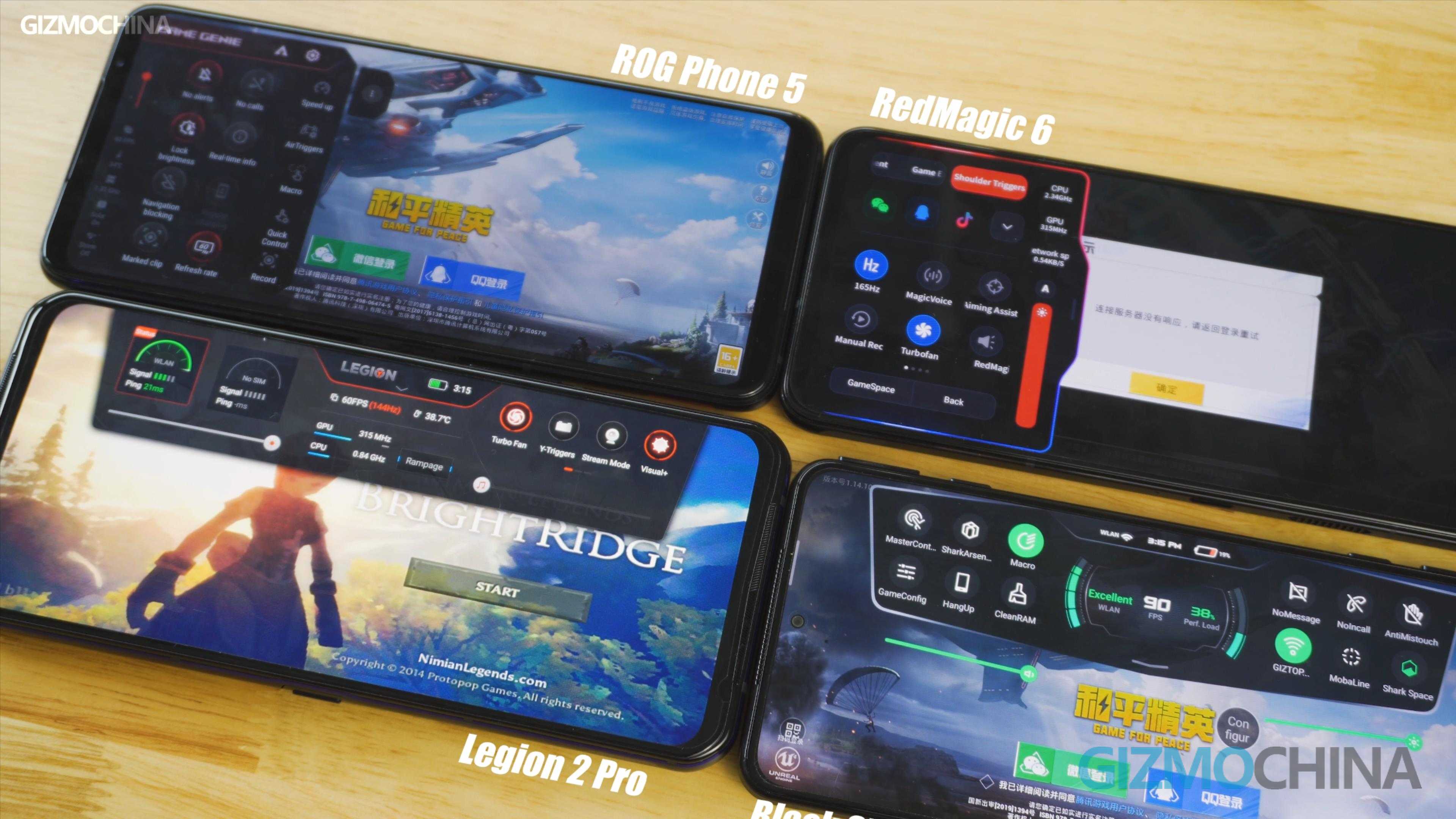
All these gaming models have their own software for gameplay. Except for the Redmi model, gamers are able to access higher chipset performance and most game-related shortcuts with their dedicated game assistant. It seems that Redmi didn’t really prepare well when it comes to the in-game software for their first gaming phone. So the built-in Game Turbo looks pretty simple with just several shortcuts. There’s no option for performance adjustment, neither projection options. But gamers can still directly project the game or the phone screen to a TV or a PC through Miracast on all these five models.
Well, the best model for projection is the Redmagic 6. Compared to others, projection on the Redmagic 6 has better compatibility with higher image quality. For example, you can choose wired projection through a direct connection with a monitor or USB connection with the Redmagic Studio on a PC.
Another model that supports high-refresh-rate projection is the Legion 2 Pro, it supports wired projection at 1080P and up to 120Hz.
Furthermore, you can also turn the Redmagic 6 into a virtual gamepad during Projection.
For more details, you can just check the table here. But please note that the Redmi K40 Gaming edition didn’t really optimize its projection capacity. Over game-related software, it really is no different from a regular phone.
So in this department, we’d like to give 1 point to the Redmi model, 3 points to the Blackshark 4, 4 points to the ROG phone and the Legion Phone respectively, and 5 points to the RedMagic 6.
ROG 5 vs Legion 2 Pro vs Blackshark 4 vs Redmi K40 Gaming vs Redmagic 6: Best Performance
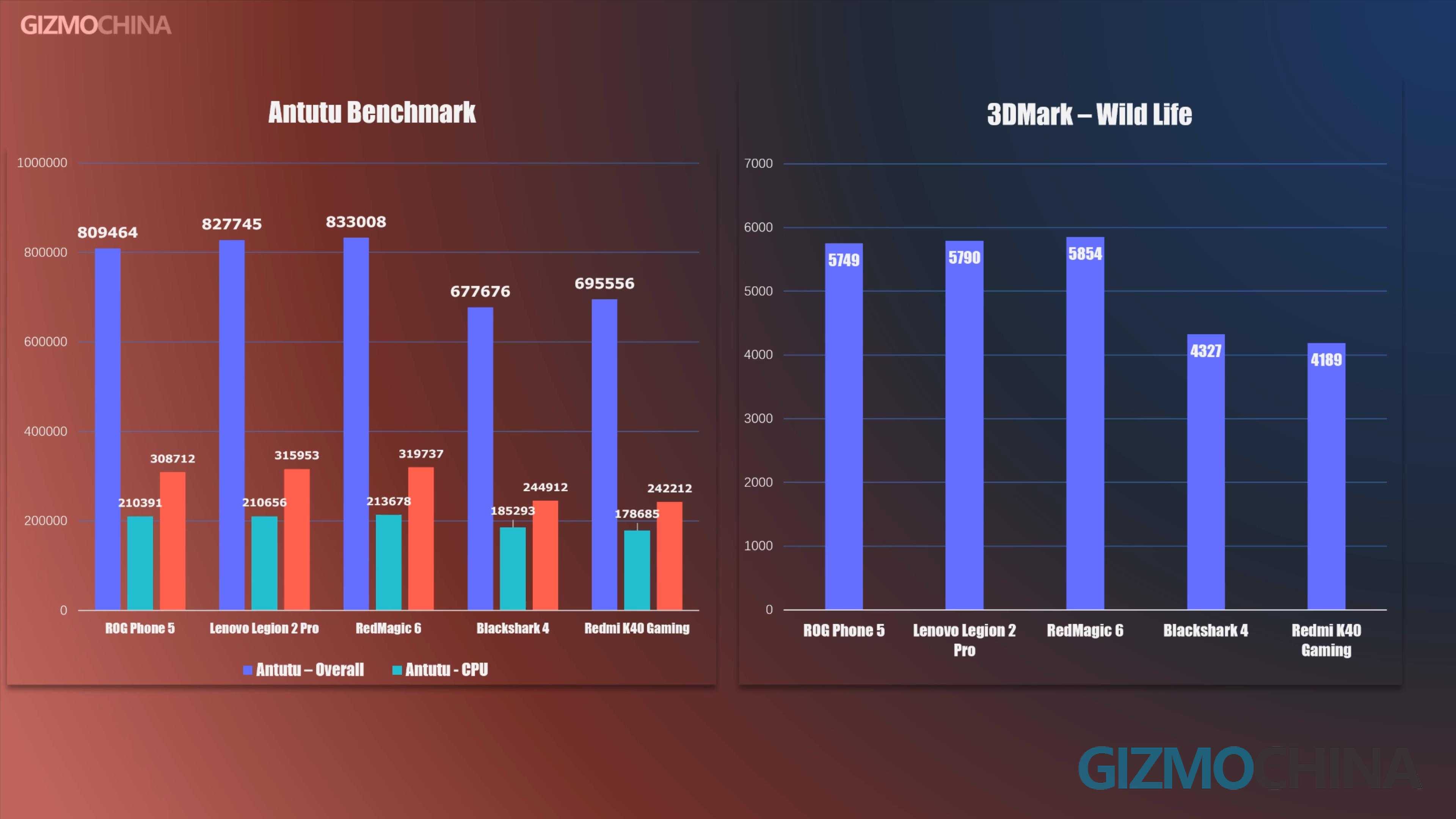
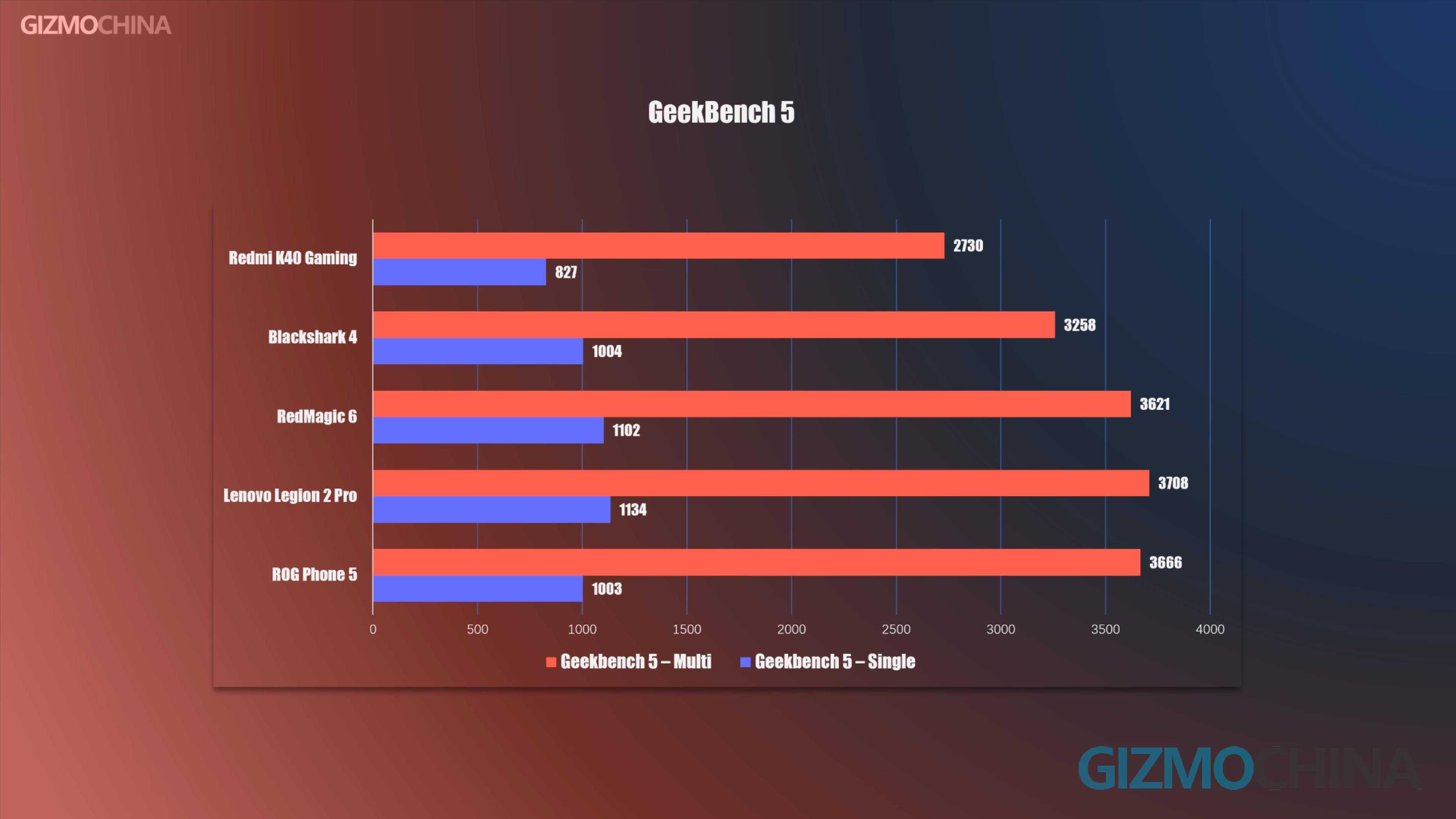
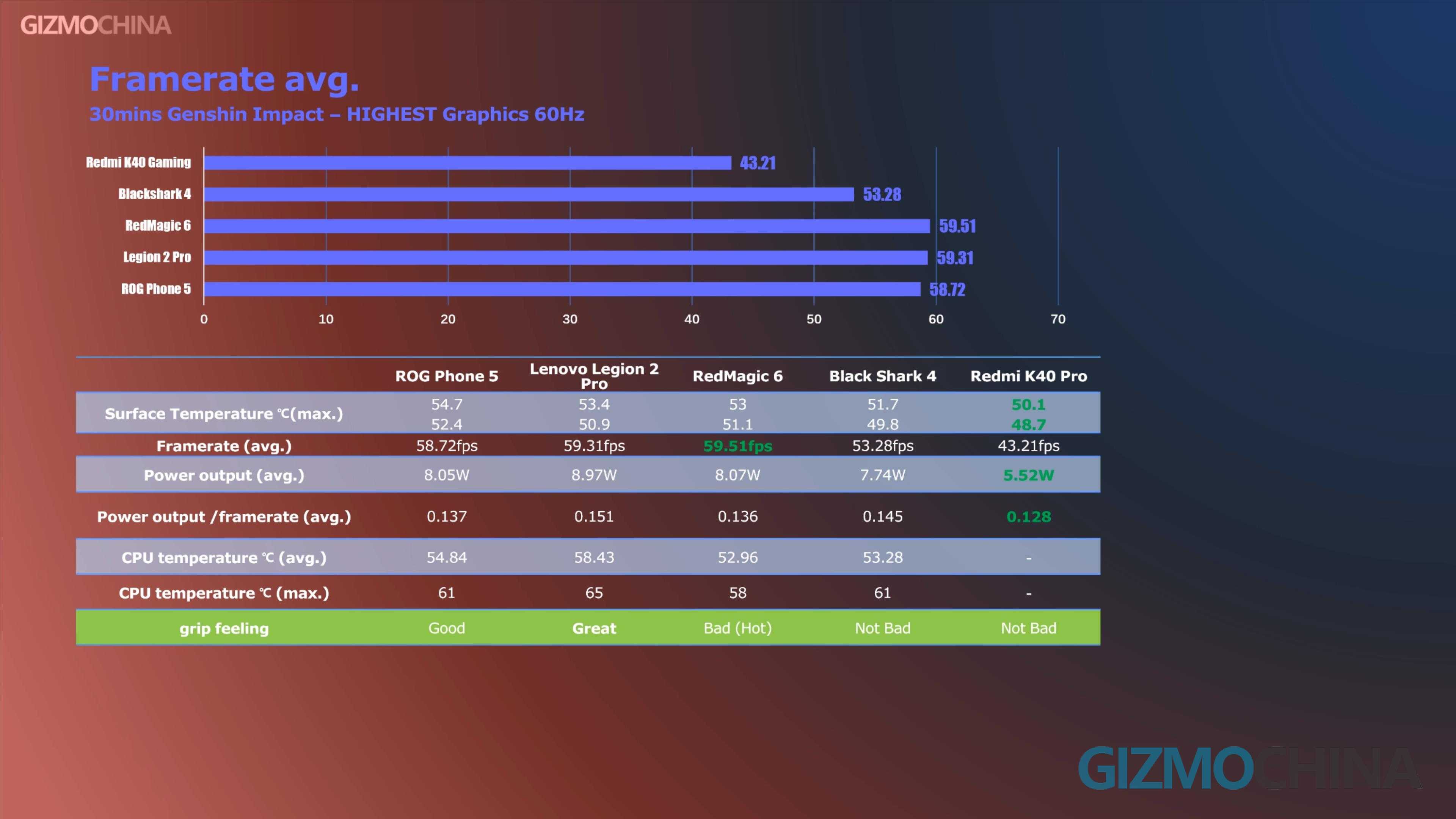
The performance comparison probably is the most boring part of this comparison, since we already knew that the Snapdragon 888 chipset was gonna win the race. Anyway, let’s take a look at their benchmark performances. Unsurprisingly the three models running the 888 chipset dominate the race and didn’t really show significant gaps, but here we still want to remind you that this can be partially attributed to the excellent thermal design of these three gaming phones. About their specific thermal performance, we will show you more details later. The Blackshark 4 and the Redmi model is at another level, and the Blackshark 4 seems to have slightly better performance than the Redmi K40 Gaming edition.
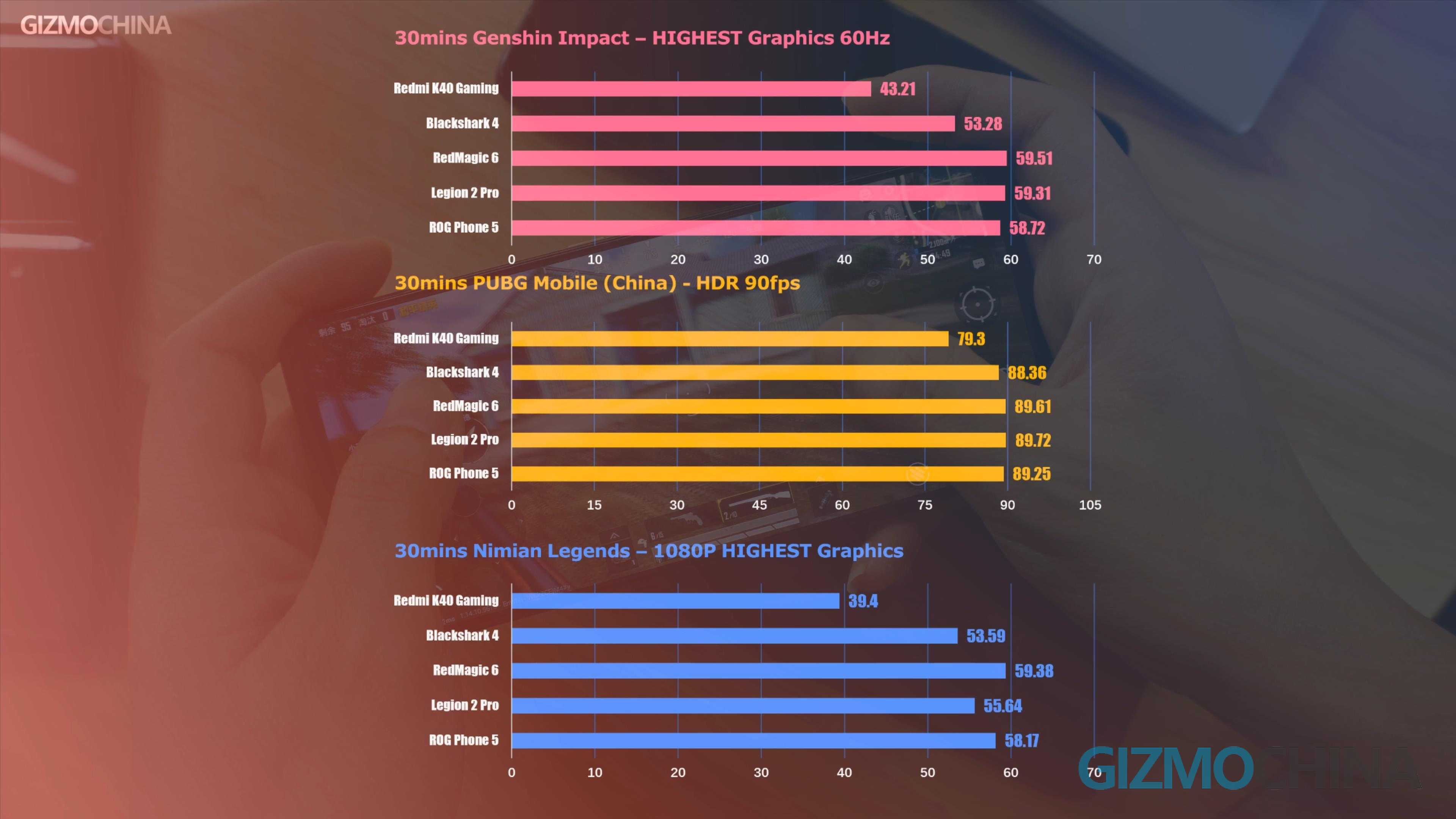
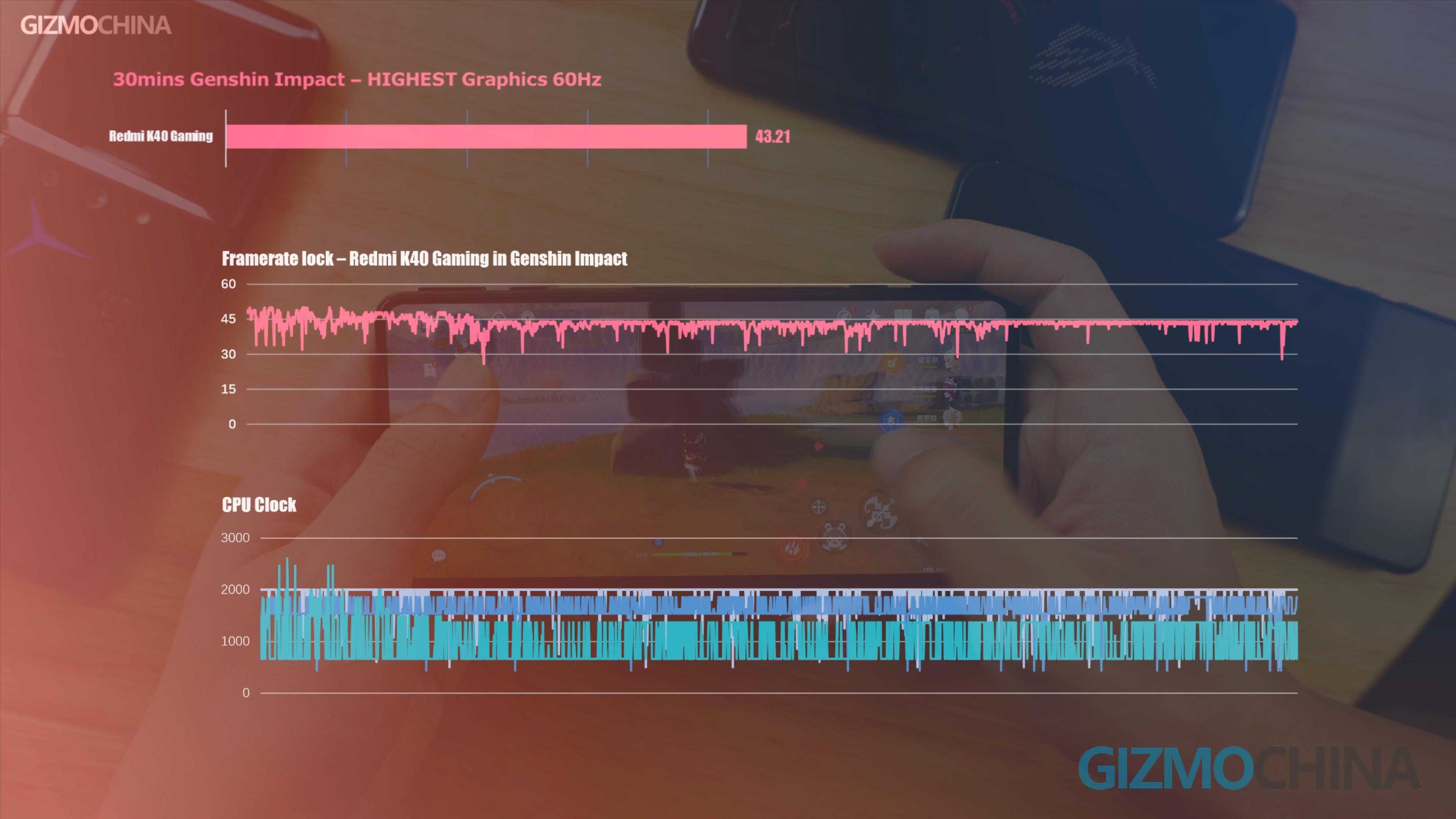
In our actual gaming test, from the framerate results, we cannot exactly pinpoint which model powered by the 888 chipset won the competition. They all achieved almost the best frame rate results in the three games. In PUBG mobile, the best result were achieved by the Legion phone, while in Nimian legends and Genshin Impact, the Redmagic 6 won. If I have to pick up the model that has the most stable performance, we will give the title to the Redmagic 6. However, the biggest surprise is the Blackshark 4 powered by the 870 chipset, which didn’t lag much behind, while in the last place, unsurprisingly, was the Redmi K40 Gaming edition. However, what really disappointed us was the Redmi model’s performance in Genshin Impact. It’s ridiculous for a gaming phone to lock the framerate to 50fps in a popular game, and even throttle down at 45fps. But in our early review video of the Redmi K40 gaming model, you could find that the phone at that time didn’t lock the framerate in its early software version. But now considering its high power consumption and thermal issue, Redmi eventually used a more conservative CPU strategy in the latest update.
So for this round, we will give 5 points to the three 888 models, 4 points to the blackshark 4, and a 2 to the Redmi K40 Gaming.
Gaming Smartphones of 2021: Best Thermal Design
In Genshin Impact, it’s unsurprising that the Redmi K40 Gaming with locking framerate achieved the best results in heating control and power consumption. And the Blackshark 4 results are slightly better than the other three models. Although the three 888 models applied excellent thermal designs to maintain high performance output, the heating issue still existed. Well thanks to the three-part internal design, actually the ROG Phone and the Legion phone didn’t feel so hot when we were holding it during gameplay.
However, unlike the ROG Phone and the Legion phone, the Redmagic 6 didn’t guarantee a comfortable holding experience while applying an aggressive CPU strategy. In the last few minutes, it was too hot to hold the phone firmly.
So when it comes to thermal design and holding experience, we’d like to give 5 points to the Legion Phone, 4 to the ROG Phone, 3 points to the Blackshark 4 and the Redmi model respectively, and the last place, 2 points to the Redmagic 6.
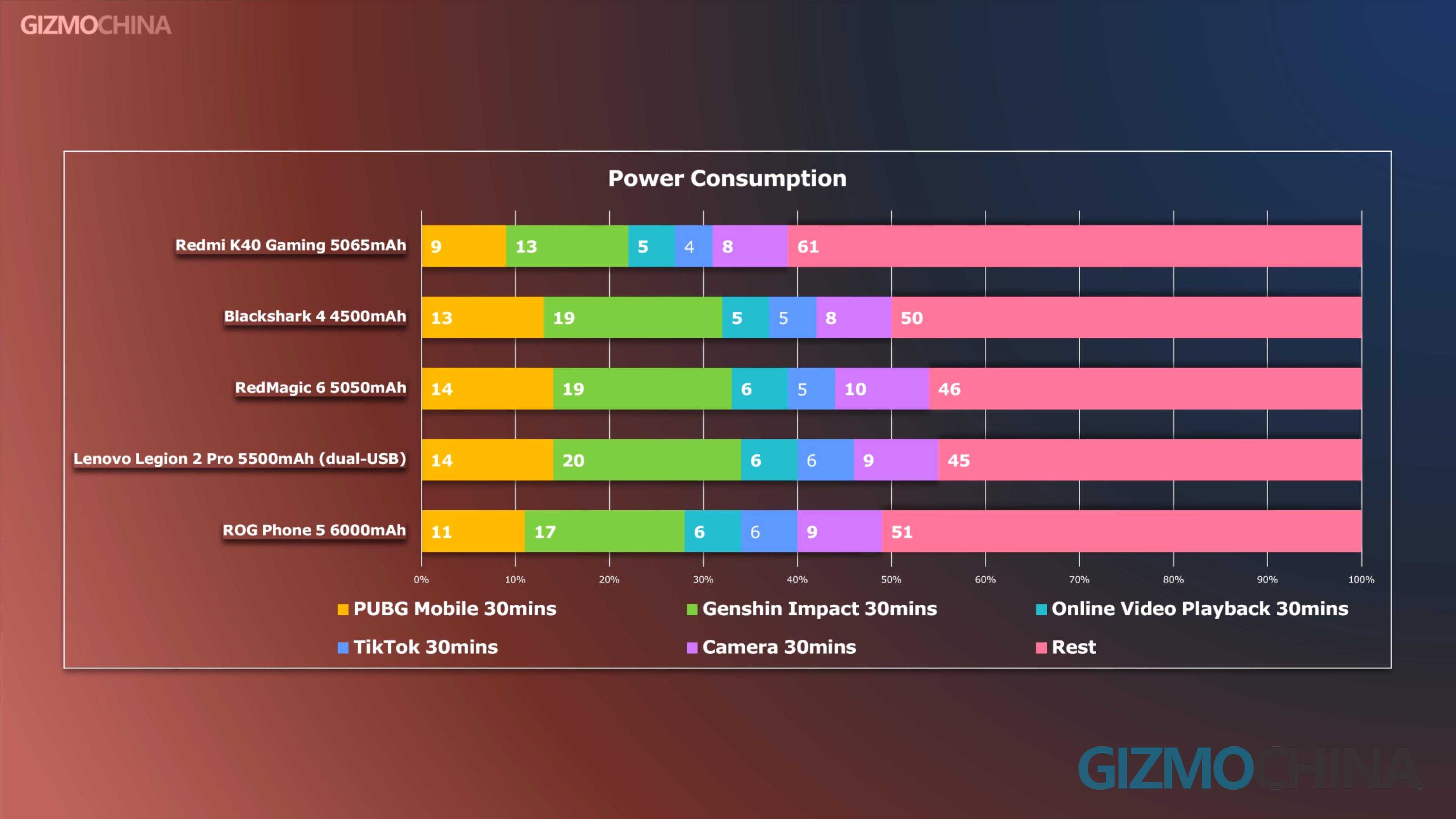
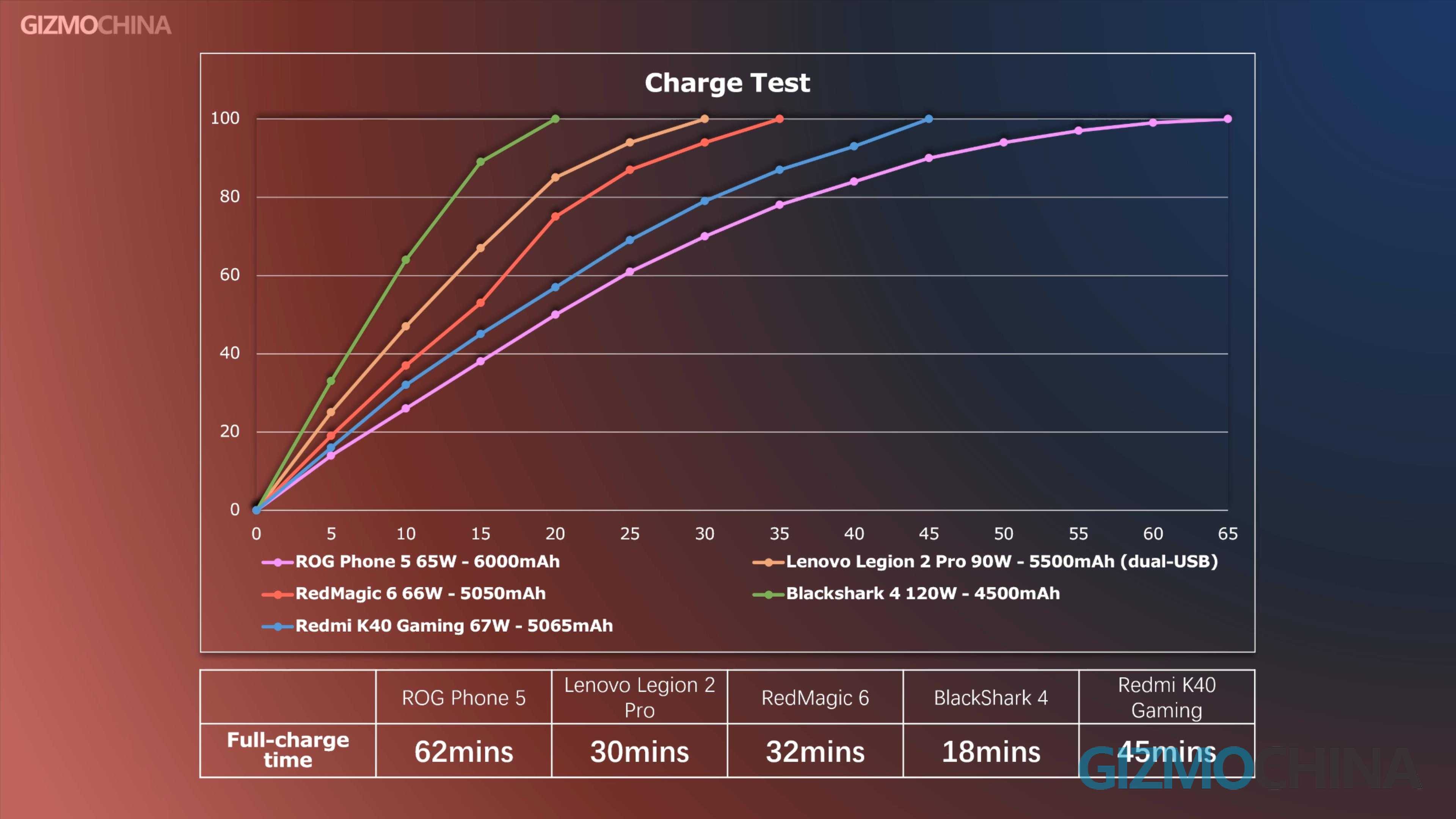
Gaming Smartphones of 2021: Best Battery Life & Charging
As for their charging and battery performance, we don’t want to waste your time, so just check the table and the charts below.
Now we are close to the final conclusion. Before showing our conclusion, we want to invite you guys to leave your thoughts down below and tell us which one is the best gaming phone in 2021 according to you.
Okay, no further talk – let’s get to the final conclusion!
Best Gaming Phones Battery Comparison 2021: Who’s the Winner?
The title of best 2021 gaming phone still goes to a phone with a traditional strategy, the ROG Phone 5! Actually the phone didn’t dominate every part of this comparison. However, it’s hard to deny that it’s the most stable gaming phone in 2021. Although the Legion 2 Pro is getting close to the first place, we still got a strange feeling about the phone. Because the Legion phone is so special it may not please every gamer. To be honest, the Redmagic 6, somehow is my favorite gaming phone mainly for its powerful projection capacity.
However, the Blackshark 4 was a real surprise. It’s one of the cheapest gaming phones that you can buy among the ones we compared today. But as a gaming device, its performance lags behind others. And sorry to tell you guys that the most disappointing model was the Redmi K40 Gaming edition. We were really looking forward to the first Redmi gaming model and hoped it could bring new energy to the gaming market, but it turns out, the phone has an obvious gap with the other four models.
Anyway, that’s it for today! We hope this best gaming phone 2021 comparison helped you to identify which is the ideal model for you.
Since you’ve read till the very end, here’s a teaser for you — Our Best Camera Flagships of 2021 video and article will soon be up, so stay tuned for that. The results from our camera tests turned out to be very interesting!
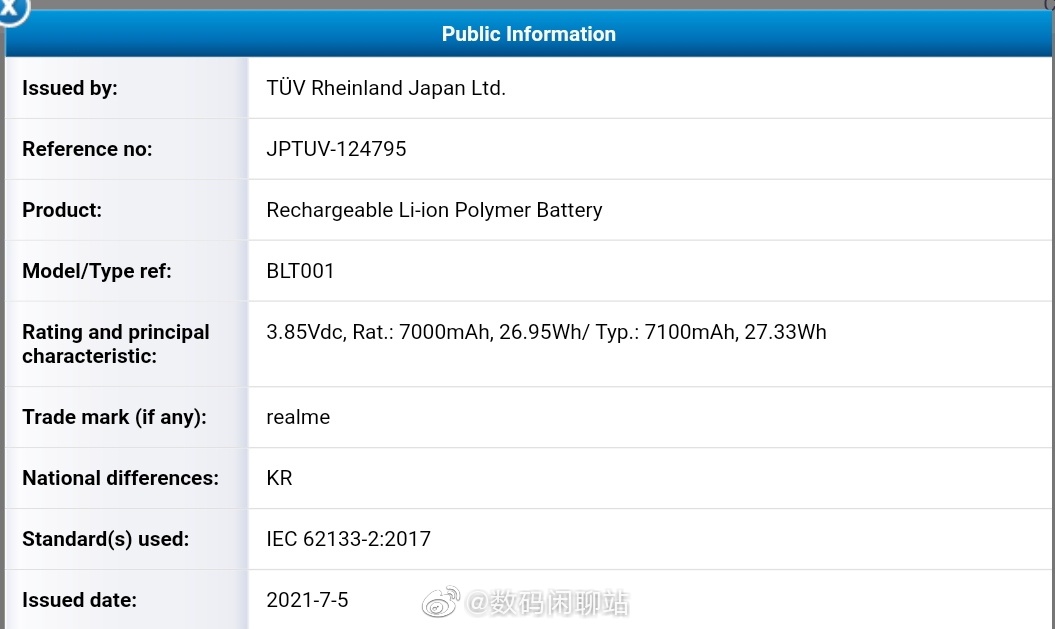
It is no longer news that Realme plans to announce its first tablet this year. The device, which will arrive as the Realme Pad, has no release date yet, but details of the upcoming device have begun surfacing.
The Realme Pad will pack a 7100mAh battery capacity according to a TUV Rheinland certificate that has appeared online. The battery capacity is smaller than what you will find inside Lenovo’s Xiaoxin Pad Plus (7700mAh) and Xiaoxin Pad Pro 2021 (8600mAh) tablets.
Image source: Digital Chat Station (Weibo)
Unfortunately, we do not know at what speed it will charge, although we expect it to support at least 18W fast charging.
The Realme Pad is expected to have a metal build as seen in an official teaser image as well as live photos. It has also been shown to have a single camera and should have a display not less than 10-inches in size.
The Redmi Note 10T 5G is coming to India and it has got a release date now. While the mid-range phone will be launching as the first Redmi-branded 5G phone in the country, it is already sold in India under a different name (and slightly different design) – the POCO M3 Pro 5G.
A short video uploaded by the Redmi India YouTube channel has revealed that the Redmi Note 10T 5G will launch on Tuesday, July 20. There is also an event page on the official website that teases some of its features.
The Redmi Note 10T 5G arrives as the successor to the Redmi Note 9T 5G which launched in Europe early this year. However, while Xiaomi didn’t bring the Redmi Note 9T 5G to India, it is offering the successor under the Redmi brand as well as its POCO brand in the region.
The Redmi Note 10T 5G, which is sold in Europe and China as the Redmi Note 10 5G, has a 6.5-inch FHD+ display with a 90Hz dynamic refresh rate and a centered punch hole. It is powered by the Dimensity 700 processor and should be available with up to 8GB of RAM and 256GB of storage.
The phone has 48MP + 2MP + 2MP rear cameras and an 8MP front-facing camera. There is a 5000mAh battery under the hood along with support for 18W fast charging. It also has a side-mounted fingerprint scanner, AI face unlock, dual 5G SIM support, Bluetooth 5.1, and an audio jack. It will run Android 11 out of the box.
Samsung unveiled the 3GAE (3nm Gate-All-Around Early) and 3GAP (3nm Gate-All-Around Plus) nodes in May 2019, promising that chips produced through these new technologies could yield a substantial reduction in power consumption and enhancements in overall performance. A 35% performance jump was projected, in addition to a 50% reduction in power consumption when compared with the existing 7LPP nodes technique.
Together with a raft of other methods, these processes were outlined by the chipmaking arm of Samsung – Samsung Foundry in 2021. It was part of its technological roadmap, with high-volume production of chips through the process scheduled for commencement in 2021. However, several challenges have been encountered in the chipmaking market, with the coronavirus pandemic playing a major role in the shift in expectations and targets.
Samsung Foundry has now made changes to its 3nm process nodes, stating that the first 3GAE chips will be mass-produced within its facilities from next year. It seems, however, that the 3GAE chips have been removed from the company’s roadmap outlined during the Foundry 2021 event, held in China. This could mean that Samsung will be producing the product for internal use by Samsung smartphones only. The successor chips to the 3GAE are the 3GAP models, which could commence high-volume production in Samsung Foundry by 2023. The Samsung Roadmap also provides timelines for several other chip technologies like the 5LPP and 4LPP, which are slated for 2021 and 2022 high-volume production, respectively.
Samsung Foundry is the second-largest smartphone chip-maker after TSMC. It is an independent arm of Samsung and continues to provide critical supplies that have made Samsung sufficiently weather the global chip shortage without significantly affecting its overall outlook. It had been reported previously that Samsung was skipping the 4nm process, with a focus on the 3nm process. While the current chips adorning Samsung’s latest flagship offerings is built on the 5nm-process, the 3nm chips will be smaller, more powerful, and more efficient.
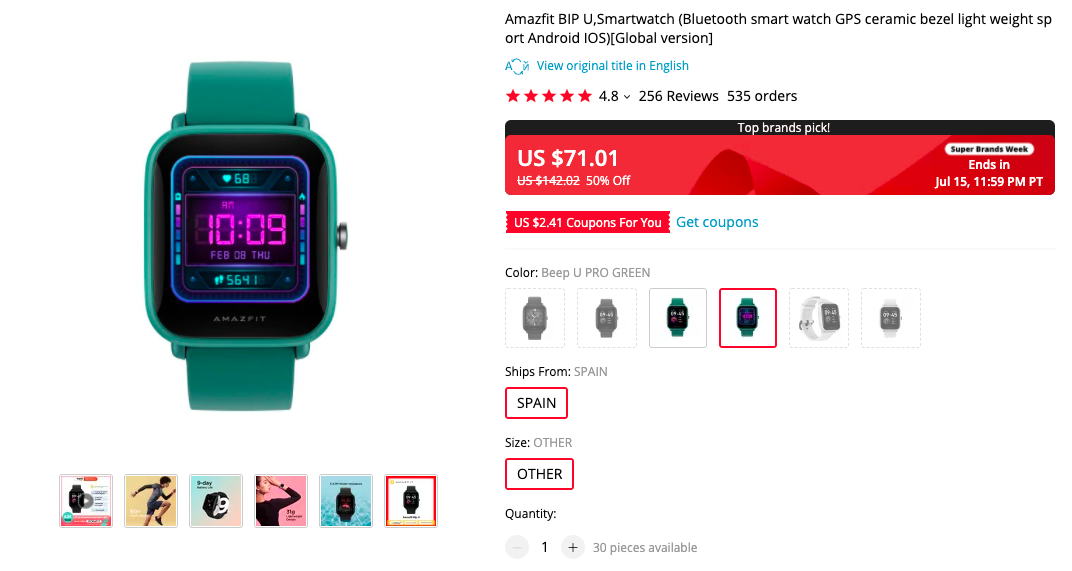
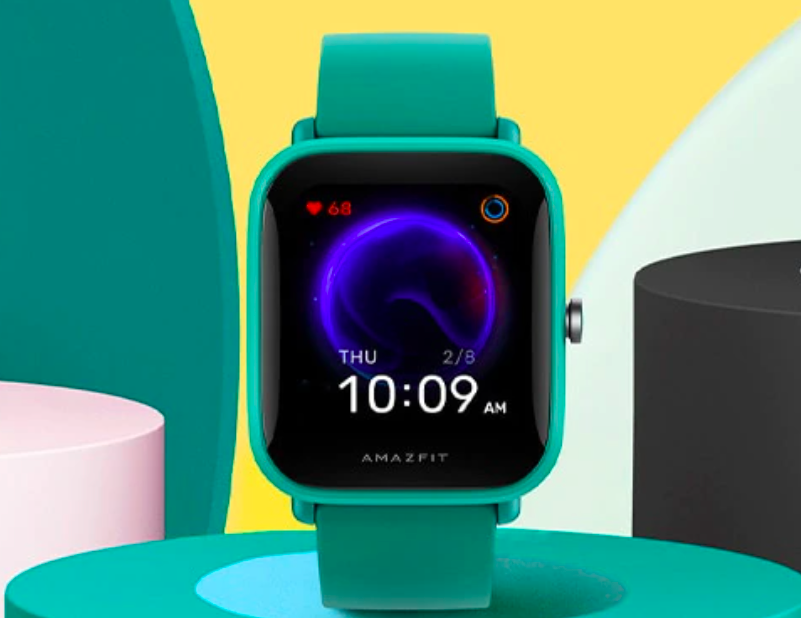
Amazfit BIP U Pro smartwatch features a 1.4” color display with 50 plus different watch faces to choose from. The smartwatch also supports animated watch faces and customized pictures allowing you to make your own unique watch face.
The smartwatch weighs just 31g making it super comfortable to wear all day long and features 60 plus sports modes to track your exercise and other activities. To manage your health and fitness, the smartwatch comes with a PAI health assessment system and Blood Oxygen monitor, Stress tracker, Sleep tracker, Menstrual cycle tracker, etc. Moreover, with a 5 ATM water resistance certification, you can easily wear Amazfit BIP U Pro for swimming and other pool activities.
Compatible with Alexa Voice Assistant, Amazfit BIP U Pro gives you 9 days of battery life on one single charge. You can now buy Amazfit BIP U Pro for $71.01 only at AliExpress. Please note that this deal is applicable only to the green color variant. You can also get the Amazfit BIP U Smartwatch (Not Pro), Green color variant for $58.98 only. So make sure to check the variant and model before you place the order.
For more information on such exciting deals and offers check out ourdeals hub.
* Please Note: When you buy something using the links in our articles, we may earn a small commission at no cost to you.
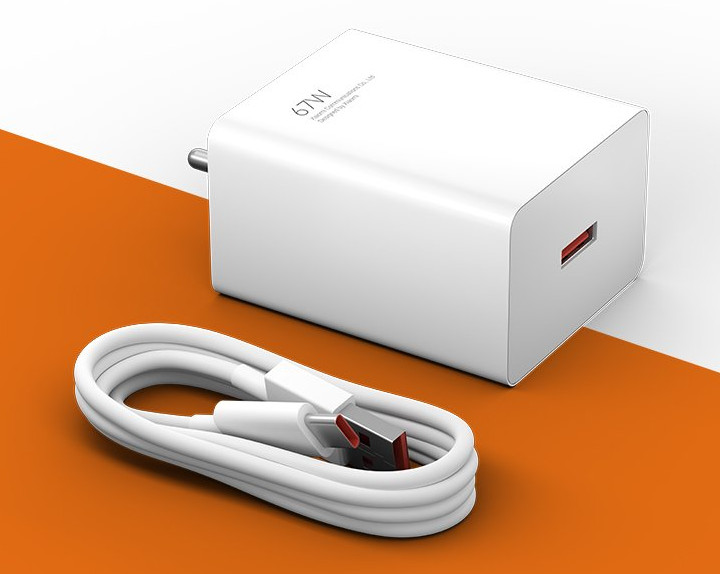
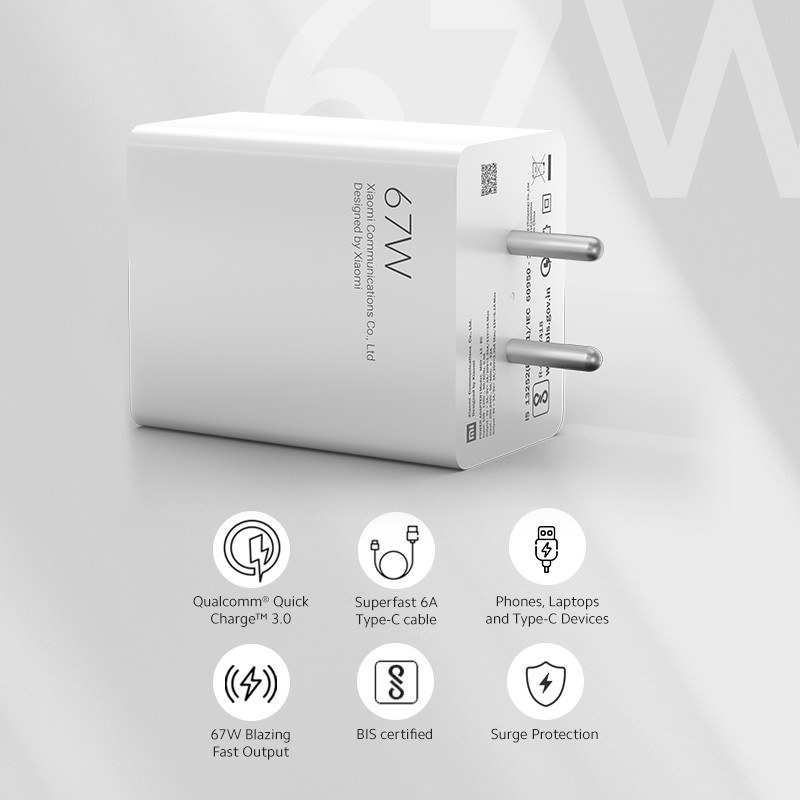
Chinese tech giant Xiaomi recently announced that it will be launching a new charger in India. The tech giant has now taken the wraps off the Mi 67W SonicCharge 3.0 Charger in India. The product will retail for Rs. 1999 (~$27) and is already available on Mi.com as well as Mi Home store. The charger is bundled with a 6A Type-C cable.
The new Mi 67W SonicCharge 3.0 Charger features the Qualcomm Quick Charge 3.0 certification and among Xiaomi’s lineup in India, only the Mi 11 Ultra is supported since it comes with a 55W charger in the box. Recall that Xiaomi bundled a 67W with the Mi 11 Ultra in other regions but only included a 55W-rated charger in India.
The new charger can fire up the sleek Mi 11 Ultra’s 5000mAh battery from 0 to 100% in just 36 minutes. This is slightly faster than what is obtainable from the 65W chargers offered by OPPO, Realme, and OnePlus.
In addition, the Mi 67W charger can be used to charge other accessories such as headphones, Smart Band as well as other smartphones, and laptops. Unfortunately, there is no USB-C port to charge PD devices. It features just a single USB-A port that outputs 15W, 27W, 33W, and 67W power. It equally comes with severe protective features including Surge protection and is BIS certified.
Just like other Mi accessories, Xiaomi offers 6 months warranty on the new charger.
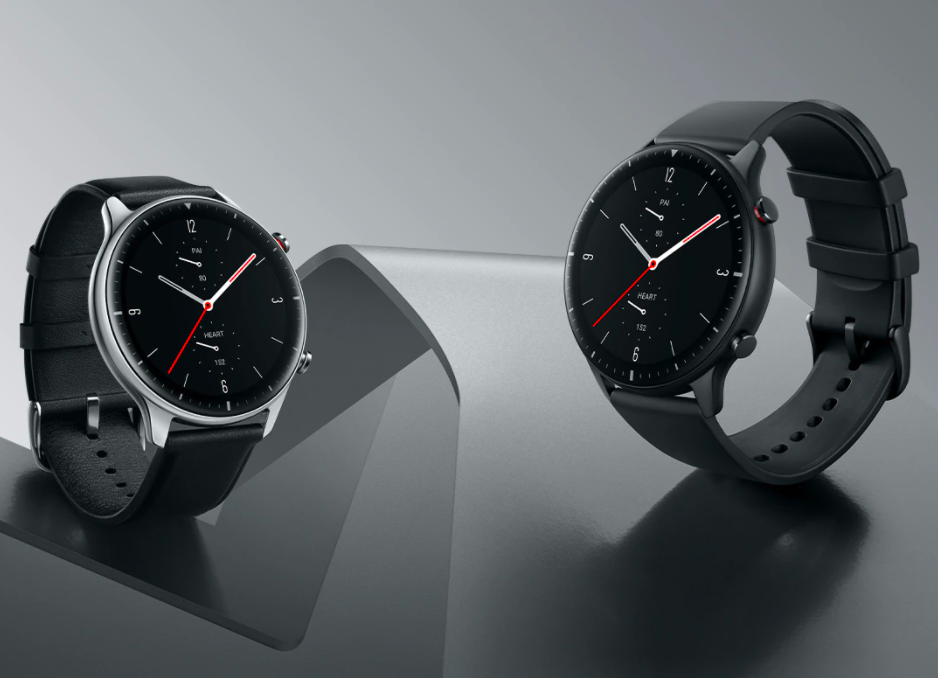
Amazfit GTR 2 Smartwatch features a 1.39” HD Color AMOLED display encased in a beautiful 3D bezel-less design. The curved glass is seamlessly integrated into the stainless steel watch body giving you an aesthetically pleasing watch design. The smartwatch comes with the ‘Always On Display’ feature and multiple watch faces.
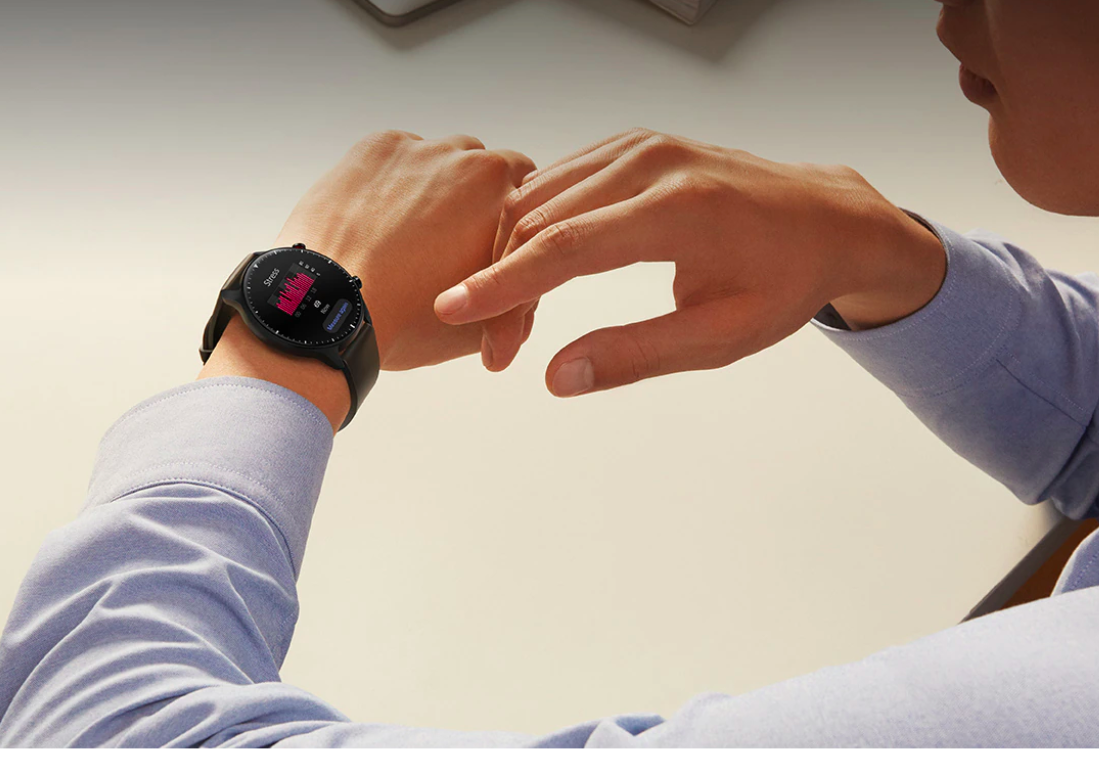
To manage your health and fitness the watch comes with a 24-hour heart rate monitor, PAI Health Assessment System, Sleep Tracker, Stress monitor, etc. It has 12 built-in sports modes with specific data reports for improved performance.
The smartwatch is fitted with a 471mAh battery and gives you 14 days of battery life on typical usage and 38 days with basic usage. The 5ATM water-resistant smartwatch comes with music storage and a Bluetooth call function.
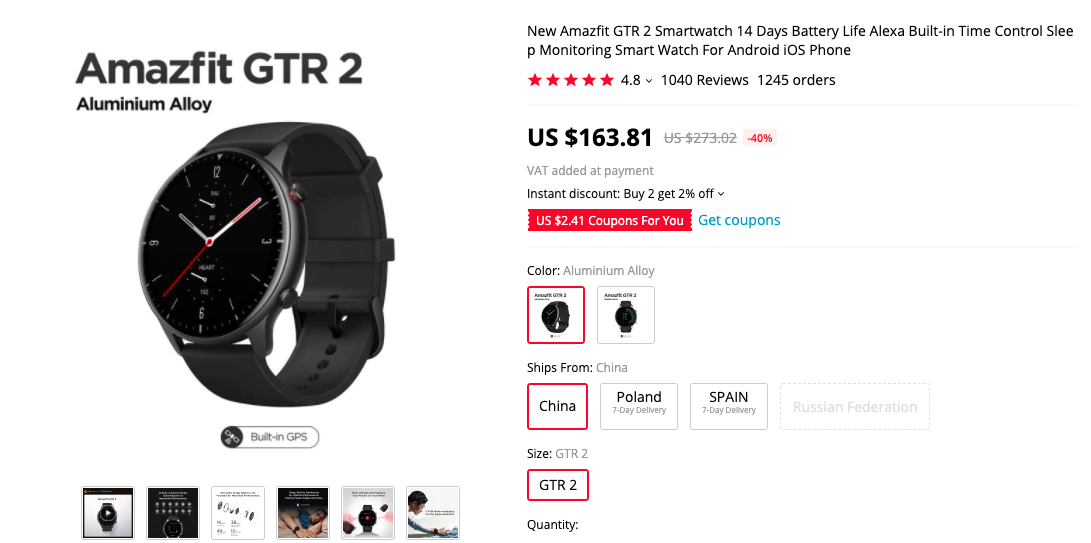
You can now buy Amazfit GTR 2 Smartwatch at a discounted price of $163.81 only at AliExpress. Please note that this price is applicable to the aluminum alloy body variant only. However, you can buy the stainless steel body variant for $183.10. This is a limited stock offer. So place your order asap.
For more information on such exciting deals and offers check out ourdeals hub.
* Please Note: When you buy something using the links in our articles, we may earn a small commission at no cost to you.
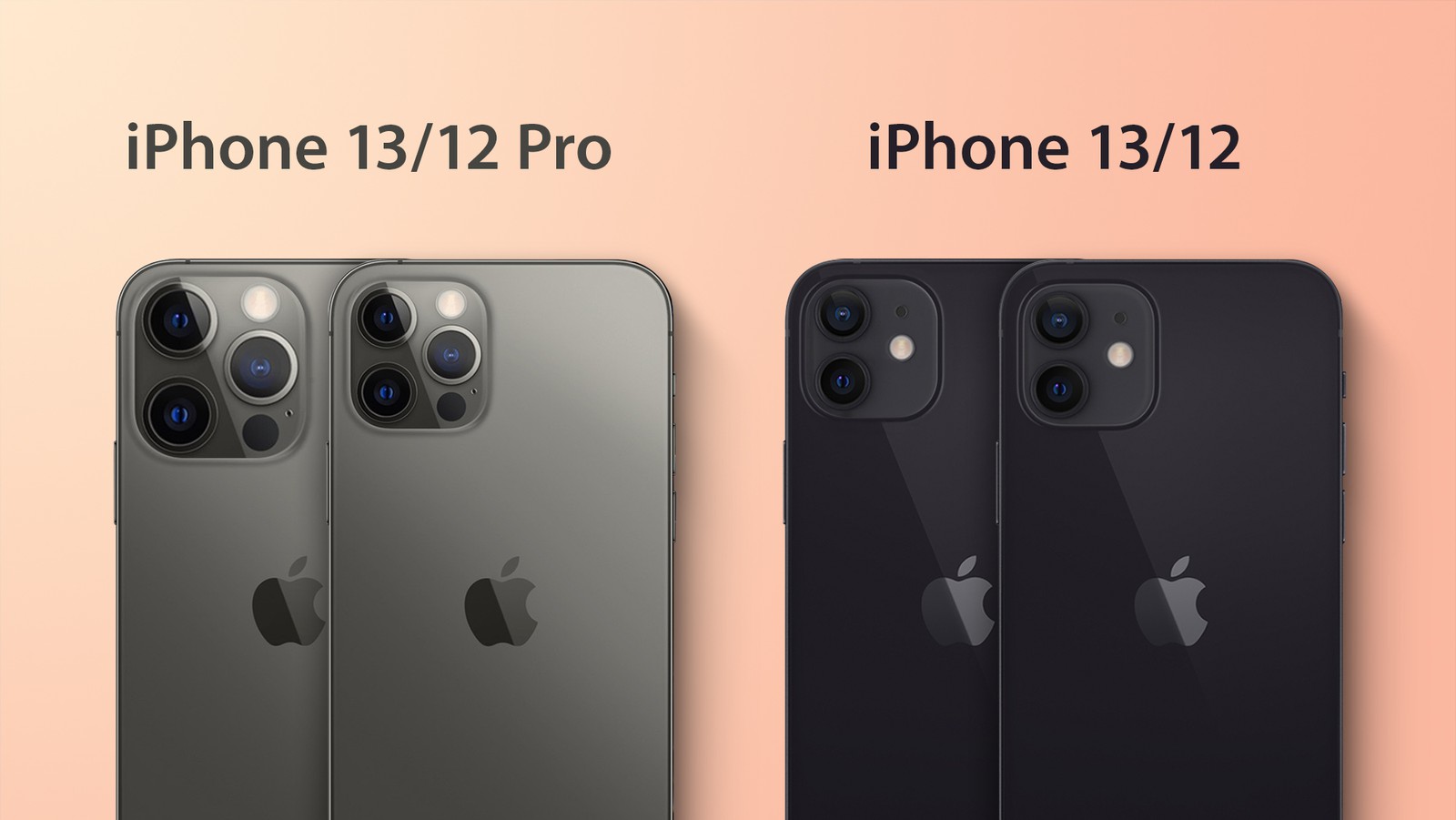
Another tipster has just shared news of the upcoming Apple iPhone 13 series. Although, rather than leaking new information, the leaker has basically corroborated reports from the past regarding the iPhone 13 Pro featuring a LiDAR sensor.
LiDAR will only be coming to the pro iPhone models. Earlier this year it seemed Apple wanted to release all iPhone 13/12S models with LiDAR but due to one reason or another, it won’t be happening this year.
According to a tweet from @dylandkt, the high end models within the series, which is the iPhone 13 Pro lineup, will exclusively feature the new LiDAR sensor on the back. The tipster further added that the Cupertino based giant had initially aimed at including the sensor across the entire 2021 iPhone lineup, which was also previously rumored. However, the brand had to skip this feature for the lower end models due to certain unknown reasons.
In other words, the iPhone 13 Mini and base iPhone 13 could’ve also featured LiDAR technology as well. But now, only the iPhone 13 Pro and iPhone 13 Pro Max would have the additional sensor on the rear. Notably, the tipster has been correct with certain predictions regarding upcoming Apple products in the past. For those unaware, LiDAR scanner was first introduced by the iPhone maker back in 2020 with the iPad Pro and then arrived in the iPhone 12 Pro and iPhone 12 Pro Max.
This technology uses Time of Flight systems to measure the distance between the sensor and the object so that the camera can measure the distance precisely. The company has also applied this technology to enhance its AR experience primarily and also uses it in its Night Mode to improve image results as well. So stay tuned for more updates.
We use cookies on our website to give you the most relevant experience by remembering your preferences and repeat visits. By clicking “Accept”, you consent to the use of ALL the cookies.
This website uses cookies to improve your experience while you navigate through the website. Out of these, the cookies that are categorized as necessary are stored on your browser as they are essential for the working of basic functionalities of the website. We also use third-party cookies that help us analyze and understand how you use this website. These cookies will be stored in your browser only with your consent. You also have the option to opt-out of these cookies. But opting out of some of these cookies may affect your browsing experience.
Necessary cookies are absolutely essential for the website to function properly. This category only includes cookies that ensures basic functionalities and security features of the website. These cookies do not store any personal information.
Any cookies that may not be particularly necessary for the website to function and is used specifically to collect user personal data via analytics, ads, other embedded contents are termed as non-necessary cookies. It is mandatory to procure user consent prior to running these cookies on your website.