Advertisement

Realme Q3 Pro Carnival now available offline in 12GB variant with 7GB RAM expansion support

Earlier today (29th June 2021), a tipster on Weibo, a Chinese microblogging website, shared news regarding certain local smartphone makers introducing their own virtual storage expansion technology, which includes Xiaomi, Honor, Oppo, Realme, and others.

realme Q3 Pro Carnival Edition colors


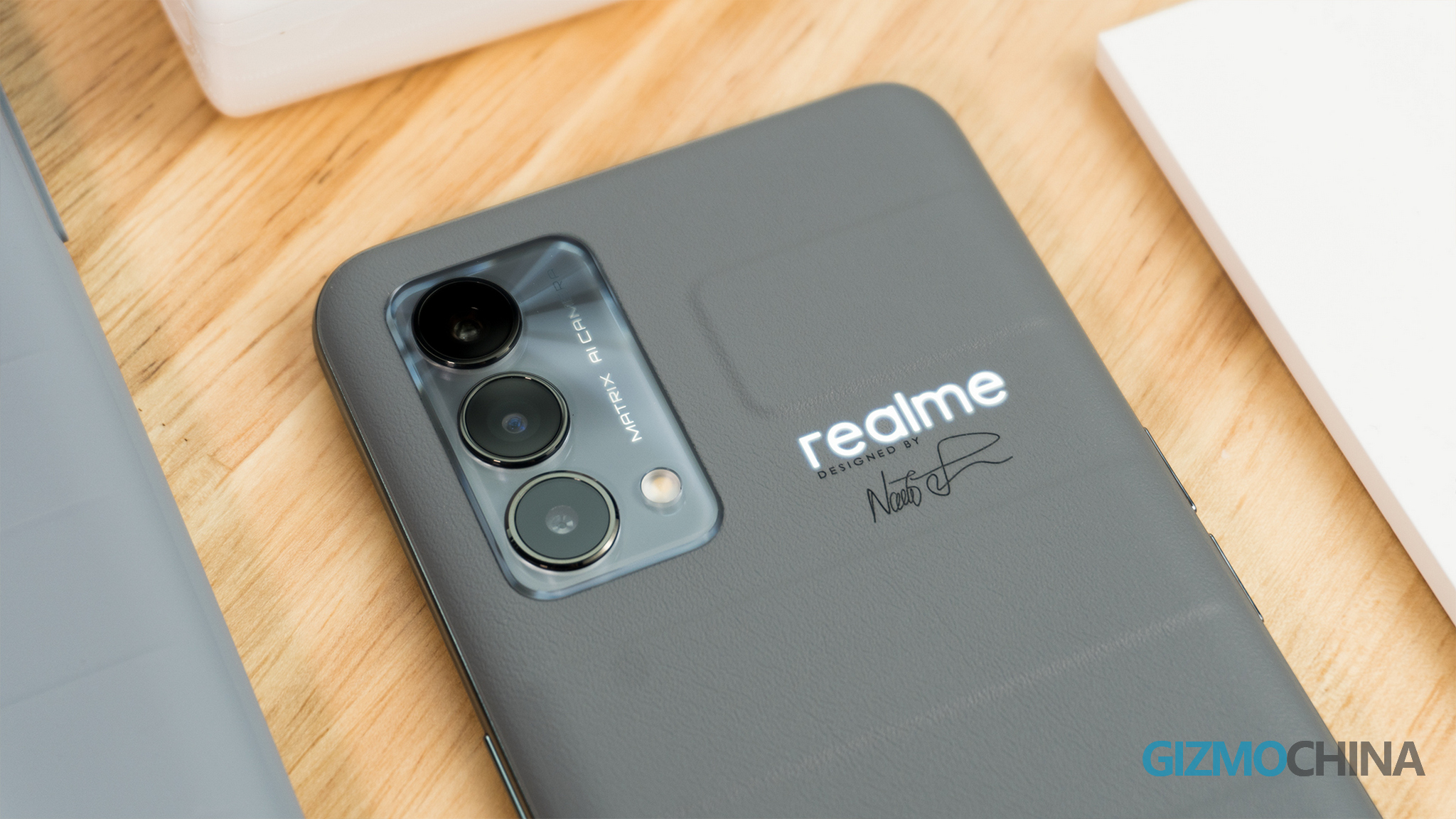
According to an online post by @数码闲聊站, Vivo is using the RAM expansion technology to offer an increase of 4GB of virtual RAM while Realme is offering an impressive 7GB virtual expansion in memory in a smartphone. The model in question is the Realme Q3 Pro Carnival Edition, which is now available in a new 12GB of RAM and 256GB of internal storage variant. In other words, this model would effectively have a combined 19GB of RAM, although, this version is exclusively available only through offline channels, as seen in the official image poster below.

Similarly, Oppo has also just unveiled its new RAM expansion technology for its handsets in MEA (the Middle East and Africa), which will debut with the Reno5 series of smartphones from June 2021. The technology, dubbed RAM+, allows the device to temporarily convert a small part of its internal storage (Read Only Memory or ROM) into virtual random access memory (RAM). On paper. this should effectively boost the overall memory of the device and would help in increasing the device processing power and efficiency.

Realme

Tarek Zaki, Senior Product Manager at OPPO Middle East and Africa, stated that “Users get easily frustrated when their smartphone slows down. RAM+ can alleviate the issue by temporarily increasing RAM during data-heavy tasks such as sharing images or gaming, ensuring a smoother and more stable system running, supporting the phone’s capability.”

RELATED:


Samsung Galaxy M52 5G likely to feature the Snapdragon 778G

Earlier this month, Honor announced the Snapdragon 778G SoC powered Honor 50 and Honor 50 Pro handsets. Speculations are rife the rumored Motorola Edge 20 will also feature the same chip. Fresh information suggests that Samsung’s upcoming Galaxy M52 5G may also feature the Snapdragon 778G SoC.

A previous report had suggested that the Galaxy M52 5G could be a rebadged edition of the Galaxy F52 5G, which was announced in China last month. While the Snapdragon 750G chip powered by the F52 5G, the appearance of the M52 5G at the Geekbench benchmarking platform suggests that it may arrive with Snapdragon 778G. Hence, it now appears that the M52 could be a new CPU variant or an entirely different phone as compared to the F52 5G.

The Galaxy M52 5G has emerged with its SM-M526BR on the benchmarking site. The listing reveals that it has 6 GB of RAM, and it boots to Android 11 OS. The “lahaina” codename mentioned in the motherboard field in the listing belongs to the Snapdragon 888. However, the Adreno 642L GPU mentioned in the source code of the listing suggests that the phone has Snapdragon 778G, and not the SD888.

The handset scored 776 and 2877 points in the single-core and multi-core tests of Geekbench, respectively. The other specifications of the phone are under wraps.

Samsung Galaxy F52 5G specifications

Samsung Galaxy F52 5G

The Galaxy F52 5G has a 6.6-inch TFT screen that supports a Full HD+ resolution and a 120Hz refresh rate. The Snapdragon 750G fuels the device with 8 GB of RAM. It has 128 GB of built-in storage and a microSD card slot for additional storage. The device is backed by a 4,500mAh battery that carries support for 25W rapid charging. For photography, it has a 16-megapixel front camera, and a 64-megapixel (main) + 8-megapixel (ultrawide) + 2-megapixel (depth) + 2-megapixel (macro) quad-camera system.

RELATED:

Samsung Galaxy Z Flip3 new renders leaked to reveal color variants

Samsung is expected to launch the Galaxy Z Flip3 clamshell phone with a foldable display in August along with the Galaxy Z Fold3. It will be arriving as the successor to last year’s Galaxy Z Flip 5G. A fresh leak by GizNext has shared new renders of the Z Flip3 to reveal its design and color variants.

The new leak reveals that the Galaxy Z Flip3 will be available in multiple colors like dark green, light violet, beige, grey, black, pink, dark blue, and white. As previous reports have revealed, the Galaxy Z Flip3 can be seen sporting a dual-tone color scheme.

As can be seen in the new renders, the top portion of Galaxy Z Flip3’s back panel is in black, while the remaining part has a different color. The upper portion houses a vertical dual-camera unit and a larger secondary display. Up front, the Z Flip3 has a foldable screen with a tall aspect ratio and a centrally aligned punch-hole. Readers can visit the source link to check out other renders of the Z Flip3.

Samsung Galaxy Z Flp3 5G specifications (Rumored)

Past reports have claimed that the Galaxy Z Flip3 has a 6.7-inch foldable screen with a 10-megapixel front camera and an in-screen fingerprint scanner. Its rear shell is said to be equipped with a pair of 12-megapixel cameras.

The size of Z Flip3’s secondary screen is said to have increased to 1.83 inches. It is unclear whether it will be featuring a flagship or midrange chip. The clamshell phone could be available in storage choices like 128 GB and 256 GB. It is likely to house a 3,300mAh battery that carries support for 15W charging. The Z Flip3 is likely to carry a starting price of $999.

RELATED:

Apple reportedly made body cams mandatory for employees to stop leaks

Apple is apparently making it mandatory for its employees to wear “police grade” body cameras to stop leaks. The company has made this move in an effort to stop the spread of sensitive proprietary information.

Apple

According to a FrontPageTech report (Via CultOfMac), the Cupertino based giant is pushing ahead with body cams to stop internal information from surfacing in the press. Reportedly, certain employees of the company are now required to wear a body camera similar to the Axon Body 2, which is the model used by many police forces. This aggressive move from the company is its latest effort to ensure its hardware trade secrets are kept from leaking out.

As per the report, body cameras are not required by every employee but only those working with certain product teams. These are quite likely related to the unreleased hardware/products, although, it is unsure as to how Apple deploys these body cameras to prevent possible leaks. The very leak regarding the iPhone maker forcing body cameras implies that the new effort might not be as effective in stopping internal information from leaking out.

Interestingly, Apple is allegedly even going after certain tipsters regarding their leaks. This includes Front Page Tech’s Jon Prosser, who released a video stating that the company is taking steps against him. Jon further added that “I’ve never paid a source. No money has ever exchanged hands. No transactions have happened. And I’ve always made clear to employees that they are under no pressure to give me information.”

RELATED:


Samsung Galaxy Buds2 price revealed in a leak

Samsung is expected to hold a mega launch event to announce the Galaxy Z Fold3, Galaxy Z Flip3, Galaxy Watch4, and Galaxy Buds2. Yesterday, 91mobiles released the Buds 2 renders in collaboration with tipster Yogesh. A fresh report by the same publication has now revealed the pricing of Samsung’s upcoming TWS earbuds.

Samsung Galaxy Buds2 Price (Rumored)

The new leak states that the Galaxy Buds2 will be priced between $149 and $169. This pricing suggests that it will be positioned lower than the Galaxy Buds Pro that was announced with a pricing of $199 in January. The Buds2 is expected to replace the Galaxy Buds+ with ANC (Active Noise Cancellation) support that debuted with a pricing of $149 last year. Probably, the upcoming Samsung TWS earbuds will carry support for ANC (Active Noise Reduction), and not ANC.

Samsung Galaxy Buds 2 Renders Leak 01

The Buds2 is expected to rival Beats Studio Buds, which is priced at $149 in the U.S. It will also compete with the 2nd generation AirPods that cost $159 in the U.S.

Samsung Galaxy Buds2 Pro specifications and features (Rumored)

The leaked renders of the Buds2 have revealed that it will be available in multiple colors such as black, white, purple, and green. The images revealed that the appearance of the Buds2 and charging case will be similar to the Galaxy Buds Pro.

Each earbud of the Buds2 could be powered by a 60mAh, whereas its charging case may include a 500mAh battery. The earbuds may carry support for 0.6W charging, while the charging case may support 2.5W charging.

RELATED:

Nokia 105 4G with Alipay support launched in China for only ¥229 ($36)

HMD Global has launched a new feature phone in China. This device is called Nokia 105 4G and it was first announced for global markets two weeks back. The main highlight of the handset is support for LTE connectivity and Alipay (only China). The phone can be considered as a successor to the Nokia 105 (2019), which was followed by Nokia 105 (2017) and Nokia 105 (2013) respectively. That said, let’s take a look at what the new model has to offer.

Nokia 105 4G Specifications and Features

The newly unveiled Nokia 105 4G looks different than its predecessors. The new model features flat sides, however, the top and bottom remain curved. For comparison, the previous two models sport a pebble-like design.

The phone arrives in three colors, namely Dark Blue, Red, and Black. It is made of polycarbonate, measures 121 x 50 x 14.5mm in dimensions, and weighs around 80.2g.

The device comes with a 1.8-inch QVGA LCD panel. It is powered by a UNISOC T107 chipset and boots Series 30+ operating system. Other features include an LED torch, 3-in-1 speaker, readout, FM radio (wired and wireless), 3.5mm headphone jack, and a MicroUSB port.

Unlike its predecessors, the all-new Nokia 105 4G supports LTE connectivity as well as Alipay. However, it is worth noting that users will require a smartphone to set up the mobile payment feature. As mentioned in the beginning, these two features are the main highlight of this handset.

As usual, HMD Global is targeting the elders with the Nokia 105 4G. The phone is backed by a 1,020mAh removable battery. The company claims up to 18 days standby time on the single SIM variant with 2G connection and 14 days on LTE connection.

Nokia 105 4G Price and Availability

The Nokia 105 4G is priced at ¥229 ($36) in China. Interested customers can pre-order it starting today (June 29) by depositing ¥10 ($2). 

Customers who pre-order the handset will receive a ¥30 ($5) discount. Hence, for them, the device will cost only ¥199 ($31) when it will be available for purchase from July 5.


RELATED:


Samsung Exynos chip with AMD GPU outperforms iPhone 12 Pro Max in graphical test

While Samsung had announced that it is working on a flagship Exynos series chipset with AMD GPU earlier this year, the company didn’t reveal any specifics regarding the processor or its capabilities. But now, a new report has suggested that this upcoming chip could outperform the Apple iPhone 12 Pro Max in graphical performance.

According to a tweet from a known tipster IceUniverse, the South Korean tech giant is apparently testing an Exynos chipset with a Radeon GPU and Cortex A77 CPU cores. The tipster shared a screenshot of the 3DMark graphics benchmarking app, in which, an Exynos processor with AMD GPU was spotted scoring 8,134 points in the Wild Life test that had an average of 50fps. This score beats the iPhone 12 Pro Max that sported the Apple A14 Bionic chipset, which scores around 7,442 points with an average frame rate of 40 fps.

At the moment, these benchmark scores appear to be early tests. So, we have no idea regarding the thermal performance of this chipset during these tests and how it performs under heavy load. Although, this is quite notable considering an Android handset has outperformed the top end Apple iPhone. The Samsung chip in question is rumored to be the Exynos 2200, which might even be able to offer better performance since it is expected to arrive with ARM Cortex X2 and Cortex A710 CPU cores, which are newer and faster than the Cortex A77.


Samsung

For those unaware, the upcoming Exynos chipset will feature Radeon GPU that is based on AMD’s latest mobile RDNA2 architecture. Keep in mind, even if this chipset actually is the upcoming chipset, good synthetic benchmarks do not always translate to better graphical performance in real games. So stay tuned for more updates.

RELATED:


Xiaomi’s Snapdragon 895 flagship with 200MP camera could be in works; Could it be Mi 12 series phone?

Yesterday, Qualcomm announced the Snapdragon 888+ mobile platform as an overclocked version of the existing Snapdragon 888 chip. Apart from offering faster clocking speeds, the SD888+ is equipped with an improved AI Engine. Companies like Honor, ASUS, Motorola, Xiaomi, and Vivo are expected to launch phones fueled by the Snapdragon 888+ later this year. Today, popular tipster Digital Chat Station shared the key details of the upcoming Xiaomi’s SD888+ powered flagship.

Digital Chat Station’s Weibo post talks about the key features of an upcoming flagship phone featuring the next generation Snapdragon flagship with sm8450 part number. This chip is being tentatively dubbed as the Snapdragon 895 chip by the rumor mill. The emoji of the bunny in the post is a good hint that he could be talking about Xiaomi’s next flagship.

Xiaomi 200MP leak

According to the tipster, the new device will be sporting a punch-hole display with curved edges. He added that it will be equipped with a 200-megapixel lens as the primary camera. Previous reports have suggested that it could be featuring Samsung’s upcoming 200-megapixel sensor. It is unclear whether this phone belongs to the exiting Mi 11 series or some other series.

Other reports have claimed that the 200-megapixel ISOCELL sensor may measure 1/1.37-inch and it has 1.28-micron pixels. It could be equipped with 4-in-1 and 16-in-1 pixel binning technology, and it may allow users to record 16K videos.

Speaking of Xiaomi, a recent leak revealed the codenames of 13 upcoming Xiaomi phones. It has revealed that the company could be announcing as many as three phones with an in-screen selfie camera. Unfortunately, the leak has no information about its Snapdragon 895 powered phone.

Last year, the Mi 11 5G debuted as the first Snapdragon 888 powered phone by the end of 2020. Qualcomm may launch the SD895 chip by the end of the year. Hence, it is likely that the rumored SD895 powered Xiaomi phone could end up as a Mi 12 series phone.

RELATED:

Huawei launches new 5G products and solutions during MWC 2021

Earlier this week, Huawei unveiled a series of new 5G products and related solutions at the Mobile World Congress 2021 (MWC) in Barcelona. The products were under its “1+N” plans and seek to expand its existing portfolio of networking based technology.

Huawei

During the conference, the Chinese telecommunications giant stated that it has put together its leading algorithms and technology along with ultra wideband radio to launch the industry’s only Massive MIMO product. This supports 64T64R and 400 MHz bandwidth and is the first of its kind in the world, as claimed by the brand. The new product also supports the entire C band, which would enable operators to deploy their multi-segment spectrum on just one module to reduce the number of devices.

Furthermore, Huawei also highlighted that the 64T64R Massive MIMO is also the lightest of its kind as well. The company also showcased that it is a light weight base station that is easy to install and even takes up less space, which contributes to its lower construction cost. A single module weighs as little as 19 kilograms and can be installed by just one person while also delivering on performance. Other notable aspect regarding the new 5G product is that it is the industry’s only 64T A+P Solution and is also the only unit that supports three low and three medium bands.

huawei

The solution is also the only commercial FDD massive MIMO in the market as well. Yang Chaobin, President of Huawei Wireless Product Line, stated that “By launching this series, we aim to bring multi-antenna technology to all scenarios and bands. Several products within the solutions are one-of-a-kind and will help operators efficiently deploy 5G networks and provide first-rate experience. Huawei will work with global partners to innovate and share 5G benefits with all.”

RELATED:


5G connections to hit nearly 2 billion by 2025: GSMA

A recent projection has revealed that 5G connections will grow to account for about a fifth of total mobile connections by the end of 2025. This would have 5G connections reach almost 2 billion.

5G

According to a MobileWorldLive report, a GSMA forecast has stated that connections of the newer and faster bandwidth would hit 1.8 billion by the end of 2025. In other words, this would account for about 21 percent of the overall connections, with regions like the Asia Pacific and North America registering the highest adoptions in the world. Although, nearly half of all 5G connections will be from China as it is expected to reach 828 million connections by 2025.

The industry group shared this news on its latest Mobile Economy report in which it added that two in five people are expected to live within the reach of a 5G network within a couple of years. GSMA also stated that the adoption of the technology will represent 53 percent of total connections in Australia, Japan, Singapore, and South Korea. ON the other hand, China alone would be responsible for half of all global 5G connections.

5G

Similarly, the new telecommunication generation will also be accounting for 51 percent of all mobile connections, reaching 219 million by the year 2025. Furthermore, mobile technologies and services would also contribute a sizeable 4.4 trillion US Dollars to the global GDP in 2020 (up from 4.1 trillion US Dollars in 2019), and are expected to reach 5 trillion US Dollars by the end of 2025.

RELATED:


Google Pixel 5A release date could be set in August, claims report

When the rumor mill claimed that the Google Pixel 5a had been canceled because of the global chip shortage, Google debunked the rumor by saying that it will be debuting around the same time frame as the Pixel 4a. Now, a fresh report by Bloomberg claims that the Pixel 5A will be releasing in August.

The report also claims that the Pixel 5A will be launching and releasing in August. The predecessor Pixel 4a was announced on Aug. 3 and it went on sale on Aug. 20 in multiple markets. Previous reports have claimed that Google will be releasing the Pixel 5a in limited markets such as the U.S. and Japan.

Reports have claimed that the Pixel 5a may not be a major upgrade over the Pixel 4a 5G. It is speculated that the new handset will be fueled by the Snapdragon 765G chipset, which was previously seen on the Pixel 4a 5G and Pixel 5 smartphones. The company is unlikely to release a 4G edition of the Pixel 5a.

Google Pixel 5a render by Steve Hemmerstoffer

The CAD renders of the Pixel 5a that appeared earlier this year revealed that it will be sporting a 6.2-inch OLED screen with a punch-hole design. The device is expected to feature a squarish module for its LED flash-assisted dual-camera setup. It is also expected to feature a traditional fingerprint scanner.

In related news, Google is expected to launch the Pixel 6 and Pixel 6 Pro smartphones in October this year. These phones are rumored to be driven by Google’s custom-made chip that may offer performance similar to Snapdragon 870. The Pixel Watch is also expected to go official alongside the Pixel 6 series.

RELATED:

MediaTek launches Dimensity 5G Open Resource Architecture allowing phone makers to tweak performance

MediaTek has a pretty successful lineup of 5G chipsets under its Dimensity lineup. The Dimensity 1200 is the top-end offering for the Taiwanese company and now it will become visibly different from each other, thanks to the new Dimensity 5G Open Resource Architecture launched by the company.

At the virtual event of the Mobile World Congress, MediaTek announced this new platform which provides brands with more flexibility to customize key 5G mobile device features to address different market segments.

MediaTek Dimensity 1200 SoC

It gives smartphone brands closer-to-metal access to customize features for cameras, displays, graphics, artificial intelligence (AI) processing units (APUs), sensors, and connectivity sub-systems within the Dimensity 1200 chipset.

Usually, the phone makers go through the firmware offered by the chipset provider, and sometimes they don’t even finetune that. Also, MediaTek chipsets are often used by lower-cost manufacturers with smaller development teams, which means that the companies are more likely to just take MediaTek’s default firmware.

The Taiwanese company has said that the devices powered by MediaTek’s Dimensity 5G Open Resource Architecture customized chipsets will hit the global market in July 2021.

Recently, MediaTek became the number-one global chipset provider by volume, thanks to its demand for low-end phones. Leading the segment in the presence of Qualcomm, Samsung, and Huawei is a tough job and with the launch of this new initiative, the company is showing that it is ready for the high-end segment.

RELATED: 

Vivo V51A 6GB RAM variant announced in India

Vivo announced the Vivo Y51A smartphone at the beginning of this year. It came in a single variant featuring 8 GB of RAM. Now, the Chinese manufacturer has announced a new 6GB RAM edition of the phone for India.

The Vivo Y51A’s new variant has 6 GB of RAM and 128 GB of storage. This model is priced at Rs 16,990 (~$229), and it is currently available only through Vivo India’s online store. It can be purchased in colors like Crystal Symphony and Titanium Sapphire. Interested buyers can take advantage of zero down payment offers from Bajaj Finance, IDFC First Bank, HDB, Home Credit, TVS Credit, and Zest Money. Vi users availing Rs 819 recharge pack will be provided with a 1-year extended warranty from the brand.


Vivo Y51A
Vivo Y51A

The existing Vivo Y51A variant with 8 GB of RAM and 128 GB of storage is priced at Rs 17,990 (~$242). This variant is available for purchase through Amazon India, Flipkart, and Vivo India’s online store.

Vivo Y51A specifications

The Vivo Y51A has a 6.58-inch IPS LCD FHD+ display and it is fueled by the Snapdragon 662 chipset. The device ships with 6 GB / 8 GB of LPDDR4x RAM, 128 GB of storage, and a microSD card slot.

The handset is backed by a 5,000mAh battery that supports 18W fast charging through USB-C. It has a 16-megapixel front camera, and its rear has a 48-megapixel primary lens, an 8-megapixel ultrawide camera, and a 2-megapixel lens. For security, it has a side-mounted fingerprint scanner.

RELATED:

Yamaha working on electric vehicles for Indian market; waiting for India’s EV policy

Earlier this month, Yamaha revealed its Fascino 125 FI Hybrid and now the Japan-based manufacturer is planning to launch an electric scooter in the Indian market, joining the list of growing two-wheeler manufacturers in India.

While there are several electronic vehicle makers in India in the two-wheeler segment, only Bajaj and TVS are the mainstream brands as others are startups trying to establish themselves in the market. If Yamaha’s plans work out, then it will be the third major company in the EV sector in India.

Yamaha Logo Featured

Yamaha Motor India Sales Pvt Ltd’s Senior Vice President Ravinder Singh has confirmed that the company is already developing an EV for India, as well as international markets. However, a lot will depend on India’s electric vehicle policy as the company is expecting a provision that encourages the rapid development of EV infrastructure in the country.

The Japanese company already has a deal with GoGoro in Taiwan to sell its own, redesigned EVs that are based on the GoGoro platform. However, the EC-05 electric scooter won’t be coming to India. This is because GoGoro has already signed a deal with Hero MotoCorp for battery swapping infrastructure, as well as the creation of new electric scooters based on the GoGoro platform.

Yamaha has a brand-new platform under development in the company’s headquarters in Japan, and this platform will be used in India as well as overseas. However, it’s likely that this upcoming product won’t be available for purchase any time soon.

While Bajaj and TVS are selling electric vehicles in India, companies like Hero and Suzuki have already confirmed that their EVs should arrive in the market within the next year or so, increasing the competition in India.

RELATED: 

Researchers develop a “low-cost” fast charging tech that can go from 0-100% in just 5 minutes

A team of researchers at the University of Cambridge could soon come up with a battery charging system that can fully charge depleted smartphone batteries within 5 minutes according to a report by the Independent. The research team is led by Dr. Ashray Rao of Cambridge’s Cavendish Laboratory. The team examined the charging and discharging behavior of lithium-ion batteries and developed a mechanism to control the charging speed that resulted in super-fast charging of batteries.Xiaomi

Recently, Xiaomi previewed a fast-charging system called 200W HyperCharge, capable of achieving a full charge for the Mi 11 within 8 minutes. The drawback for the Xiaomi system is that it does not apply to other devices apart from the Mi 11.

The revolutionary Cambridge charging technology is reported to be low cost and could scale up the battery’s charging cycle while avoiding overheating. The opportunities for this research are outstanding. It offers a huge change in technology speed to keep up with the inner workings of the lithium-ion battery. It is not known yet how soon the research will transit from the lab to the market within the next few years.Xiaomi HyperCharge 200W Charging

The quest for the ultimate charging solution is still on. A raft of different approaches has been mooted, including a technique that will use sound energy to charge phones and other devices. However, these emerging technologies are seriously limited as they are yet to achieve the breakthrough needed to transit these technologies to tangible products.

It has to be noted that tremendous progress has been made in the evolution of batteries and their accompanying charging systems. It is now possible to have super-fast charging, both for wired and wireless settings. Just recently, Infinix unveiled its 2021 flagship concept smartphone, packing a 160W wired fast charging and 50W wireless fast charging. This new system is equally faster than Infinix’s which is touted to fully charge a dead 4000mAh battery in 10 minutes.


RELATED:


(source)


Xiaomi Mi Pad 6 reportedly in development with a focus on camera performance

Xiaomi is gearing up to launch a number of new devices in the coming weeks and months, including a new tablet dubbed as Mi Pad 5. While the new tablet is yet to be officially announced, reports about its successor are now surfacing online.

In the latest development, a Weibo user ‘Digital Chat Station’ has revealed that Xiaomi has already started working on its next-generation tablet. It also adds that the primary focus for the Mi Pad 6 will be the camera configuration and the company will utilize it as a selling point. As of now, nothing much is known about the device.

Xiaomi Mi Pad 6 Rumors

Coming to the Mi Pad 5, the device could get official pretty soon. Recently, a model of this upcoming tablet surfaced online, carrying model number M2105K81C with support for 5G connectivity and a built-in 4,260mAh dual-cell battery, which is equivalent to 8,720mAh.

Reports indicate that the product will come with an OLED display and there will be another variant with an LED panel. It features a Full HD+ screen resolution of 2560 x 1600 pixels and supports a 120Hz refresh rate, and 240Hz touch sampling rate.

Alleged render of the Xiaomi Mi Pad 5

The Pro variant of the device is likely to come powered by the Qualcomm Snapdragon 870 chipset along with support for 5G connectivity. It is said to be powered by a 4,260mAh dual-cell battery, which makes it an 8,720mAh battery effectively.

On the other hand, the standard variant will come powered by MediaTek Dimensity 1200 SoC which also supports 5G connectivity. The devices are expected to have a side-mounted fingerprint sensor for security. Both the devices will be running a highly customized version of the MIUI custom user interface based on the Android operating system.

RELATED: 

Samsung’s new smartwatches will come with One UI Watch

Samsung revealed more details about the software that will power its new smartwatches. While we already know that Google and Samsung have worked on merging Wear OS and Tizen together and that the new unified platform will come with the Galaxy Watch 4 and Galaxy Watch Active 4, it has now been revealed that Samsung’s own smartwatches will have a different look thanks to what it has dubbed One UI Watch.

One UI Watch

Yes, One UI is coming to smartwatches and we think it is a great idea. While Samsung’s goal is for a “stronger integration between Galaxy smartphones and smartwatches”, we also believe One UI Watch will allow Samsung’s smartwatches to stand out from the other smartwatches that will run the new unified platform.

Samsung has given us an early look at what One UI Watch brings ahead of the Galaxy Unpacked event whose date is yet to be officially confirmed. First, when you install an app on your phone, your smartwatch will automatically install the watch app version too.

Samsung has also revealed that actions carried out on the phone sync on the watch. For example, if you have multiple time zones on your device, they will appear on your watch too. Also, if you have a blocked contact list, they will be synced to your watch. The smartwatch’s settings menu has also been designed to look like the phone’s menu.

The new smartwatches will not be in short supply of watch faces has Samsung also showed a new watchface design tool that it plans to make available to developers later this year.


RELATED:

Realme Narzo 30 Pro 5G vs Xiaomi Mi 10i: Specs Comparison

Xiaomi and Realme released amazing value for money mid-rangers in 2021. If you need the mid-ranger with the highest value for money, there are very high chances that you should opt for one of these two brands. In the midrange segment, Realme came up with the Narzo 30 Pro 5G delivering amazing specifications under every aspect, despite its affordable price tag. Its direct rival is the Xiaomi Mi 10i which has a lot in common with the Realme Narzo 30 Pro 5G and is sold in the same price range. This specs comparison will try to tell you which is the best between these two 5G best-buys.

Realme Narzo 30 Pro 5G vs Xiaomi Mi 10i

Realme Narzo 30 Pro 5G Xiaomi Mi 10i 5G
DIMENSIONS AND WEIGHT 162.2 x 75.1 x 9.1 mm, 196 grams 165.4 x 76.8 x 9 mm, 215 grams
DISPLAY 6.5 inches, 1080 x 2400p (Full HD+), 405 ppi, IPS LCD 6.67 inches, 1080 x 2400p (Full HD+), 395 ppi, IPS LCD
PROCESSOR Mediatek Dimensity 800U, octa-core 2.4 GHz Qualcomm Snapdragon 750G, octa-core 2.2 GHz
MEMORY 6 GB RAM, 64 GB – 8 GB RAM, 128 GB – micro SD slot 6 GB RAM, 128 GB – 8 GB RAM, 128 GB – micro SD slot
SOFTWARE Android 10, MIUI Android 10, MIUI
CONNECTIVITY Wi-Fi 802.11 a/b/g/n/ac, Bluetooth 5.1, GPS Wi-Fi 802.11 a/b/g/n/ac, Bluetooth 5, GPS
CAMERA Triple 48 + 8 + 2 MP f/1.8, f/2.3 and f/2.4
16 MP f/2.1 front camera
Quad 108 + 8 + 2 + 2 MP f/1.8, f/2.2, f/2.4 and f/2.4
16 MP f/2.5 front camera
BATTERY 5000 mAh, fast charging 30W, USB-PD 15W 4820 mAh, fast charging 33W
ADDITIONAL FEATURES Dual SIM slot, 5G Dual SIM slot, 5G

Design

Do you prefer a modern look or premium materials? With the Realme Narzo 30 Pro 5G, you get a more modern design, as well as a more compact body. But the Xiaomi Mi 10i has more premium materials as it comes with a glass back instead of the classic polycarbonate which is often found on affordable phones including Realme Narzo 30 Pro 5G. I like the Realme Narzo 30 Pro 5G because its camera module is less invasive; further, it is a lighter phone. Both the handsets feature a side-mounted fingerprint reader and a pretty thick body due to their big batteries.


Display

Realme Narzo 30 Pro 5G and Xiaomi Mi 10i 5G are equipped with IPS panels: they are not bad panels, but they are far from the AMOLED displays you can find in the midrange segment in terms of image quality. The Xiaomi Mi 10i 5G is slightly more interesting because it has the HDR10 certification providing a richer image quality, especially on streaming platforms. Realme Narzo 30 Pro 5G and Xiaomi Mi 10i 5G have a 120 Hz refresh rate (very good for gamers since they got a smoother viewing experience and more reactivity) and a Full HD+ resolution. The Realme Narzo 30 Pro 5G has a slightly higher typical brightness. Note that Xiaomi Mi 10i 5G has stereo speakers, while Realme Narzo 30 Pro 5G has mono speakers.


Specs & Software

Realme Narzo 30 Pro 5G and Xiaomi Mi 10i 5G are more or less at the same level if we talk about the hardware department. The Snapdragon 750G found on the Xiaomi Mi 10i is slightly more powerful than the Dimensity 800U of the Realme Narzo 30 Pro 5G, but the latter is built with a better 7 nm production process and it should guarantee a lower energy consumption. The memory configurations are the same: 6 or 8 GB of RAM and 64 or 128 GB of native storage which you can furtherly expand through a micro SD slot, but the Xiaomi Mi 10i 5G has faster UFS 2.2 storage instead of UFS 2.1. Unfortunately, both the phones run Android 10 out of the box despite they were released in 2021.


Camera

Xiaomi Mi 10i 5G is a superior camera phone because it has a better main camera: we are talking about a great 108 MP main sensor which is still a midrange camera despite its resolution, but it is way better than the 48 MP camera found on the Realme Narzo 30 Pro 5G. It also has an additional 2 MP sensor for depth calculation. These handsets can record videos with a resolution up to 4K and they are equipped with a 16 MP front camera for selfies.


Battery

Realme Narzo 30 Pro 5G has a bigger 5000 mAh battery and, given that its processor is built with a 7 nm production process, it lasts more on a single charge in a lot of scenarios. With the Xiaomi Mi 10i 5G, you get faster charging but a smaller battery.


Price

Realme Narzo 30 Pro 5G is priced at Rs. 16,300 / $220 in India, while Xiaomi Mi 10i 5G starts from Rs. 21,999 / $295. The Xiaomi Mi 10i 5G is a superior phone because it has stereo speakers and better cameras, but with the Realme Narzo 30 Pro 5G, you can get a higher value for money without facing a lot of compromises.


Realme Narzo 30 Pro 5G vs Xiaomi Mi 10i 5G: PRO and CONS

Realme Narzo 30 Pro 5G

PRO

  • Bigger battery
  • More compact
  • Lighter

CONS

  • Inferior main camera


Xiaomi Mi 10i 5G

PRO

  • Stereo speakers
  • Superior main camera
  • Faster charging
  • Glass back
  • HDR10
  • IR blaster

CONS

  • Nothing particular


RELATED

Check the latest videos from our YouTube channel and subscribe:

Samsung promises up to 3 years of updates for older Tizen smartwatches

Samsung held a virtual event today for this year’s edition of MWC during which it revealed new details about the new operating system for smartwatches borne from the merger of Wear OS and Tizen. While there is a lot to look forward to with the new OS, Samsung also revealed key info about older smartwatches, one that is a mix of good and bad news.

Tizen OS Galaxy Watches updates

It was revealed that users with Tizen-based smartwatches will receive software updates and Galaxy Store support for up to 3 years from launch. While this is good news, it also indirectly confirms that these watches will not get updated to the new operating system.

A small text at the bottom of the screen adds that software updates will be available to the following devices:

This means the Galaxy Watch which was announced in 2018 will have its software support come to an end this year. The Galaxy Watch Active and Galaxy Watch Active2 both announced in 2019 still have one more year of updates while the Galaxy Watch3 has two years of software support left.


RELATED:

Lenovo announces YOGA Tab 13, Yoga Tab 11, and Tab P11 Plus trio of tablets

Lenovo has announced three new tablets that cover the high-end and mid-range categories. The tablets are the YOGA Tab 13, the YOGA Tab 11, and the Tab P11 Plus.

Lenovo YOGA Tab 13
Lenovo YOGA Tab 13

YOGA Tab 13 and YOGA Tab 11

The YOGA Tab 13 is the same tablet that launched in China as the YOGA Pad Pro last month. Lenovo has modified the name for the international market and launches it alongside a smaller version called the YOGA Tab 11. Both have a bracket that doubles as a kickstand and a hanger.

The YOGA Tab 13 is powered by the Snapdragon 870 processor and has 8GB of RAM and 128GB or 256GB of storage. The display is a 13-inch LTPS panel with Dolby Vision and a 60Hz refresh rate. There are quad JBL speakers, Dolby Atmos, and three microphones.

The YOGA Tab 13 has support for HDMI input, allowing it to double as an external display for your other devices. This feature is not available on the smaller YOGA Tab 11 which also drops the Snapdragon 870 for MediaTek’s Helio G90T processor.

Lenovo YOGA Tab 11
Lenovo YOGA Tab 11

The YOGA Tab 11 has an 11-inch TDDI LCD screen with a 60Hz refresh rate and Dolby Vision. There is 4GB or 8GB of RAM and 256GB or 128GB of storage. It also has quad JBL speakers and Dolby Atmos.

The YOGA Tab 13 has a 10000mAh battery capacity and supports 30W fast charging while the YOGA Tab 11 has a 7500mAh battery and supports 20W fast charging. Both run Android 11 out of the box and come with Google Entertainment Space and Google Kids Space.

The YOGA Tab 13 is priced at €799 and will go on sale in Europe this month while it will be available in the US in July for $680. The YOGA Tab 11 is priced at €349 and will be available in Europe next month while it will sell for $320 in the US and will be available in August. It is also the only one of the two that is available in Wi-Fi and LTE variants. Both tablets support the Lenovo Precision Pen 2.


Lenovo Tab P11 Plus

The Tab P11 Plus joins its already announced siblings – the Tab P11 and the Tab P11 Pro. The new tablet is powered by MediaTek’s Helio G90T processor and will be available in three configurations with up to 6GB of RAM and 128GB of expandable storage.

Lenovo Tab P11 series
From Left to right: Lenovo Tab P11 Pro, Lenovo Tab P11 Plus, Lenovo Tab P11

The 11-inch IPS LCD display has a 2000 x 1600 resolution and draws power from a 7500mAh battery that supports 20W fast charging. While positioned as an entertainment tablet with its quad speakers with Dolby Atmos, there is an optional productivity pack that adds a keyboard with a trackpad so you can use it to get some work done.

The Tab P11 Plus also runs Android 11 and has Google Kids Space and Google Entertainment Space loaded on it. The tablet will be available in Europe next month for €300 while the US will get it for $260 in August.


RELATED: