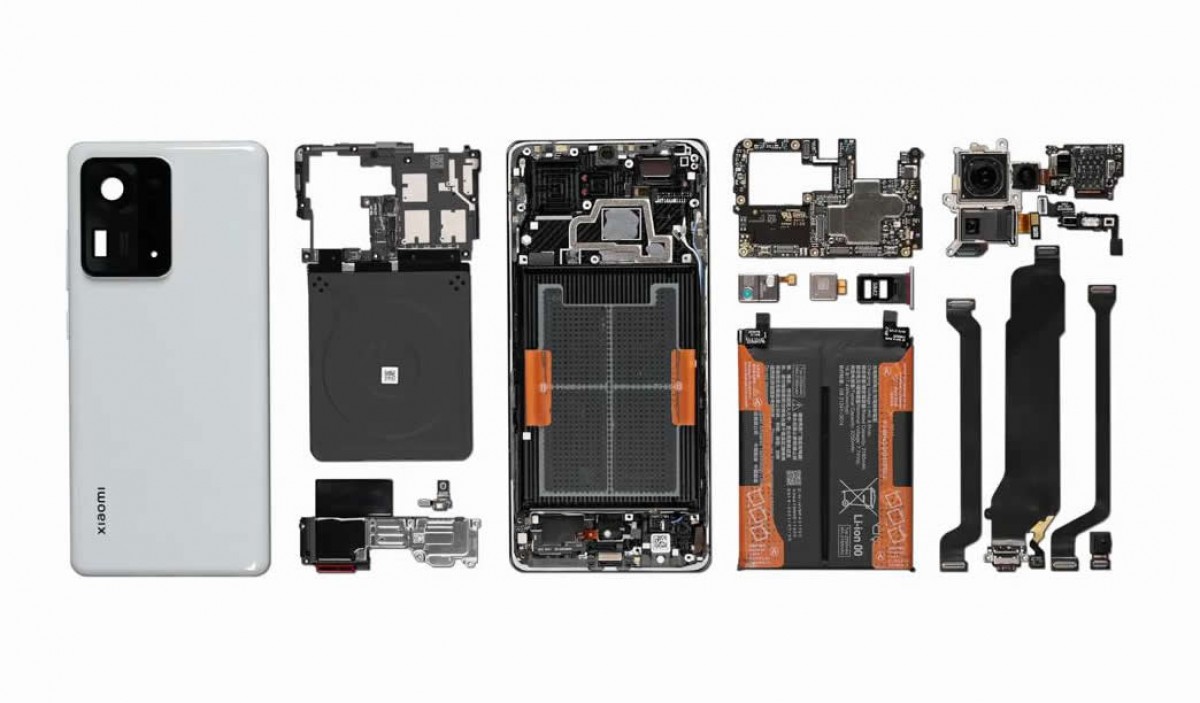
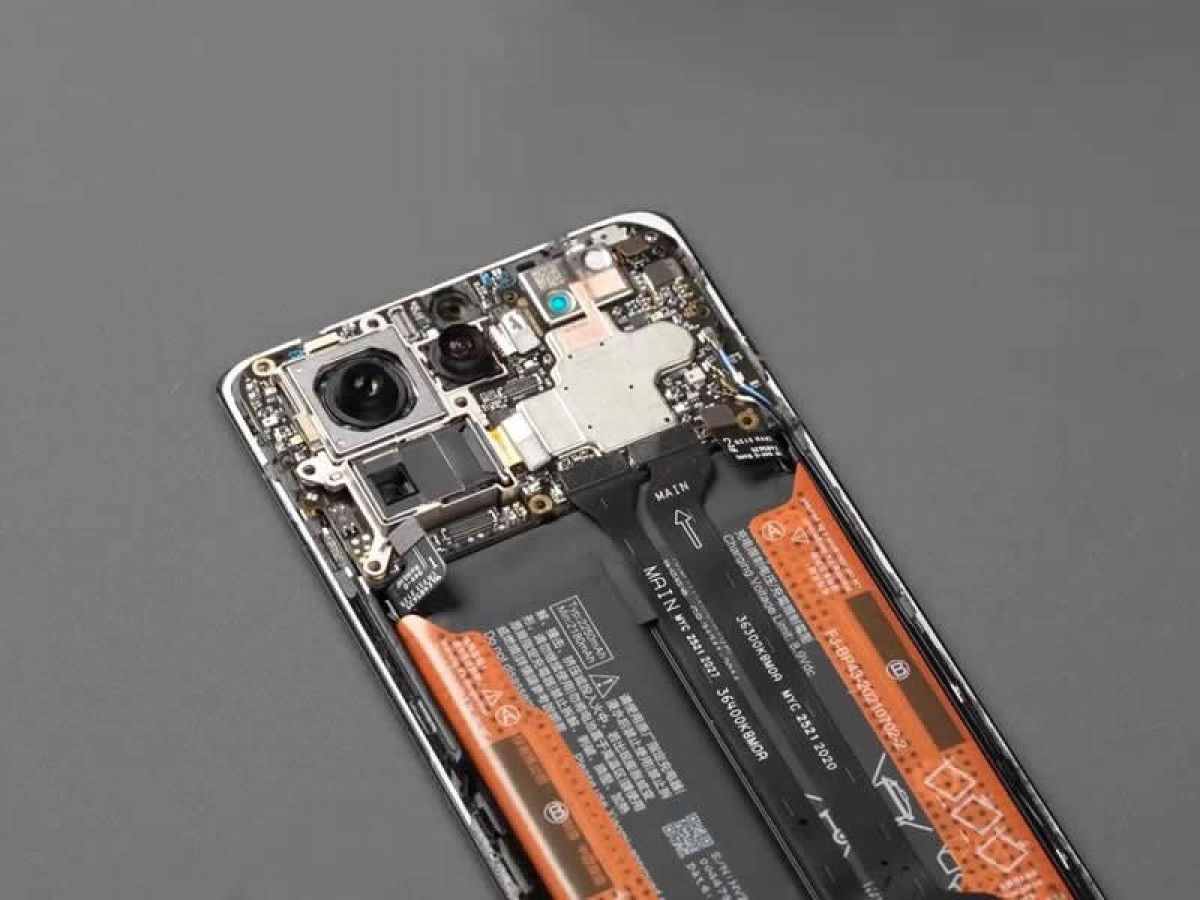
While Xiaomi has just launched the Mi MIX 4, a new video has already surfaced online that shows the smartphone being disassembled, with the teardown revealing the internal components of the new handset.
The teardown was done by popular tech blogger Robin, who shared the video of the disassembly on Weibo(a Chinese microblogging website). Looking at the video we can observe that the smartphone’s body comprises of ceramic and sports a thin metal frame that is housed between the display and the body. This region also makes space for radio signal transmission. The teardown found that the device’s internals are divided into three main regions.
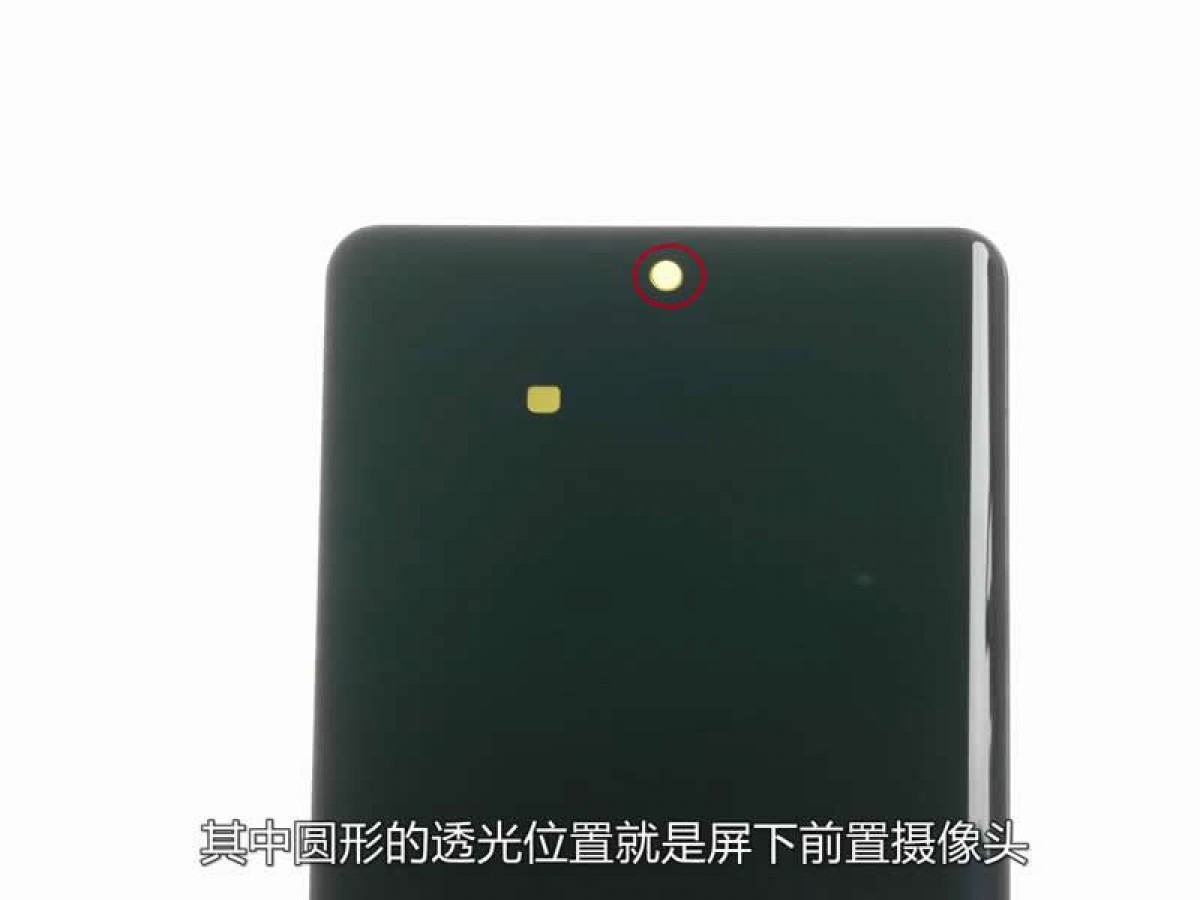
This includes an upper section that houses the SoC, memory modules, camera sensors, 5G antennas, and more. On the other hand, the region in the middle is where the battery is kept, along with the NFC antennas, wireless charging coils, and the dual cell battery. The lower region is made up of the speakers, USB Type C port, and the vibration motor. Notably, we can even see the under display camera of the smartphone in the teardown video.
The hole for this sensor is visible when strong light is passed through it, while another hole can also be observed a bit lower. On the top center of the display is the cutout for the under display camera, while the square shaped cutout is for the proximity and ambient light sensors. With these essential systems being under the display, Xiaomi is able to offer users a complete front screen body. Other notable aspects that can be seen during the tear down is the several heat dissipation sheets, copper foil, and the thermal paste on the SoC.
The Samsung Galaxy Unpacked 2021 event is set to begin later today (11th August 2021). During this launch conference, the company will be launching its highly anticipated Galaxy Z Flip 3 and Galaxy Z Fold 3 foldable smartphones alongside other products. While the virtual event has yet to start, we already have some expected specs, features, and prices of these upcoming devices, so lets take a look.
Galaxy Z Fold 3
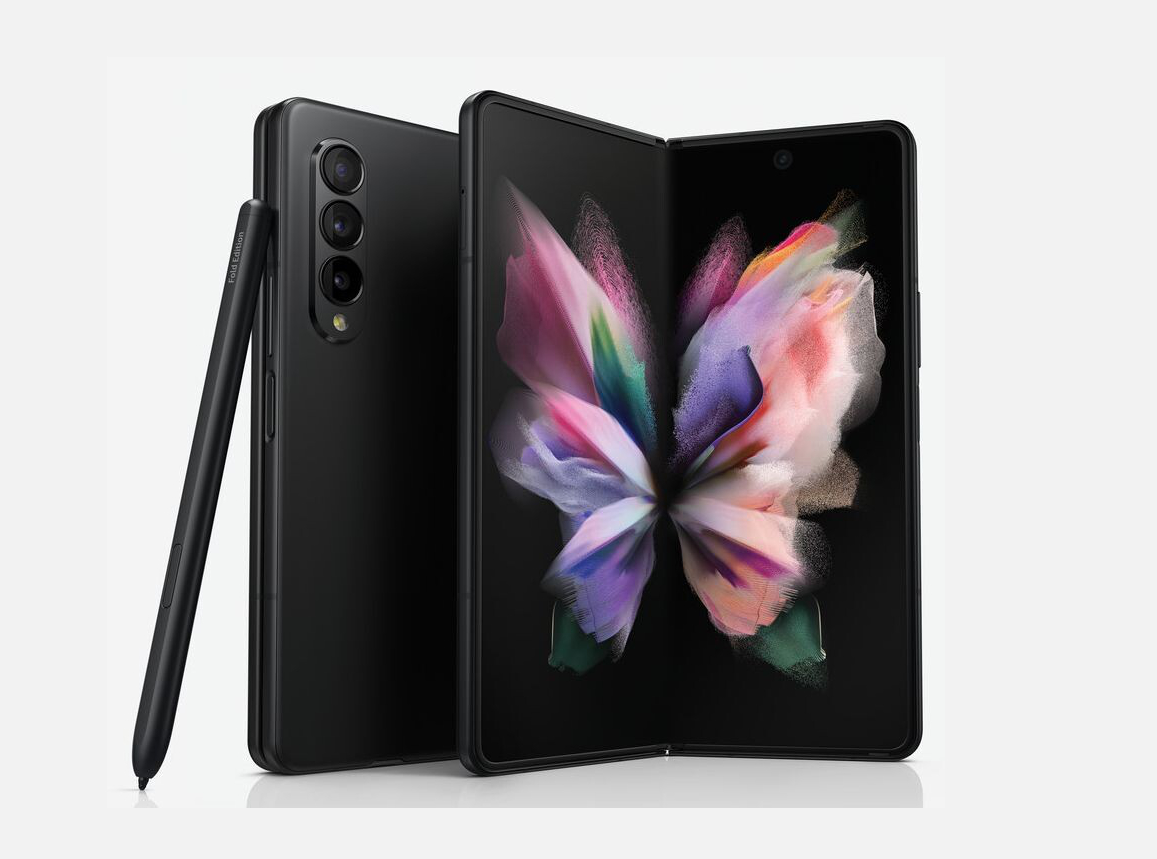
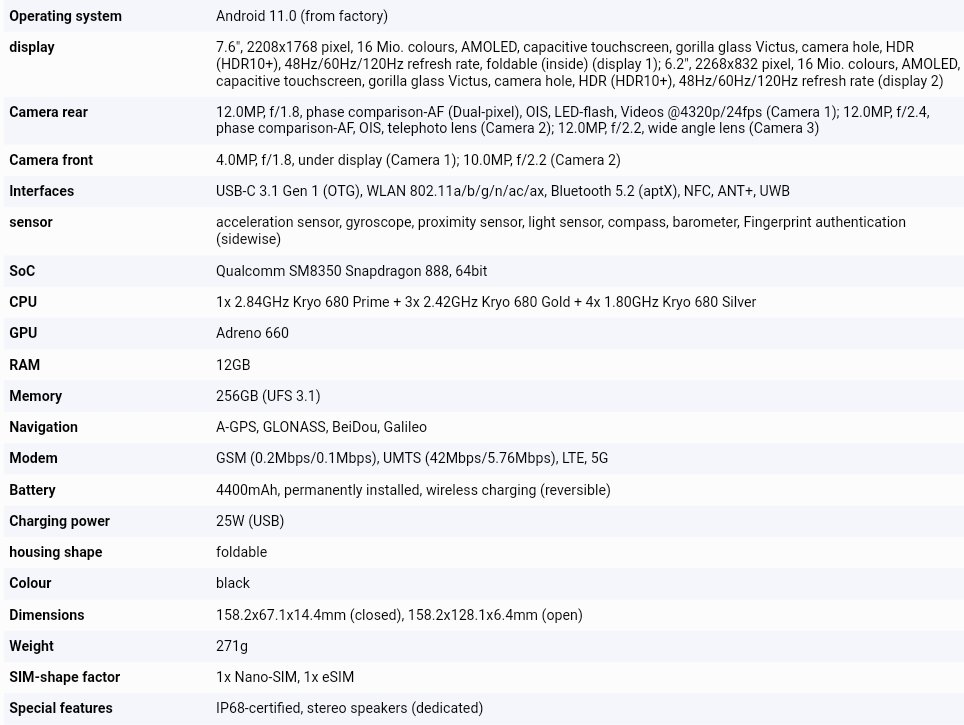
The Samsung Galaxy Z Fold 3 will be the brand’s latest flagship foldable handset. Just earlier today, we had reported on a leaked spec sheet that revealed key specifications of the new smartphone. As per this leak, the Galaxy Z Fold 3 is expected to feature a 6.2 inch external display that supports 2262 x 832 pixels resolution while its primary display is expected to be a 7.6 inch foldable AMOLED panel that supports a resolution of 2208 x 1768 pixels. Notably, both displays also offer 120Hz high refresh rate as well.
The front of the device will apparently sport a 10 megapixel camera, while the display will reportedly house a 4 megapixel under display camera. On the rear, the Galaxy Z Fold 3 is expected to house a triple camera setup, with a 12 megapixel primary lens. Under the hood, the Qualcomm Snapdragon 888 SoC will run the device, paired with 12 GB of RAM and 256 GB of UFS 3.1 storage. The foldable smartphone is expected to be powered by a large 4,400mAh battery that supports 25W fast charging. A recent price leak has suggested that the Galaxy Z Fold 3 will be priced at 1,899 EUR (roughly 2,258 US Dollars).
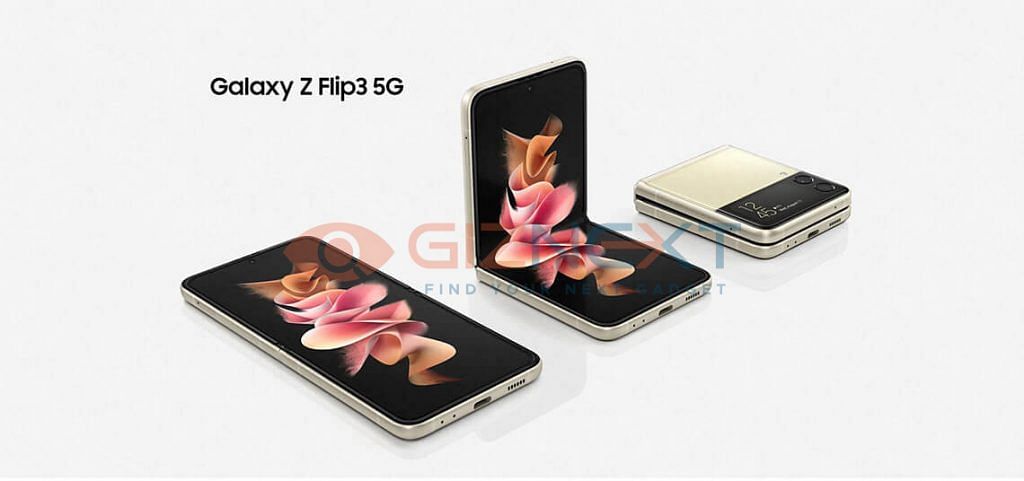
Galaxy Z Flip 3
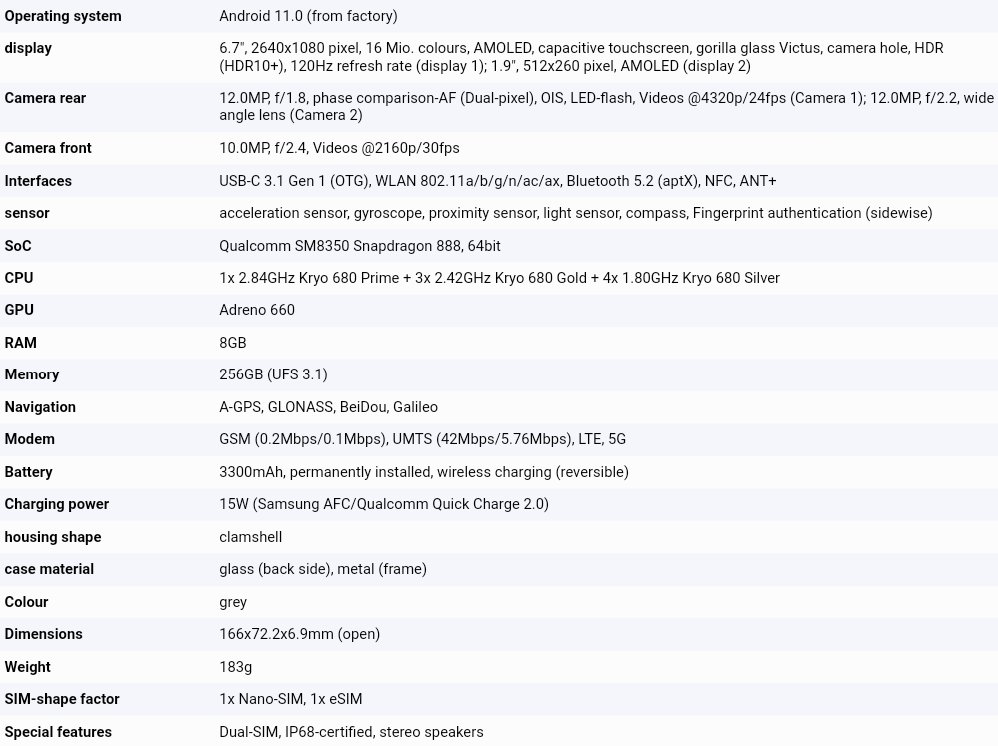
The Galaxy Z Flip 3 is the second foldable smartphone that Samsung will be launching in the Galaxy Unpacked 2021 event. It sports a 6.7 inch foldable AMOLED display that supports 2640 x 1080px resolution and a 120Hz refresh rate. Meanwhile, the external display has a size of 1.9 inch with a resolution of 512 x 260px. On the front, the Flip 3 is expected to sport a 10 megapixel shooter, while the rear will feature a 12 megapixel + 12 megapixel dual camera setup.
Similar to the Galaxy Z Fold 3, the Flip will also be powered by a Snapdragon 888 chipset and is expected to house 8 GB of RAM and up to 256 GB of storage. A 3,300mAh battery will power the device and will support 15W charging. The device is confirmed to feature IPX9 water resistance and its price is rumored to start from 1,099 EUR (roughly 1,306 US Dollars). The device will be available in multiple color variants as well, namely Phantom Black, Lavender, and Cream.
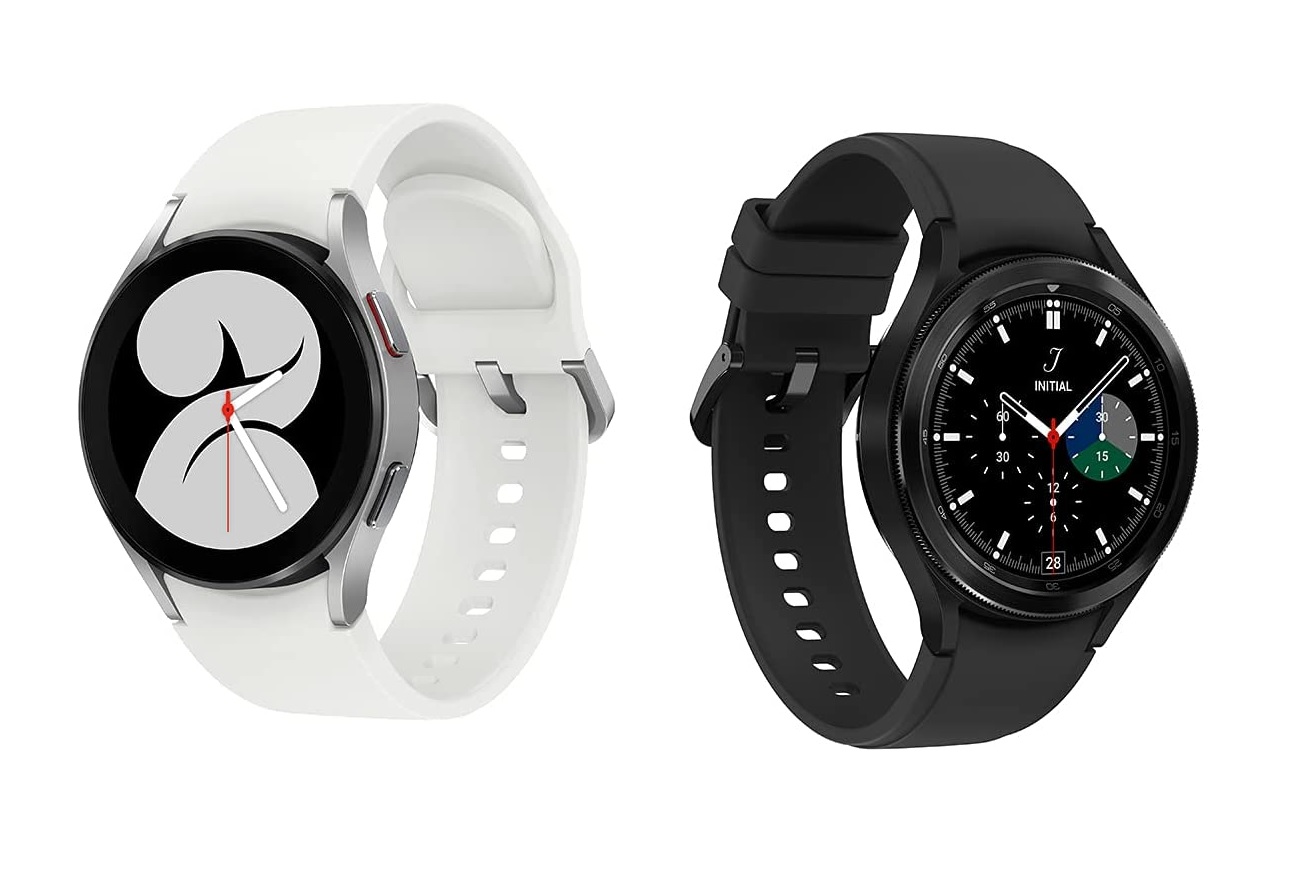
Galaxy Watch 4
Apart from the two foldable smartphones, the South Korean tech giant is also expected to launch new wearables and hearables as well. The Galaxy Watch 4 series will be the company’s latest smartwatches and includes the Galaxy Watch 4 and Galaxy Watch 4 Classic. The wearables will run the Samsung’s and Google’s newly merged OneUI Watch OS, with the new Exynos W920 SoC powering the smartwatch.
The Watch 4 will arrive in two sizes, including 40mm and 44mm, while its its pricing is rumored to be around 279 EUR (roughly 327 US Dollars). For memory, the Watch 4 series is expected to house 1.5GB of RAM, with the Watch 4 sporting 16GB of storage as well. The Watch 4 is expected to feature a 1.19 inch AMOLED display, while the Classic 46mm variant will have a 1.36 inch display with a 450 x 450 resolution and 330 PPI. The smartwatches will offer the usual activity tracking, heart rate monitoring, and other features as well.
Galaxy Buds 2
Arriving at the hearables, Samsung is also gearing up for the launch of the Galaxy Buds 2. These are a pair of TWS (true wireless earbuds) and will feature an updated design over its predecessor. Talking about the design first, the earbuds feature a uniform glossy texture with an in ear design and silicone ear tips. A leak had revealed key specs of the new wireless earphones, which will support Bluetooth 5.2, Ambient Sound/ANC with 3 mics.
Furthermore, the charging case is compatible with Qi wireless charging and also offers IPX7 rating for water resistance. Each bud is powered by a 61mAh battery capacity while the case houses a 472mAh battery pack. The leak also stated that charging the buds for just 5 minutes will enable it to offer 55 minutes of playback. These hearables are expected to be priced at around 149 EUR (roughly 175 US Dollars).
This rounds up what we know about the four main launches that are set to be unveiled later today. You can check out the livestream once it goes live on YouTube. So stay tuned, as we will be covering the launch event.
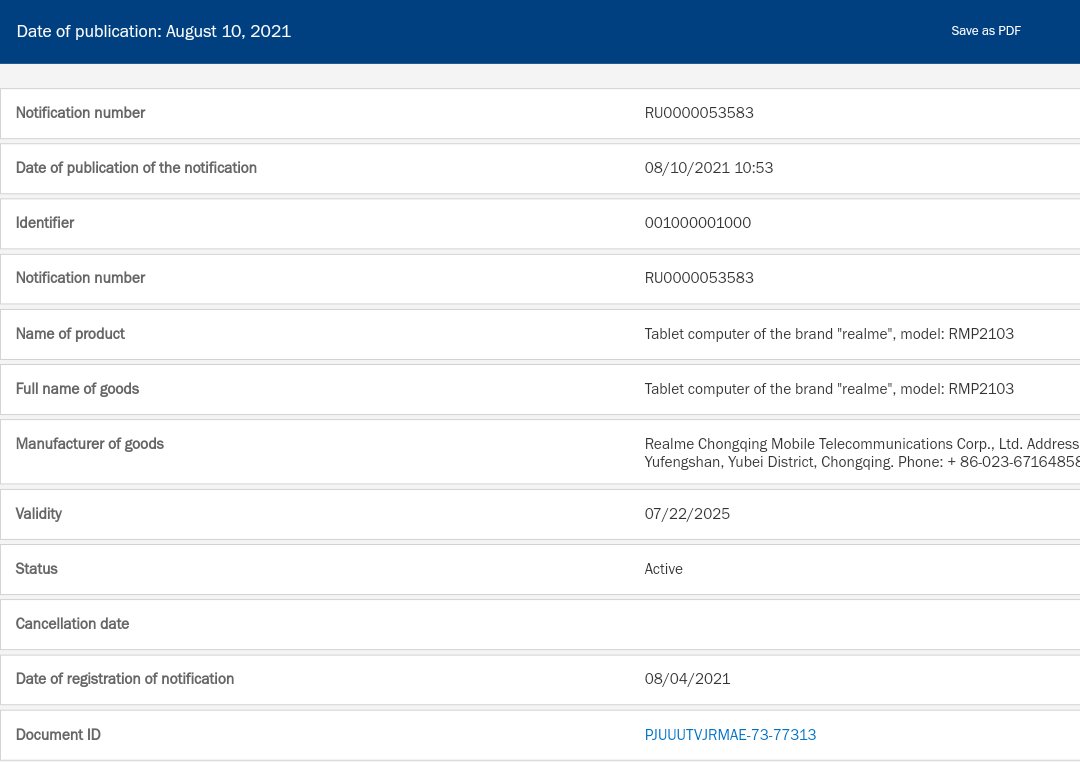
The Realme Book (Slim) will be launching on Aug. 18 in China and India as the company’s first laptop. Past reports have revealed that the company is also working on Realme Pad, which is expected to debut as its first tablet. While there is no official confirmation yet on Realme Pad’s launch event, its arrival does not seem to be far away. Recently, it was spotted at Singapore’s IMDA certification site, and now it is has received approval from the Eurasian Economic Commission (EEC).
Realme Pad’s EEC certification
The alleged Realme Pad has appeared with the RMP2103 model number at the EEC certification site (via). The EEC listing has no information on the specs of the device. To recollect, a variant of the same device with model number RMP2102 was spotted at IMDA in July.
Realme Pad specifications and features (Rumored)
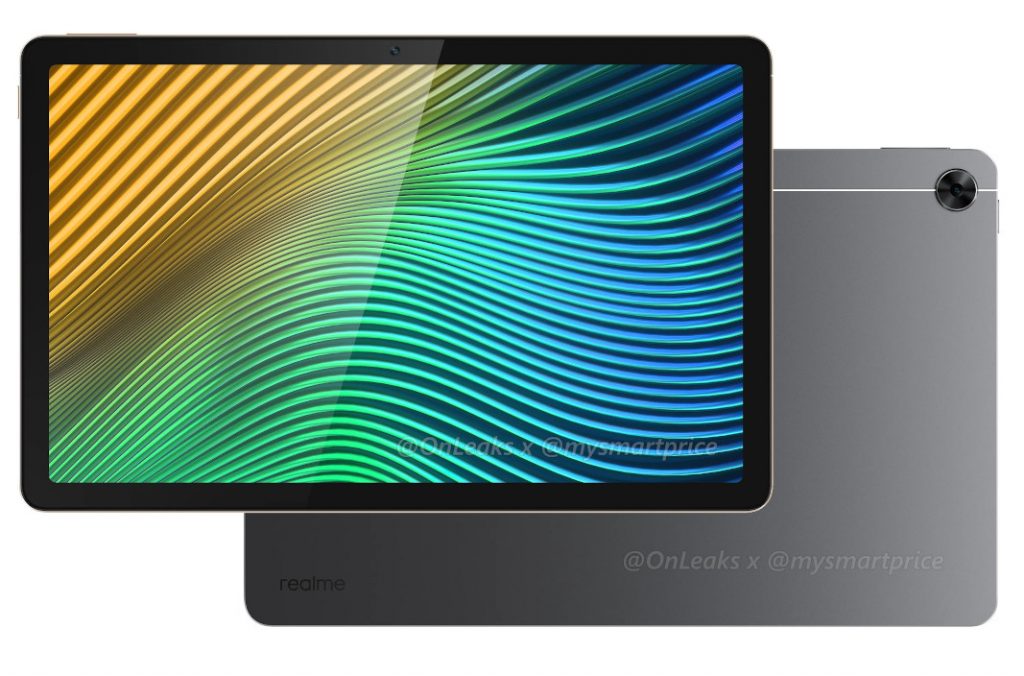
Past reports have revealed that the Realme Pad measures 246.1 x 155.8 x 6.8mm and it houses a 10.4-inch screen. While the tablet is said to be powered by a 7,100mAh battery, there is no word on its processor.
Realme Pad
The base model of the tablet may offer users 6 GB of RAM and 64 GB of native storage. Rumors have it that the tablet may arrive in Wi-Fi only and Wi-Fi + LTE editions. For photography, it may feature autofocus enabled 8-megapixel rear camera, whereas its front may house an 8-megapixel fixed focus camera.
The Realme Pad is expected to arrive with an aluminum chassis. Its leaked renders have revealed that it could be available in colors like gold and grey. The images have also revealed that it may feature a storage slot for a stylus, a microSD card slot, and a USB-C port.
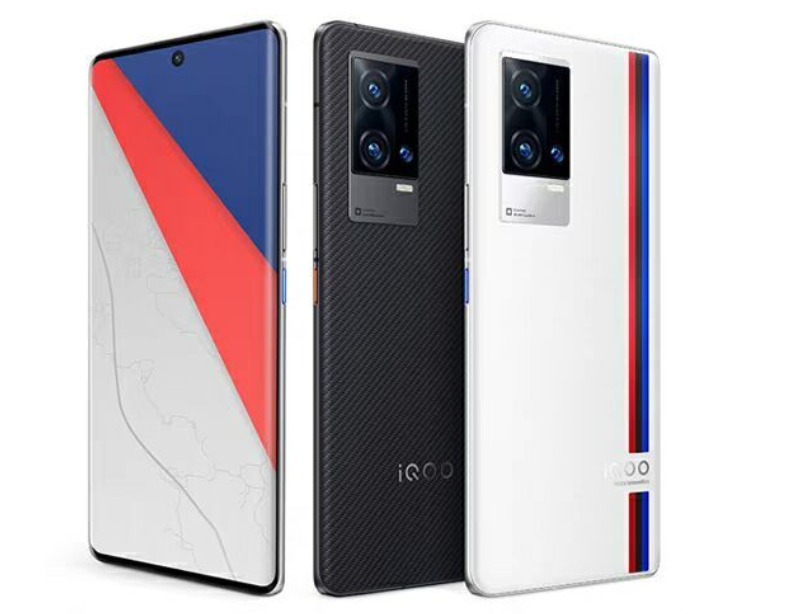
iQOO is all set to announce the iQOO 8 and iQOO 8 Pro flagship phones on Aug. 17 in China. Ahead of the launch, the company has been gradually teasing the key features of the iQOO 8 series. A fresh leak by a Chinese tipster has revealed the key specifications of the iQOO 8 and iQOO 8 Pro handsets.
iQOO 8 Pro specifications (Rumored)
The tipster revealed that the iQOO 8 Pro features a 6.78-inch Samsung’s AMOLED E5 panel with a centrally aligned punch-hole and curved edges. It will carry support for 2K resolution. The device is powered by a 4,500mAh battery with 120W fast charge support that can fully charge it in around 19 minutes. The leak also suggests that is supports 50W wireless charging.
The rear-mounted triple camera unit of the iQOO 8 Pro comprises a 50-megapixel (Sony IMX766) main camera with gimbal stabilization. It is coupled with a 48-megapixel (Sony IMX598) ultrawide camera and a 16-megapixel telephoto snapper with OIS support. The other features that will be available on the iQOO 8 Pro include an ultrasonic in-display fingerprint scanner, X-axis linear motor, and Hi-Fi audio chip. It can be said based on past reports that the iQOO 8 Pro will come equipped with a Snapdragon 888 Plus chipset, up to 12 GB of RAM, 4 GB of extended RAM, up to 256 GB of internal storage, and OriginOS based Android 11.
iQOO 8 Pro
iQOO 8 specifications (Rumored)
The iQOO 8 will be sporting a flat display that supports a Full HD+ resolution. It is backed by a 4,350mAh battery that supports 120W rapid charging. The leak claims that it can fully charge in just 18 minutes.
For photography, it will be equipped with a 48-megapixel (Sony IMX598) + 13-megapixel (ultrawide) + 13-megapixel (telephoto) triple camera unit. It includes other features like an optical in-screen fingerprint scanner and dual X-axis linear motor. It is unclear whether the iQOO 8 has Snapdragon 888 Plus or Snapdragon 888 chip.
Apple has been working on transitioning its Mac devices to its own Apple Silicon — the process which the technology giant started last year with its M1 chipset. The company has been using its own chips for smartphones.
Currently, the devices powered by Apple’s own chipset are manufactured using the 5nm process by Taiwan Semiconductor Manufacturing Company, widely known as TSMC. But it seems that the technology is about to get upgraded in the coming year.
As per the latest report by DigiTimes (via MacRumors), Apple’s iPhones and Mac devices getting launched next year could come powered by a chipset that is built using the 3nm process. TSMC is set to start mass production of 3nm chips in the second half of 2022 and thus Apple’s devices powered by the new chips could launch the same year.
While we have heard about TSMC starting production of 3nm chips in 2022 and brands like Apple and Intel among the first beneficiaries, this is the first time we are hearing about the upcoming 3nm processor powering the iPhones and Macs launching in 2022.
Earlier, it was reported that Apple has already booked TSMC’s entire production capacity for the 4nm chips for MacBooks powered by the Apple Silicon. However, there’s no information available about its timeline.
Compared to the current 5nm process, the new 3nm process should reduce power consumption by 30 percent and increase performance by 15 percent. TSMC, the world’s largest contract manufacturer of chips, will begin production of 3nm chips with a capacity to process 30,000 wafers. The company will expand production capacity to 55,000 units in 2022 and within a year after that, it plans to expand to 105,000 units a month.
Apple’s A14 Bionic chipset is manufactured using a 5nm process and the next-generation A15 SoC will be manufactured using the 5nm+ or NP5 process. It is basically a performance-enhanced process of 5nm node which also brings power efficiency. It is reported that TSMC has allocated most of its resources for Apple’s orders.
A couple of months ago, in June, OnePlus had launched a Limited Edition model of its current-generation flagship smartphone, dubbed OnePlus 9 Pro Flash Silver Edition. The device went on sale the same month it was announced. Now, the Chinese company has scheduled yet another sale for this limited edition model.
OnePlus’ Chief Operating Officer Liu Fengshuo has confirmed that the OnePlus 9 Pro Flash Silver Edition will be available for purchase on 15th August at 10:00 AM local time. It is priced at 5,499 yuan which roughly converts to $848.
The smartphone, which packs 12GB of RAM and 256GB of internal storage, is jointly designed by OnePlus and Japanese artist Sora Yamaji. Along with the phone, the package also includes a limited-edition T-shirt and a phone case having the same design language.
Coming to the specifications, it remains the same as the standard OnePlus 9 Pro, featuring a 6.7-inch QHD+ LTPO AMOLED display with a 3216 X 1440 pixel screen resolution and 525PPI pixel density. The phone’s screen offers a 120Hz refresh rate panel and is covered under Corning Gorilla Glass protection.
Underneath, it is powered by the Qualcomm Snapdragon 888 chipset which is built on the 5nm process and packs Adreno 660 GPU. As for the camera configuration, there’s a quad-rear camera setup with Hasselblad branding.
The primary sensor on the handset is a 48-megapixel Sony IMX789 sensor, coupled with a 50-megapixel Sony IMX766 sensor. While the other two lenses include an 8-megapixel telephoto sensor and a 2-megapixel monochrome sensor. On the front, there’s a 16-megapixel Sony IMX471 sensor for taking selfies and video calling.
Other features on the device include a dual stereo speaker setup, a Type-C charging port, and an optical in-display fingerprint sensor. The phone runs Android 11-based OxygenOS 11 and comes powered by a 4,500mAh battery that supports 65W Warp Charge technology as well as 50W wireless charging.
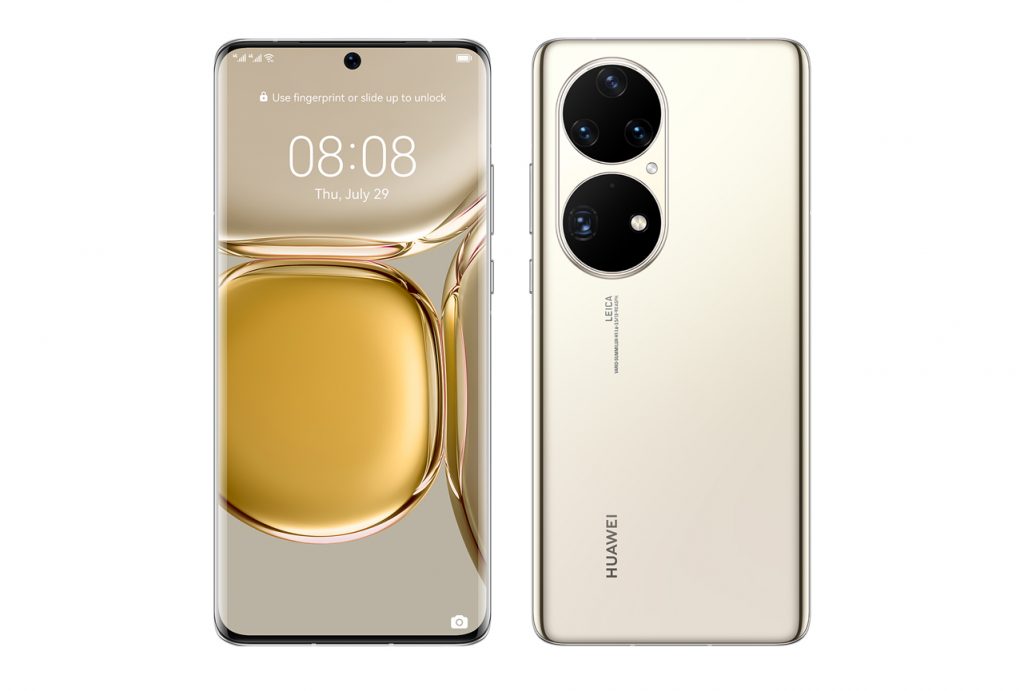
Samsung for a long time held the number 1 position in the DxOMark’s display tests. This has changed, thanks to the new contender, Huawei P50 Pro. Not just cameras, the newly P50 Pro has also shined in display tests of DxOMark by scoring 93 points.
The newly launched Huawei P50 Pro comes with a great display on paper. It seems that it also fares well in thorough testing of the french analytics firm, DxOMark. Earlier, the display test’s number 1 champion was the Samsung Galaxy S21 Ultra with a score of 91 followed by the Galaxy Note 20 Ultra with its 90 points.
Now, the Huawei P50 Pro has overthrown the Galaxy S21 Ultra with its 93 points. It is worth noting that the P50 Pro costs way lesser than the Galaxy flagship phone.
If we talk about the P50 Pro’s display, the device has a 6.6-inch punch-hole display with curved edges. It is an OLED panel with a 120Hz refresh rate and 300Hz touch sampling rate. It has a resolution of 2700 x 1228 pixels and a screen-to-body ratio of 91.3 percent.
According to the test summary, the display has good readability of 70 points and has a flicker-free screen. It also scored well in touch and motion by scoring 82 points. The major area where the phone really shined was artifacts. It scored 86 points in artifacts, which is the highest in any smartphone period.
Apart from this, the smartphone also recently won the camera test by scoring 144 points. It seemed that the huge camera island comprising four major sensors helped its ranking. It scored 106 points in the selfie camera test.
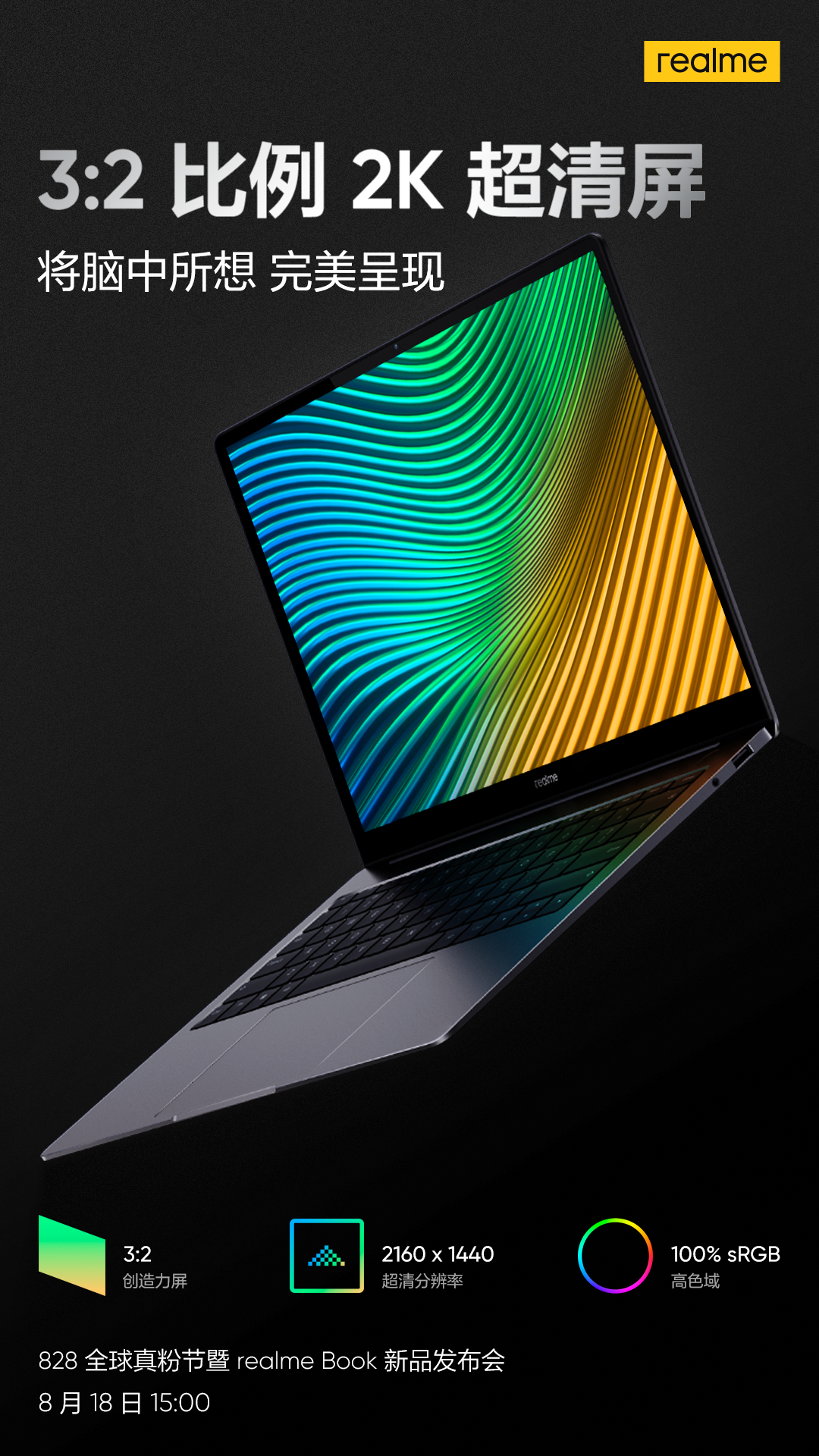
Realme Book is all set to go official on Aug. 18 in China. As it is known, it will be arriving as the company’s first notebook. Today, the company released an official poster to give a good look at its design. It also confirmed key features of Realme Book’s display.
The official poster showcases the sleek design of the aluminum-bodied Realme Book. The right edge of the device features a USB port and a 3.5mm audio jack. Previous reports have revealed that there are two USB-C ports on the left edge of the Realme Book. It can be seen sporting a large-sized trackpad.
The laptop can be seen sporting slim bezels. A webcam is available on the upper bezel, whereas the Realme branding can be seen in the bottom bezel. The company has confirmed that it carries support for 2160 x 1440 pixels, a 3:2 aspect ratio, and a 100 percent sRGB color gamut. The company has previously confirmed that it will be powered by the 11th generation Core i5 processor.
A recent leak revealed the existence of a model called Realme Book Slim. This indicates that the company may announce two or three Realme Book laptops in the coming week.
The Intel 11th gen. Core i5-1135G7 processor is likely to power the Realme Book Slim. It is rumored to offer users a 14-inch 2K display, 16GB of DDR4 RAM, 512GB of PCIe storage, Intel Xe graphics, and a 54Wh battery that supports 65W fast charging.
The notebook is expected to offer other features like Windows 10 Home, a pair of Harman Kardon speakers, a triple microphone array, two USB-C 3.1 slots, a USB 3.2 Gen 1 port, and a 3.5mm audio jack. It will be a lightweight model that weighs only 1.3 kgs. It is likely to be priced at around Rs 55,000 (~$739) in India.
Along with launching the Mi MIX 4 and the Mi Pad 5 in its home market in China, Xiaomi has also launched its Mi TV 6 OLED. This second-generation OLED TV from the company comes with several improvements and a reduced starting price.
Xiaomi has reduced the body thickness of this new TV to just 4.6mm and is also offering narrow bezels. The device is said to be optimized for heat dissipation and the company has brought down the price to under 5,000 yuan (~$771) in China.
It features a 4K OLED screen that offers a massive 97 percent screen-to-body ratio. It has 10-bit professional color depth, 900 nits peak brightness, ΔE2 color accuracy, 98.5 percent P3 color gamut, 1ms grayscale response time, MEMC support as well as hardware-level anti-blue light filter for eye protection.
Further, the display also supports HDR content with support for Dolby Vision, HDR10, HDR10+, and HLG. As for the audio output, there’s a dual-channel 12.5W four-unit speaker with each channel having its separate own low-frequency and high-frequency speakers. It has also passed IMAX Enhanced Audio and Video certification.
Under the hood, the Mi TV 6 OLED comes powered by the MediaTek 9638 quad-core processor that packs Cortex A55 cores clocked at 1.6GHz and a Mali-G52 MC1 GPU coupled with 3GB of RAM and 32GB of internal storage.
The device is offered in two different screen sizes — 55-inch and 65-inch. The 55-inch variant is priced at 5,699 yuan (~$879) and will first go on sale on 16th August for an introductory price of 4,999 yuan (~$771). On the other hand, the 65-inch variant costs 7,699 yuan (~$1,188) but will be available for a discounted price of 6,999 yuan (~$1,080), which ends on 18th August.
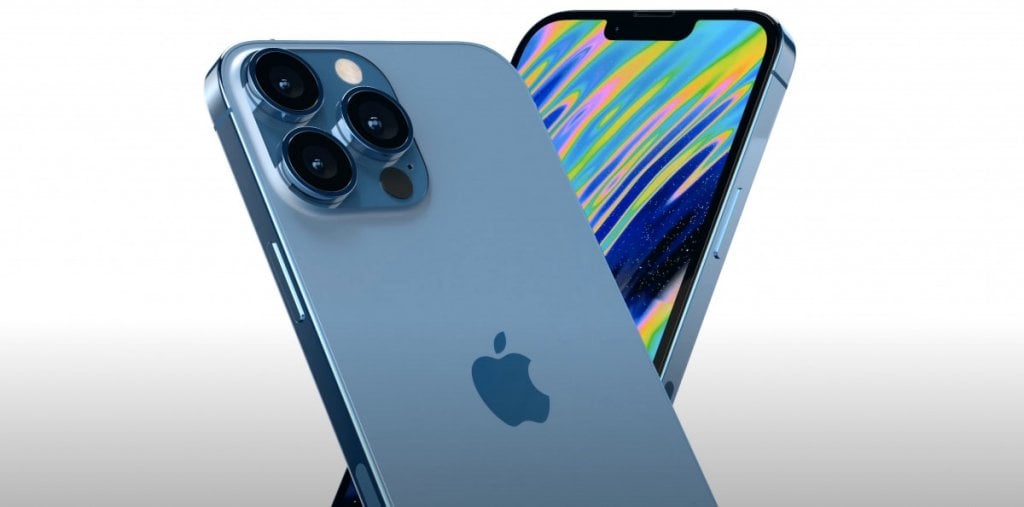
Apple is expected to launch its upcoming iPhone 13 series either in September or October this year. Just like every year, the upcoming iteration of the iPhone will bring small, yet refined changes, and this time, for cameras, fast charging, and storage. Now, Mark Gurman from Bloomberg reveals that Apple will bring Portrait mode for videos.
Apple officially released the Portrait mode(for photos) feature back in 2016 with the iPhone 7 series. Now, it is touted that the iPhone 13 series will bring this feature to videos. The Portrait mode for videos will work similarly to photos where the depth sensor will produce a blur effect for the background while only focusing on the subject.
Additionally, Apple is also said to offer ProRes feature for videos in the upcoming Apple iPhone 13. The feature will let users record videos in higher quality with a format easier for editing in post. This feature will be similar to the ProRaw feature seen in Pro models of the current iPhone 12. That said, the ProRes will also be exclusive to the Pro models of the upcoming iPhone 13.
Apart from video captures, Apple is also planning to update its existing photo filters with some new filters. Also, instead of applying a filter to the entire image, the upcoming iPhones will allow users to apply filters on specific objects.
Other than this, the Apple iPhone 13 series is expected to come with a LiDAR scanner. The series is expected to come with a slightly smaller notch and will have a 120Hz refresh rate. Notably, the higher refresh rate is expected only in the Pro variants. Under the hood, the series will board Apple’s A15 chip paired with up to whopping 1TB storage.
According to a leak, the upcoming iPhones are expected to feature improved fast charging support. Instead of 20W fast charging, the upcoming iPhone series is rumored to support 25W fast charging technology.
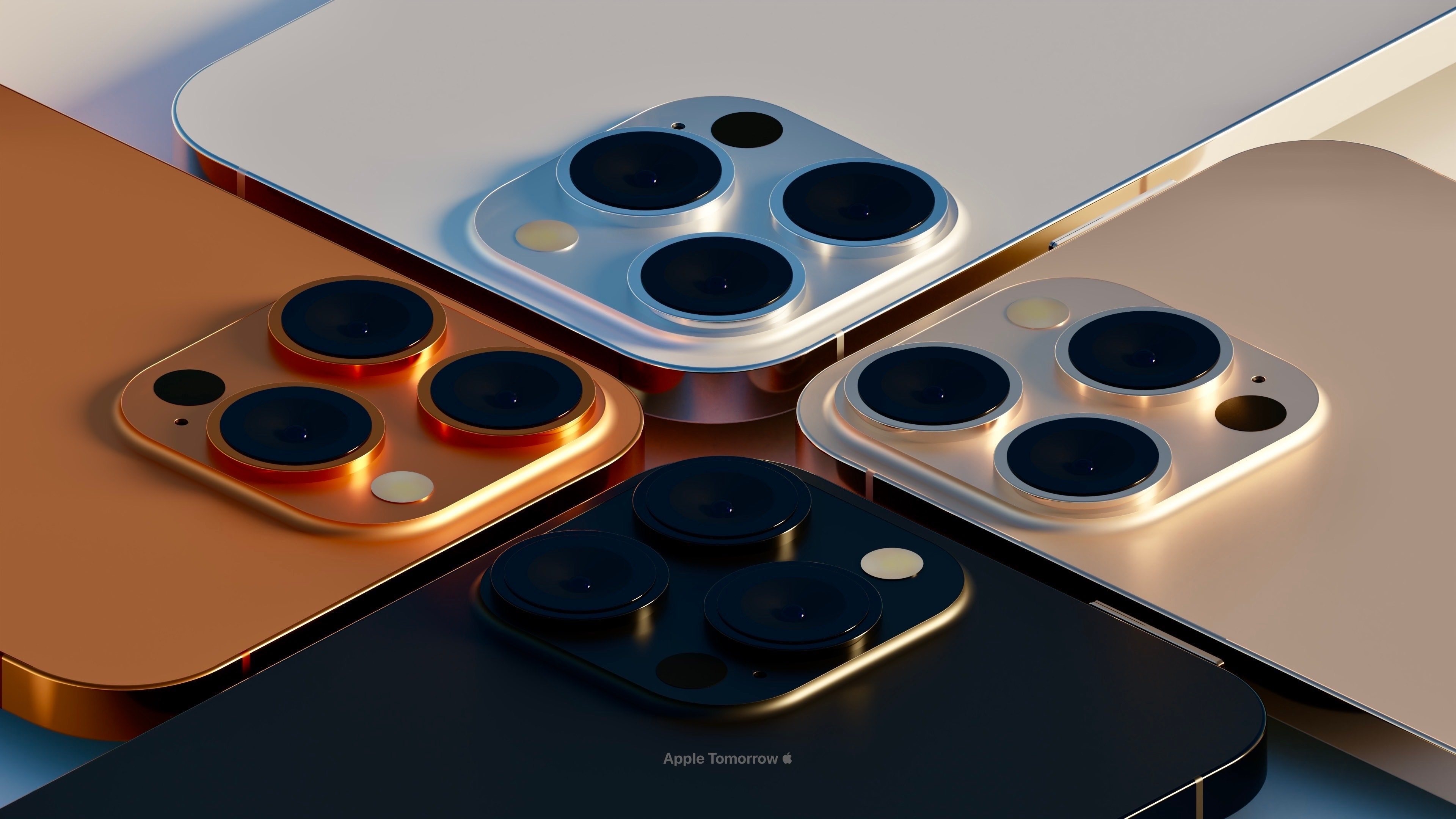
Moreover, the iPhone 13 series is said to bring back the Rose Gold color along with a new Sunset Gold hue.
Samsung will be unleashing its next foldables, the Galaxy Z Fold3 and Galaxy Z Flip3 later today. Since the past few weeks, the rumor mill has been consistently leaking the specifications, renders, and prices of these devices. Now, tipster Sudhanshu Ambhore has shared the specs sheet of the Z Fold3 and Z Flip3.
Samsung Galaxy Z Fold3 specifications
The Galaxy Z Fold3 has a 6.2-inch AMOLED cover display that supports 2262 x 832 pixels resolution. The front side of the device has a 10-megapixel camera. Opening the device reveals its 7.6-inch foldable AMOLED panel that supports a resolution of 2208 x 1768 pixels. This display is integrated with a 4-megapixel in-screen camera. Both displays support a 120Hz refresh rate.
Samsung Galazy Z Fold3 specs sheet
The Snapdragon 888 powers the device with 12 GB of RAM and 256 GB of UFS 3.1 storage. It has a 4,400mAh battery that supports 25W charging. The back panel of the phone has a 12-megapixel triple camera system.
Samsung Galaxy Z Flip3 specifications
The Galaxy Z Flip3 has a 6.7-inch foldable AMOLED display that offers 2640 x 1080 pixels resolution and a 120Hz refresh rate. Its rear sell features a secondary 1.9-inch AMOLED screen that delivers 512 x 260 pixels resolution. It has a front camera of 10-megapixel. The rear camera setup of the device has a 12-megapixel + 12-megapixel dual-camera system.
Samsung Galaxy Z Flip3 specs sheet
The Snapdragon 888 SoC-powered phone has 8 GB of RAM and 256 GB of storage. It has a 3,300mAh battery that supports 15W charging.
Readers can checkout the above messages to see the other specs of the Galaxy Z Fold3 and Galaxy Z Flip3. Shown below is a hands-on video that gives a look at the real units of Z Fold3 and Z Flip3:
Earlier this month, a Twitter user named Ankur Sharma shared images of his burnt OnePlus Nord 2 smartphone. Soon after the tweet, OnePlus was kind enough to respond to the user by helping him with the further doings. The Chinese manufacturer also revealed that the blast was caused solely due to external factors and there weren’t any manufacturing defects.
Just Yesterday, another Twitter user named Shubham Srivastava shared that his father’s OnePlus Nord 2 unit exploded. But, thankfully, it didn’t cause any harm. Now, OnePlus has officially confirmed that the second incident reported by Srivastava was fake.
Second OnePlus Nord 2 Blast case(tweet deleted)
OnePlus shared a statement regarding the second blase case.
“Earlier today, we were notified on Twitter about an alleged blast case for the OnePlus Nord 2. We always take such claims very seriously and immediately look into each one to first verify the legitimacy of the claim. During our conversation with this individual, we were able to confirm that this alleged case was false and in no way involved any OnePlus product. All OnePlus products undergo thorough quality and safety tests to ensure that they are up to leading industry standards and are safe to use”, stated OnePlus.
In continuation, “We also follow strict internal processes to ensure the health and safety of our users, while also protecting the reputation of our brand. We urge the public to exercise restraint in judging unverified allegations such as this.”
Although the second incident was fake, the first blast case still remains to be true. Also, it is worth noting that several other phones from big brands have been subject to such blasts. Either due to battery issues or due to some manufacturing defects.
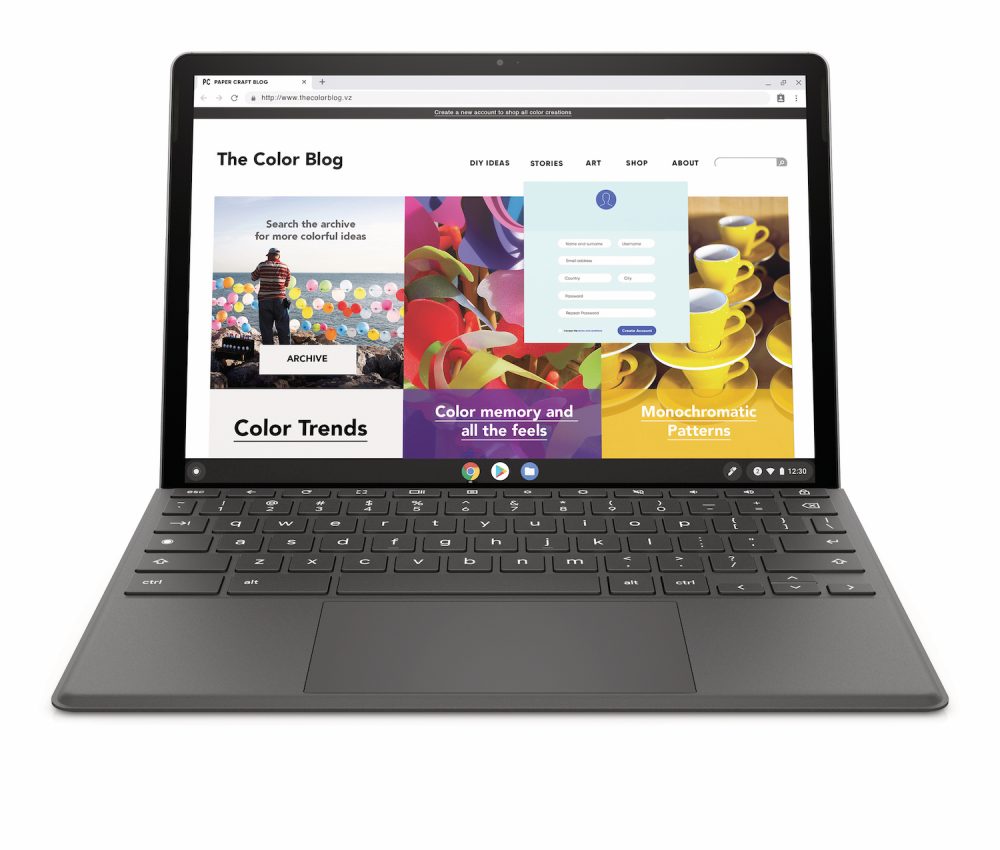
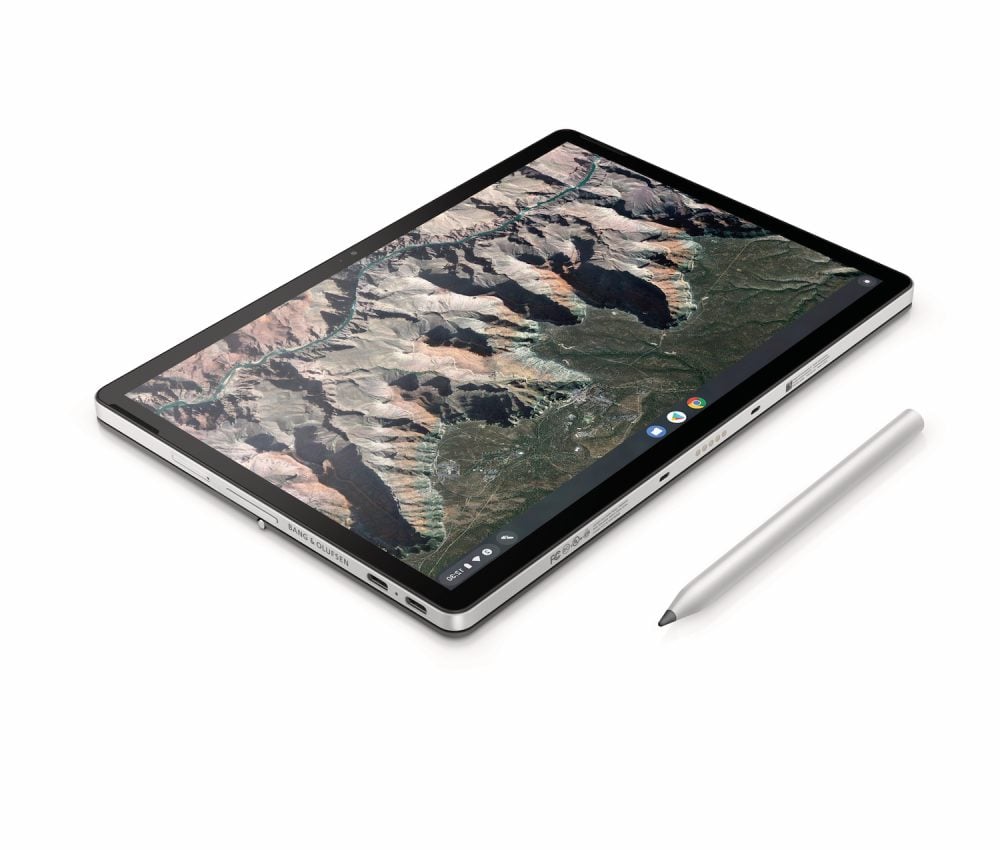
HP has announced the Chromebook x2 11 alongside the Chromebase AiO. It is a detachable device that comes with stylus support. With the Snapdragon 7c onboard, it carries support for LTE connectivity. Here is all the information on the specifications, features, and pricing of the Chromebook x2 11:
HP Chromebook x2 11 specifications and features
The aluminum-bodied Chromebook x2 11 has an 11-inch IPS panel that supports a 2K resolution of 2160 x 1440 pixels and 440 nits brightness. The screen is shielded by Gorilla Glass 4. The device ships with a USI-certified Pen (stylus) that can be charged wirelessly. This can be done by attaching the stylus to the right edge of the Chromebook x2 11.
HP Chromebook x2 11
The Snapdragon 7c is present under the hood of the Chromebook x2 11. It comes with 8 GB of LPDDR4x RAM and up to 12GB of eMMC storage. The company claims that the 32Wh 2-cell battery of the Chromebook can last for around 11 hours and 15 minutes. The 45W charger allows the device to go from zero to 50 percent in 45 minutes.
HP Chromebook x2 11
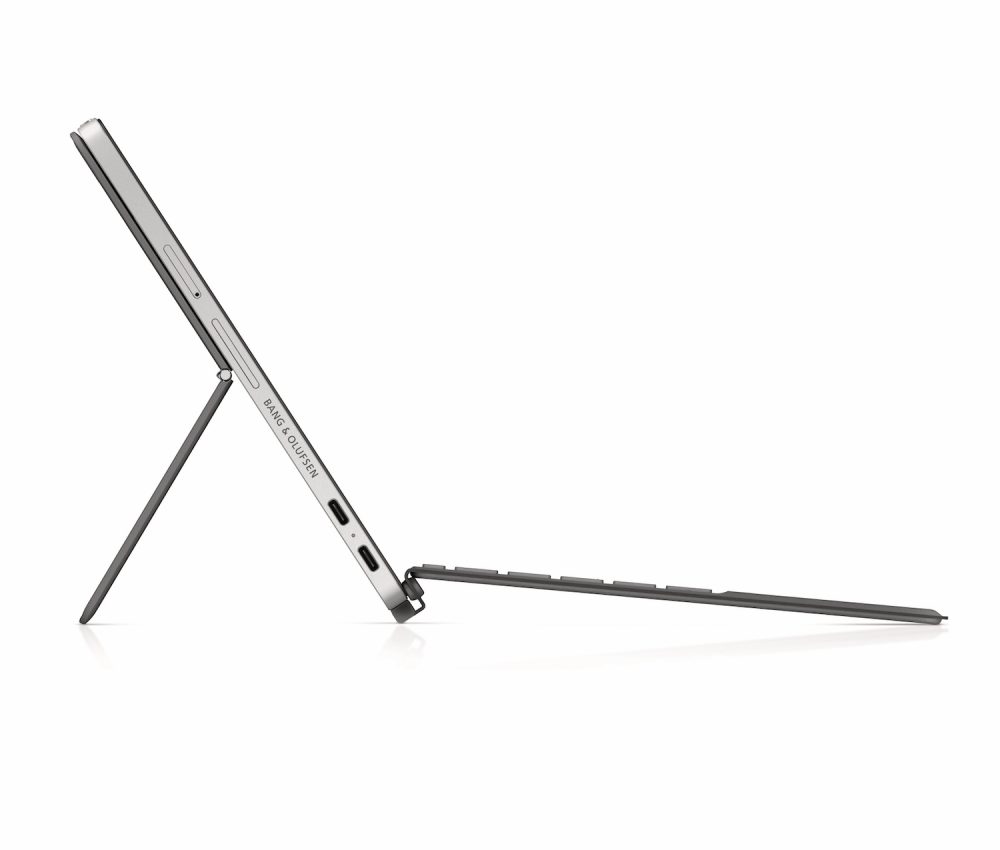
The Chromebook x2 11 has a front camera of 5-megapixel, and it has an 8-megapixel rear camera with a dual array microphone. It offers other features like Wi-Fi 5, Bluetooth 5.0, a pair of USB-C ports, a microSD card slot, and a nano-SIM slot (optional).
HP Chromebook x2 11
There is a full-sized keyboard with a trackpad, which can be attached to the bottom edge of the Chromebook x2 11. The back panel of the device features a kickstand that makes it possible to use it at various angles of up to 170 degrees.
HP Chromebook x2 11 pricing and availability
The HP Chromebook x2 11 starts at $599 with the stylus included. It comes in two LTE variants such as 4 GB RAM + 64 GB storage and 8 GB RAM + 128 GB storage, and a Wi-Fi-only model with 8 GB RAM + 64 GB storage. It can be purchased in colors like Night Teal and Shade Gray.
Knockoffs are a huge problem plaguing online marketplaces like Amazon and to tackle such issues, the online retail giant had created a Counterfeit Crimes Unit in June last year. Now, the unit seems to have taken its first action.
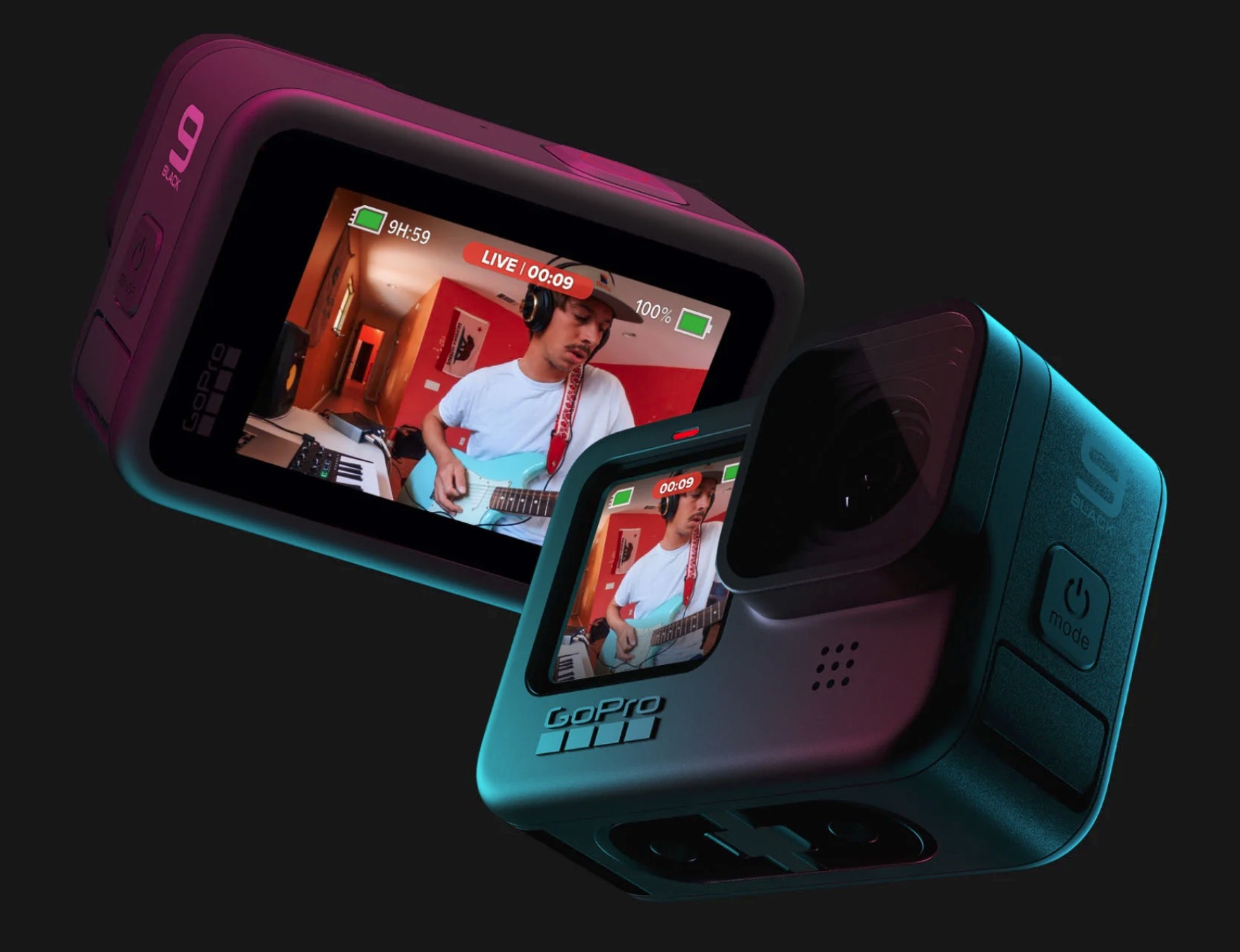
Amazon and GoPro have sued seven Chinese nationals and a couple of businesses for distributing hard-to-detect knockoffs of its “Handler” floating camera handgrip and “3-way” tripod grip that uses GoPro’s own logo.
The lawsuit was filed in April this year and has just been unsealed because a parallel investigation against the same sellers is ongoing in China. The lawsuit claims that some of the buyers were fooled by the fake products but it doesn’t reveal the number of people who actually bought these fake products.
As for taking action, Amazon says that it blocked the seller accounts of these defendants after counterfeits were brought to the company’s attention. The company also added that it sent samples of the products to GoPro to help the investigation.
Kebharu Smith, Director of Amazon’s Counterfeit Crimes Unit said, “When counterfeiters attempt to sell in our store, they not only violate the intellectual property rights of companies like GoPro, they also mislead consumers and harm Amazon’s reputation as a place to buy authentic goods.”
Amazon contends that the problem of counterfeit products on its platform isn’t widespread. It says that in 2020, less than 0.01 percent of all products sold on its marketplace were the subject of a counterfeit complaint from customers. But Amazon doesn’t reveal how many products it has on its storefront, so it’s impossible to tell how large “0.01%” might be.
The company is talking about counterfeit complaints filed by the customers so the number of such products on the platform could be much more given that not everyone can tell apart the fake goods and not everyone who finds out decides to complain about it.
Honor is scheduled to have an extended launch of several products on August 12. This has seen the release of several official teasers and specs sheet for some of these devices, as the company ups the tempo leading to the event. We expect to see more of these teasers and new details ahead of the scheduled August 12 event.
The Honor Magic 3 is one of the devices primed for launch on August 12, and Honor has released an announcement via Weibo that it is partnering with proprietary camera solutions provider IMAX Corporation in conjunction with DTS.
The partnership is to offer superior video and audio experiences for smartphones via IMAX Enhanced. The new arrangement will see the Honor Magic 3 having the IMAX Enhanced audio and video experience. IMAX Enhanced brings the IMAX capabilities to consumers via TVs and projectors previously. It supports 4K HDR videos with DTS audio on HDR10+ displays. Honor says the Magic 3 will be the first smartphone to have the IMAX Enhanced feature offering an expanded aspect ratio and immersive sound.
The Weibo page also showed a circular camera set up looking like a film reel. This could indicate the circular cam design for the Honor Magic 3. The Honor Magic 3 is powered by the new Qualcomm Snapdragon 888+ chipset, which could provide an indication of an increasing partnership between Honor and chipmaker Qualcomm.
Speculation surrounding the price of the Honor Magic 3 indicates that it could be sold at 4,000 Yuan (~$616), although we expect official pricing information and global availability details before the launch event proper. We also expect the unveiling of a few more devices from the Magic 3 series on August 12.
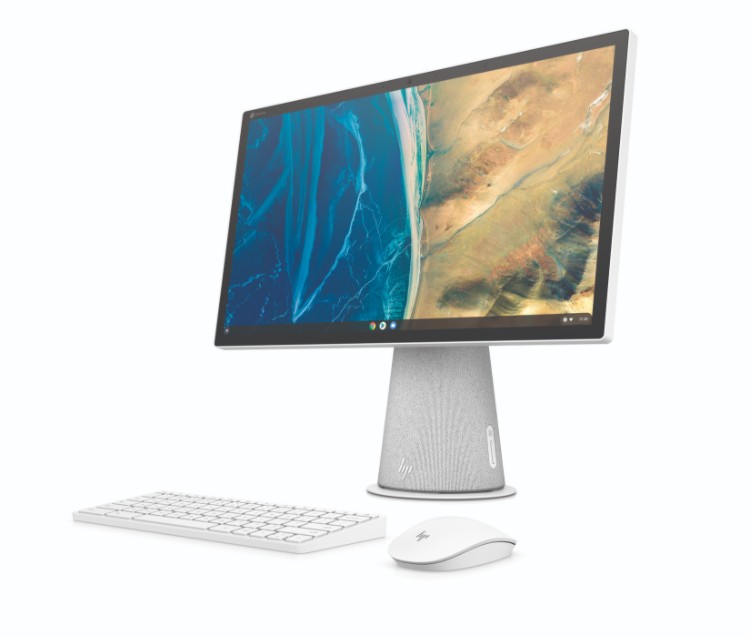
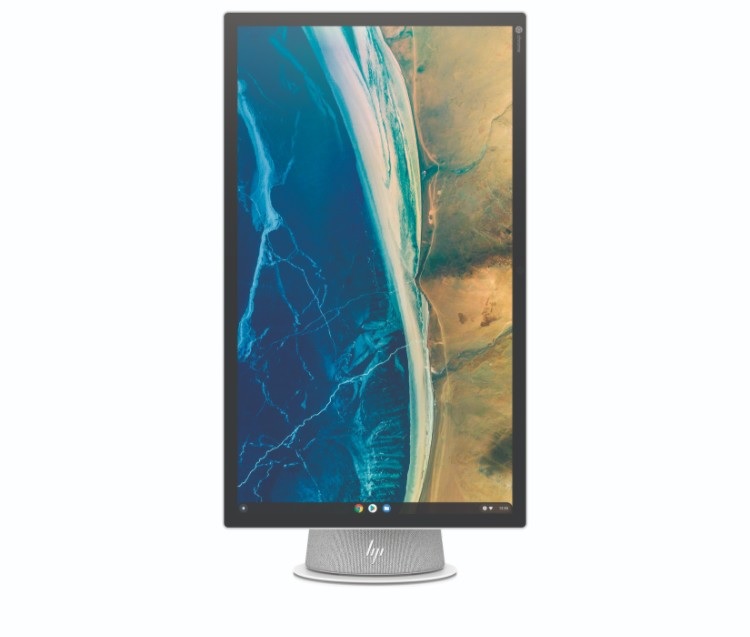
There are not a lot of All-in-Ones (AiO) powered by Chrome OS but if you are on the lookout for one, especially for your home, then the new HP Chromebase should be on your radar.
The specifications of the HP Chromebase are not bad but the highlight of the computer is its 21.5-inch 1080p IPS touchscreen that can rotate 90º clockwise into a portrait position. The mechanism is so smooth that it can be flipped with just a finger and a little push from the top right corner as seen in a hands-on video by Chrome Unboxed.
You might be wondering why you need your screen in portrait mode, but it turns out that this mode is best for Android apps running on Chrome OS. It is also a more efficient use of the screen when scrolling through a web page or viewing a document as a lot more content fits on the screen compared to when in landscape mode.
1 of 3
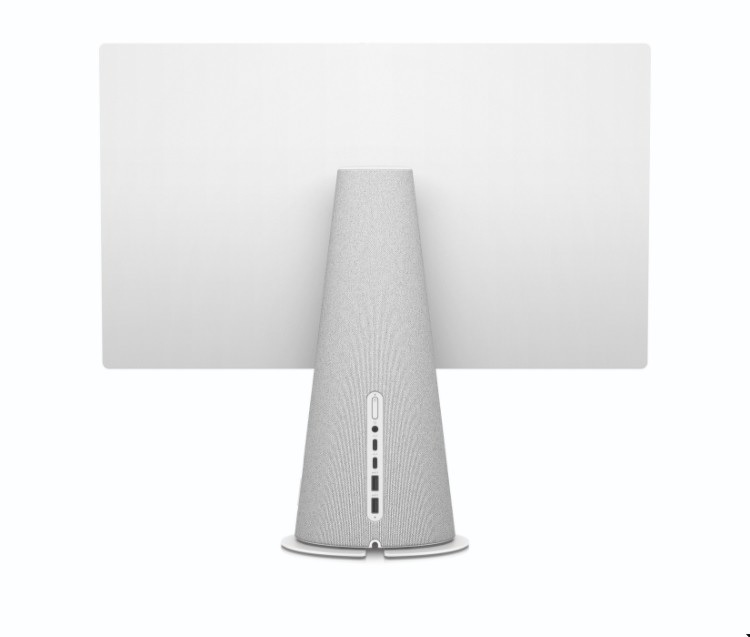
The display of the HP Chromebase is attached to a cone-shaped fabric-covered aluminum base that is home to the internals as well as two B&O 5W speakers, two USB-C ports, two USB-A ports, and an audio jack. The computer has a starting price of $599 and comes with a Pentium Gold processor for the base model with 4GB of RAM and 64GB of storage. The pricier models have a 10th Gen Core i3 processor, up to 16GB of RAM, and 256GB of SSD storage.
There is a 5MP webcam and a shutter at the top allows you to not only cover the camera but also mute the microphone. It also has Wi-Fi 6 and Bluetooth 5.0. HP ships the Chromebase with a matching white keyboard and mouse and a 90W power adapter.
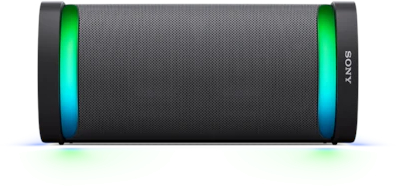
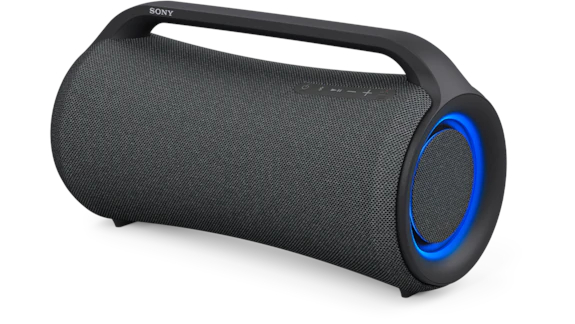
Electronics giant Sony has unveiled three new Bluetooth wireless speakers to the Indian market. The three products are from the X-series and are already available at Sony retail stores, as well as other online and offline retail outlets in the sub-continent.
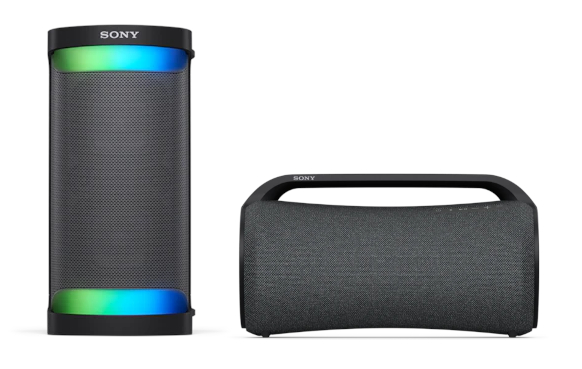
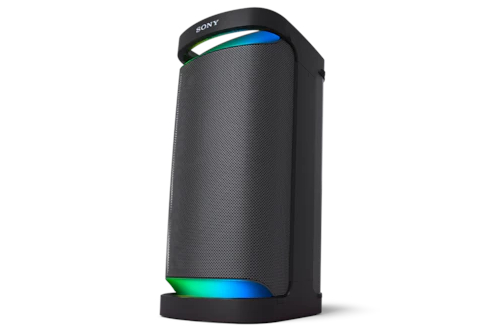
The new products are the Sony SRS-XP500, SRS-XP700, and SRS-XG500 wireless speakers. The speakers feature X-Balance speaker units, Mega-Bass and Live Sound Mode, waterproof and dustproof capabilities, and battery life of up to 30 hours. The non-circular diaphragm of the Bluetooth wireless X-series speakers, together with the Mega-Bass feature, and the Live Sound Mode, combine to create a unique sound atmosphere for listeners.
All three Bluetooth wireless speakers come with several high-efficiency tweeters and a great handle for easy handling. While the SRS-XP500 and SRS-XG500 come with two tweeters, the SRS-XP700 is fitted with three front tweeters and a rear tweeter. The XP700 offers omnidirectional Party Sound with its four high-efficiency tweeters. The power of the speakers can be raised several notches higher with the Party Connect feature, which makes it possible to connect up to 100 compatible speakers for a more compelling sound and lighting experience.
The XG500 and XP700 are the pricier of the models and offer greater depth than the XP500. In terms of actual battery life, the XG500 offers the highest mileage of 30 hours of continuous playback, while the XP500 gets up to 20 hours, and the XP700 gives 25 hours.
Sony India hopes the three new Bluetooth wireless speakers it has just unveiled in India will have a great reception.
The new products are the Sony SRS-XP500, SRS-XP700, and SRS-XG500 wireless speakers, priced at Rs. 26,990 ($362) (for the XP500) and Rs. 32,990 ($443) (for the XP700 and XG500), respectively.
The popular Playerunknown’s Battlegrounds, widely known as PUBG, is going free-to-play for a week. Not just that, the game is also receiving a name change. While the reason behind this has not been revealed by the company, it is being speculated the company is doing this to gauge player interest for turning this into a completely free-to-play game.
The free-to-play week has now been commenced, starting on August 10, and is going to run until August 16. This also coincides with Kpop mega-group Blackpink’s crossover content launching in the game, with decals on the airship and buildings.
Krafton, the studio that makes the PUBG game is even giving players some rewards for trying the game out during this promotion. As for the name change, Playerunknown’s Battlegrounds will be known as “PUBG: Battlegrounds” going forward, which means the full name of the game is now officially Playerunknown’s Battlegrounds: Battlegrounds.
During this free-play week, rewards can be collected normally and the company has confirmed that mission progress and gameplay statistics will be recorded and put toward achievement progress if players wind up buying the full game.
It’s noteworthy that the promotion is only available on Steam, which means console players will not have access to it. Last month, PUBG got bigger with the launch of a new Taego map which is around 18km by 18km. This is the biggest map in the game for a fair few years, and giving players a vast new area to explore.
At the Xiaomi event today, the CEO, Lei Jun, announced that it will be refunding all the first-time buyers of its very first smartphone, the Mi 1, announced 10 years ago.
The manufacturer revealed that it had sold 184,600 units of the smartphone which had a launch price of ¥1999 (~$308). The total revenue generated from the sales was over ¥370 million and that money has helped Xiaomi attain its present-day status as the second-largest phone brand in the world.
As a way to show its appreciation to these early adopters who put their trust in the company, Xiaomi says it is refunding the cost of the phone. However, since refunding each buyer will be too much of a hassle, it has converted the refund into a voucher of the same amount. The voucher can be used towards the purchase of any item on the Xiaomi online store.
The Mi 1 was announced in August 2011. The phone had a 4-inch LCD display, 1GB of RAM, a Snapdragon S3 dual-core processor, a single 8MP rear camera, a 2MP front-facing camera, and a plastic body.
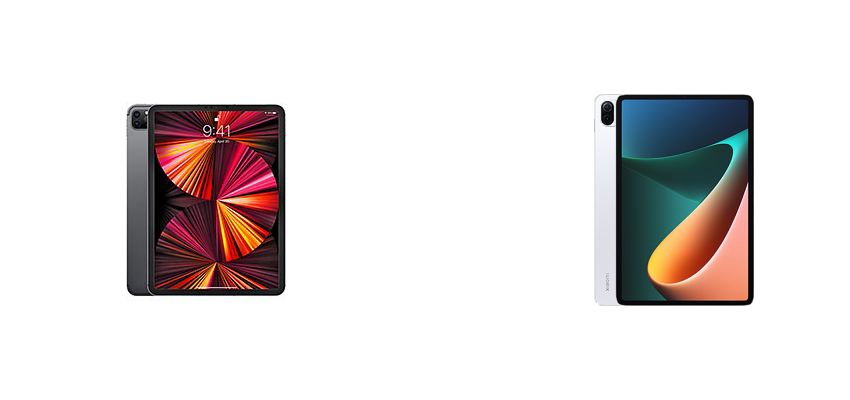
Xiaomi is finally back in the tablet market with two new devices: the Xiaomi Mi Pad 5 and the Xiaomi Mi Pad 5 Pro. They are both high-end tablets and perfect rivals for the latest iPad Pro released by Apple, but they come at a more affordable price. Despite that, they pack a great hardware department and a stunning specs sheet: is that enough to beat the latest iPads or you can get more from Apple devices? This comparison will highlight the differences between the specifications of the iPad Pro 11 2021 and the Xiaomi Mi Pad 5 Pro.
Dual 50 + 5 MP or dual 13 + 5 MP
8 MP f/2.0 front camera
Triple 12 + 10 MP + LiDAR f/1.8 and f/2.4
12 MP f/2.4 front camera
BATTERY
8600 mAh, fast charging 67W
7538 mAh, fast charging 18W
ADDITIONAL FEATURES
Dual SIM slot, optional 5G, pen support
LTE, 5G, Pen support, eSIM
Design
The Xiaomi Mi Pad 5 Pro is a very thin and lightweight device with a thickness of just 6.8 mm and a weight of just 515 grams. But the iPad Pro M1 is even thinner and lighter! It weighs just 470 grams and it is 5.9 mm thin: one of the thinnest tablets out there. The devices have a very similar screen-to-body ratio. The iPad Pro M1 wins the design comparison simply because it has a sleeker design. The tablets support both a pen and a physical keyboard you can attach through magnetic connectors. The Xiaomi Mi Pad 5 Pro supports a nano SIM in the 5G variant, while the iPad Pro has both nano SIM and eSIM support.
Display
Apple iPad Pro M1 and Xiaomi Mi Pad 5 Pro are equipped with stunning displays. They have a diagonal of 11 inches, the HDR10 certification, the Dolby Vision standard, a Quad HD+ resolution, and even a 120 Hz refresh rate, as well as a very high brightness. On the other hand, they both come with IPS panels instead of those brilliant AMOLED displays you can usually find on flagship smartphones. But you should not worry so much about it because these tablets have excellent IPS panels. On the iPad Pro, you can authenticate through 3D facial recognition by using Face ID, while you can only rely on the old password if you get the Xiaomi Mi Pad 5 Pro.
Specs & Software
Apple iPad Pro M1 and Xiaomi Mi Pad 5 Pro are equipped with flagship-class hardware. The iPad Pro M1 has the same processor as the latest iMacs: the custom Apple M1 with an octa-core architecture, paired with up to 16 GB of RAM and up to 2 TB of native storage. The Xiaomi Mi Pad 5 Pro has the Snapdragon 870 mobile platform paired with up to 8 GB of RAM and 256 GB of UFS 3.1 storage. Despite they are both flagships, the iPad Pro M1 is able to offer higher performance thanks to its superior hardware department. Further, the iPad Pro M1 has a more advanced operating system for tablets: iPadOS, which is able to maximize the user experience in multi-tasking.
Camera
Xiaomi Mi Pad 5 Pro and Apple iPad Pro M1 are two of the best tablets in terms of camera performance. Overall, the iPad Pro M1 is superior with its 12 MP main sensor including OIS, a 10 MP ultrawide camera, and a TOF 3D LiDAR scanner for AR appliances. But the Xiaomi Mi Pad 5 Pro is still a great camera tablet with its 50 MP main camera (only available in the 5G variant) and a 5 MP ultrawide sensor.
The battery capacities of these two tablets do not differ too much: 7538 mAh for the iPad Pro M1 and 8600 mAh for the Xiaomi Mi Pad 5 Pro. Despite the iPad Pro M1 has a smaller capacity, the battery life should not be so far due to the great optimization of iPadOS. But the Xiaomi Mi Pad 5 Pro has a much faster charging technology with a power of 65W instead of the 18W found on its rival.
Price
Xiaomi Mi Pad 5 Pro debuted in the Chinese market with a €330/$387 starting price, while iPad Pro M1 starts from €780/$915. The iPad Pro M1 wins the comparison as it is a much better tablet than the latest Xiaomi flagship, but its price is more than twice superior to the Mi Pad 5 Pro. That is why the Xiaomi tablet offers a way higher value for money.
Xiaomi Mi Pad 5 Pro vs Apple iPad Pro 2021: PRO and CONS
We use cookies on our website to give you the most relevant experience by remembering your preferences and repeat visits. By clicking “Accept”, you consent to the use of ALL the cookies.
This website uses cookies to improve your experience while you navigate through the website. Out of these, the cookies that are categorized as necessary are stored on your browser as they are essential for the working of basic functionalities of the website. We also use third-party cookies that help us analyze and understand how you use this website. These cookies will be stored in your browser only with your consent. You also have the option to opt-out of these cookies. But opting out of some of these cookies may affect your browsing experience.
Necessary cookies are absolutely essential for the website to function properly. This category only includes cookies that ensures basic functionalities and security features of the website. These cookies do not store any personal information.
Any cookies that may not be particularly necessary for the website to function and is used specifically to collect user personal data via analytics, ads, other embedded contents are termed as non-necessary cookies. It is mandatory to procure user consent prior to running these cookies on your website.