Advertisement

Vivo V80 Lite 5G launches with 120Hz curved display, 7,050mAh battery, 50MP dual cameras

The Vivo V80 Lite 5G has gone official in Pakistan. It combines a curved display, large battery with a mid-range chipset, a 50-megapixel dual camera setup, and an attractive appeal. Continue reading ahead to learn more in detail about the V80 Lite.

Vivo V80 Lite 5G specifications and features

Vivo V80 LIte 5G
Vivo V80 LIte 5G

The Vivo V80 Lite 5G has an attractive design as it flaunts a curved AMOLED display on the front and a horizontal rear camera bar. It carries a 50-megapixel Sony IMX852 main camera, 2-megapixel bokeh camera, and a ring LED flash. On the front, it has a 32-megapixel front camera.

Vivo V80 Lite 5G
Vivo V80 Lite 5G

The phone has a 6.83-inch 1.5K AMOLED display with a 120Hz refresh rate, 449ppi density and up to 3,000 nits of peak brightness. It runs OriginOS 6 based on Android 16 and includes symmetrical stereo speakers and an in-display fingerprint sensor.

Power comes from the 4nm MediaTek Dimensity 7360-Turbo. The phone gets 8GB of LPDDR4X RAM with 128GB or 256GB of UFS 3.1 storage, plus up to 8GB of extended RAM.

Vivo V80 Lite 5G
Vivo V80 Lite 5G

A 7,050mAh battery powers the phone with 44W charging. The handset also packs other features, such as bypass charging, Bluetooth 5.4, dual-band Wi-Fi, and USB 2.0 Type-C. Durability features include IP68 and IP69 ratings, five MIL-STD-810H certifications and drop testing across seven surfaces.

Vivo V80 Lite 5G price and availability

In Pakistan, the 8GB+128GB version costs PKR124,999 (~$450), while the 8GB+256GB model is priced at PKR145,999 (~$525). Buyers can choose from color variants, such as Sapphire Blue and Silk White.

VIvo V80 Lite 5G launch date

Readers should note that the Vivo V80 Lite 5G is essentially a rebranded Vivo S2 sold in India. Vivo also has a separate V80 Lite 5G with a 10,000mAh battery for Southeast Asian markets such as Malaysia, while Bhutan is expected to get the S2-based V80 Lite soon.

For more daily updates, please visit our News Section.

Stay ahead in tech! Join our Telegram community and sign up for our daily newsletter of top stories!

Xiaomi’s new fish tank with LCD display now up for crowdfunding

The Mijia Smart Fish Tank 2 Pro from Xiaomi is now up for crowdfunding, following the pre-order rollout Xiaomi kicked off last week. The campaign runs till August 31 on Xiaomi Youpin, with a crowdfunding price of 599 yuan (~ $90).

The tank’s water circulation system is the main upgrade here. According to Xiaomi, water passes through several layers of filter media in a set order, so impurities get caught step by step instead of slipping through from backflow or dead spots in the flow. 

The bio-filter cartridge uses a U-shaped water path to make the water travel farther through the filter. This gives beneficial bacteria more time to interact with the water, improving purification. It also has a separate layered filter box that first catches fish waste and leftover food, while several layers of filter cotton trap smaller particles and help drain the collected debris.

Above that sits a multi-functional water inlet chamber, which uses a multi-stage flow guide to push water evenly through the filters. The chamber also has a 5W waterproof expansion port, so you can pull the chamber out and slot in accessories like a UV lamp or heating rod without rearranging anything else.

The pump runs on an all-copper four-pole brushless motor with low-magnetic-loss circular silicon steel plates, giving it more power and a stronger flow rate. Xiaomi widened the inlet grille, impeller channel, and pump chamber clearance to keep debris from clogging things up, and paired a low-resistance ceramic shaft with sound-insulating cotton and a fully sealed motor to cut down on noise.

A built-in display and smarter controls

On the front, you get a 1.47-inch color LCD that shows water temperature, equipment status, and any alerts, so you don’t need to open the app just to check on things. The tank also ships with an automatic feeder that works in manual or smart mode. And if anything goes wrong, the Xiao Home app sends a notification right away.

Mijia Smart Fish Tank 2 Pro Display

Through the app, you can feed your fish remotely, adjust the water pump, monitor temperature, and set the tank to shut off automatically when the lid opens. Xiao Ai voice control also lets you turn the lights on and off with a single command. 

Based on how long the tank has been running, plus the fish species and headcount you enter, the system automatically tunes lighting, filtration, and overall operation to match. It’s a step up from the original Mijia Smart Fish Tank, which launched with a simpler filtration setup and no LCD readout.

For more daily updates, please visit our News Section.

Stay ahead in tech! Join our Telegram community and sign up for our daily newsletter of top stories!
(Source)

Official: Vivo X500 series confirmed for September with cinema-grade video capabilities

Vivo has officially confirmed that the X500 series will arrive in September in China, with three models in the lineup: the X500, X500 Pro, and X500 Pro Max. This also confirms that Vivo is skipping the X400 branding and moving directly from the X300 generation to X500. The number four is commonly avoided in parts of East Asia, including China, because its pronunciation is associated with death, a practice known as tetraphobia.

The company is positioning the upcoming generation around major camera and video upgrades, with a particular focus on bringing cinema-grade video capabilities to its flagship lineup.

Vivo X500 series focuses on cinema-grade video

Vivo X500 series first details confirmed
Vivo X500 series’ first details confirmed

Vivo Product Manager Han Boxiao revealed that the X500 series is being developed as a major imaging upgrade, with video receiving particular attention. The company says the Pro models will feature a Zeiss Super Dynamic main camera, jointly defined by Vivo’s BluePrint imaging team and Sony. The camera uses the new BluePrint Guangyu 900 sensor, which is a 50-megapixel 1/1.28-inch unit designed around high dynamic range.

The sensor can deliver up to 17EV of dynamic range, which Vivo describes as the highest in the industry. This capability is also being brought to video, allowing each frame to retain a wider range of highlights and shadows, particularly in challenging backlit scenes. The X500 Pro series will also support 4K 240fps slow-motion recording and 4K 120fps HDR video with direct HDR output.

The main camera supports 3° OIS with gimbal-level stabilization, while CIPA 7.0 professional stabilization is also part of the setup. Vivo is targeting steadier footage without requiring a dedicated gimbal, with the 3° OIS system specifically highlighted for the Pro Max.

Tipster Digital Chat Station has added more details about the camera hardware. According to the leak, the X500 series carries the internal codename “Thanos 500” and will retain a strong focus on both photography and video. The lineup is also expected to inherit the 200-megapixel “Thanos” telephoto camera from the Vivo X300 Ultra, using a custom large-format 200MP HP0 sensor and periscope lens.

For more daily updates, please visit our News Section.

Stay ahead in tech! Join our Telegram community and sign up for our daily newsletter of top stories!
Exynos 2700’s Geekbench AI listing shows much higher CPU clock speeds than last time

Samsung’s next-generation flagship chipset has shown up in a Geekbench AI test, and the most interesting bit is the clock speeds. The numbers are much higher, and more believable, than the previous Geekbench CPU listing. The engineering sample still uses the same 1+4+1+4 quad-cluster setup we saw before, but every cluster is now running faster.

Back in April the clocks were capped between 2.30 and 2.88 GHz across all four clusters. This latest result is the first solid data point that gets close to the 4.3–4.6 GHz range currently occupied by Qualcomm’s latest Snapdragon 8-series peak clocks, with the prime core hitting 4.24 GHz.

The CPU identifier string (implementer 65, part 3478) matches the earlier low-clock run, so it looks like the same test platform. That part number (0xD96 in hex) lines up with Arm’s still-unannounced “Canyon” core, which is widely believed to be the C2-Ultra, the follow-up to the C1-Ultra used in the Exynos 2600.

Just like the previous Geekbench 6 leak, the new entry carries the S5E9975 ERD tag, shows about 10.67 GB of usable RAM, and is running an Android 17 build. All of that points to the same engineering reference device simply running at unlocked frequencies rather than a new hardware revision. Because Geekbench AI is focused on on-device machine-learning performance, we don’t get the usual single-core or multi-core CPU scores, but the device info panel still shows the full CPU layout and clock speeds.

The Exynos 2700 is expected to be built on Samsung’s second-generation 2 nm process (SF2P) and is tipped for the Galaxy S27 series, which is still about half a year away. As with any engineering sample, the clocks and other numbers we see here might not be final retail silicon.

Arm hasn’t officially confirmed the core name yet, and the identification is based on the part-number match rather than any formal announcement. We’ll need more listings closer to mass production before we get a clearer idea of how the chip will actually perform in finished phones.

Don’t miss a thing! Join our Telegram community for instant updates and grab our free daily newsletter for the best tech stories!

For more daily updates, please visit our News Section.

(Source: Geekbench)

Timex launches two new affordable Weekender watches with classic dials and quartz movement

Timex has released a scaled-down version of its Weekender New England watch in the US, reducing the case size to 34mm. The new models are available now directly through the company’s website, offering a straightforward quartz option for buyers who prefer a more compact fit on the wrist.

Timex Weekender New England watches

Pricing

There are two specific variants included in this launch. The first is the TW2Y86500, which features a silver-tone case paired with a green leather strap, priced at $139. The second model, the TW2Y86600, comes with a gold-tone case and a black leather strap for a slightly higher price of $149.

Design Details

Aside from the color differences, both watches share the exact same dimensions: a 34mm case diameter, a 39.5mm lug-to-lug distance, and a 9mm thickness. The cases are constructed from low-lead brass and feature a mixed brushed and polished finish.

Visually, Timex is keeping the design highly functional. Both models have a cream-colored dial marked with standard, full Arabic numerals. To help with visibility in the dark, these models feature luminescent in-fill on the hands. The dial itself is covered by a standard mineral crystal, which provides basic scratch and heat resistance for everyday wear.

The Weekender line is generally known for its easily swappable straps, and these new New England models maintain that with an 18mm slip-thru design. This format allows users to pull the strap out and slide a new one in without needing a spring bar tool.

The included double-layered straps are made from what Timex describes as sustainable eco-friendly leather. The bands are sized to fit wrist circumferences ranging from 5.3 to 7.5 inches (135 to 190mm).

🔌 You’ll NeedThe 18mm slip-thru strap is swappable without tools, so a spare leather band is an easy upgrade. Check quick release leather watch strap price on Amazon →

Internally, the watches run on a standard quartz analog movement powered by an SR626SW battery. Water resistance is rated at 50 meters. In practical terms, this means the watch can handle light splashes or brief swimming, but Timex explicitly says it is not built for snorkeling or poolside diving.

In related news, Timex has recently launched two Expedition Pioneer Automatic watches with Miyota movements and sapphire crystals, while Casio has launched a new G-Shock watch in the US with heart rate tracking, solar charging, and tide forecasts.

For more daily updates, please visit our News Section.

Stay ahead in tech! Join our Telegram community and sign up for our daily newsletter of top stories!
(Timex 1,2)

Leaked Xperia 10 VIII promo image reveals rear design ahead of launch

A first promotional image of Sony’s next mid-range Xperia phone has popped up just days before it’s expected to be unveiled.

After Sony announced a launch event for Tuesday, a design leak spotted by Android Headlines gives us an early look at what seems to be the Xperia 10 VIII. The image shows the back of the phone in a promotional setting.

Sony last refreshed the camera module on the Xperia 10 series with the seventh-generation model last September, and not much appears to have changed this time around. From the rear, the Xperia 10 VIII looks very similar to its predecessor. The horizontal camera island with dual sensors and the Sony logo is still there. The main difference is a small color tweak: last year’s pure white has been swapped for a slightly greenish-shimmering white.

Apart from the design, details are still pretty thin. A recent Geekbench listing points to the same Snapdragon 6 Gen 3 processor and 8GB of RAM that powered the Xperia 10 VII. So far there haven’t been any solid leaks about the cameras, display, battery, or other specs. Early signs suggest this might be a fairly conservative update focused more on refining things than making big hardware jumps.

For reference, the Xperia 10 VII came with a 50MP main camera (1/1.56″), a 13MP ultrawide (1/3.0″), and a modest 8MP selfie camera. Battery capacity was also on the modest side at 5,000mAh. On the plus side, the phone stayed nice and compact: its 6.1-inch 19.5:9 FHD+ display is smaller than the standard Galaxy S26’s 6.3″ screen, and it weighed just 168g.

Sony’s event on Tuesday should give us the full picture: complete specs, pricing, and availability. Until then, the leaked image and the Geekbench listing are the clearest look we’ve got at the next Xperia 10 phone. The familiar design and mid-range chipset suggest Sony is sticking with continuity for this year’s mid-tier offering.

Don’t miss a thing! Join our Telegram community for instant updates and grab our free daily newsletter for the best tech stories!

For more daily updates, please visit our News Section.

(Source)

Timex launches two Expedition Pioneer Automatic watches with Miyota movement & sapphire crystal

Timex has released the Expedition Pioneer Automatic in the US, shifting its long-running outdoor watch series into a slightly higher hardware tier. While the Expedition line is typically known for its budget-friendly, battery-powered quartz models, this new release opts for a mechanical automatic movement and upgraded case materials.

Timex Expedition Pioneer Automatic watches

Design Details

The new Expedition Pioneer Automatic is built around a 41mm stainless steel case with brushed and polished finishes. It measures 14mm thick with a 48mm lug-to-lug distance, which gives it a standard, substantial fit on most wrists. 

Inside, Timex is using the Miyota 8215, a reliable Japanese automatic movement that winds itself using the natural motion of the wearer’s wrist. The internal mechanics are visible through an exhibition window on the case back, which is made of sapphire crystal.

Timex Expedition Pioneer Automatic watches

On the front, the dial is protected by another sapphire crystal, this time treated with an anti-glare coating. This is a step up from the mineral glass or acrylic often found on standard Timex models, offering much better scratch resistance.

Timex Expedition Pioneer Automatic watches

The watch is rated for 200 meters of water resistance, making it suitable for swimming and recreational scuba diving. It also features a rotating top ring for measuring elapsed time, a date window at 3 o’clock, and luminous hands and hour markers for improved visibility in low-light conditions.

Timex Expedition Pioneer Automatic watches

Pricing and Availability

Timex is offering the watch in two distinct configurations. The first, priced at $429, pairs a blue dial with a matching blue bezel. It comes with a 20mm brown natural leather strap and quick-release spring bars, allowing for tool-free strap changes.

The second configuration costs $459 and features a black dial with a black bezel. Instead of leather, it comes with a matching stainless-steel bracelet secured by a deployant clasp.

🔌 You’ll NeedThe Miyota 8215 automatic movement stops within 40 hours if left unworn — a watch winder keeps it running. Check single watch winder automatic price on Amazon →

Both models are available to purchase now from the Timex US website.

In related news, Casio has recently launched a new Pro Trek watch in the US with a glowing dial, solar charging, and a carabiner attachment, alongside a new G-Shock model with heart rate tracking, solar charging, and tide forecasts.

For more daily updates, please visit our News Section.

Stay ahead in tech! Join our Telegram community and sign up for our daily newsletter of top stories!

(Timex 1,2)

SJCAM C400 Review: A Versatile 3-in-1 Action Camera for Everyday Creators

The SJCAM C400 takes a different approach to the action-camera market. Instead of simply shrinking down a conventional action camera, it combines a tiny detachable camera with a battery grip that doubles as a larger monitor and wireless controller. The result is a versatile setup aimed at casual vloggers, travelers, and everyday creators.

It records in 4K, features six-axis gyro stabilization, has a rotating touchscreen, and can deliver up to seven hours of claimed battery life with its grip. It also comes with a generous selection of mounting accessories. However, the C400 isn’t without compromises, particularly when you push it beyond casual shooting.

34K Video Is Good for Casual Shooting

SJCAM C400
SJCAM C400

The C400 records at up to 4K/30fps, with 2K/60fps and 1080p/120fps also available. It supports slow motion, timelapse, loop recording, pre-recording, motion detection and car recording.

🔌 You’ll Need4K/30fps footage eats storage fast, and the C400 doesn’t include a microSD card in the box. Check 64GB microSD card price on Amazon →

In good daylight, the footage is sharp enough for travel videos, casual vlogging and social media. However, the 1/2.8-inch sensor means this isn’t a camera I’d pick primarily for challenging lighting conditions.

Low-light footage can look noisy and flat, while bright scenes can sometimes have blown-out highlights. Colors can also appear somewhat muted in certain situations.

The biggest specification limitation is the lack of 4K/60fps. If you’re recording fast-moving subjects, 4K/30fps doesn’t offer the same fluidity as higher-end action cameras. Slow motion is available at lower resolutions, with 2K supporting 60fps and 1080p reaching 120fps.

For casual creators, however, 4K/30fps should be sufficient for most everyday use.

Casio launches new G-Shock watch in the US with heart rate tracking, solar charging & tide forecasts

Casio has introduced a new fitness-focused G-LIDE G-Shock to the US market, following its initial launch in Japan last month. The GBX-H5600KI-5, priced at $370, is the fourth signature watch designed with professional surfer Kanoa Igarashi. It is available now through the Casio US website and combines standard digital watch features with modern health tracking and surf-specific data.

Casio G-LIDE GBX-H5600KI-5 smartwatch

Design Details

In terms of design, the watch uses a brown, mixed-color bio-based resin for its bezel and band. Casio says the color is meant to resemble the coastal cliffs of Portugal, and because of the manufacturing process, the exact pattern on each watch varies. The display is a Memory in Pixel (MIP) LCD, which is standard for fitness watches that need to remain visible in direct sunlight and underwater.

The company also reduced the weight compared to its previous heart-rate model, the DWH5600. By using a carbon fiber-reinforced resin case back, this new model weighs 47 grams, about 18 grams lighter, which makes it a bit more practical for daily wear and workouts.

On the hardware side, the watch includes an optical sensor for heart rate and blood oxygen monitoring, plus a three-axis accelerometer to track steps, distance, and speed. Casio is using Polar’s algorithms to process this data, providing metrics on cardio load, energy sources used during workouts, and sleep recovery stages.

For surfing, the watch provides tide graphs and moon phase data. You can store 50 preset locations directly on the device or use the companion Casio Watches smartphone app to select from roughly 3,300 global tide points.

The Bluetooth connection to a phone also handles automatic time syncing, activity log transfers, and basic notifications for calls, emails, and social media. Battery life depends heavily on how the watch is used, relying on a hybrid system of USB and solar charging.

If you leave the heart rate monitor running continuously during an activity, it lasts about 35 hours. In standard watch mode without heart rate tracking, it runs for about a month, and a power-saving mode can extend that to 11 months.

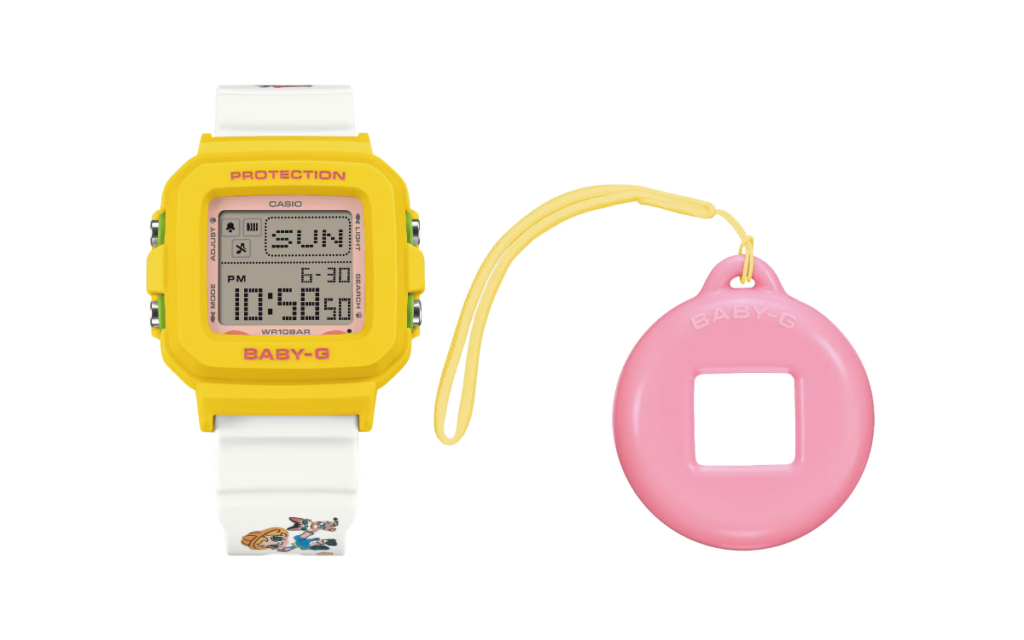
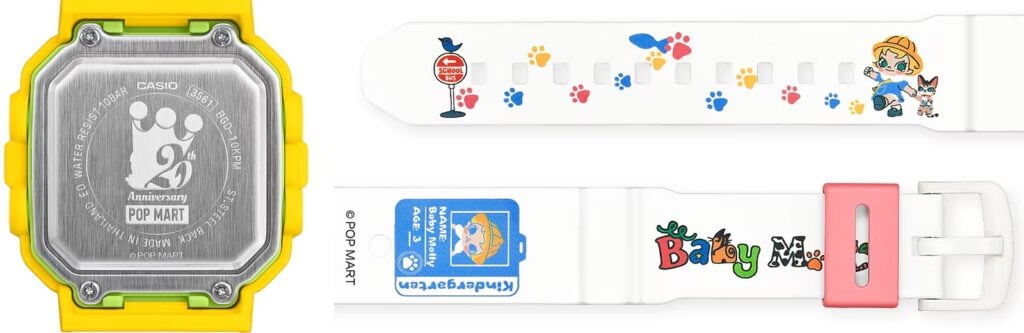
In related news, Casio has launched a new Pro Trek watch in the US with a glowing dial, solar charging, and a carabiner attachment, alongside new Baby-G watches with a removable module and glittery retro design.

For more daily updates, please visit our News Section.

Stay ahead in tech! Join our Telegram community and sign up for our daily newsletter of top stories!

(Casio)

Galaxy S27 Ultra’s latest renders spark criticism over wild redesign

The Galaxy S27 Ultra has been widely rumored to include one less camera on the back. The 3x telephoto seems to be on the chopping block. A shift in the camera layout is also inevitable, and according to previous reports, that is one of the biggest reasons behind this change. Thanks to tipster Ice Universe, we finally have a clearer picture of the rear design.

He shared a line drawing, followed by a number of renders and realistic-looking AI-generated images to showcase what the Galaxy S27 Ultra could look like from the back.

We can see a large rectangular camera island, most of which is just empty space. The combination of the two circular cutouts and a vertical pill housed inside a large rectangular camera plateau also makes it look almost identical to the mid-range Honor Win Turbo from earlier this year.

The tipster even pointed out how little might have changed internally, causing this seemingly unwanted visual overhaul. Most of the cameras on the Galaxy S26 Ultra stay in their existing positions, with only the 5x telephoto moving to the side. This isn’t entirely surprising given Samsung’s track record of upgrades, but it still doesn’t fully justify the larger camera plateau.

The comment sections of the posts showing the latest design mostly reflect disappointment rather than excitement.

One of the ways Galaxy flagships have stood out in recent years is their minimal camera layout. Previous renders of the Galaxy S27 Ultra, showcasing a horizontal camera island similar to the Pixel devices, earned praise because of that minimalism. The latest rumors showcase something very different.

The Qi2 magnets, on top of that, don’t seem to be the problem either. The wireless charging coil could have been repositioned a few millimeters lower to make room for the magnets.

That said, nothing is confirming the existence of this large rectangular camera plateau on the current engineering machines. The public response might have been totally different without this design element.

The 5x telephoto, which packs a much larger sensor than the current 3x telephoto, will likely increase the protrusion of that smaller pill. Whether Samsung has prioritized minimalism or the protrusion of the smaller pill housing the 5x telephoto will likely be revealed ahead of the official launch in Q1 2027.

Don’t miss a thing! Join our Telegram community for instant updates and grab our free daily newsletter for the best tech stories!

For more daily updates, please visit our News Section.

Source: Ice Universe (1), (2), (3)

Best Fitness Smartwatches for Tracking Workouts and Heart Rate in 2026

Smartwatches have improved significantly over the years. They now do far more than count steps and display phone notifications. Modern models can track heart rate throughout the day, record detailed workout data, measure sleep quality, monitor stress, and provide GPS navigation for outdoor activities. Many also include advanced tools such as ECG readings, blood-oxygen monitoring, recovery scores, personalized training plans, and emergency safety features.

The best option depends on the type of exercise you do, the health data you want to monitor, and how often you are willing to charge the device. Some watches focus on detailed training and recovery insights, while others prioritize smartwatch features, comfort, durability, or multi-day battery life.

If you are looking for a good smartwatch to track your fitness, workouts, heart rate, and overall health, these are the best smartwatches you can buy in 2026.

1. Samsung Galaxy Watch 9

Samsung Galaxy Watch 9

The Samsung Galaxy Watch 9 is the easy recommendation for Android users who want a conventional smartwatch without treating workouts as an afterthought. Available in 40mm and 44mm sizes, it is slim, lightweight, and far less imposing than the company’s rugged Ultra-tier watch.

Its strengths are familiar: continuous heart-rate tracking, sleep monitoring, workout recording, GPS, stress data, blood-oxygen readings, and Samsung’s BioActive sensor platform. But Samsung is leaning harder into interpretation, not just measurement. Features such as Heart Health Score, Daily Cardio Load, Fitness Index, Vitals monitoring, and sleep-based health baselines attempt to turn a sprawling dashboard of numbers into something actionable.

The Watch 9 also offers a bright Super AMOLED display that can reach 3,000 nits, dual-frequency GPS, LTE options, NFC, and up to 32GB of storage. It runs Wear OS 7 with One UI 9 Watch, so it remains useful as an actual smartwatch rather than a fitness tracker with notification spam attached.

Its biggest weakness is battery life. The 44mm model has a 445mAh battery, while the 40mm uses a 390mAh cell, fine for a day or perhaps more, but not Garmin territory. Still, for general workouts, heart-rate tracking, sleep insights, and daily Android life, it is one of the most complete options.

2. Apple Watch Series 11

Apple Watch Series 11

The Apple Watch Series 11 remains the default choice for iPhone users, and for good reason. It is not the longest-lasting watch here, nor the most rugged, but Apple’s health and safety software remains unusually polished.

This generation adds hypertension notifications, which use long-term optical heart-rate sensor data to look for consistent signs associated with chronic high blood pressure. It also introduces a Sleep Score, combining sleep duration, schedule consistency, awakenings, and sleep stages into one digestible rating. Neither feature replaces medical testing or a clinician, but both could be useful prompts to pay closer attention.

The rest of the package is classic Apple Watch: ECG, irregular-rhythm notifications, blood oxygen tools where available, cycle tracking, noise monitoring, crash detection, fall detection, depth and water-temperature sensors, and a deep catalog of workout modes.

The Series 11 is available in 42mm and 46mm cases, with aluminum and titanium finishes. The aluminum model gets tougher Ion-X glass with a ceramic coating, while the titanium version uses sapphire crystal. Apple rates the battery for up to 24 hours of normal use and up to 38 hours in Low Power Mode. Fast charging can reach up to 80% in around 30 minutes.

3. Google Pixel Watch 5

Google Pixel Watch 5

The Google Pixel Watch 5 is for Android users who want their smartwatch to be more proactive. It combines fitness tracking with Google’s expanding Gemini AI features, contextual information, and Fitbit-inspired health tools.

The watch comes in 41mm and 45mm sizes and uses a bright 3,000-nit domed AMOLED display. Its dual-frequency GPS is designed to improve route accuracy in dense cities, wooded trails, and other areas where satellite signals can struggle. For runners, cyclists, and hikers, that can matter more than another dozen sports modes.

Fitness features include recovery recommendations based on sleep and heart-rate variability, improved sleep-stage detection, Smart Wake alarms, strength-training guidance, and customized workout plans. Google is also expanding the watch’s role in safety with Breathing Emergency Detection, which uses heart-rate, movement, and barometric data to identify severe oxygen-related emergencies and potentially contact emergency services if the wearer is unresponsive.

Battery life is better than on previous Pixel Watches. The 41mm model is rated for up to 30 hours with the always-on display enabled, while the larger 45mm version can last up to 40 hours

4. Garmin Venu 4

The Garmin Venu 4 is one of the best choices for people who see fitness tracking as the main event rather than a smartwatch side feature. It is available in 41mm and 45mm sizes and delivers up to 12 days of battery life in smartwatch mode, making it dramatically easier to wear continuously for sleep, recovery, and workout tracking.

Garmin’s health suite is particularly strong. The Venu 4 tracks heart rate, heart-rate variability, Pulse Ox, skin temperature, sleep stages, Body Battery, stress, women’s health metrics, and ECG. The important difference is that Garmin is good at connecting those measurements to training readiness. If sleep quality is poor or recovery is low, Garmin Fitness Coach can adapt workout recommendations rather than simply pushing you to close another activity ring.

The Venu 4 also includes GPS, onboard music, Garmin Pay, Bluetooth calling, smart notifications, a built-in flashlight, and safety-tracking functions. Its software is not as app-heavy as Apple’s or Google’s platforms, but athletes may not care. This is a watch designed for someone who wants reliable heart-rate trends, recovery data, workout plans, and battery life that does not turn every evening into a charging session.

5. Amazfit Balance 3

Amazfit Balance 3

The Amazfit Balance 3 targets users who want advanced training metrics without paying flagship smartwatch prices. It features a 1.5-inch AMOLED display, sapphire glass, dual-band GPS, offline maps, Bluetooth calling, 64GB of storage, and up to 21 days of battery life on the titanium version.

Amazfit uses its Hybrid Training System to combine fitness, recovery, and lifestyle data. The system includes BioCharge, LifeLoad, and Training Load metrics. BioCharge estimates current energy and recovery levels. LifeLoad measures daily lifestyle stress. Training Load tracks workout strain.

The Zepp app uses that data to show whether a user should train hard, recover, or adjust their schedule. Weekly Focus and Training Balance tools also help users understand how their workouts are distributed across endurance, strength, and recovery.

The Balance 3 supports more than 180 sports modes. It can recognize 25 strength exercises and eight standard activity movements. It also supports external heart-rate straps, cycling sensors, and running power meters.

Amazfit has added HYROX-specific features, including workout tracking, race simulations, training plans, virtual pacing, and post-race performance analysis. The Balance 3 is a strong choice for runners, gym users, and hybrid athletes who want deeper fitness data and long battery life.

6. Xiaomi Watch 5

Xiaomi Watch 5

The Xiaomi Watch 5 offers a large battery, Wear OS 6, and a complete set of health and fitness tools. It uses a dual-chip design with a Snapdragon W5 Gen 1 processor and a BES2800 low-power chip. Xiaomi says the watch can last up to six days in regular smart mode and up to 18 days in power-saving mode.

The watch has a 930mAh silicon-carbon battery, a 1.54-inch AMOLED display, sapphire protection, dual-band GPS, NFC, ECG support, and continuous heart-rate and SpO2 monitoring. It also supports more than 150 sports modes and includes offline maps for outdoor training.

Google Gemini is available on the Xiaomi Watch 5, along with Google Wallet, Google Maps, Google Calendar, and the Google Play Store. The watch also supports Xiaomi HyperConnect for smart-home controls and connected-device features.

Xiaomi has also added gesture controls that use EMG, IMU, and PPG sensors. Users can pinch, rub, snap, shake, or rotate their wrist to control functions such as calls, alarms, workouts, camera controls, and media playback.

The Xiaomi Watch 5 is a good option for Android users who want Wear OS features without charging their smartwatch every day.

7. Amazfit Active 2

The Amazfit Active 2 delivers many key fitness features at a lower price than flagship smartwatches. It has a 1.32-inch AMOLED display, stainless-steel frame, GPS, Bluetooth calling, heart-rate monitoring, SpO2 tracking, stress tracking, temperature sensing, and more than 160 workout modes.

The watch uses the BioTracker 6.0 PPG sensor and includes Zepp Coach training guidance. It can recognize strength-training movements, track running performance, provide virtual pacing, and estimate race achievements.

The Active 2 also offers readiness scores, sleep data, smartphone notifications, music controls, camera controls, and up to 10 days of typical battery life. The premium model includes sapphire glass for added display protection.

The Amazfit Active 2 is a sensible pick for users who want workout tracking, GPS, and heart-rate data without paying for premium smartwatch features they may not use.

8. Honor Watch 6

Honor Watch 6

The Honor Watch 6 (full review) is built around an idea that many smartwatch owners will find refreshing: not charging every day. Its 980mAh silicon-carbon battery is rated for up to 35 days of use, making it one of the most endurance-focused watches in this group.

It includes over 120 workout modes, dual-band GPS, continuous heart-rate monitoring, SpO2 tracking, stress measurements, sleep analysis, and body-energy estimates. Trail runners get climbing and route-deviation metrics through Honor’s AccuTrack GPS system, while sports such as badminton and football receive more specific performance data.

The 1.46-inch AMOLED display reaches up to 3,000 nits, which should make it easy to read stats during outdoor training. It also has IP69 water and dust resistance, 5ATM water resistance, Bluetooth calling, NFC support in select markets, and gesture controls for managing alarms, calls, and music.

The Honor Watch 6 is less focused on third-party apps than Apple, Google, or Samsung models. But if you prioritize a bright screen, fitness fundamentals, outdoor tracking, and exceptionally long battery life, it is a compelling alternative.

9. Huawei Watch Fit 5 Pro

Huawei-Watch-Fit-4-Pro

The Huawei Watch Fit 5 Pro (full review) focuses on outdoor training and health tracking in a slim, lightweight design. It has a large AMOLED display, built-in GPS, continuous heart-rate monitoring, sleep tracking, blood-oxygen measurements, wrist-temperature tracking, Bluetooth calling, and support for more than 100 workout modes.

Huawei adds several features for more serious activities. The Watch Fit 5 Pro supports trail-running navigation, golf-course maps, ECG alerts, and diving tracking to depths of 40 meters. These tools give it a broader fitness focus than a standard activity tracker, especially for users who run outdoors, play golf, or spend time in the water.

The watch also offers up to 10 days of battery life, which makes it easier to wear overnight for sleep tracking and for multi-day trips without packing a charger. The Huawei Watch Fit 5 Pro is a strong choice for users who want a lighter alternative to a traditional round smartwatch but still need GPS, health tracking, and outdoor sports features.

10. Oppo Watch X3

Oppo Watch X3

The Oppo Watch X3 combines Wear OS 6 with a dual-engine system that moves background tasks to a low-power RTOS platform. Oppo says the approach delivers up to five days of battery life in Smart Mode and up to 16 days in Power Saver Mode.

The smartwatch includes ECG support, continuous heart-rate monitoring, SpO2 tracking, HRV-based stress insights, sleep analysis, dual-band GPS, fall detection, Bluetooth calling, and more than 100 sports modes. It also supports Google apps and services through Wear OS, which gives users access to Google Wallet, Maps, notifications, and third-party apps.

Oppo uses a titanium case and sapphire display protection for a more premium design. The Watch X3 also carries IP69 protection and MIL-STD-810H durability certification. It is a strong option for Android users who want a full Wear OS smartwatch with detailed health tracking and better battery life than most mainstream rivals.

For more daily updates, please visit our News Section.

Stay ahead in tech! Join our Telegram community and sign up for our daily newsletter of top stories!
iQOO Z11 vs Realme 16x 5G: Which Phone Offers Better Value?

iQOO Z11 and Realme 16x 5G take different approaches to the mid-range smartphone segment. While both offer 144Hz displays, large batteries and 5G connectivity, the iQOO Z11 pushes higher-end hardware with an AMOLED panel, Snapdragon 7s Gen 4 chipset, 90W charging and OIS. The Realme 16x 5G focuses more on affordability, durability and expandable storage. But with both targeting value-conscious buyers, which phone offers the more compelling overall package? 

Major Features:

CategoryiQOO Z11Realme 16x 5GWinner
Display6.83-inch AMOLED, 144Hz, HDR, up to 5000 nits6.81-inch IPS LCD, 144Hz, up to 1200 nitsiQOO — AMOLED and higher brightness
Build & DurabilityIP68/IP69 protectionIP65, MIL-STD-810H, drop resistanceiQOO — stronger water and dust protection
PerformanceSnapdragon 7s Gen 4, up to 12GB RAM, UFS 3.1Dimensity 6300, up to 6GB RAM, UFS 2.2iQOO — faster chipset and storage
Storage ExpansionNo microSDmicroSDXC supportRealme — expandable storage
Main Camera50MP with PDAF and OIS, 4K video50MP with AF, 1080p videoiQOO — OIS and 4K recording
Selfie Camera32MP, 4K video8MP, 1080p videoiQOO — higher resolution and video capability
AudioStereo speakers, Hi-Res audioSingle speakeriQOO — stereo sound
ConnectivityWi-Fi 6, Bluetooth 5.2, NFCWi-Fi 5, Bluetooth 5.3, no NFCiQOO — better connectivity package
Battery9020mAh, 90W charging7000mAh, 45W chargingiQOO — larger battery and faster charging
SoftwareAndroid 16, OriginOS 6Android 16, Realme UI 7iQOO — stronger hardware-software package
PricePriced around $300 / ₹31,000Priced around $300 / ₹26,000Realme — lower Indian price
OverallMore powerful and feature-richMore affordable and expandableiQOO — better overall package

1. Design and Display

Build and Feel

The iQOO Z11 and Realme 16x 5G both use a glass front with a plastic frame and back, but their durability approaches are different. The iQOO Z11 has a stronger IP68/IP69 rating, making it better suited to users who want more comprehensive protection against dust and water. The Realme 16x 5G counters with IP65 protection, MIL-STD-810H compliance and drop resistance, giving it a more rugged-oriented appeal. Its rear RGB notification light is also a distinctive design touch.

Display Quality

The iQOO Z11 is considerably more impressive for everyday viewing. Its AMOLED panel offers 1 billion colors, a 144Hz refresh rate, HDR support and much higher peak brightness. The Realme 16x 5G also reaches 144Hz, but its IPS LCD panel has a much lower resolution and lacks the richer contrast and deeper blacks of AMOLED. The iQOO therefore feels noticeably more premium for streaming, gaming and general use.

Verdict

iQOO Z11 wins comfortably for its superior AMOLED display and stronger water resistance.

2. Specifications Including Battery

Performance

The iQOO Z11 has a clear performance advantage with the Snapdragon 7s Gen 4, paired with up to 12GB RAM and UFS 3.1 storage. The Realme 16x 5G uses the Dimensity 6300 with up to 6GB RAM and UFS 2.2 storage. This gives the iQOO a stronger foundation for gaming, multitasking and demanding applications, while its faster storage should also make everyday operations feel more responsive. Realme’s microSD support is useful for users prioritising expandable storage.

Battery and Charging

Battery capacity is another major advantage for iQOO. Its 9020mAh battery is substantially larger than the Realme’s 7000mAh unit and supports faster 90W wired charging. Both phones support reverse wired charging and bypass charging, which adds flexibility for gaming and accessory use. Realme’s 45W charging is adequate, but the iQOO combination of a larger battery and faster charging feels considerably better suited to heavy users.

Verdict

iQOO Z11 is the stronger choice for performance, storage speed, battery capacity and charging.

3. Camera

Main and Secondary Lenses

The iQOO Z11 has a 50MP main camera with a larger sensor, PDAF and OIS, while the Realme 16x 5G also uses a 50MP primary camera but relies on autofocus without optical stabilisation. The iQOO’s OIS gives it a practical advantage for handheld photography, particularly in lower light and when recording video. It also supports 4K video recording, whereas the Realme is limited to 1080p. Neither phone offers a particularly versatile multi-camera setup, so the primary sensor does most of the work.

Selfie Camera

The difference becomes even larger on the front. The iQOO Z11 features a 32MP selfie camera capable of 4K video, while the Realme 16x 5G has an 8MP front camera limited to 1080p recording. For selfies, video calls and creator-focused use, the iQOO offers substantially more detail and flexibility.

Verdict

iQOO Z11 is the clear camera winner, particularly because of OIS, 4K recording and its much stronger selfie camera.

4. Pricing

The iQOO Z11 is priced around $300 / ₹31,000, while the Realme 16x 5G is priced around $300 / ₹26,000. The difference in Indian pricing makes the Realme more affordable, especially for buyers working with a tighter budget. However, the iQOO offers considerably more hardware for the additional cost, including a better AMOLED display, faster chipset, faster storage, larger battery, quicker charging, NFC and a significantly more capable camera system.

Is the Price Justified?

The Realme 16x 5G makes sense as a value-focused option if expandable storage, rugged-oriented features and a lower purchase price matter most. However, the iQOO Z11 provides enough additional advantages to make its higher price easier to justify. Its display, performance and battery combination is particularly difficult to match at this level.

Verdict

iQOO Z11 offers better overall value despite costing more, while Realme wins on upfront affordability.

5. Conclusion

The iQOO Z11 stands out with its 9020mAh battery, 90W charging, Snapdragon 7s Gen 4 chipset, AMOLED display, OIS-equipped main camera, 32MP selfie camera, NFC and IP68/IP69 protection. It also includes stereo speakers, bypass charging and a high-refresh-rate display, creating a well-rounded package for demanding users. The Realme 16x 5G has its own useful advantages, particularly microSD expansion, MIL-STD-810H compliance, drop resistance and the rear RGB notification light. These features make it appealing to buyers who value practicality and durability over outright specifications.

Verdict

iQOO Z11 is the more complete smartphone and the stronger recommendation for users who want better performance, display quality, cameras, battery life and charging. The Realme 16x 5G remains a sensible alternative for buyers seeking a lower-priced device with expandable storage and rugged-oriented features, but the iQOO delivers a substantially stronger overall hardware package.


6. FAQs

1. Which phone has the better camera, iQOO Z11 or Realme 16x?
The iQOO Z11 offers the better camera setup, especially for low-light photography, video recording and higher-quality selfies.

2. Which smartphone is better for gaming?
The iQOO Z11 is better for gaming, thanks to its more capable chipset, faster storage and higher memory options.

3. Which phone offers better battery life?
The iQOO Z11 should deliver longer endurance, particularly for heavy users, because of its substantially larger battery.

4. Is the Realme 16x 5G worth buying?
Yes, especially for buyers wanting expandable storage, durable construction and essential 5G features at a lower price.

5. Which phone should you buy overall?
The iQOO Z11 is the stronger all-round choice for buyers prioritising performance, display quality, cameras and battery endurance.

Disclaimer: Prices, specifications, and availability may vary by region and retailer. Recommendations in this article are based on editorial opinion, feature-based value, and market positioning at the time of writing. Readers are advised to do their own research before making a purchase.

Read More:

Xiaomi teases new Xring chip and burgundy-colored Xiaomi MIX Ultra

There have been reports that Xiaomi is gearing up to launch a new foldable phone. What’s special about this device is that it is said to have a wide, foldable design like the Samsung Galaxy Z Fold 8. It is also said to be the first device to feature Xiaomi’s next-generation Xring O3, which the brand has already started teasing. In the latest development, an official image showing Xiaomi CEO Lei Jun holding a new burgundy-colored foldable phone has emerged. This one appears to be the company’s rumored wide foldable phone.

Xiaomi MIX Ultra foldable phone teased

As can be seen above, Lei Jun is holding a foldable phone. None of Xiaomi’s released foldables have a burgundy shade, which suggests that this could be a forthcoming device. Unfortunately, the official name of the device remains under wraps. While reports have referred to it by different names, including Xiaomi Mix Fold 5, Xiaomi 17 Fold, and Xiaomi 18 Fold, newer leaks call it the Xiaomi MIX Ultra.

As far as the specs are concerned, reports have revealed that the Xiaomi MIX Ultra will arrive with a 7.5-inch or 7.6-inch inner foldable screen, a side-facing fingerprint sensor, a 200-megapixel main camera, a battery of around 6,000mAh with wireless charging support, and HyperOS 4-based Android 17.

Xring teaser
Xring teaser

One of the major highlights of the Xiaomi MIX Ultra will be its chipset, which the brand has already started teasing by rolling out the above teaser image. Most likely, the first-generation Xring O1 chip will be succeeded by the Xring O3, skipping the Xring O2 moniker, as per reports.

According to reports, the Xring O3, codenamed “Lhasa,” is expected to move to a three-cluster CPU architecture, potentially using a 1+3+4 or 1+2+5 configuration, instead of the previous four-cluster, 10-core design. The prime core is reportedly capable of reaching up to 4.05GHz, while the Titanium performance cores could clock at 3.42GHz and the efficiency cores at 3.02GHz, a notable increase from the O1’s 1.79GHz.

The GPU is also expected to receive a clock-speed boost to around 1.5GHz, up from roughly 1.2GHz, while memory speed could remain unchanged at 9,600 MT/s.

The Xring O3 is also expected to power a new tablet called the Xiaomi Pad 8S Pro, which may launch alongside the Xiaomi MIX Ultra. This device is expected to feature a 12.5-inch screen, a 12,000mAh battery, up to 16GB of RAM, a 32-megapixel front camera, and a 50-megapixel + 2-megapixel dual-camera setup.

For more daily updates, please visit our News Section.

Stay ahead in tech! Join our Telegram community and sign up for our daily newsletter of top stories!
Casio launches new Pro Trek watch in the US with glowing dial, solar charging & carabiner attachment

Casio has expanded its Pro Trek lineup in the US with the launch of the PRJ01AE-8. It is priced at $230 and is a straightforward solar-powered analog watch that focuses on practical outdoor features rather than smart capabilities. The model originally debuted in Japan last month alongside two other PRJ-01 watches.

Casio Pro Trek PRJ01AE-8 solar watch

Design Details

The PRJ01AE-8 is relatively compact for an outdoor watch. The case measures 39.1mm wide and 11.6mm thick, and the unit weighs just 32 grams. Casio is using a bio-based resin for the case, case back, and band. The standard urethane wristband is designed to tuck its excess length underneath itself, which keeps the end of the strap from catching on jacket sleeves or backpack straps.

Casio Pro Trek PRJ01AE-8 solar watch

If you prefer not to wear it on your wrist, the watch comes with a carabiner attachment. The band uses a pass-through design, meaning you can remove the strap and attach the carabiner without needing any specialized tools. This allows you to clip the watch directly to your bag or harness.

Casio also changed how the crown works on this model to prevent it from getting snagged or accidentally turned while you are moving. The watch features a rotary guard bezel that completely covers the crown in its default position. To change the time or date, you have to rotate the bezel 45 degrees, which exposes the crown on the lower right side of the case. There are visual indicators on the bezel to show whether it is currently locked or unlocked.

For visibility in the dark, the PRJ01AE-8 uses a fully phosphorescent white dial. The entire surface of the dial absorbs ambient light and glows in low-light conditions.

Casio Pro Trek PRJ01AE-8 solar watch

Despite being a solid glowing surface, the dial is light-transmissive. This allows light to pass through to the internal solar panel, which charges the battery. According to Casio, the watch can run for about five months on a full charge before the hands stop, and it can charge from standard indoor fluorescent lighting.

Additionally, the watch offers 100-meter water resistance, mineral glass, a low-battery alert, and standard accuracy of ±20 seconds per month. The PRJ01AE-8 is available to purchase now.

🔌 You’ll NeedThe mineral glass face resists scratches but isn’t scratch-proof — a protector helps it survive trail and rock contact. Check Casio watch screen protector price on Amazon →

In related news, Casio has recently launched new Baby-G watches in the US with a removable module and glittery retro design, along with two retro ABL100WE models featuring built-in step tracking.

For more daily updates, please visit our News Section.

Stay ahead in tech! Join our Telegram community and sign up for our daily newsletter of top stories!

(Casio)

Best Samsung Galaxy Tab S series compared: Which tablet is right for you?

Compared to 2022 or, say, 2023, Samsung‘s tablet lineup is a lot less confusing now, and that’s a good thing. Instead of having several models that feel almost the same, the current lineup has only two flagship tablets, the Galaxy Tab S11 Ultra and the Galaxy Tab S11

Best Samsung Galaxy Tab S Series Tablets

Picking between the two mainly comes down to how big a screen you want, how portable you need the tablet to be, and how much you’re willing to spend. The two share the same Dimensity 9400+ chip, and many of the same features, but their sizes and a few key specs are quite different. And if neither fits your budget, Samsung’s Galaxy Tab S10 FE series offers a couple of cheaper alternatives worth considering. Here’s how they compare.

1. Galaxy Tab S11 Ultra

Samsung Galaxy Tab S11 Ultra

The Galaxy Tab S11 Ultra is Samsung’s biggest and most powerful tablet. It has a huge 14.6-inch Dynamic AMOLED 2X display with a 120Hz refresh rate and up to 1,600 nits of peak brightness. That makes the screen smooth, bright, and easy to see outdoors.

Despite the large display, Samsung has made the tablet just 5.1mm thick. That makes it the thinnest Galaxy Tab yet. Inside, the Tab S11 Ultra uses MediaTek’s Dimensity 9400+ chipset with up to 16GB of RAM. It has enough power for demanding tasks such as video editing in LumaFusion, drawing in Clip Studio Paint, and heavy multitasking.

The battery has also grown to 11,600mAh, up from 11,200mAh on the previous model. Samsung says it can deliver around 23 hours of video playback. Charging is limited to 45W, which isn’t especially fast for such a large battery.

The included S Pen has also been redesigned. It now has a hexagonal body and a cone-shaped tip, which should make it more comfortable to use for long writing and drawing sessions.

If you want a more laptop-like setup, Samsung also offers a Pro Keyboard accessory that connects through the Pogo Pin interface.

The Galaxy Tab S11 Ultra starts at $1,299.99 for the 256GB model and goes up to $1,899.99 for the 1TB version.

2. Galaxy Tab S11

Samsung Galaxy Tab S11

Not everyone wants to carry around a 14.6-inch tablet. That’s where the standard Galaxy Tab S11 makes more sense. It has an 11-inch Dynamic AMOLED 2X display with a 120Hz refresh rate and uses the same Dimensity 9400+ chipset as the Ultra. You also get up to 12GB of RAM.

The tablet retains the same IP68 rating as the Ultra model. There are a few compromises, though. The battery is smaller at 8,400mAh, and the rear camera setup is much simpler. Instead of the Ultra’s ultra-wide camera, the Tab S11 has a single 13MP rear camera.

Aside from those differences, the experience is very similar. It runs One UI 8, supports the S Pen, and gets seven years of OS and security updates from Samsung. 

So if you don’t need a huge screen, the Tab S11 gives you most of the Ultra’s performance in a much smaller body. The Galaxy Tab S11 starts at $899.99 for the 128GB model.

3. Honorable mentions: Galaxy Tab S10 FE and FE+

Samsung Galaxy Tab S10 FE

If flagship pricing is out of the question, Samsung’s FE lineup is worth a look too. The Galaxy Tab S10 FE+ packs a 13.1-inch LCD at 90Hz with a 2880 x 1800 resolution, making it the largest screen on any non-Ultra Samsung tablet, while the standard Galaxy Tab S10 FE keeps things compact with a 10.9-inch panel at the same refresh rate. 

Both run Samsung’s own Exynos 1580 chip, come with an S Pen in the box, and carry an IP68 rating for water and dust resistance, so the core experience still feels close to the flagship line even with a step down in internals.

The FE+ even has a bigger battery than the vanilla S11 at 10,090mAh, while the smaller FE gets an 8,000mAh battery that’s still enough for a full day of typical use. Just know that Samsung’s update policy for the FE series wasn’t spelled out clearly at launch, though the company later confirmed seven years of coverage, matching what the S11 series launched with.

4. How to choose the right Galaxy Tab

The biggest differences between these four tablets are screen size and budget.

If you want the biggest and most powerful Samsung tablet available, the Galaxy Tab S11 Ultra is the obvious choice. It’s the best option for creators, designers, and people who want to use their tablet as a laptop replacement.

The Galaxy Tab S11 makes more sense if you want flagship performance but prefer something smaller and easier to carry. You still get the AMOLED display, powerful processor, S Pen support, IP68 protection, and long software support.

If screen size matters more than raw performance, the Galaxy Tab S10 FE+ offers a large 13.1-inch display at a much lower price. It’s a particularly good choice for students and anyone who mainly needs a tablet for entertainment, studying, and everyday tasks.

Finally, the Galaxy Tab S10 FE is the simplest choice for buyers on a tighter budget. It is smaller and less powerful than the S11 models, but it still includes the S Pen, a 90Hz display, IP68 protection, and a capable processor.

All four tablets support Samsung’s software features, including DeX and Galaxy AI, while the S11 series runs Android 16 with One UI 8. The FE models offer many of the same everyday features at a lower price. So, if you know how much screen you need and how much you’re willing to spend, choosing between these four tablets shouldn’t be a hassle.

Don’t miss a thing! Join our Telegram community for instant updates and grab our free daily newsletter for the best tech stories!

For more daily updates, please visit our News Section.

REDMI Note 17 Pro/Pro Max tipped to launch in India on September 15

REDMI is getting ready to drop its next mid-range Pro phones in India. According to industry insider Yogesh Brar, the REDMI Note 17 Pro and Note 17 Pro Max are set for an official India launch on September 15. That’s only about three weeks away, so we should start seeing some official teasers any day now.

The regular Note 17 Pro is expected to come with a 6.83″ flat OLED screen that runs at 120Hz. It’s tipped to be powered by the Snapdragon 6s Gen 4, and the big talking point is a massive 9,000mAh battery with 67W charging. Camera-wise, rumors point to a 50MP main sensor and a 16MP selfie camera. Software support should include four years of OS updates and six years of security patches.

The higher-end Note 17 Pro Max keeps the same 6.83″ 120Hz flat OLED panel but steps up to the more powerful Snapdragon 6 Gen 5. Battery capacity could jump even higher to 10,000mAh with 100W fast charging. It’s expected to stick with a 50MP primary camera but upgrade the front sensor to 32MP, while offering the same 4+6 years of software support.

One thing that’s standing out is the pricing. Sources say REDMI plans to hike the Note 17 Pro series by at least ₹8,000 compared to the previous Note 15 Pro generation. That would push these phones into a higher price bracket than earlier Note Pro models.

These changes, especially those huge batteries, look like REDMI is leaning hard into the all-day (and then some) battery angle for the mid-range segment. We’ll get the exact pricing, confirmed specifications, and availability details on September 15. Until then, these are the early signals of what REDMI is planning for its next big Note Pro generation in India.

Don’t miss a thing! Join our Telegram community for instant updates and grab our free daily newsletter for the best tech stories!

For more daily updates, please visit our News Section.

(Source)

Xiaomi Mijia Robot Vacuum 7C launches with 30,000Pa suction and roller mop

Xiaomi has opened pre-orders for the new Mijia Robot Vacuum and Mop 7C in China, and before you guess it, they are not two separate machines. Instead, it is one single device that both vacuums and mops.

The two-in-one robot uses a roller mopping technique with running water to scrub the surface. That is, unlike some inexpensive models that drag a flat pad around, the roller spins at 200 RPM while fresh water flows through it continuously, which helps it lift stubborn stains like coffee spills and oil marks. 

Xiaomi Mijia Robot Vacuum and Mop 7C

Xiaomi says the roller mimics the pressure you’d apply if you were mopping by hand. This gives it more cleaning power than a simple mop pad that just moves across the surface.

The 7C also gets 30,000Pa of suction power, which helps it pick up dust, debris, and pet hair from carpets. Its main brush can automatically cut tangled hair, while the side brushes help with cleaning around the edges.

AI camera for navigation 

For navigation, the 7C relies on an AI camera paired with linear laser obstacle avoidance that Xiaomi claims can recognize more than 220 everyday obstacles even in dim rooms. To further aid in the process, the robot has a side laser that helps it stay closer to walls and other edges. 

The 7C can also extend its roller when it reaches corners, while the side brushes clean around the remaining edges. This is designed to reduce the amount of dirt left behind near walls and in corners. At 9cm tall, the robot should also be able to fit under most beds, cabinets, and sofas.

Mijia Robot Vacuum and Mop 7C Scanning

The 7C also knows the difference between carpet and hard flooring. It has an ultrasonic sensor that detects carpet, lifts the mop roller 10mm, and boosts suction so carpets get cleaned without getting wet. It can climb over 2cm steps and thresholds too, so kitchens, bathrooms, and balconies aren’t off-limits.

Back at the dock, the robot washes its own mop and dries it with hot air in as little as two hours. It stores collected dust in a 2.5L antibacterial bag, which the official claims can last up to 75 days before it needs to be emptied. Meanwhile, the dock has a 4L clean water tank and a separate 3.5L wastewater tank. 

The Mijia Robot Vacuum and Mop 7C is up for pre-order on Xiaomi Youpin now at 2,299 yuan (~ $342). It goes on general sale on August 26.

Don’t miss a thing! Join our Telegram community for instant updates and grab our free daily newsletter for the best tech stories!

For more daily updates, please visit our News Section.

(Source)

🔌 You’ll NeedThe dock’s 2.5L dust bag fills up over time — replacement bags keep it running without a mid-cycle mess. Check Xiaomi robot vacuum dust bags price on Amazon →

AGM Pad 3 Compact launches with 8.68″ display, MediaTek Helio G99 chipset, rugged build

AGM‘s new PAD P3 Compact is built for field work where you need something you can actually handle easily. It has an 8.68″ display with an 800 x 1,340 resolution and a 120Hz refresh rate. Peak brightness hits 600 nits, and the whole thing is 14.5 mm thick. It comes with an adjustable strap so you can carry it hands-free, and there’s an optional rotating metal stand if you want to prop it up at different angles.

Under the hood it’s powered by a MediaTek Helio G99, paired with 6GB of RAM and 128GB of storage (expandable via microSD up to 1TB). The 7,200mAh battery supports 18W charging. On the camera side there’s a 50MP rear shooter, and it even has a built-in camping light for when you’re working in the dark.

Durability is the main selling point here. It carries IP68 and IP69K ratings plus MIL-STD-810H certification, so it should shrug off dust, water, and drops. It runs Android 16, supports Widevine L1 for HD streaming, and includes NFC, GPS, and Wi-Fi. Connectivity depends on the market: the global version has 4G and eSIM, while the US version is Wi-Fi only.

Compared with AGM’s older PAD P2 Active, this one is smaller and upgrades the display from 90Hz to 120Hz. Against thinner, lighter options like the Alldocube iPlay Mini 4 or Lenovo Lecoo Mini, the PAD P3 Compact clearly prioritises rugged protection over being as light as possible.

Price and availability

It’s available now on AGM’s official website for $280, and there’s a 5% launch discount if you use the code P3EARLY10. AGM also throws in a one-year guarantee. Overall it looks like a practical choice if you need a portable, tough tablet for outdoor or professional work.

Don’t miss a thing! Join our Telegram community for instant updates and grab our free daily newsletter for the best tech stories!

For more daily updates, please visit our News Section.

(Source)

Oppo Reno 17 may support a telephoto extender as Find X10 clears major certification

Back in May, Oppo unveiled the Reno 16 series of smartphones in China. Considering the six-month gap, the brand is expected to announce the Reno 17 lineup around November in its home market. Well ahead of the launch, an intriguing leak has appeared to reveal that it will inherit one major feature from the Find X series of more powerful flagship phones.

At the same time, one of the Find X10 lineup devices has bagged 3C certification in China, indicating that it may go official as early as next month in the home market.

Oppo Reno 17 series to support telephoto extender

Oppo Reno 17 series telephoto converter rumor

According to tipster Smart Pikachu, Oppo is evaluating bringing support for a telephoto extender to the Reno 17 family. As is known, the said optional accessory feature is currently restricted to the more premium Find X series, and now it appears that the brand may make it accessible to mid-premium phones.

At present, it is too early to conclude, and more concrete details about the Reno 17 series are expected to surface a couple of weeks after the Find X10 series’ launch.

Oppo Find X10 bags 3C certification

Oppo Find X10 3C certified

Earlier this month, two upcoming phones bearing model numbers PMX100 and PMW110, believed to be part of the Find X10 series, were approved by the SRRC for network access approval in China. Now, the PMW110 variant has appeared in the database of the 3C certification platform, indicating that it may ship with an 80W charger.

Reports suggest that Oppo may unveil the Find X10 series in September in China, which is around a month earlier than the previous generation. At present, there is no information about the global launch, but it may happen in October or November.

For more daily updates, please visit our News Section.

Stay ahead in tech! Join our Telegram community and sign up for our daily newsletter of top stories!
Vivo launches new 4G smartphone with Unisoc chip

Vivo quietly launched the Vivo V70 Lite 5G in June, and now the company has introduced a 4G version. The Vivo V70 Lite 4G is starting to appear in Eurasian markets, and it swaps 5G for battery and durability. Let’s walk through the full specs and availability details here. 

Vivo V70 Lite 4G Specifications

The biggest highlight here is the battery. The Vivo V70 Lite 4G packs an 8,100mAh battery, which should comfortably last through a full day and potentially even two days with normal use. When it does run low, the phone supports 44W wired fast charging. The 5G model has a 6500mAh cell, by comparison.

🔌 You’ll NeedThe 8,100mAh battery supports 44W charging, but Vivo phones often skip the charger in the box. Check Vivo 44W fast charger price on Amazon →

The phone is powered by an entry-level Unisoc T7300 chipset and 8GB of LPDDR4X RAM. You get 128GB or 256GB of UFS 2.2 storage, and the software is OriginOS 6, which runs on Android 16. 

Vivo V70 Lite 4G Launch specs price

On the front, the Vivo V70 Lite 4G has a large 6.83-inch AMOLED display with a resolution of 2800 x 1260 and a 120Hz refresh rate. It also has an optical fingerprint scanner built into the display for biometrics.

For photography, the phone has a 50MP main camera on the back, paired with a 2MP depth sensor for portrait shots. Meanwhile, selfies and video calls are handled by a 32MP camera.

As for durability, the device carries an IP69 rating, meaning it has strong protection against dust as well as high-pressure and high-temperature water jets.

Vivo has not yet announced the phone’s price or provided a complete launch schedule for all markets. For now, the Vivo V70 Lite 4G is available in Blue and White, with availability expected to expand to more markets.

Don’t miss a thing! Join our Telegram community for instant updates and grab our free daily newsletter for the best tech stories!
For more daily updates, please visit our News Section.