Lenovo has launched the Xiaoxin Pro 27 Vitality Edition all-in-one PC in China. It shares its chassis with the earlier Xiaoxin 27 Vitality Edition, but with a screen change. You now get a 27-inch QHD panel with a 120Hz refresh rate and 400 nits of brightness. It also covers 100% of the sRGB color range.
The AIO features a thin design. The body and screen are 13mm thick, while the base is 38% thinner than the previous generation. For comparison, the Xiaoxin Pro 27 2026 Core Edition that Lenovo launched in May has a 15.8mm chassis. That makes the new Vitality Edition the slimmer of the two.
The screen supports a paper-like reading experience. You can raise, lower, and tilt it on its stand. Lenovo built in a 5MP camera and Harman 2.0 speakers. It also provides soft ambient lighting. A wireless keyboard and mouse come in the box.
The all-in-one has a reserved bay for a second M.2 SSD. That gives you room to add storage later. You can add a second drive without replacing the first. Wi-Fi is supported. For ports, you get two USB-C ports at 20Gbps and four USB-A ports at 10Gbps. There is one 1GbE RJ-45 port for wired networking. Lenovo also includes an HDMI 2.1 (TMDS) in-and-out port and a 3.5mm 2-in-1 audio jack.
Inside is an Intel Wildcat Lake Core 5 320 processor. It comes with 16GB of LPDDR5X-7467 memory. Lenovo lists a Wildcat Lake chip here instead of the Core Ultra 5 325 from the Core Edition. Lenovo sells the PC in two storage versions.
The 512GB SSD version costs 7,499 yuan (about $1,110). The 1TB SSD version costs 7,999 yuan (about $1,185). That puts the 1TB model 1,000 yuan (about $148) below the Xiaoxin Pro 27 2026 Core Edition. The Core Edition costs 8,999 yuan (about $1,333) and has an Intel Core Ultra 5 325 chip. The older Xiaoxin Pro 27 2024 was introduced at 5,399 yuan (about $800).
Xiaomi has locked in a November window for the global debut of its Xiaomi 18 Pro series. The company said on X that the lineup is “going global this November,” asking fans which market they are most excited about. That follows an earlier confirmation that the Pro phones would leave China later this year, after they skipped international shelves last generation.
Xiaomi 18 Pro series November global launch
Xiaomi 18 Pro
This is a notable change from last year. When Xiaomi unveiled the Xiaomi 17, 17 Pro, and 17 Pro Max in September 2025, only the standard model went global, while the Pro variants stayed exclusive to China.
The Xiaomi 18 Pro and Xiaomi 18 Pro Maxlaunched in China on September 23 with dual 200-megapixel Leica cameras, secondary rear displays, and Snapdragon 8 Elite Gen 6 chips. The Pro uses the standard Snapdragon 8 Elite Gen 6 with a 7,000mAh battery in China, while the Pro Max steps up to the Snapdragon 8 Elite Extreme Gen 6 and an 8,500mAh cell.
European retail listings have already shown smaller global batteries ahead of the official international event. Italian retailer Epto listed the 18 Pro with a 6,000mAh battery and 90W charging, down from 7,000mAh and 100W in China, while the Pro Max dropped to 7,050mAh from 8,500mAh but kept 100W charging.
Xiaomi had already confirmed a global rollout for the series after the China launch. The new X post tightens that plan to a November window and invites fans to name the market they want first.
Xiaomi India also teased the 18 Pro as “coming soon” back in September. Reports suggest that only the Xiaomi 18 Pro will launch in India, and the Pro Max could be skipped there.
The Indian Xiaomi 18 Pro could also be the same as the Chinese edition rather than the trimmed global hardware seen in Europe. Exact country-by-country dates, global camera configs, and local pricing are still to come.
An early global push for the Xiaomi 18 Pro series looks like a smart move to rival the Oppo Find X10 series and the Vivo X500 series, which have just landed in the global market.
Which market are you hoping gets the Xiaomi 18 Pro series first this November?
Last month, reliable tipster Digital Chat Station leaked details about the Vivo X500 Ultra’s cameras. Now, the tipster is back with more details about its camera capabilities. Here’s a look at what the new leak reveals.
Vivo X500 Ultra camera leak surfaces again
Vivo X500 Ultra
According to the tip, a Snapdragon 8 Elite Extreme Gen 6-powered Ultra device will use a standard 50-megapixel front camera. On the back, it will have a 50-megapixel + 50-megapixel + 200-megapixel triple camera unit, which lines up with Vivo’s next ultra-class camera phone after the Vivo X300 Ultra. Exact roles for each rear sensor are still unconfirmed, though the 200-megapixel unit is widely expected to sit on the telephoto. While he has not mentioned the name of the phone, it is pretty evident that the tipster is talking about the Vivo X500 Ultra.
The same exclusive also says a square front camera is currently planned for the next-next-generation S model. The test sensor named in the tip is the IMX05A at 68 megapixels. That S phone could be the Vivo X500s, Vivo’s usual companion to the Ultra, rather than a numbered S70 or S80 handset.
A recent report has already revealed that the X500s’ engineering sample is equipped with a 6.85-inch 2K+ 144Hz flat display with even bezels. That panel size and refresh rate match the large flat screen tipped for the Ultra class, which strengthens the idea that the two phones are being developed on a shared hardware track. Earlier tips have also linked the X500 Ultra to Snapdragon 8 Elite Extreme Gen 6 power, a roughly 7,000-8,000mAh battery, and a China launch window around March-April.
Both the X500 Ultra and the X500s are expected to debut together in the first half of 2027. If that schedule holds, Vivo would again pair its camera flagship with an S-branded sibling in the same launch window, much like the X300 Ultra and X300s pairing. Until official specs land, treat the 50 + 50 + 200 rear trio and the square 68-megapixel selfie plan as early tipster detail.
Would you rather Vivo put the square 68-megapixel selfie on the X500s first, or keep a conventional punch-hole on both phones?
OnePlus 16 and Xiaomi 18 Pro take different approaches to the premium smartphone experience. While OnePlus focuses on extreme performance, a high-refresh-rate display and exceptional battery capacity, Xiaomi puts greater emphasis on photography, display quality and distinctive hardware features. Both offer flagship-level specifications, but their differences make this comparison particularly interesting for buyers choosing between an all-rounder and a camera-focused premium phone.
Xiaomi – More distinctive camera and display features
Price/Value
Around $900 / ₹86,000
Around $1,000 / ₹1,20,000
OnePlus – More affordable with a larger battery
Overall
Performance and battery-focused flagship
Photography-focused compact flagship
OnePlus – Better overall value and endurance
Disclaimer: Specs are based on available data. Actual performance may vary. Verify details from official sources before buying.
2. Design and Display
Build and Feel
The OnePlus 16 features a premium glass-and-aluminum construction, with Crystal Shield Glass protecting the front and back. Buyers can also choose a glass-fiber-reinforced plastic back variant. Its IP68/IP69K certification provides additional protection against dust and water, making it a practical choice for users who need better durability. The Xiaomi 18 Pro uses Dragon Crystal Glass 3 and an aluminum frame, with IP68 protection and water resistance up to 6 meters. Its compact design makes one-handed operation more convenient.
Display Quality
The OnePlus 16 features a 6.78-inch LTPO AMOLED display with a 185Hz refresh rate, Dolby Vision and HDR10+ support. Its exceptionally high refresh rate makes it particularly appealing for gaming and fluid navigation. The Xiaomi 18 Pro counters with a 6.4-inch LTPO AMOLED panel, 120Hz refresh rate and an impressive 4000-nit peak brightness. It also includes a 2.7-inch secondary rear display for notifications and camera previews.
Verdict
OnePlus wins for smoother visuals and durability, while Xiaomi offers better outdoor brightness and a useful secondary screen. The choice depends on display priorities.
3. Specifications Including Battery
Performance
The OnePlus 16 runs on the Snapdragon 8 Elite Extreme Gen 6, while the Xiaomi 18 Pro uses the Snapdragon 8 Elite Gen 6. Both chipsets are manufactured using a 2nm process and promise flagship-grade performance. However, OnePlus has an advantage on paper with its higher-tier chipset and Adreno 850 GPU. Both phones offer up to 16GB RAM and 1TB UFS 4.1 storage, providing plenty of room for demanding applications, multitasking and large files. OxygenOS 17 and HyperOS 4 bring Android 17 experiences with different software approaches.
Battery and Charging
Battery capacity is a major advantage for OnePlus. Its 9000mAh silicon-carbon battery comfortably exceeds the Xiaomi 18 Pro’s 7000mAh unit. Both support 100W wired and 50W wireless charging, but OnePlus adds 5W reverse wired charging, reverse wireless charging and bypass charging. Xiaomi offers 27W reverse wireless charging, which is particularly useful for powering accessories. The OnePlus 16 is clearly better equipped for extended gaming sessions and heavy daily usage.
OnePlus takes the performance and battery categories with its higher-tier processor, larger battery and additional charging features. Xiaomi remains powerful but cannot match its endurance advantage.
4. Camera
Main and Secondary Lenses
The Xiaomi 18 Pro has a stronger photography-focused camera setup, featuring a 200MP main sensor with a larger 1/1.28-inch sensor size and a 200MP periscope telephoto camera with 3.2x optical zoom. Leica lens technology further strengthens its photography credentials. The OnePlus 16 also features a 200MP main camera, but pairs it with a 50MP telephoto lens offering 3x optical zoom and a 50MP ultrawide camera. Xiaomi’s higher-resolution periscope camera should offer greater flexibility for detailed zoom photography. Both phones support 8K recording and 4K video at up to 120fps.
Selfie Camera
Both smartphones feature 50MP front cameras with autofocus and 4K video recording at 60fps. However, their approaches differ slightly. The OnePlus 16 uses an ultrawide selfie camera, making it more suitable for group selfies and wider compositions. Xiaomi opts for a standard wide-angle camera with PDAF, alongside HDR10+ video support. Its front camera should appeal to users who prioritise detailed portraits and video recording. Neither phone makes significant compromises in selfie hardware, although OnePlus offers a wider perspective.
Verdict
Xiaomi wins the camera category with its larger main sensor, 200MP periscope camera and Leica tuning. OnePlus remains versatile, but Xiaomi offers more advanced photography hardware.
5. Pricing
The OnePlus 16 is priced around $900 (approximately ₹86,000), positioning it as the more affordable flagship. The Xiaomi 18 Pro is priced around $1,000 (approximately ₹1,20,000), carrying a noticeable premium. Both smartphones offer up to 16GB RAM and 1TB storage, so the difference is not simply about memory configurations. Instead, Xiaomi’s higher asking price reflects its advanced camera hardware, secondary rear display and premium photography features. OnePlus offers a more aggressive combination of processing power, battery capacity and display technology at a lower entry price.
Verdict
OnePlus offers better value with its lower price, larger battery and powerful hardware. Xiaomi justifies its premium mainly through superior camera capabilities.
Disclaimer: Prices are approximate and may vary based on country, region, launch timing, and applicable taxes. Always check whether the listed price is for a China unit or a global/international variant when purchasing.
6. Conclusion
The OnePlus 16 stands out with its 185Hz LTPO AMOLED display, Snapdragon 8 Elite Extreme Gen 6 processor and massive 9000mAh battery. Its IP68/IP69K protection and extensive charging options also make it a compelling everyday flagship. The Xiaomi 18 Pro brings a different set of advantages, including a 200MP periscope camera, Leica photography features, a brighter 4000-nit display and a secondary rear screen. Its compact form factor also makes it attractive to users who prefer smaller smartphones without sacrificing flagship specifications. Both devices offer premium software experiences, fast storage and capable front cameras.
Verdict
OnePlus 16 is the overall winner for its stronger performance positioning, exceptional battery capacity, smoother display and better value for money. It is the more practical flagship for most users. However, the Xiaomi 18 Pro is the better choice for photography enthusiasts who want advanced zoom capabilities, Leica tuning and a distinctive secondary display. Ultimately, OnePlus delivers the more complete all-round package, while Xiaomi caters to buyers willing to pay extra for a more specialised camera experience.
FAQs
1. Which phone is better for everyday use?
The OnePlus 16 is better for most users, offering strong performance, extended battery life and a smoother display experience.
2. Does the Xiaomi 18 Pro take better zoom photos?
Yes. Its 200MP periscope camera offers greater resolution and a larger sensor for detailed zoom photography.
The OnePlus 16 has an advantage with its higher-tier chipset, 185Hz display and bypass charging support.
4. Is the Xiaomi 18 Pro worth its higher price?
Yes, for photography enthusiasts who value Leica tuning, advanced zoom capabilities and the secondary rear display.
5. Which phone offers better long-term battery convenience?
The OnePlus 16 is more suitable for heavy users who want fewer charging interruptions and additional battery-focused features.
Disclaimer: Prices, specifications, and availability may vary by region and retailer. Recommendations in this article are based on editorial opinion, feature-based value, and market positioning at the time of writing. Readers are advised to do their own research before making a purchase.
Vivo has officially listed the Y32 5G, bringing 5G support to one of its toughest budget phones. The handset pairs a Snapdragon 4 Gen 2 chip with an 8,000mAh battery and IP68 and IP69 ratings. It is a different device from the 4G Vivo Y32 that went official last month with a Unisoc chip.
The Vivo Y32 5G features a 6.87-inch LCD with a 1592 x 720-pixel resolution, a 120Hz refresh rate, up to 1,300 nits of outdoor brightness, and TÜV Rheinland low blue light certification. It runs on the 4nm Snapdragon 4 Gen 2, paired with 6GB of LPDDR4X RAM and 128GB of UFS 2.2 storage. A microSD slot supports cards up to 2TB, and up to 6GB of virtual RAM is available.
The 8,000mAh battery supports 44W fast charging and 7.5W reverse charging, and Vivo promises over 80% battery health after 1,500 charge cycles. That puts the phone in the same long-endurance camp as the recently launched Vivo Y600, which packs a 10,000mAh cell.
Vivo Y32 5G
For photography, there is a 50-megapixel main camera with a 2-megapixel auxiliary sensor, plus an 8-megapixel selfie shooter. Beyond its IP ratings, the phone carries MIL-STD-810H and SGS five-star drop resistance certifications. Other highlights include OriginOS 6 based on Android 16, stereo speakers, a side-mounted fingerprint scanner, NFC, Wi-Fi 5, and Bluetooth 5.1.
The Vivo Y32 5G is listed in a 6GB + 128GB configuration. It comes in Dawn Gold and Midnight Black colors. Vivo has not yet published pricing or a sale date on its official pages.
Would you pick the Vivo Y32 5G for its battery and durability, or does the HD+ screen hold you back?
If you’ve ever stood in an airport security line frantically Googling whether your brick-sized portable charger is going to get you pulled aside, you’re not alone. Power banks are the lifeblood of modern travel, keeping our phones, tablets, and laptops alive during grueling layovers and cross-country flights. But as battery capacities have ballooned, so have the safety regulations.
In 2026, the International Civil Aviation Organization (ICAO) and global aviation authorities have cracked down harder than ever on lithium-ion batteries. The era of tossing a massive, unbranded battery pack into your suitcase is over. If you don’t know the rules, you risk losing your expensive gear to a TSA bin forever.
Here is your ultimate guide to flying with power banks in 2026, complete with the math you need to know, airline-specific quirks, and the best flight-approved chargers you can buy right now.
Don’t have time to read the fine print before boarding? Here is your 30-second survival guide:
Carry-on Only: Zero power banks are allowed in checked luggage. Period. If you check a bag with a power bank inside, it will be removed, and your bag might be delayed.
The Magic Number is 100Wh: Batteries under 100Wh (roughly 26,800 mAh) are allowed by default.
The Two-Unit Limit: The 2026 ICAO baseline restricts passengers to a maximum of two power banks total.
Do Not Plug Into the Plane: You are strictly prohibited from recharging your power bank using the in-seat aircraft power outlets. (Charging your phone from the plane is fine; charging the battery pack from the plane is a fire hazard).
Aviation regulators don’t care about milliamp-hours (mAh), which is how power banks are marketed. They care about Watt-hours (Wh). To figure out if your charger is legal, you have to do a little math.
Here is the formula:
Wh = (mAh × 3.7) / 1000
Most power banks operate at a nominal voltage of 3.7V. If your power bank doesn’t explicitly list the Wh rating on the chassis, use this cheat sheet:
10,000 mAh = 37 Wh (Totally safe)
20,000 mAh = 74 Wh (Totally safe)
26,800 mAh = ≈99.1 Wh (The absolute maximum allowed without airline permission)
30,000 mAh+ = 111 Wh (Danger zone. Requires prior airline approval, and anything over 160 Wh is globally banned).
3. Master Airline Comparison Table (2026 Rules)
While the ICAO sets the baseline, individual airlines can (and do) enforce stricter rules. Some carriers have outright banned using power banks to charge devices while in the air due to thermal runaway fears. Others have slashed the unit limit down to one.
Note: If your power bank has a capacity between 101 Wh and 160 Wh, you must contact the airline before your flight to obtain written approval.
4. The Seizure Trap: Why Security Confiscates Power Banks
Even if your battery is perfectly legal, airport security can still confiscate it. The number one reason? The label is worn off.
TSA and international security agents are trained to look for the printed Wh or mAh rating on the device. If you’ve had your power bank for years and the text has rubbed off from tumbling around in your backpack, security will assume it exceeds the limit and throw it in the trash. There is no arguing your way out of this.
Other reasons for confiscation include exposed or damaged ports, swollen chassis (spicy pillows), and exceeding the airline’s strict unit count.
5. Best Flight-Approved Power Banks (2026 Buyer’s Guide)
If your current charger is looking a little worse for wear, or you just want to guarantee you won’t get hassled at the security checkpoint, here are the best flight-approved power banks you can buy right now. We’ve curated the top tier of Anker’s 2026 lineup, perfectly tailored for the modern traveler.
The Pocket/Daily Driver: Anker MagGo Power Bank (10K, Slim)
Why we love it: If you hate carrying cables, this is your holy grail. It is an ultra-slim magnetic power bank that snaps right onto the back of your MagSafe-compatible iPhone. Thanks to the Qi2 standard, it delivers up to 15W of wireless power, matching the charging speed of official Apple MagSafe chargers, while keeping thermals incredibly low. At just 37 Wh, it falls comfortably within TSA’s 100 Wh limit and easily slips into a front pocket or a crowded sling bag.
The Travel All-Rounder: Anker Laptop Power Bank (25K, 165W)
Specs: 25,000 mAh | 90 Wh | 165W Total Output
Why we love it: This is the sweet spot for digital nomads. At 90 Wh, it sits comfortably below the 100 Wh airline limit while packing enough capacity to charge a 15-inch MacBook Air from zero to full. The best part? It features two built-in retractable USB-C cables, so you never have to worry about forgetting your charging cable in a hotel room again. With a maximum single-port output of 100W and a smart display that shows real-time battery and charging statistics, it makes an excellent travel companion.
The Max Legal Capacity: Anker Prime Power Bank (26K, 300W)
Specs: 26,250 mAh | ≈97 Wh | 300W Total Output
Why we love it: If you want to get as close as possible to the airline’s 100 Wh limit without entering the category that requires prior airline approval, the Anker Prime 26K is an absolute powerhouse. It features an impressive 300W total output, allowing you to fast-charge two laptops and a phone simultaneously. Even more impressive is its 250W dual-port input. When connected to two compatible high-speed chargers, it can recharge to 50% in just 13 minutes. It also features Bluetooth app control, allowing you to monitor real-time charging statistics from your phone. It is an excellent choice for travelers who need maximum charging power while staying within the standard 100 Wh limit.
For more daily updates, please visit ourNews Section.
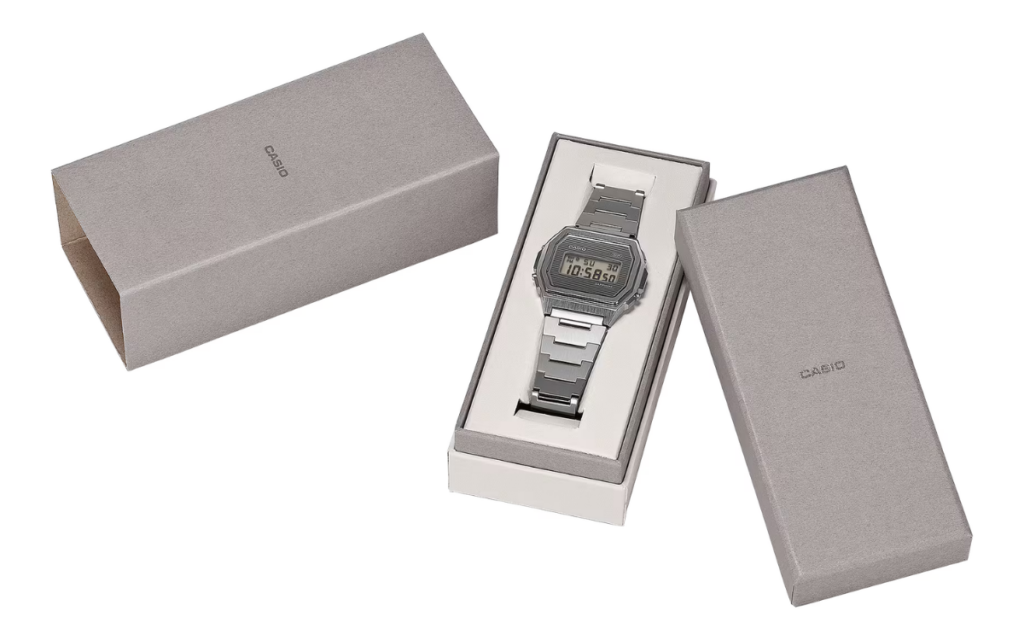
Casio is set to launch the Vintage A1000SP-7 in Japan this November. The watch may already be familiar to some buyers, as it debuted in several global markets, including China, India, and the Eurozone, back in July.
The company is now bringing the metal digital watch to its home market under the regional model number A1000SP-7JR. It is currently available for pre-order and will retail for ¥27,500 ($174) when it officially goes on sale later this month.
Design Details
The A1000SP-7 features a more premium construction than Casio’s entry-level retro digital watches. Instead of the chrome-plated resin commonly found on more affordable models, it uses a solid stainless steel case paired with a matching stainless steel bracelet. The bracelet combines brushed and polished mirror finishes, while a one-touch, three-fold clasp provides a secure fit.
Casio also upgraded the display materials for this tier. Instead of the acrylic or mineral glass found on cheaper models, this watch uses a scratch-resistant sapphire crystal. The underside of the crystal features a striped vapor deposition, which sits above a brass dial treated with a sunray finish.
Internally, the watch relies on a standard, straightforward Casio digital module. It includes the familiar suite of basic timekeeping features: a 1/100-second stopwatch, a daily alarm, an hourly time signal, and an auto-calendar. You can toggle between 12-hour and 24-hour time formats, and there is a white LED backlight for checking the time in the dark.
Physically, the watch is relatively compact. It measures 39.6 x 38 x 7.3 mm and weighs 101 grams. Casio categorizes it as a unisex design, and its 7.3 mm thickness means it will easily fit under a shirt sleeve.
It comes with basic water resistance and runs on a standard CR1616 battery, which the company estimates will last for about three years before needing a replacement. For this specific regional release, the watch will also ship in special packaging.
Car companies teaming up with watchmakers usually result in incredibly expensive, over-designed timepieces that try too hard to look like a sports car on your wrist. Mazda and Seiko are doing something much more subdued for their latest collaboration.
The two companies have announced a new chronograph watch (BF9504) that costs 69,300 yen (around $440). It is a clean, functional quartz watch, but it comes with a major catch: it is only being sold in Japan.
Design Details
The design language of the watch leans into what Mazda refers to as the “aesthetics of subtraction.” Rather than cluttering the dial with heavy automotive branding or carbon fiber textures, the watch takes direct visual cues from Mazda’s standard vehicle instrument clusters.
The dial utilizes varying textures of black metallic finishes to create visual depth, accented only by a red stopwatch second hand and a matching red ring on the crown. Seiko also incorporated Mazda’s proprietary Mazda Type font for the dial lettering, keeping the typography consistent with the dashboard interfaces of modern Mazda vehicles.
As for the hardware, the watch features a stainless steel case measuring 39.2mm wide, 47.2mm tall, and 11.4mm thick. Seiko has equipped it with a curved Hardlex crystal, a convex version of its scratch-resistant mineral glass that adds visual depth to the dial. The caseback also carries a laser-engraved Estd 1920 Hiroshima, Japan inscription, referencing Mazda’s founding year and hometown.
Inside, it runs on a standard battery-powered quartz mechanism with an expected battery life of about three years and an accuracy of ±15 seconds per month. It has a 10 ATM water resistance rating, meaning it is fine for everyday use, and there is basic LumiBright coating strictly on the hour and minute hands so you can read it in the dark.
The watch ships with two interchangeable 20mm straps. The first is a stainless steel bracelet, which brings the total weight of the watch to 108 grams. The second is a black cowhide leather band finished with brown painted edges. Both bands and the watch are packaged in a specific box featuring Mazda’s brand colors.
Availability
Mazda released the watch through its Japanese online store on October 23 and dealerships on October 29, with overseas buyers needing a proxy shipping service to get one.
Casio is releasing a new line of digital watches in Japan this month. The LF-40W series includes three models: the black LF-40W-1AJF, the navy LF-40W-2AJF, and the gray LF-40W-8AJF. All three are priced at ¥4,400 ($28) and are currently available for pre-order ahead of their November 2026 shipping date.
Design Details
The LF-40W series features a distinctive vertically oriented LCD that separates the watch’s information into two sections. The top half functions as a standard digital clock, showing the current time in numbers. The bottom half contains three rows of horizontal bars that change based on the time and the watch’s current mode.
These bars serve as a quick visual reference for the watch’s background settings. The top row indicates whether the alarm, hourly time signal, button tones, and daylight saving time are turned on or off. The middle and bottom rows act as a visual timer, filling in to track the passing seconds in 10-second and one-second intervals. This setup allows the user to see multiple pieces of information at a glance without needing to press buttons to navigate through menus.
For the exterior, the watch has a basic rectangular resin case measuring 37.8 x 33.7 x 8.6 mm, and it weighs 23 grams. The band is made from biomass plastic, a material sourced from renewable organic resources that Casio has been using recently to reduce its reliance on standard plastics. The strap is designed to fit wrist sizes between 125 and 200 mm.
Inside, the LF-40W comes with a standard set of digital features. It includes a multi-time function to save four specific cities, plus a broader World Time mode that tracks 48 cities across 31 time zones. It also has a 1/100-second stopwatch, a 24-hour countdown timer, and five alarms that can be programmed as daily or one-time alerts.
The watch is powered by a standard battery that lasts about three years. It is rated for basic daily water resistance, has a timekeeping accuracy of ±30 seconds per month, and includes an amber LED backlight that stays on for either 1.5 or 3 seconds when activated.
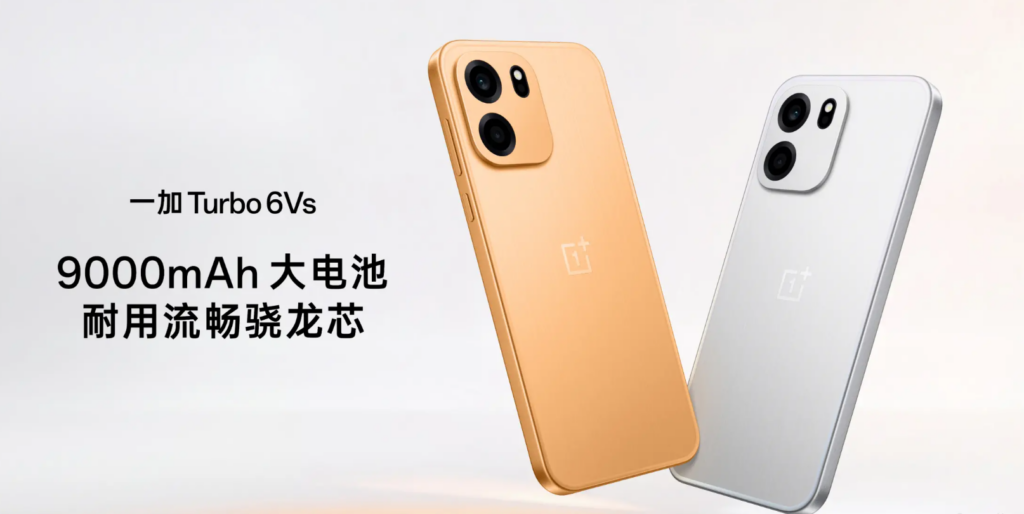
OnePlus has quietly listed a new Turbo mid-ranger in China, the OnePlus Turbo 6Vs. The phone is already up on the brand’s China store with a Snapdragon 7s Gen 4 chipset, a 6.78-inch 144Hz AMOLED, and a huge 9,000mAh battery. Specs line up almost exactly with January’s OnePlus Turbo 6V, just under a new name and color set.
Up front is a flat 6.78-inch AMOLED with 2772 × 1272 resolution, up to 144Hz, 800 nits typical brightness, and peaks claimed at 1,800 nits, plus high-frequency PWM and DC-like dimming. The phone measures about 8.5mm thick and 215g, carries IP66, IP68, IP69, and IP69K dust and water resistance, and runs ColorOS 16 with stereo speakers, an X-axis motor, under-display fingerprint, IR blaster, and NFC. Color picks cover Orange and Nova White, including a brushed finish on the orange model.
Inside sits Qualcomm’s Snapdragon 7s Gen 4 with 12GB of LPDDR4X RAM and 256GB of UFS 3.1 storage on the only listed configuration. The rear camera duo is a 50-megapixel main with OIS and a 2-megapixel mono sensor, plus a 16-megapixel selfie shooter. Power comes from a 9,000mAh battery with 80W wired charging, up to 27W reverse wired charging, and bypass charging.
OnePlus is selling the Turbo 6Vs in China at 3,699 yuan (~$555) for the 12GB + 256GB model, in Orange and Nova White. The listing is already marked sold out on the official China store page, with no word yet on when stock returns.
Hardware-wise, it looks like a refresh of the Turbo 6V that launched earlier this year with the same PLY110 model number, same chip, same screen, and same 9,000mAh pack, just with a new orange shade and a steeper single-SKU price. Would you pay the Turbo 6Vs premium for the new color, or stick with the older Turbo 6V configs?
A couple of months ago, Redmi unveiled its M-series phone, the Redmi M100, and now it is back with another model called the Redmi M100 Pro. The mid-ranger is already live on Xiaomi’s China store with a MediaTek Dimensity 7300-Ultra chipset and a 6.67-inch 1.5K OLED. Specs line up closely with hardware Redmi has already sold outside China.
Redmi M100 Pro specifications and features
Redmi M100 Pro-
Up front is a 6.67-inch curved OLED with 2712 × 1220 resolution, up to 120Hz, and local peak brightness claimed at 3,000 nits, under Gorilla Glass Victus 2. The phone measures about 8.2mm thick and 190g, carries IP68 dust and water resistance, and runs HyperOS with stereo speakers, an X-axis motor, under-display fingerprint, IR blaster, and NFC.
Inside sits MediaTek’s Dimensity 7300-Ultra with 12GB of LPDDR4X RAM and 256GB of UFS 2.2 storage on the listed configuration. The rear camera trio is a 50-megapixel main with OIS, an 8-megapixel ultrawide, and a 2-megapixel macro, plus a 20-megapixel selfie shooter. Power comes from a 5,500mAh battery with 45W wired charging.
Redmi M100 Pro price and availability
Redmi M100 ProRedmi M100 ProRedmi M100 Pro
Xiaomi is selling the Redmi M100 Pro in China at 2,499 yuan (~$350) for the 12GB + 256GB model, in black, white, cyan, and purple. Being an M-series Redmi phone, this model is expected to remain confined to China. Color picks cover black, white, cyan, and purple finishes, including a leather-like purple option.
Hardware-wise, it looks like a rebrand of the Redmi Note 14 Pro with the Dimensity 7300-Ultra already sold outside China, following the same playbook as the M100 and the global Redmi 17 5G. That also matches earlier software-database tips tying the M100 Pro to the malachite Note 14 Pro codename. Would you buy an M-series rebrand in China, or stick with the global Note name?
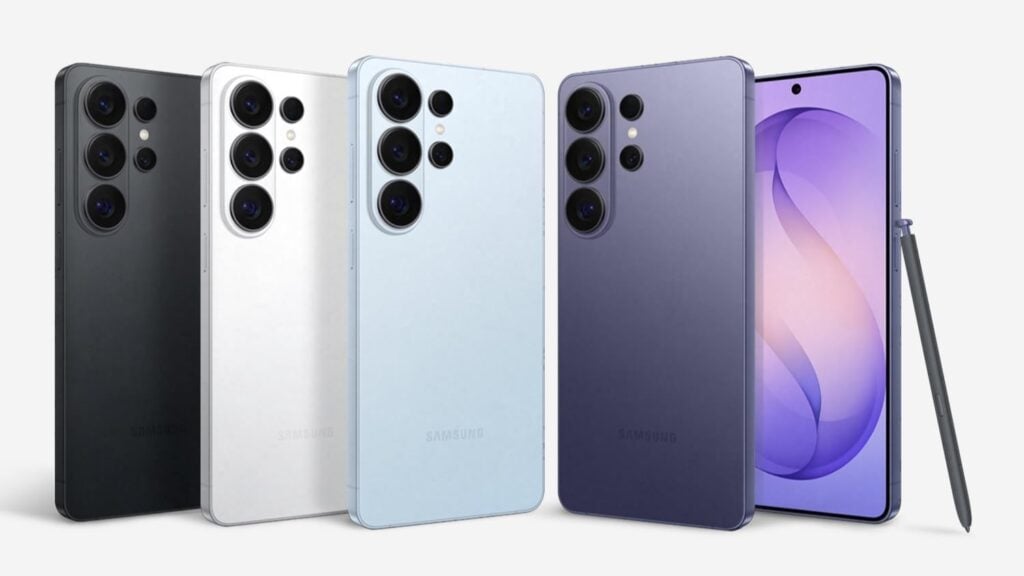
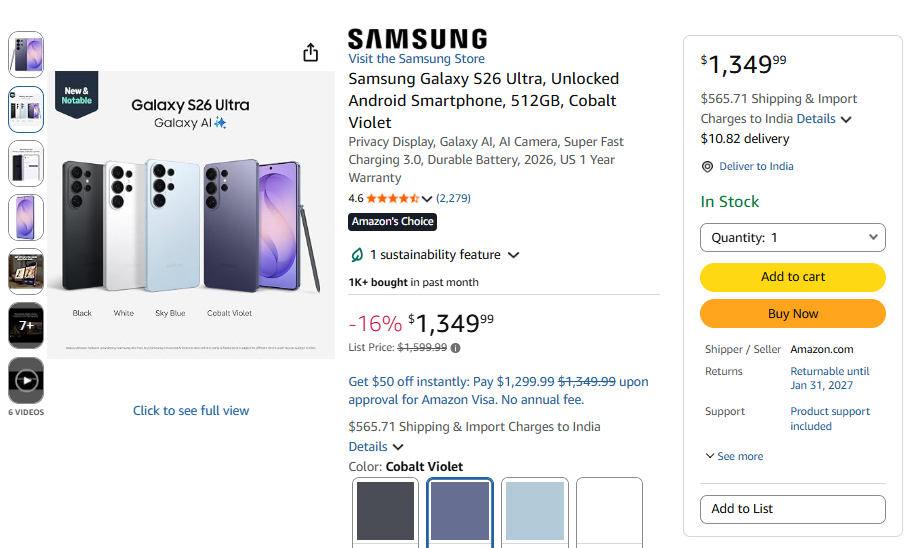
Amazon just knocked $250 off the Galaxy S26 Ultra, and that brings the price of the 512GB model down to $1,349.99 from the usual $1,599.99. That’s a solid chunk of savings on Samsung’s current top-tier phone, and it’s limited to this specific color and storage option.
If you’ve been eyeing the Ultra but weren’t thrilled about paying full price, this is one of the better deals we’ve seen on it so far. The 512GB version gives you plenty of space for photos, videos, apps, and whatever else you throw at it, so you’re less likely to constantly manage storage or lean on the cloud.
The S26 Ultra itself is still Samsung’s non-foldable flagship. You’re looking at a big 6.9-inch Dynamic LTPO AMOLED 2X display with QHD+ resolution, adaptive 120Hz, strong brightness, Gorilla Armor 2 protection, and that Privacy Display that helps keep nosy neighbors from peeking at your screen. Inside sits the Snapdragon 8 Elite Gen 5 for Galaxy paired with 12GB of RAM, which should handle pretty much anything you throw at it, from gaming and multitasking to the usual Galaxy AI features.
Camera-wise, it’s Samsung’s highest-end setup: a 200MP main sensor, 50MP ultrawide, 50MP 5x periscope telephoto, and a 10MP 3x telephoto. Battery is a 5,000mAh unit with up to 60W wired charging (plus wireless), and you still get the S Pen, IP68 rating, Armor aluminum frame, and seven years of software updates.
It’s worth checking the listing sooner rather than later, as stocks may sell out quickly.
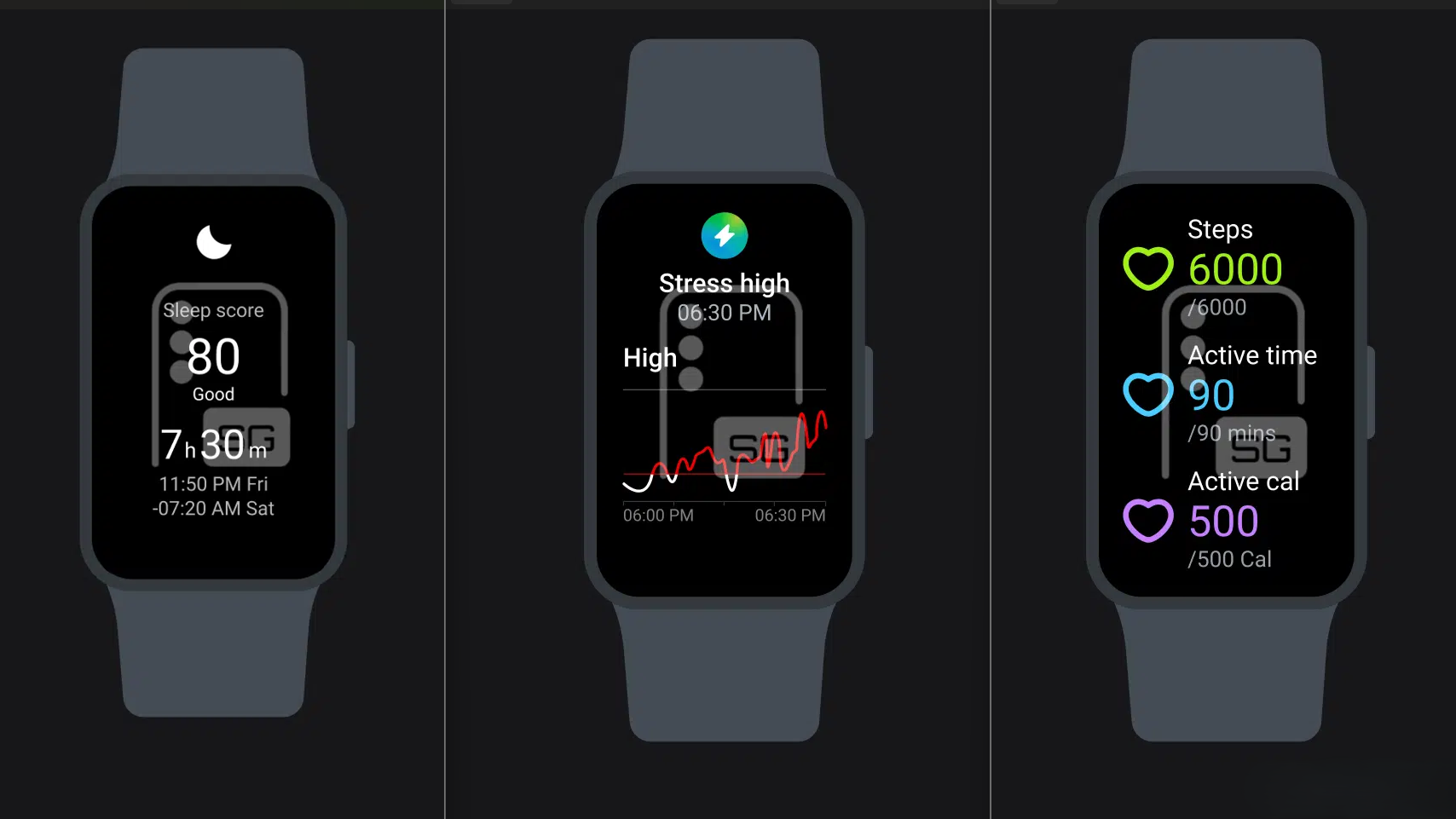
Samsung’s budget fitness tracker is getting a quiet refresh, and a companion app teardown is giving us a clear look at what’s coming. The leaks suggest the Galaxy Fit 4 will stick close to what worked on the Fit 3, with only a few small tweaks.
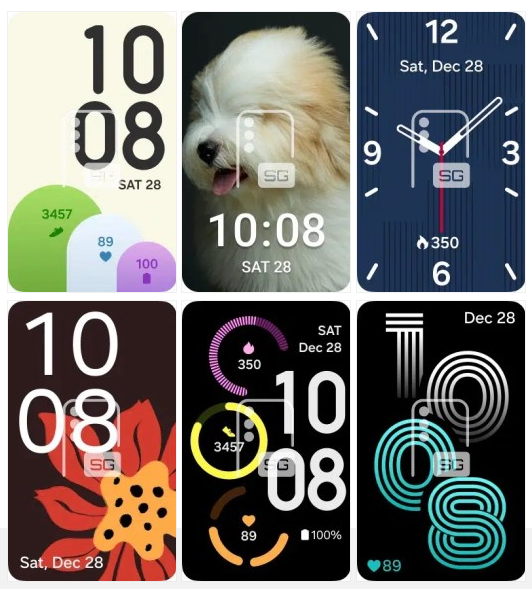
According to an APK analysis of the Galaxy Fit4 Manager app shared by SammyGuru, the new tracker is nearly identical to the 2024 Fit3 in size and core features. Leaked watch face assets show a display resolution of 258 x 428 pixels, a bit taller than the Fit3’s 256 x 402 panel. It’s not a dramatic change, but it does give a little extra vertical space while keeping the same compact rectangular shape. The interface will also support up to 12 tiles at once, so you can keep more info (steps, heart rate, notifications, etc.) visible without digging through menus.
Color options look practical rather than flashy. Watch face references point to Black, Silver, and Light Green, which lines up with earlier 360-degree renders that also showed black, white, and light blue or mint versions. Physically, not much is changing: rounded rectangular AMOLED screen, one side button, and a silicone strap.
On the health side, it’s mostly business as usual. You’ll get step counting, active calorie tracking, continuous heart rate with high/low alerts, blood oxygen readings, and stress monitoring. Sleep tracking still covers stages, a sleep score, and coaching that unlocks after a week of wear. Automatic workout detection and heart rate zones during exercise are there too. One thing that’s still missing: built-in GPS. Outdoor route tracking will continue to rely on your phone, just like the Fit3.
Regulatory filings confirm Bluetooth 5.4 under the model number SM-R391, a small step up from the Fit3’s 5.3. No official launch date or price yet, though earlier rumors put it under $100, which would keep it as an easy entry point into Samsung’s wearable lineup.
For a long time, smart speakers were mostly used for setting kitchen timers, checking the weather, or casually turning off the lights. While the hardware steadily improved, the voice assistants inside them often struggled with anything beyond basic, rigid commands. This year, however, the landscape has noticeably shifted. The major tech companies have started integrating generative AI and large language models into their audio hardware, making these devices much better at understanding natural conversation.
Apple, Google, Amazon, and Sonos have all updated their lineups for 2026. The focus is no longer just on audio quality, though that remains important. Instead, the updates center on visual intelligence, built-in networking features, and voice assistants that can actually follow a train of thought. If you are looking to update your home audio setup this year, here is a look at the best smart speakers currently available.
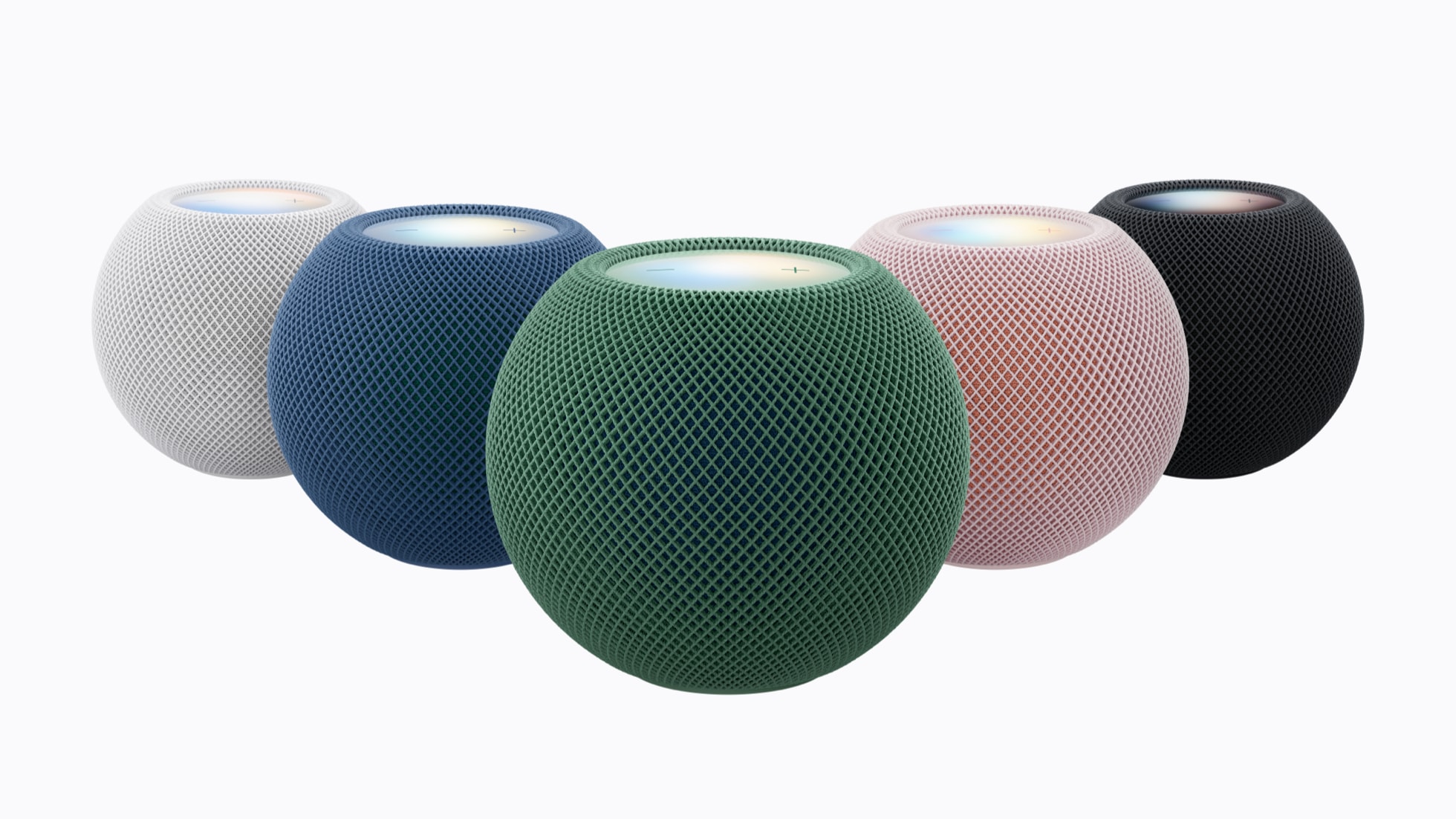
Apple’s original HomePod Mini remained largely unchanged for years, but the new HomePod Mini 2 brings some much-needed updates, primarily through the introduction of Siri AI. Built on Apple’s Foundation Models, the updated assistant is noticeably better at handling conversational requests.
It can recognize up to six different voices in a household and pull context from your personal devices, meaning you can ask it to find a recipe a friend texted you, and it will actually know what you are talking about.
On the hardware side, Apple added a feature called Sound Glow. The flat touch panel on the top of the speaker now illuminates and pulses with colors that match the album artwork of the music you are playing. It is a nice visual touch for a device that otherwise looks very similar to its predecessor.
Audio performance remains solid for its 3.3-inch size, and Apple has added a new home theater feature: if you own the latest Apple TV 4K, you can now link four HomePod mini 2 speakers together for a surround sound setup. It is a logical choice if your home is already built around the Apple ecosystem.
Price: $149
2. Google Home Speaker
Google has moved away from the Nest Audio branding, consolidating its smart home efforts under the new Google Home Speaker. Priced at $99.99, this device serves as the primary hardware for Google’s Gemini for Home AI.
The main benefit of the Gemini integration is flexibility. You no longer have to speak in strict command formulas. You can give the speaker a multi-step request, or even change your mind in the middle of a sentence (for example, asking it to turn on the living room lights, but then correcting yourself to ask for the kitchen lights instead), and it will understand.
It also retains short-term conversational memory, so you do not have to repeat the wake word for follow-up questions. The speaker itself is wrapped in a 3D-knit fabric made from recycled materials and features an underglow light ring to indicate when it is listening. It also supports Matter and Thread 1.3, allowing it to serve as a central hub for a Google-based smart home.
Price: $99.99
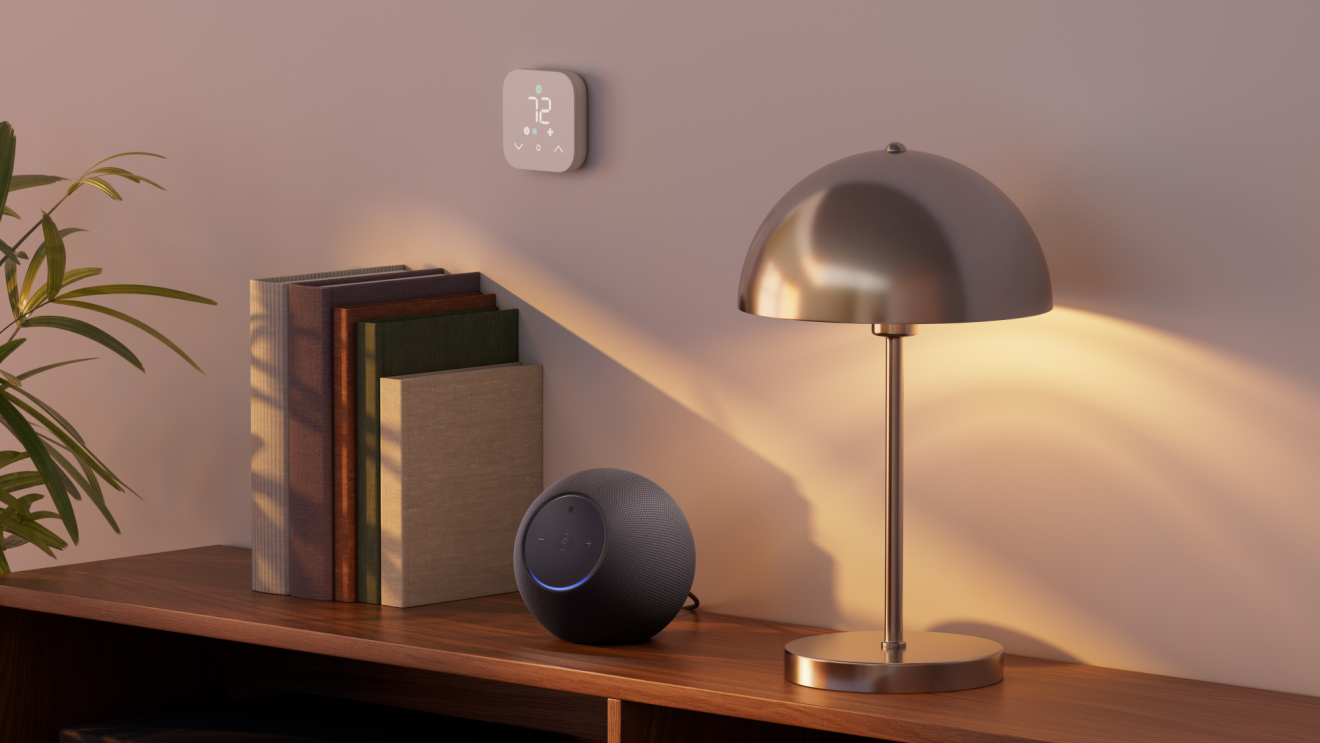
3. Amazon Echo Studio with Home Camera
Amazon has taken a different approach with the new Echo Studio with Home Camera. It retains the high-end audio hardware of the standard Echo Studio, including a high-excursion woofer, Dolby Atmos support, and room adaptation technology that adjusts the equalizer based on your room’s acoustics. The notable change is the addition of a built-in camera.
This camera gives Alexa visual context. You can hold up a product, like a box of cereal, and ask Alexa to reorder it, or show it a board game and ask for a summary of the rules. It also functions as a basic security camera, allowing you to check in on your room through the Alexa app when you are not home.
Amazon has also confirmed a future update that will let the speaker pair with compatible Fire TVs for video calls. Priced at $249.99, it is a niche device that offers a glimpse of how smart speakers could evolve with visual awareness of their surroundings.
Price: $249.99
4. Amazon Echo Dot 2026
While the Echo Studio focuses on new camera features, the 2026 Echo Dot is built entirely around household utility. Amazon has added a built-in eero Wi-Fi extender to the device, which can add up to 1,000 square feet of coverage to an existing eero mesh network. It also functions as a smart home hub right out of the box.
Internally, the new Echo Dot runs on Amazon’s custom AZ3 silicon, which includes an AI accelerator designed to process voice commands locally. This helps the speaker filter out background noise and respond to requests a bit faster.
Amazon claims the new model delivers 50% more bass than its predecessor. Priced at $99.99, it is a practical choice for those who want to extend their Wi-Fi coverage while adding smart home controls.
Price: $99.99
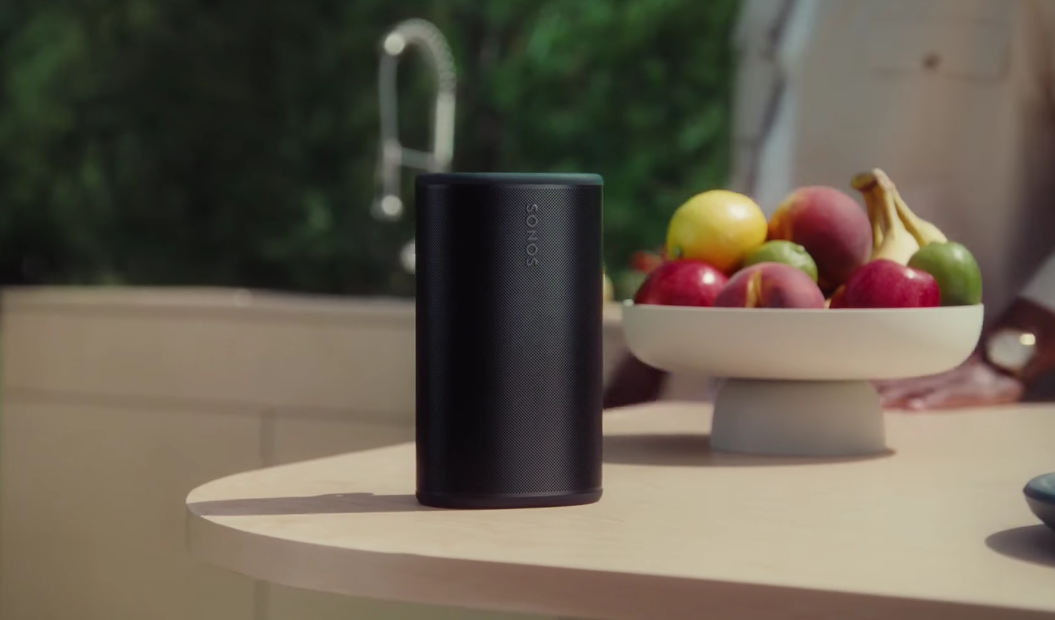
5. Sonos Play
Sonos continues to focus on audio fidelity and multi-room integration with the new Sonos Play. Designed to be a versatile entry point into the Sonos system, the Play functions as both a standard home speaker and a portable Bluetooth speaker. It supports over 100 streaming services directly through the Sonos app, including Spotify, Apple Music, Amazon Music, YouTube Music, and Tidal.
While on your home Wi-Fi, it supports Apple AirPlay 2 and Spotify Connect, and it features both Sonos Voice Control and Amazon Alexa for hands-free commands. When you leave your network, it seamlessly switches to Bluetooth 5.3 for offline listening.
It comes with a charging base for everyday indoor use, but you can pick it up and take it outside thanks to its built-in battery, which lasts up to 24 hours. It has an IP67 rating, meaning it is fully dustproof and waterproof, and it even includes a USB-C port that can be used to charge your phone.
The audio is powered by three class-H digital amplifiers and uses Sonos’ Trueplay technology to automatically tune the sound to your environment using its built-in microphones.
It is the most expensive speaker on this list, but it offers a lot of flexibility for people who want one device that works just as well in the living room as it does in the backyard.
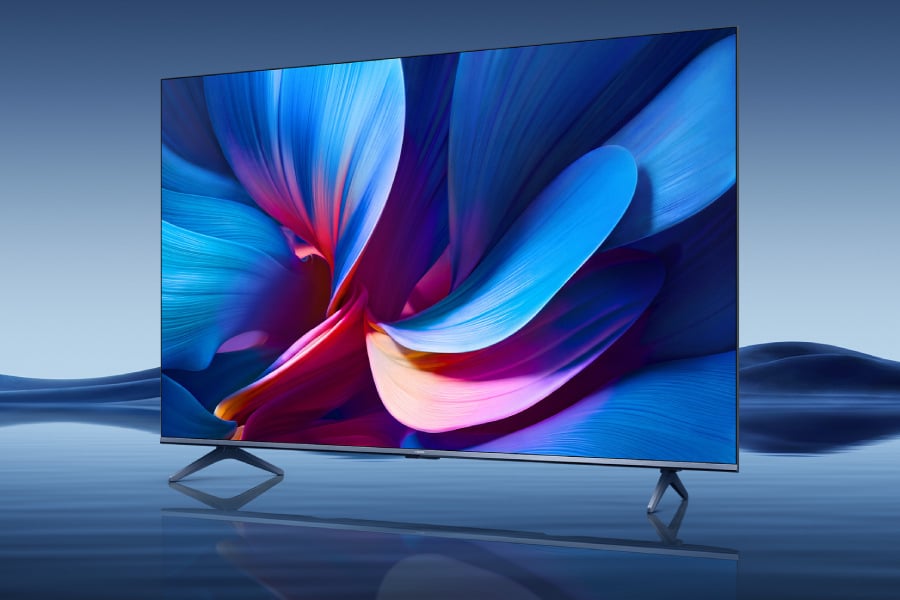
Xiaomi has listed the TV A Pro e series on its global website, with nine models ranging from 32 inches to 85 inches. The company hasn’t announced pricing or availability yet.
The new range follows the Xiaomi TV A Pro 2026 series, which launched in Europe with 55-inch, 65-inch and 75-inch models. The new series covers a wider range of sizes, with six 4K options and three models with lower resolutions.
What the Xiaomi TV A Pro e series offers
The 4K lineup includes the Xiaomi TV A Pro 43 e, 50 e, 55 e, 65 e, 75 e and 85 e. All six models use QLED panels with 94% DCI-P3 colour coverage and support for 1.07 billion colours. They run on a quad-core Cortex-A55 processor paired with a Mali-G52 GPU, similar to the hardware found in the previous TV A Pro 2026 series.
Five of the six models also support a 120Hz refresh rate through Game Boost mode over HDMI. This feature is available on the Xiaomi TV A Pro 50 e, 55 e, 65 e, 75 e and 85 e, but only at 1080p. The earlier series had a similar mode, while the Xiaomi TV A Pro 43 e doesn’t list support for it. All six 4K models have three HDMI ports, with HDMI 2 supporting eARC and ALLM.
Audio gets an upgrade on the two largest models. The Xiaomi TV A Pro 75 e and 85 e have two 15W speakers, compared to the two 10W speakers found on the other four 4K models. All nine TVs in the new range support Dolby Audio, DTS and DTS Virtual.
The HDR support also varies slightly between the 4K models. The Xiaomi TV A Pro 43 e, 55 e, 65 e, 75 e and 85 e support HDR10+, HDR10 and HLG. The Xiaomi TV A Pro 50 e, however, lists only HDR10 and HLG.
All nine models run Google TV. The six 4K versions also list Gemini alongside Google Assistant, although Xiaomi notes Gemini is available only in select countries and languages for users aged 18 and older. Apple AirPlay and Google Cast are also supported on these models.
The remaining three TVs are the Xiaomi TV A Pro 32 e, Xiaomi TV A Pro 43 FHD e and Xiaomi TV A Pro 50 FHD e. The 32-inch model has an HD resolution of 1366 x 768, while the two FHD versions offer 1080p resolution. All three still use QLED panels, but Xiaomi doesn’t list MEMC, AirPlay or Gemini support for them. They also have two HDMI ports instead of the three found on the 4K models.
The design is the same across the range. Every model has a metal frame and thin bezels. The Xiaomi TV A Pro 75 e lets you place its stand in a narrow or wide position. The weight runs from 3.1kg for the Xiaomi TV A Pro 32 e to 26.8kg for the Xiaomi TV A Pro 85 e.
Xiaomi hasn’t revealed prices or a release date for the new TVs. For comparison, the previous series launched in Europe starting at €479 for the 55-inch model. More details should become available once Xiaomi announces the new lineup’s pricing and availability.
Buying a pair of headphones in 2026 is not simply about sound quality anymore. Active noise cancelation, battery life, comfort, microphone performance, and sound customization can all make a huge difference to the overall experience. But don’t fret, we have hand-picked seven of the best headphones you can look at, across segments and features.
How to buy a headphone in 2026
Choose a pair of headphones by first considering your budget, then the features you want and the sound you like. If you’re a regular public transport user, work in noisy environments or just want to focus on your music without distractions then active noise cancelation (ANC) is worth investing in.
The sound quality is also important, but the best audio profile is based on your listening habits. Some headphones have more bass, which is good for electronic music and hip-hop, others are more balanced with clear vocals and details in the instruments.
Battery life is another factor to consider, especially if you travel frequently or use your headphones throughout the day. Comfort also matters, as tight headbands, heavy earcups or insufficient cushioning can become uncomfortable during long listening sessions.
If you regularly attend online meetings or take calls on the go, look for headphones with good microphone performance and effective background noise reduction. Features like Multipoint connectivity are useful if you switch between your smartphone and laptop, while support for wired listening can come in handy when the battery runs out or you want to connect to a compatible device.
Finally, check for app support, equaliser settings and audio codec compatibility if you want greater control over your listening experience. The idea is to find a pair that offers the right balance of sound, comfort and features for your budget, rather than paying extra for features you may rarely use.
42mm drivers, parametric EQ and crossfeed, up to 60-hour battery
Rs 41,490
Soundcore Anker Q20i
The Soundcore Anker Q20i is a good starting point for those looking for wireless headphones with ANC without stretching their budget. Its hybrid noise cancellation, customisable EQ through the Soundcore app, and battery life of up to 40 hours with ANC enabled make it suitable for long hours of usage. It also supports transparency mode, letting you hear your surroundings when needed.
If you enjoy bass-heavy music and do not want to charge your headphones frequently, the JBL Tune 770NC is worth considering. Its JBL Pure Bass sound, adaptive ANC and foldable design make it a practical everyday option, while the battery life reaches up to 44 hours with ANC on and 70 hours with it off. It also supports Multipoint connectivity, which is useful for switching between your phone and laptop.
Sony takes a different approach with the ULT Wear series compared to its regular pair of headphones. Instead of aiming for a restrained sound, these headphones put bass in the spotlight. A dedicated ULT button boosts the low end, making them a good fit for electronic music, hip-hop and bass-heavy playlists. They also offer ANC, an ambient sound mode, multipoint connectivity, and LDAC support for compatible devices. Battery life reaches up to 30 hours with ANC enabled. If you want your music to have more weight and impact, the ULT Wear is a compelling option.
The Nothing Headphone (1) doesn’t look like most other wireless headphones, and that’s part of its appeal. Its distinctive design is paired with tactile controls and audio tuned in collaboration with KEF. You get 40mm drivers, adaptive ANC, LDAC support and sound customisation. Battery life is rated at up to 35 hours with ANC on and 80 hours with it off. USB-C audio and a 3.5mm jack give you wired listening options, too. The Nothing Headphone (1) is worth considering if you want something that stands out visually but still offers the features expected from a premium wireless pair.
Bose has built its reputation on noise cancellation, and the QuietComfort Ultra Headphones (2nd Gen) are aimed at listeners who want to shut out the world around them. They combine advanced ANC with plush ear cushions, personalised sound and Immersive Audio for a more spacious listening experience. The second generation adds USB-C lossless audio and Cinema Mode for films, while battery life reaches up to 30 hours with ANC enabled and Immersive Audio switched off. These headphones make the most sense for frequent flyers, commuters and anyone who spends long stretches listening to music. They’re a premium purchase, but comfort and noise cancellation are the main reasons to consider them.
Sony WH-1000XM6 is the most versatile option on this list. Its advanced noise cancellation, fuller sound, LDAC support, and multipoint connectivity make it suitable for everything from music and movies to work calls and long-haul flights. Battery life is rated at up to 30 hours with ANC on and 40 hours with it off, which means you can pretty much carry them everywhere you go. Sony also offers plenty of control over sound and ambient listening settings through its companion app.
The Sennheiser HDB 630 is for listeners who want more control over how their music sounds. Its 42mm drivers are paired with a parametric equaliser and crossfeed feature, giving you more room to fine-tune the listening experience. It supports high-resolution audio over USB-C and wired connections, and comes with the BTD 700 Bluetooth USB-C dongle. Features like adaptive ANC and a claimed battery life of up to 60 hours make it practical for everyday use. Unlike headphones that lean heavily on boosted bass or immersive effects, the HDB 630 focuses on detailed playback and sound customisation. It’s an expensive option, but one worth considering if audio quality takes precedence over everything else.
The Soundcore Anker Q20i is the best budget headphone you can buy right now, as it offers a combination of ANC, app-based sound customisation and long battery life.
Which are the best overall headphones in 2026?
The Sony WH-1000XM6 is our best overall pick for its great sound, excellent noise cancellation, customisation options, and versatile everyday features.
Which are the best premium headphones in 2026?
The Sony WH-1000XM6 and Bose QuietComfort Ultra Headphones (2nd Gen) are our top premium picks, with Sony offering extensive sound customisation and Bose excelling at noise cancellation and comfort.
Which are the best audiophile-grade headphones in 2026?
The Sennheiser HDB 630 is the best audiophile-grade headphone on this list, offering detailed sound, high-resolution audio support, and advanced equaliser controls for listeners who want greater control over their listening experience.
So, which of these headphones is your pick? Let us know in the comments below.
Apple’s first foldable, the iPhone Duo, went on sale in late October 2026 after years of hype. Within days, though, a familiar complaint started popping up. Owners were hearing a crunch or pop when they opened the phone, followed by cracks or bright lines of dead pixels running right down the crease. The internet, of course, wasted no time calling it “Crackgate.” Reports have come in from the US, Australia, Canada, and elsewhere.
Apple has admitted there’s “an issue impacting the inner display on a small number of iPhone Duo units” and is swapping them out under AppleCare. Popular YouTube creator JerryRigEverything pointed to stress points in that first-generation hinge after inspecting it in his teardown video. As he noted, a sharp corner of a hinge component seems to put extra pressure on the ultra-thin glass in some units during folding and unfolding.
Samsung didn’t waste any time. Accounts in Canada, Malaysia, Australia and other markets started posting ads that very deliberately echo those crack patterns. You’ll see a glowing horizontal streak cutting across everyday scenes. The message is clear: Samsung has been shipping foldables since the original Galaxy Fold in 2019. This is generation eight. They’ve had years to refine the hinge and the structure around it.
It helps that Samsung Display still supplies a lot of the ultra-thin glass and flexible OLEDs the industry uses, so they know this technology inside out. The Fold 8 also happens to be thinner and lighter than the Duo, something Samsung’s messaging has been happy to point out.
Apple will almost certainly fix whatever’s going on with the hinge in a future revision. But right now, every cracked Duo is basically free advertising for Samsung’s more battle-tested platform. For anyone shopping in this category, the takeaway is pretty simple: experience still counts.
Redmi Band 4 and Xiaomi Smart Band 11 offer essential fitness tracking, health monitoring and long battery life, but they target different users. Both support heart rate monitoring, blood oxygen tracking, sleep analysis and 5ATM water resistance. However, the Xiaomi Smart Band 11 brings a larger AMOLED display, more sports modes and advanced sleep insights. The Redmi Band 4, meanwhile, focuses on essential features at a considerably lower price. Here’s how the two fitness bands compare.
Major Features:
Category
Redmi Band 4
Xiaomi Smart Band 11
Winner
Display
1.47-inch, 60Hz
1.72-inch AMOLED, 2,000 nits
Xiaomi – Larger, brighter display
Design
Unibody, metal-textured frame
Multiple material and strap options
Xiaomi – More customization
Cover Glass
2.5D curved glass
Not specified in supplied data
Redmi – Confirmed specification
Water Resistance
5ATM
5ATM
Tie – Equal rating
Heart Rate
All-day monitoring
Yes
Tie – Both support monitoring
Blood Oxygen
Yes
Yes
Tie – Both support SpO2
Stress Tracking
All-day monitoring
Yes
Tie – Both support tracking
Sleep Tracking
Standard tracking
HRV and AI-based insights
Xiaomi – Advanced sleep analysis
Sports Modes
50
150+
Xiaomi – More workout options
Battery Life
Up to 21 days
Up to 21 days
Tie – Equal advertised maximum
NFC
Not supported
Available on NFC variant
Xiaomi – Contactless payments
Smart Features
Notifications, alarms, watch faces
Music controls, payments, access cards
Xiaomi – More features
Compatibility
Not specified
Android and iOS
Xiaomi – Confirmed compatibility
Price
$25
From $43
Redmi – More affordable
Disclaimer: Specs are based on available data. Actual performance may vary. Verify details from official sources before buying.
Design & Build
The Redmi Band 4 features a unibody design with a metal-textured frame, 2.5D curved glass and a vertically textured strap. Its pin-style clasp keeps the design simple and practical for everyday use.
The Xiaomi Smart Band 11 offers more customization, with interchangeable straps and metal, ceramic and other editions. Its slimmer body and different material options give buyers more flexibility when choosing a style. Both fitness bands feature 5ATM water resistance, making them suitable for swimming and everyday water exposure under appropriate conditions.
Winner: Xiaomi – More strap options and premium editions.
Display
The Redmi Band 4 features a 1.47-inch display with a 60Hz refresh rate and 2.5D curved glass. Its screen is suitable for checking notifications and basic fitness information, while the higher refresh rate supports smoother navigation.
The Xiaomi Smart Band 11 upgrades the viewing experience with a 1.72-inch AMOLED panel, 2,000-nit peak brightness and narrow 2mm bezels. The larger screen provides more viewing space, while AMOLED technology delivers richer colours and deeper blacks. Its higher brightness also makes outdoor viewing easier, particularly in bright sunlight.
Winner: Xiaomi – A larger, brighter AMOLED display with a more immersive viewing experience.
Battery Life
Battery life is a strong point for both fitness bands. The Redmi Band 4 and Xiaomi Smart Band 11 claim up to 21 days of battery life, making them suitable for users who prefer less frequent charging. Actual endurance depends on display settings, notifications, and tracking frequency.
Winner: Tie – Both claim up to 21 days of battery life.
Health Tracking
Both bands support heart rate monitoring, blood oxygen measurement, stress tracking, sleep tracking and women’s health monitoring. The Redmi Band 4 includes all-day heart rate and stress monitoring, covering the essential wellness features expected from an everyday fitness tracker.
The Xiaomi Smart Band 11 takes sleep monitoring further with professional sleep management, HRV monitoring and AI-based sleep insights. These additions provide more detailed information about sleeping patterns and related wellness trends. While both devices cover everyday health-tracking requirements, Xiaomi offers a more comprehensive set of sleep-analysis features.
Winner: Xiaomi – Advanced sleep management with HRV monitoring and AI-based insights.
Sports & Training Features
The Redmi Band 4 supports 50 sports modes, making it suitable for users interested in monitoring common workouts and everyday physical activities. Its selection covers the basic requirements of casual fitness enthusiasts.
The Xiaomi Smart Band 11 offers more than 150 sports modes, providing considerably broader activity coverage. This makes it a better option for users who participate in different workouts and want more flexibility when recording their exercise sessions. However, a higher number of sports modes does not automatically guarantee better tracking accuracy or professional training analysis.
Winner: Xiaomi – More than 150 sports modes offer greater workout variety.
Smart Features
The Redmi Band 4 supports message notifications, alarms and multiple watch faces. It also offers WeChat and Alipay QR code payment support in China, although it does not include NFC.
The Xiaomi Smart Band 11 provides a more extensive collection of connected features, including smartphone notifications, music controls, customizable watch faces, contactless payments and smart access cards. NFC functionality is available through its dedicated NFC variant. It also runs Xiaomi HyperOS 4 and supports Android and iOS smartphones.
Winner: Xiaomi – More connected features, music controls and NFC payment support.
Which One Should You Buy?
The Redmi Band 4 is a better choice for budget-conscious buyers who want essential health monitoring, everyday notifications and reliable battery life. Its 50 sports modes and 5ATM water resistance make it suitable for casual fitness tracking.
The Xiaomi Smart Band 11 is worth considering if you want a more feature-rich experience. Its AMOLED display, advanced sleep tracking, HRV monitoring, 150+ sports modes and NFC option offer more versatility. The higher price is justified for users who will actually use these additional features.
Winner: Xiaomi – Better suited to users seeking advanced fitness and smart features.
Xiaomi Smart Band 11 is the more capable fitness tracker, offering meaningful upgrades in display quality, workout variety, sleep analysis and connectivity. Its larger AMOLED screen and advanced health features make it a stronger everyday companion for active users.
However, the Redmi Band 4 remains an attractive budget option. It covers essential fitness and health-tracking needs while matching Xiaomi’s maximum battery life. At approximately $25, it offers a straightforward experience without requiring buyers to pay for features they might not need.
Winner: Xiaomi – A more complete fitness band, while Redmi remains the better budget alternative.
Disclaimer: Prices, specifications, and availability may vary by region and retailer. Recommendations in this article are based on editorial opinion, feature-based value, and market positioning at the time of writing. Readers are advised to do their own research before making a purchase.
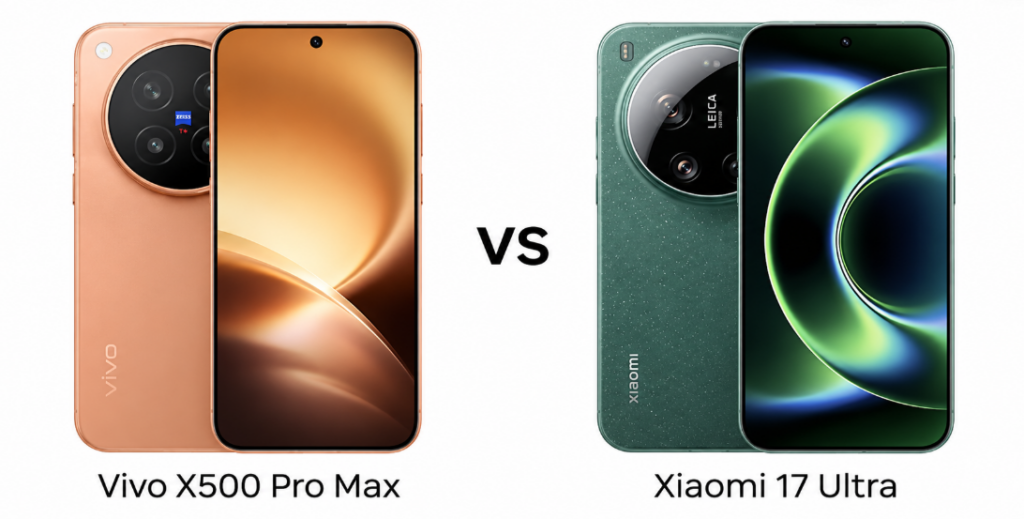
The flagship smartphone battle is becoming increasingly competitive, with Vivo and Xiaomi taking different approaches to premium hardware. The Vivo X500 Pro Max promises an impressive display, a massive battery and versatile Zeiss cameras, while the Xiaomi 17 Ultra focuses on advanced imaging, powerful processing and Leica-tuned photography. Both target demanding users, but their differences in camera technology, battery capacity, display quality and pricing make this comparison particularly interesting.
Armor Glass, aluminium frame, glass or glass-fiber back
Glass front, aluminium frame, glass-fiber or silicone polymer back
Xiaomi – Aerospace-grade glass fiber construction
Water Resistance
IP68/IP69, up to 1.5m for 30 minutes
IP68/IP69, up to 6m for 30 minutes
Xiaomi – Better water resistance
Display
6.85-inch LTPO AMOLED, 144Hz
6.9-inch LTPO AMOLED, 120Hz
Vivo – Faster refresh rate
Resolution
1440 x 3168 pixels
1200 x 2608 pixels
Vivo – Higher resolution and pixel density
Peak Brightness
4,400 nits
3,500 nits
Vivo – Higher advertised peak brightness
Protection
Armor Glass
Xiaomi Shield Glass 3.0
Vivo – Premium Armor Glass protection
Operating System
Android 17, OriginOS 7
Android 16, HyperOS 3
Vivo – Newer Android version
Software Updates
Up to 5 major OS updates
Not specified
Vivo – Explicit five-update commitment
Processor
Dimensity 9600 Pro (2nm)
Snapdragon 8 Elite Gen 5 (3nm)
Tie – Both are flagship-grade chipsets
GPU
Mali-G2-Ultra-NX
Adreno 840
Xiaomi – Strong flagship GPU platform
RAM
Up to 16GB
Up to 16GB
Tie – Same maximum RAM
Storage
Up to 1TB, UFS 4.1
Up to 1TB, UFS 4.1
Tie – Same storage technology and capacity
Main Camera
50MP, 1/1.28-inch, OIS
50MP, 1-inch-type, OIS
Xiaomi – Larger main camera sensor
Telephoto Camera
200MP periscope, 3.5x optical zoom
200MP periscope, 3.2–4.3x continuous optical zoom
Xiaomi – Continuous optical zoom
Ultrawide Camera
50MP, 119-degree FOV, AF
50MP, 115-degree FOV, AF
Vivo – Wider field of view
Camera Features
Zeiss optics, T* coating, laser AF
Leica lenses, zoom ring, TOF 3D sensor
Xiaomi – More specialised imaging hardware
Video Recording
Up to 8K@30fps, 4K@240fps
Up to 8K@30fps, 4K@120fps
Vivo – Higher maximum 4K frame rate
Selfie Camera
50MP, AF
50MP, AF
Tie – Similar front-camera hardware
Selfie Video
4K@60fps
4K@60fps
Tie – Same maximum resolution and frame rate
Battery
7,800mAh (Global)
6,000mAh
Vivo – Significantly larger battery
Wired Charging
90W
90W
Tie – Same charging wattage
Wireless Charging
40W
50W
Xiaomi – Faster wireless charging
Reverse Charging
Reverse wireless and wired
10W wireless, 22.5W wired
Vivo – More flexible reverse charging
Connectivity
Wi-Fi 7, Bluetooth 5.4/6.0
Wi-Fi 7, Bluetooth 6.0
Tie – Comparable connectivity
USB
USB-C 3.2
USB-C 3.2 Gen 2, DisplayPort
Xiaomi – DisplayPort support
Price / Value
Priced around $1,000 / ₹1,00,000
Priced around $1,300 / ₹1,30,000
Vivo – Lower price and stronger overall value
Overall Winner
Better display, battery and value
Better main camera and optical zoom
Vivo – More balanced flagship package
Disclaimer: Specs are based on available data. Actual performance may vary. Verify details from official sources before buying.
2. Design and Display
Build and Feel
The Vivo X500 Pro Max features a premium construction with Armor Glass protection, an aluminum frame and a choice of glass or glass-fiber reinforced plastic on the rear. Its IP68/IP69 certification provides protection against dust and water. The Xiaomi 17 Ultra also delivers a sophisticated design, combining an aluminum frame with a glass front and either a glass-fiber reinforced plastic or silicone polymer back. Its aerospace-grade glass fiber adds another premium touch, while its IP68/IP69 rating supports immersion up to 6 metres. Both phones offer flagship-grade durability, although Xiaomi provides better water resistance on paper. Vivo’s Armor Glass construction, however, gives it a distinctive appeal.
Display Quality
The Vivo X500 Pro Max features a 6.85-inch LTPO AMOLED display with a 144Hz refresh rate, 1440p resolution, Dolby Vision and HDR10+ support. Its advertised 4,400-nit peak brightness also promises excellent outdoor visibility. The Xiaomi 17 Ultra counters with a larger 6.9-inch LTPO AMOLED panel, 68 billion colours, Dolby Vision and HDR10+, alongside 3,500-nit peak brightness. However, its 120Hz refresh rate and 1200p resolution put it behind Vivo in sharpness and smoothness.
Verdict
The Vivo X500 Pro Max wins the display category with its sharper resolution, faster refresh rate and higher advertised peak brightness. Xiaomi remains an excellent alternative.
3. Specifications Including Battery
Performance
The Vivo X500 Pro Max runs on the 2nm MediaTek Dimensity 9600 Pro, featuring an octa-core CPU and Mali-G2-Ultra-NX GPU. It offers up to 16GB RAM and 1TB storage with UFS 4.1 technology. The Xiaomi 17 Ultra uses Qualcomm’s Snapdragon 8 Elite Gen 5, paired with the Adreno 840 GPU, up to 16GB RAM and 1TB UFS 4.1 storage. Both processors belong to the flagship performance category, promising strong gaming, multitasking and AI capabilities. Xiaomi’s Snapdragon platform offers an established high-performance ecosystem, while Vivo’s newer 2nm chipset could deliver efficiency advantages. Software support also differs, with Vivo promising five major Android updates.
Battery and Charging
Battery capacity is another major difference. The Vivo X500 Pro Max packs a 7,800mAh battery in its global version, supported by 90W wired and 40W wireless charging. It also supports reverse wireless and wired charging. The Xiaomi 17 Ultra features a smaller 6,000mAh battery with 90W wired and 50W wireless charging, alongside reverse wired and wireless charging. Vivo clearly has the advantage for users prioritising endurance, while Xiaomi offers faster wireless charging. The larger battery makes Vivo particularly appealing for heavy users who spend extended periods gaming, streaming or travelling without convenient access to a charger.
The Vivo X500 Pro Max takes the lead with its larger battery, newer manufacturing process and longer stated software support. Xiaomi offers stronger wireless charging flexibility.
4. Camera
Main and Secondary Lenses
The Vivo X500 Pro Max features a 50MP main camera with OIS, a 200MP periscope telephoto camera offering 3.5x optical zoom and a 50MP ultrawide lens. Zeiss optics, T* lens coating, laser autofocus and advanced video recording capabilities strengthen its photography package. The Xiaomi 17 Ultra also features a 50MP main camera, but its larger 1-inch-type sensor gives it a notable hardware advantage. Its 200MP periscope camera supports continuous optical zoom between 3.2x and 4.3x, while the 50MP ultrawide camera includes autofocus. Leica lenses, a dedicated zoom ring and a TOF 3D sensor further distinguish its camera system. Xiaomi looks particularly promising for photography enthusiasts seeking greater optical flexibility and sensor versatility.
Both smartphones feature 50MP autofocus selfie cameras with 4K video recording, making them well-equipped for video calls, social media content and high-resolution portraits. The Vivo X500 Pro Max offers an f/2.0 aperture and 20mm focal length, while the Xiaomi 17 Ultra uses an f/2.2 aperture and 21mm focal length. Vivo supports HDR, whereas Xiaomi additionally includes panorama and gyro-EIS for improved video stability. Neither phone makes a dramatic departure from the other in front-camera hardware. However, Xiaomi’s additional stabilisation features make it slightly more versatile for users who frequently record themselves. Vivo’s wider aperture could also prove useful in challenging lighting conditions.
Verdict
The Xiaomi 17 Ultra gets the camera advantage with its larger main sensor, continuous optical zoom and Leica imaging system. Vivo remains a strong alternative for versatile photography.
The Vivo X500 Pro Max is priced around $1,000 (₹1,00,000), positioning it as a slightly more affordable flagship. The Xiaomi 17 Ultra is priced around $1,300 (₹1,30,000), placing it considerably higher in the premium smartphone segment. The difference is approximately $300 (₹30,000), which is significant for buyers comparing two high-end devices.
Vivo offers an attractive combination of display technology, battery capacity and camera hardware at a lower asking price. Xiaomi, meanwhile, commands a premium for its photography-focused hardware, larger main camera sensor and Leica collaboration. Both target enthusiasts, but their pricing creates distinctly different value propositions.
Verdict
The Vivo X500 Pro Max wins the pricing category with its lower asking price, larger battery, and excellent display. Xiaomi justifies its premium mainly through photography.
Disclaimer: Prices are approximate and may vary based on country, region, launch timing, and applicable taxes. Always check whether the listed price is for a China unit or a global/international variant when purchasing.
6. Conclusion
The Vivo X500 Pro Max stands out with its 144Hz 1440p display, 7,800mAh global battery, 200MP periscope camera and 90W charging. Its 2nm Dimensity chipset and five major Android updates also strengthen its long-term appeal. The Xiaomi 17 Ultra counters with a 1-inch-type main camera sensor, continuous optical zoom, Leica lenses, a dedicated zoom ring and 50W wireless charging. Its aerospace-grade glass-fiber construction and enhanced water resistance add further distinction.
These unique features make the two phones appealing for different reasons. Xiaomi is clearly positioned as the more photography-centric flagship, while Vivo focuses on delivering a more balanced premium smartphone experience with fewer obvious compromises for everyday users.
Verdict
The Vivo X500 Pro Max is the overall winner for its superior display, significantly larger battery, competitive camera hardware, and lower price. The Xiaomi 17 Ultra remains the better choice for dedicated mobile photographers who prioritise its larger main sensor and Leica imaging capabilities. However, Vivo offers the more complete package for most flagship buyers, combining performance, endurance, display quality and value without compromising significantly on camera versatility.
Disclaimer: Prices, specifications, and availability may vary by region and retailer. Recommendations in this article are based on editorial opinion, feature-based value, and market positioning at the time of writing. Readers are advised to do their own research before making a purchase.
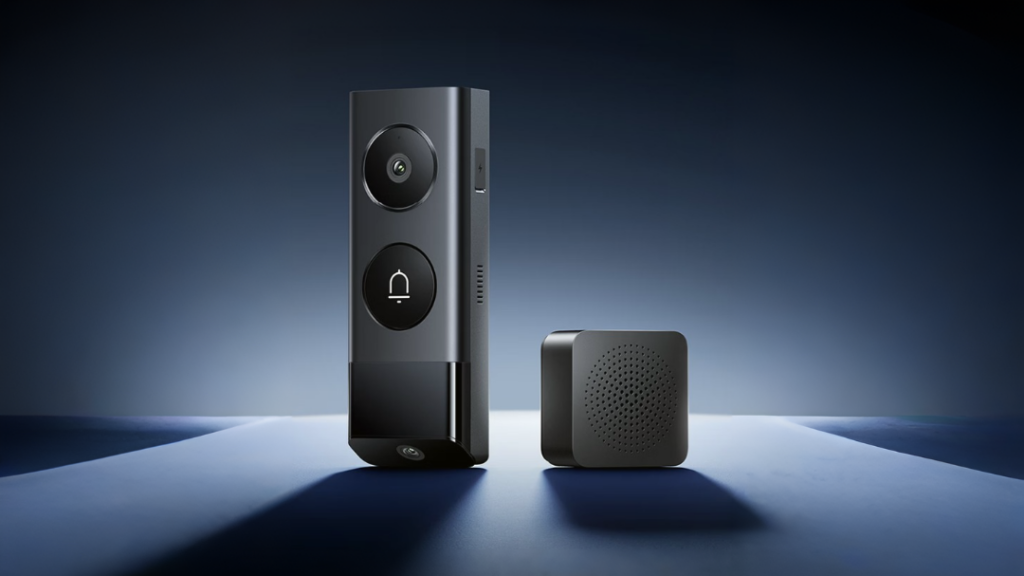
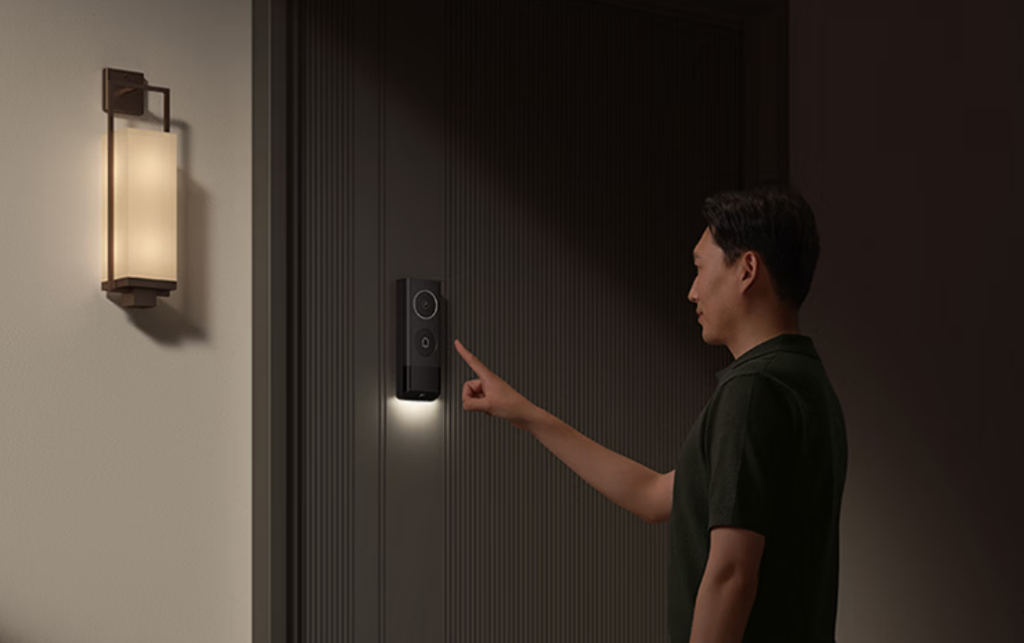
Xiaomi has launched the Smart Doorbell 4 Pro Dual Camera Edition in China for 499 yuan ($75), with an introductory price of 439 yuan ($66). It adds a secondary downward-facing camera to monitor packages alongside the main camera.
Xiaomi Smart Doorbell 4 Pro Dual Camera Specifications
The camera array consists of a 5MP primary sensor and a 2MP secondary sensor. Both lenses provide a diagonal field of view of over 150 degrees. The primary camera faces forward to capture people approaching the door and the general porch area, while the secondary camera is angled downward to cover the floor space.
For low-light recording, the device uses 940nm infrared LEDs. These specific infrared lights do not emit a visible red glow, which is intended to prevent the camera from being a nuisance to neighbors in shared apartment corridors.
The doorbell operates on a 9,800mAh battery. According to Xiaomi’s lab tests, this capacity provides about 172 days of use per charge, assuming the device records 20 ten-second, motion-triggered clips daily.
Motion detection relies on dual passive infrared (PIR) sensors that cover a 180-degree horizontal area and can detect movement up to five meters away. You can adjust the detection sensitivity and recording intervals within the Mi Home app.
On the software side, the doorbell features AI recognition for people, packages, and pets, as well as free cloud-based facial recognition. It also supports voice-changing calls, custom voice replies, and an automatic ambient light that turns on when someone approaches at night.
For video storage, the device accepts microSD cards up to 256GB and includes 72 hours of free rolling cloud storage. Data transmission is secured with AES-128 encryption and a dedicated Mi Home security chip.
The doorbell integrates heavily into Xiaomi’s ecosystem. It supports Xiaomi HyperConnect for viewing live feeds on compatible Xiaomi TVs and smart displays, alongside XiaoAI voice commands for checking battery levels or pulling up the camera feed. The hardware mounts via a 3M adhesive pad or screws and includes a tamper alarm that sounds a siren, records video, and sends a phone alert if someone tries to pry it off the wall.
We use cookies on our website to give you the most relevant experience by remembering your preferences and repeat visits. By clicking “Accept”, you consent to the use of ALL the cookies.
This website uses cookies to improve your experience while you navigate through the website. Out of these, the cookies that are categorized as necessary are stored on your browser as they are essential for the working of basic functionalities of the website. We also use third-party cookies that help us analyze and understand how you use this website. These cookies will be stored in your browser only with your consent. You also have the option to opt-out of these cookies. But opting out of some of these cookies may affect your browsing experience.
Necessary cookies are absolutely essential for the website to function properly. This category only includes cookies that ensures basic functionalities and security features of the website. These cookies do not store any personal information.
Any cookies that may not be particularly necessary for the website to function and is used specifically to collect user personal data via analytics, ads, other embedded contents are termed as non-necessary cookies. It is mandatory to procure user consent prior to running these cookies on your website.