Lenovo has just teased its Legion 2 Pro gaming smartphone again. The device is the upcoming successor of the first Legion gaming phone, and was recently teased in an image poster on the company’s official Weibo account, a Chinese microblogging website.
Looking at the social media post, the company highlighted the smartphones “Double adjustable fan turbo cooling system.” In other words, the device will arrive with dual turbo cooling system as its primary heat dissipation mechanism. The image poster also states that “A new storm has appeared, you can crush everything” on the bottom. Unfortunately, finer details regarding the device is currently unknown, but it is confirmed to feature the Qualcomm Snapdragon 888 SoC under the hood.
While the company has teased the device in the past, it has yet to officially reveal an actual launch date. At the moment, the gaming smartphone is just confirmed to launch sometime in ‘Spring’ this year. Furthermore, Lenovo’s GM also assured that the device will be feature packed and will not make any compromises to offer the best gaming performance. The smartphone could arrive with up to 16GB of RAM, and an AMOLED display with a high 144Hz refresh rate as well.
Additionally, the Lenovo Legion 2 Pro is expected to be powered by a large 5,000mAh battery pack along with UFS 3.1 storage and LPDDR5 memory. A highlighting feature would undoubtedly also be the active twin cooling fans as well. Although, it remains unknown how effective this feature is, so stay tuned for more, as we will be providing updates when additional information is available.
MediaTek, the Taiwan-based chipset maker, has been a market leader when it comes to chips powering the Smart TVs. The company has a wide range of offerings for TV chips — from entry-level to flagship-grade smart TVs.
Today, MediaTek has expanded its portfolio with the launch of a new chipset — MediaTek MT9638. The chipset, which is aimed for the next-generation of premium 4K smart TVs come with an integrated AI processing unit (APU).
It uses a multi-core setup of ARM Coretex-A55 CPU cores along with ARM Mali-G52 GPU. The company has not yet revealed the exact number of CPU cores but it’s likely to be a quad-core cluster.
This new chipset also packs some impressive features such as support for variable refresh rate (VRR), motion estimation and motion compensation (MEMC), HDMI 2.1 standard, and HDR10+, among others.
As for the display, it comes with supports up to 4K resolution at 60Hz and comes with support for HEVC, VP9, and AV1 decoding. For connectivity, it comes with support for Wi-Fi 6, HDMI 2.1, USB 3.0 standards. There’s also Dolby Atmos and DTS Virtual X surround sound support for immersive audio experience.
With artificial intelligence onboard, TV manufacturers using this chip can offer features like automatic adjustment of parameters such as color, saturation, brightness, sharpness, and more to enhance the image quality.
There’s also support for voice recognition and virtual assistants. It supports up to 4 far-field microphones with ultra-low-power consumption on standby and the company is also offering a one-second resume for hot words.
MediaTek has revealed that 4K Smart TVs powered by this new MT9638 chipset are expected to arrive in the second quarter of this year.
Earlier this week, Samsung Electronics announced that it will run a three day free trial period program for its foldable smartphone models. This offer will be available in the company’s home country, South Korea.
According to TheElecreport, the new program will be a part of Galaxy To Go service and will lend foldable handsets like the Galaxy Z Fold 2 and Galaxy Z Flip 5G to its customers. The South Korean tech giant aims to run the free trial period till 30th of April 2021. Till then, consumers can request the service and rent the devices at one of the 63 physical stores that the company runs in the country.
Furthermore, the smartphone maker will also have a pop up message appear to those who borrow these foldable devices that will explain their features as well. The models being given away for the trial period will also have features added via the recent One UI 3.1 update. The new update arrives last month along with the company’s 2021 flagship, the Samsung Galaxy S21 series of smartphones.
The move from the company is likely to boost the sales of its foldable handsets in the local market. While Samsung does hold a dominating position in the foldable smartphone market, it is expected that more brands will soon compete in this segment as well. So, the move is likely to expand awareness and demand for its devices in the market.
Yesterday, realme announced its 108MP camera system that will be debuting on the realme 8 Pro. Today, a mysterious realme smartphone with model number RMX3203 has been spotted on FCC. The listing reveals some of the key specs of this upcoming handset.
The FCC listing of the forthcoming realme RMX3203 was first spotted by Twitter user Abhishek Yadav. The device’s certification was published on March 2 (yesterday).
According to the documentation, the realme RMX3203 will be a 4G-only smartphone. It is said to run Android 11 but for some reason, the realme UI version is mentioned as 1.0. We believe it could be a mistake as the company’s Android 11 software is known as realme UI 2.0.
Further, the phone will not support LTE carrier aggregation, however, it will be backed by a 5,000mAh battery with model number BLP729. This battery has been also certified by TÜV Rheinland multiple times. Hence, we think it could be the same 5,000mAh battery, which is found inside several realme smartphones.
Unfortunately, nothing else is known about this realme handset apart from the above-mentioned features. Anyway, we expect to learn more about it in the coming days, including its official marketing name before its official announcement sometime in the near future.
India is apparently ready to offer various incentives to Tesla to bring the brand’s production in to the nation. One of the benefits includes cost of production being cheaper than in China, if the company will commit to manufacturing its electric vehicles in the country.
According to a Reutersreport, Nitin Gadkari, Transport Minister of India, revealed the pitch to the popular electric automaker earlier this week. Furthermore, the move from the government arrives weeks after Tesla registered a company in India. This marks the automobile maker’s entry into the market, which might be as soon as mid 2021. As per sources close to the matter, the brand aims to start by importing and selling its Model 3 electric sedan in the Southeast Asian nation.
Gadkari said that “The government will make sure the production cost for Tesla will be the lowest when compared with the world, even China, when they start manufacturing their cars in India. We will assure that.” At the moment, the local government is willing to offer such incentives in a bid to strengthen its local manufacturing of electric vehicles, batteries, and other components to cut costs of imports and even help curb pollution in major cities as well.
Notably, Tesla’s entry into the Indian market also arrives as various carmakers are moving forward with EV production due to sudden growth and demand of such vehicles, which can help reduce the overall carbon emissions. Currently, India has yet to secure local production from the company, which has also yet to comment on its plans for stepping in to the Indian market.
LG has launched a new OLED television in the Indian market — LG OLED 48CX TV. With this new product, the company is focusing towards gaming enthusiasts and people who want immersive cinema experience.
At 48-inch inches, it is the smallest television to come with an OLED display panel. LG claims that the TV will produce sharper images than the larger TVs. As for the pricing, the LG OLED 48CX is priced at Rs 199,990 (~$2,739) in India.
The device is powered by NVIDIA G-SYNC which enables high responsive gaming with no lags and stuttering. The HGiG profile made using self-lit pixels helps give users the best possible experience for HDR gaming.
Under the hood, it is powered by the Alpha 9 Gen 3 processor and comes with AI Acoustic Tuning with support for all the latest gaming enhancement features such as the higher frame rate, Variable Refresh Rate (VRR), Auto Low Latency Mode (ALLM) and Enhanced Audio Return Channel (eARC).
The TV also comes with a HDMI 2.1 connectivity. It will feature a Sports Alert feature that will give real-time alerts to users on their favourite sports news and game updates. As per the company, apart from the rich colour and contrast, the display will also offer a superior view from wide viewing angles.
It offers a fast response time at 1 ms and zero interference. There is a new filmmaker mode that automatically adjusts the TV’s settings to show a certain movie in the way the filmmaker intended it to be seen.
The LG OLED 48CX TV supports Dolby Vision IQ and Atmos to enhance the overall experience by optimizing the content. It also comes with support for Google Assistant, Alexa, Apple AirPlay 2, and HomeKit.
The upcoming Xiaomi Mi 11 Lite 4G smartphone that has a model number of M2101K9AG has received certification from various platforms such as SIRIM (Malaysia), EEC (Europe), FCC (US), NBTC (Thailand), IMDA (Singapore), and Bluetooth SIG. The BIS certification revealed that the model number of its Indian variant is M2101K9AI. Last month, the M2101K9G phone was approved by the IMDA and FCC authorities. It is speculated that the M2101K9G handset could be the 5G version of the Xiaomi Mi 11 Lite. Today, reliable tipster Mukul Sharma spotted the Google Play Console listing of the Xiaomi Mi 11 Lite 5G. The listing has revealed the key specifications of the device.
Past reports have claimed that the MI 11 Lite is codenamed as ‘Renoir.’ The same codename can be seen in its Google Play Console listing. The listing reveal that the smartphone’s display offers a Full HD+ resolution of 1080 x 2400 pixels and a pixel density 440ppi. It has 8 GB of RAM and it runs on Android 11 OS.
Mi 11 Lite 5G appears on the Google Play Console listing. 8GB RAM 1080×2400 display Android 11 Qualcomm SM7250 (765G) (earlier rumors suggested that it would be powered by the SM7350 (775G)).#Xiaomi#Mi#Mi11Litepic.twitter.com/tICybUsmwz
The listing further states that the Xiaomi Mi 11 Lite 5G is powered by a Qualcomm chipset. The specifications of the processor and the sm7250 model number suggest that it is fueled by the Snapdragon 765G chipset. This contradicts recent reports that claimed that the Mi 11 Lite 5G will feature a new Snapdragon 7-series chipset.
The FCC certification of the Mi 11 Lite 5G had revealed that it will be arriving in three variants such as 6 GB RAM + 128 GB storage, 8 GB RAM + 128 GB storage, and 8 GB RAM + 256 GB storage. It further revealed that the device has support for 5G, Wi-Fi 5GHz, Bluetooth 5.2, GPS, and NFC.
Rumors suggest that it could be equipped with other specs such as a 4,150mAh battery, 33W fast charging, a 120Hz refresh rate AMOLED display, a side-mounted fingerprint reader, and a 64-megapixel triple camera system. Its 4G model could be powered by the Snapdragon 732G SoC.
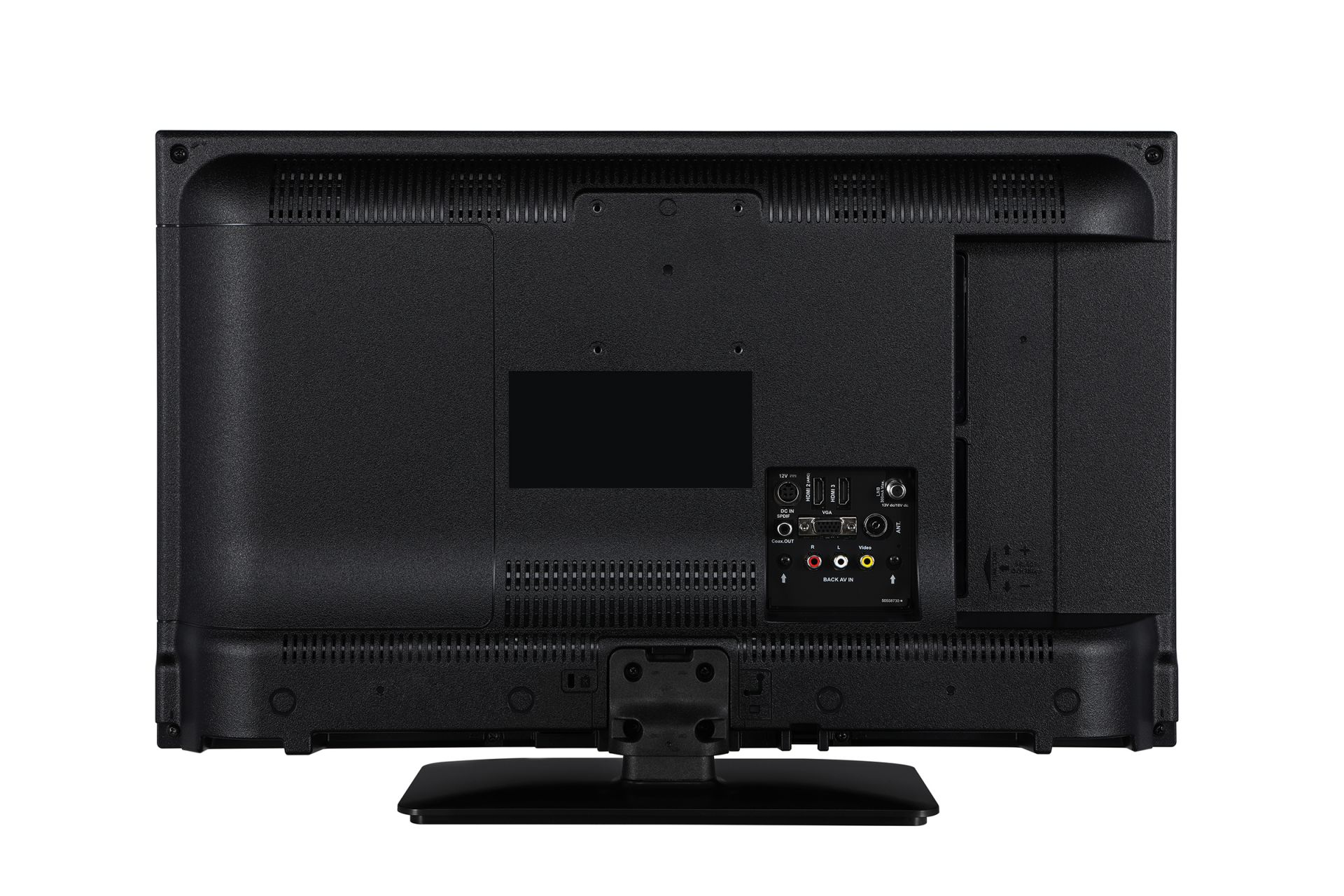
Apart from smartphones, Xiaomi is also known for its value for money smart televisions. The company’s Mi TVs are not only popular in China but also in India. Lately, the firm has been bringing its TVs to more markets. It looks like the company will continue this momentum as a new Mi TV with codename ‘Croods’ has appeared on Google Play Console.
Xiaomi Mi TV ‘Croods’ | Source: Google Play Console
An unknown Xiaomi Mi TV codenamed ‘Croods’ has been spotted by 91Mobiles. The listing reveals the chipset, RAM, screen resolution, and operating system of this television.
First and foremost, the upcoming Mi TV Croods will be powered by MediaTek t31 SoC paired with 2GB RAM. This chipset will consist of 4 x ARM Cortex-A55 cores clocked at 1.2GHz for CPU. As for graphics, it will include an ARM Mali G52 GPU clocked at 550MHz.
The TV screen size is not known but it is said to come with a resolution of 1920 x 1080 pixels (FHD) and 320 DPI. This suggests the television to be a budget model. Lastly, on the software front, it will run Android TV 10. Also, we can expect Xiaomi to ship this Mi TV with PatchWall content aggregation service.
Although nothing else is known about this forthcoming Mi TV, we can look forward to features like Play Store, Chromecast Built-in, Google Assistant, and support for leading streaming apps since the television is listed to come with Android TV.
As of now, there’s no official announcement from Xiaomi regarding the launch of a new Mi TV in any market. So it is not sure what this television be called and in which regions it will be made available.
Intel, after losing a lawsuit for patent infringement related to chip-making technology filed by VLSI Technology, has been told by a federal jury in Texas to pay $2.18 billion. It is one of the largest patent-related damage award in the U.S. history.
The chip-making giant says that it is going to appeal the judgement. VLSI Technology had claimed that Intel infringed two of its patents, which were in private access. The jury recognized $1.5 billion for infringing one patent and $675 million for infringing another.
The jury rejected Intel’s denial of infringing the patents and its argument that one patent was invalid because it claimed to cover work done by Intel engineers. In the argument, Intel lawyer William Lee of WilmerHale told that the patents had been owned by Dutch chipmaker NXP Semiconductors Inc., which would get a cut of any damage award.
He also argued that VLSI Technology, founded four years ago, has no products and its only potential revenue is this lawsuit. He also argued that the company was entitled to no more than $2.2 million.
One of the patents was originally issued in 2012 to Freescale Semiconductor Inc. and the other in 2010 to SigmaTel Inc. Freescale bought SigmaTel and was in turn bought by NXP in 2015. The two patents in this case were transferred to VLSI in 2019.
The patent damage award is about half of Intel’s fourth-quarter profit. Intel has been dominating the chips industry, which is worth around $400 billion, for decades but the company is now struggling to maintain its lead.
Realme officially started teasing the Realme 8 series with the teaser released yesterday confirming that the realme 8 Pro will pack a 108MP Samsung ISOCELL HM2 sensor. A new leak has now emerged suggesting that the model will be powered by Qualcomm processors.
The realme 8 series will be made up of the realme 8 and realme 8 Pro. According to the leak, the series will also have 4G and 5G versions. The leak also shows that the realme 8 4G will be powered by a Qualcomm Snapdragon 720G chipset. On the other hand, the 8 Pro will pack a Snapdragon 730G processor.
I asked him directly and he said he already hands on with the phone I recently. realme 8 series have both 4G and 5G version. Trust me, his OPPO/realme leak won't be a lie 😛 https://t.co/kgNx6eLseD
— CEO of Chun Corp (Tet forever) (@chunvn8888) March 2, 2021
if this turns out to be true, then the realme 8 will feature a significant change in the chipset from its predecessor. To recall, the Realme 7 came with a MediaTek Helio G95 chipset while the 7 Pro is powered by Snapdragon 720G. The realme 7 5G utilizes a Dimensity 800U processor. There is no word yet on the chipset onboard the 5G version. However, Realme recently launched the V15 5G in China with a Dimensity 800U chipset. The Realme 8 5G may therefore use the same processor. The decision to use older processors on the models may not be unconnected to the chip shortage that is bedeviling the industry presently.
We are yet to get any information about the launch date for the realme 8 series but we expect the company to reveal a date soon.
OPPO will be launching the OPPO F19 Pro and F19 Pro+ 5G smartphones in India on March 8. Ahead of the launch a hands-on video of the F19 Pro+ 5G has appeared on YouTube. Since the video has emerged before its official announcement, it could be taken down soon. Shown below are some of the screenshots that were taken from the video.
The video begins by showcasing the blue-colored retail package of the F19 Pro+ 5G. A rear view of the device reveals that its model number is CPH2213 and it is equipped with 8 GB of RAM and 128 GB storage. The label present on the bottom side of the device reveals that it has a 16.34cm display (6.43-inch), a front camera of 16-megapixel, and it weighs 173 grams.
1 of 5
OPPO F19 Pro+ 5G
OPPO F19 Pro+ 5G
OPPO F19 Pro+ 5G
OPPO F19 Pro+ 5G
OPPO F19 Pro+ 5G
The plastic film placed on the display of the OPPO F19 Pro+ 5G states that it will offer key features like Smart 5G, AI highlight Portrait Video, 50W Flash Charge, and System Performance Optimizer. Apart from the handset, the retail box includes a charger, earphones, a USB-C cable, and a SIM tray ejector.
At the front, the OPPO F19 Pro+ 5G has a punch-hole display with a slightly thick chin. It features an in-screen fingerprint reader. The curved edged back panel of the device has a rectangle-shaped camera island. It includes four cameras, an LED flash, and a 5G branding. Shown in the video is the Space Silver color variant of the device.
The volume up and down buttons are available on the left side of the F19 Pro+ 5G. Its right edge has a power button. The bottom edge of the phone features a 3.5mm audio jack, a USB-C port, and a loudspeaker grille. Rumors are rife it has an AMOLED screen, Dimensity 800U chip, and a 4,500mAh battery.
Samsung is among those rare smartphone makers that also makes their own chipsets and the South Korean giant has now started focusing on further development of its processors to make them compete with the the high-end offerings from its rivals.
This year, the company is expected to launch three new Exynos chipsets in the market which includes a mid-range 800-series chip, a high-end 1200-series and a flagship 2200-series. Two of them, 1200-series and 2200-series chips are expected to feature GPUs based on AMD’s RDNA architecture.
There are also reports that the South Korean giant is working on two different versions of the Exynos 2200 chipset — one for the Android smartphones and another for the laptops. Both are expected to share similar architecture but tuned for different form factors.
Samsung is working with AMD for developing a custom GPU and the company will demonstrate the graphics processor in June this year. The chipsets with this new GPU are expected to launch at a later date and the devices powered by them are expected to go official in the next year.
The Exynos 2200 version being developed for laptops will be used to power the Windows 10 laptops and could go official in the third or fourth quarter of this year. So far, Samsung has been relying on Qualcomm chipsets for laptops running Windows on ARM system.
According to a new leak by reliable tipster Evan Blass, an upcoming OPPO smartphone codenamed as Darwin will be heading to India with the OPPO F19 moniker. In Asia, the same phone will arrive as the OPPO Reno5 F and it will be landing in Europe as the OPPO A94.
OPPO F19 / Reno5 F / A94 specifications
The OPPO F19 has a 6.4-inch AMOLED screen with a punch-hole display. It offers a Full HD+ resolution of 1080 x 2400 pixels. It has a front-facing camera of 16-megapixel.
The rear-facing camera island has a 48-megapixel primary camera, an 8-megapixel ultrawide sensor, a 2-megapixel macro camera, and a 2-megapixel mono lens. It has a 4,310mAh battery that supports 30W VOOC rapid charging.
The F19 will draw the MediaTek Helio H95 chipset. It will come in 6 GB and 8 GB RAM options. For storage, it will come with an internal capacity of 128 GB and a microSD card slot. The handset will boot to Android 11 OS. It will be available in three colors such as black, silver, and purple. The tipster also revealed that the OPPO F19 Pro 5G is codenamed as Elsa. The same phone is expected to get rebranded as the OPPO A54 5G in other markets.
OPPO F19 Pro
Interestingly, the device Blass is calling as F19 is already being referred to as the OPPO F19 Pro in recent reports. And what he is calling F19 Pro 5G could end up as the F19 Pro+ 5G.
Recent reports have revealed that the F19 Pro+ 5G is powered by the Dimensity 800U chipset and 8 GB of RAM. It may come with an internal storage of 128 GB and 50W fast charging support. Its other specs could be identical to the F19 Pro handset. The F19 Pro+ 5G could be available in colors like black and silver. The F19 series phones will go official on March 8 in India.
Chinese-owned Volvo plans to fully transform its present production plants in Sweden to produce only electric vehicles and hopes to accomplish the goal by 2030. Volvo thus plans to exit the internal combustion-based auto market entirely by the turn of this decade. The company says there is no long-term future for internal combustion vehicles and joins UK-based carmaker Jaguar who had also made the decision to transition fully to EV production by 2025.
Volvo launched its first fully-electric car, the XC40 Recharge SUV in 2019. With EVs increasingly measured by their mileage on a full charge, as well as recharge times, the XC40 Recharge has a 200-mile range, and fast charging capability as the batteries can be charged up to 80% in just 40 minutes. Volvo is about to launch its second fully-electric vehicle.
In addition, Volvo also says it will only sell the electric cars online, aimed at significantly cutting down operating expenses that are bound to go up with the operation of physical stores.
The company is obviously ramping up its previous plans of having up to 50% of its car sales be electric by 2025 and says the new strategy is an “acceleration of existing targets driven by very strong demand for its electric models. It says it will continue to meet the exceptional quality it has always been known for by focusing on fewer models that would well exceed customer expectations.
Volvo also hopes to make strong investments in its e-commerce platform so as to seamlessly transition to an online-only sales model easily compatible with its customer expectations.
In the words of CEO, Hakan Samuelson, “To remain successful, we need profitable growth. So instead of investing in a shrinking business, we choose to invest in the future — electric and online. We are fully focused on becoming a leader in the fast-growing premium electric segment.”
With resistance from several quarters and many conspiracy theories spun around the recent coronavirus vaccines which are being deployed across the world to fight the deadly virus, Twitter has now released tough regulations that would penalize various levels of misinformation that may be peddled on the social networking platform.
The rumor mill is an ever-present threat to a successful rollout of vaccines and Twitter will be incorporating new labels into users’ timelines, which will also pop up whenever users are about to retweet misleading content. The labels system is just another move by the company to be more responsive and decisive in dealing with false and misleading information that may be peddled on it.
Making use of authentic and sufficiently vetted public information, misinformation tweets will attract notices together with a warning that the content may be misleading. The system will be moderated by humans and not an automated system. However, the labeling system which began on Tuesday (March 2) will provide training data for its artificial intelligence (AI) that is expected to learn the process and be deployed to run the system. The new system will be available in English and would be expanded to other languages subsequently.
The misinformation labeling system also comes with a system of issuing penalties via strikes for violators of the regulations. The strike system is such that a user with two or three strikes will have his account locked for 12 hours. With four violations, they lose account access for one week, with permanent suspension looming after five strikes.
As the social networking giant continues to reinvent itself and safeguard the sanctity of the platform with its zero tolerance for misinformation, it is hoped that this new move will further help mold proper behavior on the platform.
Xiaomi is one of the manufacturers that will launch a foldable smartphone this year. A new leak has revealed what may be the official name of the upcoming device and it appears it will be launched under the Mi MIX series.
One of Xiaomi’s patented designs for a foldable smartphone
According to Ross Young of Display Search, Xiaomi’s foldable smartphone may launch as the Mi MIX 4 Pro Max. While this may be surprising, it makes sense as Xiaomi’s Mi MIX series is known for bringing new technologies and features.
We hear the upcoming Xiaomi foldable may be called the Mi Mix 4 Pro Max. China Star is the display supplier, not SDC. SDC will provide an in-folding display later in the year, which will be a little larger.
He goes on to say that the display will be supplied by China Star Optoelectronics Technology (CSOT), the display subsidiary of TCL. That doesn’t mean that an earlier report that said that Samsung Display will be making displays for Xiaomi’s foldable phone is false. The analyst confirms that Samsung Display will indeed provide Xiaomi with displays but it will be for an in-folding phone that will be announced later.

Mr. Young says in a reply that the Mi MIX 4 Pro Max will have an outward folding design similar to that of the Huawei Mate XS. He also said that it has been rumored that the cover display of the device will be 6.38-inches when folded.
Chinese phone maker Meizu may have slowed down its smartphone product cycle but the brand is still keeping faith with its custo Flyme ROM. The company has now unveiled the Flyme 9 custom ROM which has been a long time coming. The new ROM takes over from the Flyme 8 which was released in 2019 although Meizu pushed the Flyme 8.1 to some models last year.
The long wait will likely not be in vein as the new ROM comes with several imrovemnets and new features. Since this is a major update, it features significant changes in the design, privacy, functions, efficiency and other aspects.
In terms of the design, the desktop icons are now in a square boxes with chamfered edges and beaiutigful color schemes that blend well with the background. Each third-party application can also rely on algorithms to achieve consistent icon styles. Some system-level plug-ins have been added, and some plug-ins can be dragged into the negative screen (Aicy overview).
The notification and control centers has also been redesigned. At the same time, the notifications and control keys are displayed side by side in a horizontal screen orientation, which is convenient to operate.
Meizu has also visually simplified the fingerprint icon and application interface, removing the decorative elements and retaining only the most direct page logic and necessary elements.
You also get some interesting screensavers and wallpapers as well as new themes. The Flyme 9 also includes Flyme 8 themes allowing users to travel through time and space and reminisce about the classics. Alive wallpaper supports dark and light color modes and can be transformed through different levels.
The interface is also embedded with dynamic effects, covering screen fingerprint unlocking, facial recognition, screen rotation, gestures, etc. The icon self-layering algorithm can have smooth and smart animation even if the application is unpopular.
Flyme for Watch
In addition to Flyme 9, Meizu also unveiled the all-new Flyme for Watch which is specifically designed for smartwatches. The smartwatch and fitness tracker manufacturing sector is growing very fast.
Starting from the hardware features and interaction methods, Meizu has newly defined the design language, and extended the sense of order of Flyme 9 to the small screen. It is equipped with a redesigned launcher, notification center and shortcut switch, which brings easy and convenient interaction.
In terms of vision, Flyme for Watch supports highly customizable dials and provides more than 30 small components. Users can freely use their creativity to match. It supports album dial settings for dynamic and static pictures. It also has a unique art dial to choose from, anytime, anywhere.
For functions, Flyme for Watch not only supports conventional notification synchronization, music control and other functions, but also supports eSIM independent call function. Tat means it allows the watch to function ireespective of a phone. There is also a Find My Phone feature onboard.
At the same time, Flyme for Watch also comes with the custom Aicy voice assistant and it functions in the same way as on a obile phone. That is, it provide users with a real smart watch experience. The introduction of the Meizu Pay payment tool also expands more usage scenarios for Meizu watches.
The custom watch ROM also supports the installation of third-party apps. The most advanced apps include Air Travel, Baidu Maps, NetEase Cloud Music, Alipay, Sogou Input Method, QQ and many other watch-side apps.
Aiming at the two natural pain points of smartwatch performance and battery life, Meizu also introduced the OneMind smart engine on the watch side to customize the core capabilities in depth according to the hardware characteristics and usage scenarios of the watch, including as many as 300 special optimizations.
Meizu announced during the event that it will release its first smartwatch equipped with Flyme for Watch in May this year.
Last week, we reported that eBuyNow, the current licensee for Motorola-branded smartwatches, has plans to launch three new watches this year. Two of those watches will have a round dial while the third will have a square dial. Now, the specifications of one of the smartwatches with a round dial, the Moto Watch One, have surfaced on the web, thanks to an official render of the device.
The image which was posted on Reddit shows the underside of the Moto Watch One. The smartwatch has two buttons on the visible side and quick release straps that appear to be made of leather.
Image source: Reddit (r/WearOS)
The underside of the smartwatch has some of the specifications printed on it which are a Snapdragon 4100 processor, NFC, 5 ATM waterproof rating, and GPS. The image also shows a visible charging coil which means it will support wireless charging.

From the aforementioned specifications, we can tell that this is a high-end watch. The Snapdragon Wear 4100 was unveiled last year and made its first appearance in the TicWatch Pro 3, a $299.99 smartwatch.
There are still a lot of unknown features of the smartwatch but we are sure it will be able to compete with some of the top smartwatches available on the market when it launches.
For those who want a more affordable watch, we want to believe the second Motorola smartwatch which will launch as the Moto G Smartwatch will be the one for them.
eBuyNow will announce the Moto G Smartwatch in June while the Moto Watch One and the square-faced Moto Watch will be announced in July.
We are still in March and Xiaomi already released two flagships in 2021. We are talking about the Xiaomi Mi 11 and the Redmi K40 Pro+. Actually, they are not among the best flagships in the market: despite the higher price of the Xiaomi Mi 11 compared to the previous models, it can still be considered a flagship killer, just like the Redmi K40 Pro+ recently launched in the Chinese market. But which one offers the highest value for money? Does it make sense to spend more for the Xiaomi Mi 11 or the Redmi K40 Pro+ is actually enough for your needs? This comparison between their specifications and features will help you find out.
Xiaomi Mi 11 vs Xiaomi Redmi K40 Pro Plus
Xiaomi Mi 11
Redmi K40 Pro+
DIMENSIONS AND WEIGHT
164.3 x 74.6 x 8.1 mm, 196 g
163.7 x 76.4 x 7.8 mm, 196 grams
DISPLAY
6.81 inches, 1440 x 3200p (Quad HD+), AMOLED
6.67 inches, 1080 x 2400p (Full HD+), Super AMOLED
Triple 108 + 13 + 5 MP, f/1.9 + f/2.4 + f/2.4
20 MP front camera
Triple 108 + 8 + 5 MP, f/1.8 + f/2.2
20 MP front camera
BATTERY
4600 mAh, fast charging 50W, wireless charging 50W
4520 mAh, fast charging 33W
ADDITIONAL FEATURES
Dual SIM slot, 5G, reverse wireless charging 10W
Dual SIM slot, 5G
Design
The Redmi K40 Pro+ is a more compact phone, but the Xiaomi Mi 11 has a more attractive design mainly because of its curved display. The display with curved edges offers a higher screen-to-body ratio and makes the phone look more futuristic. On the other hand, as mentioned above, the Redmi K40 Pro+ is a more compact and thinner phone. The Redmi K40 Pro+ also features the IP53 certification which guarantees protection against dust and splashes, while Xiaomi Mi 11 has a glass back protected by Gorilla Glass Victus, so it offers a great build quality too. Despite the more compact body of the Redmi K40 Pro+, Xiaomi Mi 11 wins the design comparison.
Display
The Xiaomi Mi 11 has a better display than the Redmi K40 Pro+ and this is one of the most important differences between these two flagship killers. With the Xiaomi Mi 11, you get a higher Quad HD+ resolution and the capability to show up to one billion colors, as well as a higher 1500 nits peak brightness. The Redmi K40 Pro+ has still an amazing display, but the resolution is lower (Full HD+), the color reproduction is actually inferior and so is the brightness.
Specs & Software
Xiaomi Mi 11 and Redmi K40 Pro+ are both powered by the Snapdragon 888 mobile platform, they offer up to 12 GB of RAM and up to 256 GB of UFS 3.1 native storage. Given that they have the same software as well, you should get a very similar level of performance. Both the phones are based on Android 11, but given that the Redmi K40 Pro+ is only available in China, it only comes without Google Mobile Services and with the Chinese ROM. Whatever you choose, you won’t have to worry about the performance.
Camera
You can get a better camera setup with the Xiaomi Mi 11. Both the phones pack a 108 MP main camera, but the Xiaomi Mi 11 is the only one with OIS. Further, it features a better ultrawide camera with a 13 MP resolution, while you get just 8 MP with the Redmi K40 Pro+. The rest of the camera departments are composed of a 5 MP macro camera and a 20 MP front camera. The optical stabilization allows the Mi 11 to click better photos and record better videos and the 13 MP camera allows it to capture ultrawide photos with a higher level of detail.
With the Xiaomi Mi 11, you get a slightly bigger 4600 mAh since its bigger dimensions leave room for a bigger battery. But this does not mean that the Mi 11 will have a longer battery life: the Redmi K40 Pro+ has a lower display resolution and a lower brightness, so the battery life should not be so different from its older sibling. What really makes the difference on the battery side is charging technologies. The Mi 11 supports 55W fast charging, while you get 33W fast charging with the Redmi K40 Pro+. Further, the Mi 11 supports wireless charging (with a 50W power) and reverse wireless charging, while Redmi K40 Pro+ does not.
Price
The Xiaomi Mi 11 carries a starting price of €749/$905 in the global market. The Redmi K40 Pro+ is not available globally, you can only buy it in China for €470/$568. The Mi 11 is a superior phone, but if you do not mind having a better display, camera, and wireless charging, you can save a lot of money by choosing the Redmi K40 Pro+.
The iQOO Z series made its debut last year as a line of affordable phones. The first model in the series, the iQOO Z1, launched last May as the first phone with the Dimensity 1000+. It also packed a 144Hz refresh rate and a 44W fast charging. Now a successor, which should arrive as the iQOO Z3 is coming and it has received its 3C certification.
The iQOO Z3 was certified as the Vivo V2073A. Just like its predecessor, it is a 5G phone and according to Digital Chat Station, it will be powered by the MediaTek Dimensity 1100 chipset.
Image source: Digital Chat Station
The 3C certificate reveals that the phone will support 11V 5A (55W) charging an upgrade from its predecessor’s 44W fast charging. The rest of the phone’s specs are unknown but we expect more details to surface in the coming weeks.
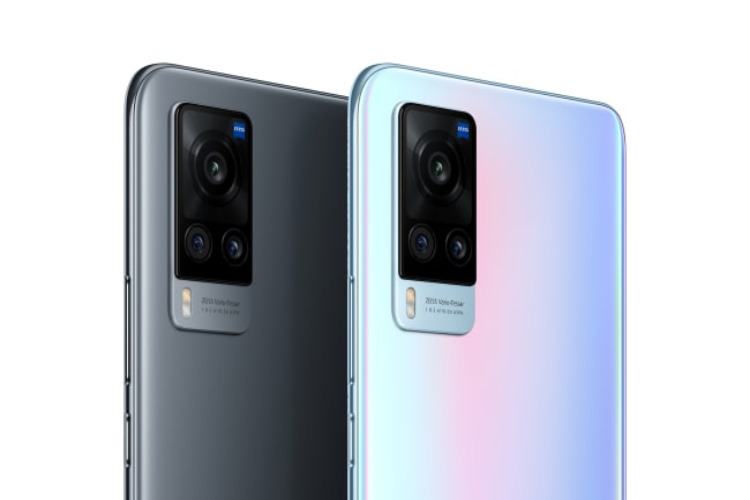
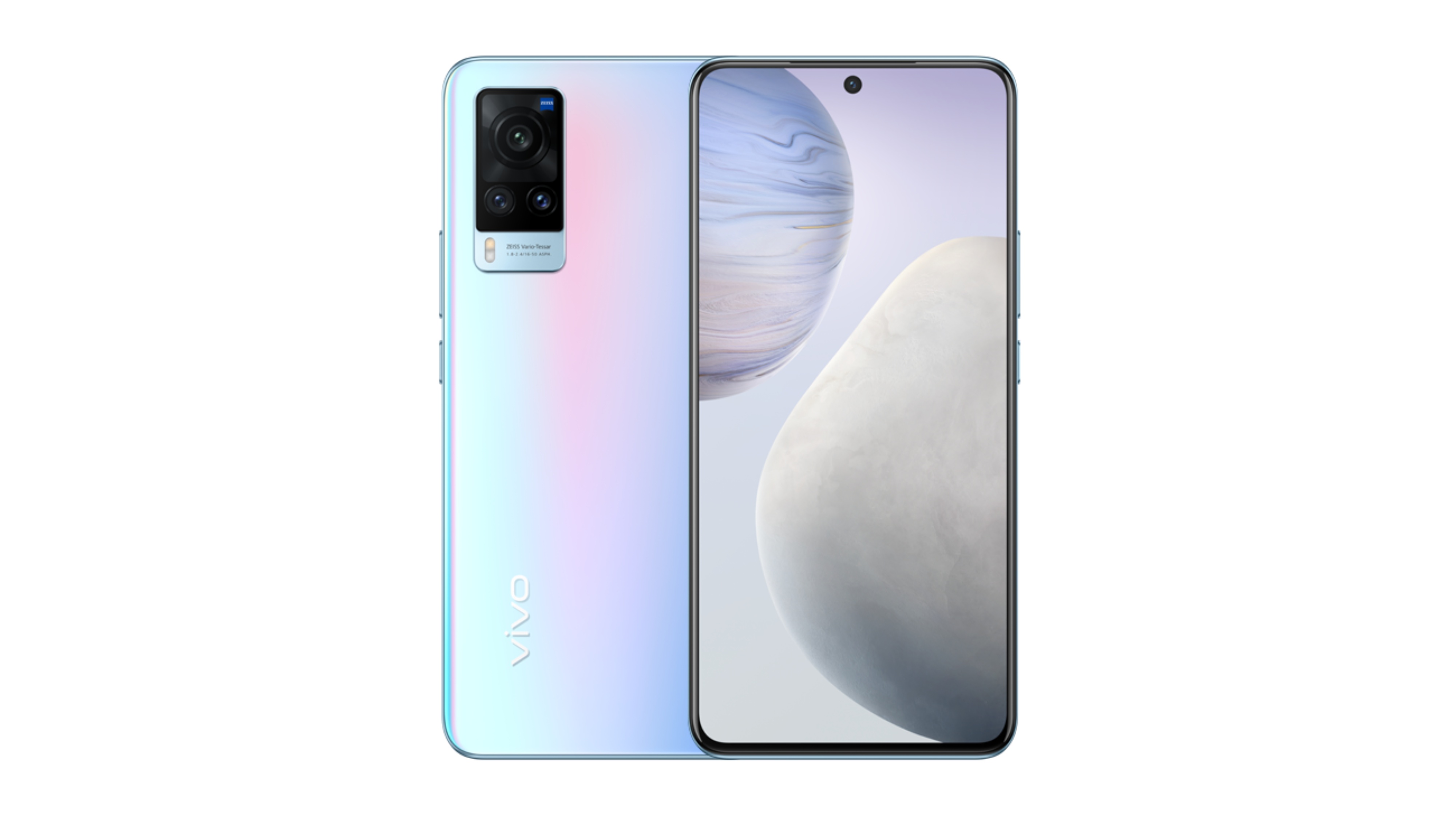
The iQOO Z1 had a 6.57-inch LCD display. iQOO may decide to stick to LCD or make the switch to AMOLED for this year’s model, though the refresh rate will likely not be as high as 144Hz.
Another area where we expect upgrades is the camera department. The iQOO Z1 has 48MP triple rear cameras which also includes an 8MP ultrawide angle camera and a 2Mp macro camera. With 64MP sensors being more common these days, we won’t rule out the iQOO Z3 also getting one. We also expect it to have an improved ultrawide angle camera and maybe a depth sensor.
Seeing as the iQOO Z3 has been certified already, there is a chance it may launch earlier than its predecessor.
We use cookies on our website to give you the most relevant experience by remembering your preferences and repeat visits. By clicking “Accept”, you consent to the use of ALL the cookies.
This website uses cookies to improve your experience while you navigate through the website. Out of these, the cookies that are categorized as necessary are stored on your browser as they are essential for the working of basic functionalities of the website. We also use third-party cookies that help us analyze and understand how you use this website. These cookies will be stored in your browser only with your consent. You also have the option to opt-out of these cookies. But opting out of some of these cookies may affect your browsing experience.
Necessary cookies are absolutely essential for the website to function properly. This category only includes cookies that ensures basic functionalities and security features of the website. These cookies do not store any personal information.
Any cookies that may not be particularly necessary for the website to function and is used specifically to collect user personal data via analytics, ads, other embedded contents are termed as non-necessary cookies. It is mandatory to procure user consent prior to running these cookies on your website.