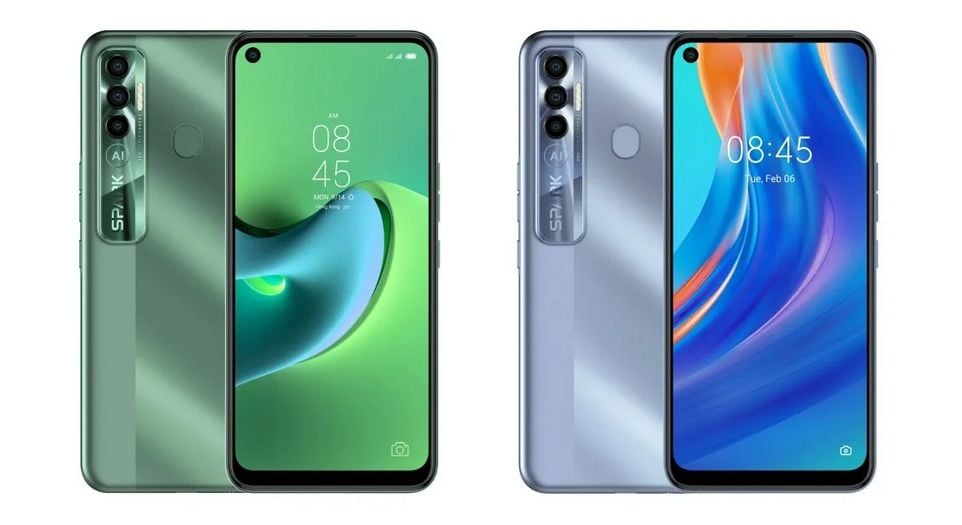
After announcing Techno Spark 7 and Spark 7P, Tecno has announced a new smartphone called the Spark 7 Pro. As the name suggests, it is the most powerful phone in the Spark 7 series from the brand. Some of its major highlights include a big display with support for a high refresh rate, a processor that is optimized for gaming, and a big battery.
Tecno Spark 7 Pro specifications and features
The Tecno Spark 7 Pro has a 6.6-inch LCD screen with a punch-hole placed at the upper-left corner. The screen supports a Full HD+ and it can offer a refresh rate of 90Hz in HD+ resolution. The device runs on HiOS 7.5 based Android 11 OS.
Placed on the front is an 8-megapixel selfie camera. Its rear shell has a 48-megapixel primary camera, a depth sensor, and an AI lens. The back panel of the phone also features a fingerprint scanner.
Tecno Spark 7 Pro
The MediaTek Helio G80 chipset is present under the hood of the Spark 7 Pro. It comes in RAM variants like 4 GB and 6 GB and storage choices like 64 GB and 128 GB. For more storage, it features a microSD card slot. The handset is packed with a 5,000mAh battery, which supports only 10W charging.
Tecno Spark 7 Pro pricing and availability
Tecno is yet to confirm the pricing and availability of the Spark 7 Pro. Once pricing is revealed, it will sell in variants like 4 GB RAM + 64 Gb storage, 4 GB RAM + 128 GB storage, and 6 GB RAM + 128 GB storage. Its color variants include Alps Blue, Spruce Green, Neon Dream, and Magnetic Black.
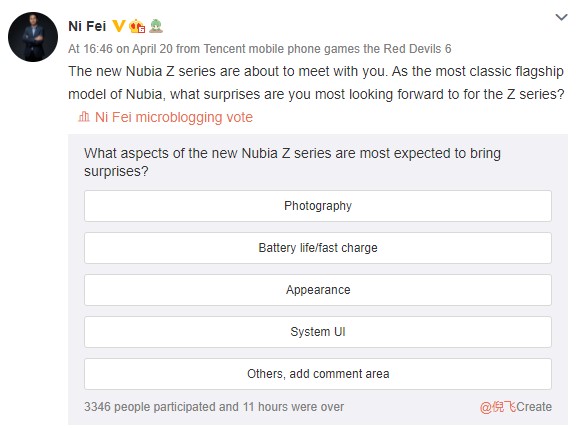
The Nubia Z series has been missing from the smartphone scene since the last model, the Nubia Z20 was announced back in August 2019. If you have been waiting for a successor, Ni Fei, the president of mobile devices at ZTE, has confirmed that a new model is on the way.
The top executive took to Weibo to reveal that the next generation Nubia Z series will be coming soon. The Weibo post also included a poll that asked fans what upgrades they expect. From the options, it is safe to assume the poll is a teaser for the upgrades the new phone will bring.
A lot has happened since the release of the Nubia Z20 and the smartphone space is now even more competitive. However, knowing Nubia, we can be sure the New Nubia Z series smartphone will have its own unique features that will give it an edge over the competition.
At the moment, we do not know what the new phone will be called. Will it be called Nubia Z21 so that it syncs with the year 2021 or will it be called Nubia Z30? Let us know what you think in the comment box below.
Also, we have no information about the number of phones that will be announced. While there was only one Nubia Z20 phone, its predecessor, the Nubia Z18 had a mid-range model that launched as the Nubia Z18 Mini and it was even announced before the flagship arrived months later.
Another important question is if the new Nubia Z series phone will have a dual-screen design like the Nubia Z20? With key Chinese manufacturers set to announce a foldable smartphone this year, maybe Nubia will surprise us too. If it does launch a foldable with an inward folding design, it can still be called a dual-screen phone, right?
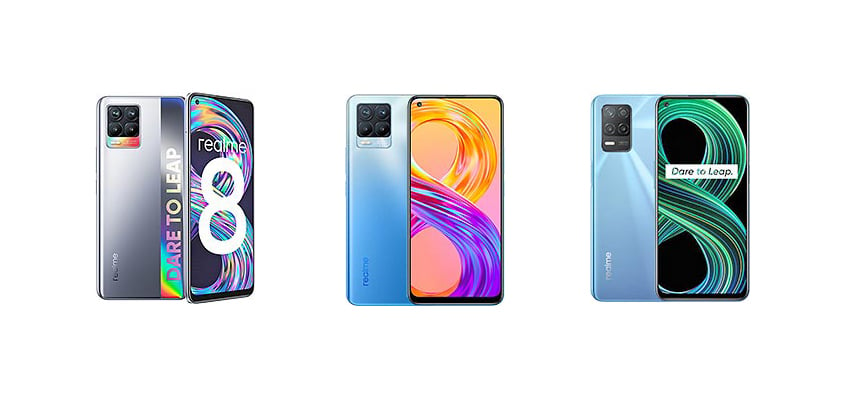
Realme 8 Pro was the first model to hit the global market and it came alone, initially. But after a few weeks, two other handsets from the same lineup have been launched globally: the vanilla Realme 8 and the Realme 8 5G. Now, the 8 series for the global market consists of three different models, two of which are sold with the same price tag. Which is the best one and which one should you choose depending on your needs? This specs comparison will clear your ideas.
Quad 64 + 8 + 2 MP, f/1.8 + f/2.3 + f/2.4 + f/2.4
16 MP f/2.5 front camera
Quad 108 + 8 + 2 MP, f/1.9 + f/2.3 + f/2.4 + f/2.4
16 MP f/2.5 front camera
Triple 48 + 2 + 2 MP, f/1.8 + f/2.4 + f/2.4
16 MP f/2.1 front camera
BATTERY
5000 mAh, 30W fast charging
4500 mAh, 50W fast charging
5000 mAh, fast charging 18W
ADDITIONAL FEATURES
Dual SIM slot
Dual SIM slot
Dual SIM slot, 5G
Design
The Realme 8 Pro has the sleekest design of the trio. Thanks to its smaller battery, the phone has a thinner body and it is even lighter than Realme 8 and Realme 8 5G. This is the only reason making the Pro version better than the other two models of the lineup because the rest of the design is similar and the materials used are the same.
Display
Realme 8 and 8 Pro have exactly the same display, which is actually better than the panel found on the Realme 8 5G. We are talking about a Super AMOLED panel showing vivid colors and absolute blacks, with a Full HD+ resolution, a standard refresh rate, and a peak brightness up to 1000 nits. The display also comes with an integrated fingerprint scanner for authentication. The Realme 8 5G has a 90 Hz refresh rate, but in this case, we are talking about an IPS panel. In each case, you get the Full HD+ resolution with 1080 x 2400 pixels, but the Realme 8 5G has a side-mounted fingerprint reader.
Hardware/Software
The most satisfying processor in terms of performance is the one provided by the Realme 8 Pro, which is powered by the Snapdragon 720G mobile platform. The chip is built at 8 nm and it comes with very high GPU performance. But it lacks 5G, so you might prefer the slightly lower performance offered by the Relame 8 5G because it provides 5G support. Further, the Dimensity 700 is built with a 7 nm production process. The phones all run Android 11 out of the box, customized by Realme UI 2.0.
Camera
The king of camera phones in the Realme 8 series is the Realme 8 Pro because of its main camera: a Samsung ISOCELL HM2 sensor with a 108 MP resolution and the in-sensor zoom technology. It captures a higher level of detail and provides better overall photo quality. Right after, we got the Realme 8 with its 64 MP rear camera. The Realme 8 5G is the most disappointing one: besides having an inferior 48 MP main camera, it lacks the ultrawide sensor too, unlike Realme 8 and 8 Pro.
Battery
Realme 8 Pro loses the battery comparison and Realme 8 is the longest-lasting battery phone of the trio. It has a 5000 mAh battery and a Super AMOLED display instead of the IPS panel found on the Realme 8 5G, which reduces energy consumption. Realme 8 Pro is the best when it comes to fast charging, thanks to a power of 50W.
Realme 8 vs Realme 8 Pro vs Realme 8 5G: Price
Realme 8 and Realme 8 5G are priced at €199/$240 in the global market (base variants), while you need €279/$337 to get the Realme 8 Pro. If we exclude the absence of 5G connectivity, the Realme 8 Pro is definitely the most interesting one, but it costs more. Between Realme 8 and 8 5G, the first is better due to its AMOLED display, better cameras, and faster charging: Realme 8 5G has the same price just because of the chipset and 5G connectivity.
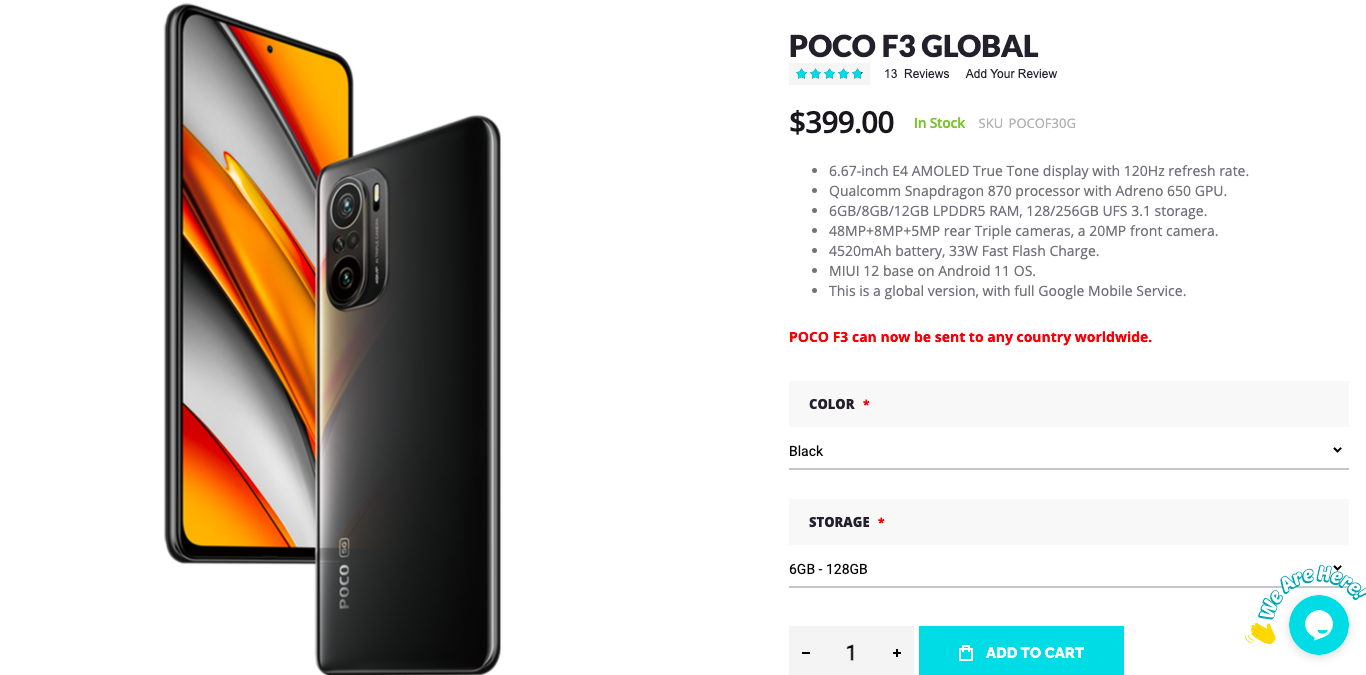
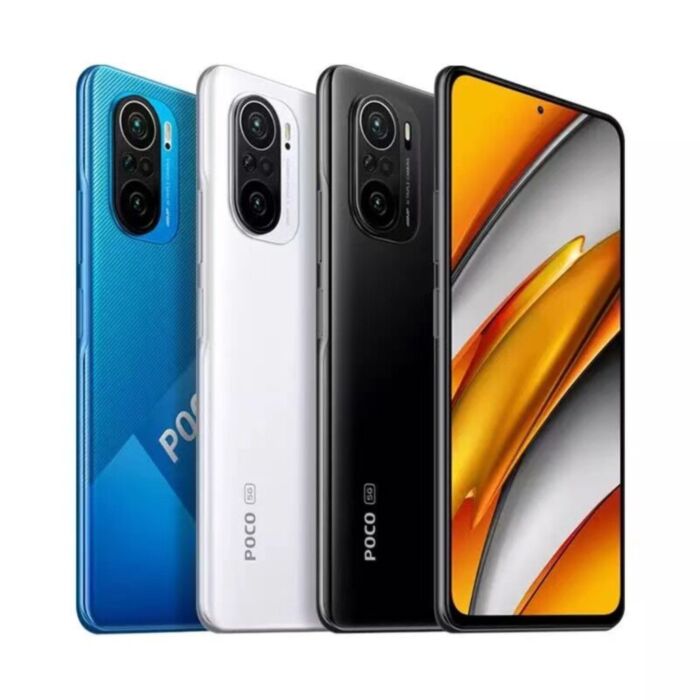
POCO F3 the latest flagship from POCO features a 6.67” E4 AMOLED display, protected by Corning Gorilla Glass 5. The elegantly designed smartphone is powered by a Qualcomm Snapdragon 870 5G Octacore processor and comes in two storage variants viz: 6GB + 128GB and 8GB + 256GB. POCO F3 comes with a LiquidCool Technology 1.0 Plus feature which ensures your phone doesn’t get overheated making it perfect for pro gamers and heavy users.
The smartphone is fueled by a 4520mAh battery with a 33W fast charging support which charges your smartphone to 100% in just 52 minutes and gives you 10 hours of non-stop gameplay, 14 hours of video, and 149 hours of music.
POCO F3 is now available for all global customers for $399 at Giztop. Please note that this price is applicable only on the Black color, 6GB + 128GB variant. So place your orders while the stock lasts.
For more information on such exciting deals and offers check out ourdeals hub.
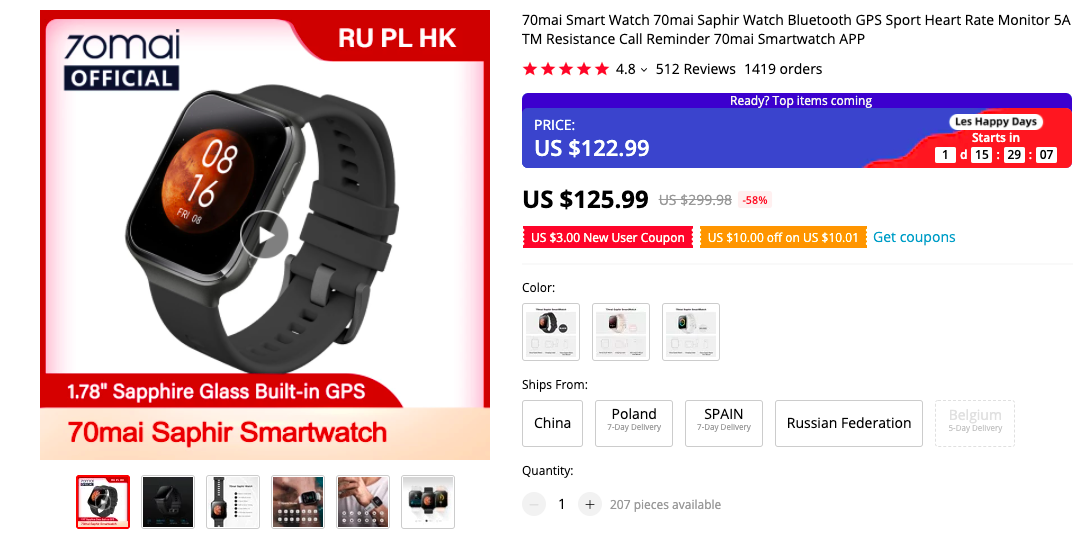
AliExpress under its Les Happy Days deal is giving the 70mai Saphir smartwatch which generally retails at $150 for a heavily discounted price of $122.99 only.
70mai Saphir smartwatch features a 1.78” AMOLED touch display covered with a premium and beautiful sapphire glass case which is known for its durability and greater light transmittance. The display is fitted onto a sand-blasted aluminum alloy base to give it a luxurious finish.
70mai Saphir Smartwatch comes with a long battery life which works for up to 10 days on typical usage and 20 days on simple watch mode. Even under heavy usage with continuous GPS ON, you get 22 hours of battery life from one single charge.
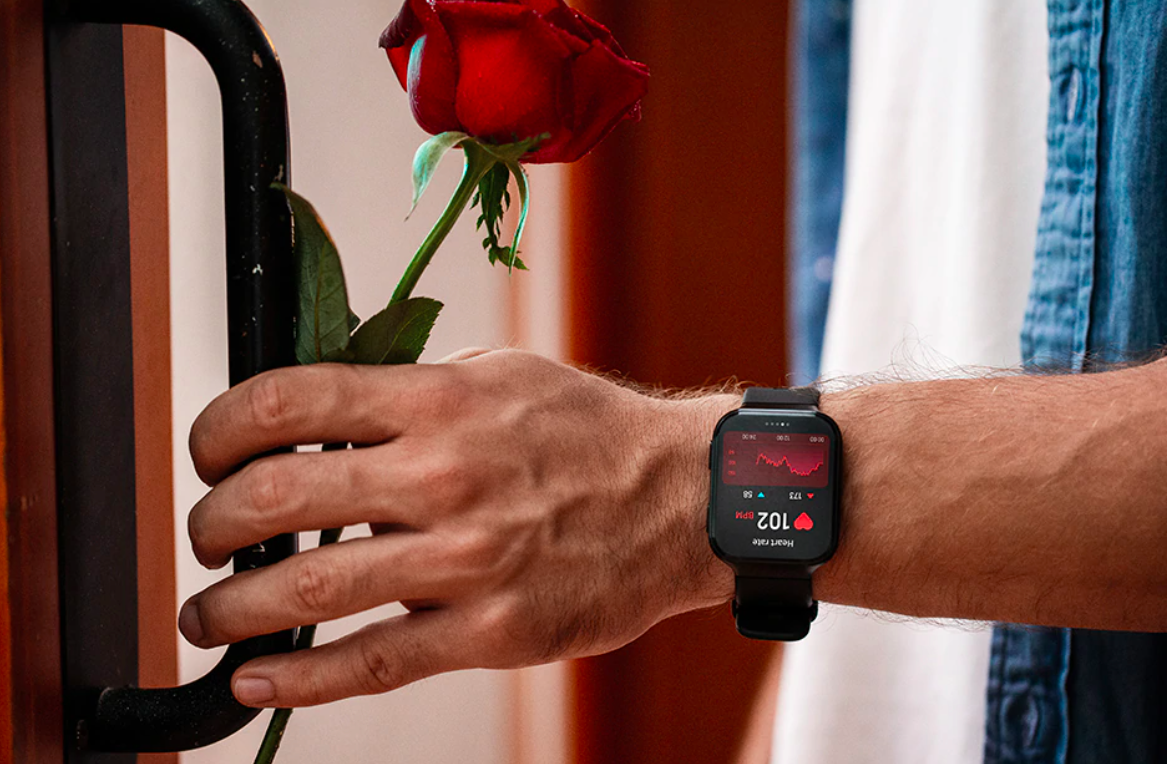
To manage your health and exercise the smartwatch comes with 17 sports modes and an auto-sense function that can detect various sports activities automatically. Moreover, you can easily swim with the smartwatch as it is 5ATM waterproof. The watch is also fitted with advanced health management features like a 24-hour heart rate monitor, sleep tracker, stress and energy tracker, etc.
Generally, global customers can get a 70mai Saphir smartwatch for around $150. But AliExpress is giving out a special discount on the said product. As a part of its Les Happy Days deal the smartwatch will be available for as low as $122.99.
Please note that this offer will start after 1 day and 13 hours from now. The offer is applicable on Black, Silver and Rose Gold color variants shipped from the China and Russian Warehouses only. So be sure to place your order under the Les Happy Days deals to get the maximum discount.
For more information on such exciting deals and offers check out ourdeals hub.
* Please Note: When you buy something using the links in our articles, we may earn a small commission at no cost to you.
The Motorola Edge family is about to get bigger. The line which made its debut last year with the Edge and Edge Plus, got a China-exclusive model called the Edge S early this year. Now, details of four new models have surfaced on the web.
Evan Blass (@evleaks) shared an image that revealed that Motorola has three new smartphones for the Edge lineup in development. The image which was shared on Twitter earlier today mentions the phones are codenamed “Sierra”, “Berlin”, “Berlin NA”, and “Kyoto”.
The folks at Techniknews in partnership with Adam Conway of XDA Developers have confirmed the existence of these devices and have even gotten the camera details of the model codenamed “Kyoto”.
According to them, the phone will have a 108MP (S5KHM2) main camera, the same type supplied by Samsung that is found inside the recently announced Moto G60 smartphone. This sensor will be paired with an 8MP camera (S5k4h7), also supplied by Samsung, that pulls double duty as an ultrawide angle camera and a macro camera. The third camera is a 2MP OmniVision (Ov02b1b) depth sensor while the front-facing camera is either a 16MP (ov16a1q) sensor or a 32MP (ov32b) sensor.
The source revealed that “Kyoto” will most likely be the cheapest of the lot while “Berlin” and “Sierra” will be the successors to the Motorola Edge and Edge Plus respectively. We can expect more details to surface in the weeks/months leading up to their launch.
The 2020 Nokia 2.4 is the latest HMD Global smartphone to receive the Android 11 update. The announcement was made on Twitter earlier today and is already rolling out to owners of the phone but in waves.
🛬 We're so pleased to announce that Android 11 has landed for the #Nokia2dot4!
All the latest software features are ready to be installed.
Android 11 brings new features such as conversation bubbles; app permissions that allow you to grant one-time access to apps; a native screen-recorder; scheduled dark theme; notification history, and more.
According to the Android 11 roadmap released by the manufacturer, the update was originally planned to be released in the first quarter of the year but that didn’t happen.
The Nokia 2.4 has a 6.5-inch HD+ display with a waterdrop notch that is home to a 5MP selfie camera. It is powered by the Helio P22 processor and is available in 2GB RAM and 3GB RAM variants with 32GB and 64GB of expandable storage respectively.
There are two cameras on the back of the phone – a 13MP main camera and a 2MP depth camera. It also has a rear-mounted fingerprint scanner, FM radio, and a 4500mAh battery that charges via a MicroUSB port.
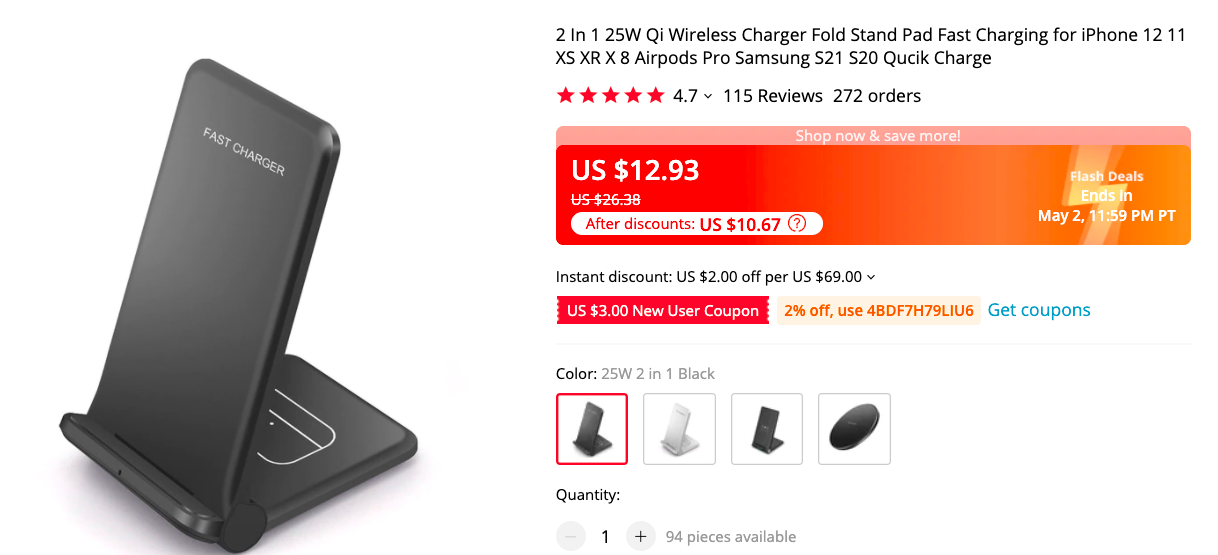
AliExpress is giving this fantastic deal on a 2 in 1 Foldable Qi Wireless charger. The charging stand which generally retails for $15 is now available at a discounted price of $10.67 only.
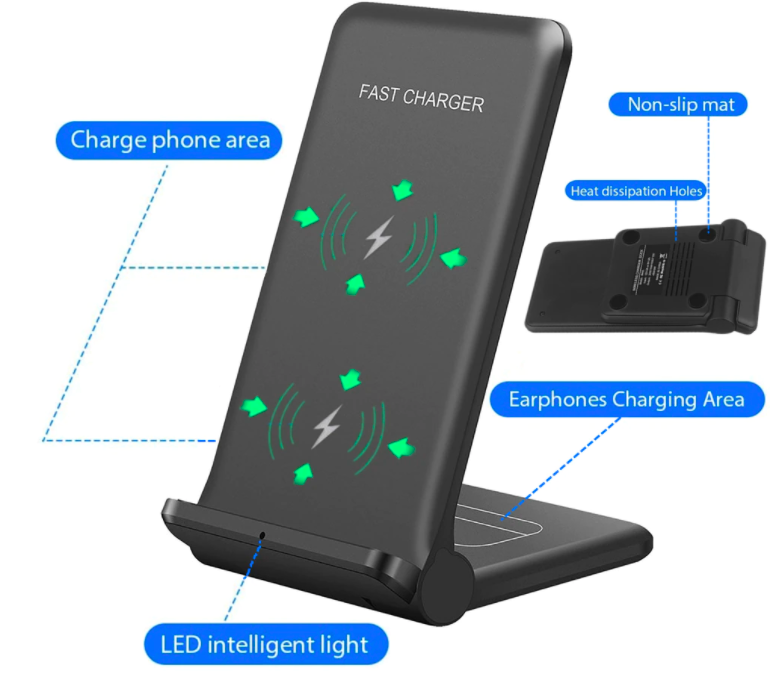
The 2 in 1 25W Qi wireless charging stand can be used to charge your iPhone and Airpods simultaneously. It can also charge almost all other Qi-enabled smartphones and earbuds from reputed brands like Samsung etc.
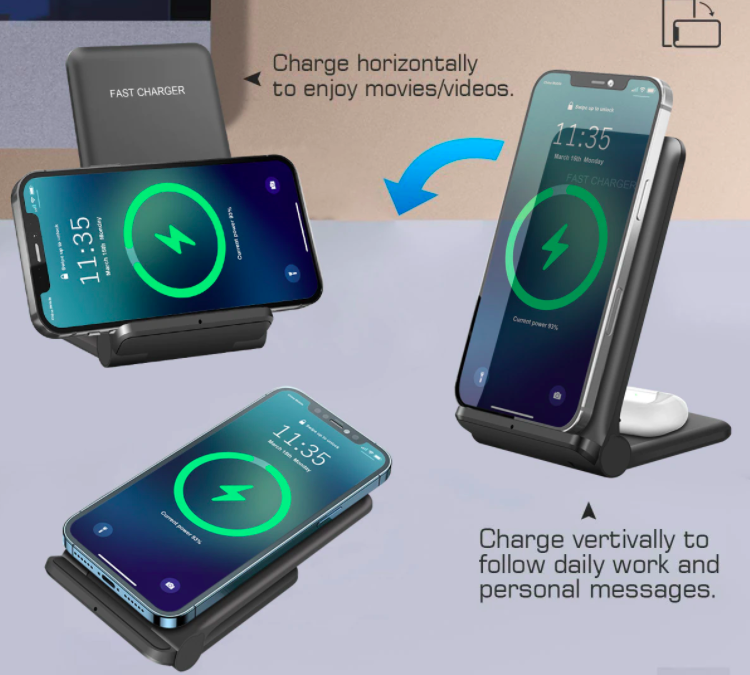
The ultra-smooth foldable design features a 20W smartphone charging stand and a 5W earphone case charger. Moreover, the phone charging stand supports both vertical and horizontal charging positions thereby giving you the option of conveniently watching movies and videos while charging.
The universally compatible charging stand comes with a foldable design which makes it easy to carry around in your purse or travel kit. Generally retailing for $15 you can now buy the 2 in 1 Foldable Qi Wireless charger for $10.67 only after discounts. Please note that this flash deal which ends on 2 May 2021, is applicable on both the Black and White color variant. So go get your discounted wireless charging stand asap.
For more information on such exciting deals and offers check out ourdeals hub.
* Please Note: When you buy something using the links in our articles, we may earn a small commission at no cost to you.
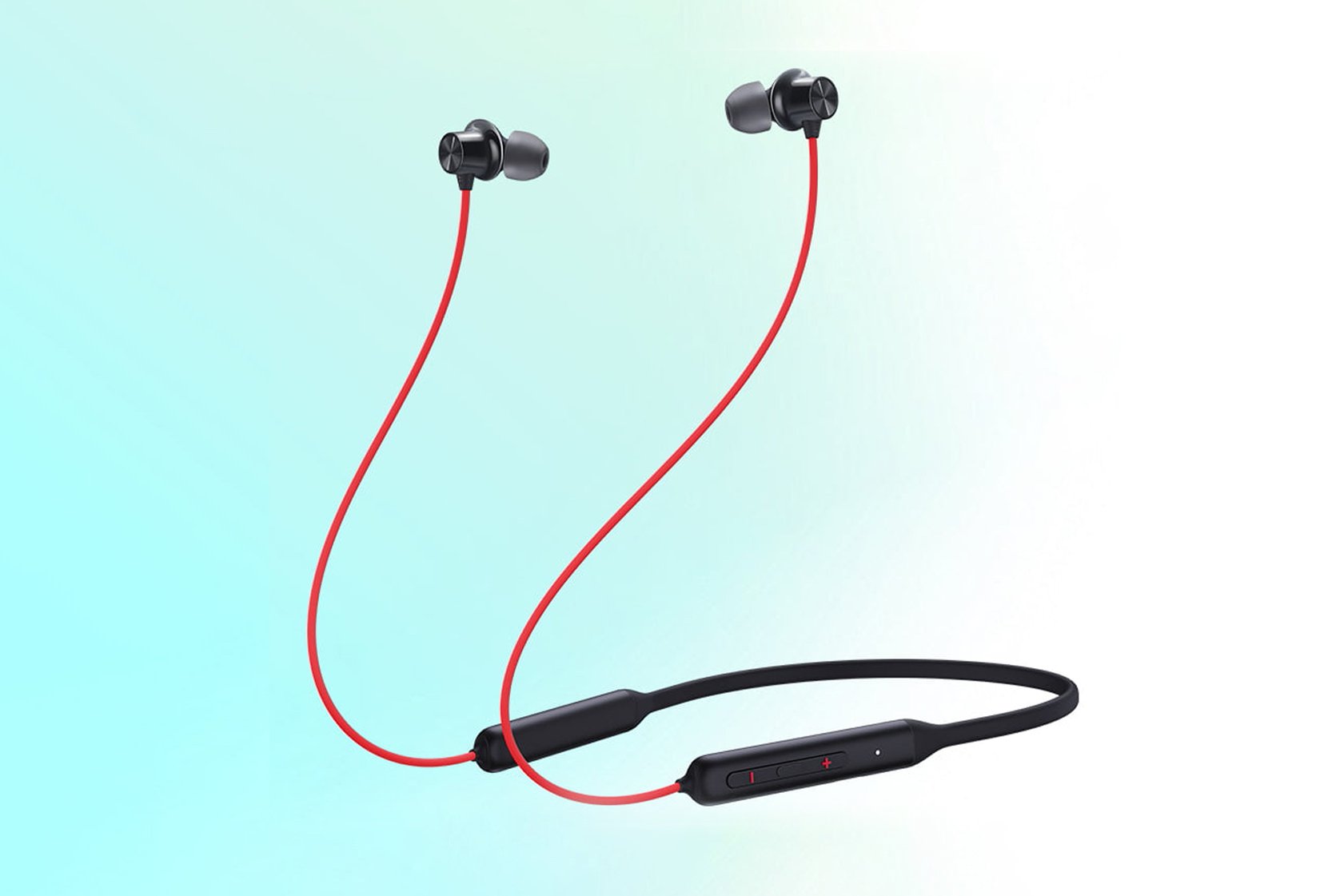
Back in October 2020, OnePlus launched the OnePlus Bullets Wireless Z Bass Edition for India alongside the OnePlus Power Bank at the OnePlus 8T virtual launch event. Six months after release, these earphones are tipped to get a new color variant in the country.
OnePlus Bullets Wireless Z Reverb Red
According to prolific leaker Ishan Agarwal, the OnePlus Bullets Wireless Z Bass Edition will be soon available in a black color option in India. The tipster has partnered with 91Mobiles to bring this information. However, he does not say when the new variant will be officially announced.
Currently, these neckband-style Bluetooth earphones are sold in two colors, namely Reverb Red and Bass Blue. These earphones are priced at ₹1,999 in the country.
The OnePlus Bullets Wireless Z Bass Edition are similar to the original except for sound stage, endurance, low latency, and weight. The former only has a 17-hour battery life, 100ms latency, and 26g weight compared to 20 hours, 110ms, and 28g on the latter.
The audio accessory features 9.2mm drivers and connects with devices via Bluetooth 5.0. The product is IP55-certified for splash resistance and has a Bluetooth range of 10m.
Like most neckband-style earphones, these also have an inline remote control with buttons for quick switch, volume, skip tracks, phone calls, and voice assistant. Last but not least, they charge via USB Type-C and ship with three different-sized silicone ear tips and a cable for charging.
UNISOC, the Chinese semiconductor company, has revamped its line of 5G chipsets. Going forward, its 5G chipsets will be announced under a new line called Tanggula. The manufacturer revealed the name was adopted from the name of the source of the Yangtze River.
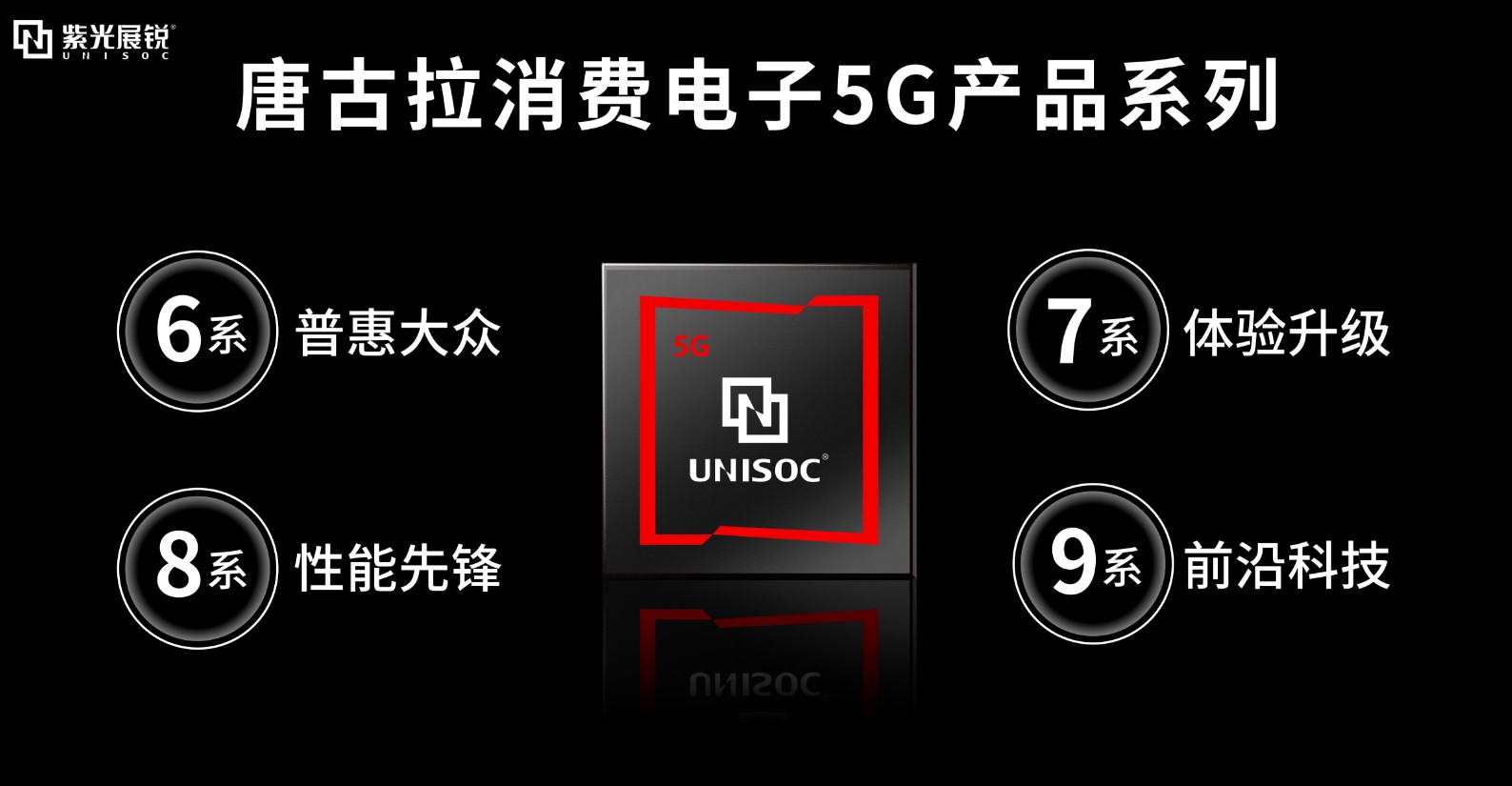
The new line is classified into four series – the Tanggula 6, Tanggula 7, Tanggula 8, and the Tanggula 9 series which will take on Qualcomm’s Snapdragon 800 series.
According to UNISOC, the Tanggula 6 series are entry-level chipsets, the Tanggula 7 series brings a user upgrading experience, the Tanggula 8 series brings leading performance, and the Tanggula 9 series brings cutting-edge technology.
At the moment, UNISOC has only unveiled chipsets under the Tanggula 7 series. We expect new chipsets under the other series will be unveiled later.
Tanggula 7 series
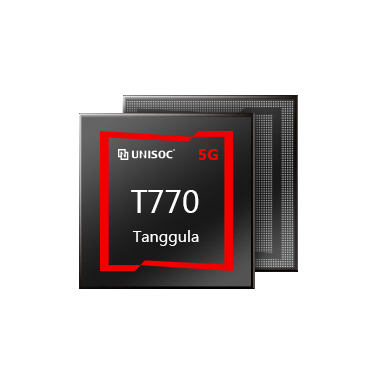
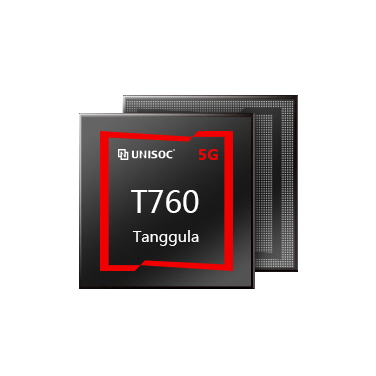
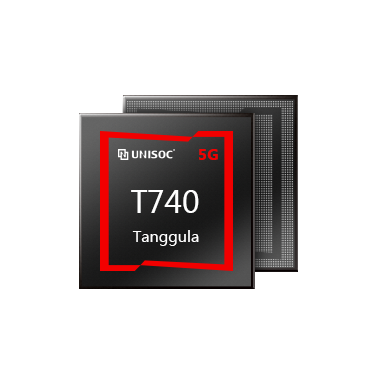
The Tanggula 7 series includes three chipsets – the UNISOC T770 (formerly known as UNISOC T7520), UNISOC T740 (formerly known as UNISOC T7510), and the UNISOC T760. Below are their specifications:
UNISOC T770
UNISOC T740
UNISOC T760
6nm EUV process
6nm EUV process
12nm process
2.5GHz
1 x Cortex-A76 + 3 x Cortex-A76 + 4 x Cortex-A55
2.2GHz
1x Cortex-A76 + 4x Cortex-A55
2.0GHz
4x Cortex-A75 + 4x Cortex-A55
Arm Mali G57
FHD+ at 120fps, QHD+ at 60fps
Arm Mali G57
FHD+ at 90fps
IMG9446
FHD+ at 60fps, QHD+ at 60fps
LPDDR4, LPDDR4X (2133 MHz)
eMMC 5.1 + UFS 3.1
LPDDR4, LPDDR4X (2133 MHz)
eMMC 5.1 + UFS 3.1
LPDDR4, LPDDR4x, LPDDR4y (1866MHz)
eMMC 5.1, UFS 2.1
Vivimagic 6.0 Image Engine
4-core ISP architecture
Up to 108MP camera
Vivimagic 6.0 Image Engine
Up to 64MP quad camera
Up to 64MP
4.8 TOPS
2.4 TOPS
3.2 TOPS
NSA, SA
b/g/n/11ac
Bluetooth 5.0
GPS, GLONASS, Beidou, and Galileo
NSA, SA
b/g/n/11ac
Bluetooth 5.0
GPS, GLONASS, Beidou, and Galileo
NSA, SA
b/g/n/11ac
Bluetooth 5.0
GPS, GLONASS, Beidou, and Galileo
UNISOC has also announced that the UNISOC T770 will enter mass production and be launched in July 2021.
The semiconductor company also announced its plans for AR. It said it will co-develop a pair of 5G AR smart glasses with the Chinese company Hiscene (HiAR). However, it didn’t say when the smart glasses will hit the market.
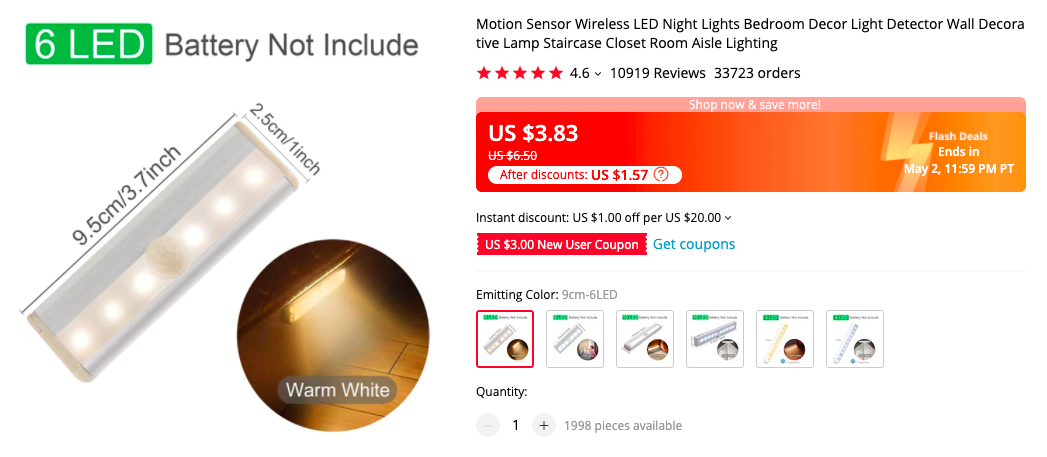
If you are trying to find a low-cost lighting solution to liven up your living or workspace then check out this awesome discount on Motion Sensor Wireless LED light. A 9cm -6 LED light is now available at a discounted price of $1.57 only at AliExpress.
The motions sensor LED strip light can be used to lighten up your indoor living space like a bedroom, wardrobe, kitchen, bathroom sink, stairs, etc, or your outdoor patio, gazebo, garden, etc. The smart light comes with an intelligent motion sensor with Infra Human Body Induction and Light Perception. This means the smart light automatically turns on in the dark or nighttime as it senses human presence but does not turn on in the daylight thereby saving your battery life.
Powered by 4 x AAA batteries the smart light is super easy to install and use. Generally retailing at $5 you can now get the Motion Sensor LED light for just $1.57. Please note that this deal is applicable on a 9CM – 6LED light and comes in two color variants viz: warm and cool white. You can get bigger strips as per your requirement for an additional cost. The deal expires on 2 May 2021. So hurry and buy as many of these beautiful and cheap Motion Sensing LED lights as you want.
For more information on such exciting deals and offers check out ourdeals hub.
* Please Note: When you buy something using the links in our articles, we may earn a small commission at no cost to you.
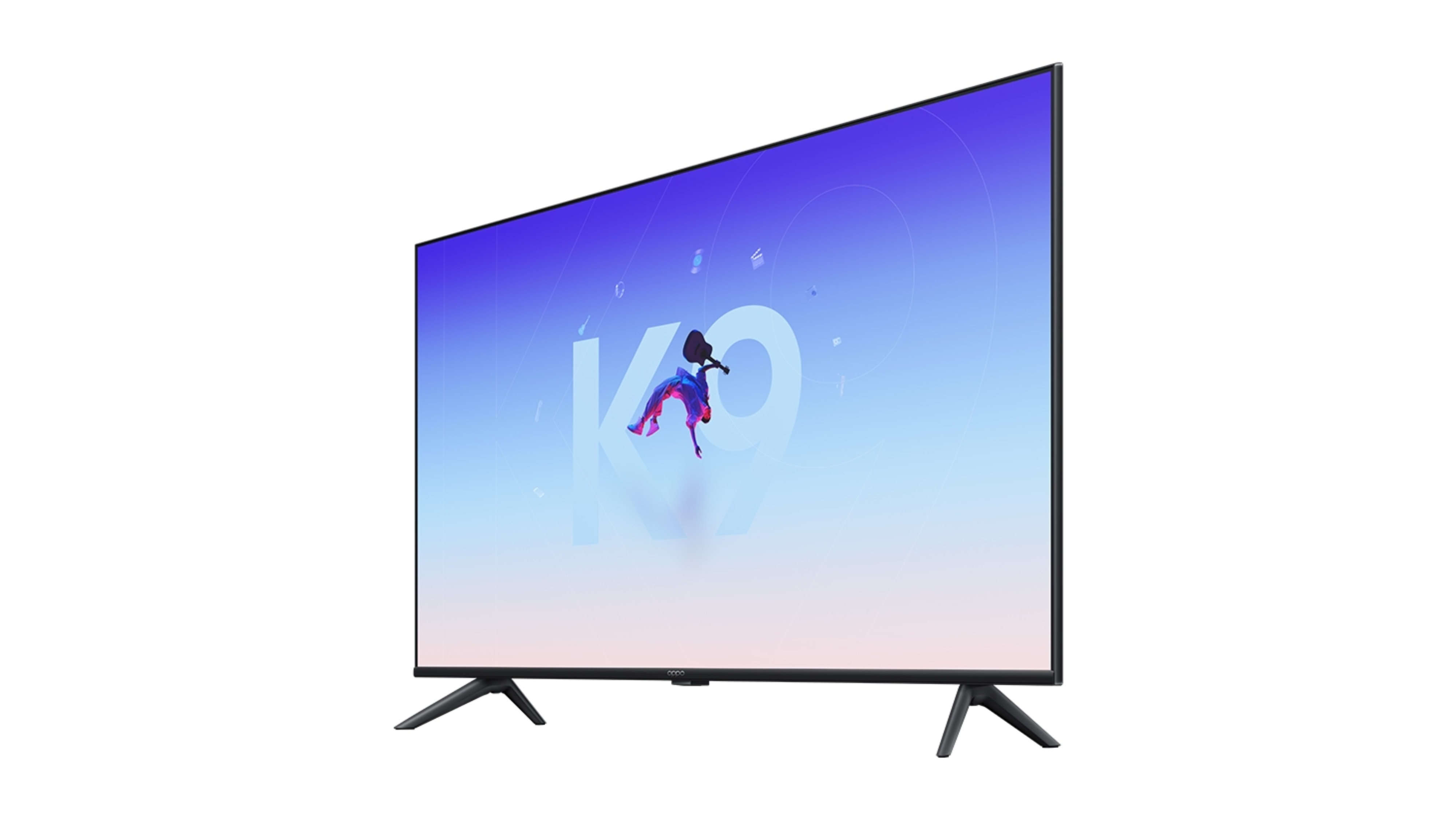
OPPO has scheduled an event for May 6 in China. The company has confirmed to launch at least four products as of now. These are OPPO K9 5G, OPPO Enco Air, a new OPPO Band, and OPPO Smart TV K9. Ahead of the conference, the company has been teasing the specs, features, and design of these products every day. Yesterday, the firm revealed some of the primary features of the new television. Let’s take a look at them.
OPPO Smart TV K9 43″
Earlier today, we reported that OPPO will be also launching a new television called OPPO Smart TV K9 at the May 6 event in China. While revealing the existence of this new smart TV, OPPO also confirmed some of its key specs on Weibo.
According to the official OPPO Weibo account, the upcoming OPPO Smart TV K9 will be available in three sizes (43-inch, 55-inch, 65-inch). The company claims that this television can output 1.07 billion colors. Hence, we can expect all the sizes to come with a 4K (UHD) resolution.
Further, the panel of this TV is said to cover 93% of the DCI-P3 color gamut. Also, it is said to come with color accuracy of Δ < 2. Lastly, like most televisions, it will also have HDR10+ certification.
Unfortunately, nothing else is known about the OPPO Smart TV K9 apart from the above-mentions specifics. But we expect to learn more about it in the coming days ahead of the official launch.
Fire in a factory of Casetek Group, a Taiwan-based electronic manufacturer which is also a supplier to technology giant Apple, near Shanghai in China has killed eight people, including two firefighters, reports SCMP.
As per the statement from the government of Jinshan District related to this incident, the fire broke at the factory on Thursday at 1:30 PM and raged until Friday morning, killing two firefighters and six civilians.
The fire was fierce that over 900 firefighters, 123 fire engines, and eight robots were deployed to fight the fire. Officials are still investigating how the fire started, but the flames quickly engulfed the large plant when it gathered momentum.
While the cause of the fire still remains unknown, the investors are trying to determine it. The official statement from the government claims that this fire has not caused significant air or water pollution to the local environment.
Shengrui Electronic Company was acquired in 2020 by Casetek Group, which itself is owned by Pegatron. Casetek is known to be a producer of casings for Apple‘s MacBook lines as well as iPads. It remains to be seen how much of an impact this fire will have on the company’s supply chain.
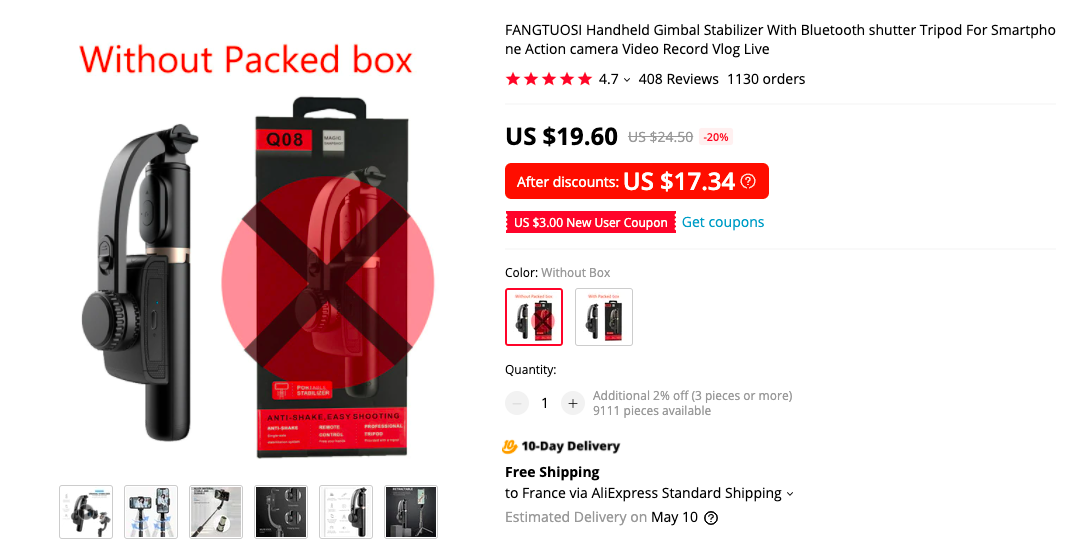
AliExpress is giving an awesome deal on Fangtuosi Handheld Gimbal. The phone stabilizer which generally retails at $25 is now available at a discounted price of $17.34 only.
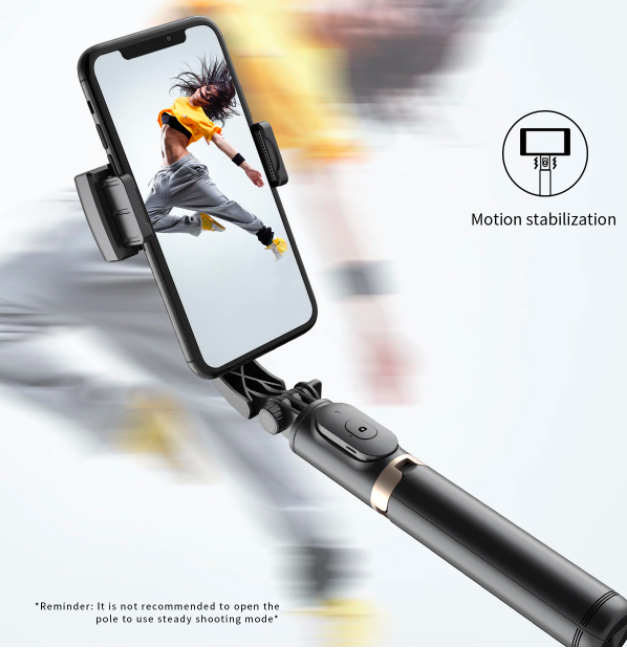
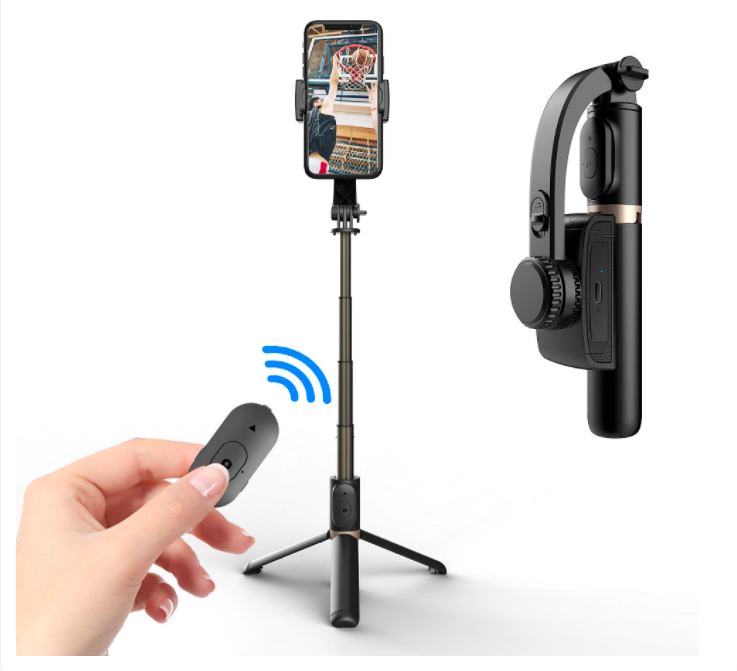
Fangtuosi Gimbal is a uniaxial stabilizer that comes with an anti-shake selfie stick and tripod. The intelligent anti-shake function gives you motion stabilization making it easy to shoot cinematic shots especially in the outdoors. The device features a powerful gyroscope that gives you a stable 360-degree rotation to easily switch between portrait and landscape mode and a 180-degree automatic horizontal locking system ensures complete stability and safety of your smartphone.
Powered by a 450mAh battery the gimbal gives you 2 hours of battery life on a single charge. The gimbal which also doubles as a tripod is made from strong alloy material and a retractable lightweight aluminum rod is used to convert it into a selfie stick. Moreover, a wireless Bluetooth remote feature helps you to control the gimbal from anywhere within a 10-meter distance.
Usually retailing at $25 you can now buy Fangtuosi Gimbal (Unboxed) for $17.34 and for $20.27 you get the complete Box set. With additional new user coupons and free shipping, this deal is simply value for money. So grab your discounted gimbal asap.
For more information on such exciting deals and offers check out ourdeals hub.
* Please Note: When you buy something using the links in our articles, we may earn a small commission at no cost to you.
Earlier today (26th April 2021), Oppo revealed during its World Intellectual Property Day that it has applied for more than 61,000 patents across the globe as of 31st March 2021. Out of this large figure, 89 percent of these were invention patents.
According to an ITHomereport, 54,000 out the total figures are invention patents. The Chinese tech giant also stated that it will continue to increase investment and layout in various fields to create better technological experience for users in the future. At the moment, the company has six research institutes and five research and development centers across the globe.
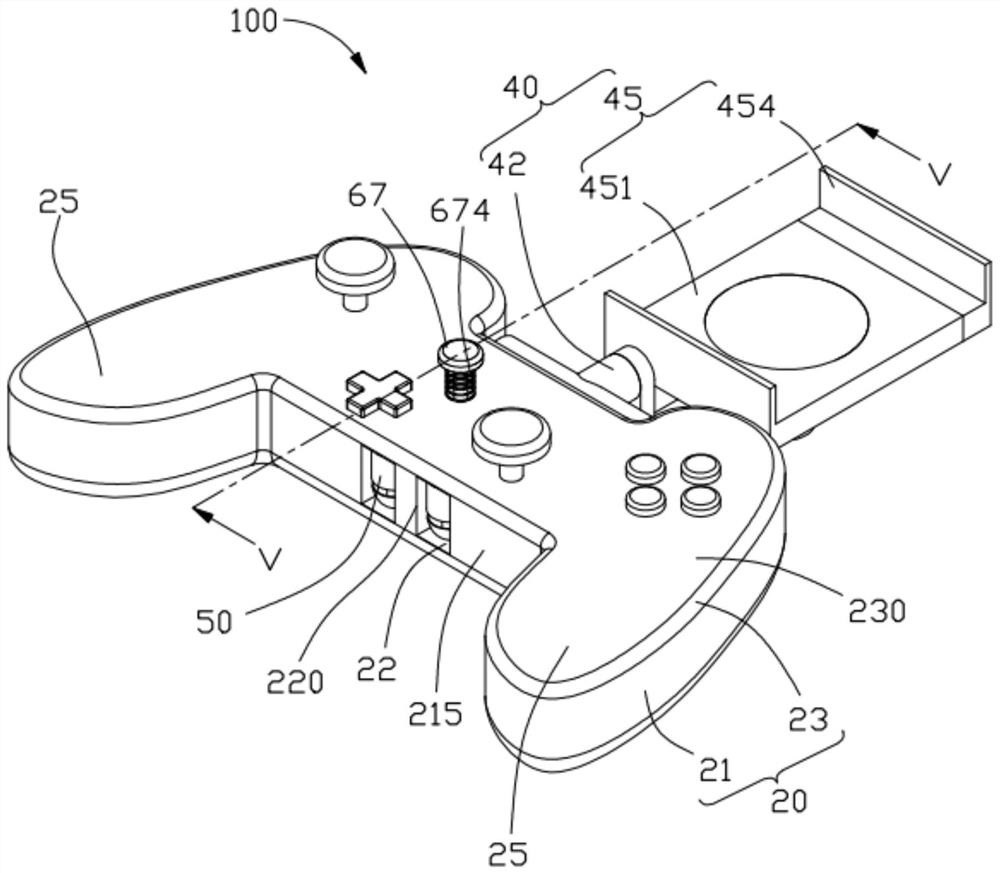
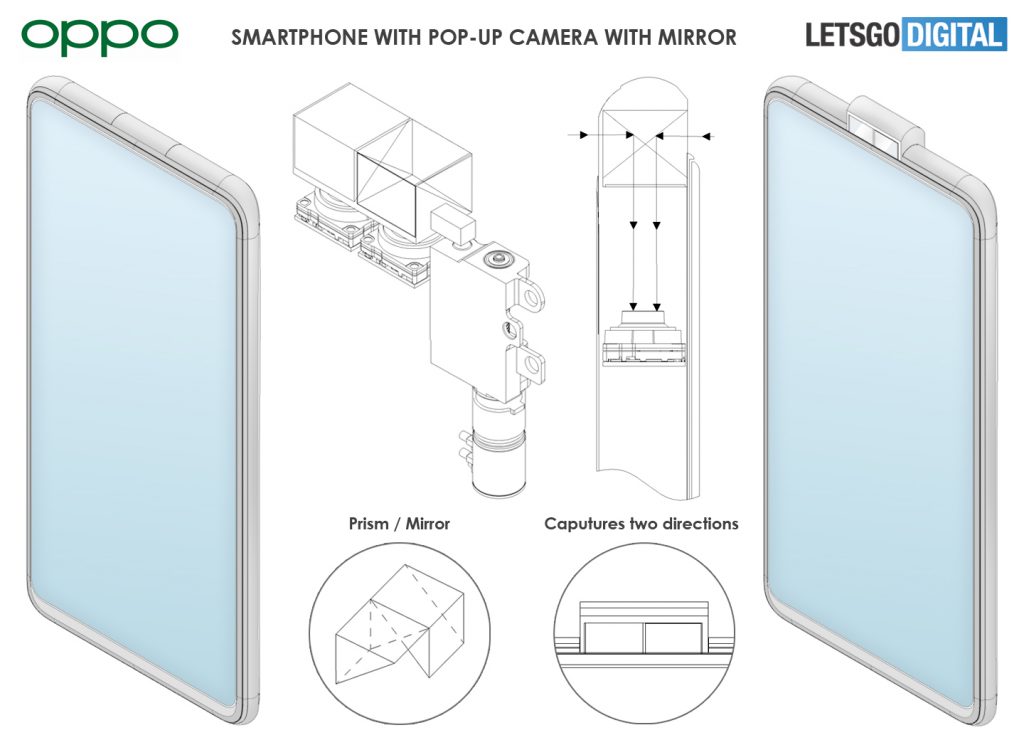
A number of these applications were also regarding mobile phone camera lenses. These also included video tracking and 94 patents for imaging systems. Recently, the company even patented a mobile gaming controller that even had an earphone storage compartments. Similarly, the brand also patented designs for a detachable design which resemble the Microsoft Surface Book.
For those unaware, patents are an important part of any tech giant’s business as each OEM tries to innovate or design unique and distinct new products for the mass market. Although, 61,000 patents is still an impressive figure nonetheless.
Last week, Motorola launched the Moto G40 Fusion and Moto G60 as the latest entrants in the growing Moto G family. However, these phones are no longer the new models in the series. Because that crown now belongs to the Moto G20 that was announced a couple of days after the launch of the former handsets.
Motorola Moto G20 Specifications and Features
The newly launched Motorola Moto G20 flaunts a 6.5-inch IPS TFT LCD panel with a resolution of 1600 x 720 pixels (HD+), 269 PPI, and 90Hz refresh rate. The display has a 20:09 aspect ratio, 87% screen-to-body ratio, and a dewdrop notch.
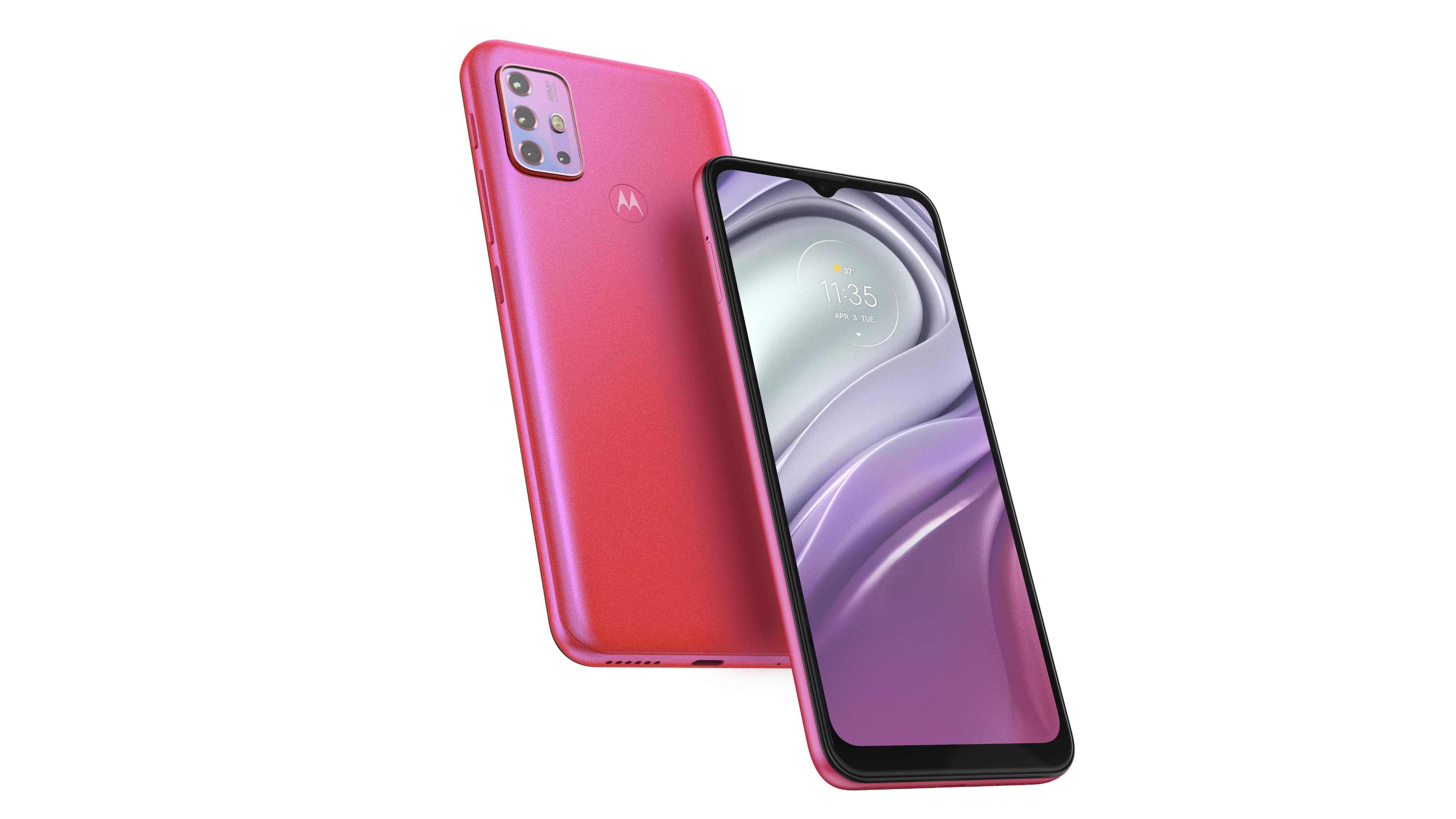
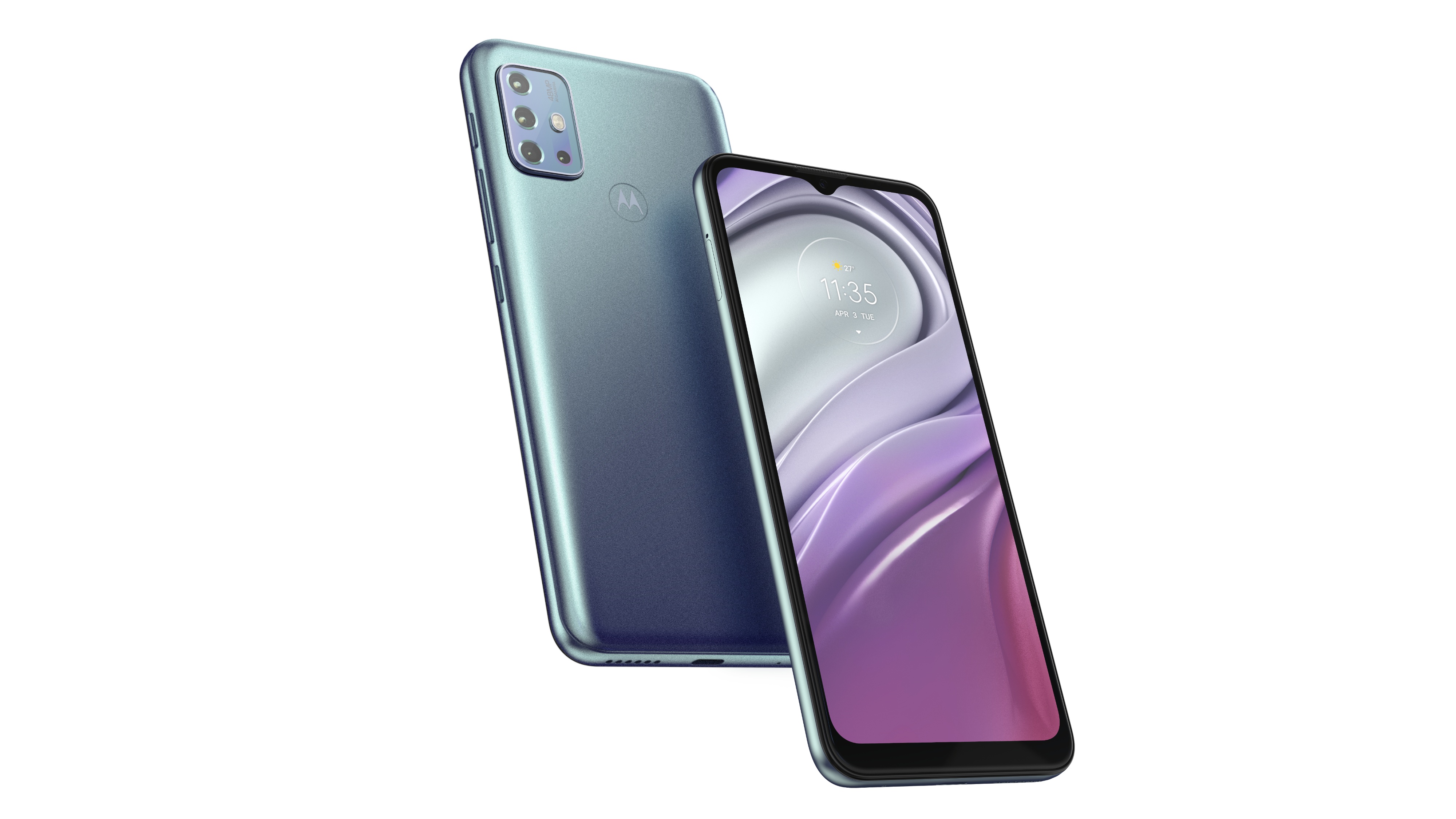
Like the other Moto G phones, the new Moto G20 is also entirely made of plastic with IP52 certification for splash resistance. It measures 165.22 x 75.73 x 9.14mm in dimensions, weighs 200g, and comes in two colors (Breeze Blue, Flamingo Pink).
Further, the device houses an L-shaped quad-camera setup on the back consisting of a 48MP primary sensor, an 8MP 118° ultra-wide unit, a 2MP macro shooter, and a 2MP depth sensor. Whereas, on the front, the smartphone has a 13MP selfie camera inside the notch.
The handset is powered by a UNISOC T700 SoC coupled with 4GB RAM and 64GB/128GB internal storage with support for MicroSD card expansion (up to 1TB). On the connectivity front, the device comes with dual-SIM, 4G, dual-band WiFi, Bluetooth 5.0, GNSS (GPS, A-GPS, LTEPP, SUPL, GLONASS, GALILEO), and NFC.
The smartphone has all the essential sensors, ports, and buttons like an accelerometer, ambient light sensor, gyroscope, proximity sensor, USB Type-C port, 3.5mm headphone, and a dedicated Google Assistant key in addition to regular power and volume buttons.
Last but not least, the Moto G20 runs Android 11 (My UX) and is backed by a 5,000mAh battery with support for 10W charging.
Motorola Moto G20 Price and Availability
The Motorola Moto G20 is priced at €149. It is only available in a select few European markets. However, like most Motorola phones, the Moto G20 should make its way to more markets in the coming days.
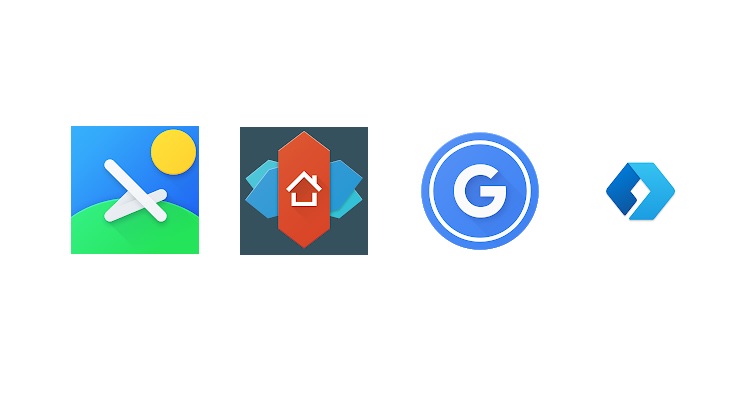
One of the advantages Android has is its wide range of customizations. From basic things such as customizing icon packs to changing your font to widgets, there are several ways to make your Android phone yours. Another common way is to use a 3rd-party launcher.
Installing a 3rd-party launcher is one of the easiest ways to change the way your phone looks and works. The Google Play Store is filled with tons of launchers, with some that have crossed over 10 million installs. Some of these launchers are free while others have in-app purchases that provide more features.
For our poll this week, we want to know if our readers use a 3rd-party launcher. So, please take the poll and also drop a comment telling us the launcher you use and why you like it.
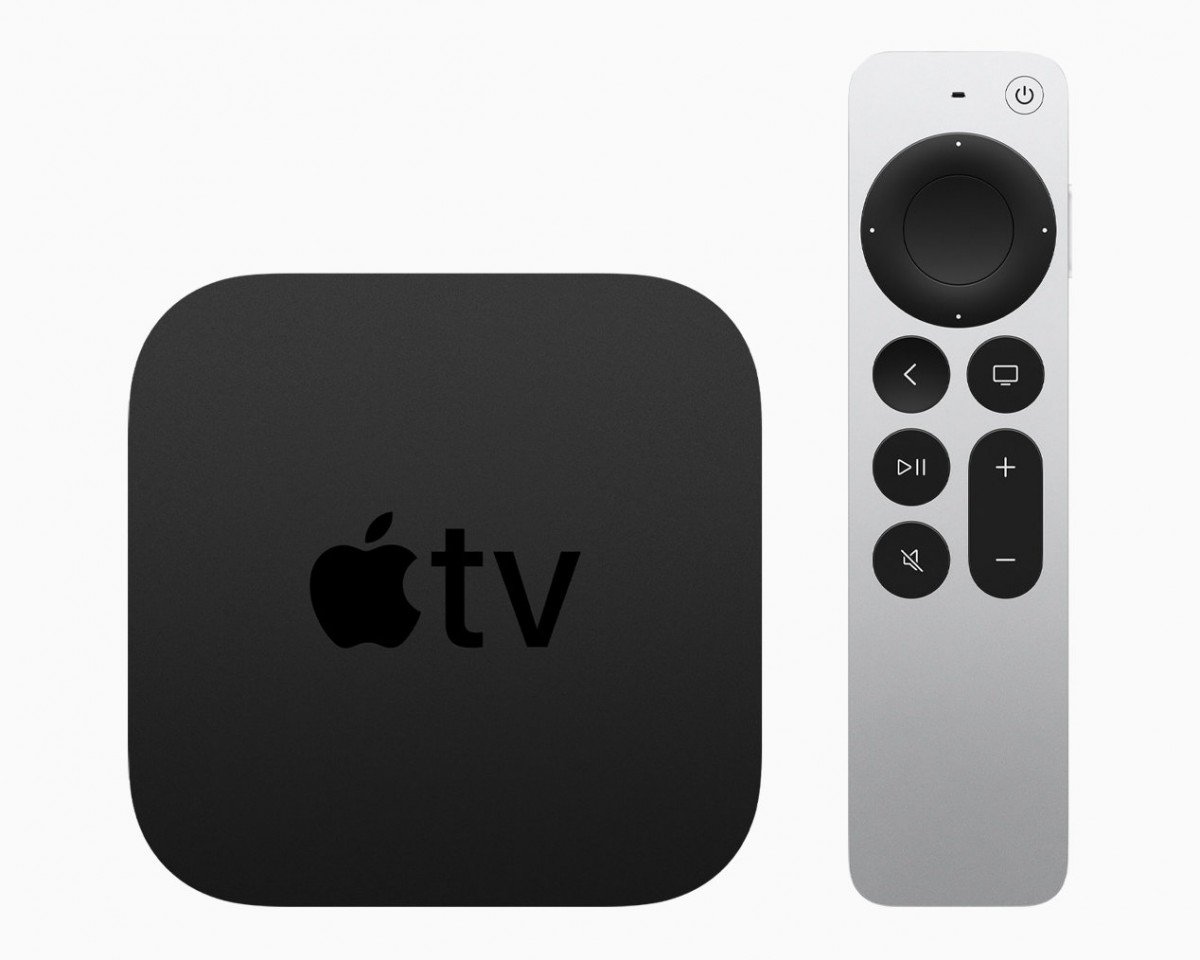
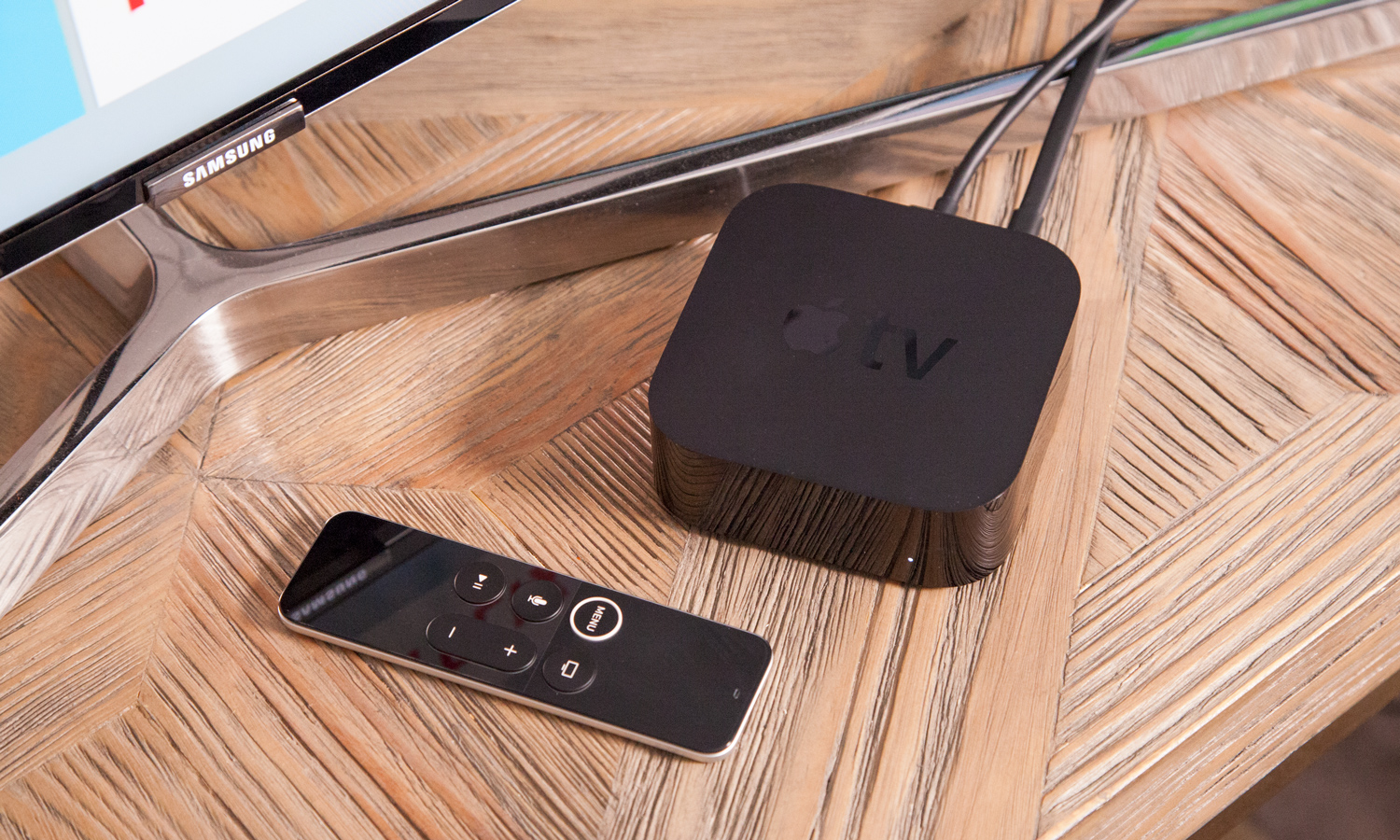
The Apple TV is apparently set for an imminent launch in China. The company has reportedly received the required regulatory approval to official release in Mainland China as per new reports.
According to a Weibo blogger, a Chinese microblogging website, @Voooolks (Via MacRumors) the Cupertino based giant has received approval from China’s State Administration of Press and Publication, Radio, Film, and Television to launch the Apple TV in the country. The news arrives after the iPhone maker was recently rumored that the product was under review by the state agency. Furthermore, the launch in China is set to arrive just a week after the company announced the new and more powerful Apple TV.
For those unaware, the brand announced the latest iteration of its product with the more powerful A12 Bionic chipset and a redesigned TV remote. Notably, China has strict rules regarding the flow of content within its borders. Thus, international firms that wish to sell to Chinese customers need to adhere to strict regulations and follow the local law agencies. So, if the Apple TV launches in the region, it would be limited in functionality apart from its basic features.
Additionally, content available on the platform would also be different as popular channels and applications like Netflix, YouTube, Hulu, and other online streaming services are not available in the region due to local law. But despite the limited scope, the company aims to expand its user base in the region, which CEO Tim Cook believes is an increasingly important market.
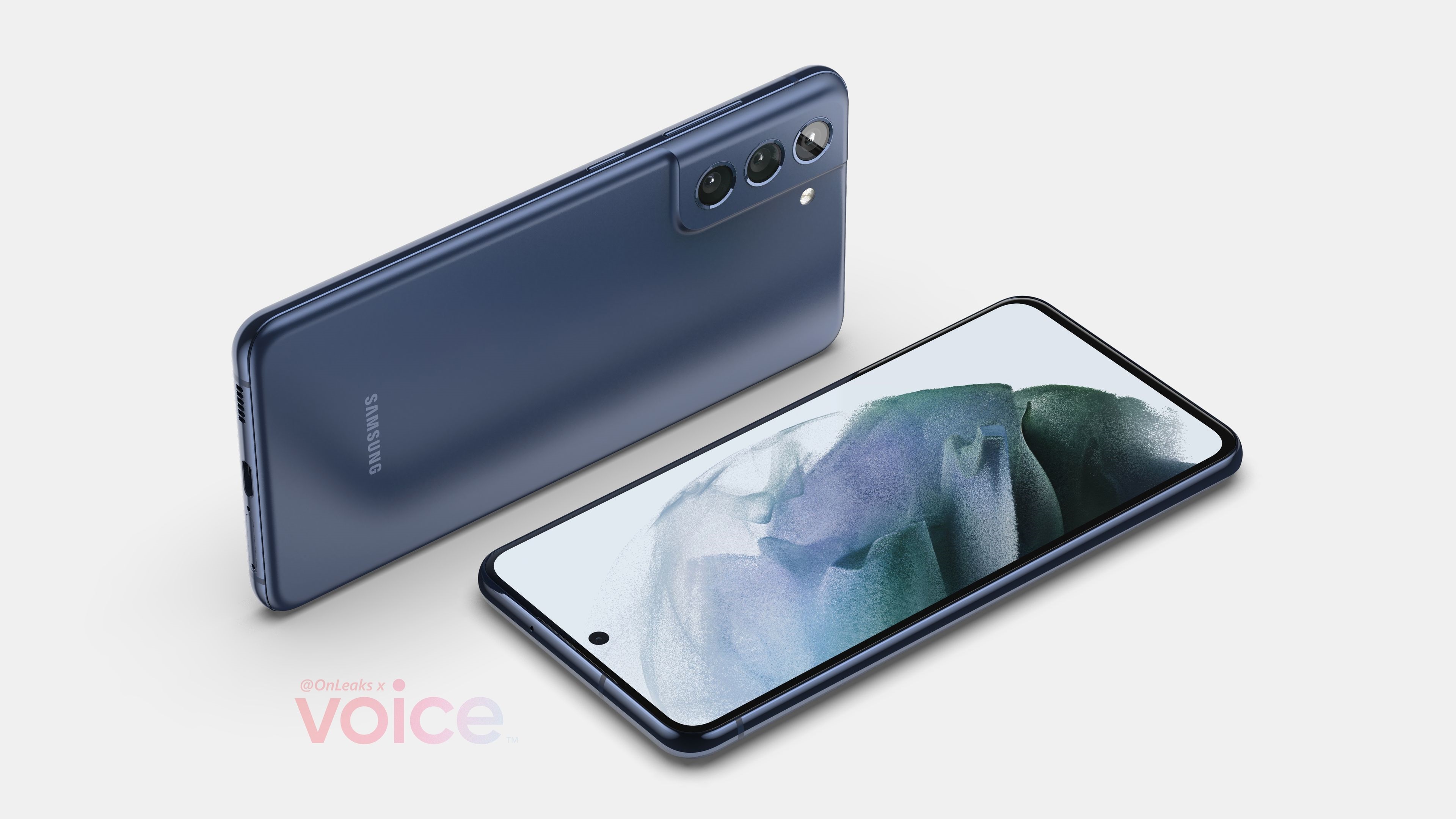
The Samsung Galaxy S21 FE is in the news for the past few weeks. This device will be the successor to last year’s Galaxy S20 FE, which is still one of the best Android smartphones available in the market. Ahead of this device’s launch later this year, information about its battery appears on the internet.
Samsung Galaxy S21 FE | Source: @OnLeaks
A new report by GalaxyClub reveals the codename and battery capacity of the upcoming Samsung Galaxy S21 FE. According to the publication, this smartphone codenamed R9 will be backed by a 4,500mAh battery.
The battery inside the phone with model number EB-BG990ABY will have a rated capacity of 4,370mAh. This particular battery is associated with the Galaxy S21 FE because of the handset’s model number – SM-G990B.
According to previous reports, the Galaxy S21 FE will feature a similar design as the Galaxy S21. It will flaunt a 6.4-inch display with a centered punch-hole. Hence, it will measure 155.7 x 71.45 x 7.9mm in dimensions. In other words, it will be larger than the Galaxy S21 but smaller than its predecessor Galaxy S20 FE.
Lastly, the Galaxy S21 FE will sport the same 32MP selfie camera as found on the Galaxy A52/A72 and will be available in five colors (grey/silver, green, pink, purple, white). It is expected to go official at a Galaxy Unpacked event on August 19.
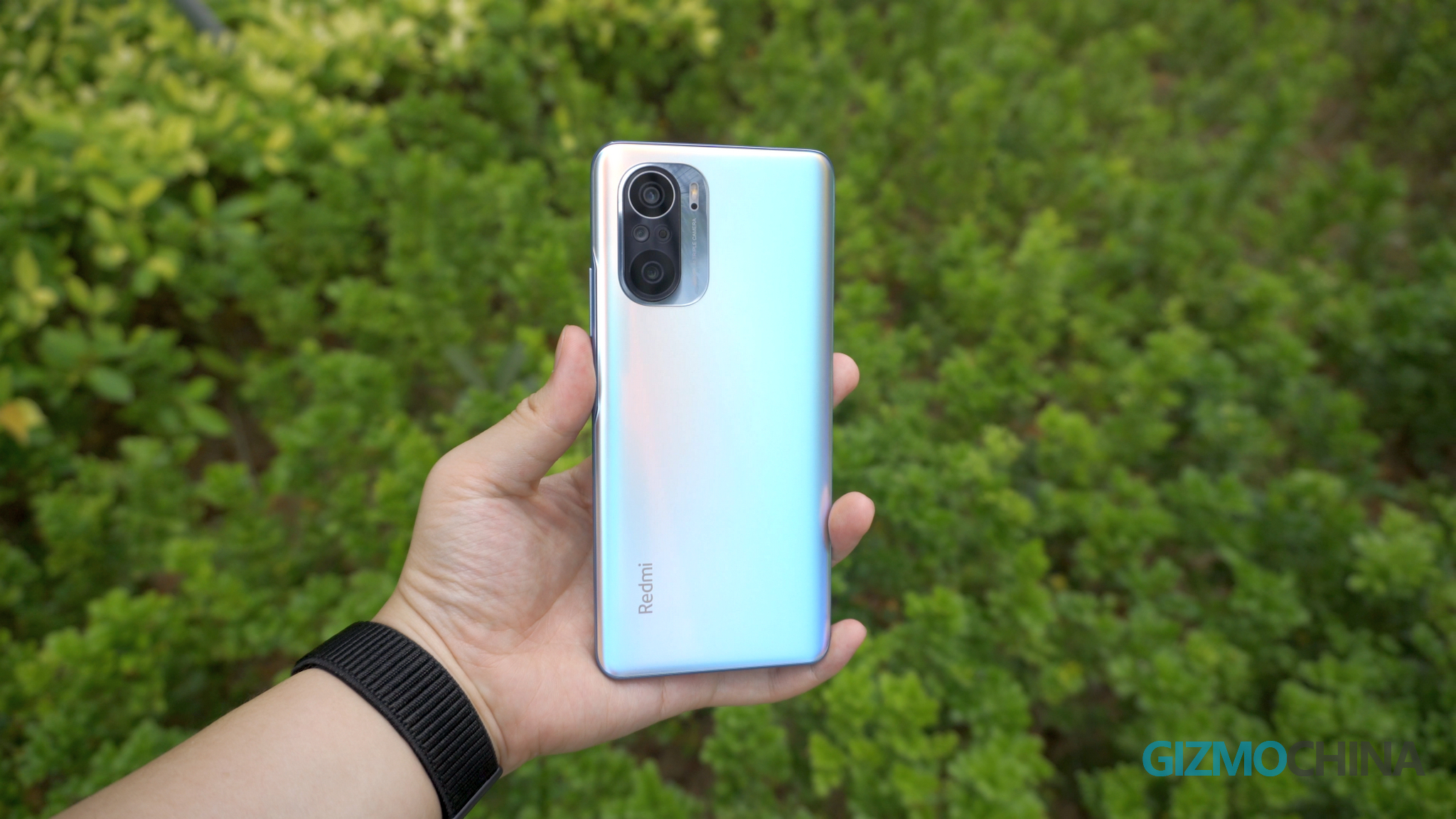
Redmi launched the Redmi K40 series consisting of three devices in late February. The Redmi K40 is the most affordable model in the Redmi K40 series sold in China. Despite that, it has become the first device in the lineup to receive the MIUI 12.5 update.
MIUI 12.5 is the latest version of Xiaomi’s mobile operating system. It is an incremental update to last year’s MIUI 12. The new iteration brings performance and security enhancements, in addition to other minor changes here and there.
That said, the Redmi K40 MIUI 12.5 update in China arrives with build number V12.5.2.0.RKHCNXM. It is currently in the ‘Stable Beta’ phase. In simpler words, this update is only live for a select few users.
However, it will be available for all users in the coming days. This will happen only if the early adopters don’t face any major issues. If there are some annoying bugs, then Xiaomi will release a new build and it will go through this very same process again.
Having said that, the Redmi K40 is sold as POCO F3 and Mi 11X in global markets. Since the original phone has received the MIUI 12.5 update, we can expect the international versions to get it very soon.
We use cookies on our website to give you the most relevant experience by remembering your preferences and repeat visits. By clicking “Accept”, you consent to the use of ALL the cookies.
This website uses cookies to improve your experience while you navigate through the website. Out of these, the cookies that are categorized as necessary are stored on your browser as they are essential for the working of basic functionalities of the website. We also use third-party cookies that help us analyze and understand how you use this website. These cookies will be stored in your browser only with your consent. You also have the option to opt-out of these cookies. But opting out of some of these cookies may affect your browsing experience.
Necessary cookies are absolutely essential for the website to function properly. This category only includes cookies that ensures basic functionalities and security features of the website. These cookies do not store any personal information.
Any cookies that may not be particularly necessary for the website to function and is used specifically to collect user personal data via analytics, ads, other embedded contents are termed as non-necessary cookies. It is mandatory to procure user consent prior to running these cookies on your website.




 The new line is classified into four series – the Tanggula 6, Tanggula 7, Tanggula 8, and the Tanggula 9 series which will take on Qualcomm’s Snapdragon 800 series.