Advertisement

Fire TV Stick 4K and Fire TV Cube will get the new Fire TV UI next month

While select Android TV devices are waiting to get a new user interface (UI) via Google TV, Amazon is already rolling out a new user interface to its Fire TV devices.

The new user interface, which is more personalized, was announced in September and began rolling out in December 2020 to some of its streaming devices (Fire TV Stick Lite and 3rd Gen Fire TV Stick) but will just be arriving for the Fire TV Stick 4K and Fire TV Cube next month.

Some of the changes that the new UI brings include a profile selection screen. This is a feature that Android TV users have been demanding for years. Fire TV users will be able to create up to six different profiles, four of which can be kids’ profiles.

Another feature is the addition of a Find tab that opens up a card-based interface for categories and genres. By clicking on a genre, content related to that genre from multiple sources is presented to the user. This is not only faster but better than having to go through individual apps to find what to watch. The Find Tab sits inside the Nav Bar at the top which has other tabs such as Library, Home, and Live, as well as your favorite apps.

Alexa is still an essential part of the experience and using it (voice) to find shows is faster than having to manually search for a show or movie. Of course, you can still use it to control compatible devices too.

There is no specific date for when the update will arrive on these two devices but if you own either of them, you should get a notification once the update lands on your device. The source also adds that the new user interface will be made available for TVs running Fire TV OS and older streaming devices in the coming months.

RELATED:

Schematics of Sonos’ upcoming headphone revealed via German patent filing

For a long while now, rumors have been rife concerning an advanced noise-canceling headset that Sonos is said to be developing. The headset will potentially be integrated into the company’s well-known speaker/multi-room audio ecosystem.Sonos headphones

Last September, we saw a patent displayed by the United States Patent and Trademark Office (USPTO). Right now, the headset has appeared on the German Patent and Trademark Office revealing the design which is believed to be close to the schematics of the final product. 

The patent application was reportedly submitted by Sonos in December 2020 but was only published in late January 2021. Compared with the earlier illustrations, the Sonos brand is clearly visible in the new schematics. Also, we can see from the patent sketch that the support rods extending from the headband now go straight down into the slightly adjusted earmuff body without any other part wrapped around the back of each ear cup as was seen earlier on.

We don’t know much about the Sonos headphones but it is expected to come with a high-end price tag similar to those from Sony and Bose. One of the expected features that are tipped to stand out is a seamless exchange of music between the headphones and the Sonos audio system. We expect more features to be on the headphones to make it more appealing to users.

Sonos filings at the German Patent and Trademark Office include an adapter for earphones. The adapter’s function is not known but it could be for replaceable ear cushions. Also included in the sketch is a USB-C port, several buttons, and a 3.5-mm audio jack.

RELATED;

(source)

Nokia 5.4 vs Realme 7: Specs Comparison

Nokia 5.4 was launched months ago for the first time, but now, HMD Global launched it in several other regions including India and European countries. The price is still very competitive, but the concurrency is fierce. Is the European brand able to compete with the most competitive phones released by Chinese handsets? There is no better way to understand it than comparing the Nokia 5.4 with the best Chinese devices in the same price range. If you are from India or Europe, you will find a very interesting phone in the same price segment: the Realme 7.

Nokia 5.4 vs Realme 7

Nokia 5.4 Realme 7
DIMENSIONS AND WEIGHT 161 x 76 x 8.7 mm, 181 g 162.3 x 75.4 x 9.4 mm, 197 g
DISPLAY  6.39 inches, 720 x 1560p (HD+), IPS LCD  6.5 inches, 1080 x 2400p (Full HD+), IPS LCD
PROCESSOR Qualcomm Snapdragon 662, octa-core 2.0 GHz MediaTek Helio G95, octa-core 2.05 GHz
MEMORY 4 GB RAM, 64 GB – 6 GB RAM, 64 GB – 4 GB RAM, 128 GB  4 GB RAM, 64 GB – 6 GB RAM, 64 GB – 8 GB RAM, 128 GB –  micro SD dedicated slot
SOFTWARE  Android 10  Android 10, Realme UI
CONNECTIVITY  Wi-Fi 802.11 b/g/n, Bluetooth 4.2, GPS  Wi-Fi 802.11 a/b/g/n/ac, Bluetooth 5, GPS
CAMERA Quad 48 + 5 + 2 + 2 MP, f/1.8
16 MP f/2.0 front camera
Quad 48 + 8 + 2 + 2  MP, f/1.8 + f/2.3 + f/2.4 + f/2.4
16 MP f/2.1 front camera
BATTERY  4000 mAh  5000 mAh, fast charging 30W
ADDITIONAL FEATURES Dual SIM slot Dual SIM slot

Design

Unfortunately, the Nokia 5.4 and the Realme 7 do not offer a premium design. Both are made with a plastic body and they do not feature a glass back, neither an aluminum frame. But they still have a pretty nice look. The advantage of the Nokia 5.4 is its compact size with a slimmer and thinner body. Realme 7 has a better look since it comes with a cleaner back, reflective color variants, and a punch-hole display with a higher screen-to-body ratio. But it is bigger, thicker and heavier due to its bigger display and battery.


Display

Do you need the best display? Then you should definitely go for the Realme 7. First of all, it features a higher resolution than Nokia 5.4: Full HD+, with 1080 x 2340 pixels. Further, it has a higher 90 Hz refresh rate. Last but not least, even the brightness is higher. The Nokia 5.4 has a smaller display which is actually easier to use with one hand, but it has a lower HD+ resolution and a standard refresh rate. For authentication, Realme 7 relies on a side-mounted fingerprint reader, while Nokia 5.4 has a rear-mounted fingerprint reader.


Specs & Software

If you want the highest performance, then Realme 7 is the correct choice for you. It boasts a powerful Helio G95 chipset by MediaTek paired with up to 8 GB of RAM and up to 128 GB of UFS 2.1 internal storage. The Nokia 5.4 has a weaker Snapdragon 662, just 4 GB of RAM, and up to 128 GB of internal storage. What makes the Nokia 5.4 great is the software: it is close to stock Android and it will be supported in the long term, just like other Nokia phones. Both the phones are based on Android 10 and feature a micro SD dedicated slot to expand the internal storage.


Camera

The camera departments of the Realme 7 and the Nokia 5.4 are very close. On the rear side, they are almost identical with the exception of the ultrawide sensor: you get a 5 MP ultrawide lens on the Nokia 5.4 and an 8 MP ultrawide camera on the Realme 7. On the front side, both feature a 16 MP selfie snapper, but the Nokia 5.4 has a brighter focal aperture. What really makes the difference is the camera algorithm.


Battery

Realme 7 is the battery champion and it wins the battery comparison thanks to its huge 5000 mAh battery, no matter that it features less efficient hardware components. The Realme 7 also features 30W fast charging bringing the battery from 0 to 100 percent in just 65 minutes, while the Nokia 5.4 has no fast charging at all.
 

Price

If we consider the Indian market, the starting price of the Nokia 5.4 is Rs. 13,999 for the configuration with 4 GB of RAM and 64 GB of native storage. You can actually get the Realme 7 for Rs. 14,999 in India, in its base variant with 4 GB RAM and 64 GB of storage. In Europe, the Nokia 5.4 is costlier with its €199 price, while Realme 7 starts from €179. Overall, Realme 7 wins the comparison due to the higher refresh rate of its display, higher performance thanks to the Helio G95 chipset, bigger battery, and 30W fast charging. The Nokia 5.4 will most likely have a constantly-updated software department, but the specifications are inferior to the Realme 7.


Nokia 5.4 vs Realme 7: PRO and CONS

Nokia 5.4

PRO

  • Stock Android
  • Quick and constant updates
  • Compact
  • Thinner and lighter

CONS

  • Smaller battery


Realme 7

PRO

  • Great hardware
  • Bigger battery
  • Wider display
  • Good street prices

CONS

  • Bigger dimensions


RELATED

Check the latest videos from our YouTube channel and subscribe:

Israeli firm showcases a delivery drone that can navigate without GPS

Drones usually utilise waypoint GPS to orient themselves which helps keep them stable while in flight, allowing pilots to hover and to make sure they don’t fly above the 400-foot ceiling required by regulators in countries like the US. Also unmanned droneds rely on GPS network for navigation. But GPS network may experience some down time for several reasons. Thus, in areas where there is no GPS, Israeli startup Sightec has come out with a technology which could help in navigation.

The company disclosed (via) today that it has been able to deploy the technology to fly a civilian drone to its destination in an area without GPS. The feat, a “worldwide first”, was carried out in a flight to an area beyond the experimenters’ line of sight, using computer vision and artificial intelligence technologies.

Sightec CEO roy Samuel sees the success of the test as an important milestone towards the approval of drone delivery operations in Israel. The test flight was actually a demonstration meant for the drone delivery pilot program operated by Israel’s Ministry of Transport (MOT), Ayalon Highways, the Civil Aviation Authority of Israel (CAAI), and Israel Innovation Authority, for testing and demonstrating drone technologies in managed airspace.drone

Sightec developed a software, dubbed NavSight, that can be deployed on any off-the shelf drone that has a camera onboard. The software utilses the cameras as smart affordable sensors that enable the drone to “see and understand its surroundings” like the human pilot by using video processing technology to help the drone identify its location in real-time.

How it works is that the route is pre-programmed into the drone before the flight with the intent to use GPS. But if GPS fails, the camera turns on automatically and acts as a sensor. In this way, the drone is able to visualize its surroundings in real-time, matching what it sees with a map and pinpoint its own location, both in day and night missions. The technology is able to detect and classify ground and aerial objects, as well as perform 3D mapping, to fully understand its environment. The unmanned aerial vehicle (UAV) is then able either to land safely in emergency mode or get to its final location without the use of the GPS or a human pilot.

RELATED;


Smart Speaker shipments cross 1 million units in India in 2020, Amazon tops the Charts: Report

Smart Speaker is a market that is slowly booming in countries like India. Even as the market declines in bigger nations like China, a report by techARC shows that the shipments exceeded 1 million units for the first time in India.

Amazon Echo Dot

According to the report, Q4 2020 is said to have contributed to 40% of the Smart Speaker shipments. Overall, it is occupied by giants like Amazon, Xiaomi, Google, and Apple. Among these, Amazon leads the market with a whopping 79% Market Share(by Vol. of Units).

You can take a look at the Top-5 Best-selling Smart Speakers(Descending Order – Units of Sales) below:

  • Amazon Echo Dot(3rd Gen)
  • Amazon Echo Dot(4th Gen)
  • Google Home Mini
  • Xiaomi Mi Smart Speaker L09G
  • Amazon Echo Dot(3rd Gen with Clock)

Amazon launched the Echo Dot(4th Gen) last year in September. It is currently retailing for ₹3,999 in India. Combined with Alexa, Echo Dot performs a variety of functions that is useful for consumers.

Report says that the US Giant will cement its position further in the under ₹5,000 segment despite competition from Chinese brands.

Speaking of which, Although Google is third on the list, Xiaomi has managed to outsell it and occupy second place in the overall market share by Value. If we recall, 2020 was the first year for Xiaomi to enter into the Smart Speaker category in India. It launched the Mi Smart Speaker for ₹3,499($48) in the country.

This price was well balanced compared to the Google Home Mini‘s launch price. Accordingly, the report says that Xiaomi manages to ship 75,000 units in the first year and captures 8% of the market share. Google, on the other hand, gets an 11% share in unit shipments but drops down to 7% in value.

Credit: techARC

Apple also had a share of its shipments with HomePod Mini dominating 84% of Apple’s 2% overall smart speaker shipments in 2020.

Looking forward, the smart speaker segment is said to grow further with a 35% YoY growth in the next 2-3 years. Watch out for the category below ₹5,000 as the competition is said to reach the next level by the arrival of other brands.

RELATED:


(via)

Blackview BV6600’s massive 8580 mAh battery supports upto 2-5 days of standby time

If you’re an ardent outdoor adventure lover, then Blackview BV66000 rugged smartphone can be your perfect companion. The smartphone hosts a massive battery of 8580 mAh which is enough to provide 2-5 days of standby time upon extensive usage. The smartphone aimed to provide excellent value-for-money while providing performance, better camera quality and tough design.

Must See: Blackview BL8000 smartphone coming with MediaTek Dimensity 1200 SoC and 12GB RAM

The smartphone also supports “reverse charge” feature to charge other portable devices including iPhone 12 and other smartphones. Its large battery can act as saviour in case if you’re stuck in some inadvertent situation.

Apart from providing rugged smartphone build and a large battery, the company has not compensated on other specifications of the device. It packs a beautiful 5.7-inch HD+ display. The display is neither big and neither too small and will facilitate in easy handling. The smartphone houses a power-efficient MediaTek Helio A25 octa-core chipset, 4GB RAM, 64GB ROM and 128GB expandable storage. Blackview BV66000 supports Dual 4G VoLTE and NFC for wireless payments.

In the camera department, the device comes with a triple-rear sensor module featuring a 16MP Samsung S5K3P9SX camera, and two other sensors for quality photos. There’s an 8MP Sony IMX219 sensor on the front for selfies and video calling.

Blackview BV6600 isn’t just rugged and sturdy from outside, it even carries several software-based refinements to more productive. The location accuracy improves with the help of GPS, GLONASS, Beidou, Galileo 4 positioning systems. It can be a perfect companion for the hikers, trekkers, sportsman and other people who often work in harsh weather conditions.

Blackview BV6600 can be added to cart to grab introductory discount once it starts shipping February or March.

Related: Affordable Blackview A70 with massive battery goes on open sale for $79.99


Lenovo H401 Gaming headphone is just $20.99 for a limited time

If you are out in the market to buy good quality budget gaming headphones then try Lenovo H401 Black Gaming headphone. It is a smart choice for a budgeted headset and in the next 7 hours, Gearbest is selling this product which usually retails at $25 for $20.99 only

Lenovo H401 deal

Lenovo H401 Gaming headphone is an over-the-head wired headset made for long-lasting comfort. It is ergonomically designed to give you a good fit and listening position. The noise-canceling microphone gives you a distraction-free gaming environment and the skin-friendly and soft leather earmuffs provide a painless and comfortable fit on your ears. The device comes with a double alloy steel adjustable head beam and stereo surround sound, enabled with the song switching function. Additionally, the symphony gradient 7 color lighting effect transforms your gaming space into a real-time battle zone, thereby heightening your gaming experience.

Lenovo H401

Lenovo H401 Black Gaming Headset generally retails at $25. But just for today, Gearbest.com is selling this headphone at $20.99 only. This means you can avail a discount of almost 16%. In the given price range Lenovo H401 Gaming Headphone is a great choice. So without wasting any more time grab this deal at Gearbest.com

BRELONG Smart UV Toothbrush Sterilizer & Toothpaste Dispenser is available at just $13.99 on Gearbest

Brushing twice a day is vital for our dental health and hygiene. But how do we keep our toothbrushes clean and disinfected? To avoid contamination we can keep our toothbrush completely covered but then mold, bacteria, and other invasive and potentially harmful germs may start to accumulate on the brush. To solve this issue we have found the perfect device viz: BRELONG YJ200 Smart UV Toothbrush sterilizer holder. And just for today, this multifunctional device which usually retails at around $30 is available at a discounted price of $13.99 at Gearbest.com

toothbrush Sterilizer

BRELONG Smart UV toothbrush sterilizer holder comes with smart disinfection and double sterilization technology. The device uses both Ultra Violet and Photocatalyst technology resulting in a 99.99% sterilization rate. The holder comes with a USB as well as a solar charging option. The solar panels come with gold wires that can transform bright light into power which means it will work with indoor light, natural light, and sunlight. The highlight of the holder lies in its Infrared Intelligent Chip which senses the presence of the human body within a 2m radius. This means as you get close to the device it will automatically shut -off, thereby protecting you from any harmful UV radiation and as soon as you leave its vicinity the device starts the disinfection process. Additionally, it comes with a self squeezing toothpaste function and an easy-to-install adhesive mount. Therefore you don’t need to punch holes or nails on your bathroom wall. 
BRELONG Smart UV Toothbrush Holder would generally cost you up to $30. But for the next 7 hours, Gearbest is selling the device for more than 50% discount costing you only $13.99. So without wasting any more time grab this super deal right away. 

Micromax IN Note 1 and IN 1b are now available offline in select states across India

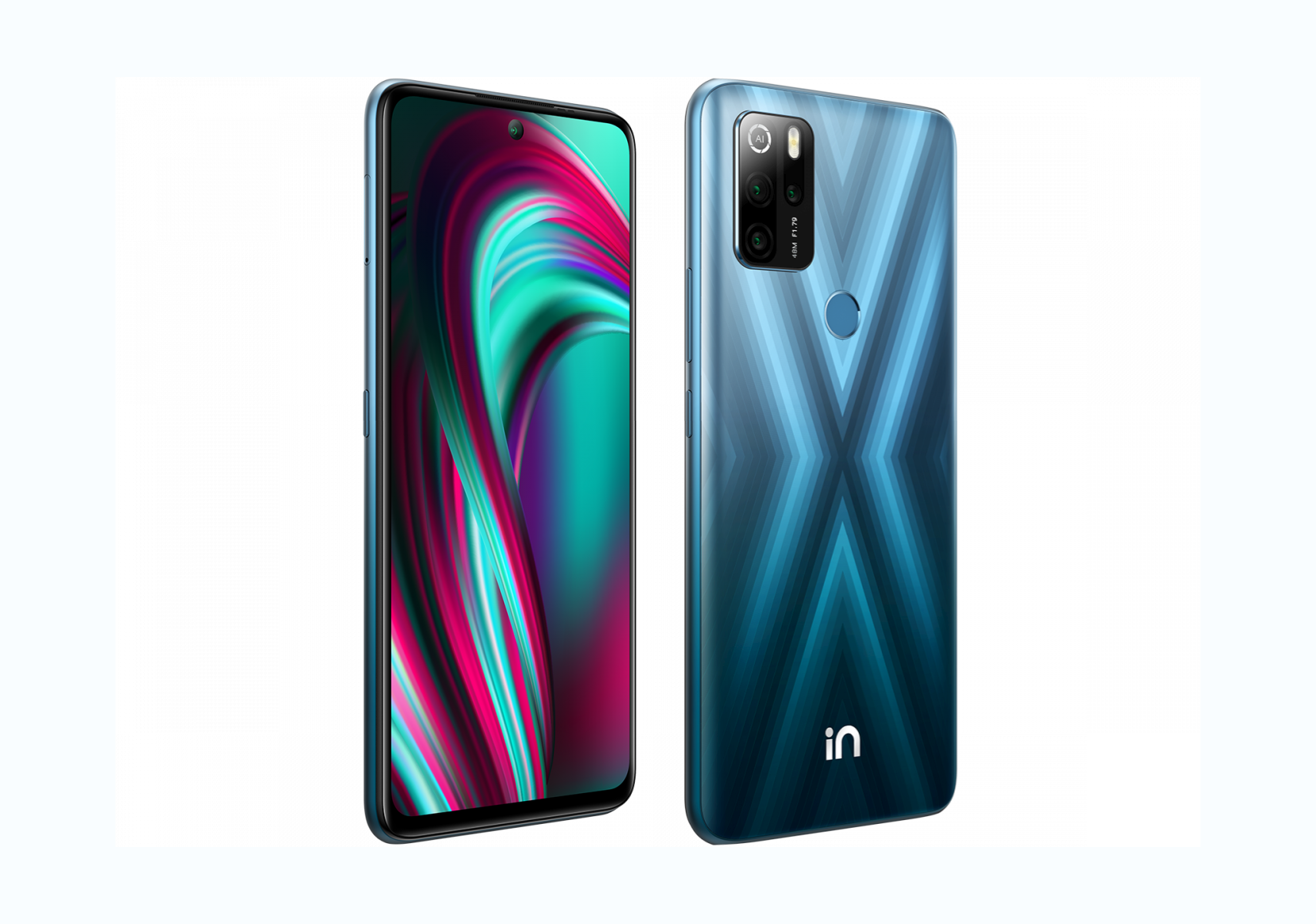
Back in November 2020, Indian smartphone maker Micromax made a comeback with the launch of two new models called IN Note 1 and IN 1b. So far, these handsets have been only made available via the company’s website and its official online partner Flipkart. But recently, the firm has started selling them offline in select states in the country.

Micromax IN Note 1 Featured
Micromax IN Note 1

Although Indian smartphone customers preferred online channels in the last quarter, offline has always been larger than the former. Hence, all the online-only brands always turn towards offline channels a few quarters from their entry into the market.

Therefore, it is essential for Micromax to bring its IN Note 1 and IN 1b to offline retailers so that more customers can experience these handsets. Fortunately, the company has already started working on this matter.

It began selling its new smartphones offline in six states, namely Maharashtra, Gujarat, Goa, Assam, Nagaland, and Tripura a few weeks back. Earlier today, the company revealed that its latest offerings are now available in Karnataka as well. The firm has partnered with Simtel mobile planet, Roshini mobiles, and Vinod Enterprises for this cause.

Micromax IN 1b Featured
Micromax IN 1b

That means if you live in any of these seven states in India, you can grab the new Micromax phones from any local retailer if they have them in stock.

For those unware, the Micromax IN Note 1 is priced at ₹10,999 for the 4GB + 64GB variant and ₹12,499 for the 4GB + 128GB version. On the other hand, the Micromax IN 1b costs ₹6,999 and ₹7,999 for 2GB + 32GB and 4GB + 64GB respectively. 

However, it is worth noting that the offline price could be slightly higher than online though the firm has not mentioned it.


RELATED:


(Via)

Timekettle WT2 Edge earbuds with 2-way translation in 40 languages launched

There are several languages in the world and many have even gone into extinction. Technology has made it easy to communicate in a fast manner regardless of language barriers. With emerging technology, communication is even getting easier. US startup Timekettle has launched a new translation earbuds model for crowdfunding on Indiegogo.TimekettleTimekettle WT2 Edge earbuds WT2 Edge

The Timekettle WT2 Edge earbuds are touted to be the world’s first truly bi-directional simultaneous translation earbuds. It allows users to translate in real-time as they speak and listen, interpreting what is said to the listener for as quick as 0.5 seconds and with up to 95% accuracy. The earbuds can translate up to 40 languages and supports up to 93 different accents.Timekettle WT 2 Edge

Further, the translation earbuds deploys smart noise-reduction which helps to filter out distracting background noises. This ensures the message isn’t distorted by ambient noise of any sort and the message comes across loud and clear.

The Timekettle WT2 Edge is powered by the world’s 6 leading translation engines including DeepL, Google, Microsoft, iFlytek, AmiVoice, Hoya and Timekettle its own engine. This ensures it delivers accurate translations in a prompt manner. Also, the company deploys 15 servers worldwide to deliver you the fastest translations possible, regardless of your location.Timekettle WT 2 Edge

The earbuds even comes with a Touch mode which mutes all other mics when you tap the earbuds ensuring that you speak without bumping into the words of other speakers. There is also a Speaker Mode where the earbuds deliver the translation through the speaker of a connected smartphone, thus eliminating the need for the other party to put on the earbud. If you don’t want to disturb others, there is an option of displaying the translation in both languages on the phone’s screen via the Edge app. It also supports Text-to-Speech to read your typed messages out loud. Timekettle WT 2 Edge

In terms of the battery life, the earbuds offer up to three hours of continuous translation on a single charge and with the charging case, you get up to 12 hours on a single charge.
The Timekettle WT 2 Edge earbuds starts at $139 and is presently available on Indiegogo.

RELATED;

Twitter begins rollout of Voice Messages feature for DMs in India, Brazil, and Japan

Twitter is planning to expand borders by using bitcoins for paying employees/vendors in the future. The company is also hitting the basics right when it comes to the Features of its Social media platform. Today, it has officially announced the Voice Messages for DMs.

In a Tweet, Twitter confirmed that From Today i.e., February 17, it will start rolling out the feature in a phased manner. That means it could while to reach everyone as the company completes the testing. Anyway, once received, you can just select a chat in DM(Direct Message) and start recording your voice.

Inside the chat, you will see a ‘Voice Icon’ at the bottom next to the Text Editor section. Clicking on it will start recording your voice. As shown in the teaser below, Twitter is giving just 140 seconds for the Voice message as the limit.

If you recall, Twitter started testing its ‘Spaces’ in India a few days ago. The Beta Testing will include as many as 3,000 more people including India. This is a clubhouse-like alternative voice chat room that is likely to roll out for everyone later this year.

Coming back, after recording it, press the Stop button to save the Audio. This Audio clip will now appear below with a ‘Send’ button to the right and a ‘cancel’ button to the left. You can do press the either to send/discard the voice message respectively.

Although the process is similar on Android/iOS, users on the latter can reportedly record it by Long-pressing the voice button to record and swipe it up & release to send the message(courtesy of XDA). Currently, desktop users can listen to the messages but cannot send any voice message.

As for availability, it will be available to the users of India, Brazil, and Japan. Obviously, we can expect this to expand to other countries in the future.

RELATED:


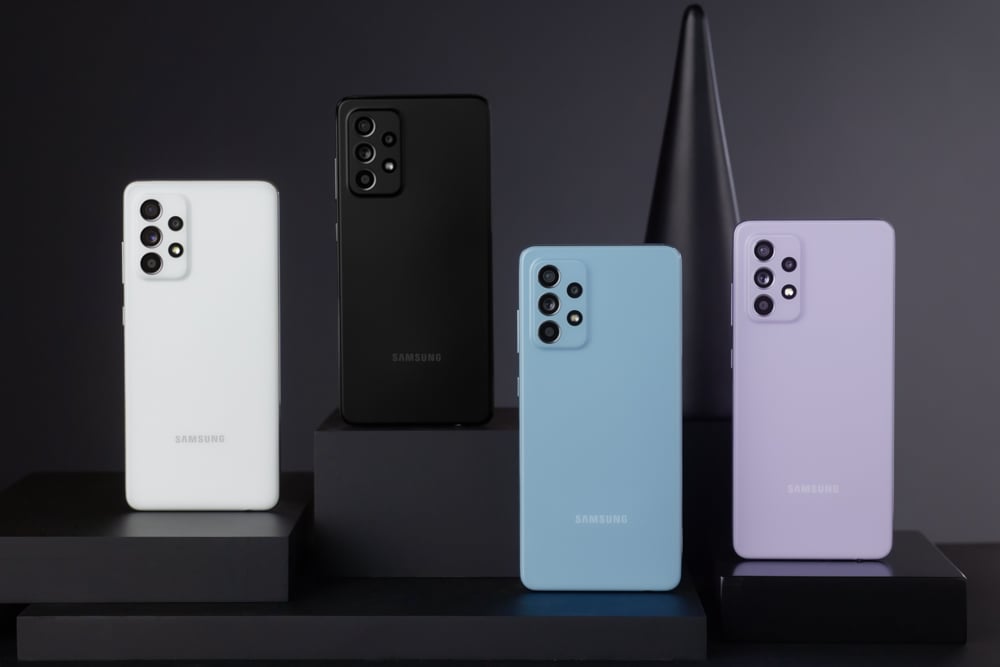
Samsung Galaxy A72 5G does not exist, claims tipster

Winfuture.de recently carried exclusively reports that revealed the specifications and design of the Samsung Galaxy A52 4G, Galaxy A52 5G, and Galaxy A72 4G. The publication did not share any information on the specs of the Galaxy A72 5G. The probable reason it could be that the 5G version of the A72 does not exist.

Previous reports have claimed that the Galaxy A72 5G will be arriving with Snapdragon 750G chipset. However, reliable tipster Max Jambor tweeted earlier this week that there is no 5G variant of the Galaxy A72 5G.

The Galaxy A72 4G’s version is expected to feature the Snapdragon 720G chipset. The same SoC could be powering the Galaxy A52 4G. Past reports have claimed that the Snapdragon 750G will be fueling the Galaxy A52 5G.

The Galaxy A52 5G has now appeared at Google Play Console with some of its key specs. The listing confirms the presence of the Snapdragon 750G mobile platform. The punch-hole display of the phone is expected to support a Full HD+ resolution, 6 GB of RAM, and Android 11 OS.

Samsung Galaxy A52 5G Google Play Console

Recent reports have revealed that the Galaxy A52 5G will support a 90Hz refresh rate and it could be powered by a 5,000mAh battery. The device may carry support for 25W rapid charging.

It may feature a front-facing camera of 32-megapixel. Its rear camera setup may include a primary camera of 64-megapixel, a superwide lens of 8-megapixel, a macro camera of 5-megapixel, and a depth helper of 2-megapixel. It may come preloaded with One UI 3.1 flavored Android 11 OS.

The Galaxy A52 5G could be priced 429 euros (~$516) and its 4G edition may carry a price tag of 349 euros (~$420). The Galaxy A72 could be priced at 449 euros (~$540). Both phones are expected to launch soon. A recent leak claimed that the A52 and A72 will debut in India in March.

RELATED:

Fitbit smartwatches and trackers now on Google Store shelves

Google last month announced the acquisition of fitness wearable manufacturer Fitbit after several months of speculations. As an aftermath of the acquisition, some of the brand’s wearable devices are now on sale on the Google Store.

The Fitbit watches and trackers are listed alongside Google Pixels and Nest gear and can be purchased right from the Google Store. There are presently four Fitbit products on sale in the Google Store and they include the Fitbit Sense, Versa 3, Inspire 2, and Fitbit Charge 4. The smartwatches are on sale exclusively in the United States.

Regardless of the listing on Google Store, the smartwatches are still on sale on Fitbit’s on the store as well a by other retailers. The prices still range from $329 and below which is consistent with the prices on other channels. The good thing about the Google Store listing is that the consumers now have the option to buy these products while also buying unlocked Pixel smartphones and even fund the purchase with the same financing option.fitbit

The Fitbit Versa 3 is even listed on the Google Store homepage, right next to the new Nest Thermostat and Google Pixel Buds. The Store has even gotten an exclusive Fitbit products tab at the top row which takes users directly to the product page. The store’s redesign includes a banner about Google’s acquisition of Fitbit and it leads to the Fitbit landing page.

Google also included some outbound links to the Fitbit store for other products not listed on the Google Store such as watchbands and chargers, the Aria Air smart scale, as well as the monthly Fitbit Premium subscription service.

RELATED;


Carl Pei confirms Nothing’s acquisition of Essential Inc; reaches $18 million in registered interest from the public in 24 hours

Nothing is on a roll this week. On Monday, it was revealed that the company had acquired Essential, the Andy Rubin-owned company that shut down a few years after it came into business. Yesterday, Nothing opened up investment to the general public and in just 24 hours, it has raised more money than Alphabet’s GV  invested in it. Its founder, Carl Pei, has also confirmed the acquisition of Essential.

Starting with the acquisition, Carl Pei took to Twitter to confirm the story of his company’s acquisition of Essential. However, he has kept his lips closed on his plans with Essential.

There are speculations that the acquisition was mainly for Essential’s patents, but as you can see in the tweet above, Carl Pei says “trademarks” and not “patents”. It remains to be seen if the acquisition also includes patents but one thing we hope to see in the future from Nothing is Essential-branded products.

In related news, Nothing has announced that it has reached over $18 million of registered interest in just 24 hours from more than 14,500 persons following the company’s decision to open investment to the Nothing community. That is more than the $15 million investment it secured from Alphabet’s GV.

However, the company will only be offering $1.5 million worth of shares to the Nothing Community and they will be offered on a first-come-first-serve basis.

Nothing revealed earlier this month that its first product will be wireless earbuds and they will be announced this summer. That doesn’t sound exciting seeing as the market is flooded already but we are curious to see how Nothing intends to stand out from the competition.


RELATED:

realme 7i joins the Android 11-based realme UI 2.0 Early Access program

Chinese handset maker realme has been seeding out Android 11-based realme UI 2.0 builds to its smartphones for quite a while now. However, only one device (realme X50 Pro) has received the stable update so far. Whereas, others are still in beta and now, the company has started recruiting testers for one more model.

realme 7i realme UI 2.0 Android 11 Early Access Program

The latest device to join the realme UI 2.0 Early Access program is realme 7i. For those unaware, this handset is a toned-down version of the standard realme 7 powered by Qualcomm Snapdragon 662 instead of MediaTek Helio G95.

Interested users of this phone can enroll in the Android 11-based realme UI 2.0 Early Access program by heading over to Settings > Software Update > Gear Icon > Trial Version > Apply Now and submit details.  However, the device should be on build number RMX2103PU_11.A.37 to detect the registration form.

Further, selected users will be getting the beta update via OTA in the coming days. They can roll back to the stable version if they want to but the process will wipe the phone’s internal storage. Also, once reverted, this unit cannot join the Early Acess program again.

That said, apart from realme 7i, realme 6i and realme narzo 10 should also receive Android 11 beta update this month, as per the schedule.

RELATED:


(Source / Via)

Microsoft rolling out a Windows 10 update to remove Adobe Flash Player

Adobe recently stopped the support for the Flash Player plugin. The company said that it will start blocking content running on it. Now, Windows is finally rolling out an update to remove the Adobe Flash Player installed on the OS permanently.

Adobe

As reported by Windows Latest, Microsoft is rolling out the update to Windows 10 devices running on version 20H2, 2004, and older. My version is 1909 and I got the update as you can see below.

The update itself is pretty self-explanatory. With the Windows 10 KB4577586 rollout, it removes the Adobe Flash Player installed on the Windows 10 Operating Systems. Microsoft says that once done, you cannot uninstall the update.

However, you can restore the entire Windows version to a specific Restore Point that you have created in the past to get it back. Microsoft says that you can also try reinstalling windows except for this patch to retain the Flash Player.

Also, do note that the Flash Player installed manually won’t get removed with this update. Only that installed on Microsoft’s OS(incl. Edge) will get wiped. If you have a browser plugin on any other third-party browser(not Chrome, Firefox as they removed it too), you will be able to use it.

That said, we wouldn’t recommend you doing any of it as Adobe has clearly said that the Flash Player might be subjected to vulnerabilities, malware, and security risks in the future. Anyway, the update is rolling along with February 2021 Cumulative Updates and it should reach everyone in a few days.

Additionally, if you are someone who is still using an older OS like Windows 7 for some reason, we suggest you upgrade to Windows 10 to remain secure as Microsoft has already ended support for it.

RELATED:


Galaxy Z Fold3 again tipped to feature under display camera

A recent report revealed that Samsung may announce the Galaxy Z Flip2 (also labelled as Galaxy Z Flip3 in leaks) and Galaxy Z Fold3 foldable phones in July. According to a reliable tipster from China, the Fold3 will come equipped with an Under Panel Camera (UPC), which is also known as the under-display camera technology.

It is not the first time that the rumor mill has claimed the arrival of UPC on the Galaxy Z Fold3. A South Korean publication had reported back in October 2020 that the device will come with an under-display camera. The same report had also claimed that the Fold3 will have a thicker UTG to bring support for the S Pen stylus.

The first-generation Galaxy Fold’s inner display came with a wide notch that housed dual cameras. The Galaxy Z Fold2’s inner screen offered a larger screen-to-body ratio as it came with a punch-hole design. With UPC onboard, the Galaxy Fold3 is expected to offer an even higher screen-to-body ratio than its predecessor models.

Samsung Galaxy Z Fold2 5G Mystic Bronze

S-Connect, a company that manufactures hinges for Samsung’s foldable smartphone has confirmed that it will begin mass production of hinges for Galaxy Z Fold3 and Galaxy Z Flip2 in Q2 2021. This information seems to be in line with recent reports that have claimed that Samsung’s next-generation foldable phones will debut in July.

A recent report revealed that the model number of the Galaxy Z Fold3 is SM-F926 and it will arrive with 256 GB of native storage. It is expected to come with a 7.55-inch main display, a 6.21-inch cover screen, and One UI 3.5 based Android 11 OS. It is likely to feature a dedicated slot for storing a stylus. The other specifications of the Galaxy Z Fold3 are under wraps.

(source 1, 2|via 2)

RELATED:

Moto E7i Power receives BIS certification, could be next Motorola phone for India

Yesterday, the upcoming Moto E7i Power smartphone was seen at Thailand’s NBTC certification platform. This Motorola phone has received approval from the Bureau of Indian Standards (BIS). The BIS listing suggests that the phone may debut soon in India.

Past reports have revealed that the model number is XT2097. The variant heading to Thailand has an XT2097-14 model number. The BIS listing reveals that the Indian edition of the device has XT2097-16 model numbers. The model numbers of its other country variants are XT2097-12, XT2097-13, XT2097-14, and XT2097-15.

At Bluetooth SIG, the XT2097-15 model was spotted with a Lenovo K13 moniker. Hence, there is a possibility that this device could be landing in China with the Lenovo Lemon K13 name. The key specifications of the Lenovo K13 were recently leaked by 91mobiles.

The Lenovo K13 is said to feature an HD+ resolution supporting display of 6.5 inches. The waterdrop notch on the display may house a 5-megapixel selfie camera. Its rear shell has a vertical dual-camera system that has a 13-megapixel primary shooter and a 2-megapixel depth sensor. It is driven by an unknown octa-core processor that clocks at 1.6GHz.

Lenovo K13
Leaked render of Lenovo K13 by 91mobiles

The Lenovo K13 has 2 GB of RAM and a native storage of 32 GB. For more storage, it has a microSD card slot. The capacity of its battery is yet to be revealed. It has a fingerprint scanner on its back. The handset is expected to arrive in blue and orange color options.

Motorola will be launching the Moto E7 Power on Feb. 19 in India. Hence, it appears that it may take a few more weeks for the E7i Power to land in India. The handset is likely to be priced lower than the Moto E7 Power.

RELATED:

Xiaomi overhauls Samsung and Huawei in Russia Online Smartphone market during Q4 2020: Counterpoint

Russia is an equally important market for Chinese brands. Last Quarter(Q3), Huawei led there with a 27.8% share in the Online Smartphone market. Counterpoint Research has come out with the next Quarter report and this time it is Xiaomi racing ahead of giants like Samsung and Huawei.

smartphones

According to the report, entire smartphone sales declined by 11% YoY in Russia during Q4 2020. One of the major reasons is the second-wave of the Covid-19 pandemic. However, the share of the online Smartphone sales grew 1% QoQ to reach 35% of total sales in Q4 compared. Among the lot, Xiaomi managed to beat Samsung and Huawei to get an Online Shipment share of 31% in Q4.

Just like the last Quarter, Samsung seems to be the overall Popular brand in Russia as per the report. Despite this, Xiaomi managed to grow 4% QoQ to capture 31% of Online Market Shipment Share and top the list in Q4. Samsung sits in 2nd place with 27% share, a 2.1% YoY and only a 0.7% QoQ growth.

Surprisingly, Apple, which was nowhere near the top contenders in Q3 grew 7.3% QoQ to break into the top-3 brands online. Its share as of Q4 sits at 15.5% thanks to the iPhone 12 series devices’ sales. That said, as Huawei stumbled with a further drop in Shares during Q4, newbies like realme swooped in to take advantage and capture a 3.3% share.

Russia Online Smartphone Market Q4 2020
Credit: Counterpoint Research

If you are a Huawei fan and are not happy with the things going the way they are, fear not as the company is said to bring nearly 40 product categories. These probably include PC, Smart Glass, Monitors, and few Smartphones as well to Russia this year. While the specifics of the smartphones aren’t clear, it could be the P50 Series and some mid-rangers.

To sum up, Associate Director of Counterpoint, Tarun Pathak, says as customers look for features like NFC, OLED, eSIM, the ASP(Average Selling Price) of Smartphones rose 8% YoY to settle at $258. He also said that e-commerce giants introduced lot of offers, cashback to boost online sales.

Going forward, issues like component shortages will determine how the market drifts in 2021. While the vaccination drive for COVID-19 will also play a pivotal role, brands like HONOR who is well-known in Russia, should steer talks with OEMs faster to regain the throne.

RELATED:


LineageOS drops support for 24 devices as the project has halted Android 9.0 Pie development

LineageOS is one the most popular Android custom ROMs available in the market. The project supports multiple devices, thanks to hardworking developers and maintainers. But unfortunately, as it has begun to work on Android 11 releases, the organization has halted development for Android 9.0 Pie. Due to this move, 24 devices are no longer supported by the LineageOS project.

LineageOS 16.0 based on Android 9.0 Pie was officially released in March 2019. A number of older devices and then newer devices were supported by developers and maintainers over the course of the next year.

Last year, when Android 10-based LineageOS 17.1 was released, select few devices running the previous version of the OS were updated to the latest one. However, 24 of those smartphones and tablets continued to remain on LineageOS 16.0 up until now.

Now, as the project is readying to release LineageOS 18.1 based on Android 11, it has dropped support for Android 9.0 Pie. As a result, the below listed 24 devices are stuck with LineageOS 16.0 unless any new maintainer shows up to update them to LineageOS 17.1 (Android 10).

  • ASUS
    • ASUS ZenFone 3
    • ASUS ZenFone Max Pro M1
    • ASUS ZenFone Max Pro M2
  • BQ
    • BQ Aquaris X2
    • BQ Aquaris X2 Pro
  • HUAWEI
    • HUAWEI P20 Pro
    • HUAWEI P20 Lite
    • HUAWEI P Smart
  • Lenovo
    • Lenovo Yoga Tab 3 Plus Wi-Fi
    • Lenovo Yoga Tab 3 Plus LTE
  • OPPO
    • OPPO F1 (Intrernational)
    • OPPO R5/R5s (Intrernational)
    • OPPO R7s (International)
    • OPPO R7 Plus (International)
  • Redmi
    • Redmi 3S/3X
    • Redmi 4X
  • Samsung
    • Samsung Galaxy Grand 2 Duos
    • Samsung Galaxy S5 LTE-A
    • Samsung Galaxy S5 Plus 
    • Samsung Galaxy Tab S2 8.0 WiFi (2016)
    • Samsung Galaxy Tab S2 9.7 WiFi (2016)

Anyway, it is worth noting that some of the above-mentioned devices do have unofficial newer LineageOS builds, in addition to other custom ROMs based on Android 10 or Android 11.

Hence, if you are still rocking any of these smartphones and tablets with LineageOS 16.0, it is time for you to switch to another ROM.


RELATED:


(Via)